World

Sanctioned Russia becomes China's main source of oil

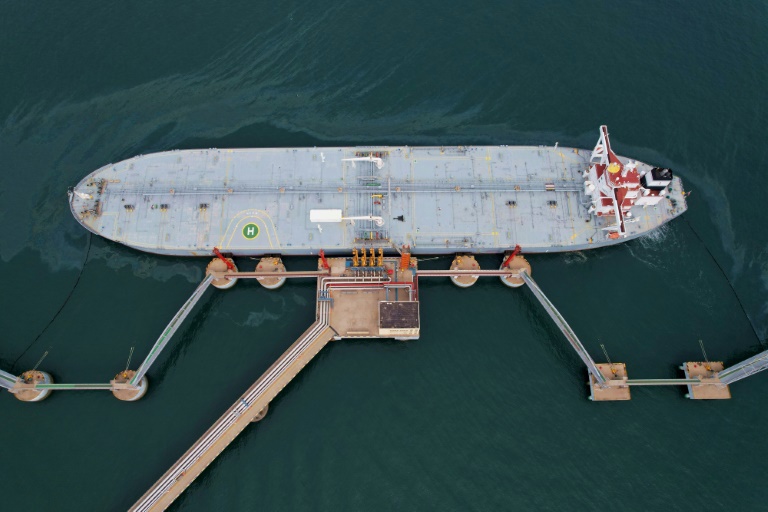
China ramped up crude oil imports from Russia in May, customs data showed Monday, helping to offset losses from Western nations scaling back Russian energy purchases over the invasion of Ukraine.

The spike means Russia has overtaken Saudi Arabia to become China’s top oil provider as the West sanctions Moscow’s energy exports.

The world’s second-biggest economy imported around 8.42 million tonnes of oil from Russia last month — a 55 percent rise on-year.

Beijing has refused to publicly condemn Moscow’s war and has instead exacted economic gains from its isolated neighbour.

It imported 7.82 million tonnes of oil from Saudi Arabia in May.

China bought $7.47 billion worth of Russian energy products last month, about $1 billion more than in April, according to Bloomberg News.

The new customs data comes four months into the war in Ukraine, with buyers from the United States and Europe shunning Russian energy imports or pledging to slash them over the coming months.

Asian demand is helping to staunch some of those losses for Russia, especially buyers from China and India.

India bought six times more Russian oil from March to May compared with the same period last year, while imports by China during that period trippled, data from research firm Rystad Energy shows.  

“For now, it is just pure economics that Indian and Chinese refiners are importing more Russian-origin crude oil… as such oil is cheap,” said analyst Wei Cheong Ho.

According to the International Energy Agency’s latest global oil report, India has overtaken Germany in the last two months as the second-largest importer of Russian crude.

China has been Russia’s biggest market for crude oil since 2016.

– ‘No limits’ –

Days before Moscow’s invasion of Ukraine, China’s President Xi Jinping greeted his Russian counterpart Vladimir Putin in Beijing where the two countries declared a bilateral relationship of “no limits”.

Although demand in China remains muted due to Covid restrictions, there has been some improvement in the past month as cities loosen controls after the country’s worst outbreak since the early days of the pandemic.

This has allowed supply chain problems to ease and industrial production to pick up, official data shows.

China’s overall imports from Russia spiked 80 percent in May from a year ago to $10.3 billion, according to customs data.

Beijing’s purchases of Russian liquefied natural gas surged 54 percent on-year to 397,000 tonnes, even as overall imports of the fuel fell.

China has been accused of providing a diplomatic shield for Russia by criticising Western sanctions on Moscow and arms sales to Kyiv.

– Joint goals –

Once bitter Cold War rivals, Beijing and Moscow have stepped up cooperation in recent years as a counterbalance to what they see as US global dominance.

This month they unveiled the first road bridge linking the countries, connecting the far eastern Russian city of Blagoveshchensk with the northern Chinese city of Heihe.

Last week Xi assured Putin of China’s support on Russian “sovereignty and security” in a call between the two leaders. 

The Kremlin said the pair had agreed to ramp up economic cooperation in the face of “unlawful” Western sanctions.

The West has implemented unprecedented sanctions on Russia in retaliation for its war in Ukraine, forcing Moscow to find new markets and suppliers to replace foreign firms that have left Russia following the invasion.

The 27-nation European Union agreed in late May to a package of sanctions that would halt the majority of Russian oil imports.

The United States has already banned all Russian oil but European nations are much more dependent on these imports.

Energy is a major source of income for Putin’s government, and Western nations are trying to isolate Moscow and impede its ability to continue the war.
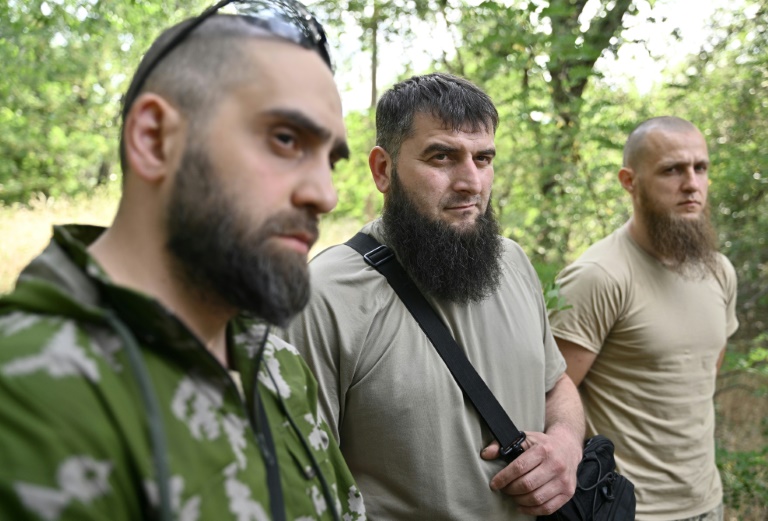
The Chechens fighting Russia on the front line

Islam is not just another soldier.

“If the Russians take me, I won’t be exchanged”, said the Chechen fighting with the Ukrainian army near the front line.

“They’ll torture me then show me on television.”

The 33-year-old dissident, a refugee who has been in Poland for nearly two decades, joined the Sheikh Mansur battalion in April. Founded in 2014 following Russia’s annexation of Crimea, the unit is mostly made up of veterans of the Chechen wars. 

It takes its name from the 18th-century Chechen military commander who fought against Russian expansion in the Caucasus — a reminder that the Chechen campaign for independence is not new.

“Several hundred” men with shaven heads and long beards like Islam have volunteered to help Ukraine fend off Russia’s invasion.

Islam did not reveal exactly how many troops there are in the battalion, or where they are stationed.

He wants to keep their identities secret for fear of reprisals against relatives in Chechnya.

Because just across the front line, there are Chechens loyal to the Kremlin serving with the “Kadyrovites” — Chechen militias with a sinister reputation, deployed alongside Russian troops.

They are said to be 8,000 fighters — a figure that has not been verified.

“We want to show that not all Chechens are like them — many of us see the Russians as aggressors and occupiers,” said Islam as bomb sirens blared.

For him, the war here has an air of deja vu. 

“It’s like a journey into the past, a continuation of what started in the Caucasus,” he said calmly, getting out of a van with a broken windscreen and a hurried spray paint job.

– Echoes of war –

Chechnya’s capital, Grozny, destroyed by Russian bombs more than two decades ago, suffered a fate similar to that of Mariupol.

The small Muslim-majority republic was ravaged by two brutal wars. The last, begun by Russian President Vladimir Putin in 1999, led to the installation of Chechnya’s strongman Ramzan Kadyrov, who has been accused of ruthlessly suppressing opposition.

As a result, a Chechen diaspora of an estimated 250,000 people has formed in Europe, Turkey and the UAE.

“I decided to join the battalion (for) the honour of the Chechens Moscow is trying to pass off as terrorists,” said Islam, who has received threats for documenting alleged Russian war crimes online.  

He takes orders from Deputy Commander Mansour, a battle-scarred 40-year-old soldier.

“Two of us have been killed and others injured. But it’s important we’re here,” Mansur said. “We have things to teach the local soldiers about war.”

The Chechen fighters are not officially part of the Ukrainian army. The equipment they use has been recovered from the Russians, and they are fed by locals, mostly Orthodox Christians, who seem to have taken kindly to them.

“We’re not here to impose Islamic beliefs — we’re here to fight a common enemy and defend freedom,” said Mansour. 

Bankrupt Sri Lanka opens IMF talks, begins shutdown

Sri Lanka closed schools and halted non-essential government services on Monday, starting a two-week shutdown to conserve fast-depleting fuel reserves as the IMF opened talks with Colombo on a possible bailout.

The country of 22 million people is in the grip of its worst economic crisis after running out of foreign exchange to finance even the most essential imports including food, fuel and medicines.

On Monday schools were shut and state offices worked with skeleton staffing as part of government plans to reduce commuting and save precious petrol and diesel.

Sri Lanka is facing record-high inflation and lengthy power blackouts that have contributed to months of protests — sometimes violent — calling on President Gotabaya Rajapaksa to step down.

Thousands of students marched through the streets of Colombo on Monday chanting “Gota go home” in reference to the president, who they accuse of corruption and mismanagement.

“The time for Gotabaya to bow down with dignity is long gone,” student leader Wasantha Mudalige told reporters. “Now we have to chase him out.”

Police arrested 21 student activists who blocked all gates to the presidential secretariat building while declaring Monday, Rajapaksa’s 73rd birthday, a “day of mourning” for the nation.

Officers said the students had blocked Sri Lanka’s finance ministry secretary from attending a key meeting with officials from the International Monetary Fund.

But the office of Prime Minister Ranil Wickremesinghe said talks with a visiting IMF delegation, the first in-person discussions since Sri Lanka asked for a bailout in April, went ahead as planned.

Both sides said the talks would continue until the end of the month.

A financial rescue plan is not expected until Colombo agrees with its creditors on restructuring its $51 billion foreign debt, a process that could take months, according to both Sri Lankan and IMF officials.

The country defaulted on its debt in April and went cap-in-hand to the IMF which has asked Colombo to raise taxes and restructure loss-making state enterprises.

Most offices in Sri Lanka were shut on Monday and all schools were closed but hospitals and the main sea and air ports in the capital were still operating.

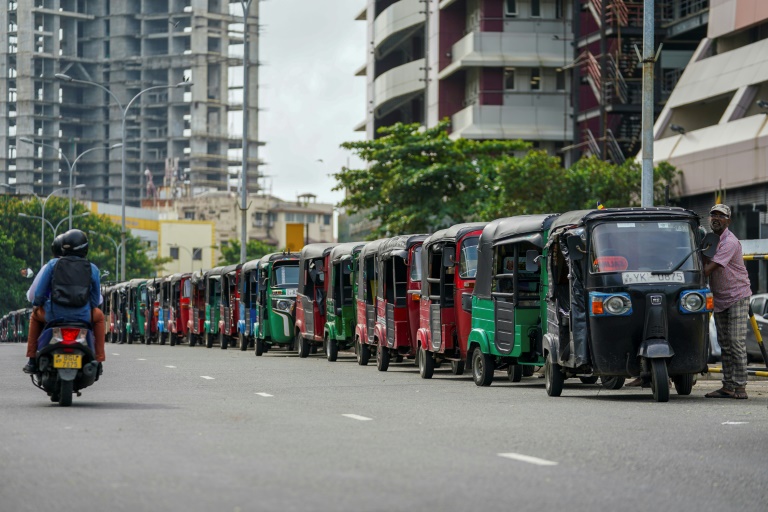
Hundreds of thousands of motorists waited in miles-long queues across the country for petrol and diesel despite the energy ministry announcing fresh stocks would not arrive for at least three days.

– Australia chips in –

Wickremesinghe’s office said he met with visiting Australian home affairs minister Clare O’Neil to “deepen cooperation and assist Sri Lanka as the country faces very difficult economic times”.

Canberra announced $35 million in emergency assistance to meet the urgent food and healthcare needs of the impoverished island.

“Not only do we want to help the people of Sri Lanka in its time of need, there are also deeper consequences for the region if this crisis continues,” Australian foreign minister Penny Wong said in a statement.

Australia is a member of the “Quad”, a diplomatic grouping with India, Japan and the United States that has expressed concern over China’s growing influence in the region.

China owns more than 10 percent of Sri Lanka’s external debt and has invested heavily in infrastructure across the strategically located island, which is positioned along the main east-west international shipping lane.

The United Nations last week launched an emergency response effort to feed thousands of pregnant women facing food shortages in Sri Lanka.

Four out of five people in the country have started skipping meals as they cannot afford high food prices, the UN has said. It warned of a looming “dire humanitarian crisis” with millions in need of aid.

ConocoPhillips joins Qatar's mega gas expansion

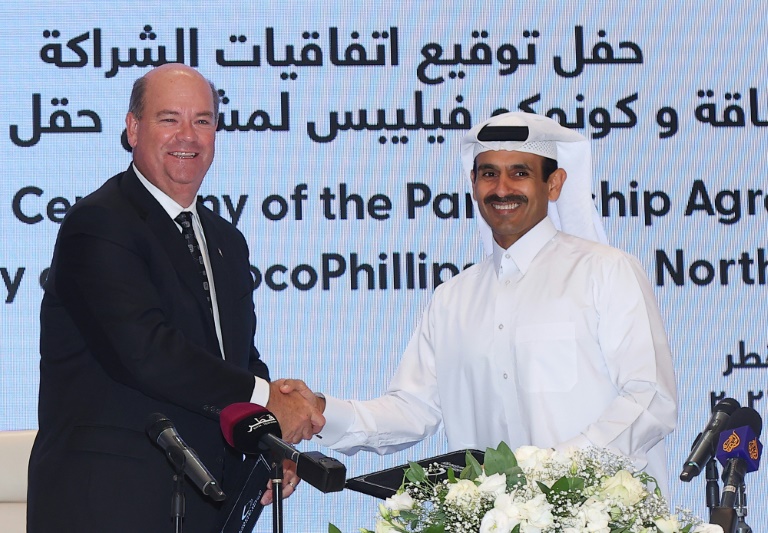
ConocoPhillips on Monday became the first US energy giant to sign up to help Qatar’s massive natural gas expansion that has drawn global bidders anxious to assure new supplies.

ConocoPhillips’ chunk of the North Field East project is half the size of France’s TotalEnergies, which has a 6.25 percent share, but the same as Italy’s ENI, announced on Sunday, Energy Minister Saad Sherida al-Kaabi told a press conference at which the accord was signed.

No figure for the value of the deal was given but TotalEnergies previously said it had paid $2 billion for its joint venture.

The expansion of the North Field, which has the world’s biggest known natural gas reserves, is estimated to cost more than $28 billion, and will see production increase from the current 77 million tonnes a year to 110 million tonnes by 2027.

The project has taken on growing international importance because of the fallout from the Russian invasion of Ukraine on Europe’s energy supplies.

The joint venture between ConocoPhillips and the state-owned Qatar Energy will last 27 years, but Kaabi said he expected gas from the North Field to last more than 50 years.

The reserves extend into Iranian territory and make up about 10 percent of the world’s known reserves, according to Qatar Energy. 

ConocoPhillips chairman Ryan Lance hailed the deal, saying it would be the “best in the world”.

“The LNG here in Qatar is needed to power world economic prosperity and to help protect against climate change,” he added.

Qatar is expected to announce more partners in the coming days, with ExxonMobil of the United States, Britain’s Shell and Chinese state energy firms among the names mentioned by industry sources as likely contenders. China is already one of the biggest customers for Qatari liquefied natural gas (LNG).

Foreign companies are expected to hold about 25 percent of the project in all.

Kaabi said there was “zero diplomatic element” in the decision on the companies taking part. He said the price paid, technical “competency” and ability to give access to new markets were the key elements determining the selection.

Qatar’s gas is among the cheapest to produce and has fuelled the Gulf state’s economic miracle of the past four decades. It is expected to announce details of another expansion, the North Field South, in coming months.

European stocks aim higher despite recession worries

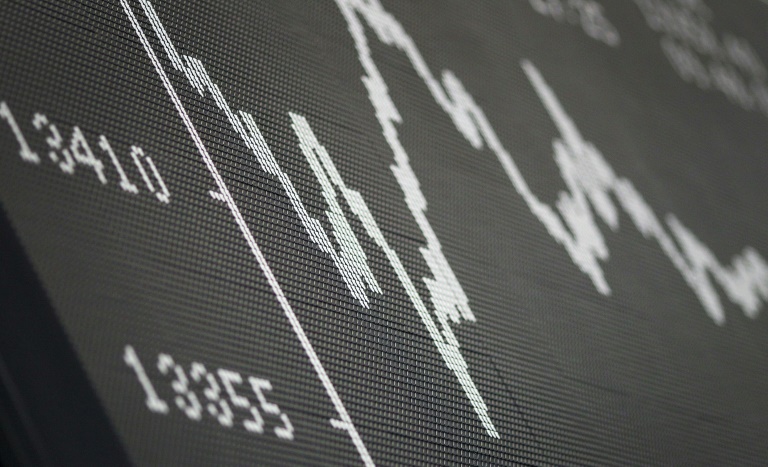
Europe’s main stock markets rose on Monday after a mixed Asian session, as traders set aside recession fears and French political uncertainty.

Bitcoin regained $20,000 after sinking to an 18-month low of $17,599 in weekend deals because risk-averse investors had shunned the world’s most popular cryptocurrency.

London equities rallied 1.0 percent in midday deals on Monday, with sentiment boosted by news of a blockbuster takeover offer for publisher Euromoney.

But the eurozone was more muted. Frankfurt stocks were up 0.5 percent and Paris gained just 0.3 percent, while oil prices languished on stubborn demand concerns.

Markets were rocked last week by a fierce sell-off after the US Federal Reserve’s sharp interest rate hike — the biggest in nearly 30 years — and a warning of more to come as inflation soars.

“Stability often comes before recovery and markets being more composed would suggest investors are no longer panicking,” said Russ Mould, investment director at broker AJ Bell.

Investors digested news that French President Emmanuel Macron and his allies faced political deadlock after losing their parliamentary majority in a stunning blow for the president and his reform plans.

Wall Street, shut on Monday for a US public holiday, had risen on Friday.

There is a sense among traders, however, that stock markets still have some way down to go before they find a bottom, with data suggesting economies are beginning to feel the pinch.

Cleveland Fed chief Loretta Mester added to the worry. She said the risk of a recession in the United States was increasing and it would take several years to bring inflation down from four-decade highs to the bank’s two percent target.

She told CBS’s “Face The Nation” on Sunday that while she was not predicting a contraction, the Fed’s decision not to act sooner to fight rising prices was hurting the economy.

Analysts warned there was likely to be more pain ahead for traders as the Ukraine war drags on and uncertainty continues to reign.

Oil prices slid on Monday, extending Friday’s hefty losses on demand worries caused by the prospect of a world recession.

However, US Energy Secretary Jennifer Granholm said prices could continue to surge if the European Union cuts off imports of the commodity from Russia in response to the Ukraine war.

– Key figures at around 1115 GMT –

London – FTSE 100: UP 1.0 percent at 7,085.94 points

Frankfurt – DAX: UP 0.5 percent at 13,192.85

Paris – CAC 40: UP 0.3 percent at 5,900.21

EURO STOXX 50: UP 0.6 percent at 3,457.35

Tokyo – Nikkei 225: DOWN 0.7 percent at 25,771.22 (close)

Hong Kong – Hang Seng Index: UP 0.4 percent at 21,163.91 (close)

Shanghai – Composite: FLAT at 3,315.43 (close)

New York – Dow: DOWN 0.1 percent at 29,888.78 (close)

Euro/dollar: UP at $1.0538 from $1.0499 late Friday

Pound/dollar: UP at $1.2256 from $1.2241

Euro/pound: UP at 85.98 pence from 85.77 pence

Dollar/yen: DOWN at 134.74 yen from 135.02 yen

Brent North Sea crude: DOWN 0.4 percent at $112.72 per barrel

West Texas Intermediate: DOWN 0.2 percent at $109.38

Japan court rules same-sex marriage ban constitutional

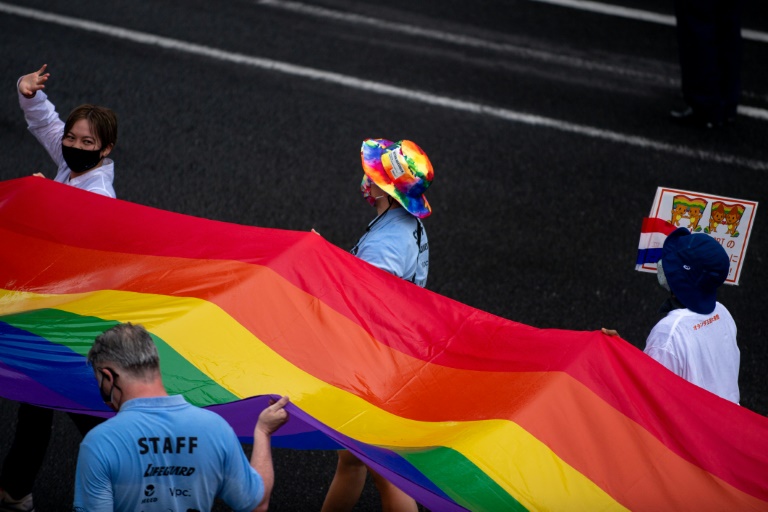
A Japanese court ruled on Monday that the country’s failure to recognise same-sex marriage is constitutional, in a setback for activists after a landmark verdict last year found the opposite.

The district court in western Japan’s Osaka rejected arguments made by three same-sex couples as part of a series of suits filed by activists seeking marriage equality.

“From the perspective of individual dignity, it can be said that it is necessary to realise the benefits of same-sex couples being publicly recognised through official recognition,” the court ruling said.

But the present failure to recognise such unions is “not considered to violate… the constitution”, the ruling added, saying “public debate on what kind of system is appropriate for this has not been thoroughly carried out”.

Akiyoshi Miwa, the lawyer representing the plaintiffs in the case, said he was “shocked” by the court’s unwillingness to intervene in the debate.

“It means the judge is saying the court doesn’t have to actively get involved in human rights issues,” Miwa said. 

Plaintiff Machi Sakata — who got married to her American partner in the US state of Oregon — said she “couldn’t believe the ruling”. 

The court also ruled that if a framework similar to marriage was created then same-sex partners could receive legal benefits. 

“Nothing can replace (marriage). I feel nothing but resentment. It’s like they’re saying, ‘We don’t treat you equally but that’s OK, right?’,” said Sakata. 

Monday’s verdict comes after a district court in northern Sapporo last year found the opposite, ruling that the government’s failure to allow same-sex marriage violated the constitution’s provision guaranteeing equality under the law.

That ruling was welcomed by campaigners as a major victory that would pile pressure on lawmakers to accept same-sex unions.

Japan’s constitution stipulates that “marriage shall be only with the mutual consent of both sexes”.

But in recent years, local authorities across the country have made moves to recognise same-sex partnerships, although such recognition does not carry the same rights as marriage under the law.

The prefecture of Tokyo last month said it would begin recognising same-sex partnerships from November, revising current rules.

More than a dozen couples filed suits seeking marriage equality in 2020 in district courts across Japan. They said the coordinated action was intended to put pressure on the only G7 government that does not recognise gay unions.

Airlines seek govt support for net-zero pledge

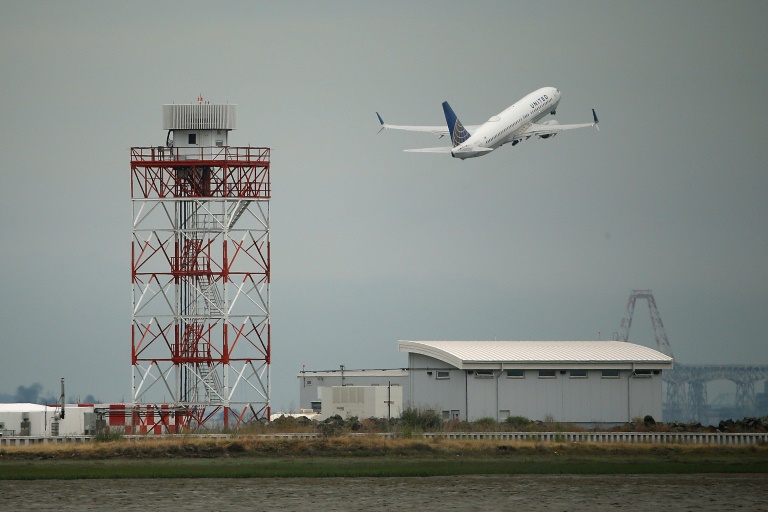
World airlines on Monday called on governments to support the industry’s goal of net-zero carbon emissions by 2050.

The plea at a meeting of the International Air Transport Association (IATA) came three months before a crucial gathering of the United Nations’ intergovernmental agency supporting aviation.

IATA, whose member airlines account for 83 percent of global air traffic, pledged in October to reach net-zero by mid-century, an enormous and costly technological challenge.

“It is critical that the industry is supported by governments with policies that are focused on the same decarbonisation goal,” Willie Walsh, IATA’s director general, said in a statement during the group’s annual general meeting in the Gulf emirate of Qatar. 

IATA’s 2050 target is in accordance with goals of the landmark 2015 Paris climate accord to limit the global average temperature increase to 1.5 degrees Celsius (2.7 Fahrenheit) above pre-industrial levels.

“The decarbonisation of the global economy will require investment across countries and across decades, particularly in the transition away from fossil fuels,” Walsh said.

“Stability of policy matters.” 

His appeal comes three months before the International Civil Aviation Organization meets at the end of September in Montreal, where it is to examine the issue of reducing emissions.

Agreement is far from certain as Russia and China are among companies targeting decarbonisation 10 years later, in 2060.

Chinese airlines voiced objections last year to the IATA target during the group’s meeting in Boston.

In an effort to counter such reluctance as the effects of climate change become increasingly apparent, France, holding the rotating EU presidency, in February published the Toulouse Declaration calling on the entire world to sign up to the goals.

In addition to 42 countries, airports, airlines and other industry players adopted the declaration.

“The industry’s determination to achieve net-zero by 2050 is firm. How would governments explain the failure to reach an agreement to their citizens?” said Walsh. 

The airline industry currently accounts for about three percent of environmentally-harmful CO2 emissions. To reach net-zero it will need a steady ramp-up of renewable jet fuel, other efficiency improvements and the use of carbon capture storage and offsets.

IATA has estimated this would cost companies around $1.55 trillion over 30 years.

Strike forces cancellation of all Brussels flights

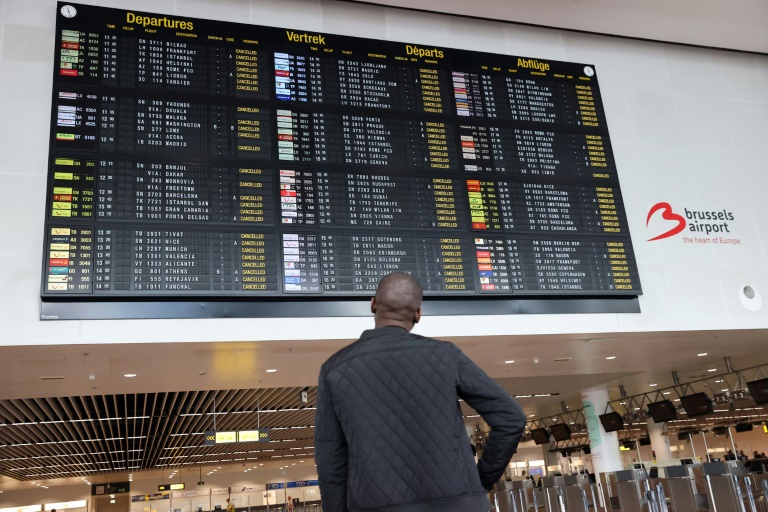
Brussels Airport cancelled all outbound flights on Monday after most security staff joined a nationwide strike for better pay as soaring inflation hit workers’ purchasing power.

The stoppage kicked off a week of travel chaos in several parts of Europe, notably a massive rail strike in Britain from Tuesday and, later on, strikes hitting the continent’s biggest airline Ryanair in multiple countries.

Brussels Airport informed passengers on its site and social media that all departing flights were scrapped for the day — 232 in total.

Only a quarter of arriving flights were still operating. Freight traffic was unaffected.

The departure hall at the airport was largely empty, with only around 100 passengers inside, some lining up to change tickets or get assistance while others slumped resignedly in seats or slept on the floor.

Oleksandr Zayikin, a Ukrainian merchant mariner who had been away for four months, told AFP the strike had prevented a reunion with his wife in Istanbul. He had left before Russia’s invasion of his country.

“I’m upset,” the 29-year-old said, adding he would now probably find a Brussels hotel for a few days.

“In Ukraine it’s not a usual thing, we don’t have such strikes. But I really respect that people do that,” he said.

Maria Antonia, a 20-year-old Romanian student who had a flight booked to return to Bucharest, didn’t see the last-minute messages the airport had written for passengers from late Sunday.

“We didn’t know it was cancelled until we got to the airport,” she said.

“That was a little bit of a hassle. But we can manage it I think.”

Passengers were told to contact their airline to reschedule their flights or seek a refund.

German travel group TUI arranged to have flights that were to have left from Brussels take off from some regional Belgian airports.

The national strike in Belgium was called by the three main unions to push for higher salaries as inflation sent the cost of living higher.

A demonstration was to take place later Monday in the centre of Brussels, with unions expecting up to 70,000 people to march.

French far right savours parliament gains

After decades of struggling to impose its political agenda, the far right under Marine Le Pen has cemented its place as a cornerstone of French political life, despite accusations of fostering a divisive extremist ideology.

Le Pen’s National Rally (RN) defied opinion polls by winning 89 seats in the lower-house National Assembly on Sunday, well above the eight it held previously and far beyond her own expectations.

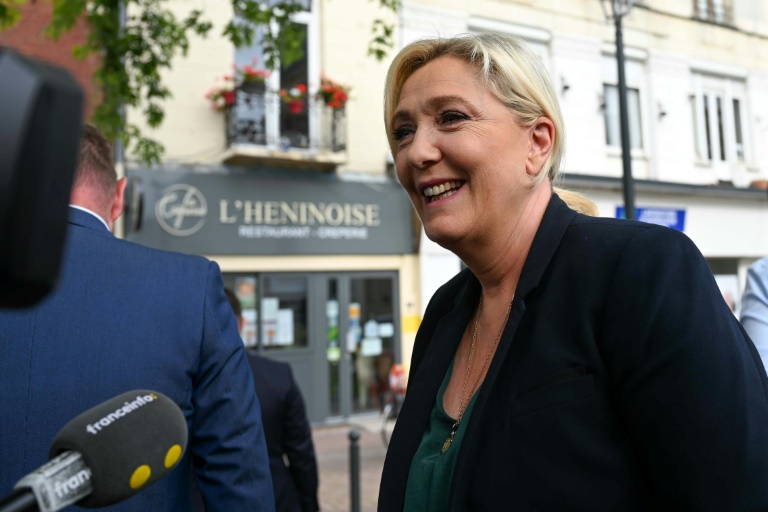
“In our wildest dreams we were hoping for 60 MPs,” Le Pen told journalists Monday on home turf in Henin-Beaumont, part of the former industrial — and Socialist — heartland of northern France that has become a bastion of the far right.

“We were pleasantly surprised by the mobilisation of our fellow citizens and this desire that immigration, insecurity, and the struggle against Islamism do not disappear from the parliament debate,” she said.

The party can even rejoice over being the largest single opposition faction in the new National Assembly as the left wing NUPES alliance is an umbrella for various leftist parties, none of whom won as many seats as the RN on their own. 

Despite winning millions of votes in her presidential contests against President Emmanuel Macron, Le Pen had never succeeded in transforming her influence into a viable legislative force before now.

Her party has eclipsed the traditional right and now qualifies for nearly 10 million euros ($10.5 million) per year in public funding — a windfall after years of financial struggles.

National Rally deputies will also be allotted more speaking time, and Le Pen said she would demand to lead the Assembly’s powerful finance commission, by tradition reserved to the largest opposition party.

That could seriously complicate Macron’s reformist agenda, not least his plan to push back the retirement age to 65 — Le Pen wants to keep it at 62 and even lower it for people who started working early. 

“The National Rally has become a party with local roots… It has become the undisputed spokesman on social and territorial divisions,” veteran political scientist Pascal Perrineau of Sciences Po university told Le Parisien daily.

– 2027 in sight? –

Le Pen’s father Jean-Marie Le Pen created the party 50 years ago this year, but his convictions over anti-Semitic and racist hate speech had long kept the group on the fringes.

His daughter has softened her party’s aggressive image and played down its anti-migrant discourse, claiming instead to defend France’s traditional values and its “sovereignty” that has been traded away in the name of greater European integration.

By becoming a parliamentary force, an invigorated Le Pen could also be well poised to run for the presidency again in 2027, when Macron will be prevented from standing because of term limits.

She won nearly 42 percent of the vote in April’s presidential contest, a score considered inconceivable just a few years ago.

In a bid to make sure the National Rally makes the most of its performance, Le Pen announced that she would no longer lead the party and would instead focus on spearheading its faction in parliament.

Unlike some other party leaders, Le Pen herself stood in the election, easily winning her constituency in northern France.

A meeting is planned in the coming weeks to elect her successor to lead the party full time, with all eyes on her de-facto number two Jordan Bardella, just 26 but already a high-profile figure in France. 

“It’s the result of working very hard to establish its presence, with deputies of her own generation who were won over, but also by activists who have campaigned for her for several years,” said political expert Jean-Yves Camus of the Fondation Jean-Jaures think-tank.

For Camus, Macron paved the way for Le Pen’s gains by insisting that his “progressive” policies were the opposite of her “nationalist” ideas.

“This method of taking the French political life to the extremes ended up giving the National Rally its stature as the chief opposition group,” he said. 

Belgium returns Lumumba tooth to family

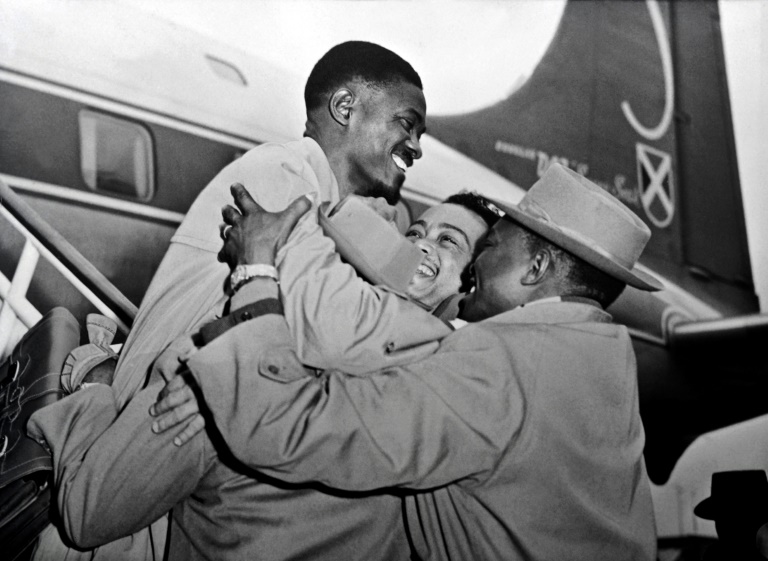
Belgium on Monday handed over the last remains of slain Congolese leader Patrice Lumumba — a tooth — to his family, turning a page on a grim chapter in its colonial past.

Chief prosecutor Frederic Van Leeuw gave the relatives a small, bright blue box containing the tooth in a televised ceremony, and said legal action they had taken to receive the relic had delivered “justice”.

The tooth was placed in a casket that was then draped in the flag of the Democratic Republic of Congo, which celebrates Lumumba, who was murdered by separatists and Belgian mercenaries in 1961, as an anti-colonial hero.

Lumumba’s assassination — and the brutal history of Belgian control of the Congo — have been enduring sources of pain between the two countries. 

Belgian Prime Minister Alexander De Croo reiterated that his country’s authorities bore a “moral responsibility” over the killing. 

“I would like, in the presence of his family, to present in my turn the apologies of the Belgian government,” he said.  

“A man was murdered for his political convictions, his words, his ideals.”

Lumumba’s son Francois told Belgium’s RTBF broadcaster that his relatives had been waiting “more than 60 years” for this event.

“I think it will provide solace for the family and the Congolese people,” he said. 

“We are opening a new page in history.”

A fiery critic of Belgium’s rapacious rule, Lumumba became his country’s first prime minister after it gained independence in 1960. 

But he fell out with the former colonial power and the United States and was ousted in a coup a few months after taking office. 

He was executed on January 17 1961, aged just 35, in the southern region of Katanga, with the support of Belgian mercenaries. 

His body was dissolved in acid and never found.

But the tooth was kept as a trophy by one of those involved, a Belgian police officer.

The tooth was seized by Belgian authorities in 2016 from the daughter of the policeman, Gerard Soete, after Lumumba’s family filed a complaint. 

– ‘National mourning’ –

The casket containing the tooth is set to be flown back to the DRC where it will be officially laid to rest at a memorial site. 

The country is set to hold three days of “national mourning” from 27 to 30 June — its 62nd anniversary of independence — to mark the burial ceremony.

Lumumba’s older son Francois filed a complaint in Belgium in 2011, pointing the finger of responsibility for his father’s killing at a dozen Belgian officials and diplomats.  

The investigation for “war crimes” is still ongoing but only two of the targeted officials are still alive. 

A Belgian parliamentary commission of enquiry in 2001 concluded that Belgium had “moral responsibility” for the assassination and the government presented the country’s “apologies” a year later. 

De Croo said Belgian officials “chose not to see, chose not to act” to stop the killing, even if they had not directly intended it to happen. 

Lumumba’s children were also received Monday by Belgium’s King Philippe, who this month travelled to DR Congo to express his “deepest regrets” over the colonial past. 

Historians say that millions of people were killed, mutilated or died of disease as they were forced to collect rubber under Belgian rule. The land was also pillaged for its mineral wealth, timber and ivory.

Close Bitnami banner
Bitnami