World

41 dead, millions stranded as floods hit Bangladesh, India

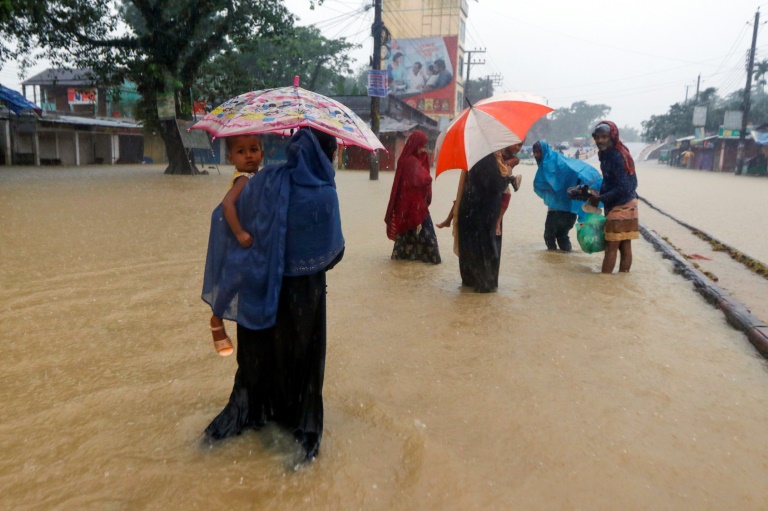
Monsoon storms in Bangladesh and India have killed at least 41 people and unleashed devastating floods that left millions of others stranded, officials said Saturday.

Floods are a regular menace to millions of people in low-lying Bangladesh, but experts say climate change is increasing their frequency, ferocity and unpredictability.

Relentless downpours over the past week have inundated vast stretches of Bangladesh’s northeast, with troops deployed to evacuate households cut off from neighbouring communities.

Schools have been turned into relief shelters to house entire villages inundated in a matter of hours by rivers that suddenly burst their banks.

“The whole village went under water by early Friday and we all got stranded,” said Lokman, whose family lives in Companiganj village.

“After waiting a whole day on the roof of our home, a neighbour rescued us with a makeshift boat. My mother said she has never seen such floods in her entire life,” the 23-year-old added.

Asma Akter, another woman rescued from the rising waters, said her family had not been able to eat for two days.

“The water rose so quickly we couldn’t bring any of our things,” she said. “And how can you cook anything when everything is underwater?”

Lightning triggered by the storms has killed at least 21 people around the South Asian nation since Friday afternoon, police officials told AFP.

Among them were three children aged between 12 and 14 who were struck by lightning on Friday in the rural town of Nandail, said local police chief Mizanur Rahman.

Another four people died when landslides hit their hillside homes in the port city of Chittagong, police inspector Nurul Islam told AFP.

At least 16 people have been killed since Thursday in India’s remote Meghalaya, the state’s chief minister Conrad Sangma wrote on Twitter, after landslides and surging rivers that submerged roads.

Next door in Assam state, more than 1.8 million people have been affected by floods after five days of incessant downpours.

Assam chief minister Himanta Biswa Sarma told reporters he had instructed district officials to provide “all necessary help and relief” to those caught in the flooding.

– ‘The situation is bad’ –

Flooding in Bangladesh worsened on Saturday morning after a temporary reprieve from the rains the previous afternoon, Sylhet region chief government administrator Mosharraf Hossain told AFP.

“The situation is bad. More than four million people have been stranded by flood water,” Hossain said, adding that nearly the entire region was without electricity. 

The flooding forced Bangladesh’s third-largest international airport in Sylhet to shut down on Friday.

Around the regional capital, residents waded through waist-deep water along roads next to partially submerged stuck vehicles.

Forecasters said the floods were set to worsen over the next two days with heavy rains in Bangladesh and upstream in India’s northeast.

Before this week’s rains, the Sylhet region was still recovering from its worst floods in nearly two decades late last month, when at least 10 people were killed and four million others were affected.
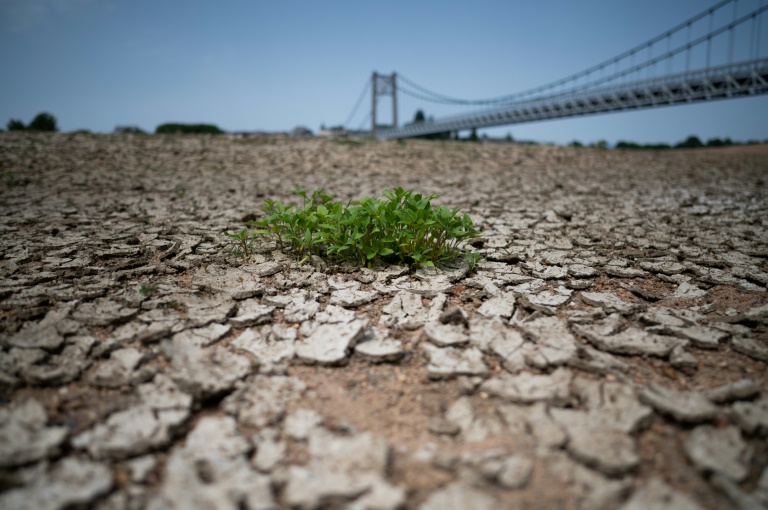
Europe braces for blistering June weekend heat

France, Spain and other western European nations braced on Saturday for a sweltering June weekend that is set to break records and sparked concern about forest fires and the effects of climate change.

The weather on Saturday will represent a peak of a June heatwave that is in line with warnings from scientists that such phenomena will now hit earlier than usual thanks to climate change.

Temperatures already nudged over 40 degrees Celsius (104 degrees Fahrenheit) in parts of France on Friday.

But they are due to relent slightly from Sunday with thunderstorms forecast in parts of France and elsewhere in Europe.

French state weather forecaster Meteo France said June temperature records had already been beaten in 11 areas on Friday and could reach as high as 42 Celsius in some areas on Saturday.

“This is the earliest heatwave ever recorded in France” since 1947, said Matthieu Sorel, a climatologist at Meteo France.

With “many monthly or even all-time temperature records likely to be beaten in several regions,” he called the weather a “marker of climate change”.

In Spain, forest fires burned nearly 9,000 hectares (22,240 acres) of land in the northwest Sierra de la Culebra region on Friday, forcing some 200 people from their homes, regional authorities said.

And more than 3,000 people were evacuated from the Puy du Fou theme park in central Spain due to a fierce fire nearby.

Firefighters were battling fires in several other regions, including woodlands in Catalonia where weather conditions complicated the fight. 

Temperatures were above 35 Celsius on Friday in most parts of the country.

– Hospitals full –

More than half of French departments were at the highest or second-highest heat alert level by the afternoon on Friday. 

“Hospitals are at capacity, but are keeping up with demand,” Health Minister Brigitte Bourguignon told reporters in Vienne, near Lyon in the southeast.

Schoolchildren were told to stay at home in departments at alert level “red” and the health ministry activated a special heatwave hotline.

The Red Cross also organised efforts to distribute water to the homeless community in Toulouse, where temperatures are expected to soar to 38 degrees Celsius on Saturday. 

“There are more deaths of people in the streets in the summer than in the winter,” said volunteer Hugues Juglair, 67.

Meanwhile rock and metal fans at the music festival Hellfest in western France were sprayed with water from hoses and enormous vaporisers in front of the stage as they headbanged or bounced to an opening-day line-up including Deftones and The Offspring.

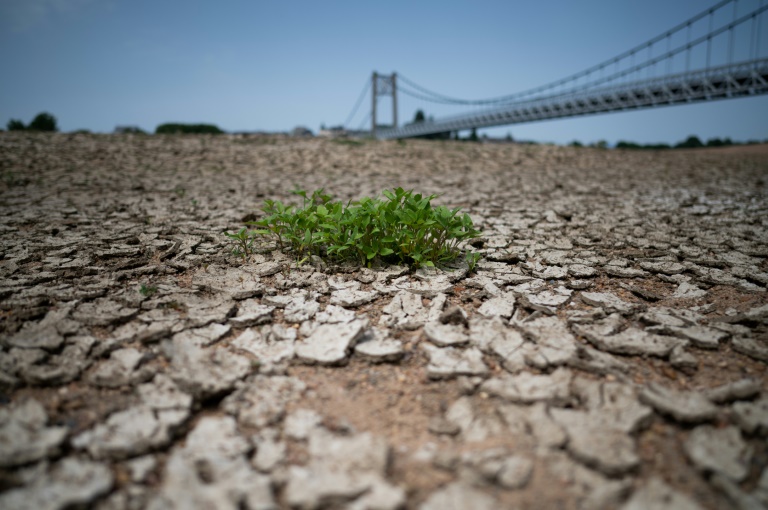
Several towns in northern Italy have announced water rationing and the Lombardy region may declare a state of emergency as a record drought threatens harvests.

Ibrahim Thiaw, executive secretary of the UN convention charged with reversing land degradation, on Friday warned drought was “set to increase in severity and frequency”.

“The consequences of droughts could affect up to three-quarters of humanity by 2050,” he said during a speech in Madrid.

The UK recorded its hottest day of the year on Friday with temperatures reaching over 30 Celsius in the early afternoon, meteorologists said. 

It was the third day in a row that temperature records had been broken in the UK, where it was over 28 Celsius on Wednesday and 29.5 Celsius on Thursday.

– Climate change –

Experts warned the high temperatures were caused by worrying climate change trends.  

“As a result of climate change, heatwaves are starting earlier,” said Clare Nullis, a spokeswoman for the World Meteorological Organization in Geneva.

“What we’re witnessing today is unfortunately a foretaste of the future” if concentrations of greenhouse gases in the atmosphere continue to rise and push global warming towards 2 Celsius from pre-industrial levels, she added.

In France, special measures have been taken in care homes for elderly people, still marked by the memory of a deadly 2003 heatwave that claimed at least 15,000 lives.

Buildings are being sprayed down with water to cool them and residents are being rotated through air-conditioned rooms.

In the Gironde department, which includes Bordeaux, authorities said all public events outdoors or in non-air-conditioned venues would be banned from 2:00 pm (1200 GMT) on Friday, a measure set to be broadened across the region.

And speed limits in several regions, including around Paris, have been reduced to limit the concentration of harmful smog or ozone in the heat.

Paris police chief Didier Lallement said only the least polluting vehicles would be allowed to drive in the capital on Saturday due to fine particle pollution.

Electric grid operator RTE said increased use of fans and air-conditioners was also driving up power consumption.

burs-tgb-sjw/raz/kjm

Europe braces for blistering June weekend heat

France, Spain and other western European nations braced on Saturday for a sweltering June weekend that is set to break records and sparked concern about forest fires and the effects of climate change.

The weather on Saturday will represent a peak of a June heatwave that is in line with warnings from scientists that such phenomena will now hit earlier than usual thanks to climate change.

Temperatures already nudged over 40 degrees Celsius (104 degrees Fahrenheit) in parts of France on Friday.

But they are due to relent slightly from Sunday with thunderstorms forecast in parts of France and elsewhere in Europe.

French state weather forecaster Meteo France said June temperature records had already been beaten in 11 areas on Friday and could reach as high as 42 Celsius in some areas on Saturday.

“This is the earliest heatwave ever recorded in France” since 1947, said Matthieu Sorel, a climatologist at Meteo France.

With “many monthly or even all-time temperature records likely to be beaten in several regions,” he called the weather a “marker of climate change”.

In Spain, forest fires burned nearly 9,000 hectares (22,240 acres) of land in the northwest Sierra de la Culebra region on Friday, forcing some 200 people from their homes, regional authorities said.

And more than 3,000 people were evacuated from the Puy du Fou theme park in central Spain due to a fierce fire nearby.

Firefighters were battling fires in several other regions, including woodlands in Catalonia where weather conditions complicated the fight. 

Temperatures were above 35 Celsius on Friday in most parts of the country.

– Hospitals full –

More than half of French departments were at the highest or second-highest heat alert level by the afternoon on Friday. 

“Hospitals are at capacity, but are keeping up with demand,” Health Minister Brigitte Bourguignon told reporters in Vienne, near Lyon in the southeast.

Schoolchildren were told to stay at home in departments at alert level “red” and the health ministry activated a special heatwave hotline.

The Red Cross also organised efforts to distribute water to the homeless community in Toulouse, where temperatures are expected to soar to 38 degrees Celsius on Saturday. 

“There are more deaths of people in the streets in the summer than in the winter,” said volunteer Hugues Juglair, 67.

Meanwhile rock and metal fans at the music festival Hellfest in western France were sprayed with water from hoses and enormous vaporisers in front of the stage as they headbanged or bounced to an opening-day line-up including Deftones and The Offspring.

Several towns in northern Italy have announced water rationing and the Lombardy region may declare a state of emergency as a record drought threatens harvests.

Ibrahim Thiaw, executive secretary of the UN convention charged with reversing land degradation, on Friday warned drought was “set to increase in severity and frequency”.

“The consequences of droughts could affect up to three-quarters of humanity by 2050,” he said during a speech in Madrid.

The UK recorded its hottest day of the year on Friday with temperatures reaching over 30 Celsius in the early afternoon, meteorologists said. 

It was the third day in a row that temperature records had been broken in the UK, where it was over 28 Celsius on Wednesday and 29.5 Celsius on Thursday.

– Climate change –

Experts warned the high temperatures were caused by worrying climate change trends.  

“As a result of climate change, heatwaves are starting earlier,” said Clare Nullis, a spokeswoman for the World Meteorological Organization in Geneva.

“What we’re witnessing today is unfortunately a foretaste of the future” if concentrations of greenhouse gases in the atmosphere continue to rise and push global warming towards 2 Celsius from pre-industrial levels, she added.

In France, special measures have been taken in care homes for elderly people, still marked by the memory of a deadly 2003 heatwave that claimed at least 15,000 lives.

Buildings are being sprayed down with water to cool them and residents are being rotated through air-conditioned rooms.

In the Gironde department, which includes Bordeaux, authorities said all public events outdoors or in non-air-conditioned venues would be banned from 2:00 pm (1200 GMT) on Friday, a measure set to be broadened across the region.

And speed limits in several regions, including around Paris, have been reduced to limit the concentration of harmful smog or ozone in the heat.

Paris police chief Didier Lallement said only the least polluting vehicles would be allowed to drive in the capital on Saturday due to fine particle pollution.

Electric grid operator RTE said increased use of fans and air-conditioners was also driving up power consumption.

burs-tgb-sjw/raz/kjm

Ecuador declares state of emergency in three provinces over Indigenous protests

Ecuador’s President Guillermo Lasso declared a state of emergency in three provinces late Friday in response to sometimes violent protests by Indigenous groups demanding cuts in fuel prices.

Oil producer Ecuador has been hit by rising inflation, unemployment and poverty exacerbated by the coronavirus pandemic.

Fuel prices have risen sharply since 2020, almost doubling for diesel from $1 to $1.90 per gallon (3.8 liters) and rising from $1.75 to $2.55 for petrol.

Demonstrators from the country’s Indigenous community — which makes up over a million of Ecuador’s 17.7 million inhabitants — launched an open-ended anti-government protest this week that has since been joined by students, workers and others.

The demonstrations have blocked roads across the country, including highways leading into the capital Quito.

Clashes with security forces during the protests have left at least 43 people injured, and 37 have been arrested.

In response, Lasso’s decree Friday — which covers Quito — enables the president to mobilize the armed forces to maintain order, suspend civil rights and declare curfews. 

“I am committed to defending our capital and our country,” Lasso said on television. 

“I called for dialogue and the response was more violence. There is no intention to seek solutions.”

The demonstrations have largely been concentrated in the northern region of Pichincha and neighboring Cotopaxi and Imbabura.

With spears in hand, Indigenous Amazonians this week temporarily occupied local government headquarters in the provinces of Pastaza and Morona Santiago.

The country’s armed forces on Twitter condemned “the violent actions carried out by protesters” in Pastaza, saying one person had been left with “fractures and multiple injuries.”

In Quito, nearly 1,000 protesters tried to tear down metal fences that surround the presidential headquarters.

– No compromise –

In a bid to ease grassroots anger, Lasso announced in his address late Friday a small increase in a monthly subsidy paid to Ecuador’s poorest, as well as a program to ease the debt of those who have loans from state-run banks.

Lasso, a rightwing ex-banker who took office a year ago, met Thursday with Indigenous leaders to assuage discontent but the discussions apparently yielded little result.

Producers of flowers, one of Ecuador’s main exports, complained Friday that due to the roadblocks, their wares were rotting.

But the powerful Confederation of Indigenous Nationalities of Ecuador (Conaie), which called the protests, has said it will maintain the road blockades until the government meets 10 demands.

Conaie — which has been credited with helping topple three Ecuadorian presidents between 1997 and 2005 — wants prices reduced to $1.50 for diesel and $2.10 for petrol, a demand the government has so far rejected.

Its other demands include food price controls and renegotiating the personal bank loans of about four million families.

In response to Lasso’s decree, the head of Conaie, Leonidas Iza, insisted the protests would go on “indefinitely.”

“From this moment we prepare the mobilization” of activists to Quito to maintain the protests, he added, without specifying when the demonstrators would arrive.

The protests have so far caused about $50 million in damage to the economy, according to the Ministry of Production.

But Conaie has called for an end to the violence.

“Vandalism, confrontation, violence cannot be accepted,” said Iza.

One dead in Shanghai chemical plant explosion

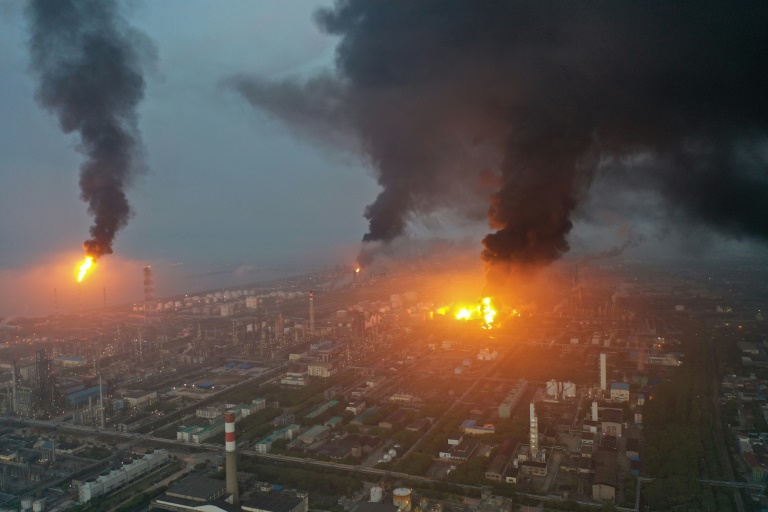
Huge clouds of black smoke billowed over Shanghai from multiple fires at a chemical plant Saturday that left at least one dead, according to state media and eyewitness video obtained by AFP.

The fire at a Sinopec Shanghai Petrochemical Co. plant in outlying Jinshan district broke out around 4:00 am, but was brought under control later that morning, according to state news agency Xinhua.

Aerial drone footage shared by a resident with AFP shows thick clouds of smoke hanging over a vast industrial zone as three fires blaze in separate locations, turning the sky black. 

“The fire at the scene has been effectively brought under control and protective burning is currently being carried out,” Xinhua reported.

“According to our initial understanding, the fire has already caused one death.”

The fire erupted as Shanghai, China’s industrial engine and most populous city, gingerly resumes business after being sealed off for around two months to counter a coronavirus outbreak driven by the Omicron variant.

While the lockdown was officially lifted at the beginning of June, the snarling of supply chains and shutting of factories continues to have far-reaching consequences for the global economy.

At the petrochemical plant, an early morning explosion was heard by residents up to six kilometres (four miles) away, according to local media.

Videos on social media showed a large cloud of fire and ash billowing upwards.

“The whole area is completely incinerated,” a shocked resident could be heard saying in the background of one video.

The refinery is very near the seafront in south Shanghai, as well as a wetland park. 

The Shanghai fire department said on Weibo that it had dispatched more than 500 personnel immediately after the incident around 4:28 am.

The Ministry of Emergency Management has dispatched an expert group to the scene, CCTV reported.

Reports have not stated a possible cause of the fire. 

Russian state TV airs videos of two missing Americans in Ukraine

A Russian state TV channel aired videos on social media of two Americans who went missing last week while fighting alongside the Ukrainian army, stating they had been captured by Russian forces. 

United States President Joe Biden had said earlier Friday he did not know the whereabouts of Alexander Drueke and Andy Huynh, both US military veterans whose relatives lost contact with the pair.

The missing Americans — including a third identified as a former US Marines captain — are believed to be part of an unknown number of mostly military veterans who have joined other foreigners to volunteer alongside Ukrainian troops.

On Friday evening, Russian journalist Roman Kosarev — who works with state TV RT channel — posted a video on messaging platform Telegram of Drueke speaking facing the camera.

“Mom, I just want to let you know that I’m alive and I hope to be back home as soon as I can be,” said Drueke, who was seated in what appeared to be an office and dressed in military fatigues.

“Love Diesel for me, love you,” he said, concluding his brief video with a quick wink. Reports in the United States say Diesel was Drueke’s dog.

RT’s official Telegram channel also posted an interview with Huynh, in which he said the duo had been “engaged in combat with Russian troops” near Ukraine’s flashpoint Kharkiv area.

After the pair retreated and hid for hours, they surrendered themselves to Russian troops, Huynh said.

The pair were also filmed in separate RT videos — directly facing a camera angled from above — saying “I’m against the war”, in poor Russian. 

The circumstances under which the two men were speaking were not fully clear, nor who specifically was holding them.

A US State Department spokesperson on Saturday confirmed American authorities had seen the photos and videos of the two US citizens “reportedly captured by Russia’s military forces in Ukraine”. 

“We are closely monitoring the situation and our hearts go out to their families during this difficult time,” the spokesperson told AFP.

– Worried families –

Drueke’s mother Lois had told CNN Thursday that her son went to Ukraine after discussing it with her for about a month.

“I want everyone to know… we don’t want one to come home without the other. They were best buddies there and we want everybody to remember it’s not just one person there,” she said. 

Huynh’s fiance Joy Black said in the same interview that she last heard from him on June 8. 

“He told me he loved me very much and that he would be unavailable for two, three days… he was trying not to worry me,” Black said, in tears. 

“I just want to see him back safely.” 

During a White House briefing on Friday, Biden urged US citizens not to go to Ukraine. 

“Americans should not be going to Ukraine now. I’ll say it again: Americans should not be going to Ukraine,” he said.

The Russian proxy authorities in the so-called Donetsk People’s Republic, a Moscow-controlled swath of eastern Ukraine, have sentenced to death two British men and a Moroccan captured earlier in fighting.

Man aboard plane grounded in Argentina linked to Quds Force: Paraguay

One of the men aboard a plane grounded near Buenos Aires has ties to Iran’s Quds Force, Paraguay’s intelligence chief said Friday, despite claims by Argentina that no evidence links the case to Tehran’s overseas intelligence.

Intelligence chief Esteban Aquino told AFP that Captain Gholamreza Ghasemi did not merely share a name with a member of the Force — an arm of Iran’s Revolutionary Guards which is listed as a terrorist organization by the United States — but is in fact the same man.

Argentine Minister of Security Anibal Fernandez responded Friday that while the Paraguayan official “has his right to say whatever he wants… I’m not going to talk about conjecture.”

“We abide by due process. And according to the official documentation, there is no specific relationship with terrorist organizations, according to all the databases,” Fernandez told AM750 radio.

The Boeing 747 cargo plane, reportedly carrying car parts, has been held at an Argentine airport since Wednesday last week, with its 14 Venezuelan and five Iranian crew members prevented from leaving the country pending an investigation.

On Monday, Argentine officials raised suspicions of a link between the flight and the Revolutionary Guards.

The plane arrived in Argentina from Mexico on June 6, before trying to fly to Uruguay two days later, where it was refused entry.

Uruguay’s Interior Minister Luis Alberto Heber said Tuesday the country had been responding to a “formal warning from Paraguayan intelligence.”

It then returned to Argentina where it has been grounded ever since.

The plane belongs to Emtrasur, a subsidiary of Venezuela’s Conviasa, which is under US sanctions.

Paraguay on Tuesday said it had information that seven crew on the plane, which stopped in the country in May, were Quds Force members.

Iran has said the plane was sold to a Venezuelan company by Tehran’s Mahan Air last year.

The United States has accused Mahan Air of links to the Revolutionary Guards.

Vietnam jails high-profile environmentalist on tax evasion

A high-profile environmentalist and anti-coal campaigner in Vietnam has been jailed for two years on tax evasion charges, her NGO said on Saturday.

Nguy Thi Khanh, a globally recognised climate and energy campaigner, was sentenced in Hanoi on Friday, a court official confirmed to AFP without giving any further details.

The 46-year-old — who was arrested in February “on a tax evasion accusation”, according to state-owned media — had been among the few in the communist nation challenging the government’s plans to increase coal power to fuel economic development.

Khanh, the first Vietnamese winner of the Goldman Environmental Prize, had convinced officials to strip 20,000 megawatts of coal power from the national energy plan by 2030.

“From her contribution to Vietnamese society and her works, the verdict given to Khanh was too harsh,” her environmental NGO GreenID told AFP, referring to the two-year sentence for tax evasion charges.

Michael Sutton, the Goldman Environmental Prize executive director, called for Khanh’s release.

“We believe that the legal charges levelled against her are part of a wider effort to silence environmental leaders in Vietnam,” said Sutton.

Prior to her detention, Khanh had said she wanted Vietnam to scale back its ambitious coal plans in favour of more renewable energy options.

In a 2020 interview with AFP, she acknowledged the risks of her activism.

“When we got global recognition, vested interest groups recognised who their enemy is, and they are very powerful,” she said.

Khanh’s imprisonment comes as raids targeting corrupt officials and those implicated in economic scandals have intensified.

In a parched land, Iraqi gazelles dying of hunger

Gazelles at an Iraqi wildlife reserve are dropping dead from hunger, making them the latest victims in a country where climate change is compounding hardships after years of war.

In little over one month, the slender-horned gazelle population at the Sawa reserve in southern Iraq has plunged from 148 to 87.

Lack of funding along with a shortage of rain has deprived them of food, as the country’s drought dries up lakes and leads to declining crop yields.

President Barham Saleh has warned that tackling climate change “must become a national priority for Iraq as it is an existential threat to the future of our generations to come”.

The elegant animals, also known as rhim gazelles, are recognisable by their gently curved horns and sand-coloured coats. The International Union for Conservation of Nature classes the animals as endangered on its Red List.

Outside Iraq’s reserves, they are mostly found in the deserts of Libya, Egypt and Algeria but are unlikely to number “more than a few hundred” there, according to the Red List.

Turki al-Jayashi, director of the Sawa reserve, said gazelle numbers there plunged by around 40 percent in just one month to the end of May.

“They no longer have a supply of food because we have not received the necessary funds” which had come from the government, Jayashi said.

Iraq’s finances are under pressure after decades of war in a poverty-stricken country needing agricultural and other infrastructure upgrades.

It is grappling with corruption, a financial crisis and political deadlock which has left Iraq without a new government months after October elections.

“The climate has also strongly affected the gazelles,” which lack forage in the desert-like region, Jayashi added.

– Barren soil –

At three other Iraqi reserves further north, the number of rhim gazelles has fallen by 25 percent in the past three years to 224 animals, according to an agriculture ministry official who asked to remain anonymous.

He blamed the drop at the reserves in Al-Madain near Baghdad, and in Diyala and Kirkuk on a “lack of public financing”.

At the Sawa reserve, established in 2007 near the southern city of Samawah, the animals pant under the scorching sun.

The brown and barren earth is dry beyond recovery, and meagre shrubs that offer slight nourishment are dry and tough.

Some gazelles, including youngsters still without horns, nibble hay spread out on the flat ground.

Others take shelter under a metal roof, drinking water from a trough.

Summer hasn’t even begun but temperatures have already hit 50 degrees Celsius (122 Fahrenheit) in parts of the country.

The effects of drought have been compounded by dramatic falls in the level of some rivers due to dams upstream and on tributaries in Turkey and Iran.

Desertification affects 39 percent of Iraqi land, the country’s president has warned.

“Water scarcity negatively affects all our regions. It will lead to reduced fertility of our agricultural lands because of salination,” Saleh said.

He has sent 100 million dinars (over $68,000) in an effort to help save the Sawa reserve’s rhim gazelles, Jayashi said.

But the money came too late for some.

Five more have just died, their carcasses lying together on the brown earth.

In a parched land, Iraqi gazelles dying of hunger

Gazelles at an Iraqi wildlife reserve are dropping dead from hunger, making them the latest victims in a country where climate change is compounding hardships after years of war.

In little over one month, the slender-horned gazelle population at the Sawa reserve in southern Iraq has plunged from 148 to 87.

Lack of funding along with a shortage of rain has deprived them of food, as the country’s drought dries up lakes and leads to declining crop yields.

President Barham Saleh has warned that tackling climate change “must become a national priority for Iraq as it is an existential threat to the future of our generations to come”.

The elegant animals, also known as rhim gazelles, are recognisable by their gently curved horns and sand-coloured coats. The International Union for Conservation of Nature classes the animals as endangered on its Red List.

Outside Iraq’s reserves, they are mostly found in the deserts of Libya, Egypt and Algeria but are unlikely to number “more than a few hundred” there, according to the Red List.

Turki al-Jayashi, director of the Sawa reserve, said gazelle numbers there plunged by around 40 percent in just one month to the end of May.

“They no longer have a supply of food because we have not received the necessary funds” which had come from the government, Jayashi said.

Iraq’s finances are under pressure after decades of war in a poverty-stricken country needing agricultural and other infrastructure upgrades.

It is grappling with corruption, a financial crisis and political deadlock which has left Iraq without a new government months after October elections.

“The climate has also strongly affected the gazelles,” which lack forage in the desert-like region, Jayashi added.

– Barren soil –

At three other Iraqi reserves further north, the number of rhim gazelles has fallen by 25 percent in the past three years to 224 animals, according to an agriculture ministry official who asked to remain anonymous.

He blamed the drop at the reserves in Al-Madain near Baghdad, and in Diyala and Kirkuk on a “lack of public financing”.

At the Sawa reserve, established in 2007 near the southern city of Samawah, the animals pant under the scorching sun.

The brown and barren earth is dry beyond recovery, and meagre shrubs that offer slight nourishment are dry and tough.

Some gazelles, including youngsters still without horns, nibble hay spread out on the flat ground.

Others take shelter under a metal roof, drinking water from a trough.

Summer hasn’t even begun but temperatures have already hit 50 degrees Celsius (122 Fahrenheit) in parts of the country.

The effects of drought have been compounded by dramatic falls in the level of some rivers due to dams upstream and on tributaries in Turkey and Iran.

Desertification affects 39 percent of Iraqi land, the country’s president has warned.

“Water scarcity negatively affects all our regions. It will lead to reduced fertility of our agricultural lands because of salination,” Saleh said.

He has sent 100 million dinars (over $68,000) in an effort to help save the Sawa reserve’s rhim gazelles, Jayashi said.

But the money came too late for some.

Five more have just died, their carcasses lying together on the brown earth.

Close Bitnami banner
Bitnami