World

Seaweed and 3D printers: Chile's innovative approach to feeding kids

Some dehydrated “cochayuyo” seaweed, some instant mashed potatoes and hot water: these are the ingredients for a nutritious menu of 3D printed food that nutritional experts in Chile hope will revolutionize the food market, particularly for children.

With a 3D food printer and a modern twist on the traditional use of cochayuyo, an algae typically found in Chile, New Zealand and the South Atlantic, Roberto Lemus, a professor at the University of Chile and several students, have managed to create nutritious and edible figures that they hope kids will love to eat. 

Pokemon figures, or any type of animal imaginable, are all fed into the 3D printer, together with the gelatinous mixture, and the food is “printed” out seven minutes later. 

“We looking for different figures, fun figures…visual, colors, taste, flavors, smells,” Lemus told AFP. 

But, he stressed, the main focus is on nutritional content. “The product has to be highly nutritious for people, but it also has to be tasty,” he said. 

3D food printers are expensive, costing from $4,000 to more than $10,000, but Lemus hopes that as technology advances, their cost will come down and reach more people. 

The technology is developing in the culinary field in dozens of countries, and 3D food printers are used to design sweets, pasta and other foods. 

NASA already tested it in 2013 with the idea of expanding the variety of foods that astronauts dine on in space.

– Superpower algae –

Chile is making progress with cochayuyo seaweed, one of the typical ingredients of the coastal nation’s cuisine, and which is rich amino acids, minerals and iodine, according to Alonso Vasquez, a 25-year-old postgraduate student who is writing his thesis on the subject. 

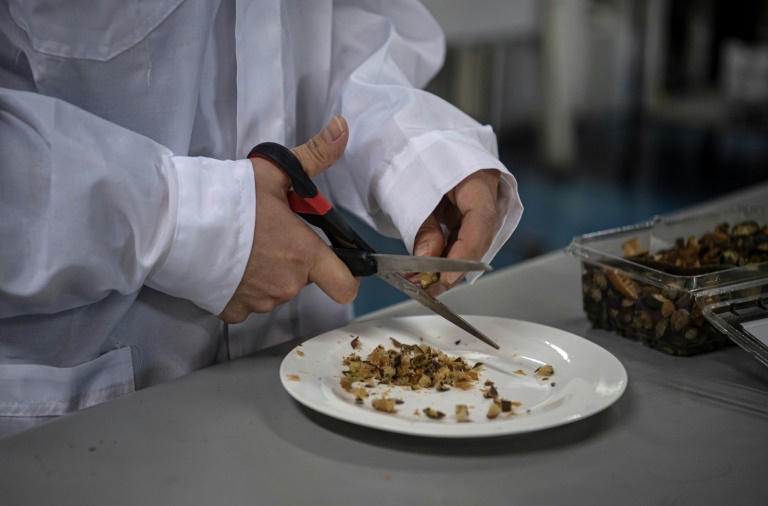
The young researcher takes dehydrated cochayuyo, cuts it and grinds it to create cochayuyo flour which he then mixes with instant mashed potato powder. 

He then adds hot water to the mixture to create a gelatinous and slimy substance that he feeds into the printer. 

“It occurred to me to use potatoes, rice flour, all of which have a lot of starch. The starch of these raw materials combined with the cochayuyo alginate is what generates stabilization within the 3D printing,” he says, waiting for the printer to finish creating a Pikachu figure of about two centimeters (just under one inch) and a taste of mashed potatoes and the sea. 

The project has been underway for two years and is still in its infancy, but the idea is to apply ingredients such as edible flowers or edible dyes to the menu to make them more attractive to children.
Seaweed and 3D printers: Chile's innovative approach to feeding kids

Some dehydrated “cochayuyo” seaweed, some instant mashed potatoes and hot water: these are the ingredients for a nutritious menu of 3D printed food that nutritional experts in Chile hope will revolutionize the food market, particularly for children.

With a 3D food printer and a modern twist on the traditional use of cochayuyo, an algae typically found in Chile, New Zealand and the South Atlantic, Roberto Lemus, a professor at the University of Chile and several students, have managed to create nutritious and edible figures that they hope kids will love to eat. 

Pokemon figures, or any type of animal imaginable, are all fed into the 3D printer, together with the gelatinous mixture, and the food is “printed” out seven minutes later. 

“We looking for different figures, fun figures…visual, colors, taste, flavors, smells,” Lemus told AFP. 

But, he stressed, the main focus is on nutritional content. “The product has to be highly nutritious for people, but it also has to be tasty,” he said. 

3D food printers are expensive, costing from $4,000 to more than $10,000, but Lemus hopes that as technology advances, their cost will come down and reach more people. 

The technology is developing in the culinary field in dozens of countries, and 3D food printers are used to design sweets, pasta and other foods. 

NASA already tested it in 2013 with the idea of expanding the variety of foods that astronauts dine on in space.

– Superpower algae –

Chile is making progress with cochayuyo seaweed, one of the typical ingredients of the coastal nation’s cuisine, and which is rich amino acids, minerals and iodine, according to Alonso Vasquez, a 25-year-old postgraduate student who is writing his thesis on the subject. 

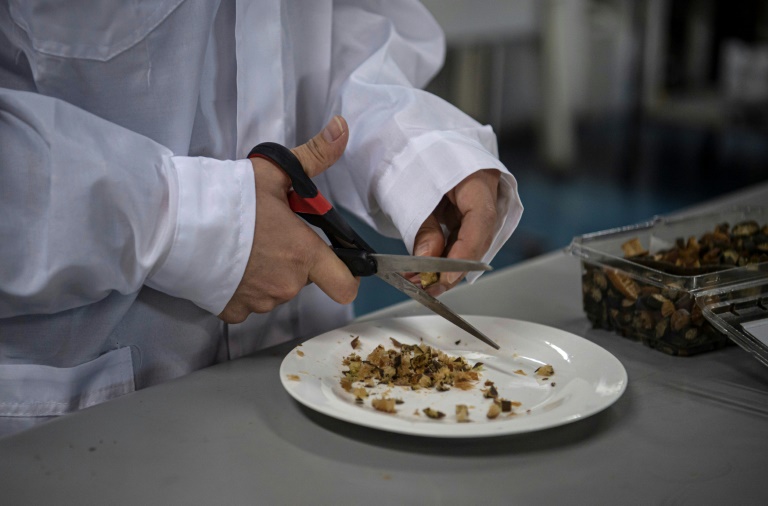
The young researcher takes dehydrated cochayuyo, cuts it and grinds it to create cochayuyo flour which he then mixes with instant mashed potato powder. 

He then adds hot water to the mixture to create a gelatinous and slimy substance that he feeds into the printer. 

“It occurred to me to use potatoes, rice flour, all of which have a lot of starch. The starch of these raw materials combined with the cochayuyo alginate is what generates stabilization within the 3D printing,” he says, waiting for the printer to finish creating a Pikachu figure of about two centimeters (just under one inch) and a taste of mashed potatoes and the sea. 

The project has been underway for two years and is still in its infancy, but the idea is to apply ingredients such as edible flowers or edible dyes to the menu to make them more attractive to children.
Seaweed and 3D printers: Chile's innovative approach to feeding kids

Some dehydrated “cochayuyo” seaweed, some instant mashed potatoes and hot water: these are the ingredients for a nutritious menu of 3D printed food that nutritional experts in Chile hope will revolutionize the food market, particularly for children.

With a 3D food printer and a modern twist on the traditional use of cochayuyo, an algae typically found in Chile, New Zealand and the South Atlantic, Roberto Lemus, a professor at the University of Chile and several students, have managed to create nutritious and edible figures that they hope kids will love to eat. 

Pokemon figures, or any type of animal imaginable, are all fed into the 3D printer, together with the gelatinous mixture, and the food is “printed” out seven minutes later. 

“We looking for different figures, fun figures…visual, colors, taste, flavors, smells,” Lemus told AFP. 

But, he stressed, the main focus is on nutritional content. “The product has to be highly nutritious for people, but it also has to be tasty,” he said. 

3D food printers are expensive, costing from $4,000 to more than $10,000, but Lemus hopes that as technology advances, their cost will come down and reach more people. 

The technology is developing in the culinary field in dozens of countries, and 3D food printers are used to design sweets, pasta and other foods. 

NASA already tested it in 2013 with the idea of expanding the variety of foods that astronauts dine on in space.

– Superpower algae –

Chile is making progress with cochayuyo seaweed, one of the typical ingredients of the coastal nation’s cuisine, and which is rich amino acids, minerals and iodine, according to Alonso Vasquez, a 25-year-old postgraduate student who is writing his thesis on the subject. 

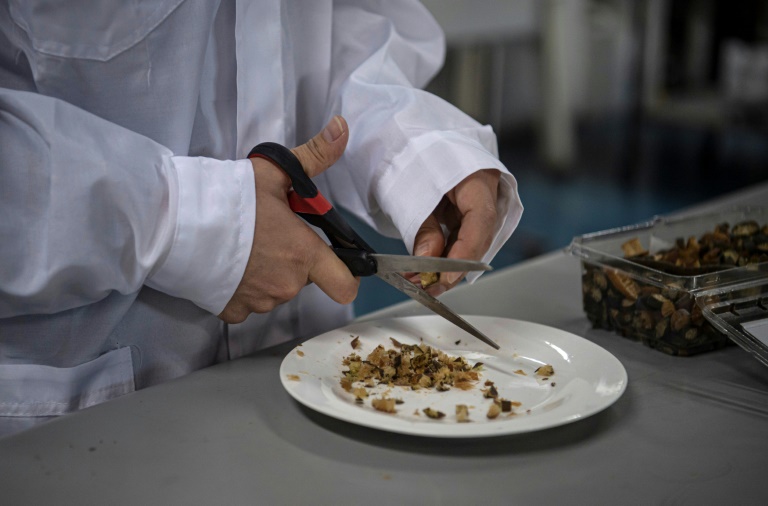
The young researcher takes dehydrated cochayuyo, cuts it and grinds it to create cochayuyo flour which he then mixes with instant mashed potato powder. 

He then adds hot water to the mixture to create a gelatinous and slimy substance that he feeds into the printer. 

“It occurred to me to use potatoes, rice flour, all of which have a lot of starch. The starch of these raw materials combined with the cochayuyo alginate is what generates stabilization within the 3D printing,” he says, waiting for the printer to finish creating a Pikachu figure of about two centimeters (just under one inch) and a taste of mashed potatoes and the sea. 

The project has been underway for two years and is still in its infancy, but the idea is to apply ingredients such as edible flowers or edible dyes to the menu to make them more attractive to children.

No petrol, no cars: Cubans turn to electric transport

There is a new sight on the streets of Havana: increasing numbers of electric vehicles whizzing among the old American cars so emblematic of the Cuban capital.  

As fuel shortages and US sanctions take their toll, and even though electricity generation can be spotty, Cubans are turning to smaller, cheaper, plug-in alternatives.

“Gasoline? Imagine. After 50 years battling to get hold of it, I don’t even want to smell it anymore!” taxi driver Sixto Gonzalez, 58, told AFP atop the shining, electric-blue quadricycle with which he moves through the streets at a top speed of about 40 kilometers (25 miles) per hour.

Gonzalez has abandoned his old, combustion-engine car — one of about 600,000 registered on the island of 11.2 million people, according to official data.

The last time he tried to fill it up, he stood in a queue for eight hours.

By far the majority of cars in circulation in Cuba are American models from the 1950s — before sanctions started — and compact Ladas from the Soviet era.

Newer models are practically impossible to lay one’s hands on and come with a hefty price tag of between about $20,000 and $100,000.

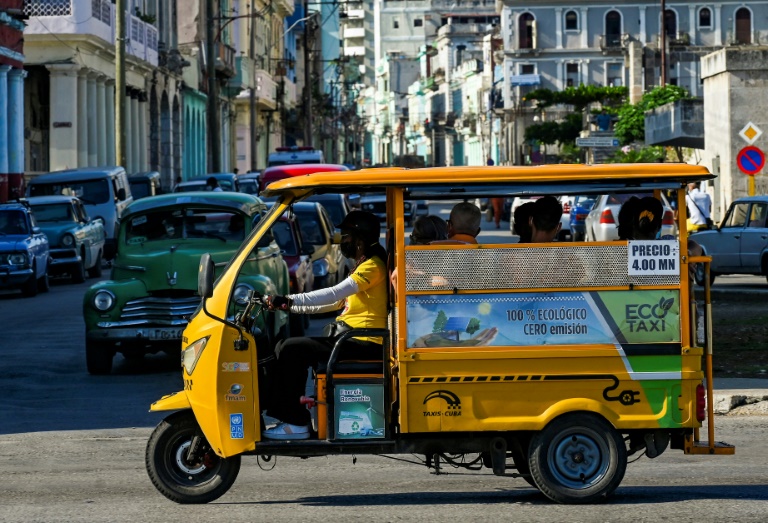
The quadricycle Gonzalez bought, by comparison, can be obtained for between $4,000 and $8,000 and though slower, can get four or five people from Point A to Point B.

Also increasingly popular are electric motorbikes — of which there are an estimated 40,000 to 50,000 in Cuba — and three-wheelers all the more frequently seen dragging a carriage full of passengers or goods.

– ‘Museum on wheels’ –

In a once-abandoned Soviet-era truck factory in the central city of Santa Clara, about 100 workers of the company Minerva assemble electric vehicles with parts imported from China or Vietnam.

The objective for 2022 is to produce 10,000 electric motorbikes, Minerva boss Elier Perez told AFP — double the factory’s previous record — as well as 2,000 three-wheelers.

“I had to buy one because the fuel ran out and the queues are endless,” said Raul Suarez, a 52-year-old security guard who got himself an electric motorbike.

“I have to be able to get around.”

Not only are cars prohibitively expensive and scarce, but public transport in the capital is a daily ordeal for many.

Half of buses are out of service for a lack of tires and batteries that cannot be imported due to US sanctions, said transport ministry official Guillermo Gonzalez.

Havanans sometimes wait for hours for a bus to get to work or back home.

At the same time, fuel shortages have worsened since the US reinforced its six-decade-old economic blockade of the communist island in 2019, preventing the arrival of fuel tankers from Venezuela, a Cuban ally.

Petrol supply plummeted from 100,000 barrels a day to about 56,000 barrels per day on average in 2021, said Jorge Pinon, a Cuban energy policy expert at the University of Texas. 

Three years ago, the government began to promote the use of electric cars, introducing them to state-owned companies to be used by workers.

“Cuba is a museum on wheels,” said Gonzalez of the abundance of decades-old gas guzzlers.

It is hoped that a rollout of electric cars will lower “fuel consumption… and at the same time reduce pollution,” he added.

– Like a fridge –

But electricity supply, too, is a concern.

For weeks now, Cubans have had to deal with regular cuts, sometimes lasting hours at a time, due to generation failures and maintenance work on thermoelectric plants.

And in a bid to make up some of the shortage, the authorities have turned to generators that use up much of the limited diesel stock.

“There has never been a situation as difficult as the one we have now, and there are still three months of summer to come,” said Pinon, alluding to the annual warm-weather rise in demand for energy to run air conditioners.

Ramses Calzadilla, director of strategy at Cuba’s energy ministry, said he was confident that electricity generation would be restored to full capacity shortly and insisted the situation did not threaten the burgeoning electric vehicle sector.

“An electric motorcycle uses about as much energy as a refrigerator,” he told AFP, and can be charged quickly and cheaply between programmed power cuts.

SpaceX fires workers behind letter criticizing Musk

Elon Musk’s SpaceX has fired several employees behind a letter critical of the outspoken billionaire’s public behavior, the aerospace firm said in a message to staff confirmed by AFP on Friday.

A “small group” of employees sought their colleagues’ signatures in a show of support for the letter and participation in a survey, SpaceX chief operating officer Gwynne Shotwell wrote in an email late Thursday. 

The mercurial billionaire regularly uses Twitter to provoke, speak directly to customers as well as fans and sometimes offend with unfiltered or crude comments.

Shotwell’s message said some workers felt “uncomfortable, intimidated and bullied, and/or angry because the letter pressured them to sign onto something that did not reflect their views.”

“We have too much critical work to accomplish and no need for this kind of overreaching activism,” she added.

After conducting an investigation, the company “terminated a number of employees involved,” Shotwell said, without specifying how many.  

The workers’ letter, first reported by website The Verge, criticized Musk’s behavior in public, as well as recent accusations of sexual harassment against him, as “a frequent source of distraction and embarrassment for us.” 

“As our CEO and most prominent spokesperson, Elon is seen as the face of SpaceX — every Tweet that Elon sends is a de facto public statement by the company,” the letter added.

Musk, who also heads electric car maker Tesla, is in the midst of roller-coaster $44 billion bid to buy Twitter that has brought even more attention to the entrepreneur.

TikTok says Oracle to keep US user data safe

TikTok on Friday said Oracle will store all the data from its US users, in a bid to allay fears about its safety in the hands of a platform owned by ByteDance in China.

The announcement came as the popular video snippet sharing service fended off concerns about the ability of engineers in China to access information about US users that isn’t public.

ByteDance employees have repeatedly accessed information about US TikTok users, according to a Buzzfeed news report citing leaked audio from TikTok in-house meetings.

It is common for some engineers at internet firms to be granted access to data, and TikTok told AFP it is trying to minimize that kind of system privilege.

“Similar to industry peers, we will continue to drive our goal of limiting the number of employees who have access to user data and the scenarios where data access is enabled,” TikTok chief information security officer Roland Cloutier said in a blog post highlighted by the company.

“Our goal is to minimize data access across regions so that, for example, employees in the (Asia Pacific) region, including China, would have very minimal access to user data from the EU and US.”

TikTok has been adamant that it has never given US user data to Chinese officials and that it would refuse if asked to do so.

Last month, TikTok created a new US data security devoted to strengthening protection policies and protocols to safeguard user information, a TikTok spokesperson told AFP.

“We’ve brought in world class internal and external security experts to help us strengthen our data security efforts,’ the spokesperson said.

TikTok will continue to use its own datacenters in Virginia and Singapore to backup information as it works to “fully pivot” to relying on Oracle in the United States, it said in a post.

“We know we are among the most scrutinized platforms from a security standpoint, and we aim to remove any doubt about the security of US user data,” said Albert Calamug, who handles US security public policy at TikTok.

President Joe Biden last year revoked executive orders from his predecessor Donald Trump seeking to ban Chinese-owned apps TikTok and WeChat from US markets on national security concerns.

Trump had given his blessing to a plan that would have given TikTok to US tech giant Oracle with investments from retail powerhouse Walmart, but that deal failed to win approval in Beijing.

Biden’s new executive order nixed the unimplemented ban and called for “an evidence-based analysis to address the risks” from internet applications controlled by foreign entities.

WeChat, part of Chinese tech giant Tencent, is a “super app” which includes social networking, messaging, e-commerce and more.

TikTok revealed late last year that it had a billion users worldwide.

“Today, 100 percent of US user traffic is being routed to Oracle Cloud Infrastructure,” Calamug said.

“In addition, we’re working closely with Oracle to develop data management protocols that Oracle will audit and manage to give users even more peace of mind.”

Stocks waver, oil prices fall on recession fears

Stock markets wobbled and oil prices sank on Friday amid growing fears that inflation-fighting interest rate hikes by central banks could trigger recession.

Investors were shaken this week after the US Federal Reserve unleashed its biggest hike in borrowing costs for almost 30 years to tackle red-hot consumer prices.

The third Fed increase was followed by the fifth straight hike by the Bank of England and the first in 15 years by the Swiss central bank, underscoring the growing global concerns about inflation.

The moves caused a global selloff on Thursday. US and European markets tried to stage a rebound on Friday, but some indices were back in the red later in the day.

On Wall Street, the Dow Jones Industrial Average ended back under 30,000 points while the broad-based S&P 500 eked out a positive close and the tech-heavy Nasdaq rose 1.4 percent.

But the S&P lost 5.8 percent for the week, its worst performance since 2020.

European markets seesawed, with London finishing in the red, Paris almost flat and Frankfurt closing higher.

“Sentiment has been shattered and equities could suffer further,” Craig Erlam, an analyst at online trading platform OANDA, told AFP.

Karl Haeling of LBBW agreed, saying “markets are oversold, but probably not oversold enough to call for a bottom.”

He said the modest gains Friday likely mark “a little technical pause.”

Sentiment turned sour again as US official data showed industrial production in May had risen by just 0.2 percent, much slower than April and weaker than expected.

“We see that the positive attempts get rapidly killed as the market prices in a higher recession risk as inflation doesn’t ease,” Ipek Ozkardeskaya, analyst at Swissquote bank, told AFP.

Asian stock markets mostly closed lower Friday.

Recession fears also gripped the oil market as WTI, the US benchmark, fell by 6.4 percent to $110.04 per barrel. The international benchmark, Brent North Sea Crude, dropped 5.4 percent to $113.29.

Energy prices have soared since Russia invaded Ukraine, driving inflation higher, which has prompted central banks to spring into action. 

– BoJ bucks the trend –

Investors worry that while the rate increases can help tame inflation, they also crimp demand and economic growth.

The Bank of Japan bucked the global trend on Friday as it stood by its decision not to raise its rate, sending the yen close to the lowest level against the dollar since 1998.

Officials in Tokyo insist that low rates are still needed to nurture a struggling economy, though the BoJ did say it “was necessary to pay due attention to developments in financial and foreign exchange markets”.

Stock markets have been tumbling for months as traders contemplate the end of the era of cheap cash that had sent share prices to record or multi-year highs.

Inflation worldwide stands at levels not seen for decades owing in particular to surges in energy and food prices.

US markets will be closed on Monday for the Juneteenth holiday.

– Key figures at around 2100 GMT –

New York – Dow: DOWN 0.1 percent at 29,888.78 (close)

New York – S&P 500: UP 0.2 percent at 3,674.84 (close)

New York – Nasdaq: UP 1.4 percent at 10,798.35 (close)

London – FTSE 100: DOWN 0.4 percent at 7,016.25 (close) 

Frankfurt – DAX: UP 0.7 percent at 13,126.26 (close)

Paris – CAC 40: DOWN 0.1 percent at 5,882.65 (close)

EURO STOXX 50: UP 0.3 percent at 3,438.96 (close)

Tokyo – Nikkei 225: DOWN 1.8 percent at 25,963.00 (close)

Hong Kong – Hang Seng Index: UP 1.1 percent at 21,075.00 (close)

Shanghai – Composite: UP 1.0 percent at 3,316.79 (close)

Euro/dollar: DOWN at $1.0493 from $1.0549 late Thursday

Pound/dollar: DOWN at $1.2221 from $1.2353

Euro/pound: UP at 85.83 pence from 85.41 pence

Dollar/yen: UP at 134.99 yen from 132.21 yen

Brent North Sea crude: DOWN 5.4 percent at $113.33 a barrel

West Texas Intermediate: DOWN 6.3 percent at $110.21

burs-lth/har/hs/dw

US stocks end rocky week lower ahead of holiday

New York equities ended a rocky week mostly higher on Friday but lower for the week amid worsening fears of recession as the US central bank takes aggressive action against inflation. 

In the last session before the holiday weekend, the broad-based S&P 500, which entered a bear market earlier this week, added 0.2 percent to finish at 3,674.84, while the tech-rich Nasdaq Composite Index gained 1.4 percent to 10,798.35.

The Dow Jones Industrial Average slipped 0.1 percent to 29,888.78, after closing below 30,000 on Thursday for the first time since January 2021.

The S&P lost 5.8 percent in the week, its worst performance since 2020, while the Dow and Nasdaq dropped 4.8 percent.

Wall Street stocks have been battered amid moves to raise interest rates to combat blistering inflation.

Investors initially welcomed the Federal Reserve’s super-sized rate hike on Wednesday, but retreated after other central banks including the Bank of England joined.

The Fed promised there are more big rate hikes to come, and recent economic data has not helped sentiment, including weak manufacturing data that followed a surprising resurgence in inflation in May.

Karl Haeling of LBBW said “markets are oversold, but probably not oversold enough to call for a bottom.”

He said the modest gains Friday likely mark “a little technical pause.”

But Kim Forrest of Bokeh Capital Partners did not read a lot into the session.

“We’ve had a pretty dramatic sell off yesterday. And it’s a holiday on Monday and people probably left, so there are fewer traders out there today,” Forrest told AFP.

Remains of British journalist Dom Phillips identified: Brazil police

Brazil’s Federal Police said Friday it had officially identified the remains of British journalist Dom Phillips, who was found buried in the Amazon after going missing on a book research trip.

Phillips, who disappeared with Indigenous expert guide Bruno Pereira on June 5, was identified through forensic analysis, the agency said in a statement.

It said it was still working on “complete identification” of the unearthed remains, which may include those of Pereira.  

Veteran correspondent Phillips, 57, and Pereira, 41, went missing in a remote part of the rainforest rife with illegal mining, fishing and logging, as well as drug trafficking. 

Ten days later, on Wednesday, a suspect named Amarildo da Costa de Oliveira — known as “Pelado” — took police to a place where he said he had buried bodies near the city of Atalaia do Norte, where the pair had been headed by boat. 

Human remains recovered from the site arrived in Brasilia on Thursday evening for identification by experts. 

Phillips, a longtime contributor to The Guardian and other leading international newspapers, was working on a book on sustainable development in the Amazon with Pereira as his guide. 

Pereira, an expert at Brazil’s indigenous affairs agency FUNAI, had received multiple threats from loggers and miners with their eye on isolated Indigenous land. 

Deal reached on US 5G antennas near airports: FAA

The Federal Aviation Authority said Friday that mobile operators AT&T and Verizon have reached an agreement with airlines for the gradual deployment of additional 5G antennas around US airports. 

“We believe we have identified a path that will continue to enable aviation and 5G C-band wireless to safely co-exist,” said the FAA’s acting administrator Billy Nolen in a statement. 

Tensions between the two sectors flared at the end of 2021 when the FAA voiced concerns about possible interference between the altimeters of some aircraft — vital instruments for landing in certain weather conditions — and the deployment of 5G frequencies for which AT&T and Verizon shelled out tens of billions of dollars. 

AT&T and Verizon finally agreed in January to delay by six months the activation of mobile phone antennas around certain airport runways. 

As the end of that voluntary moratorium approaches, companies have agreed to a “gradual” approach. 

The regional companies most exposed to possible interference have agreed to modify their radio altimeters by the end of the year. 

Telephone operators have at the same time agreed to further delay the activation of 5G antennas located around the airports most likely to be affected for another 12 months, with a gradual lifting of restrictions. 

“Through close coordination with the FAA over the last several months, we have developed a more tailored approach to controlling signal strength around runways that allows us to activate more towers and increase signal strength,” an AT&T spokesperson said. 

The company chose to act “in good faith” by agreeing not to deploy all of its antennas right away “so that airlines have additional time to retrofit equipment,” he added.

Close Bitnami banner
Bitnami