World

Ferrari says 80% of its models will be electric or hybrid by 2030

Ferrari unveiled Thursday plans to turn 80 percent of its production into all-electric or hybrid cars by 2030 in a major shift for an iconic brand renowned for its powerful combustion engines.

“Electrification is a way to improve performance,” new chief executive Benedetto Vigna said as he unveiled a four-year strategic plan at the brand’s historic Maranello site in northern Italy.

The 2022-2026 plan will be driven by the launch of new products — including Ferrari’s first 100 percent electric car, set to be presented in 2025.

“Ferrari’s first all-electric car will be 100 percent a sports car,” commercial director Enrico Galliera told AFP.

“We will develop an electric car that will deliver the same emotions as when you drive a (traditional) Ferrari,” he pledged, without revealing any technical details.

The Italian luxury carmaker plans to expand the Maranello plant and create a third production line for hybrid and electric vehicles.

Under the plan, some 60 percent of its production would be all-electric or hybrid models by 2026, rising to 80 percent by 2030.

Other upcoming new products include Ferrari’s first SUV, “Purosangue” (Thoroughbred), which will be unveiled in September, with deliveries from 2023.

Including the all-electric offer, another 15 new launches are expected between 2023 and 2026, Vigna said.

Ferrari, which celebrates its 75th anniversary this year, broke results records in 2021, delivering 11,155 cars — up 22.3 percent  — and generating revenue of 4.3 billion euros (up 23.4 percent).

It said Thursday it was setting an ambitious target for revenues. The 6.7-billion-euro ($7-billion) goal for 2026 is well above this year’s estimated revenue of around 4.8 billion euros.  

Vigna did not give many details of the new Purosangue, other than that it will be a sports car and will have a V12 engine, a trademark of the mythical brand.

But he said: “I am confident it will exceed all expectations.”

He emphasised its exclusivity, saying it would make up on average fewer than 20 percent of total deliveries.

Under the previous strategic plan unveiled in 2018, Ferrari had also promised the launch of 15 cars — a target Vigna said had been reached.
Trump unleashed mob after VP rejected election plot: probe

Donald Trump pressured his vice president to go along with an illegal plot to overturn the 2020 US election and whipped up a mob that put his deputy’s life in danger when he refused, congressional investigators and former administration aides said Thursday.

The House committee probing last year’s attack on the US Capitol detailed how the former president berated Mike Pence for not going along with the scheme both knew to be unlawful — even after being told violence had erupted as Congress was meeting to certify Joe Biden’s victory.

At its third public hearing into the January 6, 2021 insurrection, the panel detailed a “relentless” pressure campaign by Trump on Pence — as cornerstone of a criminal conspiracy to keep the defeated president in power.

“Donald Trump wanted Mike Pence to do something no other vice president has ever done: the former president wanted Pence to reject the votes and either declare Trump the winner or send the votes back to the states to be counted again,” panel chairman Bennie Thompson said.

“Mike Pence said no. He resisted the pressure. He knew it was illegal. He knew it was wrong.”

Trump’s lawyer John Eastman was the architect of the “nonsensical” plot, said committee vice-chair Liz Cheney, pushing the scheme aggressively despite knowing it to be unlawful.

The committee showed testimony from Pence’s general counsel Greg Jacob saying Eastman admitted in front of Trump two days before the riot that his plan would violate federal law.

– ‘In danger’ –

A desperate Trump had turned to Pence for help after dozens of legal challenges against the election were dismissed in courts across the land.

The defeated president used rally speeches and Twitter to exert intense pressure on his deputy to abuse his position as president of the Senate and reject the election results.

Members of Trump’s family were in the Oval Office on January 6 when Trump had a “heated” phone call with Pence, according to first daughter Ivanka Trump’s deposition, aired at the hearing.

She said Trump took “a different tone” than she’d heard him use before.

Nicholas Luna, a former assistant to Trump, recalled in his own deposition: “I remember hearing the word ‘wimp.'”

During his “Stop the Steal” rally later that day, Trump referenced Pence numerous times as he told his supporters to march on the Capitol and “fight like hell.”

Trump’s original speech didn’t mention Pence but he ad-libbed to berate his vice president in a move Democratic committee member Pete Aguilar said helped incite the insurrection and the threats against Pence.

But Pence resisted, releasing a letter to Congress saying the vice president had no “unilateral authority” to overturn election counts.

Aguilar said an informant from the neofascist Proud Boys told the FBI the group would have killed Pence given the opportunity.

The California congressman said the mob storming the Capitol came within 40 feet (12 meters) of Pence and to “make no mistake about the fact that the vice president’s life was in danger.”

– ‘Pretty jarring’ –

Trump’s chief of staff Mark Meadows told him about the violence erupting at the Capitol but the president tweeted anyway that Pence did not have the “courage” to overturn the election, aides told investigators in videotaped depositions.

Immediately after the tweet, the crowds at the Capitol surged forward, the committee said.

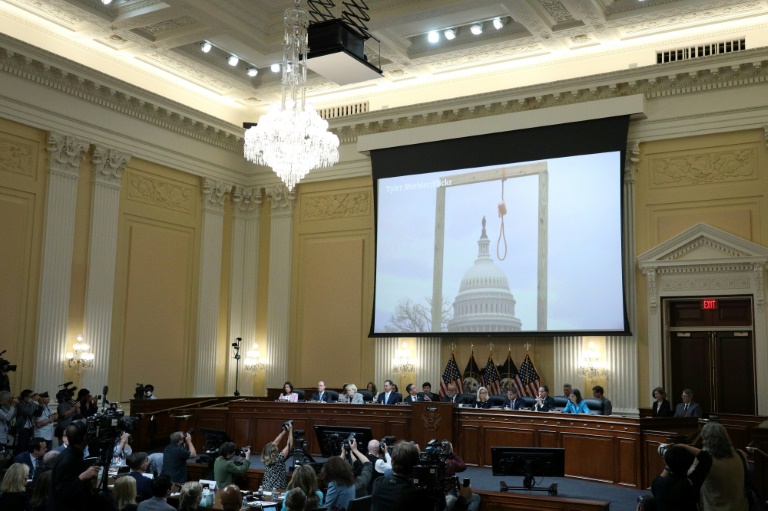
The mob threatened to hang Pence for failing to cooperate as they stormed the Capitol, even erecting a gallows in front of the building.

“What the former president was willing to sacrifice — potentially the vice president — in order to stay in power is pretty jarring,” Aguilar said.

The panel aired a video clip of a rioter saying he would “drag people through the streets” if Pence refused to overturn the election.

The committee also heard from retired federal judge J Michael Luttig, who testified that the United States would have been plunged into “a revolution within a paralyzing constitutional crisis” had Pence folded under Trump’s pressure. 

Luttig, a renowned conservative legal scholar, had advised Pence at the time that his role in overseeing the ratification of the election was purely ceremonial — and that he had no power to oppose the result.

“There was no basis in the constitution or the laws of the United States at all for the theory espoused by Mr Eastman. At all. None,” Luttig said.

Trump reacted to the hearing by demanding that he receive “equal time” on the airwaves to lay out his bogus theory that the election was stolen — but opponents pointed out that he has not taken up the committee’s invitation to testify.

Scientists find new population of polar bears in sea-ice free region

Polar bears face an existential threat from the rapid decline of Arctic sea ice, which they rely on as platforms to hunt seals.

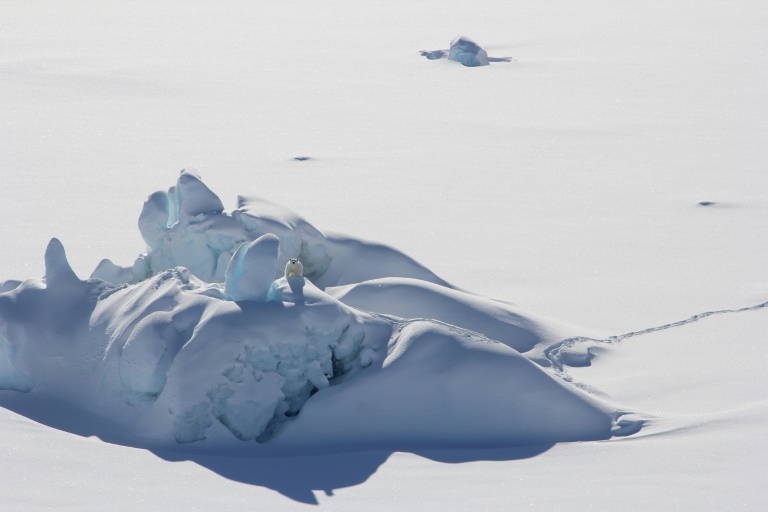
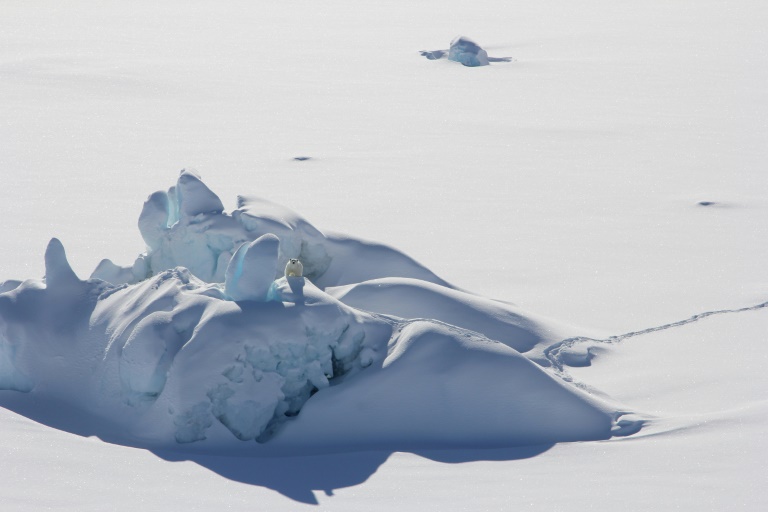
But in a new study, scientists have identified an isolated subpopulation of polar bears in Southeast Greenland that instead make use of freshwater ice pouring into the ocean from the region’s glaciers, suggesting this particular habitat is less susceptible than others to climate change.

Their findings, described in the journal Science on Thursday, open up the tantalizing possibility that at least some pockets of the species might be able to survive further into this century, when Arctic sea ice is expected to disappear completely during summer months.

“One of the big questions is where in the Arctic will polar bears be able to hang on, what we call ‘persist,'” first author Kristin Laidre, a polar scientist at the University of Washington and Greenland Institute of Natural Resources told AFP.

“I think that bears in a place like this can teach us a lot about where those places might be.”

Laidre and colleagues first spent two years interviewing Inuit subsistence hunters who provided input and ecological knowledge, including harvest samples for analysis.

They then began their own field work, which lasted from 2015 to 2021, in a harsh region that was long understudied because of its unpredictable weather, heavy snowfall and jagged mountains. 

– Hemmed in –

Each year, the team would spend one month in springtime, staying in the nearest settlement Kuummiit, which is a two-hour helicopter ride from where the bears live. Fuel depots had to be staged along the route in advance down the coastline, creating a hopskotch-like commute to work.

The team tagged the bears with satellite tracking devices, and collected genetic samples by either capturing bears or firing biopsy darts into their rumps.

Thought to number a few hundred individuals, “they are the most genetically isolated population of polar bears anywhere on the planet,” said co-author Beth Shapiro, a geneticist at the University of California, Santa Cruz and investigator at the Howard Hughes Medical Institute, in a statement.

“We know that this population has been living separately from other polar bear populations for at least several hundred years.”

Unlike their cousins, the Southeast Greenland polar bears were found to be homebodies, seldom straying far to hunt.

Their isolation arises from the geography: they live in a complex landscape of fjords on the very edge of their range on the southern tip of Greenland, well below the Arctic circle, with nowhere to go. 

To the west there are an enormous set of mountains and the Greenland Ice Sheet, and to the east the open water of the Denmark Strait all the way to Iceland. They also have to contend with a rapid current that flows southward along the coast.

“We see that when they get caught in this current they jump off the ice and they walk back home to their fjords,” said Laidre. The team found that some of the tracked bears accidentally caught in this situation had to trek more than a hundred miles back home.

– Climate refuges? –

While sea ice provides hunting platforms for most of the Arctic’s roughly 26,000 polar bears, the Southeast Greenland bears have access to sea ice for only four months, between February and late May. 

For the remaining eight months they rely on chunks of freshwater ice breaking off the Greenland Ice Sheet in the form of marine-terminating glaciers.

“These types of glaciers do exist in other places in the Arctic, but the combination of the fjord shapes, the high production of glacier ice and the very big reservoir of ice that is available from the Greenland Ice Sheet is what currently provides a steady supply of glacier ice,” said another co-author Twila Moon of the National Snow and Ice Data Center in a statement.

There remains much to study about the Southeast Greenland polar bears. Measurements show the adult females are a little smaller than average and they appear to have fewer cubs, but it’s hard to infer much about what that means in the absence of long term data.

Laidre is keen to not oversell the study as one of hope. Polar bears — which in addition to being iconic in their own right are also a vital resource for indigenous people — aren’t going to be saved without urgent climate action.

But this population might have a better shot, and there are similar areas with marine-terminating glaciers on other parts of Greenland’s coast as well as the island of Svalbard that might become small-scale climate refugia.

“We as a community need to look at places like this and ask ourselves, is this a place where we might be able to have some small numbers of polar bears persisting in an ice-free Arctic?” said Laidre.

Musk offers billion-user vision but few details to Twitter staff

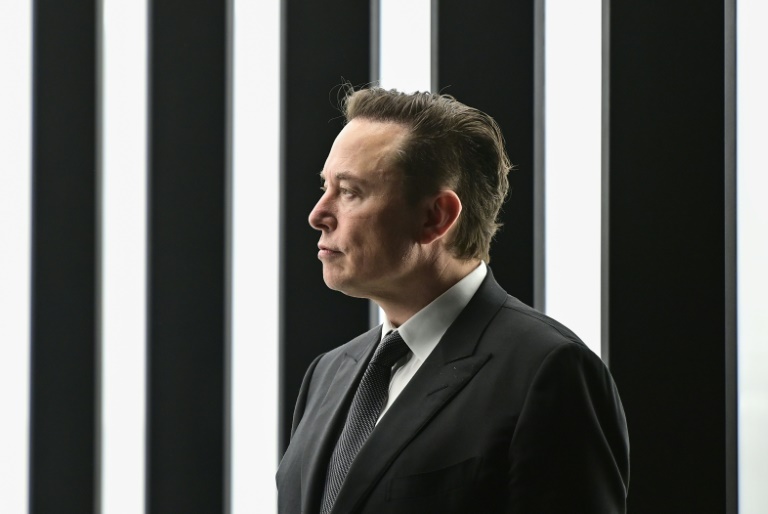
Elon Musk pitched a vision Thursday to Twitter staff of a one-billion-user platform, but was hazy on potential layoffs, free speech limits and what’s next in his chaotic buyout bid.

The Tesla chief talked of letting people say pretty much whatever they want on Twitter while at the same time keeping it a friendly place that users enjoy visiting.

While fielding questions in his first meeting with staffers, the Tesla chief offered no updates on whether he will go through with a proposed $44 billion takeover deal which he himself has called into doubt.

A transcript of the employees-only virtual meeting posted at website Recode indicated Musk professed “love” for Twitter, joking that while some people express themselves with hair styles he does so on the global messaging stage.

Musk said he wants to have “at least a billion people on Twitter” in what would be massive growth for a platform that has about 229 million now.

Musk told Twitter employees he favors moderate political positions, but that users should be able to say outrageous things. 

He qualified that by saying that freedom of speech doesn’t mean an intrinsic freedom for comments to reach far and wide.

The Tesla chief has already made comments on how he’d run the platform — including lifting Donald Trump’s ban.

“People should be allowed to say pretty outrageous things that are within the bounds of the law, but then that doesn’t get amplified,” Musk said, according to the transcript.

“We have to strike this balance of allowing people to say what they want to say but also make people comfortable on Twitter, or they simply won’t use it.”

Musk answered a question about possible layoffs by saying the company “needs to get healthy” when it comes to its financial situation.

“Anyone who’s obviously a significant contributor should have nothing to worry about,” Musk told Twitter workers.

He endorsed advertising and subscriptions as ways to make money at Twitter, saying ads should be entertaining as well as legitimate.

Musk talked anew about making money at Twitter by charging to verify identities of those behind accounts, then making verification a factor in which tweets get higher ranking at the platform.

Regarding Twitter’s policy of letting people work from home, Musk said it would be an option only for those proven to be exceptional at their jobs.

“The Musk Twitter all-hands call was the wrong call at the wrong time in our opinion,” Wedbush analyst Dan Ives said in a tweet.

“Lots of answers Musk could not provide given fluid nature of deal.”

Ives added that the virtual exchange spotlighted a contrast between the kind of culture fostered by Musk and the “Twitter DNA.”

Musk touched on his Tesla and SpaceX endeavors during the meeting, talking of sustainable energy and extending the “scope, scale and lifespan of consciousness as we know it.”

“Can we travel to other star systems and see if there are alien civilizations?” he asked rhetorically.

“There might be a whole bunch of long dead, one planet civilizations out there that existed 500 million years ago.”

His comments came a day after a Verge report that SpaceX employees shared a letter internally complaining that Musk’s behavior on Twitter is a distraction and embarrassment to the private space exploration enterprise.

– Market not convinced –

Musk shocked the tech world with an unsolicited buyout bid in April for the platform that is a key exchange for news, entertainment and politics.

The board eventually came around to supporting his $54.20 per share offer, but since then he has cast doubt on the deal by clashing with the firm’s leadership over user numbers.

Musk has kept employees and Wall Street on edge over how the buyout saga will end.

Reports coming out of the meeting evidently left the market unconvinced about the buyout, with Twitter shares slipping more than two percent in mid-day trade far below the purchase price agreed to my Musk.

Tesla shares, meanwhile, ended the formal trading day down more than 8 percent in an apparent sign investors are worried Musk’s focus is not on the electric car maker.

The proposed Twitter sale has stoked protests from critics who warn his stewardship will embolden hate groups and disinformation campaigns.

US securities regulators have also pressed Musk for an explanation of an apparent delay in reporting his Twitter stock buys.

For his part, Musk has repeatedly raised questions about fake accounts on the platform, saying on Twitter he could walk away from the transaction if his concerns were not addressed.

Is recession the only way out of US inflation scourge?

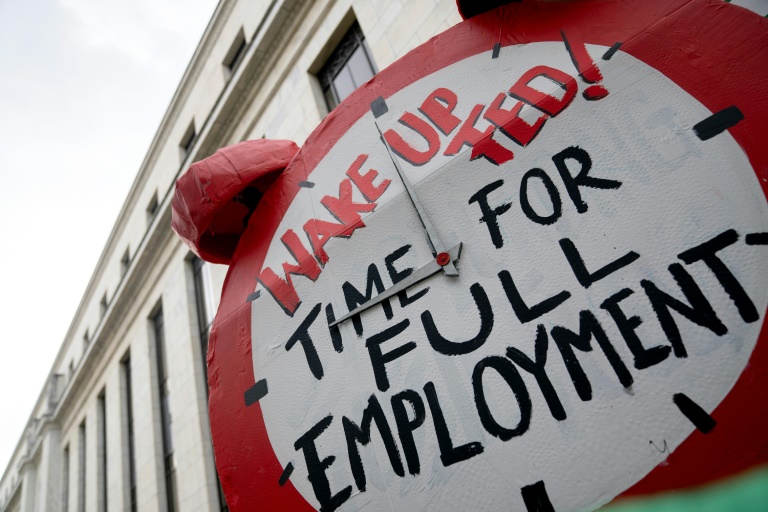
A massive interest rate hike by the US Federal Reserve and promises of more to come are fueling warnings that the only offramp from the searing price hikes engulfing American families is a full-blown recession.

The Fed remains hopeful it can slow activity and demand, cooling the blistering pace of inflation, without derailing the world’s largest economy. But skepticism is growing about the chances of success.

The central bank hiked the benchmark borrowing rate on Wednesday by three-quarters of a point, the biggest increase in nearly 30 years, and indicated a similar move is possible in July. 

The super-sized rate increase came as the Fed faces intense pressure to curb soaring gas, food and housing prices that have left millions of Americans struggling to make ends meet and sent President Joe Biden’s approval ratings plunging. 

The central bank has raised the key rate 1.5 points since March, as the Russian invasion of Ukraine and ongoing Covid-related supply chain issues combine to send prices up at the fastest pace in more than four decades.

Fed Chair Jerome Powell said a recession with job losses is not the goal, but bringing down inflation “expeditiously” is “essential” since that is vital to a healthy economy.

But Kathy Bostjancic, chief US economist at Oxford Economics, warned that “it becomes very difficult to thread that needle.” 

The Fed will need a Goldilocks scenario where “a number of things fall into place and at the right time,” she told AFP.

The healthy US labor market and strong consumer demand, helped by a beefy stockpile of savings, are working in the Fed’s favor and could support activity even as the economy cools.

In the wake of the Fed decision, mortgage rates rocketed to their highest level in 13 years, with the average for a 30-year, fixed rate home loan reaching 5.78 percent.

Drivers still face gas prices at the pump of more than $5 a gallon, although for the first time in days, the national average fell on Wednesday, down from Tuesday’s record.

“My colleagues and I are acutely aware that high inflation imposes significant hardship, especially on those least able to meet the higher costs of essentials like food, housing and transportation,” Powell told reporters after the rate hike was announced.

The Fed’s tools can only affect demand, but White House has been trying to push through legislation to lower prices directly.

– Higher unemployment –

Biden signed a shipping reform bill on Thursday that will allow the government to crack down on firms that have raised transport costs as much as 1,000 percent — which has ripple effects for many products.

The measure will “put a stop to shipping companies taking advantage of American families, farmers, ranchers and businesses and to bring down prices and give the American people a little bit of breathing room,” he said at the White House.

With the Fed’s shift towards aggressive tightening of lending conditions — which policymakers see rising to 3.8 percent next year — the best officials might be able to hope for now is a “softish” landing, which would include higher joblessness.

The economy has continued to create jobs: the unemployment rate in May was 3.6 percent, just a tick above its pre-pandemic level, and there are nearly two job openings for every unemployment person, compared to 1.3 pre-Covid.

The Fed chief said 4.1 percent unemployment with inflation heading down to two percent “would be a successful outcome.”

But he stressed that “events of the last few months have raised the degree of difficulty,” and achieving a soft landing likely will “depend on factors that we don’t control.”

– Rising risks –

Even so, a half-point increase in the jobless rate can signal the start of a recession.

Diane Swonk of Grant Thornton, a long-time Fed watcher, called the central bank’s outlook “fanciful.” 

Steve Englander of Standard Chartered Bank and a former Fed economist said  the outcome will be “be painful, even if it’s not a technical recession” — usually defined as two quarters of negative growth. 

“The risk of a recession is rising and it’s rising sharply,” he told AFP.

But Bostjancic said without tough action to contain prices, the US could face stagflation — sluggish growth with high inflation — last seen in the 1970s and 80s.

“The Fed is worried that if they don’t take care of inflation, now, it’s going to linger and be a problem many years into the future,” she said.

Scientists find new population of polar bears in sea-ice free region

Polar bears face an existential threat from the rapid decline of Arctic sea ice, which they rely on as platforms to hunt seals.

But in a new study, scientists have identified an isolated subpopulation of polar bears in Southeast Greenland that instead make use of freshwater ice pouring into the ocean from the region’s glaciers, suggesting this particular habitat is less susceptible than others to climate change.

Their findings, described in the journal Science on Thursday, open up the tantalizing possibility that at least some pockets of the species might be able to survive further into this century, when Arctic sea ice is expected to disappear completely during summer months.

“One of the big questions is where in the Arctic will polar bears be able to hang on, what we call ‘persist,'” first author Kristin Laidre, a polar scientist at the University of Washington and Greenland Institute of Natural Resources told AFP.

“I think that bears in a place like this can teach us a lot about where those places might be.”

Laidre and colleagues first spent two years interviewing Inuit subsistence hunters who provided input and ecological knowledge, including harvest samples for analysis.

They then began their own field work, which lasted from 2015 to 2021, in a harsh region that was long understudied because of its unpredictable weather, heavy snowfall and jagged mountains. 

– Hemmed in –

Each year, the team would spend one month in springtime, staying in the nearest settlement Kuummiit, which is a two-hour helicopter ride from where the bears live. Fuel depots had to be staged along the route in advance down the coastline, creating a hopskotch-like commute to work.

The team tagged the bears with satellite tracking devices, and collected genetic samples by either capturing bears or firing biopsy darts into their rumps.

Thought to number a few hundred individuals, “they are the most genetically isolated population of polar bears anywhere on the planet,” said co-author Beth Shapiro, a geneticist at the University of California, Santa Cruz and investigator at the Howard Hughes Medical Institute, in a statement.

“We know that this population has been living separately from other polar bear populations for at least several hundred years.”

Unlike their cousins, the Southeast Greenland polar bears were found to be homebodies, seldom straying far to hunt.

Their isolation arises from the geography: they live in a complex landscape of fjords on the very edge of their range on the southern tip of Greenland, well below the Arctic circle, with nowhere to go. 

To the west there are an enormous set of mountains and the Greenland Ice Sheet, and to the east the open water of the Denmark Strait all the way to Iceland. They also have to contend with a rapid current that flows southward along the coast.

“We see that when they get caught in this current they jump off the ice and they walk back home to their fjords,” said Laidre. The team found that some of the tracked bears accidentally caught in this situation had to trek more than a hundred miles back home.

– Climate refuges? –

While sea ice provides hunting platforms for most of the Arctic’s roughly 26,000 polar bears, the Southeast Greenland bears have access to sea ice for only four months, between February and late May. 

For the remaining eight months they rely on chunks of freshwater ice breaking off the Greenland Ice Sheet in the form of marine-terminating glaciers.

“These types of glaciers do exist in other places in the Arctic, but the combination of the fjord shapes, the high production of glacier ice and the very big reservoir of ice that is available from the Greenland Ice Sheet is what currently provides a steady supply of glacier ice,” said another co-author Twila Moon of the National Snow and Ice Data Center in a statement.

There remains much to study about the Southeast Greenland polar bears. Measurements show the adult females are a little smaller than average and they appear to have fewer cubs, but it’s hard to infer much about what that means in the absence of long term data.

Laidre is keen to not oversell the study as one of hope. Polar bears — which in addition to being iconic in their own right are also a vital resource for indigenous people — aren’t going to be saved without urgent climate action.

But this population might have a better shot, and there are similar areas with marine-terminating glaciers on other parts of Greenland’s coast as well as the island of Svalbard that might become small-scale climate refugia.

“We as a community need to look at places like this and ask ourselves, is this a place where we might be able to have some small numbers of polar bears persisting in an ice-free Arctic?” said Laidre.

Scientists find new population of polar bears in sea-ice free region

Polar bears face an existential threat from the rapid decline of Arctic sea ice, which they rely on as platforms to hunt seals.

But in a new study, scientists have identified an isolated subpopulation of polar bears in Southeast Greenland that instead make use of freshwater ice pouring into the ocean from the region’s glaciers, suggesting this particular habitat is less susceptible than others to climate change.

Their findings, described in the journal Science on Thursday, open up the tantalizing possibility that at least some pockets of the species might be able to survive further into this century, when Arctic sea ice is expected to disappear completely during summer months.

“One of the big questions is where in the Arctic will polar bears be able to hang on, what we call ‘persist,'” first author Kristin Laidre, a polar scientist at the University of Washington and Greenland Institute of Natural Resources told AFP.

“I think that bears in a place like this can teach us a lot about where those places might be.”

Laidre and colleagues first spent two years interviewing Inuit subsistence hunters who provided input and ecological knowledge, including harvest samples for analysis.

They then began their own field work, which lasted from 2015 to 2021, in a harsh region that was long understudied because of its unpredictable weather, heavy snowfall and jagged mountains. 

– Hemmed in –

Each year, the team would spend one month in springtime, staying in the nearest settlement Kuummiit, which is a two-hour helicopter ride from where the bears live. Fuel depots had to be staged along the route in advance down the coastline, creating a hopskotch-like commute to work.

The team tagged the bears with satellite tracking devices, and collected genetic samples by either capturing bears or firing biopsy darts into their rumps.

Thought to number a few hundred individuals, “they are the most genetically isolated population of polar bears anywhere on the planet,” said co-author Beth Shapiro, a geneticist at the University of California, Santa Cruz and investigator at the Howard Hughes Medical Institute, in a statement.

“We know that this population has been living separately from other polar bear populations for at least several hundred years.”

Unlike their cousins, the Southeast Greenland polar bears were found to be homebodies, seldom straying far to hunt.

Their isolation arises from the geography: they live in a complex landscape of fjords on the very edge of their range on the southern tip of Greenland, well below the Arctic circle, with nowhere to go. 

To the west there are an enormous set of mountains and the Greenland Ice Sheet, and to the east the open water of the Denmark Strait all the way to Iceland. They also have to contend with a rapid current that flows southward along the coast.

“We see that when they get caught in this current they jump off the ice and they walk back home to their fjords,” said Laidre. The team found that some of the tracked bears accidentally caught in this situation had to trek more than a hundred miles back home.

– Climate refuges? –

While sea ice provides hunting platforms for most of the Arctic’s roughly 26,000 polar bears, the Southeast Greenland bears have access to sea ice for only four months, between February and late May. 

For the remaining eight months they rely on chunks of freshwater ice breaking off the Greenland Ice Sheet in the form of marine-terminating glaciers.

“These types of glaciers do exist in other places in the Arctic, but the combination of the fjord shapes, the high production of glacier ice and the very big reservoir of ice that is available from the Greenland Ice Sheet is what currently provides a steady supply of glacier ice,” said another co-author Twila Moon of the National Snow and Ice Data Center in a statement.

There remains much to study about the Southeast Greenland polar bears. Measurements show the adult females are a little smaller than average and they appear to have fewer cubs, but it’s hard to infer much about what that means in the absence of long term data.

Laidre is keen to not oversell the study as one of hope. Polar bears — which in addition to being iconic in their own right are also a vital resource for indigenous people — aren’t going to be saved without urgent climate action.

But this population might have a better shot, and there are similar areas with marine-terminating glaciers on other parts of Greenland’s coast as well as the island of Svalbard that might become small-scale climate refugia.

“We as a community need to look at places like this and ask ourselves, is this a place where we might be able to have some small numbers of polar bears persisting in an ice-free Arctic?” said Laidre.

Ecuador roads blockaded on fourth day of fuel price protests

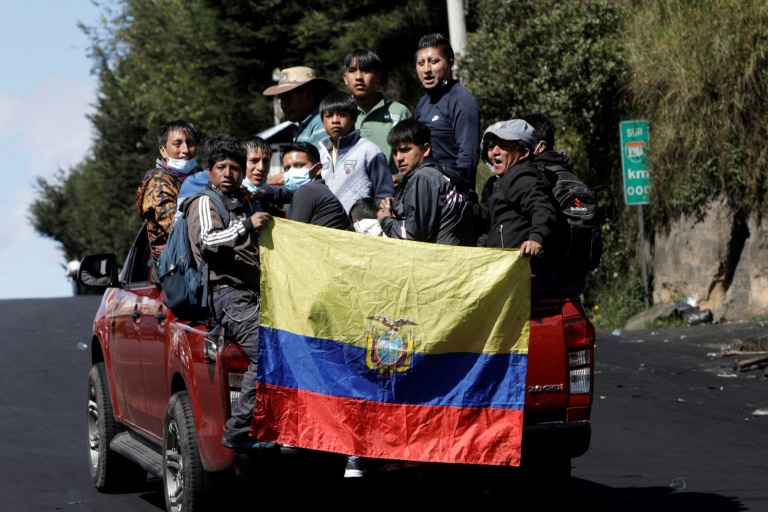
Indigenous Ecuadorans used burning tires, tree trunks and stones Thursday to block access to the capital, Quito, on the fourth day of protests against high fuel prices and living costs.

Indigenous people, who make up over a million of Ecuador’s 17.7 million inhabitants, embarked on an open-ended anti-government protest Monday that has since been joined by students and other discontented groups.

“We came to claim our rights because we are paid low prices for the products we produce,” Nelson Jami, a farmer from the southern Cotopaxi province, told AFP at a blockade south of Quito.

Protests and roadblocks were registered Thursday in 15 of Ecuador’s 24 provinces, authorities said, with hundreds of demonstrators gathered in Quito alone.

Firefighters said a truck carrying demonstrators overturned in Quito Thursday, injuring 12 people.

Oil producer Ecuador has been hit by rising inflation, unemployment and poverty exacerbated by the coronavirus pandemic.

Fuel prices have risen sharply since 2020, almost doubling for diesel from $1 to $1.90 per gallon (3.8 liters) and rising from $1.75 to $2.55 for petrol.

The powerful Confederation of Indigenous Nationalities of Ecuador (Conaie), which called the protests, wants the price reduced to $1.50 for diesel and $2.10 for petrol.

Conaie is credited with helping topple three Ecuadoran presidents between 1997 and 2005.

– ‘Sabotage’ –

President Guillermo Lasso said Wednesday the government’s door was open to dialogue, “but we will not give in to violent groups that seek to impose their rules.”

Conaie leader Leonidas Iza, for his part, said the government was not making any concessions required for negotiations to begin.

Iza was arrested Tuesday on the second day of the mass protest on suspicion of “sabotage,” according to the government, prompting furious supporters to descend on the prosecutor’s office to demand he be freed.

He was released the following day on a judge’s orders pending trial on charges of “paralyzing public transport services.”

Iza risks up to three years in prison.

Conaie has reported 14 people injured since the protests began Monday, while police reported 29 arrests, eight agents injured and 11 others briefly held by demonstrators.

Ecuador’s Production Minister Julio Prado said losses as a result of the protests amounted to some $20 million by Thursday.

In 2019, Conaie-led protests resulted in 11 deaths and forced then-president Lenin Moreno to abandon plans to eliminate fuel subsidies.

On US border, Mexican trans social worker offers expert advice

Mexican trans social worker Brigitte Baltazar saw her dreams shattered when she was deported from the United States, where she had fought for 20 years for a better life.

Now she has found herself a new role — helping other migrants to legally cross the border.

Baltazar was a 14-year-old boy when she illegally entered the United States, where she labored on farms picking tomatoes, dreaming of studying medicine.

She also transitioned from male to female, but she says that in April 2021 her life “turned to waste” when she was expelled to Mexico for not being able to regularize her residence status.

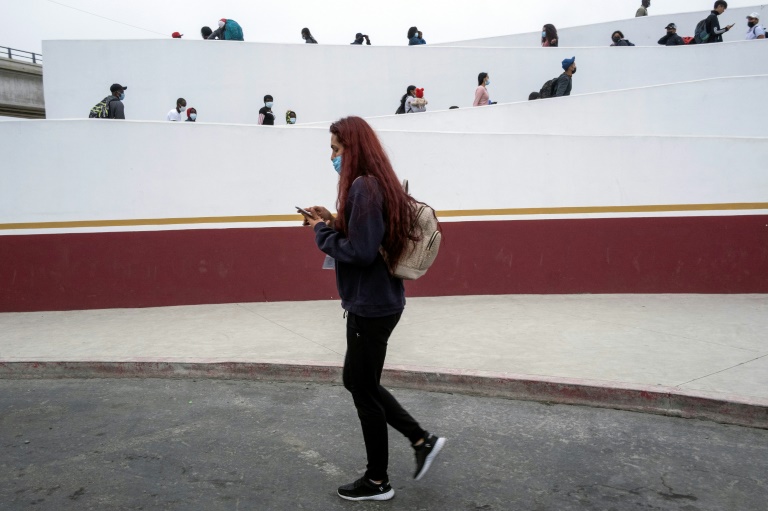
Now 35, with her long hair dyed red, Baltazar, from the impoverished southern state of Guerrero, has often faced brutal discrimination and prejudice, but says she has put her experience to good use.

“I’ve been through super tough situations, so I had always said that when I had the opportunity to help other people, I would love that life,” she told AFP.

Like thousands of others who are expelled or seek asylum in the United States, she ended up in a shelter for migrants in Tijuana, just on the Mexico side of the border.

Seeing pregnant women or people overwhelmed by lack of resources and information, she started to assist in any way she could.

– Finding a role –

In a short time, the leading NGO “Al otro lado” — which provides legal and humanitarian support to migrants — asked her to join its staff.

She now works in a camp with people who seek to enter the United States on “humanitarian parole,” a status that covers emergency medical treatment or visiting a sick family member.

“We try to handle the medical cases, the most complicated ones first,” she said, explaining she draws on her empathy for others after years of suffering derogatory comments on the street, in job interviews and from officials.

She says she is moved by the plight of Haitian migrants, who are discriminated against because of the color of their skin and are often surprised that she is willing to help.

And she says she experiences a special connection with members of the LGBTI community who want to enter the United States fleeing intolerance in their countries.

She encourages them to “defend their identity tooth and nail” and to persevere, saying “we already have that warrior soul, you know, that soul that can handle anything.”

The number of people trying to reach the United States through Mexico has soared in recent years, with the surge becoming a fierce political issue across Latin America as well as in Washington.

But in the camp, where faces of fatigue and uncertainty abound, Baltazar exudes warmth while she helps migrants fill out endless paperwork.

She even finds time to bump fists with little girls, bringing out a smile and lifting spirits.

“I have work that I love and I’m passionate about, and that’s why I’m happy. I’m living in a shelter and I’m happy, thank God I have the love of many people,” she says.

Musk offers billion-user vision but few details to Twitter staff

Elon Musk pitched a vision Thursday to Twitter staff of a one-billion-user platform, but was hazy on potential layoffs, free speech limits and what’s next in his chaotic buyout bid.

While fielding questions in his first meeting with wary staffers, the Tesla chief offered no updates on his $44 billion deal that he has thrown into doubt in recent weeks.

Yet in comments from the employees-only virtual meeting of less than one hour, Bloomberg and New York Times reports based on leaks relayed his claimed passion for self-expression on the platform.

Musk said he wants to have “at least a billion people on Twitter” in what would be massive growth for a platform that has about 229 million presently.

The Tesla chief has already made comments on how he’d run the platform — including lifting Donald Trump’s ban — but his words this time were addressed directly to workers’ concerns.

Musk told Twitter employees he personally favors moderate political positions, but that users should be able to say outrageous things, reports leaked from the meeting said. 

He qualified that by saying that freedom of speech doesn’t mean an intrinsic freedom for comments to reach far and wide, according to the reports.

Musk answered a question about possible layoffs by saying the company “needs to get healthy” when it comes to its financial situation.

He endorsed advertising and subscriptions as ways to make money at Twitter, saying ads should be entertaining as well as legitimate.

Musk talked anew about making money at Twitter by charging to verify identities of those behind accounts, then making verification a factor in which tweets get higher ranking at the platform.

Regarding Twitter’s policy of letting people work from home, Musk said it would be an option only for those proven to be exceptional at their jobs, he was reported to tell the gathering.

“The Musk Twitter all-hands call was the wrong call at the wrong time in our opinion,” Wedbush analyst Dan Ives said in a tweet.

“Lots of answers Musk could not provide given fluid nature of deal.”

Ives added that the virtual exchange spotlighted a contrast between the kind of culture fostered by Musk and the “Twitter DNA.”

– Market not convinced –

A would-be owner addressing the troops of a company he or she wants to buy is a routine part of the merger playbook, but Musk’s bid has been anything but ordinary.

He shocked the tech world with an unsolicited buyout bid in April for the platform that is a key exchange for news, entertainment and politics.

The board eventually came around to supporting his $54.20 per share offer, but since then he has cast doubt on the deal but clashing with the firm’s leadership over user numbers.

Musk has kept employees and Wall Street on edge over how the buyout saga will end.

Reports coming out of the meeting evidently left the market unconvinced about the buyout, with Twitter shares slipping more than two percent in mid-day trades far below the purchase price agreed to my Musk.

The proposed sale has stoked protest from critics who warn his stewardship will embolden hate groups and disinformation campaigns.

US securities regulators have also pressed Musk for an explanation of an apparent delay in reporting his Twitter stock buys.

For his part, Musk has repeatedly raised questions about fake accounts on the platform, saying on Twitter he could walk away from the transaction if his concerns were not addressed.

Close Bitnami banner
Bitnami