World

Is recession the only way out of US inflation scourge?

A massive interest rate hike by the US Federal Reserve and promises of more to come are fueling warnings that the only offramp from the searing price hikes engulfing American families is a full-blown recession.

The Fed remains hopeful it can slow activity and demand, cooling the blistering pace of inflation, without derailing the world’s largest economy. But skepticism is growing about the chances of success.

The central bank hiked the benchmark borrowing rate on Wednesday by three-quarters of a point, the biggest increase in nearly 30 years, and indicated a similar move is possible in July. 

The super-sized rate increase came as the Fed faces intense pressure to curb soaring gas, food and housing prices that have left millions of Americans struggling to make ends meet and sent President Joe Biden’s approval ratings plunging. 

The central bank has raised the key rate 1.5 points since March, as the Russian invasion of Ukraine and ongoing Covid-related supply chain issues combine to send prices up at the fastest pace in more than four decades.

Fed Chair Jerome Powell said recession is not the goal, but bringing down inflation “expeditiously” is “essential” since that is vital to a healthy economy.

But Kathy Bostjancic, chief US economist at Oxford Economics, warned that “it becomes very difficult to thread that needle.” 

The Fed will need a Goldilocks scenario where “a number of things fall into place and at the right time,” she told AFP.

The healthy US labor market and strong consumer demand, helped by a beefy stockpile of savings, are working in the Fed’s favor and could support activity even as the economy cools.

In the wake of the Fed decision, mortgage rates rocketed to their highest level in 13 years, with the average for a 30-year, fixed rate home loan reaching 5.78 percent.

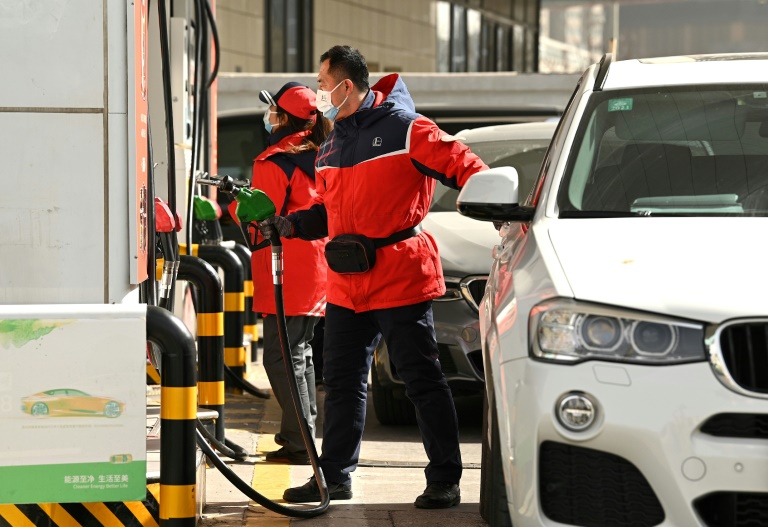
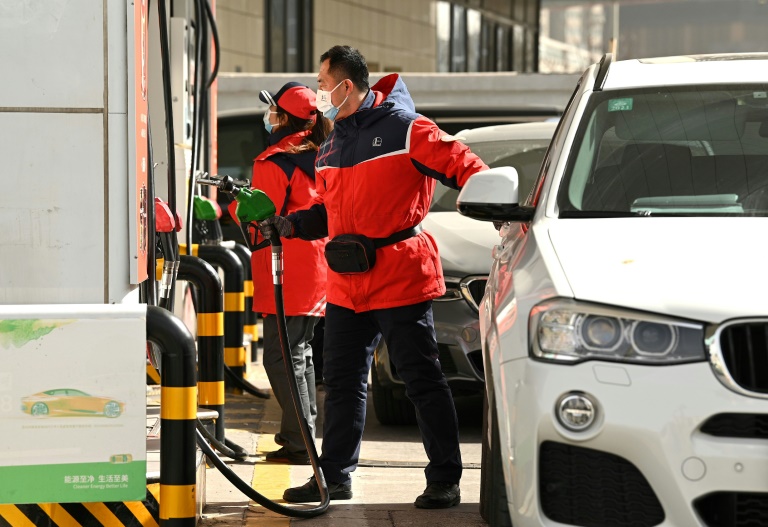
Drivers still face gas prices at the pump of more than $5 a gallon, although for the first time in days, the national average fell on Wednesday, down from Tuesday’s record.

“My colleagues and I are acutely aware that high inflation imposes significant hardship, especially on those least able to meet the higher costs of essentials like food, housing and transportation,” Powell told reporters after the rate hike was announced.

– Higher unemployment –

With the shift towards prioritizing the aggressive tightening of lending conditions — which policymakers see rising to 3.8 percent next year — the best the Fed might be able to hope for now is a “softish” landing, which would include higher joblessness.

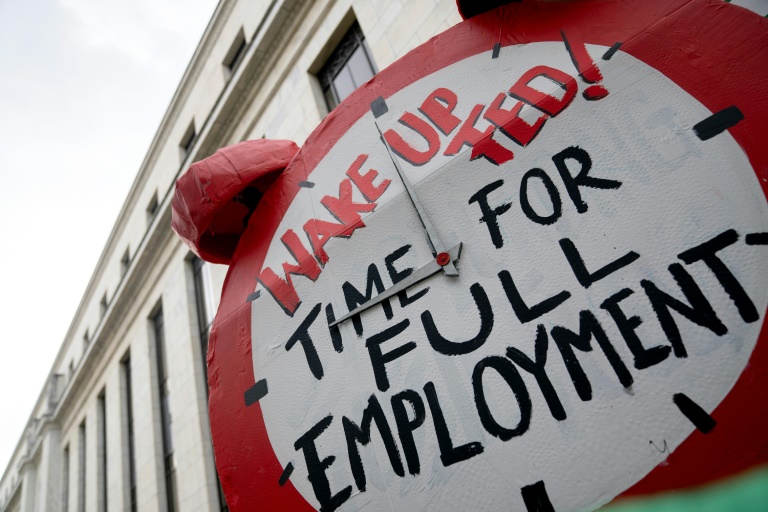
The economy has continued to create jobs: the unemployment rate in May was 3.6 percent, just a tick above its pre-pandemic level, and there are nearly two job openings for every unemployment person, compared to 1.3 pre-Covid.

The Fed chief said “a 4.1 percent unemployment rate with inflation of well on its way to two percent, I think that would be a successful outcome.”

But he stressed that “events of the last few months have raised the degree of difficulty” in achieving the soft landing, and it likely will “depend on factors that we don’t control.”

But a half-point increase in the jobless rate can signal the start of a recession.

Diane Swonk of Grant Thornton, a long-time Fed watcher, called the central bank’s outlook “fanciful.”

– Rising risks –

Steve Englander of Standard Chartered Bank and a former Fed economist does not expect a recession — usually defined as two quarters of negative growth — and said unemployment may not have to increase by that much to achieve the Fed’s goals.

But the central bank will have to shrink demand, and “it’ll be painful, even if it’s not a technical recession.”

“The risk of a recession is rising and it’s rising sharply,” he told AFP.

But it is a risk the Fed is willing to take since it has made fighting inflation the priority.

Bostjancic said a softish landing is still possible, but without tough action to contain prices, the US could face stagflation — lower or negative growth with high inflation — last seen in the 1970s and 80s.

“The Fed is worried that if they don’t take care of inflation, now, it’s going to linger and be a problem many years into the future,” she said.

hsto
Dozens rescued by helicopter in Yellowstone floods

Dozens of people have been plucked to safety by National Guard helicopter crews this week as floods devastate Yellowstone National Park in the United States.

Over three days Montana National Guard units scrambled to reach 87 people cut off by raging rivers that have swept through the park and its surroundings following torrential rain and rapid snowmelt.

“At the request of local officials, the Montana National Guard continues to assist with search and rescue operations due to significant flooding in South Central Montana,” the National Guard said in a release Wednesday.

They have flown more than 41 hours of search and rescue operations, and also staffed road checkpoints to help with travelers’ safety, the release said. 

Thousands of visitors have been forced to leave Yellowstone, the oldest national park in the United States, where roads and bridges have been swept away by raging rivers.

Park managers said this week they expect sections of the park — which chiefly lies in Wyoming, but also extends into Montana and Idaho — will remain closed for the rest of the year because of the extensive damage caused by flooding.

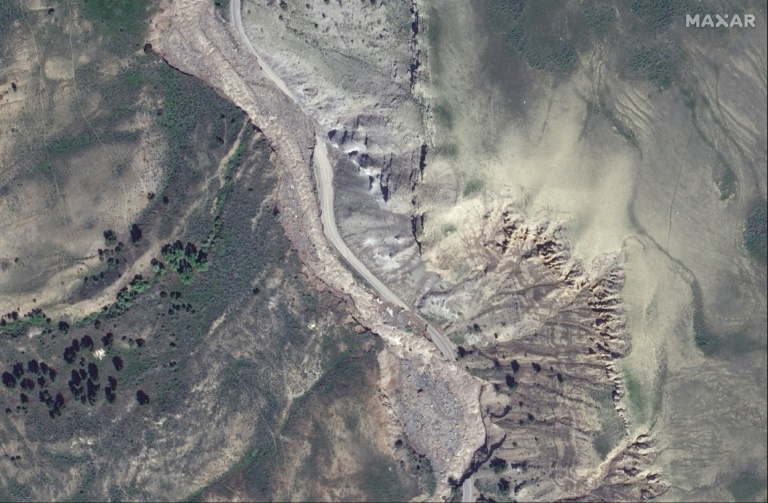
Images released by the National Park Service showed large sections of paved road had been swept away by raging rivers.

Aerial reconnaissance revealed “major damage to multiple sections of road” in the northern part of the park, the agency said.

Several communities on the north side of the park in Montana also experienced significant flooding, with bridges and roads washed out in Park County. 

Montana Governor Greg Gianforte declared a statewide disaster on Tuesday “to help impacted communities get back on their feet as soon as possible,” he said on Twitter.

A huge dome of high pressure is sitting over the United States, sending temperatures soaring for tens of millions of people.

Meteorologists say the edge of that dome, where colder air meets warm air, is experiencing wild weather, including heavy rainfall.

Higher-than-usual temperatures have also caused snowpack on the high mountains to melt, adding to the influx of water into rivers.

Ferrari says 80% of its models will be electric or hybrid by 2030

Ferrari unveiled Thursday plans to turn 80 percent of its production into all-electric or hybrid cars by 2030 in a major shift for an iconic brand renowned for its powerful combustion engines.

“Electrification is a way to improve performance,” new chief executive Benedetto Vigna said as he unveiled a four-year strategic plan at the brand’s historic Maranello site in northern Italy.

The 2022-2026 plan will be driven by the launch of new products — including Ferrari’s first 100 percent electric car, set to be presented in 2025.

“Ferrari’s first all-electric car will be 100 percent a sports car,” commercial director Enrico Galliera told AFP.

“We will develop an electric car that will deliver the same emotions as when you drive a (traditional) Ferrari,” he pledged, without revealing any technical details.

The Italian luxury carmaker plans to expand the Maranello plant and create a third production line for hybrid and electric vehicles.

Under the plan, some 60 percent of its production would be all-electric or hybrid models by 2026, rising to 80 percent by 2030.

Other upcoming new products include Ferrari’s first SUV, “Purosangue” (Thoroughbred), which will be unveiled in September, with deliveries from 2023.

Including the all-electric offer, another 15 new launches are expected between 2023 and 2026, Vigna said.

Ferrari, which celebrates its 75th anniversary this year, broke results records in 2021, delivering 11,155 cars — up 22.3 percent  — and generating revenue of 4.3 billion euros (up 23.4 percent).

It said Thursday it was setting an ambitious target for revenues. The 6.7-billion-euro ($7-billion) goal for 2026 is well above this year’s estimated revenue of around 4.8 billion euros.  

Vigna did not give many details of the new Purosangue, other than that it will be a sports car and will have a V12 engine, a trademark of the mythical brand.

But he said: “I am confident it will exceed all expectations.”

He emphasised its exclusivity, saying it would make up on average fewer than 20 percent of total deliveries.

Under the previous strategic plan unveiled in 2018, Ferrari had also promised the launch of 15 cars — a target Vigna said had been reached.

Stocks tank as central banks hike rates

Stock markets sank Thursday as more central banks hiked interest rates in efforts to tame runaway inflation, actions that raised fears they could spark recessions.

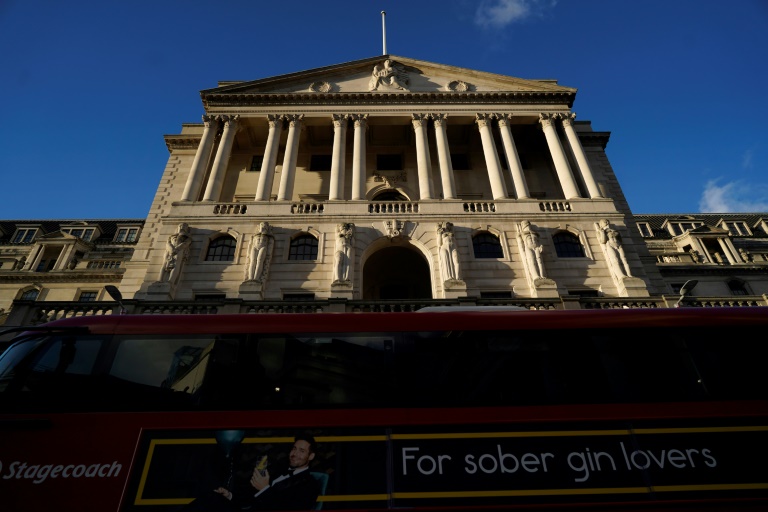
One day after the Federal Reserve’s biggest US interest-rate hike in nearly 30 years, the Bank of England raised borrowing costs to their highest level since the 2009 financial crisis.

The BoE jacked up its rate by a quarter-point to 1.25 percent, its fifth straight increase, but it was lower than the Fed’s more aggressive 0.75-percentage-point increase.

Adding to the sense of urgency, the Swiss National Bank (SNB) surprised the markets as it unexpectedly hiked rates for the first time since 2007.

The European Central Bank plans to hike rates next month for the first time in a decade.

“European bourses are tanking on recession fears as central banks act aggressively to tame inflation,” City Index analyst Fiona Cincotta told AFP.

“While the move by the Fed was priced in, the SNB’s hike was a shock that caught investors off guard. Harder and faster rate hikes from central banks mean that a recession will be hard to avoid.”

European stock markets closed at their lowest level in three months, with London and Frankfurt shedding more than three percent and Paris falling by 2.4 percent.

Wall Street, which had rallied following the Fed’s rate hike on Wednesday, fell sharply on Thursday.

The tech-heavy Nasdaq sank by four percent in midday trading while the broad-based S&P 500 was off by 3.2 percent and the Dow fell 2.4 percent.

Asian markets mostly closed lower.

Markets have been pummelled this year as investors fret over consumer prices, which have soared as Russia’s invasion of Ukraine sent energy and food prices through the roof.

That has intensified fear that the world economy, which is still in recovery from the deadly Covid pandemic, could lurch back into a lengthy downturn.

While rate hikes are necessary to bring down inflation, investors worry that overly aggressive action by central banks could further hurt the global economic recovery and even spark recessions.

“Equity markets are experiencing another day of pain on Thursday as central banks continue to signal a willingness to sacrifice the economy in order to get inflation under control,” said Craig Erlam, analyst at OANDA online trading platform.

Oil prices, meanwhile, stabilised after losses due to demand worries caused by new Covid containment measures in China and news of surging US production.

– Key figures at around 1400 GMT –

New York – Dow: DOWN 2.4 percent at 29,935.59 points

London – FTSE 100: DOWN 3.1 percent at 7,044.98 (close)

Frankfurt – DAX: DOWN 3.3 percent at 13,038.49 (close)

Paris – CAC 40: DOWN 2.4 percent at 5,886.24 (close)

EURO STOXX 50: DOWN 3.0 percent at 3,427.91

Tokyo – Nikkei 225: UP 0.4 percent at 26,431.20 (close)

Hong Kong – Hang Seng Index: DOWN 2.2 percent at 20,845.53 (close) 

Shanghai – Composite: DOWN 0.6 percent at 3,285.38 (close)

Euro/dollar: UP at $1.0495 from $1.0444 late Wednesday

Pound/dollar: UP at $1.2280 from $1.2180

Euro/pound: DOWN at 85.48 pence from 85.75 pence

Dollar/yen: DOWN at 132.60 yen from 133.84 yen

Brent North Sea crude: DOWN 0.3 percent at $118.13 per barrel

West Texas Intermediate: UP 0.2 percent at $115.56

burs-lth/kjm

BoE unveils fifth straight rate hike as inflation soars

The Bank of England on Thursday hiked its main interest rate for the fifth straight time, as it forecast decades-high British inflation to soar further this year to above 11 percent.

BoE policymakers agreed at a regular meeting to increase the cost of borrowing by a quarter-point to 1.25 percent, the highest level since the global financial crisis in 2009.

Following the announcement, the pound slumped one percent against the dollar before rebounding.

Analysts bet that the BoE would eventually mirror the Federal Reserve by aggressively hiking rates.

– BoE lags Fed –

For now, the Bank of England is avoiding “shock and awe tactics being employed across the Atlantic”, said Laith Khalaf, head of investment analysis at AJ Bell.

“Despite the UK starting to tighten monetary policy first, interest rates are now higher in the US.”

The US Federal Reserve on Wednesday announced the most aggressive interest rate increase in nearly 30 years —  in a battle to drive down surging consumer prices.

The Fed’s rate hike of 0.75 percentage points came after US inflation rocketed to 8.6 percent in May, the highest level in more than four decades.

UK inflation currently stands at nine percent, last seen 40 years ago.

Prices are soaring worldwide as economies reopen from pandemic lockdowns and amid the Ukraine war that is pushing already high energy costs skyward.

The BoE’s latest rate hike was in response to “continuing signs of robust cost and price pressures… and the risk that those pressures become more persistent”, according to minutes of the UK meeting.

A minority of BoE policymakers had voted for an increase to 1.5 percent.

London’s benchmark FTSE 100 index closed down 3.1 percent in a global sell-off for equities as fears mount over a possible recession.

“It is a bloodbath for stock markets as recession fears have prompted traders to cut and run,” said David Madden, market analyst at Equiti Capital. 

– ‘Slow poison’ –

The BoE on Thursday forecast the UK economy to contract by 0.3 percent in the second quarter that ends on June 30 — and after growing in the first three months of the year.

A recession is defined as two consecutive quarters of negative growth.

“Inflation risks being a slow poison for the economy, so the Bank of England is trying to take an antidote now by raising interest rates,” said Susannah Streeter, senior investment and markets analyst at Hargreaves Lansdown.

“However, it can only take a small dose at a time given the ailing nature of the economy… with more hikes to follow.”

Higher interest rates, while boosting returns for savers, ramp up loan repayments for businesses and households.

British economic output declined for a second month in a row in April, weighed down by rocketing prices that are causing a cost-of-living crisis for millions of Britons, while increasing the risk of a UK recession this year.

Data this week also revealed the first rise in the UK unemployment rate since the end of 2020 — although at 3.8 percent it remains at a near 50-year low point thanks to the highest amount of job vacancies on record.

At the same time, the value of average UK wages is falling at the fastest pace in more than a decade.

Fearing fallout from surging inflation, the BoE began to raise its key interest rate in December, from a record-low level of 0.1 percent.

Almost two years earlier, as the Covid-19 pandemic began to take hold, the BoE slashed the rate to just above zero and decided to pump massive sums of new cash into the economy.

In the neighbouring eurozone, the European Central Bank is next month set to raise interest rates for the first time in more than a decade.

Switzerland’s central bank hiked its rate Thursday for the first time in 15 years.

burs-bcp/pvh

Italy's Po Valley rations water amid record drought

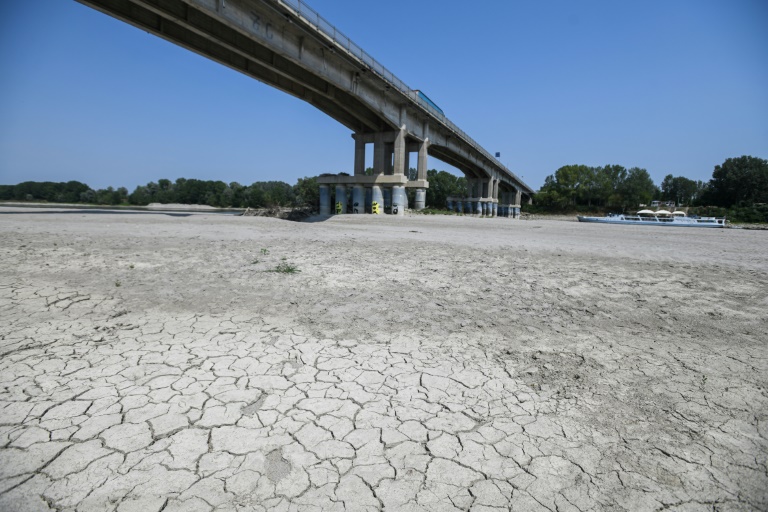
Italy’s rich northern Lombardy region prepared to declare a state of emergency Thursday over a record drought which is threatening crops and has forced towns in the Po Valley to ration water.

“It’s an extremely delicate situation,” regional chief Attilio Fontana told reporters as the valley, which stretches across the north and houses a crucial agricultural sector, suffered its worst drought in 70 years.

Fontana said a state of emergency was likely to be declared for Lombardy, home to Milan, as well as three other neighbouring regions: Piedmont, the Veneto and Emilia Romagna.

The Po River is Italy’s largest reservoir of freshwater and much of it is used by farmers. Some areas have been without rain for over 110 days, according to the Po River observatory.

With no rain forecast, councils have begun installing water tankers and imposing hosepipe pans.

Utilitalia, a federation of water companies, has asked mayors in 100 towns in Piedmont and 25 in Lombardy to suspend nighttime drinking water supplies to replenish reservoir levels.

The drought is putting over 30 percent of national agricultural production and half of livestock farming in the valley at risk, Italy’s largest agricultural association, Coldiretti, said Thursday.

The low level of the Po is also leading to salt seawater infiltration into low-lying agricultural areas, compounding farmers’ problems, it said.

Italy's Po Valley rations water amid record drought

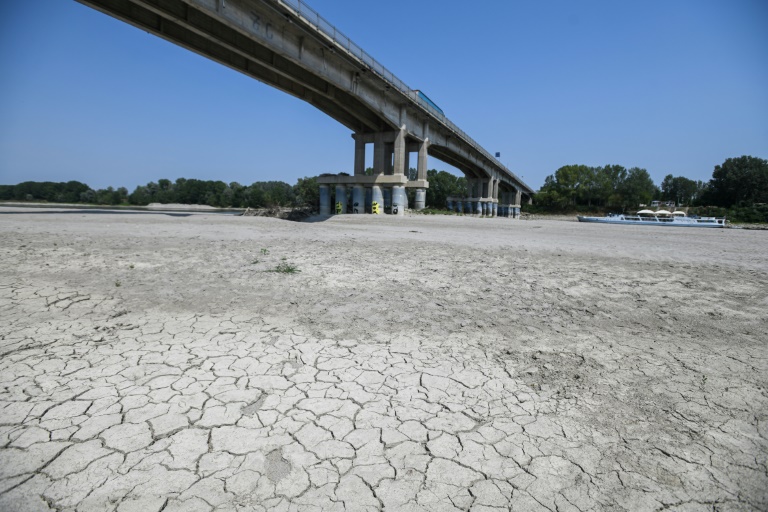
Italy’s rich northern Lombardy region prepared to declare a state of emergency Thursday over a record drought which is threatening crops and has forced towns in the Po Valley to ration water.

“It’s an extremely delicate situation,” regional chief Attilio Fontana told reporters as the valley, which stretches across the north and houses a crucial agricultural sector, suffered its worst drought in 70 years.

Fontana said a state of emergency was likely to be declared for Lombardy, home to Milan, as well as three other neighbouring regions: Piedmont, the Veneto and Emilia Romagna.

The Po River is Italy’s largest reservoir of freshwater and much of it is used by farmers. Some areas have been without rain for over 110 days, according to the Po River observatory.

With no rain forecast, councils have begun installing water tankers and imposing hosepipe pans.

Utilitalia, a federation of water companies, has asked mayors in 100 towns in Piedmont and 25 in Lombardy to suspend nighttime drinking water supplies to replenish reservoir levels.

The drought is putting over 30 percent of national agricultural production and half of livestock farming in the valley at risk, Italy’s largest agricultural association, Coldiretti, said Thursday.

The low level of the Po is also leading to salt seawater infiltration into low-lying agricultural areas, compounding farmers’ problems, it said.

US targets Chinese, Indian brokers in new Iran sanctions

The United States on Thursday imposed sanctions on Iranian petrochemical producers as well as Chinese and Indian brokers, expanding pressure amid a deadlock in negotiations on restoring a nuclear deal.

President Joe Biden’s administration said that it still remained committed to diplomacy with Iran to restore a 2015 agreement on curbing its nuclear program.

“Absent a deal, we will continue to use our sanctions authorities to limit exports of petroleum, petroleum products and petrochemical products from Iran,” said Brian Nelson, senior Treasury Department official.

The Treasury Department said it was imposing sanctions on a network of Iranian petrochemical firms including alleged front companies in China and the United Arab Emirates for Iran’s state-owned company and Triliance, a Hong Kong-based company already under US sanctions for its dealing with Iran.

It also took action against China-based broker Jeff Gao and Indian national Mohammad Shaheed Ruknooddin Bhore for allegedly managing business for Triliance.

The United States has sought to prevent any nation from buying Iranian oil since 2018 after then president Donald Trump walked away from a negotiated agreement, in which Iran drastically scaled back its nuclear program in return for promises of sanctions relief.

China has remained the top buyer of Iranian oil while India reluctantly ended imports under US pressure.

Biden has sought to restore the nuclear deal, saying that the United States would ease sanctions if Iran returns to compliance, but his chief negotiator recently said it was more likely than not that the diplomacy will fail.

Iran has insisted on the United States removing a Trump-era designation of its powerful Revolutionary Guards as a terrorist organization, a move that Biden has rejected as peripheral to discussions on the nuclear deal.

US targets Chinese, Indian brokers in new Iran sanctions

The United States on Thursday imposed sanctions on Iranian petrochemical producers as well as Chinese and Indian brokers, expanding pressure amid a deadlock in negotiations on restoring a nuclear deal.

President Joe Biden’s administration said that it still remained committed to diplomacy with Iran to restore a 2015 agreement on curbing its nuclear program.

“Absent a deal, we will continue to use our sanctions authorities to limit exports of petroleum, petroleum products and petrochemical products from Iran,” said Brian Nelson, senior Treasury Department official.

The Treasury Department said it was imposing sanctions on a network of Iranian petrochemical firms including alleged front companies in China and the United Arab Emirates for Iran’s state-owned company and Triliance, a Hong Kong-based company already under US sanctions for its dealing with Iran.

It also took action against China-based broker Jeff Gao and Indian national Mohammad Shaheed Ruknooddin Bhore for allegedly managing business for Triliance.

The United States has sought to prevent any nation from buying Iranian oil since 2018 after then president Donald Trump walked away from a negotiated agreement, in which Iran drastically scaled back its nuclear program in return for promises of sanctions relief.

China has remained the top buyer of Iranian oil while India reluctantly ended imports under US pressure.

Biden has sought to restore the nuclear deal, saying that the United States would ease sanctions if Iran returns to compliance, but his chief negotiator recently said it was more likely than not that the diplomacy will fail.

Iran has insisted on the United States removing a Trump-era designation of its powerful Revolutionary Guards as a terrorist organization, a move that Biden has rejected as peripheral to discussions on the nuclear deal.

Activision board says execs didn't ignore harassment

The board of directors of US video game publisher Activision Blizzard said Thursday that there was no evidence to suggest that management had ignored or minimized accusations of sexual harassment. 

The firm behind hits like Candy Crush and Call of Duty, which Microsoft is acquiring in a blockbuster $69 billion deal, has been roiled by lawsuits and workers’ allegations.   

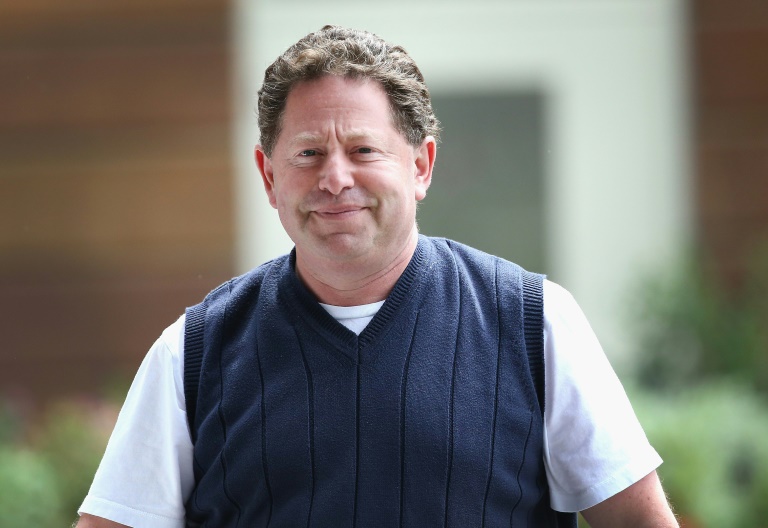
Its CEO Bobby Kotick has apologized on behalf of the group and implemented a “zero tolerance” policy, while dozens of employees have been sanctioned or fired.

But according to the Wall Street Journal, the executive knew about reports of harassment for several years and sought to keep the incidents quiet.  

In a filing with US market regulators, the firm acknowledged Thursday the existence of cases of gender-based harassment.  

“The board and its external advisors have determined that there is no evidence to suggest that Activision Blizzard senior executives ever intentionally ignored or attempted to downplay the instances of gender harassment that occurred and were reported,” the document said. 

The firm and its advisors have “not unearthed any evidence, directly or indirectly, suggesting any attempt by any senior executive or employee to conceal information from the board.” 

Activision also hired Gilbert Casellas, a former chair of US discrimination watchdog Equal Employment Opportunity Commission (EEOC), for a review.  

According to the company, he concluded that there was no widespread harassment, recurring pattern or practices of harassment at Activision Blizzard or any of its subsidiaries. 

Still, the company reached an agreement last year with the EEOC to create an $18 million compensation fund for harassment victims.   

Activision also faces a case brought by California’s rights watchdog, which launched a lawsuit last year alleging sexual harassment and discrimination at the company. 

Close Bitnami banner
Bitnami