World

War in Ukraine: Latest developments

Here are the latest developments in the war in Ukraine:

– European leaders back Ukraine’s EU bid –

The leaders of France, Germany and Italy back “immediate” EU candidate status for Ukraine on their first visit to Kyiv since the invasion during which they vow to help defeat Russia and rebuild Ukraine’s shattered cities.

French President Emmanuel Macron says Ukraine must “resist and win” the war and announces that France will donate six additional long-range artillery systems.

Macron has been criticised in Ukraine and among some of its allies for saying that Russia should not be “humiliated” if defeated.

On a visit to the war-scarred Kyiv suburb of Irpin with German Chancellor Olaf Scholz, Italian Prime Minister Mario Draghi and Romanian President Klaus Iohannis he praises the “heroism” of Ukrainians.

– More weapons ‘useless’, says Moscow –

The Kremlin warns the French, German and Italian leaders that sending Ukraine more weapons is “absolutely useless and will cause further damage to the country”. 

Kremlin spokesman Dmitry Peskov says he hopes the three leaders will encourage Ukrainian President Volodymyr Zelensky to “really look at the state of affairs.”  

– 10,000 civilians trapped in eastern city –

The governor of the eastern Lugansk region, Sergiy Gaiday, says around 10,000 civilians, out of a pre-war population of 100,000, remain trapped in the city of Severodonetsk, where intense fighting has raged for weeks.

The city is the biggest in the Lugansk region that has not fallen to Russian forces.

The three bridges into the city have been destroyed, cutting off key escape routes.

Moscow says Ukraine on Wednesday blocked the evacuation of civilians from a chemical plant where Ukrainian forces are holding out.

– ‘Our product, our rules’, Russia says on gas –

The head of Russian energy giant Gazprom says that Moscow will play by its own rules after slashing gas deliveries to Germany.

“Our product, our rules,” Alexei Miller tells the Saint Petersburg International Economic Forum. 

Poland, Bulgaria, Finland, Denmark and the Netherlands have all had their natural gas deliveries suspended since the war began for refusing to pay in rubles.

This week Gazprom cut its deliveries to Germany through the Nord Stream pipeline in what Berlin has slammed as a “political” move but Gazprom blamed on repairs being carried out by Germany’s Siemens.

Italian energy giant Eni and Austria’s OMV says their supplies have also been cut.

– Russian spy stopped at war crimes court –

The Dutch intelligence service AIVD says it stopped a Russian spy posing as an intern from accessing the International Criminal Court, which is investigating war crimes in Ukraine.

The Dutch say the man, whom they named as Sergey Vladimirovich Cherkasov, used a Brazilian cover identity but was unmasked as a member of Russia’s GRU military intelligence.

The incident took place in April. The man was sent back to Brazil.

– $1 bn more in US weapons –

US President Joe Biden announces a new $1 billion worth of arms and ammunition for Ukraine.

The package includes more artillery, coastal anti-ship defence systems and ammunition for artillery and advanced rocket systems that Ukraine is already using. 

Kyiv says it is outgunned in the fight for its industrial heartland of Donbas and appealed to Western allies for greater military aid.

– Japanese airline ditches Z logo –

Japan’s Zipair budget airline ditches its Z logo for fear of it being read as a sign of support for Russia’s war in Ukraine.

The letter Z has become a symbol of support for Russia’s invasion after being spotted on Russian tanks and military uniforms in Ukraine.

It has since appeared on cars, clothing and on billboards across Russia, as well as on social media.

burs-cb/jmy/pvh
EU leaders back Ukraine membership bid in trip to war-torn Kyiv

The European Union’s most powerful leaders on Thursday embraced Ukraine’s bid to be accepted as a candidate for EU membership, in a powerful symbol of support in Kyiv’s battle against Russia’s invasion.

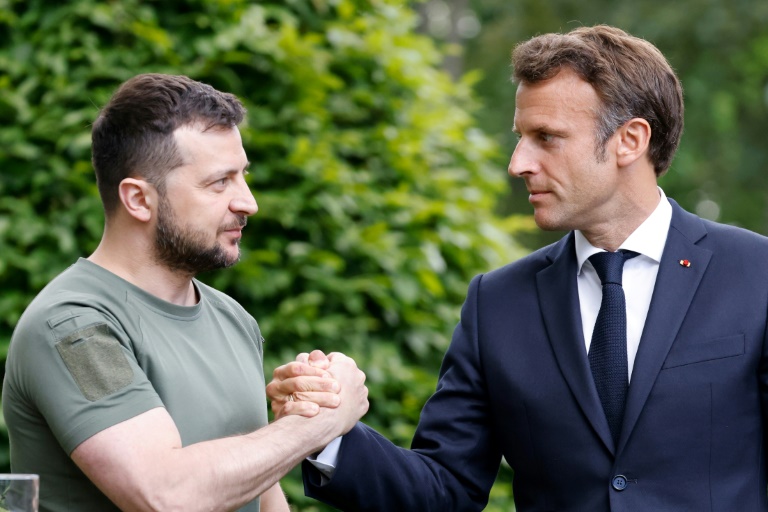
French President Emmanuel Macron, Germany’s Chancellor Olaf Scholz and Italian premier Mario Draghi arrived in Ukraine by train and headed to the Kyiv suburb of Irpin, scene of fierce battles early in the brutal war.

They were later joined in Kyiv by Romania’s President Klaus Iohannis and met their Ukrainian counterpart Volodymyr Zelensky, who has been lobbying his western allies for most and faster weapons deliveries and the promise of a European future.

“All four of us support the status of immediate candidate for accession,” Macron told a joint press conference with his EU colleagues.

Draghi agreed: “The most important message of our visit is that Italy wants Ukraine in the EU.” 

Scholz said Ukraine “belongs in the European family” and vowed: “We are supporting Ukraine with the deliveries of weapons. We will keep doing that for as long as it is needed.” 

Zelensky promised Ukraine was ready to put in the work to become a fully-fledged EU member, and said Ukrainians has already proved themselves worthy of candidate status.

The European Commission will meet Friday to give its official opinion on Ukraine’s formal bid for EU candidacy, which must be approved by all 27 member states.

– ‘Heavy weapons’ –

Once a candidate, it may take several years for Ukraine — already a poor country with a reputation for corruption before Russia’s assault — to meets membership criteria.

The NATO alliance will also meet in Madrid before the end of the month — with Zelensky attending as a guest by videoconference.

Members will discuss weapons and training for Ukrainian forces and shoring up their own eastern flank against the Russian threat.

“I explained our essential needs in the field of defence,” Zelensky said after meeting the visiting leaders.

“We are expecting new deliveries, above all heavy weapons, modern artillery, anti-aircraft defence systems,” he said, even as Macron said France would send six Caesar self-propelled howitzers to add to the 12 already deployed on Ukraine’s eastern front.

“Every batch of these deliveries saves Ukrainians. Every day of delayed or postponed decisions is an opportunity for the Russian military to kill Ukrainians or ruin our cities,” Zelensky said.

Earlier, on a tour of Irpin, Macron had declared: “France has been alongside Ukraine since day one. We stand with the Ukrainians without ambiguity. Ukraine must resist and win.”

– ‘Rebuild everything’ –

Surrounded by the wreckage left by Ukraine’s successful but hard-fought defence of its capital in the early stages of the 113-day-old conflict, Draghi said: “We will rebuild everything.

“They destroyed kindergartens, they destroyed playgrounds. Everything will be rebuilt,” he promised.

It is the first time the three have visited Kyiv since Russia’s February 24 invasion. 

Germany, especially, has been criticised for slow weapons deliveries, but western defence ministers met in Brussels to discuss what more they can do and on Wednesday, US President Joe Biden announced $1 billion worth of new arms for Ukrainian forces.

Moscow was dismissive of the European visit, and of the arms supplies.

“Supporting Ukraine by further pumping Ukraine with weapons,” warned Kremlin spokesman Dmitry Peskov would be “absolutely useless and will cause further damage to the country”. 

Zelensky countered: “Russia does not want peace, it never wants anything but war.”

The new US support package includes howitzers, ammunition, anti-ship missile systems, and additional rockets for new artillery systems that Ukraine will soon put in the field.

– Food crisis – 

Fighting in eastern Ukraine is focused on the industrial city of Severodonetsk, and Russians forces appear close to consolidating control after weeks of intense battles.

Sergiy Gaiday — the governor of the Lugansk region, which includes the city — said Thursday around 10,000 civilians remain trapped in the city, out of a pre-war population of some 100,000. 

Kyiv’s army is “holding back the enemy as much as possible,” he said on Telegram. “For almost four months they have dreamt of controlling Severodonetsk… and they do not count the victims.”

Elsewhere, Russia launched a missile strike in Ukraine’s north-east Sumy region, killing four people and injuring six others, governor Dmytro Zhyvytsky said on Telegram.

The United Nations warned a hunger crisis that has been worsened by the war in Ukraine, traditionally a breadbasket to the world, could swell already record global displacement numbers.

Addressing the food insecurity crisis is “of paramount importance… to prevent a larger number of people moving,” the United Nations refugee chief Filippo Grandi told reporters.

burs-dc/jm

Gazprom defends gas cuts as prices in Europe soar

Russian energy giant Gazprom on Thursday defended gas cuts to Europe as prices soared and tensions raged between Russia and the West over Ukraine.

Gazprom CEO Alexei Miller said that Moscow will play by its own rules after cutting daily gas supplies to Germany and Italy.

“Our product, our rules. We don’t play by rules we didn’t create,” Miller said during a panel discussion at the Saint Petersburg International Economic Forum in Russia’s second city.

Earlier this week, Gazprom slashed its natural gas deliveries via the Nord Stream pipeline, after saying Germany’s Siemens had delayed the repair work of compressor units at the Portovaya compression station. 

“For now, there is no way to solve the problem that arose with the compressor station,” Miller said.

“Siemens is still silent, trying to find a solution.”

Italian energy giant Eni also reported problems, saying it will receive only 65 percent of the gas requested Thursday from Gazprom.

Gazprom has said exports to countries that did not belong to the former Soviet Union were down 28.9 percent between January 1 and June 15 compared to the same period last year.

“Of course, Gazprom is reducing the volume of gas supplies to Europe,” Miller said, pointing out that the prices have increased several-fold.

“If I say we are not offended by anyone, then I am not pretending,” Miller said. 

Gas prices continued to soar on Thursday, galvanized by a sharp cut in supply from Russia. Europe’s reference natural gas price, Dutch TTF, reached almost 150 euros ($158) per megawatt/hour before falling to 134 euros in the afternoon. 

Moscow has lost several European gas clients after it demanded that all “unfriendly” countries pay for Russian natural gas in rubles in response to a barrage of Western sanctions over Russia’s military intervention in Ukraine.

Poland, Bulgaria, Finland and the Netherlands have had their natural gas deliveries suspended over refusing to pay in rubles. 

The Nord Stream pipeline was commissioned in 2012 and delivers gas from northwestern Russia to Germany via the Baltic Sea.  

The launch of the Nord Stream 2 pipeline that was set to double Russian gas deliveries to Germany was halted in response to Moscow’s military campaign in Ukraine. 

“Nord Stream 2 is under pressure and gas could be supplied to Germany even today via it. But it has not been put in operation because it is not certified,” Miller said.

EU countries have scrambled to reduce their dependency on Russian energy but are divided about imposing a natural gas embargo as several member states are heavily reliant on Moscow’s energy supplies.

Record early heatwave sweeps France as fires flare in Spain

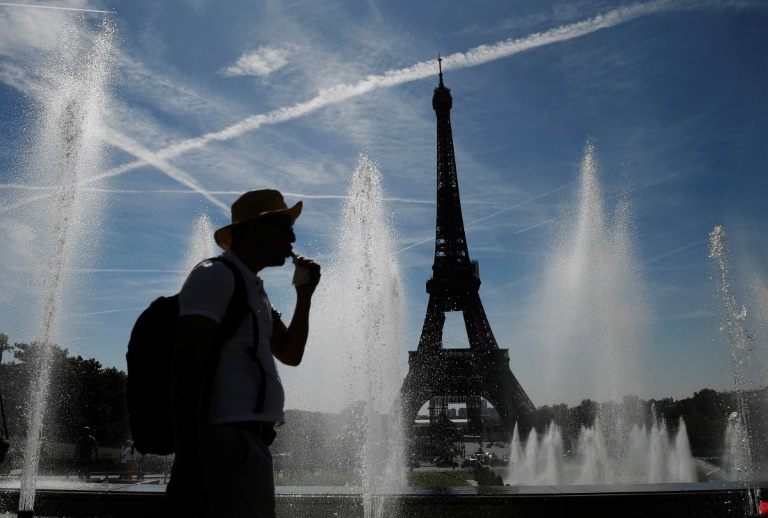
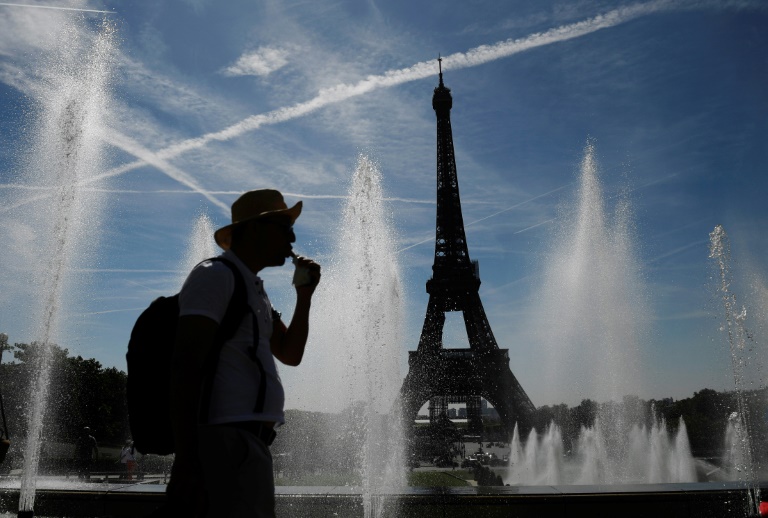
French officials urged caution Thursday as a record pre-summer heatwave spread across the country from Spain, where authorities were fighting forest fires on a sixth day of sweltering temperatures.

The Meteo France weather service said it was the earliest hot spell ever to hit the country, worsening a drought caused by an unusually dry winter and spring, and raising the risk of wildfires.

Spain, which has already seen its hottest May since the beginning of this century, was sweating under temperatures forecast as high as 43 degrees Celsius (109 Fahrenheit) and no relief is expected before Sunday, the Aemet weather service said.

At least three forest fires erupted in Catalonia, including one near Baldomar around 140 kilometres (87 miles) northeast of Barcelona, that has burned nearly 1,000 hectares (2,470 acres) but could grow to 20,000 hectares before it is contained, the regional government said.

No evacuations have yet been ordered but people are being urged to remain in their homes.

Neighbouring Portugal saw its hottest May since 1931, with most scientists attributing the early season heat across Europe to global warming caused by greenhouse gas emissions.

Scientists say heat waves have become more likely due to climate change. As global temperatures rise over time, heat waves are predicted to become more frequent and intense and last longer, and their impacts more widespread.

– ‘Worst I’ve ever seen’ –

The heatwave crossed the Pyrenees into southern France on Tuesday and was set to hit most of the country by Saturday, when thermometers could reach 39C in Paris.

Most of France was on heatwave alert, including 12 departments at the highest level in the southwest, where the education ministry advised parents to keep younger students at home if possible on Friday.

“Be alert! Hydrate, stay in cool areas, and stay in touch with those close to you,” Prime Minister Elisabeth Borne said on Twitter.

Officials in Paris and other cities have also issued alerts over ozone pollution, which occurs when intense sunlight transforms carbon emissions into smog.

Paris police chief Didier Lallement has cut speed limits for the region by 10 km/h (6.2 mph) for Friday.

“I’m 86 years old, I was born here, but I think this is the worst heatwave I’ve ever seen,” Jacqueline Bonnaud told AFP at a shaded park in the southern city of Toulouse.

Surging use of air-conditioners and fans was forcing France to import electricity from neighbouring countries, grid operator RTE said, since many of the country’s nuclear reactors are offline to evaluate potential corrosion risks or for maintenance.

– ‘Infrastructure suffers’ –

The intense heat is also lowering river levels, meaning some nuclear plants must reduce output because water used for cooling reactors is too hot to be returned to waterways without endangering plants and wildlife.

Spain, Italy and other countries have recently limited the use of air-conditioners to save energy, and French Energy Minister Agnes Pannier-Runacher told France 2 television that she was considering the same.

“Saturday will be the peak, with temperatures of 35 to 39 degrees across most of the country,” Tristan Amm, a Meteo France forecaster, told AFP.

Schools have stocked up on water and several have moved end-of-year exams to north-facing rooms, while some departments in the south have said classes will be cancelled on Friday afternoon.

Cities such as Bordeaux have also installed misting devices on the hottest squares and streets. 

Rail operator SNCF has warned of potential delays as trains are forced to slow because the heat has deformed tracks or damaged electrical equipment.

“Our infrastructure suffers” in the heat, said SNCF regional director Thierry Rose, noting that track-level temperatures in Bordeaux had hit 52 Celsius (126 Fahrenheit) on Wednesday.

Record early heatwave sweeps France as fires flare in Spain

French officials urged caution Thursday as a record pre-summer heatwave spread across the country from Spain, where authorities were fighting forest fires on a sixth day of sweltering temperatures.

The Meteo France weather service said it was the earliest hot spell ever to hit the country, worsening a drought caused by an unusually dry winter and spring, and raising the risk of wildfires.

Spain, which has already seen its hottest May since the beginning of this century, was sweating under temperatures forecast as high as 43 degrees Celsius (109 Fahrenheit) and no relief is expected before Sunday, the Aemet weather service said.

At least three forest fires erupted in Catalonia, including one near Baldomar around 140 kilometres (87 miles) northeast of Barcelona, that has burned nearly 1,000 hectares (2,470 acres) but could grow to 20,000 hectares before it is contained, the regional government said.

No evacuations have yet been ordered but people are being urged to remain in their homes.

Neighbouring Portugal saw its hottest May since 1931, with most scientists attributing the early season heat across Europe to global warming caused by greenhouse gas emissions.

Scientists say heat waves have become more likely due to climate change. As global temperatures rise over time, heat waves are predicted to become more frequent and intense and last longer, and their impacts more widespread.

– ‘Worst I’ve ever seen’ –

The heatwave crossed the Pyrenees into southern France on Tuesday and was set to hit most of the country by Saturday, when thermometers could reach 39C in Paris.

Most of France was on heatwave alert, including 12 departments at the highest level in the southwest, where the education ministry advised parents to keep younger students at home if possible on Friday.

“Be alert! Hydrate, stay in cool areas, and stay in touch with those close to you,” Prime Minister Elisabeth Borne said on Twitter.

Officials in Paris and other cities have also issued alerts over ozone pollution, which occurs when intense sunlight transforms carbon emissions into smog.

Paris police chief Didier Lallement has cut speed limits for the region by 10 km/h (6.2 mph) for Friday.

“I’m 86 years old, I was born here, but I think this is the worst heatwave I’ve ever seen,” Jacqueline Bonnaud told AFP at a shaded park in the southern city of Toulouse.

Surging use of air-conditioners and fans was forcing France to import electricity from neighbouring countries, grid operator RTE said, since many of the country’s nuclear reactors are offline to evaluate potential corrosion risks or for maintenance.

– ‘Infrastructure suffers’ –

The intense heat is also lowering river levels, meaning some nuclear plants must reduce output because water used for cooling reactors is too hot to be returned to waterways without endangering plants and wildlife.

Spain, Italy and other countries have recently limited the use of air-conditioners to save energy, and French Energy Minister Agnes Pannier-Runacher told France 2 television that she was considering the same.

“Saturday will be the peak, with temperatures of 35 to 39 degrees across most of the country,” Tristan Amm, a Meteo France forecaster, told AFP.

Schools have stocked up on water and several have moved end-of-year exams to north-facing rooms, while some departments in the south have said classes will be cancelled on Friday afternoon.

Cities such as Bordeaux have also installed misting devices on the hottest squares and streets. 

Rail operator SNCF has warned of potential delays as trains are forced to slow because the heat has deformed tracks or damaged electrical equipment.

“Our infrastructure suffers” in the heat, said SNCF regional director Thierry Rose, noting that track-level temperatures in Bordeaux had hit 52 Celsius (126 Fahrenheit) on Wednesday.

US envoy sees China lockdowns extending into 2023

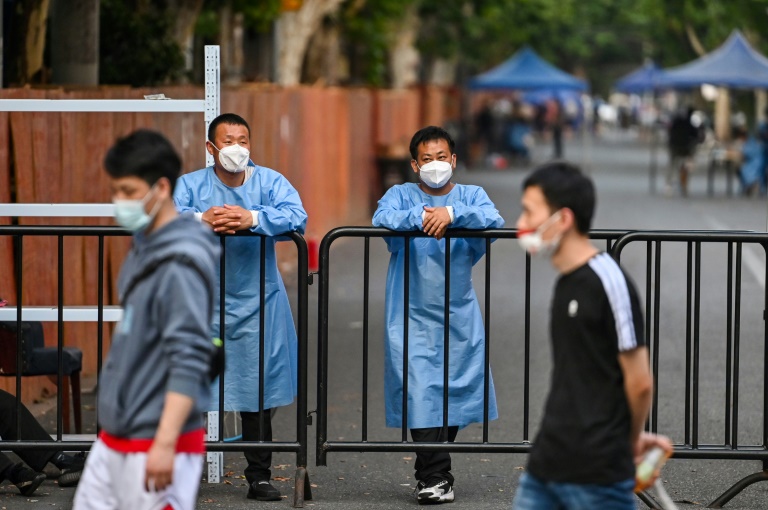
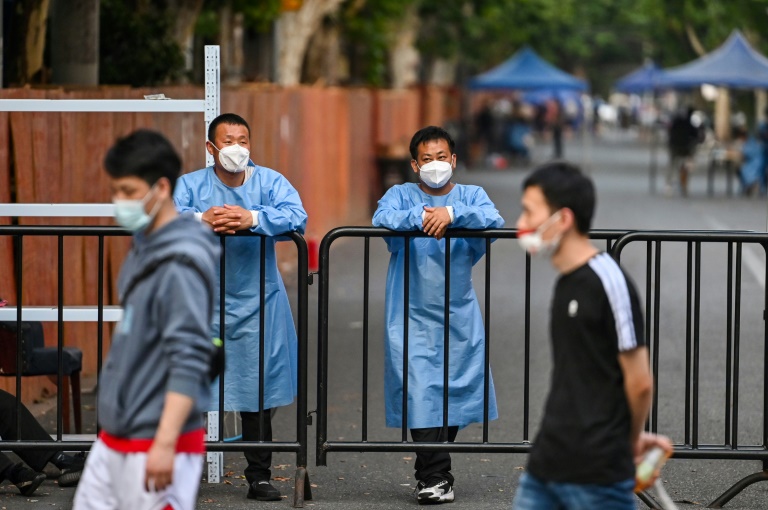
China is likely to keep imposing sweeping lockdowns into 2023, the US ambassador said Thursday, as he cautioned that the zero-Covid strategy was hurting business.

“I think we are going to have to live with this for a long time. My own assumption is that we’ll see the continuation of zero-Covid probably into the beginning of 2023,” Ambassador Nicholas Burns told the Brookings Institution.

Burns, speaking to the Washington think tank by video link from Beijing, said that the lockdowns were disrupting supply chains and making foreign businesses wait before considering further investment.

“This is just too important a market for countries to leave, so we don’t see a lot of companies leaving lock, stock and barrel,” Burns said.

But from his conversations with US businesses, Burns said, “I think there is a lot of hesitancy to invest in future obligations until they see the end of this.”

The American Chamber of Commerce in Shanghai in a recent survey said that one quarter of US firms were scaling back investment plans and nearly all were dropping revenue forecasts after the lockdown in the business hub.

Covid-19 was first detected in the final days of 2019 in the Chinese metropolis of Wuhan, which saw rare public displays of anger over the government’s failure to stop its spread.

Beijing has since vowed to defeat the global pandemic and is the only major economy trying to prevent any cases, imposing mass testing requirements and forcing millions of people at a time to stay at home.

Burns said that the lockdowns also impeded diplomacy with China, whose relationship with the United States he recently described as falling to the lowest point since the establishment of ties a half-century ago.

“It’s difficult to convince any of my colleagues in Washington to come here if I tell them that if they do it they’ve got to quarantine for 14 days before they can have a single meeting,” he said.

US envoy sees China lockdowns extending into 2023

China is likely to keep imposing sweeping lockdowns into 2023, the US ambassador said Thursday, as he cautioned that the zero-Covid strategy was hurting business.

“I think we are going to have to live with this for a long time. My own assumption is that we’ll see the continuation of zero-Covid probably into the beginning of 2023,” Ambassador Nicholas Burns told the Brookings Institution.

Burns, speaking to the Washington think tank by video link from Beijing, said that the lockdowns were disrupting supply chains and making foreign businesses wait before considering further investment.

“This is just too important a market for countries to leave, so we don’t see a lot of companies leaving lock, stock and barrel,” Burns said.

But from his conversations with US businesses, Burns said, “I think there is a lot of hesitancy to invest in future obligations until they see the end of this.”

The American Chamber of Commerce in Shanghai in a recent survey said that one quarter of US firms were scaling back investment plans and nearly all were dropping revenue forecasts after the lockdown in the business hub.

Covid-19 was first detected in the final days of 2019 in the Chinese metropolis of Wuhan, which saw rare public displays of anger over the government’s failure to stop its spread.

Beijing has since vowed to defeat the global pandemic and is the only major economy trying to prevent any cases, imposing mass testing requirements and forcing millions of people at a time to stay at home.

Burns said that the lockdowns also impeded diplomacy with China, whose relationship with the United States he recently described as falling to the lowest point since the establishment of ties a half-century ago.

“It’s difficult to convince any of my colleagues in Washington to come here if I tell them that if they do it they’ve got to quarantine for 14 days before they can have a single meeting,” he said.

Musk to address Twitter staff amid buyout turmoil

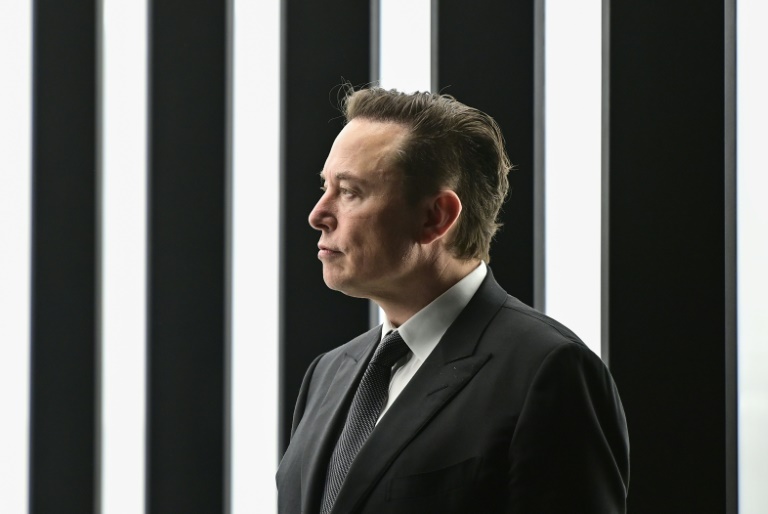
Elon Musk is set to field questions Thursday from wary Twitter workers eager to know if he intends to complete his turbulent $44 billion buyout bid and roll back limits for what people can say on the platform.

In his first meeting with staffers roiled by his move to buy the company, he is slated to answer pre-submitted queries for about an hour that will run the gamut from remote work policies to financial strategy.

The billionaire Tesla owner has already made comments on how he’d run the platform — including lifting Donald Trump’s ban — but his words will this time be addressed directly to workers’ concerns.

“This clearly is not the ‘cookie cutter’ typical all-hands meeting as this global soap opera between Musk and Twitter has taken many twists and turns,” tweeted analyst Dan Ives. “Lots of questions for Musk.”

A would-be owner addressing the troops of a company he or she wants to buy is a routine part of the merger playbook, but Musk’s bid has been anything but ordinary.

He shocked the tech world with an unsolicited buyout bid in April for the platform that is a key exchange for news, entertainment and politics.

The board eventually came around to supporting his $54.20 per share offer, but since then he has cast doubt on the deal but clashing with the firm’s leadership over user numbers.

The Wall Street Journal, citing a person familiar with the matter, reported late Wednesday that Musk was expected to confirm his desire to own Twitter.

He was also expected to address his recent comments seeming to be critical of remote work — a key issue in pandemic re-shaped office culture — but also things like advertising and subscriptions, the paper reported.

Notoriously mercurial Musk could of course surprise workers during his comments, and he has already kept employees and Wall Street on edge over how the buyout saga will end.

The proposed sale has stoked protest from critics who warn his stewardship will embolden hate groups and disinformation campaigns.

US securities regulators have also pressed Musk for an explanation of an apparent delay in reporting his Twitter stock buys.

For his part, Musk has repeatedly raised questions about fake accounts on the platform, saying on Twitter he could walk away from the transaction if his concerns were not addressed.

Ahead of the meeting, Twitter stock was down slightly to just under $38 per share.

Apple faces £750 mn lawsuit over iPhone software update

Apple is facing a £750 million (878 million euros, $918 million) lawsuit in Britain after a consumer rights champion on Thursday filed a claim accusing the US tech giant of secretly slowing down older iPhone models.  

Justin Gutmann says Apple “throttled” the performance of older iPhone handsets after users installed upgrades that they were told would improve the performance of their device.

He claims Apple never told users that the update could slow their device and that the tool was introduced to mask the inability of older iPhone batteries to cope with the demands of newer operating systems. 

Apple said in a statement that “we have never — and would never — do anything to intentionally shorten the life of any Apple product, or degrade the user experience to drive customer upgrades. 

“Our goal has always been to create products that our customers love, and making iPhones last as long as possible is an important part of that,” it added.

Gutmann’s claim with the Competition Appeal Tribunal seeks damages for 25 million iPhone users to the tune of £768 million.

The complaint revolves around a power management tool included in a 2017 software update, which slowed down older iPhone models and prevented abrupt shutdowns as they struggled with the overhead of a new operating system.

Gutmann says Apple never told users that the update could slow a user’s device and claims the tool was introduced to prevent costly repairs or recalls. 

“Instead of doing the honourable and legal thing by their customers and offering a free replacement, repair service or compensation, Apple instead misled people by concealing a tool in software updates that slowed their devices by up to 58 percent,” said Gutmann.

“I’m launching this case so that millions of iPhone users across the UK will receive redress for the harm suffered by Apple’s actions”.

Apple apologised at the time and said it would replace batteries at cut price and would allow users to turn off the power management tool manually.

It has faced legal action in several countries over the issue and agreed to pay up to $500 million to owners of older models in the United States in 2020. 

French authorities fined the group 25 million euros in the same year for failing to warn that updates could slow down older models.

The claim seeks compensation for owners of the iPhone 6, 6 Plus, 6S, 6S Plus, SE, 7, 7 Plus, 8, 8 Plus and iPhone X models.

Tanzania starts moving Maasai out of Ngorongoro reserve

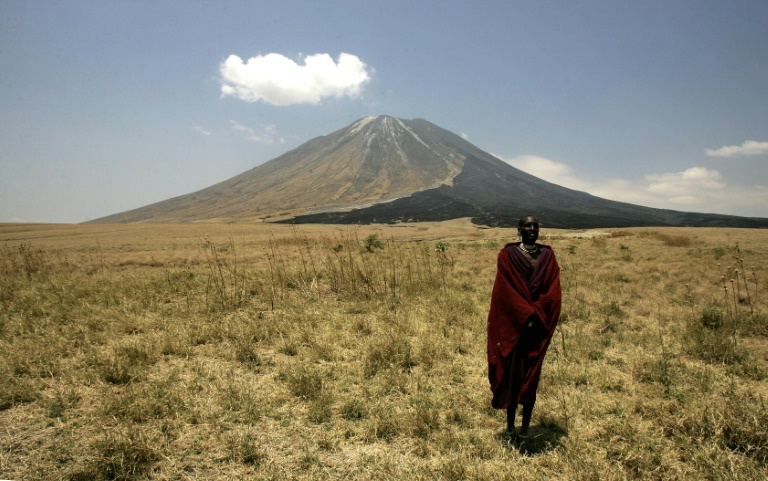
Tanzania on Thursday began relocating Maasai pastoralists from the famed Ngorongoro conservation area in a move that rights campaigners described as unlawful evictions.

The indigenous community has lived in the reserve, a UNESCO World Heritage site in northern Tanzania, for over a century.

But they now face the threat of eviction, as the authorities contend that their growing population is encroaching on wildlife habitat.

Officials insist the relocation is voluntary.

Arusha regional commissioner John Mongella said around 296 families had registered for the move to Handeni, a district 600 kilometres (370 miles) south of Ngorongoro.

“There is no eviction here, all people who are leaving (are) voluntarily registered and the government is facilitating them,” he said in a video statement.

The government has earmarked 162,000 hectares (400,000 acres) of land for relocated Maasai households, he said.

But the community remains sharply divided over the issue, with many reluctant to leave the only home they have ever known.

“This eviction has never been voluntary for Ngorongoro people,” Ngorongoro-based human rights lawyer and activist Joseph Oleshangay told AFP.

The relocation has sparked concern, with a team of UN-appointed independent rights experts warning that “it could jeopardize the Maasai’s physical and cultural survival.”

“This will cause irreparable harm, and could amount to dispossession, forced eviction and arbitrary displacement prohibited under international law,” they said in a statement on Wednesday.

Tanzania has historically allowed indigenous communities such as the Maasai to live within some national parks.

But since 1959, the number of humans living in Ngorongoro has shot up from 8,000 to more than 100,000.

The livestock population has grown even more quickly, from around 260,000 in 2017 to over one million today.

– ‘Shocking brutality’ –

The Maasai say the authorities are attempting to force them off their land in order to organise safaris and private hunting expeditions for tourists.

The government has rejected these accusations, but the issue has led to clashes between the pastoralists and police.

One officer was killed and several protesters were injured during demonstrations in Ngorongoro district’s Loliondo town last weekend, sparking outrage among campaigners. 

The protest broke out over the government’s push to cordon off 1,500 square kilometres (550 square miles) of Loliondo to create a wildlife protection area.

On Wednesday, Home Affairs Minister Hamad Masauni ordered police to carry out “verification and investigation of all NGOs operating” in Loliondo, warning that “their operations should not disturb national security in any way.”

“The government will take strong action against all the NGOs which violate the rules,” he warned.

Amnesty International said Wednesday the “unlawful forced eviction” in Loliondo was “shocking both in its scale and brutality.” 

“Authorities must halt the ongoing demarcation and security operation in Loliondo, and begin genuine consultations with the community,” it said.  

In 2009, thousands of Maasai families were moved from Loliondo to allow an Emirati safari company, Ortelo Business Corporation, to organise hunting expeditions there. 

The government cancelled that deal in 2017, following allegations of corruption.

Close Bitnami banner
Bitnami