World

Tanzania starts moving Maasai out of Ngorongoro reserve

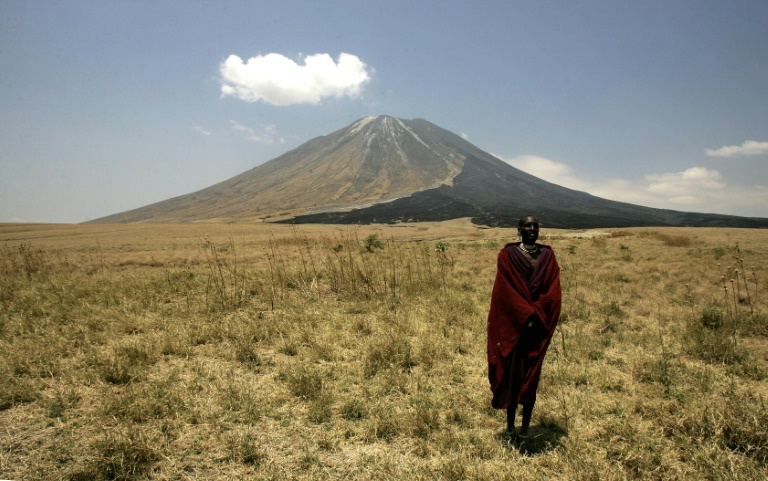
Tanzania on Thursday began relocating Maasai pastoralists from the famed Ngorongoro conservation area in a move that rights campaigners described as unlawful evictions.

The indigenous community has lived in the reserve, a UNESCO World Heritage site in northern Tanzania, for over a century.

But they now face the threat of eviction, as the authorities contend that their growing population is encroaching on wildlife habitat.

Officials insist the relocation is voluntary.

Arusha regional commissioner John Mongella said around 296 families had registered for the move to Handeni, a district 600 kilometres (370 miles) south of Ngorongoro.

“There is no eviction here, all people who are leaving (are) voluntarily registered and the government is facilitating them,” he said in a video statement.

The government has earmarked 162,000 hectares (400,000 acres) of land for relocated Maasai households, he said.

But the community remains sharply divided over the issue, with many reluctant to leave the only home they have ever known.

“This eviction has never been voluntary for Ngorongoro people,” Ngorongoro-based human rights lawyer and activist Joseph Oleshangay told AFP.

The relocation has sparked concern, with a team of UN-appointed independent rights experts warning that “it could jeopardize the Maasai’s physical and cultural survival.”

“This will cause irreparable harm, and could amount to dispossession, forced eviction and arbitrary displacement prohibited under international law,” they said in a statement on Wednesday.

Tanzania has historically allowed indigenous communities such as the Maasai to live within some national parks.

But since 1959, the number of humans living in Ngorongoro has shot up from 8,000 to more than 100,000.

The livestock population has grown even more quickly, from around 260,000 in 2017 to over one million today.

– ‘Shocking brutality’ –

The Maasai say the authorities are attempting to force them off their land in order to organise safaris and private hunting expeditions for tourists.

The government has rejected these accusations, but the issue has led to clashes between the pastoralists and police.

One officer was killed and several protesters were injured during demonstrations in Ngorongoro district’s Loliondo town last weekend, sparking outrage among campaigners. 

The protest broke out over the government’s push to cordon off 1,500 square kilometres (550 square miles) of Loliondo to create a wildlife protection area.

On Wednesday, Home Affairs Minister Hamad Masauni ordered police to carry out “verification and investigation of all NGOs operating” in Loliondo, warning that “their operations should not disturb national security in any way.”

“The government will take strong action against all the NGOs which violate the rules,” he warned.

Amnesty International said Wednesday the “unlawful forced eviction” in Loliondo was “shocking both in its scale and brutality.” 

“Authorities must halt the ongoing demarcation and security operation in Loliondo, and begin genuine consultations with the community,” it said.  

In 2009, thousands of Maasai families were moved from Loliondo to allow an Emirati safari company, Ortelo Business Corporation, to organise hunting expeditions there. 

The government cancelled that deal in 2017, following allegations of corruption.

Binance backs Musk stance over free speech on Twitter

The boss of cryptocurrency exchange Binance told AFP on Thursday that he had pledged $500 million to fund Elon Musk’s takeover of Twitter to support free speech. 

Changpeng Zhao, who goes by CZ, said he used Twitter more than he used his own trading platform and was keen to support it.

“Twitter is probably the most important free speech platform in the world,” he told AFP at the VivaTech trade show in Paris.

In April, Tesla boss Musk formulated a plan to buy Twitter for $44 billion, saying he wanted to promote free speech on the platform. 

In particular, he said he was ready to reinstate former US president Donald Trump, who was expelled from the network for inciting his supporters before the Capitol riots in Washington on January 6 last year.

At the beginning of May, Musk said he had raised more than $7 billion to finance the deal from investors including Oracle founder Larry Ellison, Sequoia Capital and Binance. 

But Musk has since cast doubt on his ambitions, threatening to withdraw his offer if he does not get reliable data on the number of fake accounts in circulation on Twitter.

Zhao, who has 6.4 million followers on Twitter, said he would stand behind Musk’s decision, whichever way he goes.

“He’s taking the lead, we’re following,” he said.

“If Elon commits to it, we’re committed. If Elon calls it off, then most likely we’re off.”

Musk is due to meet Twitter employees on Thursday for a question and answer session, the first since his takeover bid. 

Sometimes described as the “Elon Musk of cryptocurrencies”, Zhao said the comparison was too flattering. 

“Elon is a much stronger entrepreneur. Also, he is a genius,” said the Binance boss, who said he exchanged with the Tesla boss via the Signal app but has not yet met him in person. 

UN warns of 'alarming rise' of hunger in Sudan

Political and economic turmoil have helped drive a third of Sudan’s population towards life-threatening food shortages, and the situation is likely to worsen, the UN said on Thursday.

An assessment by the UN’s World Food Programme showed that a record 15 million people in the country — one-third of its population — are currently facing “acute food insecurity,” which WFP defines as “when a person’s inability to consume adequate food puts their lives or livelihoods in immediate danger.”

Eddie Rowe, WFP’s country director, said in a statement that, “The combined effects of conflict, climate shocks, economic and political crises, rising costs and poor harvests are pushing millions of people deeper into hunger and poverty.”

The WFP assessment said food insecurity has hit all of Sudan’s 18 states but the most affected areas are in the Darfur region, which has seen an increase in deadly clashes among rival groups over the past few months. Hundreds have been killed there.

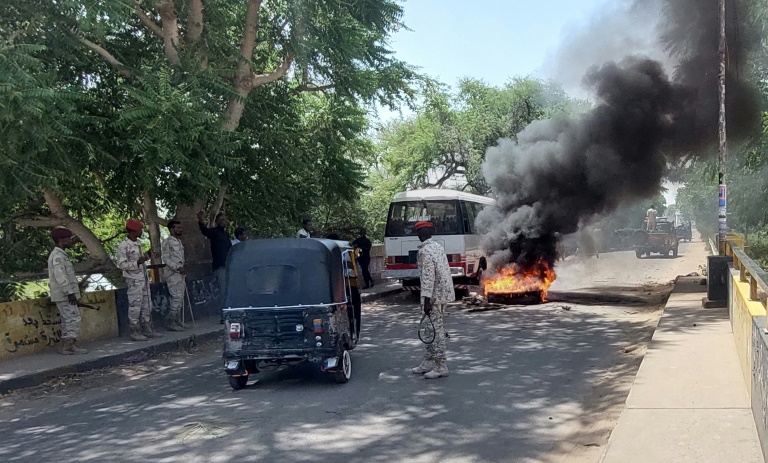
Economic and political turmoil in the northeast African country has been aggravated by an October military coup led by army chief Abdel Fattah al-Burhan. 

Near-weekly protests since the coup led to a violent crackdown that has killed more than 100 people and wounded thousands. 

Sudan is also especially vulnerable to the impact of global supply shortages in the wake of Russia’s invasion of Ukraine.

WFP expects the “already alarming food security situation is likely to worsen” in Sudan by September. 

“By that time, up to 40 percent of the population, or around 18 million people, may slip into food insecurity,” it warned. 

The organisation said that Sudan has so far been able to produce 5.1 million tonnes of cereal, “enough to cover the needs of less than two thirds of the population.” 

It warned that food insecurity among people “may dramatically increase to unprecedented levels and ultimately lead to more conflict and displacement” unless Sudan receives robust support with agriculture inputs. 

WFP said funding levels have not matched the need and “we must act now to avoid increasing hunger levels and to save the lives of those already affected.”

The October coup, Sudan’s latest, triggered wide international condemnation and cuts to crucial aid by Western countries. 

On June 8, UK-based aid group Save the Children said two children in Darfur reportedly died “due to hunger related causes”.  

India asks female coaches to chaperone athletes after harassment claims

Indian sports authorities have told female coaches to chaperone women athletes on tour after a sexual harassment scandal shook the country’s elite cycling community.

Top sprint team coach RK Sharma was sacked last week after an unnamed cyclist said he had attempted to “forcefully” coerce her into sex during a training camp in Slovenia. 

On Wednesday, the Sports Authority of India (SAI) ordered all national sports federations to send women coaches to accompany female athletes during domestic and international travel. 

“The step has been taken after recent events came to light where certain female athletes have complained against their coaches during international trips,” the SAI said in a statement.

“There is an expectation, at all times, of appropriate behaviour consistent with the core values of sportsmanship and appropriate moral conduct,” it added.

The cyclist whose complaint led to Sharma’s sacking returned from Slovenia this month saying that the coach’s behaviour left her “extremely scared for my safety, wellbeing and life”.

She said Sharma had also threatened to destroy her career by having her removed from an elite sports academy and ensuring she would be left to “sell vegetables on the road”.

Since Sharma’s sacking, women’s national cycling champion Deborah Herold has come forward to accuse him of slapping and ridiculing her.

Herold told the Indian Express newspaper she was removed from the national team because Sharma and his assistant believed she was in a same-sex relationship.

Sharma has presided over a “toxic atmosphere” and his assistant “taunted, ignored and isolated” Herold from the rest of the cyclists, she was quoted as saying on Thursday.

Hectic horse-trading as WTO talks enter overtime

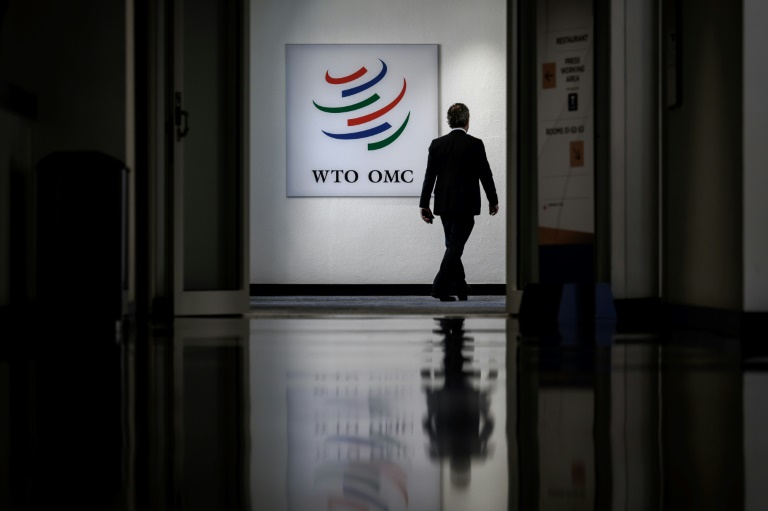
Talks at the World Trade Organization were going deep into overtime on Thursday with countries trying to thrash out an over-arching deal encompassing food security, fishing and combating Covid-19.

With ministers struggling to conclude agreements on each separate topic, countries were going round the clock making tit-for-tat trade-offs which, they hope, could see several measures go through as one package.

Ministers from the global trade body’s 164 members have been talking since Sunday at the WTO’s headquarters in Geneva, in their first conference since December 2017.

They added a fifth day of talks to try to break the deadlock — and prove the organisation has a role in tackling big global challenges.

But despite working on through Wednesday night, even Thursday’s negotiations were going past their scheduled deadline.

All the delegation chiefs were set to meet from 5:00 pm (1500 GMT) to try and finalise a conclusion based on progress made in Thursday’s frantic talks.

“We are still optimistic that we can have some really positive outcomes,” New Zealand’s trade minister Damien O’Connor told AFP as the daytime sessions started.

“There is a lot of commitment to try and move things forward and it’s encouraging.

– ‘On the march’ –

EU trade commissioner Valdis Dombrovskis tweeted he was “on the march” towards a final agreement that was now “getting closer”.

Honduras’s WTO ambassador said ministers were “working towards a result not seen in many years in the WTO”, adding: “success is mandatory”.

“We’ll be in there until the last hour,” another Geneva-based diplomat told reporters.

“We remain committed to seeing what we can deliver from this.”

The WTO only takes decisions by consensus among all its members, making deals all the harder to hammer out.

Ministers have been trying to secure deals on curbing harmful fishing subsidies; temporarily waiving Covid-19 vaccine patents; food security; agriculture; e-commerce; the WTO’s response to pandemics; and reform of the organisation itself.

Countries hit a brick wall late Wednesday trying to secure each separate deal on its own merits, so they spent the night horse-trading to try to keep them all afloat in some format.

US Trade Representative Katherine Tai and others tweeted pictures of first light emerging over Lake Geneva.

Giant trays of sandwiches kept delegates going through the night after they finished all the fruit juice in the building.

“They’re looking at a broad package: what can be achieved, trade-offs in different areas,” a Geneva trade official told reporters.

“We’re into the real bargaining part of the meeting. This is where all the action is happening.”

– Fisheries exemption –

WTO chief Ngozi Okonjo-Iweala, who took over in March 2021, has hinged her leadership on breathing new life into the sclerotic organisation.

The former foreign and finance minister of Nigeria is hoping to pull off a coup by finalising a long-sought deal on curbing harmful fishing subsidies.

Negotiations towards banning subsidies that encourage overfishing and threaten the sustainability of the planet’s fish stocks have been going on at the WTO for more than two decades.

But India has been pushing for a 25-year exemption — far longer than many countries are comfortable with.

Some diplomats have accused India of being intransigent across the board.

“India has always been a reluctant trading partner,” said Harsh V Pant, an international relations professor at King’s College London university’s India Institute.

“India feels that it has more room today than it had in the past. It has a greater future potential and feels that it is in a geopolitical sweet spot where everyone wants to befriend it — and it can use that as leverage,” he told AFP.

– E-commerce wrangle –

Ministers have been arguing over whether to extend the moratorium on imposing customs duties on electronic transactions, in place since 1998.

But India and South Africa say it has a negative impact, with Pakistan, Indonesia and Sri Lanka also sceptical.

WTO deputy director-general Anabel Gonzalez said there were “intense negotiations” going on in a packed room.

“It’s difficult, but I am hopeful,” she said.

The United States told an earlier e-commerce meeting that the moratorium had supported the growth of digital commerce, which had provided an “economic lifeline” during the Covid-19 pandemic, according to a Geneva trade official.

rjm-burs/vog/jv

Qatar Airways posts record $1.54 bn profit despite pandemic

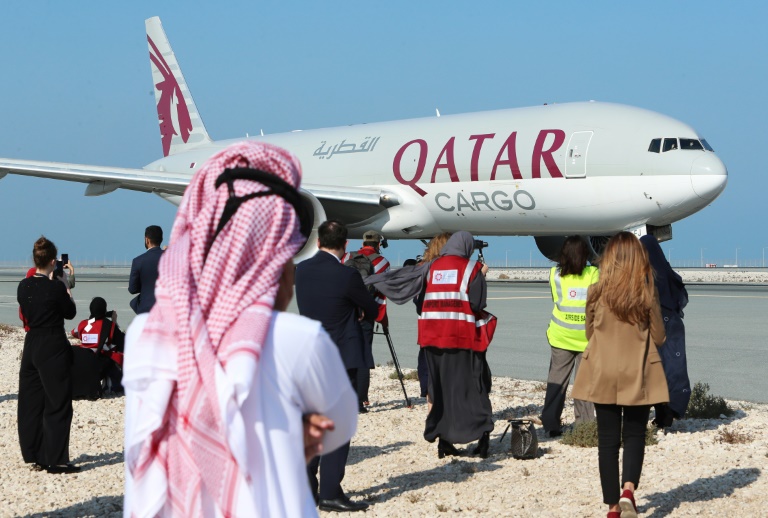
Qatar Airways on Thursday posted a record net profit of $1.54 billion for the 2021-2022 financial year, a result it attributed to a “successful strategy” during the coronavirus pandemic.

The state-owned airline said the profit result was “200 percent above its highest annual historical profit” and achieved on the back of $14.4 billion in overall income.

It said that the revenue figure was “a remarkable two percent higher than the full financial year pre-Covid” in 2019-2020.

Gas-rich Qatar is among several governments that stepped in to support their national carriers through the coronavirus shutdown, which pummelled global travel and the aviation industry.

Qatar Airways, the Middle East’s second biggest airline after Emirates, had reported in September last year an overall loss of $4.1 billion in the 2020-2021 financial year.

The flag carrier said at the time that it had received $3 billion in state aid to weather the coronavirus travel downturn and to offset the losses blamed on the cost of grounding aircraft.

Its chief executive, Akbar Al Baker, praised the “strength, resilience, and commitment” of Qatar Airways Group in the past year.

“In the most difficult period ever in the global airline industry, the airline credits its positive results to its agility and successful strategy,” the airline said in a statement.

Qatar Airways said it “continued to focus on customer needs and evolving market opportunities, as well as efficiency and the commitment of its worldwide employees”.

“This profit is not only a record for Qatar Airways Group, but also a record among all other airlines that have published financial results for this financial year worldwide,” the airline said.

– New routes –

The Qatari airline said it carried 18.5 million passengers in 2021-2022, an increase of 218 percent over the previous 12-month period.

It said its cargo division remained the “leading player in the world”, with growth of 25 percent in revenues and an identical figure for cargo capacity.

“Against the backdrop of the pandemic disruption, Qatar Airways Cargo transported more than three million tonnes of air freight and securing eight percent share in the global market,” it said.

The airline said it had also “transported more than 600 million doses of Covid-19 vaccines over the course of the pandemic to date”.

“Despite the challenges of Covid-19, the national carrier of the State of Qatar grew to more than 140 destinations” in 2021-2022, the airline added.

New routes were opened to destinations across Africa, Asia, Europe and the Middle East, including Abidjan in the Ivory Coast, and Almaty, Kazakhstan.

The carrier has maintained “strong performance and growing profitability,” Al Baker said.

“We have pursued every business opportunity and left no stone unturned as we aimed to meet our targets,” he said.

“Whilst our competitors grounded their aircraft and closed their routes, we adapted our entire commercial operation to respond to ever-evolving travel restrictions and never stopped flying, operating a network our passengers and customers could rely on,” he said.

Qatar Airways posts record $1.54 bn profit despite pandemic

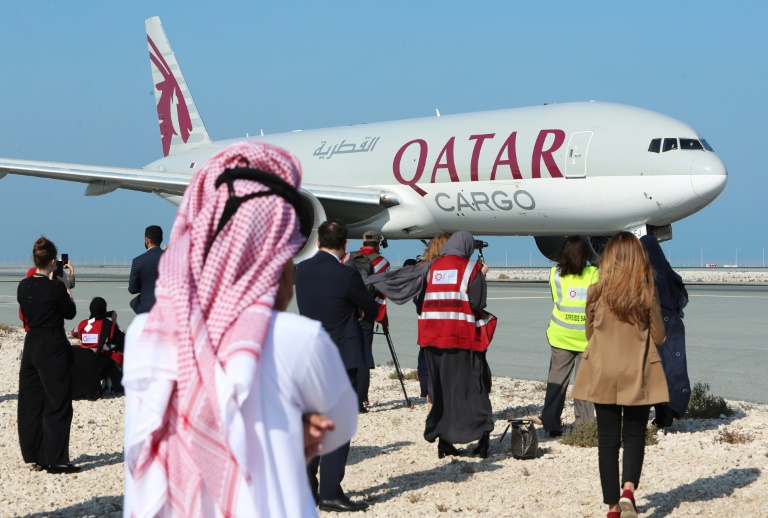
Qatar Airways on Thursday posted a record net profit of $1.54 billion for the 2021-2022 financial year, a result it attributed to a “successful strategy” during the coronavirus pandemic.

The state-owned airline said the profit result was “200 percent above its highest annual historical profit” and achieved on the back of $14.4 billion in overall income.

It said that the revenue figure was “a remarkable two percent higher than the full financial year pre-Covid” in 2019-2020.

Gas-rich Qatar is among several governments that stepped in to support their national carriers through the coronavirus shutdown, which pummelled global travel and the aviation industry.

Qatar Airways, the Middle East’s second biggest airline after Emirates, had reported in September last year an overall loss of $4.1 billion in the 2020-2021 financial year.

The flag carrier said at the time that it had received $3 billion in state aid to weather the coronavirus travel downturn and to offset the losses blamed on the cost of grounding aircraft.

Its chief executive, Akbar Al Baker, praised the “strength, resilience, and commitment” of Qatar Airways Group in the past year.

“In the most difficult period ever in the global airline industry, the airline credits its positive results to its agility and successful strategy,” the airline said in a statement.

Qatar Airways said it “continued to focus on customer needs and evolving market opportunities, as well as efficiency and the commitment of its worldwide employees”.

“This profit is not only a record for Qatar Airways Group, but also a record among all other airlines that have published financial results for this financial year worldwide,” the airline said.

– New routes –

The Qatari airline said it carried 18.5 million passengers in 2021-2022, an increase of 218 percent over the previous 12-month period.

It said its cargo division remained the “leading player in the world”, with growth of 25 percent in revenues and an identical figure for cargo capacity.

“Against the backdrop of the pandemic disruption, Qatar Airways Cargo transported more than three million tonnes of air freight and securing eight percent share in the global market,” it said.

The airline said it had also “transported more than 600 million doses of Covid-19 vaccines over the course of the pandemic to date”.

“Despite the challenges of Covid-19, the national carrier of the State of Qatar grew to more than 140 destinations” in 2021-2022, the airline added.

New routes were opened to destinations across Africa, Asia, Europe and the Middle East, including Abidjan in the Ivory Coast, and Almaty, Kazakhstan.

The carrier has maintained “strong performance and growing profitability,” Al Baker said.

“We have pursued every business opportunity and left no stone unturned as we aimed to meet our targets,” he said.

“Whilst our competitors grounded their aircraft and closed their routes, we adapted our entire commercial operation to respond to ever-evolving travel restrictions and never stopped flying, operating a network our passengers and customers could rely on,” he said.

Women not wearing hijab 'trying to look like animals', say Taliban posters

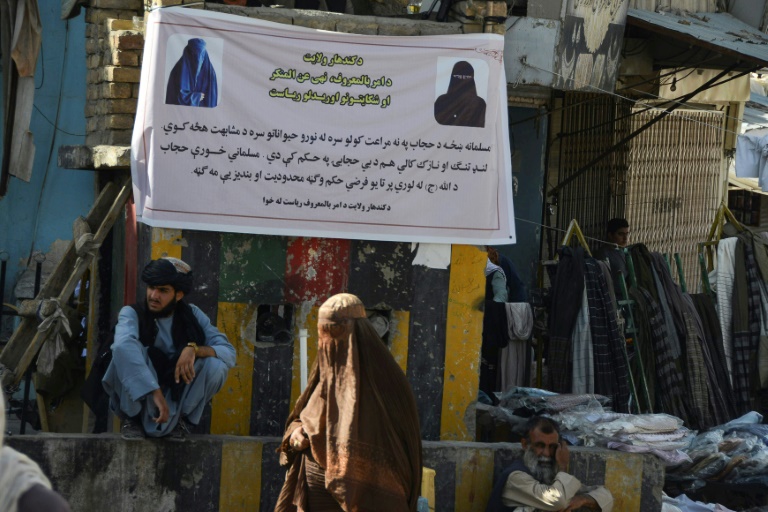
The Taliban’s religious police have put up posters across the southern Afghan city of Kandahar saying that Muslim women who do not wear an Islamic hijab that fully covers their bodies are “trying to look like animals”, an official confirmed on Thursday.

Since seizing power in August, the Taliban have imposed harsh restrictions on Afghan women, rolling back the marginal gains they made during the two decades since the US invaded the country and ousted the group’s previous regime.

In May, the country’s supreme leader and Taliban chief Hibatullah Akhundzada approved a decree saying women should generally stay at home.

They were ordered to cover themselves completely, including their faces, should they need to go out in public.

This week, the Taliban’s feared Ministry for Promotion of Virtue and Prevention of Vice, which enforces the group’s strict interpretation of Islam, put up posters across Kandahar city showing images of burqas, a type of garment that covers a woman’s body from head to toe.

“Muslim women who do not wear the hijab are trying to look like animals”, say the posters, which have been slapped on many cafes and shops as well as on advertising hoardings across Kandahar — the de facto power centre of the Taliban.

Wearing short, tight and transparent clothes was also against Akhundzada’s decree, the posters say.

The ministry’s spokesman in the capital Kabul was not reachable for comment, but a top local official confirmed that the posters were put up.

“We have put up these posters and those women whose faces are not covered (in public) we will inform their families and take steps according to the decree,” Abdul Rahman Tayebi, head of the ministry in Kandahar, told AFP.

Akhundzada’s decree orders authorities to warn and even suspend from government jobs male relatives of women who do not comply.

Outside of Kabul, the burqa, the wearing of which was mandatory for women under the Taliban’s first stint in power, is common.

On Wednesday, United Nations rights chief Michelle Bachelet slammed the hardline Islamist government for its “institutionalised systematic oppression” of women.

“Their situation is critical,” she said.

After returning to power, the Taliban had promised a softer version of their previous harsh system of governance, enforced from 1996 to 2001.

But since August, many restrictions have been imposed on women.

Tens of thousands of girls have been shut out of secondary schools, while women have been barred from returning to many government jobs.

Women have also been banned from travelling alone and can only visit public parks in the capital on days when men are not allowed.

BoE unveils fifth rate hike in row as inflation soars

The Bank of England on Thursday hiked its main interest rate for a fifth straight time, as it forecast British inflation to soar further this year to above 11 percent.

BoE policymakers agreed at a regular meeting to increase the cost of borrowing by a quarter-point to 1.25 percent, the highest level since the global financial crisis in 2009.

The pound slumped one percent against the dollar following the announcement, one day after the Federal Reserve hiked US interest rates far more aggressively to fight runaway consumer prices in the world’s biggest economy.

The BoE’s latest rise was in response to “continuing signs of robust cost and price pressures… and the risk that those pressures become more persistent”, said minutes of the UK meeting.

A minority of BoE policymakers had voted for an increase to 1.5 percent.

– BoE lags Fed –

The Bank of England is avoiding “shock and awe tactics being employed across the Atlantic”, said Laith Khalaf, head of investment analysis at AJ Bell.

“Despite the UK starting to tighten monetary policy first, interest rates are now higher in the US.”

The US Federal Reserve on Wednesday announced the most aggressive interest rate increase in nearly 30 years — and said it is prepared to do so again next month in an all-out battle to drive down surging consumer prices.

The Fed’s rate hike of 0.75 percentage points comes after US inflation rocketed to 8.6 percent in May, the highest level in more than four decades.

In the UK, inflation stands at nine percent, the highest level in 40 years.

Prices are soaring worldwide as economies reopen from pandemic lockdowns and amid the Ukraine war that is pushing already high energy costs even higher.

– ‘Slow poison’ –

British economic output declined for a second month in a row in April, weighed down by rocketing prices that are causing a cost-of-living crisis for millions of Britons, while increasing the risk of a UK recession this year.

The BoE on Thursday forecast the UK economy to contract by 0.3 percent in the second quarter that ends on June 30 and after growth in the first three months of the year.

A recession is two quarters in a row of negative growth.

“Inflation risks being a slow poison for the economy, so the Bank of England is trying to take an antidote now by raising interest rates,” said Susannah Streeter, senior investment and markets analyst at Hargreaves Lansdown.

“However, it can only take a small dose at a time given the ailing nature of the economy… with more hikes to follow.”

Higher interest rates, while boosting returns for savers, ramps up loan repayments for businesses and households.

Data this week also revealed the first rise in the UK unemployment rate since the end of 2020 — although at 3.8 percent it remains at a near 50-year low point amid record-high job vacancies.

At the same time, the value of average UK wages is falling at the fastest pace in more than a decade.

Fearing fallout from surging inflation, the BoE began to raise its key interest rate in December, from a record-low level of 0.1 percent.

Almost two years earlier, as the Covid-19 pandemic began to take hold, the BoE slashed the rate to just above zero and decided to pump massive sums of new cash into the economy.

In the neighbouring eurozone, the European Central Bank is next month set to raise interest rates for the first time in more than a decade.

Switzerland’s central bank hiked its rate Thursday for the first time in 15 years.

burs-bcp/rfj/kjm

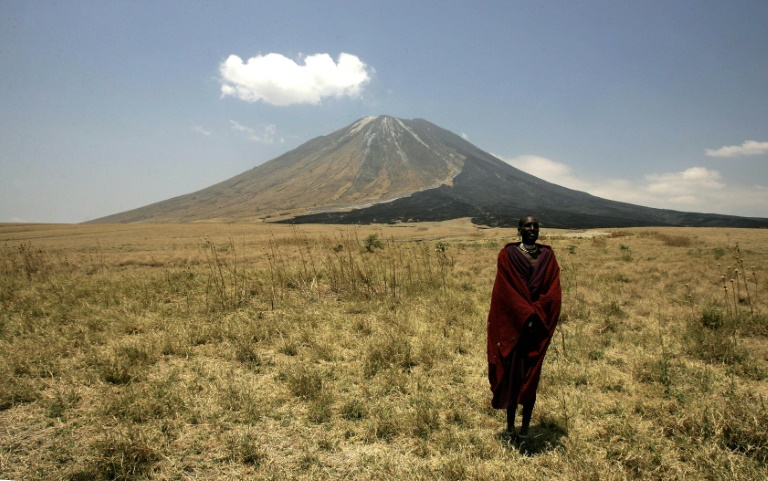
Tanzania starts moving Maasai out of Ngorongoro reserve

Tanzania on Thursday began relocating Maasai pastoralists from the famed Ngorongoro conservation area in a move that rights campaigners described as unlawful evictions.

The indigenous community has lived in the reserve, a UNESCO World Heritage site in northern Tanzania, for over a century.

But they now face the threat of eviction, as the authorities contend that their growing population is encroaching on wildlife habitat.

Officials insist the relocation is voluntary.

Arusha regional commissioner John Mongella said around 296 families had registered for the move to Handeni, a district 600 kilometres (370 miles) south of Ngorongoro.

“There is no eviction here, all people who are leaving (are) voluntarily registered and the government is facilitating them,” he said in a video statement.

The government has earmarked 162,000 hectares (400,000 acres) of land for relocated Maasai households, he said.

But the community remains sharply divided over the issue, with many reluctant to leave the only home they have ever known.

“This eviction has never been voluntary for Ngorongoro people,” Ngorongoro-based human rights lawyer and activist Joseph Oleshangay told AFP.

The relocation has sparked concern, with a team of UN-appointed independent rights experts warning that “it could jeopardize the Maasai’s physical and cultural survival.”

“This will cause irreparable harm, and could amount to dispossession, forced eviction and arbitrary displacement prohibited under international law,” they said in a statement on Wednesday.

Tanzania has historically allowed indigenous communities such as the Maasai to live within some national parks.

But since 1959, the number of humans living in Ngorongoro has shot up from 8,000 to more than 100,000.

The livestock population has grown even more quickly, from around 260,000 in 2017 to over one million today.

– ‘Shocking brutality’ –

The Maasai say the authorities are attempting to force them off their land in order to organise safaris and private hunting expeditions for tourists.

The government has rejected these accusations, but the issue has led to clashes between the pastoralists and police.

One officer was killed and several protesters were injured during demonstrations in Ngorongoro district’s Loliondo town last weekend.

The protest broke out over the government’s push to cordon off 1,500 square kilometres (550 square miles) of Loliondo to create a wildlife protection area.

Amnesty International said Wednesday the “unlawful forced eviction” in Loliondo was “shocking both in its scale and brutality.” 

“Authorities must halt the ongoing demarcation and security operation in Loliondo, and begin genuine consultations with the community,” it said.  

In 2009, thousands of Maasai families were moved from Loliondo to allow an Emirati safari company, Ortelo Business Corporation, to organise hunting expeditions there. 

The government cancelled that deal in 2017, following allegations of corruption.
Close Bitnami banner
Bitnami