World

Xi assures Putin of China's support for Russian 'sovereignty, security'

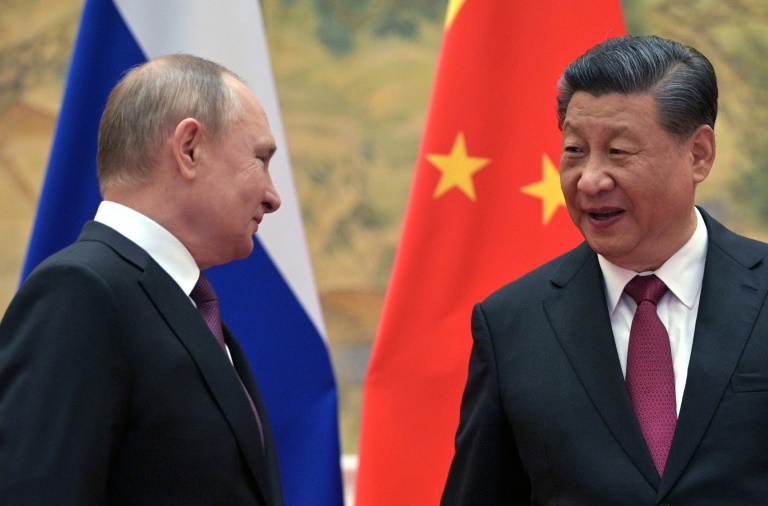
Chinese President Xi Jinping assured his Russian counterpart Vladimir Putin of Beijing’s support for Moscow on “sovereignty and security” during a call Wednesday, according to state media.

China is “willing to continue to offer mutual support (to Russia) on issues concerning core interests and major concerns such as sovereignty and security,” Chinese state broadcaster CCTV reported Xi as saying.

It was the second reported call between the two leaders since Putin launched his invasion of Ukraine on February 24.

China has refused to condemn Moscow’s invasion of Ukraine and has been accused of providing diplomatic cover for Russia by blasting Western sanctions and arms sales to Kyiv.

According to CCTV, Xi praised the “good momentum of development” in bilateral relations since the start of the year “in the face of global turmoil and changes”.

Beijing was willing to “intensify strategic coordination between the two countries”, Xi reportedly said.

The Kremlin said the two leaders had agreed to ramp up economic cooperation in the face of “unlawful” Western sanctions.

“It was agreed to expand cooperation in the energy, financial, industrial, transport and other areas, taking into account the situation in the global economy that has become more complicated due to the unlawful sanctions policy of the West,” the Kremlin said following the phone call.

The West has adopted unprecedented sanctions against Russia in retaliation for its invasion of Ukraine and Moscow considers that Europe and the United States have thus caused a global economic slowdown.

Moscow is also looking for new markets and suppliers to replace the major foreign firms that left Russia following the invasion.

– ‘No limits’ relationship –

The European Union and the United States have warned that any backing from Beijing for Russia’s war in Ukraine, or help for Moscow to dodge Western sanctions, would damage ties.

China as well as India are two major economies that have not taken part in retaliatory measures against Moscow over its invasion.

In the eyes of Chinese officials, the Europeans have allowed themselves to be sucked into backing Ukraine, at Washington’s initiative, in a move contrary to their interests as Russian gas consumers.

Once bitter Cold War enemies, Beijing and Moscow have stepped up cooperation in recent years as a counterbalance to what they see as US global dominance.

The two countries have drawn closer in the political, trade and military spheres as part of what they call a “no limits” relationship.

The two sides last week unveiled the first road bridge linking the two countries, connecting the far eastern Russian city of Blagoveshchensk with the northern Chinese city of Heihe.

The call Wednesday between the two leaders fell on Xi’s 69th birthday and was their first reported communication since the day after Russia launched its invasion of its European neighbour.

Xi, who has described Putin as an “old friend”, also invited his Russian counterpart to the opening ceremony of the Beijing Winter Olympics in early February.

Beijing is Moscow’s largest trading partner, with trade volumes last year hitting $147 billion, according to Chinese customs data, up more than 30 percent on 2019.
Pakistan military says ailing Musharraf should be 'allowed home'

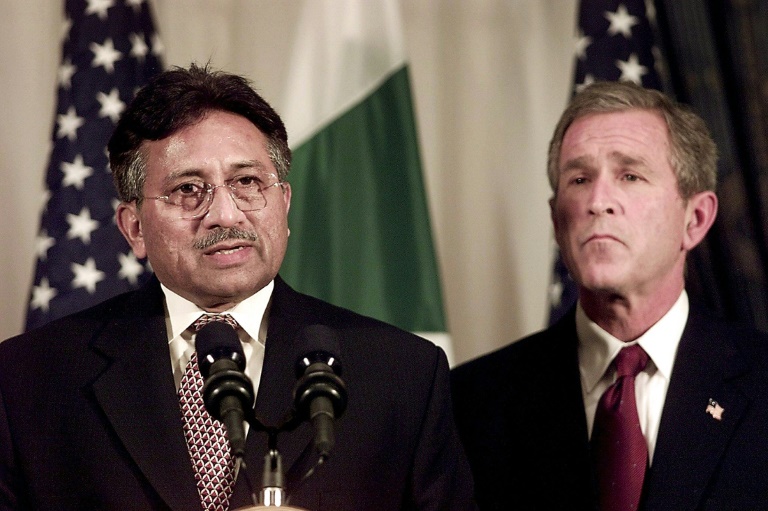
Pakistan’s powerful military said Wednesday that ailing former army chief Pervez Musharraf, who seized power in a bloodless coup 23 years ago and ruled for nine years, should be allowed to return from self-imposed exile in Dubai.

Musharraf’s family said last week the 78-year-old was unlikely to recover from multiple organ failure in Dubai, where he has been since 2016 after being allowed to leave Pakistan for medical treatment.

At the time, the former four-star general was facing multiple court cases related to his period of rule, and was sentenced in absentia to death for treason, a ruling that was later annulled.

“It was the opinion of the institution and its leadership that Pervez Musharraf may return to the country in view of his poor health if the family so desires,” Major General Babar Iftikhar, head of the military’s Inter Services Public Relations (ISPR) publicity wing, was quoted as saying by local media.

ISPR confirmed his remark to AFP on Wednesday.

Musharraf still faces numerous court cases should he return to the country. 

The military has ruled Pakistan for decades at various times since the country gained independence in 1947, and Musharraf was army chief of staff when he seized power after then-prime minister Nawaz Sharif tried to sack him in 1999.

His legacy is a controversial one, with some crediting him with rescuing Pakistan from economic crisis and others blaming him for fanning extremism by allying the country with the United States in its war against armed groups in the wake of the 9/11 attacks.

While in office, he oversaw a stint of economic growth while surviving at least three assassination attempts.

But he is also accused of overseeing a period marked by human rights abuses and the disappearance of hundreds of activists.

Leading human rights activist Tahira Abdullah said Musharraf should be tried if he does return.

“As a citizen of Pakistan, everyone has the right of return,” she said.

“However… he must be arrested immediately after setting foot on Pakistani soil and must be sent to jail — or to hospital if he is ill”, she added.

– ‘No personal enmity’ –

Musharraf’s easygoing charm failed to mask the blurring of the division between the government and army, and his popularity plummeted after trying to sack the Supreme Court chief justice and declaring a state of emergency in late 2007. 

After the assassination of opposition leader Benazir Bhutto, the national mood soured even more and crushing losses suffered by his allies in the 2008 elections left him isolated.

Musharraf’s plan to return to power in the 2013 general election was dashed when he was disqualified from running in a poll won by Sharif — the man he deposed in 1999.

On Tuesday, Sharif — whose brother Shehbaz is now prime minister — said he supported allowing Musharraf to return.

“I have no personal enmity with Pervez Musharraf and do not want others to undergo an agony that I experienced about my loved ones,” he tweeted from London, where he lives in self-imposed exile after being convicted on corruption charges in 2018.

“I pray to Allah the almighty for his health. The government should facilitate him if he wants to come back”, Sharif added.

Retired general Talat Masood, now a defence and political analyst, said Musharraf should be allowed to die in peace at home.

“After all, he is a Pakistani… and now wants to spend his last days in the country and he should be allowed”, he said. 

Liaqat Baloch, a senior leader of the Jamaat-e-Islami party, also said Musharraf should be allowed to return.

“We pray to Allah that he recovers soon — and then he should face the raft of cases pending against him,” he said. 

European equities rebound as ECB vows to avoid bond stress

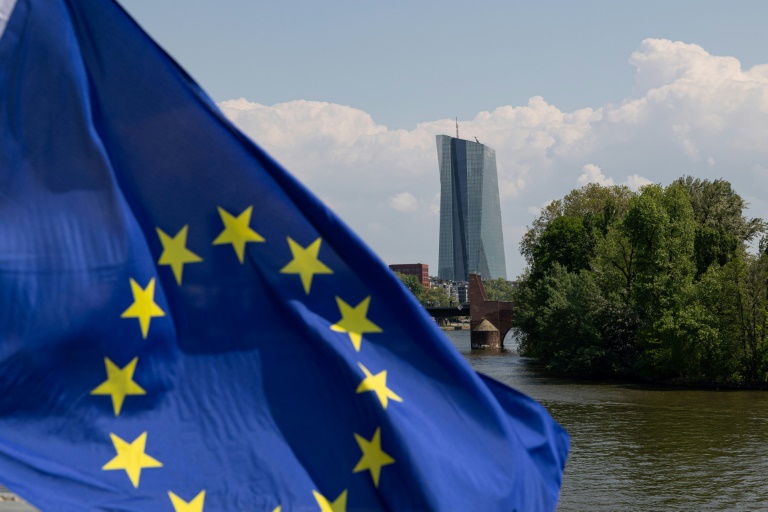
Europe’s equities pushed higher Wednesday as the European Central Bank pledged to ease the stress in volatile eurozone bond markets, while investors also braced for a major US rate hike.

Frankfurt, London and Paris stocks rallied, as investors were reassured by news of an emergency ECB meeting.

All three main indices had slid Tuesday, joining a global slide in equities on growing expectations that the US Federal Reserve will move aggressively to combat inflation at the conclusion of its latest scheduled monetary policy meeting on Wednesday.

Bitcoin extended this week’s precipitous slide to approach the key level of $20,000 as investors continued to shun risky crypto assets, while oil prices retreated further on lower energy demand expectations.

– ECB move ‘somewhat underwhelming’ –

The ECB said after its surprise meeting that it would use “flexibility” to ease stress on in sovereign debt markets and design a new instrument to ward off a fresh crisis in the eurozone.

The borrowing costs of some eurozone countries have risen faster than those of others as the ECB tightens its monetary policy. The bank has vowed to prevent such “fragmentation” which occured during the eurozone debt crisis a decade ago.

The yield on 10-year Italian bonds fell on Wednesday.

The euro rose against the dollar before giving up gains after the ECB announcement.

Markets.com analyst Neil Wilson called the announcement “somewhat underwhelming” and did not merit a special meeting.

Earlier, Wilson had said the emergency meeting “smacks of panic and a lack of control — but the market is happy to see it happen”.

The ECB is due to raise eurozone interest rates and end its massive bond-buying stimulus programme in July.

Asian stock markets closed mixed Wednesday with investors on edge over a looming Fed decision that has taken on greater significance since forecast-busting US inflation recently sent shockwaves through world markets.

Wall Street opened higher, with the Dow climbing 0.8 percent.

Traders’ screens were awash with red at the start of the week after data on Friday revealed that US consumer prices had soared at the fastest pace in four decades.

That confounded hopes that US inflation was stabilising and intensified pressure on policymakers to act.

The news ramped up bets that the Fed would hike interest rates at a steeper and faster pace than expected as it struggles to retain credibility.

Before Friday’s data, the Fed had been tipped to lift borrowing costs by half a point at Wednesday’s meeting, but investors are now widely anticipating a three-quarter point increase, with some even suggesting one percentage point.

The moves fuelled worries that the tighter monetary conditions will deal a blow to the US economy and potentially send it into recession next year.

“There is no shortage of pessimism in the market and traders are on the edge as they know that central banks have made the biggest blunder by calling inflation transitory — and their current policy is going to cause a great deal of pain,” AvaTrade analyst Naeem Aslam told AFP.

– Key figures at around 1330 GMT –

London – FTSE 100: UP 1.4 percent at 7,285.30 points

Frankfurt – DAX: UP 1.6 percent at 13,515.84 

Paris – CAC 40: UP 1.4 percent at 6,035.77

EURO STOXX 50: UP 1.2 percent at 3,447.02

New York – Dow: UP 0.8 percent at 30,595.77

Tokyo – Nikkei 225: DOWN 1.1 percent at 26,326.16 (close)

Hong Kong – Hang Seng Index: UP 1.1 percent at 21,308.21 (close)

Shanghai – Composite: UP 0.5 percent at 3,305.41 (close)

Euro/dollar: DOWN at $1.0415 from $1.0416 late Tuesday

Pound/dollar: UP at $1.2067 from $1.1997

Euro/pound: DOWN at 86.34 pence from 86.83 pence

Dollar/yen: DOWN at 134.71 yen from 135.47 yen

Brent North Sea crude: DOWN 0.5 percent at $120.58 per barrel

West Texas Intermediate: DOWN 0.6 percent at $118.20 per barrel

ECB moves to ease bond stress after surprise meeting

The European Central Bank said Wednesday it would “apply flexibility” to quell rising borrowing costs for more indebted eurozone members after an emergency meeting aimed at soothing market jitters.

A week after its regular policy gathering, the Frankfurt-based institution held a surprise “ad hoc meeting” to address the development in “market conditions”.

With inflation soaring, the ECB drew a line under years of ultra-loose monetary policy last Thursday, ending its massive bond-buying stimulus at the end of the month and announcing a long-awaited interest rate hike for July.

Consumer prices rose in the eurozone at an 8.1-percent pace in May, an all-time high for the currency club and well above the ECB’s own two-percent target.

But following the switch, the spread between yields of German government bonds and those of more indebted eurozone members — a measure of bond market stress — began to rise.

The coronavirus pandemic had “left lasting vulnerabilities in the euro area economy which are indeed contributing to the uneven transmission” of its policy, the ECB said in a statement.

In response, the ECB said it would “apply flexibility” to the reinvestment of maturing bonds under its pandemic-era debt purchasing programme to target at-risk countries, widely considered to include Italy, Spain, Greece and Portugal. 

It would also speed up work on “a new anti-fragmentation instrument”, which could be used to tackle further bond market stress.

– Crisis tool –

On Tuesday, ECB executive board member Isabel Schnabel said the bank would “not tolerate” unwarranted increases in borrowing costs that would “undermine” the bank’s policy. 

Schnabel said the ECB’s response to the risks of fragmentation would “depend on the situation we are facing”, but insisted that the bank’s commitment had “no limits”.

Hanging over the decision are memories of the eurozone debt crisis, when primarily southern states came under intense pressure as their borrowing costs soared, making their debts harder to finance.

Since the meeting last week, the spread between Italian and German government debt had risen to levels not seen since the very start of the pandemic in March 2020.

But yields on Italian 10-year bonds dipped following the announcement of the meeting, reducing the spread with German government debt.

Eurozone stock markets also rose after falling this week ahead of a regular US Federal Reserve meeting where policymakers could hike rates even higher than expected to combat decades-high inflation.

The ECB’s announcement was the “minimum” policymakers could come away with from Wednesday’s meeting, said Jack Allen-Reynolds, senior Europe economist at Capital Economics. 

The planned sums from the pandemic-era programme were “too small to halt a full-blown market panic”, he said.

– ‘A lot further’ –

The ECB brought an end to net purchases under the 1.85-trillion-euro ($1.94-trillion) scheme in March this year, but only a fraction will be available for reinvestment.

The tool being designed by the ECB “will need to go a whole lot further”, Allen-Reynolds said, warning that “debt sustainability will be a much bigger issue” if interest rates rise further than currently expected.

The ECB’s plan to up interest rates by a quarter percentage point at its meeting on July 21 would be its first hike in over a decade.

The central bank’s interest rates currently sit at historic lows, including a minus 0.5 deposit rate that effectively charges banks to park their cash at the ECB overnight.

The ECB has plotted out another hike at its September meeting, but a number of policymakers are eager to move faster to quash inflation and catch up with other major central banks. 

Biden chastises oil industry over fuel costs

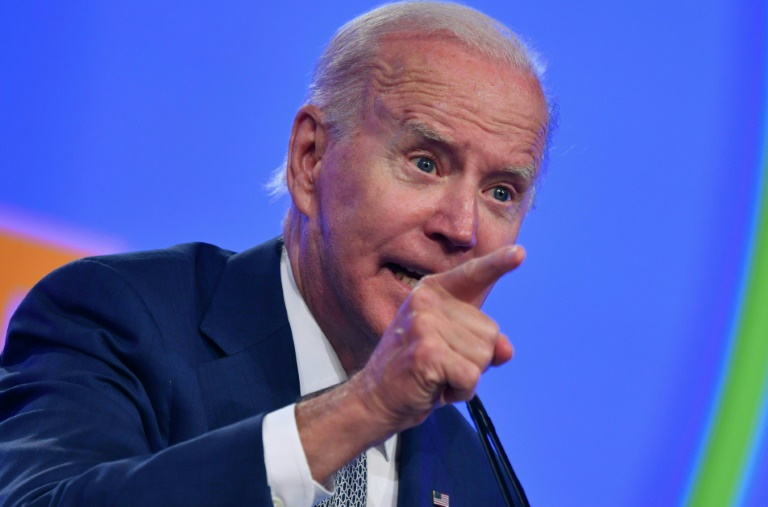
US President Joe Biden on Wednesday chastised the oil industry over soaring fuel prices at the heart of 40-year high inflation, warning of unspecified emergency measures.

The letter, sent to seven major oil corporations, was Biden’s most direct salvo yet in a campaign to blame the industry for stoking price increases. 

Average fuel prices are now $5 a gallon for drivers in the United States, up from $3 a year ago, and the spike is reverberating through the entire economy, helping to sink Biden’s approval ratings to below 40 percent.

“Refinery profit margins well above normal being passed directly onto American families are not acceptable,” Biden wrote in the letter to executives from Shell, Marathon Petroleum Corp, Valero Energy Corp, ExxonMobil, Phillips 66, Chevron and BP.

Biden said the economy is in “a time of war,” referring to the global fallout from President Vladimir Putin’s invasion of Ukraine and subsequent sanctions against energy exporter Russia.

“My administration is prepared to use all reasonable and appropriate federal government tools and emergency authorities to increase refinery capacity and output in the near term, and to ensure that every region of this country is appropriately supplied,” Biden said, without detailing what kind of actions he could take.

Biden has regularly lambasted the oil industry for what he says is a failure to tap into already approved wells and increase output. 

However, the letter, accompanied by a graph depicting rising producer profits, marked an escalation in the war of words.

In the letter he asked for “explanation of any reduction in your refining capacity since 2020 and any concrete ideas that would address the immediate inventory, price, and refining capacity issues in the coming months — including transportation measures to get refined product to market.”

“The crunch that families are facing deserves immediate action. Your companies need to work with my Administration to bring forward concrete, near-term solutions that address the crisis,” he wrote.

Biden’s Democratic Party risks a heavy defeat, losing control of Congress, in November elections and polls show that fears over the economy dominate.

In a fiery speech Tuesday, Biden blamed Republican obstruction in Congress and Russia’s war in Ukraine for price increases that he said are “sapping the strength of a lot of families.”

The Federal Reserve was due Wednesday to raise interest rates again in an aggressive effort to tamp down inflation, amid fears that the unintended result will be recession.

Storm in a teacup as minister urges Pakistanis to cut back on 'chai'

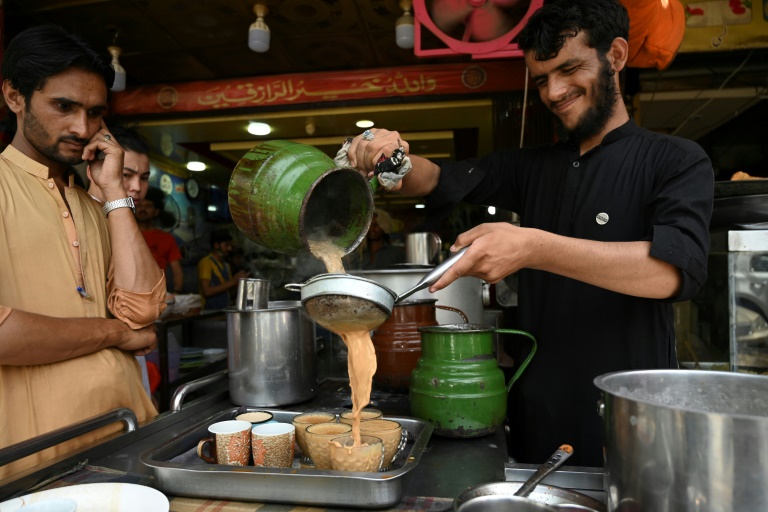
A Pakistani minister has caused a storm in a teacup by urging citizens to cut back on drinking “chai” as a way to preserve foreign currency that pays to import the leaves used in brewing the popular beverage.

Pakistan is the world’s biggest importer of tea — known locally as “chai” —  with the latest government figures showing it pays over $515 million a year to bring in the commodity, mostly from Kenya.

The country is suffering a long-brewing economic crisis, however, with dwindling foreign reserves used to pay crippling debt.

“I would also appeal to the nation to cut down one or two cups of tea because the tea we import is also imported on credit,” Ahsan Iqbal, minister for planning and development, said Tuesday.

Pakistanis drink tea in many forms — black, green, hot, cold, sweet, salted and spiced — but the most popular is made by brewing the leaves in boiled sweetened milk.

Iqbal’s comments prompted outrage Wednesday on social media and in tea rooms across the country.

“Why should we reduce the use of tea… we drink at our own expense, we don’t drink with government money,” said Jan Muhammad, 45, a truck driver who says he drinks between 15 to 20 cups a day.

“When you drive and you can’t see the road… then there is a risk of an accident. That’s why 20 cups are compulsory,” he told AFP.

At a tea stall in Islamabad’s Aabpara market, baker Muhammad Ibrahim said he drank 12 cups every day.

“I take three, four cups in the morning, then three in the afternoon and three, four late night,” he said. “This is my addiction.”

At the same restaurant, Tanveer Iqbal agreed that people should cut down — even as he and his four children sipped piping hot cups of the drink.

The university professor noted tea was routinely served at almost every meeting — especially those held by government officials.

“How will we reduce the use of tea when tea is the main drink in all the official meetings?” he asked.

“Chai” usually sells for around 45 Pakistani rupees (20 cents) a cup at stalls across the country.

“The government has increased its expenditure. They travel in big cars with protocol but we only enjoy tea,” said driver Muhammad.

EU takes legal action against UK for breaching N.Ireland agreement

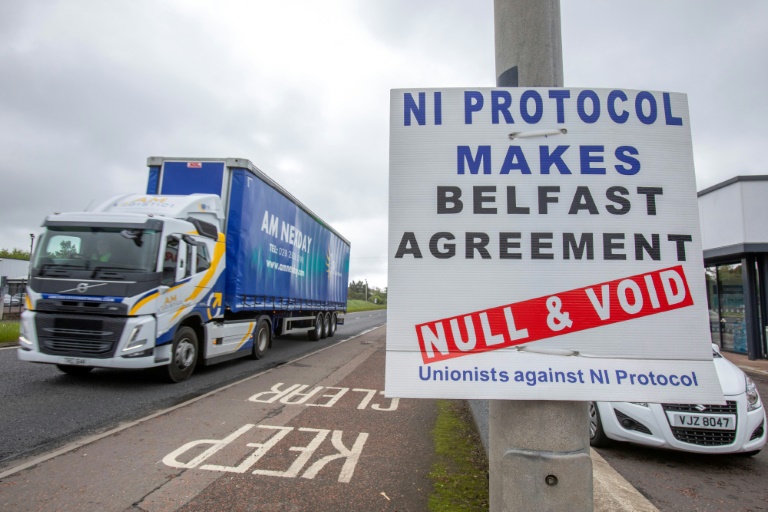
The European Commission launched new legal action against Britain on Wednesday, accusing London of putting peace in Northern Ireland at risk by trying to overhaul the post-Brexit trade deal.

“The UK government tabled legislation confirming its intention to unilaterally break international law,” EU commission vice-president Maros Sefcovic said.

“More precisely to break an agreement that protects peace and stability in Northern Ireland,” he said.

“Opening the door to unilaterally changing an international agreement is a breach of international law, as well. So let’s call a spade a spade. This is illegal.”

In London, Prime Minister Boris Johnson’s spokesman told journalists: “We are disappointed that the EU has taken this legal action today.” 

And he insisted that European proposals to resolve the impasse were a “step backwards”.

On Monday, the British government introduced legislation to rip up post-Brexit trading rules for Northern Ireland, in an attempt to override the EU withdrawal treaty that it had signed.

Johnson’s government insists it is not breaking international law, citing a “necessity” to act to restore Northern Ireland’s power-sharing institutions.

– ‘Radio silence’ –

But Brussels rejects this argument, and Sefcovic said that legal action would be taken, with two new cases joining one the commission had suspended.

Sefcovic said the EU would revive a case it launched last year to control the export of certain food products from Great Britain to Northern Ireland.

“If the UK doesn’t reply within two months, we may take them to the Court of Justice,” he warned.

“Second, we are launching two new infringements against the UK,” he said, announcing cases that could see the British government brought before the European Court of Justice.  

“One for failing to carry out the necessary controls at the border control posts in Northern Ireland by ensuring adequate staffing and infrastructure.

“And one for failing to provide the EU with essential trade statistics data to enable the EU to protect its single market.”

The cases brought by the EU do not directly tackle the proposed UK legislation, but rather seek to compel Britain to implement the existing agreements.

Johnson’s government has said it would still prefer a negotiated outcome with the European Union to reform the Northern Ireland Protocol.

But it accuses Brussels of failing to engage on its concerns about measures to control goods moving from Great Britain to Northern Ireland.

Brussels counters that, with Northern Ireland remaining in the EU single market, European law must ultimately apply to goods arriving in the territory.

And Sefcovic says that attempts to negotiate a compromise with Britain within the terms of the agreement Johnson himself hailed and signed have been met with “radio silence” since February.

– ‘Grave peril’ –

The spat comes at a bad time for the UK economy, with inflation at 40-year highs and rising household bills that have left many Britons struggling to make ends meet.

But there are economic headwinds in the European Union too, and warnings that the West must not fall out over trade when trying to present a united front against Russia’s invasion of Ukraine.

Irish Minister for Foreign Affairs Simon Coveney said Wednesday’s EU action is “the result of a deliberate UK Government strategy of provocation over partnership”.

“Reckless UK decisions this week have forced the EU into responding to a threatened breach of international law with serious consequences.”

Jonathan Jones, the former head of the UK government legal service scoffed at Number 10’s argument.

Jones resigned after Northern Ireland minister Brandon Lewis admitted that unilaterally breaking the deal would “break international law in a very specific and limited way”. 

“The concept of ‘necessity’ is an extremely high test. It applies only where a state must act to safeguard its essential interests against ‘grave and imminent peril’,” Jones said.

“How can an agreement willingly entered into only in 2020, at what the Prime Minister described as a ‘fantastic moment’, be already proving so disastrous as to represent ‘grave peril’ to the country?”

Meanwhile, the Democratic Unionist Party argues the protocol’s creation of an effective border in the Irish Sea jeopardises Northern Ireland’s status in the wider UK.

The pro-British party is boycotting the local government in Belfast until the deal is scrapped or dramatically overhauled, putting at risk the power-sharing agreement that underlies the Northern Ireland peace agreement.

EU takes legal action against UK for breaching N.Ireland agreement

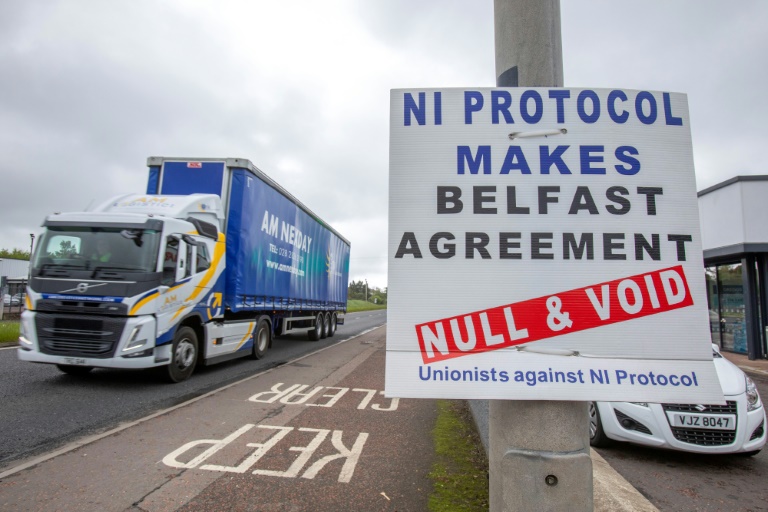
The European Commission launched new legal action against Britain on Wednesday, accusing London of putting peace in Northern Ireland at risk by trying to overhaul the post-Brexit trade deal.

“The UK government tabled legislation confirming its intention to unilaterally break international law,” EU commission vice-president Maros Sefcovic said.

“More precisely to break an agreement that protects peace and stability in Northern Ireland,” he said.

“Opening the door to unilaterally changing an international agreement is a breach of international law, as well. So let’s call a spade a spade. This is illegal.”

In London, Prime Minister Boris Johnson’s spokesman told journalists: “We are disappointed that the EU has taken this legal action today.” 

And he insisted that European proposals to resolve the impasse were a “step backwards”.

On Monday, the British government introduced legislation to rip up post-Brexit trading rules for Northern Ireland, in an attempt to override the EU withdrawal treaty that it had signed.

Johnson’s government insists it is not breaking international law, citing a “necessity” to act to restore Northern Ireland’s power-sharing institutions.

– ‘Radio silence’ –

But Brussels rejects this argument, and Sefcovic said that legal action would be taken, with two new cases joining one the commission had suspended.

Sefcovic said the EU would revive a case it launched last year to control the export of certain food products from Great Britain to Northern Ireland.

“If the UK doesn’t reply within two months, we may take them to the Court of Justice,” he warned.

“Second, we are launching two new infringements against the UK,” he said, announcing cases that could see the British government brought before the European Court of Justice.  

“One for failing to carry out the necessary controls at the border control posts in Northern Ireland by ensuring adequate staffing and infrastructure.

“And one for failing to provide the EU with essential trade statistics data to enable the EU to protect its single market.”

The cases brought by the EU do not directly tackle the proposed UK legislation, but rather seek to compel Britain to implement the existing agreements.

Johnson’s government has said it would still prefer a negotiated outcome with the European Union to reform the Northern Ireland Protocol.

But it accuses Brussels of failing to engage on its concerns about measures to control goods moving from Great Britain to Northern Ireland.

Brussels counters that, with Northern Ireland remaining in the EU single market, European law must ultimately apply to goods arriving in the territory.

And Sefcovic says that attempts to negotiate a compromise with Britain within the terms of the agreement Johnson himself hailed and signed have been met with “radio silence” since February.

– ‘Grave peril’ –

The spat comes at a bad time for the UK economy, with inflation at 40-year highs and rising household bills that have left many Britons struggling to make ends meet.

But there are economic headwinds in the European Union too, and warnings that the West must not fall out over trade when trying to present a united front against Russia’s invasion of Ukraine.

Irish Minister for Foreign Affairs Simon Coveney said Wednesday’s EU action is “the result of a deliberate UK Government strategy of provocation over partnership”.

“Reckless UK decisions this week have forced the EU into responding to a threatened breach of international law with serious consequences.”

Jonathan Jones, the former head of the UK government legal service scoffed at Number 10’s argument.

Jones resigned after Northern Ireland minister Brandon Lewis admitted that unilaterally breaking the deal would “break international law in a very specific and limited way”. 

“The concept of ‘necessity’ is an extremely high test. It applies only where a state must act to safeguard its essential interests against ‘grave and imminent peril’,” Jones said.

“How can an agreement willingly entered into only in 2020, at what the Prime Minister described as a ‘fantastic moment’, be already proving so disastrous as to represent ‘grave peril’ to the country?”

Meanwhile, the Democratic Unionist Party argues the protocol’s creation of an effective border in the Irish Sea jeopardises Northern Ireland’s status in the wider UK.

The pro-British party is boycotting the local government in Belfast until the deal is scrapped or dramatically overhauled, putting at risk the power-sharing agreement that underlies the Northern Ireland peace agreement.

In the tunnels of Azovstal, traces of Ukraine's resistance

Scrapped metal and concrete debris is all that remains of the Azovstal steel factory in Mariupol, a symbol of Ukraine’s weeks-long resistance against the Russian army in the devastated port city.

The defenders of Mariupol made a last stand at Azovstal, taking shelter in a warren of underground tunnels beneath the steel plant before surrendering in May. 

Now Russian soldiers and their separatist allies with white armbands patrol the ruins of the Soviet-era factory that was once the pride of Mariupol and employed more than 12,000 people.

AFP journalists were among the first reporters to go inside the bombed-out plant as part of a press tour organised by the Russian defence ministry.

Controlled explosions could be heard at regular intervals across the plant’s vast territory as Russian soldiers carried out de-mining operations.

Reporters were taken down into the maze of tunnels where hundreds of Ukrainian defenders and civilians spent weeks holed up underground as the Russians bore down. 

The Ukrainian troops finally surrendered in May, with President Volodymyr Zelensky saying the country needed its “heroes” alive.

The plant’s network of tunnels and bunkers was built during the Cold War and designed to shield workers from a possible nuclear attack.

Inside one dark room, belongings and clothes look hastily abandoned, scrunched up on the floor and on the metal bunk beds with no mattresses. 

Bullet casings lie scattered on the ground, while the tables are covered with bandages, cups, plates and photographs of soldiers, likely those who died in battle.

The organisers of the press tour said the rooms were occupied by fighters from the Azov regiment, a former paramilitary unit which has integrated into the Ukrainian armed forces. 

Russia describes the regiment, which has previous links to far-right groups, as a neo-Nazi organisation.

On the walls of a staircase leading down into the tunnels, reporters could see graffiti resembling a “Black Sun”, a Nazi symbol. It was not clear who drew it. 

– Big role of fighter jets – 

The fighters inside Azovstal withstood the attacks of the Russian army for over a month, while the rest of the city had already fallen under Moscow’s control after a devastating siege. 

Around 2,000 Ukrainian soldiers who surrendered to the Russian forces are believed to be in the custody of pro-Moscow separatists in eastern Ukraine, with Moscow insisting they should stand trial.

Ruslan, a pro-Moscow fighter who took part in the assault on Azovstal, praised the “big role” of fighter jets in the battle for the plant.

“I think that’s why they surrendered,” said the 34-year-old soldier with a salt-and-pepper beard who goes by the nickname “Wolf”. 

Originally from Transnistria, a pro-Russian separatist region in Moldova, Ruslan has been fighting in eastern Ukraine since 2014.

The Ukrainians were “trained, they felt comfortable here”, he said. 

“It was difficult for us because it was unfamiliar terrain and they had everything close at hand. In each room there were supplies of weapons, ammunition.”

Another fighter, Andrei, said the tunnels also played a major role. 

“It was convenient to hide there, defend themselves,” said the 43-year-old, who hails from the region of Donetsk in eastern Ukraine.

The fighter also appeared to contradict the official Russian line that the majority of the “nationalist” fighters at the plant came from other regions.

“The people of Azov were 70 percent from Mariupol, locals,” said the soldier who sported a scarf covering his face and wore a cap with the letter Z, a symbol of Russia’s military intervention in Ukraine.

He said that because many were locals, they could “bring in” their families to shelter with them. 

Hundreds of civilians, including women and children, had been evacuated from beneath Azovstal where they were sheltering with the soldiers.

Three months of fighting in Mariupol have sent hundreds of thousands of people running for their lives and caused untold suffering and death. 

Those who stayed are now adjusting to a new life under Russian control. 

Some told AFP their main difficulty was the lack of electricity and water.

Xi tells Putin China will keep backing Russia on 'sovereignty, security'

Chinese President Xi Jinping told his Russian counterpart Vladimir Putin in a call Wednesday that Beijing would keep backing Moscow on “sovereignty and security”, according to state media.

China is “willing to continue to offer mutual support (to Russia) on issues concerning core interests and major concerns such as sovereignty and security,” Chinese state broadcaster CCTV reported Xi as saying.

It was the second reported call between the two leaders since Putin launched his invasion of Ukraine on February 24.

China has refused to condemn Moscow’s invasion of Ukraine and has been accused of providing diplomatic cover for Russia by blasting Western sanctions and arms sales to Kyiv.

According to CCTV, Xi praised the “good momentum of development” in bilateral relations since the start of the year “in the face of global turmoil and changes”.

Beijing was willing to “intensify strategic coordination between the two countries”, Xi reportedly said.

China was ready to “strengthen communication and coordination” with Russia in international organisations and “push the international order and global governance towards more just and reasonable development,” he added.

The European Union and the United States have warned that any backing from Beijing for Russia’s war in Ukraine, or help for Moscow to dodge Western sanctions, would damage ties with China.

China as well as India are two major economies that have not taken part in retaliatory measures against Moscow over its invasion.

In the eyes of Chinese officials, the Europeans have allowed themselves to be sucked into backing Ukraine, at Washington’s initiative, in a move contrary to their interests as Russian gas consumers.

Once bitter Cold War enemies, Beijing and Moscow have stepped up cooperation in recent years as a counterbalance to what they see as US global dominance.

The two countries have drawn closer in the political, trade and military spheres as part of what they call a “no limits” relationship.

The two sides last week unveiled the first road bridge linking the two countries, connecting the far eastern Russian city of Blagoveshchensk with the northern Chinese city of Heihe.

Wednesday’s call between the two leaders fell on Xi’s 69th birthday and was their first reported communication since the day after Russia launched its invasion of its European neighbour.

Xi, who has described Putin as an “old friend”, also invited his Russian counterpart to the opening ceremony of the Beijing Winter Olympics in early February.

Beijing is Moscow’s largest trading partner, with trade volumes last year hitting $147 billion, according to Chinese customs data, up more than 30 percent on 2019.
Close Bitnami banner
Bitnami