World

Thailand takes step towards same-sex marriage with parliament vote

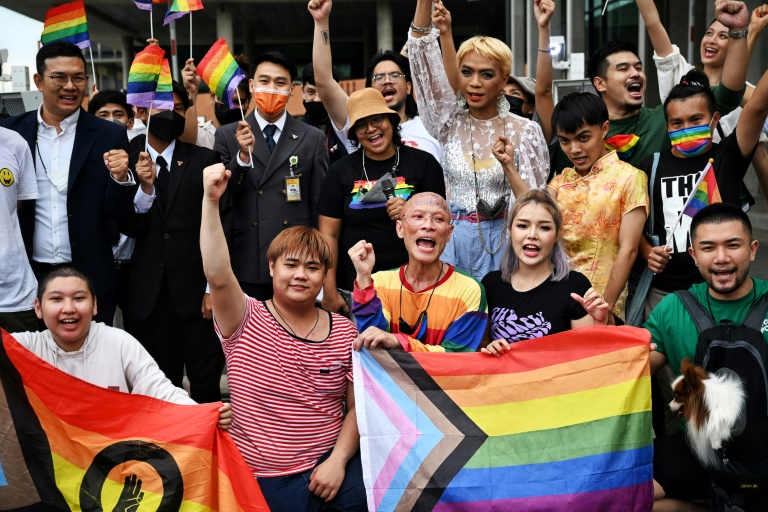
Thailand took a step towards marriage equality Wednesday as lawmakers gave initial approval to legalising same-sex unions, prompting celebrations outside the parliament building.

It is a significant landmark in a Buddhist-majority country with a highly visible LGBTQ community but whose members still face major barriers and discrimination.

The legislation must clear several more hurdles before becoming law. If it succeeds, Thailand would be the first country in Southeast Asia to recognise same sex unions.

The lower house approved two bills that would allow same-sex marriages and also two others that would permit civil partnerships.

A committee of lawmakers will now scrutinise the bills in detail and consolidate them into two proposals, to give MPs a choice between backing civil partnerships and full same-sex marriage.

After the vote a small but enthusiastic group of activists celebrated noisily outside parliament, weeping, hugging and waving rainbow flags.

“I am very happy and glad, it is a good sign in Pride month that there are MPs who want equality and vote for the bills,” LGBTQ activist Nada Chaiyajit told AFP.

“But there is a long way to go.”

Pita Limjaroenrat, the leader of the opposition Move Forward Party which proposed one of the same-sex marriage bills, said the vote should give people hope.

“Today is an answer that politics is possible here in Thailand,” Pita told the celebrating activists outside parliament. 

“No matter who you are, there is a place for you in this country.”

Demands for marriage equality were a theme at Bangkok’s Pride parade earlier this month — the Thai capital’s first such even in nearly 16 years.

Ryan Figueiredo, executive director of LGBT rights campaign group the Equal Asia Foundation, welcomed the vote but warned “there is a lot of work to be done on the ground in terms of moving the needle of public opinion and also talking to parliamentarians.”

Figueiredo also urged the Thai parliament to back full marriage.

“Civil partnerships are not equal to marriage equality, it creates an entire different class of people,” he told AFP. 

“Civil partnerships seem like a consolation prize.”

Ikea to 'scale down' Russia, Belarus operations over Ukraine war

Swedish furniture giant Ikea said Wednesday it would “scale down” its activities in Russia and Belarus, after putting them on hold following the Russian invasion of Ukraine.

Along with a slew of Western companies, Ikea announced in early March that it was suspending its Russian and Belarusian activities, affecting nearly 15,000 employees.

“Unfortunately, the circumstances have not improved, and the devastating war continues,” Ingka Group, which manages the majority of Ikea’s stores, said in a statement Wednesday.

“Businesses and supply chains across the world have been heavily impacted and we do not see that it is possible to resume operations any time soon,” the company said, adding that it and the Inter Ikea Group had “decided to enter a new phase to further scale down the Ikea business in Russia and Belarus.”

The group said the retail business “will remain stopped, and the workforce will be reduced, meaning that many co-workers will be affected.” 

Ikea has a total of 15,000 employees in Russia, including 12,500 employed by Ingka Group, the company said.

An Ingka Group spokesman said the company was not yet able to provide details on how many would be let go.

The company added that it planned “to sell out its home furnishing inventory in Russia,” and that the production side in Russia will “reduce the workforce and start the process of finding new ownership for all four factories.”

Two purchasing and logistics offices in Moscow and Minsk would also be permanently closed.

The Russian invasion of Ukraine, along with triggering unprecedented sanctions, sparked an exodus of foreign corporations including H&M, Starbucks and McDonalds.

Two political veterans face off in fight for Nigeria's presidency

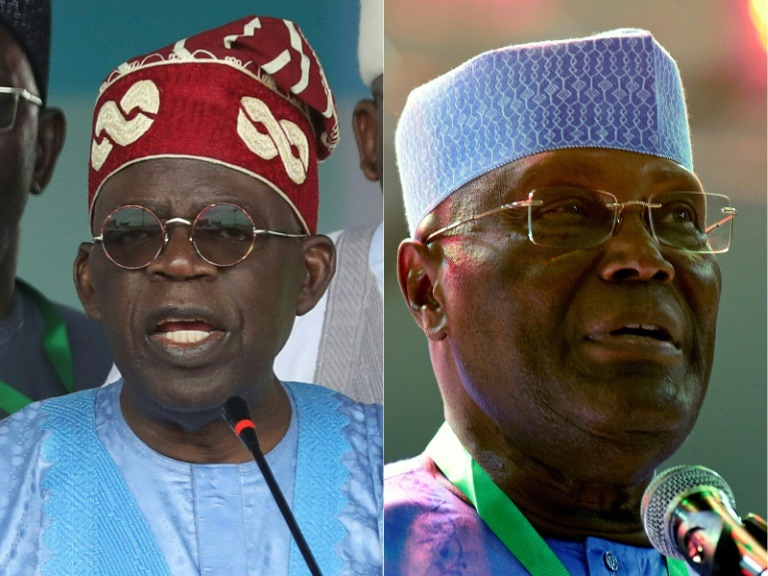
When Nigeria’s opposition named veteran operator Atiku Abubakar as its 2023 election candidate, ruling APC party chief Bola Tinubu quickly welcomed a chance to compete against a “worthy” opponent. 

Two wealthy, Muslim, septuagenarian political warhorses who both shook off corruption scandals, Tinubu and Abubakar have much in common. 

Now they face off in the February election after winning their primaries. 

Tinubu, 70, is a former Lagos governor nicknamed the “Godfather” for his clout. 

Abubakar, 75, is a tycoon and former vice president who as champion of the Peoples Democratic Party (PDP) is on his sixth bid to govern Africa’s most populous nation.

Initial battle lines are drawn to replace President Muhammadu Buhari, who steps down after the two terms allowed in the constitution. 

But eight months from the vote, analysts say the campaign risks sliding into a race between south and north in a polarised Nigeria struggling with insecurity and economic woes, from high inflation to weak oil output. 

Campaigning may become divisive with a longer-than-usual run-up to the February 25 vote — in past elections, candidates were announced shortly before the ballot. 

Seen as longtime fixtures of Nigeria’s politics, both men may struggle to win over a youthful population disenchanted with the country’s business-as-usual, money-driven politics.

– North and south –

A key part of campaigning, experts say, will be Nigeria’s “zoning,” an unwritten deal calling for the presidency to alternate between south and north. After two terms with northern Muslim Buhari, many expect a southern president.

That accord — and a tradition of candidates choosing running mates from a different religion and region — is seen as a balance in a country almost equally split between a mostly Christian south and predominantly Muslim north.

Tinubu and Abubakar this week must select vice presidents who will signal how they plan to balance their appeal to voters across the north, southwest and southeast. 

“Zoning will be the main talking point,” Songhai Advisory risk consultancy’s Adedayo Ademuwagun said in a note. 

“This election will effectively be viewed by voters as a contest between the north and south, overshadowing economic and security developments.”

Tinubu, as a southern Muslim, is likely to benefit from the All Progressives Congress (APC) party structure and has a strong power base in southwest which he built up after being governor of Lagos.

He also has support from a powerful alliance of northern governors, who are looking for a say in his choice of a vice president. But he faces serious hurdles.

– Balancing the ticket –

In the buildup to the primaries, the APC — originally a coalition of smaller parties that came together to elect Buhari in 2015 — had to overcome major internal splits.

Tinubu won the candidacy without the open support of Buhari, and his presidential bid may exacerbate party tensions as he clashes with Buhari loyalists, said SBM Intelligence analyst Ikemesit Effiong. 

“Tinubu securing the nomination is the first salvo in a lot of political machinations that will unfold,” he said. “Both at a party level, in terms of how the PDP and APC dynamic shapes up, but also internally with the APC.”

His choice of vice president will be key. As a Muslim from the south, he has fewer options for selecting a high-profile Christian running mate from the north.

Winning the northern regions, where voter numbers and rates were higher in 2019, is vital. The PDP broke with “zoning” to choose northern Muslim Abubakar as its candidate. 

But Tinubu naming a Muslim-Muslim ticket risks alienating southern voters and key central provinces that often act as swing areas, Songhai’s Ademuwagun said.   

“Matching a Muslim presidential candidate with a Muslim running mate would especially alarm constituents.”

– Insecurity, economy –

For his own choice, Abubakar has a wider selection of southern Christian politicians, including a former rival in the primaries, Rivers State governor Nyesom Wike, a powerful PDP influence. 

Both men will vow to tackle insecurity as Nigeria fights a jihadist insurgency in the northeast, heavily armed kidnap gangs in the northwest and low-intensity separatist agitation in the southeast.

Handling the economy will also be key — food and fuel prices are rising with the war in Ukraine affecting wheat and energy supplies to the continent.

The World Bank estimates one million more Nigerians will likely be pushed into poverty before the end of the year because of the Ukraine crisis.

But the long build-up to the February ballot allows Abubakar a chance to paint Tinubu as linked directly to Buhari’s failures as economic woes deepen.

“There is plenty of time for any major policy, political or security failings by the current administration to be tied to Mr Tinubu’s campaign,” SBM said.

Spain bakes on fifth day of early heatwave

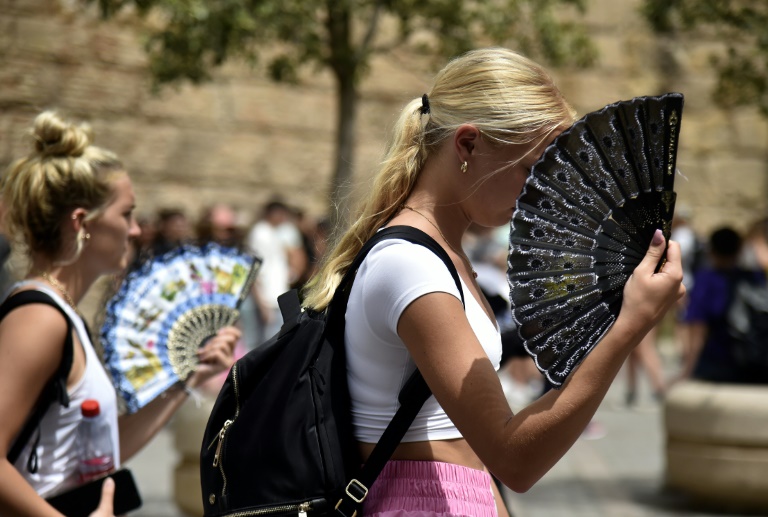
Spain’s second heatwave in less than a month dragged on Wednesday for a fifth day, with temperatures expected to top 40 degrees Celsius in parts of the country as the mass of hot air pushed into France.

Almost all of Spain was affected, with nine of the country’s 17 regions on orange alert, the second highest level possible, Spain’s meteorological agency AEMET said.

Temperatures were set to hit 41 degrees Celsius (105.8 degrees Fahrenheit) in Badajoz in the southwest, 40 in Seville in the south and 39 in Madrid, sizzling conditions more common in mid-summer than the first half of June.

The heatwave has produced temperatures between 7C and 12C higher than the average for this time of the year since it started on Saturday, said AEMET spokesman Ruben del Campo.

“This is a very unusual situation. These temperatures are not normal in mid-June,” he added.

Scientists say heat waves have become more likely due to climate change. As global temperatures rise over time, heat waves are predicted to become more frequent and intense and last longer, and their impacts more widespread.

The authorities urged residents to drink plenty of water, reduce physical activity and stay in cool places as much as possible.

The head of the regional government of Andalusia, in the hard-hit south, said the scorching temperatures were a sign that “climate change is an absolute reality”.

“In Andalusia, the effects are very rough,” he added.

Temperatures are expected to ease over the weekend. The extreme weather, which arrived on a wave of hot air from north Africa, is headed for southwest France.

National forecaster Meteo France has warned temperatures could peak above 40C in the south-west between Thursday and Saturday, with the entire country set to experience a hotter-than-usual spell.

Spain also grappled with a heatwave at the end of May, with temperatures up to 15C above the seasonal average.

Last month was Spain’s hottest May since the beginning of the century.

Spain bakes on fifth day of early heatwave

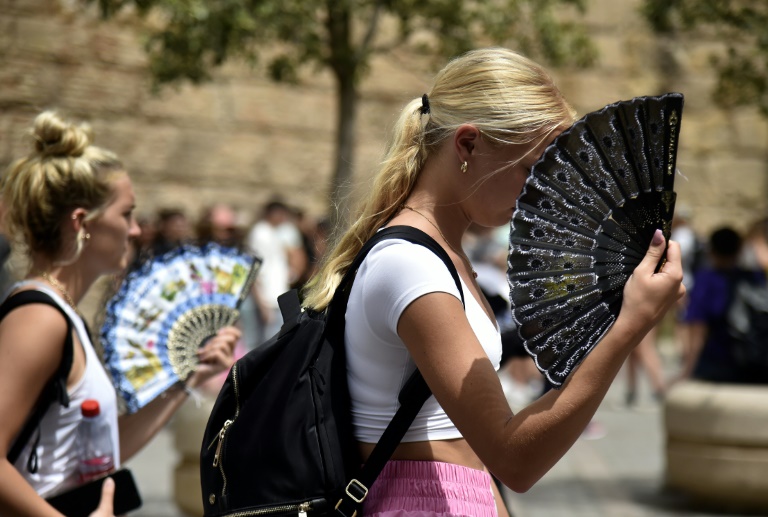
Spain’s second heatwave in less than a month dragged on Wednesday for a fifth day, with temperatures expected to top 40 degrees Celsius in parts of the country as the mass of hot air pushed into France.

Almost all of Spain was affected, with nine of the country’s 17 regions on orange alert, the second highest level possible, Spain’s meteorological agency AEMET said.

Temperatures were set to hit 41 degrees Celsius (105.8 degrees Fahrenheit) in Badajoz in the southwest, 40 in Seville in the south and 39 in Madrid, sizzling conditions more common in mid-summer than the first half of June.

The heatwave has produced temperatures between 7C and 12C higher than the average for this time of the year since it started on Saturday, said AEMET spokesman Ruben del Campo.

“This is a very unusual situation. These temperatures are not normal in mid-June,” he added.

Scientists say heat waves have become more likely due to climate change. As global temperatures rise over time, heat waves are predicted to become more frequent and intense and last longer, and their impacts more widespread.

The authorities urged residents to drink plenty of water, reduce physical activity and stay in cool places as much as possible.

The head of the regional government of Andalusia, in the hard-hit south, said the scorching temperatures were a sign that “climate change is an absolute reality”.

“In Andalusia, the effects are very rough,” he added.

Temperatures are expected to ease over the weekend. The extreme weather, which arrived on a wave of hot air from north Africa, is headed for southwest France.

National forecaster Meteo France has warned temperatures could peak above 40C in the south-west between Thursday and Saturday, with the entire country set to experience a hotter-than-usual spell.

Spain also grappled with a heatwave at the end of May, with temperatures up to 15C above the seasonal average.

Last month was Spain’s hottest May since the beginning of the century.

Thousands in anti-Rwanda rally in eastern DR Congo city

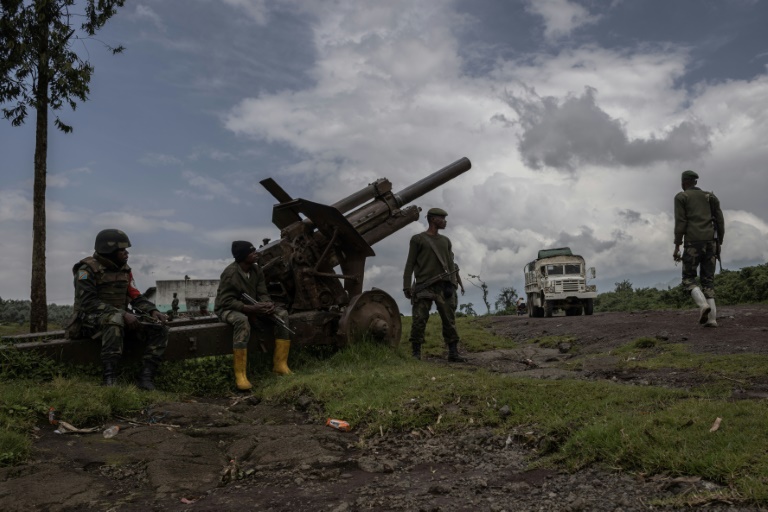
Several thousand people rallied Wednesday in the eastern DR Congo city of Goma to protest against Rwanda, a day after the government reiterated claims Kigali backed a notorious rebel group.

Tension in the border city was high as riot police dispersed some demonstrators, many of them angry young men stripped to the waist, who tried to push through the frontier post with Rwanda, an AFP reporter saw.

At least one person was injured.

The crowd chanted slogans against Rwanda and its president Paul Kagame.

“No more Rwandans, let’s go and sort out Kagame,” was one.

“We are demonstrating against the M23’s incursion in the Democratic Republic of Congo. 

“We are calling on the government to give us uniforms and weapons so that we can fight” the Rwandan army, a demonstrator who gave his name as Eric told AFP, to the applause of other demonstrators.

Banks, petrol stations, schools, shops and other outlets were closed across Goma, and only a few pharmacies appeared to be open.

Friction between the Democratic Republic of Congo (DRC) and its eastern neighbour has surged in the past few weeks over the M23 rebel group.

A primarily Congolese Tutsi militia that is one of scores of armed groups in eastern DRC, the M23 leapt to global prominence in 2012 when it captured Goma.

It was forced out shortly afterwards in a joint offensive by UN troops and the Congolese army.

The rebels resumed fighting last November after accusing the Kinshasa government of failing to respect a 2009 agreement under which the army was to incorporate its fighters.

Clashes intensified in March, causing thousands of people to flee, and on Monday the rebels took the trading town of Bunagana.

The DRC has accused Rwanda of backing the rebels — an assertion that it repeated on Tuesday after several hundred people rallied in Kinshasa to demand President Felix Tshisekedi break off diplomatic ties with Kigali.

Rwanda denies the allegation of involvement. Both sides have accused each other of cross-border shelling.

Relations between Kinshasa and Kigali have been strained since the mass arrival in DRC of Rwandan Hutus accused of slaughtering Tutsis during the 1994 Rwanda genocide.

WTO talks extended in bid to seal elusive deals

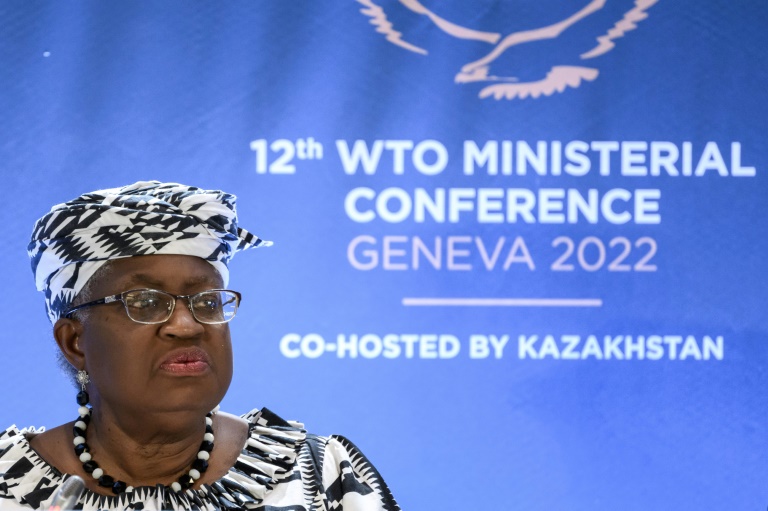
The World Trade Organization’s ministerial conference will run over into a fifth day Thursday in the hope of striking thus-far elusive deals on fishing subsidies, food security and combating Covid-19.

The gathering of trade ministers at the WTO’s headquarters in Geneva was due to wrap up on Wednesday, with the global trade body hoping to conclude landmark deals to prove it still has a role to play in tackling big global challenges.

But WTO chief Ngozi Okonjo-Iweala, who has staked her leadership on breathing new life into the sclerotic organisation, said it seemed remaining sticking points could be resolved if ministers ploughed on.

“Progress is being made but it needs a little more work and more time,” the director-general said.

The gathering is the first WTO ministerial conference in nearly five years. The global trade body only takes decisions by consensus among its 164 members.

“It requires that we work harder and work nights, whatever it takes,” Okonjo-Iweala said.

“It is really time for ministers to make the requisite decisions that need to be made.”

She said countries “feel that we really can cross the line on some of these things if we gave it a bit more time”.

The former finance and foreign minister of Nigeria, who took office in March 2021, is keen to make the WTO a relevant player on the international stage.

The last WTO ministerial conference, in December 2017 in Buenos Aires, was widely considered a flop, closing without a major agreement.

– Fishing reform sunk? –

Okonjo-Iweala was hoping to pull off a coup by securing a long-sought deal on curbing harmful fishing subsidies.

Negotiations towards banning subsidies that encourage overfishing and threaten the sustainability of the planet’s fish stocks have been going on at the WTO for more than two decades.

The mood music on Monday was that a deal was now closer than ever.

But India threw a spanner in the works late Tuesday, insisting it would not sign up without a 25-year exemption — far longer than many are comfortable with.

“The transition period of 25 years sought by India is not intended as a permanent carve-out. It is a must-have for us and for other similarly placed non-distant water fishing countries,” Commerce and Industry Minister Piyush Goyal said in a statement.

“Without agreeing to the 25-year transition period, it will be impossible for us to finalise the negotiations.

“This is completely unacceptable! And that is the reason India is opposed to the current text.”

Besides fisheries, the WTO conference is trying to strike deals on e-commerce, agriculture, food security, Covid-19 vaccine patents, the WTO’s response to pandemics, and reform of the organisation itself.

– ‘Crunch time’ –

But some emerging from the negotiating rooms are pointing the finger at Indian intransigence on not just fisheries but on every topic.

“India is being obstructive across the piece… In no negotiation are they playing a constructive part,” said one Geneva-based diplomat.

Conference chairman Timur Suleimenov said it was “crunch time” as members were thus far not being as flexible as he had hoped.

The Kazakhstani official urged delegations to “start blessing outcomes”.

Ministers are discussing the possibility of imposing a temporary waiver on Covid-19 vaccine patents.

But serious objections remain from some countries that host major pharmaceutical companies, like Britain and Switzerland, notably on the scope of the proposals.

NGOs believe the text does not go nearly far enough.

A second pandemic-related text being negotiated seeks to tackle supply constraints faced by certain countries in getting hold of Covid-fighting tools.

WTO spokesman Daniel Pruzin said the closing ceremony was now tentatively scheduled for 3:00 pm (1300 GMT) on Thursday, with ministers spending Wednesday in intensive talks.

“There is the possibility of advancement on all these issues,” he told reporters.

“Significant progress has been made: we’re not far from agreements on many of these topics.”

Thailand takes step towards same-sex marriage with parliament vote

Thailand took a step towards marriage equality Wednesday as lawmakers gave initial approval to legalising same-sex unions, prompting celebrations outside the parliament building.

It is a significant landmark in a Buddhist-majority country with a highly visible LGBTQ community but whose members still face major barriers and discrimination.

The lower house approved two bills that would allow same-sex marriages and also two others that would permit civil partnerships.

A committee of lawmakers will now scrutinise the bills in detail and consolidate them into two proposals, to give MPs a choice between backing civil partnerships and full same-sex marriage.

The legislation must clear several more hurdles before becoming law, but after Wednesday’s vote a small but enthusiastic group of activists celebrated noisily outside parliament, weeping, hugging and waving rainbow flags.

“I am very happy and glad, it is a good sign in Pride month that there are MPs who want equaility and vote for the bills,” LGBTQ activist Nada Chaiyajit told AFP.

“But there is a long way to go.”

Demands for marriage equality were a theme at Bangkok’s Pride parade earlier this month — the Thai capital’s first such even in nearly 16 years.

European equities rebound as ECB holds emergency meet

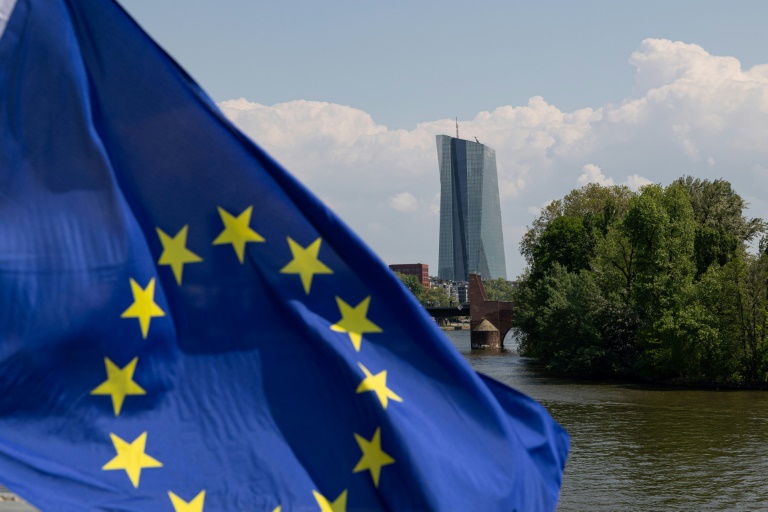
Europe’s equities rebounded Wednesday as the European Central Bank began an emergency meet to discuss volatile eurozone bond markets and soaring inflation, while investors also braced for a major US rate hike.

Frankfurt, London and Paris stocks rallied and the euro rose against the dollar, as investors were reassured by news of the ad-hoc ECB gathering that started at 1000 GMT.

All three main indices had slid Tuesday on growing expectations that the Federal Reserve will move aggressively to combat inflation at the conclusion of its latest scheduled monetary policy meeting on Wednesday.

Bitcoin extended this week’s precipitous slide to approach the key level of $20,000 as investors continued to shun risky crypto assets, while oil prices retreated further on lower energy demand expectations.

– ‘Smacks of panic’ –

Markets.com analyst Neil Wilson said the ECB meeting “smacks of panic and a lack of control — but the market is happy to see it happen”.

The borrowing costs of some eurozone countries have risen faster than those of others as the ECB tightens its monetary policy. The bank has vowed to prevent such “fragmentation”.

The ECB is not to due to raise eurozone interest rates or to end its massive bond-buying stimulus programme until July.

However, eurozone countries are already facing higher borrowing costs on government bonds.   

Asian stock markets closed mixed Wednesday with investors on edge over a looming Fed decision that has taken on greater significance since forecast-busting US inflation recently sent shockwaves through world markets.

Traders’ screens were awash with red at the start of the week after data on Friday revealed that US consumer prices had soared at the fastest pace in four decades.

That confounded hopes that US inflation was stabilising and intensified pressure on policymakers to act.

The news ramped up bets that the Fed would hike interest rates at a steeper and faster pace than expected as it struggles to retain credibility.

Before Friday’s data, the Fed had been tipped to lift borrowing costs by half a point when its policy meeting ends Wednesday but investors are now widely anticipating a three-quarter point increase, with some even suggesting one percentage point.

The moves fuelled worries that the tighter monetary conditions will deal a blow to the US economy and potentially send it into recession next year.

“There is no shortage of pessimism in the market and traders are on the edge as they know that central banks have made the biggest blunder by calling inflation transitory — and their current policy is going to cause a great deal of pain,” AvaTrade analyst Naeem Aslam told AFP.

– Key figures at around 1015 GMT –

London – FTSE 100: UP 1.3 percent at 7,282.83 points

Frankfurt – DAX: UP 1.1 percent at 13,455.95 

Paris – CAC 40: UP 1.0 percent at 6,010.17

EURO STOXX 50: UP 1.1 percent at 3,513.45

Tokyo – Nikkei 225: DOWN 1.1 percent at 26,326.16 (close)

Hong Kong – Hang Seng Index: UP 1.1 percent at 21,308.21 (close)

Shanghai – Composite: UP 0.5 percent at 3,305.41 (close)

New York – Dow: DOWN 0.5 percent at 30,364.83 (close)

Euro/dollar: UP at $1.0488 from $1.0416 late Tuesday

Pound/dollar: UP at $1.2084 from $1.1997

Euro/pound: DOWN at 86.76 pence from 86.83 pence

Dollar/yen: DOWN at 134.46 yen from 135.47 yen

Brent North Sea crude: DOWN 1.2 percent at $119.74 per barrel

West Texas Intermediate: DOWN 1.2 percent at $117.48 per barrel

EU takes legal action against UK for breaching N.Ireland agreement

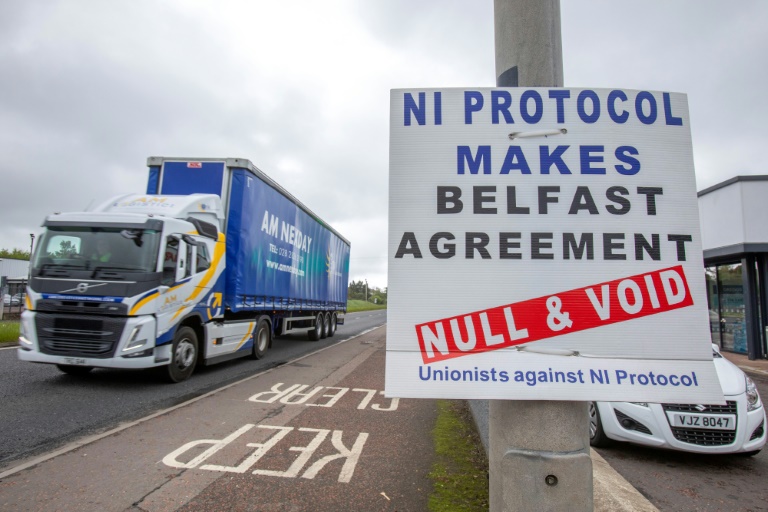
The European Commission launched new legal action against Britain on Wednesday, accusing London of putting peace in Northern Ireland at risk by trying to overhaul the post-Brexit trade deal.

“The UK government tabled legislation confirming its intention to unilaterally break international law,” EU commission vice-president Maros Sefcovic said.

“More precisely to break an agreement that protects peace and stability in Northern Ireland,” he said.

“Opening the door to unilaterally changing an international agreement is a breach of international law, as well. So let’s call a spade a spade. This is illegal.”

On Monday, the British government introduced legislation to rip up post-Brexit trading rules for Northern Ireland, in an attempt to override the EU withdrawal treaty that it had signed.

Prime Minister Boris Johnson’s government insists it is not breaking international law, citing a “necessity” to act to restore Northern Ireland’s power-sharing institutions.

But Brussels rejects this argument, and Sefcovic said that legal action would be taken, with two new cases joining those the commission had suspended.

Sefcovic said the EU would revive a case is launched last year to control the export of certain food products from Great Britain to Northern Ireland.

“If the UK doesn’t reply within two months, we may take them to the Court of Justice,” he warned.

“Second, we are launching two new infringements against the UK,” he said, announcing cases that could see the British government brought before the European Court of Justice.  

“One for failing to carry out the necessary controls at the border control posts in Northern Ireland by ensuring adequate staffing and infrastructure.

“And one for failing to provide the EU with essential trade statistics data to enable the EU to protect its single market.”

– ‘Grave peril’ –

The cases brought by the EU do not directly tackle the proposed UK legislation, but rather seek to compel Britain to implement the existing agreements.

Johnson’s government has said it would still prefer a negotiated outcome with the European Union to reform the Northern Ireland Protocol.

But it accuses Brussels of failing to engage on its concerns about measures to control goods moving from Great Britain to Northern Ireland.

Brussels counters that, with Northern Ireland remaining in the EU single market, European law must ultimately apply to goods arriving in the territory.

And Sefcovic says that attempts to negotiate a compromise with Britain within the terms of the agreement Johnson himself hailed and signed have been mate with “radio silence” since February.

The spat comes at a bad time for the UK economy, with inflation at 40-year highs and rising household bills that have left many Britons struggling to make ends meet.

But there are economic headwinds in the European Union too, and warnings that the West must not fall out over trade when trying to present a united front against Russia’s invasion of Ukraine.

Irish Minister for Foreign Affairs Simon Coveney said Wednesday’s EU action is “the result of a deliberate UK Government strategy of provocation over partnership”.

“Reckless UK decisions this week have forced the EU into responding to a threatened breach of international law with serious consequences.”

Jonathan Jones, the former head of the UK government legal service scoffed at Number 10’s argument.

Jones resigned after Northern Ireland minister Brandon Lewis admitted that unilaterally breaking the deal would “break international law in a very specific and limited way”. 

“The concept of ‘necessity’ is an extremely high test. It applies only where a state must act to safeguard its essential interests against ‘grave and imminent peril’,” Jones said.

“How can an agreement willingly entered into only in 2020, at what the Prime Minister described as a ‘fantastic moment’, be already proving so disastrous as to represent ‘grave peril’ to the country?”

Meanwhile, the Democratic Unionist Party argues the protocol’s creation of an effective border in the Irish Sea jeopardises Northern Ireland’s status in the wider UK.

The pro-British party is boycotting the local government in Belfast until the deal is scrapped or dramatically overhauled, putting at risk the power-sharing agreement that underlies the Northern Ireland peace agreement.

Close Bitnami banner
Bitnami