World

Germany races to stockpile gas before winter

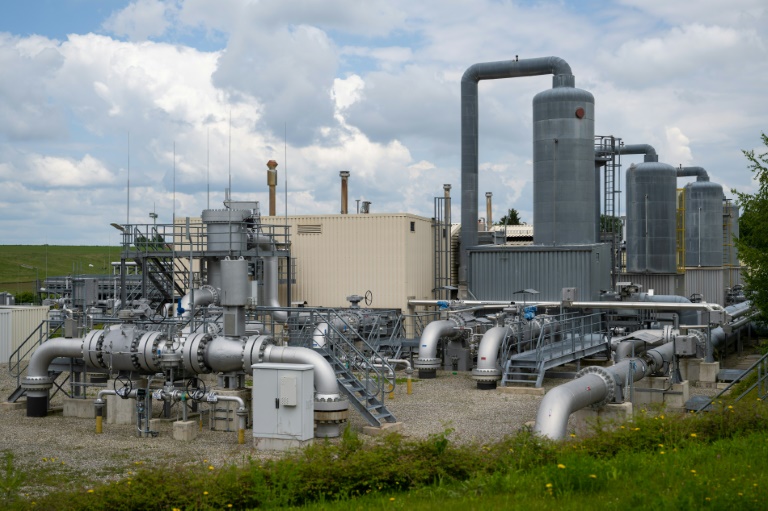
Germany’s race to wean itself off Russian energy and stockpile enough gas before winter is playing out largely hidden from view, some 1,600 metres (one mile) below ground in the foothills of the Bavarian Alps.

Surrounded by rolling farmland near the banks of the river Inn, the former Bierwang natural gas field in Unterreit serves as one of Germany’s largest underground gas storage facilities.

Run by German operator Uniper, Bierwang can hold more than 800 million cubic metres of gas — enough to power the nearby city of Munich for eight months.

Like other storage sites, Bierwang replenishes its stocks between winters, to keep homes heated and Germany’s energy-hungry industry humming during the cold months when demand is highest.

But this year, the stakes are higher than ever. 

With the war in Ukraine raging and Moscow increasingly seen as an unreliable supplier, governments across Europe are scrambling to store supplies before Moscow decides to reduce the flow of gas, or close the taps altogether.

“The security of supply this winter will depend on two factors: how full the storage facilities are and how much new gas keeps arriving” from abroad, said Sebastian Herold, a professor of energy economics at the Darmstadt University of Applied Sciences.

Russian deliveries will play a “decisive role” in this, Herold said.

Efforts by successive German governments to build closer economic ties with Moscow have left the country hooked on Russian energy imports, a policy now widely seen as misguided.

– Injected into rock –

Fears that a sudden shortage of Russian gas could bring Europe’s biggest economy to its knees recently prompted the German government to adopt legislation requiring all of the nation’s gas reservoirs to be 90 percent full by November. 

Altogether, the above and underground sites have enough capacity to cover 25 percent of Germany’s natural gas consumption. They act as a kind of buffer in times of strain on the gas market or if demand spikes during unusually cold weather.

As part of Western sanctions against Moscow, Germany has already agreed to phase out Russian oil and coal. But becoming independent of Russian gas will take longer — and it won’t come cheap as the war in Ukraine sends energy prices soaring.

So far, Berlin has managed to reduce the share of its natural gas supplied by Russia from 55 percent before the invasion, to 35 percent now thanks to increased deliveries from countries like Norway and the Netherlands, and through liquefied natural gas contracts (LNG).

In Bierwang, a network of long-distance pipelines delivers gas to the storage facility. The gas is then compressed before being injected into porous sandstone and stored in natural reservoirs deep below ground.

This method allows vast quantities of natural gas to be stockpiled, but the filling and emptying takes longer than with a second type of underground storage that relies on large caverns in rock salt formations, more commonly found in northern Germany.

“We’re on a good way to hopefully deliver the security supply this winter,” said Doug Waters, managing director of Uniper Energy Storage, which operates nine storage facilities in Germany.

– Ex-Gazprom unit –

Germany’s gas storage sites were 55 percent full on Tuesday, according to the German Federal Network Agency, which posts daily updates online.

The current fill rate is “better than in previous years, but still not sufficient,” said the agency’s head, Klaus Mueller. 

Complicating Germany’s challenge to get ready for winter is the situation at the crucial Rehden gas storage facility in the north, the largest in the country.

The German state temporarily took control of the site’s owner, Gazprom Germania, in April, a move Berlin said was necessary to ensure energy security as ties with Russia worsened.

Berlin suspects that the unit’s former owner, Russia’s state-owned Gazprom, deliberately kept supplies low before the invasion of Ukraine to give it leverage over Germany.

Russia last month cut off supplies to Gazprom Germania in retaliation for Berlin’s move.

The Rehden facility, with a gas storage capacity of four billion cubic metres, was just 7.95 percent full on Tuesday.


UK Rwanda asylum-seeker flight cancelled after European court ruling

A first flight carrying asylum seekers to Rwanda as part of a controversial UK policy was cancelled on Tuesday, in an embarrassing blow to Prime Minister Boris Johnson’s government.

The number of those due to be put on the flight had dwindled from an original 130 to seven on Tuesday and finally none thanks to a last-minute ruling from the European Court of Human Rights (ECHR).

British Home Secretary Priti Patel said she was disappointed that “legal challenge and last-minute claims” meant the plane did not take off but vowed to pursue the heavily criticised policy.

“We will not be deterred,” she said in a statement.

“Our legal team are reviewing every decision made on this flight and preparation for the next flight begins now.”

The grounding was thanks to an ECHR ruling that at least one of the asylum seekers should stay in Britain as there were no guarantees for his legal future in Rwanda, which earlier agreed to take in a number of refugees bound for the United Kingdom in a controversial deal with London. 

Patel called the ECHR intervention “very surprising” and vowed that “many of those removed from this flight will be placed on the next”.

The flight cancellation is an embarrassment for Johnson’s Conservative government after Foreign Secretary Liz Truss insisted the Kigali-bound plane would leave no matter how many people were on board.

“There will be people on the flights and if they’re not on this flight, they will be on the next flight,” Truss told Sky News earlier Tuesday.

But the ECHR issued an urgent interim measure to prevent the deportation of an Iraqi man booked on the flight as he may have been tortured and his asylum application was not completed.

The Strasbourg-based court said the expulsion should wait until British courts have taken a final decision on the legality of the policy, set for July.

British newspapers from across the political spectrum expressed outrage at the eleventh-hour reversal and the government’s handling of the affair.

The conservative Daily Mail and Daily Express placed the blame in the hands of “meddling judges in Strasbourg”, expressing anger at what they called the “abuse of the legal system”. 

The left-leaning Daily Mirror, meanwhile, slammed the government’s “cruel farce” and the “chaos” the policy had provoked.

– ‘All wrong’ –

Rights group Care4Calais tweeted that the same measure by the ECHR could be applied to the others set to be transported to Rwanda.

Truss has insisted the policy, which the UN refugee agency has criticised as “all wrong”, was vital to break up human-trafficking gangs exploiting vulnerable migrants.

Record numbers of migrants have made the perilous Channel crossing from northern France, heaping pressure on the government in London to act after it promised to tighten borders after Brexit.

British media said some 260 people attempting the crossing in small boats were brought ashore at the Channel port of Dover by 1200 GMT on Tuesday.

More than 10,000 have crossed since the start of the year.

– ‘Shames Britain’ –

Legal challenges in recent days had failed to stop the deportation policy, which the two top clerics in the Church of England and 23 bishops described as “immoral” and “shames Britain”.

“They (migrants) are the vulnerable that the Old Testament calls us to value,” Archbishop of Canterbury Justin Welby and Archbishop of York Stephen Cottrell wrote in a letter to The Times. 

“We cannot offer asylum to everyone, but we must not outsource our ethical responsibilities, or discard international law — which protects the right to claim asylum.”

It was reported last weekend that Queen Elizabeth II’s heir, Prince Charles, had privately described the government’s plan as “appalling”.

But Truss said: “The people who are immoral in this case are the people traffickers trading on human misery.”

In Kigali, government spokeswoman Yolande Makolo told reporters it was an “innovative programme” to tackle “a broken global asylum system”.

“We don’t think it is immoral to offer a home to people,” she told a news conference.

Johnson has told his senior ministers the policy was “the right thing to do”.

– ‘Value for money’ –

Truss said she could not put a figure on the cost of the charter flight, which has been estimated at upwards of £250,000 ($303,000). 

But she insisted it was “value for money” to reduce the long-term cost of irregular migration, which the government says costs UK taxpayers £1.5 billion a year, including £5 million a day on accommodation.

In the Channel port of Calais, in northern France, migrants said the risk of deportation to Rwanda would not stop them trying to reach Britain.

Moussa, 21, from the Darfur region of Sudan, said “getting papers” was the attraction. 

“That’s why we want to go to England,” he said.

Deported asylum seekers who eventually make the 4,000-mile (6,500-kilometre) trip to Kigali will be put up in the Hope Hostel, which was built in 2014 to give refuge to orphans from the 1994 genocide of around 800,000 mainly ethnic Tutsis.

Hostel manager Ismael Bakina said up to 100 migrants can be accommodated at a rate of $65 per person a day and that “this is not a prison.”

The government in Kigali has rejected criticism that Rwanda is not a safe country and that serious human rights abuses are rife.

But Rwandan opposition parties have questioned whether the resettlement scheme will work given high youth unemployment rates.

burs-cjo/pvh/oho/cwl

The two black women bidding to make VP history in Colombia

For the first time, Colombia will have a black woman vice president, as voters decide Sunday between a pair of rival candidates aiming to make history in the South American nation.

Colombians head to the polls for a run-off to choose their new president, either leftist former guerrilla Gustavo Petro or eccentric millionaire construction mogul Rodolfo Hernandez.

Both men have named a woman running mate with African roots.

Environmentalist Francia Marquez, 40, is running alongside Petro, with Hernandez having chosen conservative academic Marelen Castillo, 53.

Whichever one replaces outgoing Vice President Marta Lucia Ramirez — the first woman to hold the position — will break new ground as the first person of African descent named to the post.

“In political, symbolic and cultural terms it is very important because Colombia is a country with a lot of racism,” Cristina Echeverri, an analyst from the National University, told AFP.

Just over nine percent of Colombia’s 50 million people identify as black but few, especially women, manage to reach positions of power.

There is only one black person in the current cabinet and just two out of almost 300 members of Congress.

– The threatened activist –

Marquez was born into a poor family in the southwestern department of Cauca — a region ravaged by violence linked to armed groups battling over drug trafficking and illegal mining resources.

A single mother at just 16, she fled her native region following threats and went to work as a maid while studying law.

But she returned home to take part in local politics and can often be seen frequenting public squares in her African print clothing, defending the marginalized.

Marquez has made headlines with her feminist, environmentalist and leftist speeches, but she has also made enemies.

She survived an attack in 2019, when gunmen tried to kill her due to her defense of the region’s water resources in the face of encroachment by mining companies.

The year before that she was awarded the prestigious Goldman environmental prize.

“Us nobodies, those whose humanity is not recognized, those whose rights are not recognized in this country, we’re standing up to change history, to occupy politics,” Marquez told AFP in March. 

In that month’s left-wing primaries, Marquez finished second behind Petro, who duly named her his running mate.

She represents “the environment, the ethnic, the racial, the youth, the feminist” and is thus “oxygenating traditional politics,” said Echeverri.

But her rise has awakened an underlying bigotry, with the Racial Discrimination Observatory at Los Andes University recording more than 1,000 racial attacks against Marquez since April.

– The face to ‘support women’ –

The daughter of a black dressmaker and a civil servant, Castillo was born in a poor neighborhood of Cali.

She studied biology, chemistry and industrial engineering before taking a doctorate at Nova Southeastern University in Florida.

A month ago, maverick outsider Hernandez still had not announced who his running mate would be.

When the 77-year-old businessman advertized he was looking for “an Afro-descendent woman from the Pacific coast,” university director Castillo sent her CV.

“Us perfect strangers are the most numerous,” she quipped.

Although she identifies as being of African descent, mother-of-two Castillo says she has never faced racial discrimination and avoids the topic in interviews.

She’s had her work cut out on the campaign trail mitigating the damage done by Hernandez’s gaffes, such as when he said women “ideally” should bring up children and take care of the home.

“I will be the face that will support women,” said Castillo, who is Catholic.

She has also embraced the anti-corruption message trumpeted by Hernandez, who has his own legal troubles.

Hernandez is under investigation for an allegedly irregular contract signed while he was mayor of Bucaramanga from 2016 to 2019.

Unknown a month ago, Castillo could realistically find herself promoted to the presidency if Hernandez wins but is then stripped of his position for corruption.

Whoever the new vice president is, though, she will have “a critical and pertinent role in the exercise of power,” said Diego Lucumi, an expert in racial issues at the Los Andes university.

That in itself is a big step for black women in Colombia.

US central bank ponders huge rate hike to combat price surge

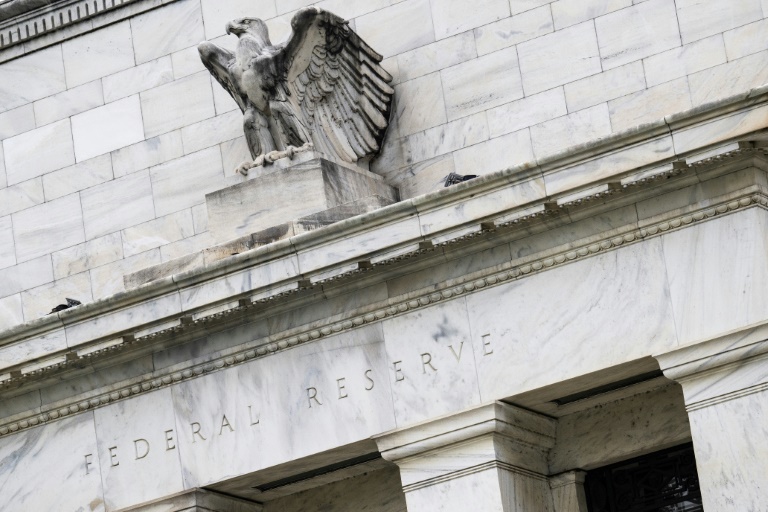
The US Federal Reserve is poised to raise borrowing costs Wednesday amid the troubling acceleration of inflation, with the only question being whether officials will opt for the biggest hike in nearly three decades or a smaller step up.

The central bank seemed set to increase the benchmark interest rate again by 0.5 percentage points, but a resurgence of consumer and producer prices in May has fueled growing speculation of a 75-basis-point hike.

While some economists continue to argue that such an aggressive step would indicate rising panic among policymakers who are usually reluctant to surprise financial markets, others argue that the Fed is behind the curve and needs to react strongly to prove its resolve to combat inflation

“It is possible that by Wednesday the only way for the Fed to surprise markets would be to raise rates by 50 bp,” Harvard economist and former White House advisor Jason Furman tweeted.

If policymakers decide on a giant step, it would be the first 75-basis-point increase since November 1994.

The policy-setting Federal Open Market Committee is due to announce the rate decision at 1800 GMT at the conclusion of two days of deliberations. 

Fed Chair Jerome Powell will hold a press conference after the meeting to provide more details on the central bank’s plans.

President Joe Biden has fully endorsed the Fed’s battle against the steepest rise in prices in more than 40 years, as he watches inflation erode his popularity and deflect attention from other milestones, including a rapid recovery of the world’s largest economy and record job growth.

– Clear signals –

US central bankers began raising interest rates off zero in March as buoyant demand from American consumers for homes, cars and other goods clashed with transportation and supply chain snarls in parts of the world where Covid-19 remained — and remains — a challenge.

That fueled inflation, which got dramatically worse after Russia invaded Ukraine in late February and Western nations imposed steep sanctions on Moscow in response, sending food and fuel prices up at a blistering rate.

US gasoline prices have topped $5.00 a gallon for the first time ever and are setting new records daily.

Economists thought March was the peak for consumer price hikes, but the rate spiked again in May, jumping 8.6 percent in the latest 12 months, and wholesale prices surged as well, almost entirely due to soaring costs for energy, especially gasoline.

The Fed was caught off guard with the speed of the price increases, and while policymakers usually like to clearly signal any policy shift to financial markets, the latest data likely changed the calculus.

Powell had indicated policymakers were poised to implement another half-point increase in the benchmark borrowing rate this week and another next month, aiming to douse red-hot inflation without tipping the economy into recession and avoid a bout of 1970s-style stagflation.

“The 75bp hike… will be about making people/markets believe that they’re serious about continuing to have higher rates in 2023,” Furman said.

Markets are now pricing in at least one three-quarter-point hike by the end of the year and an aggressive path at the other four meetings.

Former New York Fed bank president William Dudley expects to see the super-sized increase.

“Fed officials are worried a bit about losing credibility,” he said at an event hosted by The Wall Street Journal.

But neither the Fed nor the White House can have much immediate effect on many of the factors driving the price increases.

Biden on Tuesday blamed Russia for inflation, which is afflicting countries worldwide, and criticized Republicans for blocking his efforts to help American families feeling the pain.

Inflation is “sapping the strength of a lot of families,” he told trade unions in Philadelphia. “Republicans in Congress are doing everything they can to stop my plans to bring down costs.”

It's (not) alive! Google row exposes AI troubles

An internal fight over whether Google built technology with human-like consciousness has spilled into the open, exposing the ambitions and risks inherent in artificial intelligence that can feel all too real.

The Silicon Valley giant suspended one of its engineers last week who argued the firm’s AI system LaMDA seemed “sentient,” a claim Google officially disagrees with.

Several experts told AFP they were also highly skeptical of the consciousness claim, but said human nature and ambition could easily confuse the issue.

“The problem is that… when we encounter strings of words that belong to the languages we speak, we make sense of them,” said Emily M. Bender, a linguistics professor at University of Washington.

“We are doing the work of imagining a mind that’s not there,” she added.

LaMDA is a massively powerful system that uses advanced models and training on over 1.5 trillion words to be able to mimic how people communicate in written chats. 

The system was built on a model that observes how words relate to one another and then predicts what words it thinks will come next in a sentence or paragraph, according to Google’s explanation.

“It’s still at some level just pattern matching,” said Shashank Srivastava, an assistant professor in computer science at the University of North Carolina at Chapel Hill.

“Sure you can find some strands of really what would appear meaningful conversation, some very creative text that they could generate. But it quickly devolves in many cases,” he added.

Still, assigning consciousness gets tricky. 

It has often involved benchmarks like the Turing test, which a machine is considered to have passed if a human has a written chat with one, but can’t tell.

“That’s actually a fairly easy test for any AI of our vintage here in 2022 to pass,” said Mark Kingwell, a University of Toronto philosophy professor.

“A tougher test is a contextual test, the kind of thing that current systems seem to get tripped up by, common sense knowledge or background ideas — the kinds of things that algorithms have a hard time with,” he added.

– ‘No easy answers’ –

AI remains a delicate topic in and outside the tech world, one that can prompt amazement but also a bit of discomfort. 

Google, in a statement, was swift and firm in downplaying whether LaMDA is self-aware.

“These systems imitate the types of exchanges found in millions of sentences, and can riff on any fantastical topic,” the company said.

“Hundreds of researchers and engineers have conversed with LaMDA and we are not aware of anyone else making… wide-ranging assertions, or anthropomorphizing LaMDA,” it added.

At least some experts viewed Google’s response as an effort to shut down the conversation on an important topic.

“I think public discussion of the issue is extremely important, because public understanding of how vexing the issue is, is key,” said academic Susan Schneider.

“There are no easy answers to questions of consciousness in machines,” added the founding director of the Center for the Future of the Mind at Florida Atlantic University.

Lack of skepticism by those working on the topic is also possible at a time when people are “swimming in a tremendous amount of AI hype,” as linguistics professor Bender put it. 

“And lots and lots of money is getting thrown at this. So the people working on it have this very strong signal that they’re doing something important and real” resulting in them not necessarily “maintaining appropriate skepticism,” she added.

In recent years AI has also suffered from bad decisions — Bender cited research that found a language model could pick up racist and anti-immigrant biases from doing training on the internet.

Kingwell, the University of Toronto professor, said the question of AI sentiency is part “Brave New World” and part “1984,” two dystopian works that touch on issues like technology and human freedom.

“I think for a lot of people, they don’t really know which way to turn, and hence the anxiety,” he added.

No, Happy the elephant isn't a person, New York's top court says

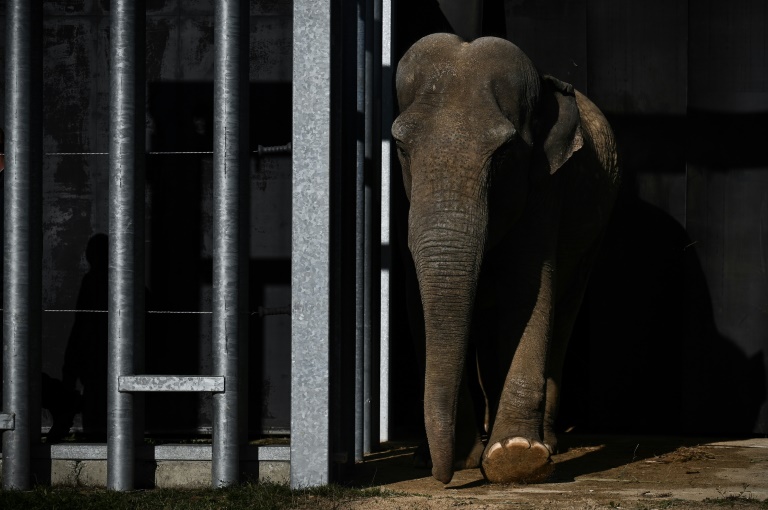
As intelligent as she is, Happy the elephant doesn’t meet the definition of a “person” and is therefore not being illegally confined in the Bronx Zoo, New York’s top court ruled Tuesday in a closely watched case for animal rights.

The state’s Court of Appeals 5-2 verdict against the habeas corpus proceeding filed by the Nonhuman Rights Project (NRP) means Happy will remain in her one-acre lot, where she has lived for 45 years, rather than moving to a much larger sanctuary.

NRP had contended Asian elephant, who was born in the wild in 1971, is an “extraordinarily cognitively complex and autonomous nonhuman” who should be “recognized as a legal person with the right to bodily liberty protected by the common law.”

It was the latest legal defeat for the organization, which has previously made similar petitions on behalf of other elephants as well as chimpanzees throughout the United States.

The majority decision, written by Chief Justice Janet DiFiore, acknowledged “no one disputes that elephants are intelligent beings deserving of proper care and compassion.” 

But she affirmed the decisions of lower courts that previously heard the case, writing: “Because the writ of habeas corpus is intended to protect the liberty right of human beings to be free of unlawful confinement, it has no applicability to Happy, a nonhuman animal who is not a ‘person’ subjected to illegal detention.”

“Granting legal personhood to a nonhuman animal in such a manner would have significant implications for the interactions of humans and animals in all facets of life, including risking the disruption of property rights, the agricultural industry (among others), and medical research efforts,” DiFiore added.

If such relief were granted to elephants, “What of dolphins — or dogs? What about cows or pigs or chickens –species routinely confined in conditions far more restrictive than the elephant enclosure at the Bronx Zoo?”

Reacting to the news, NRP praised the two dissenting judges, and said their views, as well as the fact that the case was heard in New York’s highest court, represented hope for the cause in the future.

Justice Rowan Wilson wrote: “When the majority answers, ‘No, animals cannot have rights,’ I worry for that animal, but I worry even more greatly about how that answer denies and denigrates the human capacity for understanding, empathy and compassion.”

Wilson recalled the case of Ota Benga, a member of the Mbuti pygmy people who was kidnapped from Africa and placed on exhibit at the Bronx Zoo in 1906, attracting a quarter of a million visitors.

Wilson said that while Benga was a human being and Happy was not, “The crucial point from both Mr Benga’s and Happy’s confinement… is that both suffered greatly from confinement that, though not in violation of any statutory law, produced little or no social benefit.”

DiFiore retorted that was “an odious comparison with concerning implications,” adding, “We are unpersuaded.”

She concluded with the observation that enormous interest generated by the case was “a testament to the complicated and ever-evolving relationship between human beings and other animals,” but stressed that ongoing debate should be settled by legislation, not the courts.

India all but sinks WTO sustainable fishing deal

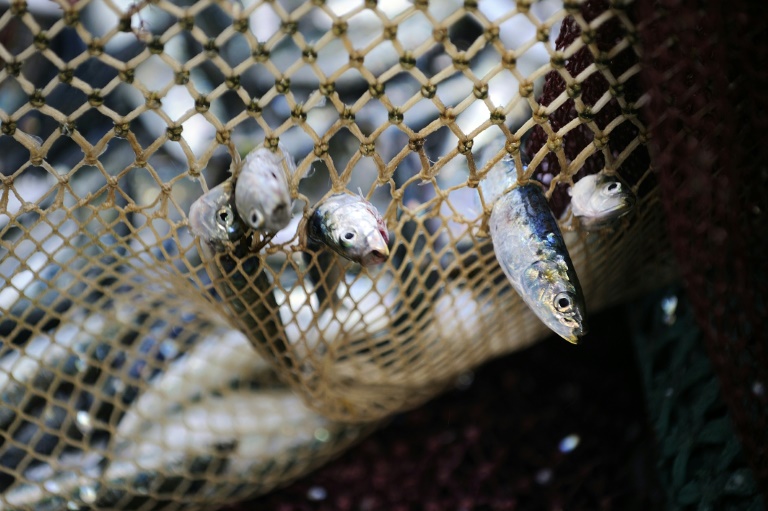
India all but sank the WTO’s bid to net a long-sought deal on curbing harmful fishing subsidies, insisting Tuesday it would not sign up without a 25-year exemption.

Negotiations towards banning subsidies that encourage overfishing and threaten the sustainability of the planet’s fish stocks have been going on at the World Trade Organization for more than two decades.

The global trade body only takes decisions by consensus and its 164 members were seemingly closer than ever to sealing a deal at their four-day conference of trade ministers, which is scheduled to wind up on Wednesday.

But India stuck to its demand for a quarter of a century in which to adapt to the proposals on subsidies — a position many others are at odds with.

“The transition period of 25 years sought by India is not intended as a permanent carve-out. It is a must-have for us and for other similarly placed non-distant water fishing countries,” Commerce and Industry Minister Piyush Goyal said in a statement.

“Without agreeing to the 25-year transition period, it will be impossible for us to finalise the negotiations, as policy space is essential for the long-term sustainable growth and prosperity of our low-income fishermen.”

– ‘Completely unacceptable’ –

Besides fisheries, the WTO conference in Geneva is trying to strike deals on e-commerce, agriculture, food security, Covid-19 vaccine patents and WTO reform.

But some emerging from the negotiating rooms are pointing the finger at Indian intransigence on not just fisheries but on every topic being thrashed out at the WTO’s lakeside headquarters.

“India is being obstructive across the piece, whether it be on e-commerce, fisheries, agriculture,” said one Geneva-based diplomat.

“In no negotiation are they playing a constructive part.”

Goyal said the concerns of a small number of fishermen were prevailing over the lives of nine million fishermen in India.

“This is completely unacceptable! And that is the reason India is opposed to the current text,” he said.

Fishing subsidies is the flagship deal that the WTO’s leader Ngozi Okonjo-Iweala was hoping to get passed at the global trade body’s first ministerial conference in nearly five years.

The Nigerian former finance minister, who took office in March 2021, has staked her leadership on getting deals over the line, breathing new life into the organisation by proving it has a role to play in tackling big global challenges.

On fisheries, special treatment for the poorest countries is widely accepted, but some self-identified developing countries have been holding out for an exemption from subsidy constraints, including large fishing nations like India.

EU trade commissioner Valdis Dombrovskis said that some countries were taking “very strong positions, very far-reaching demands”.

That “weakens the purpose of this agreement which is to ensure the sustainability of fish stocks and ensure that the way fishing is subsidised does not contribute to unsustainable fishing practices”, he told reporters.

– ‘It’s crunch time’ –

Okonjo-Iweala, who turned 68 on Monday, hoped that a couple of the topics being negotiated in Geneva would reach a conclusion.

“My own dream for my birthday is to get a successful ministerial,” she said.

“One or two packages passed… I think that would do.”

WTO spokesman Daniel Pruzin said late Tuesday that the organisation was “still optimistic of getting some outcomes” from the conference.

“The not so good news is that we’re running out of time. It’s crunch time,” he added.

He said ministers were “very close” to concluding an agreement on the WTO’s response to pandemics, while on temporarily waiving patents on Covid-19 vaccines, “there’s still work to do, but I do think there is some optimism that that can be achieved”.

Pruzin said some countries had suggested working through the night and going on into Thursday in the hope of reaching agreements.

India all but sinks WTO sustainable fishing deal

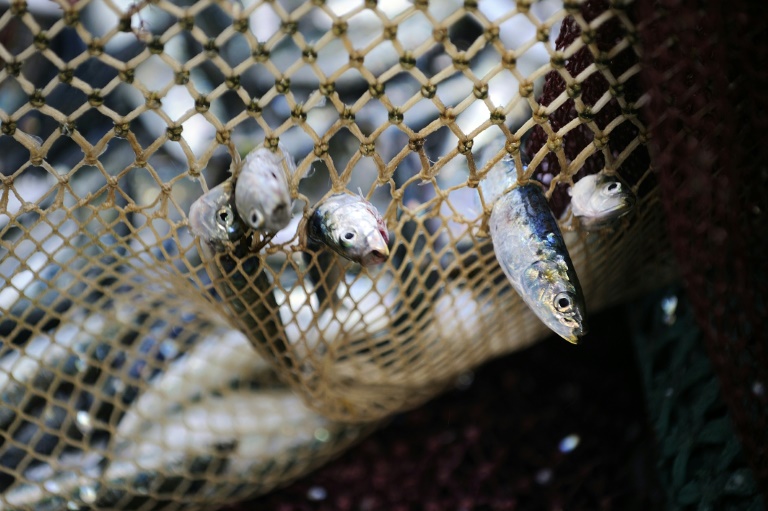
India all but sank the WTO’s bid to net a long-sought deal on curbing harmful fishing subsidies, insisting Tuesday it would not sign up without a 25-year exemption.

Negotiations towards banning subsidies that encourage overfishing and threaten the sustainability of the planet’s fish stocks have been going on at the World Trade Organization for more than two decades.

The global trade body only takes decisions by consensus and its 164 members were seemingly closer than ever to sealing a deal at their four-day conference of trade ministers, which is scheduled to wind up on Wednesday.

But India stuck to its demand for a quarter of a century in which to adapt to the proposals on subsidies — a position many others are at odds with.

“The transition period of 25 years sought by India is not intended as a permanent carve-out. It is a must-have for us and for other similarly placed non-distant water fishing countries,” Commerce and Industry Minister Piyush Goyal said in a statement.

“Without agreeing to the 25-year transition period, it will be impossible for us to finalise the negotiations, as policy space is essential for the long-term sustainable growth and prosperity of our low-income fishermen.”

– ‘Completely unacceptable’ –

Besides fisheries, the WTO conference in Geneva is trying to strike deals on e-commerce, agriculture, food security, Covid-19 vaccine patents and WTO reform.

But some emerging from the negotiating rooms are pointing the finger at Indian intransigence on not just fisheries but on every topic being thrashed out at the WTO’s lakeside headquarters.

“India is being obstructive across the piece, whether it be on e-commerce, fisheries, agriculture,” said one Geneva-based diplomat.

“In no negotiation are they playing a constructive part.”

Goyal said the concerns of a small number of fishermen were prevailing over the lives of nine million fishermen in India.

“This is completely unacceptable! And that is the reason India is opposed to the current text,” he said.

Fishing subsidies is the flagship deal that the WTO’s leader Ngozi Okonjo-Iweala was hoping to get passed at the global trade body’s first ministerial conference in nearly five years.

The Nigerian former finance minister, who took office in March 2021, has staked her leadership on getting deals over the line, breathing new life into the organisation by proving it has a role to play in tackling big global challenges.

On fisheries, special treatment for the poorest countries is widely accepted, but some self-identified developing countries have been holding out for an exemption from subsidy constraints, including large fishing nations like India.

EU trade commissioner Valdis Dombrovskis said that some countries were taking “very strong positions, very far-reaching demands”.

That “weakens the purpose of this agreement which is to ensure the sustainability of fish stocks and ensure that the way fishing is subsidised does not contribute to unsustainable fishing practices”, he told reporters.

– ‘It’s crunch time’ –

Okonjo-Iweala, who turned 68 on Monday, hoped that a couple of the topics being negotiated in Geneva would reach a conclusion.

“My own dream for my birthday is to get a successful ministerial,” she said.

“One or two packages passed… I think that would do.”

WTO spokesman Daniel Pruzin said late Tuesday that the organisation was “still optimistic of getting some outcomes” from the conference.

“The not so good news is that we’re running out of time. It’s crunch time,” he added.

He said ministers were “very close” to concluding an agreement on the WTO’s response to pandemics, while on temporarily waiving patents on Covid-19 vaccines, “there’s still work to do, but I do think there is some optimism that that can be achieved”.

Pruzin said some countries had suggested working through the night and going on into Thursday in the hope of reaching agreements.

Growing numbers avoiding news as 'too depressing': report

The depressing state of the world is leading people to switch off from the news, the Reuters Institute reported on Wednesday. 

The combined impact of the Covid-19 pandemic, Russia-Ukraine war and cost-of-living crisis have led to declining interest in the news, a survey by the British research group found. 

Across 46 countries surveyed and 93,000 participants, it found the share who said they actively avoided the news had increased from 29 to 38 percent since 2017. 

The numbers doubled in some countries, including Brazil (54 percent) and Britain (46). 

Young people in particular found the news to be a downer, but the chief reason for avoiding the news was its repetitiveness, especially around Covid and politics. 

“I actively avoid things that trigger my anxiety and things that can have a negative impact on my day,” a 27-year-old British respondent told the researchers. 

“I will try to avoid reading news about things like deaths and disasters.”

Others said the news led to arguments they would rather avoid, or a feeling of powerlessness, while many young people said they found it hard to understand.

Lead author Nic Newman said the findings were “particularly challenging for the news industry”.

“Subjects that journalists consider most important, such as political crises, international conflicts and global pandemics, seem to be precisely the ones that are turning some people away,” he was quoted as saying. 

Most of the study was completed before the invasion of Ukraine in February, but subsequent surveys in five countries found these issues had only deepened in its aftermath. 

Trust in the media fell in half the countries surveyed, and rose in just seven, the report said, reversing gains made during the pandemic. 

Overall, trust was at 42 percent, down from 44 percent when the media had a small positive bump from the pandemic.

The United States showed the lowest level of trust at 26 percent, tied with Slovakia. 

The problem is being compounded by young people increasingly detached from legacy media, with 15 percent of 18- to 24-year-olds saying they use TikTok as a primary source of news.

Tampon shortage latest sign of supply chain woes in US stores

Tampons are the latest product disappearing from store shelves in the United States, another illustration of supply chain problems that are complicating daily life, following the troubling shortage of baby formula.

Drugstore chains CVS and Walgreens confirmed in messages to AFP that some brands of tampons are temporarily unavailable in some areas.

Procter & Gamble, which makes the ubiquitous Tampax line among other products, said customers might not be able to find their usual brand in American stores.

“We understand it is frustrating for consumers when they can’t find what they need. We can assure you this is a temporary situation in the US, and the Tampax team is producing tampons 24/7 to meet the increased demand for our products,” they said in a statement.

A spokesperson for Edgewell, maker of Playtex and o.b. tampons and Carefree and Stayfree liners and pads, acknowledged inventory issues due to “extensive workforce shortages” caused by two Covid-19 outbreaks at a US plant in late 2021 and a Canadian supplier early this year.

The company said they “anticipate returning to normal levels in the coming weeks.” 

Kimberly-Clark, which makes a variety of consumer products including Kotex tampons, told AFP it has not experienced inventory shortages.

Walgreens meanwhile said it was working with suppliers to “ensure we have supply available” in all its stores.

And CVS said that “if a local store is temporarily out of specific products, we work to replenish those items as quickly as possible.”

The situation has been going on for months, but has received increasing media attention in recent days.

– Like pandemic stockpiling –

Patrick Penfield, a supply chain management specialist at Syracuse University, says demand has increased recently in particular because of additional purchases by consumers who see the shortage of certain brands and panic that they won’t be able to get more product.

He compared it to people stockpiling toilet paper at the start of the pandemic.

There is also a shortage of certain raw materials, including cotton and plastic, he said.

“This is the third straight year where demand for cotton in the US has exceeded what US firms are producing,” Penfield said, pointing to the increased need for masks and personal protection equipment.

In addition, some factories are struggling to operate at full capacity due to staff shortages or Covid-19 spikes, he said.

But the situation is different from the baby formula shortage: Initially caused by supply chain snarls and labor shortages, formula supplies dropped sharply when manufacturer Abbott shut down one Michigan plant in February and issued a product recall after the death of two babies raised concerns over contamination.

When it comes to tampons, “the factories are operating,” Penfield said, predicting a return to normal within the next six months.

In the meantime, the shortage has offered Republicans a new angle of attack against US President Joe Biden, with the Republican National Committee slamming “Biden’s war on women” on Twitter.

Close Bitnami banner
Bitnami