World

More crew of grounded plane prevented from leaving Argentina

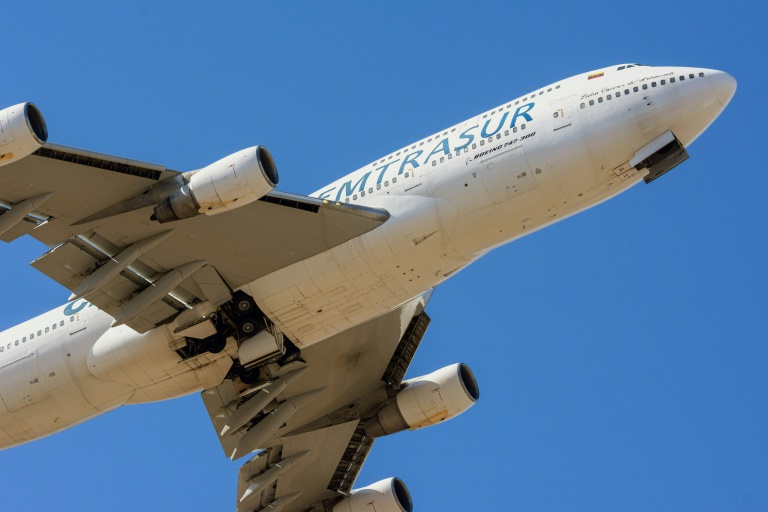
The Venezuelan crew of a cargo plane grounded outside Buenos Aires since last week may not leave Argentina, a judge ruled Tuesday after their hotel rooms were searched in a probe into possible Iran terror group links.

Police raided the 14 Venezuelan and five Iranian crew members’ rooms the day after officials raised suspicions of a link to Iran’s Revolutionary Guards, listed as a foreign “terrorist organization” by the United States.

The Iranian crew had already had their passports temporarily seized, and on Tuesday the Venezuelans had their freedom curtailed after police confiscated cell phones, computers and documents in the early-morning raid.

They had been on board a Venezuelan Boeing 747 cargo plane reportedly carrying car parts that came in from Mexico to land in Cordoba, Argentina on Monday last week.

The plane then tried to travel to neighboring Uruguay, but was denied entry and returned to Ezeiza outside Buenos Aires where it has been grounded since last Wednesday.

The plane belongs to Emtrasur, a subsidiary of Venezuela’s Conviasa, which is under US sanctions.

A judge grounded the plane given a “reasonable suspicion that the reason given for entering (Argentina) might not be true.”

Police did not comment on the reason for the hotel search, but on Monday, Security Minister Anibal Fernandez said information had been received from “foreign organizations” that some among the crew may be linked to companies with ties to the Revolutionary Guards, Iran’s ideological army.

Fernandez said a smaller crew had been reported on the flight log than the number actually on the plane, though none were on Interpol’s wanted list.

The crew list did include “a relative of the Iranian interior minister,” said Fernandez, whose name “coincides with that of a member of the Revolutionary Guards.”

– ‘Terrorists’ –

Also Tuesday, Paraguay said two officials who had authorized the landing of the plane there in May had been dismissed and two anti-drug agents were under investigation.

Interior Minister Federico Gonzalez said the plane landed in Paraguay on a “commercial” entry permit with 18 crew — an unusually high number for a cargo flight, according to expert sites.

It spent nearly three days at the Guarani international airport near the borders with Argentina and Brazil before departing on May 16 for the Caribbean island of Aruba with a load of Paraguayan cigarettes.

After it left, “we received a communication that the aircraft is sanctioned by the United States Treasury Department and that seven of the crew members are members of the Al Quds forces (of the Guards) and that the United States has them on a list of terrorists,” said the minister.

Paraguay alerted the intelligence services of other countries in the region.

A Mexican official said Tuesday the plane had arrived in the state of Queretaro on June 4 with four crew members and in full compliance with all protocols.

It arrived with a two-day delay due to initial problems with airworthiness, insurance and other certificates as well as “documentation of the crew,” Queretaro official Marco Antonio Del Prete told AFP.

After refueling and loading “industrial goods”, the Boeing jet departed from Queretaro on June 5 with authorization for a Caracas-Queretaro-Caracas-Buenos Aires-Caracas flight route, he added.

“I don’t know if there were any modifications to the flight plan once it left Mexican airspace,” said Del Prete.

Iran said Monday that Argentina’s move was part of a “propaganda” campaign against Tehran amid tensions with Western countries over negotiations to revive a 2015 nuclear deal.

The grounding of the cargo plane came days before Venezuelan President Nicolas Maduro visited Tehran on Saturday so that the allies, both subject to US sanctions, could sign a 20-year cooperation pact.

Iran’s foreign ministry spokesman Saeed Khatibzadeh said the plane was sold by Iran’s Mahan Air to a Venezuelan company last year.

Mahan Air is accused by the United States of links with the Revolutionary Guards.

Interpol has arrest warrants out for former Iranian leaders suspected of involvement in an attack on a Jewish center in Buenos Aires in 1994 that killed 85 people and injured hundreds.

burs-/nn/dga/mlr/des

Eletrobras goes private with Bolsonaro bell ring

Brazilian President Jair Bolsonaro rang the bell at the Sao Paulo stock exchange Tuesday to mark the start of trading in shares of newly privatized electricity company Eletrobras, the second-biggest stock offering worldwide this year.

The launch dilutes the Brazilian government’s stake in Eletrobras, Latin America’s biggest electricity company, from 72 percent to 45 percent.

It is part of Bolsonaro’s plans to privatize state-run companies en masse — a promise he has largely failed to deliver on nearing the end of his four-year term and facing an uphill battle to win reelection in October.

The share offering raised around 30 billion reais ($6 billion).

Economy Minister Paulo Guedes hailed it as a victory for private-sector efficiency.

“The biggest clean-energy generating company in the world is now free,” he said at the event.

“It’s like a child who left home at 18 and is going to go out and triumph. It no longer needs the protection of the state, which was becoming detrimental.”

Bolsonaro grinned and embraced Guedes as a hail of confetti fell, but did not speak at the event.

Guedes says Eletrobras needs to invest 16 billion reais a year to maintain its market share, but was previously only managing around three billion reais a year.

Critics worry the privatization could lead to higher bills for customers.

The event drew a small protest by dozens of demonstrators outside the stock exchange.

The Bolsonaro administration has also voiced interest recently in privatizing oil firm Petrobras, the biggest company in Brazil.

The state-run firm has drawn the far-right president’s ire with a series of recent price increases that are fueling high inflation.

Stocks mostly fall as markets await aggressive Fed action

Global equity markets mostly fell on Tuesday as markets awaited a key Federal Reserve decision amid rising expectations for an even tougher rate hike than previously telegraphed.

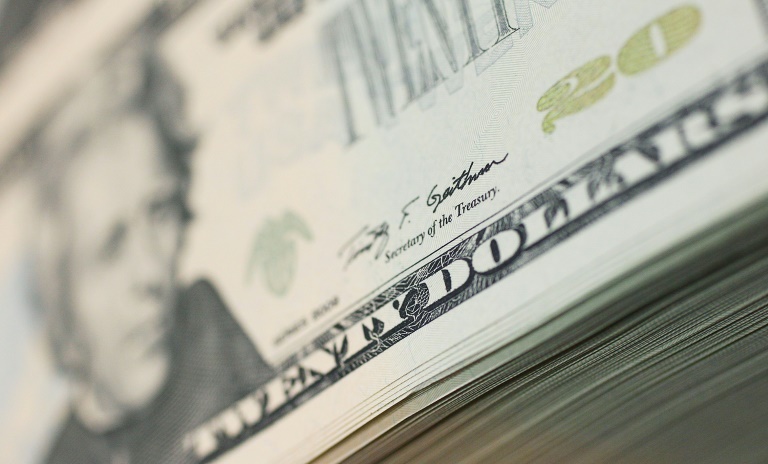
Panic has swept through trading floors since data on Friday showed US consumer prices rising at their fastest pace in decades on surging energy and food costs caused by the Ukraine war and supply chain snarls.

Investors are now bracing for the Fed’s interest rate decision on Wednesday as the central bank struggles to walk a fine line between reining in inflation and trying to keep the economy on track.

“While there is no doubt that inflation is a considerable challenge for the US at this point, slamming on the brakes too hard risks pushing the economy off its track,” said Tai Hui, chief market strategist for Asia at JP Morgan Asset Management. 

The inflation reading has raised expectations the US central bank could raise rates by a hefty 75 basis points, higher than its previous 0.5-percentage-point hike — something futures markets now consider likely.

“It looks like it’s going to be a 75 basis point hike,” said Quincy Krosby, chief equity strategist of LPL Financial. “We haven’t seen any sign that the Fed wanted to clarify this expectation. In fact, if the Fed stayed with a 50 basis point hike, the market could be disappointed.”

Krosby said the Fed’s sharp increase in lending rates will dampen economic growth but the central bank has little choice at this point.

“The wake-up call was the CPI on Friday and the preliminary consumer confidence,” she said. “The Fed got the message. It needs to maintain its credibility.”

Recession fears sent Wall Street plunging on Monday, with the broad-based S&P 500 stocks index sinking into a bear market, with a drop of more than 20 percent from its recent peak.

After opening higher on Tuesday, US stocks weakened thereafter. The Dow and S&P 500 finished lower, while the Nasdaq mustered modest gains. 

London, Paris, Frankfurt and most Asian equities closed in the red.

Cryptocurrencies have mirrored the falls in the stock markets, with bitcoin tumbling to an 18-month low under $23,000.

Digital currency exchange Coinbase said Tuesday it will lay off 18 percent of staff, citing tight economic conditions and an overly rapid expansion.

– Key figures at around 2030 GMT –

New York – Dow: DOWN 0.5 percent at 30,364.83 (close)

New York – S&P 500: DOWN 0.4 percent at 3,735,48 (close)

New York – Nasdaq: UP 0.2 percent at 10,828.35 (close)

Frankfurt – DAX: DOWN 0.9 percent at 13,304.39 (close)

Paris – CAC 40: DOWN 1.2 percent at 5,949.84 (close)

London – FTSE 100: DOWN 0.3 percent at 7,187.46 (close)

EURO STOXX 50: DOWN 0.8 percent at 3,475.18 (close) 

Tokyo – Nikkei 225: DOWN 1.3 percent at 26,629.86 (close)

Hong Kong – Hang Seng Index: FLAT at 21,067.99 (close)

Shanghai – Composite: UP 1.0 percent at 3,288.91 (close)

Euro/dollar: UP at $1.0420 from $1.0409 late Monday

Pound/dollar: DOWN at $1.1993 from $1.2134

Euro/pound: UP at 86.84 pence from 85.79 pence

Dollar/yen: UP at 135.33 yen from 134.42 yen 

Brent North Sea crude: DOWN 0.9 percent at $121.97 per barrel

West Texas Intermediate: DOWN 2.0 percent at $118.93 per barrel

burs-jmb

Floods, fires, heat waves: US struggles with climate catastrophes

Raging floods, devastating fires, powerful thunderstorms and a dangerous heat wave affecting a third of the population: the United States was being walloped Tuesday by climate-related catastrophes.

A series of slow motion disasters is gripping the country as it enters summer, with warnings of misery for months to come in some areas.

Around 120 million people were under some sort of advisory as a heat wave scorched the Upper Midwest and the Southeast.

“A dome of high pressure is expected to generate well-above-normal to record-breaking temperatures across the region both today and tomorrow,” with heat indices “well into the triple digits in many locations,” the National Weather Service (NWS) said.

Parts of Indiana, Kentucky and Ohio were warned to expect the mercury to reach 109 degrees Fahrenheit (43 Celsius).

NWS meteorologist Alex Lamers said the high pressure dome was sparking extreme events around its periphery.

“A lot of times you get a pretty big heatwave and if you look around the edges of that you’ll see thunderstorms and tornadoes, flash flooding, extreme rainfall,” he told AFP.

– Storms –

The heat dome’s northern edge, where high temperatures collided with colder air, saw some violent storms Monday.

Hundreds of thousands of people were without power in the Midwest after thunderstorms tore through the area.

That cold front was expected to bring more unsettled weather, with hail and damaging winds forecast.

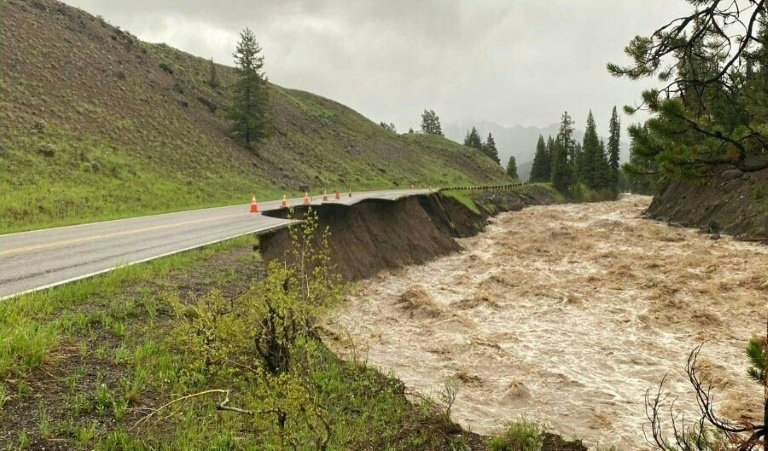
Further west, dramatic photographs and videos published by the National Park Service showed the devastation wreaked by flooding in Yellowstone, the country’s oldest national park.

The 3,400 square-mile (8,900 square-kilometer) park in Wyoming, which is home to the famous Old Faithful geyser, was shuttered on Monday after a flooded river swept away roads and cut off a nearby community.

Rangers warned of “extremely hazardous conditions” and told anyone still in the park to get out.

“Flood levels measured on the Yellowstone River are beyond record levels,” the NPS said on its website.

“Preliminary assessments show multiple sections of roads throughout the park have been either washed out or covered in mud or rocks, and multiple bridges may be affected.”

The small community of Gardiner, which sits just outside the park boundary in the state of Montana, was cut off, with water and power out to several properties, the NPS said.

– Furnace –

There were also warnings of excessive heat for parts of California and Arizona, which were blasted by furnace-like conditions at the weekend.

The soaring temperatures, coupled with a lengthy drought are worsening seasonal wildfires.

Two huge blazes, each of more than 300,000 acres (120,000 hectares), continued to rage Tuesday in New Mexico.

Firefighters battling the Black Fire and the Hermits Peak fire are working to contain flames that are fuelled by exceedingly dry undergrowth.

New Mexico and much of the Southwest has been gripped by a punishing drought that has left rainfall levels below normal for years.

Dozens of other fires have sprung up throughout the region.

Wildfires are an expected part of the natural cycle, which help to remove dead plants and eliminate disease while promoting new growth.

But their size and ferocity has increased in recent years, firefighters say, as effects of the crippling drought make themselves felt.

“Dry conditions and gusty winds are expected to produce another day of elevated to critical fire weather conditions across portions of the Southwest into the central and southern High Plains,” NWS said on its website.

Fire chiefs are warning that 2022 looks set to be a terrible year for wildfires.

“Given the fuel conditions, the fire conditions that we’re here talking about, I foresee a very tough four, five, six months in front of us,” Orange County, California Fire Chief Brian Fennessy said last week.

Scientists say global warming, which is being driven chiefly by humanity’s unchecked burning of fossil fuels, is making extreme weather events more likely.

Lamer, of the National Weather Service, said while it was difficult to conclude the changing climate was behind an individual episode, global warming was an underlying factor.

“Any weather event that you’re looking, there’s some combination of bad luck, the atmosphere has to be set up in a certain way,” he said.

“But they all happen in the context of climate, and basically climate change loads the dice and makes more extreme outcomes more likely.”

Biden signals US-Saudi thaw with prince meeting on Mideast trip

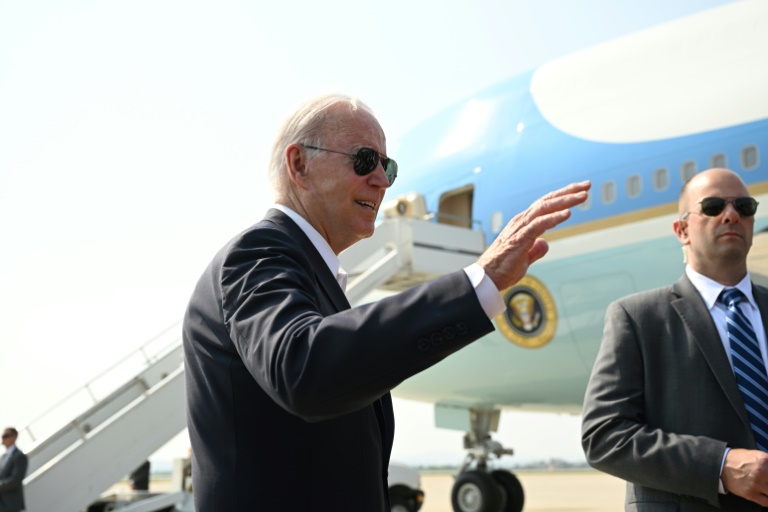
US President Joe Biden will meet with Saudi Arabian Crown Prince Mohammed bin Salman next month, abandoning efforts to ostracize the kingdom’s de facto leader over the horrific murder of a dissident.

The White House ended weeks of speculation Tuesday, announcing that Biden will travel to Israel, the Palestinian West Bank, and Saudi Arabia from July 13-16 — his first trip to the Middle East since taking office.

In addition to meetings with individual leaders in all three places, he will attend a regional Gulf Cooperation Council summit in Saudi Arabia.

Biden is expected to press for increased Saudi oil production, in the hope of taming spiraling fuel costs and inflation at home ahead of midterm congressional elections in which his Democratic party risks a drubbing.

But his meeting with the crown prince, often referred to as MBS, will mark a controversial shift.

As a presidential candidate, Biden said the 2018 murder and dismemberment of Jamal Khashoggi — a Saudi-born US resident known for writing critical articles about the kingdom’s rulers for The Washington Post — had made the country a “pariah.”

US intelligence findings released by the Biden administration identified MBS as the mastermind of the operation.

The White House sought to play down the encounter, not specifically mentioning MBS in its statement.

Pressed by reporters, White House Press Secretary Karine Jean-Pierre said “the president is going to see over a dozen leaders on this trip… We can expect the president to see the crown prince as well.”

Saudi Arabia’s statement was more direct, noting simply that Biden would meet with King Salman and then the young heir to the throne.

– Oil and inflation –

US inflation is at 8.6 percent, the highest rate in 40 years, with high fuel costs largely to blame. Political fallout has been swift as voters vent over Biden’s inability to change global oil markets.

John Kirby, a White House foreign policy spokesman, told MSNBC on Tuesday that oil production “absolutely… is going to be part” of Biden’s discussions in Saudi Arabia.

But while the White House also confirmed that “energy security” will be a topic, officials stressed that the whole trip has broader aims.

Jean-Pierre emphasized that “this visit to the Middle East region culminates months of diplomacy,” as opposed to being driven by recent domestic political concerns.

Biden’s multiple leader-level engagements during the brief yet intense journey will demonstrate “the return of American leadership” to the region, a senior US official told reporters.

– Re-establishing Palestinian links –

The tour starts with meeting Prime Minister Naftali Bennett in Israel, with emphasis on the lavish US support for Israel’s armed forces. That includes the Iron Dome anti-rocket system at a time of tension over ongoing failure to resurrect an international pact curtailing Iran’s nuclear development.

“While in Israel, the president will likely visit an area where these defensive systems are utilized, as well as discuss new innovations between our countries that use  laser technologies to defeat missiles and other airborne threats,” the official said, speaking on condition of anonymity.

“The president will reaffirm the ironclad commitment to Israel’s security.”

Biden will meet Palestinian president Mahmud Abbas, likely in Bethlehem, the US official said.

Biden will stress “his lifelong commitment to a two state solution” for Palestinians and Israelis and restore US ties with Palestinians that were “nearly severed” under his predecessor Donald Trump.

– History and controversy –

Biden’s flight from Israel to Jeddah will be the first by a US president from Israel to an Arab state that does not recognize the country. In 2017, Trump made the journey in reverse.

Once there, Biden will attend the Gulf Cooperation Council meeting with leaders from Bahrain, Kuwait, Oman, Qatar, Saudi Arabia and the United Arab Emirates, as well as being joined by the leaders of Egypt, Iraq and Jordan, the US official said.

A priority for Biden will be maintaining the recently extended truce in Yemen, as well as deterring Iran, “advancing human rights, and ensuring global energy and food security,” the official said.

Biden will also join a virtual summit of the so-called I2-U2 diplomatic group of India, Israel, the UAE and the United States, with focus on “the food security crisis” sparked by Russia’s invasion of major agricultural exporter Ukraine.

The most closely watched meeting will be between Biden and MBS.

The senior official said that despite the Khashoggi murder, the US-Saudi relationship goes back eight decades and while there had been a “recalibration,” there was no desire for “rupture.”

However, one Democratic senator, Ron Wyden, said in a statement that Biden “cannot value Saudi oil more highly than the blood” of MBS’ victims. 

“Embracing MBS only makes our people more vulnerable to the whims of tyrants,” Wyden said.

India all but sinks WTO sustainable fishing deal

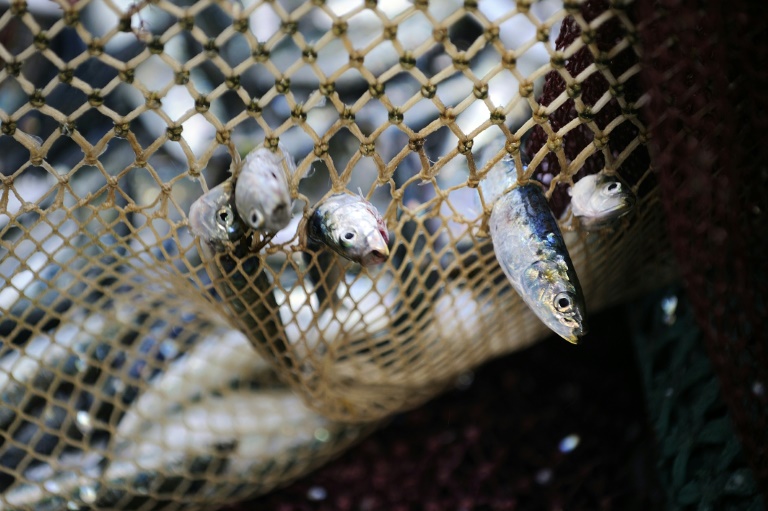
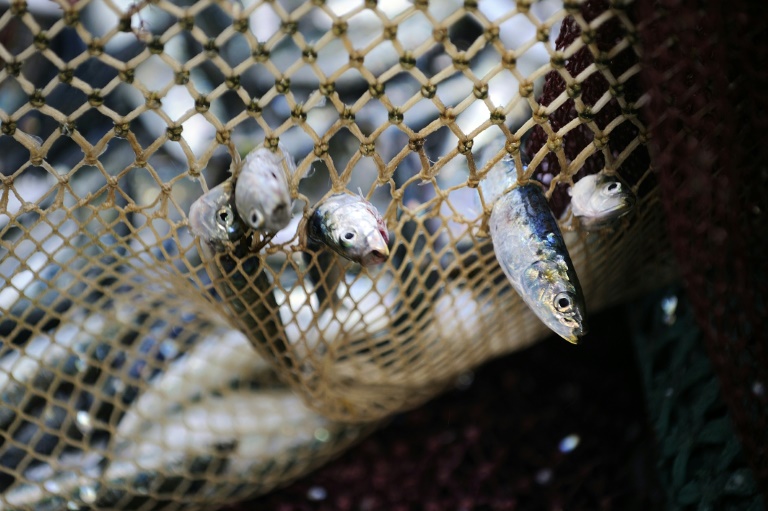
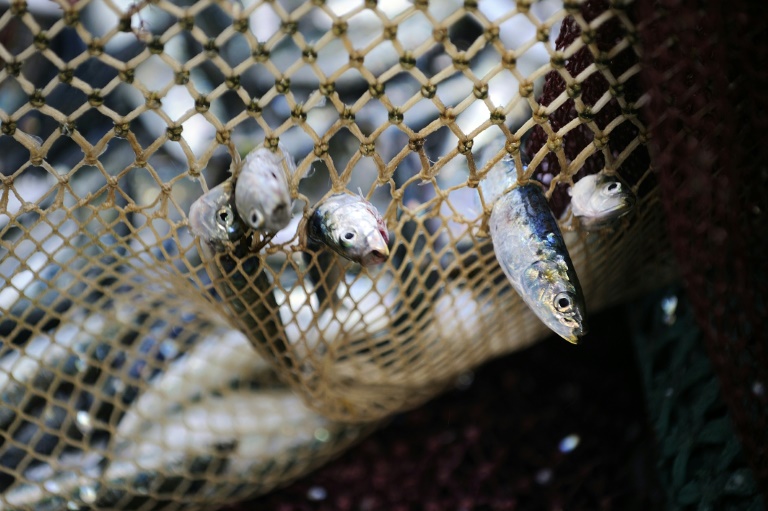
India all but sunk the WTO’s bid to net a long-sought deal on curbing harmful fishing subsidies when it insisted Tuesday it would only sign up if it is given a 25-year exemption from the restrictions.

Negotiations towards banning subsidies that encourage overfishing and threaten the sustainability of the planet’s fish stocks have been going on at the World Trade Organization for more than two decades.

The global trade body only takes decisions by consensus and it was thought that members were tantalisingly close to sealing a deal at their four-day conference of trade ministers which winds up on Wednesday.

But India insisted on carving out a quarter of a century in which to adapt to the proposals on subsidies.

“The transition period of 25 years sought by India is not intended as a permanent carve-out. It is a must-have for us and for other similarly placed non-distant water fishing countries,” Commerce and Industry Minister Piyush Goyal said in a statement.

“We feel that without agreeing to the 25-year transition period, it will be impossible for us to finalise the negotiations, as policy space is essential for the long-term sustainable growth and prosperity of our low-income fishermen.”

The conference mood darkened earlier Tuesday with several diplomats pointing the finger at Indian intransigence on not just fisheries but on every topic being thrashed out at the WTO’s lakeside headquarters.

The WTO conference is trying to strike deals on e-commerce, agriculture, food security, Covid-19 vaccine patents and WTO reform.

“India is being obstructive across the piece, whether it be on e-commerce, fisheries, agriculture,” said one Geneva-based diplomat.

“In no negotiation are they playing a constructive part.”

Goyal said the concerns of a small number of fishermen were prevailing over the lives of nine million fishermen in India.

“This is completely unacceptable! And that is the reason India is opposed to the current text,” he said.

Fishing subsidies is the flagship deal that the WTO’s leader Ngozi Okonjo-Iweala was hoping to get passed at the global trade body’s first ministerial conference in nearly five years, being held in Geneva this week.

The Nigerian former finance minister, who took office in March 2021, has staked her leadership on banging heads together and getting deals over the line, breathing new life into the organisation by proving it has a role to play in tackling big global challenges.

On fisheries, special treatment for the poorest countries is widely accepted, but some self-identified developing countries are demanding exemption from subsidy constraints, including large fishing nations like India — and the idea has met resistance from others.

EU trade commissioner Valdis Dombrovskis earlier urged the assembled ministers to embrace compromise amid the hectic negotiations.

On fisheries, “there are countries taking very strong positions, very far-reaching demands, which in a sense weakens the purpose of this agreement which is to ensure the sustainability of fish stocks and ensure that the way fishing is subsidised does not contribute to unsustainable fishing practices”, he told reporters.

Okonjo-Iweala, who turned 68 on Monday, hoped that a couple of the topics being negotiated in Geneva would reach a conclusion.

“My own dream for my birthday is to get a successful ministerial,” she said.

“One or two packages passed… I think that would do.”

Remi Parmentier, who heads the Varda Group which advises on environmental issues, said on Twitter: “If India is so unhappy at the World Trade Organization, maybe they should just suspend their membership, and let the rest of the members get on.” 

India all but sinks WTO sustainable fishing deal

India all but sunk the WTO’s bid to net a long-sought deal on curbing harmful fishing subsidies when it insisted Tuesday it would only sign up if it is given a 25-year exemption from the restrictions.

Negotiations towards banning subsidies that encourage overfishing and threaten the sustainability of the planet’s fish stocks have been going on at the World Trade Organization for more than two decades.

The global trade body only takes decisions by consensus and it was thought that members were tantalisingly close to sealing a deal at their four-day conference of trade ministers which winds up on Wednesday.

But India insisted on carving out a quarter of a century in which to adapt to the proposals on subsidies.

“The transition period of 25 years sought by India is not intended as a permanent carve-out. It is a must-have for us and for other similarly placed non-distant water fishing countries,” Commerce and Industry Minister Piyush Goyal said in a statement.

“We feel that without agreeing to the 25-year transition period, it will be impossible for us to finalise the negotiations, as policy space is essential for the long-term sustainable growth and prosperity of our low-income fishermen.”

The conference mood darkened earlier Tuesday with several diplomats pointing the finger at Indian intransigence on not just fisheries but on every topic being thrashed out at the WTO’s lakeside headquarters.

The WTO conference is trying to strike deals on e-commerce, agriculture, food security, Covid-19 vaccine patents and WTO reform.

“India is being obstructive across the piece, whether it be on e-commerce, fisheries, agriculture,” said one Geneva-based diplomat.

“In no negotiation are they playing a constructive part.”

Goyal said the concerns of a small number of fishermen were prevailing over the lives of nine million fishermen in India.

“This is completely unacceptable! And that is the reason India is opposed to the current text,” he said.

Fishing subsidies is the flagship deal that the WTO’s leader Ngozi Okonjo-Iweala was hoping to get passed at the global trade body’s first ministerial conference in nearly five years, being held in Geneva this week.

The Nigerian former finance minister, who took office in March 2021, has staked her leadership on banging heads together and getting deals over the line, breathing new life into the organisation by proving it has a role to play in tackling big global challenges.

On fisheries, special treatment for the poorest countries is widely accepted, but some self-identified developing countries are demanding exemption from subsidy constraints, including large fishing nations like India — and the idea has met resistance from others.

EU trade commissioner Valdis Dombrovskis earlier urged the assembled ministers to embrace compromise amid the hectic negotiations.

On fisheries, “there are countries taking very strong positions, very far-reaching demands, which in a sense weakens the purpose of this agreement which is to ensure the sustainability of fish stocks and ensure that the way fishing is subsidised does not contribute to unsustainable fishing practices”, he told reporters.

Okonjo-Iweala, who turned 68 on Monday, hoped that a couple of the topics being negotiated in Geneva would reach a conclusion.

“My own dream for my birthday is to get a successful ministerial,” she said.

“One or two packages passed… I think that would do.”

Remi Parmentier, who heads the Varda Group which advises on environmental issues, said on Twitter: “If India is so unhappy at the World Trade Organization, maybe they should just suspend their membership, and let the rest of the members get on.” 

India all but sinks WTO sustainable fishing deal

India all but sunk the WTO’s bid to net a long-sought deal on curbing harmful fishing subsidies when it insisted Tuesday it would only sign up if it is given a 25-year exemption from the restrictions.

Negotiations towards banning subsidies that encourage overfishing and threaten the sustainability of the planet’s fish stocks have been going on at the World Trade Organization for more than two decades.

The global trade body only takes decisions by consensus and it was thought that members were tantalisingly close to sealing a deal at their four-day conference of trade ministers which winds up on Wednesday.

But India insisted on carving out a quarter of a century in which to adapt to the proposals on subsidies.

“The transition period of 25 years sought by India is not intended as a permanent carve-out. It is a must-have for us and for other similarly placed non-distant water fishing countries,” Commerce and Industry Minister Piyush Goyal said in a statement.

“We feel that without agreeing to the 25-year transition period, it will be impossible for us to finalise the negotiations, as policy space is essential for the long-term sustainable growth and prosperity of our low-income fishermen.”

The conference mood darkened earlier Tuesday with several diplomats pointing the finger at Indian intransigence on not just fisheries but on every topic being thrashed out at the WTO’s lakeside headquarters.

The WTO conference is trying to strike deals on e-commerce, agriculture, food security, Covid-19 vaccine patents and WTO reform.

“India is being obstructive across the piece, whether it be on e-commerce, fisheries, agriculture,” said one Geneva-based diplomat.

“In no negotiation are they playing a constructive part.”

Goyal said the concerns of a small number of fishermen were prevailing over the lives of nine million fishermen in India.

“This is completely unacceptable! And that is the reason India is opposed to the current text,” he said.

Fishing subsidies is the flagship deal that the WTO’s leader Ngozi Okonjo-Iweala was hoping to get passed at the global trade body’s first ministerial conference in nearly five years, being held in Geneva this week.

The Nigerian former finance minister, who took office in March 2021, has staked her leadership on banging heads together and getting deals over the line, breathing new life into the organisation by proving it has a role to play in tackling big global challenges.

On fisheries, special treatment for the poorest countries is widely accepted, but some self-identified developing countries are demanding exemption from subsidy constraints, including large fishing nations like India — and the idea has met resistance from others.

EU trade commissioner Valdis Dombrovskis earlier urged the assembled ministers to embrace compromise amid the hectic negotiations.

On fisheries, “there are countries taking very strong positions, very far-reaching demands, which in a sense weakens the purpose of this agreement which is to ensure the sustainability of fish stocks and ensure that the way fishing is subsidised does not contribute to unsustainable fishing practices”, he told reporters.

Okonjo-Iweala, who turned 68 on Monday, hoped that a couple of the topics being negotiated in Geneva would reach a conclusion.

“My own dream for my birthday is to get a successful ministerial,” she said.

“One or two packages passed… I think that would do.”

Remi Parmentier, who heads the Varda Group which advises on environmental issues, said on Twitter: “If India is so unhappy at the World Trade Organization, maybe they should just suspend their membership, and let the rest of the members get on.” 

UN warns against adoption of Ukrainian children in Russia

Ukrainian children should not be adopted in Russia, where several thousand young people are believed to have been moved since Moscow’s February invasion, a UN official said Tuesday.

“We’re reiterating, including to the Russian Federation, that adoption should never occur during or immediately after emergencies,” Asfhan Khan, the UN Children’s Fund (UNICEF) regional director for Europe and Central Asia, told reporters.

Such children cannot be assumed to be orphans, and “any decision to move any child must be grounded in their best interests and any movement must be voluntary. Parents need to provide informed consent,” said the official, who had just returned from a visit to Ukraine.

“Regarding children that have been sent to Russia, we’re working closely to see with ombudspersons and networks how best we can document those cases,” Khan said, adding that there is currently no access to those children.

The United Nations had already expressed concern in early March about the risk of forced adoption of Ukrainian children, especially the some 91,000 who were living in institutions or boarding schools at the beginning of the war, many of them located in the country’s east.

UK defends Rwanda migrant deportation policy

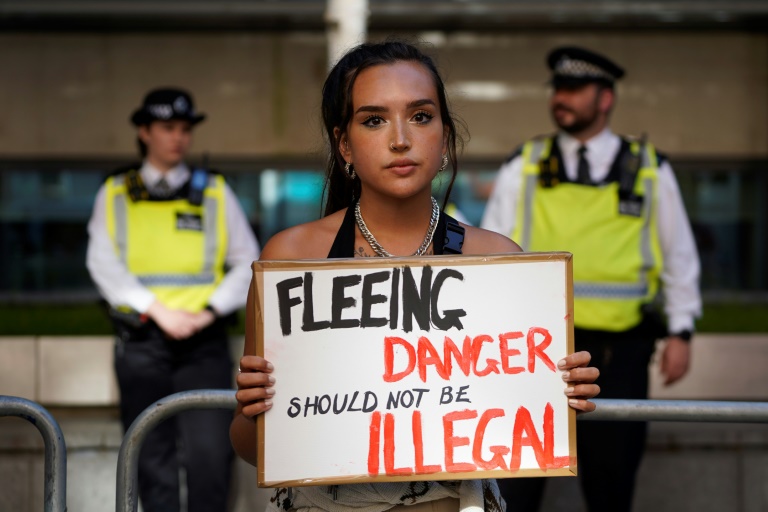
The UK government on Tuesday defended its controversial policy to send asylum seekers to Rwanda, even as the entire senior leadership of the Church of England branded it shameful and immoral.

Foreign Secretary Liz Truss insisted the first flight to Kigali, believed to be operated by Spanish charter firm Privilege Style, would take off, no matter how many people were on board.

Only six people are now due to be deported because of legal challenges and reviews of their cases — well down on the 130 initially envisaged by the authorities.

“We’re expecting to send the flight later today,” Truss told Sky News but said she was unable to confirm the numbers due to be on board. 

“There will be people on the flights and if they’re not on this flight, they will be on the next flight,” she added.

The European Court of Human Rights issued an urgent interim measure to prevent the deportation of an Iraqi man booked on the flight as he may have been tortured and his asylum application was not completed.

“This means it is now possible for the other six to make similar claims. We are so relieved,” refugee rights group Care4Calais tweeted.

Truss said the policy, which the UN refugee agency has criticised as “all wrong”, was vital to break up human-trafficking gangs exploiting vulnerable migrants.

Record numbers of migrants have made the perilous Channel crossing from northern France, heaping pressure on the government in London to act after it promised to tighten borders after Brexit.

British media said some 260 people attempting the crossing in small boats were brought ashore at the Channel port of Dover by 1200 GMT on Tuesday.

More than 10,000 have crossed since the start of the year.

– ‘Shames Britain’ –

Legal challenges in recent days have failed to stop the deportation policy, which the two top clerics in the Church of England and 23 bishops said was “immoral” and “shames Britain”.

“They (migrants) are the vulnerable that the Old Testament calls us to value,” Archbishop of Canterbury Justin Welby and Archbishop of York Stephen Cottrell wrote in a letter to The Times. 

“We cannot offer asylum to everyone, but we must not outsource our ethical responsibilities, or discard international law — which protects the right to claim asylum.”

It was reported last weekend that Queen Elizabeth II’s heir, Prince Charles, had privately described the government’s plan as “appalling”.

But Truss said: “The people who are immoral in this case are the people traffickers trading on human misery.”

In Kigali, government spokeswoman Yolande Makolo told reporters it was an “innovative programme” to tackle “a broken global asylum system”.

“We don’t think it is immoral to offer a home to people,” she told a news conference.

An undeterred Prime Minister Boris Johnson meanwhile told his senior ministers the policy was “the right thing to do”.

– ‘Value for money’ – 

Truss said she could not put a figure on the cost of the charter flight, which has been estimated at upwards of £250,000 ($303,000). 

But she insisted it was “value for money” to reduce the long-term cost of irregular migration, which the government says costs UK taxpayers £1.5 billion a year, including £5 million a day on accommodation.

In the Channel port of Calais, in northern France, migrants said the risk of deportation to Rwanda would not stop them trying to reach Britain.

Moussa, 21, from the Darfur region of Sudan, said “getting papers” was the attraction. “That’s why we want to go to England,” he said.

Deported asylum seekers who make the 4,000-mile (6,500-kilometre) trip to Kigali will be put up in the Hope Hostel, which was built in 2014 to give refuge to orphans from the 1994 genocide of around 800,000 mainly ethnic Tutsis.

Hostel manager Ismael Bakina said up to 100 migrants can be accommodated at a rate of $65 per person a day and that “this is not a prison.”

As part of the agreement, anyone landing in Britain illegally is liable to be given a one-way ticket for processing and resettlement in Rwanda.

The government in Kigali has said the deportations will begin slowly and rejected criticism that Rwanda is not a safe country and that serious human rights abuses were rife.

Rwandan opposition parties also question whether the resettlement scheme will work given high youth unemployment rates.

burs-cjo/imm

Close Bitnami banner
Bitnami