World

UK economy shrinks for second month in a row

British economic output declined for a second month in a row in April, weighed down by decades-high inflation, official data showed Monday.

Gross domestic product fell 0.3 percent in April after a drop of 0.1 percent in March, the Office for National Statistics said in a statement.

Output in the services, production and construction sectors fell — “the first time that all main sectors have contributed negatively to a monthly GDP estimate since January 2021”, the ONS said, as the data added to fears of recession.

The ONS noted that “businesses continued to report the impact of price increases and supply chain shortages”.

The data comes as the Bank of England is set to raise its main interest rate at a fifth straight meeting Thursday in a bid to cool the pace of price rises.

“Despite weakening economic growth, the Bank of England this week is expected to raise rates further as it seeks to get inflation under control,” said Paul Craig, portfolio manager at Quilter Investors.

“While a recession is still a while away, it is looming on the horizon and its effects will begin to be felt in the UK well before we are officially in one.”

Inflation is being fuelled by soaring food and energy prices as economies reopen from pandemic lockdowns and following the invasion of Ukraine by major oil and gas producer Russia.

“Businesses from all sectors are facing unprecedented rises in raw material costs, soaring energy bills, and wage pressures,” David Bharier, head of research at the British Chambers of Commerce, said following Monday’s GDP data.

UK annual inflation stands at nine percent, the highest level in 40 years, causing a cost-of-living crisis for millions of Britons.

In the United States meanwhile, Friday’s forcecast-beating inflation print has triggered expectations that the Federal Reserve will ramp up the pace of its interest-rate increases.

That has sent investors running for cover, with world stock markets tumbling since Friday.

Hong Kong school quarantine request hints at Xi handover visit

A Hong Kong primary school is looking for pupils to spend a week in hotel quarantine ahead of next month’s handover anniversary, fuelling speculation a strict “closed-loop” system will allow Chinese President Xi Jinping to visit.

The first day of July marks 25 years since Hong Kong was handed to China by colonial Britain, as well as the first day in office for the city’s new Beijing-anointed leader John Lee.

China’s top leaders have attended the swearing-in of every Hong Kong chief executive since the 1997 handover, but Xi has not left the mainland since the coronavirus pandemic began.

With little over a fortnight to go, officials have yet to say whether Xi or any other state leader will attend the celebrations. 

But local media has been filled with reports suggesting extraordinary measures will be in place to protect dignitaries from the coronavirus, including sequestering hundreds of participants in quarantine.

Those reports have mostly cited unnamed sources, but one such order has been confirmed. 

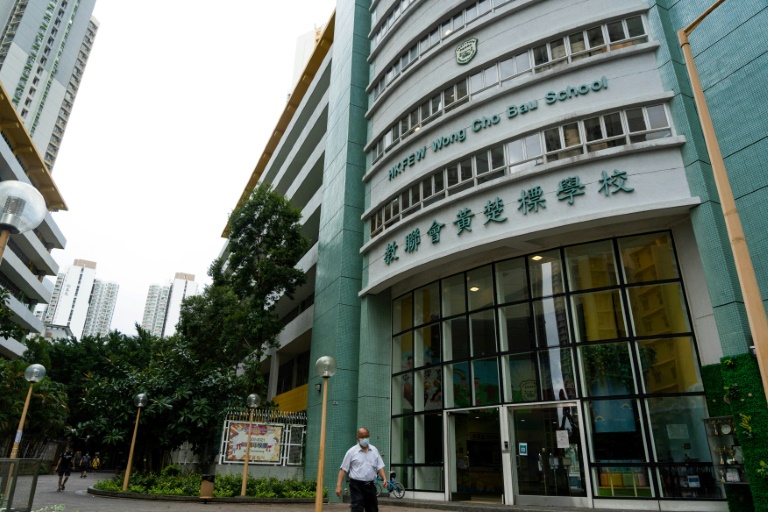
Parents of students at Wong Cho Bao School, which is run by the pro-Beijing Hong Kong Federation of Education Workers (HKFEW), have been asked to sign their children up to greet visiting dignitaries.

The arrangement will require the pupils to undergo seven days of hotel quarantine away from their families with the government footing the bill, according to a notice shown to AFP by school principal Wong Kam-leung.

The notice encouraged parents to volunteer their kids for a “rare honourable mission” to greet unspecified visitors at the airport on June 30 and send them off a day later.

The students involved will start hotel quarantine on June 23 under teacher supervision, and will attend classes via Zoom, the notice said, adding they must be double-vaccinated.

School principal Wong told AFP the notice was “internal administrative procedure” to gauge parent interest, and that the government had yet to finalise plans.

Wong, who also chairs the HKFEW, said the notice went out to primary six students — usually aged 12 — but declined to say how many have signed up so far.

– ‘One country, two systems’ –

China remains committed to a strict zero-Covid strategy that quashes outbreaks with social distancing, lockdowns and border controls. 

Hong Kong has its own version of zero-Covid, which has kept the international business hub isolated for much of the pandemic. 

But the city’s controls are less strict than mainland China’s and have begun to ease in recent months.

The difference in policy means Hong Kongers coming into close contact with Chinese leaders will likely be required to undergo quarantine, according to local media.

Authorities have planned a “closed-loop system” to isolate around 1,000 people — including outgoing city leader Carrie Lam, her successor Lee and other top officials — ahead of a possible visit by a state leader, the South China Morning Post reported.

Lawmakers may also be asked to enter quarantine, with accommodations made for them to attend legislature meetings, according to media reports.

Xi has not travelled outside mainland China since January 2020, when the coronavirus burst from the central city of Wuhan, touching off a global pandemic. 

He has since cocooned himself — and China — from the rest of the world, keeping borders mostly closed and eschewing international travel.

The Beijing Winter Olympics earlier this year were the one time during the pandemic that Xi met world leaders face to face.

An enormous, interlinked closed loop system was put in place to successfully host the Games.

The Chinese Communist Party places huge stock in anniversaries, and Hong Kong’s handover presents Xi with a major propaganda opportunity.

In 2017, he stayed in Hong Kong for three days to mark the 20th anniversary, and past state leaders have tended to make such a trip every five years.

Xi has declared “a new chapter” for the city after huge and sometimes violent democracy protests in 2019 were crushed by authorities, helped by a sweeping security law that has criminalised much dissent.

China promised Hong Kong could maintain key freedoms and autonomy for 50 years after the British handover under a “One Country, Two Systems” model.

Beijing says that system remains intact. 

Critics, including many Western nations, say it has been eviscerated less than halfway through. 

Yen slides to 24-year low against dollar

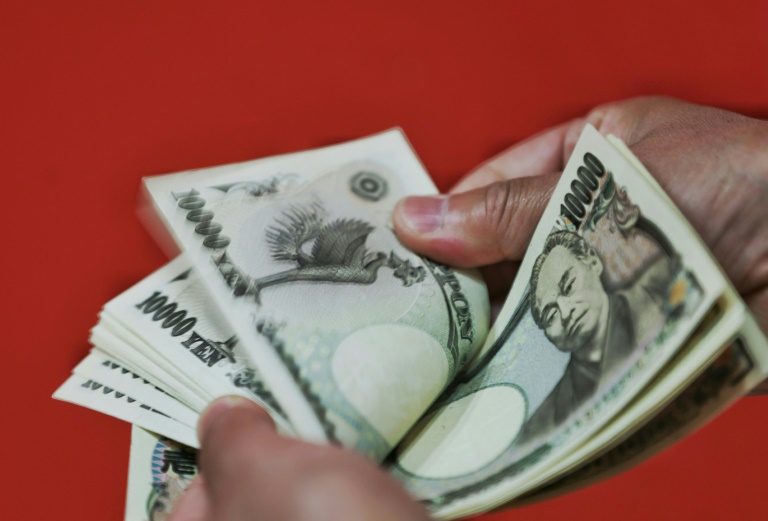
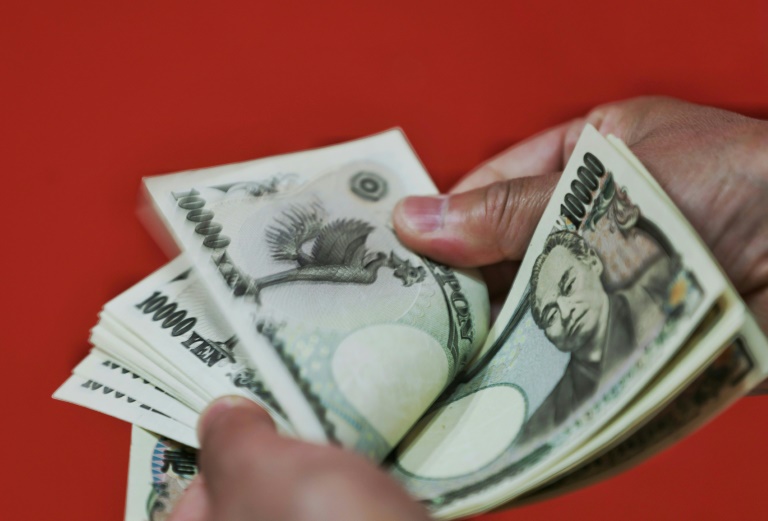
The yen plunged to its lowest level against the dollar since 1998 on Monday as sky-high US inflation fuels a widening monetary policy gap between Japan and the world’s largest economy.

Japan’s currency has been weakening for months, accelerated by the US Federal Reserve’s aggressive monetary tightening to tackle soaring inflation caused by the war in Ukraine and other factors.

But unlike the Fed, the Bank of Japan has said it will stick with its long-standing monetary easing programme which it hopes will lead to stable growth.

The increasingly polar policies have strengthened the greenback, and on Monday one dollar bought 135.19 yen.

It’s a level not seen since October 1998 during the Asian currency crisis, and marks a dramatic drop from January rates of around 115 yen per dollar.

“The ongoing backdrop to the yen’s fall is the growing gap between long-term interest rates in Japan and the United States,” Takahide Kinouchi, executive economist at Nomura Research Institute, said in a recent commentary.

And as higher oil prices fuel US inflation, “expectations are growing stronger that aggressive US monetary tightening will continue for the time being, causing US yields to rise further.”

US consumer prices for May hit a new four-decade high, rising 8.6 percent and topping what economists thought was the peak in March.

In Japan however, inflation has only just hit the central bank’s long-term target of two percent.

And while the figure represents a seven-year high, the BoJ sees current inflationary pressures as temporary, and believes its monetary policy is necessary to produce more long-lasting growth.

Questioned in parliament on Monday, central bank Governor Haruhiko Kuroda acknowledged that the yen’s rapid depreciation was “not desirable”.

“The recent rapid depreciation of the yen increases uncertainties and means companies face difficulties in drafting business plans, thus it is negative for the economy and not desirable,” he said.

– Benefits for tourism, exporters –

But he has shown no inclination to adjust the bank’s policy soon, saying last week that “monetary tightening is not at all a suitable measure” for Japan, whose economy is still recovering from the pandemic, according to Kyodo News.

He has pointed to the benefits of a weaker yen for Japanese exporters, whose overseas profits are inflated when they are repatriated and have seen their stock prices rise in recent months.

On Monday, he urged companies that benefit from the exchange rate to “expand investment and raise wages, which will strengthen a virtuous cycle.”

The weaker yen could also be a boon for the tourism sector, with Japan cautiously reopening to foreign visitors now allowed in on group tours.

“The weak yen helps to support Japan’s export sector directly, and a weaker exchange rate also contributes to looser monetary conditions domestically,” said Alvin Tan, head of Asia forex strategy at RBC Capital Markets in Singapore.

“These will help drive the economic recovery further,” he told AFP.

Although “higher import prices will negatively affect consumers” and the weaker yen will contribute to inflation, particularly given Japan’s reliance on energy imports, this could also be “seen as a positive”, he said.

“It could help to deepen more persistent inflation expectations in a country that has suffered under deflation for so many years.”

The yen’s trajectory may depend on how the US Fed acts in its September meeting, with worse-than-expected inflation figures for May raising expectations of further rate hikes.

But “there is still a lot of time left until then”, said Kinouchi, and other factors may also be at play including energy prices rising further after a European Union ban on most Russian oil imports.

Yen slides to 24-year low against dollar

The yen plunged to its lowest level against the dollar since 1998 on Monday as sky-high US inflation fuels a widening monetary policy gap between Japan and the world’s largest economy.

Japan’s currency has been weakening for months, accelerated by the US Federal Reserve’s aggressive monetary tightening to tackle soaring inflation caused by the war in Ukraine and other factors.

But unlike the Fed, the Bank of Japan has said it will stick with its long-standing monetary easing programme which it hopes will lead to stable growth.

The increasingly polar policies have strengthened the greenback, and on Monday one dollar bought 135.19 yen.

It’s a level not seen since October 1998 during the Asian currency crisis, and marks a dramatic drop from January rates of around 115 yen per dollar.

“The ongoing backdrop to the yen’s fall is the growing gap between long-term interest rates in Japan and the United States,” Takahide Kinouchi, executive economist at Nomura Research Institute, said in a recent commentary.

And as higher oil prices fuel US inflation, “expectations are growing stronger that aggressive US monetary tightening will continue for the time being, causing US yields to rise further.”

US consumer prices for May hit a new four-decade high, rising 8.6 percent and topping what economists thought was the peak in March.

In Japan however, inflation has only just hit the central bank’s long-term target of two percent.

And while the figure represents a seven-year high, the BoJ sees current inflationary pressures as temporary, and believes its monetary policy is necessary to produce more long-lasting growth.

Questioned in parliament on Monday, central bank Governor Haruhiko Kuroda acknowledged that the yen’s rapid depreciation was “not desirable”.

“The recent rapid depreciation of the yen increases uncertainties and means companies face difficulties in drafting business plans, thus it is negative for the economy and not desirable,” he said.

– Benefits for tourism, exporters –

But he has shown no inclination to adjust the bank’s policy soon, saying last week that “monetary tightening is not at all a suitable measure” for Japan, whose economy is still recovering from the pandemic, according to Kyodo News.

He has pointed to the benefits of a weaker yen for Japanese exporters, whose overseas profits are inflated when they are repatriated and have seen their stock prices rise in recent months.

On Monday, he urged companies that benefit from the exchange rate to “expand investment and raise wages, which will strengthen a virtuous cycle.”

The weaker yen could also be a boon for the tourism sector, with Japan cautiously reopening to foreign visitors now allowed in on group tours.

“The weak yen helps to support Japan’s export sector directly, and a weaker exchange rate also contributes to looser monetary conditions domestically,” said Alvin Tan, head of Asia forex strategy at RBC Capital Markets in Singapore.

“These will help drive the economic recovery further,” he told AFP.

Although “higher import prices will negatively affect consumers” and the weaker yen will contribute to inflation, particularly given Japan’s reliance on energy imports, this could also be “seen as a positive”, he said.

“It could help to deepen more persistent inflation expectations in a country that has suffered under deflation for so many years.”

The yen’s trajectory may depend on how the US Fed acts in its September meeting, with worse-than-expected inflation figures for May raising expectations of further rate hikes.

But “there is still a lot of time left until then”, said Kinouchi, and other factors may also be at play including energy prices rising further after a European Union ban on most Russian oil imports.

UK sets up EU battle with N.Ireland changes

The UK government will Monday introduce legislation to unilaterally rip up post-Brexit trading rules for Northern Ireland, despite the potential for a trade war with the EU.

London says it still prefers a negotiated outcome with the European Union to reform the “Northern Ireland Protocol”, whose provisions have become anathema to pro-UK unionists in the divided territory.

But absent a deal through dialogue, the bill would take effect to override Britain’s EU withdrawal treaty — although the government insists it is not breaking international law.

Northern Ireland Secretary Brandon Lewis said Sunday that the protocol was disrupting trade and had crippled the territory’s power-sharing government, due to unionist objections.

“So it’s right that we repair that,” he said, adding that the need to protect a 1998 peace agreement in Northern Ireland had “primacy” over the protocol.

Lewis rejected threats from some in the EU that unilateral changes could trigger the suspension of the withdrawal treaty’s wider trade agreement, leading to sanctions and tariffs against Britain.

The UK can ill-afford a trade war, at a time when its people are grappling with the worst inflationary crisis in a generation.

“I think that kind of language is really unhelpful,” the minister said on Times Radio, pointing to the need for Britain and the EU to work together against Russia’s invasion of Ukraine.

However, on the EU side, patience with Prime Minister Boris Johnson’s tactics is wearing thin, according to Ireland’s government.

Irish nationalist party Sinn Fein on Sunday accused Johnson of sacrificing stability in Northern Ireland for his own survival, after he narrowly won a Conservative confidence vote last week.

“It’s dishonourable stuff, by any measure extraordinary stuff,” Sinn Fein’s all-Ireland president Mary Lou McDonald said on Sky.

“Brandon Lewis is talking through his hat, and not for the first time,” she added, accusing the government of “undermining, attacking and damaging the (1998) Good Friday Agreement”.

– Green channel, red line –

In a historic first, Sinn Fein emerged as the biggest party in Northern Ireland elections last month.

But the Democratic Unionist Party argues that the protocol is jeopardising Northern Ireland’s status in the UK and is boycotting the local government, leaving it in limbo under the 1998 deal. 

The protocol requires checks on goods arriving from England, Scotland and Wales, to prevent them from entering the EU’s single market via the Republic of Ireland.

The UK bill is expected to scrap most of the checks, creating a “green channel” for British traders to send goods to Northern Ireland without making any customs declaration to the EU.

The EU would have access to more real-time UK data on the flow of goods, and only businesses intending to trade into the single market via Ireland would be required to make declarations.

The EU would need to trust the UK to monitor the flow, and Britain has vowed “robust penalties” for any companies seeking to abuse the new system. 

Since the confidence vote, Johnson has reportedly been under pressure from pro-Brexit Tory hardliners to toughen the bill and remove oversight of the protocol by the European Court of Justice.

Lewis said there was “no logic” to having only one side’s judges involved in a bilateral trade arrangement, but ECJ invigilation is a red line for the EU, to protect its single market.

Britain’s opposition Labour party said the government was in no position to claim its handling of the Brexit dispute was lawful.

“This government seems to be developing a record for lawbreaking,” Labour’s shadow finance minister Rachel Reeves said, after Johnson was fined over one of many Downing Street lockdown parties.

“We helped bring in the Good Friday Agreement, we are deeply, passionately committed to it,” she added.

UK's Rwanda asylum plan faces last-gasp challenge

UK campaigners get their last chance in court on Monday to stop the government’s first flight of asylum-seekers to Rwanda.

The government is vowing to push ahead with the planeload of 31 claimants, on a chartered flight Tuesday from an undisclosed airport.

It defeated an attempt to halt the plan on Friday in the High Court, brought by refugee charities and a trade union which called it immoral, dangerous and counter-productive.

But the same groups have filed an emergency appeal for Monday, alongside a separate legal challenge, and have been heartened by Prince Charles reportedly dubbing the plan “appalling”.

The claimants include the Public and Commercial Services Union (PCS), whose members in the UK Border Force agency are tasked with executing the deportations. 

PCS chief Mark Serwotka noted that as part of its judgment on Friday, the High Court had scheduled a fuller hearing for next month on the legality of the plan overall.

“Imagine if you’re told to do something on Tuesday, that in July is subsequently found to be illegal. That would be an appalling situation,” he told Sky News on Sunday. 

Home Secretary Priti Patel should wait for the July hearing if she “had any respect, not just for the desperate people who come to this country, but for the workers she employs”, Serwotka added.

“We’re absolutely confident that in July, in line with what the UNHCR (UN Refugee Agency) said very graphically in court, we believe these proposals will be found to be unlawful.”

However, Patel and Prime Minister Boris Johnson are unbowed, insisting the policy is needed to stop a flood of all-too-often deadly migrant crossings of the Channel from France.

Under the agreement with Kigali, anyone landing in the UK illegally is liable to be given a one-way ticket for processing and resettlement in Rwanda.

– ‘Hate speech and discrimination’ –

The government says that will dismantle the business model of gangsters who charge would-be migrants thousands of dollars to undertake the perilous crossing for a new life in Britain.

Genuine asylum claimants should be content to stay in France, it says.

And contradicting the UNHCR, it insists that Rwanda is a safe destination with the capacity to absorb possibly tens of thousands of UK-bound claimants in future.

For now, the deportations will proceed “on a gradual basis”, Doris Uwicyeza, chief technical adviser to Rwanda’s justice ministry, told LBC radio.

Uwicyeza pushed back at criticism over the human rights record of President Paul Kagame’s government — which is set this month to host a Commonwealth summit attended by Prince Charles and Johnson.

Rwanda’s 1990s genocide made it particularly attentive to “protecting anybody from hate speech and discrimination”, including gay people, she said.

But British critics of the new policy are unconvinced. 

They include Charles, according to The Times newspaper on Saturday, prompting unnamed cabinet ministers to tell Queen Elizabeth II’s heir to stay out of politics in the Sunday Times.

Macron's majority in doubt after first-round of parliament vote

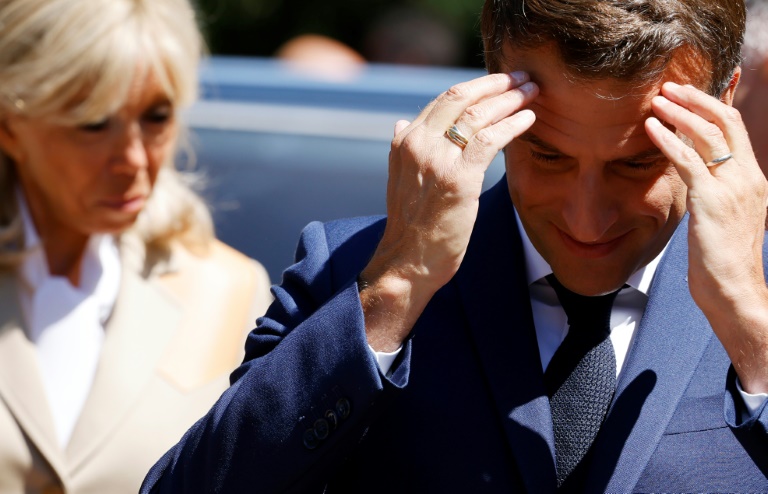
French President Emmanuel Macron’s centrist alliance was in danger of falling short of a majority after the first round of parliamentary elections on Sunday saw a surge in support for a new left-wing coalition.

Macron’s “Ensemble” (Together) alliance ran neck-and-neck with the left-wing NUPES grouping in Sunday’s first round, with the former netting 25.75 percent of the popular vote comparred to the latter’s 25.66 percent. 

Extrapolating from these figures, four polling firms projected that Ensemble would win 225-295 seats in the decisive second round of voting next Sunday, possibly short of a majority of 289 but comfortably the biggest group. 

“We have a week ahead of us to mobilise,” Prime Minister Elizabeth Borne told reporters. “One week to convince, one week to obtain a powerful and clear majority.” 

Ensemble was “the only political grouping capable of getting a majority”, she said.  

NUPES, a newly unified alliance of leftists, Socialists, Greens and Communists, was projected to win 150-220 seats, a major breakthrough that would make them the biggest opposition force in the National Assembly.

“It’s a very serious warning that has been sent to Emmanuel Macron,” political scientist Brice Teinturier told France 2 television, noting how support for the president’s party had fallen since the last election in 2017. 

“A majority is far from certain,” he added.

If Macron’s coalition does fall short, it is expected to be forced into messy bill-by-bill deals with right-wing parties in parliament, or he will have to try to poach opposition or independent MPs to his side.

Under France’s constitution, the president has exclusive control over foreign and defence policy, but needs a majority in parliament to pass domestic legislation.

– ‘First test’ –

Sunday’s vote followed presidential elections in April in which Macron secured a second term, beating far-right leader Marine Le Pen with pledges to cut taxes, reform welfare and raise the retirement age.

Putting behind their divisions, the French left has united behind Jean-Luc Melenchon, a hard-left veteran with a radically different programme, including lowering the retirement age, hiking the minimum wage by 15 percent and creating wealth taxes.

“The NUPES has passed the first test it faced in magnificent fashion,” Melenchon told reporters in a statement afterwards, calling on supporters to “pour out” next Sunday.

He called for the support in particular from the working classes and young people, adding that Macron’s allies were “beaten and defeated”.

Turnout hit a record low, with 52.49 percent of registered voters opting to stay home, and abstentionism particularly high in working-class areas.

Le Pen looked certain to be re-elected as an MP representing a former mining town of northern France, Henin-Beaumont, with her National Rally party appearing on course to increase their representation.

After winning 18.68 percent of the popular vote on Sunday, it was on track to secure 5-45 seats in the new parliament next weekend, compared with eight currently.

More than 15 MPs would give the far-right a formal group in parliament, meaning it would have more time to speak and put issues on the agenda as well as extra resources.

Defeated far-right presidential candidate Eric Zemmour was eliminated on Sunday after standing in a constituency around Saint-Tropez in southern France.

– No honeymoon –

While Macron and his European Union allies were relieved by Macron’s victory against Le Pen in April, the last weeks have offered no honeymoon for the 44-year-old head of state.

Energy and food prices are soaring, while disorder and the tear-gassing of English fans at the Champions League final in Paris on May 28 have led to recriminations.

His new Disabilities Minister Damien Abad has also faced two rape accusations — which he has vehemently denied — while new Prime Minister Borne has yet to make an impact.

Macron is set to make a public appearance at an arms fair in Paris on Monday morning, kicking off what promises to be an intense week of campaigning from all sides.

He and allies have sought to portray Melenchon as an old-style tax-and-spend leftist whose anti-EU and anti-NATO policies pose a danger to the country. 

Melenchon accuses Macron of planning to undermine France’s cherished public services and is promising strong environmental policies and “harmony with nature”.

Jerome Jaffre, a political scientist, said many voters appeared to be motivated by a desire to deprive Macron of an absolute majority.

“It means that they’re hoping to force him to work more with others, share power and really change his method (of governing) which he promised during his presidential campaign,” he told the LCI channel.

burs-adp-js/lb/je

Yen slides to 24-year low against dollar

The yen plunged to its lowest level against the dollar since 1998 on Monday as sky-high US inflation fuels a widening monetary policy gap between Japan and the world’s largest economy.

Japan’s currency has been weakening for months, accelerated by the US Federal Reserve’s aggressive monetary tightening to tackle soaring inflation caused by the war in Ukraine and other factors.

But unlike the Fed, the Bank of Japan has said it will stick with its long-standing monetary easing programme which it hopes will lead to stable growth.

The increasingly polar policies have strengthened the greenback, and on Monday one dollar bought 135.19 yen.

It’s a level not seen since October 1998 during the Asian currency crisis, and marks a dramatic drop from January rates of around 115 yen per dollar.

“The ongoing backdrop to the yen’s fall is the growing gap between long-term interest rates in Japan and the United States,” Takahide Kinouchi, executive economist at Nomura Research Institute, said in a recent commentary.

And as higher oil prices fuel US inflation, “expectations are growing stronger that aggressive US monetary tightening will continue for the time being, causing US yields to rise further.”

US consumer prices for May hit a new four-decade high, rising 8.6 percent and topping what economists thought was the peak in March.

In Japan however, inflation has only just hit the central bank’s long-term target of two percent.

And while the figure represents a seven-year high, the BoJ sees current inflationary pressures as temporary, and believes its monetary policy is necessary to produce more long-lasting growth.

– Benefits for tourism, exporters –

As the war in Ukraine pressures global fuel and food prices, household brands from Uniqlo to 7-Eleven have anounced price hikes, with budget sushi chain Sushiro causing shock when it said it would no longer offer plates for 100 yen ($0.75).

But BoJ governor Haruhiko Kuroda said last week that “monetary tightening is not at all a suitable measure” for Japan, whose economy is still recovering from the pandemic, according to Kyodo News.

He also pointed to the benefits of a weaker yen for Japanese exporters, whose overseas profits are inflated when they are repatriated and have seen their stock prices rise in recent months.

The weaker yen could also be a boon for the tourism sector, with Japan cautiously reopening to foreign visitors now allowed in on group tours.

“The weak yen helps to support Japan’s export sector directly, and a weaker exchange rate also contributes to looser monetary conditions domestically,” said Alvin Tan, head of Asia forex strategy at RBC Capital Markets in Singapore.

“These will help drive the economic recovery further,” he told AFP.

Although “higher import prices will negatively affect consumers” and the weaker yen will contribute to inflation, particularly given Japan’s reliance on energy imports, this could also be “seen as a positive”, he said.

“It could help to deepen more persistent inflation expectations in a country that has suffered under deflation for so many years.”

The yen’s trajectory may depend on how the US Fed acts in its September meeting, with worse-than-expected inflation figures for May raising expectations of further rate hikes.

But “there is still a lot of time left until then,” said Kinouchi, and other factors may also be at play including energy prices rising further after a European Union ban on most Russian oil imports.

Yen slides to 24-year low against dollar

The yen plunged to its lowest level against the dollar since 1998 on Monday as sky-high US inflation fuels a widening monetary policy gap between Japan and the world’s largest economy.

Japan’s currency has been weakening for months, accelerated by the US Federal Reserve’s aggressive monetary tightening to tackle soaring inflation caused by the war in Ukraine and other factors.

But unlike the Fed, the Bank of Japan has said it will stick with its long-standing monetary easing programme which it hopes will lead to stable growth.

The increasingly polar policies have strengthened the greenback, and on Monday one dollar bought 135.19 yen.

It’s a level not seen since October 1998 during the Asian currency crisis, and marks a dramatic drop from January rates of around 115 yen per dollar.

“The ongoing backdrop to the yen’s fall is the growing gap between long-term interest rates in Japan and the United States,” Takahide Kinouchi, executive economist at Nomura Research Institute, said in a recent commentary.

And as higher oil prices fuel US inflation, “expectations are growing stronger that aggressive US monetary tightening will continue for the time being, causing US yields to rise further.”

US consumer prices for May hit a new four-decade high, rising 8.6 percent and topping what economists thought was the peak in March.

In Japan however, inflation has only just hit the central bank’s long-term target of two percent.

And while the figure represents a seven-year high, the BoJ sees current inflationary pressures as temporary, and believes its monetary policy is necessary to produce more long-lasting growth.

– Benefits for tourism, exporters –

As the war in Ukraine pressures global fuel and food prices, household brands from Uniqlo to 7-Eleven have anounced price hikes, with budget sushi chain Sushiro causing shock when it said it would no longer offer plates for 100 yen ($0.75).

But BoJ governor Haruhiko Kuroda said last week that “monetary tightening is not at all a suitable measure” for Japan, whose economy is still recovering from the pandemic, according to Kyodo News.

He also pointed to the benefits of a weaker yen for Japanese exporters, whose overseas profits are inflated when they are repatriated and have seen their stock prices rise in recent months.

The weaker yen could also be a boon for the tourism sector, with Japan cautiously reopening to foreign visitors now allowed in on group tours.

“The weak yen helps to support Japan’s export sector directly, and a weaker exchange rate also contributes to looser monetary conditions domestically,” said Alvin Tan, head of Asia forex strategy at RBC Capital Markets in Singapore.

“These will help drive the economic recovery further,” he told AFP.

Although “higher import prices will negatively affect consumers” and the weaker yen will contribute to inflation, particularly given Japan’s reliance on energy imports, this could also be “seen as a positive”, he said.

“It could help to deepen more persistent inflation expectations in a country that has suffered under deflation for so many years.”

The yen’s trajectory may depend on how the US Fed acts in its September meeting, with worse-than-expected inflation figures for May raising expectations of further rate hikes.

But “there is still a lot of time left until then,” said Kinouchi, and other factors may also be at play including energy prices rising further after a European Union ban on most Russian oil imports.

Australian newspaper apologises over Rebel Wilson 'outing' controversy

Australian newspaper the Sydney Morning Herald took down an article on Monday after it set off a storm of accusations on social media that the publication had pressured actress Rebel Wilson to reveal she was dating a woman.

Gossip columnist Andrew Hornery admitted the paper had “mishandled steps in our approach” when trying to break the news that Wilson, who had previously only publicly dated men, was in a relationship with fashion designer Ramona Agruma.

The “Pitch Perfect” actor first announced her relationship on Friday via Instagram, posting a selfie with Agruma and calling her a “Disney Princess”.

Hornery’s column, published the next day, revealed that the Herald had known about the relationship before Wilson’s Instagram post and had on Thursday given the actor two days to comment.

“Big mistake. Wilson opted to gazump the story, posting about her new ‘Disney Princess’ on Instagram early Friday morning,” Hornery wrote in his Saturday column.

The article sparked outrage on social media, with many LGBTQIA+ activists and others accusing the newspaper of forcing Wilson to out herself. 

The Herald initially denied pressuring Wilson, with its editor Bevan Shields arguing it had “simply asked questions”.

“We would have asked the same questions had Wilson’s new partner been a man,” Shields wrote.

In her first comments on the controversy, Wilson responded on Sunday to a journalist on Twitter who criticised the Herald’s approach. 

“It was a very hard situation but trying to handle it with grace,” Wilson tweeted.

On Monday, the Sydney Morning Herald removed the online article and issued an apology from Hornery, who said putting questions to Wilson “was never intended to be a threat” to reveal her sexuality.

Hornery said he “genuinely regret(ted) that Rebel has found this hard. That was never my intention” and admitted that the paper had “mishandled steps in our approach”.

This was not the first time Wilson has sparred with the Australian media — in 2017, she was awarded a record AUS$4.7 million ($3.3 million) defamation payout over a series of articles that claimed she had lied about her name, age and childhood to get ahead in Hollywood.

After the magazine publisher successfully appealed, Wilson’s award was revised to A$600,000.

Close Bitnami banner
Bitnami