World

UK sets up EU battle with N.Ireland changes

The UK government will Monday introduce legislation to unilaterally rip up post-Brexit trading rules for Northern Ireland, despite the potential for a trade war with the EU.

London says it still prefers a negotiated outcome with the European Union to reform the “Northern Ireland Protocol”, whose provisions have become anathema to pro-UK unionists in the divided territory.

But without a deal through dialogue, the bill would take effect to override Britain’s EU withdrawal treaty — although the government insists it is not breaking international law.

Northern Ireland Secretary Brandon Lewis said Sunday that the protocol was disrupting trade and had crippled the territory’s power-sharing government, due to unionist objections.

“So it’s right that we repair that,” he said, adding that the need to protect a 1998 peace agreement in Northern Ireland had “primacy” over the protocol.

Lewis rejected threats from some in the EU that unilateral changes could trigger the suspension of the withdrawal treaty’s wider trade agreement, leading to sanctions and tariffs against Britain.

The UK can ill-afford a trade war, at a time when its people are grappling with the worst inflationary crisis in a generation.

“I think that kind of language is really unhelpful,” the minister said on Times Radio, pointing to the need for Britain and the EU to work together against Russia’s invasion of Ukraine.

However, patience with Prime Minister Boris Johnson’s tactics is wearing thin in Ireland and the wider EU.

Ireland’s foreign minister Simon Coveney spoke with his UK counterpart Liz Truss on Monday, telling her the move marked “a particular low point in the UK’s approach to Brexit”, his office said.

Truss also talked to European Commission Vice President Maros Sefcovic, who said he warned the UK minister that “unilateral action is damaging to mutual trust and a formula for uncertainty”.

But Johnson told LBC radio that the move was “the right way forward” and was required to maintain the “balance and the symmetry” of the Good Friday agreement.

“One community at the moment feels very, very estranged from the way things are operating, very alienated. And we’ve just got to fix that.”

– Green channel, red line –

In a historic first, Irish nationalists Sinn Fein emerged as the biggest party in Northern Ireland elections last month.

The pro-UK Democratic Unionist Party argues that the protocol is jeopardising Northern Ireland’s status in the UK and is boycotting the local government, leaving it in limbo under the 1998 deal. 

The protocol requires checks on goods arriving from England, Scotland and Wales, to prevent them from entering the EU’s single market via the Republic of Ireland.

The UK bill is expected to scrap most of the checks, creating a “green channel” for British traders to send goods to Northern Ireland without making any customs declaration to the EU.

The EU would have access to more real-time UK data on the flow of goods, and only businesses intending to trade into the single market via Ireland would be required to make declarations.

The EU would need to trust the UK to monitor the flow, and the UK has vowed “robust penalties” for any companies seeking to abuse the new system. 

Since the confidence vote, Johnson has reportedly been under pressure from pro-Brexit Tory hardliners to toughen the bill and remove oversight of the protocol by the European Court of Justice.

Lewis said there was “no logic” to having only one side’s judges involved in a bilateral trade arrangement, but ECJ invigilation is a red line for the EU, to protect its single market.

The main UK opposition Labour party said the government was in no position to claim its handling of the Brexit dispute was lawful.

“This government seems to be developing a record for lawbreaking,” Labour’s shadow finance minister Rachel Reeves said, after Johnson was fined over one of many Downing Street lockdown parties.

Markets dive on inflation woes as dollar spikes against yen, rupee

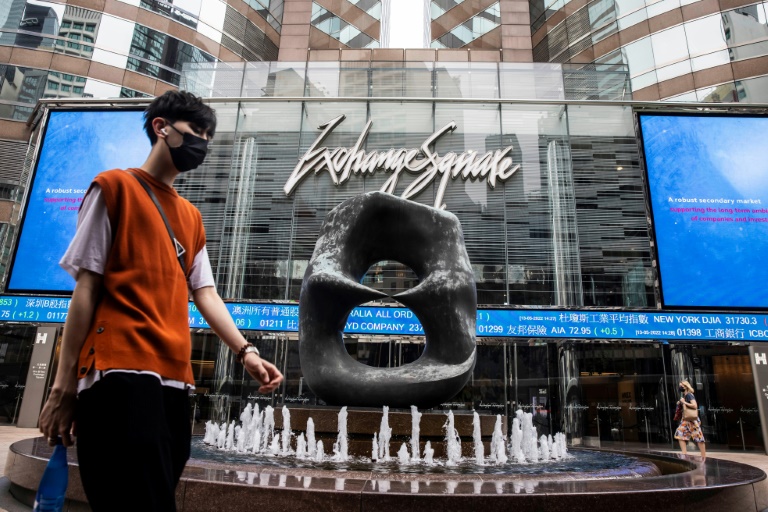
Markets tumbled in Asia and Europe on Monday to extend a global rout while the dollar soared after a forecast-beating US inflation print ramped up bets on a more aggressive campaign of Federal Reserve interest rate hikes.

Fresh Covid outbreaks in Shanghai and Beijing have also seen authorities reimpose containment measures soon after lifting them, leading to fears about the world’s number two economy.

The possibility of more restrictions in China’s biggest cities weighed on oil prices, with concerns about a possible US recession and the stronger dollar adding to downward pressure on the black gold.

Investors were left surprised Friday when data showed US inflation jumped 8.6 percent in May, the fastest pace since December 1981, as the Ukraine war and China’s lockdowns pushed up energy and food prices.

The reading has led to fervent speculation that the Fed will now be contemplating a 75 basis point lift in interest rates at some point, though it is still expected to stick to a flagged half-point hike when it meets this week.

With the central bank forced to be more aggressive, there is a concern that the US economy could be sent into recession next year.

“For the last few weeks, there has been a cautious calm in markets — rates not pricing anything unforeseen, and equities able to make small gains,” said SPI Asset Management’s Stephen Innes.

“But the strength of (US consumer prices) completely upended that apple cart.

“The market is now thinking much more about the Fed driving rates sharply higher to get on top of inflation and then having to cut back as growth drops.”

And Bank of Singapore chief economist Mansoor Mohi-uddin added that officials would likely lift borrowing costs 50 basis points for the next four meetings and eventually push the overall rate to 4.0 percent in 2023. 

– Rupee hits record low –

Wall Street’s three main indexes tanked, with the Nasdaq taking the heaviest blow as tech firms — which are susceptible to higher rates — were battered, while European markets were also hammered.

Asia followed suit, with Hong Kong, Tokyo, Mumbai, Jakarta, Taipei, Wellington, Shanghai, Singapore, Manila and Bangkok all taking a beating.

And Europe joined the retreat with London losing more than one percent as data showed the UK economy shrank for the second month in a row in April. Frankfurt and Paris were also deep in the red during morning trade. 

Goldman Sachs analysts said in a note: “At some point financial conditions will tighten enough and/or growth will weaken enough such that the Fed can pause from hiking.

“But we still seem far from that point, which suggests upside risks to bond yields, ongoing pressure on risky assets, and likely broad US dollar strength for now.”

The dollar continued to push higher on expectations for a sharp increase in US rates, hitting a 24-year peak of 135.19 yen while it also broke above 78 Indian rupees for the first time. 

The greenback was also at multi-year highs on the euro and sterling.

“The ongoing backdrop to the yen’s fall is the growing gap between long-term interest rates in Japan and the United States,” Takahide Kinouchi, executive economist at Nomura Research Institute, said in a recent commentary.

But the head of the Bank of Japan remained steadfast in sticking to its policies, saying last week that “monetary tightening is not at all a suitable measure” for Japan, whose economy is still recovering from the pandemic.

Questioned in parliament on Monday, Haruhiko Kuroda said: “The recent rapid depreciation of the yen increases uncertainties and means companies face difficulties in drafting business plans, thus it is negative for the economy and not desirable.”

Oil prices sank, extending Friday’s retreat, on demand concerns as China sticks to an economically damaging zero-Covid policy to fight a fresh outbreak of the disease.

Parts of Shanghai were put back into lockdown and officials carried out mass testing on millions of people, just weeks after lifting strict measures in the country’s biggest city.

The uncertainty has also hit Bitcoin, with the cryptocurrency falling below $25,000 for the first time since the end of 2020.

– Key figures at around 0810 GMT –

Tokyo – Nikkei 225: DOWN 3.0 percent at 26,987.44 (close)

Hong Kong – Hang Seng Index: DOWN 3.4 percent at 21,067.58 (close)

Shanghai – Composite: DOWN 0.9 percent at 3,255.55 (close)

London – FTSE 100: DOWN 1.2 percent at 7,230.38

Dollar/yen: UP at 134.60 yen from 134.42 yen late Friday

Euro/dollar: DOWN at $1.0465 from $1.0526

Pound/dollar: DOWN at $1.2240 from $1.2309

Euro/pound: UP at 85.51 pence from 85.39 pence

Brent North Sea crude: DOWN 1.7 percent at $119.95 per barrel

West Texas Intermediate: DOWN 1.7 percent at $118.60 per barrel

New York – Dow: DOWN 2.7 percent at 31,392.79 (close)

Milky Way's secrets revealed by massive space probe map

The Gaia space probe unveiled its latest discoveries on Monday in its quest to map the Milky Way in unprecedented detail, surveying nearly two million stars and revealing mysterious “starquakes” which sweep across the fiery giants like vast tsunamis.

The mission’s third data set, which will be released to eagerly waiting astronomers around the world at 1000 GMT, “revolutionises our understanding of the galaxy,” the European Space Agency (ESA) said.

“It’s the Swiss Army knife of astrophysics — there is not a single astronomer who does not use its data, directly or indirectly,” said Francois Mignard, a member of the Gaia team.

Some of the map’s new insights are close to home, such as a catalogue of more than 156,000 asteroids in our Solar System “whose orbits the instrument has calculated with incomparable precision,” Mignard said.

But Gaia also sees beyond the Milky Way, spotting 2.9 million other galaxies as well as 1.9 million quasars — the stunningly bright hearts of galaxies powered by supermassive black holes.

The Gaia spacecraft is nestled in a strategically positioned orbit 1.5 million kilometres (937,000 miles) from Earth, where it has been watching the skies since it was launched by the ESA in 2013.

– ‘Beautiful melting pot of stars’ – 

“Gaia scans the sky and picks up everything it sees,” said astronomer Misha Haywood of the Paris Observatory.

But it can still only detect around one percent of the stars in the Milky Way, which is about 100,000 light years across.

The probe is equipped with two telescopes as well as a billion-pixel camera, which captures images sharp enough to gauge the diameter of a human hair at a distance of 1,000 kilometres (620 miles).

It also has a range of other instruments that allow it to not just map the stars, but measure their movements, chemical compositions and ages.

“It provides a global observation of the positions of anything that moves in the sky, for the first time,” Haywood said, adding that before Gaia “we had a really restricted view of the galaxy”.

It also reveals the huge array of differences between stars.

“Our galaxy is a beautiful melting pot of stars,” said Gaia member Alejandra Recio-Blanco. 

“This diversity is extremely important, because it tells us the story of our galaxy’s formation,” he said. 

“It also clearly shows that our Sun, and we, all belong to an ever-changing system, formed thanks to the assembly of stars and gas of different origins.”

– Surprise starquakes –

The observation of “starquakes”, massive vibrations that change the shape of the distant stars, was “one of the most surprising discoveries coming out of the new data”, the ESA said.

Gaia was not built to observe starquakes but still detected the strange phenomenon on thousands of stars, including some that should not have any — at least according to our current understanding of the universe.

“Gaia is opening a gold mine for ‘asteroseismology’ of massive stars,” said Gaia member Conny Aerts.

Around 50 scientific papers were published alongside the new data, with many more expected in the coming years. Gaia’s observations have fuelled thousands of studies since its first dataset was released in 2016.

The second dataset in 2018 allowed astronomers to show that the Milky Way merged with another galaxy in a violent collision around 10 billion years ago.

The torrent of raw data is combed through by a team of 450 European scientists and software engineers using six supercomputers as well as “human-driven algorithms” as part of the Data Processing and Analysis Consortium, Mignard said.

“Without this processing group, there is no mission,” he added, because every day Gaia produces 700 million star positions and 150 million photometric measurements.

It took the team five years to deliver the latest data, which was observed from 2014 to 2017. 

“We can’t wait for the astronomy community to dive into our new data to find out even more about our galaxy and its surroundings than we could’ve imagined,” ESA’s Gaia project scientist Timo Prusti said.

The final data set will be released in 2030, after Gaia finishes its mission surveying the skies in 2025.

Milky Way's secrets revealed by massive space probe map

The Gaia space probe unveiled its latest discoveries on Monday in its quest to map the Milky Way in unprecedented detail, surveying nearly two million stars and revealing mysterious “starquakes” which sweep across the fiery giants like vast tsunamis.

The mission’s third data set, which will be released to eagerly waiting astronomers around the world at 1000 GMT, “revolutionises our understanding of the galaxy,” the European Space Agency (ESA) said.

“It’s the Swiss Army knife of astrophysics — there is not a single astronomer who does not use its data, directly or indirectly,” said Francois Mignard, a member of the Gaia team.

Some of the map’s new insights are close to home, such as a catalogue of more than 156,000 asteroids in our Solar System “whose orbits the instrument has calculated with incomparable precision,” Mignard said.

But Gaia also sees beyond the Milky Way, spotting 2.9 million other galaxies as well as 1.9 million quasars — the stunningly bright hearts of galaxies powered by supermassive black holes.

The Gaia spacecraft is nestled in a strategically positioned orbit 1.5 million kilometres (937,000 miles) from Earth, where it has been watching the skies since it was launched by the ESA in 2013.

– ‘Beautiful melting pot of stars’ – 

“Gaia scans the sky and picks up everything it sees,” said astronomer Misha Haywood of the Paris Observatory.

But it can still only detect around one percent of the stars in the Milky Way, which is about 100,000 light years across.

The probe is equipped with two telescopes as well as a billion-pixel camera, which captures images sharp enough to gauge the diameter of a human hair at a distance of 1,000 kilometres (620 miles).

It also has a range of other instruments that allow it to not just map the stars, but measure their movements, chemical compositions and ages.

“It provides a global observation of the positions of anything that moves in the sky, for the first time,” Haywood said, adding that before Gaia “we had a really restricted view of the galaxy”.

It also reveals the huge array of differences between stars.

“Our galaxy is a beautiful melting pot of stars,” said Gaia member Alejandra Recio-Blanco. 

“This diversity is extremely important, because it tells us the story of our galaxy’s formation,” he said. 

“It also clearly shows that our Sun, and we, all belong to an ever-changing system, formed thanks to the assembly of stars and gas of different origins.”

– Surprise starquakes –

The observation of “starquakes”, massive vibrations that change the shape of the distant stars, was “one of the most surprising discoveries coming out of the new data”, the ESA said.

Gaia was not built to observe starquakes but still detected the strange phenomenon on thousands of stars, including some that should not have any — at least according to our current understanding of the universe.

“Gaia is opening a gold mine for ‘asteroseismology’ of massive stars,” said Gaia member Conny Aerts.

Around 50 scientific papers were published alongside the new data, with many more expected in the coming years. Gaia’s observations have fuelled thousands of studies since its first dataset was released in 2016.

The second dataset in 2018 allowed astronomers to show that the Milky Way merged with another galaxy in a violent collision around 10 billion years ago.

The torrent of raw data is combed through by a team of 450 European scientists and software engineers using six supercomputers as well as “human-driven algorithms” as part of the Data Processing and Analysis Consortium, Mignard said.

“Without this processing group, there is no mission,” he added, because every day Gaia produces 700 million star positions and 150 million photometric measurements.

It took the team five years to deliver the latest data, which was observed from 2014 to 2017. 

“We can’t wait for the astronomy community to dive into our new data to find out even more about our galaxy and its surroundings than we could’ve imagined,” ESA’s Gaia project scientist Timo Prusti said.

The final data set will be released in 2030, after Gaia finishes its mission surveying the skies in 2025.

Markets track Wall St plunge on inflation woes, dollar rallies

Markets tumbled in Asia on Monday to extend a global rout while the dollar soared after a forecast-beating US inflation print ramped up bets on a more aggressive campaign of Federal Reserve interest rate hikes.

Fresh Covid outbreaks in Shanghai and Beijing have also seen authorities reimpose containment measures soon after lifting them, leading to fears about the world’s number two economy.

The possibility of more restrictions in China’s biggest cities also weighed on oil prices, with concerns about a possible US recession and the stronger dollar adding to downward pressure on the black gold.

Investors were left surprised Friday when data showed US inflation jumped 8.6 percent in May, the fastest pace since December 1981, as the Ukraine war and China’s lockdowns pushed energy and food prices.

The reading has led to fervent speculation that the Fed will now be contemplating a 75 basis point lift in interest rates at some point, though it is still expected to stick to a flagged half-point hike when it meets this week.

With the central bank forced to be more aggressive, there is a concern that the US economy could be sent into recession next year.

“For the last few weeks, there has been a cautious calm in markets — rates not pricing anything unforeseen, and equities able to make small gains,” said SPI Asset Management’s Stephen Innes.

“But the strength of (US consumer prices) completely upended that apple cart.

“The market is now thinking much more about the Fed driving rates sharply higher to get on top of inflation and then having to cut back as growth drops.”

And Bank of Singapore chief economist Mansoor Mohi-uddin added that officials would likely lift borrowing costs 50 basis points for the next four meetings and eventually push the overall rate to 4.0 percent in 2023. 

– Rupee hits record low –

Wall Street’s three main indexes tanked, with the Nasdaq taking the heaviest blow as tech firms — which are susceptible to higher rates — were battered, while European markets were also hammered.

Asia followed suit, with Hong Kong, Tokyo and Seoul down more than three percent, while Mumbai, Jakarta, Taipei, Jakarta and Wellington were off more than two percent. Shanghai, Singapore, Manila and Bangkok also well down.

The slump filtered through to Europe, with Frankfurt, Paris and London all opening down. 

Goldman Sachs analysts said in a note: “At some point financial conditions will tighten enough and/or growth will weaken enough such that the Fed can pause from hiking.

“But we still seem far from that point, which suggests upside risks to bond yields, ongoing pressure on risky assets, and likely broad US dollar strength for now.”

The dollar continued to push higher on expectations for a sharp increase in US rates, hitting a 24-year peak of 135.19 yen while it also broke above 78 Indian rupees for the first time. 

The greenback was also at multi-year highs on the euro and sterling.

“The ongoing backdrop to the yen’s fall is the growing gap between long-term interest rates in Japan and the United States,” Takahide Kinouchi, executive economist at Nomura Research Institute, said in a recent commentary.

And as higher oil prices fuel US inflation, “expectations are growing stronger that aggressive US monetary tightening will continue for the time being, causing US yields to rise further”.

Oil prices sank, extending Friday’s retreat, on demand concerns China sticks to an economically damaging zero-Covid policy to fight a fresh outbreak of the disease.

Parts of Shanghai were put back into lockdown and officials carried out mass testing on millions of people, just weeks after lifting strict measures in the country’s biggest city.

– Key figures at around 0720 GMT –

Tokyo – Nikkei 225: DOWN 3.0 percent at 26,987.44 (close)

Hong Kong – Hang Seng Index: DOWN 3.2 percent at 21,098.62

Shanghai – Composite: DOWN 0.9 percent at 3,255.55 (close)

London – FTSE 100: DOWN 0.8 percent at 7,262.18

Dollar/yen: UP at 134.56 yen from 134.42 yen late Friday

Euro/dollar: DOWN at $1.0482 from $1.0526

Pound/dollar: DOWN at $1.2268 from $1.2309

Euro/pound: UP at 85.44 pence from 85.39 pence

Brent North Sea crude: DOWN 2.0 percent at $120.05 per barrel

West Texas Intermediate: DOWN 2.0 percent at $118.67 per barrel

New York – Dow: DOWN 2.7 percent at 31,392.79 (close)

UK's Rwanda asylum plan faces last-gasp challenge

UK campaigners get their last chance in court on Monday to stop the government’s first flight of asylum seekers to Rwanda.

The government is vowing to push ahead with the planeload of 31 claimants, on a chartered flight on Tuesday from an undisclosed airport.

It defeated an attempt to halt the plan on Friday in the High Court, brought by refugee charities and a trade union which called it immoral, dangerous and counter-productive.

But the same groups have filed an emergency appeal for Monday, alongside a separate legal challenge, and have been heartened by Prince Charles reportedly dubbing the plan “appalling”.

The claimants include the Public and Commercial Services Union (PCS), whose members in the UK Border Force agency are tasked with executing the deportations. 

PCS chief Mark Serwotka noted that as part of its judgment on Friday, the High Court had scheduled a fuller hearing for next month on the legality of the plan overall.

“Imagine if you’re told to do something on Tuesday, that in July is subsequently found to be illegal. That would be an appalling situation,” he told Sky News on Sunday. 

Home Secretary Priti Patel should wait for the July hearing if she “had any respect, not just for the desperate people who come to this country, but for the workers she employs”, Serwotka added.

“We’re absolutely confident that in July, in line with what the UNHCR (UN Refugee Agency) said very graphically in court, we believe these proposals will be found to be unlawful.”

However, Patel and Prime Minister Boris Johnson are unbowed, insisting the policy is needed to stop a flood of all-too-often deadly migrant crossings of the Channel from France.

Under the agreement with Kigali, anyone landing in the UK illegally is liable to be given a one-way ticket for processing and resettlement in Rwanda.

– ‘Hate speech and discrimination’ –

The government says that will dismantle the business model of gangsters who charge would-be migrants thousands of dollars to undertake the perilous crossing for a new life in Britain.

Genuine asylum claimants should be content to stay in France, it says.

And contradicting the UNHCR, it insists that Rwanda is a safe destination with the capacity to absorb possibly tens of thousands of UK-bound claimants in future.

For now, the deportations will proceed “on a gradual basis”, Doris Uwicyeza, chief technical adviser to Rwanda’s justice ministry, told LBC radio.

Uwicyeza pushed back at criticism over the human rights record of President Paul Kagame’s government — which is set this month to host a Commonwealth summit attended by Prince Charles and Johnson.

Rwanda’s 1990s genocide made it particularly attentive to “protecting anybody from hate speech and discrimination”, including gay people, she said.

But British critics of the new policy are unconvinced. 

They include Charles, according to The Times newspaper on Saturday, prompting unnamed cabinet ministers to tell Queen Elizabeth II’s heir to stay out of politics in the Sunday Times.

International NGO Human Rights Watch issued a public letter warning that “to this day, serious human rights abuses continue to occur in Rwanda, including repression of free speech, arbitrary detention, ill-treatment, and torture”.

Ex-PM says Putin 'out of it', Ukraine war could last two years

He was Vladimir Putin’s first prime minister but Mikhail Kasyanov never in his worst nightmares imagined that his former boss would unleash a full-scale war on Ukraine.

Speaking to AFP in a video interview, Kasyanov, Russia’s prime minister from 2000 to 2004, said he expected the war could last up to two years but he was convinced Russia could return to a democratic path.

The 64-year-old, who championed close ties with the West as prime minister, said that, like many other Russians, he did not believe in the weeks ahead of the war that it would actually happen.

Kasyanov only understood that Putin was not bluffing when he saw him summon the country’s top leadership for a theatrical meeting of the security council three days before the invasion on February 24. 

“When I saw the meeting of Russia’s Security Council I realised, yes, there will be a war,” Kasyanov said.

He added that he felt that Putin was already not thinking properly.

“I just know these people and by looking at them I saw that Putin is already out of it. Not in a medical sense but in political terms,” he said.

“I knew a different Putin.” 

After being sacked by Putin, Kasyanov joined Russia’s opposition and became one of the Kremlin’s most vocal critics. 

He is now the leader of the opposition People’s Freedom party, or Parnas.

– ‘Complete lawlessness’ – 

Kasyanov said Putin, a former KGB agent who turns 70 in October, has managed over the past 20 years to build a system based on impunity and fear.

“These are the achievements of a system that, with the encouragement of Putin as head of state, has started operating even in a more cynical, cruel manner than in the final stages of the Soviet Union,” he said.

“Essentially, this is a KGB system based on complete lawlessness. It is clear that they do not expect any punishment.”

Kasyanov said he had left Russia because of the war and was living in Europe but he declined to disclose his location out of concern for his safety.

His close ally and fellow opposition politician Boris Nemtsov was gunned down near the Kremlin in 2015. 

Putin’s best-known critic Alexei Navalny, 46, was poisoned with a nerve agent in 2020 and is now in prison.

Kasyanov predicted the war could last for up to two years and said it is imperative that Ukraine win.

“If Ukraine falls, the Baltic states will be next,” he said.

The outcome of the war will also determine Russia’s future, he said.

Kasyanov said he “categorically” disagreed with French President Emmanuel Macron’s suggestion that Putin should not be humiliated.

He also rebuffed calls for Ukraine to cede territory to end the war.

“What has Putin done to deserve this?” he said. “This is an overly pragmatic position. 

“I believe this is wrong and hope that the West won’t go down that path.”

– ‘Enormous tasks’ – 

Kasyanov believes Putin will eventually be replaced by a “quasi-successor” controlled by the security services. 

But a successor would not be able to control the system for long and eventually Russia will stage free and fair elections, the former prime minister said.

“I am certain that Russia will return to the path of building a democratic state,” he said.

He estimated it would take about a decade to conduct “de-Communisation” and “de-Putinisation” of the country.

“This will be difficult, especially after this criminal war.”

He said trust would have to be re-established with European countries, which he called Russia’s “natural partners”.

Critics have in the past accused the Russian opposition of being hopelessly divided but Kasyanov said he was confident things would now be different.

“I have no doubt that now, after the tragedy that we are all witnessing, the opposition will unite.”

Russians will face a huge task rebuilding their country, he said.

“Everything will have to be rebuilt anew. Essentially, an entire set of economic and social reforms should be started all over again. 

“These are enormous and difficult tasks and they will have to be done.”

Beijing tightens Covid restrictions over 'ferocious' bar cluster

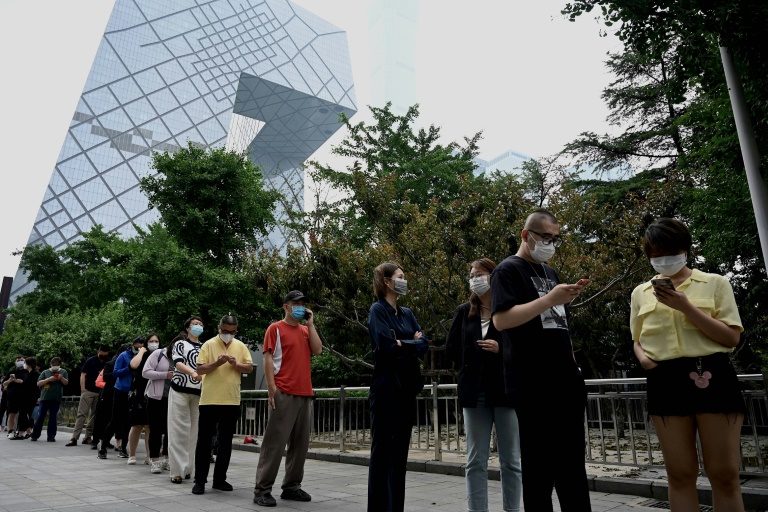
Beijing started a new round of mass testing in its most populous downtown district on Monday after a rapidly spreading outbreak linked to a bar saw Covid rules tightened again in the capital.

China is the last major economy still committed to a zero-Covid strategy, stamping out new cases with a combination of targeted lockdowns, mass testing and lengthy quarantines.

But that strategy is being stretched to the limit by the fast-spreading Omicron variant, as both Beijing and Shanghai have seen fresh clusters just days after lifting restrictions such as lockdowns, restaurant and office closures. 

A night of partying by one Beijing resident last week threw the city’s tentative reopening into chaos, leading authorities to shutter nightlife venues in the downtown district of Chaoyang days after they reopened last Monday. 

The resident, who did not get tested for 14 days, went to several bars and nightlife venues in Chaoyang in the days before and after developing a fever.

The outbreak stemming from the Heaven Supermarket bar has infected at least 183 people in 15 districts so far.

The cluster “arrived with ferocious momentum and the difficulty of prevention and control is huge,” Beijing government spokesman Xu Hejian told reporters Sunday.

Chaoyang district — home to high-end shops, multinational firms and embassies — started a three-day testing drive for all its 3.5 million residents and sealed off several downtown residential compounds and malls over the weekend. 

“I’m pretty worried even though I don’t drink at bars regularly,” 22-year-old admin staffer Wang Yuqi told AFP. 

“Even after restaurants reopened on June 6, I’ve been mostly staying at home and cooking my own meals outside of work.”

Beijing disease control officials said Sunday that new cases linked to the bar cluster are still emerging.

All sporting events have been cancelled, and a plan for most children to return to school Monday had already been scrapped.

Many bars that remain open are now imposing seating capacity limits. 

“I’m quite worried that the city will return to what it was like in May,” said Alan Xiang, a 30-year-old livestreamer lining up for a Covid test.

Universal Resort in Beijing has also delayed its planned June 15 reopening. 

Meanwhile, more than half of Shanghai’s 25 million residents underwent compulsory testing over the weekend, less than two weeks after it began stumbling out of a gruelling months-long lockdown marked by food shortages and scattered protests. 

China reported 143 new infections nationwide Monday, with 51 in Beijing.

Plays about Black artists and Wall St are big winners on Broadway

A musical about a Black and queer author won a top prize at the Broadway awards in New York on Sunday, while a play about Lehman Brothers and a Michael Jackson biopic also triumphed at the Oscars of the theater.

The 75th Tony Awards concluded a season of renewal for the theaters of the American cultural capital, which reopened in the fall of 2021 after 18 months of closure because of Covid-19. 

Wall Street finance story “The Lehman Trilogy” emerged victorious with five awards, including best play, best actor (Simon Russell Beale) and best director (Sam Mendes).

The play by Italian Stefano Massini follows the long life of the US investment bank Lehman Brothers, founded in the 19th century by three German immigrant brothers, whose collapse in 2008 triggered a global financial crisis. 

“MJ the Musical,” a successful biopic on Michael Jackson, which received the assent of his heirs and a mixed reception from critics because it virtually ignores the accusations of child abuse against the “King of Pop,” won four awards, including that of best actor in a musical for Myles Frost. 

Two of the children of the star who died in 2009 at age 50, Paris and Prince Jackson, made an appearance on stage. 

“A Strange Loop,” a favorite with 11 nominations, ultimately won two Tonys, including the most prestigious best musical and best libretto for its author, Michael R. Jackson — no relation to the “King of Pop.”  

– ‘Life raft’ –

The musical tells the story of the torments of a theater usher, an aspiring artist, Black and queer like Michael R. Jackson, who wants to become a Broadway writer.

“I felt unseen. I felt unheard. I felt misunderstood. And I just wanted to create a little bit of a life raft for myself as a black gay man,” the artist, wrapped in a large fuchsia cape, recounted to a standing ovation.

Upon his arrival on the stage of Radio City Music Hall, the mistress of ceremony Ariana DeBose, Oscar winner for her role as Anita in the remake of “West Side Story,” said she was “proud” of Broadway’s efforts to be more open to diversity.

After the pandemic and the death of George Floyd, an African-American killed by police in June 2020, provoking a broad movement against racism in the United States, Broadway reopened in the fall of 2021 with seven plays or musicals written by black authors, the first time this has ever happened. 

“There have been incremental changes, but the work continues,” said the singer and actor Darius de Haas, one of the founders of Black Theatre United, which advocates for a more diverse representation in American theaters. 

“Producers and theater owners have opened their eyes and seen that they can not only have stories that reflect more diversity on Broadway, but also that it can work economically.” 

Located around the bustling Times Square, the 41 Broadway theaters are not only the stuff of New York City legend, but also one of its cultural, economic and tourist lungs.

Before the pandemic, revenues easily exceeded $30 million per week, and $50 million for the week of Christmas. 

This 2021-2022 season has been disrupted again, but Broadway is back in the black, with 230,000 patrons last week, compared to about 300,000 the equivalent week in 2019. 

Ukraine's desperate farmers trapped by grain blockade

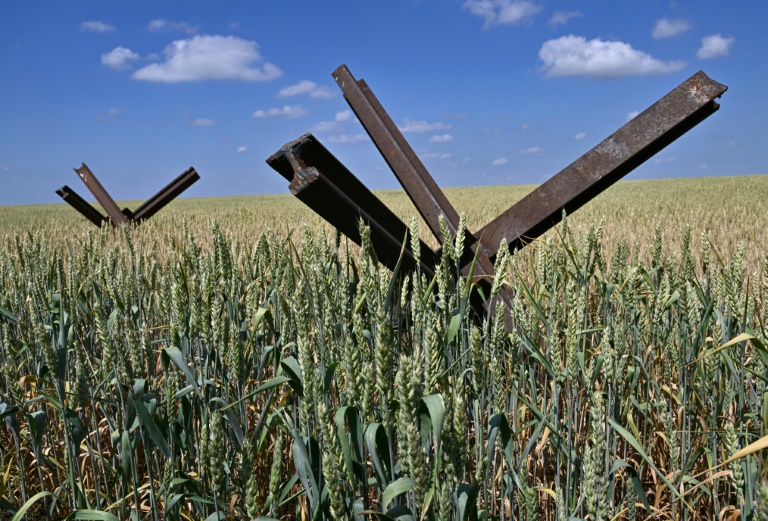
Nadiia Ivanova should have been harvesting her crop soon. But so far on her farm in southern Ukraine, she has only managed to collect bombshells.

“We planted really late because we needed to clear everything beforehand,” the 42-year-old told AFP, standing in the middle of a field in a zebra print dress.

Russian troops bombarded her 4,000-hectare (9,900-acre) farm near the town of Mykolaiv as they tried to advance northwards in March.

They only passed through, and the front has since retreated around 20 kilometres (12 miles).

Though the soldiers took some tools and left the odd crater, it seemed the only victims were a pair of barnyard peacocks killed in the fighting.

But lasting damage was done.

As the blockage of Ukrainian grain stokes fears of a global food crisis, the obstacles are piling up for Ivanova, who employs 76 people.

In peacetime, the farm’s produce — more than 12,000 tonnes per year — would have been destined for the domestic market and for export to Europe, Africa and China.

Today, its warehouses hold 2,000 tonnes of last season’s grain. There are no takers.

The railways have been partially destroyed by the Russian army, any ship that sails faces the threat of being sunk, and the port of Mykolaiv has been targeted by missiles. 

Other options have not come through fast enough. As a result, the price of grain per tonne has plummeted to $100 from more than three times that before the war.

– Damage on the farm –

Back on the farm, the grain cleaning machine won’t start. It’s not easy getting help from banks and insurance companies while the fighting rages so close by.

And few cleaning machine specialists want to work under the threat of bombs, which could fall at any moment.

Agricultural equipment remains riddled with shrapnel.

With his hands stuffed into the bowels of a gleaming 300,000-euro ($315,000) combine, Serhii Chernyshov, 47, is worried. The machine has never been used and it’s already out of action.

“I’ll need another week to see if I can get it working again,” he said.

– A family to feed –

On top of this, the cost of fertilisers and pesticides are soaring. Fuel oil, when it’s in stock, has tripled in price.

Drought is expected to wreak havoc again this year, and the ears of wheat are stunted. 

But Ivanova carries on at all costs. Not bringing in the harvest runs the risk of starting a fire — a danger multiplied by the fighting.

She set up the farm in 2003 with her brother and parents on a former “kolkhoz”, a collective farm that used to supply the Soviet Union.

Now, she’s making changes to cope with the crisis caused by Russia’s invasion.

“We replaced the mustard, an early crop, with sunflowers and millet, which come later,” she said.

Sitting on a red tractor, one of the few still running, Oleksandr Khomenko is weeding a plot ready for sowing. 

“Fear or no fear, we have to go (to work): I have a family to feed,” the 38-year-old said, missiles whistling in the distance.

Most of Ivanova’s employees continue to work on the farm and receive their pay.

“I don’t know how long I’ll last,” she said. “But at least there will always be food at my place.

Close Bitnami banner
Bitnami