World

Fierce fighting in east Ukraine as Zelensky says world must not look away

Ukrainian President Volodymyr Zelensky said his country’s forces were “doing everything” to stop the Russian offensive, with fierce battles in the east and the south.

Kyiv said Friday it had launched new air strikes in the captured southern region of Kherson, one of the first areas to be taken by Russia after the February 24 invasion.

But Zelensky said Friday “very difficult battles” were ongoing, including in the eastern Donbas region where Moscow has concentrated its firepower, especially around the eastern industrial city of Severodonetsk.

“Ukrainian troops are doing everything to stop the offensive of the occupiers,” Zelensky said in an address.

“As much as the heavy weapons, modern artillery — all that we have asked and continue to ask our partners for — allow them to.”

In the Mykolaiv region near the front line in the south, the regional governor stressed the urgent need for international military assistance.

“Russia’s army is more powerful, they have a lot of artillery and ammo. For now, this is a war of artillery… and we are out of ammo,” Vitaliy Kim said.

“The help of Europe and America is very, very important because we just need ammo to defend our country.”

Zelensky said in his address that Ukraine must “not allow the world to divert its attention away from what is happening on the battlefield”.

In the town of Lysychansk, located just across a river from Severodonetsk, people told AFP about their stark choice: stay and brave the shelling, or flee and abandon their homes. 

Yevhen Zhyryada, 39, said the only way to access water was by heading to a water distribution site in the town.

“We have to go there under shelling, and under fire,” he said.

“This is how we survive.”

– ‘Victory for Ukraine’ –

Shockwaves from the conflict have reverberated around the world, with fears mounting of a global food crisis — Ukraine is an agricultural powerhouse and a major grain exporter.

An adviser to French President Emmanuel Macron said France was ready to assist in an operation to allow safe access to Ukraine’s Black Sea port of Odessa.

It has been subject to a de facto blockade by Russia, with grain waiting to be shipped.

France wants “victory for Ukraine”, the advisor added, after Macron sparked controversy recently by suggesting Russia should not be humiliated.

Moscow poured its troops across the border into Ukraine on February 24 after weeks of warnings from the United States and its allies that Russia was planning an invasion.

US President Joe Biden said Friday that Zelensky had brushed off those warnings.

“There was no doubt and Zelensky didn’t want to hear it nor did a lot of people,” Biden said at a fundraiser. “I understand why they didn’t want to hear it.”

The war has devastated Ukrainian cities and displaced millions, while putting European nations on edge.

Nine of them — Bulgaria, the Czech Republic, Estonia, Hungary, Latvia, Lithuania, Poland, Romania and Slovakia — urged NATO on Friday to beef up its eastern flank.

– ‘Shocking’ death sentences –

Western countries reacted this week with fresh outrage after the pro-Kremlin separatist authorities in the Donetsk region of the Donbas sentenced to death Britons Aiden Aslin and Shaun Pinner, and Saadun Brahim of Morocco.

Germany’s foreign ministry said the “shocking” sentences show “once more Russia’s complete disregard for international humanitarian law”.

The United Nations warned that unfair trials of prisoners of war amounted to war crimes.

Zelensky separately praised British leadership and its support for Kyiv’s fight against Russia during an unannounced visit from UK Defence Secretary Ben Wallace.

“Weapons, finance, sanctions — on these three issues, Britain shows leadership,” Zelensky said in a video statement.

Kyiv has been critical of countries — including Germany and France — for the slow delivery of aid and for giving too much credence to negotiations with Russia’s President Vladimir Putin.

– Not ‘artificially created’ –

Russia has repeatedly cautioned the West against getting involved in the conflict, with some officials warning of the risk of nuclear war.

The world’s chemical weapons watchdog said Friday it was keeping a close eye on Ukraine to monitor “threats of use of toxic chemicals as weapons”.

Putin has said that what Russia calls its special military operation is meant to “de-Nazify” Ukraine, suggesting he is merely taking territory back.

But speaking to British university students via video link, Zelensky said Friday that Russia’s claim that Ukraine was “artificially created” was as preposterous as stating Ukrainians were “not humans but a variety of plants or a species of animals”.

burs-qan/lb
US blasts China's 'destabilising' military activity near Taiwan

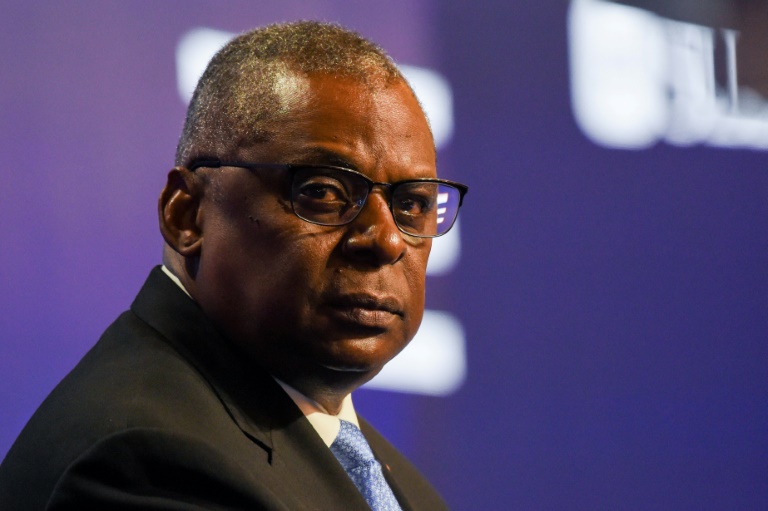
US Defence Secretary Lloyd Austin on Saturday blasted China’s “provocative, destabilising” military activity near Taiwan, as well as Beijing’s growing aggression across the wider Asia-Pacific region. 

Tensions between Washington and Beijing are soaring over democratic, self-ruled Taiwan, which China views as its territory and has vowed to seize one day, by force if necessary. 

Beijing has flown dozens of incursions into Taiwan’s air defence zone this year, and on Friday Defence Minister Wei Fenghe warned Austin that China was prepared to go to war if the island declares independence.

The war of words is just the latest between Beijing and Washington, with the superpowers clashing over everything from China’s claims in disputed seas to trade and human rights in Hong Kong and Xinjiang.

In an address to the Shangri-La Dialogue security summit in Singapore, Austin took aim at Beijing’s “growing coercion” towards Taiwan, a day after holding his first face-to-face talks with his Chinese counterpart Wei.

“We’ve witnessed a steady increase in provocative and destabilising military activity near Taiwan,” he told the forum, which is attended by defence ministers from Asia and around the world.

“That includes (Chinese military) aircraft flying near Taiwan in record numbers in recent months, and nearly on a daily basis,” he said. 

“We categorically oppose any unilateral changes to the status quo from either side,” he added.

“Our policy hasn’t changed — unfortunately, that doesn’t seem to be true for (China)”.

On Friday, Wei had warned Austin that “if anyone dares to split Taiwan from China, the Chinese army will definitely not hesitate to start a war no matter the cost”, according to Chinese officials. 

He also vowed that Beijing would “smash to smithereens any ‘Taiwan independence’ plot and resolutely uphold the unification of the motherland”, according to the Chinese defence ministry.

– Aircraft incursions –

Tensions over Taiwan have escalated in particular due to increasing Chinese aircraft incursions into the island’s air defence identification zone (ADIZ).

US President Joe Biden, during a visit to Japan last month, appeared to break decades of US policy when, in response to a question, he said Washington would defend Taiwan militarily if it is attacked by China. 

The White House has since insisted its policy of “strategic ambiguity” over whether or not it would intervene has not changed.

In Saturday’s address, the Pentagon chief reiterated US criticism of China’s increasingly “coercive and aggressive approach to its territorial claims”.

China claims almost all of the resource-rich South China Sea, through which trillions of dollars in shipping trade passes annually, with competing claims from Brunei, Malaysia, the Philippines, Taiwan and Vietnam.

Beijing has been accused of deploying a range of military hardware including anti-ship missiles and surface-to-air missiles there, and ignored a 2016 international tribunal decision that declared its historical claim over most of the waters to be without basis.

He also criticised Russia’s assault on Ukraine, at the same time taking a veiled swipe at China’s growing aggression. 

“Russia’s invasion of Ukraine is what happens when oppressors trample the rules that protect us all,” he said.

The United States and China have been at loggerheads over the invasion, with Washington accusing Beijing of providing tacit support for Moscow.

China has called for talks to end the war, but has stopped short of condemning Russia’s actions and has repeatedly criticised American arms donations to Ukraine.

Wei will address the summit Sunday, which runs from June 10 to 12. 

The event is usually annual but is taking place this year for the first time since 2019 after twice being postponed due to the Covid-19 pandemic.

Bolivian ex-president Anez sentenced to 10 years in prison

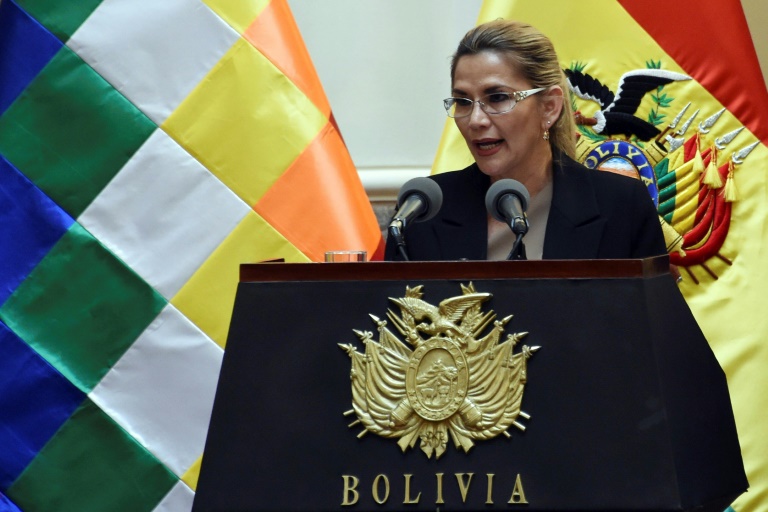
Bolivian ex-president Jeanine Anez was sentenced Friday to 10 years in prison, more than a year after her arrest for an alleged plot — dismissed as fictional by many — to oust her rival and predecessor Evo Morales.

Anez, 54, has been held in pre-trial detention since March 2021, and has consistently denounced what she calls political persecution.

The former interim leader will serve 10 years in a women’s prison in La Paz, the city’s First Sentencing Court announced in a decision that comes three months after her trial began.

The court said she had been convicted in the criminal case for crimes “contrary to the Constitution and a breach of duties… sentencing her to a punishment of 10 years,” over accusations stemming from when she was a senator, before becoming president.

Prosecutors had asked for a 15-year jail sentence.

Anez still faces charges in a separate, pending case for sedition and other charges related to her short presidential stint.

Right-wing Anez became Bolivia’s interim president in November 2019 after Morales, who claimed to have won a fourth consecutive term as president, fled the country in the face of mass protests against alleged electoral fraud.

The Organization of American States (OAS) said at the time it had found clear evidence of voting irregularities in favor of Morales, who had been in power for 14 years.

Many who would have succeeded Morales — all members of his MAS party — also resigned and fled. This left opposition member Anez, then vice-president of the senate, as the highest ranking official remaining.

The Constitutional Court recognized Anez’s mandate as interim, caretaker president, but MAS members disputed her legitimacy.

Elections were held a year later, and won by Luis Arce — a Morales protege.

After handing over the presidential reins, Anez was arrested in March 2021, accused of irregularly assuming the presidency.

At the start of her short-lived presidency, Anez had called in the police and military to restore order. The post-election conflict caused about 35 deaths, according the Inter-American Commission on Human Rights (IACHR). 

For that, Anez also faces genocide charges.

With the presidency and congress both firmly in MAS control, Morales returned to Bolivia in November 2020.

Australia agrees Naval payout, ending France sub dispute

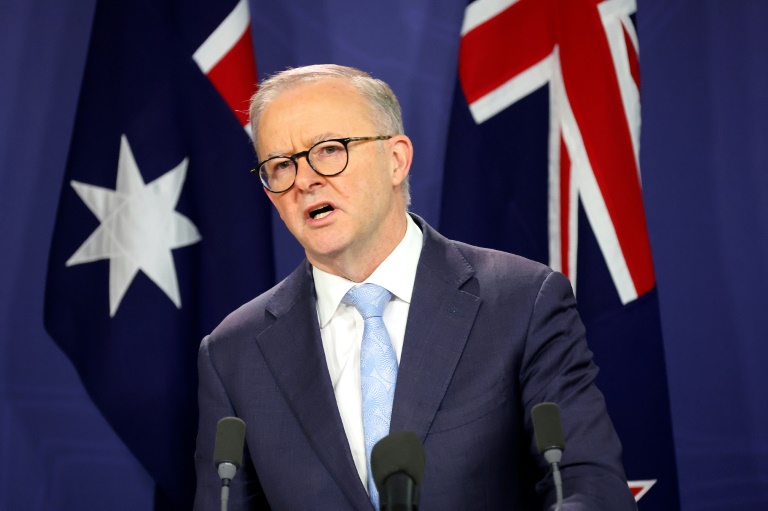
Australia unveiled a massive compensation deal with French submarine maker Naval Group Saturday, ending a contract dispute that soured relations between Canberra and Paris for almost a year. 

Prime Minister Anthony Albanese said the French firm had agreed to a “fair and an equitable settlement” of 555 million euros (US$584 million) for Australia ending a decade-old multi-billion-dollar submarine contract. 

The deal draws a line under a spat that derailed relations between both countries and threatened to torpedo talks on an EU-Australia trade agreement.

In September 2021, then-Australian prime minister Scott Morrison abruptly ripped up the French contract to build a dozen diesel-powered submarines.

He also stunned Paris by announcing a secret deal to buy US or British nuclear-powered submarines, a major shift for a country with little domestic nuclear capability.

The decision drew fury from French President Emmanuel Macron, who publicly accused Morrison of lying and recalled his ambassador from Australia in protest.

Relations were on ice until this May when Australia elected centre-left leader Albanese.

Since coming to office, Albanese has rushed to fix strained relations with France, New Zealand and with Pacific Island nations, who objected to the previous conservative government’s foot dragging on climate change.

He has also made tentative steps to conduct the first ministerial-level talks with China in over two years, after a range of bitter political and trade disputes.

“We are re-establishing a better relationship between Australia and France,” Albanese said, after speaking to Marcon about the settlement.

“I’m looking forward to taking up President Macron’s invitation to me to visit Paris at the earliest opportunity,” he added. 

– Arms race –

The submarine contract had been the centrepiece of Australia’s race to develop its military capabilities, as it fears the threat from a more bellicose China under President Xi Jinping.

In total the failed French submarine contract will have cost Australian taxpayers US$2.4 billion, Albanese said, with almost nothing to show for it. 

The promised nuclear-powered submarines are likely to give Australia the ability to operate more stealthily and — armed with sophisticated cruise missile capabilities — pose much more of a deterrent to Beijing. 

But there remains deep uncertainty about how quickly they can be built. 

The first US or British submarines likely will not be in the water for decades, leaving a long capability gap as Australia’s existing fleet ages. 

The choice of contractor will have a significant economic impact and strategic implications, closely enmeshing the Australian navy with that of the chosen nation. 

Former defence minister and now opposition leader Peter Dutton said this week that he had decided to source the submarines from the United States, an unusual revelation given the sensitivity of ongoing talks.

The current government has insisted no decision has yet been reached.

Biden leads Americas pledge on migration after contested summit

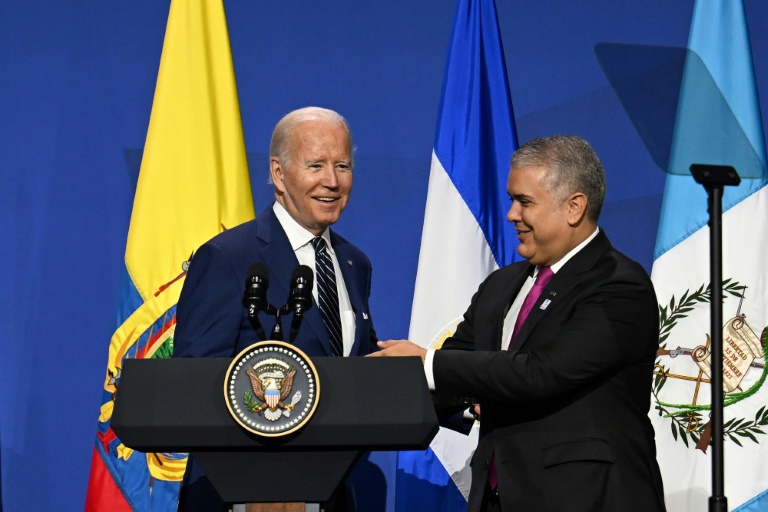
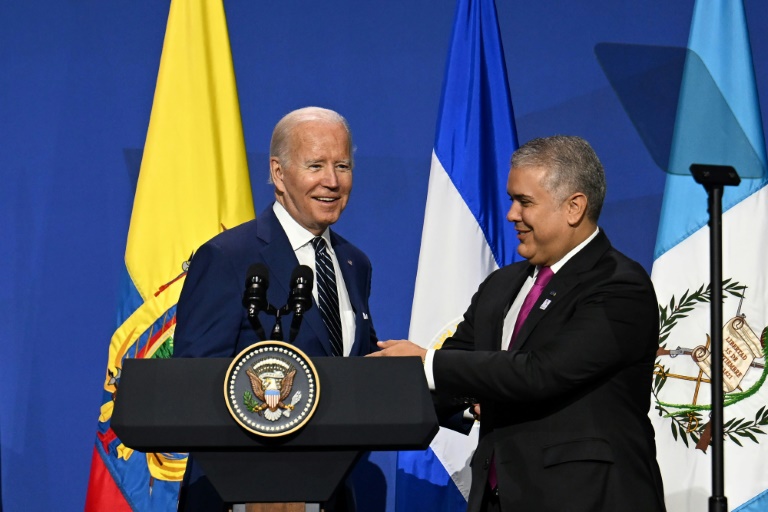
US President Joe Biden on Friday led a pledge by 20 nations in the Americas to work together on migration, seeking to step up action on a growing political priority at a summit beset by disputes.

The weeklong Summit of the Americas in Los Angeles wound down with promises by Biden to do more, and a joint declaration on migration that largely formalized existing arrangements rather than setting new policy.

The declaration called for “safety and dignity of all migrants” but also greater cooperation by law enforcement.

Biden — who has promised a more humane approach than his predecessor Donald Trump — announced a $65 million effort to support documented seasonal work on US farms.

“But we need to halt the dangerous and unlawful ways people are migrating,” Biden said with regional leaders by his side.

“Unlawful migration is not acceptable and we will secure our borders including through innovative, coordinated actions with our regional partners.”

The effort was met by praise by the top diplomat of Mexico, the critical US partner on migration due to the 3,145-kilometer (1,954-mile) shared border, even though Mexico’s president conspicuously boycotted the summit.

Foreign Secretary Marcelo Ebrard said the summit’s results were “very positive,” including Biden’s calls for economic cooperation and the “regional approach on migration.”

Extreme poverty, rising violence and natural disasters worsened by climate change have triggered a sharp rise in Central Americans and Haitians seeking to enter the United States.

Trump’s Republican Party has seized on the issue ahead of congressional elections, denouncing migrants from developing countries and accusing Biden of failing to act effectively.

The State Department announced that the United States would resettle 20,000 verified refugees from the Americas over the next two years — a threefold increase but a far cry from the 100,000 Ukrainian refugees that Biden, mostly with Republican support, has pledged to take in.

The United States also announced $314 million in new funding to support some of the more than six million Venezuelans who have fled their country, whose economy has been in freefall.

– Discord over attendance –

Biden called the summit in the face of rising Chinese influence in a region that the United States has long considered its home turf.

The summit was marked from the start by discord, largely over Biden’s refusal to invite the leftist leaders of Cuba, Nicaragua and Venezuela on the grounds that they are authoritarians.

The row was why Mexican President Andres Manuel Lopez Obrador refused to attend and several leaders directly challenged Biden.

The prime minister of tiny Belize also pointedly questioned if Biden would follow up on lofty promises, noting the $40 billion package from the United States to support Ukraine in its war.

“We know that money is not the problem,” Prime Minister John Briceno told him Thursday.

At a concluding news conference, Secretary of State Antony Blinken said that the summit — which also discussed cooperation on health care, climate change and job creation — addressed the “practical needs” of the hemisphere.

“It’s hard to do that with governments that reject the basic principle that they’re accountable to their people and repress their citizens’ rights to speak up about the challenges they face,” Blinken said.

– Movement on Venezuela, Brazil –

Blinken voiced hope for progress in Venezuela, saying he understood that talks would resume between the government and opposition — which was not invited to Los Angeles despite US support.

He held out the prospect of easing sanctions on President Nicolas Maduro, whom Washington considers illegitimate, if he compromises in the talks in Mexico.

“Sanctions are not an end in themselves. They are an effort to incentivize those who are on the receiving end to engage in different conduct,” Blinken said. 

Biden at the summit met for the first time with Brazil’s far-right president, Jair Bolsonaro, who has questioned not only the legitimacy of upcoming elections at home but also of the US polls in which Biden defeated Trump.

Bolsonaro, who was one of Trump’s closest international allies, told the summit that his meeting with Biden was “simply fantastic.”

He also said he believed he could support agribusiness without destroying the Amazon, a long source of contention due to the rainforest’s vital role in mopping up carbon emissions.

Blinken called the meeting “constructive” and said that Biden offered to help on forest preservation, acknowledging the US historical responsibility for climate change.

Biden leads Americas pledge on migration after contested summit

US President Joe Biden on Friday led a pledge by 20 nations in the Americas to work together on migration, seeking to step up action on a growing political priority at a summit beset by disputes.

The weeklong Summit of the Americas in Los Angeles wound down with promises by Biden to do more, and a joint declaration on migration that largely formalized existing arrangements rather than setting new policy.

The declaration called for “safety and dignity of all migrants” but also greater cooperation by law enforcement.

Biden — who has promised a more humane approach than his predecessor Donald Trump — announced a $65 million effort to support documented seasonal work on US farms.

“But we need to halt the dangerous and unlawful ways people are migrating,” Biden said with regional leaders by his side.

“Unlawful migration is not acceptable and we will secure our borders including through innovative, coordinated actions with our regional partners.”

The effort was met by praise by the top diplomat of Mexico, the critical US partner on migration due to the 3,145-kilometer (1,954-mile) shared border, even though Mexico’s president conspicuously boycotted the summit.

Foreign Secretary Marcelo Ebrard said the summit’s results were “very positive,” including Biden’s calls for economic cooperation and the “regional approach on migration.”

Extreme poverty, rising violence and natural disasters worsened by climate change have triggered a sharp rise in Central Americans and Haitians seeking to enter the United States.

Trump’s Republican Party has seized on the issue ahead of congressional elections, denouncing migrants from developing countries and accusing Biden of failing to act effectively.

The State Department announced that the United States would resettle 20,000 verified refugees from the Americas over the next two years — a threefold increase but a far cry from the 100,000 Ukrainian refugees that Biden, mostly with Republican support, has pledged to take in.

The United States also announced $314 million in new funding to support some of the more than six million Venezuelans who have fled their country, whose economy has been in freefall.

– Discord over attendance –

Biden called the summit in the face of rising Chinese influence in a region that the United States has long considered its home turf.

The summit was marked from the start by discord, largely over Biden’s refusal to invite the leftist leaders of Cuba, Nicaragua and Venezuela on the grounds that they are authoritarians.

The row was why Mexican President Andres Manuel Lopez Obrador refused to attend and several leaders directly challenged Biden.

The prime minister of tiny Belize also pointedly questioned if Biden would follow up on lofty promises, noting the $40 billion package from the United States to support Ukraine in its war.

“We know that money is not the problem,” Prime Minister John Briceno told him Thursday.

At a concluding news conference, Secretary of State Antony Blinken said that the summit — which also discussed cooperation on health care, climate change and job creation — addressed the “practical needs” of the hemisphere.

“It’s hard to do that with governments that reject the basic principle that they’re accountable to their people and repress their citizens’ rights to speak up about the challenges they face,” Blinken said.

– Movement on Venezuela, Brazil –

Blinken voiced hope for progress in Venezuela, saying he understood that talks would resume between the government and opposition — which was not invited to Los Angeles despite US support.

He held out the prospect of easing sanctions on President Nicolas Maduro, whom Washington considers illegitimate, if he compromises in the talks in Mexico.

“Sanctions are not an end in themselves. They are an effort to incentivize those who are on the receiving end to engage in different conduct,” Blinken said. 

Biden at the summit met for the first time with Brazil’s far-right president, Jair Bolsonaro, who has questioned not only the legitimacy of upcoming elections at home but also of the US polls in which Biden defeated Trump.

Bolsonaro, who was one of Trump’s closest international allies, told the summit that his meeting with Biden was “simply fantastic.”

He also said he believed he could support agribusiness without destroying the Amazon, a long source of contention due to the rainforest’s vital role in mopping up carbon emissions.

Blinken called the meeting “constructive” and said that Biden offered to help on forest preservation, acknowledging the US historical responsibility for climate change.

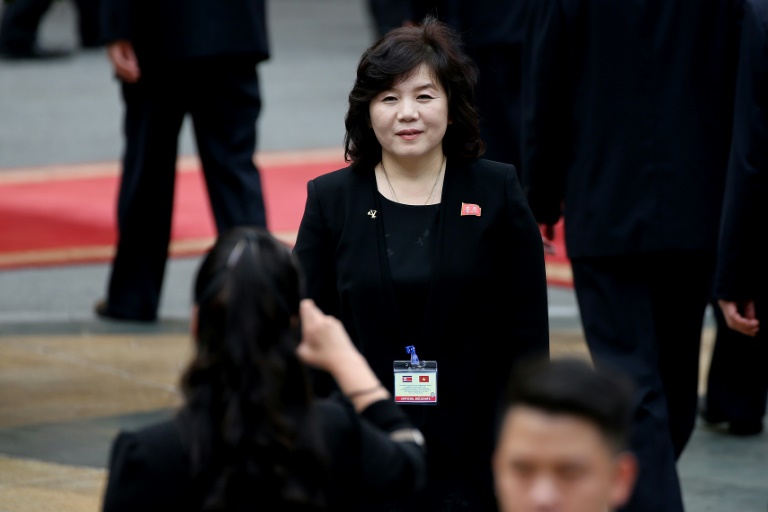
N. Korea appoints veteran diplomat as first female foreign minister

North Korea has appointed veteran diplomat Choe Son-hui as its first female foreign minister, state media reported Saturday, as Pyongyang pushes ahead with a blitz of sanctions-busting weapons tests and ignores US calls for talks.

Choe, who formerly served as the North’s vice foreign minister, was tapped to lead the foreign ministry at a ruling party meeting overseen by leader Kim Jong Un, the state media KCNA reported.

She replaces Ri Son Gwon, a hardline former military official who previously led talks with the South.

A career diplomat who speaks fluent English, Choe served as a close aide to Kim during nuclear talks with the United States and accompanied the North Korean leader to summits with then US president Donald Trump.

She held a rare question and answer session with reporters on the night the two leaders’ summit in Hanoi collapsed without a deal in February 2019, blaming Washington for the failed talks. 

“I think the United States has missed a golden opportunity with its rejection of our proposals,” she said.

Diplomacy between Pyongyang and Washington have since stalled, with the Kim regime in recent months not responding to the United States’ repeated offers to return to negotiations.

The nuclear-armed North has meanwhile carried out a blitz of sanctions-busting weapons tests this year, including firing an intercontinental ballistic missile at full range for the first time since 2017.

US and South Korean officials have also warned that Kim’s regime is preparing to carry out what would be its seventh nuclear test — a move that Deputy Secretary of State Wendy Sherman warned would provoke a “swift and forceful” response.

US, Brazil upbeat on climate after leaders meet

Brazil’s far-right leader said Friday that his country could expand agribusiness without harming the Amazon as he spoke highly of meeting US President Joe Biden, who raised the issue of climate change.

“We don’t need the Amazon to expand agribusiness,” Bolsonaro told the Summit of the Americas in Los Angeles, where he met Biden a day earlier.

Bolsonaro has enraged environmentalists by championing large agricultural companies involved in the deforestation of the Amazon, a crucial “sink” for carbon emissions blamed for the planet’s rising temperatures.

Bolsonaro was one of the top international allies of former US president Donald Trump, even backing his baseless claims of fraud in his 2020 election loss, but praised Biden.

The meeting was “simply fantastic,” Bolsonaro said.

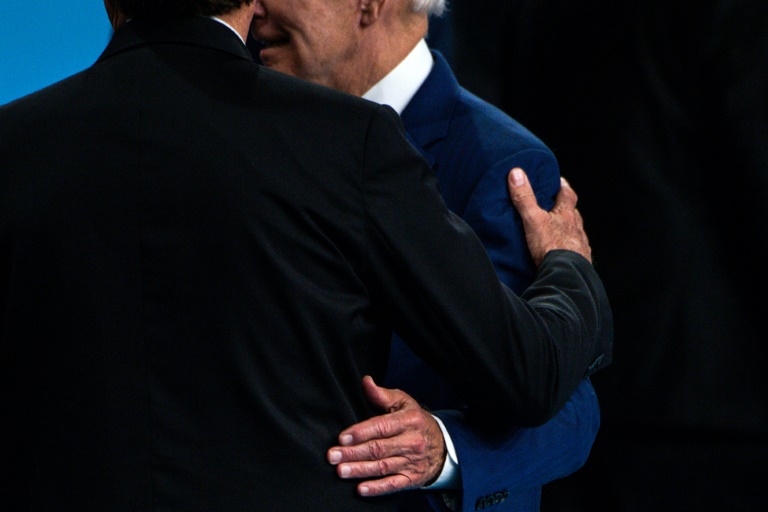
A day after the meeting, Bolsonaro and Biden patted each other on the arms and appeared to exchange pleasantries as they posed for a group photo at the summit.

Biden agreed to meet Bolsonaro for the first time as the United States tried to secure attendance at the summit, already marred by a boycott by the leftist president of Mexico — the second most populous nation in Latin America after Brazil. 

US Secretary of State Antony Blinken also spoke highly of Biden’s meeting with Bolsonaro.

The talks are “best described as constructive, an opportunity to address a lot of issues in the bilateral relationship right now,” Blinken told reporters.

He said that the United States was concerned about the Amazon as the “lungs of the hemisphere” and that Biden told Bolsonaro that the United States felt a need to help.

“We feel a responsibility to do that because over many, many, many generations, we were able to take advantage ourselves — for example, clearing forests in order to have agricultural production or industry before anyone understood the impact of climate change,” Blinken said.

The United States is committed to offering financing and other support to ensure that countries “have the means not to further engage in deforestation or even to engage in reforestation,” he said.

Bolsonaro separately defended the response to the disappearance in the Amazon of a British journalist and a Brazilian Indigenous expert after accusations that his government did not prioritize efforts.

“From the very first moment our armed forces and police have tirelessly searched for these people,” Bolsonaro said.

Bolsonaro is trailing in polls ahead of October elections to former president Luiz Inacio Lula da Silva, a leftist icon who was jailed on controversial corruption charges.

Meta's Quest VR gear to let people 'hang out' in fake worlds

Meta on Friday said that it is adding the ability to easily socialize in virtual reality with an update to its Quest 2 headsets in another step toward the metaverse.

The tweak heading for the latest model Quest from Meta-owned Oculus will let wearers hop into virtual settings with friends, chief Mark Zuckerberg said in a post on his Facebook page.

“I’m here to announce the ability to, as soon as you put on your Quest 2 headset, to have people hang out with you in a social environment,” Zuckerberg said in a video.

The software update will open a door to Horizon World virtual reality platform that Facebook-parent Meta opened to the public in North America at the end of last year.

Meta is also working on letting people create their own virtual worlds where they host gatherings of avatars, Zuckerberg said.

Horizon Worlds is far from a fully realized metaverse, a future internet where online experiences like chatting to a friend would eventually feel face-to-face thanks to VR headsets.

But the platform does let people gather online with friends or others, play games and immerse themselves in 360-degree videos.

Facebook parent Meta earlier this year instituted a minimum distance between users’ avatars in its virtual reality Horizon network after reports of harassment, one of the thorny issues for its metaverse vision.

The “personal boundary” function in the immersive platform puts a ring of space around users’ digital proxies.

Facebook renamed its parent company to Meta in October to emphasize its aim to shift from scandal-prone social media platform to its virtual reality vision for its future.

The firm’s metaverse push also includes tools for remote working, which boomed during the pandemic.

Facebook bought virtual reality headset maker Oculus in 2014.

The technology has taken off in the gaming industry, and become popular among players of Fortnite and Roblox.

Stocks tumble worldwide as US inflation soars

Stock markets plunged deeper into the red on Friday after data showed US inflation soared to the highest level in more than 40 years in May, far outpacing analysts’ expectations. 

In Europe, all of the major stock indices ended the week sharply lower. 

Paris’s blue-chip CAC 40 lost 2.7 percent on Friday, Frankfurt’s DAX index was down 3.1 percent, Milan’s FTSE MIB shed 5.1 percent, Madrid’s IBEX tumbled 3.7 percent and London’s FTSE dropped by 2.1 percent. 

On Wall Street, stocks also were deep in negative territory after US government data showed inflation reached 8.6 percent in the 12 months ended in May, the steepest rise in consumer prices since December 1981, on the back of surging energy and food prices.

The data had been eagerly anticipated as investors hungrily look for clues as to the direction of US interest rates at next week’s meeting of the Federal Reserve.

“The market had expected that we’d see at least a plateauing or flattening out of inflation but it seems that inflation pressures continue to build and we’ve seen a further broadening of price pressures,” said Shaun Osborne, a foreign exchange specialist at Scotiabank. 

“So it seems more entrenched, stickier kind of price or inflation situation.”

Osborne said the report will encourage investor debate on whether the US central bank will shift to a 75 basis point interest rate hike next week instead of the planned half-point increase.

But Osborne believes the Fed will go with its original plan, considering a bigger increase would look “panicky.”

Adding to the unease was news that officials in China had once again locked down millions of people for Covid testing owing to another flare-up in cases, dealing a blow to hopes for an economic reopening.

“Warning signs about the economy are emerging as weekly (US) jobless claims are starting to rise, China’s Covid situation will prove troublesome for supply chains over the next couple of quarters, and as inflationary pressures broaden and show no sign of easing,” said Edward Moya, analyst at OANDA trading group.

“It seems reductions in global growth forecasts will become a steady theme over the next few months and that should complicate how much more tightening we see from central banks,” he said.

The World Bank and Organization for Economic Co-operation and Development this week each lowered their global economic growth forecasts for 2022.

– Key figures at around 2100 GMT –

New York – Dow: DOWN 2.7 percent at 31,392.79 (close)

New York – S&P 500: DOWN 2.9 percent at 3,900.86 (close)

New York – Nasdaq: DOWN 3.5 percent at 11,340.02 (close)

London – FTSE 100: DOWN 2.1 percent at 7,317.52 (close)

Frankfurt – DAX: DOWN 3.1 percent at 13,761.83 (close)

Paris – CAC 40: DOWN 2.7 percent at 6,187.23 (close)

EURO STOXX 50: DOWN 3.4 percent at 3,599.20 (close)

Tokyo – Nikkei 225: DOWN 1.5 percent at 27,824.29 (close)

Hong Kong – Hang Seng Index: DOWN 0.3 percent at 21,806.18 (close)

Shanghai – Composite: UP 1.4 percent at 3,284.83 (close)

Euro/dollar: DOWN at $1.0526 from $1.0617 late Thursday

Euro/pound: UP at 85.39 pence from 84.98 pence

Dollar/yen: UP at 134.42 yen from 134.36 yen

Pound/dollar: DOWN at $1.2309 from $1.2493

Brent North Sea crude: DOWN 0.9 percent at $122.01 per barrel

West Texas Intermediate: DOWN 0.7 percent at $120.67 per barrel

burs-jmb/hs

Close Bitnami banner
Bitnami