World

Beijing delays school reopenings after new Covid outbreak

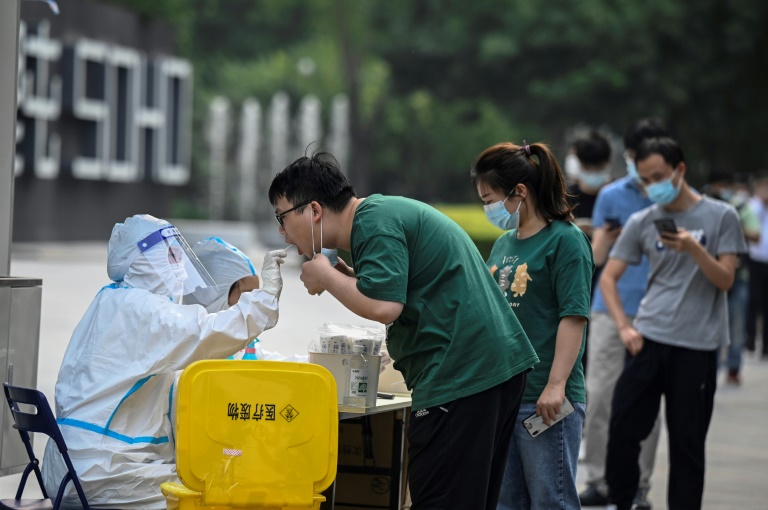
Most children in Beijing will not return to school next week as originally planned, Chinese officials said on Saturday, after an emerging Covid-19 outbreak prompted authorities to partly reverse a decision to resume in-person teaching.

China is the last major economy still committed to a zero-Covid strategy, stamping out new cases with a combination of targeted lockdowns, mass testing and lengthy quarantines.

But virus clusters in recent months have put that approach under strain. The megacity of Shanghai was forced into a gruelling months-long lockdown and in the capital Beijing, schools were shuttered and residents were ordered to work from home. 

Authorities in Beijing eased many curbs earlier this week, but dozens of infections linked to a bar have led authorities to tighten some restrictions again.

Most primary and middle school students will “continue to study online at home” from Monday, city government spokesperson Xu Hejian said at a press briefing on Saturday.

The announcement partly walked back a previous decision to send younger pupils back to school in phases, starting next week.

Some 115 cases have been linked to the bar cluster so far, municipal health official Liu Xiaofeng said at the briefing.

The new outbreak was “at a rapidly developing stage … and at a relatively high risk of spreading”, Liu said.

More than 20 million people in Shanghai began a mass testing drive on Saturday that local governments said would take place under temporary lockdown conditions.

The move comes less than two weeks after the eastern economic hub lurched out of a harsh lockdown that was punctuated by food shortages and isolated protests from irate residents.

Officials have maintained a shifting patchwork of restrictions in Shanghai, wary of a virus resurgence after finally containing the country’s worst outbreak in two years.

China recorded 138 domestic infections on Saturday, including 61 in Beijing and 16 in Shanghai, according to the National Health Commission.

EU chief visits Ukraine as Zelensky says world must not look away

EU chief Ursula von der Leyen visited Ukraine on Saturday to discuss the country’s hopes of joining the bloc, as President Volodymyr Zelensky warned the world not to look away from the conflict devastating his country.

Von der Leyen’s visit — her second since Russia’s February 24 invasion — came as fierce battles continued in the east and south of Ukraine.

“With President Zelensky I will take stock of the joint work needed for reconstruction and of the progress made by Ukraine on its European path,” she tweeted on arrival in Kyiv.

Ukraine has been pushing for rapid admission into the European Union, but officials and leaders in the bloc have cautioned that membership could take years or even decades.

Von der Leyen told reporters the discussions “will feed into our assessment” of Ukraine’s readiness to be considered a candidate country to begin lengthy negotiations, including on reforms.

Ahead of a June 23-24 EU leaders’ summit that will likely take up the matter, Zelensky questioned why some member states were still hesitant.

“The European system could lose if words are not accompanied by deeds,” he told the 2022 Copenhagen Democracy Summit on Friday.

He later urged the world not to lose sight of what was happening in Ukraine, after more than three months of war that has left thousands dead and sent millions of Ukrainians fleeing.

He said Ukraine must “not allow the world to divert its attention away from what is happening on the battlefield”.

– Difficult battles –

Zelensky reported continued “very difficult battles” including in the eastern Donbas region where Moscow has concentrated its firepower, especially around the eastern industrial city of Severodonetsk.

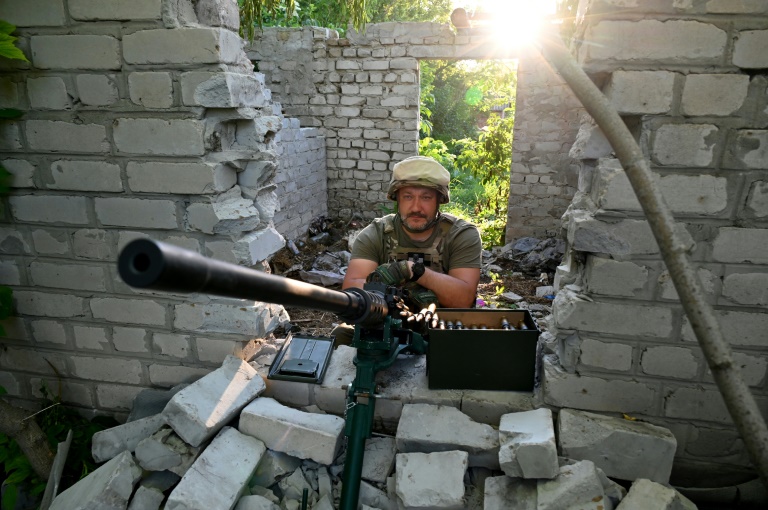
South-west of Severodonetsk, in the village of Soledar, a Ukrainian soldier who gave his name as Sergey was bullish.

“The enemy is very defiant, trying to go through our defence with small groups,” he told AFP from a field where a Ukrainian tank was hiding near some trees.

“But they of course fail, because our infantry units at the front are doing a good job at locating their advances from observation positions. We, of course, repel them.”

He added: “The truth is on our side, it’s our land that we are defending.”

However, in the Mykolaiv region near the front line in the south, regional governor Vitaliy Kim stressed the urgent need for international military assistance.

The US and other Western allies have provided huge amounts of weapons and cash to Ukraine to help it fend off its neighbour, while also punishing Moscow with economic sanctions.

But Kim said: “Russia’s army is more powerful, they have a lot of artillery and ammo. For now, this is a war of artillery… and we are out of ammo.

“The help of Europe and America is very, very important.”

Further north in Kharkiv, regional governor Oleg Synegubov said Ukrainian forces were making advances but accused Russian forces of targeting attacks on civilian targets.

– France offers Odessa help –

Shockwaves from the conflict have reverberated around the world, with fears mounting of a global food crisis. Before the war, Ukraine was an agricultural powerhouse and a major grain exporter.

An adviser to French President Emmanuel Macron said France was ready to assist in an operation to allow safe access to Ukraine’s Black Sea port of Odessa.

It has been subject to a de facto blockade by Russia, with grain waiting to be shipped.

France wants “victory for Ukraine”, the advisor added, after Macron sparked controversy recently by suggesting Russia should not be humiliated.

Moscow invaded Ukraine in February after weeks of warnings from the United States and its allies that Russia was planning an invasion.

US President Joe Biden said Friday that Zelensky had brushed off those warnings.

“There was no doubt and Zelensky didn’t want to hear it nor did a lot of people,” Biden said at a fundraiser. “I understand why they didn’t want to hear it.”

– ‘Shocking’ death sentences –

Western countries reacted this week with fresh outrage after pro-Kremlin separatist authorities in the Donetsk region of the Donbas sentenced to death Britons Aiden Aslin and Shaun Pinner, and Saadun Brahim of Morocco.

Germany’s foreign ministry said the “shocking” sentences show “once more Russia’s complete disregard for international humanitarian law”.

The United Nations warned that unfair trials of prisoners of war amounted to war crimes.

Ukrainian courts have handed three Russian soldiers long prison sentences at war crimes trials since the invasion.

Russia has repeatedly cautioned the West against getting involved in the conflict, with some officials warning of the risk of nuclear war.

The world’s chemical weapons watchdog said Friday it was keeping a close eye on Ukraine to monitor “threats of use of toxic chemicals as weapons”.

President Vladimir Putin has said that what Russia calls its special military operation is meant to “de-Nazify” Ukraine, suggesting he is merely taking territory back.

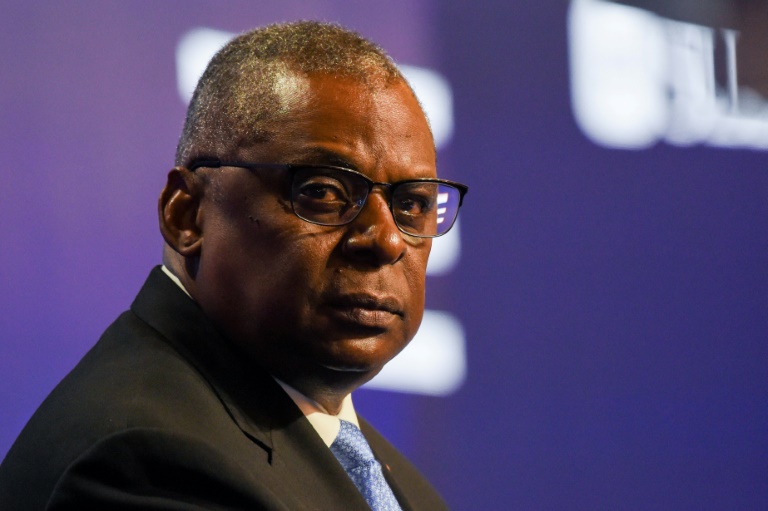
But US Defense Secretary Lloyd Austin issued scathing criticism of the invasion and its aims on Saturday.

“Russia’s invasion… (is) what happens when big powers decide that their imperial appetites matter more than the rights of their peaceful neighbours,” he said at the Shangri-La Dialogue security summit in Singapore.

“And it’s a preview of a possible world of chaos and turmoil that none of us would want to live in.”

burs-ar/yad

Iran, Venezuela sign two-decade cooperation deal: state media

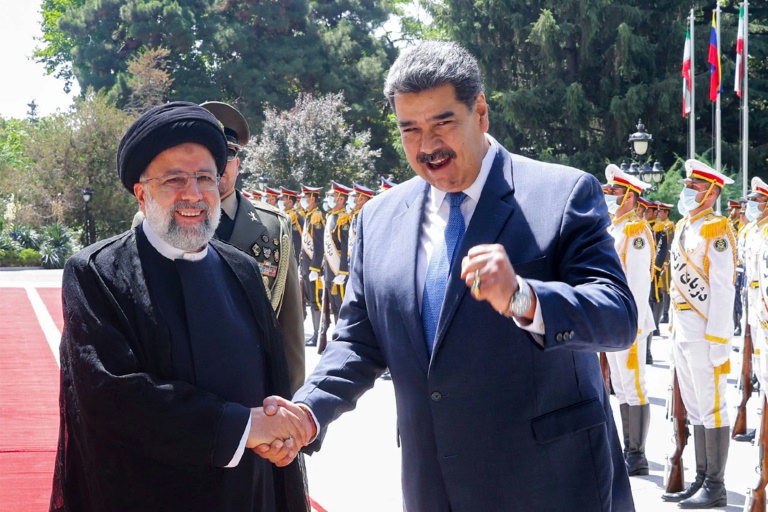
Iran and Venezuela signed a 20-year deal on cooperation between the two allies subject to US sanctions during a visit Saturday to the Islamic republic by Venezuela’s President Nicholas Maduro.

The inking of the agreement “shows the determination of the high-level officials of the two countries for development of relations in different fields,” Iran’s President Ebrahim Raisi said.

Maduro, speaking at a joint news conference in the Iranian capital, said the cooperation covered the energy and financial sectors as well as “work together on defence projects”.

Alongside the likes of Russia, China, Cuba and Turkey, Iran is one of Venezuela’s main allies. And like Venezuela it is subject to tough US sanctions.

“Venezuela has passed hard years but the determination of the people, the officials and the president of the country was that they should resist the sanctions,” Raisi said during the news conference, quoted by state television.

“This is a good sign that proves to everyone that resistance will work and will force the enemy to retreat,” the Iranian president added.

In addition to the 20-year accord inked by the two countries’ foreign ministers, “Iran and Venezuela signed documents on cooperation in the political, cultural, tourism, economic, oil and petrochemical fields,” state news agency IRNA said.

“We have important projects of cooperation between Iran and Venezuela in the fields of energy, petrochemical, oil, gas and refineries,” Maduro said.

– Direct flights –

From July 18, direct flights would operate between Caracas and Tehran “in order to promote tourism and the union between our countries,” he said, adding that “Venezuela is open to receive tourists from Iran”.

Iran’s president also emphasised the importance of direct flights between the two capitals, saying it could pave the way for the enhancement of “trade and economic relations as well as bringing the two nations closer together”.

Bilateral ties between the two oil producers were strong under late Venezuelan socialist leader Hugo Chavez and have been further bolstered under his successor Maduro.

In May, Iran’s Oil Minister Javad Owji met with Maduro during an official visit to Venezuela, which sits on the world’s largest proven crude reserves.

Owji also met his Venezuelan counterpart Tareck El Aissami for talks on finding ways to deal with the economic sanctions imposed on both countries by the United States.

Owji’s visit to Venezuela, which sits on the world’s largest proven reserves of crude, came just weeks after a visit by United States officials in the midst of rising global oil prices due to the war on Ukraine.

In March, a US delegation held a hushed meeting with Maduro, whose very legitimacy as president Washington disputes.

Iran is a major oil producer and said in April that output capacity was back to levels before the reimposition of US sanctions under then president Donald Trump in 2018.

In 2020, Venezuela received two shiploads of fuel and derivatives from Iran to help address crippling domestic shortages.

Iran is the third country that Maduro has visited this week after trips to Turkey and Algeria.

Iran, Venezuela sign two-decade cooperation deal: state media

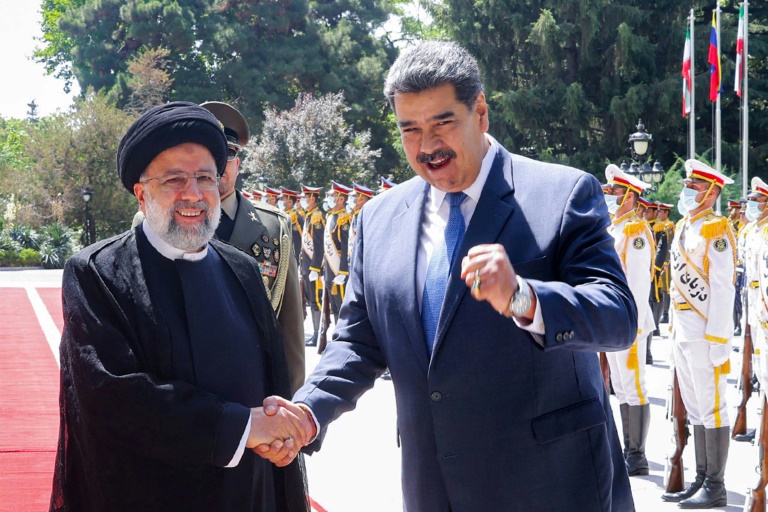
Iran and Venezuela signed a 20-year deal on cooperation between the two allies subject to US sanctions during a visit Saturday to the Islamic republic by Venezuela’s President Nicholas Maduro.

The inking of the agreement “shows the determination of the high-level officials of the two countries for development of relations in different fields,” Iran’s President Ebrahim Raisi said.

Maduro, speaking at a joint news conference in the Iranian capital, said the cooperation covered the energy and financial sectors as well as “work together on defence projects”.

Alongside the likes of Russia, China, Cuba and Turkey, Iran is one of Venezuela’s main allies. And like Venezuela it is subject to tough US sanctions.

“Venezuela has passed hard years but the determination of the people, the officials and the president of the country was that they should resist the sanctions,” Raisi said during the news conference, quoted by state television.

“This is a good sign that proves to everyone that resistance will work and will force the enemy to retreat,” the Iranian president added.

In addition to the 20-year accord inked by the two countries’ foreign ministers, “Iran and Venezuela signed documents on cooperation in the political, cultural, tourism, economic, oil and petrochemical fields,” state news agency IRNA said.

“We have important projects of cooperation between Iran and Venezuela in the fields of energy, petrochemical, oil, gas and refineries,” Maduro said.

– Direct flights –

From July 18, direct flights would operate between Caracas and Tehran “in order to promote tourism and the union between our countries,” he said, adding that “Venezuela is open to receive tourists from Iran”.

Iran’s president also emphasised the importance of direct flights between the two capitals, saying it could pave the way for the enhancement of “trade and economic relations as well as bringing the two nations closer together”.

Bilateral ties between the two oil producers were strong under late Venezuelan socialist leader Hugo Chavez and have been further bolstered under his successor Maduro.

In May, Iran’s Oil Minister Javad Owji met with Maduro during an official visit to Venezuela, which sits on the world’s largest proven crude reserves.

Owji also met his Venezuelan counterpart Tareck El Aissami for talks on finding ways to deal with the economic sanctions imposed on both countries by the United States.

Owji’s visit to Venezuela, which sits on the world’s largest proven reserves of crude, came just weeks after a visit by United States officials in the midst of rising global oil prices due to the war on Ukraine.

In March, a US delegation held a hushed meeting with Maduro, whose very legitimacy as president Washington disputes.

Iran is a major oil producer and said in April that output capacity was back to levels before the reimposition of US sanctions under then president Donald Trump in 2018.

In 2020, Venezuela received two shiploads of fuel and derivatives from Iran to help address crippling domestic shortages.

Iran is the third country that Maduro has visited this week after trips to Turkey and Algeria.

WTO negotiators finalise key texts on fishing, Covid jabs

Long-sought WTO agreements on fisheries subsidies and a Covid vaccine patent waiver moved a step closer to completion Saturday after negotiators finalised texts for ministerial review, but significant obstacles remained in hammering out a final deal.

Diplomats have been in round-the-clock talks to hammer out texts on several thorny topics before the World Trade Organization’s first high-level meeting in five years, where trade ministers and officials from 164 countries have four days starting Sunday to try and get the negotiations across the finish line.

It takes place against the backdrop of the Ukraine-Russia war and fears of a global food crisis as a result of the conflict.

The global trade body announced in the early hours Saturday that a draft text on a long elusive deal banning subsidies favouring overfishing had been handed over to the ministers.

They will be tasked with ironing out the final sticking points towards a deal decades in the making.

The success of WTO’s 12th ministerial conference will largely hinge on whether they succeed.

“Not every issue has been resolved. Indeed, this is a draft agreement and in this draft there remain some issues that members have not agreed to yet,” acknowledged Colombian ambassador Santiago Wills, who chairs the WTO fisheries subsidies negotiations.

But he said months of intense negotiations had made it possible to present “a clean solution” to some issues that had long “appeared intractable”.

The WTO takes decisions by consensus, making agreements all the harder to reach.

Global fisheries subsidies are estimated at between $14 billion and $54 billion a year, according to the body.

It is widely agreed that action is needed to protect a crucial resource that millions of people depend on for their livelihoods.

WTO members have for the past 20 years been discussing the need for a deal banning subsidies that contribute to illegal and unregulated fishing, as well as to overfishing.

– ‘Significant progress’ –

Wills noted “significant progress” on the tricky issue of “territoriality”, with the draft text ensuring that a WTO panel of experts would not be called upon to decide who has jurisdiction over disputed or overlapping territorial claims.

Progress had also been made on the issue of fuel subsidies, and on the so-called special and differential treatment (SDT) for developing countries, long a key stumbling block, he said, hailing a “considerable narrowing of differences”.

Special treatment for the poorest countries is widely accepted but demands from some self-identified developing countries for exemption from subsidy constraints, including large fishing nations like India, have been difficult to swallow for some.

The draft text proposes that exemptions should not apply to member states accounting for a certain share of the global volume of marine capture production but that percentage has yet to be defined.

Wills stressed the urgency of finally reaching a deal.

“The longer we wait, the more the fish lose. And the more the fish lose, the more we all lose,” he said.

The WTO also said a draft text had been finalised on the thorny issue of a temporary patent waiver for Covid vaccines to provide equitable access to the jabs and better battle the still raging pandemic.

But agreement is far from certain.

The pharmaceutical industry and a number of its host countries have warned of the impact on innovation, while public interest groups warned Saturday that the new text was so weak it might even complicate access to vaccine production further.

“It has been a very difficult process, very difficult,” acknowledged WTO chief Ngozi Okonjo-Iweala.

“I know that for all of you it has been a tough time but we have done the best we can for now.”

Two killed in India protests over remarks against Prophet

Indian police shot dead two protesters and arrested more than 130 others during street rallies sparked by a ruling party official’s remarks about the Prophet Mohammed, authorities told AFP Saturday.

There have been widespread protests in the Muslim world since last week, when a spokeswoman for Prime Minister Narendra Modi’s party commented on the relationship between the prophet and his youngest wife on a TV debate show.

In India and neighbouring countries, Muslims took to the streets in huge numbers after Friday prayers to condemn the remarks, with police firing on a crowd in the eastern Indian city of Ranchi. 

“Police were forced to open fire to disperse protesters… resulting in the death of two,” a police officer in Ranchi told AFP.

Officers said that the crowd had defied their orders not to march from a mosque to a market and had thrown broken bottles and stones when police attempted to disperse the rally with a baton charge.

Authorities cut internet connections in the city and imposed a curfew, with local resident Shabnam Ara telling AFP the atmosphere remained tense on Saturday. 

“We are praying for peace and harmony,” she said. 

Police in Uttar Pradesh fired tear gas to disperse at least one rally after several demonstrations were staged across the northern Indian state. 

Most protests ended peacefully but demonstrators in some cities threw stones at police and injured at least one officer, said Avanish Awasthi, a senior government secretary in the state.

“We will take strict action against those indulging in stone pelting and violence,” Awasthi told reporters.

“Those working behind the scenes, instigating violence, will not be spared at all.”

Prashant Kumar, a senior police officer in the state, told AFP that up to “136 protesting miscreants” had been arrested from six districts around Uttar Pradesh. 

Cities around India saw sizable demonstrations on Friday, with some crowds burning effigies of Nupur Sharma — the Bharatiya Janata Party (BJP) spokeswoman whose comments set off the furore.

Authorities also cut internet services for the weekend in several districts near the eastern megacity of Kolkata, after protesters blocked a railway line and mobbed a police station.

– Diplomatic storm –

Sharma’s remarks have embroiled India in a diplomatic storm, with the governments of nearly 20 countries calling in Indian envoys for an explanation. 

Since coming to power nationally in 2014, Modi’s government and the BJP have been accused of championing discriminatory policies towards followers of the Islamic faith. 

His government proposed a controversial law that granted citizenship to refugees in India, but not if they are Muslim, while state BJP governments have passed laws making it harder for Muslims to marry outside their religion.

The foreign ministry last week rebuked US officials for what India termed “ill-informed” and “biased” comments made during the release of a religious freedom report that accused Indian officials of supporting attacks on minority worshippers.

Sharma’s comments sent the BJP into damage control, with the party suspending her from its ranks and issuing a statement saying it respected all religions.

Friday saw the biggest South Asian street rallies yet in response to the remarks, with police estimating more than 100,000 people mobilised across Bangladesh after midday prayers.

Another 5,000 people took to the streets in the Pakistani city of Lahore at the call of a radical religious party, demanding that their government take stronger action against India over the comments. 

The row follows anger across the Muslim world in 2020 after French President Emmanuel Macron defended the right of a satirical magazine to publish caricatures of the Prophet Mohammed.

French teacher Samuel Paty was beheaded in October 2020 by a Chechen refugee after showing the cartoons to his class in a lesson on free speech. Images of the prophet are strictly forbidden in Sunni Islam.

US blasts China's 'destabilising' military activity near Taiwan

US Defense Secretary Lloyd Austin on Saturday blasted China’s “provocative, destabilising” military activity near Taiwan, as well as Beijing’s growing aggression across the wider Asia-Pacific region. 

Tensions between Washington and Beijing are soaring over democratic, self-ruled Taiwan, which China views as its territory and has vowed to seize one day, by force if necessary.

Beijing has conducted dozens of incursions into Taiwan’s air defence zone this year, and on Friday, Defence Minister Wei Fenghe warned Austin that China was prepared to go to war if the island declares independence.

In an address to the Shangri-La Dialogue security summit in Singapore, Austin took aim at Beijing’s “growing coercion” towards Taiwan, a day after holding his first face-to-face talks with Wei.

“We’ve witnessed a steady increase in provocative and destabilising military activity near Taiwan,” he told the forum, which is attended by defence ministers from Asia and around the world.

“That includes (Chinese military) aircraft flying near Taiwan in record numbers in recent months, and nearly on a daily basis,” he said. 

“We categorically oppose any unilateral changes to the status quo from either side,” he added.

But he also stressed the importance of “fully open lines of communication with China’s defence leaders” in avoiding miscalculations.

“These are deeply, deeply important conversations.”

On Friday, Wei had warned Austin that “if anyone dares to split Taiwan from China, the Chinese army will definitely not hesitate to start a war no matter the cost”, according to Chinese officials.

He also vowed that Beijing would “smash to smithereens any ‘Taiwan independence’ plot and resolutely uphold the unification of the motherland”, according to the Chinese defence ministry.

Taiwan’s foreign ministry said it rejects Beijing’s “absurd claims”.

“The Taiwanese people will not bow to the threat of force by the Chinese government,” it said in a statement.

The war of words was just the latest between Washington and Beijing.

They have clashed over everything from China’s claims in the disputed South China Sea to trade and human rights in Hong Kong and Xinjiang.

– Aircraft incursions –

Tensions over Taiwan have escalated in particular due to increasing Chinese military aircraft incursions into the island’s air defence identification zone (ADIZ).

President Joe Biden, during a visit to Japan last month, appeared to break decades of US policy when, in response to a question, he said Washington would defend Taiwan militarily if it is attacked by China.

The White House has since insisted its policy of “strategic ambiguity” over whether or not it would intervene has not changed.

In Saturday’s address, the Pentagon chief reiterated US criticism of China’s increasingly “coercive and aggressive approach to its territorial claims”.

China claims almost all of the resource-rich South China Sea, through which trillions of dollars in shipping trade passes annually, with competing claims from Brunei, Malaysia, the Philippines, Taiwan and Vietnam.

Beijing has been accused of deploying a range of military hardware including anti-ship missiles and surface-to-air missiles there, and has ignored a 2016 international tribunal decision that declared its historical claim over most of the waters to be without basis.

“Indo-Pacific countries shouldn’t face political intimidation, economic coercion,” said Austin, using an alternative name for the Asia-Pacific.

He also criticised Russia’s invasion of Ukraine, at the same time taking a veiled swipe at China’s growing aggression. 

“Russia’s invasion of Ukraine is what happens when oppressors trample the rules that protect us all,” he said.

The United States and China have been at loggerheads over the invasion, with Washington accusing Beijing of providing tacit support for Moscow.

China has called for talks to end the war, but has stopped short of condemning Russia’s actions and has repeatedly criticised American arms donations to Ukraine.

China’s defence minister will address the summit on Sunday, its final day. 

Australia agrees payout, ending France submarine spat

Australia unveiled a substantial compensation deal with French submarine maker Naval Group Saturday, ending a contract dispute that soured relations between Canberra and Paris for almost a year.

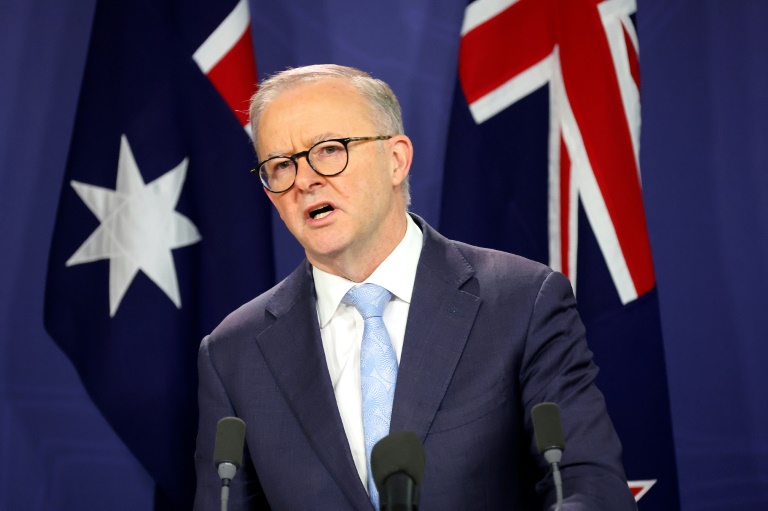
Prime Minister Anthony Albanese said the French firm had agreed to a “fair and an equitable settlement” of 555 million euros (US$584 million) for Australia ending a decade-old multi-billion-dollar submarine contract.

The agreement drew a line under a spat that caused leader-level recriminations and threatened to torpedo talks on an EU-Australia trade agreement.

“It permits us to turn a page in our bilateral relations with Australia and look to the future,” said French Defence Minister Sebastien Lecornu.

Albanese said he would travel to France soon to “reset” a relationship beset by “pretty obvious” tensions.

The tussle began in September 2021, when Australia’s then-prime minister Scott Morrison abruptly ripped up a long-standing contact with the French state-backed Naval to build a dozen diesel-powered submarines.

He also stunned Paris by revealing secret talks to buy US or British nuclear-powered submarines, a major shift for a country with little domestic nuclear capability.

The decision drew fury from French President Emmanuel Macron, who publicly accused Morrison of lying and recalled his ambassador from Australia in protest.

Relations were on ice until this May when Australia elected centre-left leader Albanese.

Since coming to office, he has rushed to fix strained relations with France, New Zealand, and Pacific Island nations, who objected to the previous conservative government’s foot-dragging on climate change.

“We are re-establishing a better relationship between Australia and France,” Albanese said, after speaking to Macron about the settlement.

“I’m looking forward to taking up President Macron’s invitation to me to visit Paris at the earliest opportunity.”

Speaking on the sidelines of the Shangri-La Dialogue security summit in Singapore, Lecornu said France valued its “friendship” with Australia.

“Just because a government in the past did not keep its word, it does not mean we have to forget our strategic relationship,” he said.

“Australia has a new team in power, we are happy to be able to work with them.”

– Arms race –

The submarine contract had been the centrepiece of Australia’s race to develop its military capabilities, as it fears the threat from a more bellicose China under President Xi Jinping.

In total, the failed French submarine contract will have cost Australian taxpayers US$2.4 billion, Albanese said, with almost nothing to show for it.

The promised nuclear-powered submarines are likely to cost many billions more, but would give Australia the ability to operate more stealthily and — armed with sophisticated cruise missile capabilities — pose much more of a deterrent to Beijing.

But there remains deep uncertainty about how quickly they can be built.

The first US or British submarines likely will not be in the water for decades, leaving a long capability gap as Australia’s existing fleet ages.

The choice of contractor will have a significant economic impact and strategic implications, closely enmeshing the Australian navy with that of the chosen nation.

Former defence minister and now opposition leader Peter Dutton said this week that he had decided to source the submarines from the United States, an unusual revelation given the sensitivity of ongoing talks.

The current government has insisted no decision has yet been reached and has vowed to remain a close partner of the United States.

Meanwhile, Albanese has also made tentative steps to conduct the first ministerial-level talks with China in more than two years, after a range of bitter political and trade disputes.

Defence Minister Richard Marles said in Singapore Saturday said Australia wanted “respectful” relations with all countries in the region, adding: “This includes China.”

“Australia values a productive relationship with China. China is not going anywhere. And we all need to live together and, hopefully, prosper together,” he said.

Marles, however, rejected a pointed question from a Chinese military official who asked if the so-called AUKUS deal with the United States and Britain to supply submarine technology was a new defence alliance.

“AUKUS is not a mini-NATO,” Marles said. “It’s not an alliance.”

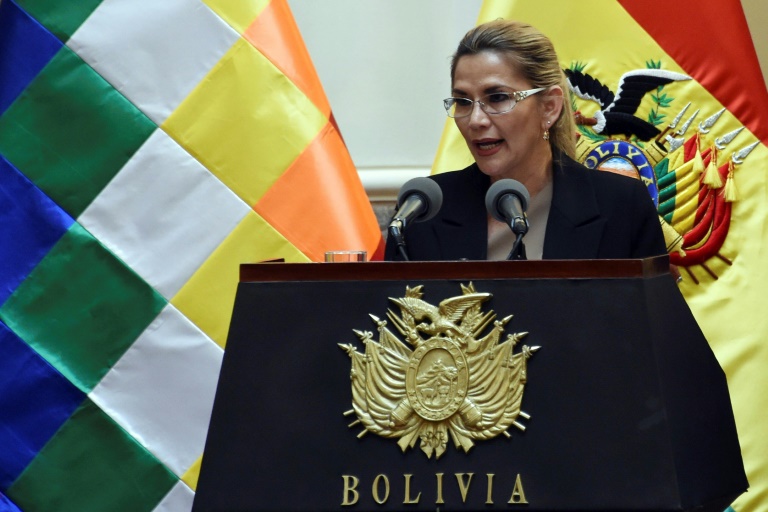
Bolivian ex-president Anez sentenced to 10 years in prison

Bolivian ex-president Jeanine Anez was sentenced Friday to 10 years in prison, more than a year after her arrest for an alleged plot — dismissed as fictional by many — to oust her rival and predecessor Evo Morales.

Anez, who has been held in pre-trial detention since March 2021, has consistently denounced what she calls political persecution.

The former interim leader will serve 10 years in a women’s prison in La Paz, the administrative capital’s First Sentencing Court announced in a decision that comes three months after her trial began. 

Convicted of crimes “contrary to the constitution and a dereliction of duties,” Anez was sentenced to “a punishment of 10 years” over accusations stemming from when she was a senator, before becoming president.

Prosecutors had asked for a 15-year jail sentence.

The former leader had already announced she would appeal if convicted, saying: “We will not stop there, we will go before the international justice system.”

Also sentenced to 10 years were the former head of the armed forces, William Kaliman, and the former head of the police, Yuri Calderon, both of whom are on the run.

Anez still faces a separate, pending court case for sedition and other charges related to her short presidential stint.

At the start of her presidency, Anez had called in the police and military to restore order. The post-election conflict caused 22 deaths, according to the Inter-American Commission on Human Rights (IACHR). 

For that, Anez also faces genocide charges, which carry prison sentences of between 10 and 20 years.

– ‘Political persecution’ –

Right-wing Anez became Bolivia’s interim president in November 2019 after Morales, who claimed to have won a fourth consecutive term as president, fled the country in the face of mass protests against alleged electoral fraud.

The Organization of American States (OAS) said at the time it had found clear evidence of voting irregularities in favor of Morales, who had been in power for 14 years.

Many potential successors to Morales — all members of his MAS party — also resigned and fled, leaving opposition member Anez, then vice-president of the Senate, next in line.

Virtually unknown, the lawyer and former television presenter proclaimed herself interim president of the Andean nation on November 12, 2019, two days after Morales’ resignation.

The Constitutional Court recognized Anez’s mandate as interim, caretaker president, but MAS members disputed her legitimacy.

Elections were held a year later, and won by Luis Arce — a Morales protege.

With the presidency and congress both firmly in MAS control, Morales returned to Bolivia in November 2020.

After handing over the presidential reins to Arce, Anez was arrested in March 2021, accused of irregularly assuming power. 

The arrest occurred in the city of Trinidad, located in the country’s Beni department, where she was born and where she returned after her tenure in office. 

“I denounce before Bolivia and the world that in an act of abuse and political persecution, the MAS government has ordered my arrest,” she said on Twitter at the time.

In detention, Anez would go on to carry out hunger strikes.

Shortly before the start of her trial in mid-February, she echoed the same sentiment, stating: “I assumed the presidency of Bolivia without asking for it, without seeking it and even less expecting it… with the sole mission of organizing elections and calming a country in crisis.”

According to one of Anez’s lawyers, Luis Guillen, the fact that multiple cases were being pursued against her at the same time violated the law.

He additionally maintained that the court that weighed in was not capable of deciding constitutional matters, and that the former president would need trying in congress.

The IACHR described the 22 deaths that occurred at the beginning of Anez’s tenure as “massacres,” and found they indicated “serious violations of human rights.”

Unlike the other accusations against Anez, the case will be dealt with by congress, which will decide whether or not to hold a trial.

Bolivia's Jeanine Anez: From president to prisoner

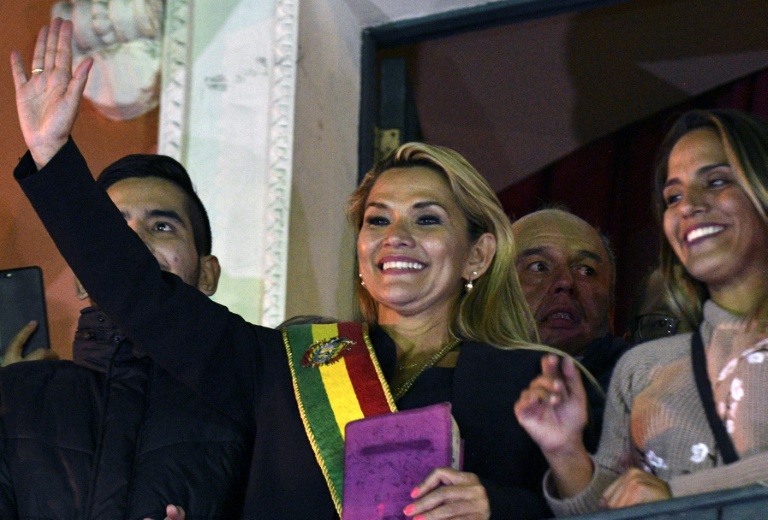
Conservative senator Jeanine Anez was unknown to many Bolivians before she stepped out onto the balcony of the government palace in November 2019, Bible in hand.

A longtime critic of her leftist predecessor Evo Morales, she stepped into the presidential vacuum left when he resigned and fled the country during violent post-election protests.

On Friday, no longer president and having spent more than a year in pre-trial detention, Anez was sentenced to 10 years in prison.

Her crime: an alleged plot — dismissed as fictional by many — to oust Morales.

The accusations came despite Anez having overseen fresh elections and relinquishing the presidency a year later to Luis Arce of Morales’s MAS party, which romped to power in voting in October of 2020.

“I congratulate the winners and ask them to govern with Bolivia and democracy in mind,” she said at the time.

In March of 2021, with Morales back in the country and his MAS party in control, Anez was arrested on charges of sedition and terrorism over what the government claims was a coup attempt against him.

“I denounce before Bolivia and the world that in an act of abuse and political persecution, the MAS government has ordered my arrest,” Anez said on Twitter at the time.

“They accuse me of having participated in a coup that never happened. My prayers for Bolivia and for all Bolivians.”

In pre-trial detention, she went on hunger strike more than once. Her trial began in mid-February.

Friday’s sentence of 10 years in a La Paz women’s prison stemmed from crimes “contrary to the Constitution and a breach of duties” over accusations pertaining to when she was a senator, before becoming president.

Anez still faces charges in a separate, pending case for sedition and other charges related to her short presidential stint.

– Bolivia’s second woman president –

As second deputy speaker of the Senate, Anez assumed the presidency in 2019 two days after Morales, a friend of Cuba and Venezuela, stepped down after 14 years in power.

Morales fled to Mexico after three weeks of violent unrest following elections in which he sought an unconstitutional fourth term. As opposition grew, he lost the support of the armed forces.

Anez took up the mantle as Bolivia’s 66th president — and its second woman in the role — after all the other officials in line to act as interim president had fled.

Facing an uprising by Morales supporters, she called in the police and military to restore order.

The post-election conflict caused about 35 deaths, according to the Inter-American Commission on Human Rights (IACHR). 

In January 2020, Anez announced her candidacy for the presidency, triggering criticism from opponents and allies claiming she was going back on her word to merely stand in until new elections were held.

The coronavirus epidemic arrived in Bolivia under her watch in March 2020, and with it, accusations of corruption in the acquisition of ventilators from Spain.

Anez blamed her health minister and fired him.

In September, she withdrew from the presidential race as opinion polls predicted certain defeat.

– ‘Coup-mongering’ senator –

When taking over as president, Anez had vowed to “pacify the country.” But Morales immediately branded her “a coup-mongering right-wing senator.”

She had “declared herself… interim president without a legislative quorum, surrounded by a group of accomplices,” he said at the time.

After learning of the arrest warrant against her, Anez claimed she was a victim of lies and defended her “constitutional” assumption of power in 2019, which she said was necessitated by “electoral fraud.”

The 54-year-old former lawyer and television presenter served from 2006 to 2008 as a member of an assembly that drew up Bolivia’s constitution. She has been a senator since 2010.

She is a member of a minority conservative political group, Democratic Unity, and became second deputy leader of the Senate in line with a tradition that all parties be represented in the top posts.

A proud Christian, Anez posed with a purple Bible at her swearing-in ceremony, seeking to distinguish herself from Morales — a socialist who had done away with religious oaths of office.

“God has allowed the Bible to come back into the (presidential) palace. May He bless us,” she said.

Anez lived in the city of Trinidad, capital of the Amazonian department of Beni, where she was arrested.

Close Bitnami banner
Bitnami