World

War in Ukraine: Latest developments

Here are the latest developments in the war in Ukraine:

– Ukraine strikes Kherson –

Ukraine said it has struck Russian military positions in the southern Kherson region where Kyiv’s army is fighting to reclaim territory captured by Moscow early in the invasion.

“Our aircraft carried out a series of strikes on enemy bases… equipment and personnel and field depots around five different settlements in the Kherson region,” the defence ministry said.

– Donbas cities ‘holding on’ –

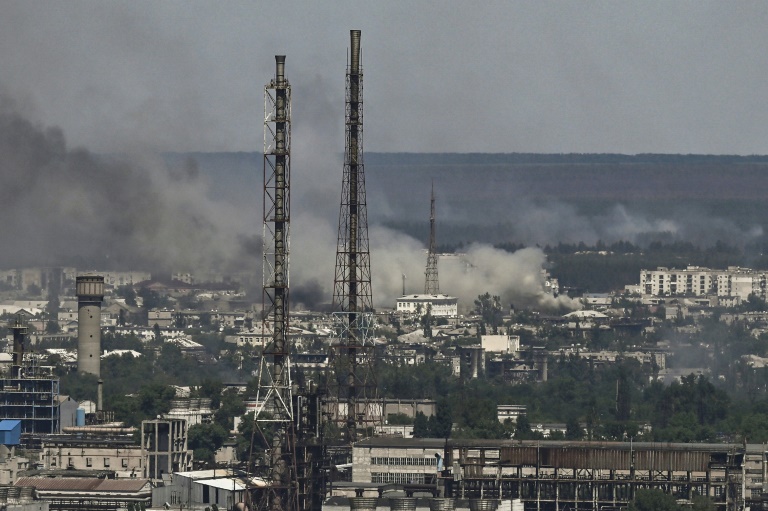
Ukraine’s President Volodymyr Zelensky said Ukrainian forces are “holding on” in the battered eastern city of Severodonetsk.

But Ukrainian forces have made strides in the Zaporizhzhia and Kharkiv regions outside Donbas, and are “liberating our land”, he added.

– Death sentences rile UN and Britain –

The UN warns that unfair trials of prisoners amounts to war crimes after pro-Russian separatists sentenced two captured British fighters and a Moroccan to death for joining Ukraine’s army. 

British Prime Minister Boris Johnson said he was “appalled” by the verdicts, calling them an “egregious breach of the Geneva convention”.

– Kyiv in ‘no danger’ –

Ukraine’s Interior Minister Denys Monastyrsky said there is no imminent risk of Russia marching on Kyiv, but the capital would not let its guard down.

“There is no danger of an attack on Kyiv today,” Monastyrsky said. “There is no concentration of troops near the Belarusian border, but we understand any scenarios are possible tomorrow,” he told AFP.

“Therefore, serious training is under way” on a line of defence around the city. 

– Africa urges Kyiv to demine –

Senegalese President and African Union head Macky Sall urged Ukraine to demine waters around its Odessa port to ease much needed grain exports.

Cereal prices in Africa have surged because of the slump in grain exports since the war began, sparking fears of famine and social unrest on the continent.

– Zelensky’s new EU call –

Ukraine’s president said his country should not to be left in a “grey zone” with its EU membership bid, saying 70 percent of Europeans see the country as part of “the European family”.

– Russia recovers… –

Russia’s central bank cut interest rates for the second time in a fortnight, saying its economy is recovering faster than expected from sanctions.

But it warned that the “external environment for the Russian economy remains challenging.”

– …as Ukraine economy shrinks –

The war has caused Ukraine’s economy to contract by 15.1 percent in the first three months of the year, the state statistics agency said.

The invasion laid waste to large swathes of the economy, with the International Monetary Fund predicting Ukraine’s gross domestic product will shrink by 35 percent in 2022.

– ‘Made in Russia’ no sanctions remedy: Putin –

Russian President Vladimir Putin said producing goods locally to circumvent Western sanctions was not a cure-all and that Russia is looking for new trading partners.

burs-raz/fg/ach 

'Acquit me,' Russian MH17 suspect tells Dutch judges

A Russian suspect accused of downing Malaysia Airlines flight MH17 told Dutch judges on Friday he had “nothing to do with the disaster”, as the long-running trial concluded.

Oleg Pulatov is one of four men on trial in absentia for shooting down the jetliner in July 2014 as it passed over war-torn eastern Ukraine, killing all 298 passengers on board.

The trial is being held in the Netherlands as the Boeing 777 was flying from Amsterdam to Kuala Lumpur and most of the victims were Dutch.

“I am not guilty. I have nothing to do with the disaster of July 17, 2014,” Pulatov, said in a video statement played to the court.

“I fully took part in the (court) procedure and there is irrefutable evidence that the prosecution did not explain the full circumstances of the crash,” added Pulatov, speaking in Russian.

“It is the prosecution’s main aim to get a conviction by any means,” said Pulatov, dressed in a blue shirt and jacket and speaking directly to the camera.

“Acquit me,” he then told judges at the hearing, which opened at a top-security courthouse near Schiphol airport in March 2020. 

A verdict is not expected until at least November 17, judges said on Friday. 

Presiding judge Hendrik Steenhuis said “the case has made a massive impression on all here in the courtroom and those outside.”

Russian nationals Igor Girkin, Sergei Dubinsky and Pulatov as well as Ukranian citizen Leonid Kharchenko have all refused to appear in court and are being tried in absentia.

Only Pulatov has legal representation.

The MH17 trial has taken on new significance since Russia’s late February invasion of Ukraine, in which a slew of new war crimes are being alleged.

On Thursday, Pulatov’s lawyer Sabine ten Doesschate said prosecutors failed to prove a Russian-made BUK missile was responsible for shooting down flight MH17.

Prosecutors have called for life sentences for the four men.

Girkin, 51, also known by his pseudonym “Strelkov”, is the most high-profile suspect — a former Russian spy and historical re-enactment fan who helped kickstart the war in Ukraine.

Dubinsky, 59, who has also been linked with Russian intelligence, allegedly served as the separatists’ military intelligence chief.

Pulatov, 55, was an ex-Russian special forces soldier and one of Dubinsky’s deputies.

Kharchenko, 50, allegedly led a separatist unit in eastern Ukraine.

US inflation skyrockets, prolonging pain for consumers

US inflation resurged in May, defying hopes price pressures would slow, and posting the largest increase since December 1981 as Americans continue to shell out ever more for food and gas, according to data released Friday.

Consumer prices in the world’s largest economy have soared by the fastest pace in more than four decades, with gas prices at the pump hitting new records daily amid the fallout from Russia’s invasion of Ukraine as well as ongoing supply chain challenges due to the Covid-19 pandemic.

US President Joe Biden, whose popularity has taken a hit as prices surge, has made fighting inflation his top domestic priority, but is finding he has few tools to directly impact prices.

Biden has tried to hammer home his optimistic message about the economic progress in the wake of the pandemic, including rapid GDP growth and record job creation, while pressing Congress to take action to lower costs on specific products.

But the latest inflation data dealt a crushing blow, as the consumer price index (CPI) jumped 8.6 percent compared to May 2021, up from 8.3 percent in the 12 months ending in April and topping what most economists thought was the peak of 8.5 percent in March.

Prices continued to rise last month for a range of goods, including housing, groceries, airline fares and used and new vehicles, with annual gains setting new records in multiple categories, according to the Labor Department report.

“The headline inflation numbers are dreadful. Strip away some special factors & they’re merely bad,” Harvard economist and former White House advisor Jason Furman said on Twitter.

Some economists expected the easing of pandemic restrictions to cause shift of US consumer demand towards services and away from goods, which they said would ease inflation pressures, but prices for services increased as well.

“This report tells a pessimistic story of a broader rise in prices, and the shift in price pressures from goods (which reflects many pandemic-related pressures) to services (where inflation was yet to really emerge),” said Justin Wolfers, an economics professor at the University of Michigan, on Twitter.

– Soaring energy –

CPI rose one percent compared to April, after the modest 0.3 percent gain in the prior month, the Labor Department reported, far higher than expected by analysts who were looking for inflation pressures to ebb slightly.

Energy has soared 34.6 percent over the past year, the fastest since September 2005, while food jumped 10.1 percent — the first increase of more than 10 percent since March 1981, the report said.

Fuel oil in particular more than doubled, jumping 106.7 percent, the largest increase in the history of CPI, which dates to 1935, according to the report.

Food and fuel prices have accelerated in recent weeks since the Russian invasion of Ukraine sent global oil and grain prices up, and American drivers are facing daily record gas prices, with the national average hitting $4.99 a gallon on Friday, according to AAA.

The United States has come roaring back from the economic damage inflicted by the Covid-19 pandemic, helped by bargain borrowing costs and massive government stimulus measures.

But with the pandemic still gripping other parts of the world, global supply chain snarls have caused demand to far outstrip resources. Meanwhile, the conflict in Ukraine has sent global oil prices above $100 a barrel.

The Federal Reserve has begun raising interest rates aggressively, with another big hike expected next week, as policymakers attempt to combat inflationary pressures without triggering a recession.

“This report kills any last vestiges of hope that the Fed could pivot to 25bp in July,” said Ian Shepherdson of Pantheon Economics, referring to a quarter-point rate hike. “But we remain hopeful” to see such a shift in September.

China will 'not hesitate to start war' over Taiwan, Beijing tells US

Beijing will “not hesitate to start a war” if Taiwan declares independence, China’s defence minister warned his US counterpart Friday, the latest salvo between the superpowers over the island. 

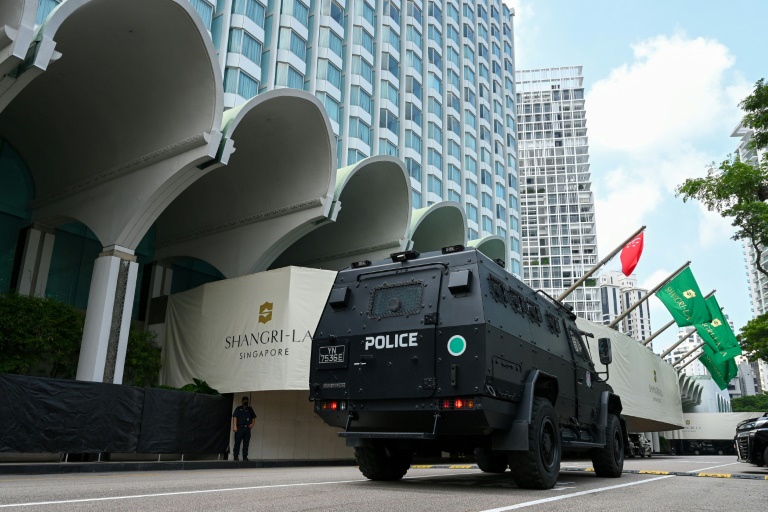
The warning came as Wei Fenghe held his first face-to-face meeting with US Defence Secretary Lloyd Austin on the sidelines of the Shangri-La Dialogue security summit in Singapore.

US-China tensions have been soaring over democratic, self-ruled Taiwan, which lives under constant threat of invasion by China. Beijing views the island as its territory and has vowed to one day seize it, by force if necessary.

Wei warned Austin that “if anyone dares to split Taiwan from China, the Chinese army will definitely not hesitate to start a war no matter the cost”, defence ministry spokesman Wu Qian quoted the minister as saying during the meeting. 

The Chinese minister vowed that Beijing would “smash to smithereens any ‘Taiwan independence’ plot and resolutely uphold the unification of the motherland”, according to the Chinese defence ministry.

He “stressed that Taiwan is China’s Taiwan… Using Taiwan to contain China will never prevail”, the ministry said. 

Austin “reaffirmed the importance of peace and stability across the (Taiwan) Strait, opposition to unilateral changes to the status quo, and called on (China) to refrain from further destabilising actions toward Taiwan”, according to the US Department of Defense.

Tensions over Taiwan have escalated, in particular due to increasing Chinese aircraft incursions into the island’s air defence identification zone (ADIZ).

– Troubled waters –

US President Joe Biden, during a visit to Japan last month, appeared to break decades of US policy when, in response to a question, he said Washington would defend Taiwan militarily if it is attacked by China. 

The White House has since insisted its policy of “strategic ambiguity” over whether or not it would intervene has not changed. 

Austin is the latest senior US official to visit Asia as Washington seeks to shift its foreign policy focus back to the region from the Ukraine war.

As well as on Taiwan, China and the United States have been locked in a range of other disputes. 

They have been at loggerheads over Russia’s invasion of Ukraine, with Washington accusing Beijing of providing tacit support for Moscow.

China has called for talks to end the war, but has stopped short of condemning Russia’s actions and has repeatedly criticised American arms donations to Ukraine.

China’s expansive claims in the South China Sea have also stoked tensions with Washington.

Beijing claims almost all of the resource-rich sea, through which trillions of dollars in shipping trade passes annually, with competing claims from Brunei, Malaysia, the Philippines, Taiwan and Vietnam.

Austin arrived in Singapore late Thursday, and held a series of meetings with his counterparts on Friday. 

At a meeting with Southeast Asian defence ministers, he spoke about Washington’s “strategy in maintaining an open, inclusive and rules-based regional security environment”, according to a statement from the Singapore government. 

His comments were a veiled reference to countering China’s increasing assertiveness in the region. 

Austin will deliver a speech at the forum on Saturday, followed by Wei on Sunday. The summit runs from June 10 to 12 and is taking place for the first time since 2019 after twice being postponed due to the Covid-19 pandemic.

Hit by war, Ukraine toy maker back in business

Sweet-smelling wood chips are layering the factory floor again at the toy manufacturer where Robert Milayev works now that production has restarted after the withdrawal of Russian troops.

Thanks to donations, the factory outside Kyiv is back making wooden toys following a three-month hiatus that started when fighting with Moscow’s army left the factory damaged.

“When the electricity came back on and the sound of the machines came back, we were crazy with joy,” says Milayev, the chief engineer.

Like the rest of the village of Gorenka, the Ugears factory still bears the scars of Russia’s invasion. Windows at the factory are still being replaced.

On May 18, after Russian troops pulled back, employees put on overalls again and production of laser-cut models from birch, alder and poplar has been running at full speed ever since.

“Before the war, the wood came from Belarus, but now we buy it mainly from Ukraine,” says CEO Oleksiy Lysianyi, referring to his country’s northern neighbour which hosts Russian forces.

Nearly five million jobs have been lost in Ukraine since Russia attacked on February 24, according to the International Labor Organization. Lysianyi has managed to keep all his staff.

Some 800,000 euros ($860,000) collected by a charity has allowed the company to move forward, despite a slump in sales.

No employees were hurt when fighting was raging around the factory and Russian forces were still trying to advance towards Kyiv. Storage units at a separate location that was occupied by Russian troops were lost.

Now, each online purchase on the company website includes a 5-euro donation to the war effort. Customers in 85 countries on five continents have already made their donations.

– Toys for adults –

“When we say we deliver to China, people are surprised because we usually buy from there,” says Lysianyi. 

The Ukrainian flag is everywhere — on the factory roof, plastered on its walls.

Thirty-three-year-old manager of the packaging line Iryna Denysyuk says she is “very proud” to continue the work even during war.

The hundreds of models of games and puzzles being produced in Gorenka aren’t even meant for children. These toys are for grown-ups, people fourteen years or older. 

“Still I test them with my children. This helps us get some family time in an age where many young people are glued to their cell phones,” says Lyssiany to the sounds of building work.

Before the war, over 100,000 units rolled off the production lines every month. 

“It takes ten minutes to build the simplest ones, but at least twelve hours to build the 450-piece train,” Lysianyi told AFP.

They are designed to be assembled without glue and the packaging mirrors the puzzles’ complex computer designs.

As the war-time economy obliges, nothing is wasted. Leftover wood from the laser-cut plates are given to a company that uses them as fuel.

The cut-outs are carefully checked for quality. Milayev says he is thinking up new designs to give preoccupied minds in his country a distraction.

US seeks migration policy agreement at close of contested summit

The United States was Friday seeking a unified declaration on migration at the close of a week-long Americas summit that has been beset by disputes.

Mexico and several Central American nations — who are key players, along with Haiti, on migration to the United States — declined to send their leaders to the week-long Summit of the Americas held in Los Angeles.

But US officials said they worked with neighboring nations and expected wide support Friday for a “Los Angeles declaration” on migration.

The statement, officials said, will formalize many of the arrangements already in place amid a surge of migration into the United States.

The countries will agree to reinforce systems to process claims for asylum on their soil and also to share costs with nations that have been on the frontlines of taking in migrants.

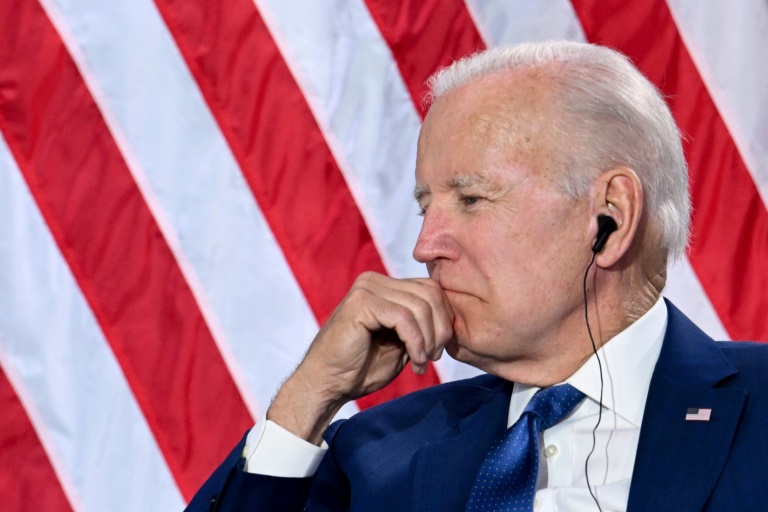
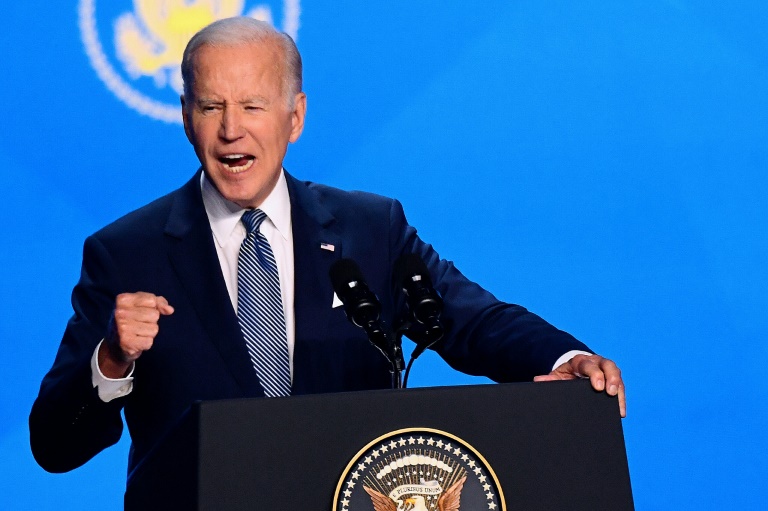
“Each one of our countries has been impacted by unprecedented migration, and I believe it’s our shared responsibility to meet this challenge,” US President Joe Biden told the summit on Thursday.

Countries across the Americas will seek to boost “safe and orderly migration” and to “coordinate specific, concrete actions to secure our borders,” Biden said.

Migration has been a hot-button political issue in Washington as poverty, violence and national disasters have led to a rise in Central Americans and Haitians seeking to enter the United States.

Lawmakers of former president Donald Trump’s Republican Party have seized on the issue, denouncing many migrants and accusing Biden of failing to act effectively.

Migration has increasingly been felt across the hemisphere, with millions of Venezuelans also fleeing a crumbling economy.

– Friction over invitations –

The Summit of the Americas was hit by discord even before it began, as Biden refused to invite the leftist leaders of Cuba, Nicaragua and Venezuela on the grounds that they are authoritarians.

Mexican President Andres Manuel Lopez Obrador boycotted the summit to protest the exclusions, and leaders criticized the decision to Biden’s face in a plenary session on Thursday.

“Being the host country of the summit doesn’t grant the ability to impose a right of admission on member countries of the continent,” said Argentina’s center-left president, Alberto Fernandez, who attended after a personal appeal by Biden.

The prime minister of tiny Belize, John Briceno, directly criticized Biden and told him that longstanding US sanctions on communist Cuba were a “crime against humanity.”

Biden, who applauded politely and greeted each leader, returned to the podium to say that his agenda was on track.

“Notwithstanding some of the disagreements relating to participation, on the substantive matters, what I heard was almost unity and uniformity,” the US president said.

Biden called the summit in the face of rising Chinese influence in a region that the United States has long considered its home turf.

But the Biden administration has steered clear of big-dollar announcements and instead focused on broad declarations and pledged to work out specifics later.

The administration promised during the week-long summit to work to train 500,000 health workers in the Americas and unveiled $1.9 billion in private funding for Central America to create jobs and stem some of the push factors of migration.

Biden also met at the summit with Brazilian President Jair Bolsonaro, a first encounter with a leader who has questioned not only the legitimacy of upcoming elections at home but also of the US polls in which Biden defeated Trump.

Bolsonaro, who was one of Trump’s closest international allies, is trailing in polls ahead of October elections.

But he said that he was pleasantly surprised by his meeting Thursday with Biden and looked forward to further talks.

US seeks migration policy agreement at close of contested summit

The United States was Friday seeking a unified declaration on migration at the close of a week-long Americas summit that has been beset by disputes.

Mexico and several Central American nations — who are key players, along with Haiti, on migration to the United States — declined to send their leaders to the week-long Summit of the Americas held in Los Angeles.

But US officials said they worked with neighboring nations and expected wide support Friday for a “Los Angeles declaration” on migration.

The statement, officials said, will formalize many of the arrangements already in place amid a surge of migration into the United States.

The countries will agree to reinforce systems to process claims for asylum on their soil and also to share costs with nations that have been on the frontlines of taking in migrants.

“Each one of our countries has been impacted by unprecedented migration, and I believe it’s our shared responsibility to meet this challenge,” US President Joe Biden told the summit on Thursday.

Countries across the Americas will seek to boost “safe and orderly migration” and to “coordinate specific, concrete actions to secure our borders,” Biden said.

Migration has been a hot-button political issue in Washington as poverty, violence and national disasters have led to a rise in Central Americans and Haitians seeking to enter the United States.

Lawmakers of former president Donald Trump’s Republican Party have seized on the issue, denouncing many migrants and accusing Biden of failing to act effectively.

Migration has increasingly been felt across the hemisphere, with millions of Venezuelans also fleeing a crumbling economy.

– Friction over invitations –

The Summit of the Americas was hit by discord even before it began, as Biden refused to invite the leftist leaders of Cuba, Nicaragua and Venezuela on the grounds that they are authoritarians.

Mexican President Andres Manuel Lopez Obrador boycotted the summit to protest the exclusions, and leaders criticized the decision to Biden’s face in a plenary session on Thursday.

“Being the host country of the summit doesn’t grant the ability to impose a right of admission on member countries of the continent,” said Argentina’s center-left president, Alberto Fernandez, who attended after a personal appeal by Biden.

The prime minister of tiny Belize, John Briceno, directly criticized Biden and told him that longstanding US sanctions on communist Cuba were a “crime against humanity.”

Biden, who applauded politely and greeted each leader, returned to the podium to say that his agenda was on track.

“Notwithstanding some of the disagreements relating to participation, on the substantive matters, what I heard was almost unity and uniformity,” the US president said.

Biden called the summit in the face of rising Chinese influence in a region that the United States has long considered its home turf.

But the Biden administration has steered clear of big-dollar announcements and instead focused on broad declarations and pledged to work out specifics later.

The administration promised during the week-long summit to work to train 500,000 health workers in the Americas and unveiled $1.9 billion in private funding for Central America to create jobs and stem some of the push factors of migration.

Biden also met at the summit with Brazilian President Jair Bolsonaro, a first encounter with a leader who has questioned not only the legitimacy of upcoming elections at home but also of the US polls in which Biden defeated Trump.

Bolsonaro, who was one of Trump’s closest international allies, is trailing in polls ahead of October elections.

But he said that he was pleasantly surprised by his meeting Thursday with Biden and looked forward to further talks.

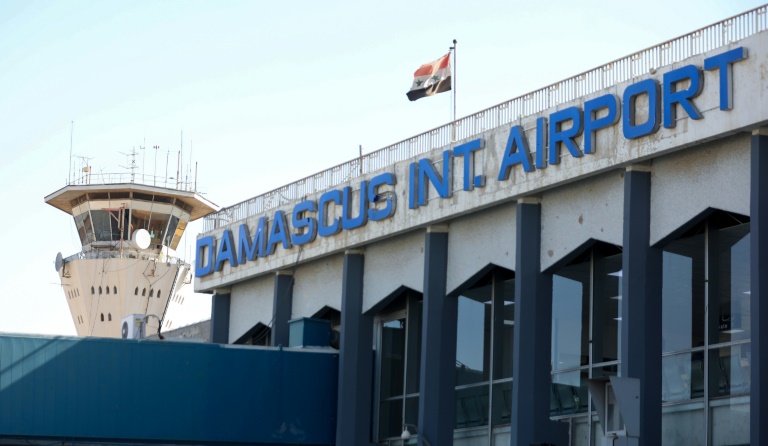
Syria halts Damascus airport flights after Israeli strikes

All flights to and from Syria’s capital were halted Friday, the government said, after Israeli air strikes wounded at least one civilian and reportedly caused damage to an airport runway.

Since civil war broke out in Syria in 2011, Israel has carried out hundreds of air strikes against its neighbour, targeting government troops as well as allied Iran-backed forces and fighters from Lebanon’s Hezbollah, but rarely have such attacks caused major flight disruptions.

The Syrian Observatory for Human Rights war monitor said the latest strike carried out before dawn on Friday hit three arms depots near Damascus airport belonging to Hezbollah, as well as other Iran-backed groups.

Syria’s transport ministry later announced the “suspension of incoming and outgoing flights through Damascus International Airport” as a result of technical disruptions.

“The resumption of flights shall be declared once the installations and equipment are fixed to ensure the safety and security of the operational traffic,” it said, quoted by the official news agency SANA.

An airport employee told AFP that the Israeli strikes had “affected” the facility.

“We had to postpone all flights for at least 48 hours and some flights have been rerouted through Aleppo airport,” the employee said on condition of anonymity because he is not authorised to speak on the issue.

An official at an Arab airline said separately that an airport landing strip had been hit during the Israeli assault — a development the pro-government newspaper Al-Watan also reported.

The official, who also spoke on condition of anonymity, said there had been no departures or arrivals from the airport since the strikes.

The Syrian Observatory for Human Rights said the damaged runway was the only one still operational after an Israeli strike last year put another one out of service.

The 2021 strikes had targeted weapons shipments and arms depots operated by Iran-backed groups, said the Observatory, a Britain-based monitor that relies on a wide network of sources inside Syria.

The airport is located in a region south of Damascus where Iran-backed groups, including Hezbollah, regularly operate.

The vicinity of the facility is favourite target for Israel which has launched 15 aerial attacks on Syria this year alone and regularly accuses Iran of using Damascus airport to send weapons shipments to its allies.

– Arms depots –

The Observatory said the runway hit in the attack had already been in poor condition before the raids.

Syrian state media had reported the Israeli strikes on southern Damascus, saying a volley of missiles were fired from the occupied Golan Heights at around 4:20 am (0120 GMT).

Syrian air defences intercepted most of the missiles, but those that reached their target left at least one civilian wounded and caused material damage, SANA reported.

While Israel rarely comments on individual strikes, it has acknowledged carrying out hundreds of them.

The Israeli military says the strikes are necessary to prevent its arch foe Iran from gaining a foothold on its doorstep.

The conflict in Syria started with the brutal repression of peaceful protests and escalated to pull in foreign powers and global jihadists.

The war has killed nearly half a million people and forced around half of the country’s pre-war population from their homes.

La Nina climate cycle could last into 2023: UN

The weather phenomenon La Nina, which has affected global temperatures and worsened drought and flooding, will likely continue for months, and possibly even into 2023, the UN warned Friday.

La Nina refers to the large-scale cooling of surface temperatures in the central and eastern equatorial Pacific Ocean, occurring every two to seven years.

The UN’s World Meteorological Organization (WMO) said there was a 70 percent chance that the protracted La Nina event — which has held the globe in its clutches almost uninterrupted since September 2020 — will continue until at least August.

“Some long-lead predictions even suggest that it might persist into 2023,” it said in a statement.

If it does, this would be only the third so-called triple-dip La Nina — meaning the phenomenon is present during three consecutive northern hemisphere winters — on record since 1950, WMO said.

The effect has widespread impacts on weather around the world — typically the opposite impacts to the El Nino phenomenon, which has a warming influence on global temperatures.

The devastating drought ravaging the Horn of Africa and the drought in southern South America “bear the hallmarks of La Nina”, WMO said.

It also said the above average rainfall in Southeast Asia and Australia could be linked to the phenomenon, as could the predictions for an above average Atlantic hurricane season.

However, it stressed the impacts of naturally occurring climate events like La Nina were intensifying due to a warming planet.

“Human-induced climate change amplifies the impacts of naturally-occurring events like La Nina and is increasingly influencing our weather patterns,” WMO chief Petteri Taalas said in a statement.

He pointed in particular to “more intense heat and drought and the associated risk of wildfires — as well as record-breaking deluges of rainfall and flooding”.

Stocks slump further before key US inflation update

Stock markets tumbled further Friday as investors worried about recession risks stemming from decades-high inflation and rising interest rates.

With major global equity indices shedding about 1.5 percent, focus turned to the release later in the day of US consumer price figures.

“There is little respite at present from inflationary concerns, giving investors little room for manoeuvre in navigating the darkening economic clouds,” noted Richard Hunter, head of markets at Interactive Investor.

The European Central Bank on Thursday said it would raise interest rates next month to combat strong inflation, finally catching up with other major central banks that are tightening borrowing costs to try and cool the pace of consumer price rises.

Economists warn that surging inflation, driven by rocketing energy prices, could push top economies into recession.

Adding to the unease was news that officials in China had once again locked down millions of people for Covid testing owing to another flare-up in cases, dealing a blow to hopes for an economic reopening.

“Warning signs about the economy are emerging as weekly (US) jobless claims are starting to rise, China’s Covid situation will prove troublesome for supply chains over the next couple of quarters, and as inflationary pressures broaden and show no sign of easing,” said Edward Moya, analyst at OANDA trading group.

“It seems reductions in global growth forecasts will become a steady theme over the next few months and that should complicate how much more tightening we see from central banks,” he added.

Moya said the darkening economic outlook could provide an argument for the Fed to apply the brakes to hiking US interest rates later in the year.

With prices having surged for much of this year, central banks have been forced to withdraw the vast pandemic stimulus that helped fuel a rally across stock markets to record or multi-year highs.

The US Labor Department is set to release the May consumer price index (CPI) data on Friday, with analysts saying the data may show a modest slowdown in the torrid annual pace.

US consumer prices jumped 8.3 percent in the 12 months ending in April.

One bright note Friday was data showing that China’s producer price inflation eased last month to its lowest level in more than a year.

– Key figures at around 1045 GMT –

London – FTSE 100: DOWN 1.3 percent at 7,382.24 points

Frankfurt – DAX: DOWN 1.5 percent at 13,980.12

Paris – CAC 40: DOWN 1.6 percent at 6,257.33

EURO STOXX 50: DOWN 1.8 percent at 3,657.84

Tokyo – Nikkei 225: DOWN 1.5 percent at 27,824.29 (close)

Hong Kong – Hang Seng Index: DOWN 0.3 percent at 21,806.18 (close)

Shanghai – Composite: UP 1.4 percent at 3,284.83 (close)

New York – Dow: DOWN 1.9 percent at 32,272.79 (close)

Euro/dollar: DOWN at $1.0600 from $1.0620 late Thursday

Euro/pound: UP at 85.13 pence from 84.98 pence

Dollar/yen: DOWN at 133.84 yen from 134.40 yen

Pound/dollar: DOWN at $1.2450 from $1.2495

Brent North Sea crude: UP 0.8 percent at $124.09 per barrel

West Texas Intermediate: UP 0.5 percent at $122.17 per barrel

Close Bitnami banner
Bitnami