World

Textile industry set to unravel under Pakistan's power crisis

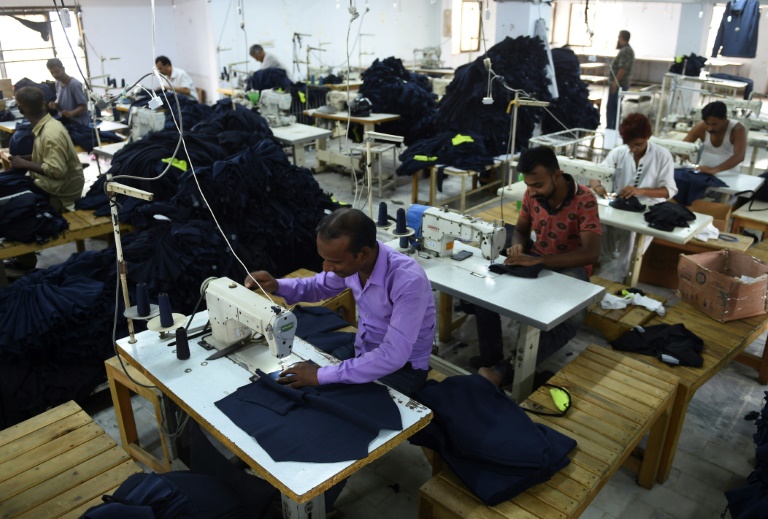
Pakistan’s textile exports are set to dramatically dip as the sector is hobbled by a nationwide energy crisis forcing daily power cuts on factories, with an industry leader warning about “a state of emergency” for the manufacturing hub.

The South Asian nation is in the midst of a dire economic crisis, with runaway inflation, a depleted rupee and dwindling foreign exchange reserves hampering energy imports.

Meanwhile a heatwave has caused a surge in electricity demand, leaving a shortfall of over 7,000 megawatts — one-fifth of Pakistan’s generation capacity — on some days this month, according to government figures.

The energy shortage has hit Pakistan’s vital textile industry, which supplies everything from denim to bed linen towards markets in the US and Europe, and accounts for 60 percent of the country’s exports.

“The textile industry is in a state of emergency,” Qasim Malik, the vice president of the Chamber of Commerce in the manufacturing hub of Sialkot, told AFP.

With authorities forced to ration the power supply with staggered blackouts, Malik said the “unannounced and unscheduled” outages disrupt the textile supply chain, which is “causing millions of rupees of losses”. 

“Should the power cuts persist there could be a decline of more than 20 percent in exports,” warned Sheikh Luqman Amin of the Pakistan Readymade Garments Manufacturers and Exporters Association. 

Larger factories tend to have independent power plants, leaving small- and medium-sized factories in cities such as Lahore, Faisalabad and Sialkot most exposed.

Owners have complained of power cuts of eight to 12 hours on a daily basis and face the dilemma of lower production or installing generators powered by petrol, which is also sharply rising in cost.

“We can’t accept new orders because we are already behind on previous ones,” said Sialkot garment factory owner Usman Arshad. 

“Things can’t continue to go on this way.”

Despite the nation’s economic woes, textile exports surged 28 percent to a record $17.67 billion in the fiscal year July-May 2021/22, the All Pakistan Textile Mills Association reported this week.

The Pakistani industry was buoyed by the tail end of the coronavirus pandemic, when it was freed of restrictions earlier than regional rivals India and Bangladesh.

The new government of Prime Minister Shehbaz Sharif is set to announce a budget on Friday attempting to turn around Pakistan’s dire finances.

It is expected the ledger will include a raft of measures to convince the International Monetary Fund to revive a stalled $6 billion bailout package.
Textile industry set to unravel under Pakistan's power crisis

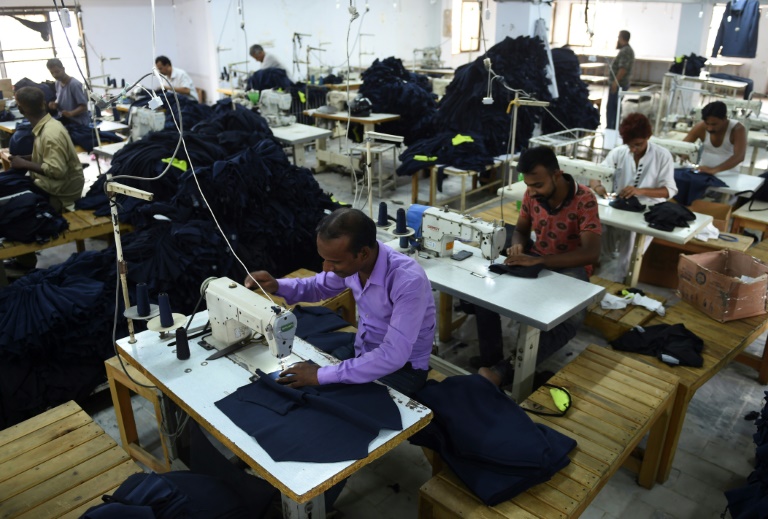
Pakistan’s textile exports are set to dramatically dip as the sector is hobbled by a nationwide energy crisis forcing daily power cuts on factories, with an industry leader warning about “a state of emergency” for the manufacturing hub.

The South Asian nation is in the midst of a dire economic crisis, with runaway inflation, a depleted rupee and dwindling foreign exchange reserves hampering energy imports.

Meanwhile a heatwave has caused a surge in electricity demand, leaving a shortfall of over 7,000 megawatts — one-fifth of Pakistan’s generation capacity — on some days this month, according to government figures.

The energy shortage has hit Pakistan’s vital textile industry, which supplies everything from denim to bed linen towards markets in the US and Europe, and accounts for 60 percent of the country’s exports.

“The textile industry is in a state of emergency,” Qasim Malik, the vice president of the Chamber of Commerce in the manufacturing hub of Sialkot, told AFP.

With authorities forced to ration the power supply with staggered blackouts, Malik said the “unannounced and unscheduled” outages disrupt the textile supply chain, which is “causing millions of rupees of losses”. 

“Should the power cuts persist there could be a decline of more than 20 percent in exports,” warned Sheikh Luqman Amin of the Pakistan Readymade Garments Manufacturers and Exporters Association. 

Larger factories tend to have independent power plants, leaving small- and medium-sized factories in cities such as Lahore, Faisalabad and Sialkot most exposed.

Owners have complained of power cuts of eight to 12 hours on a daily basis and face the dilemma of lower production or installing generators powered by petrol, which is also sharply rising in cost.

“We can’t accept new orders because we are already behind on previous ones,” said Sialkot garment factory owner Usman Arshad. 

“Things can’t continue to go on this way.”

Despite the nation’s economic woes, textile exports surged 28 percent to a record $17.67 billion in the fiscal year July-May 2021/22, the All Pakistan Textile Mills Association reported this week.

The Pakistani industry was buoyed by the tail end of the coronavirus pandemic, when it was freed of restrictions earlier than regional rivals India and Bangladesh.

The new government of Prime Minister Shehbaz Sharif is set to announce a budget on Friday attempting to turn around Pakistan’s dire finances.

It is expected the ledger will include a raft of measures to convince the International Monetary Fund to revive a stalled $6 billion bailout package.
Syria halts Damascus airport flights after Israeli strikes

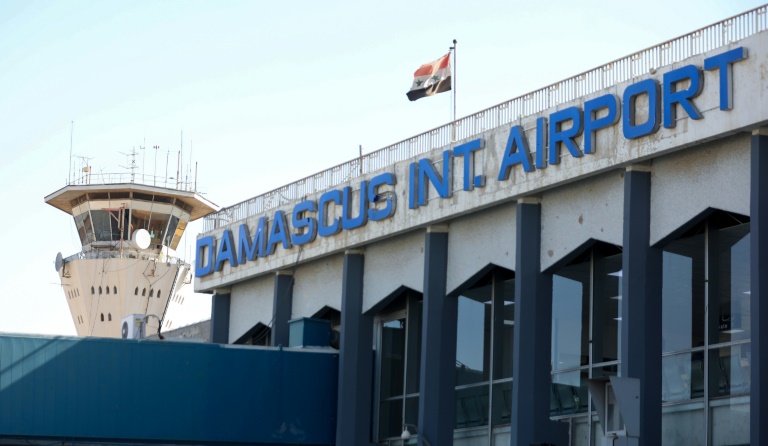
Syria on Friday halted flights to and from Damascus airport, the transport ministry said, after Israeli air strikes damaged a runway, according to sources.

The ministry said the “suspension of incoming and outgoing flights through Damascus International Airport” was due to technical disruptions, but an airport employee told AFP that the dawn strikes by Israel had “affected” the facility.

“We had to postpone all flights for at least 48 hours and some flights have been rerouted through Aleppo airport,” the airport employee said on condition of anonymity because he is not authorised to speak on the issue.

An official at an Arab airline who also spoke on the condition of anonymity said separately that an airport landing strip had been hit during the Israeli assault — a development the pro-government newspaper Al-Watan also reported.

Syrian state media had reported the Israeli strikes on southern Damascus, saying a volley of missiles were fired from the occupied Golan Heights at around 4:20 am (0120 GMT).

Syrian air defences intercepted most of the missiles, but those that reached their target left at least one civilian wounded and caused material damage, said the official news agency SANA.

The Syrian Observatory for Human Rights said the Israeli raids hit arms depots near Damascus airport belonging to the Lebanese Shiite movement Hezbollah, as well as other Iran-backed groups.

The Britain-based war monitor, which relies on a wide network of sources across Syria, said that at least three such positions were hit, leaving a number of people wounded.

Since civil war broke out in Syria in 2011, Israel has carried out hundreds of air strikes against its neighbour, targeting government troops as well as allied Iran-backed forces and Hezbollah fighters.

While Israel rarely comments on individual strikes, it has acknowledged carrying out hundreds of them.

The Israeli military says the strikes are necessary to prevent its arch foe Iran from gaining a foothold on its doorstep.

The conflict in Syria started with the brutal repression of peaceful protests and escalated to pull in foreign powers and global jihadists.

The war has killed nearly half a million people and forced around half of the country’s pre-war population from their homes.

War in Ukraine: Latest developments

Here are the latest developments in the war in Ukraine:

– Ukraine strikes Kherson –

Ukraine says it has struck Russian military positions in the southern Kherson region where Kyiv’s army is fighting to reclaim territory captured by Moscow’s forces early in their invasion.

“Our aircraft carried out a series of strikes on enemy bases, places of accumulation of equipment and personnel, and field depots around five different settlements in the Kherson region,” the defence ministry says.

– Donbas cities ‘holding on’ –

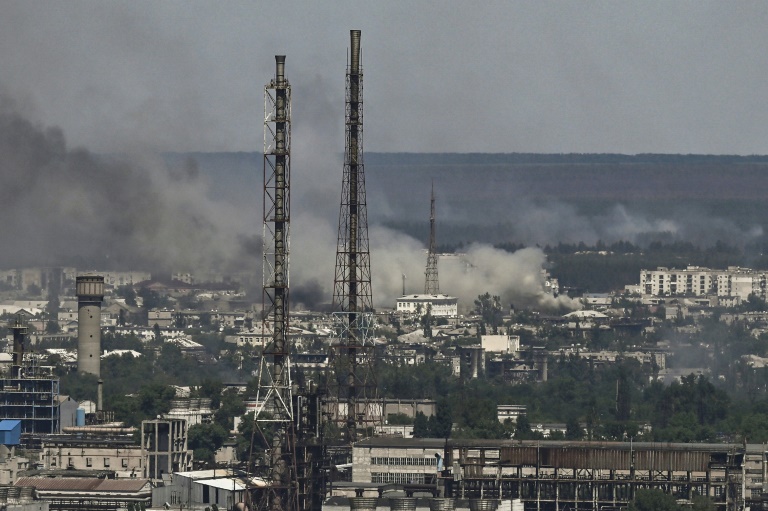
Ukraine’s President Volodymyr Zelensky says Ukrainian forces are “holding on” in the flashpoint eastern city of Severodonetsk.

In his nightly address, he says several “cities in Donbas, which the occupiers now consider key targets, are holding on”. 

Ukrainian forces have made positive strides in the Zaporizhzhia and Kharkiv regions outside Donbas, and are in the process of “liberating our land”, he adds.

– Kyiv in ‘no danger’ –

Ukraine’s Interior Minister Denys Monastyrsky says there is no imminent risk of Russians marching on Kyiv, but the capital would not let its guard down.

“There is no danger of an attack on Kyiv today,” Monastyrsky says. “There is no concentration of troops near the Belarusian border, but we understand that any scenarios are possible tomorrow,” he tells AFP.

“Therefore, serious training is under way — preparation of the line of defence, training of troops who will remain” in Kyiv and around the city. 

– British, Moroccan fighters sentenced to death –

Russian news agencies say pro-Moscow separatists in eastern Ukraine have sentenced to death two British fighters and a third from Morocco captured by Russian troops while fighting for Ukraine. 

The “supreme court of the Donetsk People’s Republic”, one of two self-proclaimed statelets in the Donbas region, ordered the death penalty for Aiden Aslin, Shaun Pinner and Saaudun Brahim after convicting them of acting as mercenaries during a three-day trial.

The UK says it is “deeply concerned” by their sentences and accuses the separatists of violating the Geneva Conventions on the rules of war.

– ‘Made in Russia’ no sanctions remedy: Putin –

Russian President Vladimir Putin says producing goods locally to circumvent Western sanctions over the invasion was not a cure-all and that Russia is looking for new trading partners.

“The substitution of imports is not a panacea,” Putin tells a group of young entrepreneurs who complained of a lack of hitherto imported goods in their quest to develop vaccines.

– AU chair urges Ukraine to demine Odessa –

Senegalese President and African Union Chair Macky Sall urges Ukraine to demine waters around its Odessa port to ease much needed grain exports.

Cereal prices in Africa — the world’s poorest continent — have surged because of the slump in exports, sharpening the impact of conflict and climate change and sparking fears of social unrest.

If wheat exports do not resume from Ukraine, Africa “will be in a situation of very serious famine that could destabilise the continent”, Sall tells French media outlets France 24 and RFI.

– War shrinks Ukraine economy

The war has caused Ukraine’s economy to contract by 15.1 percent in the first three months of this year, the state statistics agency says.

The invasion laid waste to large swathes of the Ukrainian economy, with several companies forced to shut or dramatically recalibrate production. 

The International Monetary Fund predicts a contraction in Ukraine’s gross domestic product of 35 percent across the whole of 2022.

burs-raz/yad

Italy to kill 1,000 pigs in swine fever outbreak

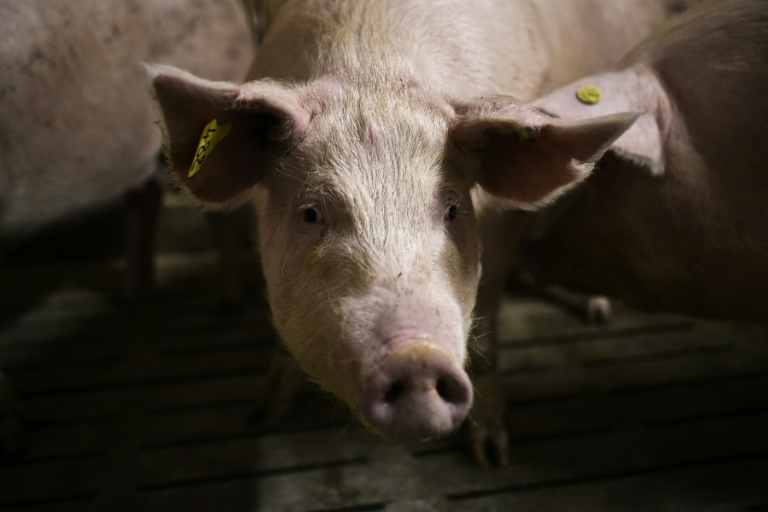
A thousand pigs will be slaughtered after two cases of swine fever were detected on a farm in Rome’s Lazio region, officials said Friday, spurring fears of a blow to the country’s pork industry.

“We have to slaughter all the pigs in the contaminated area very quickly,” Angelo Ferrari, tasked with managing the crisis, told AGI news agency.

The local health agency estimated 1,000 pigs would have to be culled to stem the spread, he said.

“The sooner we act decisively and incisively, the greater our hope that the commercial damage will be reduced,” he said.

Italy, with about 8.9 million pigs, is the seventh biggest pork producer in the European Union, representing an eight-billion-euro ($9.1 billion) industry, according to the agricultural association Confagricoltura.

The two case of African swine fever detected in Lazio are the first among farmed pigs in Italy. Before that, cases were detected in wild boar in January in northern Italy, then in the Lazio region.

African swine fever (ASF) does not affect humans but is contagious and fatal for pigs and their wild relatives and an outbreak is potentially devastating for the pork industry, experts say.

A 2018 outbreak in China — the world’s largest pork producer — caused millions of pigs to be slaughtered to stop the spread.

The disease has existed in Africa for decades. In a December 3 report on the virus, the World Organisation for Animal Health (OIE) said ASF had been reported in 32 countries in five world regions since January 2020. 

In Italy, it has been endemic on the island of Sardinia since first appearing in 1978.

In western Europe, the virus was reported in Belgium in 2018, prompting China to ban all imports of Belgian pork.

After Germany confirmed its first case in a dead wild boar in 2020, China, Japan and South Korea, alongside Brazil and Argentina, also suspended German pork imports.

Italy’s main agricultural association Coldiretti called on the government last month for the “rapid culling” of boars throughout the country to help stop the spread of the disease.

Images of boar walking through residential areas of Rome and feeding at overflowing rubbish bins regularly do the rounds on social media networks.

China, US defence ministers hold talks in Singapore

The US and Chinese defence ministers held their first face-to-face talks in Singapore Friday, as the superpowers lock horns over security disputes ranging from Taiwan to contested waters. 

The relationship between the two countries has deteriorated due to myriad issues in recent years. As well as Taiwan and the South China Sea, they have clashed over cybersecurity and human rights in Hong Kong and Xinjiang.

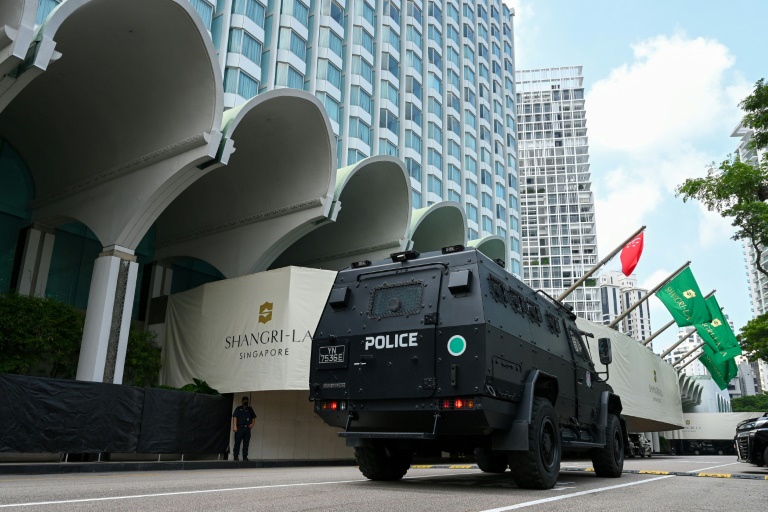
US Defence Secretary Lloyd Austin met Wei Fenghe on the sidelines of the Shangri-La Dialogue security summit, which is attended by defence ministers and senior officials from around the world.

Austin is the latest senior US official to visit Asia as Washington seeks to shift its foreign policy focus back to the region from the Ukraine war.

A Pentagon spokesman confirmed the talks were underway in Singapore, and Chinese state broadcaster CCTV said it was the pair’s first meeting since Austin took office. They previously held talks on the phone in April. 

A major issue on the agenda could be Taiwan, a self-ruled, democratic island that lives under the constant threat of invasion by China. 

Beijing views the island as its territory and has vowed to one day seize it, by force if necessary.

Tensions have been stoked by increasing Chinese aircraft incursions into the island’s air defence identification zone (ADIZ).

President Joe Biden, during a visit to Japan last month, appeared to break decades of US policy when, in response to a question, he said Washington would defend Taiwan militarily if it is attacked by China. 

The White House has since insisted its policy of “strategic ambiguity” over whether or not it would intervene has not changed. 

– Troubled waters –

The two sides have also been at loggerheads over Russia’s invasion of Ukraine, with Washington accusing Beijing of providing tacit support for Moscow.

China has called for talks to end the war, but has stopped short of condemning Russia’s actions and has repeatedly criticised American arms donations to Ukraine.

In their April phone call, Wei told Austin not to use the invasion to “smear, frame, threaten or pressure China”.

China’s expansive claims in the South China Sea have also stoked tensions with Washington.

Beijing claims almost all of the resource-rich sea, through which trillions of dollars in shipping trade passes annually, with competing claims from Brunei, Malaysia, the Philippines, Taiwan and Vietnam.

Austin arrived in Singapore late Thursday, and held a series of meetings with his counterparts on Friday. 

At a meeting with Southeast Asian defence ministers, he spoke about Washington’s “strategy in maintaining an open, inclusive and rules-based regional security environment”, according to a statement from the Singapore government. 

His comments were a veiled reference to countering China’s increasing assertiveness in the region. 

Wei meanwhile visited Singapore Prime Minister Lee Hsien Loong, and the pair reaffirmed their countries’ “long-standing, warm and friendly bilateral defence relations”, according to a statement from Singapore officials.

Austin will deliver a speech at the forum on Saturday, followed by Wei on Sunday. The summit runs from June 10 to 12 and is taking place for the first time since 2019 after twice being postponed due to the Covid-19 pandemic.

The age of outbreaks: Experts warn of more animal disease threats

With the spread of monkeypox across the world coming hot on the heels of Covid-19, there are fears that increasing outbreaks of diseases that jump from animals to humans could spark another pandemic.

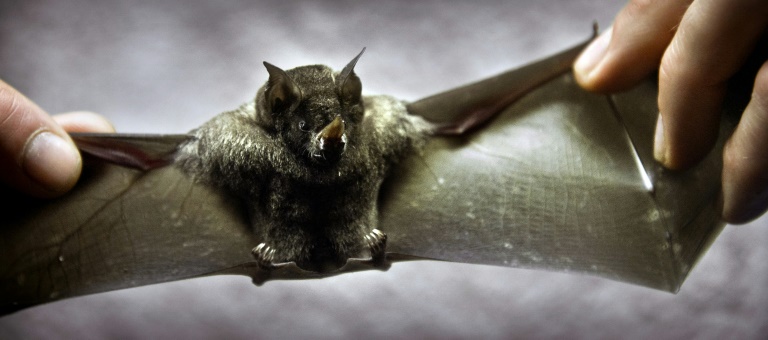
While such diseases — called zoonoses — have been around for millennia, they have become more common in recent decades due to deforestation, mass livestock cultivation, climate change and other human-induced upheavals of the animal world, experts say.

Other diseases to leap from animals to humans include HIV, Ebola, Zika, SARS, MERS, bird flu and the bubonic plague.

The World Health Organization said on Thursday that it is still investigating the origins of Covid, but the “strongest evidence is still around zoonotic transmission”.

And with more than 1,000 monkeypox cases recorded globally over the last month, the UN agency has warned there is a “real” risk the disease could become established in dozens of countries.

The WHO’s emergencies director Michael Ryan said last week that “it’s not just in monkeypox” — the way that humans and animals interact has become “unstable”.

“The number of times that these diseases cross into humans is increasing and then our ability to amplify that disease and move it on within our communities is increasing,” he said.

Monkeypox did not recently leap over to humans — the first human case was identified in DR Congo in 1970 and it has since been confined to areas in Central and Western Africa.

Despite its name, “the latest monkeypox outbreak has nothing to do with monkeys,” said Olivier Restif, epidemiologist at the University of Cambridge.

While it was first discovered in macaques, “zoonotic transmission is most often from rodents, and outbreaks spread by person-to-person contact,” he told AFP.

– Worse yet to come? –

Around 60 percent of all known human infections are zoonotic, as are 75 percent of all new and emerging infectious diseases, according to the UN Environment Programme.

Restif said the number of zoonotic pathogens and outbreaks have increased in the past few decades due to “population growth, livestock growth and encroachment into wildlife habitats”.

“Wild animals have drastically changed their behaviours in response to human activities, migrating from their depleted habitats,” he said.

“Animals with weakened immune systems hanging around near people and domestic animals is a sure way of getting more pathogen transmission.”

Benjamin Roche, a specialist in zoonoses at France’s Institute of Research for Development, said that deforestation has had a major effect.

“Deforestation reduces biodiversity: we lose animals that naturally regulate viruses, which allows them to spread more easily,” he told AFP.

And worse may be to come, with a major study published earlier this year warning that climate change is ramping the risk of another pandemic.

As animals flee their warming natural habitats they will meet other species for the first time — potentially infecting them with some of the 10,000 zoonotic viruses believed to be “circulating silently” among wild mammals, mostly in tropical forests, the study said.

Greg Albery, a disease ecologist at Georgetown University who co-authored the study, told AFP that “the host-pathogen network is about to change substantially”.

– ‘We have to be ready’ – 

“We need improved surveillance both in urban and wild animals so that we can identify when a pathogen has jumped from one species to another — and if the receiving host is urban or in close proximity to humans, we should get particularly concerned,” he said.

Eric Fevre, a specialist in infectious diseases at Britain’s University of Liverpool and the International Livestock Research Institute in Kenya, said that “a whole range of new, potentially dangerous diseases could emerge — we have to be ready”.

This includes “focusing the public health of populations” in remote environments and “better studying the ecology of these natural areas to understand how different species interact”.

Restif said that there is “no silver bullet — our best bet is to act at all levels to reduce the risk”.

“We need huge investment in frontline healthcare provision and testing capacity for deprived communities around the world, so that outbreaks can be detected, identified and controlled without delays,” he said.

On Thursday, a WHO scientific advisory group released a preliminary report outlining what needs to be done when a new zoonotic pathogen emerges.

It lists a range of early investigations into how and where the pathogen jumped to humans, determining the potential risk, as well as longer-term environmental impacts.

French left seeks comeback against Macron in parliamentary polls

France’s first left-wing alliance in 25 years is on a mission to block centrist President Emmanuel Macron’s plans for pro-business reforms by winning a big chunk of seats in this month’s parliamentary polls. 

Hard-left firebrand Jean-Luc Melenchon narrowly missed out on the second round of the April presidential vote, but is determined for a rematch as he leads the freshly-formed New Ecological and Social Popular Union (NUPES) coalition into battle.  

Comprising Melenchon’s France Unbowed (LFI) party, as well as the Greens, Communists, and Socialists, the alliance deal hopes to thwart Macron’s domestic agenda, in particular the plan to raise the retirement age to 65.  

“Nothing was decided (in the presidential elections),” Melenchon told around 100 supporters at Sainte-Genevieve-des-Bois, a small town to the south of Paris, on Tuesday.

Macron beat far-right leader Marine Le Pen in the second round with 58.55 percent of the vote, but Melenchon and his allies argue many voters backed Macron in the second round just to stop the far-right from acceding to power. 

Immediately after the second round, Melenchon asked voters to elect him prime minister by handing him a majority in the parliamentary polls, a two-round election on June 12 and 19.

A majority of seats for NUPES would force a clunky “cohabitation” — where the prime minister and president hail from different factions.

For the past two decades, elected presidents have avoided such a scenario and been rewarded with a majority of the 577 seats in the lower-house National Assembly. 

-‘End hell’-

But an opinion poll published Thursday shows Macron’s alliance Ensemble (Together) winning between 260 and 300 seats, potentially falling short of an absolute majority, for which 289 seats are needed.

According to the Ipsos Sopra Steria poll, NUPES may win between 175 and 215, turning the left coalition into the main force of opposition to Macron. 

“There is a need for change,” said a Socialist city councillor who asked not to be named at the meeting in Sainte-Genevieve-des-Bois.

“The NUPES in power would bring a breath of fresh air — the voice of working class areas, of young people,” she added. 

Held in a park surrounded by social housing, the meeting with Melenchon in Essonne aimed to whip up support for NUPES candidates in a department where the parties now part of the coalition failed to win any constituencies in 2017.  

“He (Melenchon) speaks with the heart, he goes straight to the point,” Ali, 52, who asked for his last name not to be used, told AFP. He lives in the area and defines himself as “an immigrant but also French”. 

“What we offer is another vision of the world, of society,” Melenchon told supporters in Paris last week. 

“I’m not saying we will create a paradise from one day to the next, but I guarantee we will immediately put an end to hell,” he added. 

-‘Gaul Chavez’-

The French perceive Melenchon as having “all the criteria of a populist candidate: a discourse that speaks to them tinged with demagogy,” said head of studies for the Paris-based think tank Jean Jaures Foundation Jeremie Peltier in a report.

“Jean-Luc Melenchon is a Gaul Chavez,” Finance Minister Bruno Le Maire recently told French daily Le Figaro, referring to Venezuela’s since deceased leader Hugo Chavez.

The former Marxist came under fire this week for tweeting “the police kill”, after officers shot a woman dead in a car in northern Paris Saturday after the vehicle failed to stop when summoned by officers.

But Melenchon defended his comments and congratulated himself for sparking debate on the use of force by the police in France through what he said was a deliberately provocative tweet.

Criticism of Melenchon also emanates from the left, in particular from some of his former Socialist colleagues — despite the presence of the Socialist Party (PS) in the coalition. 

Melenchon left the PS in 2008 to form his own movement, the Left Party, and his rise on the left has been a bitter pill to swallow for some in his former party, attached to a left-of-centre politics at odds with Melenchon’s radical brand. 

In the context of a “low intensity campaign”, abstention will play a crucial role in the vote, said political sociologist Vincent Tiberj from Sciences Po Bordeaux University.

“When an election fails to mobilise people, it affects those who only vote occasionally — such as the working classes and the young — and thus voters of the far-right National Rally and NUPES,” he added. 

UK banks no longer 'too big to fail': BoE

Britain’s biggest banks are no longer “too big to fail” in any future financial shocks, with shareholders rather than taxpayers ready to bear the cost, the Bank of England said Friday.

Following a major review of eight lenders — including Barclays, HSBC, Lloyds and NatWest — the BoE concluded “that if a major UK bank failed today it could do so safely: remaining open and continuing to provide vital banking services to the economy.

“Shareholders and investors, not taxpayers, will be first in line to bear the costs, overcoming the ‘too big to fail’ problem,” the central bank added.

Following the financial global crisis more than a decade ago, the UK taxpayer pumped £137 billion ($171 billion) into the country’s banks, while also being able to benefit from significant BoE support.

The government also took control of Royal Bank of Scotland — rebranded as NatWest ahead of its recent return to the private sector.

Despite the bailouts, “the disruption to the financial system contributed to the UK and global recession that followed. We cannot forget these lessons”, the BoE added Friday.

The central bank was publishing its first assessment of the eight major UK banks’ preparations for resolution under the Resolvability Assessment Framework.

RAF “is a core part of the UK’s response to the global financial crisis, and demonstrates how the UK has overcome the problem of ‘too big to fail'”, said Dave Ramsden, deputy governor for markets and banking at the BoE.

“The UK authorities have developed a resolution regime that successfully reduces risks to depositors and the financial system and better protects the UK’s public funds.”

The other four banks assessed were Nationwide, Santander UK, Standard Chartered and Virgin Money UK.

Swathes of Shanghai to be returned to lockdown in testing drive

Shanghai will impose fresh lockdowns on residents in several city districts this weekend during a mass testing drive, officials said Friday, as President Xi Jinping called for China to stick “unswervingly” to its strict zero-Covid strategy.

China is the last major economy still pursuing a policy of stamping out all outbreaks, wielding snap lockdowns, mass testing and mandatory quarantines.

But the strategy has come under heightened scrutiny after the fast-spreading Omicron variant triggered sweeping restrictions in major cities such as Shanghai and Beijing, hammering the world’s second-biggest economy.

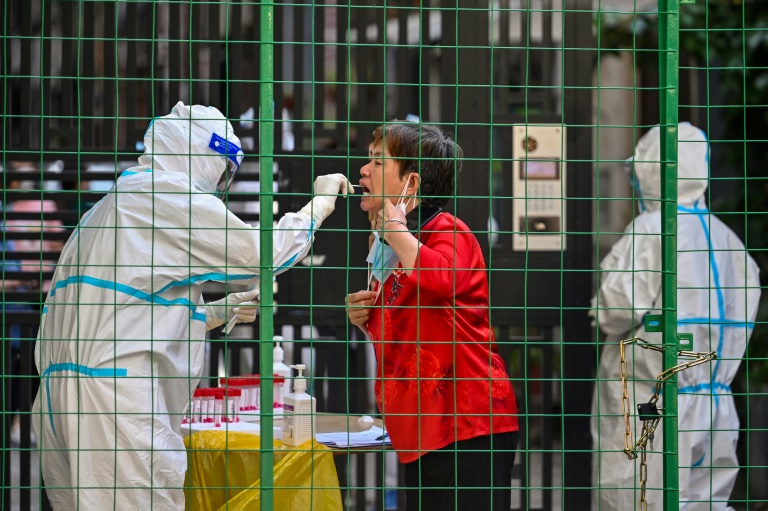
In Shanghai, at least 15 of the city’s 16 districts — totalling more than 23 million people — said they would conduct PCR tests on residents in the coming days, while six areas said they would impose lockdowns during the testing drive.

The districts that will impose some lockdowns — Minhang, Yangpu, Putuo, Fengxian, Qingpu and Changning — are home to more than eight million people.

The mass testing, announced in a series of notices released locally on Thursday and Friday, comes less than two weeks after Shanghai began stumbling out of a gruelling lockdown marked by food shortages and scattered protests.

Despite loosening many restrictions after finally containing China’s worst outbreak in two years, skittish authorities have continued to impose a shifting mosaic of curbs to guard against a resurgence.

The announcement of mass testing prompted fears of a backslide from weary residents in Shanghai.

“I have an ominous feeling,” wrote one user on China’s Weibo social media platform.

Another wrote that fences had started to be put up dividing their residential community into two large areas, adding that they saw panic-buying of rice and oil at the neighbourhood supermarket.

Chinese leaders have attempted to thread the needle between crushing the virus and limiting the damage of lockdowns, with President Xi on Thursday calling for “efficiently coordinating Covid-19 prevention and control with economic and social development”.

But he said China’s “dynamic zero-Covid approach must be unswervingly upheld”, according to state news agency Xinhua.

– Shifting mosaic of curbs –

Experts predict that China will struggle to meet its economic growth target of around 5.5 percent this year as virus lockdowns force business shutdowns and snarl supply chains.

The World Bank has sharply slashed its 2022 growth forecast for China to 4.3 percent, warning this week that Covid disruptions could further slow recovery.

The shockwaves from China’s zero-Covid policy have hit the global economy as well, especially after the lockdown in Shanghai — the country’s biggest city and a major global shipping hub.

Parts of Beijing have also reimposed some restrictions after loosening work-from-home orders and allowing restaurants in the capital to reopen for indoor dining earlier this week.

Two central districts on Thursday ordered the closure of bars, nightclubs and internet cafes, local media reported, after the capital reported a cluster of infections linked to entertainment venues.

Beijing has reported nearly a dozen recent cases connected to nightclubs, after several days of no new cases outside of restricted areas.

Officials put up fresh barriers around several residential compounds in the city overnight, including one near the Beijing’s embassy district where an AFP reporter saw workers building metal fences and transporting pets out of the compound in crates.

Some companies have also asked employees to prepare to resume working from home, while others were barred from entering their offices after Covid cases or close contacts were found to have visited the buildings.

The latest Beijing outbreak drew anger on Chinese social media, with some blaming club patrons for partying, while others pointed their fingers at the city government and testing agencies.

“‘Clearing’ Covid seems like a joke… Otherwise where did these new cases come from?” one Weibo user asked, referring to the city’s previous declaration that it had “cleared” cases outside of quarantined areas.

China reported 73 new local infections on Friday, including eight in Beijing and 11 in Shanghai, according to the National Health Commission.

Close Bitnami banner
Bitnami