World

ECB begins inflation fightback with July rate hike

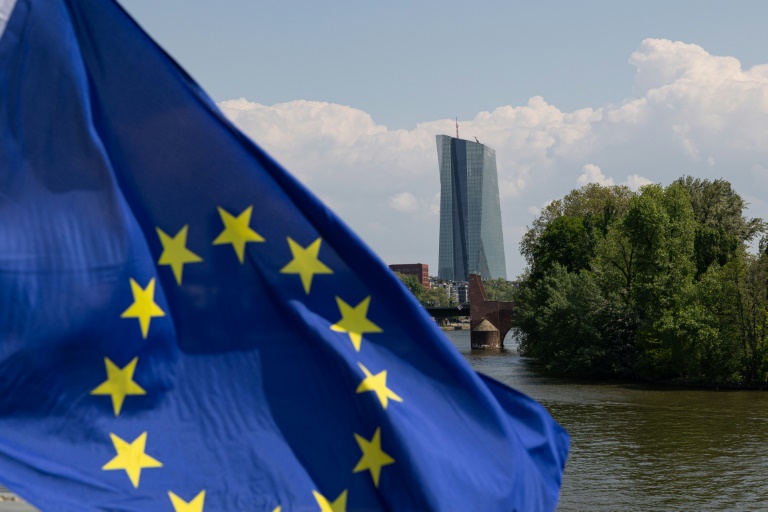
The European Central Bank on Thursday said it would raise interest rates for the first time in over a decade next month to combat runaway inflation, bringing the curtain down on the eurozone’s era of cheap money.

ECB governors, exceptionally meeting in Amsterdam instead of Frankfurt, provided markets with an unexpectedly precise statement setting out their path to monetary policy normalisation after years of ultra-low rates and easy credit.

As a first step, the ECB said it would end its massive bond-buying stimulus as of July 1.

The bank’s governing council then plans “to raise the key ECB interest rates by 25 basis points” at its next meeting on July 21, the ECB said in a statement.

It will raise rates again in September, with the size dependent on the economic outlook.

The last time the ECB hiked rates was in 2011.

“The ECB officially ends its long era of unconventional monetary policy,” said ING bank economist Carsten Brzeski.

Pressure had been growing on the ECB to take tough action after other major central banks like the US Federal Reserve and the Bank of England already moved to rein in prices with aggressive rate hikes. 

Inflation in the 19-nation euro area rose to a record 8.1 percent in May, well above the ECB’s two-percent target.

The surge has largely been driven by the war in Ukraine, which has pushed up the cost of energy, food and raw materials around the globe.

The ECB lowered its eurozone economic growth forecast while raising its projections for inflation.

“High inflation is a major challenge for all of us,” the ECB said in a statement.

Attention now shifts to ECB chief Christine Lagarde’s afternoon press conference, where she will be grilled about the ECB’s next moves.

– ‘Dampened growth’ –

The biggest challenge facing Lagarde right now is finding the right balance between raising borrowing costs to cool inflation, without jeopardising the eurozone’s already stuttering economy.

Underscoring those worries, the ECB slashed its growth outlook for the 19-nation club to 2.8 percent in 2022 and 2.1 percent in 2023, from 3.7 and 2.8 percent previously.

The war in Ukraine “is disrupting trade, is leading to shortages of materials, and is contributing to high energy and commodity prices,” it said, adding that “these factors will continue to weigh on confidence and dampen growth, especially in the near term.”

The July 1 end of its bond-buying scheme will draw a line under the last in a series of debt-purchasing measures worth a total of around five trillion euros ($5.4 trillion) since 2014.

Scrapping the scheme paves the way for what Lagarde has called a “lift off” in rates.

Of the ECB’s three main rates, the so-called deposit rate currently stands at minus 0.5 percent — meaning lenders pay to park excess cash at the bank.

Lagarde has said the ECB aims to exit eight years of negative rates by the end of September.

“Today’s decision shows it’s managed to find a compromise between the doves and the hawks,” Brzeski said. 

“A 50 basis point rate hike in July seemed to be fended off by opening the door for 50 basis points in September.”

– Strong labour market –

The size of September’s hike will depend to a large extent on how the outlook for the economy changes.

Despite unveiling a downgraded forecast for economic growth on Thursday, the ECB expressed optimism over the longer term outlook.

“Once current headwinds abate, economic activity is expected to pick up again,” it said.

“The conditions are in place for the economy to continue to grow on account of the ongoing reopening of the economy, a strong labour market, fiscal support and savings built up during the pandemic.”

On inflation, the ECB said it expected consumer prices to soar to 6.8 percent in 2022, up from 5.1 percent in its previous forecast.

Inflation is seen easing to 3.5 percent in 2023 and 2.1 percent in 2024 — both also higher than earlier estimates.

“These projections indicate that inflation will remain undesirably elevated for some time,” it said.
France probes alleged nuclear power cover-up: source

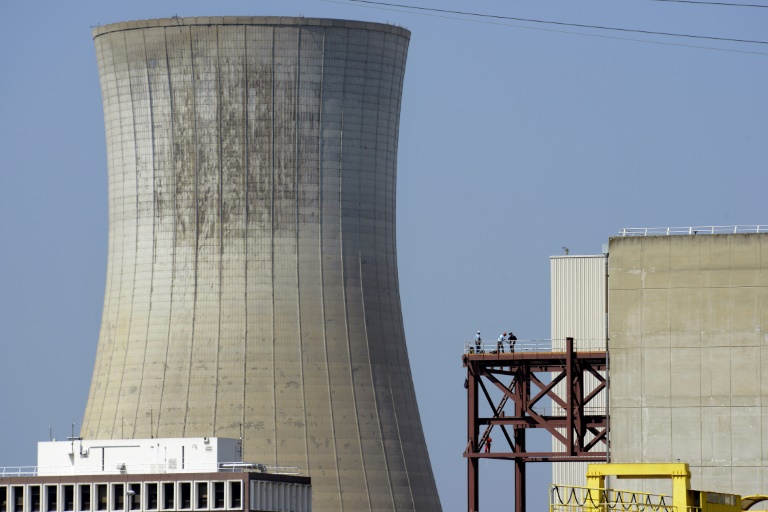
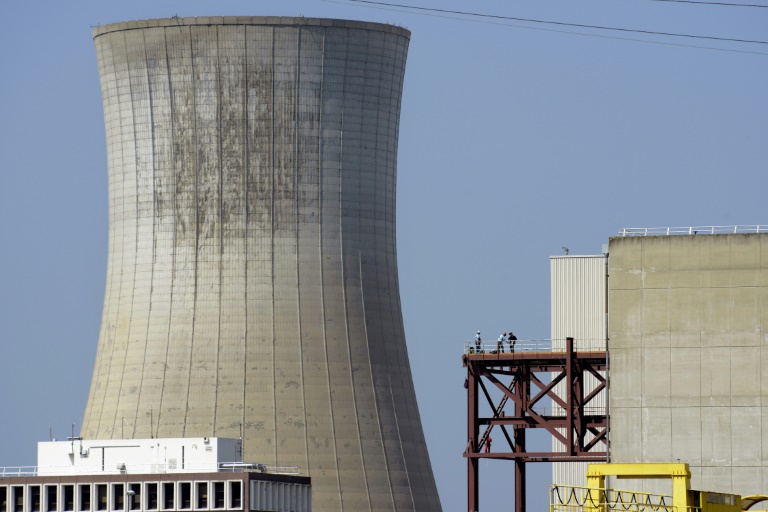
French prosecutors are investigating claims that officials at a nuclear power station covered up incidents of malfunction at an ageing plant, a source close to the probe told AFP on Thursday.

The move follows a legal complaint filed by a whistleblower, a former engineer at the Tricastin power station in the southeast of the country.

In his complaint to police in October 2021 targeting nuclear plant operator EDF, the engineer, whose identity was not given, said he had repeatedly alerted the company to the incidents and also written to the environment minister.

Events that the nuclear operator failed to declare to the national safety agency ASN, or played down, include an unexplained power surge at one of the reactors in 2017 and flooding inside the station the following year, according to the engineer.

An investigating magistrate in the southern port city of Marseille is now probing the power station for fraud and “endangering the lives of others”, the legal source said.

Other suspected violations include damage to the environment by leakage of toxic substances, obstructing checks by nuclear inspectors and workplace harassment of the engineer, who says he was sidelined after sounding the alarm.

France, which derives around 70 percent of its electricity from nuclear power, has been exploring a possible extension of the lifetime of its ageing stations, several of which have come up against their 40-year limit.

That includes Tricastin, built in 1980-81 — making it one of France’s oldest nuclear stations.

It is on a list of installations that the ASN agency said last year could be renovated to extend their lifespan.

Currently operations at 12 of France’s 56 nuclear reactors are shut down because of corrosion issues, EDF said last month.

In February, President Emmanuel Macron called for a “rebirth” of France’s nuclear industry, with 14 new plants, as part of efforts to move away from fossil fuels.

The launch of the Tricastin probe was evidence of the accusations’ “extreme gravity”, the whistleblower’s high-profile lawyers Vincent Brengarth and William Bourdon said in a statement to AFP.

Contacted by AFP, both EDF and ASN declined to comment.

Last November, however, ASN chief inspector Christophe Quintin told AFP that routine checks at Tricastin had not revealed any incidents that might have gone unreported.

Independent radioactivity research association CRIIRAD welcomed the investigation, saying it raised important issues such as nuclear safety and transparency on nuclear issues.

“The judiciary is sending a strong signal, but will it be able to get to the bottom of this?” asked the association’s spokesman, Roland Desbordes.

cal-jpa-ol-gd/jh/sjw/ach 

France probes alleged nuclear power cover-up: source

French prosecutors are investigating claims that officials at a nuclear power station covered up incidents of malfunction at an ageing plant, a source close to the probe told AFP on Thursday.

The move follows a legal complaint filed by a whistleblower, a former engineer at the Tricastin power station in the southeast of the country.

In his complaint to police in October 2021 targeting nuclear plant operator EDF, the engineer, whose identity was not given, said he had repeatedly alerted the company to the incidents and also written to the environment minister.

Events that the nuclear operator failed to declare to the national safety agency ASN, or played down, include an unexplained power surge at one of the reactors in 2017 and flooding inside the station the following year, according to the engineer.

An investigating magistrate in the southern port city of Marseille is now probing the power station for fraud and “endangering the lives of others”, the legal source said.

Other suspected violations include damage to the environment by leakage of toxic substances, obstructing checks by nuclear inspectors and workplace harassment of the engineer, who says he was sidelined after sounding the alarm.

France, which derives around 70 percent of its electricity from nuclear power, has been exploring a possible extension of the lifetime of its ageing stations, several of which have come up against their 40-year limit.

That includes Tricastin, built in 1980-81 — making it one of France’s oldest nuclear stations.

It is on a list of installations that the ASN agency said last year could be renovated to extend their lifespan.

Currently operations at 12 of France’s 56 nuclear reactors are shut down because of corrosion issues, EDF said last month.

In February, President Emmanuel Macron called for a “rebirth” of France’s nuclear industry, with 14 new plants, as part of efforts to move away from fossil fuels.

The launch of the Tricastin probe was evidence of the accusations’ “extreme gravity”, the whistleblower’s high-profile lawyers Vincent Brengarth and William Bourdon said in a statement to AFP.

Contacted by AFP, both EDF and ASN declined to comment.

Last November, however, ASN chief inspector Christophe Quintin told AFP that routine checks at Tricastin had not revealed any incidents that might have gone unreported.

Independent radioactivity research association CRIIRAD welcomed the investigation, saying it raised important issues such as nuclear safety and transparency on nuclear issues.

“The judiciary is sending a strong signal, but will it be able to get to the bottom of this?” asked the association’s spokesman, Roland Desbordes.

cal-jpa-ol-gd/jh/sjw/ach 

UK denies breaking law with new Northern Ireland plan

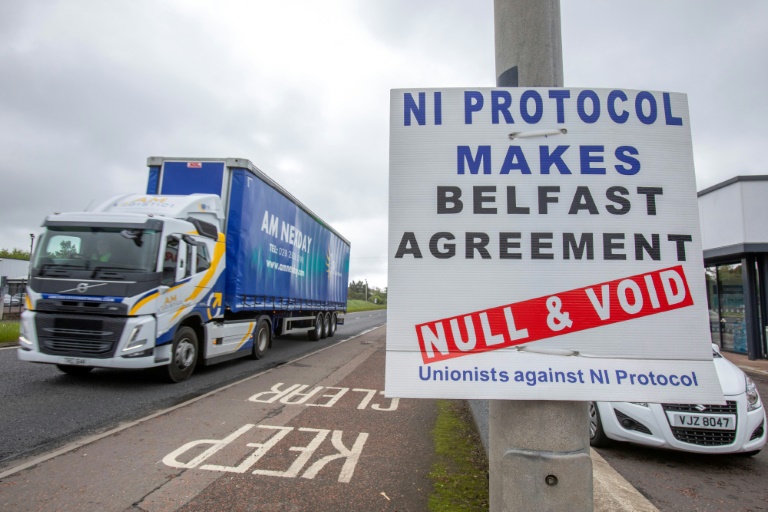
Britain said on Thursday it was readying new legislation to rewrite its Brexit commitments on Northern Ireland but denied it was breaking its treaty obligations to the European Union. 

The bill is expected next week, possibly on Monday, and would trigger unilateral changes to the so-called Northern Ireland Protocol in the teeth of objections from Brussels and most political parties in Belfast.

Ireland’s Foreign Minister Simon Coveney said opposition to Britain’s tactics had “hardened” across EU capitals, querying whether it was “serious about a negotiated solution”, Irish media reported.

The UK says the bill is needed to fix trade distortions in Northern Ireland, which was left hanging in a unique situation by Brexit, and bring the province’s biggest pro-UK party back into power-sharing government.

Prime Minister Boris Johnson’s cabinet has signed off on the plan and only some final drafting remains, his spokesman told reporters. 

“Yes, we are confident of that: the bill is lawful under international law,” the spokesman added.

Senior minister Michael Gove denied that Johnson was looking to divert attention after he narrowly survived a no-confidence vote within his own party, by placating Brexit hardliners on the Conservative backbenches.

“I don’t think it’s about picking a fight,” Gove said on BBC radio.

“It is absolutely right that we fix the problems with the Northern Ireland Protocol,” he said. 

The Democratic Unionist Party (DUP) refusing to re-enter government in the province unless the protocol is overhauled.

The protocol was agreed as part of Britain’s Brexit divorce deal with Brussels, recognising Northern Ireland’s status as a fragile, post-conflict territory that shares the UK’s new land border with the EU.

It requires checks on goods arriving from England, Scotland and Wales, to prevent them entering the EU’s single market via the Republic of Ireland.

That has infuriated the DUP, which says Northern Ireland’s status within the UK is in jeopardy. 

The UK says it plans to scrap most of the checks, arguing that the higher priority is ensuring no return to a hard border between the north and south of Ireland, in line with a 1998 peace agreement.

Overriding the protocol, the bill would let the UK create a “green channel” for British traders to send goods to Northern Ireland without making any customs declaration to the EU.

The EU would have access to more real-time UK data on the flow of goods, and only businesses intending to trade into the single market via Ireland would be required to make declarations.

Britain has vowed “robust penalties” for any companies seeking to abuse the new system, but would also remove oversight of the protocol by the European Court of Justice — another red line for Brussels.

Britain also risks antagonising the United States, which helped broker the 1998 Good Friday Agreement.

But Northern Ireland Secretary Brandon Lewis has been briefing the US administration along with officials in Dublin and Brussels, to prepare the ground for the new bill, Johnson’s spokesman said.

Biden eyes climate progress as Brazil leader joins Americas summit

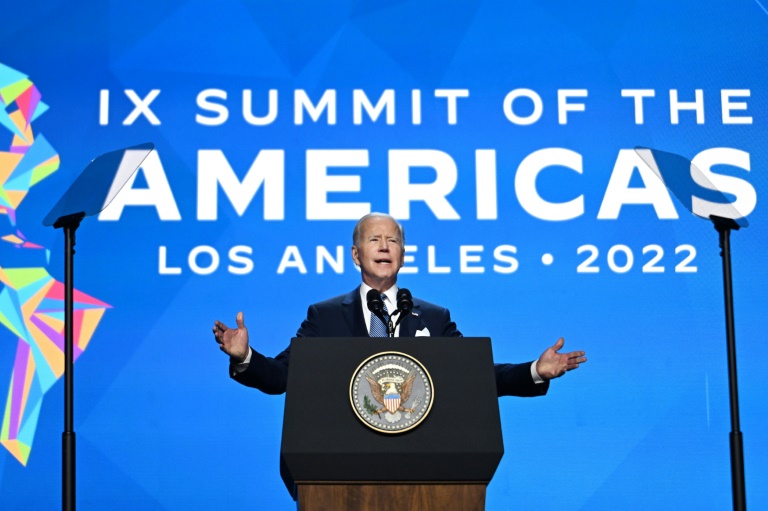
Joe Biden sought Thursday to step up action on climate at an Americas summit with hopes for at least small progress with Brazil, whose far-right leader will hold a potentially tense meeting with the US president.

Some two dozen leaders have descended on Los Angeles for the Summit of the Americas, where Biden late Wednesday implored them to show that democracy can produce results.

“There is no reason why the Western Hemisphere shouldn’t be secure, prosperous and democratic, from Canada’s northernmost reaches to the southern tips of Chile,” he told a welcoming reception with pop performers at a downtown Los Angeles theater.

But as China makes rapid inroads in Latin America, long viewed by Washington as its turf, Biden has steered clear of big-dollar pledges and has instead sought cooperation in targeted areas.

The summit on Thursday will focus on climate, with Vice President Kamala Harris tasked with meeting leaders of Caribbean nations that are particularly vulnerable to rising sea levels.

One outlier from the international chorus to battle climate change has been Brazilian President Jair Bolsonaro, a champion of agribusiness who has horrified environmentalists who warn that further erosion of the Amazon rainforest will disrupt a vital natural sink for the planet’s carbon emissions.

Ahead of Biden’s first meeting with Bolsonaro on Thursday, the White House said Brazil, Colombia and Peru would join a US-backed initiative to explore ways to reduce Amazon deforestation motivated by commodities industries.

The White House also said that Brazil and four other nations were joining a renewable energy initiative launched at last year’s UN climate summit in Copenhagen.

In the pact, countries promise to work toward a goal of 70 percent renewables in their energy mix by 2030. 

Despite coming under criticism over the Amazon, Brazil — the sixth most populous nation — has one of least carbon-intensive economies for a major economy and already meets the goal on renewables, mostly through hydropower.

– The ‘Tropical Trump’ –

The meeting with Bolsonaro could be awkward due to more than climate. Bolsonaro was an ally of Biden’s predecessor Donald Trump and has appeared to follow the former president’s playbook by alleging that Brazil’s October elections are threatened by fraud.

On the eve of his trip, Bolsonaro went further by backing Trump’s claims of irregularities in the 2020 US election won by Biden. There has been no evidence of widespread fraud.

Jake Sullivan, Biden’s national security advisor, said the president would not shy away from discussing the Brazilian election.

“I do anticipate that the president will discuss open, free, fair, transparent democratic elections,” Sullivan told reporters.

Bolsonaro has trailed in early polls against his likely challenger, former president Luiz Inacio Lula da Silva, a leftist icon who was jailed on controversial corruption charges.

A victory by Lula would mark a further swing to the left in Latin America. Colombia, one of the closest US allies, could see a historic shift on June 19 if there is a victory by leftist Gustavo Petro, who topped the first round of voting.

While promising to work with leaders across ideology, Biden has held firm against inviting the leftist leaders of Cuba, Nicaragua and Venezuela on the grounds that they are autocrats.

His stance led to a boycott of the summit by Mexican President Andres Manuel Lopez Obrador, a crucial partner on addressing rising migration into the United States.

Harris started the week-long summit by announcing commitments of $1.9 billion by businesses in El Salvador, Guatemala and Honduras in hopes of creating jobs and discouraging migration — an issue seized upon by Trump’s Republican Party.

Also at the summit, the Biden administration announced a plan to help train 500,000 health workers in Latin America and a $300 million project to improve food security, with Russia’s invasion of Ukraine disrupting grain exports.

Biden also announced what he called a new economic partnership for the Americas, although there were few concrete details and no promises of funding or greater market access.

Paris police chief admits security 'failure' at European final

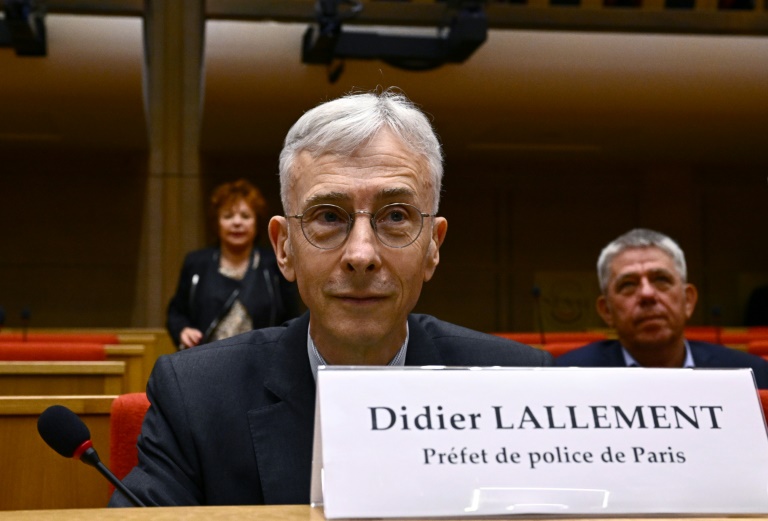
The head of Paris police acknowledged Thursday the “failure” of security operations for the Champions League final last month where crowd problems, tear-gas and street crime marred the biggest night in European club football.

“It is obviously a failure,” Didier Lallement told a commission investigating the fiasco at the French Senate. “It was a failure because people were pushed around and attacked. It’s a failure because the image of the country was undermined.”

Lallement and Interior Minister Gerald Darmanin have been under severe pressure since the May 28 game after they initially blamed the chaos on as many as 40,000 Liverpool fans at the stadium without tickets or with counterfeit tickets. 

The figure has been widely disputed since by witnesses and media using images from the ground, leading Lallement to face repeated questions from senators who grew frustrated at his responses.

“Perhaps I made a mistake with the figure I gave to the minister,” he said, saying he had based his estimate on the numbers of people using public transport and from feedback from the ground. “I never claimed that it was absolutely accurate.”

He admitted there were not 30-40,000 “at the gates of the stadium” but maintained that many thousands were “in the vicinity” of police checkpoints at the Stade de France to the north of the capital.

Many Liverpool supporters struggled to enter the stadium, leading to kick-off to be delayed by more than half an hour and crushes at the entry gates, where police fired teargas.

Fans also complained about bottlenecks leading up to the stadium created by police, but Lallement said the checkpoints were anti-terror measures “for a risk that is still real”.

The government’s initial decision to blame Liverpool fans for the problems caused tensions between France and Britain, while questions have also been raised about the capacity of Paris to host the rugby World Cup next year and the Olympic Games in 2024.

– Street crime –

Lallement said he was “sorry” for authorising the use of tear gas to move supporters away from the stadium before the game, which affected mostly Liverpool fans including children and disabled people.

“We needed to get people to move back,” Lallement explained. “We asked people to move back, then we used tear-gas… it’s the only way to our knowledge of moving a crowd back, except for a baton charge.”

His decisions that night had saved lives, he argued, saying: “I would do the same thing again.”

“The line running through my actions is to avoid people dying,” he told the commission.

Lallement was also asked to explain why frustrated rail passengers had been tear-gassed at a Paris station last weekend after their trains were cancelled. 

He encouraged supporters from Liverpool and Real Madrid to file complaints if they were victims of counterfeited tickets or street crime outside the stadium “so that we can find the guilty parties and prosecute them”.

Around 300-400 “delinquents” were outside the stadium, Lallement estimated, with many fans reporting being robbed or physically assaulted as they left after the game, which Real Madrid won 1-0.

The mayor of the Liverpool city region Steve Rotheram is due to testify to the Senate commission later Thursday.

He was a victim of pickpockets after the game, losing his phone and possessions.

Rotheram said he was “outraged by the treatment of Liverpool fans at the hands of the French police”, accusing them of “looking for conflict”.

Sandberg exit unlikely to improve Facebook: whistleblower

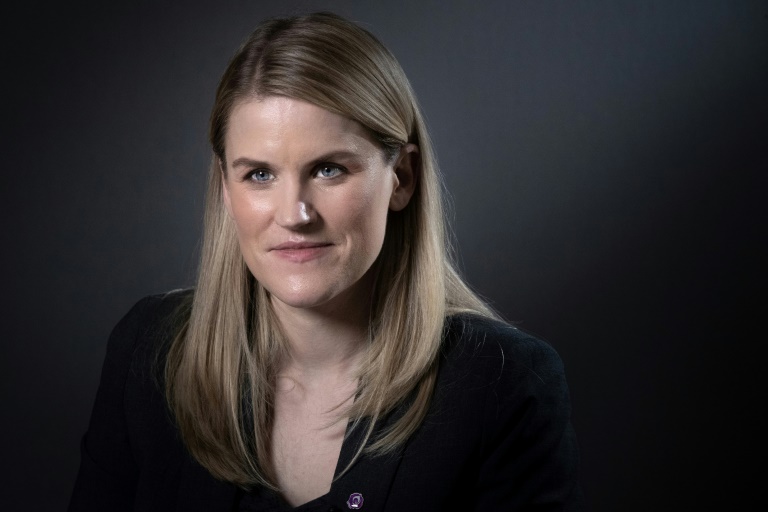
The departure of controversial Facebook executive Sheryl Sandberg is unlikely to improve the troubled social media giant, whistleblower Frances Haugen told AFP.

Haugen, a former Facebook engineer who leaked internal documents last year suggesting the firm put profits before safety, pointed out that Sandberg’s replacement came from a team whose remit was to help the firm to expand.

The “growth team” was part of the problem and the decision showed the company was “not listening to the heart of the critiques”, she said.

Sandberg, the number two at Facebook parent Meta, shocked Silicon Valley last week by announcing she was stepping down after 14 years at the firm, steering its rise from niche social network to ad-tech juggernaut.

But she had increasingly become the public face of a firm beset by scandals over misinformation, data protection and even accusations of fuelling ethnic violence.

Haugen’s leaked documents suggested executives knew their platforms could fuel hate speech and damage the mental health of young people.

The revelations led to huge criticism of Sandberg and her boss, Mark Zuckerberg, whose business — renamed Meta in 2021 — also includes Instagram and WhatsApp.

– ‘Did she do enough?’ –

Haugen, speaking to AFP this week ahead of addressing a cybersecurity forum in Lille in northern France, said there was a “fundamental tension” about Sandberg’s role.

“Did she do enough to stand up to Mark, or to demand Mark be a better leader? I don’t think so.”

She praised Sandberg, though, for establishing a strategic response team in 2018 to combat efforts to misuse the network.

“Sheryl did set up the parts of the company that were actively concerned with the safety of people who live in fragile places like Ethiopia,” she said.

But she said it “doesn’t seem particularly promising” that Sandberg will be replaced by Javier Olivan, the head of Meta’s “growth team”.

In announcing Olivan’s promotion, Zuckerberg wrote on Facebook that he had a “strong track record of making our execution more efficient and rigorous”.

Haugen wished him luck in his new role but said the growth team embodied “many of the things that I consider problematic about Facebook”.

Much of Haugen’s criticism stemmed from a central accusation that Facebook had pursued growth and profit with no concern for the safety or wellbeing of its users.

The growth team was central to that effort.

“The fact that the person who got to replace Sheryl comes from that part of the organisation feels that they are not really listening to the heart of the critiques,” said Haugen.

Meta did not immediately respond to a request for comment.

– Optimism on Musk –

Haugen has never fitted the stereotypical whistleblower image of a scrappy outsider — she has wealthy backers and a slick campaign that has seen her addressing parliaments around the world.

She told AFP in an interview last year she planned to start a youth movement to help empower young people to take charge of their online lives.

Aside from Facebook, she is sanguine about other recent developments in tech.

The saga of Elon Musk’s on-off takeover of Twitter, for example, has left many commentators questioning whether the billionaire magnate might do more harm than good to the social media firm.

But Haugen reckons he might just be on to something, saying she was “cautiously optimistic”.

“Part of why Facebook makes bad decisions is because it’s a publicly traded company,” she said.

“Elon Musk taking Twitter private provides an opportunity to go and do the house cleaning that Twitter needs.”

And she is heartened by a new European Union law — known as the Digital Services Act — that forces social media to regulate content.

She said it should break open the tech giants to independent scrutiny, which was a “really, really good deal”.

Overall, she said her revelations had made a positive impact — Facebook has doubled its spending on safety and staff working on safety issues say they have more space to operate.

“I’m incredibly heartened by how seriously leaders around the world have taken us,” she said.

“We have different conversations now about what social media should be.”

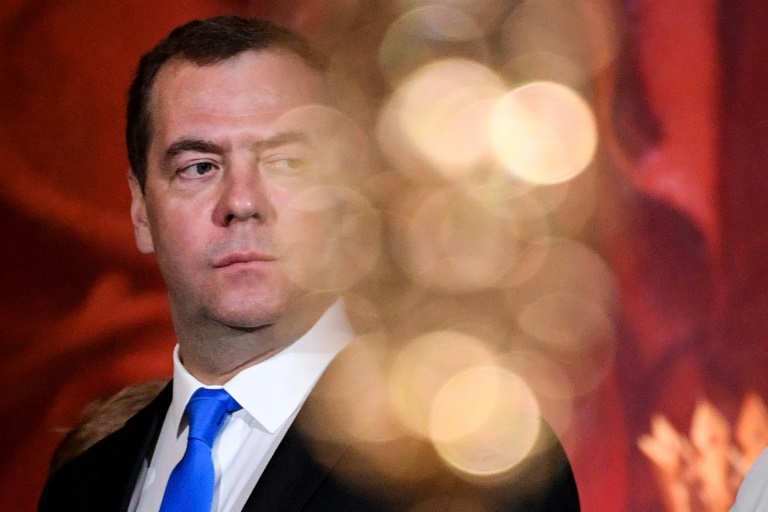
Medvedev: Russia's reforming president turned arch-hawk

Dmitry Medvedev as Russian president chomped on a burger at an American diner with Barack Obama, praised independent media and made ambitious promises of reform to create a more open Russia.

But with the Kremlin’s war against Ukraine raging for over three months, he now vows to make enemies of Russia “disappear”, warns of military strikes on the West and darkly comments the “horsemen of the apocalypse” are on their way.

What happened to Medvedev, 56, president from 2008-2012 and premier from 2012-2020, once seen by admirers as Russia’s great hope for reform?

His path is also emblematic of that of Russia over the last two decades, as the country swung from a potential reliable member of the international system to the current isolation, inwardness and radicalism.

“Dmitry Medvedev is, it seems, trying to demonstrate his relevance — and loyalty — in a system that has become markedly more hawkish and less tolerant of shades of grey,” said Ben Noble, associate professor of Russian Politics at University College London.

As president, Medvedev never stepped out of the shadow of Vladimir Putin, his fellow Saint Petersburger to whom he owes his political career.

Putin in 2008 had to switch jobs, becoming premier in order not to break constitutional rules, with Medvedev assuming the presidency. Putin returned to the Kremlin in 2012 as Medvedev stepped aside. 

He became prime minister –- dubbed a Putin-Medvedev “castling” in Russia –- before becoming deputy chairman of the national security council eight years later.

– ‘Make them disappear’ –

But the presidency of Medvedev –- which now appears to belong to a different epoch –- still contained remarkable gestures towards change.

He championed a “reset” of relations with Washington that saw Obama visit Moscow in 2009 and Medvedev the US the next year, famously being presented with an iPhone in Silicon Valley by Apple founder Steve Jobs.

In April 2011, he popped into the studios of independent TV channel Dozhd (Rain), giving an interview and declaring it a “great place” as his Kremlin sought to cautiously cultivate independent media.

He attempted to take on the mantle of  reforming Tsar Alexander II who abolished serfdom, saying Russia’s current hydrocarbon-dependent economic model was at a “dead end” while political freedom “cannot be put off for another day”.

Medvedev boasted of an affinity with Western culture, proclaiming to be a fan of US rock band Linkin Park and seizing the chance to meet his music heroes like Bono of U2 and Deep Purple.

Most remarkably of all, it was on Medvedev’s watch that Russia abstained — rather than using its veto — on a UN Security Council resolution authorising military action in Libya. The move prompted a rare public spat between him and Putin.

Medvedev — unlike the perennial Internet-sceptic Putin — always embraced tech and social media, sending his first tweet (a jolly “Hello everyone!”) from Silicon Valley in 2010.

He was also tripped up by new media in a 2017 viral video by the now jailed opposition challenger Alexei Navalny which alleged he had embezzled over a billion dollars from the state and sparked anti-government protests. 

But today messaging channel Telegram has become the forum for Medvedev’s radical pronouncements.

“I am often asked why my Telegram posts are so harsh. The answer is I hate them. They are bastards and degenerates,” he wrote Tuesday.

“They want death for us, Russia. And while I’m alive, I will do everything to make them disappear,” he added, without making explicit who “they” represented.

– ‘Horsemen of the apocalypse’ –

His comments shocked even those who had become accustomed to his tough-talking.

“This is indeed remarkable. Medvedev… threatens the people of Ukraine with extermination,” Carl Bildt, who was Swedish foreign minister throughout Medvedev’s presidency, wrote on Twitter.

Tikhon Dzyadko, the editor in chief of TV Rain, wrote: “Someone better sometimes get hold of his phone.” TV Rain, the channel Medvedev visited so eagerly, is now blocked in Russia and due to resume broadcasting from abroad.

It was far from the first time Medvedev has raised hackles on Telegram, in an account he only opened on March 17 with a declaration that Russia has “enough power to put in their place all the brazen enemies of our country”.

On May 12, he issued a spine-chilling warning that the West’s arming of Ukraine was creating a proxy war “with the risk it will transform into full-scale nuclear war”. 

He warned on May 30 that if Ukraine launched missile attacks on Russia with systems from the US, Moscow would hit back with strikes on “decision-making centres” in the West.

The most jolting of all his statements came in an interview with Al-Jazeera where he stated that in the current circumstances “the horsemen of the apocalypse are already on their way and we can only now put faith in God.”

– ‘A river you can swim in twice’ –

Yet Medvedev’s shift in tone also keeps him in line with Russian politicians adopting ultra-hawkish rhetoric, such as parliament speaker Vyacheslav Volodin or security council secretary Nikolai Patrushev.

Both have been mooted as possible successors to Putin as rumours swirl about his health. But might Medvedev be tempted by a Kremlin return?

“Never say never, especially as I swam in that river once and this is a river that you can swim in twice,” he told AFP in a November 2012 interview.

Noble, co-author of a recent book on Navalny, said the chances of Medvedev had been discounted as he lacks a support base, including within the security services.

“Might his recent radical rhetoric be an attempt to try to change that? That’s one possibility,” he said.

Europe's 'largest predatory dinosaur' found by UK fossil hunter

A giant crocodile-faced dinosaur discovered on the Isle of Wight by one of Britain’s best fossil hunters was probably the largest predator ever to stalk Europe, scientists said on Thursday.

Most of the bones of the two-legged spinosaurid were found by the late local collector Nick Chase, who dedicated his life to combing the beaches of the island on England’s southern coast for dinosaur remains.

Researchers at the University of Southampton then used the few bones available to identify what they have called the “White Rock spinosaurid”, they said in a study published in the journal PeerJ.

“This was a huge animal, exceeding 10 metres (33 feet) in length and judging from some of the dimensions, probably represents the largest predatory dinosaur ever found in Europe,” said Chris Barker, a PhD student who led the study.

While admitting it would be better to have more bones, Barker told AFP the “numbers don’t lie — it is bigger than the biggest known specimen” previously found in Europe.

Thomas Richard Holtz, a vertebrate paleontologist from the University of Maryland not involved in study, agreed that the new find “does seem to be larger” than a huge predator whose fossilised remains were discovered in Portugal.

– Why the long face? –

The White Rock spinosaurid — which the researchers hope to formally name as a new species — is from the Early Cretaceous period and is estimated to be around 125 million years old.

Barker said that makes it the youngest spinosaurid found in Britain, two or three million years younger than the well-known Baryonyx.

Spinosaurids are known for their elongated heads. Rather than having the boxy skull of a Tyrannosaurus rex, their faces look more like that of a crocodile.

A leading theory to explain this trait is that they hunted on water as well as land.

“They’re kind of like storks and herons, wading in and snatching fish from the surface,” Barker said.

The White Rock spinosaurid was discovered in a lagoonal coastal environment where few dinosaur fossils are normally found.

“It helps start to paint a picture of what animals were living in the time, which is a very poorly known part of English palaeontological heritage,” Barker added.

The team had already discovered two new spinosaurid species on the Isle of Wight, including the Ceratosuchops inferodios — dubbed the “hell heron”.

“This new animal bolsters our previous argument — published last year — that spinosaurid dinosaurs originated and diversified in western Europe before becoming more widespread,” study co-author Darren Naish said.

– Collector’s ‘uncanny ability’ –

The palaeontologists paid tribute to Chase, who always donated whatever bones he found to museums.

“Most of these amazing fossils were found by Nick Chase, one of Britain’s most skilled dinosaur hunters, who sadly died just before the Covid epidemic,” said study co-author Jeremy Lockwood, a PhD student at the University of Portsmouth.

Barker said Chase’s “uncanny ability” to find bones showed that “it’s not just professional palaeontologists who are making impacts in the discipline”.

The discovery “highlights the fact that collectors have a big role to play in modern palaeontology and their generosity helps move science forwards”, he added.

And if there any aspiring fossil hunters hoping to pick up where Chase left off, the palaeontologists would welcome more White Rock spinosaurid bones.

“We hope that a passerby might pick up some bits and donate them,” Barker said.

Europe's 'largest predatory dinosaur' found by UK fossil hunter

A giant crocodile-faced dinosaur discovered on the Isle of Wight by one of Britain’s best fossil hunters was probably the largest predator ever to stalk Europe, scientists said on Thursday.

Most of the bones of the two-legged spinosaurid were found by the late local collector Nick Chase, who dedicated his life to combing the beaches of the island on England’s southern coast for dinosaur remains.

Researchers at the University of Southampton then used the few bones available to identify what they have called the “White Rock spinosaurid”, they said in a study published in the journal PeerJ.

“This was a huge animal, exceeding 10 metres (33 feet) in length and judging from some of the dimensions, probably represents the largest predatory dinosaur ever found in Europe,” said Chris Barker, a PhD student who led the study.

While admitting it would be better to have more bones, Barker told AFP the “numbers don’t lie — it is bigger than the biggest known specimen” previously found in Europe.

Thomas Richard Holtz, a vertebrate paleontologist from the University of Maryland not involved in study, agreed that the new find “does seem to be larger” than a huge predator whose fossilised remains were discovered in Portugal.

– Why the long face? –

The White Rock spinosaurid — which the researchers hope to formally name as a new species — is from the Early Cretaceous period and is estimated to be around 125 million years old.

Barker said that makes it the youngest spinosaurid found in Britain, two or three million years younger than the well-known Baryonyx.

Spinosaurids are known for their elongated heads. Rather than having the boxy skull of a Tyrannosaurus rex, their faces look more like that of a crocodile.

A leading theory to explain this trait is that they hunted on water as well as land.

“They’re kind of like storks and herons, wading in and snatching fish from the surface,” Barker said.

The White Rock spinosaurid was discovered in a lagoonal coastal environment where few dinosaur fossils are normally found.

“It helps start to paint a picture of what animals were living in the time, which is a very poorly known part of English palaeontological heritage,” Barker added.

The team had already discovered two new spinosaurid species on the Isle of Wight, including the Ceratosuchops inferodios — dubbed the “hell heron”.

“This new animal bolsters our previous argument — published last year — that spinosaurid dinosaurs originated and diversified in western Europe before becoming more widespread,” study co-author Darren Naish said.

– Collector’s ‘uncanny ability’ –

The palaeontologists paid tribute to Chase, who always donated whatever bones he found to museums.

“Most of these amazing fossils were found by Nick Chase, one of Britain’s most skilled dinosaur hunters, who sadly died just before the Covid epidemic,” said study co-author Jeremy Lockwood, a PhD student at the University of Portsmouth.

Barker said Chase’s “uncanny ability” to find bones showed that “it’s not just professional palaeontologists who are making impacts in the discipline”.

The discovery “highlights the fact that collectors have a big role to play in modern palaeontology and their generosity helps move science forwards”, he added.

And if there any aspiring fossil hunters hoping to pick up where Chase left off, the palaeontologists would welcome more White Rock spinosaurid bones.

“We hope that a passerby might pick up some bits and donate them,” Barker said.

Close Bitnami banner
Bitnami