World

War in Ukraine: Latest developments

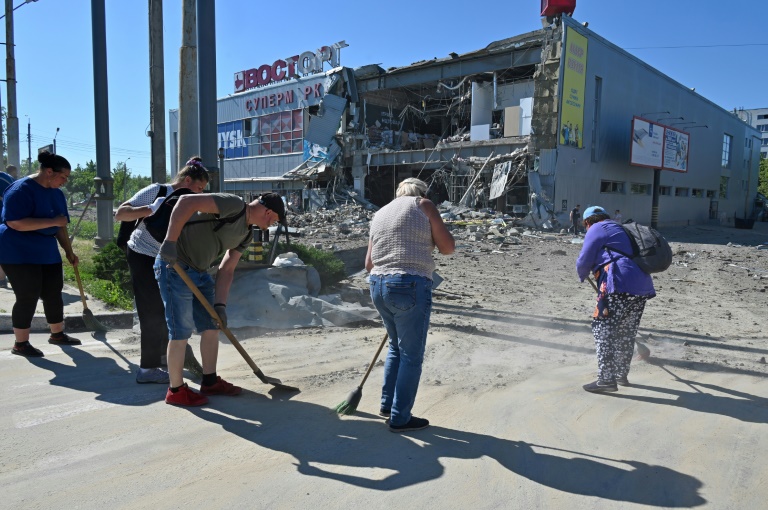
Here are the latest developments in the war in Ukraine:

– Fate of Donbas at stake in Severodonetsk: Zelensky – 

Ukrainian President Volodymyr Zelensky says the fate of the eastern industrial heartland of Donbas hinges on the fierce battle for the city of Severodonetsk, most of which has fallen to Russian forces.

In his evening address to the nation, Zelensky says the battle is “one of the most difficult” of the war. 

“In many ways, the fate of our Donbas is being decided there.”

Russian forces have for weeks been concentrating their firepower on Severodonetsk and its sister city of Lysychansk across the river.

A defiant Lugansk governor Sergiy Gaiday declares that Ukrainian forces could reclaim Severodonetsk “in two to three days” if they receive long-range artillery promised by the US and Britain.

Hundreds of civilians are reportedly sheltering at a chemical plant in the city’s industrial zone, which was targeted in Russian strikes overnight.

– UN warns of ‘unprecedented’ hunger –

UN chief Antonio Guterres says the war threatens to unleash “an unprecedented wave of hunger and destitution” as talks on unblocking Ukrainian and Russian farm exports trapped by the war remain deadlocked.

Guterres said that while this year’s food crisis is “about lack of access” to food, next year’s could be about “lack of food” itself and says 1.6 billion people risk being affected.

“There is only one way to stop this gathering storm: the Russian invasion of Ukraine must end,” he says in a speech.

The UN is trying to negotiate a deal that would allow Ukrainian grain shipments to resume from the country’s Black Sea ports — currently under a Russian blockade — in return for the lifting on sanctions on Russian food and fertilizer.

Turkey has agreed to provide naval escorts out of Ukrainian ports but Kyiv wants further security guarantees.

– Call to expel Russia from food agency –

Zelensky calls for Russia to be expelled from the UN’s Food and Agriculture Organization, saying Moscow is to blame for global food food shortages.

“There can’t be any discussion on prolonging Russia’s membership in the FAO. What is there for Russia to do if they are causing hunger for at least 400 million, or potentially more than a billion people?” Zelensky says during a meeting of the OECD club of leading developed and emerging economies.

– Russia begins Baltic Sea drills –

Dozens of Russian ships take part in naval drills in the Baltic Sea, three weeks after Sweden and Finland formally applied to join NATO.  

Russia’s defence ministry announces that 60 ships and 40 aircraft  will take part in the exercises “for the defence of sea lanes and fleet bases”, with further manoeuvres taking place on land in the Russian enclave of Kaliningrad. 

If Sweden and Finland’s NATO applications — currently blocked by Turkey — are approved, Russia would become the only country on the Baltic Sea outside of the Western military alliance. 

– Nearly five million refugees –

The UN refugee agency UNHCR says nearly five million Ukrainians have been registered as refugees across Europe since the Russian invasion.

“The Ukraine war has caused one of the largest human displacement crises in the world,” the agency says.

A further eight million people are displaced within Ukraine itself, according to the International Organization for Migration.

burs-cb/yad
Isolated Russia celebrates tsar who opened 'window to Europe'

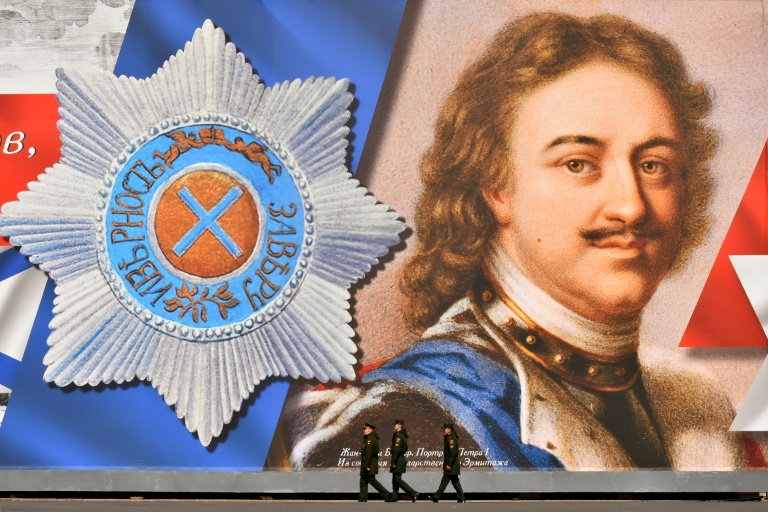
More than three centuries after he sought to bring Russia closer to Europe, Russians on Thursday marked the 350th birthday of tsar Peter the Great with the country deeply isolated over the Ukraine conflict.

Inspired by time spent abroad, Peter made huge efforts to modernise his vast and under-developed nation during his rule from 1682 to 1725, most famously building Saint Petersburg as Russia’s “window to Europe”.

Celebrations will be held in his namesake city and Moscow to mark the anniversary of Peter’s birth on June 9, 1672, with President Vladimir Putin attending a new exhibition in the capital dubbed “Peter the Great: The Birth of the Empire”.

With ties between Russia and the West shattered by Moscow’s military intervention in Ukraine, authorities are downplaying Peter’s affinity for Europe, instead focusing on his role in expanding Russian territories and consolidating state power.

“An outstanding statesman, military leader and patriot, he devoted his whole life to serving the Fatherland,” Putin, himself from Saint Petersburg, said in a statement this week to mark the anniversary.

Peter was inspired by trips to Europe as a young man to transform Russia into a great European power.

Over his reign he implemented sweeping political, military and social reforms aimed at Westernising Russia, transforming the country into a naval power and vastly expanding its territory. 

He also tolerated little dissent, brutally putting down an uprising in 1698 by torturing and publicly executing more than 1,000 rebels.

“Peter I can be an emblematic figure for both supporters of European-style liberalism and for supporters of the ‘strong state’,” Saint Petersburg historian and journalist Daniel Kotsubinsky told AFP. 

“The current authorities will put the emphasis on his role as a strongman for the state,” he said.

– ‘Close the window’ –

The conflict in Ukraine, which saw Moscow send troops into the pro-Western country in late February, has left Russia more isolated from the West than at almost any time in its history.

Flights to the European Union have been banned, sanctions have cut off Russians from Western imports and Western retailers, from McDonald’s and Starbucks to clothing retailers H&M and Zara, have shuttered their doors.

In the run-up to Thursday’s anniversary, Russian social media has been full of commentary wondering what happened to Peter’s vision.

Memes making the rounds show photos of the tsar, sometimes in a montage with Putin, and slogans like “Peter I opened the window to Europe, Putin will close it” or “Close the window to Europe, the view is horrible.”

Asked about the anniversary recently, Putin’s spokesman Dmitry Peskov insisted the window remained open.

“No one is planning to close anything,” he told journalists.

For Russian historian Boris Kipnis, “whatever the historical circumstances, if we abandon the path set by Peter I, we will ruin the country and the people.”

“Russia is a European country,” he said.

Despite the tensions, 47-year-old Saint Petersburger Svetlana Stepanova said she was planning to enjoy Thursday’s festivities.

“Peter I made Russia into a great power, Putin also wants to see a great Russia,” she said. “That is what’s most important.”

Stocks drop as inflation fears mount, eyes on ECB

Equity markets mostly fell Thursday as inflation fears gain momentum, with all eyes on the outcome of a European Central Bank policy meeting aimed at tackling soaring consumer prices in the eurozone.

The ECB is expected to announce the end date to its bond-buying stimulus, as concerns over the accelerating pace of inflation in the eurozone grip policymakers.

The stop is a prelude to the ECB hiking interest rates for the first time in more than a decade, following in the footsteps of other central banks who are raising borrowing costs.

In foreign exchange, the euro steadied against the dollar and pound.

“There is a sense of nervousness ahead of the ECB’s interest rate decision later today as the central bank looks to usher in a new era of monetary policy tightening,” noted Victoria Scholar, head of investment at Interactive Investor. 

“With euro-area inflation hitting a record high in May, the ECB is widely anticipated to begin hiking rates in July.”

Inflation around the world has reached the highest levels in decades, fuelled largely by soaring oil and gas prices.

Energy demand has surged as economies emerge from pandemic lockdowns, while supplies have been hit by the invasion of Ukraine by major producer Russia. 

Traders were also awaiting US inflation data due Friday.

Analysts expect the Federal Reserve to stick to its hawkish path and hike US interest rates by half a point for at least three more meetings this year as it tries to bring down American consumer prices.

“Until we reach peak inflation, which will trigger a less hawkish Fed and lower recession odds, it could be a gloomy summer for global stock pickers,” forecast SPI Asset Management’s Stephen Innes. 

There was fresh uncertainty over the economic outlook in China as Covid fears linger over the world’s second-biggest economy.

While data showed China’s exports rebounded strongly in May, with factories restarting and supply chains untangling as Shanghai slowly emerged from a gruelling lockdown, the metropolis will Saturday shut a district of 2.7 million people for mass coronavirus testing.

“There are lingering concerns that China’s brisk recovery could be a false dawn given that the zero-Covid strategy is staying firmly in place and that could mean rolling lockdowns will continue,” noted Hargreaves Lansdown analyst Susannah Streeter.

– Key figures at around 1015 GMT –

London – FTSE 100: DOWN 0.4 percent at 7,562.26 points

Frankfurt – DAX: DOWN 0.7 percent at 14,350.22

Paris – CAC 40: DOWN 0.3 percent at 6,427.47

EURO STOXX 50: DOWN 0.5 percent at 3,771.30

Tokyo – Nikkei 225: FLAT at 28,246.53 (close)

Hong Kong – Hang Seng Index: DOWN 0.7 percent at 21,869.05 (close)

Shanghai – Composite: DOWN 0.8 percent at 3,238.95 (close)

New York – Dow: DOWN 0.8 percent at 32,910.90 (close)

Brent North Sea crude: DOWN 0.3 percent at $123.20 per barrel

West Texas Intermediate: DOWN 0.2 percent at $121.89 per barrel

Dollar/yen: DOWN at 133.30 yen from 134.29 yen late Wednesday

Euro/dollar: FLAT at $1.0720 

Pound/dollar: DOWN at $1.2526 from $1.2535

Euro/pound: UP at 85.58 pence from 85.54 pence

Iran slams censure by UN watchdog in new cloud over nuclear talks

Iran condemned as “unconstructive” Thursday its censure by the UN atomic energy watchdog for failing to cooperate, in a new spat that clouded efforts to revive a deal limiting its nuclear activities. 

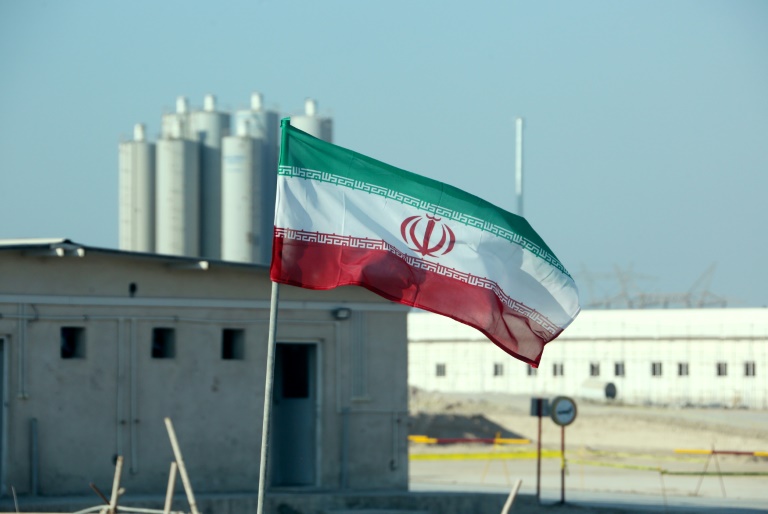
Iran already announced it had disconnected some International Atomic Energy Agency cameras monitoring its nuclear sites in anticipation of the watchdog’s adoption of the Western-drafted censure motion on Wednesday.

The motion — approved by 30 of the 35 members of the IAEA board of governors, with only Russia and China voting against — was the first to criticise Iran since June 2020.

Iran’s foreign ministry slammed the adoption of the resolution submitted by the United States, Britain, France and Germany as a “political, unconstructive and incorrect action”.

The resolution came after the IAEA raised concerns about traces of enriched uranium previously found at three sites Tehran had not declared as having hosted nuclear activities.

The agency has said its questions about the three sites of Marivan, Varamin and Turquzabad were “not clarified” in its meetings with Iranian authorities.

Iran, which had already responded angrily to Grossi’s decision to visit Israel ahead of the board of governors meeting, accused the watchdog of relying too much on “fabricated” Israeli intelligence reports.

Israeli Prime Minister Naftali Bennett welcomed the IAEA’s censure of Iran.

“We see here a firm stance by the countries of the world regarding the distinction between good and evil, as they clearly state that Iran is concealing things,” Bennett said before heading to fellow Iran critic, the United Arab Emirates, for a previously unannounced visit on Thursday.

– Disconnecting cameras –

The foreign ministry said Iran had already taken steps in response to the IAEA censure motion, including the installation of advanced centrifuges for uranium enrichment and the deactivation of monitoring cameras.

In a statement on Wednesday, Iran’s Atomic Energy Organisation stressed that the cameras it had disconnected were not part of its safeguard agreement with the UN watchdog.

After the adoption of the resolution, the US, Britain, France and Germany urged Iran “to fulfil its legal obligations and cooperate with the IAEA”.

The US State Department said that if confirmed, Iran’s reported counter-measures were “extremely regrettable” and “counterproductive” to attempts to revive the 2015 nuclear deal.

– ‘Deeply troubling decision’ –

The landmark agreement set limits to Iran’s nuclear activities in return for relief from international sanctions — but it has been in disarray since then US president Donald Trump unilaterally withdrew from it in 2018 and reimposed crippling sanctions.

In response, Iran, which has repeatedly denied any ambition to develop a nuclear weapons capability, began rolling back on its own commitments under the deal.

Talks began in April last year on reviving the agreement through the lifting of US sanctions and Iran’s return to full compliance but they have stalled in recent months.

Eric Brewer, an analyst at the non-profit Nuclear Threat Initiative, told AFP the impact of the IAEA vote on the nuclear talks might be limited as the remaining obstacles to a deal “have little to do with the nuclear issue”.

“While events at the Board of Governors meeting in Vienna probably won’t help, I doubt they’re going to make the chances of reviving the deal dramatically worse,” he said, even though he described Iran’s latest steps as a “deeply troubling decision”.

European capitals have expressed mounting concern over how far Iran has gone in resuming nuclear activities since the US began reimposing sanctions.

Iran has built up large stockpiles of enriched uranium, some of it enriched to levels far higher than those needed for nuclear power generation.

The IAEA chief said Monday that it would be “a matter of just a few weeks” before Iran could get sufficient material needed for a nuclear weapon if it continues to develop its programme.

Henry Rome, a director at the Eurasia Group, described the next few weeks as “critical” with the onus primarily on Iran.

“It remains unclear whether the embarrassment of the resolution will cause a recalibration in Tehran or further fuel the recalcitrance that brought it about in the first place,” he said.  

Italy's Draghi says EU should cushion energy inflation blow

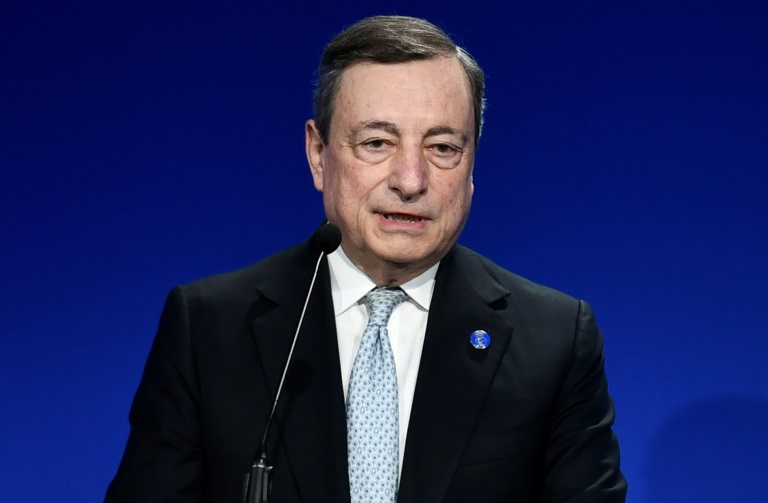
Italian Prime Minister Mario Draghi on Thursday suggested an EU-wide scheme to protect citizens from higher energy costs resulting from Russia’s invasion of Ukraine.

“We must consider replicating some of the joint tools that have helped us recover swiftly from the pandemic,” Draghi told delegates gathered in Paris for a meeting of the Organisation for Economic Cooperation and Development (OECD).

He highlighted that inflation in the eurozone single currency area reached 8.1 percent in May — much of it driven by higher prices for energy including oil and gas following Moscow’s assault on its neighbour.

“Rising inflation is not wholly the sign of overheating (in the economy), but largely the result of a series of supply shocks,” Draghi said.

The former European Central Bank chief said the SURE unemployment support scheme, agreed by EU nations in 2020 as the first pandemic wave was breaking over the continent, could serve as a model.

It provided up to 100 billion euros ($107 billion) across the bloc to buttress national budgets sapped by the sudden need to aid large numbers of people with measures like short-time work schemes.

SURE “provided cheap and stable loans to the EU member states so that they could save jobs and support incomes”, Draghi said.

“A similar instrument — this time targeting energy — could ensure vulnerable countries have more room to help their citizens at a time of crisis” as well as “shore up popular support for our joint sanctions” against Russia, he added.

Thai cops seize meth hidden in replica Easter Island statue

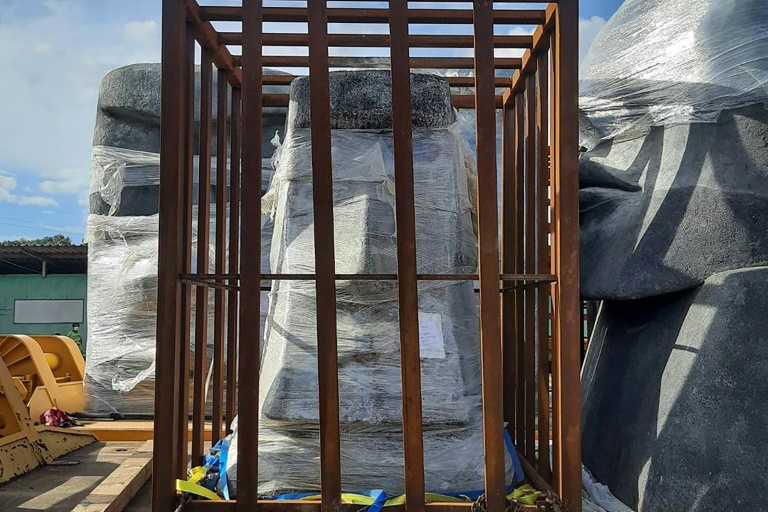
Thai authorities have seized 200 kilograms of crystal meth hidden inside a replica Easter Island statue awaiting shipment to Taiwan, police said Thursday.

Southeast Asia’s so-called Golden Triangle — the notorious border region of Myanmar, Laos and Thailand — has long been an infamous hotspot for drug production and trafficking.

Thai drugs officers working with Taiwanese police raided a shipping company in the port city of Laem Chabang, some 50 km (30 miles) southeast of Bangkok, to examine six statue heads made from cement and metal frames.

Officers used an angle grinder, hammers and chisels to cut a hole in one statue, uncovering the drugs hidden inside in plastic bags, according to footage shown in local media.

Khemmarin Hassiri, commander of the foreign affairs division of the Royal Thai Police, told AFP the drugs were due to be shipped to Taiwan.

The statues were originally transported to the kingdom from Taiwan in late 2020 for an exhibition.

Police have sought arrest warrants for Thai and Taiwanese drug suspects connected to the statues.

United Nations Office on Drugs and Crime regional representative Jeremy Douglas said the haul was “no surprise”.

“Trafficking connections between syndicates active in the Mekong, including Thailand, and Taiwan are longstanding and strong,” Douglas told AFP.

“Taiwan is a destination market particularly for meth and ketamine, but is also a trans-shipment point for Japan and other parts of East Asia.”

The seizure comes after a UN report published last month said a record one billion methamphetamine pills were seized in East and Southeast Asia last year.

The report also said 79 tonnes of crystal methamphetamine were seized across the region in the same period.

Myanmar’s northern Shan state remains the region’s primary source of meth.

Experts say methamphetamine production is at unprecedented levels and has been exacerbated by the coup in Myanmar in February last year, which has paralysed the economy and livelihoods.

Myanmar’s lawlessness is providing ideal conditions for illicit drug labs to flourish, with a largely unchecked supply of precursor chemicals flooding in from China.

Rocketing petrol prices fuel British PM's woes

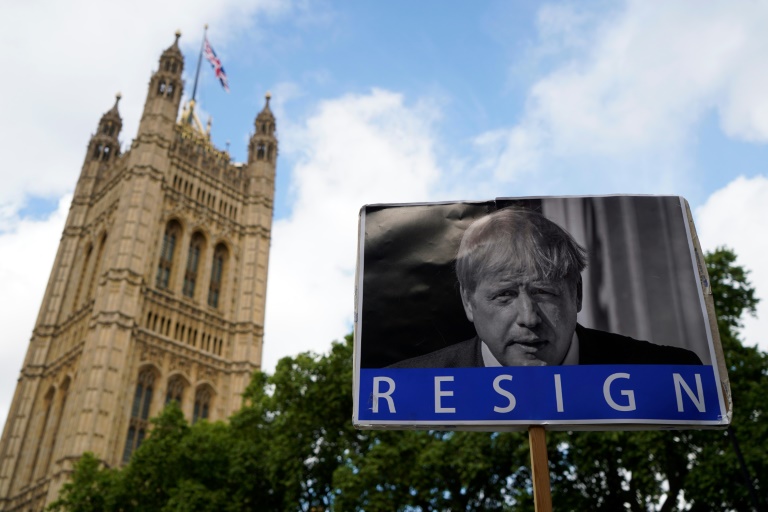
Prime Minister Boris Johnson on Thursday sought to reset his embattled leadership with a policy blitz to tackle Britain’s cost-of-living crisis, including contentious new measures to boost home ownership.

After narrowly surviving a no-confidence vote among his own Conservative MPs on Monday, Johnson is under pressure to turn the page on a series of scandals including lockdown-breaching parties in Downing Street.

In a speech later, he was to vow “more affordable energy, childcare, transport and housing”, according to excerpts released by Downing Street.

“And, while it’s not going to be quick or easy, you can be confident that things will get better, that we will emerge from this a strong country with a healthy economy,” Johnson added.

The scale of the inflationary crisis hitting millions of Britons was underlined as the price of filling up the average family car topped £100 ($125) for the first time, according to data from the RAC motoring group.

RAC spokesman Simon Williams called it “a truly dark day” for hard-pressed drivers, and urged the government to slash sales tax on petrol and diesel.

The government says much of the crisis is caused by factors beyond its control, such as the impact of the Covid pandemic and the war in Ukraine.

But with two difficult by-elections coming up this month, unhappy Tory MPs want bolder measures including tax cuts after 40 percent of them voted against Johnson on Monday.

– Back to the 80s –

Updating a signature policy of 1980s predecessor Margaret Thatcher, Johnson’s speech was set to detail a plan to enable more low-income renters to buy their own social housing.

Senior minister Michael Gove told Sky News that “home ownership is not just good for individuals, it’s good for society overall”.

He vowed the measures would help redress a crippling shortage in housing stock that has seen both purchase and rental prices rocket well out of reach of many Britons, especially younger adults.

But the opposition Labour party noted that the plan would need billions in extra money, which Gove admitted was not on offer, relying instead on existing funding at a time when the Treasury is already trying to rein in government spending.

“By their own reckoning, this will help a few thousand families a year,” senior Labour MP Lisa Nandy told BBC radio.

“For those families that will be very welcome,” she said, while warning it could make “the housing crisis worse for everybody else”.

Britain’s newspapers honed in on the surging prices on Thursday, with the Guardian, Daily Mirror and Johnson’s former employers at the Daily Telegraph featuring front-page stories on the record fuel costs.

But the conservative Daily Mail declared that “emboldened Boris Johnson will cut bills left, right and centre in his most radical move yet to ease the cost-of-living crisis”.

All the papers noted a warning from the Organisation for Economic Co-operation and Development (OECD) that Britain must cut taxes or raise spending, as it forecast the country would have the weakest economic growth in the developed world next year.

– Fight with EU –

Under current Conservative party rules, Johnson cannot be challenged again for a year, which leaves little time for any new leader to emerge before the next general election due by 2024.

But Johnson’s Tory enemies still appear to be manoeuvring, with reports that he faces a “war of attrition” and “vote strikes” to paralyse the government’s legislative agenda. 

Such “vote strikes” hurt Theresa May’s three-year stint in Downing Street, before she was brought down in 2019 by Johnson and his allies over how to execute Britain’s exit from the European Union.

The government is set to launch another counter-offensive on the Brexit front, by introducing legislation soon to rewrite a pact with the EU governing trade with Northern Ireland, unless Brussels agrees to changes.

Gove denied that Johnson was looking to divert attention following the confidence vote, by placating Brexit hardliners on the Tory backbenches.

I don’t think it’s about picking a fight,” the minister said on BBC radio.

“It is absolutely right that we fix the problems with the Northern Ireland Protocol,” he said, after the territory’s biggest pro-UK party refused to join a new power-sharing government.

Rocketing petrol prices fuel British PM's woes

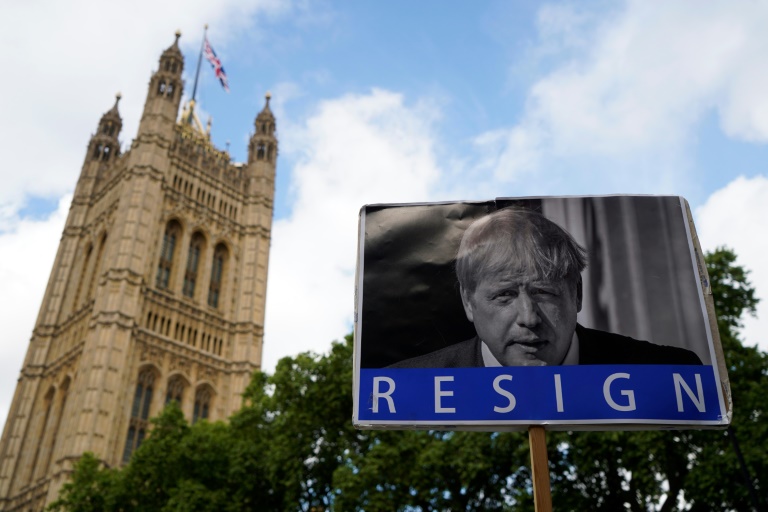
Prime Minister Boris Johnson on Thursday sought to reset his embattled leadership with a policy blitz to tackle Britain’s cost-of-living crisis, including contentious new measures to boost home ownership.

After narrowly surviving a no-confidence vote among his own Conservative MPs on Monday, Johnson is under pressure to turn the page on a series of scandals including lockdown-breaching parties in Downing Street.

In a speech later, he was to vow “more affordable energy, childcare, transport and housing”, according to excerpts released by Downing Street.

“And, while it’s not going to be quick or easy, you can be confident that things will get better, that we will emerge from this a strong country with a healthy economy,” Johnson added.

The scale of the inflationary crisis hitting millions of Britons was underlined as the price of filling up the average family car topped £100 ($125) for the first time, according to data from the RAC motoring group.

RAC spokesman Simon Williams called it “a truly dark day” for hard-pressed drivers, and urged the government to slash sales tax on petrol and diesel.

The government says much of the crisis is caused by factors beyond its control, such as the impact of the Covid pandemic and the war in Ukraine.

But with two difficult by-elections coming up this month, unhappy Tory MPs want bolder measures including tax cuts after 40 percent of them voted against Johnson on Monday.

– Back to the 80s –

Updating a signature policy of 1980s predecessor Margaret Thatcher, Johnson’s speech was set to detail a plan to enable more low-income renters to buy their own social housing.

Senior minister Michael Gove told Sky News that “home ownership is not just good for individuals, it’s good for society overall”.

He vowed the measures would help redress a crippling shortage in housing stock that has seen both purchase and rental prices rocket well out of reach of many Britons, especially younger adults.

But the opposition Labour party noted that the plan would need billions in extra money, which Gove admitted was not on offer, relying instead on existing funding at a time when the Treasury is already trying to rein in government spending.

“By their own reckoning, this will help a few thousand families a year,” senior Labour MP Lisa Nandy told BBC radio.

“For those families that will be very welcome,” she said, while warning it could make “the housing crisis worse for everybody else”.

Britain’s newspapers honed in on the surging prices on Thursday, with the Guardian, Daily Mirror and Johnson’s former employers at the Daily Telegraph featuring front-page stories on the record fuel costs.

But the conservative Daily Mail declared that “emboldened Boris Johnson will cut bills left, right and centre in his most radical move yet to ease the cost-of-living crisis”.

All the papers noted a warning from the Organisation for Economic Co-operation and Development (OECD) that Britain must cut taxes or raise spending, as it forecast the country would have the weakest economic growth in the developed world next year.

– Fight with EU –

Under current Conservative party rules, Johnson cannot be challenged again for a year, which leaves little time for any new leader to emerge before the next general election due by 2024.

But Johnson’s Tory enemies still appear to be manoeuvring, with reports that he faces a “war of attrition” and “vote strikes” to paralyse the government’s legislative agenda. 

Such “vote strikes” hurt Theresa May’s three-year stint in Downing Street, before she was brought down in 2019 by Johnson and his allies over how to execute Britain’s exit from the European Union.

The government is set to launch another counter-offensive on the Brexit front, by introducing legislation soon to rewrite a pact with the EU governing trade with Northern Ireland, unless Brussels agrees to changes.

Gove denied that Johnson was looking to divert attention following the confidence vote, by placating Brexit hardliners on the Tory backbenches.

I don’t think it’s about picking a fight,” the minister said on BBC radio.

“It is absolutely right that we fix the problems with the Northern Ireland Protocol,” he said, after the territory’s biggest pro-UK party refused to join a new power-sharing government.

Forest fire fears over new Greek migrant camp

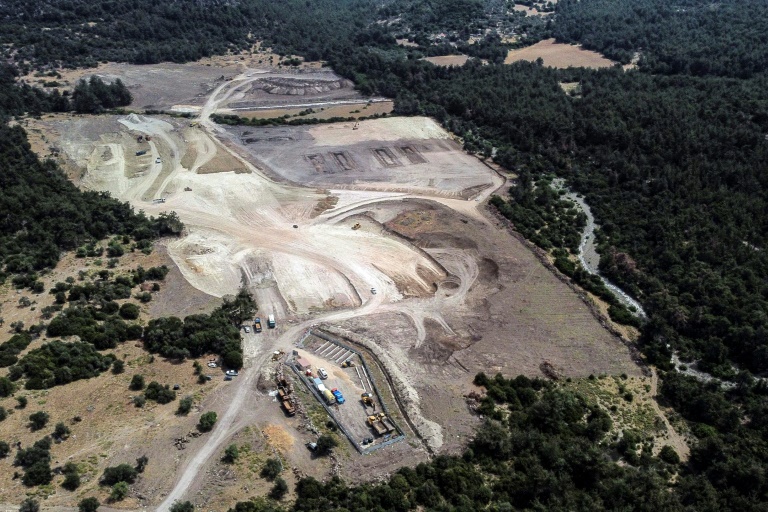
Months behind schedule and dogged by lawsuits, critics say a vast new migrant camp on the Greek island of Lesbos is a potential forest fire hazard that could wreak havoc on the environment.

Officials say it is desperately needed on an island at the forefront of Europe’s migrant crisis, where hundreds of thousands of asylum seekers have arrived from countries such as Syria and Afghanistan since 2015.

The worksite is as far as possible from the island’s main town of Mytilene and its tourist resorts. Barbed wire keeps out intruders. A private security company now guards the entrance 24 hours a day, after protesters set fire to construction machinery in February.

“It’s the worst location possible to build the camp,” Yiorgos Dinos, head of the firemen union in the region, tells AFP.

“Should a fire start there, it will burn down half the island.”

According to local community leaders, Greece’s propensity for forest fires and a troubling history of blazes at other camps makes the new facility — on the edge of a dense pine forest in the middle of nowhere — a potential hazard of major proportions.

“We have so many examples of what can happen to a forest in case of fire in adverse weather conditions,” says Christos Tsivgoulis, head of Komi, one of six communities that oppose the project. 

“Nothing can save you.”

High temperatures and strong winds cause wildfires every summer in Greece, especially on islands where the rugged landscape presents an added impediment to firefighters.

Scientists say climate change has increased the frequency and intensity of the fires in recent years.  

Greece’s and indeed Europe’s largest migrant camp of Moria, also on Lesbos, was entirely gutted by fire in 2020.

– ‘Completely unsuitable’ –

At the time, Moria housed more than 10,000 people. Most of them were sleeping under makeshift shelter outdoors.

Last month, a communal tent for 150 people burned down at Moria’s temporary replacement of Mavrovouni, which currently houses around 1,100 people. 

On Tuesday, two 18-year-old Afghan asylum seekers were sentenced to four years on appeal for starting the Moria fire. Four other Afghans were handed 10-year sentences last June.

Michael Bakas, a member of Greece’s Greens party, says “dozens” of fires broke out around Moria in previous summers despite the presence of a dedicated fire response team.

Tsivgoulis, the local community representative, says the densely forested landscape around the new camp at Plati is more dangerous than Moria.

“Moria was surrounded by an olive grove, olive trees don’t burn easily, imagine what can happen in a pine forest,” Tsivgoulis said.

“In the summer months, locals are not allowed to enter at night because of the risk of fire. So how does the (migration) ministry ensure that there will be no accidents when hundreds will be coming and going” to build the camp, he wonders.

“This is a completely unsuitable location to build an entire community,” adds Antonis Komlos, head of the community of Pighi.

“With one spark, whole villages and crops could be lost,” he said.

– ‘Far from our children’ –

There are also fears that the remote location, accessible via a rural road, 15 kilometres (nine miles) from the closest village as the bird flies and 30 kilometres from the island’s main town of Mytilene, will be hard to evacuate in an emergency.

With a capacity of 3,000, Plati is to be the largest of five new camps for which the European Union has allocated $296 million combined for Lesbos and four other Greek islands in the Aegean where migrants arrive from neighbouring Turkey.

The new camps come with barbed-wire fencing, surveillance cameras, X-ray scanners and magnetic gates that are closed at night.

Mytilene mayor Stratis Kytelis has called the camp a “starting point” for the island to “leave the migration issue behind for good — far from the city of Mytilene, our children and our daily lives.”

Yet disagreements over the location have delayed the project for months, with various alternative locations examined and rejected. 

This week, Kytelis said Plati was “the only solution to restore serenity to the island.”

In a statement to AFP, he insisted authorities are taking “all (necessary) fire precautions”.

The camp was originally supposed to have been completed last September.

An injunction against the project will be discussed later in June.

Another member of Sri Lanka's ruling clan quits

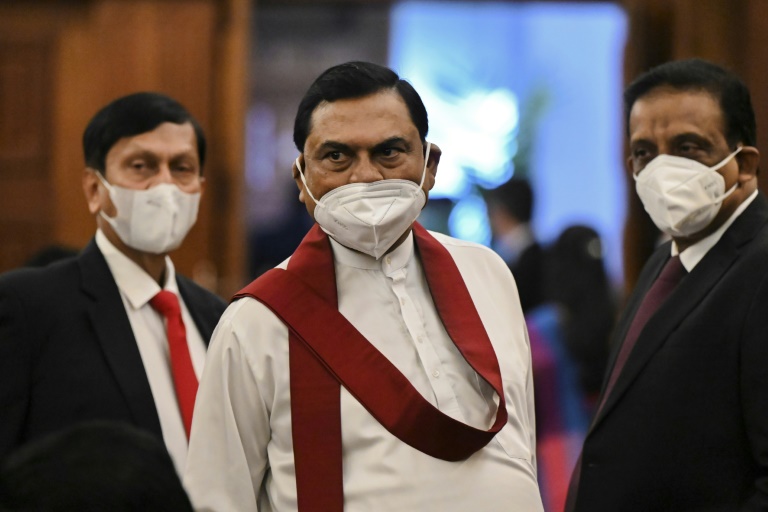
Another member of Sri Lanka’s ruling family quit public office on Thursday, denying responsibility for an economic crisis that has caused severe hardship in the island nation. 

Basil Rajapaksa was once nicknamed “Mr. Ten Percent” in a BBC interview, in reference to commissions he allegedly skimmed from government contracts. He has insisted that he had committed no wrongdoing in office. 

The 71-year-old had until April served as finance minister under President Gotabaya Rajapaksa, his elder brother, who has stared down months of protests demanding his resignation for economic mismanagement.

“I entered parliament to manage the economy, but since I am no longer the finance minister, there is no point in remaining an MP,” Basil told reporters in Colombo.

During the younger Rajapaksa’s tenure, Sri Lanka began to suffer acute shortages of food, fuel, medicines and other essential goods that continue to this day.

The crisis was sparked by dwindling foreign currency reserves — blamed on unsustainable tax cuts brought in by the president in 2019 — that left importers unable to pay for goods.

Queues for petrol at filling stations have stretched for hours and sometimes even days, while many businesses have shut because they have run out of diesel fuel to power generators during prolonged blackouts. 

Sri Lanka defaulted on its $51 billion foreign debt shortly after Basil left the finance ministry and is in talks with the International Monetary Fund for a bailout. 

But Basil insisted that he was not responsible for the country’s painful downturn. 

“I did not create the crisis, it was already there when I took over the finance ministry,” he said. 

Basil, also a citizen of the United States, was nominated to parliament for a second time in 2021 after his brother Gotabaya scrapped constitutional provisions barring dual citizens from becoming legislators.

On Thursday he said he was motivated to return to parliament to clear his name and noted authorities had last week withdrawn a long-running corruption investigation against him. 

The probe centred on claims that he had amassed wealth and assets which could not be explained by income from his government salary.

Basil’s announcement comes a month after the resignation of his elder brother Mahinda Rajapaksa as the island’s prime minister.

Mahinda stepped down on May 9 after his supporters attacked peaceful protesters in the capital Colombo, sparking violence that saw at least nine people killed and arson attacks on dozens of homes belonging to government lawmakers. 

A replacement for Basil was not immediately named, but sources from his party said he could soon be succeeded by Dhammika Perera, a casino magnate and Rajapaksa loyalist. 

Close Bitnami banner
Bitnami