World

Migrant caravan to continue trek through Mexico Thursday

Thousands of mostly Venezuelan migrants began receiving temporary Mexican visas Wednesday as they prepared to continue their trek toward the United States.

The migrants had set up a temporary camp on a basketball court in the southern Mexican town of Huixtla, some 40 kilometers from where they began their journey on Monday close to the Guatemala border.

Immigration authorities in Huixtla began slowly processing temporary visas for the migrants Wednesday, which will allow them to stay in Mexico for 30 days without fear of being deported, said Luis Garcia Villagran, a coordinator with the Human Dignity Center NGO that is accompanying the caravan.

A Mexican government official confirmed to AFP that humanitarian visas were being issued to the migrants, but Garcia said the process was slow.

“We’re going to the northern border! We’re going with permits, without permits, with buses, without buses, however they want,” said Garcia Villagran.

“We will leave on foot… tomorrow Thursday at 6 am (1100 GMT),” he added.

Huixtla has become a sort of bottleneck for undocumented migrants arriving from Central America, leaving the national immigration center there overwhelmed.

The caravan of people fleeing poverty, violence and political oppression in their homelands, set off on Monday in the same week that US President Joe Biden hosts the Summit of the Americas in Los Angeles, with migration one of the main agenda items.

On Tuesday, the US announced a new commitment to provide $1.9 billion of private funding to Central America with the aim of slowing the migration wave.

This most recent caravan is made up of around 11,000 people, including a group of 70 with handicaps, according to the human rights ombudsman’s office.

Venezuelan Julio Andrade, 43, who lost a leg in a traffic accident, told AFP he was migrating “for a better future, because the situation in my country is terrible. There is no employment, security or medicines.”

While waiting, the Venezuelans sang their national anthem and told jokes about President Nicolas Maduro.

They are hoping to receive special treatment from the United States, which does not recognize Maduro’s 2018 re-election as legitimate.

Another Venezuelan, 29-year-old Gleidys, said she could not understand why Mexican authorities were making it so difficult to receive a temporary visa.

“We don’t want to stay here … we’re passing through,” she said.

The UN says more than six million Venezuelans have left the country in recent years due to the economic and political crises there.

Migrant caravans that traversed Mexico in 2018 and 2019 sparked tensions with the administration of then-US president Donald Trump.

Since then, Mexico has stepped up its border controls and in 2021 more than 300,000 undocumented migrants were detained there.


US Capitol riot probe renews spotlight on Trump rebels

Death threats, accusations of betrayal and censure by their local parties: for the six Republicans running for re-election after voting to impeach Donald Trump, the last 17 months have been a painful lesson in the perils of opposing an unforgiving leader.

Ten out of 211 House Republicans backed the Democrats’ ultimately unsuccessful bid to have Trump convicted in a Senate trial last year, believing he should be held accountable for inciting a deadly siege of the US Capitol on January 6, 2021.

Four have since announced they would retire, and the remaining six have become pariahs in their local town halls and roadside diners, upbraided for their “disloyalty” as they campaign for November’s midterm elections.

Ostracized by a party still in thrall to the former president, the group are bracing for a high-profile reminder of their break with Trump as televised congressional hearings on the insurrection begin Thursday.

– Resistance leader –

Liz Cheney, the daughter of a former vice president and one-time cornerstone of the House leadership, is now the face of Republican resistance to Trump.

Since calling his role in the insurrection the “greatest betrayal” by a US president in history, her fall from grace inside the party has been spectacular.

She has been censured by Republicans in Washington and Wyoming, faced protests in Cheyenne, Rock Springs, Casper, Big Horn and at other events across her home state.

But Cheney has not backed down, and will be in the national spotlight Thursday as vice-chair of the House committee investigating the US Capitol riot. 

She has been a regular target of Trump’s broadsides. As recently as May, he called her “America last,” “the face of the Washington swamp” and a globalist who loves “endless, nonsensical, bloody wars.” 

– ‘Someone may try to kill us’ –

Freshman congressman and military veteran Peter Meijer told MSNBC in the wake of his vote to impeach Trump that he was altering his routine and “working to get body armor, which is a reimbursable purchase.”

His office was inundated with death threats after he said Trump “betrayed millions with claims of a stolen election.”

“It’s sad that we have to get to that point, but our expectation is that someone may try to kill us,” Meijer said.

In the weeks following his impeachment vote, two county-level Republican parties in Meijer’s district voted to formally censure him, while Ron Weiser, the chairman of Michigan’s state party, joked about “assassination” as an option for how to deal with Meijer.

He is expected to win his August primary against a Trump-backed opponent but it is possible a member of his own family won’t be voting for him.

Meijer revealed in an interview with The Atlantic in December that his once-supportive sister Haley, a Trump supporter, had turned against him, supporting another early rival in his primary. 

– ‘Bad blood’ – 

Tom Rice and Dan Newhouse went to ground after the impeachment, seemingly hoping that if they went silent on the subject, their votes against Trump would be forgotten, if not forgiven.

Both were censured by their state parties but have rebuffed calls to resign and now face Trump-backed primary challengers.

Rice reported getting a menacing voicemail a few weeks after the impeachment from a constituent who invited the congressman to “come over to his house for coffee so that he could beat the living hell out of him,” a police report cited by NBC said.

But that has not stopped Trump from making Rice the target of some of his sharpest broadsides, describing the congressman as a “coward who abandoned his constituents,” a “disaster” and “a total fool…  laughed at in Washington.”

Another of the six dissidents, David Valadao, had his own challenger in California’s Central Valley in Tuesday’s primary election because of his impeachment vote.

But he is alone among the group in not having Trump weigh in on his race and looked likely to advance to the general election, though there are still a lot of votes left to count.

Nevertheless, a feature in his local paper, The Daily Republic, painted an image of Valadao as a pariah in parts of his district, reporting that the “bad blood after Valadao’s vote runs deep” in the city of Hanford, where he was born and raised.

– ’75 million are watching’ –

Jaime Herrera Beutler was thrust into the impeachment drama when she confirmed details of a phone call between House Minority Leader Kevin McCarthy and Trump during the insurrection, in which she said the president upbraided McCarthy for not being as “upset” about the election results as the rioters.

The Washington State Republican Party censured her for her impeachment vote and her office was picketed by protesters.

While other Republicans have worried about threats from constituents, Herrera Beutler received a darkly-worded warning from one of her own colleagues, far right Republican congresswoman Marjorie Taylor Greene. 

“First voting to impeach innocent President Trump, then yapping to the press and throwing @GOPLeader (McCarthy) under the bus,” Greene tweeted from her now suspended account. 

“The Trump loyal 75 million are watching.”

UK's PM looks to reset leadership after confidence vote

Prime Minister Boris Johnson will on Thursday outline plans to tackle Britain’s cost-of-living crisis, as he seeks to move on from a damaging series of scandals and a confidence vote called by his own MPs.

Johnson won the vote but with 40 percent of his own side refusing to back him, he was likened to a “Monty Python” character who refuses to admit he is mortally wounded following another harrowing week.

The Conservative leader on Wednesday faced parliament for the first time since surviving the vote, which commentators said had left his scandal-tainted premiership still in peril.

Backers in the House of Commons staged a noisy show of support at his weekly question-and-answer session. But Tory rebels sitting behind looked glum and laughed along with opposition jibes.

Johnson has called his 211-148 victory “decisive” and wants to move on from repeated calls for him to resign over the “Partygate” scandal about lockdown-breaching parties in Downing Street.

“As for jobs, I’m going to get on with mine,” he reiterated in the Commons, after defending his government’s record on employment, health and Ukraine.

Part of the reset includes a speech in northwest England on Thursday to “set out a clear vision to continue to tackle the rising cost of living”, his Downing Street office said.

“We have the tools we need to get on top of rising prices. The global headwinds are strong. But our engines are stronger,” he will say.

“And, while it’s not going to be quick or easy, you can be confident that things will get better, that we will emerge from this a strong country with a healthy economy.”

– Policy rollout –

Johnson faced repeated taunts on Wednesday about Monday’s vote, including comparisons to Monty Python’s “Black Knight” character, who declares “it’s just a flesh wound” when he has his arms and legs chopped off in a duel.

“No amount of delusion and denial will save the prime minister from the truth: this story won’t go away until he goes away,” said the Scottish National Party’s Westminster leader Ian Blackford.

Johnson’s Tory opponents fear that public disgust over “Partygate” is crippling their party’s electoral chances. 

Some want a return to “Conservative values” including lower taxes after the Covid-19 pandemic.

Downing Street has set the stage for a policy blitz in the coming days, including on Britain’s skewed property market, where sky-high prices have deprived younger people of the hope of home ownership. 

Rising rental prices are compounding the misery of the worst cost-of-living crisis in generations, with inflation at a 40-year high of nine percent. 

Britain’s newspapers honed in on the rising prices — and the government’s pledge to tackle them — on Thursday, with the Guardian, Daily Telegraph, and Daily Mirror featuring front-page stories on the surge in fuel costs.

The conservative Daily Mail hailed Downing Street’s plans, declaring that “emboldened Boris Johnson will cut bills left, right and centre in his most radical move yet to ease the cost-of-living crisis”.

– ‘Vulnerability’ –

The Organisation for Economic Co-operation and Development (OECD) warned Wednesday that Britain must cut taxes or raise spending as it forecast the country would have the weakest economic growth in the developed world next year.

“I would like to see cuts where they’re possible,” Health Secretary Sajid Javid, a former finance minister, told BBC television earlier Wednesday.

How much Johnson can secure in parliament, however, is unclear given the size of Monday’s revolt, which has likely cut his working majority.

“I think there’s very little doubt that the vulnerability of the prime minister is going to be the single greatest factor shaping what this government does for the foreseeable future,” King’s College London politics professor Anand Menon told AFP.

– ‘Last chance’ –

Johnson’s enemies on his own side still appear to be manoeuvring, with reports he faces a “war of attrition” and “vote strikes” to paralyse the government’s legislative agenda. 

Such “vote strikes” hurt Theresa May’s three-year stint in Downing Street, before she was brought down in 2019 by Johnson and his allies over how to execute Britain’s departure from the European Union.

The Conservatives are braced for two parliamentary by-elections this month, and an upcoming investigation by MPs into whether Johnson lied to parliament over Partygate.

“Johnson achieved a remarkable election victory in 2019. But he has let things slide since then,” former cabinet member David Davis, who voted against him Monday, wrote in The Times.

“His victory in (Monday’s) vote provides his last chance to get his act together.”

Under current Tory rules Johnson cannot be challenged again for a year, which leaves little time for any new leader to emerge before the next general election due by 2024.

Biles, Raisman, other top US gymnasts file $1 bn claim against FBI

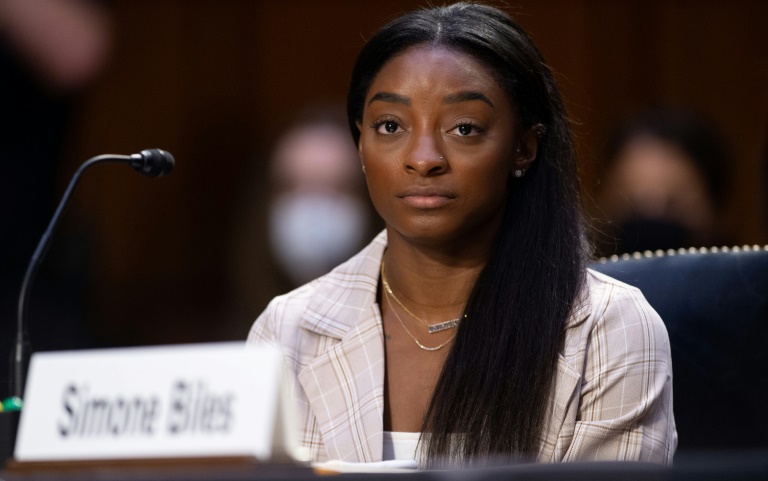
Simone Biles, Aly Raisman and other star US gymnasts filed a $1 billion claim against the FBI on Wednesday for mishandling of the investigation into sexual abuse by predatory former team doctor Larry Nassar.

Nassar, 58, is serving a life sentence after pleading guilty in late 2017 and early 2018 to sexually assaulting athletes while working as a sports medicine doctor at USA Gymnastics and Michigan State University.

Hundreds of women — including Olympic gold medalists Biles, Raisman and McKayla Maroney — have accused Nassar of sexually abusing them during his more than two-decade career.

Biles, Raisman and Maroney are among the more than 90 women who have filed the federal tort claim against the Federal Bureau of Investigation, the law firms handling the case said in a joint statement.

“The majority of claimants consists of over 90 young women and girls who were abused after 2015 due to the FBI’s failure to take required steps to protect them,” they said.

The claim against the FBI comes just days after the Department of Justice announced it was not bringing any charges against two now retired FBI special agents who mishandled the Nassar investigation.

“My fellow survivors and I were betrayed by every institution that was supposed to protect us — the US Olympic Committee, USA Gymnastics, the FBI and now the Department of Justice,” Maroney said in a statement. 

“I had some hope that they would keep their word and hold the FBI accountable,” she said. “It is clear that the only path to justice and healing is through the legal process.”

– ‘Grossly derelict’ –

The law firms said the FBI received credible complaints in July 2015 of Nassar’s sexual assaults and was “then able to immediately end Nassar’s predation.”

“However, the FBI was grossly derelict in their duties by declining to interview gymnasts who were willing to talk about the abuse,” they said.

“As a result, Nassar continued his predatory behavior, sexually assaulting approximately 90 young women and children between July 28, 2015, and September 12, 2016,” they added.

An FBI spokeswoman declined to comment on the legal claim but pointed reporters to testimony before a Senate committee in September 2021 by FBI director Christopher Wray.

Addressing Nassar’s victims, Wray said: “I’m especially sorry that there were people at the FBI who had their own chance to stop this monster back in in 2015 and failed.”

“That’s inexcusable,” the FBI director said. “It never should have happened. And we’re doing everything in our power to make sure it never happens again.”

Nassar’s victims reached a $380 million settlement with USA Gymnastics last year, one of the largest ever recorded for victims of sex abuse.

USA Gymnastics filed for bankruptcy in 2018 after a tidal wave of allegations against Nassar swamped the organization.

Michigan State University reached a $500 million settlement with hundreds of Nassar’s victims in 2018.

Zuckerberg staying at Meta helm for years 'makes sense': Clegg

Mark Zuckerberg’s presence at the helm of Facebook parent Meta for “many, many years” would be perfectly natural, his global affairs director has told AFP, even as the founders of many tech companies hand off to fresh blood.

Succession at the mega company has been in the headlines in recent weeks with the announcement of the departure of Sheryl Sandberg after 14 years as the firm’s number two.

But while the founders of companies like Amazon, Twitter and Google have all moved on, Zuckerberg has shown no sign of giving up the reins — despite raging criticism over privacy scandals and the rampant spread of misinformation across Facebook.

Now as Meta rolls out its plans for the metaverse — the immersive virtual world that it considers the future of the internet — there’s no reason for the 38-year-old to go anywhere anytime soon, said Nick Clegg, the company’s director of global affairs. 

“It’s a multi-year project. It would make sense to me that Mark Zuckerberg would want to continue, to build this new chapter of the company, and that’s going to last for many years, many years,” Clegg told AFP on the sidelines of the Summit of the Americas in Los Angeles.

“He is the founder of the company, of Meta, but he is also the architect of the new chapter, of this construction, of these augmented reality and virtual reality technologies.” 

Facebook bought virtual reality headset maker Oculus in 2014 and launched a social VR platform.

The technology has taken off in the gaming industry, and become popular among players of Fortnite and Roblox.

But Clegg, a former British deputy prime minister, said the metaverse promised great opportunities in the fields of education and medicine, as well as entertainment.

For example, he said, teachers can take their students on a virtual trip through ancient Greece, and medics can learn sophisticated surgical techniques.

And, he said, as hardware improves, the need for specialist equipment will diminish.

“In years to come, people will be able to access these new technologies through their phones,” he said. 

“We are exploring how we can increase access to everyone and not just people who can afford the new and latest hardware.”

Hi-tech herd: Spain school turns out 21st-century shepherds

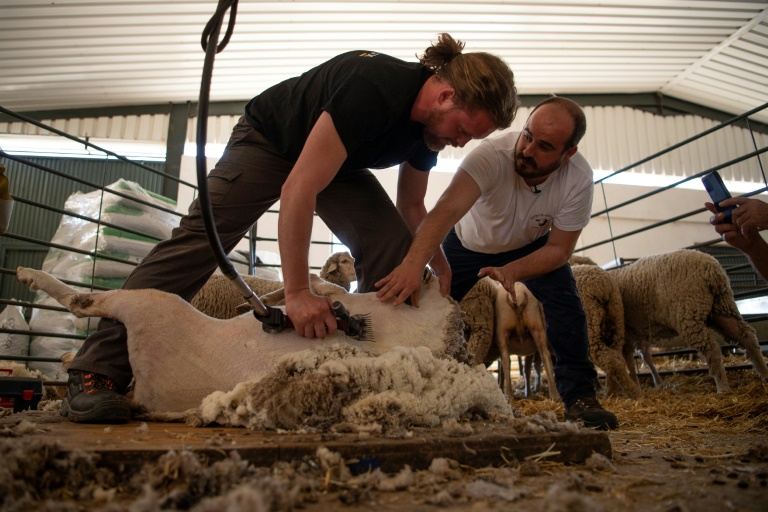
Gripping a sheep firmly between her legs, Vanesa Castillo holds its head with one hand while she tries to shear off its thick fleece with electric clippers. 

“It’s scary!” said Castillo, 37, slightly unnerved by her first attempt at sheep shearing at a school for shepherds in western Spain. 

“You have to pull the animal’s skin taut, really slowly, so you don’t cut it,” explained Jose Rivero, the professional sheep shearer giving the course. 

Sheep shearing is just one of the classes offered at the school in Casar de Caceres in rural Extremadura to counter the flight from the land that has left large swathes of inland Spain thinly populated.

Set up in 2015, the idea was “to bring in people who love the countryside”, said Enrique “Quique” Izquierdo, who runs the school. 

It aims to provide all the training and resources needed to create “a shepherd for the 21st century… with the most up-to-date methods in a sector where the traditional and the cutting-edge merge.”

Much of Spain’s sheep and goat farming is concentrated in rugged Extremadura. The school at Casar de Caceres is one of several across the country, the first set up in the northern Basque Country in 1997. 

– Tech and tradition –

“The traditional image of a shepherd wandering through the fields all day” doesn’t exist any more, said Jurgen Robledo, a vet who said the students are taught how to use many hi-tech tools including milk control programmes.

This year, 10 students are taking the five-month course which also includes hands-on experience of working with animals. 

Thibault Gohier, 26, is learning how to milk goats and to identify whether any of them are sick, which could affect the quality of their milk. 

“You need to use your fingertips as if they were your eyes,” said Felipe Escobero, who heads the farm where the school is based, as they feel a black goat’s mammary lymph nodes at the top of the udder.

When they’re healthy, “they should feel like an almond”, Escobero added. 

The course also covers financial matters and how to fill out certificates attesting to animal welfare or pesticide use. 

Completely free, it is funded by the Cooprado livestock farmers’ cooperative. 

Vet Robledo said modern hi-tech tools mean shepherds can now “measure the individual (milk) production of each animal.

“Such data can let a farmer see if production has dropped due to a subclinical mastitis infection by detecting a drop in production in a certain number of animals.” 

Unlike normal mastitis, such infections don’t cause any visible changes to the milk or udder appearance, making them difficult to detect, although they do affect the farmer’s bottom line by reducing milk production and quality.

– Different backgrounds –

Some students already work in farming and want to specialise, while others are completely new to the field, such as Vanesa Castillo, who is taking the course with her 17-year-old daughter Arancha Morales.

Originally employed at an old people’s home until it shut down two years ago, leaving her scrambling for work, her dream now is to have a sheep farm. 

“We’re looking for a way to bring home some money,” said her daughter, whose father can’t work after having an accident. 

Both women know they face an uphill battle, above all to find an affordable piece of land for their flock, a common problem across Extremadura. 

Thibault Gohier comes from a very different background.

A young Frenchman who loves animals and the countryside, his dream is to have “a bed and breakfast with a small farm attached with about 30 animals” in a mountainous area of France.

As the other students are learning to shear, El Ouardani El Boutaybi is feeding dozens of restless goats who are scampering around a pen. 

“I did the shepherds’ school and all the practical courses in June 2020… and then they took me on to work with them,” said the 20-year-old, who comes from the coastal town of Nador in northeastern Morocco. 

He got to Spain in 2017 after crossing the fence into the Spanish enclave of Melilla in North Africa, where he spent time in a centre for unaccompanied minors before being transferred to the peninsula. 

“I’ve got a future working in the countryside,” he said proudly.

Hi-tech herd: Spain school turns out 21st-century shepherds

Gripping a sheep firmly between her legs, Vanesa Castillo holds its head with one hand while she tries to shear off its thick fleece with electric clippers. 

“It’s scary!” said Castillo, 37, slightly unnerved by her first attempt at sheep shearing at a school for shepherds in western Spain. 

“You have to pull the animal’s skin taut, really slowly, so you don’t cut it,” explained Jose Rivero, the professional sheep shearer giving the course. 

Sheep shearing is just one of the classes offered at the school in Casar de Caceres in rural Extremadura to counter the flight from the land that has left large swathes of inland Spain thinly populated.

Set up in 2015, the idea was “to bring in people who love the countryside”, said Enrique “Quique” Izquierdo, who runs the school. 

It aims to provide all the training and resources needed to create “a shepherd for the 21st century… with the most up-to-date methods in a sector where the traditional and the cutting-edge merge.”

Much of Spain’s sheep and goat farming is concentrated in rugged Extremadura. The school at Casar de Caceres is one of several across the country, the first set up in the northern Basque Country in 1997. 

– Tech and tradition –

“The traditional image of a shepherd wandering through the fields all day” doesn’t exist any more, said Jurgen Robledo, a vet who said the students are taught how to use many hi-tech tools including milk control programmes.

This year, 10 students are taking the five-month course which also includes hands-on experience of working with animals. 

Thibault Gohier, 26, is learning how to milk goats and to identify whether any of them are sick, which could affect the quality of their milk. 

“You need to use your fingertips as if they were your eyes,” said Felipe Escobero, who heads the farm where the school is based, as they feel a black goat’s mammary lymph nodes at the top of the udder.

When they’re healthy, “they should feel like an almond”, Escobero added. 

The course also covers financial matters and how to fill out certificates attesting to animal welfare or pesticide use. 

Completely free, it is funded by the Cooprado livestock farmers’ cooperative. 

Vet Robledo said modern hi-tech tools mean shepherds can now “measure the individual (milk) production of each animal.

“Such data can let a farmer see if production has dropped due to a subclinical mastitis infection by detecting a drop in production in a certain number of animals.” 

Unlike normal mastitis, such infections don’t cause any visible changes to the milk or udder appearance, making them difficult to detect, although they do affect the farmer’s bottom line by reducing milk production and quality.

– Different backgrounds –

Some students already work in farming and want to specialise, while others are completely new to the field, such as Vanesa Castillo, who is taking the course with her 17-year-old daughter Arancha Morales.

Originally employed at an old people’s home until it shut down two years ago, leaving her scrambling for work, her dream now is to have a sheep farm. 

“We’re looking for a way to bring home some money,” said her daughter, whose father can’t work after having an accident. 

Both women know they face an uphill battle, above all to find an affordable piece of land for their flock, a common problem across Extremadura. 

Thibault Gohier comes from a very different background.

A young Frenchman who loves animals and the countryside, his dream is to have “a bed and breakfast with a small farm attached with about 30 animals” in a mountainous area of France.

As the other students are learning to shear, El Ouardani El Boutaybi is feeding dozens of restless goats who are scampering around a pen. 

“I did the shepherds’ school and all the practical courses in June 2020… and then they took me on to work with them,” said the 20-year-old, who comes from the coastal town of Nador in northeastern Morocco. 

He got to Spain in 2017 after crossing the fence into the Spanish enclave of Melilla in North Africa, where he spent time in a centre for unaccompanied minors before being transferred to the peninsula. 

“I’ve got a future working in the countryside,” he said proudly.

Brazil police arrest one in case of missing reporter, expert

Brazilian authorities on Wednesday arrested a man in connection with the disappearance of a British journalist and a local indigenous expert in the Amazon, police said, as calls mounted for officials to deliver answers on what happened to them.

As the search approached its fifth day, official information was scarce on the investigation into the fate of Dom Phillips, 57, and Bruno Pereira, 41, who disappeared early Sunday in the remote, jungle-covered Javari Valley in Brazil, near the border with Peru.

Brazilian police and military officers told a news conference they had questioned six people and arrested one. But they said it was unclear whether the suspect was directly linked to the case.

In the meantime, the authorities are pursuing “all lines of investigation,” and still hope to find the men alive, said lead investigator Alexandre Fontes.

Investigators said the arrested man was detained during a random stop-and-search operation in the region, when officers found him with drugs and illegally carrying 7.62-millimeter ammunition — a round typically used in assault rifles.

Witnesses reportedly saw the man trailing Phillips and Pereira’s boat as the pair made their way back to the small city of Atalaia do Norte after a research trip to an area known as Jaburu lake.

But “we have not established any connection between him and the (disappearance) for now,” the Amazonas state security secretary, General Carlos Alberto Mansur, told reporters.

– Murky waters –

Local indigenous activists say Phillips and Pereira received threats last week while working in the region, which has seen a surge of invasions of protected indigenous lands for illegal fishing, logging, gold mining and drug trafficking.

Pereira, a highly regarded expert on the region currently on leave from Brazilian indigenous affairs agency FUNAI, has been a target of death threats for his work fighting such invasions, including by helping indigenous communities set up their own patrols.

Investigators insisted they were doing their best in what Fontes called a “very complicated region,” criss-crossed by meandering rivers and reachable only by helicopter, small plane or boat.

A total of 250 officers are working on the rescue mission, including jungle operations experts sent by the army and rescue divers trained to work in murky waters, supported by two helicopters, three drones and 16 boats, they said.

Pressure has been mounting on President Jair Bolsonaro’s government, which faces accusations of failing to scale up the search fast enough in the far-flung region.

“We have reinforced the search operation since yesterday,” Justice Minister Anderson Torres wrote on Twitter.

– Celebrities, rights groups –

The case has drawn urgent appeals from leading media organizations and environmental and human-rights groups — joined by a growing list of high-profile figures including football legend Pele and current star Richarlison.

“The fight for the preservation of the Amazon Forest and the protection of indigenous groups belongs to all of us,” Pele posted on Instagram, along with a video from Tuesday of Phillips’s distraught wife choking back sobs as she pleaded with the Brazilian authorities to help.

“I join the many voices that make the appeal to intensify the search and to find them as soon as possible,” added the 81-year-old footballer, considered by many the greatest of all time.

Brazil and Everton striker Richarlison tweeted the same video.

“I ask the authorities, please, act urgently and do everything possible to find Dom Phillips and Bruno Pereira!” he wrote.

The plea also reached the Summit of the Americas in Los Angeles, where US President Joe Biden is meeting regional leaders this week, including a sit-down with Bolsonaro Thursday.

Activists mounted a giant screen on a truck that stopped at various landmarks, including the iconic Hollywood sign, with the message: “Where are Dom & Bruno?”

Brazil police arrest one in case of missing reporter, expert

Brazilian authorities on Wednesday arrested a man in connection with the disappearance of a British journalist and a local indigenous expert in the Amazon, police said, as calls mounted for officials to deliver answers on what happened to them.

As the search approached its fifth day, official information was scarce on the investigation into the fate of Dom Phillips, 57, and Bruno Pereira, 41, who disappeared early Sunday in the remote, jungle-covered Javari Valley in Brazil, near the border with Peru.

Brazilian police and military officers told a news conference they had questioned six people and arrested one. But they said it was unclear whether the suspect was directly linked to the case.

In the meantime, the authorities are pursuing “all lines of investigation,” and still hope to find the men alive, said lead investigator Alexandre Fontes.

Investigators said the arrested man was detained during a random stop-and-search operation in the region, when officers found him with drugs and illegally carrying 7.62-millimeter ammunition — a round typically used in assault rifles.

Witnesses reportedly saw the man trailing Phillips and Pereira’s boat as the pair made their way back to the small city of Atalaia do Norte after a research trip to an area known as Jaburu lake.

But “we have not established any connection between him and the (disappearance) for now,” the Amazonas state security secretary, General Carlos Alberto Mansur, told reporters.

– Murky waters –

Local indigenous activists say Phillips and Pereira received threats last week while working in the region, which has seen a surge of invasions of protected indigenous lands for illegal fishing, logging, gold mining and drug trafficking.

Pereira, a highly regarded expert on the region currently on leave from Brazilian indigenous affairs agency FUNAI, has been a target of death threats for his work fighting such invasions, including by helping indigenous communities set up their own patrols.

Investigators insisted they were doing their best in what Fontes called a “very complicated region,” criss-crossed by meandering rivers and reachable only by helicopter, small plane or boat.

A total of 250 officers are working on the rescue mission, including jungle operations experts sent by the army and rescue divers trained to work in murky waters, supported by two helicopters, three drones and 16 boats, they said.

Pressure has been mounting on President Jair Bolsonaro’s government, which faces accusations of failing to scale up the search fast enough in the far-flung region.

“We have reinforced the search operation since yesterday,” Justice Minister Anderson Torres wrote on Twitter.

– Celebrities, rights groups –

The case has drawn urgent appeals from leading media organizations and environmental and human-rights groups — joined by a growing list of high-profile figures including football legend Pele and current star Richarlison.

“The fight for the preservation of the Amazon Forest and the protection of indigenous groups belongs to all of us,” Pele posted on Instagram, along with a video from Tuesday of Phillips’s distraught wife choking back sobs as she pleaded with the Brazilian authorities to help.

“I join the many voices that make the appeal to intensify the search and to find them as soon as possible,” added the 81-year-old footballer, considered by many the greatest of all time.

Brazil and Everton striker Richarlison tweeted the same video.

“I ask the authorities, please, act urgently and do everything possible to find Dom Phillips and Bruno Pereira!” he wrote.

The plea also reached the Summit of the Americas in Los Angeles, where US President Joe Biden is meeting regional leaders this week, including a sit-down with Bolsonaro Thursday.

Activists mounted a giant screen on a truck that stopped at various landmarks, including the iconic Hollywood sign, with the message: “Where are Dom & Bruno?”

W.House expects May inflation to be 'elevated'

The White House said Wednesday it expects US inflation was still “elevated” in May despite guarded hopes a key data report due for release later this week will show price increases had cooled.

Consumer prices in the world’s largest economy have soared by the fastest pace in more than four decades, with gas prices at the pump hitting new records daily amid the fallout from Russia’s invasion of Ukraine as well as ongoing supply chain challenges due to the Covid-19 pandemic.

The Labor Department is due to release consumer price data for May on Friday, and economists expect the monthly increase to accelerate after slowing in April, when CPI posted an 8.3 percent increase over last year.

“We expect the headline inflation number to be elevated,” Press Secretary Karine Jean-Pierre told reporters traveling with President Joe Biden on Air Force One.

Biden has made fighting inflation his top domestic priority, but is finding he has few tools to directly impact prices.

The Federal Reserve has begun raising interest rates aggressively to combat inflationary pressures, saying the goal is to sustain economic expansion while avoiding a recession.

Biden has stuck to an upbeat message about the overall outlook.

“We continue to believe that the economy can transition from what has been a historic recovery … to stable steady growth,” Jean-Pierre said.

But she acknowledged that the impact of the war in Ukraine has continued to push some prices higher, including airfares.

Close Bitnami banner
Bitnami