World

OECD sees lower world growth due to Ukraine war's 'hefty price'

The OECD warned Wednesday that the world economy will pay a “hefty price” for Russia’s invasion of Ukraine as it slashed its 2022 growth forecast and projected higher inflation.

The Paris-based organisation, which represents 38 mostly developed countries, is the latest institution to predict lower GDP growth due to the conflict, which has sent food and energy prices soaring.

In its latest economic outlook, the Organisation for Economic Co-operation and Development said global gross domestic product would grow by three percent in 2022 — down sharply from the 4.5 percent estimated in December.

The OECD also doubled its forecast for inflation among its members — which range from the United States to Australia, Japan, and Latin American and European nations — to 8.5 percent, its highest level since 1988. 

“The world is set to pay a hefty price for Russia’s war against Ukraine,” wrote the OECD’s chief economist and deputy secretary-general, Laurence Boone, adding that a “humanitarian crisis is unfolding before our eyes”.

“The extent to which growth will be lower and inflation higher will depend on how the war evolves, but it is clear the poorest will be hit hardest,” Boone said.

“The price of this war is high and will need to be shared.”

Before the war broke out, the outlook had appeared “broadly favourable” for 2022-23, with growth and inflation expected to return to normal after the devastating Covid-19 pandemic, said the OECD.

However, “the invasion of Ukraine, along with shutdowns in major cities and ports in China due to the zero-Covid policy, has generated a new set of adverse shocks,” it said.

– Food shortage risk –

The OECD was supposed to publish its outlook in March, but it delayed its detailed assessment until now due to uncertainty over the war. At the time, it said the conflict could cut global GDP growth by “over one percentage point”.

The World Bank revised its own figures on Tuesday, lowering its global growth forecast from 4.1 percent to 2.9 percent. The IMF cut its forecast by nearly one point to 3.6 percent in April.

The OECD cut its growth forecast for the United States from 3.7 percent to 2.5 percent and that of China, the world’s second biggest economy, from 5.1 percent to 4.4 percent. The eurozone’s GPD is now seen growing by 2.6 percent instead of 4.3 percent while Britain’s outlook was lowered to 3.6 percent from 4.7 percent.

The OECD noted that commodity prices had risen, hitting real income and spending, “particularly for the most vulnerable households”.

“In many emerging-market economies the risks of food shortages are high given the reliance on agricultural exports from Russia and Ukraine,” it said.

The report warned that the “effects of the war in Ukraine may be even greater than assumed”, raising as an example a scenario of Russia cutting gas supplies to Europe.

As central banks tighten their monetary policies to counter inflation, the report said sharp increases of interest rates could also hit growth more than anticipated.

– Covid risk –

The Covid pandemic, meanwhile, could take another turn for the worse.

“New more aggressive or contagious variants may emerge, while the application of zero-Covid policies in large economies like China has the potential to sap global demand and disrupt supply for some time to come,” the OECD said.

Faced with these challenges, governments needed to protect the most vulnerable from the economic shockwaves, it added.

In the short term, “temporary, timely and well-targeted” fiscal measures would help the poorest households, the OECD said.

Over the medium- and long-term, governments would have to invest more in clean energy and defence spending.

“The world is already paying the price for Russia’s aggression,” wrote Boone.

“The choices made by policymakers and citizens will be crucial to determining how that price will be distributed across people and countries.”
China approves 60 new games, lifting hopes tech crackdown is ending

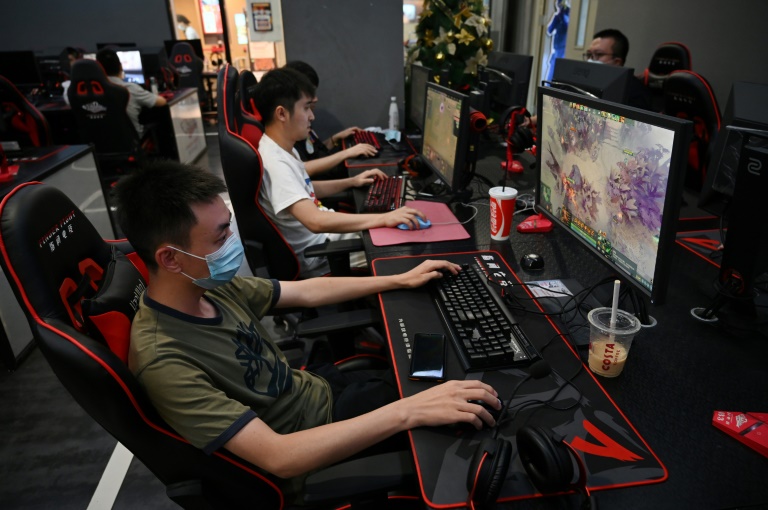
China has approved the release of dozens of new video games, sending the shares of some of its biggest tech firms soaring Wednesday on hopes that a long-running and painful crackdown on the sector is easing.

The announcement follows a report in The Wall Street Journal on Monday that said regulators were wrapping up their investigation into ride-hailing giant Didi and will allow it to register new users.

Officials in China — the world’s biggest gaming market — rolled out a series of restrictions last year as part of a sweeping government campaign to rein in huge tech firms.

They capped the amount of gaming time for children with the stated aim of fighting addiction and froze approvals for new games for nine months, hammering the bottom lines of many companies including sector titan Tencent.

China’s National Press and Publication Administration said Tuesday it had approved 60 new games, following the year’s first batch of approvals in April.

Titles from Tencent or rival NetEase were not among the latest approvals, but they did include games from Perfect World and miHoYo — developer of the international hit “Genshin Impact”.

“We are delighted to see established studios such as Perfect World, Shengqu Games, MiHoYo, and Changyou obtained approval titles this time, which we believe could indicate higher possibilities for Tencent’s and NetEase’s titles to be approved in coming batches,” said Citi analysts in a note.

“The approval announcement will also send a positive signal of policy support to the overall China Internet sector.”

Chinese tech stocks surged in Hong Kong on the news, building on the positive sentiment among investors and analysts after the report on Didi earlier in the week.

Tencent shares closed 6.5 percent up in Hong Kong while NetEase climbed 5.7 percent.

The gaming news also boosted other major tech stocks — Hong Kong market heavyweight Alibaba was up 10.1 percent and JD.com piled on more than six percent.

During the clampdown, hundreds of Chinese game makers pledged to scrub “politically harmful” content from their products and enforce curbs on underage players to comply with government demands.

Regulatory changes have hit China’s tech firms hard, wiping out nearly $2 trillion of market value since a 2021 peak, according to Bloomberg News.

China’s economy — the world’s second-largest — has been hammered in recent months by a series of major Covid lockdowns, and the government has rolled out a series of measures to resuscitate it.

Official guidance in recent days has called for more “predictable regulation” in tech, suggesting that some segments of government are willing to signal more clearly ahead of policy changes.

— Bloomberg News contributed to this story —

Japanese fugitive wanted for Covid relief fraud held in Indonesia

Indonesian police have arrested a fugitive accused of masterminding a lucrative scheme in his native Japan to defraud a government fund offering Covid-19 relief subsidies, officials said Wednesday.

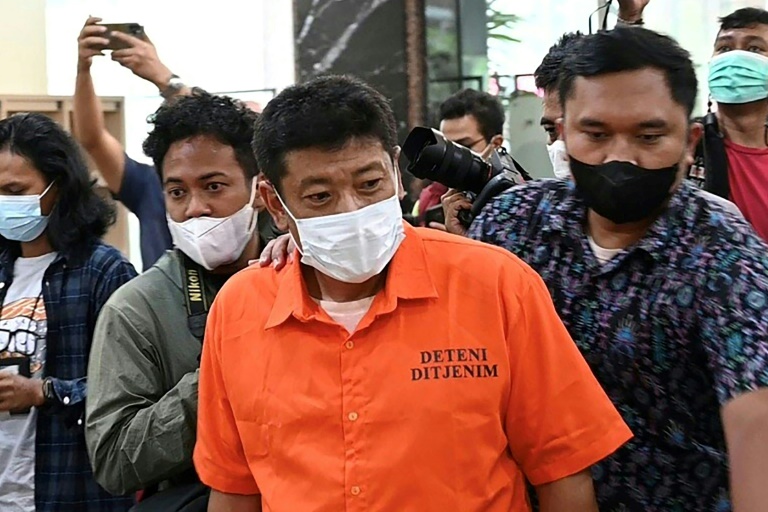
Mitsuhiro Taniguchi, 47, was arrested in Lampung province in the south of Sumatra island late Tuesday and flown to the capital Jakarta, national police spokesman Dedi Prasetyo told journalists.

The Japanese national and several associates are accused of submitting false applications to claim 960 million yen ($7.2 million) in Covid-19 relief funds meant for small businesses, according to Japanese media reports.

He was caught in a joint operation by immigration officers and local police, Prasetyo said, without giving details about the case.

It came after the Japanese embassy alerted Indonesian authorities to the whereabouts of a Japanese national whose passport had been revoked. 

Indonesian police in a statement Wednesday said their Japanese counterparts had been “investigating an alleged fraud of subsidies for small businesses affected by the Covid-19 pandemic”, but they did not confirm the amount accrued by Taniguchi’s brazen scheme.

Tokyo’s Metropolitan Police Department had placed Taniguchi on an international wanted list after arresting his ex-wife and two sons on May 30 on suspicion of fraud, Japanese newspaper Asahi Shimbun reported.

Taniguchi will be deported in coordination with the embassy, Lampung immigration official Is Edy Eko Putranto told a press conference where the Japanese suspect was paraded before the media.

Police attache at the Japanese embassy Takayuki Miyagawa told the press conference the fugitive was arrested for “deceiving the Japan government for subsidies regarding Covid-19”.

Taniguchi reportedly entered Indonesia in October 2020, several months after the scheme was uncovered by Japanese police.

He was living in Jakarta and frequently travelled to do business in Lampung, where he had been staying for a week when he was arrested. 

The fugitive was using a limited-stay visa and was working in the country as a foreign investor helping locals to run fish farms, reportedly to raise money to appease his alleged collaborators. 

Ukrainian troops may have to retreat from flashpoint city: governor

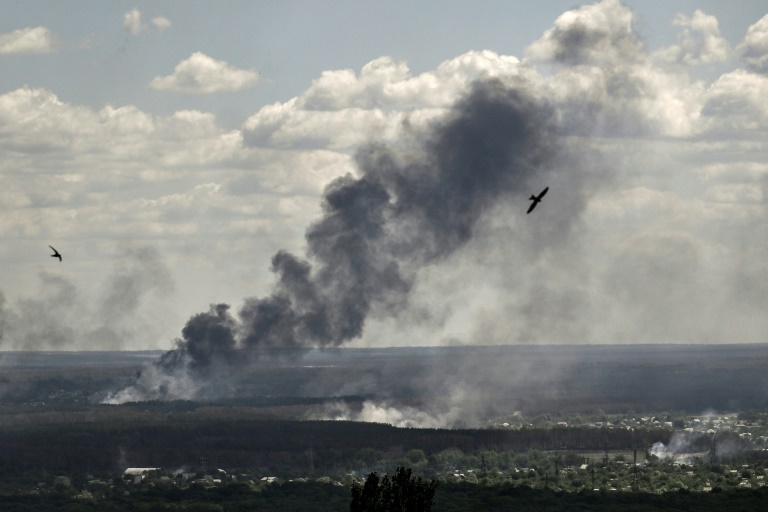
Ukrainian forces may have to retreat from the eastern city of Severodonetsk which is being shelled by Russian troops “24 hours a day”, an official said Wednesday, following days of raging street battles.

The strategic city has become the focus of Russia’s offensive as they seek to seize an eastern swathe of Ukraine, after being repelled from other parts of the country. 

Moscow claimed Tuesday they had full control of residential areas while Kyiv was still holding the industrial zone and surrounding settlements, but Ukrainian officials insisted the Russians were not in control of the city.

On Wednesday Sergiy Gaiday — governor of the Lugansk region, which includes the city — said Ukraine’s forces might have to pull back.

“It is possible that we will have to retreat” to better fortified positions, he said in an interview on the TV channel 1+1.

In his daily address late Tuesday, Ukrainian President Volodymyr Zelensky had struck a defiant tone: “The absolutely heroic defence of Donbas continues.” 

Russia’s offensive is now targeting the Donbas region, which includes Lugansk and Donetsk, after its forces were pushed back from Kyiv and other areas following the February invasion.

The cities of Severodonetsk and Lysychansk, which are separated by a river, are the last areas still under Ukrainian control in Lugansk.

The war’s impact continued to reverberate, with the World Bank cutting its global growth estimate to 2.9 percent — 1.2 percentage points below the January forecast — due largely to the invasion of Ukraine.

The toxic combination of weak growth and rising prices could trigger widespread suffering in dozens of poorer countries still struggling to recover from the upheaval of the Covid-19 pandemic, the bank said.

“The risk from stagflation is considerable with potentially destabilising consequences for low and middle income economies,” World Bank President David Malpass told reporters.

“For many countries recession will be hard to avoid,” Malpass said.

The bank additionally announced $1.5 billion more in aid for Ukraine, bringing the total planned support package to more than $4 billion.

– Lavrov in Turkey –

Amid stark warnings of global food shortages partly blamed on the war, Russian Foreign Minister Sergei Lavrov is set to meet Wednesday with his Turkish counterpart Mevlut Cavusoglu during a visit to Ankara.

Talks will focus on efforts to open a security corridor to ship Ukrainian grain — cereals and wheat in particular — stuck in the war-torn country’s ports due to a Russian blockade. 

“Right now we have about 20-25 million tonnes blocked. In the autumn that could be 70-75 million tonnes,” Zelensky said Monday.

At the request of the United Nations, Turkey has offered its services to escort maritime convoys from Ukrainian ports, despite the presence of mines — some of which have been detected near the Turkish coast.

Both sides accuse one another of destroying agricultural areas, which could worsen global food shortages.

“Those who pretend to be concerned about the global food crisis are, in fact, hitting agricultural fields and infrastructure, where fires are breaking out on an impressive scale,” the Ukrainian military said Tuesday, pointing to attacks in the southern city of Mykolaiv.

– ‘Bombings every day’ –

Severodonetsk appeared close to being captured just days ago but Ukrainian forces launched counterattacks and managed to hold out, despite warnings they are outnumbered by superior forces.

Lanny Davis, a US lawyer for Ukraine tycoon Dmytro Firtash, said 800 civilians had taken refuge in the bunkers inside Firtash’s huge Azot chemical plant in the city.

The situation was also increasingly desperate in Lysychansk.

“Every day there are bombings and every day something burns. A house, a flat… And there is nobody to help me,” 70-year-old Yuriy Krasnikov told AFP. 

“I tried to go to the city authorities, but nobody’s there, everyone has run away.”

Ivan Sosnin was among some residents who decided to stay despite the Russian offensive.

“This is our home, that’s all we know. We grew up here, where else should we go?” said the 19-year-old.

The leader of Ukraine’s pro-Russian separatists in Donetsk, Denis Pushilin, on Tuesday confirmed the death of another Russian general in the fighting.

Pushilin expressed on Telegram his “sincere condolences to the family and friends” of Major General Roman Kutuzov, “who showed by example how to serve the fatherland”.

Ukraine’s forces have claimed to have killed several of Russia’s top brass but their exact number is not known as Moscow is tight-lipped on losses. 

On Tuesday, Zelensky announced the launch next week of a “Book of Torturers”, a system that will collect details of alleged war crimes and Russian soldiers accused of committing them. 

“I have repeatedly stressed that they will all be held accountable. And we are approaching this step by step,” he said.

“Everyone will be brought to justice.”

burs-sr/oho

Thailand's 'Joe Ferrari' cop jailed for life over death of suspect

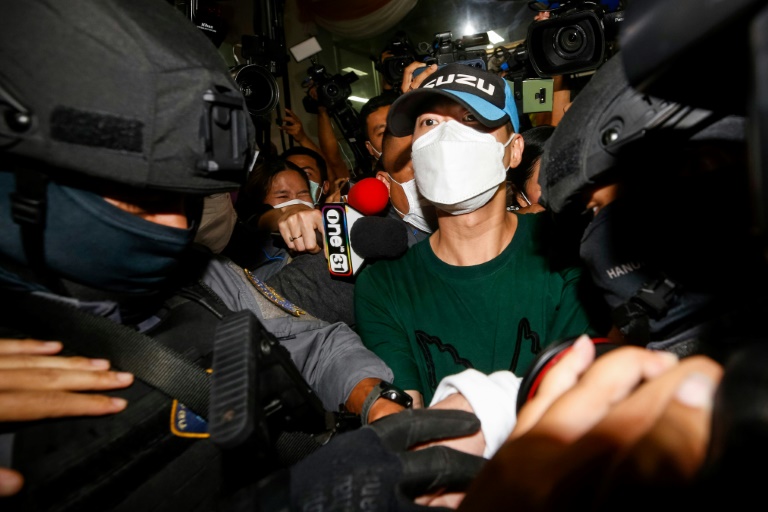
A flashy Thai cop nicknamed “Joe Ferrari” for his taste in fast cars was on Wednesday jailed for life for torturing a drugs suspect to death during a brutal interrogation.

A Bangkok court found Thitisan Utthanaphon guilty of murder by torture in a case that caused public outrage and shone a rare light on police brutality and corruption in the kingdom.

Leaked viral footage showed Thitisan and six other officers wrapping seven plastic bags around 24-year-old Jirapong Thanapat’s head while questioning him and trying to extort $60,000, leading to his death.

The judge at Bangkok’s Central Criminal Court for Corruption and Misconduct Cases sentenced the 41-year-old to death, but immediately commuted it to life imprisonment.

“I felt helpless during the ruling, and my wife was crying,” Jakkrit Klandi, the victim’s father, said outside the court.

“All seven officers should learn their lesson and pay for their crime,” he said.

The court reduced Thitisan’s sentence to life imprisonment because he had attempted to revive the suspect, and had paid for the funeral expenses for the family.

But Penh Thanapat, the Jirapong’s mother, was not satisfied, telling reporters she never wanted to see Thitisan’s face.

“I want (the death sentence). I want things to happen to him as it happened to my son,” she said.

Thitisan looked healthy and was seen chuckling with guards inside the courtroom before the verdict, but closed his eyes as the sentence was read.

Five of the other six officers involved in the case were found guilty of murder and also received life sentences. A seventh got five years and four months, following his testimony.

Thitisan and the other officers have a month to appeal against the verdict, according to their lawyers.

The victim’s parents said they were unhappy with the officers’ offer of 600,000 baht ($17,000) compensation, with Jakkrit telling reporters he would consult lawyers.

They had initially asked the court for 1.6 million baht.

After the footage leaked in August last year, the officer — a former district chief in the northern province of Nakhon Sawan — surrendered himself to police, who raided his Bangkok mansion and found several luxury cars.

In a press conference after his surrender he said Jirapong’s death was an accident.

– ‘Exceptional case’ – 

Analysts and human rights observers cautioned that this verdict was not indicative of a wider shift in policing in Thailand.

“This relatively light sentence tells us that legal impunity for police is alive and well in Thailand,” said Paul Chambers, of the Center of ASEAN Community Studies at Naresuan University in Thailand.

He said Thitisan and the other officers would likely have their sentences reduced on appeal.

Phil Robertson, Human Rights Watch’s deputy Asia director, told AFP it was an “exceptional” case. 

“For every case like this, there are dozens more where police torture is covered up, victims and whistleblowers face retaliation, and police impunity to commit abuses is alive and well,” he said. 

“This case may have put a temporary dent in the culture of police impunity in Thailand, but you can be sure that the overall system has not changed.”

Cambodia, China revamp naval base, stoking US fears

Cambodia and China on Wednesday broke ground on a Beijing-funded project to revamp a naval base that the US fears is intended for Chinese military use.

The Washington Post this week cited unnamed Western officials as saying the new facilities at Cambodia’s Ream base — strategically located on the Gulf of Thailand — were being built for the “exclusive” use of the Chinese navy.

Both countries deny the allegation, with Phnom Penh saying the base’s development is “not a secret”.

Cambodian defence minister Tea Banh and Chinese ambassador Wang Wentian were on hand Wednesday to see work commence on the new facilities including a boat maintenance workshop, two piers, a dry dock, slipway, and sand dredging for bigger ships to dock.

Heavy construction machinery was visible at the site.

“It is not targeted at any third party, and will be conducive to even closer practical cooperation between the two militaries, better fulfillment of international obligations and provision of international public goods,” Wang said.

The project, paid for with a Chinese grant, also includes upgrading and expanding a hospital as well as donations of military equipment and repair of eight Cambodian warships, Tea Banh said.

“There are allegations that the modernised Ream base will be used by the Chinese military exclusively. No, it is not like that at all,” the minister told several hundred people including foreign diplomats at the ceremony.

“Don’t worry too much, the Ream base is very small… It won’t pose a threat to anyone, anywhere.”

The revamp will be finished in two years, another Cambodian official said.

Wang said it would deepen the iron-clad friendship between the two countries and help modernise the Cambodian navy.

The base has been a sore spot in US-Cambodia relations for years, with Washington suspecting it is being converted for use by China as Beijing seeks to buttress its international influence with a network of military outposts.

American embassy spokeswoman Stephanie Arzate said the United States and other countries in the region had “expressed concern about the lack of transparency on the intent, nature, and scope of this project”, as well as China’s role in its construction.

“An exclusive PRC military presence at Ream could threaten Cambodia’s autonomy and undermine regional security,” Arzate told AFP.

Concerns about the base go back as far as 2019, when the Wall Street Journal reported on a secret draft deal allowing Beijing to dock warships there.

Cambodia has since dismantled facilities at the base that were built partly with American money and played host to US military exercises.

Thai railway market back on track post-pandemic

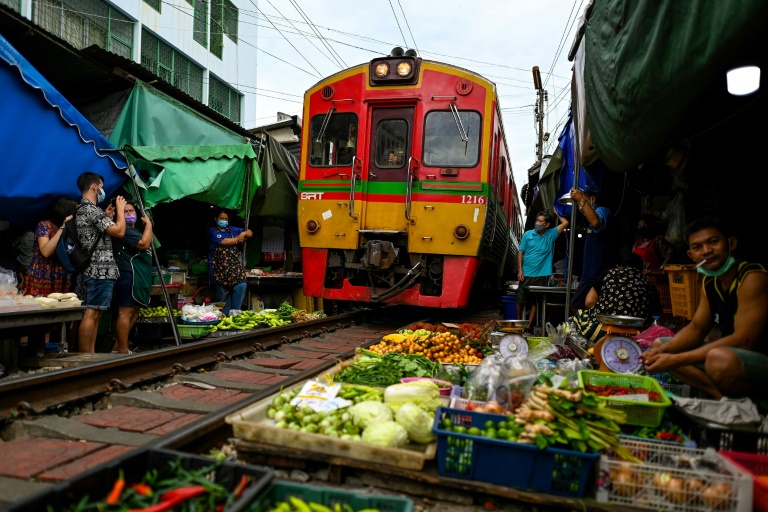
A train bell rouses a Thai grandmother dozing in her fruit and flower stall, sending her rushing to fold in her awning before the locomotive slowly rumbles past, so close it almost touches her wares.

Six times a day at the Mae Klong Railway Market, local customers and foreign tourists scramble into nooks and crannies while vendors calmly move their woven baskets of goods away from the tracks and close their umbrellas to make way.

Hundreds of stallholders carve out a living along this 500-metre stretch of railway in Samut Songkhram, 80 kilometres (50 miles) west of Bangkok, selling everything from fresh produce to live turtles to clothes and souvenirs.

“Even though it looks risky and dangerous, it’s not dangerous at all,” said fruit and vegetable vendor Samorn Armasiri.

Her family has run a stall in the bazaar — nicknamed in Thai “talad rom hup”, or the umbrella-pull-down market — for five decades, and she’s never witnessed an accident.

“When the train enters, officers sound the horn and everybody packs their stuff — they know the drill,” she said.

– Big train, tiny space –

The sides of the train carriages pass directly over — with just centimetres to spare — bags of lettuce, broccoli, onions, ginger, chilli, tomatoes and carrots placed carefully on the outside of the rails.

In recent years, the spectacle had become a hub for coconut-drinking backpackers in elephant pants and Instagram selfie enthusiasts, but the pandemic hit hard.

Now, with Thailand dropping Covid-19 entry restrictions, tourism is picking up once more.

Australian Ella McDonald, on a two-day stopover on her way to Turkey, was among those marvelling at the market’s organised chaos.

“It was crazy and hectic,” she told AFP. “I was shocked at how big the train was in the small amount of space.

“It’s a unique experience. I’ve never seen anything like this anywhere else in the world.”

– Not just for tourists –

Before Covid-19 hit, the market was also beloved by Chinese tourists buying durian — the pungent-smelling “king of fruit”.

Strict quarantine rules presently discourage would-be visitors from China, who once made up the largest share of foreign tourists in Thailand.

But even without them, fishmonger Somporn Thathom — a stallholder since 1988 — said business was finally picking up after two years of hardship and financial strain.

“During Covid, I barely made enough to pay my staff. I managed to sell 10 fish per day,” the 60-year-old said.

“I used up all my savings… and had to borrow money from the bank.”

Station manager Charoen Charoenpun believes the market’s authenticity ensures its popularity.

“It’s not made up. It’s not built for the tourists,” he said.

“The tourists, when they come they can see the tradition and culture of the local people of Samut Songkhram.”

But for eight-year-old Australian William, the pandemonium ensuing as the train passed through was captivating.

“The most exciting thing is when you get the train going past — just seeing the (market vendors) pack up,” he said.

Asian markets track Wall St rally, boosted by China hopes

Asian markets rallied Wednesday, building on a hearty performance on Wall Street and helped by the reopening in China, though analysts continue to warn of near-term volatility caused by surging inflation, rising interest rates and the Ukraine war.

Equities have enjoyed some respite in recent weeks from a painful sell-off caused by central bank monetary tightening — particularly by the Federal Reserve — and a spike in prices that is beginning to hit consumers, raising concerns of an economic slowdown or recession.

A retreat in US Treasury yields provided a lift to New York traders, as did a jump in Chinese firms listed there fuelled by growing optimism that Beijing is to ease back on its long-running crackdown against the tech sector.

The improved mood around tech has come after a report this week said China was close to ending a probe into ride-hailing app Didi Global and restoring its main apps this week.

The Wall Street Journal also said investigations into two other firms — Full Truck Alliance and recruitment platform Kanzhun — were coming to a conclusion.

And on Tuesday authorities approved a second batch of 60 games in a further step to lightening their approach in the world’s largest mobile entertainment market.

Citi analysts said the “announcement will also send a positive signal of policy support to the overall China internet sector”.

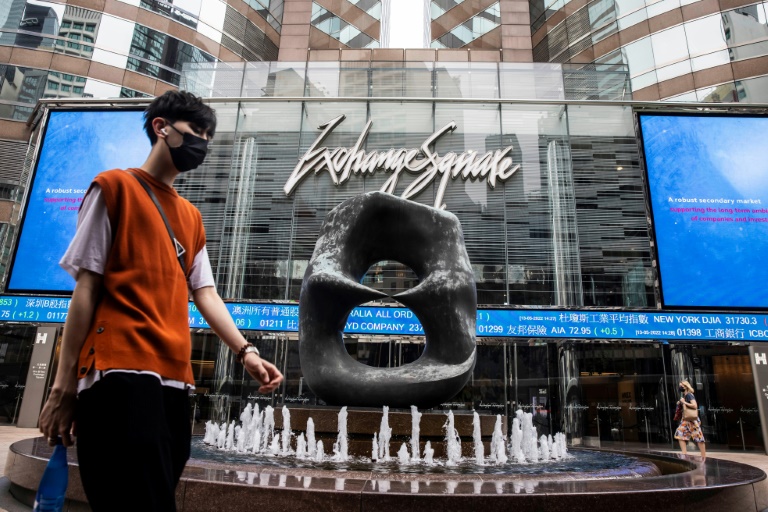
Market heavyweights rallied in Hong Kong with Alibaba up more than 10 percent, NetEase five percent higher and Tencent up nearly six percent, helping the Hang Seng Index climb more than two percent.

Shanghai, Tokyo, Sydney, Mumbai, Bangkok, Jakarta Taipei and Manila were also well in positive territory. Singapore, Wellington and Taipei were barely moved.

London, Paris and Frankfurt all followed the rally at the beginning of trade in Europe.

The moves come as Beijing relaxes its strict Covid lockdown measures, allowing the world’s number two economy to edge back into life after months.

“The bounce in risk sentiment is due to a more positive China tilt where the outlook is set to brighten up as Covid restrictions ease, and state-owned banks are obliged to increase lending again,” said SPI Asset Management’s Stephen Innes.

“It certainly feels like the tide is turning on the Mainland, though the overall tone still leans more cautiously optimistic, with key emphasis on ‘cautiously’.”

All eyes are on the release Friday of US inflation data for a better idea about the Fed’s plans as it hikes borrowing costs.

Officials are expected to lift rates half a point each in June and July with some commentators warning a strong report on Friday could allow them to unveil a three-quarter-point move in September.

Such a move would push the dollar up even further against its peers, with the unit at a 20-year high against the yen.

And observers said that the uncertainty would continue to cause volatility on markets as banks lift borrowing costs. India on Wednesday announced a fresh hike, a day after Australia unveiled an increase that was twice as big as forecast.

The European Central Bank is expected to signal an end to its bond-buying this week, paving the way for a rate hike later on.

“The reality for the economy and probably the stock markets is that aggressive central bank rate hikes are likely to take a sharp bite out of household consumption as costs of living pressures come from goods and services, depressed real wage gains and markedly higher mortgage servicing,” Innes added. 

“Hence, the central bank’s endgame is to cool inflation by slowing the economy and tightening financial conditions at stock market investors’ expense until price pressures abate.”

And Kate Moore at BlackRock explained to Bloomberg Television that “figuring out the direction over the next couple of months becomes increasingly difficult”.

“There seems to be across all of the investing segments a lack of strong conviction in the direction of the market. We are going to see a lot more investors remain on the sidelines, remain cautiously positioned.”

– Key figures at around 0715 GMT –

Tokyo – Nikkei 225: UP 1.0 percent at 28,234.29 (close)

Hong Kong – Hang Seng Index: UP 2.1 percent at 21,992.16

Shanghai – Composite: UP 0.7 percent at 3,263.79 (close)

London – FTSE 100: UP 0.2 percent at 7,615.59

Dollar/yen: UP at 133.25 yen from 132.62 yen late Tuesday

Euro/dollar: DOWN at $1.0690 from $1.0715 

Pound/dollar: DOWN at $1.2565 from $1.2592

Euro/pound: UP at 85.07 pence from 85.02 pence

Brent North Sea crude: UP 0.5 percent at $121.13 per barrel

West Texas Intermediate: UP 0.6 percent at $120.13 per barrel

New York – Dow: UP 0.8 percent to 33,180.14 (close)

At least 17 killed in train derailment in central Iran

At least 17 people were killed and dozens injured Wednesday when a train derailed near the central Iranian city of Tabas after hitting an excavator, state media reported.

“Seventeen people are dead and 37 injured people have been transferred to hospital,” emergency services spokesman Mojtaba Khaledi told state television.

“The number of the dead may rise as most of the injured are in critical condition,” he said, adding that “24 ambulances and three helicopters have been dispatched to the scene.”

Tabas is located in South Khorasan province roughly 900 kilometres (560 miles) by road from Tehran.

The deputy head of Iran’s state-owned railways, Mir Hassan Moussavi, told the state broadcaster that the train was carrying 348 passengers.

It “derailed after hitting an excavator” that was near the track, he said.

Some of the injured were airlifted to hospital by helicopter, state television footage showed.

Rescue teams inspected the oveturned carriages as onlookers gathered nearby, pictures posted by the ISNA news agency showed.

One of the pictures showed a yellow excavator on its side by the track.

Five of the train’s 11 coaches came off the track in the 5:30 am (0100 GMT) accident, the Iranian Red Crescent’s head of emergency operations, Mehdi Valipour, told state television.

The Tabas prosecutor visited the scene as a judicial investigation was launched into the cause of the accident, Iranian media reported.

The train derailment comes after a tower block collapsed in southwestern Iran last month killing at least 43 people.

The collapse of the 10-storey Metropol building, which was under construction in Abadan, sparked angry protests in solidarity with the families of the dead.

The provincial judiciary said it had arrested 13 people, including Abadan’s mayor and two former mayors, suspected of being “responsible” for the tragedy.

The disaster was one of Iran’s deadliest in years and sparked a demonstrations across the country against authorities accused of corruption and incompetence.

In 2016, two trains collided and caught fire in northern Iran, killing 44 people and injuring dozens.

The then head of Iranian railways resigned after four of his employees were arrested following the collision on the main line between Tehran and second city Mashhad.

India hikes interest rates 50 basis points to fight inflation

India’s central bank on Wednesday hiked rates for a second time in as many months, as Asia’s third-largest economy reels from galloping inflation in the wake of the Ukraine war.

The Reserve Bank of India raised its key repo rate by 50 basis points to 4.90 percent, a month after kicking off an aggressive monetary tightening cycle with a surprise 0.4 percentage point lift in May.

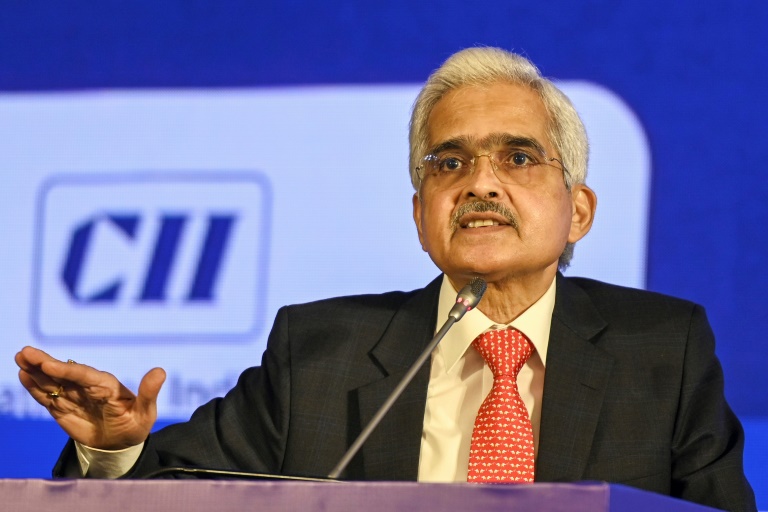
“The war in Europe is lingering and we are facing newer challenges each passing day,” Bank governor Shaktikanta Das said in a televised address, pointing to higher food and fuel prices.

He added that inflation was a global problem but emerging economies were facing “bigger challenges”, with market turbulence following monetary policy shifts in advanced economies.

India bounced back strongly from the coronavirus pandemic with one of the world’s fastest growth rates, but is now grappling with rising costs as commodity prices skyrocket worldwide.

Consumer inflation has consistently overshot the central bank’s two-to-six percent target range in the first four months of the year, hitting an eight-year high of 7.79 percent in April.

India’s economy has seen sharp price increases across the board, including food and fuel.

Last month the government banned wheat exports to rein in prices after a heatwave hit local crop yields.

Officials also capped sugar exports to safeguard supplies, and slashed duties on fuel and edible oils to buffer consumer spending. 

India imports more than 80 percent of its crude oil needs, with its dependence growing as domestic production falls, and the country’s 1.4 billion people have been hit with rising petrol costs.

Prices have risen sharply since Russia’s invasion of Ukraine earlier this year, and economists estimate that a $10 per barrel increase in Brent crude increases consumer inflation in India by about 25 basis points.

– ‘No brainer’ –

The governor had extensively signalled Wednesday’s move in advance, calling a June rate hike a “no brainer” in a recent television interview.

India’s 0.4 percent rate rise in May had caught markets by surprise, though economists supported the move as a necessary counterweight to inflation pressures.

Kotak Institutional Equities economist Suvodeep Rakshit said Wednesday’s hike and inflation forecasts were “in line with market expectations”. 

Wednesday’s monetary policy resolution also signalled further tightening, with a greater emphasis on dialling back the accommodative stance taken during the pandemic.

The RBI retained its growth forecast at 7.2 percent for the 2022-23 financial year but sharply raised its inflation forecast to 6.7 percent, from 5.7 percent estimated last month.

The World Bank on Tuesday slashed its growth forecast for India in the current financial year to 7.5 percent, from 8.7 percent projected earlier.

A strong consumption recovery from the pandemic will be offset by “headwinds from rising inflation, supply chain disruptions, and geopolitical tensions”, the World Bank said in its report.

Indian stocks turned volatile after the announcement, with the benchmark Sensex index falling one percent before recovering to trade 0.32 percent higher at midday.

Close Bitnami banner
Bitnami