World

Zara owner Inditex profits up despite Ukraine war

Global clothing giant Inditex, which owns Zara, posted Wednesday a surge in its first-quarter profits despite closing its stores in Russia after its invasion of Ukraine.

The world’s biggest fashion retailer said its net profit increased by 80 percent in the first three months of its financial year to April 31, compared to the same period last year.

It said it made 760 million euros ($812 million) in profit, against 440 million euros ($470 million) during the first quarter of the 2021 financial year, which was hit hard by the coronavirus pandemic.

The hike in profits came despite a 216-million-euro provision for estimated costs arising from the impact of the Ukraine war, without which its income would have risen to almost “940 million euros”, it said.

The group, which since April has been led by Marta Ortega, daughter of its multi-billionaire founder Amancio Ortega, reported sales of 6.74 billion euros, up 36 percent from the same period in 2021. 

The fashion group, which owns eight brands including upmarket Massimo Dutti and teen label Stradivarius, had warned that 2022 sales would be impacted by Russia’s invasion of Ukraine.

After Russia sent in troops in late February, Inditex closed all its stores in Ukraine and on March 5 suspended all retail activity in Russia, its biggest market after Spain, shutting its 502 shops and suspending all online transactions. 

Inditex said that stopping sales activity in Russia had been offset by “strong growth” in other regions, notably the United States.

Analysts had expected the Spanish retail giant to be hard hit by its Russian pullout decision given that it generates 10 percent of its turnover and 8.5 percent of its operating profit in the country. 

Wednesday’s results were broadly in line with analysts’ expectations, with Factset seeing profits of 770 million euros against a turnover of 6.27 billion euros. 

Online sales, which had surged during the pandemic, fell by 6.0 percent, although Inditex said it expected the figure to reach “30 percent of total sales” by 2024.

Shares in the world’s biggest fashion retailer were trading 4.23 percent higher in late morning trade on the Madrid stock exchange. 

When the pandemic first took hold two years ago, the group saw its profits nosedive as the virus forced it to shutter most of its shops in the first half of 2020. 

One dead, a dozen hurt as car ploughs into Berlin crowd

One person was killed and at least a dozen others injured when a car drove into a group of people at a busy shopping district in central Berlin on Wednesday, police said.

The driver was briefly detained by passers-by before being handed to police after the car smashed through a shop front, according to a police spokesman Thilo Cablitz. 

It was not clear whether the crash was intentional, police said.

The accident happened at around 10:30 am (0830 GMT) just across from Breitscheidplatz, where an Islamic State group sympathiser ploughed a truck through a Christmas market in 2016, killing 12.

Around 130 emergency personnel were deployed to the scene, where several people were seriously injured and some were airlifted by helicopter for treatment.

“There are seriously injured people among the more than a dozen injured,” said Cablitz. 

The silver Renault Clio with a Berlin licence plate first drove into a crowd at the corner of Tauentzienstrasse and Rankestrasse, before returning to the road and then ramming into the shop front on Marburgerstrasse about 150 metres (165 yards) away.

– ‘Happened so fast’ –

Frank Vittchen, a witness at the scene, told AFP he was sitting at a fountain nearby when he “heard a big crash and then also saw a person fly through the air”. 

The vehicle drove “at high speed onto the pavement and didn’t brake”, he said, with its windows shattering from the impact.

“It all happened so fast,” he said.

Germany has been on high alert for car ramming attacks since the deadly 2016 Christmas market assault, with most carried out by people who were found to have psychological issues.

In December 2020, a German man ploughed his car through a pedestrian shopping street in the southwestern city of Trier, killing four adults and a baby.

Earlier the same year, a German man rammed his car through a carnival procession in the central town of Volkmarsen, injuring dozens of bystanders, including children. He was sentenced to life in jail last year.

In January 2019, another German man injured eight people when he drove into crowds on New Year’s Eve in the western cities of Bottrop and Essen. He was later taken into psychiatric care.

In April 2018, a German crashed his van into people seated outside a restaurant in the city of Muenster, killing five before shooting himself dead. Investigators later said he had mental health problems.

During the football World Cup in Germany in 2006, a German man rammed his car into crowds gathered to watch a match at the Brandenburg Gate in Berlin, injuring some 20 people. The driver was later committed to a psychiatric hospital.  

At least 17 killed in train derailment in central Iran

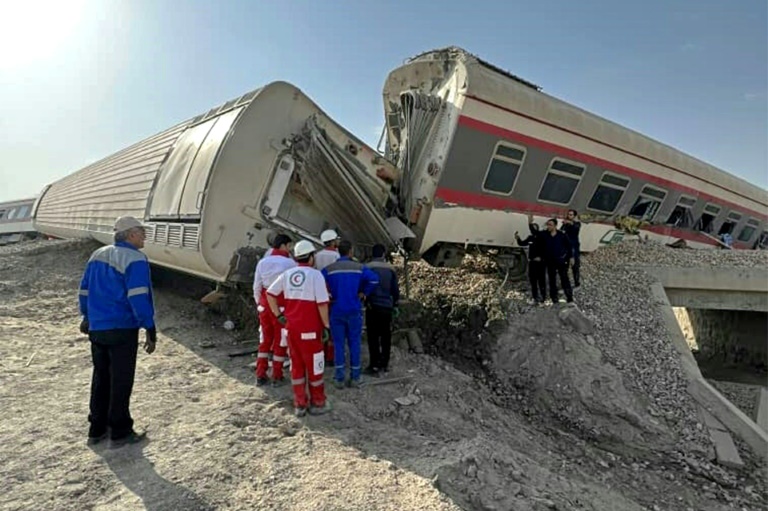
At least 17 people were killed and dozens injured Wednesday when a train derailed near the central Iranian city of Tabas after hitting an excavator beside the track, state media reported.

The train was on its way from the northeastern city of Mashhad to the central city of Yazd with 388 passengers on board went it careered off the track in the desert at 5:30 am (0100 GMT). 

“Seventeen people are dead and 37 of the 86 injured people have been transferred to hospital,” emergency services spokesman Mojtaba Khaledi told state television.

“The number of the dead may rise as some of the injured are in critical condition,” he said, adding that “24 ambulances and three helicopters had been dispatched to the scene.”

Tabas is located in South Khorasan province roughly 900 kilometres (560 miles) by road from Tehran.

The deputy head of Iran’s state-owned railways, Mir Hassan Moussavi, told the state broadcaster that the train was carrying 348 passengers.

It “derailed after hitting an excavator” that was near the track, he said.

Some of the injured were airlifted to hospital by helicopter, state television footage showed.

Rescue teams inspected the overturned carriages as onlookers gathered nearby, pictures posted by the ISNA news agency showed.

One of the pictures showed a yellow excavator on its side by the track.

Five of the train’s 11 coaches came off the rails, the Iranian Red Crescent’s head of emergency operations, Mehdi Valipour, told state television.

President Ebrahim Raisi expressed his grief over the derailment and offered his condolences to the families of the dead.

He also issued orders to expedite the investigation into the causes of the crash, his office said.

Roads and Urban Development Minister Rostam Ghassemi apologised to Iranians on Twitter and said the ministry was responsible for the incident.

The Tabas prosecutor visited the scene as a judicial investigation was launched, Iranian media reported.

The train derailment comes after a tower block collapsed in southwestern Iran last month killing at least 43 people.

The collapse of the 10-storey Metropol building, which was under construction in Abadan, sparked angry protests in solidarity with the families of the dead.

The provincial judiciary said it had arrested 13 people, including Abadan’s mayor and two former mayors, suspected of being “responsible” for the tragedy.

The disaster was one of Iran’s deadliest in years and sparked a demonstrations across the country against authorities accused of corruption and incompetence.

In 2016, two trains collided and caught fire in northern Iran, killing 44 people and injuring dozens.

The then head of Iranian railways resigned after four of his employees were arrested following the collision on the main line between Tehran and second city Mashhad.

War in Ukraine: Latest developments

Here are the latest developments in the war in Ukraine:

– Ukraine moots tactical retreat in east – 

Ukrainian troops are considering a tactical retreat from the eastern city of Severodonetsk, which is being shelled “24 hours a day” by Russian forces.

“It is possible that we will have to retreat” to better fortified positions, regional governor Sergiy Gaiday says in an interview on television channel 1+1.

But he rules out surrendering one of the last major centres of resistance to Russian rule in the Lugansk region of Donbas.

Russian Defence Minister Sergei Shoigu says his troops have “fully liberated” all residential areas but had yet to capture Severodonetsk’s industrial zone.

– Hundreds holed up in chemical factory  –

Some 800 civilians trapped by the fighting have taken refuge in the Azot chemical factory, according to a lawyer for a Ukrainian tycoon whose company owns the facility. 

The lawyer for Dmytro Firtash describes a scenario similar to the port city of Mariupol, where hundreds of civilians were holed up for weeks in a giant steelworks alongside Ukrainian troops defending the last part of the city.

The lawyer says those inside the plant include around 200 employees who remained behind to secure “highly explosive chemicals”, as well as 600 city residents.

Firtash is a close ally of former pro-Russian Ukrainian president Viktor Yanukovych, but has denounced Russia’s invasion.

– Turkey backs Russian demand on sanctions –

Turkish foreign minister Mevlut Cavusoglu backs Russia’s calls to lift sanctions on the country to help ease a global grain shortage caused by the war in Ukraine.

Russia and Ukraine produce 30 percent of the global wheat supply. Russia’s exports have been hit by sanctions, while Ukraine’s are stalled by a Russian blockade of the country’s ports.

Turkey is offering to escort shipments out of Ukrainian ports. 

At a press conference with his visiting Russian counterpart Sergei Lavrov, Cavusoglu, who is mediating in efforts to unblock Ukraine’s grain, says Moscow’s demand for “the removal of obstacles standing in the way of Russia’s exports” is “legitimate”.

Lavrov says Russia is “ready to ensure the safety of ships that leave Ukrainian ports”.

– Merkel defends Russia legacy –

Former German chancellor Angela Merkel says she has “nothing to apologise for” as her years-long policy of detente towards Russian President Vladimir Putin comes under fire.

“Diplomacy isn’t wrong just because it hasn’t worked,” the 67-year-old says in her first major interview since stepping down six months ago, carried on the Phoenix news channel.

– Stalemate ‘not an option’ –

Ukraine’s President Volodymyr Zelensky says his country must achieve victory “on the battlefield”, saying stalemate with Russia is “not an option”.

In an interview with Britain’s Financial Times newspaper, he says Ukrainians “cannot go on living in this position, in hostilities” and reiterates a plea for foreign help to resist the invasion.

“We are inferior in terms of equipment and therefore we are not capable of advancing,” he says, adding that his ultimate aim remains the “full de-occupation of our entire territory”.

– OECD, World Bank warn of economic pain –

The OECD slashes its global growth forecast and predicts a spike in inflation caused by the war in Ukraine. 

The Paris-based body says it expects global GDP to grow by three percent, down from the 4.5 percent estimated in December, and that inflation in its 38 member states will reach 8.5 percent, the highest level since 1988.

“The world is set to pay a hefty price for Russia’s war against Ukraine,” the OECD’s chief economist Laurence Boone says.

The World Bank warns the global economy risks falling into a harmful period of 1970s-style “stagflation”.

burs-cb/ah

China's drone carrier hints at 'swarm' ambitions for Pacific

Officially it is just a research vessel, but China’s newly unveiled drone carrier is a clear sign Beijing is rushing to deploy an autonomous swarm of unmanned devices in its push for military supremacy in the Pacific Ocean.

State media last month showed the launching of the Zhu Hai Yun — “Zhu Hai Cloud” — capable of transporting an unspecified number of flying drones as well as surface and submarine craft, and operating autonomously thanks to artificial intelligence.

The 89-metre (292-foot) ship would be operational by year-end with a top speed of 18 knots, vastly increasing China’s surveillance potential of the vast Pacific area it considers its zone of influence.

“The vessel is not only an unprecedented precision tool at the frontier of marine science, but also a platform for marine disaster prevention and mitigation, seabed precision mapping, marine environment monitoring, and maritime search and rescue,” Chen Dake, lab director at the firm that built the carrier, told China Daily.

Armies worldwide see drone squadrons as key players in combat, able to overwhelm defence systems by sheer numbers and without putting soldiers’ lives at risk, such as with more expensive jets or tanks.

“It’s probably a first-of-its-kind development but other navies across the world, including the US Navy, are experimenting with remote warfare capabilities in the maritime domain,” said US Army Lieutenant Colonel Paul Lushenko, who is also an international relations specialist at Cornell University in New York.

Even if the vessel’s actual capabilities remain to be seen, Beijing is broadcasting its intent to cement territorial claims in the region, as seen with the security partnership agreed last month with the Solomon Islands northeast of Australia.

“It’s definitely imposing, provocative, escalatory and aggressive,” Lushenko told AFP.

– Collective intelligence –

Building fleets of autonomous and relatively inexpensive drones would greatly augment China’s ability to enforce so-called anti-access and area denial (A2-AD) in the Pacific, with the aim of weakening decades of US influence.

Unlike traditional aircraft carriers or destroyers carrying hundreds of troops, the drone carrier could itself navigate for longer periods while sending out devices that create a surveillance “net,” potentially able to fire missiles as well.

The Zhu Hai Yun could also improve China’s mapping of the seafloor, providing a covert advantage for its submarines.

“These are capabilities that are likely to be critical in any future conflicts that China wages, including over the island of Taiwan,” strategists Joseph Trevithick and Oliver Parken wrote on the influential War Zone site.

Beijing has made no secret of its desire to wrest control of Taiwan, and military experts say it is closely watching the West’s response to the Russian invasion of Ukraine to gauge how and when it might make its move.

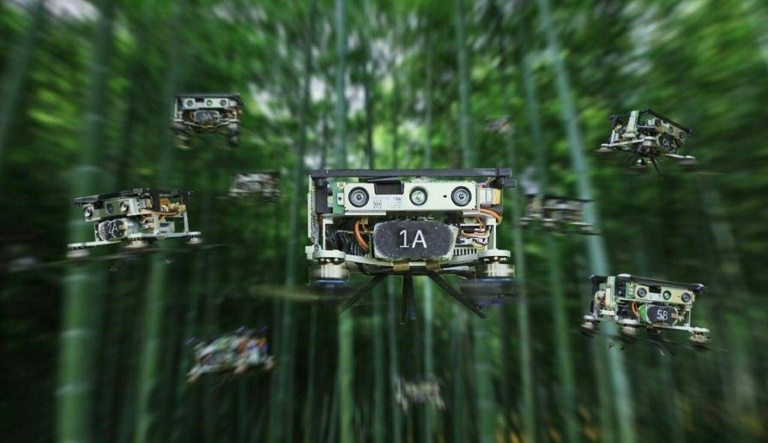
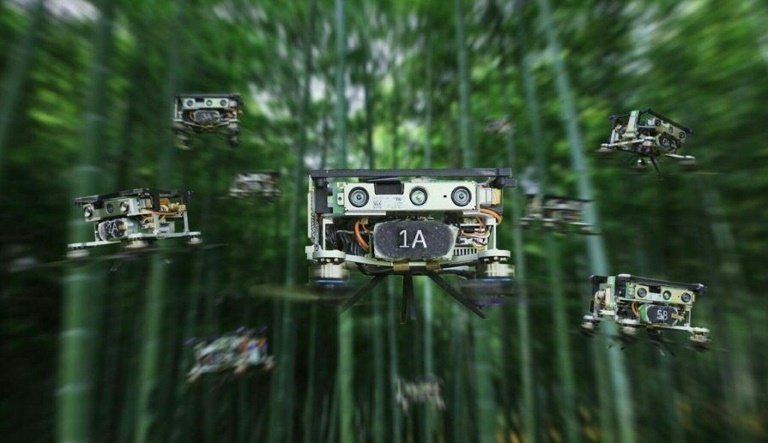
And last month, Chinese researchers published a drone swarm experiment allegedly showing 10 devices autonomously navigating a dense patch of bamboo forest, without crashing into the trees or each other.

“The ultimate goal is something that has a collective intelligence,” said Jean-Marc Rickli, head of risks at the Geneva Centre for Security Policy.

“The analogy is a bit like a school of fish. They create forms in the water that are not the decision of any single fish, but the result of their collective intelligence,” he told AFP.

– Game-changer –

It would be a big technological advance from current weapons, which can be programmed and semi-autonomous but must have human operators to react to unexpected challenges.

A fleet of self-navigating drones could in theory incapacitate defence systems or advancing forces by sheer numbers, saturating combat zones on land or at sea until an opponent’s arsenal is depleted.

“A conventional attack becomes impossible when you’re facing dozens, hundreds or thousands of devices that are much cheaper to develop and operate than heavy conventional weapons,” Rickli said.

Noting this profound shift in modern warfare, a RAND Corporation study from 2020 found that while unmanned vehicles need significant improvements in onboard processing, “the overall computing capability required will be modest by modern standards — certainly less than that of a contemporary smartphone.”

“A squadron of approximately 900 personnel, properly equipped and trained, could launch and recover 300 L-CAATs every six hours, for a total of 1,200 sorties per day,” it said, referring to low-cost attributable aircraft technology — meaning devices so cheap an army can afford to lose them.

“We do have indications that China is making rapid capabilities development,” Lushenko said of Beijing’s new drone carrier.

“What we lack is empirical data to suggest that China’s one-party state can actually employ the ship in an integrated fashion in conflict.”


China's drone carrier hints at 'swarm' ambitions for Pacific

Officially it is just a research vessel, but China’s newly unveiled drone carrier is a clear sign Beijing is rushing to deploy an autonomous swarm of unmanned devices in its push for military supremacy in the Pacific Ocean.

State media last month showed the launching of the Zhu Hai Yun — “Zhu Hai Cloud” — capable of transporting an unspecified number of flying drones as well as surface and submarine craft, and operating autonomously thanks to artificial intelligence.

The 89-metre (292-foot) ship would be operational by year-end with a top speed of 18 knots, vastly increasing China’s surveillance potential of the vast Pacific area it considers its zone of influence.

“The vessel is not only an unprecedented precision tool at the frontier of marine science, but also a platform for marine disaster prevention and mitigation, seabed precision mapping, marine environment monitoring, and maritime search and rescue,” Chen Dake, lab director at the firm that built the carrier, told China Daily.

Armies worldwide see drone squadrons as key players in combat, able to overwhelm defence systems by sheer numbers and without putting soldiers’ lives at risk, such as with more expensive jets or tanks.

“It’s probably a first-of-its-kind development but other navies across the world, including the US Navy, are experimenting with remote warfare capabilities in the maritime domain,” said US Army Lieutenant Colonel Paul Lushenko, who is also an international relations specialist at Cornell University in New York.

Even if the vessel’s actual capabilities remain to be seen, Beijing is broadcasting its intent to cement territorial claims in the region, as seen with the security partnership agreed last month with the Solomon Islands northeast of Australia.

“It’s definitely imposing, provocative, escalatory and aggressive,” Lushenko told AFP.

– Collective intelligence –

Building fleets of autonomous and relatively inexpensive drones would greatly augment China’s ability to enforce so-called anti-access and area denial (A2-AD) in the Pacific, with the aim of weakening decades of US influence.

Unlike traditional aircraft carriers or destroyers carrying hundreds of troops, the drone carrier could itself navigate for longer periods while sending out devices that create a surveillance “net,” potentially able to fire missiles as well.

The Zhu Hai Yun could also improve China’s mapping of the seafloor, providing a covert advantage for its submarines.

“These are capabilities that are likely to be critical in any future conflicts that China wages, including over the island of Taiwan,” strategists Joseph Trevithick and Oliver Parken wrote on the influential War Zone site.

Beijing has made no secret of its desire to wrest control of Taiwan, and military experts say it is closely watching the West’s response to the Russian invasion of Ukraine to gauge how and when it might make its move.

And last month, Chinese researchers published a drone swarm experiment allegedly showing 10 devices autonomously navigating a dense patch of bamboo forest, without crashing into the trees or each other.

“The ultimate goal is something that has a collective intelligence,” said Jean-Marc Rickli, head of risks at the Geneva Centre for Security Policy.

“The analogy is a bit like a school of fish. They create forms in the water that are not the decision of any single fish, but the result of their collective intelligence,” he told AFP.

– Game-changer –

It would be a big technological advance from current weapons, which can be programmed and semi-autonomous but must have human operators to react to unexpected challenges.

A fleet of self-navigating drones could in theory incapacitate defence systems or advancing forces by sheer numbers, saturating combat zones on land or at sea until an opponent’s arsenal is depleted.

“A conventional attack becomes impossible when you’re facing dozens, hundreds or thousands of devices that are much cheaper to develop and operate than heavy conventional weapons,” Rickli said.

Noting this profound shift in modern warfare, a RAND Corporation study from 2020 found that while unmanned vehicles need significant improvements in onboard processing, “the overall computing capability required will be modest by modern standards — certainly less than that of a contemporary smartphone.”

“A squadron of approximately 900 personnel, properly equipped and trained, could launch and recover 300 L-CAATs every six hours, for a total of 1,200 sorties per day,” it said, referring to low-cost attributable aircraft technology — meaning devices so cheap an army can afford to lose them.

“We do have indications that China is making rapid capabilities development,” Lushenko said of Beijing’s new drone carrier.

“What we lack is empirical data to suggest that China’s one-party state can actually employ the ship in an integrated fashion in conflict.”

Japanese man jailed for attacking Thai dissident

A Japanese man was jailed for 20 months on Wednesday for attacking a Thai academic in Japan where he lives in self-exile following his vocal criticism of the military and monarchy.

The verdict was confirmed to AFP by the district court in Kyoto, where former diplomat Pavin Chachavalpongpun has lived for the past decade.

Tatsuhiko Sato, 43, had last month admitted to breaking into Pavin’s home in 2019 and attacking the dissident and another person with tear gas, according to Japan’s public broadcaster NHK and other local media.

Pavin, an associate professor at Kyoto University, said he suspected the attack had been masterminded from Thailand.

“I truly believe that the Thai establishment is behind this because I have no enemies in Japan and have never participated in any political activity on Japanese soil,” the 51-year-old told AFP.

“I am satisfied with the court’s verdict… However, the culprits behind this attack will still have to be pursued.”

Pavin has published books and other commentaries about the military and monarchy in Thailand, where criticism of the king is considered taboo.

He is also an administrator of a Facebook group with more than two million members who discuss the royal family’s role in the country, as well as a pro-democracy movement’s proposals for reforms.

Thailand’s lese majeste law is seen as one of the strictest in the world. Offenders can land up to 15 years in jail per charge for defaming, insulting, or threatening the king, queen, heir-apparent or regent.

At Sato’s first hearing last month, prosecutors sought two years in jail and argued it was a planned attack under an order from an accomplice, NHK said.

Pavin said he did not know Sato and had not met him before the incident, which left the academic traumatised.

“The man could be linked to organised crime because there was a BMW waiting to pick him up,” he said.

“I have had trouble sleeping at night. I also had to install at least five surveillance cameras in my house in addition to extra locks and an anti-theft alarm.”

At least nine Thai dissidents who fled political persecution in Thailand have been forcibly disappeared in neighbouring countries in recent years, according to Human Rights Watch.

One of the most notable cases was the disappearance of pro-democracy activist Wanchalearm Satsaksit, who was abducted by armed men in broad daylight in Phnom Penh in 2020. He remains missing.

Pavin, who has been a thorn in the side of the army since it seized power in a 2014 coup, accused the military in 2016 of harassing his family in Thailand.

Belgian king decorates last Congolese WW2 vet

Belgium’s King Philippe on Wednesday decorated the last surviving Congolese World War II veteran, an AFP correspondent said, during a historic visit to the Democratic Republic of Congo.

The Belgian sovereign landed in DRC’s capital Kinshasa on Tuesday afternoon for a six-day visit billed as an opportunity for reconciliation between the vast central African country and its former colonial master.

On Wednesday morning, Philippe visited a memorial for combat veterans in Kinshasa and laid a wreath.

He also decorated 100-year-old Corporal Albert Kunyuku, who enlisted in Belgium’s colonial Force Publique in 1940 and saw service in Burma — the former name of Myanmar. 

Kunyuku, the last surviving Congolese veteran of World War II, shook hands with the king for a long time.

Belgium’s colonisation of the Congo was one of the harshest imposed by the European powers that ruled most of Africa in the late 19th and 20th centuries.

King Leopold II, the brother of Philippe’s great great grandfather, oversaw the conquest of what is now DRC, governing the territory as his personal property between 1885 and 1908 before it became a Belgian colony. 

Historians say that millions of people were killed, mutilated or died of disease as they were forced to collect rubber under his rule. The land was also pillaged for its mineral wealth, timber and ivory.

In 2020, Philippe wrote a letter to Congolese President Felix Tshisekedi to express his “deepest regrets” for the “wounds of the past.”

Near the combat veterans’ memorial on Wednesday, some bystanders suggested that decorating Kunyuku was a cosmetic gesture. 

“We should also compensate the families of these veterans who lost their lives in a war that did not concern them,” said Madeleine Yowa, a 43-year-old nurse.

Marie-Therese Bakuku, a street vendor, also urged financial reparations and called the ceremony hypocritical.  

“There were thousands of them,” she said, referring to Congolese WWII veterans.

“Now there’s one left and they’re trying to save the day.” 

US lays out more pledges as Biden woos Latin American leaders

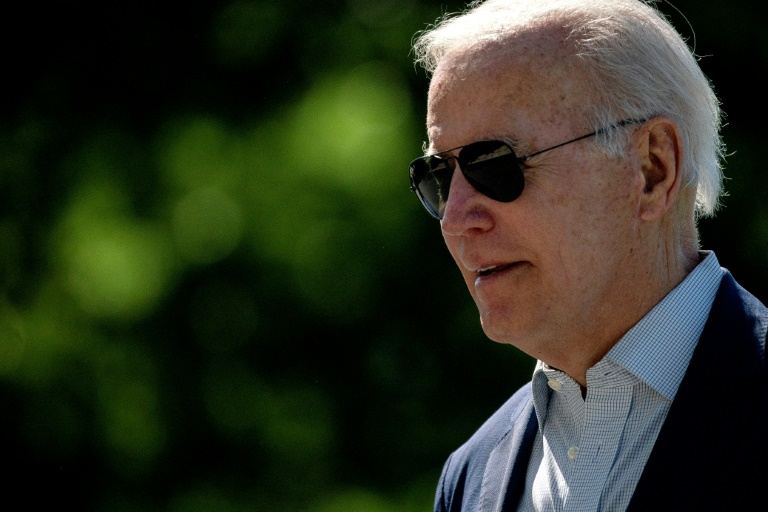
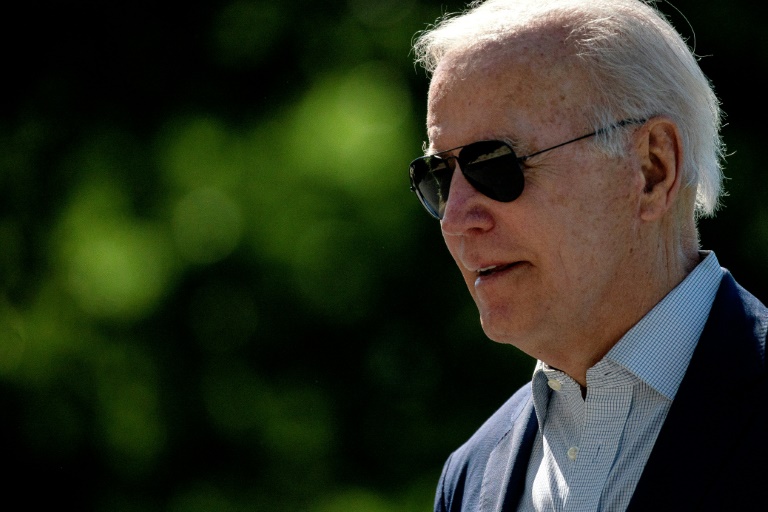
US President Joe Biden heads Wednesday to a Latin America summit on a mission to woo back the region as his administration pushed out pledges, including a plan to train half a million health workers.

The long-awaited Summit of the Americas was marred by a boycott from Mexico’s president, who was upset that Biden did not invite the leftist leaders of Cuba, Nicaragua and Venezuela on the grounds that they did not meet democratic standards.

The Biden administration insisted there were no hard feelings and moved forward on initiatives aimed at cementing ties across Latin America, where a rising China has increasingly made inroads despite the historic US influence.

Hours before Biden was to arrive, his administration announced a new Americas Health Corps that will aim to improve the skills of 500,000 health workers across the region, building on the lessons from Covid-19, which hit the Western Hemisphere especially hard.

The health training will cost $100 million, although the United States will not contribute all of it and will seek to raise funds, including through the Pan American Health Organization.

The pandemic “showed us the many cracks in our global health systems and underscored the importance of strong and resilient health systems for the entire population,” a White House statement said.

China has stepped up its role in Latin America since the pandemic started, moving early to supply vaccines. 

Cuba has also long exported its state-employed doctors, a practice that so infuriated the previous administration of Donald Trump that he suspended funding for the Pan American Health Organization over alleged ties.

The health announcement comes a day after Vice President Kamala Harris detailed another $1.9 billion in commitments by businesses to invest in impoverished and violence-ravaged El Salvador, Guatemala and Honduras.

The troubles in the so-called Northern Triangle, as well as Haiti, have generated a soaring number of migrants to the United States, setting off a domestic furor as Trump’s Republican Party demands efforts to stop them.

“We know the American people will benefit from stable and prosperous neighbors. And when we provide economic opportunity for people in Central America, we address an important driver of migration,” Harris said.

– ‘Nearshoring’ –

Mauricio Claver-Carone, the president of the Inter-American Development Bank (IADB), said that Latin America can increasingly be seen as a “sea of peace” for investors amid the global turbulence from Russia’s invasion of Ukraine and rising risks associated with manufacturing juggernaut China.

The head of the IADB, which provides development funding in Latin America, said he saw a rise of “nearshoring,” with businesses moving closer to markets rather than in China.

Since the first Summit of the Americas in 1994, “each dollar that went to China was one dollar, one investment, one job less for Latin America and the Caribbean,” he told AFP in an interview in Los Angeles.

In Latin America, “whether they are governments of the left or the right, they all want foreign investment, they all want nearshoring, they all want economic growth,” he said.

The first summit, held in Miami by Bill Clinton, aimed to create a vast free-trade zone that would span the hemisphere other than communist Cuba.

Biden is holding only the second Summit of the Americas on US soil at a time that the political appetite for free trade has waned in Washington, with Trump rising to power in part by attacking trade liberalization as hurting workers.

But Biden has stood firm on another core principle of the Summit of the Americas — democracy — even as he considers going next month to Saudi Arabia, a critical oil supplier.

Mexican President Andres Manuel Lopez Obrador insisted that all nations of the hemisphere should be included, a stance backed by several other regional leaders who nonetheless agreed to come.

Biden is separately expected to meet President Jair Bolsonaro of Brazil, Latin America’s most populous nation, despite rising fears that the Trump ally will not accept the legitimacy of upcoming elections.

US lays out more pledges as Biden woos Latin American leaders

US President Joe Biden heads Wednesday to a Latin America summit on a mission to woo back the region as his administration pushed out pledges, including a plan to train half a million health workers.

The long-awaited Summit of the Americas was marred by a boycott from Mexico’s president, who was upset that Biden did not invite the leftist leaders of Cuba, Nicaragua and Venezuela on the grounds that they did not meet democratic standards.

The Biden administration insisted there were no hard feelings and moved forward on initiatives aimed at cementing ties across Latin America, where a rising China has increasingly made inroads despite the historic US influence.

Hours before Biden was to arrive, his administration announced a new Americas Health Corps that will aim to improve the skills of 500,000 health workers across the region, building on the lessons from Covid-19, which hit the Western Hemisphere especially hard.

The health training will cost $100 million, although the United States will not contribute all of it and will seek to raise funds, including through the Pan American Health Organization.

The pandemic “showed us the many cracks in our global health systems and underscored the importance of strong and resilient health systems for the entire population,” a White House statement said.

China has stepped up its role in Latin America since the pandemic started, moving early to supply vaccines. 

Cuba has also long exported its state-employed doctors, a practice that so infuriated the previous administration of Donald Trump that he suspended funding for the Pan American Health Organization over alleged ties.

The health announcement comes a day after Vice President Kamala Harris detailed another $1.9 billion in commitments by businesses to invest in impoverished and violence-ravaged El Salvador, Guatemala and Honduras.

The troubles in the so-called Northern Triangle, as well as Haiti, have generated a soaring number of migrants to the United States, setting off a domestic furor as Trump’s Republican Party demands efforts to stop them.

“We know the American people will benefit from stable and prosperous neighbors. And when we provide economic opportunity for people in Central America, we address an important driver of migration,” Harris said.

– ‘Nearshoring’ –

Mauricio Claver-Carone, the president of the Inter-American Development Bank (IADB), said that Latin America can increasingly be seen as a “sea of peace” for investors amid the global turbulence from Russia’s invasion of Ukraine and rising risks associated with manufacturing juggernaut China.

The head of the IADB, which provides development funding in Latin America, said he saw a rise of “nearshoring,” with businesses moving closer to markets rather than in China.

Since the first Summit of the Americas in 1994, “each dollar that went to China was one dollar, one investment, one job less for Latin America and the Caribbean,” he told AFP in an interview in Los Angeles.

In Latin America, “whether they are governments of the left or the right, they all want foreign investment, they all want nearshoring, they all want economic growth,” he said.

The first summit, held in Miami by Bill Clinton, aimed to create a vast free-trade zone that would span the hemisphere other than communist Cuba.

Biden is holding only the second Summit of the Americas on US soil at a time that the political appetite for free trade has waned in Washington, with Trump rising to power in part by attacking trade liberalization as hurting workers.

But Biden has stood firm on another core principle of the Summit of the Americas — democracy — even as he considers going next month to Saudi Arabia, a critical oil supplier.

Mexican President Andres Manuel Lopez Obrador insisted that all nations of the hemisphere should be included, a stance backed by several other regional leaders who nonetheless agreed to come.

Biden is separately expected to meet President Jair Bolsonaro of Brazil, Latin America’s most populous nation, despite rising fears that the Trump ally will not accept the legitimacy of upcoming elections.

Close Bitnami banner
Bitnami