World

Out of the frying pan: Indonesians pay price of cooking oil crisis

About three weeks after Russian troops invaded Ukraine, Indonesian housewife Liesye Setiana was forced to close her banana chip business as cooking oil supplies dried up across the country.

Millions of consumers and small business owners in the world’s fourth most populous nation have been rattled for months by skyrocketing cooking oil prices. 

As the war between the two major grain and sunflower seed producers sent jitters through global markets, many producers rushed to shift their goods abroad to cash in on soaring rates.

Setiana would travel to a supermarket over an hour from her remote East Java village of Baruharjo to buy a daily eight-litre batch of palm oil that could keep her business alive.

But the 49-year-old mother of two would be turned away, with sellers heavily rationing the commodity used in products ranging from cosmetics to chocolate spreads.

“I was fuming and told the employees that I really need the cooking oil for personal use, not for hoarding,” said Setiana, who used to make up to 750,000 rupiah ($52) a day selling her savoury yellow snack.

“How come we have cooking oil shortages when Indonesia is the world’s top palm oil producer?” 

Her battle for supplies is just a snapshot of the cooking oil crisis that has spurred hours-long queues of residents with jerry cans in hand across Indonesia’s most populous island, Java, and others such as Borneo.

Two people died in March from exhaustion — including one who had queued at three different supermarkets, according to local media — as they waited in searing heat to get their hands on a product that rose to 20,100 rupiah a litre at its height.

– Counting costs –

Indonesia produces about 60 percent of global palm oil supplies, with one-third consumed domestically. India, China, the European Union and Pakistan are among its major export customers.

The squeeze on cooking oil at home forced the Indonesian government to impose a now-lifted ban on exports last month, easing prices and shoring up domestic supplies.

But at the end of May, the price of bulk cooking oil, the most affordable in the country, still hovered at about 18,300 rupiah per litre on average, above the government’s target of 14,000 rupiah, according to official data.

The price spike has left many with difficult decisions to make.

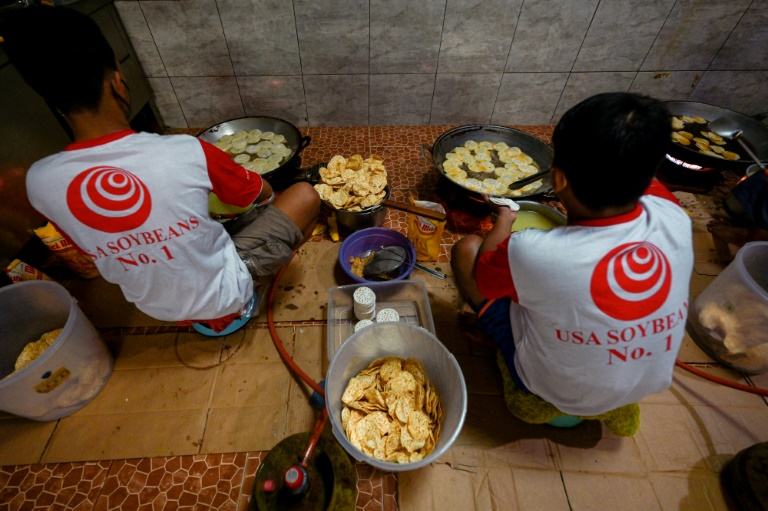
Sutaryo, who like many Indonesians goes by one name, runs a tempe chip business out of his home in South Jakarta. He was forced to jack up his prices and lay off four employees to stay afloat.

“After the surge of cooking oil prices, we have to be smart in calculating our production cost. Our consumers are left with no other choice but to accept a higher price for our kripik tempe,” he said, referring to the traditional soy-based crackers.

With demand yet to recover, production at Sutaryo’s home factory has slid from 300 to 100 kilogrammes a day, and daily revenue is down to six million rupiah from 15 million before the pandemic.

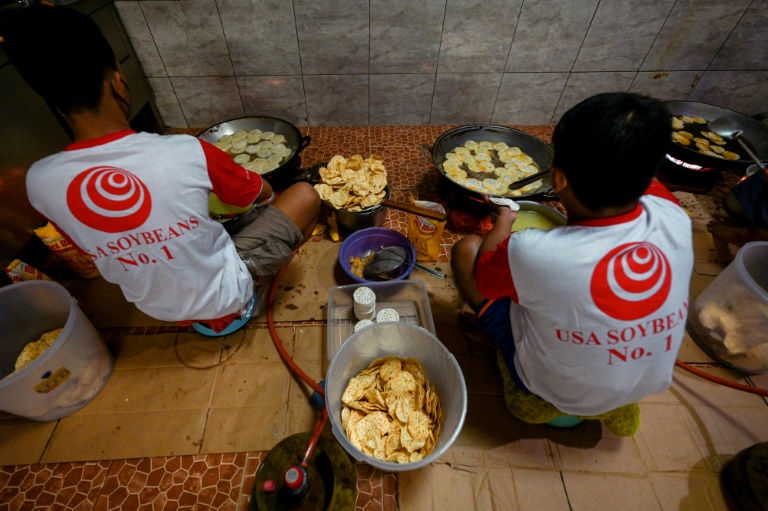
About half-a-dozen workers cut thin slices of tempe before throwing them into frying pans of hot oil, letting them sizzle until crispy. 

It is a far cry from the hustle and bustle of the business’s pre-pandemic peak, said Sutaryo, when he had workers frying tempe chips outside for lack of space.

– ‘Significant’ impact on poor – 

Cooking oil prices were already on the rise in 2021, but the impact of Moscow’s assault has driven them to record highs, said Mohammad Faisal, executive director of the Center of Reform on Economics (CORE Indonesia) think tank.

The government is now moving to secure even more supplies at home, meaning there is unlikely to be a repeat of the spike seen after Russia’s invasion of Ukraine, he said.

But while prices may come down in Indonesia’s towns and cities, they will stay high for those living in rural and remote areas like Setiana.

“For lower-income people, the impact is significant because, at the same time, there are increases in the prices [of other commodities],” Faisal told AFP.

With local prices unlikely to fall, and with little money coming in since her husband was laid off, Setiana now has other worries — like no longer being able to afford school fees for her children.

“If prices of staple goods go up, we have little left for other expenses.”
Out of the frying pan: Indonesians pay price of cooking oil crisis

About three weeks after Russian troops invaded Ukraine, Indonesian housewife Liesye Setiana was forced to close her banana chip business as cooking oil supplies dried up across the country.

Millions of consumers and small business owners in the world’s fourth most populous nation have been rattled for months by skyrocketing cooking oil prices. 

As the war between the two major grain and sunflower seed producers sent jitters through global markets, many producers rushed to shift their goods abroad to cash in on soaring rates.

Setiana would travel to a supermarket over an hour from her remote East Java village of Baruharjo to buy a daily eight-litre batch of palm oil that could keep her business alive.

But the 49-year-old mother of two would be turned away, with sellers heavily rationing the commodity used in products ranging from cosmetics to chocolate spreads.

“I was fuming and told the employees that I really need the cooking oil for personal use, not for hoarding,” said Setiana, who used to make up to 750,000 rupiah ($52) a day selling her savoury yellow snack.

“How come we have cooking oil shortages when Indonesia is the world’s top palm oil producer?” 

Her battle for supplies is just a snapshot of the cooking oil crisis that has spurred hours-long queues of residents with jerry cans in hand across Indonesia’s most populous island, Java, and others such as Borneo.

Two people died in March from exhaustion — including one who had queued at three different supermarkets, according to local media — as they waited in searing heat to get their hands on a product that rose to 20,100 rupiah a litre at its height.

– Counting costs –

Indonesia produces about 60 percent of global palm oil supplies, with one-third consumed domestically. India, China, the European Union and Pakistan are among its major export customers.

The squeeze on cooking oil at home forced the Indonesian government to impose a now-lifted ban on exports last month, easing prices and shoring up domestic supplies.

But at the end of May, the price of bulk cooking oil, the most affordable in the country, still hovered at about 18,300 rupiah per litre on average, above the government’s target of 14,000 rupiah, according to official data.

The price spike has left many with difficult decisions to make.

Sutaryo, who like many Indonesians goes by one name, runs a tempe chip business out of his home in South Jakarta. He was forced to jack up his prices and lay off four employees to stay afloat.

“After the surge of cooking oil prices, we have to be smart in calculating our production cost. Our consumers are left with no other choice but to accept a higher price for our kripik tempe,” he said, referring to the traditional soy-based crackers.

With demand yet to recover, production at Sutaryo’s home factory has slid from 300 to 100 kilogrammes a day, and daily revenue is down to six million rupiah from 15 million before the pandemic.

About half-a-dozen workers cut thin slices of tempe before throwing them into frying pans of hot oil, letting them sizzle until crispy. 

It is a far cry from the hustle and bustle of the business’s pre-pandemic peak, said Sutaryo, when he had workers frying tempe chips outside for lack of space.

– ‘Significant’ impact on poor – 

Cooking oil prices were already on the rise in 2021, but the impact of Moscow’s assault has driven them to record highs, said Mohammad Faisal, executive director of the Center of Reform on Economics (CORE Indonesia) think tank.

The government is now moving to secure even more supplies at home, meaning there is unlikely to be a repeat of the spike seen after Russia’s invasion of Ukraine, he said.

But while prices may come down in Indonesia’s towns and cities, they will stay high for those living in rural and remote areas like Setiana.

“For lower-income people, the impact is significant because, at the same time, there are increases in the prices [of other commodities],” Faisal told AFP.

With local prices unlikely to fall, and with little money coming in since her husband was laid off, Setiana now has other worries — like no longer being able to afford school fees for her children.

“If prices of staple goods go up, we have little left for other expenses.”
Asian markets track Wall St rally, boosted by China hopes

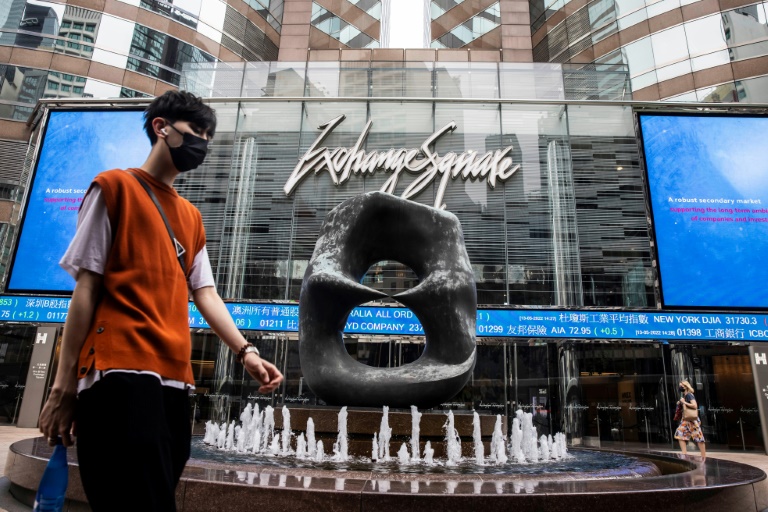
Asian markets rallied Wednesday, building on a hearty performance on Wall Street and helped by the reopening in China, though analysts continue to warn of near-term volatility caused by surging inflation, rising interest rates and the Ukraine war.

Equities have enjoyed some respite in recent weeks from a painful sell-off caused by central bank monetary tightening — particularly by the Federal Reserve — and a spike in prices that is beginning to hit consumers, raising concerns of an economic slowdown or recession.

A retreat in US Treasury yields provided a lift to New York traders, as did a jump in Chinese firms listed there fuelled by growing optimism that Beijing is to ease back on its long-running crackdown against the tech sector.

The improved mood around tech has come after a report this week said China was close to ending a probe into ride-hailing app Didi Global and restoring its main apps this week.

The Wall Street Journal also said investigations into two other firms — Full Truck Alliance and recruitment platform Kanzhun — were coming to a conclusion.

And on Tuesday authorities approved a second batch of 60 games in a further step to lightening their approach in the world’s largest mobile entertainment market.

Citi analysts said the “announcement will also send a positive signal of policy support to the overall China internet sector”.

Market heavyweights rallied in Hong Kong with Alibaba up more than six percent, Netease four percent higher and Tencent up more than three percent, helping the Hang Seng Index climb more than one percent.

Shanghai, Tokyo, Sydney, Seoul, Wellington, Taipei and Manila were also well in positive territory.

The moves come as Beijing relaxes its strict Covid lockdown measures, allowing the world’s number two economy to edge back into life after months.

“The bounce in risk sentiment is due to a more positive China tilt where the outlook is set to brighten up as Covid restrictions ease, and state-owned banks are obliged to increase lending again,” said SPI Asset Management’s Stephen Innes.

“It certainly feels like the tide is turning on the Mainland, though the overall tone still leans more cautiously optimistic, with key emphasis on ‘cautiously’.”

All eyes are on the release Friday of US inflation data for a better idea about the Fed’s plans as it hikes borrowing costs.

Officials are expected to lift rates half a point each in June and July with some commentators warning a strong report on Friday could allow them to unveil a three-quarter-point move in September.

Such a move would push the dollar up even further against its peers, with the unit at a 20-year high against the yen.

And observers said that the uncertainty would continue to cause volatility on markets.

“The reality for the economy and probably the stock markets is that aggressive central bank rate hikes are likely to take a sharp bite out of household consumption as costs of living pressures come from goods and services, depressed real wage gains and markedly higher mortgage servicing,” Innes added. 

“Hence, the central bank’s endgame is to cool inflation by slowing the economy and tightening financial conditions at stock market investors’ expense until price pressures abate.”

And Kate Moore at BlackRock explained to Bloomberg Television that “figuring out the direction over the next couple of months becomes increasingly difficult”.

“There seems to be across all of the investing segments a lack of strong conviction in the direction of the market. We are going to see a lot more investors remain on the sidelines, remain cautiously positioned.”

– Key figures at around 0230 GMT –

Tokyo – Nikkei 225: UP 1.0 percent at 28,208.92 (break)

Hong Kong – Hang Seng Index: UP 2.0 percent at 21,696.89

Shanghai – Composite: UP 0.7 percent at 3,264.90

Dollar/yen: UP at 133.00 yen from 132.62 yen late Tuesday

Euro/dollar: DOWN at $1.0693 from $1.0715 

Pound/dollar: DOWN at $1.2580 from $1.2592

Euro/pound: DOWN at 85.00 pence from 85.02 pence

Brent North Sea crude: UP 0.1 percent at $120.71 per barrel

West Texas Intermediate: UP 0.2 percent at $119.65 per barrel

New York – Dow: UP 0.8 percent to 33,180.14 (close)

London – FTSE 100: DOWN 0.1 percent at 7,598.93 (close)

Nigeria's ruling party picks candidate for 2023 presidential poll

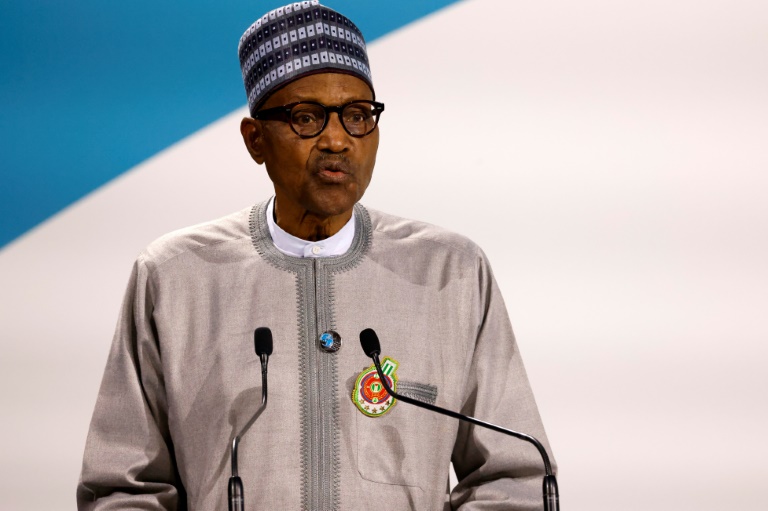
Nigeria’s ruling All Progressives Congress (APC) party voted on Wednesday in key primaries to choose a candidate for next year’s election to replace President Muhammadu Buhari.

No clear favourite emerged among the APC frontrunners vying to lead Africa’s most populous country, including former Lagos governor Bola Tinubu, Vice President Yemi Osinbajo, former transport minister Rotimi Amaechi and Senate president Ahmad Lawan.

The APC convention in Abuja took place two days after gunmen killed 22 people in an attack on a church in the southwest — a reminder that security in the elections will be a major issue.

More than 2,300 APC delegates were voting to select a candidate to face Atiku Abubakar, 75, of the opposition Peoples Democratic Party (PDP) among others in the February 25 presidential ballot.

Buhari, who is stepping down after the two terms he is allowed in the constitution, arrived at the Eagles Square convention centre on Tuesday evening before voting began very early Wednesday.

The Nigerian leader spent the days leading up to the party convention in negotiations with the APC’s factions seeking unity over one strong candidate though he gave no indication of his favoured name.

“We must choose a knowledgeable, fair-minded nationalist with a very strong belief in the unity of our nation, Nigeria, and strength of character and purpose to steer the country forward,” Buhari said in a speech to the convention.

“We should not allow the PDP to drag the country backwards.”

At least three would-be candidates backed out of the race shortly before voting began, and assigned their delegate votes to Tinubu, an APC stalwart and former governor known as the “Godfather of Lagos”.

Part of the APC’s debate over candidates relates to “zoning” — an unofficial agreement among political elites that Nigeria’s presidency should alternate between those from the predominantly Christian south and those from the largely Muslim north.

After two terms with northern Muslim Buhari, observers expected the presidency to go to a candidate from the south.

But the PDP — which held its primary on May 28 and 29 — chose Abubakar, a former vice president and political stalwart who is a northern Muslim.

– No favourite –

The opposition’s choice to ignore “zoning” has made the APC reconsider how their candidate will appeal to the north, where voter numbers and participation are traditionally higher.

Buhari, who is the leader of the ruling party, had instructed APC members to “allow the delegates to decide.”

Heavy security was deployed in central Abuja earlier on Tuesday and streets were gridlocked as hundreds of APC supporters wearing the party colours of green, white and red gathered in and around the venue.

The results of the primary had been officially scheduled to be unveiled by 2100 GMT on Tuesday, when the victor was due to make an acceptance speech — though a delay was expected.

Security will be a top issue in the election with the military dealing with a 12-year-old jihadist conflict in the northeast and criminal gangs who carry out raids and mass kidnappings in the northwest.

The attack on St. Francis Catholic Church in Ondo State on Sunday during a service was a rare assault on the country’s usually more peaceful southwestern region.

The local state governor said on Tuesday, 22 people were killed and nearly 60 wounded when gunmen used explosives and machine guns to attack worshippers. No one has claimed the attack.

Nigeria’s economy is also recovering from the impact of the coronavirus pandemic and the fallout from the Ukraine war, with the World Bank projecting the number of poor Nigerians will hit 95.1 million this year.

Johnson faces UK parliament for first time since no-confidence vote

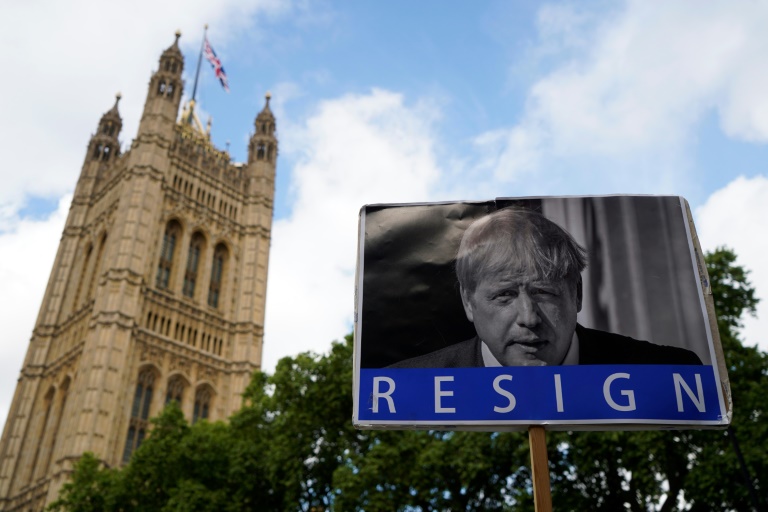
British Prime Minister Boris Johnson faces a boisterous parliament Wednesday in his first appearance before lawmakers since narrowly fending off a damaging no-confidence vote from his own Conservative MPs.

His backers are likely to stage a noisy show of support when he steps up for his weekly Prime Minister’s Questions.

Critics, however, have warned the political crisis is not over for the embattled prime minister after more than 40 percent of his own MPs voted against him in Monday’s no-confidence vote.

Johnson, who called the 211-148 vote a “convincing result”, has vowed to plough on, saying it was time to “draw a line” under questions about his leadership and the “Partygate” controversy over lockdown-breaking events at Downing Street.

The prime minister’s team has tried to regain the offensive by pointing to a setpiece speech expected in the coming days on new economic support measures, as Britons struggle with a cost-of-living crisis.

But many question whether Johnson can recover voters’ trust, as the party braces for two Westminster by-elections this month and an upcoming investigation by MPs into whether he lied to parliament over “Partygate”.

Even without any obvious candidate to succeed him, former Tory party leader William Hague this week argued that Johnson should now “look for an honourable exit”.

Comparing Monday’s margin to votes that ultimately toppled Johnson predecessors Margaret Thatcher and Theresa May, Hague said it showed “a greater level of rejection than any Tory leader has ever endured and survived”.

“Deep inside, he should recognise that, and turn his mind to getting out in a way that spares party and country such agonies and uncertainties,” Hague wrote in The Times.

– ‘War of attrition’ –

The Guardian reported Wednesday that rebel Conservative MPs were drawing up plans for “vote strikes” to paralyse the government’s legislative agenda, as happened at the end of May’s stint in office.

The i newspaper also said the prime minister now faces a “war of attrition”, with the rebels pushing to remove him despite his narrow victory in the no-confidence vote.

Johnson, 57, needed the backing of 180 of the 359 Conservatives MPs to survive the vote.

Most of Johnson’s cabinet publicly backed him in the secret ballot. But more than 40 percent of the parliamentary party did not.

The scale of the revolt “constitutes a crisis for Downing Street”, King’s College London politics professor Anand Menon said.

“I think there’s very little doubt that the vulnerability of the prime minister is going to be the single greatest factor shaping what this government does for the foreseeable future,” Menon told AFP.

Under current Tory rules, the prime minister cannot be challenged again for a year, which leaves little time for any new leader to emerge before the next general election due by 2024.

But the party’s “1922 committee” of MPs, tasked with overseeing leadership challenges, says it could easily change the rules if a majority backs it.

The Liberal Democrats are now pushing for a parliamentary no-confidence vote after Johnson survived the Tory revolt.

“Liberal Democrats are tabling a motion of no confidence in the prime minister so Parliament can finally put an end to this sorry mess,” party leader Ed Davey said.

“Every Conservative MP with a shred of decency must back our motion and give Boris Johnson the sack.”

If the government lost a no-confidence motion in the House of Commons it would have to call a snap general election.

That appears unlikely at present given the Conservative majority, but Johnson could face a challenging period in the months ahead.

Senior backbencher Tobias Ellwood, who voted against Johnson, said the prime minister was living on borrowed time.

“I think we’re talking a matter of months, up to party conference (in October),” he told Sky News.

US VP Harris announces migration funds as Mexico snubs Americas summit

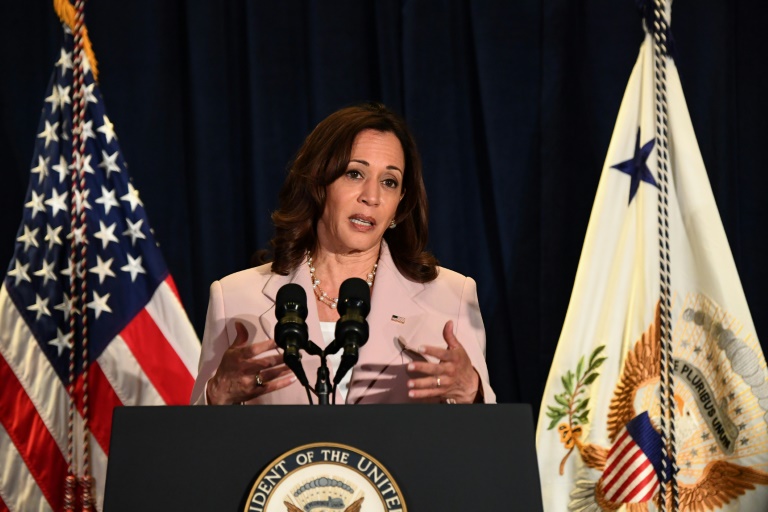
US Vice President Kamala Harris on Tuesday announced a fresh $1.9 billion in private sector funding to boost jobs in hopes of reducing migration from Central America, at a Latin America summit in Los Angeles snubbed by the leaders of Mexico and other affected countries.

Harris has been given the unenviable task of tackling the root causes of rising migration into the United States, an issue seized upon by the rival Republican Party that has turned into a top priority for President Joe Biden at a week-long Summit of the Americas.

A day before Biden’s arrival, Harris unveiled $1.9 billion in commitments by businesses — in addition to $1.2 billion announced last year — for the impoverished and violence-ravaged so-called Northern Triangle of El Salvador, Guatemala and Honduras.

Harris, who met business leaders, female entrepreneurs and civil society as part of the summit in her home state, said the efforts come from “our shared belief that most people don’t want to leave home” but also that “government cannot do it alone.”

“We know the American people will benefit from stable and prosperous neighbors. And when we provide economic opportunity for people in Central America, we address an important driver of migration,” she said.

Harris also announced the creation of the “Central American Service Corps” funded through US aid to mentor young people.

But none of the Northern Triangle leaders are attending the summit, nor is President Andres Manuel Lopez Obrador of Mexico, the crucial US partner on migration policy due to the 2,000-mile (3,200-kilometer) shared border. 

Lopez Obrador, a leftist populist, had insisted that Biden invite all governments including Cuba, Nicaragua and Venezuela — which the United States is excluding on the grounds that the summit is only for democracies.

– Seeking ‘unity’ –

Argentina’s center-left president, Alberto Fernandez, who confirmed his attendance after a phone call and invitation to Washington from Biden, said he would try to “give a voice” to the absent countries.

“We enormously regret the non-presence of the countries that weren’t invited,” he told reporters before heading to Los Angeles.

“Unity is not spoken, it is exercised, and the best way to exercise it is by not segregating anyone,” he said.

Mexican Foreign Secretary Marcelo Ebrard, attending instead of Lopez Obrador, said his president would visit Washington next month and insisted that ties were not at risk.

The relationship between the neighbors “is positive and will remain so and we don’t expect any change in that,” he said.

But Lopez Obrador’s absence set a sour tone after the Mexican leader’s surprisingly close partnership with Biden’s predecessor Donald Trump, who had threatened Mexico with sanctions unless it cracked down on Central American migrants.

US Secretary of State Antony Blinken sought until the last minute to woo Lopez Obrador, including by seeking lower-level participation by Cuba and easing some restrictions including on US flights to the communist island.

But US officials said they saw no reciprocation from Cuban authorities, who recently went ahead with the trial of two dissident artists.

– No Venezuela –

On Venezuela, the United States does not recognize President Nicolas Maduro, whose 2018 re-election was clouded by widespread reports of irregularities. Maduro instead traveled to Turkey, which maintains relations with him.

But Biden also did not invite opposition leader Juan Guaido, whom the United States still considers interim president despite what some Latin American officials privately see as his dwindling chances.

Biden will instead speak to Guaido by telephone, Brian Nichols, the top US diplomat for Latin America, told VPI television.

Biden is separately expected to meet President Jair Bolsonaro of Brazil, Latin America’s most populous nation, despite rising fears that the Trump ally will not accept the legitimacy of upcoming elections.

Ebrard hoped that the summit would address the needs for “massive investment” in Latin America and the Caribbean in the wake of the Covid-19 pandemic.

The new funding announced by Harris included a commitment by credit card giant Visa to invest more than $270 million over five years with an aim of bringing another 6.5 million people into a formal financial system in a region rife with corruption.

The North America branch of Yazaki, the Japanese auto parts maker, will invest $110 million, hiring more than 14,000 new employees in Guatemala and El Salvador, the White House said. 

Other companies making commitments include clothing maker Gap and Millicom, a telecommunications company that plans to invest $700 million to expand mobile and broadband networks across the three countries.

US VP Harris announces migration funds as Mexico snubs Americas summit

US Vice President Kamala Harris on Tuesday announced a fresh $1.9 billion in private sector funding to boost jobs in hopes of reducing migration from Central America, at a Latin America summit in Los Angeles snubbed by the leaders of Mexico and other affected countries.

Harris has been given the unenviable task of tackling the root causes of rising migration into the United States, an issue seized upon by the rival Republican Party that has turned into a top priority for President Joe Biden at a week-long Summit of the Americas.

A day before Biden’s arrival, Harris unveiled $1.9 billion in commitments by businesses — in addition to $1.2 billion announced last year — for the impoverished and violence-ravaged so-called Northern Triangle of El Salvador, Guatemala and Honduras.

Harris, who met business leaders, female entrepreneurs and civil society as part of the summit in her home state, said the efforts come from “our shared belief that most people don’t want to leave home” but also that “government cannot do it alone.”

“We know the American people will benefit from stable and prosperous neighbors. And when we provide economic opportunity for people in Central America, we address an important driver of migration,” she said.

Harris also announced the creation of the “Central American Service Corps” funded through US aid to mentor young people.

But none of the Northern Triangle leaders are attending the summit, nor is President Andres Manuel Lopez Obrador of Mexico, the crucial US partner on migration policy due to the 2,000-mile (3,200-kilometer) shared border. 

Lopez Obrador, a leftist populist, had insisted that Biden invite all governments including Cuba, Nicaragua and Venezuela — which the United States is excluding on the grounds that the summit is only for democracies.

– Seeking ‘unity’ –

Argentina’s center-left president, Alberto Fernandez, who confirmed his attendance after a phone call and invitation to Washington from Biden, said he would try to “give a voice” to the absent countries.

“We enormously regret the non-presence of the countries that weren’t invited,” he told reporters before heading to Los Angeles.

“Unity is not spoken, it is exercised, and the best way to exercise it is by not segregating anyone,” he said.

Mexican Foreign Secretary Marcelo Ebrard, attending instead of Lopez Obrador, said his president would visit Washington next month and insisted that ties were not at risk.

The relationship between the neighbors “is positive and will remain so and we don’t expect any change in that,” he said.

But Lopez Obrador’s absence set a sour tone after the Mexican leader’s surprisingly close partnership with Biden’s predecessor Donald Trump, who had threatened Mexico with sanctions unless it cracked down on Central American migrants.

US Secretary of State Antony Blinken sought until the last minute to woo Lopez Obrador, including by seeking lower-level participation by Cuba and easing some restrictions including on US flights to the communist island.

But US officials said they saw no reciprocation from Cuban authorities, who recently went ahead with the trial of two dissident artists.

– No Venezuela –

On Venezuela, the United States does not recognize President Nicolas Maduro, whose 2018 re-election was clouded by widespread reports of irregularities. Maduro instead traveled to Turkey, which maintains relations with him.

But Biden also did not invite opposition leader Juan Guaido, whom the United States still considers interim president despite what some Latin American officials privately see as his dwindling chances.

Biden will instead speak to Guaido by telephone, Brian Nichols, the top US diplomat for Latin America, told VPI television.

Biden is separately expected to meet President Jair Bolsonaro of Brazil, Latin America’s most populous nation, despite rising fears that the Trump ally will not accept the legitimacy of upcoming elections.

Ebrard hoped that the summit would address the needs for “massive investment” in Latin America and the Caribbean in the wake of the Covid-19 pandemic.

The new funding announced by Harris included a commitment by credit card giant Visa to invest more than $270 million over five years with an aim of bringing another 6.5 million people into a formal financial system in a region rife with corruption.

The North America branch of Yazaki, the Japanese auto parts maker, will invest $110 million, hiring more than 14,000 new employees in Guatemala and El Salvador, the White House said. 

Other companies making commitments include clothing maker Gap and Millicom, a telecommunications company that plans to invest $700 million to expand mobile and broadband networks across the three countries.

Merkel defends Russia legacy, says 'nothing to apologise for'

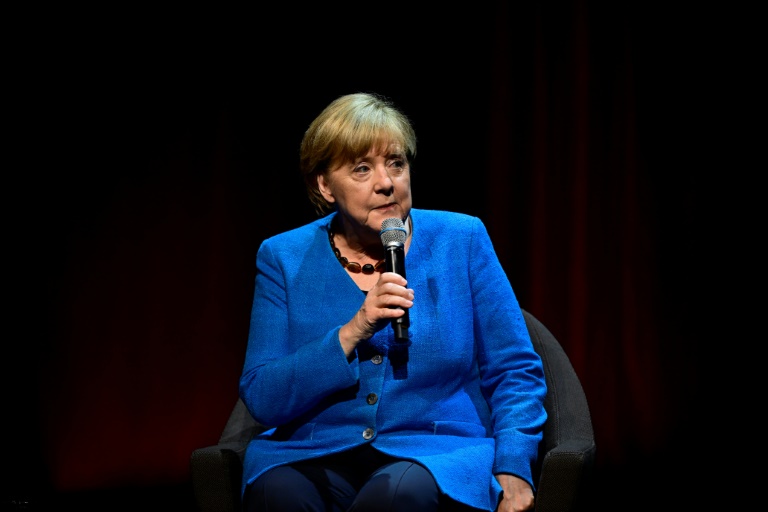
Former German chancellor Angela Merkel on Tuesday defended her years-long policy of detente towards Moscow, saying she had “nothing to apologise for” even as the Ukraine war casts a pall on her legacy.

In her first major interview since stepping down six months ago, Merkel insisted she had not been naive in her dealings with Russian President Vladimir Putin.

“Diplomacy isn’t wrong just because it hasn’t worked,” the 67-year-old said on stage in a Berlin theatre, in an interview broadcast on the Phoenix news channel.

She recalled her support for economic sanctions against Russia over its 2014 annexation of Crimea, and the German-French efforts to keep the Minsk peace process for Ukraine alive. 

“I don’t have to blame myself for not trying hard enough,” the conservative ex-chancellor said.

“I don’t see that I have to say ‘that was wrong’ and that’s why I have nothing to apologise for.”

The veteran leader, who frequently met with Putin during her 16 years in power and championed a commerce-driven, pragmatic approach towards Moscow, said the February 24 invasion of Ukraine had marked a “turning point”.

– ‘Wants to destroy Europe’ –

There was “no justification whatsoever” for the “brutal” and illegal war of aggression, she said, adding that Putin had made “a big mistake”.

“He wants to destroy Europe,” she warned. “It’s very important for the European Union to stick together now.”

But she batted away criticism that she had been wrong to block Ukraine from joining NATO in 2008, saying it was not ready then and she wanted to avoid “further escalation” with Putin, who was already seething about the military alliance’s perceived eastward expansion.

She also insisted that the 2014-2015 Minsk peace pacts, which now lie in tatters, were at the time seen as the best bet to end the fighting in eastern Ukraine between pro-Russian separatists and Ukrainian soldiers.

The peace process “brought some calm” that gave Ukraine an extra seven years to develop as a democracy and strengthen its military, she said, in a nod to Kyiv’s much praised resistance against the invading Russian troops.

“The courage and passion with which they are fighting for their country is very impressive,” Merkel said, adding she had “the highest respect” for Ukrainian President Volodymyr Zelensky.

But Merkel insisted there was no way to avoid dealing with Putin because Russia, like China, was too big to ignore.

“We have to find a way to co-exist despite all our differences,” she said.

– ‘Language of strength’ –

Confronted with criticism of the “change through trade” policy pushed by successive German governments, Merkel said she was never under the illusion that closer trade links would spur democratic reforms in Russia.

“I never thought Putin would change through trade,” she said. But in the absence of a political rapprochement, “having some economic ties makes sense”.

Germany became hugely reliant on Russian energy imports on Merkel’s watch, and she long irked Western allies with her backing for the controversial Nord Stream 2 pipeline that was to double Russian gas deliveries to Germany.

The project was shelved by current Chancellor Olaf Scholz in late February over Russia’s aggression, and Europe’s top economy is now joining EU partners in a race to wean itself off Russian oil, gas and coal.

In another major reversal, Scholz has pledged to invest 100 billion euros ($107 billion) in modernising Germany’s military, seen as chronically underfunded during the Merkel era.

Scholz, a Social Democrat who served as finance minister in Merkel’s last coalition government, has also vowed to spend more than two percent of annual gross domestic product on defence, surpassing NATO’s target.

Merkel voiced support for her successor’s decisions, saying strength was “the only language Putin understands”.

During the interview, Merkel — who remains hugely popular in Germany — also offered a rare glimpse into her private life since retiring, spending time on her own on the Baltic Sea coast, taking walks and catching up on her reading.

After 30 years in politics, Merkel said she was enjoying not having to rush from appointment to appointment.

“Personally, I’m doing well,” she told the audience, even if she felt sombre about the war in Ukraine, “like so many people”. 

“I had imagined my time after leaving office a bit differently,” Merkel said.

Israel mainly to blame for conflict: UN report

Israel’s occupation and discrimination against Palestinians are the main causes of the endless cycles of violence, UN investigators said Tuesday, prompting angry Israeli protests.

A high-level team of investigators, appointed last year by the United Nations Human Rights Council to probe “all underlying root causes” in the decades-long conflict, pointed the finger squarely at Israel.

“Ending the occupation of lands by Israel… remains essential in ending the persistent cycles of violence,” they said in a report, decrying ample evidence that Israel has “no intention” of doing so.

The 18-page report mainly focuses on evaluating a long line of past UN investigations, reports and rulings on the situation, and how and if those findings were implemented.

Recommendations in past reports were “overwhelmingly directed towards Israel,” lead investigator Navi Pillay, a former UN rights chief from South Africa, said in a statement.

This, she said, was “an indicator of the asymmetrical nature of the conflict and the reality of one state occupying the other”.

The investigators also determined that those recommendations “have overwhelmingly not been implemented”, she said, pointing to calls to ensure accountability for Israel’s violations of international law but also “indiscriminate firing of rockets” by Palestinian armed groups into Israel.

“It is this lack of implementation coupled with a sense of impunity, clear evidence that Israel has no intention of ending the occupation, and the persistent discrimination against Palestinians that lies at the heart of the systematic recurrence of violations in both the Occupied Palestinian Territory, including East Jerusalem, and Israel.”

– ‘Witch hunt’ –

Israel has refused to cooperate with the Commission of Inquiry (COI) created last year following the 11-day Hamas-Israel war in May 2021, which killed 260 Palestinians and 13 people on the Israeli side.

Israel has in the past loudly criticised Pillay for “championing an anti-Israel agenda”, and on Tuesday the foreign ministry slammed the entire investigation as “a witch hunt”.

The report, it said, was “one-sided” and “tainted with hatred for the State of Israel and based on a long series of previous one-sided and biased reports.”

It had been published, it said, as “the result of the Human Rights Council’s extreme anti-Israel bias.”

The United States, a staunch ally of Israel — which rejoined the Council under President Joe Biden, after Donald Trump withdrew from the body — reiterated that it “firmly” opposes the “open-ended and vaguely defined nature” of the COI.

“The existence of this COI in its current form is a continuation of a long-standing pattern of unfairly singling out Israel,” State Department spokesman Ned Price said in a statement.

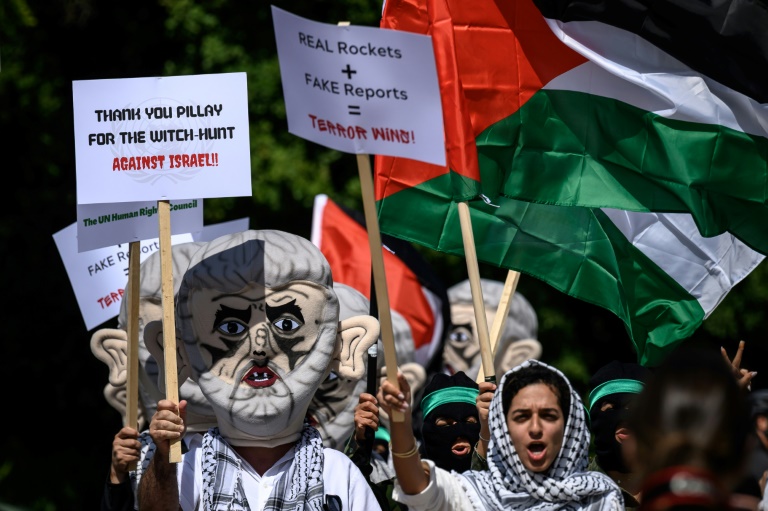
In Geneva, dozens of Israeli reserve soldiers and students — some of them dressed like Palestinian Hamas militants — marched Tuesday outside the UN headquarters in protest.

Nitsana Darshan-Leitner, who heads the Israeli NGO Shurat Hadin that organised the protest, slammed the rights council as “the most anti-Semitic body in the world.”

Israel and its allies have long accused the top UN rights body of anti-Israel bias, pointing among other things to the fact that Israel is the only country that is systematically discussed at every regular council session, with a dedicated special agenda item.

The COI, which is the highest-level investigation that can be ordered by the council, is the ninth probe it has ordered into rights violations in Palestinian territories.

It is the first, however, tasked with looking at systematic abuses committed within Israel, the first open-ended probe, and the first to examine “root causes” in the drawn-out conflict. 

Excluded from Americas Summit, Maduro visits Turkey

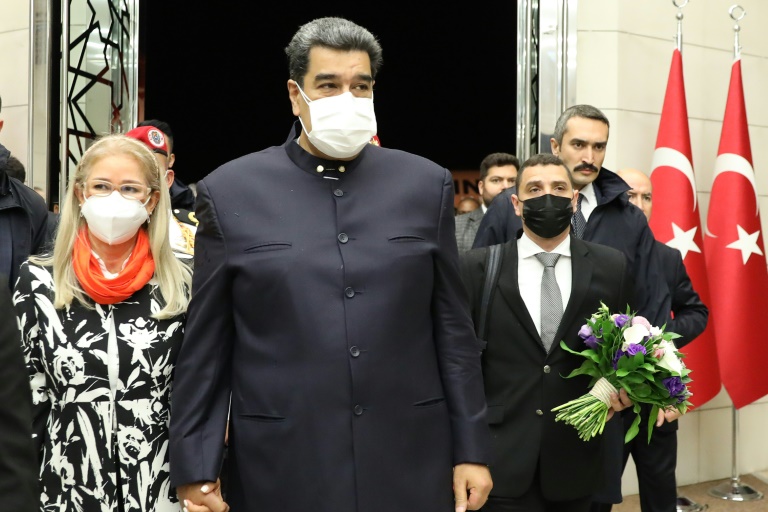
Venezuelan President Nicolas Maduro arrived in Turkey on Tuesday for an official visit as other Latin American leaders gathered for a summit in Los Angeles, to which the United States did not invite him.

The VTV state channel showed footage of Maduro arriving at the airport in Ankara, where he was received by senior officials of Turkey, an important ally of Venezuela.

“I am delighted to start this international tour, in the lands of the sister Turkish nation,” Maduro wrote on Twitter. 

“I appreciate the warm welcome and affection they have shown us. I am sure that we will consolidate the ties of union and cooperation between our peoples.”

Venezuela, Nicaragua and Cuba were not invited to a week-long Summit of the Americas, hosted by Washington. Mexico’s president skipped the event in protest at the exclusion of the three countries’ leaders.

Leaders of the so-called Northern Triangle of El Salvador, Guatemala and Honduras were also absent, even though illegal migration from the region is expected to be a key talking point.

Maduro arrived in Turkey hours after Foreign Minister Sergei Lavrov of Russia, another ally.

Lavrov was in the country to discuss unblocking grain exports from Ukraine, stalled by Russia’s war on its neighbor.

It was not known if Maduro and Lavrov would meet, but the Venezuelan leader is to be received by his counterpart Recep Tayyip Erdogan, according to the Turkish presidency.

“All aspects of Turkey-Venezuela relations will be reviewed and steps to enhance the relations will be discussed,” a presidency statement said.

Turkey is a friend of Venezuela, which sought to reinforce ties with countries such as China, Iran and Russia after US sanctions against the Maduro government.

Close Bitnami banner
Bitnami