World

Uber and Waymo team up to get driverless trucks rolling

Uber and Google’s autonomous vehicle unit Waymo on Tuesday said they are joining forces to get driverless trucks hauling cargo on roads across the United States.

Due to the vast distances between American cities and with truck transport key to the economy, companies see self-driving as a way to cut costs and reduce risk.

Waymo will allow its technology to mesh with an Uber Freight platform that connects truckers with loads in a spin on how Uber lets people summon rides using smartphone apps.

“Uber Freight’s network of shippers, carriers, and marketplace technology is a great match for the Waymo Driver,” Waymo head of commercialization for trucking Charlie Jatt said in a statement.

Carriers that buy trucks equipped with Waymo systems will be able to opt in to having the vehicles deployed as “autonomous assets” on the Uber Freight network, the companies said.

The firms will also explore together the potential for creating hubs where cargo is easily handed off from self-driving trucks to human truckers.

“Both companies envision a future where autonomous trucks tackle the long-haul portion of driving, easing some of the burden of the increasing demand for freight while also enabling drivers to shift into short-haul jobs,” they said in the release.

Before driverless trucks are allowed onto roads and highways, however, multiple tests must still be conducted to ensure they are safe.

Waymo has been testing self-driving trucks in a handful of US states.

“Uber Freight’s extensive, efficient, and reliable digital network is essential to making autonomous trucks a reality,” said unit head Lior Ron.

The Freight unit has been steadily growing, according to quarterly earnings releases.

US ex-teacher pleads guilty to leading Islamic State women's brigade

A former US schoolteacher who became a high-ranking Islamic State official and organized an all-female IS military battalion, pleaded guilty Tuesday to supporting a foreign terrorist group, the Justice Department said.

Kansas-born Allison Fluke-Ekren, 42, admitted to engaging in “terrorism-related activities” in Syria, Libya, and Iraq between 2011 and 2019.

“Fluke-Ekren ultimately served as the leader and organizer of an ISIS military battalion, known as the Khatiba Nusaybah, where she trained women on the use of automatic firing AK-47 assault rifles, grenades, and suicide belts,” the department said.

“Over 100 women and young girls, including as young as 10 or 11-years-old, received military training from Fluke-Ekren in Syria on behalf of ISIS (Islamic State).”

Her husband was a member of the extremist Ansar al-Sharia group which attacked the US mission in Bebghazi, Libya in 2012, and then became a leader of an Islamic State sniper group in Syria.

The department said the two were involved in extremist activities across the Middle East after they left the United States in 2011.

While in Syria, the department said, she spoke of desires to bomb a US shopping mall or university.

In 2016-17 she became leader of the all-woman Khatiba Nusaybah battalion, which undertook physical, medical and weapons training to support Islamic state.

Fluke-Ekren was apprehended in Syria sometime after the early-2019 territorial defeat of Islamic State, and flown to the United States on January 28.

The court record indicates that her attorneys and the Justice Department spent months negotiating her guilty plea on a single count, supporting a foreign terrorist organization, a charge which brings up to 20 years in prison.

She is scheduled to be sentenced on October 25.

– Born on Kansas farm –

Fluke-Ekren was apparently notorious even inside Islamic State, where she carried the nom de guerre Umm Mohammed al-Amriki. 

On a ten-point scale of radicalization, a person who knew her in Syria called her “an 11 or a 12.”

She was born on a Kansas farm and grew up Christian in Topeka, where she was known as a bright student.

“Never would any of us who knew her back then ever thought she would end up as she has today,” Larry Miller, a retired science teacher, told the Topeka Capital-Journal in January.

She married a man named Fluke and had two children. They split and she married Volkan Ekren, a Muslim with whom she had at least three more children.

As Fluke-Ekren, she studied at the University of Kansas and then earned a master’s degree in teaching from a college in Indiana.

In a 2004 article in the Lawrence Journal-World, Fluke-Ekren is shown wearing a headscarf while home-schooling her two eldest children, which included regular Arabic lessons.

The family moved to Egypt in 2008. Her personal blog showed the family celebrating birthdays, taking a cruise on the Nile and visiting the Pyramids.

– Joining extremists –

But the Justice department suggested her husband was already involved with radical Islamists at that time.

They moved to Libya in 2011, the year of the Arab Spring uprisings and the beginning of the Libyan civil war.

They were in Banghazi in September 2012 when Ansar al-Sharia attacked the US mission and CIA office there, killing the US ambassador and three others. 

Her husband took documents and an electronic device from the fire-charred compound and Fluke-Ekren helped him analyze the contents for the group, the Justice Department said.

They then moved to Turkey and Syria, where they became deeply involved with Islamic State, even living in the group’s Mosul, Iraq stronghold for a time.

She told a person she met that wanted to attack a shopping mall back home, and “spoke about learning how to make bombs and explosives,” the department said.

“Fluke-Ekren further said that she considered any attack that did not kill a large number of individuals to be a waste of resources,” it said.

EU agrees single charger standard, in blow to Apple

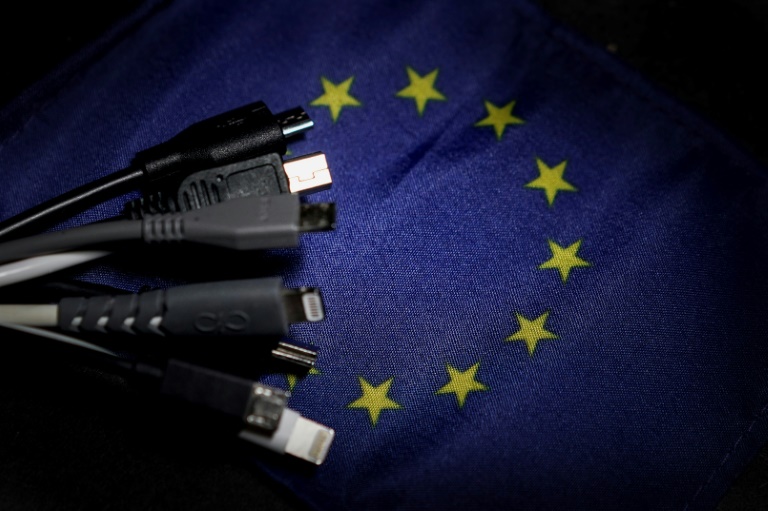
European officials on Tuesday agreed the text of a proposed EU law imposing a standard charger for smartphones, tablets and laptops sold in the bloc, in a blow to Apple.

EU member states and MEPs believe a standard cable for all devices will cut back on electronic waste, but iPhone juggernaut Apple argues a one-size-fits-all charger would slow innovation and create more pollution.

For most portable devices the requirement for charging via a USB Type-C port will come into effect from late 2024, negotiators said, while laptops will be given more time.

The USB-C rule will also stretch to digital cameras, headphones, headsets, portable speakers and E-readers, they said.

Lawmakers agreed on the common charger based on a proposal that was made by the EU executive — the European Commission — in September, but came more than a decade after the European Parliament first pushed for it.

The decision will be formally ratified by European Parliament and among EU member states later this year before entering into effect.

“We have been able to do it in nine months, that means that we can … move fast when there is a political will,” the EU internal market commissioner Thierry Breton said.

“We are able to say to the lobbies, ‘sorry, but here it is Europe and we’re working for our people’,” he said.

The 27-nation union is home to 450 million people, some of the world’s richest consumers, and the imposition of the USB-C as standard could affect the entire global market.

“This is a rule which will apply to everyone,” said MEP Alex Agius Saliba, who led the negotiations for the European Parliament.

“If Apple … or anyone wants to market their product, sell their products within our internal market, they have to abide by our rules and their device has to be USB-C,” he said. 

The rules will also give shoppers the option to opt out of receiving a new charging cable when purchasing an electronic device.

– ‘Planning ahead’ –

And in order to prepare for the future, the law has provisions to set a standard on wireless charging.

This was “not to end up … legislating for a technology which is basically dying out, so we are also planning ahead,” Saliba said.

Apple, which already uses USB-C connectors on some of its iPads and laptop computers, has insisted any legislation to force a universal charger for all mobiles in the European Union is unwarranted.

“The proposal is vastly disproportionate to any perceived problem,” the company said in its response to the commission when the law was being drafted.

Imposing a charger standard, it argued, would stifle innovation and “reduce European consumer choice by removing more affordable older models from the market”.

Consumers currently have to decide between phones served by three main chargers: “Lightning” for Apple handsets, the micro-USB widely used on most other mobile phones and the newer USB-C that is increasingly coming into use.

That range is already greatly simplified from 2009, when dozens of different types of chargers were bundled with mobile phones, creating piles of electronic garbage when users changed brands.

In making its proposal last year, the EU said the current situation remained wasteful and that European consumers spent approximately 2.4 billion euros ($2.8 billion) annually on standalone chargers they bought separately.

The European Commission had long defended a voluntary agreement it made with the device industry that was set in place in 2009 and saw a big reduction in cables, but Apple refused to abide by it.

Colombia shares unprecedented images of treasure-laden wreck

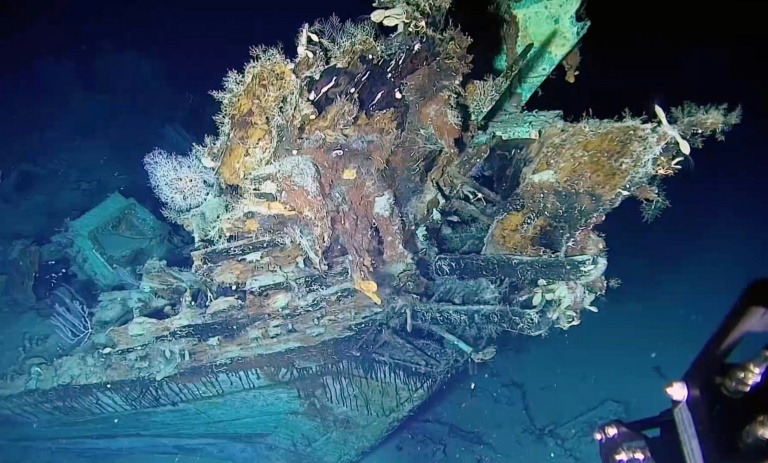
Colombia’s army has shared unprecedented images of the legendary San Jose galleon shipwreck, hidden underwater for three centuries and believed to have been carrying riches worth billions of dollars in today’s money.

Four observation missions using a remotely operated vehicle were sent to the wreck at a depth of almost 950 meters (3,100 feet) off Colombia’s Caribbean coast, the army said in a statement late Monday.

These missions, carried out by the navy under the supervision of the culture ministry, found the galleon untouched by “human intervention.”

Cannons partially covered by mud are visible alongside porcelain crockery, pottery, glass bottles and also gold pieces.

A part of the bow can be clearly seen covered in algae and shellfish, as well as the remains of the frame of the hull.

Authorities said they had also discovered two more shipwrecks during their observation mission — a colonial-era galleon and a schooner from the post-colonial period.

“Thanks to the technological equipment and the Colombian navy’s work, we managed to capture images with a level of precision that’s never been seen before,” said President Ivan Duque.

He said the wreck was “kept intact and protected with a view towards a future retrieval.”

When that happens, though, Colombia will face a challenge from Spain and an indigenous group in Bolivia to determine who keeps the bounty.

– Lost for 300 years –

The San Jose galleon was owned by the Spanish crown when it was sunk by the British navy near Cartagena in 1708.

Only a handful of its 600-strong crew survived.

It was heading back from the New World to the court of King Philip V of Spain.

At the time, it was laden with treasures estimated to be worth billions of dollars at current rates.

Before its discovery in 2015, it was long sought after by treasure hunters.

Experts believe it contains at least 200 tons of gold, silver and emeralds.

Colombia considers wrecks found in its territorial waters to be part of its cultural heritage, meaning the contents cannot be sold.

Spain insists that the bounty is theirs since it was aboard a Spanish ship, while Bolivia’s Qhara Qhara nation says it should get the treasures as the Spanish forced the community’s people to mine the precious metals.

When the wreck was discovered, then Colombian president Juan Manuel Santos lauded it as “the most precious treasure ever found in the history of the world.”

He had proposed to finance the recovery mission with the proceeds from selling part of the find, but Duque put a stop to that to ensure the entirety of the wreck would remain in Colombia.

Colombian authorities have announced their intention to create a museum of shipwrecks that would be “a source of pride for Colombia, the Caribbean and the world.”

Recovering the wreck presents a technological and scientific challenge due to its depth.

Authorities have identified another 13 sites off the coast of Cartagena that they want to explore in search of other shipwrecks.

Fears mount for British journalist missing in Amazon

The families of a British journalist and Brazilian indigenous expert who went missing deep in the Amazon after receiving threats made distraught pleas Tuesday to authorities in Brazil to accelerate the search operation.

Veteran freelance journalist Dom Phillips, 57, and respected indigenous specialist Bruno Pereira, 41, went missing early Sunday while traveling by boat in the remote Javari Valley near Brazil’s border with Peru, where Phillips was researching a book.

As the 48-hour mark passed, speculation swirled on where the men were and whether there could have been an accident or foul play.

“I want to make an appeal to the government to intensify the search,” Phillips’s Brazilian wife, Alessandra Sampaio, said in an emotional video message.

“We still have some small hope of finding them. Even if I don’t find the love of my life alive, please find them,” she said, choking back tears.

The Brazilian government expressed its “grave concern,” and said police were taking “all possible measures to find (the men) as quickly as possible.”

But the authorities faced accusations of failing to act urgently enough.

Despite the government’s pledge to deploy the army, navy and federal police for the search, three indigenous rights groups in the region said in a joint statement that just six state police officers were actively working on the operation, and urged the government to deploy helicopters and a task force.

– Bolsonaro response criticized –

President Jair Bolsonaro meanwhile drew criticism for appearing to blame the missing men, both of whom have extensive experience in the Amazon rainforest basin.

“Two people in a boat in a region like that, completely wild — it’s an unadvisable adventure. Anything can happen,” Bolsonaro said.

“Maybe there was an accident, maybe they were executed.”

The far-right president has faced accusations of fueling invasions of indigenous lands in the Amazon with his pro-mining and pro-agribusiness policies.

Pereira, an expert currently on leave from Brazil’s indigenous affairs agency, FUNAI, who knows the region well, has spent much of his career fighting such invasions.

He has regularly received threats from poachers, loggers and miners trying to invade isolated indigenous groups’ land.

He and Phillips had received another threat just last week, according to indigenous rights groups.

The government said investigators were not ruling out “criminal activity” in the disappearance.

Officers brought two people in for questioning Monday, believed to be among the last to have been in contact with the missing men, police said in a statement.

Neither was detained, it said.

– ‘Anguished’ wait –

As two days passed since the two men’s disappearance with no news, their families urged the authorities to act quickly.

“Time is a key factor in rescue operations, particularly if they are injured,” Pereira’s family said in a statement.

It said his partner, three children and other relatives were in “anguish.”

Phillips’s sister Sian posted a video message online, fighting back tears.

“We are really worried about him and urge the authorities in Brazil to do all they can,” she said. “Every minute counts.”

Phillips, who is based in the northeastern city of Salvador, had previously accompanied Pereira in 2018 to the Javari Valley for a story in The Guardian.

The 85,000-square-kilometer (33,000-square-mile) reservation is home to around 6,300 indigenous people from 26 groups, including a large number with virtually no contact with the outside world.

FUNAI’s base there, set up to protect indigenous inhabitants, has come under attack several times in recent years.

In 2019, a FUNAI officer there was shot dead.

The region has seen a surge of illegal logging, gold mining and poaching in recent years, and its remoteness makes it a haven for drug traffickers, said Fiona Watson, research director at indigenous rights group Survival International.

“You’re talking about dense tropical forest,” she told AFP.

“The operation to try and locate Bruno and Dom is immensely challenging.”

Fears mount for British journalist missing in Amazon

The families of a British journalist and Brazilian indigenous expert who went missing deep in the Amazon after receiving threats made distraught pleas Tuesday to authorities in Brazil to accelerate the search operation.

Veteran freelance journalist Dom Phillips, 57, and respected indigenous specialist Bruno Pereira, 41, went missing early Sunday while traveling by boat in the remote Javari Valley near Brazil’s border with Peru, where Phillips was researching a book.

As the 48-hour mark passed, speculation swirled on where the men were and whether there could have been an accident or foul play.

“I want to make an appeal to the government to intensify the search,” Phillips’s Brazilian wife, Alessandra Sampaio, said in an emotional video message.

“We still have some small hope of finding them. Even if I don’t find the love of my life alive, please find them,” she said, choking back tears.

The Brazilian government expressed its “grave concern,” and said police were taking “all possible measures to find (the men) as quickly as possible.”

But the authorities faced accusations of failing to act urgently enough.

Despite the government’s pledge to deploy the army, navy and federal police for the search, three indigenous rights groups in the region said in a joint statement that just six state police officers were actively working on the operation, and urged the government to deploy helicopters and a task force.

– Bolsonaro response criticized –

President Jair Bolsonaro meanwhile drew criticism for appearing to blame the missing men, both of whom have extensive experience in the Amazon rainforest basin.

“Two people in a boat in a region like that, completely wild — it’s an unadvisable adventure. Anything can happen,” Bolsonaro said.

“Maybe there was an accident, maybe they were executed.”

The far-right president has faced accusations of fueling invasions of indigenous lands in the Amazon with his pro-mining and pro-agribusiness policies.

Pereira, an expert currently on leave from Brazil’s indigenous affairs agency, FUNAI, who knows the region well, has spent much of his career fighting such invasions.

He has regularly received threats from poachers, loggers and miners trying to invade isolated indigenous groups’ land.

He and Phillips had received another threat just last week, according to indigenous rights groups.

The government said investigators were not ruling out “criminal activity” in the disappearance.

Officers brought two people in for questioning Monday, believed to be among the last to have been in contact with the missing men, police said in a statement.

Neither was detained, it said.

– ‘Anguished’ wait –

As two days passed since the two men’s disappearance with no news, their families urged the authorities to act quickly.

“Time is a key factor in rescue operations, particularly if they are injured,” Pereira’s family said in a statement.

It said his partner, three children and other relatives were in “anguish.”

Phillips’s sister Sian posted a video message online, fighting back tears.

“We are really worried about him and urge the authorities in Brazil to do all they can,” she said. “Every minute counts.”

Phillips, who is based in the northeastern city of Salvador, had previously accompanied Pereira in 2018 to the Javari Valley for a story in The Guardian.

The 85,000-square-kilometer (33,000-square-mile) reservation is home to around 6,300 indigenous people from 26 groups, including a large number with virtually no contact with the outside world.

FUNAI’s base there, set up to protect indigenous inhabitants, has come under attack several times in recent years.

In 2019, a FUNAI officer there was shot dead.

The region has seen a surge of illegal logging, gold mining and poaching in recent years, and its remoteness makes it a haven for drug traffickers, said Fiona Watson, research director at indigenous rights group Survival International.

“You’re talking about dense tropical forest,” she told AFP.

“The operation to try and locate Bruno and Dom is immensely challenging.”

Yellen says new Biden investments can counter inflation

US Treasury Secretary Janet Yellen urged lawmakers to approve additional investments in renewable energy and higher taxes on the wealthy on Tuesday, as she defended the administration’s efforts to blunt the impact of inflation.

“I believe there’s lot that Congress can do to ease the cost burdens that households are experiencing,” Yellen told the Senate Finance Committee in the first of two days of testimony on President Joe Biden’s budget for the 2023 fiscal year.

Besides renewable energy investments — which Yellen said could help address high gasoline prices — the Treasury secretary backed more spending on affordable housing and efforts to rein in pharmaceutical prices.

She also highlighted the Biden administration’s historically large release of oil from the Strategic Petroleum Reserve to ease prices that drivers are facing at the pump, which have skyrocketed since the Russian invasion of Ukraine, hitting new records daily, with the national average at $4.92 a gallon Tuesday.

“Gas prices, while very high … would be higher without that,” Yellen said.

Yellen said the full-year 2022 inflation forecast is “likely to be higher” than the four percent initially projected. The forecast will be updated in the coming weeks, she said.

“Inflation is really an economic problem at this point, and it’s critical that we address it,” Yellen said, adding, “I do expect inflation to remain high, although I very much hope that it will be coming down now.”

The hearings come as Biden contends with a low favorability rating ahead of key midterm elections, with the pain from higher gasoline and food prices outweighing a strong job market and 3.6 percent unemployment.

Yellen was warmly received by Senate Democrats, but Republicans pointed to the administration’s energy and climate policies as a reason for the energy crunch and characterized Biden’s 2021 American Rescue Plan as a main reason for inflation.

“What I heard you say is that it is OK to raise taxes right now and that it is proper to have more stimulus spending to deal with this crisis,” said Senator Mike Crapo, a Republican representing Idaho.

“I just have to say I disagree with you on that.”

Yellen defended the American Rescue Plan, saying the administration took action in response to forecasts that unemployment could top nine percent given the headwinds amid the Covid-19 upheaval.

At the time, she said, “The overwhelming risk was that Americans would be scarred by a deep and long recession.”

Republicans also took Yellen to task for comments early 2021 characterizing inflationary pressures as “transitory,” the same word used early on by Federal Reserve Chair Jerome Powell. 

Yellen said her remarks at the time did not foresee the supply chain problems that surfaced later in 2021, or the Russian invasion of Ukraine. 

But Senator John Barrasso, Republican of Wyoming, said given Yellen’s past assurances, “it makes me wonder why Americans should put any confidence in your pronouncements and decisions and recommendations today.”

Fighting in Ukraine flashpoint city as grain export talks begin

Russia on Tuesday reported its forces had taken full control of residential neighbourhoods in Ukraine’s flashpoint city of Severodonetsk, after Kyiv said its troops were fighting on in the key eastern hub despite being outnumbered.

Amid stark warnings of global food shortages partly blamed on the war, Russian Foreign Minister Sergei Lavrov arrived in Turkey to discuss “security corridors” for Ukrainian grain to leave the country.

“The residential areas of the city of Severodonetsk have been fully liberated,” Russian Defence Minister Sergei Shoigu said.

The Russian army was still seeking to establish control over the city’s “industrial zone and the nearest settlements”, he added.

Moscow has been pushing for control of the strategic industrial hub as part of its bid to conquer a vast swathe of eastern Ukraine but Kyiv’s forces have so far managed to hold out. 

About 800 civilians have taken refuge in a chemical factory in Severodonetsk, according to a counsel to Dmytro Firtash, whose company owns the facility. 

“About 800 civilians have taken refuge in the bunkers of the Azot chemical plant, owned by Dmytro Firtash’s Group DF,” Lanny J. Davis, the US lawyer to the businessman, said on the company website. 

“These 800 civilians include around 200 out of the plant’s 3,000 employees and approximately 600 inhabitants of the city of Severodonetsk,” Davis added.

President Volodymyr Zelensky has warned Ukrainian forces in the city were outnumbered and the Russians “are stronger”, as fierce street fighting raged.

Ukrainian sources noted the overwhelming superiority of Russian artillery in the area. The Ukrainian army said Tuesday that Russian troops were preparing to attack the key city of Sloviansk in the battle for Donbas. 

Thousands of civilians have been killed and millions forced to flee their homes since President Vladimir Putin ordered Russian troops into Ukraine on February 24.

After being repelled from other parts of the country, including Kyiv, Russia has concentrated its assault on the eastern Donbas region and had been making slow but steady progress.

Severodonetsk — the largest city still in Ukrainian hands in the Lugansk region of the Donbas — has been the focal point in recent weeks.

Its capture would open up the route to Kramatorsk, the main city of the Ukrainian-held part of the Donetsk region.

– Sea mines –

In Ankara, Lavrov arrived along with a Russian military delegation for talks after the UN asked Turkey to help escort naval convoys carrying grain from Ukraine’s ports, despite the presence of mines.

Turkish Agriculture Minister Vahit Kirisci said that his country would get a 25-percent discount on grain it buys from Ukraine as a gesture of thanks.

Moscow has blockaded the key Black Sea port of Odessa, and Zelensky said Ukraine had up to 25 million tonnes of grain that could not be exported. 

“In the autumn that could be 70 to 75 million tonnes,” said the president, whose country was the world’s fourth biggest grain exporter before the war.

US Secretary of State Antony Blinken said on Monday that reports Russia had stolen grain from Ukraine for export are “credible”.

Zelensky said on Monday that Kyiv was in talks with Turkey, the UK and the UN on opening sea corridors for grain exports, as well as with Poland and the Baltic states for some grain to be exported by rail.

Moscow says grain exports are being prevented by Western sanctions.

– ‘General killed’ –

The leader of Ukraine’s pro-Russian separatists in Donetsk, Denis Pushilin, on Tuesday confirmed the death of another Russian general in the fighting.

Pushilin expressed on Telegram his “sincere condolences to the family and friends” of Major General Roman Kutuzov, “who showed by example how to serve the fatherland”.

Ukraine’s forces have claimed to have killed several of Russia’s top brass but their exact number is not known as Moscow is tight-lipped on losses. 

Defence Minister Shoigu said Russia had completed demining of the eastern port city of Mariupol, the second busiest in Ukraine before the conflict.

With fighting raging in the east of Ukraine, Kyiv hit out at the UN’s nuclear watchdog for trying to visit Europe’s largest nuclear power plant in the south of the country while it is under Russian occupation.

The head of the International Atomic Energy Agency (IAEA), Rafael Grossi, said on Monday his agency was preparing an expert mission to the Zaporizhzhia nuclear plant.

Grossi said on Twitter the visit was arranged after Ukraine had “requested” it. 

But Ukraine’s nuclear agency, Energoatom on Tuesday accused Grossi of lying and said it did not greenlight the trip.  

“We consider this declaration a new attempt to gain access to the Zaporizhzhia power plant to legitimise the presence of the occupiers and approve their actions.” 

Russian forces took control of the plant at the beginning of March and Moscow has threatened to cut Ukraine off from Zaporizhzhia unless Kyiv pays Moscow for the electricity produced. 

– Torture concerns –

In 2021 — well before Russia’s invasion of Ukraine — the plant represented 20 percent of Ukraine’s annual electricity production and nearly half of all nuclear power produced in Ukraine.

The power plant is in the region of Kherson, where Ukraine on Tuesday accused Russian forces of detaining around 600 people, mainly journalists and pro-Kyiv activists, in “specially converted basements”.

Tamila Tasheva, the Ukraine presidency’s permanent representative in Crimea, the peninsula to the south of Kherson which Moscow annexed in 2014, said those detained included people who organised “pro-Ukrainian gatherings”.

“According to our information, they are being held in inhuman conditions and are victims of torture,” Tasheva added without giving further details. 

Straddling the Black Sea and the Sea of Azov, the Kherson region was home to around a million people before the invasion. 

burs-cjo/ach 

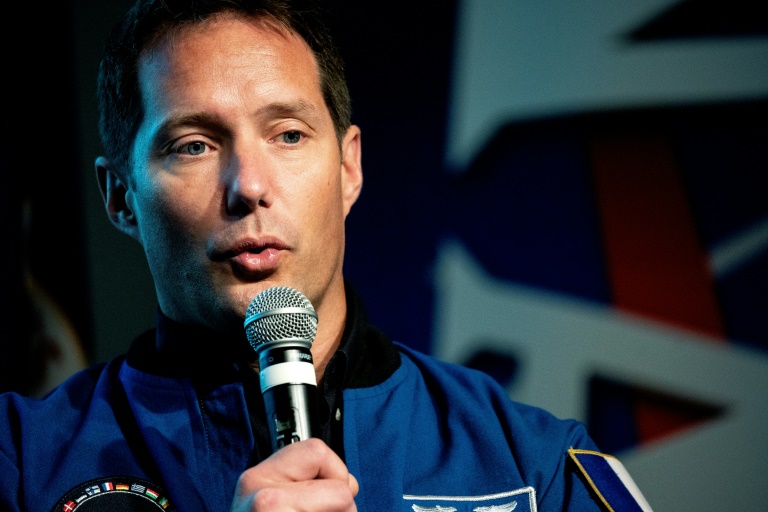
French astronaut Pesquet calls for European space independence

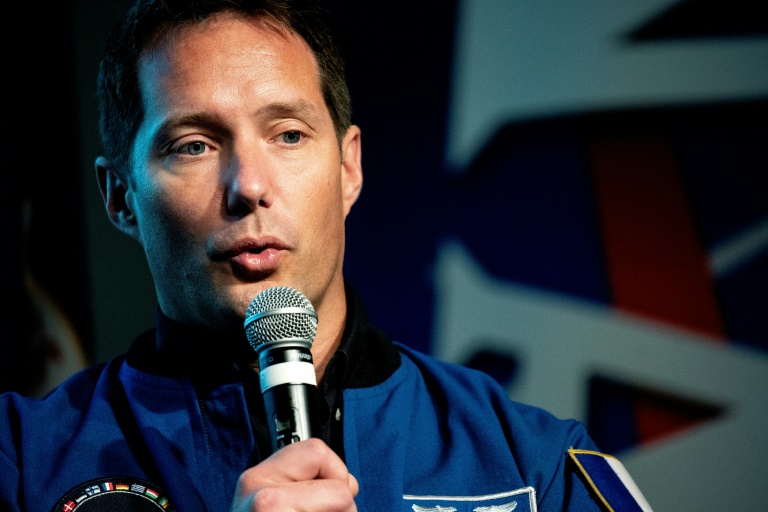
French astronaut Thomas Pesquet on Tuesday urged Europe to seize the momentum created by its newfound diplomatic unity and “start moving now” to develop its own human spaceflight capacity.

The charismatic engineer and pilot, 44, recently completed his second deployment to the International Space Station on the NASA-SpaceX Crew-2 mission, and has arguably the highest profile among the European Astronaut Corps, in addition to being a celebrity in his native France.

Though he has long extolled international cooperation in space and remains in the mix to possibly go to the Moon as part of the NASA-led Artemis missions, Pesquet said it was vital for Europe’s leaders to give the European Space Agency (ESA) the funding and mandate it needs to launch its own people, too.

“That topic is gaining momentum now,” he told AFP at NASA headquarters in Washington.

“In the late eighties and early nineties, we had this goal of becoming more independent as far as space access for humans, and then it didn’t pan out. Several things happened, Germany had to reunite, they had to redirect budgets etc.”

Russia’s invasion of Ukraine has now unified Europe’s once fractious member states, and Pesquest said he hoped ESA member countries will capitalize on the continent’s new clout.

“These topics like European diplomacy, European defense are coming back on the table, and part of that process is also that independent human access to space,” he argued.

Currently, only the United States, Russia and China have independent launch capacity, while India is looking to acquire the same.

One potential option for ESA is launching crew on a spaceship fixed to the Ariane 6 rocket, which is currently under development and is expected to make its debut launch from French Guiana by the end of this year.

“We have to start moving now, because the development cycles are long. You don’t want this to happen in 15 to 20 years,” he said.

– Commercial space benefits and challenges –

Pesquet was also keen to push back against the idea that the rise of the commercial space sector was making national space agencies obsolete.

“There’s a general perception among the public that the private sector, or Elon Musk, or SpaceX, are calling the shots, which is not true at all.”

In fact, said Pesquet, private industry had always been involved — from building the Space Shuttle to Ariane rockets. “What we’ve done now is give them more autonomy and say, ‘Hey, we need the service. You provide the service at an efficient cost,’ which they’ve been delivering.”

Musk might grab headlines for his bombastic announcements about colonizing Mars, but “the small print says, when all the agencies put together the budget to go to Mars, then the private sector is going to deliver the hardware,” said Pesquet.

While the private sector was bringing a new level of speed and innovation to the table, Pesquet said there were some challenges — for example in working with the private, ticket-paying citizens now visiting the ISS with increasing frequency.

“If you mix up professional astronauts… and the spaceflight participants, obviously, it kind of impacts the work that we’re doing, because we have to take care of them, because they’re less trained, they have less experience on the board,” he said, something agencies will need to consider moving forward.

French astronaut Pesquet calls for European space independence

French astronaut Thomas Pesquet on Tuesday urged Europe to seize the momentum created by its newfound diplomatic unity and “start moving now” to develop its own human spaceflight capacity.

The charismatic engineer and pilot, 44, recently completed his second deployment to the International Space Station on the NASA-SpaceX Crew-2 mission, and has arguably the highest profile among the European Astronaut Corps, in addition to being a celebrity in his native France.

Though he has long extolled international cooperation in space and remains in the mix to possibly go to the Moon as part of the NASA-led Artemis missions, Pesquet said it was vital for Europe’s leaders to give the European Space Agency (ESA) the funding and mandate it needs to launch its own people, too.

“That topic is gaining momentum now,” he told AFP at NASA headquarters in Washington.

“In the late eighties and early nineties, we had this goal of becoming more independent as far as space access for humans, and then it didn’t pan out. Several things happened, Germany had to reunite, they had to redirect budgets etc.”

Russia’s invasion of Ukraine has now unified Europe’s once fractious member states, and Pesquest said he hoped ESA member countries will capitalize on the continent’s new clout.

“These topics like European diplomacy, European defense are coming back on the table, and part of that process is also that independent human access to space,” he argued.

Currently, only the United States, Russia and China have independent launch capacity, while India is looking to acquire the same.

One potential option for ESA is launching crew on a spaceship fixed to the Ariane 6 rocket, which is currently under development and is expected to make its debut launch from French Guiana by the end of this year.

“We have to start moving now, because the development cycles are long. You don’t want this to happen in 15 to 20 years,” he said.

– Commercial space benefits and challenges –

Pesquet was also keen to push back against the idea that the rise of the commercial space sector was making national space agencies obsolete.

“There’s a general perception among the public that the private sector, or Elon Musk, or SpaceX, are calling the shots, which is not true at all.”

In fact, said Pesquet, private industry had always been involved — from building the Space Shuttle to Ariane rockets. “What we’ve done now is give them more autonomy and say, ‘Hey, we need the service. You provide the service at an efficient cost,’ which they’ve been delivering.”

Musk might grab headlines for his bombastic announcements about colonizing Mars, but “the small print says, when all the agencies put together the budget to go to Mars, then the private sector is going to deliver the hardware,” said Pesquet.

While the private sector was bringing a new level of speed and innovation to the table, Pesquet said there were some challenges — for example in working with the private, ticket-paying citizens now visiting the ISS with increasing frequency.

“If you mix up professional astronauts… and the spaceflight participants, obviously, it kind of impacts the work that we’re doing, because we have to take care of them, because they’re less trained, they have less experience on the board,” he said, something agencies will need to consider moving forward.

Close Bitnami banner
Bitnami