World

Swedish government averts political crisis with last-minute deal

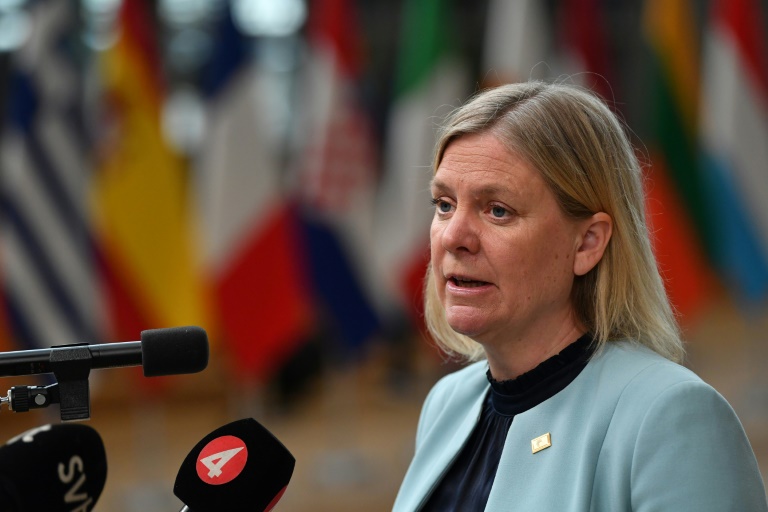
Sweden’s government on Tuesday averted a political crisis, after it clinched a last-minute deal to ensure its justice minister survived a no-confidence vote in parliament.

The deal stems from winning the support of an independent lawmaker who is determined that Stockholm does not cave into Turkish conditions for supporting Sweden’s bid to join NATO.

The potential crisis came just three months ahead of general elections and less than a year after the Social Democratic government was toppled and then returned to power within weeks.

The no-confidence vote held on Tuesday was launched by the far-right Sweden Democrats who accuse Justice Minister Morgan Johansson of failing to stem rising gang violence.

Sweden has struggled to reduce the shootings and bombings that have plagued the country in recent years, usually due to gangland rivalries or organised criminals battling over the drug market.

“We have reached a point where the single most important crime policy measure is to give Morgan Johansson an early retirement,” Sweden Democrat MP Henrik Vinge told parliament last week.

Supported by the conservative Moderate Party, the Liberal Party and the Christian Democrats, 174 of 349 MPs voted for the motion, one short of the absolute majority needed to oust the minister.

Of the remaining, 97 voted against, 70 abstained and eight were absent.

Prime Minister Magdalena Andersson, who became Sweden’s first woman premier when she took over the reins in November, had said she would resign if a no-confidence vote passed against Johansson, saying all government decisions were made collectively.

– Assurances on Turkey –

With one vote missing, the situation hinged on parliamentarian Amineh Kakabaveh, a former Left Party member sitting in parliament as an independent since 2019.

Kakabaveh, who is of Iranian-Kurdish origin, has become a focal point in Swedish politics over Turkey’s opposition to Stockholm’s bid to join NATO.

Ankara accuses Stockholm of providing a haven for the outlawed Kurdistan Workers’ Party (PKK), listed as a “terrorist” group by Turkey and its Western allies, and has demanded the extradition of people it considers extremists and the lifting of a weapons embargo. 

Kakabaveh, who has no direct political link to the PKK, had sought assurances that the ruling Social Democrats would not cave in to Turkish demands, saying otherwise she would vote against Johansson.

Kakabaveh said Tuesday she had received the assurances she wanted and therefore abstained.

Speaking in parliament, Kakabaveh said her main concern was protecting Swedish sovereignty against the influence of Turkish President Recep Tayyip Erdogan, whom she accused of being “authoritarian” and “operating a racist policy against Kurds”.

“Should we adapt our freedom of expression and assembly to Erdogan’s demands?” she asked fellow lawmakers.

Last November, Kakabaveh and the government agreed that she would provide the deciding vote to bring the cabinet into power in exchange for deeper cooperation with the Democratic Union Party (PYD), the political arm of the YPG.

The People’s Protection Units (YPG), is a US-backed Syrian Kurdish group that Ankara considers a “terrorist” offshoot of the PKK.

The Social Democratic government confirmed Tuesday the deal was still in force, implying it was prepared to stand up to Erdogan’s demands.

Meanwhile, the Sweden Democrats lamented the focus on Turkey.

“The past few days, Turkish foreign policy has been allowed to dictate Swedish domestic affairs. It’s a sad spectacle that we have been forced to witness”, Vinge said in parliament. 
Hong Kong not becoming 'police state', says city's top cop

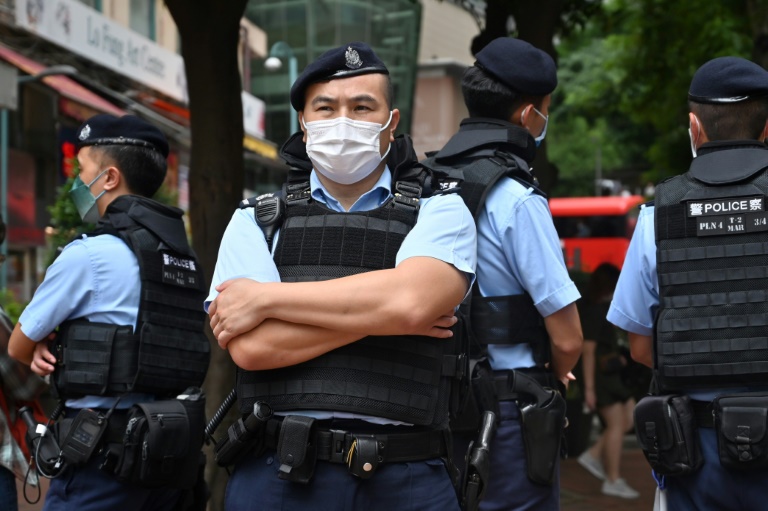
Hong Kong is not becoming a “police state”, the city’s top law enforcement officer said Tuesday, days after his officers stamped out the city’s once-permitted commemorations marking Beijing’s deadly Tiananmen crackdown.

The Chinese business hub is preparing for an upcoming leadership change as well as the 25th anniversary of the city’s handover from Britain, for which President Xi Jinping is widely expected to visit. 

Speaking to local outlet HK01 about beefed-up security activity around the event, commissioner Raymond Siu Chak-yee rejected criticism that the police were becoming too powerful. 

“A police state is where the government forcibly controls various aspects of people’s life with administrative measures and without going through legal procedures. Do people think Hong Kong is like that?” he said. 

“Hong Kong is a society of rule of law, not a police state.”

His comments come after police arrested six people on Saturday as authorities pounced on any attempt to publicly remember China’s 1989 crackdown on peaceful protesters. 

Amnesty International has accused authorities of “harassment and indiscriminate targeting” for the arrests. 

Police closed the site of a once annual Tiananmen vigil and jampacked the surrounding area, one of the busiest shopping districts in Hong Kong, with officers. 

People were stopped and searched for carrying flowers, wearing black and, in one case, carrying a toy tank box. 

On Tuesday authorities rolled out a “counter-terrorism reporting hotline” for residents to report “violent acts, suspected terrorism-related activities, in particular extremist plots”. 

People would be paid for “reliable” information, they said.

– Protest documentary –

Since Beijing imposed a national security law on Hong Kong in 2020 after large and sometimes violent pro-democracy demonstrations, authorities have cracked down on dissent. 

In another interview with the South China Morning Post, Siu “advised” residents they should not watch or download an award-winning documentary about the 2019 protests if they are uncertain about the legal risk.

The film, “Revolution of Our Times”, has recently become widely available on US streaming platform Vimeo. 

Siu did not however specify whether the movie or the production team had violated any law or had been investigated by the force’s national security unit.

“If they’re not sure whether this would commit [offences under] the national security law, then I would advise them to try to distance themselves from doing such acts,” Siu told the Post. 

Produced by Hong Kong director Kiwi Chow, the movie takes its name from a then popular — but now outlawed — protest slogan.

It debuted at the Cannes film festival last July and in November won best documentary award at Taiwan’s Golden Horse Award, an event dubbed the Chinese-language “Oscars”.

It has never been shown commercially in Hong Kong as the city toughened film censorship after the passage of the security law, and Chow sold the rights to his work overseas to avoid scrutiny.

European stock market plans tech-only index

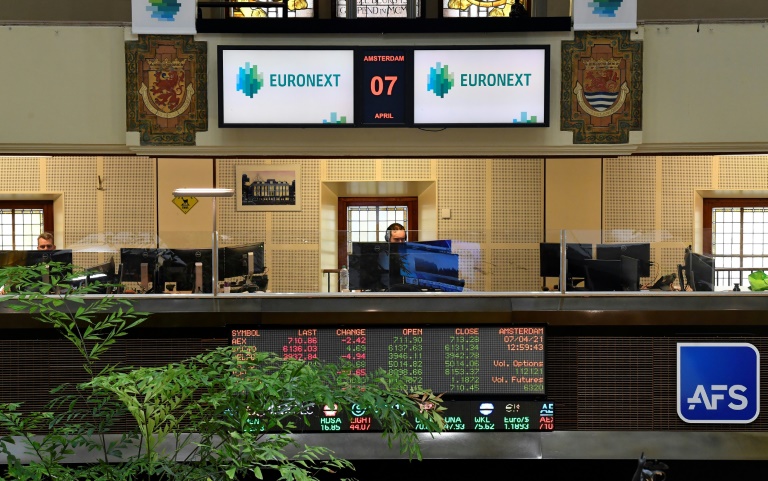
Europe’s biggest stock exchange on Tuesday set out its plan for an index focused on tech firms to boost a sector that has long lagged behind US competitors.

Euronext announced 108 firms will be part of its Euronext Tech Leaders “segment”, an initiative that has drawn comparisons to the Nasdaq in New York, an exchange housing many top tech companies.

The European tech index, set to be launched in July, includes Finnish telecom giant Nokia, French software developer Ubisoft and the Netherlands-based food delivery firm Just Eat Takeway.com.

The 108 firms have a total market capitalisation of 258 billion euros ($276 billion) and include 41 French companies.

By comparison, Google parent Alphabet, the biggest firm on the Nasdaq, has a market capitalisation of more than $1.5 trillion.

The pan-European exchange said its ambition was “to strengthen the European tech sector and be a catalyst for the next generation of tech leaders”.

As well as listing firms on its new index, the exchange said it would offer a “suite” of other services to tech companies including help with initial public offerings.

“In Europe and particularly in France, we need a platform that is able to offer initial investors… and growing companies a capacity to raise equity capital,” Euronext boss Stephane Boujnah told a press conference.

Boujnah dismissed the comparison with the Nasdaq, telling reporters his exchange was aiming for a completely different approach.

The desire to forge a tech sector to compete with Silicon Valley has long consumed European leaders, with French President Emmanuel Macron at the forefront. 

He has invested heavily in initiatives like incubator hubs designed to foster start-ups.

Stocks retreat, as yen hits 20-year dollar low

Major stock markets mostly retreated Tuesday, while the yen struck a fresh 20-year low against the dollar.

While investors worry over decades-high inflation, the Bank of Japan (BoJ) has decided against hiking interest rates to combat surging prices, weighing on the country’s currency.

The yen also hit a seven-year low against the euro, with the single currency benefitting from expectations that the European Central Bank will soon embark on its own rate-tightening.

“The BoJ stands out among its global peers in not tightening policy, which is leading to a widening interest rate differential as other central banks continue hiking,” noted Deutsche Bank analyst Jim Reid.

Sydney’s stock market closed down more than one percent Tuesday after the Australian central bank announced a bigger-than-forecast rate hike to quell inflation.

London equities steadied approaching the half-way stage after British Prime Minister Boris Johnson survived a vote of no confidence from his own Conservative MPs.

The pound — seen as a better indicator of UK economic health and political stability — dropped versus the dollar and euro. 

“Although the leader came out victorious, the triggering of the confidence vote itself along with the fact that 41 percent of Tory MPs failed to back him are both politically corrosive, leaving the prime minister wounded,” noted Victoria Scholar, head of investment at Interactive Investor.

“History suggests that this could mark the beginning of the end of his time as prime minister.”

The vote on Johnson was brought after a string of scandals that have left the Tory party’s standing in tatters.

Chief among them was the “Partygate” controversy over Covid lockdown-breaking events at Downing Street that caused public outrage and saw him become the first serving UK prime minister to have broken the law.

The government is under pressure also over its handling of a cost-of-living crisis in the UK after the country’s inflation rate soared to the highest level in four decades.

An easing of Covid lockdown measures in China is helping to offset some of the worries over inflation, which is being fuelled by high oil prices following the invasion of Ukraine by key crude producer Russia.

– Key figures at around 1030 GMT –

London – FTSE 100: FLAT at 7,609.50 points

Frankfurt – DAX: DOWN 0.9 percent at 14,517.59

Paris – CAC 40: DOWN 0.8 percent at 6,496.82

EURO STOXX 50: DOWN 0.9 percent at 3,803.78

Tokyo – Nikkei 225: UP 0.1 percent at 27,943.95 (close)

Hong Kong – Hang Seng Index: DOWN 0.6 percent at 21,531.67 (close)

Shanghai – Composite: UP 0.2 percent at 3,241.76 (close)

New York – Dow: UP 0.1 percent to 32,915.78 (close)

Dollar/yen: UP at 132.69 yen from 131.88 yen late Monday

Euro/dollar: DOWN at $1.0681 from $1.0699 

Pound/dollar: DOWN at $1.2514 from $1.2528

Euro/pound: DOWN at 85.35 pence from 85.37 pence

Brent North Sea crude: DOWN 0.1 percent at $119.35 per barrel

West Texas Intermediate: DOWN 0.3 percent at $118.19 per barrel

burs/bcp/jj

War in Ukraine: Latest developments

Here are the latest developments in the war in Ukraine:

– Russia has ‘liberated’ residential areas of Severodonetsk –

Fighting continues for Severodonetsk, a key city in Ukraine’s east, which is the focus of a major Russian offensive.

Russian Defence Minister Sergei Shoigu says his country’s troops have “fully liberated” the city’s residential areas but that Ukrainian forces still hold the industrial zone and surrounding settlements.

Ukrainian President Volodymyr Zelensky says government forces are “holding out” against the invaders, but “there are more of them and they are stronger”.

– Reports of Russian grain theft ‘credible’: US –

US Secretary of State Antony Blinken says reports that Russia has stolen grain from Ukraine for export are “credible”, echoing allegations made by Ukrainian authorities.

The New York Times reported Monday that a number of freight vessels had set sail from Russian-controlled Ukrainian ports with what US officials have described as “stolen Ukrainian grain”.

The paper said the shipments were bound mainly for Africa, where global grain shortages caused by the war are worsening food insecurity.

– Ukraine opposes visit to occupied atomic plant –

Ukraine says it opposes any visit by Rafael Grossi, head of the UN’s nuclear watchdog to its nuclear plant at Zaporizhzhia while it is under Russian occupation.

Russian forces occupied Europe’s biggest atomic power plant in the early weeks of the war.

“The visit to the plant will only become possible when Ukraine takes back control of the site,” Energoatom, Ukraine’s nuclear agency, writes on Telegram.

International Atomic Energy Agency (IAEA) chief Grossi has been arguing the need for an inspection to ensure the plant’s safety.

– US orders seizure of Abramovich jets –

The US Justice Department orders the seizure of two aircraft owned by Russian oligarch Roman Abramovich, saying they were used in violation of sanctions on Russia imposed over its invasion of Ukraine.

The US says the Boeing 787-8 Dreamliner and Gulfstream G650ER executive jet were flown into Russian territory earlier this year in violation of US export controls.

It is unclear, however, whether the US can gain access to former Chelsea Football Club owner Abramovich’s aircraft, with one believed to be in Russia and the other possibly in Dubai.

– Russian superyacht handed to US –

A Fiji court hands over a superyacht linked by the US to a sanctioned Russian oligarch.

The $300-million Amadea, linked by the US to billionaire politician Suleiman Kerimov was impounded in Fiji in April at Washington’s request.

On Tuesday, Fiji’s Supreme Court dismissed a case taken by the boat’s registered owners against its seizure, meaning the yacht, which comes with a helipad, pool, jacuzzi and “winter garden”, can now leave Fiji for the US.

– Another Russian general killed –

Pro-Kremlin separatists in Ukraine confirm the death of another Russian general in the war in Ukraine.

Separatist leader Denis Pushilin sends his “sincere condolences to the family and friends” of Major General Roman Kutuzov “who showed by example how to serve the fatherland”.

His death has not been confirmed by officials in Moscow. 

Since Moscow sent troops into Ukraine on February 24, Ukraine’s forces claimed to have killed around a dozen generals but Russian media have confirmed only a few deaths among the top brass.

burs-cb/pvh

Police violence in spotlight as French parliament vote looms

A fatal police shooting in Paris has thrust the issue of violence by security forces to the heart of an increasingly close French parliamentary election battle between a new left-wing coalition and allies of centrist President Emmanuel Macron.

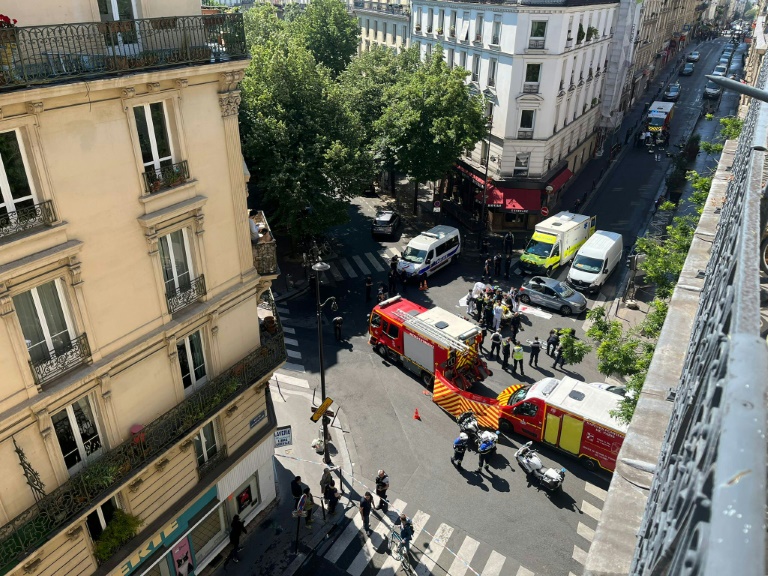
Police killed a passenger in a car in northern Paris on Saturday after the vehicle failed to stop when summoned by officers and then allegedly drove towards them at speed.

“If you vote for me, I’ll change the doctrine governing the use of force by the police in our country,” Jean-Luc Melenchon, leader of the Nupes left-wing alliance, told France Inter radio on Tuesday.

“It’s not normal that we kill someone for failing to stop,” he added, saying that four people had died in such circumstances in four months.

“The police kill,” he tweeted on Saturday, sparking condemnation from rival politicians and Interior Minister Gerald Darmanin ahead of the two-stage vote on June 12 and 19.

Saturday’s shooting came just a week after police were widely condemned over their conduct at the Champions League final in Paris, where security forces teargassed fans and failed to stop street crime by local youths.

Images of frustrated passengers being teargassed outside a Paris train station over the weekend after rail services were cancelled also fed questions about their methods.

– Self-defence? –

The three officers involved in Saturday’s shooting say they opened fire on the car in self-defence and their lawyer claims there is video evidence to back them up. 

The 38-year-old driver, who has been hospitalised with a throat injury, has a long criminal record and no driving licence, Le Parisien newspaper reported. 

A woman in the front seat was hit in the head by one of the “eight or nine shots” fired in the capital’s 18th district. 

The use of force by French police is a divisive political issue in France, with Melenchon and other left-wingers frequently criticising security forces.

Darmanin said Monday that police “deserve respect” and that “insulting them dishonours those that want to govern”. 

Far-right leader Marine Le Pen said Tuesday that Melenchon “is always on the side of thugs, of criminals. He’s never on the side of the security forces.”  

“It’s not because someone has died that the police have done something that is open to criticism,” she told Franceinfo, adding that police had the right to defend themselves.

The killing of police by jihadists as well as suspected drug dealers in recent years has led to public sympathy for their plight.

A policewoman was killed in southwest France in July 2020 when a car refused to stop and drove through a checkpoint, prompting an outcry at the time. 

Police unions also complain about poor pay for officers and difficult working conditions, particularly in low-income suburbs where hostility to them is deeply rooted. 

– Macron majority? –


Campaigning ahead of Sunday’s vote is set to intensify this week, with Macron making several trips around the country to lend support to his centrist “Ensemble” (“Together”) coalition.

Surveys suggest “Together” is on course for a narrow majority, but the results are viewed as hard to forecast because abstention is predicted to reach record levels of around 50 percent. 

Melenchon and the Nupes alliance — which groups his France Unbowed party, the Socialists, Greens and Communists — are hoping to block newly re-elected Macron by winning a majority. 

The first results — for 11 constituencies representing French people living overseas — were published on Monday.

After a first round of voting at the weekend, they showed Macron’s candidates finishing top in eight out of the 11 as expected, but Nupes candidates making major gains compared with the last polls in 2017.

Macron’s Republic on the Move (LREM) party and allies have upped their attacks on Melenchon in recent days, which analysts see as a sign of nervousness.

Senior MP Christophe Castaner said the former Trotskyist promised a “Soviet revolution”, while Economy Minister Bruno Le Maire called him a “French Chavez” in reference to late Venezuelan leader Hugo Chavez. 

Melenchon is promising to lower the retirement age to 60, introduce wealth taxes on companies and high-earners, and hike the minimum wage by around 15 percent.

Macron needs a parliamentary majority in order to push through his domestic agenda of tax cuts, welfare reform and raising the retirement age.

The 44-year-old defeated Le Pen in the second round of the presidential election on April 24, winning a second five-year term.

Cambodia, China deny naval base reports as Australia voices concern

Cambodia and Beijing on Tuesday denied a report that they are building a secret naval facility for the Chinese fleet, as Australia’s new prime minister voiced concern and called for transparency.

The Washington Post, citing unnamed Western officials, said a new facility at Cambodia’s Ream base — strategically located on the Gulf of Thailand — was being built for the “exclusive” use of the Chinese navy.

The base has been a running sore spot in US-Cambodian relations for years, with Washington long suspecting it is being converted for use by China as it seeks to buttress its international influence with a network of military outposts.

Phnom Penh rejected the report, saying the base’s development was “not a secret”.

“Cambodia won’t allow the Chinese military to use it exclusively or to develop the site as its military base,” government spokesman Phay Siphan told AFP.

The Cambodian defence minister and China’s ambassador will be attending a ground-breaking ceremony Wednesday for new facilities at Ream, including a boat repair shop and a pier.

But Australia’s new Prime Minister Anthony Albanese, in Indonesia for a visit to shore up diplomatic ties to counter growing Chinese assertiveness in the region, labelled the reports “concerning”.

“We encourage Beijing to be transparent about its intent and to ensure that its activities support regional security and stability,” he told reporters, saying Cambodia had assured Canberra that no foreign military would be given exclusive access to the Ream base.

Australia has grown increasingly worried about Beijing’s growing influence in the Pacific region.

A leaked draft of a Soloman Islands-China pact in April raised concerns that it would allow Chinese naval deployments to the Pacific island nation — less than 2,000 kilometres (1,200 miles) from Australia.

– Denials from China, Cambodia –

Prime Minister Hun Sen has repeatedly insisted the work is nothing more than modernising the base with a new boat maintenance facility developed with Chinese aid.

“Cambodia doesn’t need the presence of a foreign military on its territory,” he said in a speech last month.

China also denied that the base would be solely for their navy’s use. 

“The transformation of Ream Naval Base is only to strengthen Cambodian naval forces’ capabilities to uphold maritime territorial sovereignty and crack down on sea crimes,” foreign ministry spokesman Zhao Lijian told reporters in Beijing Tuesday.

He added that Washington’s criticisms were “malicious conjectures to attack and smear” Cambodia.

Concerns about the base go back as far as 2019, when the Wall Street Journal reported a secret draft deal allowing Beijing to dock warships there.

Cambodia has since dismantled facilities at the base that were built partly with American money and played host to US exercises.

UK's wounded Johnson presses on despite Tory rebellion

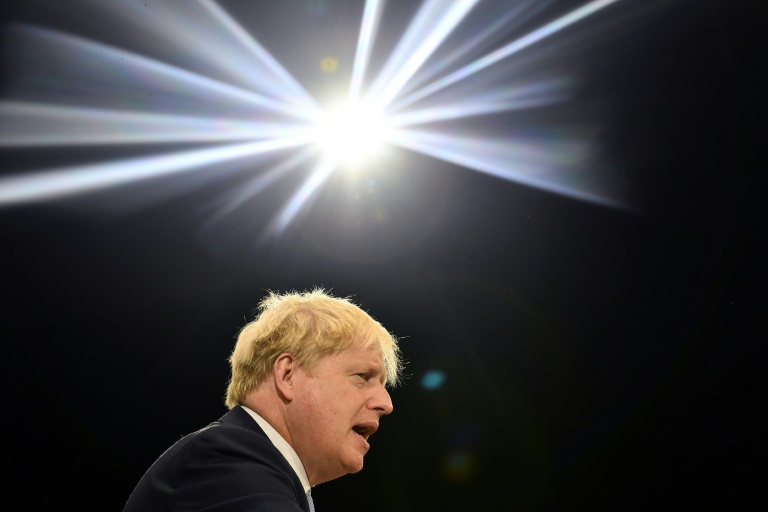
UK Prime Minister Boris Johnson lauded the loyalty of his cabinet and vowed to “get on with the job” on Tuesday after surviving a confidence vote of his Conservative MPs that has still left him severely weakened.

The beleaguered leader has insisted that Monday evening’s dramatic ballot, which saw 211 Tory party lawmakers support him remaining prime minister but 148 vote against, was a “conclusive” result.

“Thank you… everybody for all your good work yesterday, which was a very important day because we’re able now to draw a line under the issues that our opponents want to talk about,” he told his team of two dozen or so top ministers and officials.

“We’re able to get on with talking about what I think the people in this country want us to, which is what we are doing to help them.”

But most critics and commentators disagreed, arguing that Johnson’s authority has been hugely undermined and his days in Downing Street are numbered. 

The Times called him “a wounded victor” while his former employers at the Daily Telegraph branded it “a hollow victory that tears Tories apart”.

The vote — just over two years after the Brexit architect won a landslide general election victory — was brought after a string of scandals that have left the Conservative party’s standing in tatters.

Chief among them was the “Partygate” controversy over lockdown-breaking events at Downing Street, which caused public outrage and saw him become the first serving UK prime minister to have broken the law.

– ‘Continue delivering’ –

Johnson, 57, needed the backing of 180 of the 359 Conservatives MPs to survive the vote. Defeat would have meant the end to his time as party leader and prime minister.

Most of Johnson’s cabinet publicly backed him in the secret ballot.

But more than 40 percent of the parliamentary party — and almost certainly a majority of backbenchers — did not, setting up potentially tougher times ahead for the government in parliament.

Under current party rules the prime minister cannot be challenged again for a year, which leaves little time for any new leader to emerge before the next general election due by 2024.

In previous Tory confidence ballots, Margaret Thatcher and Theresa May scored better than Johnson yet despite narrowly winning their votes, both ultimately resigned after deciding that their premierships were terminally damaged.

Johnson has steadfastly refused to resign over “Partygate” and shows no sign of doing so now.

“Today, I pledge to continue delivering… we are going to get on with the job,” he said before the cabinet meeting. 

– ‘Not a win’ –

Johnson has spent months fighting for his political survival after a series of controversies culminating in the “Partygate” saga.

Various opinion polls have shown the public think he lied about the scandal and should resign.

His Tories have lost several once-safe seats in by-elections and scored dismally in recent local elections.

They are expected to lose two upcoming by-elections later this month, including one in a previously rock-solid Conservative constituency.

The smaller opposition Liberal Democrats urged Tory rebels to resign from their party and sit as independents while Johnson remained leader.

However, Conservative MPs who voted against him were highly unlikely to take up the suggestion and appeared to be biding their time.

“This is far from a conclusive result — it’s not a defeat, but it’s not a win,” said Tory lawmaker Tobias Ellwood, who has been calling for Johnson to resign since February.

He said he accepted Monday’s result “for the moment”.

– ‘Honourable exit’ –

Johnson’s plans to move on include an upcoming joint speech with finance minister Rishi Sunak to tackle a worsening cost-of-living crisis.

He is expected to head to Rwanda for a meeting of Commonwealth leaders, then go to Germany and Spain for G7 and NATO summits.

Speculation is also mounting that he may reshuffle his senior ministerial team to reward those who backed him.

But many question whether he can recover his authority and voters’ trust.

Former Tory party leader William Hague argued that Johnson should now “look for an honourable exit”.

“Words have been said that cannot be retracted, reports published that cannot be erased, and votes have been cast that show a greater level of rejection than any Tory leader has ever endured and survived,” he wrote in The Times. 

“Deep inside, he should recognise that, and turn his mind to getting out in a way that spares party and country such agonies and uncertainties.”

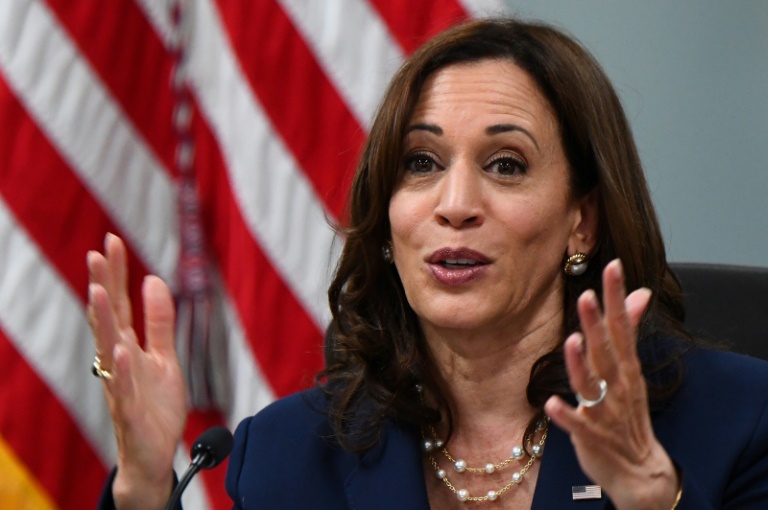
US VP Harris announces migration funds after Mexico snubs Americas summit

US Vice President Kamala Harris on Tuesday announced another $1.9 billion in private-sector funding to boost jobs in hopes of reducing migration from Central America, at a Latin America summit in Los Angeles snubbed by the leaders of Mexico and other affected countries. 

Harris has been given the unenviable task of tackling the root causes of rising migration into the United States, an issue seized upon by the rival Republican Party that has become a top priority for President Joe Biden at a week-long Summit of the Americas. 

A day before Biden’s arrival, the White House said that Harris was unveiling another $1.9 billion in commitments — in addition to $1.2 billion announced last year — from businesses with the aim of creating economic opportunity in the impoverished so-called Northern Triangle of El Salvador, Guatemala and Honduras. 

Harris will also give details on the “Central American Service Corps” funded through US aid to provide opportunities for young people. 

The investments aim “to provide hope for people in the region to build safe and prosperous lives at home,” a White House statement said.

– Creating jobs at home –

On the visit to her home state, Harris held a dinner Monday with regional business leaders and was due to meet Tuesday with civil society leaders to promote women’s empowerment in Central America. 

But none of the Northern Triangle leaders are attending the summit, nor is President Andres Manuel Lopez Obrador of Mexico, the crucial US partner on migration policy due to the 2,000-mile (3,200-kilometer) shared border. 

The White House said 23 heads of state were coming to Los Angeles, including the leaders of key players such as Argentina, Brazil, Chile and Colombia. Mexico and the Northern Triangle nations will still participate at a lower level. 

The new funding announced by Harris included a commitment by credit card giant Visa to invest more than $270 million over five years with an aim of bringing one million more businesses and 6.5 million people into a formal financial system in a region rife with corruption.

The North America branch of Yazaki, the Japanese autoparts maker, will invest $110 million, hiring more than 14,000 new employees in Guatemala and El Salvador, the White House said. 

Other companies making commitments include clothing maker Gap and Millicon, a telecommunications company that plans to invest $700 million to expand mobile and broadband networks across the three countries.

– ‘Lack of respect’ –

Lopez Obrador, a leftist populist who had developed a surprisingly close relationship with Biden’s predecessor Donald Trump, on Monday made good on threats to boycott the summit due to Biden’s refusal to invite the leaders of Cuba, Nicaragua and Venezuela on the grounds that the summit is only for democracies. 

“You cannot have a Summit of the Americas if you do not have all the countries of the Americas attending,” Lopez Obrador said, complaining of US “hegemony” and “lack of respect for nations.”

US Secretary of State Antony Blinken sought until the last minute to woo Lopez Obrador, including by seeking lower-level participation by Cuba and easing some restrictions including on US flights to the communist island.

But US officials said they saw no reciprocation from Cuban authorities, who recently went ahead with the trial of two dissident artists, making an invitation politically unpalatable in Washington where anti-communist Cuban-Americans hold sway.

“The challenges that these three regimes pose,” State Department spokesman Ned Price said, “were just insurmountable when you talk about bringing together a summit where democratic governance — democratic values — is on the agenda.”

Cuba — an arch-enemy of Washington since the aftermath of its 1959 communist revolution despite tentative attempts at a thaw by former president Barack Obama — denounced its exclusion from the summit as “anti-democratic.”

Venezuelan President Nicolas Maduro — considered illegitimate by Washington due to a 2018 election in which wide irregularities were reported — accused the United States of “discrimination.” 

But Bob Menendez, a Cuban-American Democrat and chairman of the Senate Foreign Relations Committee, hailed the administration for standing firm.

“I join those increasingly concerned by President Lopez Obrador’s decision to stand with dictators and despots over representing the interests of the Mexican people in a summit with his partners from across the hemisphere,” Menendez said.

Swedish government averts political crisis with last-minute deal

Sweden’s government said Tuesday it had clinched a last-minute deal to ensure its justice minister would survive a no-confidence vote in parliament, averting a political crisis.

The deal stems from winning the support of an independent lawmaker who is determined that Stockholm does not cave into Turkish conditions for supporting Sweden’s bid to join NATO.

The potential crisis comes just three months ahead of general elections and less than a year after the Social Democratic government was toppled and then returned to power within weeks.

The no-confidence vote, which is scheduled to be held in parliament at 12:00 pm (1000 GMT), was launched by the far-right Sweden Democrats who accuse Justice Minister Morgan Johansson of failing to stem rising gang violence.

Sweden has struggled to reduce the shootings and bombings that have plagued the country in recent years, usually due to gangland rivalries or organised criminals battling over the drug market.

“We have reached a point where the single most important crime policy measure is to give Morgan Johansson an early retirement,” Sweden Democrat MP Henrik Vinge told parliament last week.

The conservative Moderate Party along with the Liberal Party and the Christian Democrats had announced that they would support the motion.

Those four parties control 174 seats in parliament but they needed one more vote for the motion to pass.

If parliament were to vote against Johansson, he would have lost his job.

Andersson made it clear last week that she would resign if a no-confidence vote passed against Johansson, saying all government decisions are made collectively.

– Assurances on Turkey –

With one vote missing, the situation hinged on parliamentarian Amineh Kakabaveh, a former Left Party member sitting in parliament as an independent since 2019.

Kakabaveh, who is of Iranian-Kurdish origin, has become a focal point in Swedish politics over Turkey’s opposition to Stockholm’s bid to join NATO.

Ankara accuses Stockholm of providing a haven for the outlawed Kurdistan Workers’ Party (PKK), listed as a “terrorist” group by Turkey and its Western allies, and has demanded the extradition of people it considers extremists and the lifting of a weapons embargo. 

Kakabaveh, who has no direct political link to the PKK, had sought assurances that the ruling Social Democrats would not cave into Turkish demands, saying otherwise she would vote against Johansson.

Early Tuesday, Kakabaveh told Swedish media she had received the assurances she wanted.

Last November, she and the government reached an agreement in which she would provide the casting vote to bring the cabinet into power in exchange for deeper cooperation with the Democratic Union Party (PYD), the political arm of the main Syrian Kurdish militia, the YPG.

Turkey also deems the YPG militia as “terrorists”.

The Social Democratic government confirmed Tuesday the deal was still in force, implying it was prepared to stand up to Erdogan’s demands.

“I’m satisfied,” Kakabaveh said.

Analysts had pointed out that even if Andersson did resign, she would likely have remained prime minister of an interim government with general elections scheduled in September.

Close Bitnami banner
Bitnami