World

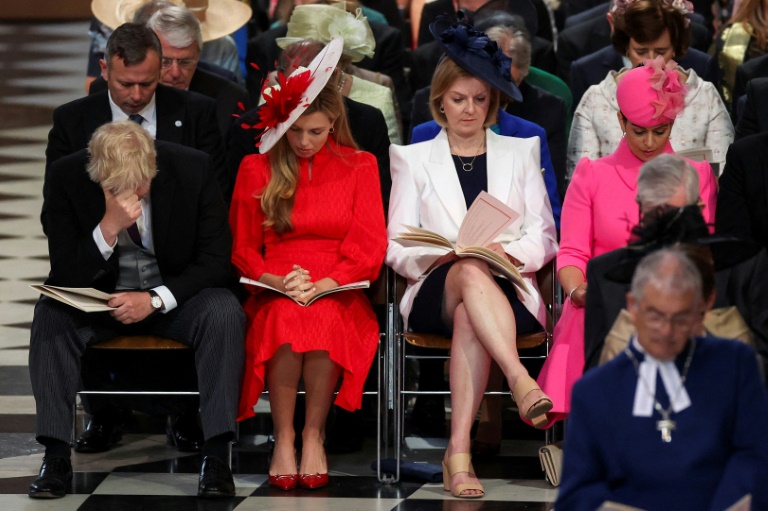
UK's wounded Johnson fights on despite Tory revolt

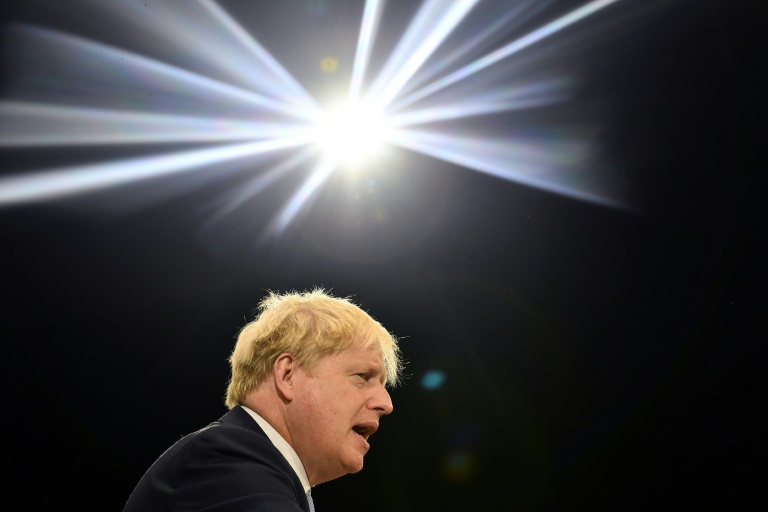
Britain’s embattled Prime Minister Boris Johnson vowed on Tuesday to plough on with propping up the economy and Ukraine, but was urged by a Conservative predecessor to quit and save the nation from further “agonies”.

Addressing his cabinet a day after narrowly fending off a no-confidence vote from his own Conservative MPs, Johnson said: “We’re able now to draw a line under the issues that our opponents want to talk about.”

But most critics and commentators disagreed, with many characterising the margin of his win — 211 votes to 148 — as a “Pyrrhic” victory that left the Tory leader drained of much authority.

Johnson’s former employers at the Daily Telegraph branded it “a hollow victory that tears Tories apart”.

“Party’s over, Boris,” headlined the Daily Mirror, in a nod to a series of lockdown-busting parties held in Downing Street, which saw Johnson fined by police and drew outrage from voters.

The prime minister’s team tried to regain the offensive by pointing to a setpiece speech expected in the coming days on new economic support measures, as Britons struggle with a cost-of-living crisis.

However, a cabinet reshuffle to replenish his team of Brexit loyalists is not “currently” on the cards, Johnson’s spokesman said.

Nor is a snap general election, the prime minister said after the vote, pointing to the pressing need for government unity in the face of Russia’s invasion of Ukraine.

– ‘True friend’ to Ukraine –

Britain has been at the forefront of European military support for the government of Ukrainian President Volodymyr Zelensky, who spoke by phone to Johnson in the hours before Monday’s Conservative ballot.

At an online event on Tuesday hosted by the Financial Times, Zelensky said he was “very happy” that Johnson had survived the vote.

“Boris Johnson is a true friend of Ukraine,” the president added, speaking through a translator.

But at home, many question whether Johnson can recover voters’ trust, as the party braces for two Westminster by-elections this month and an upcoming investigation by MPs into whether he lied to parliament over “Partygate”.

Even without any obvious candidate to succeed him, former Tory party leader William Hague argued that Johnson should now “look for an honourable exit”.

Comparing Monday’s margin to votes that ultimately toppled Johnson’s predecessors Margaret Thatcher and Theresa May, Hague said it showed “a greater level of rejection than any Tory leader has ever endured and survived”.

“Deep inside, he should recognise that, and turn his mind to getting out in a way that spares party and country such agonies and uncertainties,” Hague wrote in The Times.

But in his personal life, populist politics and bombastic style, Johnson is unlike previous Conservative leaders, and his camp spent Monday arguing that even a majority of one would suffice. 

– ‘A matter of months’ –

Nevertheless, according to King’s College London politics professor Anand Menon, the scale of the revolt “constitutes a crisis for Downing Street”.

“I think there’s very little doubt that the vulnerability of the prime minister is going to be the single greatest factor shaping what this government does for the foreseeable future,” Menon told AFP.

Johnson, 57, needed the backing of 180 of the 359 Conservatives MPs to survive the vote.

Most of Johnson’s cabinet publicly backed him in the secret ballot. But more than 40 percent of the parliamentary party did not.

Under current Tory rules, the prime minister cannot be challenged again for a year, which leaves little time for any new leader to emerge before the next general election due by 2024.

But the party’s “1922 committee” of MPs, tasked with overseeing leadership challenges, says it could easily change the rules if a majority backs it.

Senior backbencher Tobias Ellwood, who voted against Johnson, said the prime minister was living on borrowing time. 

“I think we’re talking a matter of months, up to party conference (in October),” he told Sky News.

Belgian king arrives in DR Congo for key visit

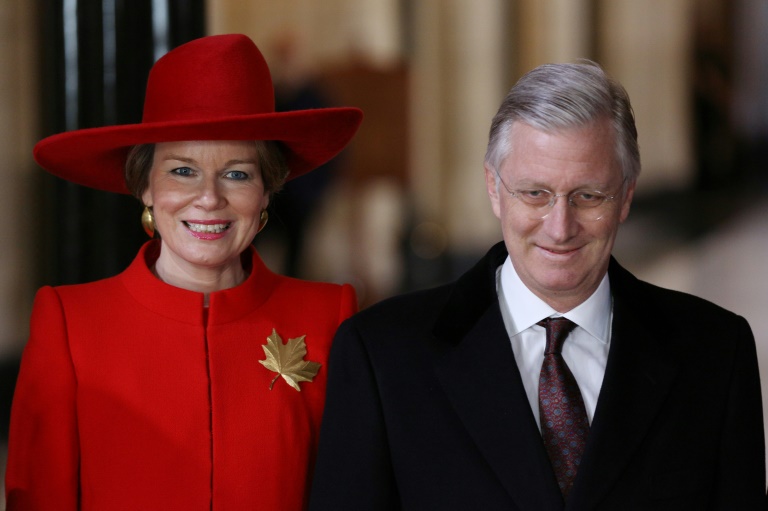
Belgium’s King Philippe landed in the Democratic Republic of Congo on Tuesday, in a historic visit to the central African country his ancestor once ruled brutally as his personal fief.  

The monarch will undertake a six-day trip billed as a chance for reconciliation after atrocities committed under Belgian colonial rule.  

The visit comes two years after Philippe wrote to Congolese President Felix Tshisekedi to express his “deepest regrets” for the “wounds of the past.”

Tshisekedi and his wife greeted King Philippe and Queen Mathilde on a red carpet rolled out on the tarmac of the international airport of the capital Kinshasa, a sprawling city of about 15 million people.  

On Monday, Congolese government spokesman Patrick Muyaya told reporters that Belgium and the Democratic Republic of Congo (DRC) were starting a “new partnership.” 

“We are not forgetting the past, we are looking to the future,” he added. 

Belgian Prime Minister Alexander De Croo, who is visiting the impoverished nation of 90 million people alongside the king, echoed the sentiment. 

“It’s a historic moment,” he told a Belgian national broadcaster Tuesday, hailing the opportunity to forge future closer ties.

Belgium’s colonisation of the Congo was one of the harshest imposed by the European powers that ruled most of Africa in the late 19th and 20th centuries.

King Leopold II, the brother of Philippe’s great great grandfather, oversaw the conquest of what is now DRC, governing the territory as his personal property between 1885 and 1908 before it became a Belgian colony. 

– Brutal rule –

Historians say that millions of people were killed, mutilated or died of disease as they were forced to collect rubber under his rule. The land was also pillaged for its mineral wealth, timber and ivory.

The visit is King Philippe’s first to DRC since ascending the throne in 2013. His father, King Albert II, visited the country in 2010.

Belgium is preparing to return to Kinshasa a tooth — the last remains of Patrice Lumumba — a hero of the anti-colonial struggle and short-lived first prime minister of the independent Congo. 

Lumumba was murdered by Congolese separatists and Belgian mercenaries in 1961, and his body dissolved in acid, but the tooth was kept as a trophy by one of his killers, a Belgian police officer.

According to Belgium’s royal palace, the king is also due to discuss the question of returning artworks looted during the colonial era.

Philippe is due to hold a ceremony with Tshisekedi at the Congolese parliament in Kinshasa on Wednesday and then on Friday deliver a speech to university students in the southern city of Lubumbashi. 

On Sunday, the Belgian sovereign will visit the clinic of gynaecologist Denis Mukwege, co-winner of the 2018 Nobel Peace Prize for his fight against sexual violence, in the eastern city of Bukavu.

The trip comes at a time of heightened tension between Kinshasa and neighbouring Rwanda over rebel activity in the conflict-torn eastern DRC. 

DRC’s government has accused Rwanda of backing the resurgent M23 militia, an accusation which Rwanda has denied.

Fears mount for British journalist missing in Amazon

Brazil’s government vowed Tuesday to make every effort to find a British journalist and Brazilian indigenous expert who went missing deep in the Amazon after receiving threats, as distraught relatives warned that every minute counts.

Veteran freelance journalist Dom Phillips, 57, and respected indigenous specialist Bruno Pereira, 41, were last seen early Sunday traveling by boat in the remote Javari Valley, an indigenous reservation near Brazil’s border with Peru, where Phillips was researching a book.

They were expected back in the small city of Atalaia do Norte by around 9:00 am Sunday, but never arrived — leading the authorities to open an investigation and the military to deploy a search operation.

The Brazilian government expressed its “grave concern” in a statement.

“Federal police were immediately mobilized and are taking all possible measures to find (the men) as quickly as possible,” it said.

“The Brazilian government will continue supporting the search operation with the urgency the case demands… If the disappearance turns out to be the result of criminal activity, all steps will be taken to bring those responsible to justice.”

Investigators brought two people in for questioning Monday, believed to be among the last to have been in contact with the missing men, police said in a statement.

Neither was detained, it said.

Indigenous rights groups working in the area say the men had received threats last week.

Pereira, an expert currently on leave from Brazil’s indigenous affairs agency, FUNAI, who knows the region well, has regularly received threats from poachers, loggers and miners trying to invade isolated indigenous groups’ land.

As the 48-hour mark passed with no news, the men’s families urged the authorities to act quickly.

“Time is a key factor in rescue operations, particularly if they are injured,” Pereira’s family said in a statement

It said his partner, three children and other relatives were in “anguish.”

Phillips’s sister Sian posted a video message online, fighting back tears.

“We are really worried about him and urge the authorities in Brazil to do all they can to search the route he was following,” she said.

“Every minute counts.”

Fears mount for British journalist missing in Amazon

Brazil’s government vowed Tuesday to make every effort to find a British journalist and Brazilian indigenous expert who went missing deep in the Amazon after receiving threats, as distraught relatives warned that every minute counts.

Veteran freelance journalist Dom Phillips, 57, and respected indigenous specialist Bruno Pereira, 41, were last seen early Sunday traveling by boat in the remote Javari Valley, an indigenous reservation near Brazil’s border with Peru, where Phillips was researching a book.

They were expected back in the small city of Atalaia do Norte by around 9:00 am Sunday, but never arrived — leading the authorities to open an investigation and the military to deploy a search operation.

The Brazilian government expressed its “grave concern” in a statement.

“Federal police were immediately mobilized and are taking all possible measures to find (the men) as quickly as possible,” it said.

“The Brazilian government will continue supporting the search operation with the urgency the case demands… If the disappearance turns out to be the result of criminal activity, all steps will be taken to bring those responsible to justice.”

Investigators brought two people in for questioning Monday, believed to be among the last to have been in contact with the missing men, police said in a statement.

Neither was detained, it said.

Indigenous rights groups working in the area say the men had received threats last week.

Pereira, an expert currently on leave from Brazil’s indigenous affairs agency, FUNAI, who knows the region well, has regularly received threats from poachers, loggers and miners trying to invade isolated indigenous groups’ land.

As the 48-hour mark passed with no news, the men’s families urged the authorities to act quickly.

“Time is a key factor in rescue operations, particularly if they are injured,” Pereira’s family said in a statement

It said his partner, three children and other relatives were in “anguish.”

Phillips’s sister Sian posted a video message online, fighting back tears.

“We are really worried about him and urge the authorities in Brazil to do all they can to search the route he was following,” she said.

“Every minute counts.”

Horsemeat traffickers on trial in France in new industry scandal

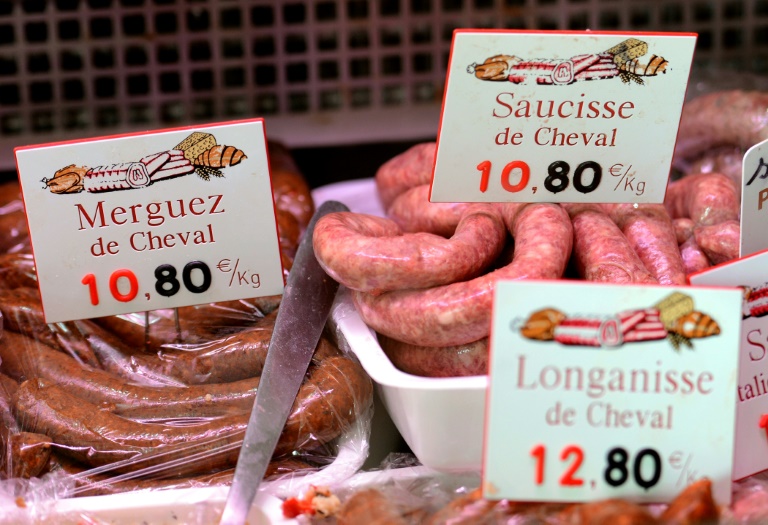
Eighteen people went on trial in France on Tuesday accused of running a Europe-wide giant horsemeat trading network involving produce not cleared for human consumption.

Mostly shunned by consumers in the United States and Britain, horsemeat — typically cheaper than beef — has long been part of culinary habits across European countries, including France, but its production and distribution are strictly regulated.

The case coming to trial in the southern port city of Marseille is the biggest horsemeat scandal since 2013, when millions of ready meals were withdrawn from stores across Europe after they were found to contain horsemeat instead of only beef as indicated on the label.

Standing trial are French, Belgian and Dutch nationals charged with violating EU sanitary rules governing the horsemeat trade, and with forging official documents between 2010 and 2015.

They are also accused of duping the owners of ageing horses into believing that their beloved animals would live out their days in the countryside when in reality they were taken straight to the slaughterhouse.

The specific charges in the trial, which is set to last for three weeks, are fraud, conspiracy to commit fraud, and misleading consumers and endangering their health.

– ‘They tricked everybody’ –

The members of the group, which includes licenced horse meat traders and veterinary surgeons, are believed to have violated a number of EU rules about the import of horses, including by forging certificates of origin.

The main suspect is 58-year-old Belgian Jean-Marc Decker, who prosecutors say supplied the network with horses whose meat was unfit for consumption.

In addition to the accused individuals, mostly in the 50s or 60s, a horsemeat wholesale company based in southern France is also in the dock for distributing the meat, falsely claiming that it was French.

The company, according to prosecutors, “was indifferent to the health imperatives governing the sector”.

Court proceedings were to start with the testimony of the top veterinary official at the municipal abattoir in Ales, southern France, where the investigation started in 2013.

Former horse owner Aline Oudin, due to testify Wednesday, told AFP she had handed her horse over to one of the defendants in 2013 in exchange for a promise of a “happy retirement” for the animal. Two weeks later she found out that the horse had been slaughtered and its meat sold.

“They tricked owners, they tricked consumers, they tricked everybody,” she said.

Plaintiffs also include France’s veterinary association, the cattle and meatpacking association ANBV and the Ales municipality.

UK's wounded Johnson fights on despite Tory revolt

Britain’s embattled Prime Minister Boris Johnson vowed on Tuesday to plough on with policy priorities including the economy and Ukraine, but was urged by a Conservative predecessor to quit and save the nation from further “agonies”.

Addressing his cabinet a day after narrowly fending off a no-confidence vote from his own Conservative MPs, Johnson said: “We’re able now to draw a line under the issues that our opponents want to talk about.”

But most critics and commentators disagreed, with many characterising the margin of his win — 211 votes to 148 — as a “Pyrrhic” victory that left the Tory leader drained of much authority.

Johnson’s former employers at the Daily Telegraph branded it “a hollow victory that tears Tories apart”.

“Party’s over, Boris,” headlined the Daily Mirror, in a nod to a series of lockdown-busting parties held in Downing Street, which saw Johnson fined by police and drew outrage from voters.

The prime minister’s team tried to regain the offensive by pointing to a setpiece speech expected in the coming days on new economic support measures, as Britons struggle with a cost-of-living crisis.

The government is also expected to introduce new legislation to unilaterally walk away from its post-Brexit commitments on Northern Ireland, placating some right-wingers but likely infuriating the European Union.

– ‘True friend’ to Ukraine –

However, a cabinet reshuffle to replenish his team of Brexit loyalists is not “currently” on the cards, Johnson’s spokesman said.

Nor is a snap general election, the prime minister said after the vote, pointing to the pressing need for government unity in the face of Russia’s invasion of Ukraine.

Britain has been at the forefront of European military support for the government of Ukrainian President Volodymyr Zelensky, who spoke by phone to Johnson in the hours before Monday’s Conservative ballot.

At an online event on Tuesday hosted by the Financial Times, Zelensky said he was “very happy” that Johnson had survived the vote.

“Boris Johnson is a true friend of Ukraine,” the president added, speaking through a translator.

But at home, many question whether Johnson can recover voters’ trust, as the party braces for two Westminster by-elections this month and an upcoming investigation by MPs into whether he lied to parliament over “Partygate”.

Even without any obvious candidate to succeed him, former Tory party leader William Hague argued that Johnson should now “look for an honourable exit”.

Comparing Monday’s margin to votes that ultimately toppled Johnson’s predecessors Margaret Thatcher and Theresa May, Hague said it showed “a greater level of rejection than any Tory leader has ever endured and survived”.

“Deep inside, he should recognise that, and turn his mind to getting out in a way that spares party and country such agonies and uncertainties,” Hague wrote in The Times.

But in his personal life, populist politics and bombastic style, Johnson is unlike previous Conservative leaders, and his camp spent Monday arguing that even a majority of one would suffice. 

– ‘A matter of months’ –

Johnson, 57, needed the backing of 180 of the 359 Conservatives MPs to survive the vote.

Most of Johnson’s cabinet publicly backed him in the secret ballot. But more than 40 percent of the parliamentary party did not.

Under current Tory rules, the prime minister cannot be challenged again for a year, which leaves little time for any new leader to emerge before the next general election due by 2024.

But the party’s “1922 committee” of MPs, tasked with overseeing leadership challenges, says it could easily change the rules if a majority backs it.

Senior backbencher Tobias Ellwood, who voted against Johnson, said the prime minister should revamp his cabinet to “bring in fresh talent and actually start to focus on the big issues”.

But Ellwood said Johnson was likely to ignore such advice and faced being kicked out before long. 

“I think we’re talking a matter of months, up to party conference (in October),” he told Sky News.

French health workers protest over pay ahead of polls

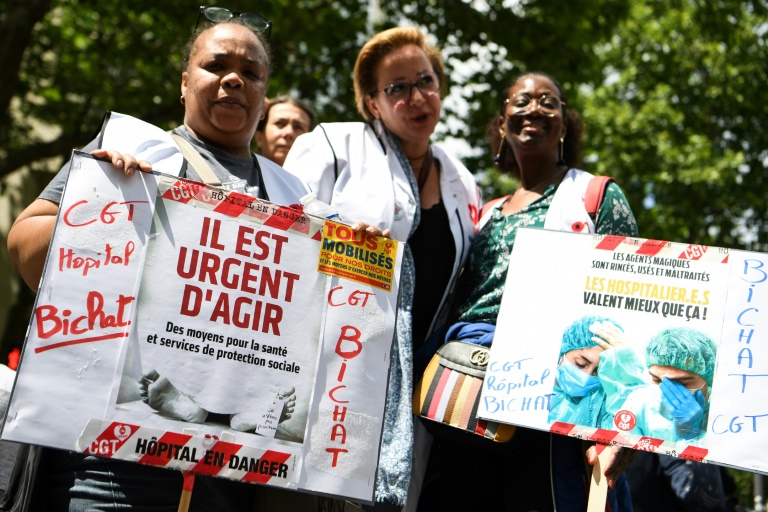
Health workers demonstrated in cities across France on Tuesday to demand higher pay and more staff for services stretched to breaking point, just days before the country votes in parliamentary elections.

Although recently re-elected President Emmanuel Macron has ordered a probe into which emergency units need immediate help with people in the sector warning there is no time to lose.

“Not a single department is spared, our public hospitals are in the process of dying for lack of resources,” said Pierre Wach, head of the CGT union in eastern city Strasbourg.

Protests began at hospitals in the morning Tuesday and continued at the health ministry in Paris in the afternoon, where staff, some wearing white medical coats, brandished placards with messages such as “Hire more and pay us more, it’s urgent!”.

Casualty workers’ group Samu-Urgences de France found in a May survey that at least 120 accident and emergency departments nationwide had already cut back on work or were preparing to do so after years of Covid-19 strain.

Macron told regional newspapers Friday that his review, led by the group’s chief Francois Braun, would identify “where there is need, emergency department by emergency department, ambulance service by ambulance service, region by region”.

But opposition politicians and unions have accused him of playing for time until after the legislative elections on June 12 and 19 — as some polls show the president’s absolute majority could be at risk.

“It’s past time for inquiries,” Laurent Berger, head of the powerful CFDT trade union confederation, wrote in left-wing daily Liberation, calling for “urgent talks on how staff are organised” as hospitals were “almost knocked out”.

Braun said last week he would not craft “yet another report” but “write the prescription” for hospitals in need.

Among measures he has already suggested to newly-installed Health Minister Brigitte Bourguignon are better pay for night and weekend work or — more controversially — a system for filtering calls to the emergency services to identify the most severe.

“We have to switch to crisis management mode to get through the summer,” Thomas Mesnier, an MP loyal to Macron who is also an emergency doctor, wrote in the JDD weekly.

Some emergency workers have warned that a summer heatwave, which in past years has proved deadly for elderly people, or a new flare-up of Covid could push hospitals into chaos.

burs/tgb/bp

Graft-accused Indian-born Gupta brothers face extradition to S.Africa from UAE

Two Indian-born brothers who allegedly wove a web of corruption across South Africa have been arrested in Dubai and face extradition, in a landmark step in Pretoria’s anti-graft fight.

Dubai police confirmed Tuesday they had arrested Atul and Rajesh Gupta after receiving a so-called red notice from Interpol, and were coordinating with the South African authorities for their extradition.

South Africa’s National Prosecuting Authority confirmed the contact but refused to give details.

“Extradition is a complex process involving many role players, including the executive,” said spokesman Mthunzi Mhaga.

The arrests bring a glimmer of hope that the alleged masterminds behind South Africa’s darkest corruption scandal will face prosecution after years of legal fog and delay.

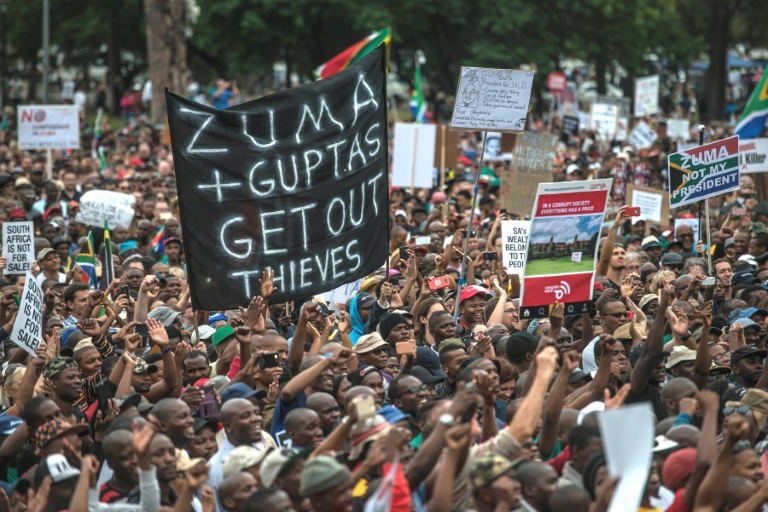
The two tycoons are accused of paying bribes for state contracts and wielding influence over ministerial appointments in a scandal that clouded former president Jacob Zuma’s administration and eventually forced him from office.

By one estimate, several billion dollars were lost to the South African economy as a result of their activities.

After Zuma resigned in February 2018, his deputy Cyril Ramaphosa took over. 

Ramaphosa vowed to make the fight against graft the cornerstone of his presidency. But prosecutions have been rare, public scepticism runs deep and Ramaphosa himself is now fighting accusations of scandal.

– ‘State capture’ –

The Guptas came to South Africa in 1993, eventually building a sprawling empire in mining, computer technology and media. Some members of their family were granted South African citizenship. 

But the pair and other family members fled the country shortly after a judicial commission, launched in 2018, started probing “state capture” — the alleged looting of state assets — and the brothers’ influence over the ruling African National Congress (ANC).

After arduous investigations, Chief Justice Raymond Zondo this year published a report that described how the brothers became intertwined with the highest levels of government and the ANC.

The family befriended Zuma to the point where they influenced cabinet appointments, and infiltrated state-owned enterprises, where they secured some of the juiciest contracts, it said.

Zuma “would do anything that the Guptas wanted him to do for them,” Zondo said in his report published this year.

Zuma was last year jailed for 15 months for refusing to testify before the investigators. He was released on parole, having served just two months of the term.

An independent investigator estimated that the cost of the Guptas’ alleged illicit activities in South Africa could be as much as 50 billion rand ($3.2 billion) over the years.

Their current arrest is however for fraud and money laundering in connection with a 25-million rand contract paid to a Gupta-linked company, Nulane Investment, for an agricultural feasibility study in the central Free State province.

Their arrests came almost a year after Interpol issued a red notice — a global alert enabling law enforcement to arrest a person sought for prosecution or to serve a custodial sentence and hold them pending extradition.

A third brother, Ajay Gupta, is not cited in the current case, but has been named in another embezzlement and corruption case.

– Ramaphosa’s problems –

The main opposition Democratic Alliance (DA) said it hoped the arrests are “indeed the beginning of arrests and prosecution of those who have… looted our country for years and are directly responsible for the hardships that millions of South Africans face today.”

Ramaphosa, meanwhile, is enmeshed in a growing scandal centred on the theft of cash from his sprawling cattle and game farm.

He is accused of buying the silence of the burglars, who were allegedly detained on his property.

He fiercely denies the allegations, which have surfaced as he vies to stay on as ruling party leader when his term expires in December.

“The ones who are pursuing the corrupt also have skeletons in the cupboards,” said Sandile Swana, an independent political analyst, who believed Ramaphosa would probably retain his presidency despite the “Farmgate” scandal.

burs-jv-sn/ri

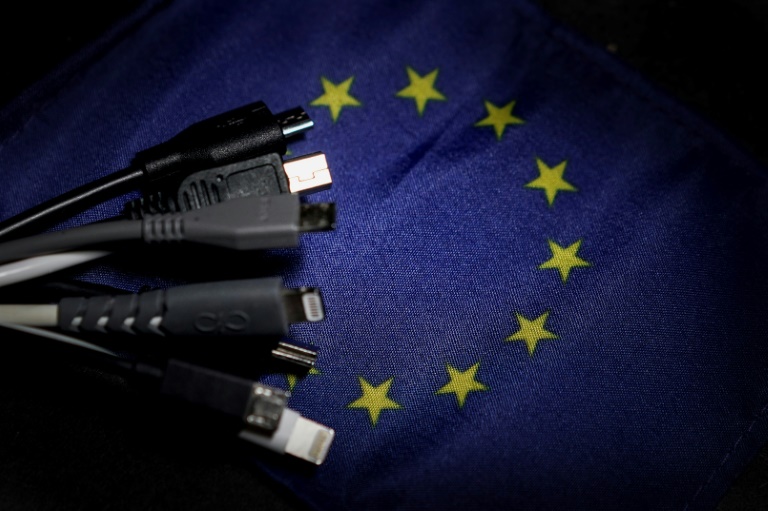
EU agrees single charger standard, in blow to Apple

European officials on Tuesday agreed the text of a proposed EU law imposing a standard charger for smartphones, tablets and laptops sold in the bloc, in a blow to Apple.

EU member states and MEPs believe a standard cable for all devices will cut back on electronic waste, but iPhone juggernaut Apple argues a one-size-fits-all charger would slow innovation and create more pollution.

For most portable devices the requirement for charging via a USB Type-C port will come into effect from late 2024, negotiators said, while laptops will be given more time.

The USB-C rule will also stretch to digital cameras, headphones, headsets, portable speakers and E-readers, they said.

Lawmakers agreed on the common charger based on a proposal that was made by the EU executive — the European Commission — in September, but came more than a decade after the European Parliament first pushed for it.

The decision will be formally ratified by European Parliament and among EU member states later this year before entering into effect.

“We have been able to do it in nine months, that means that we can … move fast when there is a political will,” the EU internal market commissioner Thierry Breton said.

“We are able to say to the lobbies, ‘sorry, but here it is Europe and we’re working for our people’,” he said.

The 27-nation union is home to 450 million people, some of the world’s richest consumers, and the imposition of the USB-C as standard could affect the entire global market.

“This is a rule which will apply to everyone,” said MEP Alex Agius Saliba, who led the negotiations for the European Parliament.

“If Apple … or anyone wants to market their product, sell their products within our internal market, they have to abide by our rules and their device has to be USB-C,” he said. 

The rules will also give shoppers the option to opt out of receiving a new charging cable when purchasing an electronic device.

– ‘Planning ahead’ –

And in order to prepare for the future, the law has provisions to set a standard on wireless charging.

This was “not to end up … legislating for a technology which is basically dying out, so we are also planning ahead,” Saliba said.

Apple, which already uses USB-C connectors on some of its iPads and laptop computers, has insisted any legislation to force a universal charger for all mobiles in the European Union is unwarranted.

“The proposal is vastly disproportionate to any perceived problem,” the company said in its response to the commission when the law was being drafted.

Imposing a charger standard, it argued, would stifle innovation and “reduce European consumer choice by removing more affordable older models from the market”.

Consumers currently have to decide between phones served by three main chargers: “Lightning” for Apple handsets, the micro-USB widely used on most other mobile phones and the newer USB-C that is increasingly coming into use.

That range is already greatly simplified from 2009, when dozens of different types of chargers were bundled with mobile phones, creating piles of electronic garbage when users changed brands.

In making its proposal last year, the EU said the current situation remained wasteful and that European consumers spent approximately 2.4 billion euros ($2.8 billion) annually on standalone chargers they bought separately.

The European Commission had long defended a voluntary agreement it made with the device industry that was set in place in 2009 and saw a big reduction in cables, but Apple refused to abide by it.

Russia claims partial control of flashpoint Ukraine city

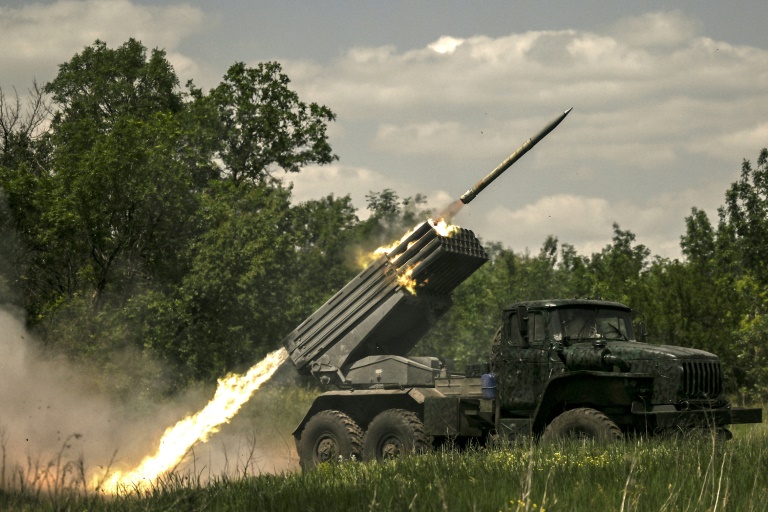
Russia on Tuesday reported its forces had taken full control of residential neighbourhoods in Ukraine’s flashpoint city of Severodonetsk, after Kyiv said its troops were fighting on in the eastern hub despite being outnumbered.

“The residential areas of the city of Severodonetsk have been fully liberated,” Russian Defence Minister Sergei Shoigu told a defence ministry meeting.

The Russian army was still seeking to establish control over the city’s “industrial zone and the nearest settlements”, he added, amid conflicting reports of who is in control of what.

Moscow has been pushing for control of the strategic industrial hub as part of its bid to conquer a vast swathe of eastern Ukraine but Kyiv’s forces have so far managed to hold out, 

“Our heroes are holding their positions in Severodonetsk. Fierce street fights continue in the city,” Ukrainian President Volodymyr Zelensky said in a video address late Monday.

Zelensky warned Ukrainian forces in the key city were outnumbered and the Russians “are stronger”. He was speaking to journalists after visiting frontline positions in Lysychansk, across the river from Severodonetsk.

Thousands of civilians have been killed and millions forced to flee their homes since President Vladimir Putin ordered Russian troops into Ukraine on February 24.

After being repelled from other parts of the country, including Kyiv, Russia has concentrated its assault on the eastern Donbas region and had been making slow but steady progress.

Severodonetsk — the largest city still in Ukrainian hands in the Lugansk region of the Donbas — has been the focal point in recent weeks.

– ‘General killed’ –

The leader of Ukraine’s pro-Russian separatists in Donetsk, Denis Pushilin, on Tuesday confirmed the death of another Russian general in the fighting.

Pushilin expressed on Telegram his “sincere condolences to the family and friends” of Major General Roman Kutuzov, “who showed by example how to serve the fatherland”.

Ukraine’s forces have claimed to have killed several of Russia’s top brass but their exact number is not known as Moscow is tight-lipped on  losses. 

Defence Minister Shoigu said Russia had completed demining of the eastern port city of Mariupol, the second busiest in Ukraine before the conflict.

“It is operating as normal and has accepted the first cargo ships,” Shoigu said.

With fighting raging in the east of Ukraine, Kyiv hit out at the UN’s nuclear watchdog for trying to visit Europe’s largest nuclear reactor in the south of the country while it is under Russian occupation.

The head of the International Atomic Energy Agency (IAEA), Rafael Grossi, said on Monday his agency was preparing an expert mission to the Zaporizhzhia nuclear plant.

Grossi said on Twitter the visit was arranged after Ukraine had “requested” it. 

But Ukraine’s nuclear agency, Energoatom on Tuesday accused Grossi of lying and said it did not greenlight the trip.  

“The visit to the plant will only become possible when Ukraine takes back control of the site,” Energoatom wrote on Telegram.

“We consider this declaration a new attempt to gain access to the Zaporizhzhia power plant to legitimise the presence of the occupiers and approve their actions.” 

Russian forces took control of the plant at the beginning of March and Moscow has threatened to cut Ukraine off from Zaporizhzhia unless Kyiv pays Moscow for the electricity produced. 

– Sexual violence concerns –

In 2021 — well before Russia’s invasion of Ukraine — the plant represented 20 percent of Ukraine’s annual electricity production and nearly half of all nuclear power produced in Ukraine.

The Russian invasion, combined with supply chain snarls and climate change, has triggered stark warnings of global food shortages. 

Moscow has blockaded the key black sea port of Odessa, and Zelensky said Ukraine had up to 25 million tonnes of grain that could not be exported. 

“In the autumn that could be 70 to 75 million tonnes,” said the president, whose country was the world’s fourth biggest grain exporter before the war.

In Washington, US Secretary of State Antony Blinken said that reports Russia had stolen grain from Ukraine for export are “credible”.

At a meeting of the UN Security Council, the United States and Europe urged Russia to stop alleged sexual violence by its army and proxies in Ukraine, allegations that Moscow denounced as “lies”.

With the West seeking to tighten sanction screws on Russian oligarchs, the US Justice Department on Tuesday ordered the seizure of two aircraft owned by former Chelsea Football Club owner Roman Abramovich.

The US says the Boeing 787-8 Dreamliner and Gulfstream G650ER executive jet were flown into Russian territory earlier this year in violation of US export controls.

And in Fiji, a court ruled a $300-million superyacht linked by the US to sanctioned Russian oligarch Suleiman Kerimov could be handed over to US authorities.

The Amadea, which boasts a helipad, pool, jacuzzi and “winter garden”, was impounded in Fiji in April at Washington’s request.

burs-cjo/bp

Close Bitnami banner
Bitnami