World

Mexico snub throws Americas' summit into disarray

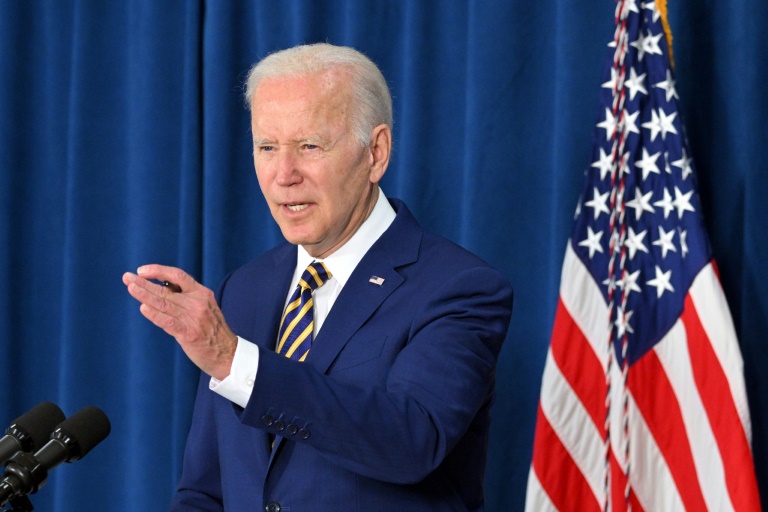
President Joe Biden’s plan to reboot US engagement with Latin America — especially on critical topics like migration — took a hit after key partner Mexico snubbed a regional summit opening Monday in Los Angeles to protest Washington’s exclusion of three far-left countries.

What was meant to be a week-long showcase of cooperation risks becoming a display of division, underlining diminishing US clout over a region where Washington’s long-time economic and diplomatic influence faces a growing Chinese challenge.

A senior White House official confirmed that Cuba, Nicaragua and Venezuela were barred from the Summit of the Americas due to “lack of democratic space and the human rights situations.”

In response, Mexican President Andres Manuel Lopez Obrador said he too would stay away.

“You cannot have a Summit of the Americas if you do not have all the countries of the Americas attending,” Lopez Obrador announced, complaining of US “hegemony” and “lack of respect for nations.”

Although Foreign Minister Marcelo Ebrard will represent Mexico instead, the leftist populist leader’s absence will diminish the impact of a summit where US-Mexico relations are at the heart of major immigration and trade issues.

The White House downplayed the spat, saying Biden was sticking up for principles, but that there was no bad blood between the neighbors.

“We do not believe that dictators should be invited,” Press Secretary Karine Jean-Pierre told reporters.

However, she noted that Lopez Obrador was set to visit Washington in July and said Biden had not been blindsided. “He was aware” ahead of the Mexican president’s announcement.

In Havana, the communist Cuban government issued a statement calling its exclusion “anti-democratic and arbitrary.”

Biden, who flies to Los Angeles on Wednesday, will be announcing numerous “deliverables” at the summit, Jean-Pierre said.

The agenda on Wednesday will focus on regional economic and health issues, then climate change on Thursday.

Friday will be devoted to the surge of migration to the United States — a major concern for US voters and an area where Republican opponents see Biden as vulnerable in upcoming midterm elections.

As the summit kicked off, another thousands-strong migrant caravan departed southern Mexico for the US border, with some chanting “Freedom!” and “We want visas!” as they started the 3,000-kilometer (1,860-mile) journey.

– Argentina, Brazil show up –

State Department spokesman Ned Price insisted that Lopez Obrador’s absence did not doom the summit, praising Mexico as “an important hemispheric player.”

The Biden administration also notes it has secured the presence of other key regional players, including Argentina’s left-leaning Alberto Fernandez and Brazil’s Jair Bolsonaro.

Biden will have a bilateral meeting with Bolsonaro, a senior US official told reporters. The far-right Brazilian leader was previously close with Biden’s predecessor Donald Trump, who attempted to overturn his election defeat in 2020.

Uruguay’s President Luis Lacalle Pou was due to attend the summit, but cancelled after contracting Covid-19, he tweeted Monday.

Benjamin Gedan, who heads the Latin America program at the Woodrow Wilson International Center for Scholars, said Lopez Obrador’s absence would mark a “significant void.”

The snub has been “a really unfortunate subplot in the run-up to the summit because it has drained an enormous amount of US diplomatic energy for a bizarre cause celebre,” Gedan said.

Biden has crafted a positive agenda, avoiding simply summoning Latin American leaders to lecture them on democracy, corruption and China, he said.

But, he added, it was unclear whether Biden will bring substantial resources to the table, in contrast to China’s lavish infrastructure spending and trade privileges.

“I think, inevitably, the United States will disappoint,” Gedan said.

– ‘Progressively less ambitious’ –

The Summit of the Americas is the first held by the United States since the inaugural 1994 meeting in Miami, where then-US president Bill Clinton sought the creation of a trade area to cover the whole continent except communist Cuba.

The United States has since soured on free trade, with Biden following the lead of Trump, who said such pacts hurt US workers.

Eric Farnsworth, vice president of the Council of the Americas, recently told a congressional hearing that each summit has become “progressively less ambitious.”

Los Angeles, he said, “offers the perfect opportunity for Washington to announce a commitment to regional growth and recovery.”

Michael Shifter, a senior fellow at the Inter-American Dialogue, said the drama over summit attendance showed Washington’s waning hold over the region as China muscles in.

The United States “still has a lot of soft power,” Shifter said. “As for political and diplomatic influence, it is diminishing by the day.”
Mexico snub throws Americas' summit into disarray

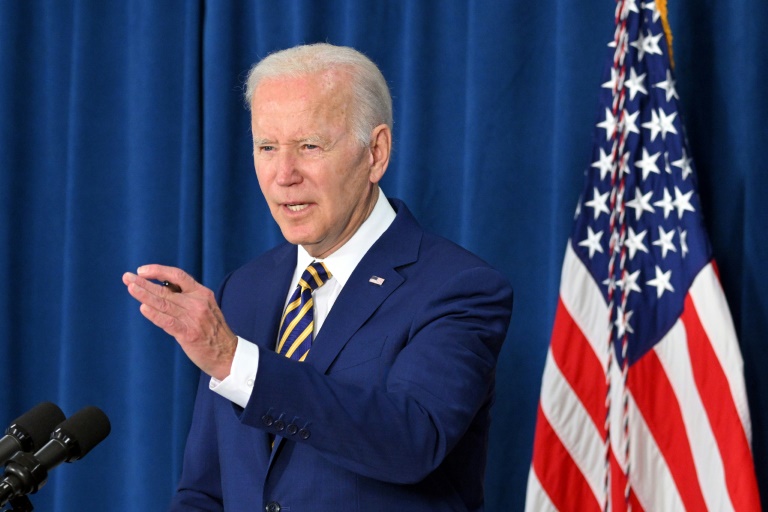
President Joe Biden’s plan to reboot US engagement with Latin America — especially on critical topics like migration — took a hit after key partner Mexico snubbed a regional summit opening Monday in Los Angeles to protest Washington’s exclusion of three far-left countries.

What was meant to be a week-long showcase of cooperation risks becoming a display of division, underlining diminishing US clout over a region where Washington’s long-time economic and diplomatic influence faces a growing Chinese challenge.

A senior White House official confirmed that Cuba, Nicaragua and Venezuela were barred from the Summit of the Americas due to “lack of democratic space and the human rights situations.”

In response, Mexican President Andres Manuel Lopez Obrador said he too would stay away.

“You cannot have a Summit of the Americas if you do not have all the countries of the Americas attending,” Lopez Obrador announced, complaining of US “hegemony” and “lack of respect for nations.”

Although Foreign Minister Marcelo Ebrard will represent Mexico instead, the leftist populist leader’s absence will diminish the impact of a summit where US-Mexico relations are at the heart of major immigration and trade issues.

The White House downplayed the spat, saying Biden was sticking up for principles, but that there was no bad blood between the neighbors.

“We do not believe that dictators should be invited,” Press Secretary Karine Jean-Pierre told reporters.

However, she noted that Lopez Obrador was set to visit Washington in July and said Biden had not been blindsided. “He was aware” ahead of the Mexican president’s announcement.

In Havana, the communist Cuban government issued a statement calling its exclusion “anti-democratic and arbitrary.”

Biden, who flies to Los Angeles on Wednesday, will be announcing numerous “deliverables” at the summit, Jean-Pierre said.

The agenda on Wednesday will focus on regional economic and health issues, then climate change on Thursday.

Friday will be devoted to the surge of migration to the United States — a major concern for US voters and an area where Republican opponents see Biden as vulnerable in upcoming midterm elections.

As the summit kicked off, another thousands-strong migrant caravan departed southern Mexico for the US border, with some chanting “Freedom!” and “We want visas!” as they started the 3,000-kilometer (1,860-mile) journey.

– Argentina, Brazil show up –

State Department spokesman Ned Price insisted that Lopez Obrador’s absence did not doom the summit, praising Mexico as “an important hemispheric player.”

The Biden administration also notes it has secured the presence of other key regional players, including Argentina’s left-leaning Alberto Fernandez and Brazil’s Jair Bolsonaro.

Biden will have a bilateral meeting with Bolsonaro, a senior US official told reporters. The far-right Brazilian leader was previously close with Biden’s predecessor Donald Trump, who attempted to overturn his election defeat in 2020.

Uruguay’s President Luis Lacalle Pou was due to attend the summit, but cancelled after contracting Covid-19, he tweeted Monday.

Benjamin Gedan, who heads the Latin America program at the Woodrow Wilson International Center for Scholars, said Lopez Obrador’s absence would mark a “significant void.”

The snub has been “a really unfortunate subplot in the run-up to the summit because it has drained an enormous amount of US diplomatic energy for a bizarre cause celebre,” Gedan said.

Biden has crafted a positive agenda, avoiding simply summoning Latin American leaders to lecture them on democracy, corruption and China, he said.

But, he added, it was unclear whether Biden will bring substantial resources to the table, in contrast to China’s lavish infrastructure spending and trade privileges.

“I think, inevitably, the United States will disappoint,” Gedan said.

– ‘Progressively less ambitious’ –

The Summit of the Americas is the first held by the United States since the inaugural 1994 meeting in Miami, where then-US president Bill Clinton sought the creation of a trade area to cover the whole continent except communist Cuba.

The United States has since soured on free trade, with Biden following the lead of Trump, who said such pacts hurt US workers.

Eric Farnsworth, vice president of the Council of the Americas, recently told a congressional hearing that each summit has become “progressively less ambitious.”

Los Angeles, he said, “offers the perfect opportunity for Washington to announce a commitment to regional growth and recovery.”

Michael Shifter, a senior fellow at the Inter-American Dialogue, said the drama over summit attendance showed Washington’s waning hold over the region as China muscles in.

The United States “still has a lot of soft power,” Shifter said. “As for political and diplomatic influence, it is diminishing by the day.”

Hong Kong pro-democracy figures set for largest national security trial

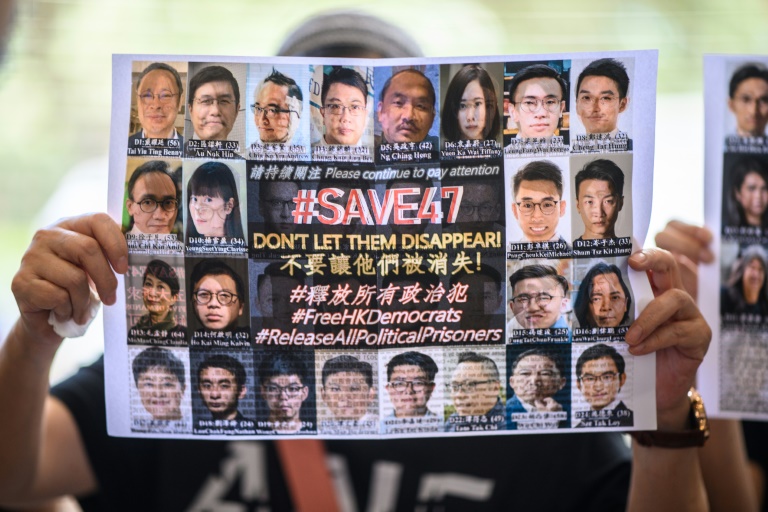
Hong Kong’s largest national security case was sent to trial on Tuesday, after lingering 15 months in pre-trial procedures during which most of the 47 defendants were denied bail.

Under the security law, which Beijing imposed in 2020 following huge, sometimes violent democracy protests, the pro-democracy figures are charged with “conspiracy to subversion” for organising an unofficial primary election.

Subversion is one of the four major crimes under the security law and can carry a punishment of up to life in prison.

The defendants, aged between 24 and 66, include democratically elected lawmakers and district councillors, as well as unionists, academics and others, whose political stances range from modest reformists to radical localists.

The case was first brought to court in March 2020, when most of the 47 were denied bail after a four-day marathon hearing before a judge handpicked by the government to try national security cases.

Most of the pre-trial hearings over the past 15 months, though held in an open court, have been subject to reporting restrictions — with the court repeatedly refusing applications from defendants and journalists for them to be lifted. 

Family members and legal representatives have told AFP that the opaqueness has made the defendants “frustrated and depleted”, and allowed the prosecution to “move the goalposts”.

After a three-and-half-day hearing that began Wednesday and Thursday last week and finished Tuesday, all but one of the 47 defendants were committed to a senior court by Principal Magistrate Peter Law, one of the national security judges. 

Last Wednesday, Law announced that seventeen defendants had been committed for trial. 

They included veteran activists “Long Hair” Leung Kwok-hung, barrister Lawrence Lau, and journalist-turned-activist Gwyneth Ho. 

Twenty-nine others — including legal scholar Benny Tai, who was also one of the leaders of the “Occupy Central” movement in 2014 — were committed on Monday and Tuesday. 

Defendants who submit a non-guilty plea are committed for trial, and those who plead guilty committed for sentencing, according to the Magistrates Ordinance. 

The one outstanding defendant will join the cohort later after further proceedings before the magistrate. 

Hong Kong faces scrutiny over whether its legal system can maintain its independence as China cracks down on dissent with the security law.

More than 180 people have been arrested over the past two years since the security law came into force — the bulk of them activists, unionists and journalists — and 115 have been prosecuted.

Three men have been convicted and sentenced to jail for 43 months to nine years. One of them sought to appeal his 69-month sentence on Tuesday, with the court reserving judgement until early September.

The 47 defendants form the largest group in one single case under the law.

Authorities say the security law has successfully returned stability to the financial hub, which was upended for seven straight months by large and sometimes violent protests in 2019. 

But critics say it has eviscerated civil liberties and the political plurality the city used to enjoy.

Asian markets mixed as rate hike woes offset China tech hopes

Asian markets struggled Tuesday on long-running worries over surging inflation and rising interest rates, which overshadowed hopes that China would ease off its regulatory drive against the country’s beleaguered tech giants.

A spike in US Treasury yields took the wind out of the sales for Wall Street, with focus now on the release of inflation data from the United States and China at the end of the week.

Analysts are tipping the Federal Reserve to lift borrowing costs by half a point at its next three meetings as officials try to get a grip on runaway prices.

But that is causing discomfort on trading floors as investors fret over the impact on economic growth and firms’ bottom lines.

“Inflation concerns are not going anywhere fast,” Fiona Cincotta, at City Index, said. “Rising crude oil prices and a strong labour report have lifted bets that the Fed may need to act aggressively to rein in inflation.”

And SPI Asset Management’s Stephen Innes added: “Investors are hyper-focused on inflation, economic growth, and future Fed policy.

“Most assume the worst and think a financial tsunami will hit the US and global markets thanks to the quorum of US-based bank CEOs that have given the gloomy growth narrative their imprimatur. Anything less than that outcome is going to surprise a lot of folks.”

Equity markets were mixed in early trade.

Tokyo rose, helped by a softening of the yen to a two-year low owing to expectations the Bank of Japan will not tighten monetary policy just as US rates climb.

Manila and Jakarta also edged up but there were losses in Sydney, Seoul, Singapore, Wellington and Taipei.

Hong Kong dipped and Shanghai was flat, even as heavyweights Alibaba and JD.com led gains among tech firms following a report that China was close to ending a painful crackdown on ride-hailing app Didi Global and restore its main apps this week. Didi’s US-listed notes soared more than 20 percent.

The Wall Street Journal added that probes into two other firms — Full Truck Alliance and recruitment platform Kanzhun — fanning optimism for the sector’s outlook after a long period of hefty selling pressure.

“This was seen as a signal that the regulatory crackdown on Chinese tech firms was starting to end… as China focuses on stabilising the economy following Covid restrictions,” said National Australia Bank’s Tapas Strickland.

Markets have seen some levelling out in recent weeks as the easing of lockdown measures in China helps to offset some of the worries about higher rates and the impact of the Ukraine war.

But market-watcher Louis Navellier warned there was still plenty more volatility to come.

“If history repeats, we could be down tomorrow, then up on Wednesday, then down on Thursday, and possibly up on Friday,” he said in a commentary. “So just get used to these up-down, up-down oscillations because they are going to continue.

“I want to remind investors to not get too excited when the market rallies because it is going to continue to oscillate. There is just too much uncertainty out there.”

– Key figures at around 0230 GMT –

Tokyo – Nikkei 225: UP 0.4 percent at 28,031.15 (break)

Hong Kong – Hang Seng Index: DOWN 0.2 percent at 21,609.25

Shanghai – Composite: FLAT at 3,237.14

Brent North Sea crude: UP 0.6 percent at $120.28 per barrel

West Texas Intermediate: UP 0.7 percent at $119.29 per barrel

Euro/dollar: DOWN at $1.0675 from $1.0699 

Pound/dollar: DOWN at $1.2500 from $1.2528

Euro/pound: UP at 85.42 pence from 85.37 pence

Dollar/yen: UP at 132.60 yen from 131.88 yen

New York – Dow: UP 0.1 percent to 32,915.78 (close)

London – FTSE 100: UP 1.0 percent at 7,608.22 (close)

British journalist, indigenous expert missing in Brazil

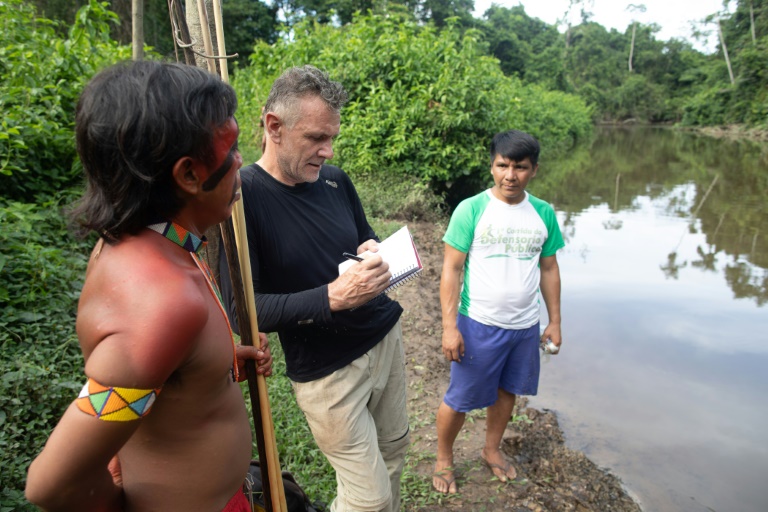
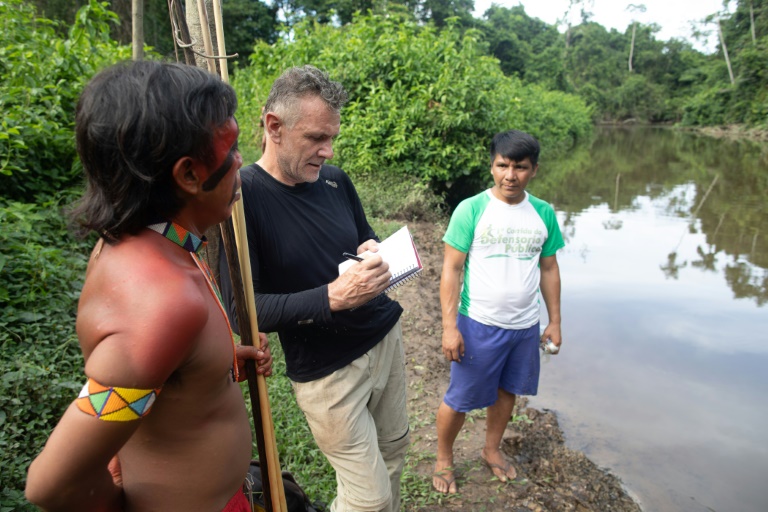
A British journalist and a Brazilian indigenous expert have gone missing in a remote region of the Amazon rainforest after receiving threats, authorities and indigenous-rights groups said Monday, raising fears for their safety.

Veteran foreign correspondent Dom Phillips, 57, went missing while researching a book in the Brazilian Amazon’s Javari Valley with respected indigenous expert Bruno Pereira, said The Guardian newspaper, where Phillips has been a longtime contributor.

The pair had traveled by boat to Jaburu lake, in the northern state of Amazonas near Brazil’s border with Peru, and were expected to return to the city of Atalaia do Norte by around 9:00 am Sunday, two rights groups said in a statement.

The men had “received threats in the field” last week, said the groups, the Union of Indigenous Organizations of the Javari Valley (UNIVAJA) and the Observatory for the Human Rights of Isolated and Recently Contacted Indigenous Peoples (OPI).

They did not give further details, but Pereira, an expert at Brazil’s indigenous affairs agency FUNAI with deep knowledge of the region, has regularly received threats from loggers and miners trying to invade isolated indigenous groups’ land.

FUNAI told AFP it was collaborating with local authorities on the search effort. It added that Pereira was on leave from the agency “to pursue personal interests.”

Phillips and Pereira had traveled to the region around a FUNAI monitoring base, and reached Jaburu lake Friday evening, UNIVAJA and OPI said.

They started the return trip early Sunday, stopping in the community of Sao Rafael, where Pereira had scheduled a meeting with a local leader to discuss indigenous patrols to fight the “intense invasions” that have been taking place on their lands, the groups said.

When the community leader did not arrive, the men decided to continue to Atalaia do Norte, about a two-hour trip, they said.

They were last sighted shortly after near the community of Sao Gabriel, just downstream from Sao Rafael.

The pair were traveling in a new boat with 70 liters of gasoline — “sufficient for the trip” — and were using satellite communications equipment, the groups said.

The federal prosecutors’ office said it had dispatched police to investigate and activated a search operation, to be led by the Brazilian navy.

Two initial searches by indigenous locals “with extremely good knowledge of the region” have found no trace of the men, said UNIVAJA and OPI.

According to the newspaper O Globo, two fishermen were arrested by the police on Monday night, including a person with whom the two men had an appointment. The paper did not specify if it was the local leader in Sao Rafael who never showed.

– ‘Time of the essence’ –

The missing men’s families voiced alarm, along with high-profile organizations and figures including Brazilian ex-president Luiz Inacio Lula da Silva.

“We implore the Brazilian authorities to send the national guard, federal police and all the powers at their disposal to find our cherished Dom,” Phillips’s sister’s partner, Paul Sherwood, wrote on Twitter.

“He loves Brazil and has committed his career to coverage of the Amazon rainforest. We understand that time is of the essence.”

The Committee to Protect Journalists and Brazil’s Foreign Press Correspondents’ Association (ACIE) also voiced their concern and urged the authorities to act “immediately.”

“I hope they are fine, safe and will be found quickly,” tweeted Lula, the front-runner for Brazil’s October presidential elections against far-right incumbent Jair Bolsonaro — who has faced accusations of fueling invasions of indigenous lands in the Amazon with his pro-mining and -agribusiness policies.

The Guardian said in a statement it was “very concerned” about Phillips, whose work has also appeared in The New York Times, The Washington Post and other leading media.

“We condemn all attacks and violence against journalists and media workers. We are hopeful that Dom and those he was traveling with are safe and will be found soon,” it said.

Phillips, who is married and based in the northeastern city of Salvador, had previously accompanied Pereira in 2018 to the Javari Valley for a story in The Guardian.

The 85,000-square-kilometer (33,000-square-mile) reservation is home to around 6,300 indigenous people from 26 groups, including a large number with virtually no contact with the outside world.

FUNAI’s base there, set up to protect indigenous inhabitants, has come under attack several times in recent years. In 2019, a FUNAI officer there was shot dead.

British journalist, indigenous expert missing in Brazil

A British journalist and a Brazilian indigenous expert have gone missing in a remote region of the Amazon rainforest after receiving threats, authorities and indigenous-rights groups said Monday, raising fears for their safety.

Veteran foreign correspondent Dom Phillips, 57, went missing while researching a book in the Brazilian Amazon’s Javari Valley with respected indigenous expert Bruno Pereira, said The Guardian newspaper, where Phillips has been a longtime contributor.

The pair had traveled by boat to Jaburu lake, in the northern state of Amazonas near Brazil’s border with Peru, and were expected to return to the city of Atalaia do Norte by around 9:00 am Sunday, two rights groups said in a statement.

The men had “received threats in the field” last week, said the groups, the Union of Indigenous Organizations of the Javari Valley (UNIVAJA) and the Observatory for the Human Rights of Isolated and Recently Contacted Indigenous Peoples (OPI).

They did not give further details, but Pereira, an expert at Brazil’s indigenous affairs agency FUNAI with deep knowledge of the region, has regularly received threats from loggers and miners trying to invade isolated indigenous groups’ land.

FUNAI told AFP it was collaborating with local authorities on the search effort. It added that Pereira was on leave from the agency “to pursue personal interests.”

Phillips and Pereira had traveled to the region around a FUNAI monitoring base, and reached Jaburu lake Friday evening, UNIVAJA and OPI said.

They started the return trip early Sunday, stopping in the community of Sao Rafael, where Pereira had scheduled a meeting with a local leader to discuss indigenous patrols to fight the “intense invasions” that have been taking place on their lands, the groups said.

When the community leader did not arrive, the men decided to continue to Atalaia do Norte, about a two-hour trip, they said.

They were last sighted shortly after near the community of Sao Gabriel, just downstream from Sao Rafael.

The pair were traveling in a new boat with 70 liters of gasoline — “sufficient for the trip” — and were using satellite communications equipment, the groups said.

The federal prosecutors’ office said it had dispatched police to investigate and activated a search operation, to be led by the Brazilian navy.

Two initial searches by indigenous locals “with extremely good knowledge of the region” have found no trace of the men, said UNIVAJA and OPI.

According to the newspaper O Globo, two fishermen were arrested by the police on Monday night, including a person with whom the two men had an appointment. The paper did not specify if it was the local leader in Sao Rafael who never showed.

– ‘Time of the essence’ –

The missing men’s families voiced alarm, along with high-profile organizations and figures including Brazilian ex-president Luiz Inacio Lula da Silva.

“We implore the Brazilian authorities to send the national guard, federal police and all the powers at their disposal to find our cherished Dom,” Phillips’s sister’s partner, Paul Sherwood, wrote on Twitter.

“He loves Brazil and has committed his career to coverage of the Amazon rainforest. We understand that time is of the essence.”

The Committee to Protect Journalists and Brazil’s Foreign Press Correspondents’ Association (ACIE) also voiced their concern and urged the authorities to act “immediately.”

“I hope they are fine, safe and will be found quickly,” tweeted Lula, the front-runner for Brazil’s October presidential elections against far-right incumbent Jair Bolsonaro — who has faced accusations of fueling invasions of indigenous lands in the Amazon with his pro-mining and -agribusiness policies.

The Guardian said in a statement it was “very concerned” about Phillips, whose work has also appeared in The New York Times, The Washington Post and other leading media.

“We condemn all attacks and violence against journalists and media workers. We are hopeful that Dom and those he was traveling with are safe and will be found soon,” it said.

Phillips, who is married and based in the northeastern city of Salvador, had previously accompanied Pereira in 2018 to the Javari Valley for a story in The Guardian.

The 85,000-square-kilometer (33,000-square-mile) reservation is home to around 6,300 indigenous people from 26 groups, including a large number with virtually no contact with the outside world.

FUNAI’s base there, set up to protect indigenous inhabitants, has come under attack several times in recent years. In 2019, a FUNAI officer there was shot dead.

Death of three sisters spotlights India dowry violence

Before the three sisters and their children were found dead in a well, they left a message blaming the family they had married into.

Kalu, Kamlesh and Mamta Meena were victims of a dispute over dowries, the often hefty sums Indian parents pay to marry off their daughters.

The sisters had wed brothers from the same household and lived under the same roof, but suffered constant violence from their husbands and in-laws, according to the trio’s grieving relatives.

They were abused constantly, they say, including when their father failed to meet demands for more money. 

All three were found dead last month near their marital home, a village on the outskirts of Jaipur, along with Kalu’s four-year-old son and infant child. Both Kamlesh and Mamta were pregnant.

“We don’t wish to die but death is better than their abuse,” read a message on WhatsApp left by one of the sisters after their disappearance, a cousin said.

“Our in-laws are the reason behind our deaths. We are dying together because it’s better than dying every day.”

Authorities are investigating and currently treating the deaths as suicides, a senior police officer in Jaipur told AFP.

The sisters’ distraught father, Sardar Meena, said life had been a living hell for his daughters, whose husbands banned them from pursuing their education and constantly harassed them for more payments.

“We had already given them so many things, you can see them in their home,” he told AFP, counting off the beds, television sets and refrigerator he provided to the family.

“I am the father of six girls, there is a limit to how much I can give,” added Sardar, who earns a meagre income as a farmer. 

“I had educated them and just doing that was difficult.”

Police have arrested the three husbands, their mother and a sister-in-law on charges of dowry harassment and spousal abuse.

AFP’s attempts to contact the men’s family were unsuccessful.

– ‘Dignity of the family’ –

India outlawed the practice of paying dowries more than 60 years ago, and harassment or extortion over the payments is a criminal offence.

But the custom persists, particularly in rural areas, undergirded by social conventions that treat women as an economic burden and demand compensation for accepting them as brides. 

Local news outlets regularly report on marital property disputes that end in murder. 

Last year, a man in the southern state of Kerala was jailed for life after using venomous snakes to murder his wife and take sole control of their property, which included a new car and 500,000 rupees ($6,500) provided by her family as dowry.

Courts have also been punitive in their treatment of dowry harassment, last month jailing a man in Kerala for 10 years after his payment demands were blamed for driving his wife to suicide. 

A pervasive taboo around divorce — only one in 100 Indian marriages end in dissolution — has kept married women from contemplating escape from abusive situations.

For the Meena sisters, leaving was never seen as an option, even though their relatives were aware of the violence.

“Once they were married, we thought they should remain in their marital homes, to maintain the dignity of the family,” Sardar said.

“If we had gotten them remarried in another home, and if that situation turned out to be worse, then what will we do? We’ll lose face.”

– ‘End of the road’ –

India’s National Crime Records Bureau recorded nearly 7,000 dowry-related killings in 2020 — around 19 women every day.

The same agency reported that more than 1,700 women killed themselves that year over “dowry-related issues”.

Both figures are dependent on reports to police, and experts say the actual number of cases is much higher, as with other data on family violence.

“In an hour, some 30 to 40 women are victims of domestic violence… and these are just documented (cases), so it must be much more than that,” Kavita Srivastava, an activist with India’s People’s Union for Civil Liberties, told AFP.

Srivastava said the dowry dispute involving the Meena sisters was just one part of their tormentors’ efforts to control their lives and restrict their independence.

The fundamental cause, she added, was a widespread social acceptance of domestic violence in India that leaves women feeling trapped in oppressive and violent relationships.

“If even one woman has to kill herself because her marital life seems like the end of the road,” she said, “I feel the Indian state has failed for those women.”

Swedish government faces tough no-confidence vote

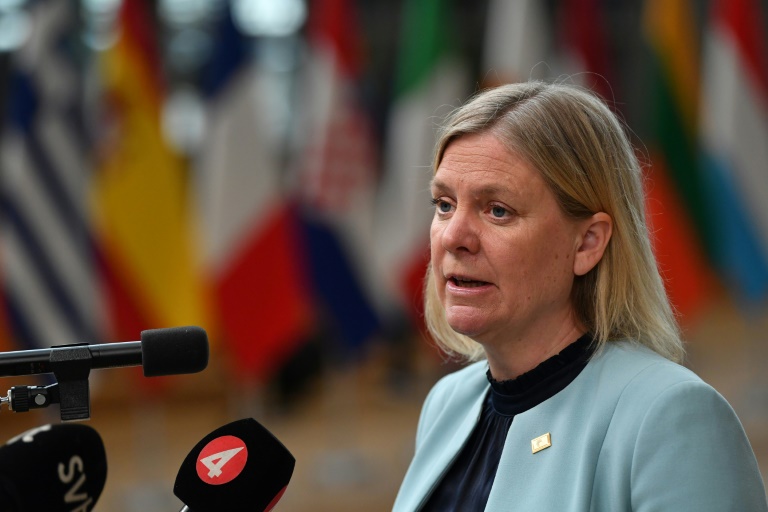
Sweden’s lawmakers are Tuesday holding a vote of no-confidence against the country’s justice minister, potentially triggering a government crisis only weeks after the country submitted a bid to join NATO.

The potential crisis also comes less than a year after the Swedish government was toppled only to be resurrected weeks later.

The vote, which is scheduled to be held in parliament at 12:00 pm (1000 GMT), was launched by the far-right Sweden Democrats who blame justice minister Morgan Johansson for failing to stem rising gang violence.

“We have reached a point where the single most important crime policy measure is to give Morgan Johansson an early retirement,” Sweden Democrat MP Henrik Vinge told parliament last week.

The conservative Moderate Party along with the Liberal Party and the Christian Democrats quickly announced that they will support the motion.

Together the four parties control 174 seats in parliament but they need one more vote for the motion to pass.

If parliament were to vote against Johansson it would mean he will need to be relieved of his position.

Prime Minister Magdalena Andersson has made it clear that it would also mean her resignation, triggering another government crisis in the country.

Andersson told reporters that the government’s decisions are made collectively so a no-confidence vote against Johansson based on policy would be one against the government.

“There is a war going on in our vicinity, we are in a very sensitive position because of our NATO bid together with Finland,” a noticeably upset Andersson said on Thursday.

“To then create a situation with a political mess and insecurity is completely irresponsible,” she said.

With only one vote missing, the affair could be decided by independent parliamentarian Amineh Kakabaveh, a former Left Party member sitting in parliament as an independent since 2019.

Kakabaveh, who is of Iranian Kurdish origin, had already become a focal point in Swedish politics as the country’s NATO bid is currently being blocked by Turkey.

Ankara accuses Stockholm of providing a safe haven for the outlawed Kurdistan Workers’ Party (PKK), listed as a “terrorist” group by Turkey and its Western allies.

Since the vote was announced last week, Kakabaveh has said she is seeking assurances from the ruling Social Democrats that they will not cave in to Turkish demands in their efforts to pave the way to membership, otherwise she intends to vote against Johansson.

On Monday, Kakabaveh told broadcaster SVT she had not yet decided how she was voting.

However, analysts have pointed out that even if Prime Minister Andersson resigns, she will likely remain prime minister leading an interim government as the general elections in September are only four months away.

Gun attack on church in southwest Nigeria leaves 21 dead

Gunmen using explosives killed at least 21 people, including children, in an attack on a Catholic church in southwest Nigeria, local officials said, in violence that drew widespread international condemnation.

The bloodshed at St. Francis Catholic Church in Owo town during a Sunday service was a rare assault in Nigeria’s usually safer southwest and shocked a country grown used to jihadist attacks and mass kidnappings in the north.

Blood still stained the church floor and debris lay scattered around a day after the attack that Ondo State governor’s office said killed at least 21 people.

Gunmen hid among the worshippers inside the church and also opened fire on the congregation through the windows from outside.

“Investigations revealed that some of the gunmen disguised as congregants, while other armed men who had positioned themselves around the church premises from different directions, fired into the church,” the police statement said.

Fragments of explosives and three unexploded improvised devices were found at the scene.

Richard Olatunde, spokesman for the Ondo State governor’s office, told AFP 21 people died after gunmen detonated dynamite inside the church before opening fire.

National Emergency Management Agency local representative Olanrewaju Kadiri said 22 people were killed, including several children, with another 40 people wounded.

No group has so far claimed responsibility for the attack and the motives were not immediately clear.

Vice President Yemi Osinbajo arrived on Monday to visit some of the wounded in Owo where he said perpetrators “will pay for this heinous” attack.

Survivors described panic as worshippers fled a sudden outburst of gunshots.

Father Andrew Abayomi, who conducted the service, told AFP some worshippers managed to close the church door and he escaped with others, including children, into the vestry to hide for about 20 minutes before emerging to the carnage.

“Even before leaving the church premises, I have seen some lifeless: I saw a woman shot beside the bus,” he said.

Another survivor, Bade Salawu, recalled disbelief at hearing gunshots inside the church.

“They didn’t come to steal anything, they didn’t come to kidnap anybody… their aim was to just kill and destroy.”

Another witness told AFP he saw at least five gunmen on the church premises.

The state government declared a seven-day mourning period for the victims, and ordered the national flag to be flown at half-mast in Ondo.

– Jihadists, gangs –

Pope Francis was “deeply saddened” by the “horrible attack”, his number two, Vatican Secretary of State Cardinal Pietro Parolin wrote in a telegram to the bishop of Ondo.

The pope assures “all those who are affected by this unspeakable act of violence of his spiritual closeness”, he said.

President Muhammadu Buhari condemned the “heinous killing of worshippers”, while the UN special representative for West Africa and the Sahel, Mahamat Saleh Annadif, spoke of a “barbaric terrorist attack”.

Nigeria’s military is fighting a 12-year-long jihadist insurgency in the northeast and heavily armed criminal gangs often carry out looting raids and mass kidnappings in the northwest and north-central parts.

But large-scale attacks in Nigeria’s southwest are relatively rare, although kidnappings for ransom have become increasingly common.

Boko Haram jihadists in the northeast have targeted churches in the past. Nigeria’s jihadist conflict has killed 40,000 and displaced two million more in the northeast.

The attack came a day before the ruling APC party started primaries for its candidate in the 2023 election to replace Buhari, a former army commander who steps down after two terms in office.

Security will be a major challenge for whoever wins the race to govern Africa’s most populous country and the continent’s largest economy.

As well as jihadists and criminal gangs known locally as bandits, Nigeria’s security forces are also dealing with separatist agitation in the southeast.

UK PM Johnson survives Tory MPs' no-confidence vote

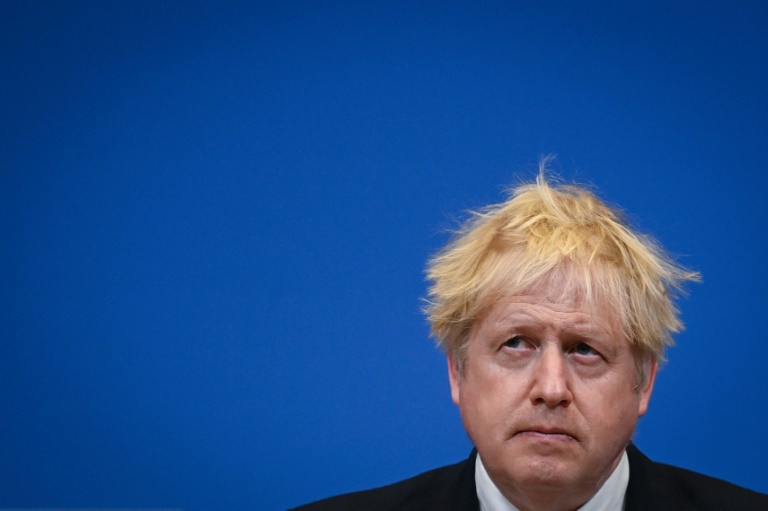
British Prime Minister Boris Johnson on Monday survived a vote of no confidence from his own Conservative MPs but with his position weakened after a sizeable number refused to back him.

The Brexit figurehead called the 211-148 split a “convincing result, a decisive result”. 

“As a government we can move on and focus on the stuff that really matters,” he told reporters.

The vote — just over two years after he won a landslide general election victory — was brought after a string of scandals that have left the Tory party’s standing in tatters.

Chief among them was the “Partygate” controversy over lockdown-breaking events at Downing Street, which caused public outrage and saw him become the first serving UK prime minister to have broken the law.

Johnson, 57, needed the backing of 180 MPs to survive the vote — a majority of one out of the 359 sitting Conservatives in parliament.

Defeat would have meant an end to his time as party leader and prime minister until a replacement was found in an internal leadership contest.

Speculation will now turn to whether Johnson can survive having lost the confidence of so many of his own MPs — and whether senior ministers will now resign.

In previous Tory ballots, predecessors Margaret Thatcher and Theresa May both ultimately resigned despite narrowly winning their own votes, deciding that their premierships were terminally damaged.

“The Conservative government now believes that breaking the law is no impediment to making the law,” the main opposition Labour leader Keir Starmer said. 

“The Conservative party now believes the British public have no right to expect honest politicians.”

– ‘Party’s over, Boris’ –

The vote dominated British newspaper front pages Tuesday, with The Times describing Johnson as “A wounded victor” and pointing out that his margin of victory was less than that of his predecessor May, who was ousted months later.

Under the headline “Hollow victory tears Tories apart,” The Daily Telegraph said Johnson was “clinging to power” while The Financial Times said the margin of his victory “left him badly damaged and exposed the scale of the division and animosity in his party.”

“PM clinging to power after vote humiliation,” The Guardian said, while The Daily Mirror, which helped break the “Partygate” story, simply said “Party’s over, Boris.” 

The Daily Mail was among the few supportive papers, saying “Boris vows: I’ll bash on.”

Johnson has steadfastly refused to resign over “Partygate”.

He earlier defended his record on delivering Brexit, fighting the Covid pandemic and Britain’s hawkish support for Ukraine against Russia.

“This is not the moment for a leisurely and entirely unforced domestic political drama and months and months of vacillation from the UK,” he told Tory MPs, according to a senior party source.

“We have been through bumpy times before and I can rebuild trust,” the prime minister told his parliamentary rank and file, according to the source, adding: “The best is yet to come.”

Supporters cheered and thumped their tables in approval. 

The source said Johnson had indicated tax cuts could be in the offing as Britain contends with its worst inflation crisis in generations.

But the scale of Tory disunity was exposed in a blistering resignation letter from Johnson’s “anti-corruption champion” John Penrose and another letter of protest from long-time ally Jesse Norman.

The prime minister’s rebuttals over “Partygate” were “grotesque”, Norman wrote, warning that the Tories risked losing the next general election, which is due by 2024.

Ex-cabinet member Jeremy Hunt, who lost to Johnson in the last leadership contest in 2019 and is expected to run again if Johnson is deposed, confirmed he would vote against him.

“Conservative MPs know in our hearts we are not giving the British people the leadership they deserve,” Hunt tweeted.

– Jubilee booing –

After a dismal showing in May local elections, the party is expected to lose two by-elections this month, one of them in a previously rock-solid Conservative seat.

That is focusing the minds of Tory lawmakers, who fear their own seats could be at risk if Johnson leads them into the next election.

In a snap poll by Opinium Monday of 2,032 people, 59 percent of respondents said the Tories should ditch him as leader. 

Among Conservative members, 42 percent want MPs to fire Johnson, according to another poll by YouGov.

Johnson was booed Friday by sections of an ardently patriotic crowd gathered outside St Paul’s Cathedral, ahead of a religious service for Queen Elizabeth II’s Platinum Jubilee.

For wavering Tories, the barracking at a televised national occasion reportedly marked a turning point. Some said they had held back on public criticism of Johnson until after the jubilee.

But cabinet ally Jacob Rees-Mogg dismissed the booing as “muted noise” and insisted that Johnson could survive with the slenderest of majorities.

Close Bitnami banner
Bitnami