World

US orders seizure of two aircraft owned by Russian oligarch Abramovich

The US Justice Department ordered the seizure Monday of two aircraft owned by Russian oligarch Roman Abramovich, saying they had been used in violation of sanctions on Russia imposed over its invasion of Ukraine.

The department said in court filings that the two aircraft, a Boeing 787-8 Dreamliner and Gulfstream G650ER executive jet, had been flown into Russian territory earlier this year in violation of US export controls set for US-made aircraft on March 2.

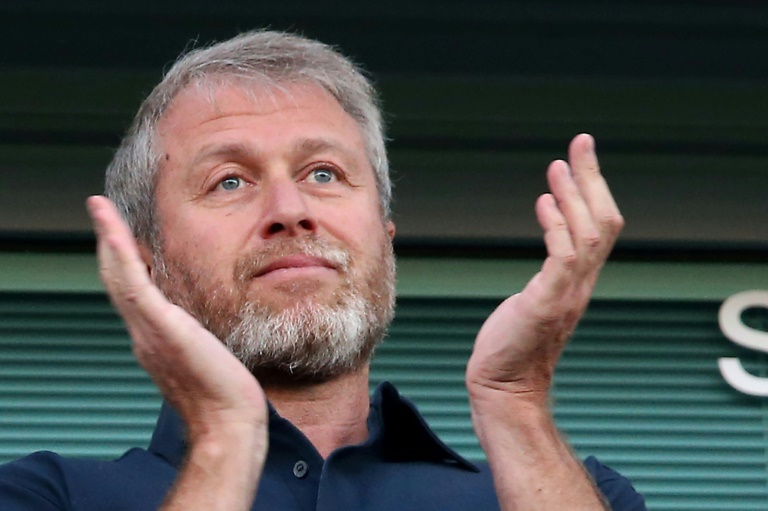
The department’s move targets one of the wealthiest Russian billionaires, who has already been forced to sell Chelsea Football Club in the wake of Moscow’s February 24 invasion of Ukraine.

It aims to incentivize people close to the Russian government “to distance themselves from the Kremlin and from the Russian state as it continues to ramp up the war,” said Andrew Adams, director of the Justice Department’s KleptoCapture task force.

Both aircraft, which the Justice Department valued at $400 million, are believed to be out of reach of US officials — in Russia and, for the Boeing, possibly in Dubai, according to media reports.

“We will take active steps to pursue seizure, and we’ll keep an eye out to see if they move jurisdictions,” said Adams.

The seizure order outlined how Abramovich controls the two aircraft through a series of shell companies, centered on the Cyprus-registered Europe Settlement Trust.

Abramovich in February made his children, all Russian citizens, beneficiaries of the trust, according to the order.

– Not sanctioned by US –

Abramovich, 55, built a fortune estimated by Bloomberg at $12.5 billion on oil, steel, aluminum and other industries, maintaining close relationships with top Russian officials, including President Vladimir Putin.

Holding Russian and Israeli citizenship, as well as reportedly Portuguese, he is believed to have moved much of his wealth outside of Russia, but he retains substantial interests inside the country.

Since the Ukraine war began, he has been hit with sanctions in Europe.

The island of Jersey, a British crown dependency, announced on April 13 that it had frozen more than $7 billion in assets believed to be linked to Abramovich.

But unlike many fellow Russian tycoons, Abramovich has not been placed on US sanctions lists.

According to reports, he has avoided the seizures by European authorities of his 162-meter (500-foot) yacht Eclipse and the 140-meter Solaris by moving them into Turkish waters.

In parallel with the aircraft seizure order, the US Commerce department issued a letter charging Abramovich with knowingly violating US restrictions that seek to block specific technologies and goods from being exported to Russia.

The charges can bring financial penalties of up to double the value of the “export” transaction, the Commerce letter said, suggesting they could seek more than the value of the aircraft in fines.
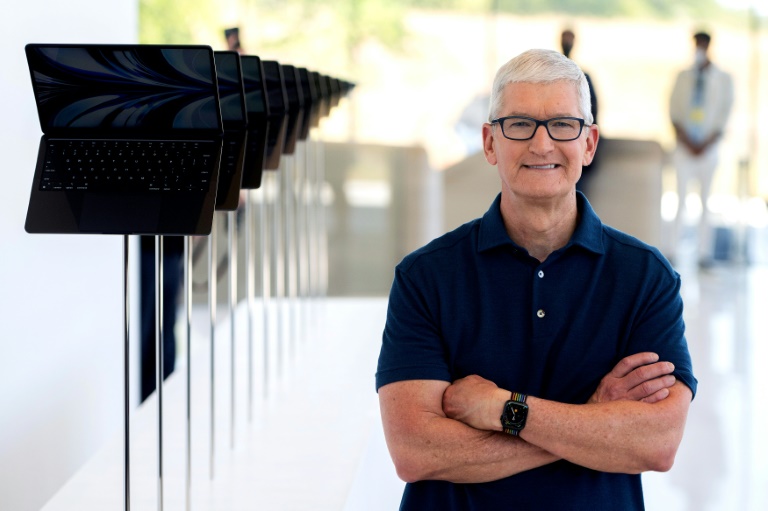
Apple unveils message recall, other 'wish list' features

Apple opened Monday its first in-person developers conference since the onset of the pandemic with chips, maps and a way to delete precipitously sent messages, but was mum on any virtual reality offerings.

The tech giant touted new features and capabilities being built into the operating systems running iPhone, Apple Watch and more, along with a speedy new MacBook Air computer driven by a second generation of its custom chip.

Apple chief Tim Cook and his team showed off coming innovations during a keynote presentation at its first developers conference to be held at its campus in the Silicon Valley city of Cupertino — and the first in-person version of the gathering since Covid-19 struck.

“It’s so good to see you all,” Cook said from a stage set up on a lawn next to Apple’s ring-shaped headquarters, as an audience of several thousand developers cheered in the morning sunshine.

No updates, however, were forthcoming on a rumored virtual reality operating system or hardware.

Still, developers will get to meet with Apple engineers during the weeklong conference, and even work in a new building with soundproof rooms to let them discuss ideas without being overheard.

Aside from new MacBook models, the event was a deep dive into coming new generations of operating systems for Apple’s line-up of offerings.

Apple will start letting people delete and edit messages after they have been sent as part of the latest update to its operating software, as well as customizable options for the iPhone main screen.

Users of its digital wallet should soon also be able to pay for purchases in installments.

Relying increasingly on custom made chips has enabled Apple to make its devices and software work more seamlessly together, and catch up a bit to features offered by rivals such as Google Maps and even Microsoft Xbox video game platform for Windows-powered computers.

Creative Strategies analyst Carolina Milanesi saw it as Apple filling “users’ wish-list,” adding capabilities to make its apps, services or hardware the natural option in an increasingly competitive market.

“They are listening to what the users are saying and they’re making changes,” Milanesi said.

As increased dependence on computers and the internet caused by the pandemic shows no sign of abating, and by better tuning hardware and software for convenience promises to keep people in Apple’s money-making ecosystem, the analyst added.

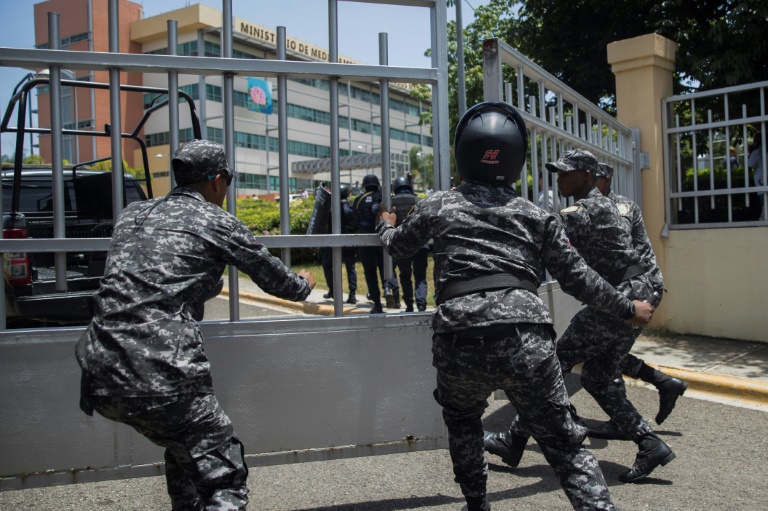
Dominican Republic minister shot dead in office

The Dominican Republic’s environment minister, Orlando Jorge Mera, was shot dead during a meeting on Monday by a businessman and longtime friend, who has been taken into custody, the government said.

A lawyer and politician, the 55-year-old Jorge Mera was the son of former president Salvador Jorge Blanco (1982-86), and had headed the environment ministry since mid-2020.

“The information we have at the moment indicates that this morning the environment minister lost his life after he was attacked with a firearm in his office,” said Homero Figueroa, the spokesman for the presidency.

“Miguel Cruz, who has been identified as the shooter, was a personal friend of the dead minister,” he said.

Figueroa said the suspect was in police custody and his motive was “under investigation.”

The alleged shooter used his friendship with the victim to gain access to a secure area where Jorge Mera was holding a regular meeting with his deputies, ministry sources told AFP.

According to a statement from Jorge Mera’s family, Cruz was “a childhood friend whom he received in his office.” 

According to sources close to the investigation, Cruz and Jorge Mera had found themselves at loggerheads over environmental policy.

Jorge Mera had promised upon taking office in 2020 to work for the “responsible” use of natural resources, to protect ecosystems and slash pollution.

In a March interview with El Caribe and CDN, the minister said he had reported to the judiciary 2,300 cases of environmental permit violations, illegal cutting of trees and damage to mangroves.

Among those affected were active and retired military, police and business people.

The Acento website said seven gunshots were heard and shortly afterwards a heavily armed elite police unit entered the ministry.

Police did not immediately comment on the incident.

President Luis Abinader declared himself “deeply saddened” by the minister’s death, offering his condolences to the victims’ wife and children, while the environment ministry said it was “dismayed” by the attack.

Jorge Mera, who formed the Modern Revolutionary Party alongside Abinader, was president of the Dominican telecommunications institute from 2000 to 2004.

A lawyer, he had also worked as a television producer and presenter.

He came from a political family. His sister Dilia Jorge Mera is a deputy minister, his son Orlando Jorge Villegas is a legislator and his widow Patricia Villegas is the ambassador to Brazil.

Stock prices rise on boost from China

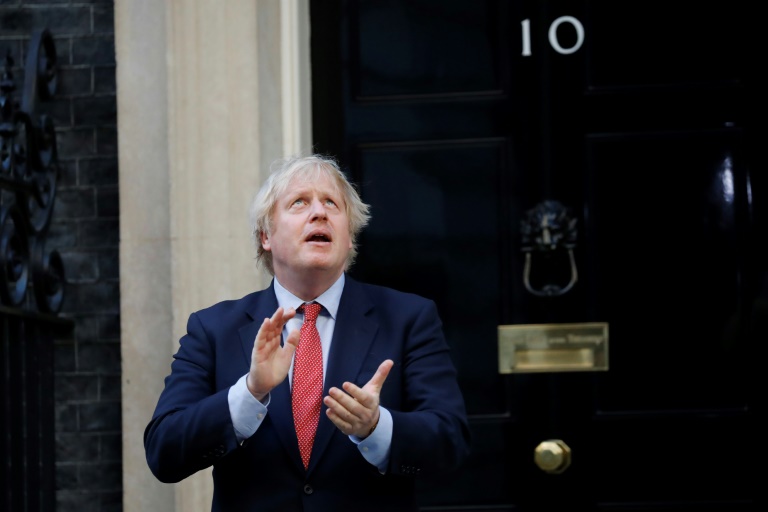
Global stock markets advanced on Monday, driven by an easing of Covid lockdowns in China and as British stocks climbed ahead of a vote to maintain the government of British Prime Minister Boris Johnson. 

London’s stock market, reopening after a British public holiday to mark Queen Elizabeth II’s Platinum Jubilee, shrugged off uncertainty over Johnson, who late Monday survived a “no confidence” vote from his own Conservative members of parliament to hold onto power.

Eurozone stocks also closed higher ahead of a European Central Bank meeting Thursday when policymakers are set to draw a line under its massive bond-buying stimulus program.

On the other side of the Atlantic, Wall Street stocks finished a choppy session with modest gains.

US equities started the week strongly before giving up most gains as the yield on the 10-year US Treasury note, a proxy for inflation and interest rates, climbed above three percent.

Investors are especially focused on Friday’s consumer price index report, seen as an important input into the Federal Reserve’s next moves

“Friday’s inflation report will likely show that inflation is not easing just yet, but that the odds of a recession are still low,” said Oanda’s Edward Moya. 

“Wall Street will need to wait for a couple more inflation reports after this one before anyone can confidently make a call as to when the Fed may alter their tightening course.”

Traders took heart also from a wind-down of Covid containment measures in China that have crippled its economy for months.

With infections trending down in major cities, including Shanghai and Beijing, authorities have allowed some sense of normality to return, raising hopes for a pick-up in consumer activity.

“Positive news around Chinese economic activity and cheaper equity valuations could offer value from a long-term investment perspective, but volatility will remain high in the short-term,” said Diana Mousina, of AMP Capital.

In foreign exchange, the British pound was higher heading into the confidence vote on Johnson’s leadership, maintaining the gains after the outcome was announced.

Johnson needed the backing of at least 180 MPs to survive the challenge — a majority of the 359 sitting Conservatives in parliament. While 211 Tory MPs backed him, 148 did not.

Johnson’s public image has suffered in the past year, most notably over the “Partygate” controversy that saw him become the first serving UK prime minister found to have broken the law.

The Conservative government has come under pressure also from a cost-of-living crisis in Britain as UK inflation stands at the highest level in four decades, driven by surging oil and gas prices.

– Key figures at around 2045 GMT –

New York – Dow: UP 0.1 percent to 32,915.78 (close)

New York – S&P 500: UP 0.3 percent at 4,121.43 (close)

New York – Nasdaq: UP 0.4 percent at 12,061.37 (close)

London – FTSE 100: UP 1.0 percent at 7,608.22 (close)

Frankfurt – DAX: UP 1.3 percent at 14,653.81 (close)

Paris – CAC 40: UP 1.0 percent at 6,548.78 (close)

EURO STOXX 50: UP 1.1 percent at 3,838.42 (close)

Tokyo – Nikkei 225: UP 0.6 percent at 27,915.89 (close)

Hong Kong – Hang Seng Index: UP 2.7 percent at 21,653.90 (close)

Shanghai – Composite: UP 1.3 percent at 3,236.37 (close)

Brent North Sea crude: DOWN 0.2 percent at $119.51 per barrel

West Texas Intermediate: DOWN 0.3 percent at $118.50 per barrel

Euro/dollar: DOWN at $1.0699 from $1.0719 

Pound/dollar: UP at $1.2528 from $1.2488

Euro/pound: DOWN at 85.37 pence from 85.84 pence

Dollar/yen: UP at 131.88 yen from 130.88 yen

Blinken says reports of Russia stealing Ukraine grain 'credible'

US Secretary of State Antony Blinken gave support Monday to reports that Russia has stolen grain from Ukraine for resale, even as Moscow blocks the country from exporting its own corn.

“There are credible reports… that Russia is pilfering Ukraine’s grain exports to sell for its own profit,” Blinken said at a State Department conference on food security issues arising from the invasion of Ukraine.

“Now, Russia is hoarding its food exports as well,” Blinken added, outlining the reasons for the sharp surge in global prices for wheat and other grains, and looming shortages.

The war “is having a devastating impact on global food security because Ukraine is one of the breadbaskets of the world,” Blinken said. 

The New York Times reported Monday that a number of freight vessels have departed Russia-controlled ports with what US officials have described as “stolen Ukrainian grain.”

It said that the United States has alerted 14 countries, mostly in Africa, about the shipments, as many of them are dependent on grain imports and already face severely constrained supplies. 

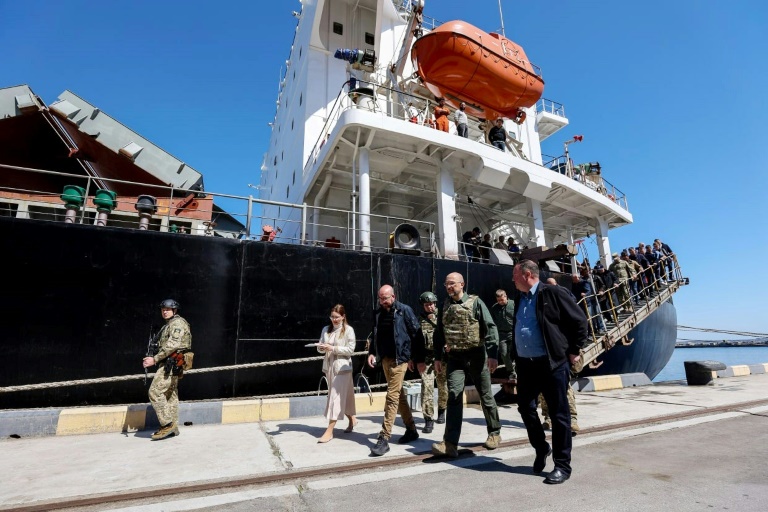
Blinken said the Russian navy has blocked grain carriers from leaving the Black Sea port of Odessa, in an effort to “blackmail” the world into supporting Moscow’s war.

“Right now a Russian naval blockade in the Black Sea is preventing Ukraine’s crops from being shipped to their normal destinations,” he said.

“There is somewhere around 20 million tonnes of wheat that is trapped in silos near Odessa, and in ships literally filled with grain that are stuck in the Odessa port because of this Russian blockade.”

Blinken said it was a deliberate strategy by Russian President Vladimir Putin to force the rest of the world “to give in to him,” and eliminate sanctions on russia.

“In other words, quite simply put, it’s blackmail,” Blinken said.

Musk accuses Twitter of withholding data, says may withdraw bid

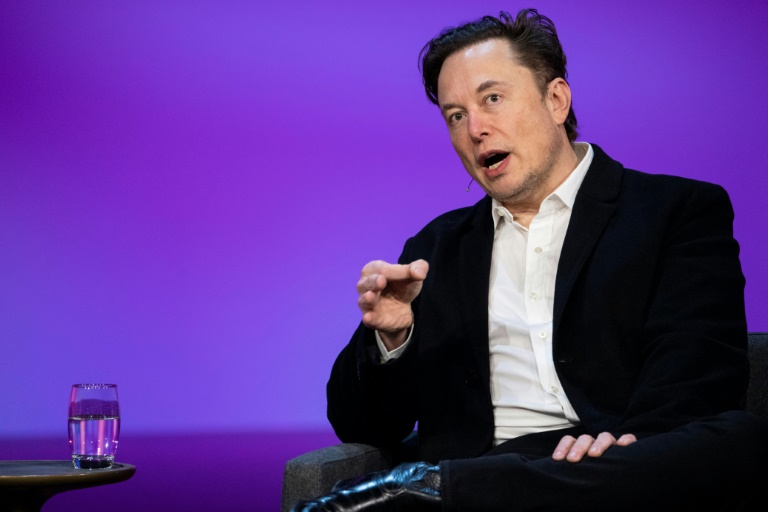
Elon Musk threatened Monday to withdraw his bid to buy Twitter, accusing it of failing to provide data on fake accounts, in the latest twist in the Tesla billionaire’s push to acquire the social network.

Twitter has breached its “obligations under the merger agreement and Mr. Musk reserves … his right not to consummate the transaction,” according to a document filed with securities regulators.

The filing marks an escalation of Musk’s prior statements that have highlighted fake accounts as a threat to his proposed $44 billion deal to take over Twitter.

The mercurial Musk agreed a deal in late April to purchase Twitter.

But the proposed sale has stoked protest from critics who warn his stewardship will embolden hate groups and disinformation campaigns.

US securities regulators have also pressed Musk for an explanation of an apparent delay in reporting his Twitter stock buys.

Musk began making significant noise about fake accounts in mid-May, saying on Twitter he could walk away from the transaction if his concerns were not addressed.

Some observers have seen Musk’s questioning of Twitter bots as a means to end the takeover process, or to pressure Twitter into lowering the price.

Musk’s latest statement on bots signifies he is “looking to walk away from deal,” Wedbush analyst Dan Ives said Monday on Twitter, noting that there is a $1 billion breakup fee in the Twitter-Musk transaction. 

“We continue to believe that Elon is playing hard ball… to gain leverage/options to either reduce his offer price or indeed completely walk away if he gets cold feet,” said CFRA Research’s Angelo Zino.

Twitter on Monday defended its responsiveness, and vowed to complete the deal.

“Twitter has and will continue to cooperatively share information with Mr. Musk,” a spokesperson said. “We intend to close the transaction and enforce the merger agreement at the agreed price and terms.”

– Counting bots –

Musk has said that the real number of bots may be four times higher than Twitter estimates.

Bots can be used on social media to spread false news or create a distorted impression of how widely information is being consumed and shared.

Twitter chief executive Parag Agrawal has said that fewer than five percent of accounts active on any given day at Twitter are bots, but that analysis cannot be replicated externally due to the need to keep user data private.

But Musk has been dismissive of Twitter’s responses and reiterated that stance in Monday’s filing.

Musk’s attorney, Mike Ringler, said Twitter had failed to respond to Musk’s valid inquiry about fake accounts, according to the filing.

“Mr. Musk has made it clear that he does not believe the company’s lax testing methodologies are adequate so he must conduct his own analysis,” Ringler said. “The data he has requested is necessary to do so.”

To execute the deal, Musk “must have a complete and accurate understanding of the very core of Twitter’s business model — its active user base,” said the filing.

“Mr. Musk believes Twitter is transparently refusing to comply with its obligations under the merger agreement.”

Later Monday, Texas Attorney General Ken Paxton announced a civil probe of Twitter “for potentially false reporting over its fake bot accounts in violation of the Texas Deceptive Trade Practices Act.”

Shares of Twitter fell 1.5 percent to $39.56.

Mexico snub throws Americas' summit into disarray

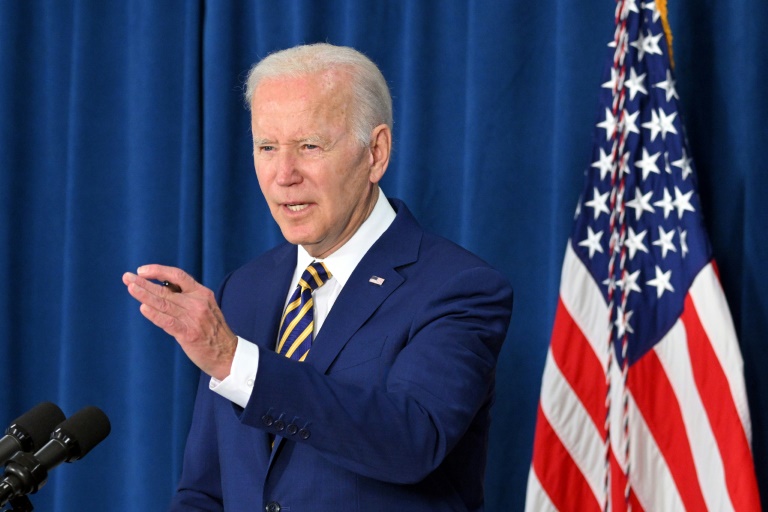
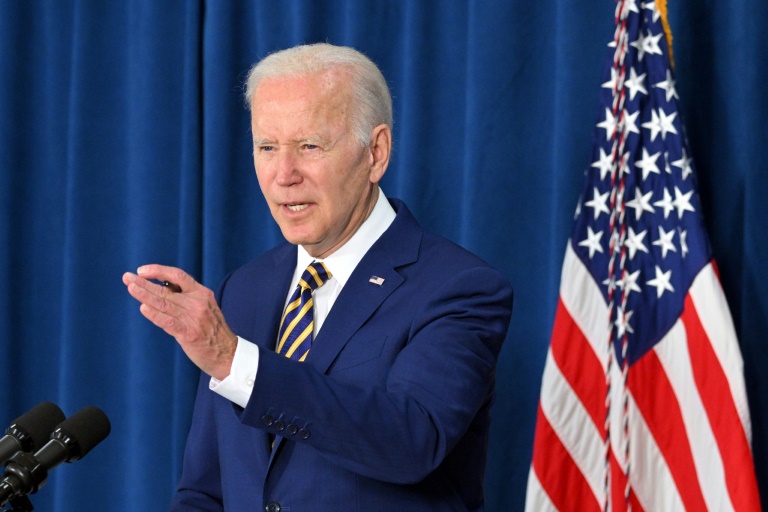
President Joe Biden’s plans to reboot US engagement with Latin America — especially on critical topics like migration — took a major hit after key partner Mexico snubbed a regional summit opening Monday in Los Angeles to protest Washington’s exclusion of three far-left countries.

What was meant to be a week-long showcase of cooperation looks more likely to become a display of division that reflects diminishing clout over a region where long-time US economic and diplomatic influence faces a growing Chinese challenge.

Confirming it was not inviting Cuba, Nicaragua and Venezuela to the Summit of the Americas, a senior White House official cited “reservations regarding the lack of democratic space and the human rights situations.”

In response, Mexican President Andres Manuel Lopez Obrador said he would stay away.

“You cannot have a Summit of the Americas if you do not have all the countries of the Americas attending,” Lopez Obrador announced, complaining of US “hegemony” and “lack of respect for nations.”

Foreign Minister Marcelo Ebrard will represent Mexico instead, but the leftist populist leader’s absence will diminish the impact of a summit where US-Mexico relations are at the heart of major immigration and trade issues.

The senior US official did not directly respond to Lopez Obrador’s boycott, saying only that “the United States recognizes and respects the position of allies in support of inclusive dialogue.” The official also said non-governmental representatives from Cuba, Nicaragua and Venezuela would be present.

In Havana, the communist Cuban government issued a statement calling Biden’s decision “anti-democratic and arbitrary.”

Biden is expected to make announcements at the summit on economic cooperation and fighting Covid-19 and climate change, said Juan Gonzalez, the top White House adviser on Latin America.

The US president, who flies to Los Angeles on Wednesday, also hopes to secure an agreement to help regulate surges of migration from the region’s poorer and violent countries to the United States — a major concern for US voters and an area where Republican opponents see Biden as vulnerable in upcoming midterm elections.

– Playing down Mexico spat –

State Department spokesman Ned Price played down the seriousness of the spat with Lopez Obrador, saying “we understand his position” and that the US-Mexican relationship is “broad and deep.”

“Mexico is an important hemispheric player. We are very gratified that… Foreign Secretary Ebrard will be in attendance. We will have a number of opportunities to engage with our Mexican counterparts.”

The Biden administration also notes it has secured the presence of other key regional players, including Argentina’s left-leaning Alberto Fernandez and Brazil’s far-right Jair Bolsonaro.

Benjamin Gedan, who heads the Latin America program at the Woodrow Wilson International Center for Scholars, said Lopez Obrador’s absence would mark a “significant void” and said Mexico’s leader seemed more focused on domestic political gain.

The boycott has been “a really unfortunate subplot in the run-up to the summit because it has drained an enormous amount of US diplomatic energy for a bizarre cause celebre,” Gedan said.

Biden has crafted a positive agenda, avoiding simply summoning Latin American leaders to lecture them on democracy, corruption and China, he said.

But, he added, it was unclear whether Biden will bring substantial resources to the table, in contrast to China’s lavish infrastructure spending and trade privileges.

“I think, inevitably, the United States will disappoint,” Gedan said.

– ‘Progressively less ambitious’ –

The Summit of the Americas is the first held by the United States since the inaugural 1994 meeting in Miami, where then-US president Bill Clinton sought the creation of a trade area to cover the whole continent except communist Cuba.

The United States has since soured on free trade, with Biden following the lead of his predecessor Donald Trump, who said such pacts hurt US workers.

Trump championed a hard line on Venezuela and Cuba, and did not attend the last Summit of the Americas, in Peru in 2018. 

Eric Farnsworth, vice president of the Council of the Americas, recently told a congressional hearing that each summit has become “progressively less ambitious.”

Los Angeles, he said, “offers the perfect opportunity for Washington to announce a commitment to regional growth and recovery.”

Michael Shifter, a senior fellow at the Inter-American Dialogue, said the drama over summit attendance showed Washington’s waning hold over the region as China muscles in.

The United States “still has a lot of soft power,” Shifter said. “As for political and diplomatic influence, it is diminishing by the day.”

Mexico snub throws Americas' summit into disarray

President Joe Biden’s plans to reboot US engagement with Latin America — especially on critical topics like migration — took a major hit after key partner Mexico snubbed a regional summit opening Monday in Los Angeles to protest Washington’s exclusion of three far-left countries.

What was meant to be a week-long showcase of cooperation looks more likely to become a display of division that reflects diminishing clout over a region where long-time US economic and diplomatic influence faces a growing Chinese challenge.

Confirming it was not inviting Cuba, Nicaragua and Venezuela to the Summit of the Americas, a senior White House official cited “reservations regarding the lack of democratic space and the human rights situations.”

In response, Mexican President Andres Manuel Lopez Obrador said he would stay away.

“You cannot have a Summit of the Americas if you do not have all the countries of the Americas attending,” Lopez Obrador announced, complaining of US “hegemony” and “lack of respect for nations.”

Foreign Minister Marcelo Ebrard will represent Mexico instead, but the leftist populist leader’s absence will diminish the impact of a summit where US-Mexico relations are at the heart of major immigration and trade issues.

The senior US official did not directly respond to Lopez Obrador’s boycott, saying only that “the United States recognizes and respects the position of allies in support of inclusive dialogue.” The official also said non-governmental representatives from Cuba, Nicaragua and Venezuela would be present.

In Havana, the communist Cuban government issued a statement calling Biden’s decision “anti-democratic and arbitrary.”

Biden is expected to make announcements at the summit on economic cooperation and fighting Covid-19 and climate change, said Juan Gonzalez, the top White House adviser on Latin America.

The US president, who flies to Los Angeles on Wednesday, also hopes to secure an agreement to help regulate surges of migration from the region’s poorer and violent countries to the United States — a major concern for US voters and an area where Republican opponents see Biden as vulnerable in upcoming midterm elections.

– Playing down Mexico spat –

State Department spokesman Ned Price played down the seriousness of the spat with Lopez Obrador, saying “we understand his position” and that the US-Mexican relationship is “broad and deep.”

“Mexico is an important hemispheric player. We are very gratified that… Foreign Secretary Ebrard will be in attendance. We will have a number of opportunities to engage with our Mexican counterparts.”

The Biden administration also notes it has secured the presence of other key regional players, including Argentina’s left-leaning Alberto Fernandez and Brazil’s far-right Jair Bolsonaro.

Benjamin Gedan, who heads the Latin America program at the Woodrow Wilson International Center for Scholars, said Lopez Obrador’s absence would mark a “significant void” and said Mexico’s leader seemed more focused on domestic political gain.

The boycott has been “a really unfortunate subplot in the run-up to the summit because it has drained an enormous amount of US diplomatic energy for a bizarre cause celebre,” Gedan said.

Biden has crafted a positive agenda, avoiding simply summoning Latin American leaders to lecture them on democracy, corruption and China, he said.

But, he added, it was unclear whether Biden will bring substantial resources to the table, in contrast to China’s lavish infrastructure spending and trade privileges.

“I think, inevitably, the United States will disappoint,” Gedan said.

– ‘Progressively less ambitious’ –

The Summit of the Americas is the first held by the United States since the inaugural 1994 meeting in Miami, where then-US president Bill Clinton sought the creation of a trade area to cover the whole continent except communist Cuba.

The United States has since soured on free trade, with Biden following the lead of his predecessor Donald Trump, who said such pacts hurt US workers.

Trump championed a hard line on Venezuela and Cuba, and did not attend the last Summit of the Americas, in Peru in 2018. 

Eric Farnsworth, vice president of the Council of the Americas, recently told a congressional hearing that each summit has become “progressively less ambitious.”

Los Angeles, he said, “offers the perfect opportunity for Washington to announce a commitment to regional growth and recovery.”

Michael Shifter, a senior fellow at the Inter-American Dialogue, said the drama over summit attendance showed Washington’s waning hold over the region as China muscles in.

The United States “still has a lot of soft power,” Shifter said. “As for political and diplomatic influence, it is diminishing by the day.”

At least 20 dead in new DR Congo massacre

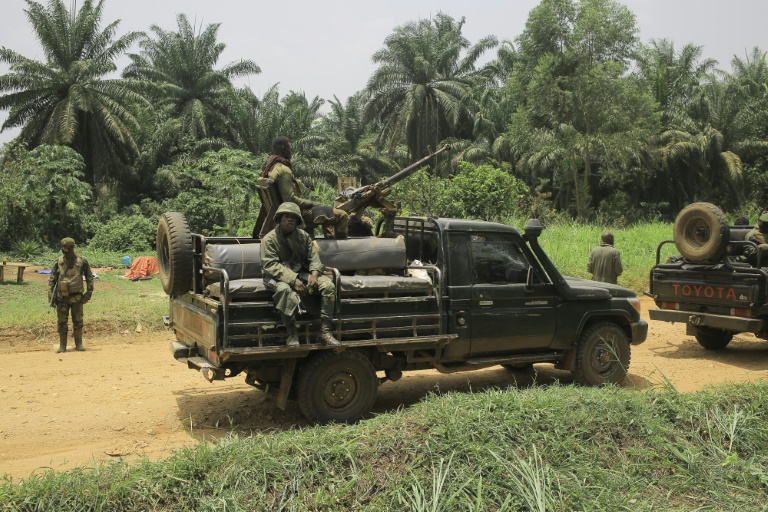
At least 20 people have been killed in a new massacre in DR Congo’s eastern province of Ituri, a respected monitor said on Monday, adding that the notorious ADF militia were suspected.

The attack took place overnight in the village of Bwanasura in Irumu territory, the Kivu Security Tracker (KST) said on Twitter.

David Beiza, head of the Red Cross in Irumu, said volunteers from his organisation “have counted 36 bodies” at the site of the massacre.

Ituri and neighbouring North Kivu province are struggling with attacks by armed groups, many of them a legacy of wars in the Democratic Republic of Congo’s east.

KST said the Allied Democratic Forces (ADF) — a group that the so-called Islamic State describes as its affiliate — was suspected to have been behind the killing.

Beiza said: “ADF rebels arrived around 8 pm. They moved calmly. Fortunately, many residents were able to flee.”

Dieudonne Malangay, a civil society leader in the district of Walese Vonkutu said the army was “late” in responding. “Bullets are still flying” in the area, he said.

On Monday, M23 rebels bombarded an army position at Bugusa in North Kivu’s Rutshuru territory killing two soldiers and wounding five, the military said in a statement.

The statement signed by the military governor’s spokesman General Sylvain Ekenge suggested Rwanda was supplying weapons to the rebels.

“The use of long-range artillery shows the support M23 receives from its natural ally,” the general said.

Fighting erupted in May between the army and the M23, a primarily Congolese Tutsi group. Kinshasa has repeatedly accused Kigali of backing the M23, although Rwanda has denied the charge.

Congolese President Felix Tshisekedi on Sunday said he had “no doubt” about Rwanda’s support for the rebels, but that he hoped for better relations with Kigali.

The ADF has been blamed for massacres, kidnappings and looting dating back to 2013, with a death toll estimated in the thousands.

Ituri and North Kivu have been under a “state of siege” since May last year — a measure placing army chiefs in positions of authority to speed up efforts to improve security.

The ADF was also targeted in a joint operation launched last November by government and Ugandan forces following bomb attacks in the Ugandan capital Kampala.

The operation, which was due to end on May 31, has been extended by two months.

– ADF bloodshed –

Despite the crackdown, the ADF’s attacks have continued — experts in March said the group had moved further inland after coming under pressure at the border.

At least 1,300 civilians have died in Irumu and Beni in North Kivu since the “state of siege” was introduced, according to local elected officials.

In March, at least 30 people were killed by suspected rebels in North Kivu and more than 50 people died in a two-day assault on villages in Irumu.

In May, at least 42 people were killed in ADF-attributed attacks at Bulongo and Beu-Manyama in North Kivu.

The ADF is historically a Ugandan rebel coalition whose biggest group comprised Muslims opposed to President Yoweri Museveni.

Established in eastern DRC in 1995, the group became the deadliest of scores of outlawed forces in the deeply troubled region.

Since April 2019, some ADF attacks in eastern DRC have been claimed by the Islamic State, which describes the group as its local offshoot, the Islamic State Central Africa Province.

The United States last year placed the ADF on its list of “terrorist” organisations linked to IS.

More than 120 armed groups roam eastern DRC.

Ituri is also suffering from ethnic attacks led by CODECO militia, which claims to represent the Lendu community against the rival Hema group and the security forces.

Gun attack on church in southwest Nigeria leaves 21 dead

Gunmen using explosives killed at least 21 people, including children, in an attack on a Catholic church in southwest Nigeria on Sunday in violence that drew widespread international condemnation.

The bloodshed at St. Francis Xavier Catholic Church in Owo town during a service was a rare assault in Nigeria’s usually safer southwest and shocked a country grown used to jihadist attacks and mass kidnappings in the north.

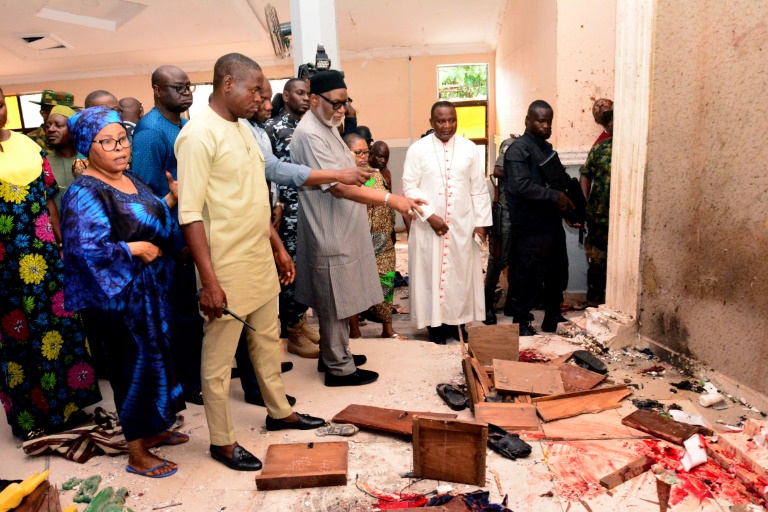
Blood still stained the church floor and debris lay scattered around a day after the attack that Ondo State governor’s office said killed at least 21 people.

Gunmen hid among the worshippers inside the church and also opened fire on the congregation through the windows from outside.

“Investigations revealed that some of the gunmen disguised as congregants, while other armed men who had positioned themselves around the church premises from different directions, fired into the church,” the police statement said.

Fragments of explosives and three unexploded improvised devices were found at the scene.

Richard Olatunde, spokesman for the Ondo State governor’s office, told AFP 21 people died after gunmen detonated dynamite inside the church before opening fire.

National Emergency Management Agency local representative Olanrewaju Kadiri said 22 people were killed, including several children, with another 40 people wounded.

No group has so far claimed responsibility for the attack and the motives were not immediately clear.

Vice President Yemi Osinbajo arrived on Monday to visit some of the wounded in Owo where he said perpetrators “will pay for this heinous” attack.

Survivors described panic as worshippers fled a sudden outburst of gunshots.

“I ran back to the church and I saw my two children and we brought them here to the federal medical centre,” Nzeadu Paulinus, a local resident who was away from the church when the shooting started and whose two children were wounded.

“I saw so many people who were wounded, and the dead.”

One witness told AFP he saw at least five gunmen on the church premises.

“I was passing through the area when I heard a loud explosion and gunshots inside the church,” the witness, who gave his name as Abayomi, told AFP.

The state government declared a seven-day mourning period for the victims, and ordered the national flag to be flown at half-mast in Ondo.

– Jihadists, gangs –

Pope Francis was “deeply saddened” by the “horrible attack”, his number two, Vatican Secretary of State Cardinal Pietro Parolin wrote in a telegram to the bishop of Ondo.

The pope assures “all those who are affected by this unspeakable act of violence of his spiritual closeness”, he said.

President Muhammadu Buhari condemned Sunday’s “heinous killing of worshippers”, while the UN Special Representative for West Africa and the Sahel, Mahamat Saleh Annadif, spoke of a “barbaric terrorist attack”.

Nigeria’s military is fighting a 12-year-long jihadist insurgency in the northeast and heavily armed criminal gangs often carry out looting raids and mass kidnappings in the northwest and north-central parts.

But large-scale attacks in Nigeria’s southwest are relatively rare, although kidnappings for ransom have become increasingly common.

Boko Haram jihadists in the northeast have targeted churches in the past. Nigeria’s jihadist conflict has killed 40,000 and displaced two million more in the northeast.

The attack came a day before the ruling APC party started primaries for its candidate in the 2023 election to replace Buhari, a former army commander who steps down after two terms in office.

Security will be a major challenge for whoever wins the race to govern Africa’s most populous country and the continent’s largest economy.

As well as jihadists and criminal gangs known locally as bandits, Nigeria’s security forces are also dealing with separatist agitation in the southeast.

Close Bitnami banner
Bitnami