World

US suspends solar tariffs, boosts production in clean energy push

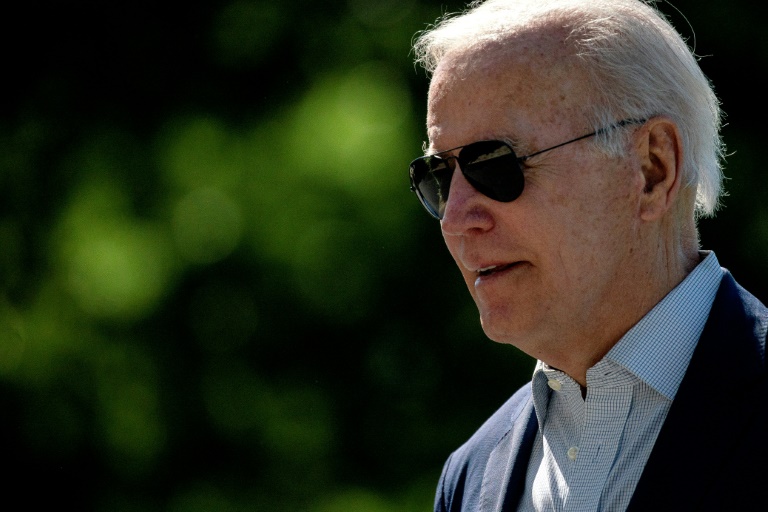
US President Joe Biden on Monday will suspend tariffs for two years on solar panel imports from four countries and invoke a key power to compel domestic manufacture of clean energy technology, the White House said.

The moves are aimed at boosting renewable capacity and combating climate change, a priority for the president whose green ambitions have met with mixed success.

“Today’s clean energy technologies are a critical part of the arsenal we must harness to lower energy costs for families, reduce risks to our power grid, and tackle the urgent crisis of a changing climate,” the White House said in a fact sheet.

It added that, compared to when Biden took office, the United States was on track to triple domestic solar manufacturing capacity by 2024, from 7.5 gigawatts to 22.5 gigawatts, enough to enable 3.3 million homes to switch to solar each year.

Duties will be lifted on certain solar parts from Cambodia, Malaysia, Thailand, and Vietnam — but not China — as a “bridge” to ensure the United States has access to sufficient parts to meet electricity needs while domestic capacity scales up.

China is excluded as the Commerce Department investigates whether some Chinese companies are circumventing US customs duties by assembling parts in the four countries.

At the same time, Biden’s administration will invoke the Defense Production Act (DPA) to accelerate production, and use the federal government’s purchasing power to increase demand.

Solar panel parts, building insulation and efficient heat pumps are all targeted under the DPA.

Former president Donald Trump used the same powers during the Covid pandemic to increase production of medicines and equipment, and it was also invoked during World War II.

Most recently, Biden used the act to help baby formula makers to overcome a production shortfall.

The administration will also look to permit more clean energy projects on public lands, including both solar and wind.

“The fact is with a stronger clean energy arsenal, the United States can also be a stronger power partner to our allies all around the world, especially in the face of Putin’s war in Ukraine,” a senior administration official told reporters.

“The stakes are high and the president is taking action.”

Biden has succeeded in getting Congress to pass a bipartisan infrastructure law, a pillar in his climate policy, but has failed to pass a second proposed law, the Build Back Better act.

At the same time he has been criticized by environmental groups for plans to resume oil and gas drilling on public lands, reneging on a campaign promise.
US suspends solar tariffs, boosts production in clean energy push

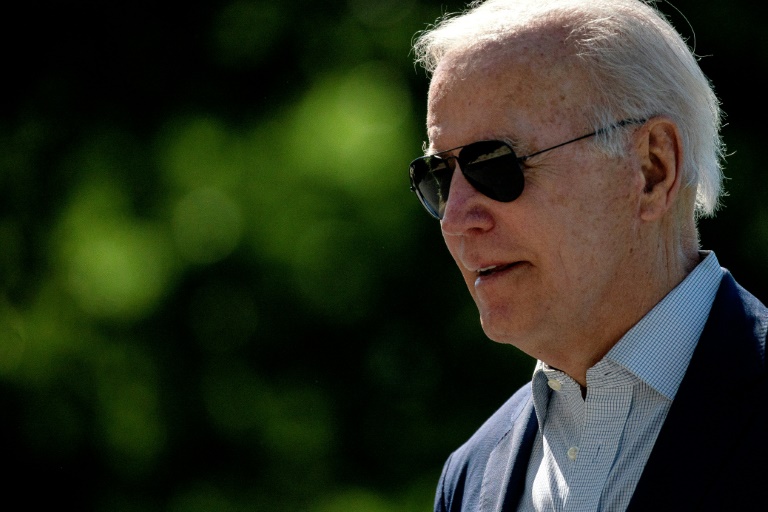
US President Joe Biden on Monday will suspend tariffs for two years on solar panel imports from four countries and invoke a key power to compel domestic manufacture of clean energy technology, the White House said.

The moves are aimed at boosting renewable capacity and combating climate change, a priority for the president whose green ambitions have met with mixed success.

“Today’s clean energy technologies are a critical part of the arsenal we must harness to lower energy costs for families, reduce risks to our power grid, and tackle the urgent crisis of a changing climate,” the White House said in a fact sheet.

It added that, compared to when Biden took office, the United States was on track to triple domestic solar manufacturing capacity by 2024, from 7.5 gigawatts to 22.5 gigawatts, enough to enable 3.3 million homes to switch to solar each year.

Duties will be lifted on certain solar parts from Cambodia, Malaysia, Thailand, and Vietnam — but not China — as a “bridge” to ensure the United States has access to sufficient parts to meet electricity needs while domestic capacity scales up.

China is excluded as the Commerce Department investigates whether some Chinese companies are circumventing US customs duties by assembling parts in the four countries.

At the same time, Biden’s administration will invoke the Defense Production Act (DPA) to accelerate production, and use the federal government’s purchasing power to increase demand.

Solar panel parts, building insulation and efficient heat pumps are all targeted under the DPA.

Former president Donald Trump used the same powers during the Covid pandemic to increase production of medicines and equipment, and it was also invoked during World War II.

Most recently, Biden used the act to help baby formula makers to overcome a production shortfall.

The administration will also look to permit more clean energy projects on public lands, including both solar and wind.

“The fact is with a stronger clean energy arsenal, the United States can also be a stronger power partner to our allies all around the world, especially in the face of Putin’s war in Ukraine,” a senior administration official told reporters.

“The stakes are high and the president is taking action.”

Biden has succeeded in getting Congress to pass a bipartisan infrastructure law, a pillar in his climate policy, but has failed to pass a second proposed law, the Build Back Better act.

At the same time he has been criticized by environmental groups for plans to resume oil and gas drilling on public lands, reneging on a campaign promise.
Macron draws new wave of criticism over Russia comments

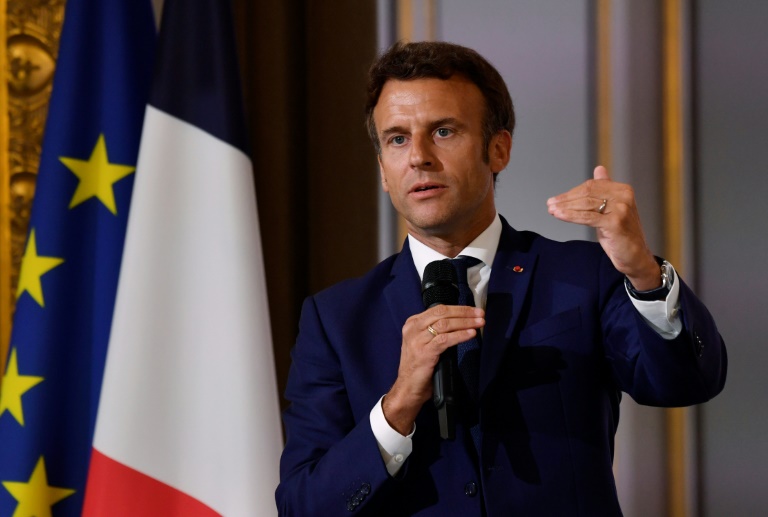
French President Emmanuel Macron has sparked a new wave of criticism and incomprehension over his calls to avoid humiliating Russia in Ukraine, showing up splits in the Western alliance. 

Speaking to French media last Friday, Macron reiterated his belief that Russian leader Vladimir Putin must be given an exit from what he called his “historic and fundamental mistake” of invading Ukraine. 

“We must not humiliate Russia so that the day when the fighting stops we can build an exit ramp through diplomatic means,” the French head of state said, reprising an argument he made in early May.

But the statement immediately prompted new tensions with Kyiv where President Volodymyr Zelensky is known to be sceptical about Macron’s insistence on trying to talk Putin into ending the war.

Despite publicly backing Ukraine and authorising weapons deliveries to the besieged country, Macron has made dozens of calls to Putin since the turn of the year.

“I am convinced that it is France’s role to be a mediating power,” Macron added in the interview to regional media.

“Calls to avoid humiliation of Russia can only humiliate France and every other country that would call for it,” Ukraine’s Foreign Minister Dmytro Kuleba replied on social media on Saturday.

He urged Russia to be “put in its place” in order to “bring peace and save lives”.

– War crimes –

Macron remarks underline a difference in approach to the conflict between France on one hand and Ukraine, eastern European nations, and the United States and Britain on the other.

Ukraine and its closest allies in the fight against Russia’s aggression see the war as a battle for the survival of Ukrainian statehood and democracy that will only be settled by Russian defeat.

Suspected Russian war crimes, from the murder of civilians to the targeting of housing and other non-military infrastructure, leave no desire for a face-saving compromise with Putin.

Some fear France and Germany are keen for Ukraine to cede territory to end the fighting — although no public statements from Paris or Berlin support this argument. 

“The French president is still looking for ways to save war criminal Putin from humiliation,” the head of the foreign affairs commission in the Estonian parliament, Marko Mihkelson, wrote on Facebook.

“What would Macron say to this girl in Ukraine?” he asked next to a photo of a girl with an amputated leg. “And to the thousands of others whose lives have been destroyed forever as victims of the evil empire.”

The remark sparked incomprehension in the United States and Britain whose governments have set objectives of weakening Putin and expelling Russia from Ukraine.

“Putin will only negotiate when his army can’t keep marching forward, humiliated or not. Macron should focus on creating that condition,” former US ambassador to Moscow, Michael McFaul, wrote on Sunday.

John Chipman, the head of the International Institute for Strategic Studies, a London-based think-tank, said that “saving face” was “a weak diplomatic aim. Putin can take personal responsibility for his face.” 

“Humiliation: a mild punishment for war crimes,” he wrote on Twitter.

– Historical parallels? –

Macron is keen for France to retain its historically close diplomatic relations with Russia and has repeatedly warned about the risk of a wider conflict involving the West.

A keen student of history, he is also wary of the desire among some allies to punish Moscow for its aggression, citing the Versailles treaty imposed on a defeated Germany at the end of World War I in 1919.

Its punitive conditions have been blamed by some historians for the rise of the Nazi party in the 1930s and the outbreak of hostilities again in Europe in 1939.

Speaking at the European parliament in Strasbourg on May 9, Macron warned for the first time about wanting to humiliate Russia.

“Tomorrow we’ll have a peace to build, let’s never forget that,” he told reporters. “We will have to do this with Ukraine and Russia around the table. 

“The terms of the discussion and negotiation will be set by Ukraine and Russia, but that will not be done through… the exclusion of one another, nor even in their humiliation.”

Macron is under increasing pressure to visit Ukraine for the first time since the outbreak of war on February 24.

While other Western leaders have made the trip to symbolically show support for Zelensky and his country, Macron has declined, saying that he will only travel when it is “useful.”

At least 20 dead in new DR Congo massacre

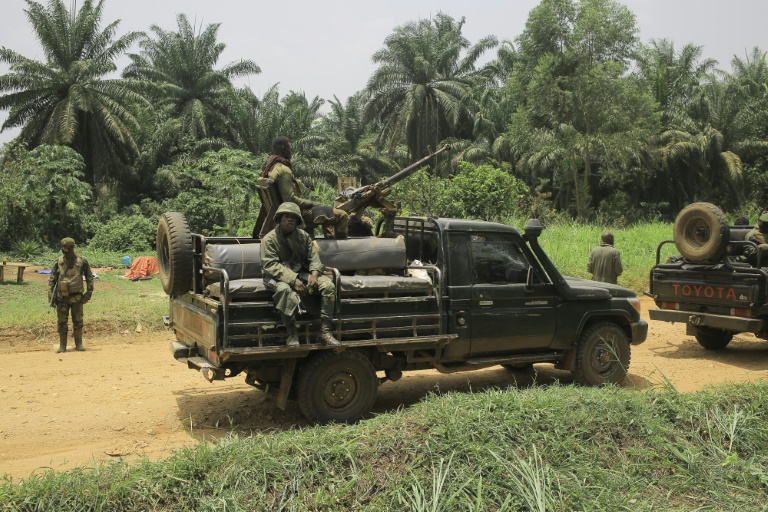
At least 20 people have been killed in a new massacre in DR Congo’s eastern province of Ituri, a respected monitor said on Monday, adding that the notorious ADF militia were suspected.

The attack took place overnight in the village of Bwanasura in Irumu territory, the Kivu Security Tracker (KST) said on Twitter.

David Beiza, head of the Red Cross in Irumu, said volunteers from his organisation “have counted 36 bodies” at the site of the massacre.

Ituri and neighbouring North Kivu province are struggling with attacks by armed groups, many of them a legacy of wars in the Democratic Republic of Congo’s east.

KST said the Allied Democratic Forces (ADF) — a group that the so-called Islamic State describes as its affiliate — was suspected to have been behind the killing.

Beiza said, “ADF rebels arrived around eight pm. They moved calmly. Fortunately, many residents were able to flee.”

Dieudonne Malangay, a civil society leader in the district of Walese Vonkutu said the army was “late” in responding. “Bullets are still flying” in the area, he said.

The ADF has been blamed for massacres, kidnappings and looting dating back to 2013, with a toll in lives estimated in the thousands.

Ituri and North Kivu have been under a “state of siege” since May last year — a measure placing army chiefs in positions of authority to speed up efforts to improve security.

The ADF was also targeted in a joint operation launched last November by government and Ugandan forces following bomb attacks in the Ugandan capital Kampala.

The operation, which was due to end on May 31, has been extended by two months.

– ADF bloodshed –

Despite the crackdown, the ADF’s attacks have continued — experts in March said the group had moved further inland after coming under pressure at the border.

At least 1,300 civilians have died in Irumu and in Beni in North Kivu since the “state of siege” was introduced, according to a reported by local elected officials.

In March, at least 30 people were killed by suspected rebels in North Kivu and more than 50 people died in a two-day assault on villages in Irumu.

In May, at least 42 people were killed in ADF-attributed attacks at Bulongo and Beu-Manyama in North Kivu.

The ADF is historically a Ugandan rebel coalition whose biggest group comprised Muslims opposed to President Yoweri Museveni.

Established in eastern DRC in 1995, the group became the deadliest of scores of outlawed forces in the deeply troubled region.

Since April 2019, some ADF attacks in eastern DRC have been claimed by the Islamic State, which describes the group as its local offshoot, the Islamic State Central Africa Province.

The United States last year placed the ADF on its list of “terrorist” organisations linked to IS.

– Troubled region –

More than 120 armed groups roam eastern DRC.

Ituri is also suffering from ethnic attacks led by CODECO militia, which claims to represent the Lendu community against the rival Hema group and the security forces.

In North Kivu, bloody clashes have erupted between government forces and the M23, a primarily Congolese Tutsi group.

In South Kivu, six people died on April 30 when fighting flared between groups from the Banyamulenge, a Congolese Tutsi community, against an ethnic militia called the Biloze Bishambuke Self-Defence Force, or FABB.

UK PM braced for Tory no-confidence vote

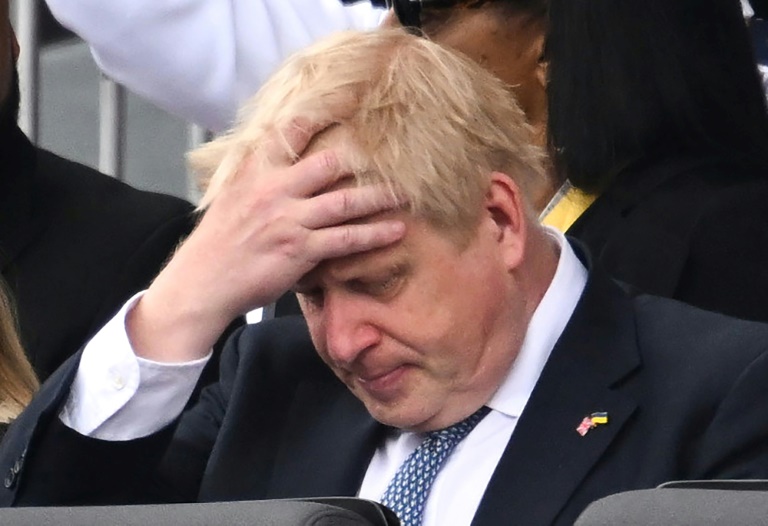
British Prime Minister Boris Johnson faced a no-confidence vote Monday among his Conservative MPs after dozens rebelled over a string of scandals that have left the party’s public standing in tatters.

The beleaguered leader has spent months battling to maintain his grip on power after the “Partygate” controversy saw him become the first serving UK prime minister found to have broken the law.

If he loses the evening vote, he must step down as Conservative party leader and prime minister. The result is expected after 1900 GMT.

Writing to his MPs, Johnson defended his governing record, including on delivering Brexit, fighting the Covid pandemic and supporting Ukraine.

“Tonight we have the chance to end weeks of media speculation and take this country forward, immediately, as one united party,” he wrote ahead of meeting his backbenchers in person before the vote.

But the scale of Tory disunity was exposed in a scathing resignation letter from Johnson’s “anti-corruption champion” John Penrose, and another letter of protest from longtime ally Jesse Norman.

The prime minister’s rebuttals over “Partygate” were “grotesque”, Norman wrote. He warned that the Tories risked losing the next general election, due by 2024.

Ex-cabinet member Jeremy Hunt, who lost to Johnson in the last leadership contest in 2019 and is expected to run again if he is deposed, confirmed he would vote against him.

“Conservative MPs know in our hearts we are not giving the British people the leadership they deserve,” Hunt tweeted.

– Jubilee booing –

After a dismal showing in May local elections, the party is predicted to lose two Westminster by-elections this month, including one in a previously rock-solid Conservative seat.

That is focussing the minds of Tory lawmakers, who fear their own seats could be at risk under Johnson.

Ahead of Monday’s vote, a snap poll by Opinium showed 59 percent of voters believe the Tories should ditch him as leader. Among Conservatives, the figure was a sizeable 34 percent.

Johnson was booed Friday by sections of an ardently patriotic crowd gathered outside St Paul’s Cathedral, ahead of a religious service for Queen Elizabeth II’s Platinum Jubilee.

For wavering Tories, the barracking at a televised national occasion reportedly marked a turning point. Some said they had held back on public criticism of Johnson until after the jubilee.

But cabinet ally Jacob Rees-Mogg dismissed the booing as “muted noise” and insisted that Johnson could survive with the slenderest of majorities.

The vote itself was the “routine of politics”, he told Sky News, dismissing the threshold reached for triggering the ballot as “a relatively low bar and fairly easy to get to”.

Graham Brady, who heads the backbench committee of Conservatives which oversees party challenges, had earlier confirmed that the threshold of 54 Tory lawmakers seeking a confidence vote — or 15 percent of its MPs — had been met.

– Beginning of the end? –

At the start of a fast-moving day, Brady said the ballot would be held between 1700 and 1900 GMT Monday, with votes counted immediately and an announcement to follow.  

He told reporters Johnson was informed Sunday night — as four days of jubilee celebrations ended — that the vote had been triggered.

Brady did not disclose how many no-confidence letters he had received from Conservative MPs, noting some colleagues had post-dated them until after the royal festivities.

In a message of thanks for the celebrations of her record-breaking 70-year reign, the queen had expressed hope that “this renewed sense of togetherness will be felt for many years to come”.

Conservative MPs had other ideas, as they openly criticised one another on Twitter over whether to support Johnson following the announcement of the vote.

Dozens have broken ranks and criticised him after a scathing internal probe into “Partygate” said he had presided over a culture of Covid lockdown-breaking parties in Downing Street.

Some ran late into the night, and one featured a drunken fight among staff, at a time when the government’s pandemic rules forbade ordinary Britons from bidding farewell in person to dying loved ones.

But Johnson, 57, who won a landslide election victory in December 2019 on a vow to “Get Brexit Done”, has steadfastly refused to resign.

He needs the backing of 180 MPs to survive Monday’s vote: a majority of one out of the 359 sitting Conservatives.

In previous leadership ballots, Tory predecessors Margaret Thatcher and Theresa May both ultimately resigned despite narrowly winning their own votes, deciding that their premierships were terminally damaged.

“If he wins narrowly, history suggests it would still be the beginning of the end for him,” politics expert Hannah Bunting at the University of Exeter commented.

Lebanon asks for US mediation after Israel gas ship move

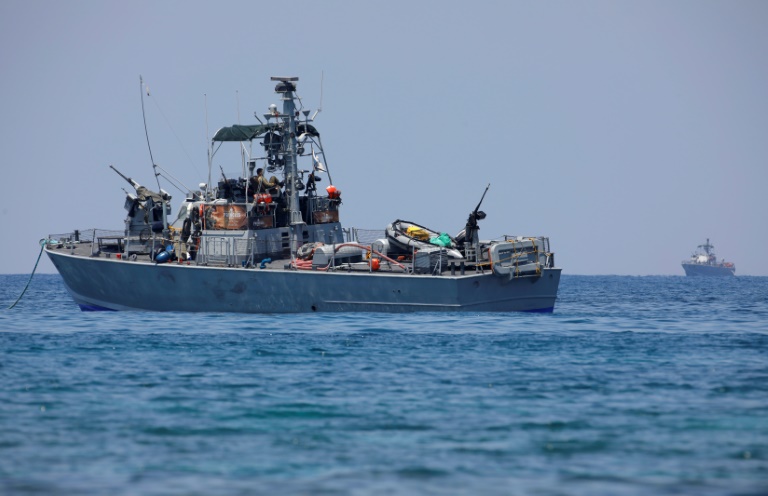
Lebanon on Monday called for US mediation after Israel moved a gas production vessel into an offshore field, a part of which is claimed by Beirut.

The ship operated by London-listed Energean Plc arrived in the Karish gas field on Sunday and will immediately commence operations, Energean said in a statement.

The move immediately drew condemnation from Lebanon’s president and prime minister who held talks on Monday to discuss next steps. 

The two agreed to “invite US envoy Amos Hochstein to Beirut to look into restarting negotiations to demarcate Lebanon’s southern maritime border” which stalled last May, said a statement by Prime Minister Najib Mikati. 

“Any exploration, drilling or extraction carried out by Israel in the disputed areas constitutes a provocation and an act of aggression,” the statement said.

Lebanon and Israel last fought a war in 2006, have no diplomatic relations and are separated by a UN-patrolled border.

They had resumed negotiations over their maritime border in 2020 but the process was stalled by Beirut’s claim that the map used by the United Nations in the talks needed modifying.

Lebanon initially demanded 860 square kilometres (330 square miles) of territory in the disputed maritime area but then asked for an additional 1,430 square kilometres (552 square miles), including part of Karish.

– Disputed territory –

Lebanese officials said Sunday that any Israeli activity in disputed waters would constitute a “hostile act” and an “attack” on Lebanon’s natural resources. 

But for Israel, Karish lies “within Israel’s UN-recognised exclusive economic zone,” and not in disputed territory, a senior Israeli official told AFP on condition of anonymity.   

An Israeli energy ministry spokeswoman told AFP that drilling was completed months ago and “the flow of gas from Karish should start in September”.  

The production vessel that arrived Sunday will be connected to Karish via pipelines, she said.

“Other pipelines will take the gas from the platform to the Israeli shores,” she said, referring to the ship.

Lebanon’s powerful Iran-backed Hezbollah militant movement has warned Israel that it could seek to disrupt attempts to extract oil and gas from Karish and other disputed areas.

Lebanese energy expert Laury Haytayan said Lebanese authorities should sign a decree amending demarcation lines of the maritime border instead of turning to Washington for mediation. 

“If Lebanese officials believe that an invitation for Hochstein to visit Beirut will stop work in Karish, this is a waste of time,” she told AFP.

US fund sues London Metal Exchange over nickel trade halt

A US investment firm has filed a $456-million lawsuit against the London Metal Exchange for suspending nickel trading during a huge surge in prices in March, the two sides said Monday.

The prices for the metal, used in stainless steel and electric vehicle batteries, jumped on March 8 to a then-record high of $101,365 per tonne on a bad bet from a Chinese billionaire after Russia’s invasion of Ukraine.

The LME subsequently decided to cancel all trades made that day and temporarily halted trading.

That left nickel’s record high at $48,002 per tonne, set on March 7.

The turmoil prompted fierce investor criticism of LME management, and UK financial regulators launched a review into the matter.

The US investment firm, Elliott Management, considers that by cancelling nickel trades, the LME either “acted unlawfully” by exceeding its powers or exercised them “unreasonably and irrationally” by “taking into account irrelevant factors”, a spokesman for the fund said.

LME’s owner, Hong Kong Exchanges and Clearing Limited, said in a statement that Elliott Management’s claim is “without merit and the LME will contest it vigorously”.

The LME said in a separate statement that it had cancelled trades to “take the market back to the last point in time at which the LME could be confident that the market was operating in an orderly way”.

“At all times the LME, and LME Clear, sought to act in the interests of the market as a whole,” it added.

Moscow’s invasion sparked nickel market chaos because of concerns about supplies from Russia, the world’s third-biggest producer of the industrial metal.

Relatives flock to hospitals after Bangladesh blast kills more than 40

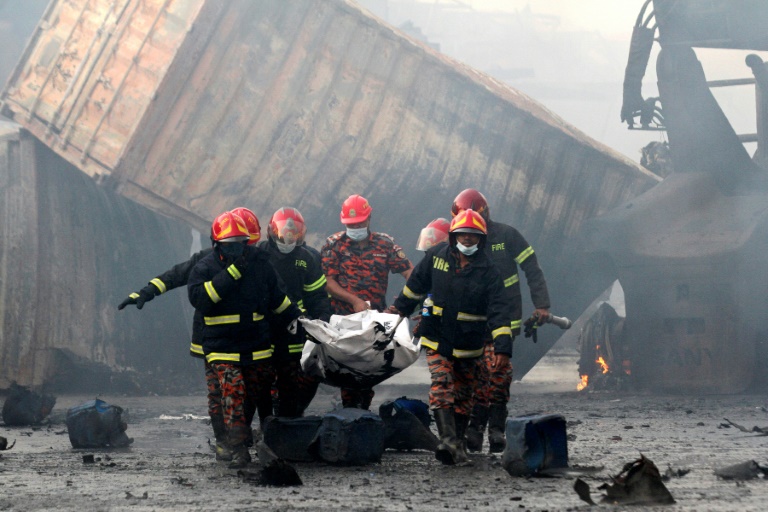
Scores of people gathered to give DNA samples at a Bangladesh hospital Monday as authorities struggled to identify the remains of more than 40 people killed in a devastating explosion.

Dozens of missing workers from a container depot were still unaccounted for, while many of the dead were burned beyond recognition.

Nine of the victims were firefighters, and officials accused the operators of the B.M. Container Depot in Sitakunda of not telling them about a chemical stockpile before it exploded, sending fireballs into the sky.

Munni Akhter, 25, queued for hours to give a DNA sample at a makeshift stand outside the Chittagong Medical College. 

When her turn finally came she struggled to hold back tears as doctors took her blood.

Her lorry driver brother Mohammad Akhter was giving a “running commentary” on the fire on Facebook Live, she told AFP, holding up a phone showing his broadcast.

“Then after the blast, it was all dark,” she said. “Since then, we couldn’t find him.”

Abdul Hannan, 60, carried a portrait of his missing son, a worker at the depot. 

“My son called his wife and told her about the fire,” he said. 

“She heard the explosion over the phone. Since then, we couldn’t contact him anymore. I have lost my child, oh God!”

Authorities revised the death toll down from 49 to 41, but it was expected to rise again with at least 14 critically injured victims flown to the capital Dhaka in military helicopters for treatment.

Officials said at least nine firefighters were killed in the inferno — the most Bangladesh has ever lost in a single incident in the industrial-accident-prone country, where safety standards are lax and corruption often enables them to be ignored.

Two more firefighters are among several people still missing, officials said.

“Never in the history of the fire department have so many firefighters died,” said Purnachandra Mutsuddi, who led the fire-fighting effort at the 26-acre facility on Saturday night.

“How do you feel when you recover your brothers? No event is as painful as this.”

– Smouldering containers –

The depot operator did not inform the firefighters about the chemicals, specifically hydrogen peroxide, stored on site, Mutsuddi told AFP.

“If they did, the casualties would have been much less,” he said.

Mutsuddi, an assistant director of the Chittagong fire station, said the firefighters unwittingly doused the hydrogen peroxide with water, setting off an explosive reaction.

The B.M. Container Depot in Sitakunda, an industrial town 40 kilometres (25 miles) from Chittagong Port, is a joint venture between Bangladeshi and Dutch businessmen with around 600 employees, and began operations in 2012.

Police have yet to lay charges over the fire. 

Some containers were still smouldering on Monday, more than 40 hours after the explosion, preventing rescuers from checking the area around them for victims.

“The fire is under control,” said fire department inspector Harunur Rashid. “But the chemicals are the main problems.”

Home Minister Asaduzzaman Khan visited the site and vowed those responsible would be brought to justice, telling reporters: “Whoever has committed the crime will face action according to the law.”

Around 90 percent of Bangladesh’s roughly 100 billion dollars in trade — including clothes for H&M, Walmart and others — passes through the Chittagong port at the top of the Bay of Bengal. 

Rakibul Alam Chowdhury, from the Bangladesh Garment Manufacturers and Exporters Association, said about 110 million dollars worth of garments were destroyed in the fire. 

“It is a huge loss for the industry,” he said.

In Ukraine's 'martyr towns', hopes for speedy reconstruction

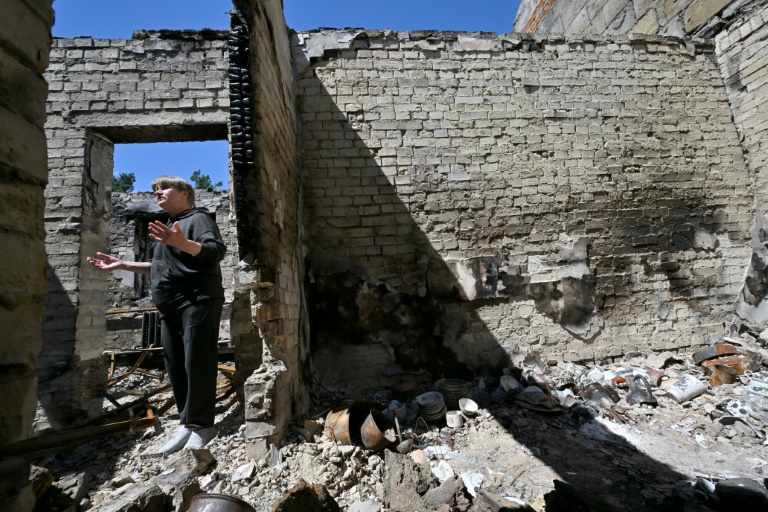
Zoya Potapova planted flowers behind the ruins of her home — bombed by Moscow in March — in the hope of a quick restoration even before any building work had begun.

Like Potapova, many residents of satellite towns north of the Ukrainian capital Kyiv are overcoming difficult memories of Russia’s occupation and placing their hope in the government’s promise of reconstruction.

In the settlement of Gorenka, which was pummelled at the beginning of Moscow’s invasion, the time is now for Potapova, who lost her husband in the conflict.

“I hope we won’t be forgotten. We did a lot to stop the advance towards the capital,” she says tearfully, throwing up her arms next to the charred remains of her home.

A local official, Tetiana Shepeleva, told AFP that 1,000 homes had been reported as either entirely or partially destroyed.

– Modular housing units – 

Potapova’s garden is thriving and beneath fruit trees shredded by shrapnel, potatoes and strawberries are flourishing.

Thanks to a streak of good weather, some residents are taking reconstruction efforts into their own hands. 

But there is a conspicuous lack of help and building material in the town, whose pre-war population was around 10,000 people.

The need for both is great across Ukraine. In late May, Prime Minister Denys Shmygal estimated the cost of the destruction wrought by Russia’s invasion at 561 billion euros ($603 billion).

For now, the priority in liberated towns north of Kyiv appears to be demining and AFP journalists there heard military engineers clearing unexploded ordnance.

Electricity is gradually being restored and so too a bridge near Gorenka.

In the town of Bucha, which has become synonymous with the alleged war crimes carried out by Russian troops, some 600 families are looking for a roof over their heads or renting vacation properties.

The town was known as a calm getaway surrounded by quiet pine forests before the invasion.

Some of those returning are being put up in grey shipping containers installed next to a large market that was reduced to a mess of sheet metal.

Polish Prime Minister Mateusz Morawiecki during a recent visit to Borodianka near Gorenka opened the first settlement for people left homeless by the conflict.

The settlement uses temporary modular housing units and more are planned in Ivankiv, Gostomel and Bucha.

“They’re made available for free by the government with enough space for 92 families,” said Bucha’s mayor, 50-year-old Anatoly Fedoruk, describing the compartments of 20 square metres (215 square feet) each that can accommodate four people.

– ‘We will get back everything’ – 

These makeshift homes provide clean living spaces, disinfected toilets and canteens with painted walls, accompanied by signs urging residents to stay strong, happy and hopeful.

Oksana Polishchuk’s own home was partially destroyed and her food stand went up in flames.

But the 41-year-old trader, who still suffers frequent panic attacks and is receiving psychological help, said she was not waiting for her house to be rebuilt.

“I want to be compensated and rebuild my life elsewhere,” she said.

“Ukrainians are not afraid of the rebuilding effort that awaits them.

“We will get back everything we had before. The only important thing is winning this war.”

In Ukraine's 'martyr towns', hopes for speedy reconstruction

Zoya Potapova planted flowers behind the ruins of her home — bombed by Moscow in March — in the hope of a quick restoration even before any building work had begun.

Like Potapova, many residents of satellite towns north of the Ukrainian capital Kyiv are overcoming difficult memories of Russia’s occupation and placing their hope in the government’s promise of reconstruction.

In the settlement of Gorenka, which was pummelled at the beginning of Moscow’s invasion, the time is now for Potapova, who lost her husband in the conflict.

“I hope we won’t be forgotten. We did a lot to stop the advance towards the capital,” she says tearfully, throwing up her arms next to the charred remains of her home.

A local official, Tetiana Shepeleva, told AFP that 1,000 homes had been reported as either entirely or partially destroyed.

– Modular housing units – 

Potapova’s garden is thriving and beneath fruit trees shredded by shrapnel, potatoes and strawberries are flourishing.

Thanks to a streak of good weather, some residents are taking reconstruction efforts into their own hands. 

But there is a conspicuous lack of help and building material in the town, whose pre-war population was around 10,000 people.

The need for both is great across Ukraine. In late May, Prime Minister Denys Shmygal estimated the cost of the destruction wrought by Russia’s invasion at 561 billion euros ($603 billion).

For now, the priority in liberated towns north of Kyiv appears to be demining and AFP journalists there heard military engineers clearing unexploded ordnance.

Electricity is gradually being restored and so too a bridge near Gorenka.

In the town of Bucha, which has become synonymous with the alleged war crimes carried out by Russian troops, some 600 families are looking for a roof over their heads or renting vacation properties.

The town was known as a calm getaway surrounded by quiet pine forests before the invasion.

Some of those returning are being put up in grey shipping containers installed next to a large market that was reduced to a mess of sheet metal.

Polish Prime Minister Mateusz Morawiecki during a recent visit to Borodianka near Gorenka opened the first settlement for people left homeless by the conflict.

The settlement uses temporary modular housing units and more are planned in Ivankiv, Gostomel and Bucha.

“They’re made available for free by the government with enough space for 92 families,” said Bucha’s mayor, 50-year-old Anatoly Fedoruk, describing the compartments of 20 square metres (215 square feet) each that can accommodate four people.

– ‘We will get back everything’ – 

These makeshift homes provide clean living spaces, disinfected toilets and canteens with painted walls, accompanied by signs urging residents to stay strong, happy and hopeful.

Oksana Polishchuk’s own home was partially destroyed and her food stand went up in flames.

But the 41-year-old trader, who still suffers frequent panic attacks and is receiving psychological help, said she was not waiting for her house to be rebuilt.

“I want to be compensated and rebuild my life elsewhere,” she said.

“Ukrainians are not afraid of the rebuilding effort that awaits them.

“We will get back everything we had before. The only important thing is winning this war.”

Close Bitnami banner
Bitnami