World

Shanghai residents chafe under fresh Covid lockdowns

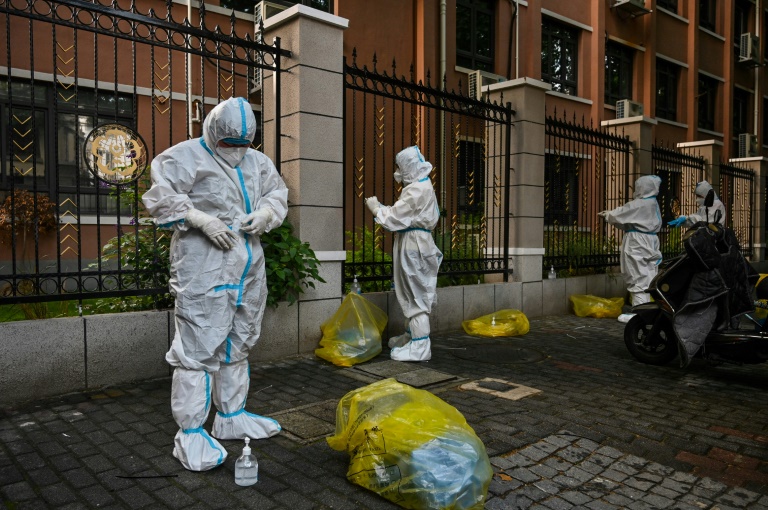
Residents stuck inside a compound nearly a week after Shanghai’s much vaunted reopening following a virus outbreak shouted at hazmat-clad officials on Monday, as fears grew that some city neighbourhoods were being locked down again.

Authorities in the financial hub eased many harsh restrictions last Wednesday, after confining most of the city’s 25 million inhabitants to their homes since late March, as China battled its worst Covid outbreak in two years.

But hundreds of thousands have not yet been allowed out of their homes, while others have immediately been placed back under local lockdowns after a brief liberation that triggered shopping sprees and booze-fuelled street parties.

In downtown Xuhui district on Monday, an AFP reporter witnessed about a dozen people in one fenced-off housing compound shouting angrily at hazmat-clad officials. 

From behind rows of fences, crowds chanted “Serve the people!” at officials standing on the other side.

One resident, who gave the surname Li, said tempers had flared after the community was suddenly put back into lockdown on Saturday.

“I’m very indignant,” he told AFP. “It’s been two months and we can’t cope anymore. We’re all negative (on Covid tests), why lock us in a cage?”

A local media outlet said in a swiftly deleted social media post that residents of the compound were angry at the threat of being sent to state-run quarantine facilities despite being designated “low-risk”. 

Li said virus-negative people were being transferred to quarantine hotels every day, sometimes in the middle of the night.

“It’s had a huge impact on everyone’s lives,” he said. “Our mood is very bleak.”

– Some restrictions lifted –

Shanghai has creaked back to life in recent days, as commuters have begun to return to their offices and residents have gathered in parks and along the city’s historic waterfront.

But authorities have said over half a million people remain under movement curbs in the city.

Under China’s stringent zero-Covid approach, all positive cases are isolated and close contacts — often including the entire building or community where they live — are made to quarantine.

People from the financial hub still face lengthy quarantines or outright bans on entering other parts of the country.

A phased, voluntary reopening of the city’s schools began on Monday, with around 250 schools open and children in the final two years of high school the first allowed to return.

Malls, convenience stores, pharmacies and beauty salons are only allowed to open at limited capacity, while cinemas and gyms remain closed.

Taxi services and private cars are allowed in “low-risk” areas only.

Shanghai and the capital Beijing — which has also been trying to stamp out a cluster of cases — both posted single-digit numbers of infections on Monday.

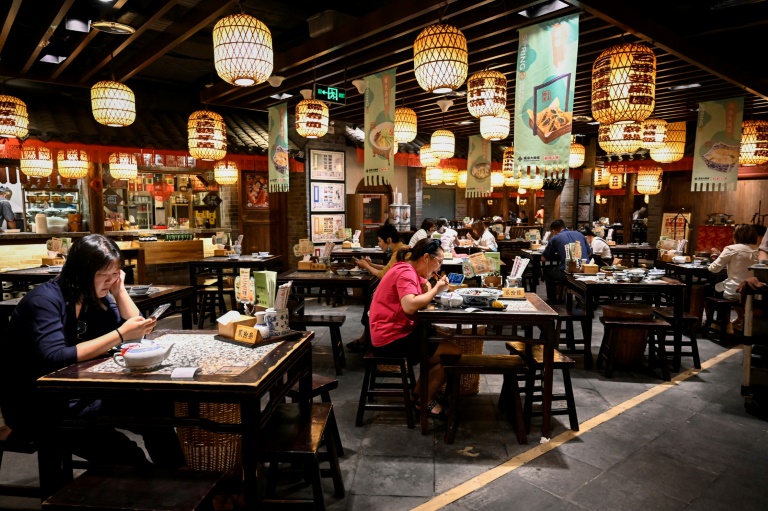
Beijing eased a ban on indoor dining as more employees returned to their offices after weeks of working from home.
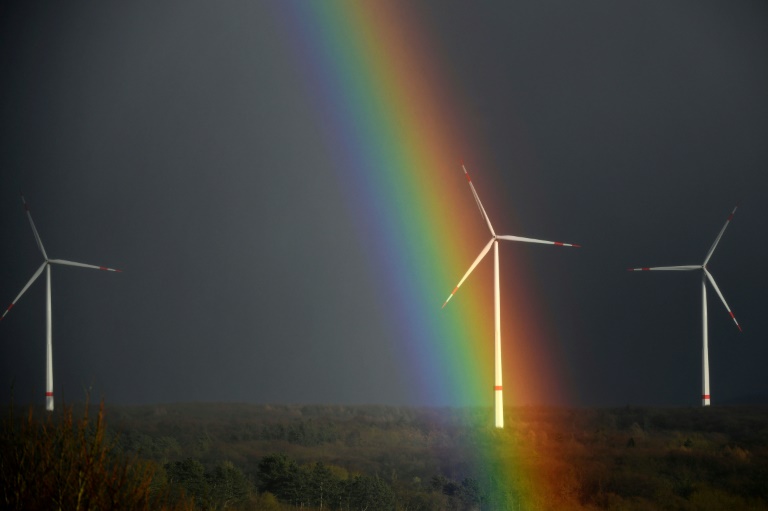
Climate action must not be delayed by global crises, UN talks told

Negotiators from almost 200 countries met in Germany Monday for climate talks tasked with reigniting momentum on tackling global warming, as Russia’s invasion of Ukraine overshadows the threat from rising emissions.

The conference will set the stage for a fresh round of major United Nations talks later this year in Egypt.

It will also be a chance to test the resolve of nations facing a catalogue of crises, including escalating climate impacts, geopolitical tensions, bloodshed in Ukraine and the threat of a devastating global food crisis.

Issuing a call for international unity to hold firm, outgoing UN climate change chief Patricia Espinosa told delegates it was “not acceptable to say that we are in challenging times”.

“We must understand that climate change is moving exponentially. We can no longer afford to make just incremental progress,” she said at the opening of the June 6 to 16 meeting. 

“We must move these negotiations along more quickly. The world expects it.” 

Governments have already accepted that climate change is a grave threat to humanity and the planet, and have advocated immediate action to cut fossil fuel emissions and prepare for the accelerating impacts of warming.

The summary to this year’s landmark climate report from the Intergovernmental Panel on Climate Change concluded that any further delay in action “will miss a brief and rapidly closing window of opportunity to secure a liveable and sustainable future for all”.

But as things are going, the world is unlikely to be able to meet the Paris climate deal’s commitment to limit warming “well below” 2 degrees Celsius above pre-industrial levels.

“There is this disconnect between the scientific evidence of global crisis in the making, of potentially rushing towards unmanageable climate impact, versus the lack of action,” Johan Rockstrom, director of the Potsdam Institute for Climate Impact Research, told AFP.

“This is a deep worry.”

The world has warmed nearly 1.2C so far — enough to usher in a crescendo of deadly heatwaves, floods and storm surges made worse by rising seas.

– Funding focus –

While the conference in the German city of Bonn is largely aimed at preparing for the UN COP27 meeting in Sharm el-Sheikh in November, there are a number of key issues up for debate.

That includes a push for countries to speed up their timetable for updating their carbon-cutting plans, to more quickly align actions on reducing emissions with the agreed goals for limiting global warming. 

A particular focus will also be funding from rich polluters to help vulnerable developing nations least responsible for global heating.

A promise of $100 billion a year from 2020 to help them adapt to a warming world has still not been met.

Meanwhile, there are growing calls for “loss and damage” funding for countries already struck by devastating climate impacts, with a specific dialogue on the subject slated for this week. 

The Alliance of Small Island States has warned that the Bonn conference must not be “just another talk shop”, calling for a “clear view” on when and how this financing will be put in place.

– ‘Fragile’ world –

UN Secretary General Antonio Guterres last week warned that Russia’s invasion of Ukraine risked slowing action to combat the climate crisis.

“But I think this war has demonstrated one thing: how fragile the world is in its dependence to fossil fuels,” he added.

The invasion has prompted countries, particularly in Europe, to scramble to shore up energy supplies. It has also caused wheat and fertiliser prices to soar.

Fears of a food crisis have intensified in recent weeks, with India moving to ban wheat exports after the hottest March and April on record — blamed largely on climate change — hit harvests.

One opportunity for exhibiting political will comes on Wednesday when the European Parliament votes several hotly debated planks of the bloc’s sprawling “Fit for 55” climate plan.

EU member states have set themselves the target of reducing their greenhouse gas emissions by 55 percent by 2030 compared to 1990, and achieving carbon neutrality for the continent by 2050.

In May, an analysis from non-profit groups found that countries in the G20 group of major economies have yet to strengthen greenhouse gas reduction goals, despite agreeing to revisit their plans.

Last year in Glasgow, countries made new pledges to slash methane emissions, stop deforestation and other measures that — in addition to existing national carbon-cutting pledges — could theoretically cap warming under 2C, said Rockstrom. 

But that means the focus at this year’s meetings needs to be on “accountability”, he added. 

“We are now in the delivery phase”.

Syria's climate-scorched wheat fields feed animals, not people

Moussa Fatimi’s wheat field was once part of a thriving Syrian breadbasket. Now, he can’t even grow enough to feed his family, and the land has been turned over to animals.

Fatimi’s crop has withered from a climate crisis, adding to fears of supply shortages sparked by the war in Ukraine as Syria grapples with record-high rates of food insecurity.

“For the second year in a row, we face drought,” Fatimi, 85, told AFP at his parched plot.

“We haven’t even harvested enough this year to secure our own supply of bread. Our losses are in the millions,” he said.

Syria is among the countries most vulnerable and poorly prepared for climate change, which is forecast to worsen, posing a further threat to the wheat harvests that are an essential income source for a war-battered population.

The trend is most evident in Syria’s once-fertile northeast where wheat fields are drying to a crisp because of severe drought and low rainfall, challenges also faced by Iraq and other neighbouring countries.

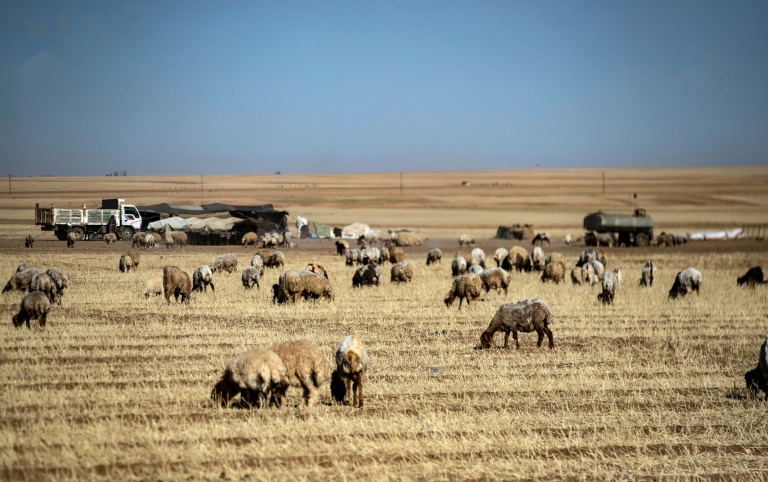
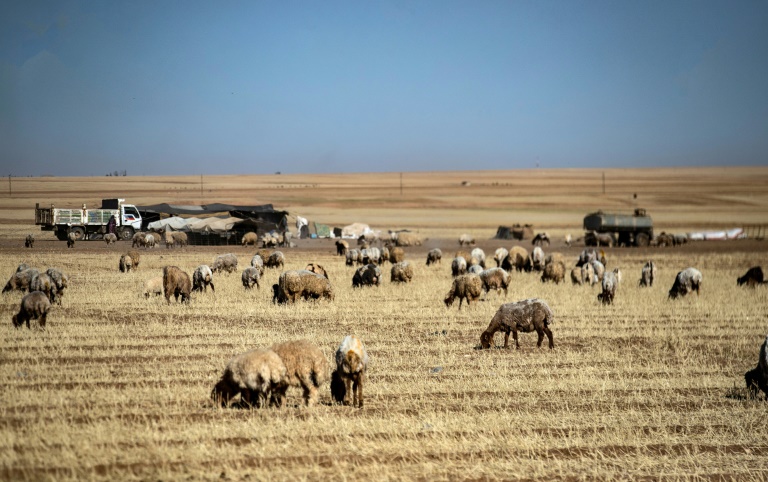
In Umm Hajrah, a village northeast of Hasakeh city, Fatimi meandered through a wheat field dotted with sheep munching on the crops.

“It’s just straw. There’s no seeds,” he said after pulling up a stunted stalk.

Trucks used to queue to ferry bags of Fatimi’s wheat to granaries, but now he largely relies on income from other farmers who use his field to graze their animals.

“I feel sorry when I see the sheep eating from the field,” he said.

Syria’s wheat production averaged 4.1 million tonnes in years prior to its war, which erupted in 2011 after the repression of anti-government protests. Years of subsequent fighting have left around half a million people dead and displaced millions.

Before the war, Syria’s wheat production was enough to meet local demand. Harvests then plunged to record lows, leading to increased dependence on imports especially from regime-ally Russia.

Those shipments have continued since Russia’s February invasion of Ukraine but the war in Kyiv has sparked fears of a supply crisis as wheat fields shrivel.

– Hotter and hotter –

Northeast Syria is about 0.8 degrees Celsius hotter today than it was 100 years ago with a decreased mean rainfall of about 18 millimetres (0.7 inch) per month over the same period, according to a report released in April by iMMAP, a data-focused non-profit organisation based in Washington.

By 2050, temperatures are expected to be at least two degrees Celsius (3.6 degrees Fahrenheit) higher while precipitation falls by 11 percent, iMMAP said.

The United Nations’ Food and Agriculture Organization said that the 210,000 tonnes of wheat grain produced in Hasakeh province during the 2020-2021 winter cropping season were only 26 percent of the previous year.

The low harvest came with an estimated 60 percent of Syria’s population food-insecure, according to the UN, and prompted Salman Mohammed Barko to turn his wheat plot into a grazing ground as Fatimi did.

But the money he makes doesn’t even cover what he paid to plant the area.

“Climate change has affected us as farmers, with water scarcity, poor production, less rainfall and weather changes” posing a great challenge, said Barko, 55.

Local authorities are trying to support farmers, despite a lack of resources to confront an agricultural crisis compounded by inflation and shortages of fuel and water.

The semi-autonomous Kurdish administration helped irrigate 300,000 hectares of land (741,000 acres) and offered farmers subsidised seeds and fuel in response to this year’s drought, agriculture official Laila Mohammed said.

“Climate conditions have affected the production and quality” of wheat crops, she said, explaining that a decline in output is also due to an exodus of farmers during Syria’s war.

Adding to water shortages, Turkish-backed groups on the border with Turkey have been building dams on the Khabour river that serves as a lifeline for communities downstream in Kurdish-dominated areas, according to Dutch peace-building organisation PAX.

For Syrian farmer Musa Mohammed, the Kurdish administration isn’t doing enough to help. 

It buys a kilogram (2.2 pounds) of wheat from farmers for 2,200 Syrian pounds (about 56 cents), which according to him is insufficient.

“This price doesn’t compensate us for our expenses. It should have been set at 3,000 at least,” said Mohammed, who because of low rainfall — and soaring fuel costs — has had to pay more than usual for irrigation.

The 55-year-old planted 10 hectares of wheat this season.

“Farmers are completely dependent on seasonal harvests, but the season is weak this year due to weather conditions, lack of rain, high prices and climate change,” Mohammed said.

Syria's climate-scorched wheat fields feed animals, not people

Moussa Fatimi’s wheat field was once part of a thriving Syrian breadbasket. Now, he can’t even grow enough to feed his family, and the land has been turned over to animals.

Fatimi’s crop has withered from a climate crisis, adding to fears of supply shortages sparked by the war in Ukraine as Syria grapples with record-high rates of food insecurity.

“For the second year in a row, we face drought,” Fatimi, 85, told AFP at his parched plot.

“We haven’t even harvested enough this year to secure our own supply of bread. Our losses are in the millions,” he said.

Syria is among the countries most vulnerable and poorly prepared for climate change, which is forecast to worsen, posing a further threat to the wheat harvests that are an essential income source for a war-battered population.

The trend is most evident in Syria’s once-fertile northeast where wheat fields are drying to a crisp because of severe drought and low rainfall, challenges also faced by Iraq and other neighbouring countries.

In Umm Hajrah, a village northeast of Hasakeh city, Fatimi meandered through a wheat field dotted with sheep munching on the crops.

“It’s just straw. There’s no seeds,” he said after pulling up a stunted stalk.

Trucks used to queue to ferry bags of Fatimi’s wheat to granaries, but now he largely relies on income from other farmers who use his field to graze their animals.

“I feel sorry when I see the sheep eating from the field,” he said.

Syria’s wheat production averaged 4.1 million tonnes in years prior to its war, which erupted in 2011 after the repression of anti-government protests. Years of subsequent fighting have left around half a million people dead and displaced millions.

Before the war, Syria’s wheat production was enough to meet local demand. Harvests then plunged to record lows, leading to increased dependence on imports especially from regime-ally Russia.

Those shipments have continued since Russia’s February invasion of Ukraine but the war in Kyiv has sparked fears of a supply crisis as wheat fields shrivel.

– Hotter and hotter –

Northeast Syria is about 0.8 degrees Celsius hotter today than it was 100 years ago with a decreased mean rainfall of about 18 millimetres (0.7 inch) per month over the same period, according to a report released in April by iMMAP, a data-focused non-profit organisation based in Washington.

By 2050, temperatures are expected to be at least two degrees Celsius (3.6 degrees Fahrenheit) higher while precipitation falls by 11 percent, iMMAP said.

The United Nations’ Food and Agriculture Organization said that the 210,000 tonnes of wheat grain produced in Hasakeh province during the 2020-2021 winter cropping season were only 26 percent of the previous year.

The low harvest came with an estimated 60 percent of Syria’s population food-insecure, according to the UN, and prompted Salman Mohammed Barko to turn his wheat plot into a grazing ground as Fatimi did.

But the money he makes doesn’t even cover what he paid to plant the area.

“Climate change has affected us as farmers, with water scarcity, poor production, less rainfall and weather changes” posing a great challenge, said Barko, 55.

Local authorities are trying to support farmers, despite a lack of resources to confront an agricultural crisis compounded by inflation and shortages of fuel and water.

The semi-autonomous Kurdish administration helped irrigate 300,000 hectares of land (741,000 acres) and offered farmers subsidised seeds and fuel in response to this year’s drought, agriculture official Laila Mohammed said.

“Climate conditions have affected the production and quality” of wheat crops, she said, explaining that a decline in output is also due to an exodus of farmers during Syria’s war.

Adding to water shortages, Turkish-backed groups on the border with Turkey have been building dams on the Khabour river that serves as a lifeline for communities downstream in Kurdish-dominated areas, according to Dutch peace-building organisation PAX.

For Syrian farmer Musa Mohammed, the Kurdish administration isn’t doing enough to help. 

It buys a kilogram (2.2 pounds) of wheat from farmers for 2,200 Syrian pounds (about 56 cents), which according to him is insufficient.

“This price doesn’t compensate us for our expenses. It should have been set at 3,000 at least,” said Mohammed, who because of low rainfall — and soaring fuel costs — has had to pay more than usual for irrigation.

The 55-year-old planted 10 hectares of wheat this season.

“Farmers are completely dependent on seasonal harvests, but the season is weak this year due to weather conditions, lack of rain, high prices and climate change,” Mohammed said.

Ukraine suffers setbacks in strategic city Severodonetsk

Ukrainian troops suffered setbacks after retaking parts of flashpoint eastern city Severodonetsk from Russian forces, local officials said on Monday, as the see-saw battle raged on for the strategically important city.

With Russia bringing the weight of its artillery to bear around Severodonetsk — the largest city in the Lugansk region not under Russian control — more help was promised from abroad.

The United Kingdom said it would follow the United States and send long-range missile systems to Ukraine, defying warnings from Russian President Vladimir Putin against supplying Kyiv with the advanced weapons.

Thousands of civilians have been killed and millions forced to flee their homes since Putin ordered Russian troops into Ukraine on February 24.

Fighting since April has been concentrated in the east of the country, where Russian forces have made slow but steady advances after being beaten back from other parts of Ukraine, including the capital Kyiv.

“Fighting is very fierce in Severodonetsk,” regional governor Sergiy Gaiday told Ukraine’s 1+1 television.

“Our defenders managed to counter-attack and liberate half of the city, but the situation has worsened for us.”

Russian forces “are destroying everything with their usual scorched earth tactics” so that “there’s nothing left to defend”, he said.

Gaiday said on Sunday that Kyiv’s troops had “cleared half of Severodonetsk and are moving forward”, after Ukrainian forces earlier appeared on the verge of being driven out of the city.

– ‘It’s a horror show’ –

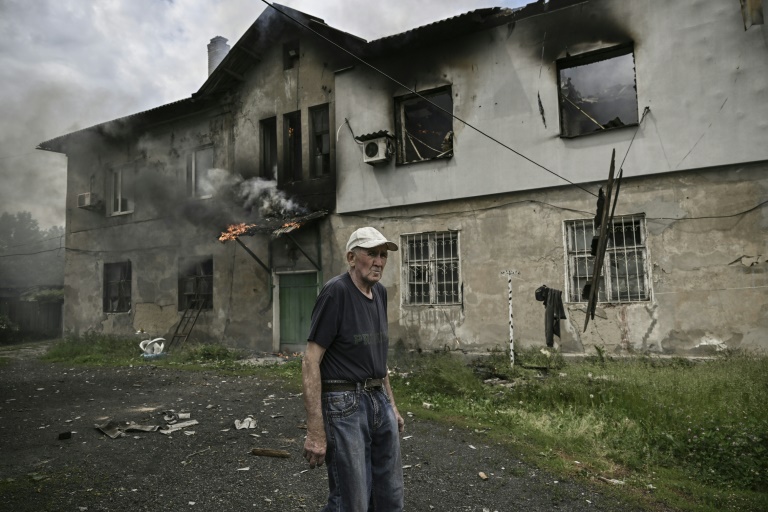
Artillery strikes have intensified on Severodonetsk and neighbouring city Lysychansk, where pensioner Oleksandr Lyakhovets said he had just enough time to save his cat before the flames engulfed his flat after it was hit by a Russian missile.

“They shoot here endlessly… It’s a horror show,” the 67-year-old told AFP.

Lysychansk was among areas visited on Sunday by President Volodymyr Zelensky, who “got himself acquainted with the operational situation on the front line of defence”, the presidency said.

In Moscow, Russian Foreign Minister Sergei Lavrov on Monday blasted European countries for blocking his plane from travelling to Serbia, saying: “The unthinkable has happened.”

“This was a deprivation of a sovereign state of the right to carry out foreign policy,” Lavrov told an online press conference in Moscow after several of Serbia’s neighbours prevented his plane from passing through their airspace.

Lavrov had been due to hold talks with top officials in Belgrade, one of Moscow’s few remaining allies in Europe since the launch of its military offensive in Ukraine.

Serbian daily Vecernje Novosti reported that Bulgaria, Macedonia and Montenegro had refused access to their airspace.

While Serbia has condemned Russia’s military action in Ukraine, it has not joined the European Union in imposing sanctions in Moscow, despite its bid to join the bloc.

– UK pledges missiles –

Ukraine has asked supporting countries for ever more powerful arms to fend off the Russian attack, and its deputy defence minister stressed on Sunday this support was needed until Moscow was defeated.

The United States last week said it would supply Ukraine with advanced missile systems, the latest in a long list of weaponry sent or pledged to the pro-Western country.

But Putin said long-range missile supplies to Ukraine meant “we will draw the appropriate conclusions and use our arms… to strike targets we haven’t hit before”.

Unveiling the latest UK contribution, Defence Secretary Ben Wallace insisted Ukraine’s Western allies must maintain their weapons deliveries to enable it to win.

The UK defence ministry said London had coordinated closely with Washington over its gift of the multiple-launch rocket systems, known as MLRS.

The M270 launchers, which can strike targets up to 80 kilometres (50 miles) away with precision-guided rockets, will “offer a significant boost in capability for the Ukrainian forces”, the ministry added.

Western powers have imposed increasingly stringent sanctions on Russia but divisions have emerged on how to act, particularly on whether to engage in dialogue with Russia.

– Grain talks –

Russian troops now occupy a fifth of Ukraine’s territory, according to Kyiv, and Moscow has imposed a blockade on its Black Sea ports, sparking fears of a global food crisis.

Ukraine and Russia are among the top wheat exporters in the world. Some 30 percent of the world’s grain exports originate from the warring countries.

The United Nations said it was leading intense negotiations with Russia to allow Ukraine’s grain harvest to leave the country.

bur-cjo/raz

Stocks, oil prices rise on China boost

Global stock markets and oil prices advanced Monday, helped by an easing of Covid lockdowns in the world’s second biggest economy China.

London’s stock market, reopening after a British public holiday to mark Queen Elizabeth II’s Platinum Jubilee, shrugged off news that embattled British Prime Minister Boris Johnson was Monday to face a confidence vote from MPs in his own Tory party.

Elsewhere, eurozone stocks climbed ahead of a European Central Bank meeting Thursday when the ECB is is set to draw a line under its massive bond-buying stimulus programme.

Wall Street ended last week in the red as news of larger-than-expected jobs creation in the United States gave the Federal Reserve room to continue hiking interest rates amid decades-high inflation.

Stocks “have started the week on a positive note buoyed by a strong US jobs report on Friday”, noted Victoria Scholar, head of investment at Interactive Investor.

Traders took heart also from a wind-down of Covid containment measures in China that have crippled its economy for months.

With infections trending down in major cities including Shanghai and Beijing, authorities have allowed some sense of normality to return, raising hopes for a pick-up in consumer activity.

“Positive news around Chinese economic activity and cheaper equity valuations could offer value from a long-term investment perspective, but volatility will remain high in the short-term,” noted Diana Mousina, of AMP Capital.

– Oil boost –

Oil prices extended recent gains as a pledge by OPEC and other major producers to boost output fell short of what markets hoped for. 

“Despite OPEC+’s increased output, prices could remain elevated driven by the EU partial ban on Russian imports, the easing of covid restrictions in China and peak driving season in the United States,” said Scholar. 

With supplies tight, Saudi Arabia has raised the price of the oil it sells to Asia.

Adding to the upbeat mood were comments from US commerce chief Gina Raimondo that she was considering lifting tariffs on some goods from China to help in the battle against inflation.

In foreign exchange, the British pound was higher heading into the confidence vote on Johnson’s leadership.

“Markets have responded favourably to the news of the contest, with sterling appreciating,” noted Samuel Tombs, chief UK economist at Pantheon Macroeconomics. 

“This appears to reflect the general principle that markets favour Conservative governments, and the chances of the Tories winning the next election likely will be higher under a new leader.”

Johnson’s public image has suffered in the past year, most notably over the “Partygate” controversy that saw him become the first serving UK prime minister found to have broken the law.

The Conservative government has come under pressure also from a cost-of-living crisis in Britain as UK inflation stands at the highest level in four decades, driven by surging oil and gas prices.

– Key figures at around 1030 GMT –

London – FTSE 100: UP 1.4 percent at 7,640.39 points

Frankfurt – DAX: UP 1.0 percent at 14,601.10

Paris – CAC 40: UP 1.1 percent at 6,559.45

EURO STOXX 50: UP 1.3 percent at 3,832.54

Tokyo – Nikkei 225: UP 0.6 percent at 27,915.89 (close)

Hong Kong – Hang Seng Index: UP 2.7 percent at 21,653.90 (close)

Shanghai – Composite: UP 1.3 percent at 3,236.37 (close)

New York – Dow: DOWN 1.0 percent to 32,899.7 (close)

Brent North Sea crude: UP 0.5 percent at $120.35 per barrel

West Texas Intermediate: UP 0.5 percent at $119.51 per barrel

Euro/dollar: UP at $1.0743 from $1.0719 

Pound/dollar: UP at $1.2560 from $1.2488

Euro/pound: DOWN at 85.52 pence from 85.81 pence

Dollar/yen: DOWN at 130.67 yen from 130.81 yen

Kuwait supermarket pulls Indian products as row grows over Prophet remarks

A Kuwaiti supermarket pulled Indian products from its shelves and Iran became the latest Middle Eastern country to summon the Indian ambassador as a row grew on Monday over a ruling party official’s remarks about the Prophet Mohammed.

Workers at the Al-Ardiya Co-Operative Society store piled Indian tea and other products into trolleys in a protest against comments denounced as “Islamophobic”.

Saudi Arabia, Qatar and other countries in the region, as well as the influential Al-Azhar University in Cairo, have condemned the remarks by a spokeswoman for Indian Prime Minister Narendra Modi’s party, who has since been suspended.

At the supermarket just outside Kuwait City, sacks of rice and shelves of spices and chilies were covered with plastic sheets. Printed signs in Arabic read: “We have removed Indian products”.

“We, as a Kuwaiti Muslim people, do not accept insulting the Prophet,” Nasser Al-Mutairi, CEO of the store, told AFP. An official at the chain said a company-wide boycott was being considered.

Comments by Bharatiya Janata Party spokeswoman Nupur Sharma describing the prophet Mohammed’s relationship with his youngest wife have sparked furore among Muslims. 

Sharma’s remarks during a televised debate last week were blamed for clashes in an Indian state and prompted demands for her arrest.

Anger spread overseas to Muslim countries about the remarks.

Modi’s party, which has frequently been accused of acting against the country’s Muslim minority, on Sunday suspended Sharma for expressing “views contrary to the party’s position” and said it “respects all religions”. 

Sharma said on Twitter that her comments had been in response to “insults” made against the Hindu god Shiva.

“If my words have caused discomfort or hurt religious feelings of anyone whatsoever, I hereby unconditionally withdraw my statement,” she said.

– ‘Incitement to religious hatred’ –

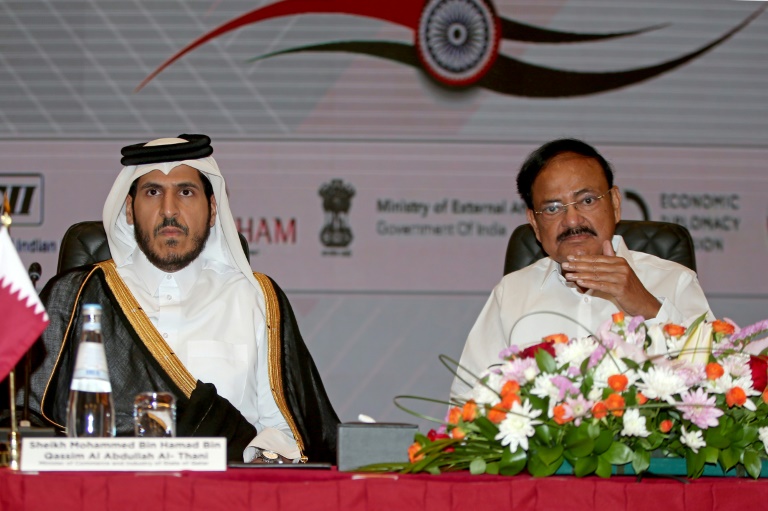
On Sunday, Qatar demanded that India apologise for the “Islamophobic” comments, as India’s Vice-President Venkaiah Naidu visited the gas-rich Gulf state in a bid to bolster trade.

Iran followed Qatar and Kuwait by summoning the Indian ambassador to protest in the name of “the government and the people”, state news agency IRNA said late on Sunday.  

Al-Azhar University, one of Islam’s most important institutions, said the comments were “the real terrorism” and “could plunge the entire world into deadly crisis and wars”.

The Saudi-based Muslim World League said the remarks could “incite hatred”, while Saudi Arabia’s General Presidency of the Affairs of the Grand Mosque and the Prophet’s Mosque called them a “heinous act”.

The row follows anger across the Muslim world in 2020 after French President Emmanuel Macron defended the right of a satirical magazine to publish caricatures of the Prophet Mohammed.

French teacher Samuel Paty was beheaded in October 2020 by a Chechen refugee after showing the cartoons to his class in a lesson on free speech. Images of the Prophet are strictly forbidden in Islam.

In further criticism of the Indian official, the Gulf Cooperation Council, an umbrella group for the six Gulf countries, “condemned, rejected and denounced” her comments.

Bahrain also welcomed the BJP’s decision to suspend Sharma over “provocation to Muslims’ feelings and incitement to religious hatred”.

Gulf countries are a major destination for India’s overseas workers, accounting for 8.7 million out of a worldwide total of 13.5 million, Indian foreign ministry figures show.

They are also big importers of produce from India and elsewhere, with Kuwait importing 95 percent of its food according to the trade minister. 

Kuwaiti media have reported that the government asked New Delhi for an exemption from India’s surprise ban on wheat exports over food security and inflation worries.

Indonesia ferry sinking death toll rises to 19 as search called off

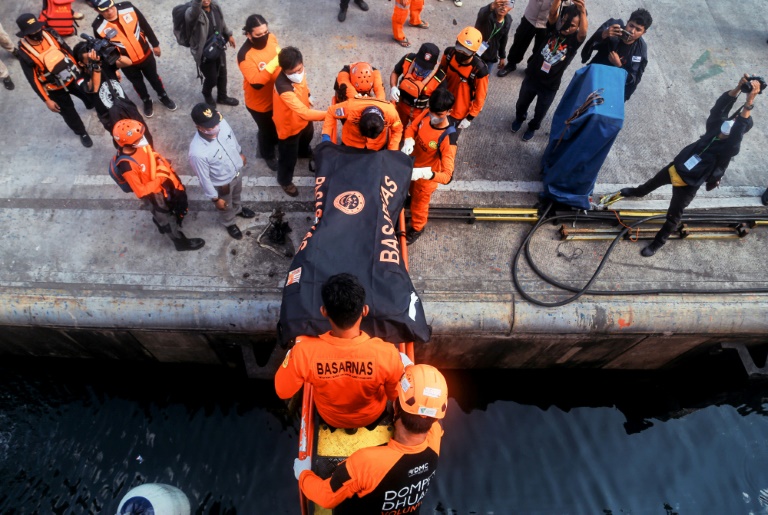
The death toll of a ferry sinking in Indonesian waters rose to 19 on Monday, after a 10-day search and rescue operation was called off, authorities said.

The KM Ladang Pertiwi ran out of fuel and sank in bad weather while sailing through Indonesia’s Makassar Strait in South Sulawesi province on May 26.

News of the accident only reached officials two days later, prompting a search and rescue operation that involved local fishermen and tugboats passing through the strait.

Authorities rescued 31 passengers and crew, found four bodies and declared 15 missing before the search effort concluded. Those who were missing are now presumed dead.

“We are calling off the search because there are no signs that more victims could be found,” local search and rescue chief Djunaidi, who like many Indonesians goes by one name, told AFP.

The ship’s captain, who survived the sinking, was named last week as a suspect for transporting passengers without the necessary permit and the ship’s owner was named as a suspect for hiring crew without the proper qualifications, local media reported.

Djunaidi said local fishermen who regularly sail the area were told to alert the authorities if they found more bodies.

He said the search operation could be reopened if there were any signs of survivors.

Djunaidi told a press conference Monday that the incident served as a reminder to “prioritise our safety”.

Marine accidents are common in Indonesia, a Southeast Asian country of around 17,000 islands where safety regulations are often laxly enforced.

In May, a ferry carrying more than 800 people ran aground in shallow waters off East Nusa Tenggara province and remained stuck for two days before being dislodged. No one was hurt in that accident.

In 2018, more than 150 people drowned when a ferry sank in one of the world’s deepest lakes on Sumatra island.

New Australia PM, Indonesia president ride bikes as diplomatic wheels turn

Australia’s new prime minister and Indonesia’s president rode bamboo bicycles together on Monday as they held talks to boost ties, as Canberra embarks on a diplomatic charm offensive aimed at countering China’s growing assertiveness in the region.

Anthony Albanese hailed relations with Indonesia and vowed to strengthen them on his first bilateral trip since being elected last month, heading to Southeast Asia’s biggest economy in what has become a traditional tour for new Australian premiers.

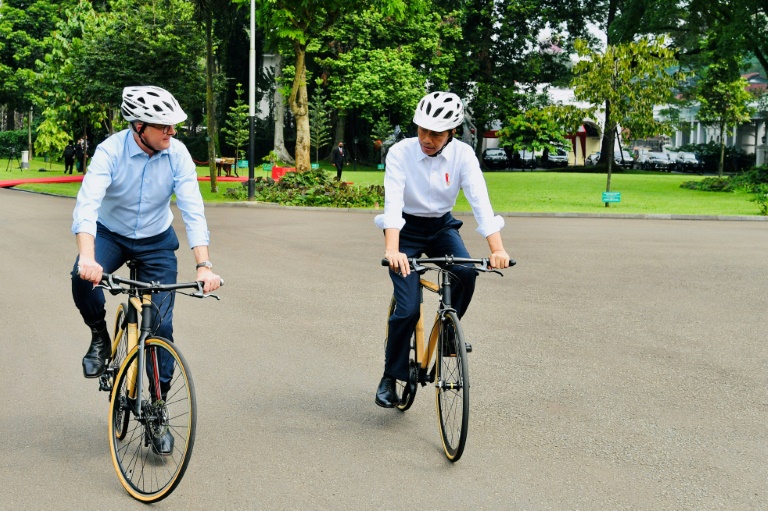
After a guard of honour, Indonesian President Joko Widodo presented Albanese with a bicycle at the presidential palace in Bogor — a city south of capital Jakarta — where the pair removed their jackets, donned helmets and rode around the grounds.

“Australia’s relationship with Indonesia is one of our most important. We are linked not just by geography, we are linked by choice,” Albanese said in a joint press conference held after talks.

“Our relationship is ever-deepened by the strategic and economic interests we share,” he added, saying Indonesia was on course to become one of the five biggest economies in the world.

Widodo said good relations between the two would contribute to “the peace and prosperity of the region”.

About the bike ride, Albanese later tweeted, “it was a privilege to have such a personal and enjoyable tour of the magnificent grounds”.

Widodo tweeted the bikes were “designed for use on the highway” and made from bamboo by Singgih Susilo Kartono, an East Javan designer known for his woodcraft.

Albanese confirmed he would attend the G20 summit, which Indonesia will host in November, despite reservations from predecessor Scott Morrison about sitting around the table with Russian President Vladimir Putin after his invasion of Ukraine.

“I said before I travelled to Indonesia… that Vladimir Putin attended previous meetings in Australia hosted by (former PM) Tony Abbott,” he told reporters.

“That didn’t mean we agree with his stance, indeed we find President Putin’s behaviour to be abhorrent, to be illegal,” he added.

The Labor Party leader discussed advancing opportunities on trade, climate change and regional security with Widodo, who last visited Australia in early 2020.

He also offered Australian technical expertise to Indonesia for its capital move from Jakarta to a new site, Borneo’s Nusantara — scheduled for 2024 — and said he hoped to advance a Aus$200 million ($144 million) climate and infrastructure fund for the country.

– Southeast Asia focus –

Indonesia favours a non-aligned position on the Pacific rivalry between Beijing and Western powers.

It is one of several Asian countries to have expressed concerns about the AUKUS security pact between Australia, the United Kingdom and the United States — widely seen as an effort to counter China.

On Albanese’s three-day trip, he was accompanied by a business delegation and several cabinet ministers including Foreign Minister Penny Wong, who met Indonesian counterpart Retno Marsudi on Sunday.

Malaysian-born Wong has previously called for Canberra to place greater emphasis on Australia’s billion-dollar trade relationship with Jakarta — as well as its trade with Southeast Asia as a whole.

“Deepening engagement with Southeast Asia is a priority for my government,” Albanese said, announcing a new envoy and office for the region.

After meeting Widodo, Albanese will travel to South Sulawesi’s Makassar, where Australia has a diplomatic presence.

He was also set to meet Lim Jock Hoi, the secretary-general of the 10-member Association of Southeast Asian Nations — as Canberra pivots to focus on strengthening its alliances in the region.

His first stop after entering office was Japan where he travelled for talks with members of the Quad, an alliance created in the face of China’s push for dominance across the region.

Singapore finance minister made deputy PM in succession sign

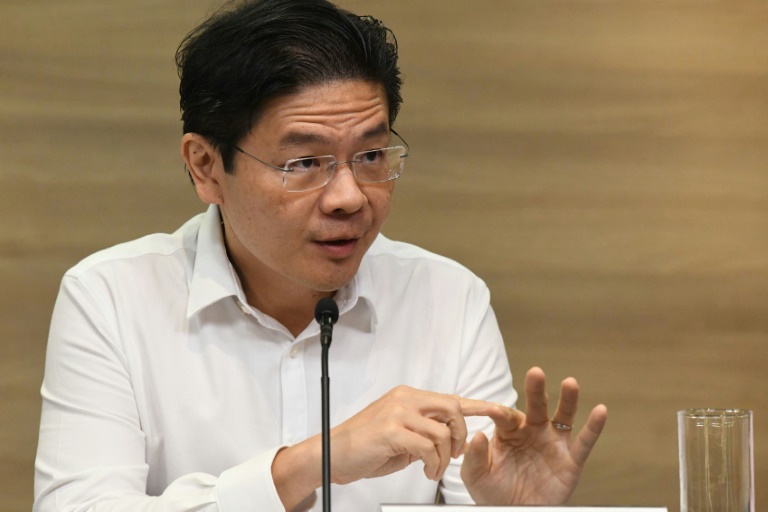
Singapore’s finance minister will be promoted to deputy prime minister, the government announced on Monday, in the clearest sign yet that he could become the city-state’s next leader.

Lawrence Wong will take up his new post with effect from June 13, Prime Minister Lee Hsien Loong said in a statement.

The 49-year-old was earlier handed a key role in the country’s ruling party in April, in an initial signal of how the succession process would take shape.

Lee, 70, is the son of Singapore’s late founding premier Lee Kuan Yew, and the upcoming leadership change is seen as sensitive because it marks the founding family handing power to a new generation of ruling party leaders.

The financial hub of 5.5 million has been ruled by the People’s Action Party (PAP) since 1959, and leadership succession is usually a carefully choreographed affair.

The process was thrown into disarray last year, when the leader-in-waiting and then-finance minister, Heng Swee Keat, gave up his claim to the job after the party saw its support slip in national elections. 

That cleared the way for Wong’s emergence.

“Mr Lawrence Wong will be promoted to deputy prime minister. He will be the acting prime minister in the absence of the prime minister,” Lee said in a statement.

Wong will continue as finance minister, added Lee, who also announced cabinet changes and other political appointments.

“The next generation leadership is taking shape,” Lee said in a separate Facebook post.

“I ask everyone to give your full support to this important transition, to steer Singapore safely out of the pandemic and into a brighter future.”

Several ministers had been touted as potential replacements for Lee but Wong — who took over as finance minister in May last year, and also played a prominent role in coordinating Singapore’s fight against Covid-19 — came out on top.

Health Minister Ong Ye Kung and Education Minister Chan Chun Sing had earlier been seen as other contenders to succeed Lee.

Close Bitnami banner
Bitnami