World

Three Chinese astronauts arrive at space station

Three Chinese astronauts arrived at the country’s space station on Sunday, the Chinese space agency for human flights said, the latest stride in Beijing’s aim to become a major space power.

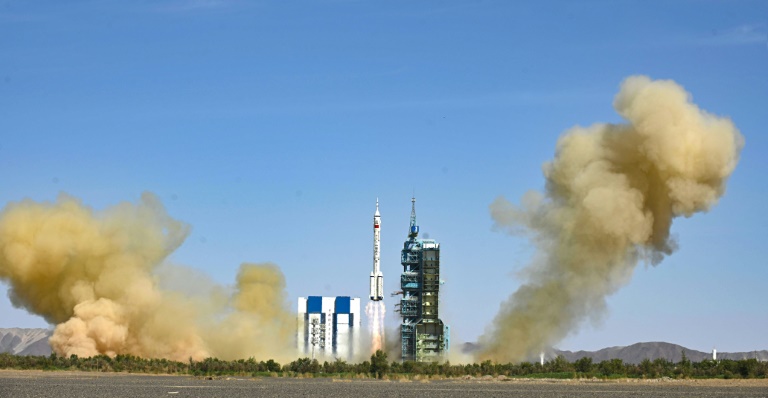
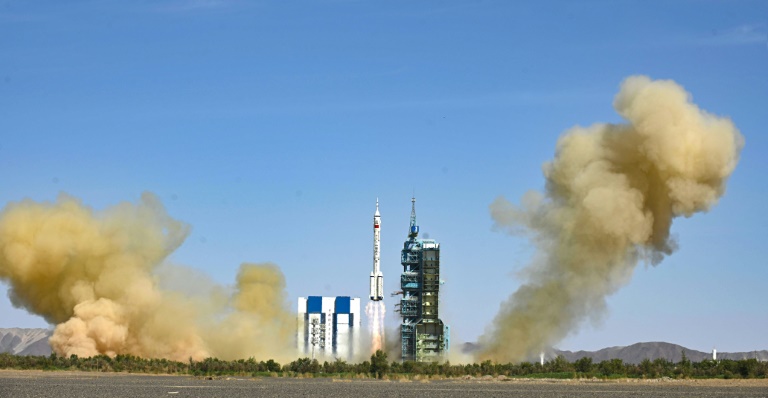
The trio blasted off in a Long March-2F rocket at 0244 GMT from the Jiuquan launch centre in northwestern China’s Gobi desert, reported state broadcaster CCTV.

The team is tasked with “completing in-orbit assembly and construction of the space station”, as well as “commissioning of equipment” and conducting scientific experiments, state-run CGTN said Saturday.

The astronauts entered the central module of the Tiangong station at around 1250 GMT, the China Manned Space Agency (CMSA) said. The journey took about “seven hours of flight”, CCTV reported. 

Tiangong, which means “heavenly palace”, is expected to become fully operational by the end of the year. 

China’s heavily promoted space programme has already seen the nation land a rover on Mars and send probes to the Moon.

The Shenzhou-14 crew is led by air force pilot Chen Dong, 43, the three-person crew’s main challenge will be connecting the station’s two lab modules to the main body.

Dong, along with fellow pilots Liu Yang and Cai Xuzhe, will become the second crew to spend six months aboard the Tiangong after the last returned to earth in April following 183 days on the space station.

Tiangong’s core module entered orbit earlier last year and is expected to operate for at least a decade.

The completed station will be similar to the Soviet Mir station that orbited Earth from the 1980s until 2001.

– Space ambitions –

The world’s second-largest economy has poured billions into its military-run space programme, with hopes of having a permanently crewed space station by 2022 and eventually sending humans to the Moon.

The country has made large strides in catching up with the United States and Russia, whose astronauts and cosmonauts have decades of experience in space exploration.

But under Chinese President Xi Jinping, the country’s plans for its heavily promoted “space dream” have been put into overdrive.

In addition to a space station, Beijing is also planning to build a base on the Moon, and the country’s National Space Administration said it aims to launch a crewed lunar mission by 2029.

China has been excluded from the International Space Station since 2011, when the United States banned NASA from engaging with the country.

While China does not plan to use its space station for global cooperation on the scale of the ISS, Beijing has said it is open to foreign collaboration.

The ISS is due for retirement after 2024, although NASA has said it could remain functional until 2030.
Three Chinese astronauts arrive at space station

Three Chinese astronauts arrived at the country’s space station on Sunday, the Chinese space agency for human flights said, the latest stride in Beijing’s aim to become a major space power.

The trio blasted off in a Long March-2F rocket at 0244 GMT from the Jiuquan launch centre in northwestern China’s Gobi desert, reported state broadcaster CCTV.

The team is tasked with “completing in-orbit assembly and construction of the space station”, as well as “commissioning of equipment” and conducting scientific experiments, state-run CGTN said Saturday.

The astronauts entered the central module of the Tiangong station at around 1250 GMT, the China Manned Space Agency (CMSA) said. The journey took about “seven hours of flight”, CCTV reported. 

Tiangong, which means “heavenly palace”, is expected to become fully operational by the end of the year. 

China’s heavily promoted space programme has already seen the nation land a rover on Mars and send probes to the Moon.

The Shenzhou-14 crew is led by air force pilot Chen Dong, 43, the three-person crew’s main challenge will be connecting the station’s two lab modules to the main body.

Dong, along with fellow pilots Liu Yang and Cai Xuzhe, will become the second crew to spend six months aboard the Tiangong after the last returned to earth in April following 183 days on the space station.

Tiangong’s core module entered orbit earlier last year and is expected to operate for at least a decade.

The completed station will be similar to the Soviet Mir station that orbited Earth from the 1980s until 2001.

– Space ambitions –

The world’s second-largest economy has poured billions into its military-run space programme, with hopes of having a permanently crewed space station by 2022 and eventually sending humans to the Moon.

The country has made large strides in catching up with the United States and Russia, whose astronauts and cosmonauts have decades of experience in space exploration.

But under Chinese President Xi Jinping, the country’s plans for its heavily promoted “space dream” have been put into overdrive.

In addition to a space station, Beijing is also planning to build a base on the Moon, and the country’s National Space Administration said it aims to launch a crewed lunar mission by 2029.

China has been excluded from the International Space Station since 2011, when the United States banned NASA from engaging with the country.

While China does not plan to use its space station for global cooperation on the scale of the ISS, Beijing has said it is open to foreign collaboration.

The ISS is due for retirement after 2024, although NASA has said it could remain functional until 2030.
North Korea fires eight ballistic missiles, Seoul says

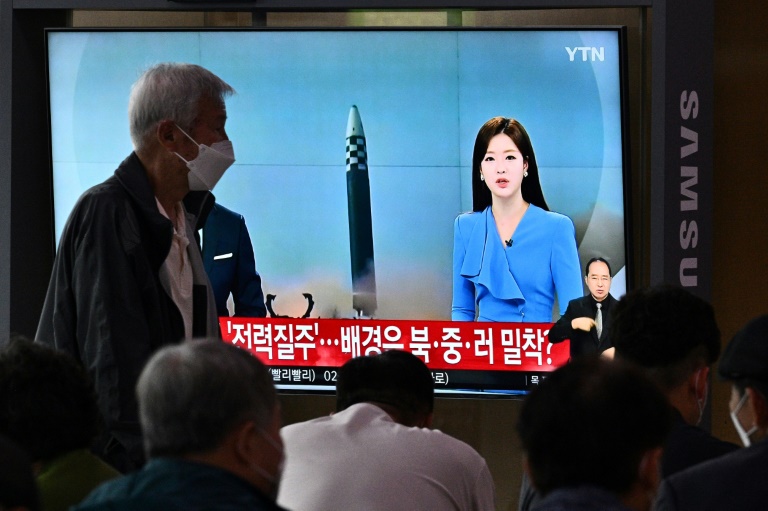
North Korea launched eight ballistic missiles from multiple locations Sunday, South Korea’s military said, a day after Seoul and Washington completed their first joint drills involving a US aircraft carrier in more than four years.

Pyongyang has doubled down on upgrading its weapons programme this year, despite facing crippling economic sanctions, with officials and analysts warning that the regime is preparing to carry out a fresh nuclear test.

“Our military detected eight short-range ballistic missiles fired by North Korea,” Seoul’s Joint Chiefs of Staff said.

The missiles were launched from multiple locations over a 30-minute period, including Sunan in capital Pyongyang, Tongchang-ri in North Pyongan province, and Hamhung in South Hamgyong province, they said.

They travelled different distances — from 110 kilometres (68 miles) to 670 kilometres — and flew at different altitudes of up to 90 kilometres, it added.

Japanese Defence Minister Nobuo Kishi said the simultaneous test-firing from multiple locations was “unusual”.

“This is absolutely unacceptable,” he added.

According to local reports, two missiles were shot from each site, likely from transporter erector launchers (TELs) — the largest number of ballistic missiles North Korea has recently launched on a single day and occasion.

Analysts say the volley of missile launches Sunday — one of nearly 20 weapons tests by Pyongyang so far this year — is a pointed message for Seoul and Washington.

“It shows North Korea’s intention to neutralise the missile defence system of South Korea and the United States with multiple simultaneous attacks during emergency,” said Cheong Seong-jang, a researcher at the Sejong Institute.

The move comes barely a day after South Korea and the United States wrapped up large-scale, three-day exercises involving the USS Ronald Reagan, a 100,000-tonne nuclear-powered aircraft carrier.

The exercises were the allies’ first joint military drills since South Korea’s hawkish new President Yoon Suk-yeol took office last month, and the first involving an aircraft carrier since November 2017.

Pyongyang has long protested against the joint exercises, calling them rehearsals for invasion.

“The exercise consolidated the two countries’ determination to sternly respond to any North Korean provocations while demonstrating the US commitment to provide extended deterrence,” Seoul’s Joint Chiefs of Staff said in a statement.

Go Myong-hyun, a researcher at the Asan Institute for Policy Studies, said Sunday’s launch was likely a response to the US-South Korea manoeuvres.

“It seems that they fired eight missiles because the scale of the joint drills has expanded in their view,” he told AFP.

– Nuclear test –

Last month, during a summit with Yoon, US President Joe Biden said Washington would deploy “strategic assets” to the South if necessary as part of efforts to bolster deterrence.

Pyongyang test-fired three missiles, including possibly its largest intercontinental ballistic missile, the Hwasong-17, just days after Biden left South Korea following his summit with Yoon.

US and South Korean officials have warned for weeks that Pyongyang may conduct a seventh nuclear test.

Last month, a US bid to impose fresh UN sanctions on Pyongyang over its missile launches was vetoed by Russia and China.

Despite struggling with a recent Covid-19 outbreak, North Korea has resumed construction on a long-dormant nuclear reactor, new satellite imagery has indicated.

South Korea’s presidential office said last month that Pyongyang had carried out tests of a nuclear detonation device in preparation for its first nuclear test since 2017.

Long-range and nuclear tests have been paused since North Korean leader Kim Jong Un met then-US president Donald Trump for a bout of high-profile negotiations that collapsed in 2019.

But Pyongyang has since abandoned this self-imposed moratorium, carrying out a blitz of sanctions-busting weapons tests this year, including firing an intercontinental ballistic missile (ICBM) at full range.

Analysts have warned Kim could speed up nuclear testing plans to distract North Korea’s population from the disastrous coronavirus outbreak.

Cambodians vote in local polls as revived opposition vies for seats

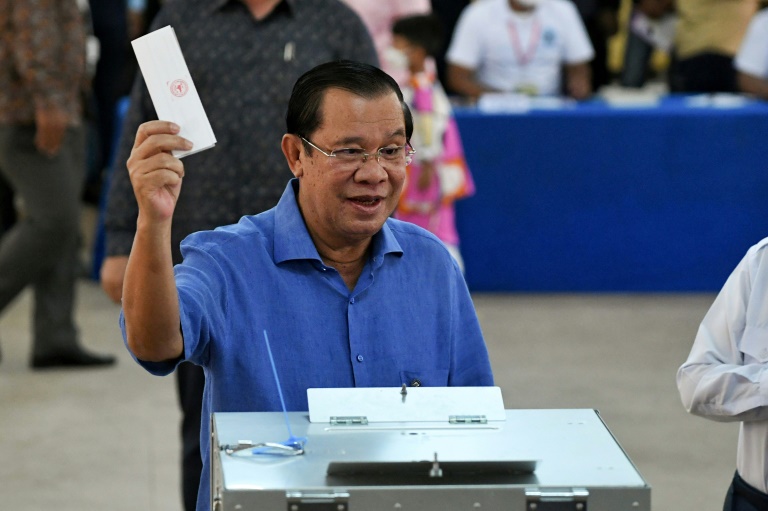
Cambodians voted in local polls on Sunday as a revived opposition party attempted to dent Prime Minister Hun Sen’s decades-long grip on power ahead of national elections next year.

Hun Sen, one of the world’s longest-serving leaders, has ruled Cambodia for more than 37 years and turned the country into a one-party state in 2018 when his party won every seat in a national election.

The prime minister was all smiles early in the day, voting in a polling station at a school on Phnom Penh’s outskirts with his wife Bun Rany. He declined to speak to media.

Critics and rights groups have accused him of creating a climate of fear by locking up scores of political opponents and activists.

The opposition Cambodia National Rescue Party (CNRP) — which won 44 percent of the popular vote in local elections in 2017 — was forced to forfeit its positions after a court dissolved it later that year.

Scores of opposition figures have since fled the country, while others have been arrested.

Opposition leader Kem Sokha, who was arrested and jailed for more than a year, is facing a treason trial, while CNRP co-founder Sam Rainsy is living in France to escape convictions he says are politically motivated.

Sunday’s vote in 1,652 communes, or village clusters, will take the country’s political pulse ahead of the national elections in 2023.

At several polling stations in the capital Phnom Penh, an AFP journalist saw the ruling Cambodian People’s Party (CPP) lead the main opposition party in large numbers, based on initial vote counts.

Voters cited peace and development in the country as they cast their ballot for Hun Sen’s party inside schools or Buddhist temples.

“I picked the same old candidate, I did not change,” said Srey Chan Samuth, 76. “We have been working together since the beginning, so we know who is good and who is bad.”

A total of 17 parties are running in the local election, with more than 11,600 positions up for grabs — the majority of which are presently controlled by the CPP.

But all eyes are on the performance of the Candlelight Party (CP) — founded by Rainsy in 1995 — which has registered candidates to contest in nearly all communes and has been gaining strong support.

– ‘Last hope’ –

“The Candlelight Party is the last hope for the people, although we are suffering from intimidation and threats, and political harassment,” party secretary-general Lee Sothearayuth told AFP.

UN Human Rights Office spokeswoman Liz Throssell said she was disturbed by patterns of obstruction targeting opposition candidates ahead of the poll.

She warned that the CP “faces a paralysing political environment” after at least six candidates and activists were arrested in the run-up to the vote.

The CP is well-positioned to attract supporters and is the only party that “poses a realistic threat” to Hun Sen’s CPP, said Sebastian Strangio, a journalist and author of a book on Hun Sen’s rule. 

“A strong opposition showing would demonstrate that the popular discontent with CPP rule continues to simmer beneath the surface of Cambodian politics,” he told AFP.

CPP spokesman Sok Eysan, however, shrugged off the competition, telling AFP late Sunday his party had won the majority of positions.

“We did very well,” he said, claiming his party would win around 90 percent of the votes.

But some voters said they wanted new faces to lead their communities.

“I voted for a change and social justice,” one 35-year-old, who asked not to be named, told AFP.

The National Election Committee (NEC) said voter turnout was nearly 78 percent, with 7.1 million people casting a ballot.

Official results are not expected until June 26.

Nearly 60 Rohingya found abandoned on Thai island: police

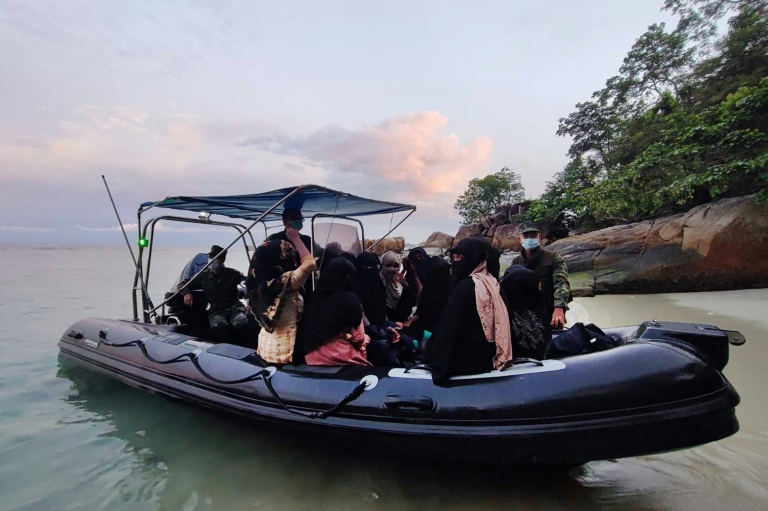
Fifty-nine Rohingya people have been discovered on a Thai island, saying they were abandoned by traffickers en route to Malaysia, a senior police officer said Sunday.

The group — among them five children — were found on Koh Dong island in the southern Satun province on Saturday, said lieutenant general Surachet Hakpan.

Each year, thousands of the mostly Muslim minority Rohingya people, heavily persecuted in Buddhist-majority Myanmar, risk their lives in months-long expensive journeys to reach Malaysia over Thailand’s seas.

Police said they had been charged with illegal entry and could face deportation to Myanmar following a court case.

“We are providing humanitarian assistance and will investigate whether they are victims of human trafficking or if they entered illegally,” Surachet said.

The group appeared “starving and was likely to have had no food for three to five days”, a police statement said.

Group members told officers their boat was among three vessels carrying 178 people that had left Myanmar and Bangladesh, having paid an agent around 5,000 ringgit ($1,300) for the journey.

The first two boats carrying 119 people were stopped and arrested by Malaysian authorities, according to the Thai police statement.

The boat’s crew then decided to abandon those onboard on Koh Dong island — telling them that they had reached Malaysia, the group told officers.

The incident comes after the bodies of 14 Rohingya people, including children, were discovered washed up on a beach last month after they attempted to flee Myanmar.

Hundreds of thousands of Rohingya people fled a military crackdown in the nation in 2017, bringing with them harrowing stories of murder, rape and arson.

Those still in Myanmar are widely seen as interlopers from Bangladesh and are largely denied citizenship, many rights and access to healthcare and education.

Muslim-majority Malaysia is a key destination for Rohingya fleeing persecution in Myanmar or refugee camps in Bangladesh.

In 2019, a Thai boat captain was charged with smuggling 65 Rohingya people from Myanmar after their vessel was shipwrecked on an island off the coast of Satun province.

The same area was the hub of a multimillion dollar trafficking route, which unravelled in 2015 after the discovery of mass graves of Rohingya and Bangladeshi migrants along the border with Malaysia.

Bangladesh port depot fire kills 49, injures 300

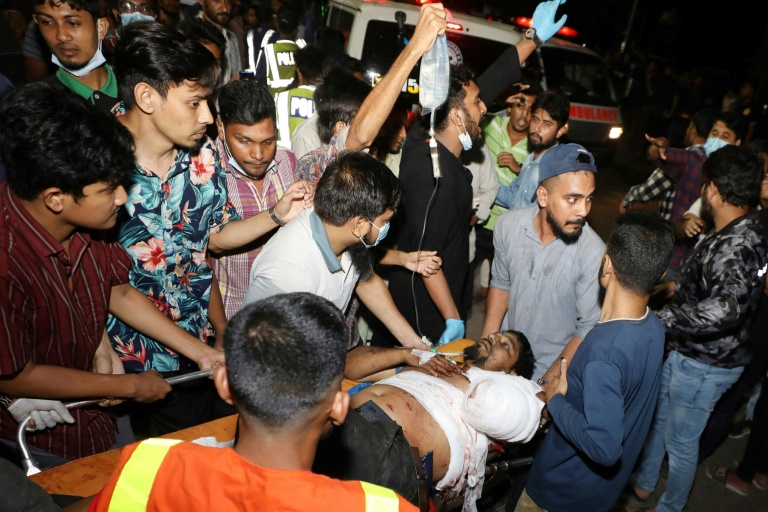
At least 49 people died and hundreds were injured after a fire sparked a huge chemical explosion at a shipping container depot in Bangladesh, officials said on Sunday.

The toll was expected to rise, with some of the more than 300 people injured in serious condition, officials said, while volunteers reported that there were more bodies inside the smouldering, wreckage-strewn facility.

The fire started late on Saturday at the depot in Sitakunda, which stores around 4,000 containers, many filled with garments destined for Western retailers. The facility is about 40 kilometres (25 miles) from the major southern port of Chittagong.

The blaze caused containers holding chemicals to explode, engulfing firefighters, volunteers and journalists in an inferno, hurtling people and debris through the air, and turning the night sky a blazing orange.

Buildings located kilometres away rattled with the force of the blast.

Elias Chowdhury, regional chief doctor, told AFP that the number of dead was 49 but would likely increase.

“The death toll will rise as the rescue work has not been completed yet,” Chowdhury said.

“These people — including several journalists who were doing Facebook lives — are still not accounted for.”

Firefighters continued to douse pockets of fire on Sunday afternoon, with television footage showing smoke still billowing from some containers, more than 19 hours after the fire began.

Reazul Karim, operations director of the fire department, said that at least seven firefighters died and at least four others were missing.

“Never in our fire department history have we lost so many firefighters in a single incident,” Bharat Chandra, a former senior firefighter, told AFP.

“There are still some bodies inside the fire-affected places. I saw eight or 10 bodies,” one volunteer told reporters.

Mujibur Rahman, the director of B.M. Container Depot, the firm operating the facility with around 600 workers, said that the cause of the initial fire was still unknown.

The container depot held hydrogen peroxide, fire service chief Brigadier General Main Uddin told reporters. 

“We still could not control the fire because of the existence of this chemical,” he said.

– ‘Fireballs falling like rain’ –

Mohammad Ali, 60, who runs a nearby grocery store, said the blast was deafening.

“A cylinder flew around half a kilometre from the fire spot to our small pond when the explosion occurred,” he told AFP.

“The explosion sent fireballs into the sky. Fireballs were falling like rain. We were so afraid we immediately left our home to find refuge… We thought the fire would spread to our locality as it is very densely populated,” he added.

Lorry driver Tofael Ahmed was standing inside the depot when the explosion occurred. 

“The explosion just threw me some 10 metres from where I was standing,” he said. “My hands and legs are burned.”

Chowdhury, the chief doctor in Chittagong, said the injured had been rushed to different hospitals as doctors were brought back from holiday to help.

Requests for blood donations for the injured flooded social media. 

– Army deployed –

The army said it had deployed 250 troops to prevent chemicals flowing into the Indian Ocean by using sandbags.

Fires are common in Bangladesh due to lax enforcement of safety rules. 

Around 90 percent of Bangladesh’s roughly 100 billion dollars in trade — including clothes for H&M, Walmart and others — passes through the Chittagong port at the top of the Bay of Bengal.

Rakibul Alam Chowdhury from the Bangladesh Garment Manufacturers and Exporters Association (BGMEA) said that about 110 million dollars worth of garments were destroyed in the fire. 

“It is a huge loss for the industry,” he said.

Three Chinese astronauts dock at space station

Three Chinese astronauts docked at the country’s space station on Sunday, the state broadcaster said, marking a new milestone in Beijing’s drive to become a major space power. 

The trio blasted off in a Long March-2F rocket at 0244 GMT from the Jiuquan launch centre in northwestern China’s Gobi desert, said broadcaster CCTV.

The team is tasked with “completing in-orbit assembly and construction of the space station”, as well as “commissioning of equipment” and conducting scientific experiments, state-run CGTN said Saturday.

The spacecraft docked at the Tiangong station after about “seven hours of flight”, CCTV reported.

Tiangong, which means “heavenly palace”, is expected to become fully operational by the end of the year. 

China’s heavily promoted space programme has already seen the nation land a rover on Mars and send probes to the Moon.

The Shenzhou-14 crew is led by air force pilot Chen Dong, 43, the three-person crew’s main challenge will be connecting the station’s two lab modules to the main body.

Dong, along with fellow pilots Liu Yang and Cai Xuzhe, will become the second crew to spend six months aboard the Tiangong after the last returned to earth in April following 183 days on the space station.

Tiangong’s core module entered orbit earlier last year and is expected to operate for at least a decade.

The completed station will be similar to the Soviet Mir station that orbited Earth from the 1980s until 2001.

– Space ambitions –

The world’s second-largest economy has poured billions into its military-run space programme, with hopes of having a permanently crewed space station by 2022 and eventually sending humans to the Moon.

The country has made large strides in catching up with the United States and Russia, whose astronauts and cosmonauts have decades of experience in space exploration.

But under Chinese President Xi Jinping, the country’s plans for its heavily promoted “space dream” have been put into overdrive.

In addition to a space station, Beijing is also planning to build a base on the Moon, and the country’s National Space Administration said it aims to launch a crewed lunar mission by 2029.

China has been excluded from the International Space Station since 2011, when the United States banned NASA from engaging with the country.

While China does not plan to use its space station for global cooperation on the scale of the ISS, Beijing has said it is open to foreign collaboration.

The ISS is due for retirement after 2024, although NASA has said it could remain functional until 2030.
Three Chinese astronauts dock at space station

Three Chinese astronauts docked at the country’s space station on Sunday, the state broadcaster said, marking a new milestone in Beijing’s drive to become a major space power. 

The trio blasted off in a Long March-2F rocket at 0244 GMT from the Jiuquan launch centre in northwestern China’s Gobi desert, said broadcaster CCTV.

The team is tasked with “completing in-orbit assembly and construction of the space station”, as well as “commissioning of equipment” and conducting scientific experiments, state-run CGTN said Saturday.

The spacecraft docked at the Tiangong station after about “seven hours of flight”, CCTV reported.

Tiangong, which means “heavenly palace”, is expected to become fully operational by the end of the year. 

China’s heavily promoted space programme has already seen the nation land a rover on Mars and send probes to the Moon.

The Shenzhou-14 crew is led by air force pilot Chen Dong, 43, the three-person crew’s main challenge will be connecting the station’s two lab modules to the main body.

Dong, along with fellow pilots Liu Yang and Cai Xuzhe, will become the second crew to spend six months aboard the Tiangong after the last returned to earth in April following 183 days on the space station.

Tiangong’s core module entered orbit earlier last year and is expected to operate for at least a decade.

The completed station will be similar to the Soviet Mir station that orbited Earth from the 1980s until 2001.

– Space ambitions –

The world’s second-largest economy has poured billions into its military-run space programme, with hopes of having a permanently crewed space station by 2022 and eventually sending humans to the Moon.

The country has made large strides in catching up with the United States and Russia, whose astronauts and cosmonauts have decades of experience in space exploration.

But under Chinese President Xi Jinping, the country’s plans for its heavily promoted “space dream” have been put into overdrive.

In addition to a space station, Beijing is also planning to build a base on the Moon, and the country’s National Space Administration said it aims to launch a crewed lunar mission by 2029.

China has been excluded from the International Space Station since 2011, when the United States banned NASA from engaging with the country.

While China does not plan to use its space station for global cooperation on the scale of the ISS, Beijing has said it is open to foreign collaboration.

The ISS is due for retirement after 2024, although NASA has said it could remain functional until 2030.
Ash covers towns after Philippines volcano eruption

A volcano in the eastern Philippines spewed a huge, dark cloud on Sunday, prompting evacuations from ash-covered towns while authorities warned of possible further eruptions.

The blast from Bulusan volcano in the rural Sorsogon province lasted about 17 minutes, sending a grey plume shooting up at least one kilometre (0.6 miles), according to the Philippine Institute of Volcanology and Seismology (PhiVolcs).

No casualties were reported, but authorities raised the alert level to one on the five-level system, indicating “low-level unrest”.

“There was a phreatic eruption of the Bulusan volcano, meaning the explosion was caused by the boiling water under the crater,” PhiVolcs head Renato Solidum told local radio DZBB.

A group of 14 hikers and four local guides were midway down the 1,565-metre tall mountain, unaware that an ash cloud was shooting up on the other side of the mountain, civil defence official Leo Ferreras of nearby Barcelona town told AFP by phone.

“All of them got down safe and sound,” he added.

The local government of Sorsogon, about 500 kilometres (310 miles) south of the capital Manila, said 10 villages in two towns were affected by the ashfall.

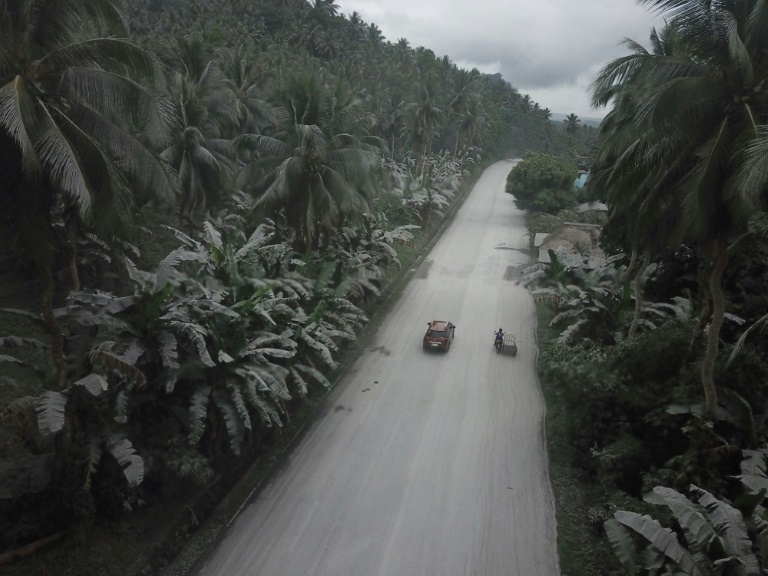
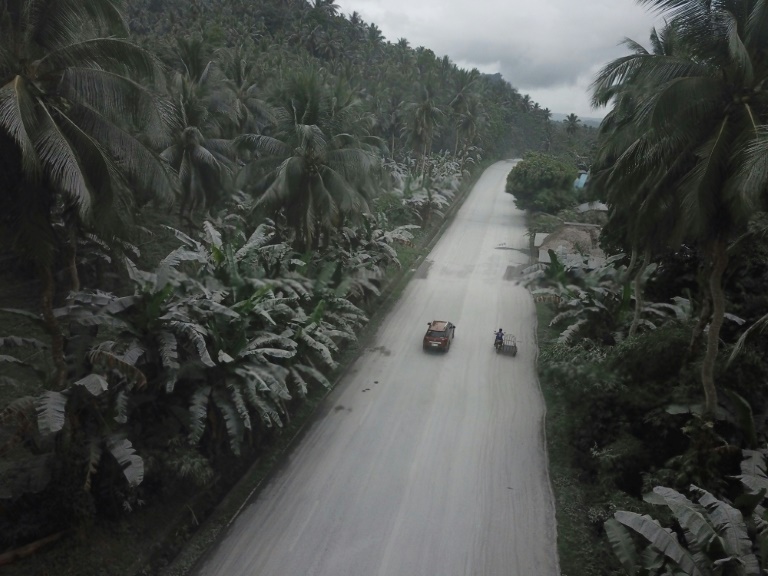
Images of the aftermath showed houses, roads, and trees in Juban town covered in ash, with vehicles struggling to navigate the road due to poor visibility.

Authorities deployed a fire truck to clear the area and residents helped sweep the ash off the roads.

“The evacuation is ongoing there, but our priority is senior citizens and those with asthma,” Juban disaster official Dennis Despabiladeras said.

The Manila airport authority said no flights have been affected by the eruption so far, though pilots were warned about coming near the area.

Authorities reminded residents that entry into the four-kilometre radius around the volcano is prohibited and advised those living next to it to be cautious “due to the increased possibilities of sudden and hazardous phreatic eruptions”.

Residents near the valleys and rivers were also alerted about the danger of mud and stream flows in the event of heavy rainfall. 

Bulusan volcano has been active in recent years, with a dozen similar eruptions recorded in 2016 and 2017.

The Philippines is located in the seismically active Pacific “Ring of Fire” and has over 20 active volcanoes.

Ash covers towns after Philippines volcano eruption

A volcano in the eastern Philippines spewed a huge, dark cloud on Sunday, prompting evacuations from ash-covered towns while authorities warned of possible further eruptions.

The blast from Bulusan volcano in the rural Sorsogon province lasted about 17 minutes, sending a grey plume shooting up at least one kilometre (0.6 miles), according to the Philippine Institute of Volcanology and Seismology (PhiVolcs).

No casualties were reported, but authorities raised the alert level to one on the five-level system, indicating “low-level unrest”.

“There was a phreatic eruption of the Bulusan volcano, meaning the explosion was caused by the boiling water under the crater,” PhiVolcs head Renato Solidum told local radio DZBB.

A group of 14 hikers and four local guides were midway down the 1,565-metre tall mountain, unaware that an ash cloud was shooting up on the other side of the mountain, civil defence official Leo Ferreras of nearby Barcelona town told AFP by phone.

“All of them got down safe and sound,” he added.

The local government of Sorsogon, about 500 kilometres (310 miles) south of the capital Manila, said 10 villages in two towns were affected by the ashfall.

Images of the aftermath showed houses, roads, and trees in Juban town covered in ash, with vehicles struggling to navigate the road due to poor visibility.

Authorities deployed a fire truck to clear the area and residents helped sweep the ash off the roads.

“The evacuation is ongoing there, but our priority is senior citizens and those with asthma,” Juban disaster official Dennis Despabiladeras said.

The Manila airport authority said no flights have been affected by the eruption so far, though pilots were warned about coming near the area.

Authorities reminded residents that entry into the four-kilometre radius around the volcano is prohibited and advised those living next to it to be cautious “due to the increased possibilities of sudden and hazardous phreatic eruptions”.

Residents near the valleys and rivers were also alerted about the danger of mud and stream flows in the event of heavy rainfall. 

Bulusan volcano has been active in recent years, with a dozen similar eruptions recorded in 2016 and 2017.

The Philippines is located in the seismically active Pacific “Ring of Fire” and has over 20 active volcanoes.

Close Bitnami banner
Bitnami