World

US sues cryptocurrency exchange run by Winklevoss twins

US regulators on Thursday said they are suing the Gemini Trust cryptocurrency exchange, which is run by Cameron and Tyler Winklevoss, for giving misleading answers in 2017 about a bitcoin project.

The Commodity Futures Trading Commission lawsuit filed in federal court in New York accuses Gemini of not being upfront about how easy it would be to manipulate a bitcoin futures project proposed at the time, the agency said in a statement.

The futures contract launched at the end of 2017 and stopped trading two years later, according to blog posts from Gemini and a partner company

Making false or misleading statements to the commission undermines its work to protect market participants, prevent price manipulation, and promote fair competition, acting director of enforcement Gretchen Lowe said in the statement.

“This enforcement action sends a strong message that the Commission will act to safeguard the integrity of the market oversight process,” Lowe said.

The US agency is seeking financial penalties, the surrender of any ill-gotten gains, and an injunction forbidding Gemini from such behavior in the future, it said.

Gemini defended its record when asked about the suit.

“We have an eight year track-record of asking for permission, not forgiveness, and always doing the right thing,” it told AFP, adding: “We look forward to definitively proving this in court.”

Cameron and Tyler Winklevoss, twin Harvard classmates of Mark Zuckerberg, who sued him over claims he stole the idea for Facebook from them, started and run New York-based Gemini.

The brothers told Gemini employees on Thursday that about 10 percent of them were being laid off as staff is trimmed to endure a “crypto winter” likely to persist for a while, according to a copy of the email posted online by the company.

“The crypto revolution is well underway and its impact will continue to be profound, but its trajectory has been anything but gradual or predictable,” the brothers said.

The industry is in a “contraction phase that is settling into a period of stasis — what our industry refers to as ‘crypto winter'” compounded by macroeconomic and geopolitical turmoil, they added.
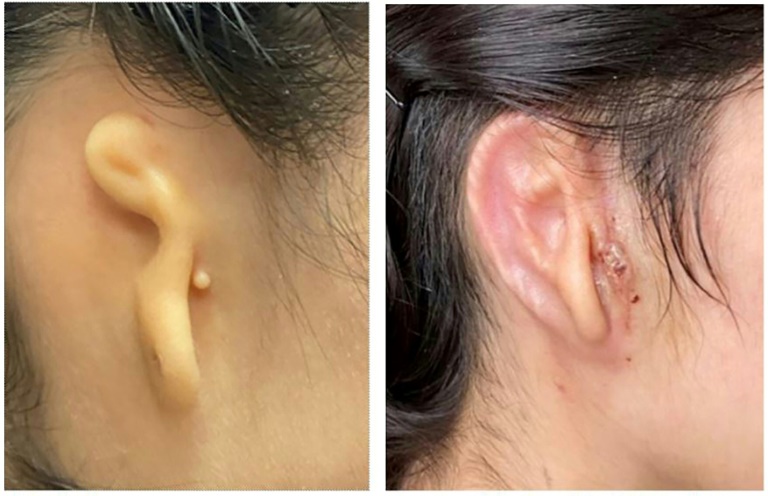
Surgeons transplant 3D ear made of living cells

A US medical team said Thursday they had reconstructed a human ear using the patient’s own tissue to create a 3D bioimplant, a pioneering procedure they hope can be used to treat people with a rare birth defect.

The surgery was performed as part of an early-stage clinical trial to evaluate the safety and efficacy of the implant for people with microtia, in which the external ear is small and not formed properly.

AuriNovo, as the implant is called, was developed by the company 3DBio Therapeutics while the surgery was led by Arturo Bonilla, founder and director of the Microtia-Congenital Ear Deformity Institute in San Antonio, Texas.

“As a physician who has treated thousands of children with microtia from across the country and around the world, I am inspired by what this technology may mean for microtia patients and their families,” Bonilla said in a statement.

He said he hoped the implant would one day replace the current treatment for microtia, which involves either grafting cartilage from a patient’s ribs or using synthetic materials, porous polyethylene (PPE), to reconstruct outer ears.

The procedure involves 3D scanning the patient’s opposite ear to create a blueprint, then collecting a sample of their ear cartilage cells and growing them to a sufficient quantity. 

These cells are mixed with collagen-based bio-ink, which is shaped into an outer ear. The implant is surrounded by a printed, biodegradable shell, to provide early support, but which is absorbed into the patient’s body over time.

The implanted ear is supposed to mature over time, developing the natural look and feel, including elasticity, of a regular ear.

The clinical trial expects to enroll 11 patients and is being conducted in California and Texas.

Bonilla said: “The AuriNovo implant requires a less invasive surgical procedure than the use of rib cartilage for reconstruction. We also expect it to result in a more flexible ear than reconstruction with a PPE implant.”

According to the Centers for Disease Control and Prevention, microtia occurs in about 1 of every 2,000-10,000 babies. Factors that can increase risk include diabetic mothers and maternal diet that is lower in carbohydrates and folic acid.

Boys are more likely to be affected than girls, with Hispanic, Asian, Pacific Islander and Native Americans more impacted than non-Hispanic whites.

Absent other conditions, children with microtia can develop normally and lead healthy lives — though they may have self-esteem issues and suffer from teasing and bullying about their appearance.

Looking forward, 3DBio wants to develop implants with more severe forms of microtia.

3D printed implants could also be used for other conditions involving cartilage, including nose defects or injuries, breast reconstruction, damaged meniscus in the knee or rotator cuff tears in shoulders.

“Our initial indications focus on cartilage in the reconstructive and orthopedic fields, and then our pipeline builds upon this progress to expand into the neurosurgical and organ system fields,” the company says on its website.

Surgeons transplant 3D ear made of living cells

A US medical team said Thursday they had reconstructed a human ear using the patient’s own tissue to create a 3D bioimplant, a pioneering procedure they hope can be used to treat people with a rare birth defect.

The surgery was performed as part of an early-stage clinical trial to evaluate the safety and efficacy of the implant for people with microtia, in which the external ear is small and not formed properly.

AuriNovo, as the implant is called, was developed by the company 3DBio Therapeutics while the surgery was led by Arturo Bonilla, founder and director of the Microtia-Congenital Ear Deformity Institute in San Antonio, Texas.

“As a physician who has treated thousands of children with microtia from across the country and around the world, I am inspired by what this technology may mean for microtia patients and their families,” Bonilla said in a statement.

He said he hoped the implant would one day replace the current treatment for microtia, which involves either grafting cartilage from a patient’s ribs or using synthetic materials, porous polyethylene (PPE), to reconstruct outer ears.

The procedure involves 3D scanning the patient’s opposite ear to create a blueprint, then collecting a sample of their ear cartilage cells and growing them to a sufficient quantity. 

These cells are mixed with collagen-based bio-ink, which is shaped into an outer ear. The implant is surrounded by a printed, biodegradable shell, to provide early support, but which is absorbed into the patient’s body over time.

The implanted ear is supposed to mature over time, developing the natural look and feel, including elasticity, of a regular ear.

The clinical trial expects to enroll 11 patients and is being conducted in California and Texas.

Bonilla said: “The AuriNovo implant requires a less invasive surgical procedure than the use of rib cartilage for reconstruction. We also expect it to result in a more flexible ear than reconstruction with a PPE implant.”

According to the Centers for Disease Control and Prevention, microtia occurs in about 1 of every 2,000-10,000 babies. Factors that can increase risk include diabetic mothers and maternal diet that is lower in carbohydrates and folic acid.

Boys are more likely to be affected than girls, with Hispanic, Asian, Pacific Islander and Native Americans more impacted than non-Hispanic whites.

Absent other conditions, children with microtia can develop normally and lead healthy lives — though they may have self-esteem issues and suffer from teasing and bullying about their appearance.

Looking forward, 3DBio wants to develop implants with more severe forms of microtia.

3D printed implants could also be used for other conditions involving cartilage, including nose defects or injuries, breast reconstruction, damaged meniscus in the knee or rotator cuff tears in shoulders.

“Our initial indications focus on cartilage in the reconstructive and orthopedic fields, and then our pipeline builds upon this progress to expand into the neurosurgical and organ system fields,” the company says on its website.

Civilians urged to evacuate Sloviansk as Russia bombing intensifies

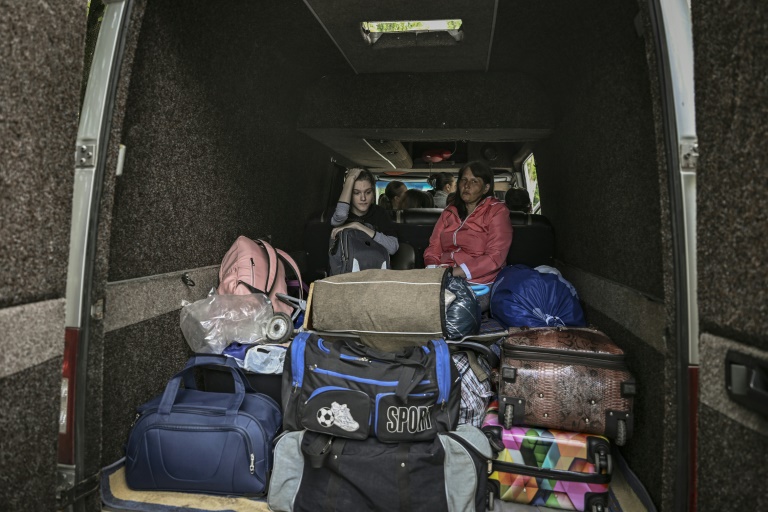
The bombing in eastern Ukraine is becoming more intense and, with no water or electricity, 100 people or so heeded the mayor’s call on Thursday to evacuate the city of Sloviansk which sits in Russia’s crosshairs.

“The situation is getting worse, the explosions are stronger and stronger and the bombs are falling more often,” 18-year-old student Goulnara Evgaripova told AFP.

Outside an administrative office, she boarded one of five minibuses earmarked to take people out of the city in the Donetsk region that Moscow wants to control.

One Russian strike killed three people, wounded six and left a trail of damage on Tuesday in Sloviansk, witnesses told AFP.

Mayor Vadim Liakh, spoke of a fresh bombardment on Thursday that damaged electricity lines on the edge of the city which boasted a population of 100,000 before the late February invasion.

“There is no electricity, the water supply is down,” Liakh posted on the Telgram messenger service.

“The best solution in this situation, is to evacuate.

“Take care of yourselves. Pack your bags,” he urged.

Dmytro, a 35-year-old labourer, admitted he was ready to leave with this family.

“There’s no water, my grandmother is handicapped and it’s hard for my mother to wash her.

“If we had running water, we would stay longer.”

Unlike many others Dmytro has somewhere safe to go.

But all he wants is for the war to be over. “It’s always better to be at home,” he explained.

Many analysts predict the war will go on for months more with fighting continuing in the Donbas where the Russians have made  headway in recent weeks and now control most of the strategic city of Severodonetsk, 80 kilometres (50 miles) east of Sloviansk.

At the end of May the key town of Lyman on the road to Sloviansk, 25 kilometres (15 miles) to the northeast, fell to the invaders.

– “We don’t deserve it” –

Aid worker Kateryna Perednenko, 24, returned to Sloviansk five days ago but is already preparing to leave again.

“It’s very difficult here. There’s bombing everywhere and it’s frightening. It’s just very scary. No water, no electricity, no gas either,” she said.

“I still can’t believe what is happening to us. It really hurts. I fear for my town and I fear from my country.

“And I fear that soon there will nothing left worth coming back for,” she said.

Leonid, aged 79, volunteers that he is going to Dnipro.

“From there I’ll take a train to Kyiv … then I’ll go to Europe as a refugee.  

“It’s painful. We don’t deserve it. We don’t understand why we are being punished.

“We are good, peaceful people, and all of a sudden Russia decides we are fascists.”

Leonid added his conviction that “the Russians will not take our town”, despite the growing bombardment.

In 2014, when Russia grabbed the Crimean peninsula from Ukraine, Moscow-backed separatists also seized Sloviansk, before Ukrainian forces regained control.

Seen from space, the snow-capped Alps are going green

The famous snow-capped peaks of the Alps are fading fast and being replaced by vegetation cover — a process called “greening” that is expected to accelerate climate change, a study said Thursday.

The research, published in Science, was based on 38 years of satellite imagery across the entirety of the iconic European mountain range.

“We were very surprised, honestly, to find such a huge trend in greening,” first author Sabine Rumpf, an ecologist at the University of Basel, told AFP.

Greening is a well-recognized phenomenon in the Arctic, but until now hadn’t been well established over a large scale in mountainous areas.

However, since both the poles and mountains are warming faster than the rest of the planet, researchers suspected comparable effects.

For their analysis, the team examined regions at 1,700 meters above sea level, to exclude areas used for agriculture. They also excluded forested areas and glaciers.

According to the findings, which covered 1984-2021, snow cover was no longer present in summer on nearly 10 percent of the area studied.

Rumpf pointed out that satellite images can only verify the presence or absence of snow — but the first effect of warming is to reduce the depth of the snowpack, which can’t be seen from space.

Secondly, the researchers compared the amount of vegetation using wavelength analysis to detect the amount of chlorophyll present, and found plant growth increased across 77 percent of the zone studied.

– Vicious cycle –

Greening happens in three different ways: plants begin growing in areas they previously weren’t present, they grow taller and more densely due to favorable conditions, and finally particular species growing normally at lower altitudes move into higher areas.

“It is climate change that is driving these changes,” said Rumpf.

“Warming means that we have longer vegetation periods, we have more benign conditions that foster plant growth, so plants can just grow more and faster,” she added. 

The effect is additive: “The warmer it gets, the more precipitation falls as rain rather than snow.”

And there are several harmful consequences.

First, a large part of drinking water comes from melting snow. If water is not stored as snow, it disappears faster via rivers.

Next, the habitat species adapted specifically to the alpine environment is disrupted.

The snow’s disappearance also harms the tourism industry, a key economic driver for the region.

“What we kind of tend to forget is the emotional aspects of these processes that the Alps are like a very iconic symbol and when people think about Switzerland, it’s usually the Alps that they think about,” stressed Rumpf.

While alpine greening could increase carbon sequestration, feedback loops are more likely to cause a net result of amplified warming, and thawing of permafrost, the researchers argue.

Snow reflects about 90 percent of solar radiation, vegetation absorbs much more, and radiates the energy back in the form of heat — which in turn further accelerates warming, snow melt, and more vegetation: a vicious cycle.

– From green to brown? –

The future of the Alps can’t be predicted with certainty.

“In terms of snow, it’s pretty straightforward,” said Rumpf. “I would expect the snow cover to disappear more and more, especially at lower elevations.”

For the time being, another phenomenon known as “browning” — in which the ground is no longer covered with either snow or vegetation — has only been detected in less than one percent of the area studied.

This is much less than what has been observed in the Arctic, or in the mountains of Central Asia.

It is fueled by two factors: the increase in episodes of extreme rain followed by droughts, and a reduction in water available to plants that was produced by annual snowmelt.

“We do not know for the future whether browning is going to occur more and more,” concluded Rumpf, who hopes to repeat the observations in a few years’ time. 

NFT market sees first insider trading case in US

US authorities have charged a former manager at a digital exchange platform with fraud and money laundering, in what they said was the first insider trading case involving non-fungible tokens, or NFTs.

Nathaniel Chastain was working as a product manager at New York-based OpenSea last year when he secretly bought dozens of NFTs that were about to be featured on the platform’s home page, federal prosecutors said in a statement Wednesday.

Chastain, 31, went on to sell the NFTs for two to five times the initial price after they got star billing at the OpenSea website, the criminal case against him states.

NFTs are tokens linked to digital images, collectable items, avatars in games or objects in the burgeoning virtual world of the metaverse.

“NFTs might be new, but this type of criminal scheme is not,” US attorney Damian Williams said in a release. “Nathaniel Chastain betrayed OpenSea by using its confidential business information to make money for himself.”

Chastain was arrested in New York on Wednesday on charges of wire fraud and money laundering that each carry a maximum penalty of 20 years in prison, prosecutors said.

US media reported that he was later released on bail after entering a non-guilty plea.

The arrest was touted by prosecutors as the first-ever insider trading bust involving digital assets.

“With the emergence of any new investment tool, such as blockchain supported non-fungible tokens, there are those who will exploit vulnerabilities for their own gain,” FBI assistant director-in-charge Michael Driscoll said in the release.

Part of Chastain’s job was to pick NFTs to be featured on OpenSea’s homepage, with the choices kept secret because prices typically jumped after they got top billing, the criminal complaint said.

The likes of Paris Hilton, Gwyneth Paltrow and Serena Williams have boasted about owning NFTs and many under-30s have been enticed to gamble for the chance of making a quick profit.

Prices have fallen and the reputation of the industry has been hammered for much of the year.

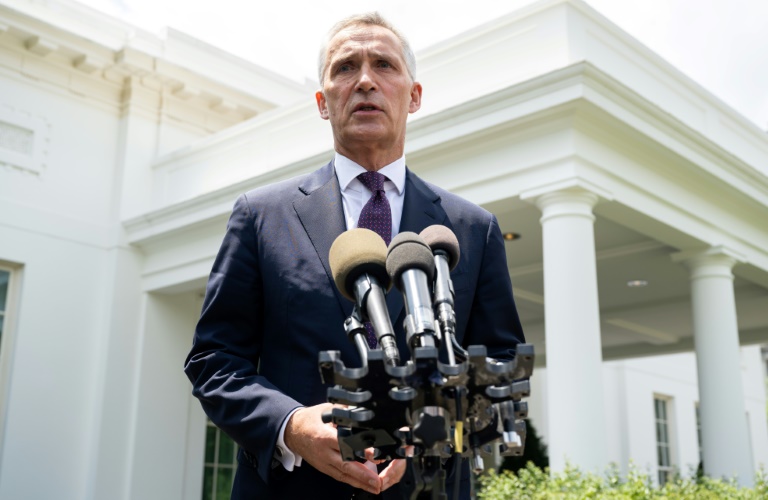
West must brace for 'long haul' in Ukraine: NATO chief

Western nations need to brace for a long “war of attrition” in Ukraine, NATO chief Jens Stoltenberg warned Thursday following White House talks with US President Joe Biden.

“We just have to be prepared for the long haul,” the secretary general told reporters. “Because what we see is that this war has now become a war of attrition.”

Stoltenberg said Ukrainians are “paying a high price for defending their own country on the battlefield, but also we see that Russia is taking high casualties.”

While reiterating that NATO does not want to enter direct confrontation with Russia, Stoltenberg said the Western military alliance has a “responsibility” to support Ukraine.

“Most wars — also, most likely this war — will at some stage end at the negotiating table, but what we know is that what happens around the negotiating table is very closely linked to the situation on the ground, on the battlefield,” he said.

Asked if Ukraine was being pressured by the West to accept losses of territory in order to negotiate peace, Stoltenberg said “it’s not for us to decide or to have strong opinions what Ukraine should accept or not accept.”

The NATO chief would not comment on whether the alliance was discussing naval escorts to get grain exports blocked in Ukraine out through a Russian blockade of the Ukrainian coast, but said he welcomed efforts to find solutions.

“The easiest way to get more grain out and to reduce the pressure on food prices is for President Putin to end the war,” he said. “As long as that’s not the case, I welcome the effort by different countries, including NATO allies, also in close coordination with the UN, to look for ways to get more grain out.”

This includes efforts to expand land export routes under Ukraine’s control “but also the possibility of getting some grain out by ship.”

“I welcome those efforts,” he said.

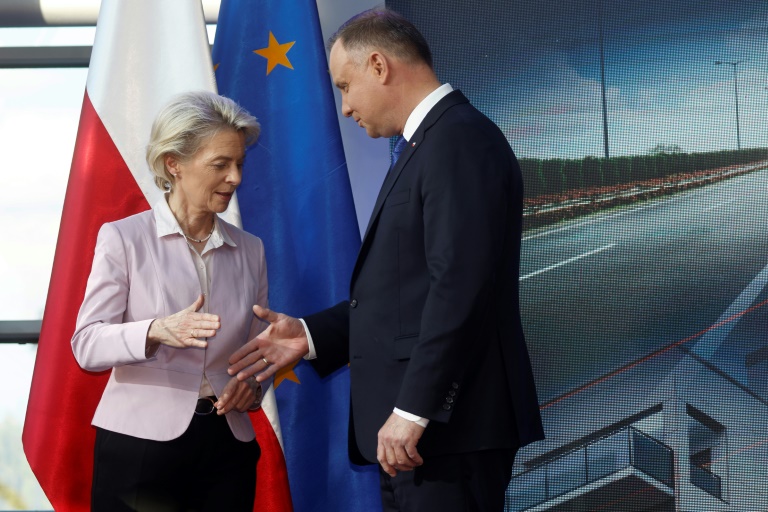
No Covid cash for Poland before rule of law reform: EU chief

Poland will only receive the money from its 35.4-billion euro ($38 billion) post-Covid economic recovery package if it carries out rule of law reforms, European Commission chief Ursula von der Leyen said on Thursday.

She said the EU’s approval of the plan announced on Wednesday was “important” but only “a first step, as the money will be disbursed when the reforms and investments are in place”.

“We are not at the end of the road on the rule of law in Poland,” she said, speaking alongside Polish Prime Minister Mateusz Morawiecki and President Andrzej Duda on a visit to Warsaw.

“Few believed that a compromise could be reached between us and the EU on the recovery plan but we have succeeded,” Morawiecki said.

The EU and Poland have been at loggerheads for years over changes pushed through by Poland’s right-wing populist government that critics say could undermine judicial independence.

The impasse has festered even as the EU strives to maintain unity to address the war in Ukraine.

Poland, which borders Ukraine, is on the frontline of the EU solidarity effort.

It is the main entry point into the bloc for the nearly seven million Ukrainians who have fled their war-torn country. 

And it serves as the logistics hub for weapons sent from EU countries and the United States into Ukraine.

One of the main points of contention over rule of law has been a “disciplinary chamber” for judges that has been rejected by the Court of Justice of the European Union.

“We are not at the end of the road on the rule of law in Poland,” von der Leyen said.

One condition for Poland to get its Covid recovery cash calls for judges’ disciplinary cases to be heard by a court compliant with EU law that is not the disciplinary chamber. 

Another is that judges already affected by disciplinary chamber rulings must have the right to have the decision reviewed by an EU-compliant court “without delay”. 

Also, judges cannot be hit with disciplinary procedures for asking the EU Court of Justice to rule on certain issues.

A new law making its way through the Polish parliament would dismantle some aspects of the disciplinary mechanism, although the opposition says that it does not go far enough.

“A first payment will only be possible when the new law is in force and ticks all the boxes under our contract,” von der Leyen said.

Mexico lowers Hurricane Agatha toll to nine dead

Hurricane Agatha, the first of the Pacific season, left nine people dead and six missing after slamming into southern Mexico, fewer than previously thought, authorities said Thursday.

Agatha barreled ashore on Monday near Puerto Angel in Oaxaca state as a Category Two hurricane, the second lowest on a scale of five, causing flooding, landslides and damage to homes.

The storm was the strongest to make landfall along Mexico’s Pacific coast in May since record keeping began in 1949, according to the US National Hurricane Center (NHC).

“We have nine officially confirmed deaths and six people still missing,” Oaxaca governor Alejandro Murat told reporters.

The previous day he had reported 11 dead and 22 missing based on preliminary information.

The toll was revised after communication and access was restored to remote mountain communities.

“The inhabitants of Oaxaca affected by this hurricane are not alone,” President Andres Manuel Lopez Obrador said.

“We’re going to support them, so that the roads are restored, so that the services are improved,” he told reporters.

Mexico is regularly lashed by tropical storms on both its Pacific and Atlantic coasts, generally between the months of May and November.

On Thursday the remnants of Agatha were located over Mexico’s Yucatan Peninsula, home to major Caribbean beach resorts.

The country’s meteorological service said there was an 80 percent chance of a new storm forming within the next five days.

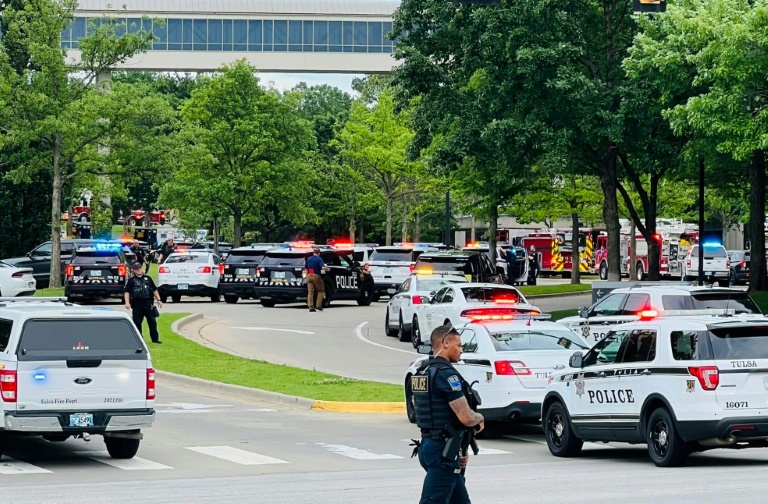
Oklahoma shooter killed surgeon treating him for back pain: police

The gunman who shot dead four people at a hospital in the US state of Oklahoma killed the surgeon whom he blamed for pain after back surgery, police said Thursday.

The suspect, identified as Michael Louis, stormed into the Saint Francis hospital in the city of Tulsa on Wednesday with a rifle and a handgun, in the latest mass shooting in the United States in recent weeks.

Louis had recently been operated on by surgeon Preston Phillips at the hospital and had called the clinic to complain of continuing back pain, Tulsa Police Chief Wendell Franklin said during a press conference.

Police found “a letter on the suspect, which made it clear that he came in with the intent to kill Dr. Phillips and anyone who got in his way,” Franklin said.

“He blamed Dr. Phillips for the ongoing pain following the surgery.”

As well as Phillips, the other victims included another physician, a receptionist and a patient.

“They stood in the way and Lewis gunned them down,” Franklin said, adding Louis then shot himself.

The suspect purchased an semi-automatic gun at a local gun shop shortly before the shooting, police said.

The killings come as families in Texas bury their dead after a school shooting left 19 young children and two teachers dead last week.

The tragedies have prompted calls for tighter gun control legislation but US lawmakers have failed to pass significant new laws despite years of worsening gun violence.

According to the Gun Violence Archive, there have been 233 mass shootings this year in the United States. It defines mass shootings as when four or more people are injured or killed in a single event, not including the shooter.

Close Bitnami banner
Bitnami