World

Myanmar classrooms become latest battleground as junta opens schools

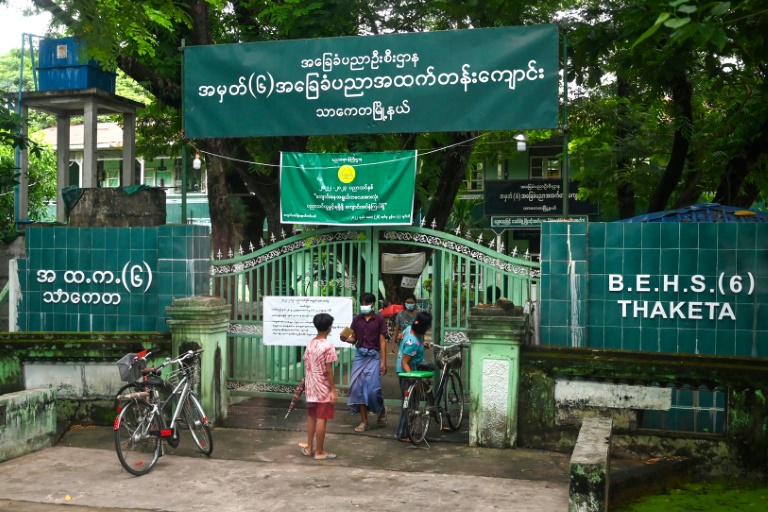
Myanmar students began a new school year on Thursday, with classrooms becoming the latest battleground in the polarised country — the junta is desperate to project normalcy and opponents want teachers and students to stay away.

Public schoolteachers — dressed in the green and white uniforms mandated by the education ministry — were prominent in the early mass protests against the military coup last year.

Sixteen months on, the junta is trying to tempt educators still on strike to return, saying those not judged to have committed serious crimes could have their absence treated simply as “unpaid leave”.

Going back to school, however, comes with risks.

The military has struggled to crush resistance across swathes of Myanmar and low-level officials perceived to be cooperating with the junta are regularly targeted in assassinations. 

“Many of my students have joined the People’s Defence Forces (PDF)” that have sprung up to fight the military, said Wah Wah Lwin, 35, a middle school teacher in northwestern Sagaing region.

Wah Wah Lwin said she had been forced to leave her village after she refused to join the teachers strike last year and was accused of being an informant.

Now, as she teaches around 40 students in a makeshift school near a monastery, members of a pro-junta militia stand guard outside, providing protection in the absence of regular security forces.

“We are still worried because PDF… are threatening non-striking teachers,” she said. 

The charity Save the Children said there were at least 260 attacks on schools between May 2021 and April this year, with “explosions in and around school buildings” accounting for nearly three-quarters of the incidents.

In the capital Naypyidaw on Thursday, parents arrived by foot or scooter to drop off their children at a crowded school gate.

The headmaster, who did not want to give his name, said there had been a 30 percent increase in enrolment compared with last year.

“We are not too worried about safety in Naypyidaw compared with other regions,” he said, adding that “security forces” were keeping watch around the school.

– ‘Can’t keep waiting’ –

For Moe Aye, an educator in commercial hub Yangon who was still on strike, Thursday would have marked her 10th year teaching in schools.

“One thing that I miss is wearing the white and green uniform,” she told AFP, requesting the use of a pseudonym.

Moe Aye said she is happier teaching privately, visiting the homes of parents who want to keep their children away from junta-run institutions.

Other teachers supporting the boycott give lessons by video, delivered over the Telegram messaging app.

But with internet access in some regions regularly cut by authorities and rolling power blackouts in Yangon and other cities, online learning can be patchy and frustrating.

Many parents opposed to the junta are still worried about what another year outside the formal education system will do to their child’s prospects.

“I don’t want my children to fall behind when those who can send their children to international school are going to do so,” one Yangon mother told AFP, requesting anonymity.

Although she feared recriminations from neighbours and friends, or even an attack on the school her children go to, she said she had “no choice”.

For another couple in the city, whether or not to send their 12-year-old daughter back to school had been the topic of many arguments.  

“I don’t want to send her to school, but my husband overruled me,” said the child’s mother, requesting anonymity.

“He said we can’t keep waiting when we don’t know how long this revolution will last.”
Asian markets track Wall St rally ahead of jobs data, oil holds gains

Asian equities rose Friday following a strong performance on Wall Street ahead of a key US jobs data release, while crude held most of the previous day’s gains after an output hike disappointed traders.

A below-forecast reading on US private jobs offered some support to New York, even as inflation and interest rate hike concerns remained major headaches.

While observers said the reading from payroll firm ADP was not usually a good guide for the official report, a soft number on Friday could give the Federal Reserve a little room to ease off its rate hike drive and provide a much-needed boost to sentiment.

“Seemingly, anything that keeps the Fed from a more aggressive rate-hiking path appears to be greeted with open arms by equities,” said Stephen Innes of SPI Asset Management.

For now, expectations are for the US central bank to continue tightening monetary policy with half-point hikes at upcoming meetings, while vice chair Lael Brainard warned she did not yet see any reason to take a breather in the third quarter, as some had hoped. 

Still, a rally in beaten-down tech firms helped drive healthy gains on Wall Street, and Asia managed to ride on the coattails.

Tokyo rose more than one percent, while Sydney, Seoul, Singapore, Wellington and Jakarta were also up, though Manila dipped.

Hong Kong, Shanghai and Taipei were closed for holidays.

– Oil pressure –

But analysts remain on edge about the near-term outlook owing to uncertainty caused by a range of issues including the Ukraine war and China’s economic travails.

“We believe a slight lean toward defensive sectors and away from the growth-oriented areas of this market still make sense,” said Scott Brown, of LPL Financial.

“Outside of this recent rally, very little about this market has changed from a technical standpoint and that makes us wary of calling the all-clear.”

Hopes that OPEC and other major crude producers could ease pressure on inflation by ramping up output were dealt a blow when they agreed to pump just 50 percent more per month.

The announcement did little to soothe worries about a supply shortage caused by bans on US and UK imports from Russia, and came just as European leaders said they would impose a partial embargo on shipments.

A report showing a steep drop in US stockpiles added to the woes on oil trading floors, with some commentators saying prices could once again spike as China relaxes long-running lockdown measures in major cities.

– Key figures at around 0230 GMT –

Tokyo – Nikkei 225: UP 1.1 percent at 27,713.23 (break)

Hong Kong – Hang Seng Index: Closed for a holiday

Shanghai – Composite: Closed for a holiday

Brent North Sea crude: DOWN 0.1 percent at $117.54 per barrel

West Texas Intermediate: DOWN 0.2 percent at $116.70 per barrel

Euro/dollar: UP at $1.0762 from $1.0753 on Thursday

Pound/dollar: UP at $1.2581 from $1.2568

Euro/pound: UP at 85.54 pence from 85.49 pence

Dollar/yen: DOWN at 129.80 yen from 129.85 yen

New York – Dow: UP 1.3 percent at 33,248.28 (close)

London – FTSE 100: Closed for a holiday

Biden makes emotional appeal for action on gun violence

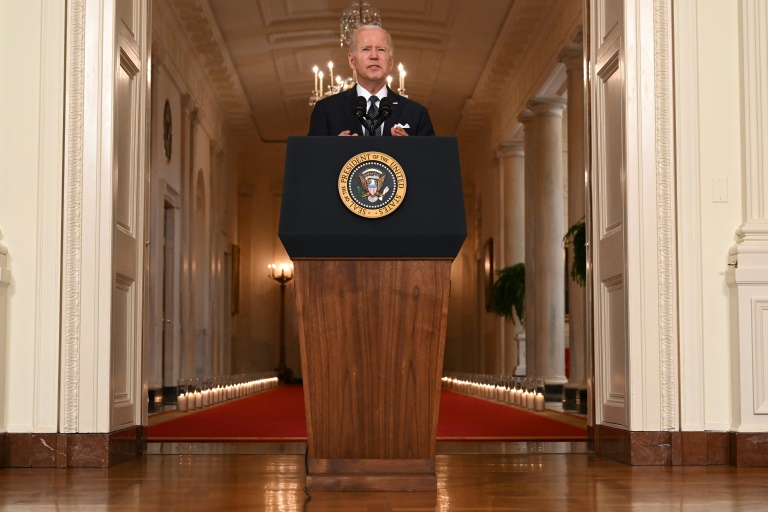
US President Joe Biden on Thursday made a fervent appeal for lawmakers to pass tougher gun control laws, including a ban on assault weapons, to curb a scourge of mass shootings turning American communities into “killing fields.”

Biden made the 17-minute address — his latest call for tougher firearms measures — with 56 lighted candles arrayed along a long corridor behind him, representing US states and territories suffering from gun violence.

“How much more carnage are we willing to accept?” the president asked in the speech, which he delivered with anger in his voice, and at times dipping close to a whisper.

“We can’t fail the American people again,” he said, condemning the refusal of a majority of Republican senators to support tougher laws as “unconscionable.”

At a minimum, Biden said, lawmakers should raise the age at which assault weapons can be purchased from 18 to 21.

He also urged them to take steps including strengthening background checks, banning high-capacity magazines, mandating safe storage of firearms, and allowing gun manufacturers to be held liable for crimes committed with their products.

“Over the last two decades, more school-age children have died from guns than on-duty police officers and active duty military combined. Think about that,” Biden said.

He highlighted the story of a young student who smeared a dead classmate’s blood on herself to hide from a gunman at a Texas elementary school, saying: “Imagine what it would be like for her to walk down the hallway of any school again.”

“There are too many other schools, too many other everyday places that have become killing fields, battlefields here in America,” Biden said.

While Republican lawmakers have largely resisted tougher gun laws, a cross-party group of US senators held talks Thursday on a package of firearms controls.

Nine senators have been meeting this week to discuss a response to the mass shootings that have appalled the nation, projecting optimism over the prospects for modest reforms.

The group has focused on school security, bolstering mental health services and incentives for states to grant courts “red flag” authority to temporarily remove guns from owners considered a threat — a measure Biden also called for in his remarks.

– Hospital attack –

Even as lawmakers were mulling a response to the racist murder of 10 Black supermarket shoppers in Buffalo and the school shooting in Texas that killed 19 children and two teachers, another attack took place in Oklahoma on Wednesday.

A man with a pistol and a rifle murdered two doctors, a receptionist and a patient in a Tulsa hospital complex before killing himself as police arrived.

Lawmakers are aware that they risk wasting momentum as the urgency for reforms sparked by the killings dissipates, and another smaller group of senators is holding parallel discussions on expanding background checks on gun sales.

The political challenge of legislating in a 50-50 Senate, where most bills require 60 votes to pass, means that more wide-ranging reforms are unrealistic.

Mitch McConnell, leader of the Senate Republicans, told reporters that senators were trying to “target the problem” — which he said was “mental illness and school safety” rather than the availability of firearms. 

House Democrats are nevertheless set to pass a much broader but largely symbolic “Protecting Our Kids Act,” which calls for raising the purchasing age for semi-automatic rifles from 18 to 21 and a ban on high-capacity magazines.

The package will likely pass the Democratic-led House next week before dying amid Republican opposition in the Senate.

With regulation being so difficult at the federal level, an effort is also underway among state legislatures to push for tighter gun laws.

California lawmakers advanced a gun control package in the aftermath of the Uvalde shooting that included proposals to open up gunmakers to civil legal liability in certain cases.

The proposals echo action by lawmakers in New York state, while a permit-to-buy bill is moving through the Delaware legislature and pro-gun rights Texas is looking to “make legislative recommendations” in response to the Uvalde shooting.

Activists for greater restrictions fear a setback at the federal level however as the Supreme Court is set to issue its first major Second Amendment opinion in more than a decade.

Justices are expected to rule in the coming weeks in a dispute over New York state’s stringent limits on the concealed carry of handguns outside the home.

A narrow opinion could affect just a few states with similar laws, but campaigners fear the conservative majority will make a broader ruling clearing the way for constitutional challenges to gun safety laws across the country.

US-Venezuela business picking up despite punishing sanctions

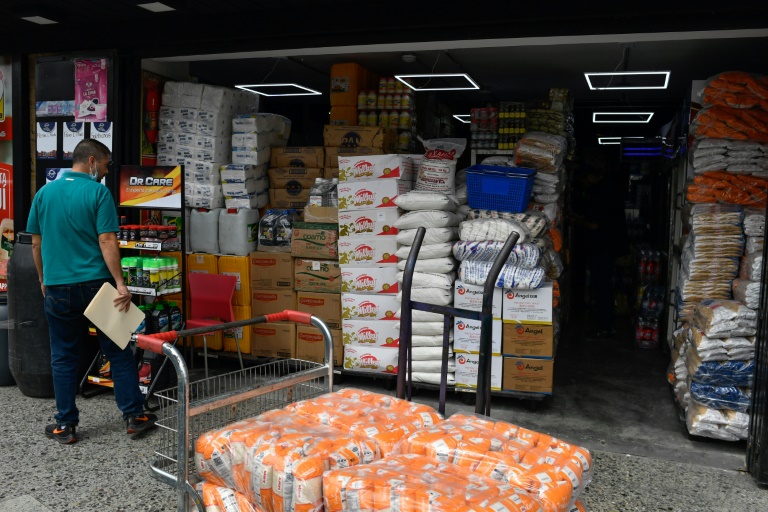
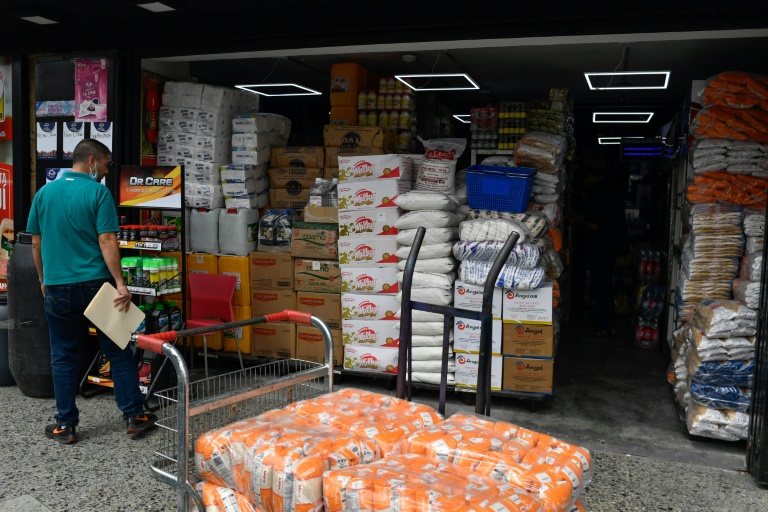
Venezuela’s imports of US food and farming products are on the rise, with the private sector driving increased business between the two former partners despite punishing sanctions imposed on Caracas by Washington.

“Venezuela was disappearing from the world of imports and exports for a while, but it’s coming back,” Luis Vicente Garcia, general manager at the Venezuelan-American Chamber of Commerce (VENANCHAM), told AFP.

“We’re at a turning point,” Garcia said.

Total imports of food and farming supplies in Venezuela were $2.4 billion in 2021, a 31.2 percent increase over 2020.

The oil-rich but cash-strapped South American country is now experiencing timid growth after a years-long recession in which its gross domestic product shrunk by 80 percent.

Purchases from the United States reached $634 million in 2021, second only to the $934 million spent in Brazil, according to a report by the US Department of Agriculture, which said that opportunities in Venezuela are improving.

Although the US figure represents a 45 percent increase from the previous year, it is still a far cry from the $1.4 billion per year seen between 2010 and 2014. In 2017, at the height of US-Venezuelan tensions, US imports were worth just $400 million.

The main purchases are grains, pasta, tinned fruit and vegetables, liquor and animal feed.

Imports are crucial for Venezuela, which only produces 50 percent of its basic corn and 45 percent of its rice needs, according to the Fedeagro union of agricultural producers.

VENAMCHAM says trade between Venezuela and the US were around $38 billion in 2008, at a time when Washington was Caracas’s largest crude customer.

– Softening controls –

That figure fell to just under $2 billion in 2021, but has increased almost 28 percent in the first quarter of 2022 compared to the previous year.

At the height of Venezuela’s economic crisis, the government of President Nicolas Maduro blamed the scarcity of basic necessities such as food, which produced interminable lines at supermarkets, on the US “blockade.”

Between 2017 and 2018, sanctions were against individuals, freezing bank accounts and barring US businesses and citizens from engaging in commerce with dozens of Venezuelan state officials.

The United States did not recognize Maduro’s 2018 re-election in a vote boycotted by the opposition. The year before, Washington imposed a series of sanctions against his government, including an oil embargo, in response to a crackdown on demonstrators.

“When the sanctions arrived… there was a reaction (by businesses): I’m not going to take part in this market,” said Garcia.

Even though medicine and food was exempt, the fear of reprisals was a barrier.

But faced with a cash flow problem, the government, which used to almost monopolize food imports, opened the doors to the private sector.

It was “around two or three years ago that the government started to let private enterprises import,” Garcia said.

Venezuela food imports have also benefited since 2018 from the lifting of tariffs.

The softening of tight currency exchange controls has also helped, as has remittances that are worth an estimated $2.5 billion to $3 billion a year.

There have also been movements on the political front.

On May 17, US President Joe Biden softened certain sanctions in a bid to promote negotiations between Maduro and the opposition, which were suspended in October.

US-Venezuela business picking up despite punishing sanctions

Venezuela’s imports of US food and farming products are on the rise, with the private sector driving increased business between the two former partners despite punishing sanctions imposed on Caracas by Washington.

“Venezuela was disappearing from the world of imports and exports for a while, but it’s coming back,” Luis Vicente Garcia, general manager at the Venezuelan-American Chamber of Commerce (VENANCHAM), told AFP.

“We’re at a turning point,” Garcia said.

Total imports of food and farming supplies in Venezuela were $2.4 billion in 2021, a 31.2 percent increase over 2020.

The oil-rich but cash-strapped South American country is now experiencing timid growth after a years-long recession in which its gross domestic product shrunk by 80 percent.

Purchases from the United States reached $634 million in 2021, second only to the $934 million spent in Brazil, according to a report by the US Department of Agriculture, which said that opportunities in Venezuela are improving.

Although the US figure represents a 45 percent increase from the previous year, it is still a far cry from the $1.4 billion per year seen between 2010 and 2014. In 2017, at the height of US-Venezuelan tensions, US imports were worth just $400 million.

The main purchases are grains, pasta, tinned fruit and vegetables, liquor and animal feed.

Imports are crucial for Venezuela, which only produces 50 percent of its basic corn and 45 percent of its rice needs, according to the Fedeagro union of agricultural producers.

VENAMCHAM says trade between Venezuela and the US were around $38 billion in 2008, at a time when Washington was Caracas’s largest crude customer.

– Softening controls –

That figure fell to just under $2 billion in 2021, but has increased almost 28 percent in the first quarter of 2022 compared to the previous year.

At the height of Venezuela’s economic crisis, the government of President Nicolas Maduro blamed the scarcity of basic necessities such as food, which produced interminable lines at supermarkets, on the US “blockade.”

Between 2017 and 2018, sanctions were against individuals, freezing bank accounts and barring US businesses and citizens from engaging in commerce with dozens of Venezuelan state officials.

The United States did not recognize Maduro’s 2018 re-election in a vote boycotted by the opposition. The year before, Washington imposed a series of sanctions against his government, including an oil embargo, in response to a crackdown on demonstrators.

“When the sanctions arrived… there was a reaction (by businesses): I’m not going to take part in this market,” said Garcia.

Even though medicine and food was exempt, the fear of reprisals was a barrier.

But faced with a cash flow problem, the government, which used to almost monopolize food imports, opened the doors to the private sector.

It was “around two or three years ago that the government started to let private enterprises import,” Garcia said.

Venezuela food imports have also benefited since 2018 from the lifting of tariffs.

The softening of tight currency exchange controls has also helped, as has remittances that are worth an estimated $2.5 billion to $3 billion a year.

There have also been movements on the political front.

On May 17, US President Joe Biden softened certain sanctions in a bid to promote negotiations between Maduro and the opposition, which were suspended in October.

Brazil bagpipe band channels sound of Scotland

It’s a gorgeous day at the beach in Brazil: the bright blue ocean sparkles in the sun, the palm trees sway in the breeze and the peaceful sound of… er, bagpipes?

Thousands of kilometers (miles) from the United Kingdom, the kilts are out on a Rio de Janeiro beach that suddenly looks like something out of the Scottish Highlands.

Eleven-year-old Davi Portugal is playing a set of bagpipes nearly as big as he is, inflating his cheeks to tennis-ball-size with every breath.

“I love the sound. It’s beautiful and different,” says the young Brazilian, whose dream is to join the navy.

He and his older brother Caio, 14, are both members of their school band in Sao Goncalo, a poor neighborhood on the outskirts of Rio, where playing the bagpipes is a surefire way to turn people’s heads.

“The first time I saw the bagpipes, I definitely did not want to play them, because I thought it was weird to wear a kilt. It looks like a skirt, which is kind of taboo in Brazil,” says Jhonny Mesquita, 32, the director of the school band.

“But later, I fell in love with the sound. When I started learning about the history of the instrument and what it represents to the Scottish people, it turned into a passion.”

– ‘The Pele of bagpipes’ –

In 2017, Mesquita got the chance to pursue his passion back at its source when he traveled to Scotland for two weeks.

He shot to fame there thanks to a video of him juggling a football at a stadium in Aberdeen, all while playing “Asa Branca,” a Brazilian classic, on the bagpipes.

“It was a huge success. The local newspapers called me the ‘Pele of the bagpipes,'” he says, sporting a black, red and white tartan kilt and leather pouch, called a sporran, like the other members of the group.

Mesquita, a grade school music teacher, is famous in Sao Goncalo, too: he has played the bagpipes on Brazilian TV and at Rio’s famed Municipal Theater.

But he says his proudest moments are seeing young people from tough neighborhoods fall in love with music via the bagpipes.

“The essence of the project is engaging young people and occupying their minds so they stay away from drugs and crime,” he says.

In addition to leading the school band, he is head of the Brazil-Scotland Association, a group of 18 bagpipers who play in “places people don’t want to go,” such as juvenile detention centers.

– Next generation of kilt-wearers –

Mesquita himself learned the bagpipes at 15, thanks to a serviceman who played in a navy band.

He says he decided to teach kids how to play the instrument at the school he attended — the same one where he is now band director, training the next generation of kilt-wearing Brazilians.

Mesquita mainly relies on donations and ingenuity to keep his association going on a shoestring budget.

“Most of our bagpipes were donated, mainly from overseas. The kilts are made by the mom of one of our members,” he says.

The group was invited to play a festival in Belgium in July, but did not have money for plane tickets.

But the “Pele of bagpipes” is not letting that get his spirits down.

He sees the instrument opening new horizons for his students all the time, he says.

“It’s been a watershed for them. I’ve seen young people who didn’t seem to have a promising future win scholarships or join the navy and air force bands,” he says.

“It’s very moving to watch my son play,” says Alice Cortes da Silva, a former student at Mesquita’s school, as she watches her nine-year-old play tambourine in the group.

“His dream is to move from tambourine to bagpipes. He’s very dedicated. He’s even started doing better at school,” she says proudly.

Ecuadoran frogs Rocket and Harlequin taking on mining industry

On the banks of a crystalline waterfall, biologist Andrea Teran lets out a yelp.

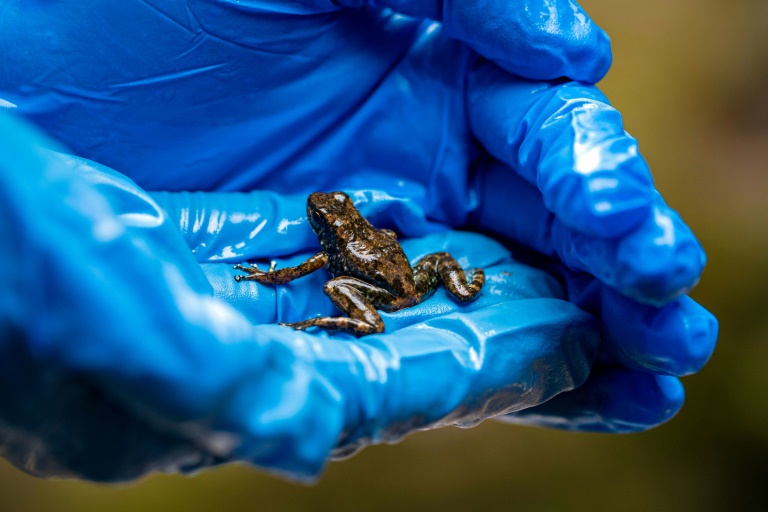
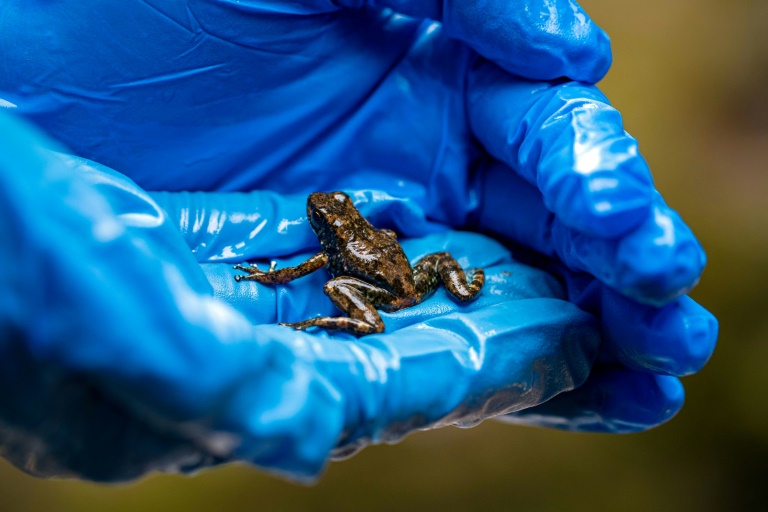
She holds in the palm of her hand one of two frog species at the center of a legal battle against Ecuador’s mining industry.

Teran, 37, is a specialist in the fragile existence of a creature called the Resistance Rocket Frog, which does not yet have a scientific name, and the Longnose Harlequin (Atelopus longirostris), which was believed extinct for 30 years.

The discovery several years ago of these two tiny frogs measuring no more than four centimeters has become the central argument in opposition to a proposed nearly 5,000 hectare mining project in a native forest in Junin, Imbabura province, around three and a half hours north of Quito.

The Longnose Harlequin reappeared in 2016.

“It was a frog that came back from the dead,” said an emotional Teran, whom AFP accompanied on an expedition in this forest area following a two-hour walk.

“If the water is polluted (by mining) the last populations of this frog will be lost,” said the biologist from the Jambatu Center dedicated to the study and conservation of amphibians.

The Longnose Harlequin is extinct according to the International Union for the Conservation of Nature’s (IUCN) red list.

But scientists rediscovered traces of life in this forest where the mineral exploitation license was granted to Ecuador’s Enami and Chile’s Codelco. They are due to begin in 2024 to extract 210,000 tons of copper a year.

In Ecuador, which launched a massive mining exploitation operation in 2019, there are at least 12 projects at advanced stages to mine reserves of 43.7 million ounces of gold, 46 billion pounds of copper and 183 million ounces of silver, according to the Spurrier Group consultancy.

But the 2019 discovery of a new species of rock frog has only intensified the desire to protect its forest habitat.

– Last hope –

In 2020, Teran launched a legal battle to prevent the mining project from going ahead.

Although she succeeded in the first instance, she then lost on appeal.

But the mining concession has also been challenged by a collective of Junin residents pointing to errors in the environmental impact studies, such as the lack of a protection plan for the two frog species.

“There are so many mistakes. They are violating the rights of nature, and on top of that the documents were never correctly communicated to the community and there was no environmental consultation,” the file’s lawyer Mario Moncayo told AFP.

But a judge rejected the claim of oversights.

Defenders of these two frogs can still appeal, which is perhaps their last hope of halting the mining project.

Contacted by AFP, both the government and the mining companies refused to comment.

– No solutions –

When the Jambatu Center scientists came across the new rocket frog species they initially mistook it for one called the Confusing Rocket Frog (Ectopoglossus confusus). 

However, an anatomical difference in its tongue was found, and genetic studies allowed experts to identify it as a completely new Ectopoglossus species that they named “resistance.”

“It lives in unique conditions, with the sound of the waterfall we don’t know how it communicates, we don’t know anything about its reproductive biology,” said Teran.

Their skin contains great medicinal potential, and renders them extremely sensitive to environmental changes.

They are thus considered bioindicators, meaning that if the ecosystem is affected, they could disappear.

Protection of nature is enshrined in the constitution of Ecuador, which has 650 known species of frogs, 60 percent of which are in danger of extinction.

But the South American country derives six percent of its GDP from its oil and mining industries, according to the Central Bank.

“We are in a mega-diverse region and the decisions taken have to be mega-responsible,” said Teran.

It’s an issue that divides opinion in Junin.

“If authorities value the species that live here then they need to halt” the mining project, said farmer Hugo Ramirez, 40.

But for carpenter Pedro Vallejos, 63, environmentalists are offering no solutions to end poverty.

“There’s no employment in the countryside, there are no alternatives,” he said.

Ecuadoran frogs Rocket and Harlequin taking on mining industry

On the banks of a crystalline waterfall, biologist Andrea Teran lets out a yelp.

She holds in the palm of her hand one of two frog species at the center of a legal battle against Ecuador’s mining industry.

Teran, 37, is a specialist in the fragile existence of a creature called the Resistance Rocket Frog, which does not yet have a scientific name, and the Longnose Harlequin (Atelopus longirostris), which was believed extinct for 30 years.

The discovery several years ago of these two tiny frogs measuring no more than four centimeters has become the central argument in opposition to a proposed nearly 5,000 hectare mining project in a native forest in Junin, Imbabura province, around three and a half hours north of Quito.

The Longnose Harlequin reappeared in 2016.

“It was a frog that came back from the dead,” said an emotional Teran, whom AFP accompanied on an expedition in this forest area following a two-hour walk.

“If the water is polluted (by mining) the last populations of this frog will be lost,” said the biologist from the Jambatu Center dedicated to the study and conservation of amphibians.

The Longnose Harlequin is extinct according to the International Union for the Conservation of Nature’s (IUCN) red list.

But scientists rediscovered traces of life in this forest where the mineral exploitation license was granted to Ecuador’s Enami and Chile’s Codelco. They are due to begin in 2024 to extract 210,000 tons of copper a year.

In Ecuador, which launched a massive mining exploitation operation in 2019, there are at least 12 projects at advanced stages to mine reserves of 43.7 million ounces of gold, 46 billion pounds of copper and 183 million ounces of silver, according to the Spurrier Group consultancy.

But the 2019 discovery of a new species of rock frog has only intensified the desire to protect its forest habitat.

– Last hope –

In 2020, Teran launched a legal battle to prevent the mining project from going ahead.

Although she succeeded in the first instance, she then lost on appeal.

But the mining concession has also been challenged by a collective of Junin residents pointing to errors in the environmental impact studies, such as the lack of a protection plan for the two frog species.

“There are so many mistakes. They are violating the rights of nature, and on top of that the documents were never correctly communicated to the community and there was no environmental consultation,” the file’s lawyer Mario Moncayo told AFP.

But a judge rejected the claim of oversights.

Defenders of these two frogs can still appeal, which is perhaps their last hope of halting the mining project.

Contacted by AFP, both the government and the mining companies refused to comment.

– No solutions –

When the Jambatu Center scientists came across the new rocket frog species they initially mistook it for one called the Confusing Rocket Frog (Ectopoglossus confusus). 

However, an anatomical difference in its tongue was found, and genetic studies allowed experts to identify it as a completely new Ectopoglossus species that they named “resistance.”

“It lives in unique conditions, with the sound of the waterfall we don’t know how it communicates, we don’t know anything about its reproductive biology,” said Teran.

Their skin contains great medicinal potential, and renders them extremely sensitive to environmental changes.

They are thus considered bioindicators, meaning that if the ecosystem is affected, they could disappear.

Protection of nature is enshrined in the constitution of Ecuador, which has 650 known species of frogs, 60 percent of which are in danger of extinction.

But the South American country derives six percent of its GDP from its oil and mining industries, according to the Central Bank.

“We are in a mega-diverse region and the decisions taken have to be mega-responsible,” said Teran.

It’s an issue that divides opinion in Junin.

“If authorities value the species that live here then they need to halt” the mining project, said farmer Hugo Ramirez, 40.

But for carpenter Pedro Vallejos, 63, environmentalists are offering no solutions to end poverty.

“There’s no employment in the countryside, there are no alternatives,” he said.

Britain's royals to lead thanks for queen at jubilee service

Prince Harry and his wife Meghan were on Friday expected to make their first public appearance in Britain in two years, at a church service for Queen Elizabeth II.

But any hopes that the family would be all back together were scuppered after his grandmother overdid it at Thursday’s launch of the four days of celebrations for her historic Platinum Jubilee.

Buckingham Palace said the 96-year-old monarch, who has been dogged by mobility problems for months, experienced “some discomfort” after two public appearances on the balcony after the Trooping the Colour military parade.

“Taking into account the journey and activity required to participate in (Friday’s) national service of thanksgiving at St Paul’s Cathedral, Her Majesty with great reluctance has concluded that she will not attend,” it added.

There will be no sign either of the queen’s second son Prince Andrew, who was not at Thursday’s parade. It was later announced he had tested positive for Covid.

– Service –

Royal officials have reportedly urged the queen to pace herself during the public events for her record-breaking 70 years on the throne because of her difficulties standing and walking.

What the palace has described as “episodic mobility problems” forced her to pull out of engagements since October last year.

But her heir Prince Charles, 73, will be there to represent her as the most senior-ranking royal, in preparation for his future role as king.

On Thursday, he stood in for his mother at the Trooping the Colour, taking the salute on horseback.

More than 400 people have been invited to Friday’s service, including health and social care staff to give thanks for their work during the Covid pandemic.

The Bible readings, prayers and hymns on Friday are designed to reflect on and recognise what the palace said was the queen’s “lifetime of service”.

– Controversy –

Former British Army captain Harry and American television actress Meghan, who is of mixed race, were once hailed as the modern face of the monarchy after they wed in 2018.

But less than two years later they quit royal life and moved to the United States, launching a series of damaging broadsides, including of racism.

The couple’s attendance was as good as confirmed last week, when their biographer Omid Scobie told reporters in London they would be there.

The Duke and Duchess of Sussex, as they are formally known, kept a low profile on Thursday and were excluded from the royal balcony appearance because they are no longer “working royals”.

Andrew is in disgrace and has effectively been stripped of his royal position. His no-show avoids further controversy amid lingering public anger at his settling of a US civil claim for sexual assault earlier this year.

His appearance at a memorial service for his father, the queen’s late husband Prince Philip, in late March, was criticised as inappropriate.

British newspapers, particularly the tabloid press, have been Harry and Meghan’s harshest critics, and warned them not to “hijack” the celebrations.

One commentator in the Daily Mail even said they had “no right” to participate in the jubilee, after their damaging criticisms of the institution.

“I believe I speak for many when I say: Harry and Meghan, you are not welcome. Please just stay away,” wrote Amanda Platell.

– Rift –

Harry, 37, and Meghan, 40, have set up a charitable foundation in California, but angered royal supporters for leaving and then lifting the lid on royal life in a bombshell television interview.

A recent YouGov poll indicated the couple’s popularity with the British public has slumped to an all-time low.

Nearly two-third (63 percent) hold a negative view of them.

All eyes will be watching for signs of tension with other family members, notably Harry’s elder brother William, 39, or Meghan with William’s wife Kate.

Harry said in an October 2019 that he and William were on “different paths”, apparently confirming a rift that opened up after he began dating Meghan.

The pair were last seen in public at the unveiling of a statue to their late mother princess Diana in July 2021, and at the funeral of their grandfather, the queen’s husband Prince Philip, that April.

William has been the only senior royal to publicly comment on Harry and Meghan’s racism claims, saying: “We are very much not a racist family”.

Harry and Meghan, who have two young children Archie and Lilibet, made a private visit to see the queen at Windsor Castle in May.

Order to remove Mexican street food signs leaves bitter taste

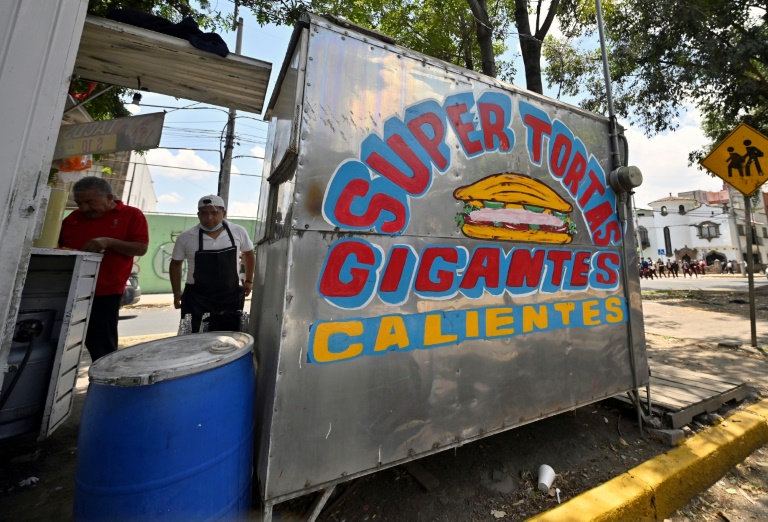
The erasure of colorful pictures of tacos and other mouth-watering street food from stands in the heart of Mexico City has dismayed fans of the signs, considered part of the capital’s identity.

The mayor’s office in the district of Cuauhtemoc, which includes the city’s historic center and several other traditional neighborhoods, ordered the removal of the images that adorned hundreds of food kiosks.

They have been replaced by a nondescript government sign declaring that Cuauhtemoc — one of 16 districts in the sprawling capital — “is your home.”

It is a matter of “order and discipline” to improve the city’s image, said the district’s mayor, Sandra Cuevas, who snatched the position from the ruling left-wing party in last year’s elections.

It may seem like a minor matter in a city of nine million people plagued by heavy traffic, pollution and the risk of deadly earthquakes — but the metal stands, where thousands gather to eat, and their signs are part of the city’s DNA, according to a citizen group opposed to the move.

“It’s an attack on the identity of the city and of all Chilangos (residents of the capital),” Aldo Solano, a 35-year-old art historian, told AFP.

“They erased many signs that are popular art, part of the traditional image” of the city, he added.

– Decades-old tradition –

The signs themselves represent the menu of the street food stalls, which number in the thousands across the capital.

Drawings of steaming tacos or a smiling pig in a saucepan leave no doubt that here you can savor the famous Mexican tortilla-based dish, or pork “carnitas” fried in lard.

The illustrations date back to the beginning of the 20th century when Mexico had high rates of illiteracy.

“That’s why an iconography was used. Now it’s not the case, but the tradition has been preserved,” Solano said.

The goal of competing food vendors is to be easily noticed by hungry customers in a crowded public space.

“It’s a basic marketing tool,” said Tamara de Anda, 28, a member of a group that is building a digital archive of city signs with input from citizens.

Vendors fear customers will now find it harder to know what each stall sells, but they dare not protest due to fears of getting in trouble.

“They told us ‘take it away or take it away,'” said a fruit juice vendor who did not want to be named.

– ‘Big mistake’ –

Mayor Cuevas, 36, has been involved in several controversies.

In March she was temporarily suspended from office for assaulting some police officers, to whom she had to apologize. 

Even before she was elected, she was accused by Mexico City officials of “extorting” informal merchants so they could work, which she denies.

Since 1985, Adan Navarrete has painted numerous storefronts with drawings like a chef showing off a dish or a smiling clown for a children’s party store.

However, his business began to decline with the adoption of new painting techniques in the 1990s.

The removal of the street food signs — which the 53-year-old calls a “very big mistake — is another blow.

“Maybe it seems ugly, but it’s art,” he said.

He fears that some of the creations, which were periodically retouched, are now lost forever.

“It’s very difficult to do it again, because many of the masters (who painted them) no longer exist,” he said.

Close Bitnami banner
Bitnami