World

US, Taiwan launch trade talks in bid to deepen ties

The United States and Taiwan have launched talks aimed at deepening their trade ties as Washington vies to bolster its influence in the region to counter China. 

The process, labeled the US-Taiwan Initiative on 21st-Century Trade, follows an agreement President Joe Biden announced last week with 12 Asian economies, which excluded Taiwan.

Like that effort, the discussions with Taiwan will not involve tariffs or market access — items that would require congressional approval, officials said.

In a statement, the US Trade Representative said that “both sides will work at pace… to develop an ambitious roadmap for negotiations for reaching agreements with high-standard commitments and economically meaningful outcomes.”

Taiwan’s lead trade negotiator John Deng said the talks would “open up more room for economic cooperation.”

“We can say this is a historic breakthrough,” he added, speaking at a press conference in Taipei.

Despite the limited scope of the talks — which a senior administration official said was in keeping with the “unofficial” relationship with Taipei — they are likely to anger Beijing, which claims Taiwan as part of its territory and bristles at any sign Washington is treating the self-governing democracy as an independent nation.

Beijing frequently engages in saber-rattling to underline its point — for example on Monday it made the second-largest incursion into Taiwan’s air defense zone this year, with Taipei reporting 30 jets entering the area.

US Secretary of State Antony Blinken has accused China of “increasingly provocative rhetoric and activity.” 

– ‘Robust’ relationship –

China has also tried to stop any international recognition for the island, opposing its participation in global fora. 

But Biden is under pressure to deepen ties with Taiwan after a bipartisan group of 52 senators urged him to include the island in the Indo-Pacific Economic Framework (IPEF) launched last week, which includes about 40 percent of the global economy.

They argued in a letter to Biden that leaving an important trading partner out would “allow the Chinese government to claim that the international community does not in fact support meaningful engagement with Taiwan.”

A senior official said there is still time to add Taiwan to that effort.

“We didn’t include Taiwan in the initial launch. However, going forward, we intend to take a flexible and adaptable approach to IPEF participation,” the official told reporters.

The official reiterated Washington’s “long-standing one China policy,” but said the Biden administration also maintains a “robust unofficial relationship with Taiwan and… is committed to deepening it.”

– ‘Concrete ways’ –

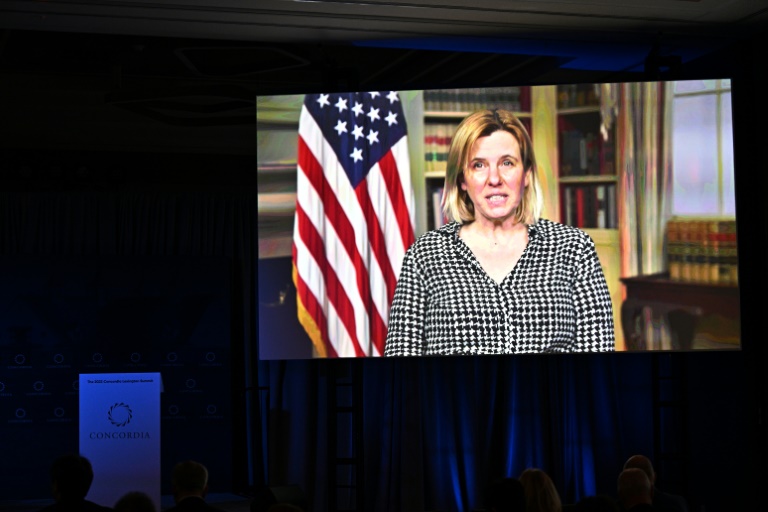
Deputy USTR Sarah Bianchi and Taiwan’s Deng met on Wednesday to launch the new initiative. 

The trade agency said it was “intended to develop concrete ways to deepen the economic and trade relationship, advance mutual trade priorities based on shared values, and promote innovation and inclusive economic growth for our workers and businesses.”

The first meeting under the initiative will be held in Washington later in June, and will cover customs procedures and regulations, including rules governing agriculture trade, worker rights and the fight against “harmful non-market policies.”

Another administration official said the goal is to produce a “high framework, binding agreement,” but gave no timeframe for reaching a deal.

Taiwan is the 10th largest export market for the United States, as well as a vital source of semiconductors. 

A global shortage of the latter is hitting industries that rely on them from cars to smartphones, and pushing inflation higher.

A spokesman for the Taiwanese government on Wednesday emphasized the “crucial role” the island plays in the semiconductor supply line. 

“In light of the increasing trade conflict between China and the US, and also the fallout from the Covid pandemic to the world’s economy… the US government has realized that it needs to strengthen the economic and political links with Taiwan to ensure the stability and safety of the supply chain,” Lo Ping-cheng added.

The US Commerce Department has launched a separate dialogue with Taipei on tech and investment — two other areas covered by IPEF.
Italy's 'Motor Valley' proves fertile ground for supercars

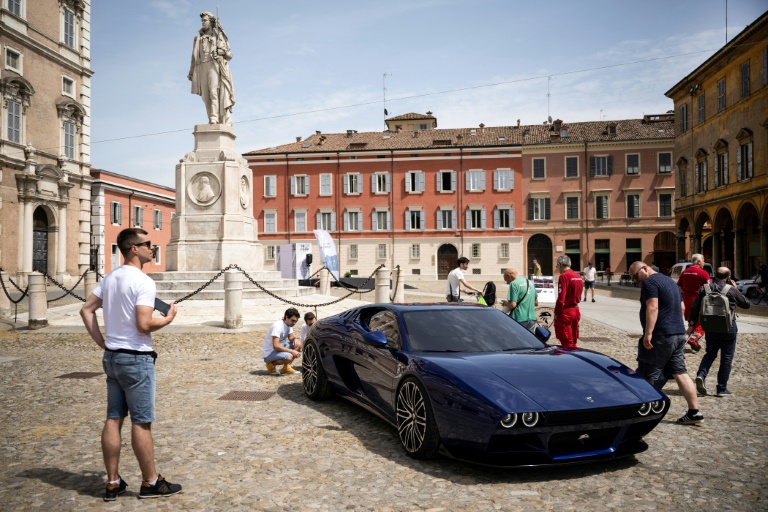
If Tuscany has Chianti, the Italian region of Emilia-Romagna has “Motor Valley”, an area that boasts one of the highest concentrations of luxury sports cars and motorbikes in the world.

The so-called Land of Motors, covering around 1,000 square kilometres of prime agricultural land roughly between Bologna and Modena, is home to Lamborghini and Ferrari, Maserati and Ducati, in addition to less well-known brands.

Every year — with a hiatus for coronavirus — industry types and fans flock to Modena for a weekend to talk business and admire the spectacular cars and bikes displayed around town.

Among those on show this year was a Pagani Huayra, a futuristic hypercar produced just a few kilometres away in Pagani’s base at San Cesario sul Panaro, where vehicles are made to measure — and start at a cool 2.6 million euros ($2.8 million).

Christopher Pagani, the son of the founder and communications chief, told AFP it takes between eight and nine months to manufacture a car, with customers normally waiting two years between order and delivery.

“In 2022 we are producing some 40 to 45 cars. They are all special because every customer has the opportunity to get in touch with us, visit us, and go on this journey,” he said.

In the factory — dubbed the “workshop” — a few dozen mostly young people work in the hushed and ordered environment of a science lab.

For the brand, weight is everything and they use 40 different types of carbon fibre, as well as titanium and aluminium to make the car as light as possible.

But Pagani said talks were underway with clients about a potential electric version, even if would be heavier due to the battery, as part of a trend towards greener vehicles.

– Best place to be –

Pagani’s father, Horacio, founded the company in 1998 after working at Lamborghini, another of Italy’s top luxury brands based in the area.

According to legend, Ferruccio Lamborghini, the wealthy owner of a tractor factory, turned his hand to sports cars in the 1950s after complaining about the Ferraris he owned.

Enzo Ferrari is said to have told him that if he didn’t like what he made, he should go and build his own.

Ferrari’s Maranello site is located outside Modena, while the region also boasts Dallara, which provides cars for IndyCar racing in the United States, and motorbike firm Energica. 

“The success dates a long way back, it is the fruit of several generations,” said Andrea Corsini, who handles transport, infrastructure and tourism for the Emilia Romagna region.

The name “Motor Valley” alludes to California’s Silicon Valley, where a grouping of tech companies drew talent and cash.

Here, manufacturers found a ready skills base among farmers who, in the immediate aftermath of World War II, had to learn to repair their own machinery.

Today, the area comprises 16,000 companies, four racing tracks, six training centres, and employs more than 90,000 people, according to think tank Riparte l’Italia.

“In terms of job opportunities and contacts with companies, this is the best place to be,” said 24-year-old Emilio, studying car engineering in the south of Italy, who came to Modena for the weekend.

The sector records a turnover of 16 billion euros a year, of which seven billion is in exports, and is in good health, with Bugatti, Ferrari, Lamborghini, Bentley and Porsche all posting record results in 2021.

It was also here that Bugatti produced in the early 1990s its celebrated B110 GT, sold for a staggering 500 million lire (around 260,000 euros at the time).

Ukrainian musicians channel patriotism, anger into war anthems

The message behind Arsen Mirzoyan’s new song “My Country” is simple — stay in Ukraine and fight back.

“I’m not afraid anymore. I don’t exist without you. If it’s my country, then it’s mine,” goes the song. 

The lyrics are personal for the Ukrainian rock singer, who wrote the ballad while manning the frontlines for weeks during the battle for Kyiv in the early days of the Russian invasion. 

“‘My Country’ is about my decision to stay and fight,” he tells AFP, as he flips through photos on his phone from his time at the front, including ones of dead bodies, destroyed Russian equipment and impromptu performances. 

“I wanted to strengthen the feelings for those who hesitated to remain or flee. I wanted to support those who decided to stay in Kyiv,” he adds. 

As Ukrainian forces battle the Russian invaders, the country’s musicians have begun to channel seething anger and an outpouring of patriotism into stirring war hymns. 

Music has played a vital role in rallying support for the country’s fight against Russia. There is a popular ode to Turkish-made drones, and trance remixes of folk songs play over Tik Tok videos of Russian tanks being obliterated. 

Artists across a range of genres are contributing — including black metal groups, rappers, rock bands, and most notably the Kalush Orchestra, who spoke of the war’s destruction onstage at Eurovision.

“The victory is very important for Ukraine, especially this year,” Kalush’s frontman Oleg Psiuk told reporters after winning the competition.

– ‘We need strength’ –

Other musicians have laid down their instruments and taken up arms, including the rock outfit Antytila. 

The group briefly returned to Kyiv in May to perform a cover of “Stand by Me” with U2’s Bono and The Edge during a concert in a metro station. 

On the airwaves, radio stations that once broadcast top 40 hits are now pumping out a slew of pro-Ukrainian songs praising the bravery of the country’s defenders and ballads about the heartbreak caused by the war’s brutal toll.

“We understand that this is a long war and we need strength,” says Julia Vinnychenko, a programming director at NRJ Radio in Kyiv.

Before the war, the station’s slogan was “hit music only”, but it has since changed to “in the mood for victory”.

“All the songs are connected with war in one way or another. It’s about different moods — melancholy, sadness, pain, the thirst for victory,” DJ Yana Manuilova says of the tracks she selects for her morning show on NRJ. 

“I am very impressed by how quickly Ukrainian artists reacted to the war in terms of creativity,” she adds, describing the seemingly overnight phenomenon that saw artists transition to a war footing in the aftermath of the invasion. 

Some musicians have shifted from their regular compositions about partying and romance to ultra-aggressive songs extolling the Ukrainian fighting spirit.  

One of the more famous examples is Max Barskih, who found mainstream success before the war with songs that Danylo Khomutovsky, the co-founder of Aristocrats Radio in Kyiv, described as being perfect for hookah bars.

His latest trance-driven anthem has served as a popular rallying cry featuring traditional vocal arrangements and a heavy bassline that has been readily embraced by the Ukrainian military and fans alike. 

– War rhythms –

“I think the scene has changed,” Khomutovsky tells AFP, saying that most artists in the past shied away from politics but have now begun to grapple with more serious subjects in their songs. 

The war has been a clarifying moment for many, he explains. 

“They have begun to act like they have this responsibility that they are influencing other people — hundreds, thousands, millions,” Khomutovsky says of the shift. 

Many of the war songs channel an air of triumphalism felt in places like Kyiv, where residents snap selfies by destroyed tanks displayed in the streets, even as Russian forces advance in the Donbas behind a wall of withering artillery barrages. 

But even amid the war’s destruction, the beat goes on for many in Ukraine. 

During a concert on Kyiv’s outskirts on Wednesday, the band Ocheretyanyi Kit performed on top of a burnt-out Russian tank, blaring out a new song called “Javelin” in honour of the US-supplied, shoulder-fired missile.

“You can’t sing love songs right now,” says the band’s singer Serge Tiagnyriadno. “That’s not important.”

Gunman kills four at Tulsa hospital in new US mass shooting: police

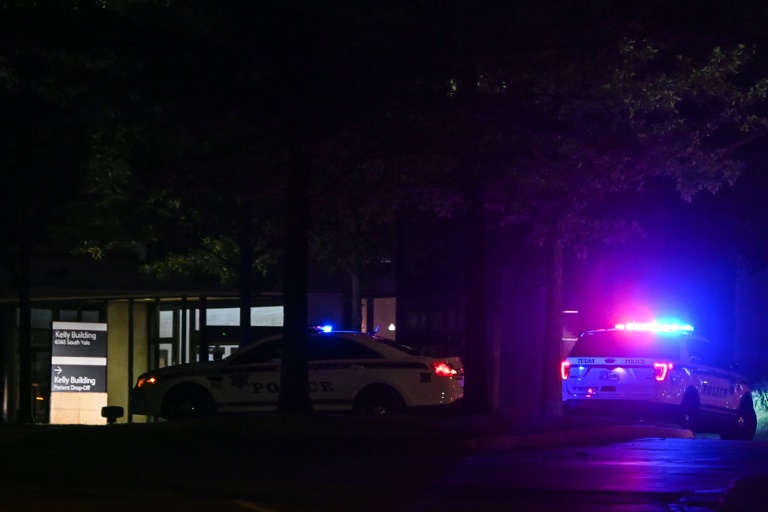
A gunman killed at least four people Wednesday at a hospital building in Tulsa, Oklahoma, police said — the latest mass shooting to convulse the United States as Texas families bury their dead after a school massacre nearly 10 days earlier.

The suspect, who was armed with a rifle and a handgun during his attack on the Saint Francis hospital campus, died by suicide, police said.

“Right now we have four civilians that are dead, we have one shooter that is dead, and right now we believe that is self-inflicted,” Tulsa Police Department Deputy Chief Eric Dalgleish told reporters.

He said officers responded immediately after emergency calls came in reporting that a gunman had stormed into the second floor of the Natalie Building, which houses a clinic on the Saint Francis campus.

Police “were hearing shots in the building” when they arrived, according to Dalgleish, who said officers then searched floor by floor, room by room while trying to clear the building during what authorities described as an active shooter situation.

Earlier, police Captain Richard Meulenberg said officers were treating the scene as “catastrophic,” with “several” people shot and “multiple injuries.”

It was not clear how many other people might have been injured. 

Dalgleish said the entire assault — from the moment emergency calls came in, to the time officers engaged the shooter — lasted about four minutes.

Dalgleish also noted that the suspect had yet to be identified.

US President Joe Biden has been briefed on the shooting, the White House said in a statement, adding that the administration has offered support to Tulsa officials.

– ‘Preventable’ –

Elizabeth Buchner, a legal assistant who lives behind the building where the shooting occurred, said she rushed out of her house when she heard helicopters and a loud commotion coming from the direction of the hospital.

“It was the most law enforcement I’ve ever seen at one place in my entire life,” Buchner, 43, told AFP by telephone.

She said she witnessed a tactical team rush inside as part of a response that she described as “fast and strong,” with “no hesitation.”

Melissa Provenzano, an Oklahoma state legislator, also praised the swift response of the officers.

“It could have been so much worse,” she told CNN.

But she expressed frustration at how such tragedies keep happening in America.

“We deserve better than this,” she said. “These things are preventable, and it’s time to wake up and address this.”

– Uvalde funerals –

The shooting is the latest in a string of deadly assaults by gunmen that have rocked the United States in the past month.

On May 14 a white supremacist targeting African Americans killed 10 people at a grocery store in Buffalo, New York. The shooter survived and is facing charges.

Ten days later an 18-year-old gunman armed with an AR-15 burst into an elementary school in the small Texas town of Uvalde and killed 21 people — 19 of them young children — before being shot dead by law enforcement.

On Wednesday one of the two teachers killed in that attack was laid to rest in Uvalde, a day after the first funerals for the children.

Gun regulation faces deep resistance in the United States, from most Republicans and some rural-state Democrats.

But Biden — who visited Uvalde over the weekend — vowed earlier this week to “continue to push” for reform, saying: “I think things have gotten so bad that everybody is getting more rational about it.”

Some key federal lawmakers have also voiced cautious optimism and a bipartisan group of senators worked through the weekend to pursue possible areas of compromise.

They reportedly were focusing on laws to raise the minimum age for gun purchases or to allow police to remove guns from people considered a threat to themselves or others — but not on an outright ban on high-powered rifles like the weapons used in Uvalde and Buffalo.

Russians edge closer to taking key Ukrainian city

Russian forces edged closer Thursday to taking a key Ukrainian city after days of intense fighting, tightening their slow squeeze on the eastern Donbas region as Washington warned the war could last months.

The industrial hub of Severodonetsk has become a key target for Moscow, and the local governor said that 80 percent of the city was now under Russian control. 

“Street fighting continues,” said Lugansk regional governor Sergiy Gaiday on Telegram, pledging Ukrainian forces “will fight for Severodonetsk until the end”.

Ukraine stopped Russia from seizing Kyiv after its February invasion but the campaign in the east has had a high cost, with President Volodymyr Zelensky reportedly saying that up to 100 Ukrainian soldiers are dying daily.

“The most difficult situation is in the Lugansk region, where the enemy is trying to displace our units from their positions,” said Valeriy Zaluzhnyi, the commander in chief of Ukraine’s armed forces, according to a statement from the military.

“The enemy has a decisive advantage in artillery,” Zaluzhnyi told France’s top general, Thierry Burkhard, in a phone call, adding he want his units to be equipped with weapons of the type used by military alliance NATO.

“It will save the lives of our people”.

Ukrainian forces received a boost this week when US President Joe Biden announced that more advanced rocket systems were on the way.

The new weapon is the Himars multiple launch rocket system, or MLRS, a mobile unit that can simultaneously launch multiple precision-guided missiles up to 80 kilometres (50 miles) away.

They are the centrepiece of a $700 million package unveiled Wednesday that also includes air-surveillance radar, more Javelin short-range anti-tank rockets, artillery ammunition, helicopters, vehicles and spare parts.

But analysts caution the new rockets are unlikely to suddenly turn the tables — not least because Ukrainian troops need time to learn how to use them effectively.

– ‘Fuel to the fire’ –

Kremlin spokesman Dmitry Peskov accused Washington of “adding fuel to the fire” with the new weapons, although US officials insist Ukraine has promised not to use them to strike into Russia. 

US Secretary of State Antony Blinken said there were no signs of Russia pulling back its forces: “As best we can assess right now, we are still looking at many months of conflict.”

Elsewhere, a missile struck transportation infrastructure near the comparatively stable western city of Lviv, injuring five people, regional governor Maksym Kozytsky said.

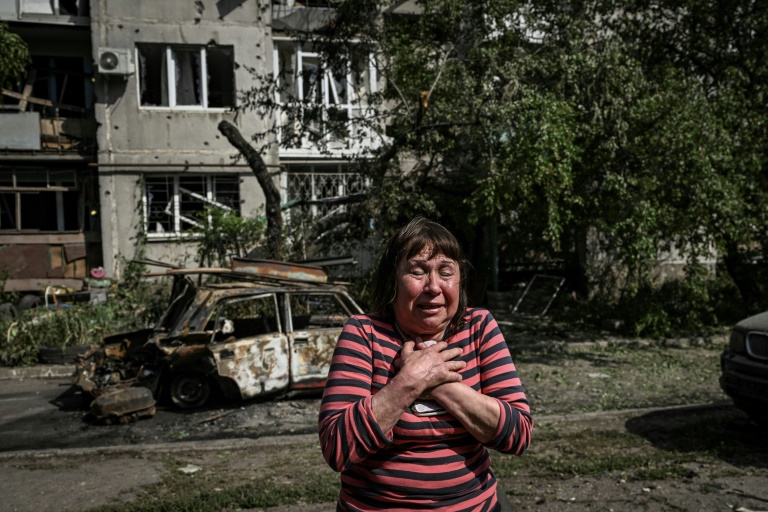
West of Severodonetsk, in the city of Sloviansk, AFP journalists saw buildings destroyed by a rocket attack in which three people died and six others were hurt.

And on Wednesday, at least one person died and two others were injured in Soledar, between Sloviansk and Severodonetsk, AFP saw.

The European Union has also sent weapons and cash for Ukraine, while levelling unprecedented economic sanctions on Moscow.

Germany said Wednesday it would deliver an air defence system capable of shielding a major city from Russian air raids, although it will take months to get to the frontline.

EU leaders agreed this week to ban most Russian oil imports but played down the prospects of shutting off Russian gas on which many member states are hugely dependent.

The sanctions are biting — a panel of investors said Wednesday Russia has failed to pay $1.9 million of accrued interest on a sovereign bond.

And Russian energy giant Gazprom said its gas exports to countries outside the former Soviet Union dropped by more than a quarter year-on-year between January and May after losing several European clients.

– Pele urges end to war –

Russia’s invasion of Ukraine has sparked a rethinking of security for many Europeans, with Finland and Sweden shedding earlier reluctance to join NATO.

Denmark, a founding member of NATO, took a step further Wednesday by voting overwhelmingly to join the European Union’s common defence policy.

“Tonight Denmark has sent a very important signal. To our allies in Europe and NATO, and to Putin,” Danish Prime Minister Mette Frederiksen told cheering supporters.

“We’re showing that when Putin invades a free country and threatens the stability in Europe, we others pull together,” she said.

Russia’s invasion — which is set to enter its 100th day this week — has killed thousands of people and sent millions of Ukrainians fleeing, but also risks triggering a global food crisis. 

Ukraine — one of the world’s main producers — will likely export only half the amount of grain that it did in the previous season, the Ukrainian Grain Association said.  

In Glasgow, Ukraine’s national side played its first official match since Russia’s invasion Wednesday, defeating Scotland 3-1, setting up a World Cup play-off decider against Wales.

Before the game, Brazilian football legend Pele called on Russian President Vladimir Putin to end the “wicked, unjustifiable” invasion of Ukraine, in an open letter posted on Instagram.

“I want to use today’s match as an opportunity to make a request: stop the invasion. There is absolutely no justification for this continued violence,” said the three-time World Cup champion.

burs-sr/je

Japan tax official arrested over Covid-19 aid fraud

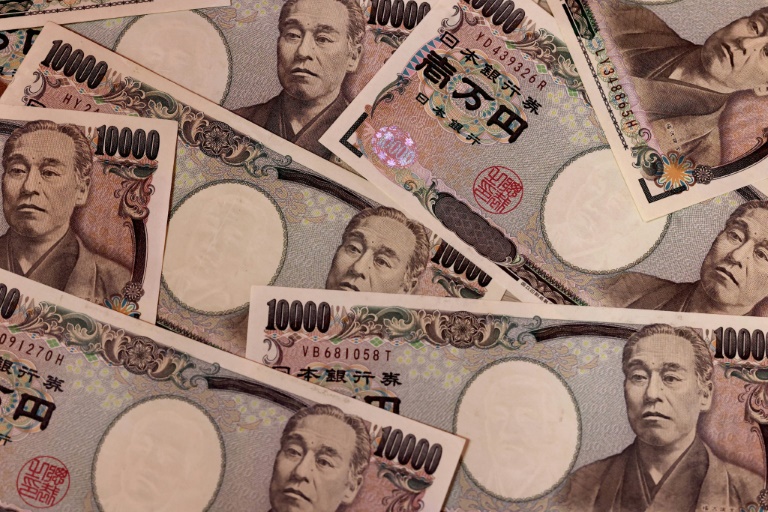
A Japanese tax official was arrested over his alleged involvement in a fraud ring that recruited 200 people to steal $1.5 million of Covid-19 aid, media and police said Thursday.

The 24-year-old and his friends are accused of convincing people to apply for government subsidies for business owners through deception, according to public broadcaster NHK and other outlets.

They reportedly lured around 200 participants — mostly university and high-school students — through a messaging app, promising that the money would be invested in cryptocurrency.

A Tokyo police spokesman told AFP a “24-year-old public servant” was arrested Wednesday “for fraudulently obtaining money under the name of virus subsidies”, along with a 22-year-old who worked for an unnamed company.

Reports said the alleged fraudsters are suspected of stealing a total of 200 million yen ($1.54 million), but the initial arrests are for a smaller amount of around one million yen, with the rest under investigation.

Five other people, all in their 20s, have also reportedly been arrested over the case.

The scheme’s mastermind may still be on the loose, however, with police chasing a man in his 30s who left Japan for Dubai in February, according to the Yomiuri Shimbun daily.

It is not the first time Japan has seen scandals over financial aid for people struggling during the pandemic.

Last month, a man given $360,000 in error was arrested after saying he gambled away the money online, while this week, three family members were reportedly arrested for illegally receiving 960 million yen in Covid-19 aid. The father is on a wanted list after fleeing to Indonesia.

South Korean ruling party wins landslide in local elections

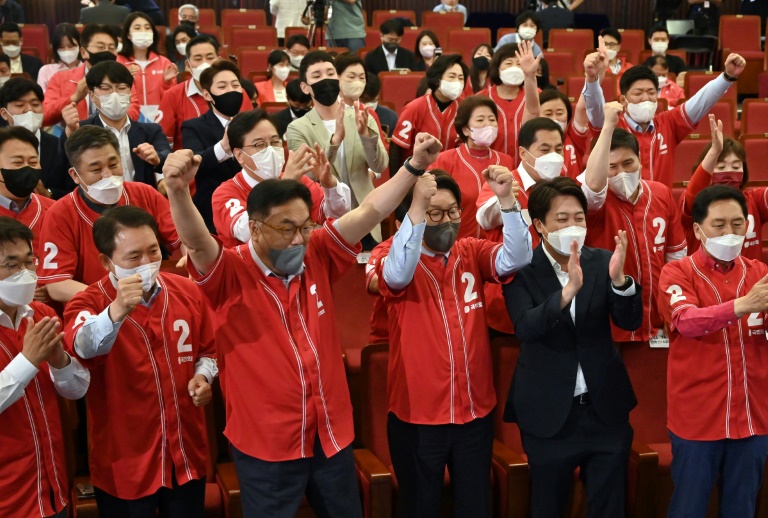
South Korea’s ruling party won a landslide victory in local elections for leaders of major cities and provinces, official results showed Thursday, giving newly elected president Yoon Suk-yeol a significant boost.

An avowed anti-feminist and political novice, Yoon won the March presidential election by just 0.7 percent — the narrowest margin ever — and faces an opposition-controlled National Assembly that has vowed to closely scrutinise his policies.

But Yoon’s People Power Party won 12 of the 17 major posts up for grabs in elections held Wednesday for mayors and provincial governors, including the capital Seoul and the country’s second largest city, Busan.

The PPP’s current Seoul mayor, Oh Se-hoon, was re-elected with 59 percent of the vote, while the PPP’s Park Heong-joon was re-elected mayor of Busan with 66.4 percent.

Yoon thanked South Koreans for the “successful completion” of the elections on Thursday.

“I want to accept the results of this election as the will of the people to revive the economy and take better care of the people’s livelihood,” Kang In-sun, Yoon’s spokeswoman, quoted him as saying.

Public sentiment has soured on the opposition Democratic Party’s former president Moon Jae-in and his administration, which have been blamed for soaring housing prices in Seoul — up nearly 120 percent during his time in office.

In parliamentary by-elections, the PPP took five of the seven seats up for grabs in the National Assembly, although the opposition Democratic Party still holds the majority.

The PPP’s Ahn Cheol-soo, who withdrew from the presidential race to support Yoon, secured a seat representing a district in Seongnam, just south of Seoul.

Lee Jae-myung, who was the DP’s presidential candidate, was also elected to parliament representing a district in the port city of Incheon.

– Public approval – 

Experts said the landslide win gives Yoon the public approval he needs to push his agenda, despite lacking a majority in the parliament.

“The public has ruled against the Democrats, who have massive control within the National Assembly,” Shin Yul, a political science professor at Myongji University told AFP.

“Yoon and his administration will now have more confidence to push forward their policies, despite hitting a roadblock in the parliament, knowing that the public has their back.”

The DP, which took 14 of the mayoral and gubernatorial posts in the last election in 2018, only won five key races this time, including three in its southern stronghold of Jeolla.

The electoral setback comes as the party struggles with internal rifts, prompted largely by rising star and interim chief Park Ji-hyun’s call for reform following its defeat in the presidential election.

It also expelled one of its lawmakers earlier this month over allegations of sexual misconduct.

The DP’s former Seoul mayor Park Won-soon — who was a vocal advocate for women’s rights — took his own life in 2020 after facing an allegation of sexual abuse.

Oh Keo-don, the party’s former mayor of Busan, was also forced to resign for sexually assaulting a female staffer.

“We received our second punishment after the presidential election,” said DP interim chief Park.

“The results were worse than we thought.”

In Iraq, centuries-old black community still on the margins

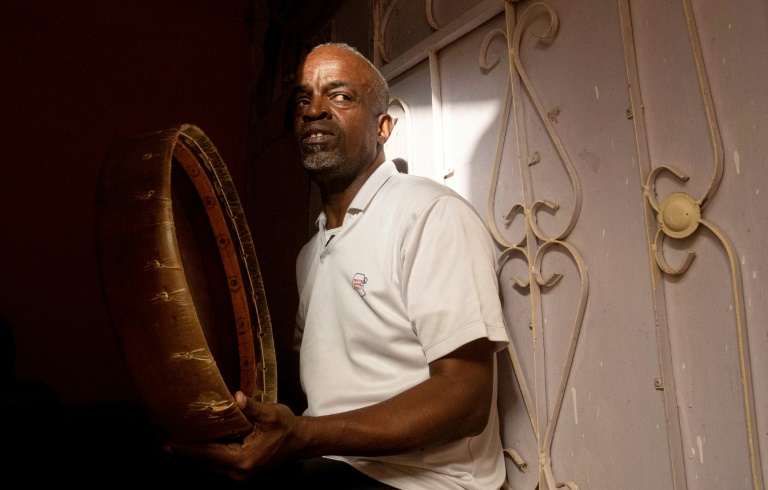
Adnan Abdelrahman shows off the drums he learned to play at age 12. He belongs to Iraq’s centuries-old black minority, guardians of musical traditions but relegated to the margins of society.

Centred in the city of Zubair, near Basra in the far south of Iraq, the community has its origins in East Africa.

Like other remote parts of Iraq, Zubair is a place of poverty and decaying public services, where dusty roads are lined with simple cement houses.

While activists denounce the community’s marginalisation, talk of racism or discrimination offends Zubair’s inhabitants, who prefer the euphemism “dark skin” in Arabic to the word “black”.

Abdelrahman, 56, is a member of one of the popular music troupes that have made Zubair famous throughout the country and in Kuwait, only 30 kilometres (20 miles) away.

“It’s a profession you inherit,” he said, explaining that his uncle sang and his father played the drum. “If someone dies, his son takes his place so that the art doesn’t disappear.”

Equipped with darboukas, tambourines and large goat skin drums, musicians liven up weddings by leading the “zaffa”, a procession of song and dance to celebrate the bride and groom.

Abdelrahman, who has played for four years in a heritage group sponsored by the culture ministry, said the majority of players are black and added that he does not feel discrimination.

“Racism is something we have never seen,” he said.

– History of slavery –

But many activists within the black community disagree, among them 32-year-old Majed al-Khalidy.

“Those with dark skin are fifth-class citizens, not even second-class,” said Khalidy, who works for an oil company in Basra.

“Since the establishment of the Iraqi state, we have not seen anyone from the community occupy a senior position in the state. We have not seen a governor, a minister or a lawmaker.”

He said the community faces a high drop-out rate from school, poor job opportunities and offensive language, even from religious clerics, with many people still using the Arabic term “slave” to designate a black person.

The minority numbers 250,000 to two million people, according to a wide range of informal estimates. Their ancestors came from Kenya, Ethiopia and Sudan, said historian Ibrahim al-Marashi of California State University.

They are centred in Iraq’s southern Basra region, where black slaves were brought from East Africa “for the backbreaking work of draining the salt marshes” east of the city, said Marashi.

“In the historical record, the first mention of the community is in 869 CE when they revolted” against the Abbasid Caliphate, he said.

Today “black Iraqis continue to face systematic discrimination and marginalisation”, according to the Minority Rights Group International.

The London-based MRG says in an online report that Iraq’s black community suffers disproportionately high illiteracy and unemployment rates and that “many cannot find employment other than as labourers or domestic workers”.

– ‘Below poverty line’ –

In a recent sign of progress, a state-run TV news channel hired a young black woman, Randa Abdel Aziz, as a presenter — but such steps remain rare.

More change is needed, said Khalidy, the activist.

In a multi-faith, multi-ethnic country, he demanded the inclusion of his community in the quota system which reserves parliament seats for certain minorities, including Christians and Yazidis.

“To claim your rights, you have to be close to the decision-makers,” he said about a political system where lawmakers can open the doors to all kinds of state largesse, especially public sector jobs.

Saad Salloum, an expert on religious and ethnic diversity, agreed that “discrimination is seen at all levels” against black Iraqis.

“Politically, they have no representation. Socially, certain stereotypes remain rooted in the dominant culture. Economically, the majority live below the poverty line.”

The group MRG recalled that after the fall of former dictator Saddam Hussein, “black Iraqis began to organise and develop a political consciousness for the first time”.

The Free Iraqi Movement, the first group to defend the rights of black Iraqis, was founded in 2007 and encouraged by the election in the United States of Barack Obama as president.

Several members of the movement ran for the 2010 provincial elections in Basra, though none were elected, MRG recounted. In 2013, its founder, Jalal Thiyab, was murdered in the city.

“There is still a long way to go to achieve equality for this and all other minorities,” said Salloum.

Stern South African childhood fuelled Musk's ambition, says father

Elon Musk knows how to dominate a news cycle, but for all the coverage of the world’s richest man, the tech billionaire’s early life in apartheid-era South Africa remains sketchy.

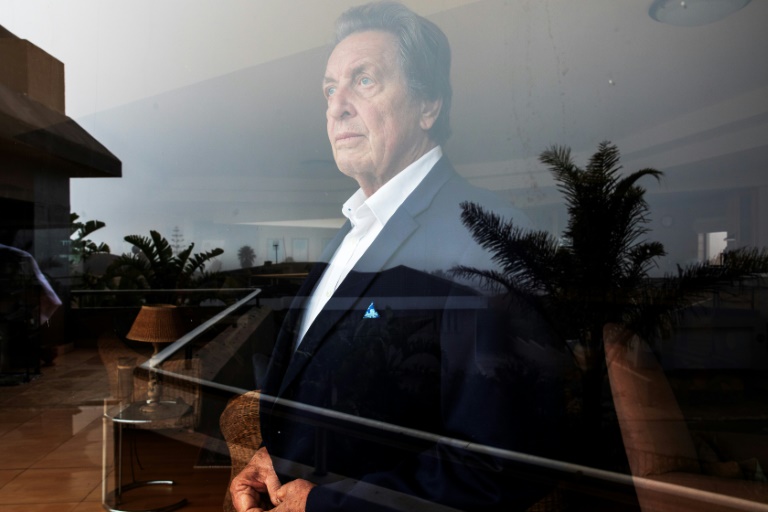
Amid Musk’s roller-coaster pursuit of Twitter, his father Errol Musk told AFP in an interview that he had tried to raise his sons “as South African boys”, instilling in them the same discipline he learnt in the military.

“I was a strict father. My word was the law. They learnt from me,” the 76-year-old said.

He said that even as a pre-schooler, Elon had set his sights on becoming the wealthiest man alive, crediting that uber-macho “South African boy” upbringing with driving his ambition.

“It’s part of the way we lived, the way I lived. We strove to be the best we could,” he told AFP in an interview from his home in the quaint oceanside town of Langebaan, 120 kilometres (70 miles) from Cape Town.

“I strove to be the best in the type of business that I was in,” the retired engineer and property developer said.

“It’s sort of our make-up. So we sort of expect that.”

Musk was born in Pretoria on June 28, 1971, to Errol and Maye, a Canadian model and dietitian who grew up in South Africa. 

He was the oldest of three children, closely followed in age by his brother Kimbal and sister Tosca.

He left South Africa at the height of apartheid to avoid the unpopular army draft.

After his parents’ acrimonious divorce, Elon decided to live with his father — taking an overnight train alone when he moved in.

“I go down to Johannesburg Station and there was this little Elon, beaming face, come up on the train by himself, nine years old,” his father recalled.

Yet Elon has said on numerous occasions that he had an unhappy childhood.

As an adult, father and son suffered a major split when Errol had a child in 2017 with a stepdaughter four decades his junior.

“Elon thought that was not very good. From my point of view, I take life as it comes,” the elder Musk said.

But he says their relationship has since improved. 

“We care about each other,” Errol said.

– ‘Typically Elon’ –

Errol says his son has always been unusual — long before his controversial outbursts on Twitter.

As a child, Elon spoke without a filter, played pranks and often joined adult conversations, he recalled.

“Even as young as four years old, he would tend to sit with adult people,” said Errol.

He recounted one occasion when “one man said to him, ‘Hey little chap, why don’t you join the kids and run around?’ And he’d say, ‘No, I prefer to listen to you’.”

When young Elon announced that he planned to be a millionaire, his father remembered, another adult scoffed at the boy.

He remembered “this man laughing, holding his drink and cigarette and saying, ‘When you grow up you’ll see. It’s not like that… you’re going to be disappointed’.”

Elon responded, “‘Well, I think you’re stupid’,” said Errol.

“That’s typically Elon,” said the father.

He also recalled a time when Elon made a hurtful comment to a schoolmate about his father’s suicide.

The boy pushed Elon down a staircase at school, injuring him so badly he had to be hospitalised.

When he heard what had happened, Errol wanted to defend his son.

“But I realised Elon overstepped the mark with this little boy. I had to drop it,” he said.

After that incident, Errol moved Elon to the prestigious Pretoria Boys High School.

One of the school’s ex-headmasters confirmed to AFP that Elon had donated one million rand ($64,500, 60,000 euros) to his alma mater.

– ‘Very caring’ –

The donation was organised through Musk’s assistant. That’s also how his father communicates with him.

During the interview with AFP, Errol received what he said was an email from Elon offering to pay for recent eye surgery.

“Elon is a very caring person. He really means it when he says that he wants to save humanity. This is not a slogan or some sort of pitch. This is real.”

Errol recalls his 70th birthday as another example of Elon’s generosity.

“I’m a South African man. I’m not concerned about my birthday. But it was very nice,” said Errol.

Unbeknown to him, Elon had invited a bunch of his celebrity friends, including Hollywood stars.

During the lunch, they discussed his support for former US president Donald Trump.

“They all had a good laugh at that, and how could I be so stupid as to support Trump?”

That was his last physical interaction with his son, six years ago. They rarely speak on the phone — something he says is not unusual. 

strs-gs-sn/ah-ri/smw

The 'predatory' global economy of looted antiquities

The charging of the Louvre’s former director in an antiquities trafficking investigation has shone a light on a vast, transnational criminal problem that remains fiendishly difficult to target. 

Ancient burial grounds around the world have increasingly become “open-air supermarkets” for everyone from petty thieves to organised criminals, said Vincent Michel, professor of archaeology at the University of Poitiers in France.

He describes a “sophisticated chain” stretching from sites in unstable places such as Iraq, Syria and Libya — but also many other parts of the world — via transit countries to auction houses and private collectors in Europe and the United States, and increasingly Asia and the Gulf. 

It is an illicit trade that “serves mafias, drug traffickers and terrorist groups, abusing collectors and museums with complete impunity”, said Michel. 

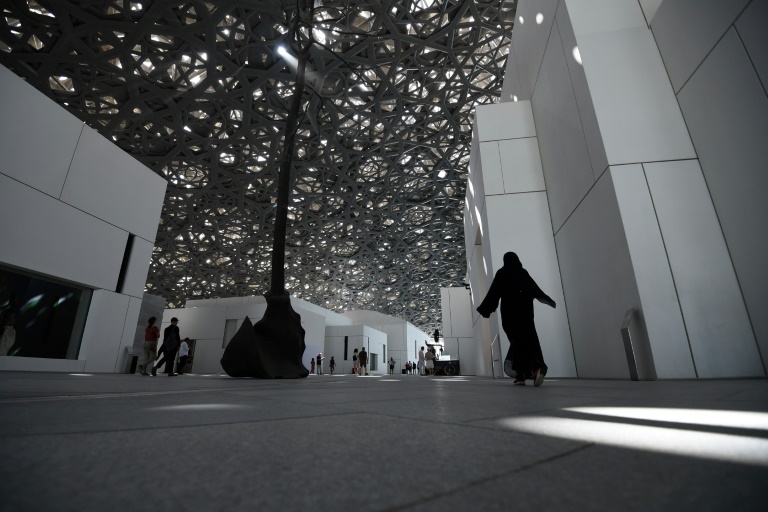
The ex-director of the Louvre in Paris, Jean-Luc Martinez, was charged last week over the purchase of a pink granite stele depicting the pharaoh Tutankhamun and four other historic works for eight million euros ($8.5 million) by the museum’s branch in Abu Dhabi. 

Martinez, who has strongly denied any wrong-doing, is accused of turning a blind eye to fake certificates of origin for the pieces, a fraud thought to involve several other art experts, according to French investigative weekly Canard Enchaine.

Such allegations are far from a rarity in the art world where the value of looted antiquities is thought to reach into the “tens or even hundreds of millions of euros” per year, according to Michel. 

He trains police, judges and customs officials to help counter the trade but resources are notoriously limited in the sector, and he has called for deeper public awareness and a more concerted interdisciplinary fight. 

“This transnational crime feeds a predatory economy that undermines our national security. It is also an irreversible attack on heritage because a looted object, taken out of its context, loses all scientific value,” Michel said.

– Global reach – 

The Covid-19 pandemic has only deepened the challenge. 

Egyptian authorities say the number of illegal digs jumped massively in recent years to hit 8,960 in 2020. 

Looters use metal detectors to hunt gold, silver and bronze items, often stored in perfect condition in tombs thanks to the arid climate. 

But the problem is not limited to poorer countries. 

France has seen an uptick in looting from archaeological sites, said Xavier Delestre, who works for the regional cultural authorities based in Marseilles. 

He said high-value items were often laundered through so-called “freeports” — tax haven storage sites with minimal oversight in places like Geneva, Luxembourg and Singapore — emerging with false back-stories. 

Lower-value items ended up on social media and online stores. 

– ‘Almost undetectable’ – 

Michel said counterfeiters are “incredibly ingenious” when it comes to masking the illicit origin of items, creating documents with a careful mix of false and true information, fabricating false export permits or purchase invoices — even UNESCO certificates. 

Once reintroduced into the legal market, “a looted item is almost undetectable,” he added. 

Internet sales have made it even harder for law enforcement officials to trace criminals and keep a handle on the problem.

A 2019 report by US counter-trafficking organisation ATHAR tracked 95 Arabic-language Facebook groups specialising in antiquities trafficking, with a total of nearly two million members. 

“Facebook offers a veritable digital toolbox for traffickers to utilise, including photo and video uploads, live streaming, disappearing ‘Stories’, payment mechanisms, and encrypted messaging,” the report said.  

Close Bitnami banner
Bitnami