World

11 dead, 22 missing after Hurricane Agatha hits Mexico

The strongest hurricane on record to hit Mexico’s Pacific coast in May left at least 11 people dead and 22 missing after triggering landslides and destroying homes, officials said Wednesday.

Authorities were struggling to reach remote mountain communities worst affected by Hurricane Agatha, after rockfalls and mudslides cut off roads.

“I embrace the relatives of those who have lost their lives,” President Andres Manuel Lopez Obrador said at his daily news conference.

“I hope that we find those who have disappeared when all the communities can be reached,” he added.

On Wednesday 22 people remained missing and the death toll stood at 11, the governor of the southern state of Oaxaca, Alejandro Murat, told reporters.

Earlier Murat had reported 33 people missing, but he later clarified that the number included those killed.

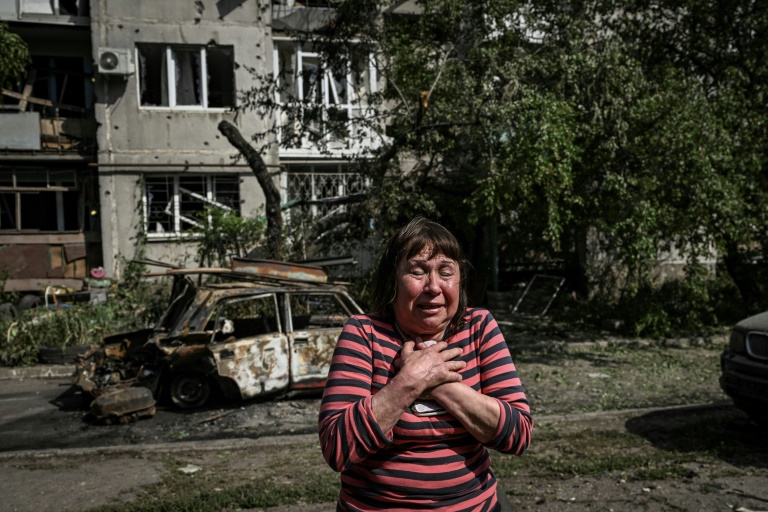
In the small community of Puente Copalita in the municipality of Huatulco, residents whose homes were badly damaged or destroyed recounted fleeing before they could gather their belongings.

“When we were told to leave, we wanted to take something but we couldn’t,” said Emilia Rios, whose wooden home with a metal roof was swept away by the storm.

“I didn’t take a single plate, a cup, a change of clothes. Not even sheets or towels. Nothing,” she said.

A helicopter was on stand-by to fly to isolated communities when weather conditions allow, officials said.

Troops were deployed to the region — one of the poorest in Mexico — to clear roads.

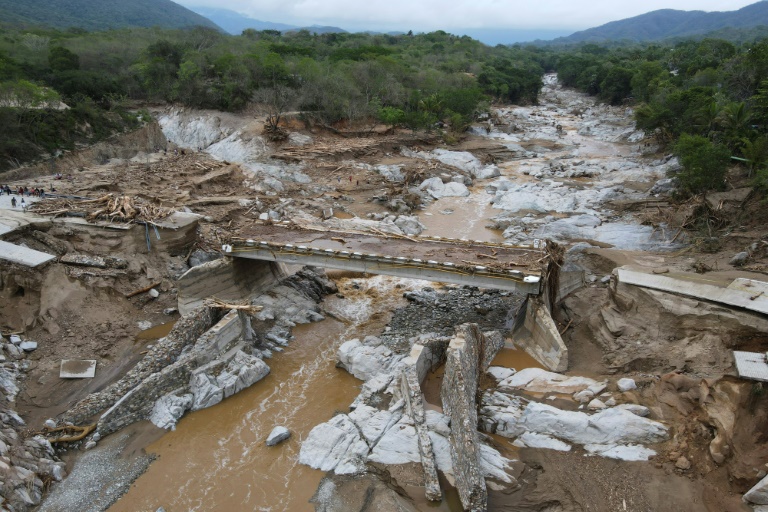
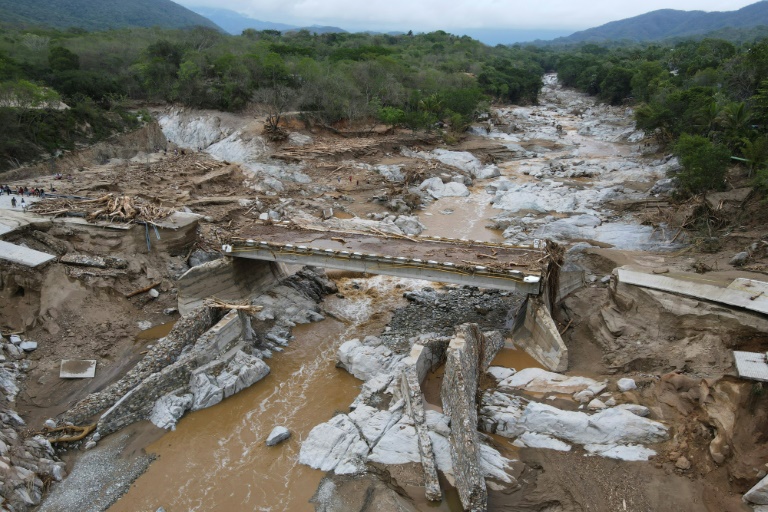
“Highways have been affected by landslides, fallen trees, increased river flows as well as the collapse of two bridges,” said civil protection coordinator Laura Velazquez.

– Deadly start to season –

Two children lost their lives in the municipality of San Pedro Pochutla, which felt the full force of the storm, Mayor Saymi Pineda told Milenio television.

The affected families “did not want to leave their homes for fear of losing everything” but after hours of strong wind and heavy rain “they lost almost everything,” she said.

Agatha was the first hurricane of the Pacific season and unusually powerful for the time of year.

The storm was the strongest to make landfall along Mexico’s Pacific coast in May since record keeping began in 1949, according to the US National Hurricane Center (NHC).

Scientists say that as oceans’ surface layers warm due to climate change, tropical storms are becoming more powerful and carry more water, posing an increasing threat to the world’s coastal communities.

Agatha barreled ashore near Puerto Angel in Oaxaca as a Category Two hurricane — the second lowest on a scale of five — with winds of 165 kilometers (105 miles) per hour.

The storm weakened as it moved inland after lashing coastal tourist towns, but its remnants continued to bring downpours to parts of southern Mexico.

The country’s meteorological service sees an 80 percent chance that in five days the remnants of Agatha will head out into the Atlantic with the potential for another storm formation.

Mexico is regularly lashed by tropical storms on both its Pacific and Atlantic coasts, generally between the months of May and November.

The deadliest storm to hit Mexico last year was a Category 3 hurricane called Grace that killed 11 people in the eastern states of Veracruz and Puebla in August.

In October 1997, Hurricane Pauline hit the country’s Pacific coast as a Category 4 storm, leaving more than 200 dead, with Oaxaca and neighboring Guerrero state the worst hit.

Arms for Ukraine: Who has sent what?

The United States has agreed to supply Ukraine with advanced rocket launch systems to try to turn the tide of the war in the eastern Donbas region, where the city of Severodonetsk looks poised to fall to Russian forces.

Despite multiple countries sending arms to Ukraine since Russia invaded on February 24, Kyiv has complained that it is still outgunned and pleaded for more heavy weapons. 

Here is a look at the weaponry promised sent or promised so far. This is not an exhaustive list as some nations keep their donations secret.

– United States –

The US said Tuesday it had agreed to Kyiv’s request for HIMARS multiple-rocket launchers, which will allow Ukrainian forces to hit deeper behind Russian lines while staying out of range of Russian artillery.

The HIMARS, which will be limited in range by the US to prevent Ukrainian forces using them to strike targets inside Russia, are the centrepiece of a $700 million package of weapons to be paid for from a $40 billion fund for Ukraine approved by Congress last month.

The Biden administration has already sent $4.5 billion in military aid since the war began.

The weapons pledged or sent include 72 155mm howitzers, 72 vehicles to tow them, 144,000 rounds of ammunition, and more than 120 “Phoenix Ghost” tactical drones recently developed by the US Air Force specifically to address Ukraine’s needs. 

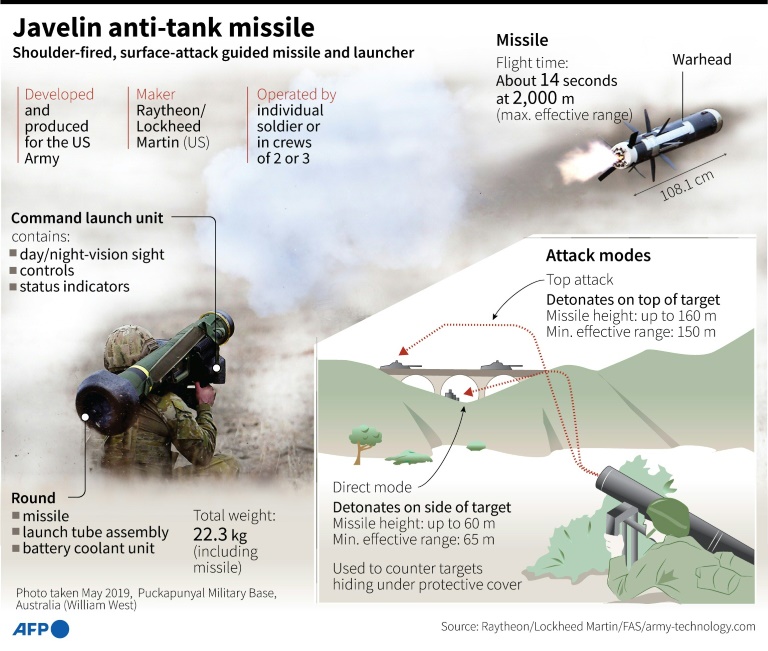
The US has also pledged helicopters, armoured personnel carriers, 1,400 Stinger anti-aircraft systems, 5,000 Javelin anti-tank missiles, several thousand rifles with ammunition and a range of other equipment. 

– Turkey – 

Turkey’s Bayraktar TB2 combat drones have become famous the world over since the war began, with videos going viral of Ukrainian forces using them to destroy convoys of Russian armoured vehicles and artillery.

Ukraine also said it used a TB2 to distract the defences of the Russian warship Moskva before pounding it with missiles in mid-April, causing it to sink. 

Before the invasion Kyiv had around 20 TB2s. In March, Kyiv said it had received more, without saying how many.

– United Kingdom –

Britain said on May 20 it had committed £450 million (528 million euros) so far to supporting the Ukrainian military. The government said the aid included 120 armoured vehicles, over 5,800 anti-tank missiles, five air defence systems, over 1,000 rockets and 4.5 tonnes of explosives.

In early May, Prime Minister Boris Johnson also promised electronic warfare equipment, a counter-battery radar system, GPS jamming equipment and thousands of night-vision devices.

Britain says it has also trained more than 22,000 Ukrainian soldiers.

– Canada –

Canada has supplied Ukraine with 262 million Canadian dollars (193 million euros) of military aid since February.

In late May, the federal government said it was sending 20,000 artillery shells, to go with the M777 howitzers it has already sent to boost Ukraine’s defences in the Donbas.

Ottawa has also sent Kyiv drone cameras, rifles, ammunition, high-resolution satellite imagery, rocket launchers, thousands of hand grenades and two tactical airlift aircraft.

– Germany –

Chancellor Olaf Scholz said Wednesday he would send Ukraine an air defence system capable of shielding a “large city” from Russian air raids.

Scholz said Germany would also send a tracking radar system capable of detecting enemy artillery fire.

His government has been accused of being slow to arm Kyiv.

In late April, Berlin broke with its policy of sending only defensive weapons and agreed to supply Ukraine with self-propelled howitzers and tanks.

Germany has been negotiating with countries in eastern and southern Europe on sending some of their Soviet-era equipment to Ukraine in return for newer German models.

– Spain –

In April, Spain shipped 200 tonnes of military equipment to Ukraine, including 30 trucks, several  heavy transport vehicles and 10 small vehicles loaded with military material. 

– France –

In mid-April the French government said it had delivered more than 100 million euros of military equipment to Ukraine.

A week later President Emmanuel Macron promised more aid, including Milan anti-tank missiles and Caesar self-propelled howitzers.

A Senate hearing this week confirmed that Paris has sent six howitzers and revealed it also sent Mistral anti-aircraft missiles.

– Nordic countries –

Norway has sent 100 French-made Mistral anti-aircraft missiles to Ukraine as well as 4,000 M72 anti-tank weapons.

Sweden announced in late February it would send 10,000 single use anti-tank launchers along with demining equipment.

Finland, which like Sweden has applied for NATO membership since Russia’s invasion of Ukraine, announced in February it would send Kyiv 2,500 assault rifles, 150,000 rounds of ammunition and 1,500 single use anti-tank launchers. A month after the war began, Helsinki said it would send more weapons, without specifying what type.

Three days after the war started, Denmark said it would send 2,700 anti-tank launchers. On a visit to Kyiv in late, Prime Minister Mette Fredriksen announced another 600 million Danish kroner ($88 million) for weapons. Washington says Denmark plans to send a Harpoon anti-ship missile system, which can target ships as far as 187 miles (300 kilometres) offshore. 

– Ukraine’s neighbours  – 

Poland says it has sent 1.6 billion dollars’ worth of arms, including an unspecified number of tanks. Polish and US media have reported that Warsaw supplied over 200 tanks, which would make Ukraine’s second-biggest weapons supplier after the US.

Warsaw says it has also sent anti-tank missiles, mortars, ammunition and drones.

Slovakia has so far contributed military material worth 153 million euros and has reached a deal with Ukraine on the sale of at least eight howitzers.

– Baltic states –

Latvia has contributed military material worth more than 200 million euros, including ammunition, Stinger anti-aircraft missiles and their launch pads, unmanned aircraft and drones.

Lithuania said it has sent military aid to Ukraine worth “tens of millions” of euros, including Stinger anti-aircraft missiles, mortars, rifles, ammunition and other equipment. Lithuanians also crowdfunded over 5 million euros to buy Ukraine another Bayraktar drone.

Estonia has given 227.5 million euros of military aid, including Javelin anti-tank missiles, howitzers, anti-tank mines and anti-tank guns, and handguns along with ammunition.

– Central and Eastern Europe –

Slovenia announced in late February it was sending Kalashnikov assault rifles and ammunition. Slovenia was also in discussions with Germany about sending Ukraine a large number of its Soviet-era tanks in return for German tanks and troop carriers but no deal has been announced as yet.

Bulgaria is not officially providing military equipment to Ukraine due to opposition from pro-Russian socialists.

The Czech Republic has provided military aid worth 3.5 billion koruna (141 million euros, $152 million) and says it is planning further supplies worth up to 28 million euros. US Defence Secretary Lloyd Austin said the Czech government had supplied combat helicopters and rocket systems. Prague says Czech companies will also repair Ukrainian tanks.

– Belgium, Netherlands, Greece, Italy –

Belgium says it has sent 5,000 automatic rifles and anti-tank weapons to Ukraine.

The Netherlands in late February promised the delivery of 200 Stinger missiles and in April said it would send a limited number of howitzers.

Under a deal announced by German Chancellor Olaf Scholz on May 31, Greece will send Ukraine some of its Soviet-era tanks in exchange for more modern vehicles from Berlin. Athens has also sent 400 Kalashnikovs, rocket launchers and ammunition.

Italy is keeping its arms deliveries to Ukraine secret.

burs-ang-jmy/cb/har

EU says Croatia ready to adopt euro in 2023

The European Commission said Wednesday that Croatia had met all the criteria to join the eurozone, paving the way for the country to become the single currency’s 20th member on January 1.

Croatia’s switch from the kuna to the euro will come less than a decade after the former Yugoslav republic joined the European Union, setting a new milestone in the bloc’s further integration.

The EU’s executive said Croatia had met the strict conditions to be part of the single currency, including keeping inflation in the same range as its EU peers, as well as embracing sound public spending.

Joining the single currency “will make Croatia’s economy stronger, bringing benefits to its citizens, businesses and society at large,” said European Commission President Ursula von der Leyen.

“Croatia’s adoption of the euro will also make the euro stronger,” she added.

The European Central Bank also gave a positive opinion in a separate report released on Wednesday.

Croatia expressed  willingness to adopt the single currency upon joining the EU in 2013, and Brussels’ decision comes as the euro has just celebrated its 20th anniversary.

Croatia still needs the endorsement of the EU’s finance ministers, who are expected to give their full backing in July.

“The indications which we are having are positive. So normally, I would expect that the procedure goes through and Croatia will be able to join the euro area as of next year,” said EU executive vice president Valdis Dombrovskis.

Dombrovskis, the commission’s most senior economic official, will travel to Zagreb on Thursday to formally present the opinion to the Croatian government.

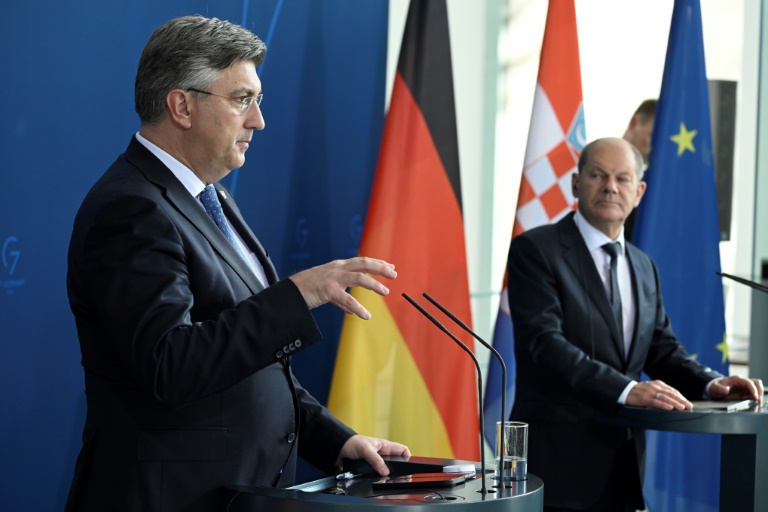
Croatian Prime Minister Andrej Plenkovic expressed confidence his country would be join the currency club in the new year.

The country’s “aim” was to enter the Schengen open-borders zone on the same date, Plenkovic said at a press conference in Berlin.

– Price hike fears –

On January 1, 2002, millions of Europeans in 12 countries gave up the lira, franc, deutsche mark and drachma for euro bills and coins. 

They have since been joined by seven other countries: Slovenia in 2007, Cyprus and Malta in 2008, Slovakia in 2009, Estonia in 2011, Latvia in 2014 and finally Lithuania in 2015.

Bulgaria is the next county in line to join the euro, and has stated its willingness to adopt it as of January 1, 2024.

However, eurozone members are worried about the long-term stability of the Bulgarian economy and Sofia has yet to garner the same political support as Croatia.

EU governments are wary of repeating the mistakes of the euro’s early days when countries such as Greece were rushed into the single currency with shaky finances, setting the stage for the eurozone debt crisis.

Like euro-adopting citizens before them, many Croatians fear the introduction of the euro will lead to a hike in prices — in particular that businesses will round up prices when they convert from the kuna.

EU says Croatia ready to adopt euro in 2023

The European Commission said Wednesday that Croatia had met all the criteria to join the eurozone, paving the way for the country to become the single currency’s 20th member on January 1.

Croatia’s switch from the kuna to the euro will come less than a decade after the former Yugoslav republic joined the European Union, setting a new milestone in the bloc’s further integration.

The EU’s executive said Croatia had met the strict conditions to be part of the single currency, including keeping inflation in the same range as its EU peers, as well as embracing sound public spending.

Joining the single currency “will make Croatia’s economy stronger, bringing benefits to its citizens, businesses and society at large,” said European Commission President Ursula von der Leyen.

“Croatia’s adoption of the euro will also make the euro stronger,” she added.

The European Central Bank also gave a positive opinion in a separate report released on Wednesday.

Croatia expressed  willingness to adopt the single currency upon joining the EU in 2013, and Brussels’ decision comes as the euro has just celebrated its 20th anniversary.

Croatia still needs the endorsement of the EU’s finance ministers, who are expected to give their full backing in July.

“The indications which we are having are positive. So normally, I would expect that the procedure goes through and Croatia will be able to join the euro area as of next year,” said EU executive vice president Valdis Dombrovskis.

Dombrovskis, the commission’s most senior economic official, will travel to Zagreb on Thursday to formally present the opinion to the Croatian government.

Croatian Prime Minister Andrej Plenkovic expressed confidence his country would be join the currency club in the new year.

The country’s “aim” was to enter the Schengen open-borders zone on the same date, Plenkovic said at a press conference in Berlin.

– Price hike fears –

On January 1, 2002, millions of Europeans in 12 countries gave up the lira, franc, deutsche mark and drachma for euro bills and coins. 

They have since been joined by seven other countries: Slovenia in 2007, Cyprus and Malta in 2008, Slovakia in 2009, Estonia in 2011, Latvia in 2014 and finally Lithuania in 2015.

Bulgaria is the next county in line to join the euro, and has stated its willingness to adopt it as of January 1, 2024.

However, eurozone members are worried about the long-term stability of the Bulgarian economy and Sofia has yet to garner the same political support as Croatia.

EU governments are wary of repeating the mistakes of the euro’s early days when countries such as Greece were rushed into the single currency with shaky finances, setting the stage for the eurozone debt crisis.

Like euro-adopting citizens before them, many Croatians fear the introduction of the euro will lead to a hike in prices — in particular that businesses will round up prices when they convert from the kuna.

Russians advance on Severodonetsk, Kyiv awaits new US weapons

Russian forces edged closer Wednesday to taking the key eastern Ukraine city of Severodonetsk but Kyiv’s hopes of holding off their invaders were boosted by a US pledge of more advanced rocket systems to help their defence.

“The Russians control 70 percent of Severodonetsk,” Lugansk region governor Sergiy Gaiday announced on Telegram, adding that Ukrainian forces were withdrawing to prepared positions.

“If in two or three days, the Russians take control of Severodonetsk, they will install artillery and mortars and will bombard more intensely Lysychansk,” the Ukrainian-held city across the river, he said.

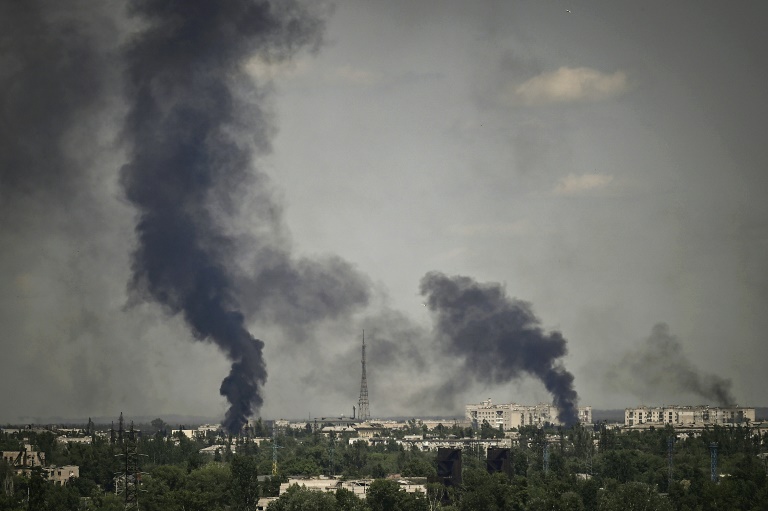
A key industrial hub and with Lysychansk the last pocket of resistence in the eastern Lugansk region, Severodonetsk has become a target of massive Russian firepower since the failed attempt to capture Kyiv.

Oleksander Motuzianyk, spokesman for Ukraine’s defence ministry, said there was “fighting in the streets” in Severodonetsk, and the Russians had reached the city centre.

“The Ukrainian armed forces are actively resisting them,” he said.

In a boost for the outgunned Ukrainian military, President Joe Biden confirmed that more US weaponry was on the way to allow them to “more precisely strike key targets” in Ukraine.

The new weapon is the Himars multiple launch rocket system, or MLRS, a mobile unit that can simultaneously launch multiple precision-guided missiles.

They are the centrepiece of a $700 million package being unveiled Wednesday that also includes air-surveillance radar, more Javelin short-range anti-tank rockets, artillery ammunition, helicopters, vehicles and spare parts, a US official said.

With a range of about 50 miles (80 kilometres), they will allow Ukrainian forces to strike further behind Russian lines.

– ‘Fuel to the fire’ –

Kremlin spokesman Dmitry Peskov accused Washington of “adding fuel to the fire”, saying “such supplies” did not encourage Kyiv to resume peace talks.

Biden said that the United States would not support attacks inside Russia, writing in the New York Times: “We do not seek a war between NATO and Russia.”

Later, US Secretary of State Antony Blinken said Ukraine had promised not to use the new missiles inside Russia — and warned of a long conflict ahead.

“As best we can assess right now, we are still looking at many months of conflict,” he told a news conference with NATO Secretary-General Jens Stoltenberg.

While some analysts have suggested the Himars could be a “game-changer”, others caution they should not be expected to suddenly turn the tables, not least because Ukrainian troops need time to learn how to use them effectively.

But they may improve morale after 98 days of war.

“If you know you have a heavy weapon behind you, everyone’s spirits rise,” one Ukrainian fighter on the frontline told AFP before the announcement.

– ‘Negative consequences’ –

In an intelligence briefing, Western officials said Russia is making “incremental but pretty steady gains” but even after taking Severodonetsk, there would be “a lot more challenges to come”.

“There are some river crossings that need to be completed after the closure of the (Ukraine-controlled) pocket and we’ve seen previously how difficult those river crossings are.”

West of Severodonetsk, in the city of Sloviansk, AFP journalists saw buildings destroyed by a rocket attack in which three people died and six others were hurt.

And on Wednesday, at least one person died and two others were injured in Soledar, between Sloviansk and Severodonetsk, AFP saw.

The European Union has also sent weapons and cash for Ukraine, while levelling unprecedented economic sanctions on Moscow.

Germany said Wednesday it would deliver an air defence system capable of shielding a major city from Russian air raids, although it will take months to get to the frontline.

EU leaders agreed this week to ban most Russian oil imports but played down the prospects of shutting off Russian gas on which many member states are hugely dependent.

Moscow said a “reorientation” was under way to find alternative destinations for its oil, as it moved to “minimise the negative consequences”.

The sanctions are biting — a panel of investors said Wednesday Russia has failed to pay $1.9 million of accrued interest on a sovereign bond.

And Russian energy giant Gazprom said its gas exports to countries outside the former Soviet Union dropped by more than a quarter year-on-year between January and May after losing several European clients.

Russia has sought to get around sanctions by demanding payment for gas in rubles, cutting off countries that refuse. 

Denmark was set to become the latest target Wednesday, after the Netherlands, Finland, Poland and Bulgaria.

Danes meanwhile voted on whether to overturn the country’s opt-out on the EU’s common defence policy, just weeks after neighbouring Finland and Sweden applied to join NATO as a defence against Russian aggression.

– Grain as weapon –

Russia’s invasion on February 24 has killed thousands of people and sent millions of Ukrainians fleeing, but also risks triggering a global food crisis. 

Ukraine — one of the world’s main producers — will likely export only half the amount of grain that it did in the previous season, the Ukrainian Grain Association (UGA) said.  

At the Vatican, Pope Francis pleaded against the use of grain as a “weapon of war”.

The leaders of France, Germany and Italy have all urged Putin in recent days to end Russia’s blockade of the port of Odessa.

But Russian Foreign Minister Sergei Lavrov said it was up to the West and Kyiv to resolve the crisis, starting with the lifting of sanctions.

In Kyiv, meanwhile, Ukrainian football fans were set to watch their national side play its first official match since Russia’s invasion, facing Scotland in a World Cup qualifier later Wednesday in Glasgow.

“I am hoping for victory,” 44-year-old army serviceman, Andriy Veres, told AFP. 

“These days it is very important for the country, for all people, for all those who are fans and even for those who are not.”  

burs-ar/har

Russia seeks to 'minimise' effects of EU oil ban, gas exports down

Russia said Wednesday it was moving to limit the damage from an EU oil ban as its other key energy export, gas, has fallen after President Vladimir Putin sent troops to Ukraine.

At a summit on Monday, the EU agreed to a sixth package of sanctions on Moscow that will see the majority of Russian oil stopped, but exempted supplies by pipeline in a concession to Hungary.

“Sanctions will have a negative effect for Europe, us and the whole global energy market,” Kremlin spokesman Dmitry Peskov told reporters. 

Peskov added that a “reorientation” was under way to find alternatives for the oil that will no longer be sold to Europe.

“These are purposeful, systematic actions that will allow us to minimise the negative consequences,” he said. 

After Putin sent troops into Ukraine on February 24, Russia was hit with a barrage of sanctions that targeted its economy and financial institutions. 

The Wall Street Journal reported that OPEC was considering whether to remove Russia from an agreement that has locked producers into limited output increases.

Moscow’s removal would mean an early end to the pact and allow major crude nations such as Saudi Arabia to open the taps, analysts say.

Foreign Minister Sergei Lavrov on Wednesday reaffirmed Moscow’s commitment to OPEC+ agreements during a visit to Saudi Arabia.

OPEC+ is a group of 13 members of the Organisation of Petroleum Exporting Countries (OPEC), led by Riyadh, and their 10 partners led by Moscow.

Speaking to reporters in Riyadh, Lavrov said the subject of Western sanctions came up within the context of OPEC+ cooperation.

“During discussions with my colleagues from Arab monarchies, we raised this subject, but only in the context of confirming the agreements on cooperation within OPEC+ that have already been agreed on and confirmed several times by our leaders,” Lavrov said.

– Gas exports drop – 

Separately, Russian energy giant Gazprom said that its gas exports to countries outside of the former Soviet Union dropped by more than a quarter year-on-year between January and May after losing several European clients.

Exports to countries outside the region totalled 61 billion cubic metres, a 27.6-percent fall from the same period last year, Gazprom said in a statement.

Gazprom added that gas deliveries to China via the “Power of Siberia” pipeline were increasing, but it did not provide any figures. 

Moscow has demanded that clients from “unfriendly countries” — including EU member states — now pay for their gas in rubles.

The new requirement is seen as a measure to sidestep Western financial sanctions against Russia’s central bank imposed over Moscow’s offensive in Ukraine.

So far Poland, Bulgaria, Finland and the Netherlands have had their natural gas deliveries suspended over refusing to pay in rubles. 

Danish energy company Orsted said that Gazprom Export would cut gas supplies to Denmark on Wednesday after the Danish company refused to pay in rubles.

EU countries have scrambled to reduce their dependency on Russian energy but are divided about imposing a natural gas embargo as several member states are heavily reliant on Moscow’s energy supplies.

Economists believe that the worst economic impact of the sanctions is still to come and expect Russia to plunge into a deep recession.

Russia’s state statistics service said Wednesday that the country’s industrial output shrank for the first time since the start of Moscow’s military campaign in Ukraine.

In April, industrial production fell by 1.6 percent compared to the same period last year.

Compared to March, industrial output shrank 8.5 percent, a major setback after a dynamic start to the year.

Car production fell by 85.4 percent, coal output by 6.5 percent and oil and gas production by 3.6 percent compared to the same period last year.

Retail sales fell by 9.7 percent in April year-on-year and by 11.3 percent compared to March.

11 dead, 33 missing after Hurricane Agatha hits Mexico

The strongest hurricane on record to hit Mexico’s Pacific coast in May left at least 11 people dead and 33 missing after triggering landslides and flooding, officials said Wednesday.

Authorities were struggling to reach remote mountain communities worst affected by Hurricane Agatha, after rockfalls and mudslides cut off roads.

“I embrace the relatives of those who have lost their lives,” President Andres Manuel Lopez Obrador said at his daily news conference.

“I hope that we find those who have disappeared when all the communities can be reached,” he added.

On Wednesday 33 people remained missing and the death toll stood at 11, the governor of the southern state of Oaxaca, Alejandro Murat, told reporters.

In the coastal community of Huatulco, residents whose homes were damaged or destroyed recounted fleeing before they could gather their belongings.

“When we were told to leave, we wanted to take something but we couldn’t,” said Emilia Rios.

“I didn’t take a single plate, a cup, a change of clothes. Not even sheets or towels. Nothing,” she said.

A helicopter was on stand-by to fly to isolated communities when weather conditions allow, officials said.

Troops were deployed to the region — one of the poorest in Mexico — to clear roads.

“Highways have been affected by landslides, fallen trees, increased river flows as well as the collapse of two bridges,” said civil protection coordinator Laura Velazquez.

– Deadly start to season –

The victims included two people aged 18 and 21 years old who died when part of a hill collapsed in the community of Santa Catarina Xanaguia, according to the Oaxaca civil protection office.

Another woman died and her son was injured in a landslide in Llano del Chillar, it said.

Agatha was the first hurricane of the Pacific season and unusually powerful for the time of year.

The storm was the strongest to make landfall along Mexico’s Pacific coast in May since record keeping began in 1949, according to the US National Hurricane Center (NHC).

Scientists say that as oceans’ surface layers warm due to climate change, tropical storms are becoming more powerful and carry more water, posing an increasing threat to the world’s coastal communities.

Agatha barreled ashore near Puerto Angel in Oaxaca as a Category Two hurricane — the second lowest on a scale of five — with winds of 165 kilometers (105 miles) per hour.

The storm weakened as it moved inland after lashing coastal tourist towns, but its remnants continued to bring downpours to parts of southern Mexico.

The country’s meteorological service sees an 80 percent chance that in five days the remnants of Agatha will head out into the Atlantic with the potential for another storm formation.

Mexico is regularly lashed by tropical storms on both its Pacific and Atlantic coasts, generally between the months of May and November.

The deadliest storm to hit Mexico last year was a Category 3 hurricane called Grace that killed 11 people in the eastern states of Veracruz and Puebla in August.

In October 1997, Hurricane Pauline hit the country’s Pacific coast as a Category 4 storm, leaving more than 200 dead, with Oaxaca and neighboring Guerrero state the worst hit.

11 dead, 33 missing after Hurricane Agatha hits Mexico

The strongest hurricane on record to hit Mexico’s Pacific coast in May left at least 11 people dead and 33 missing after triggering landslides and flooding, officials said Wednesday.

Authorities were struggling to reach remote mountain communities worst affected by Hurricane Agatha, after rockfalls and mudslides cut off roads.

“I embrace the relatives of those who have lost their lives,” President Andres Manuel Lopez Obrador said at his daily news conference.

“I hope that we find those who have disappeared when all the communities can be reached,” he added.

On Wednesday 33 people remained missing and the death toll stood at 11, the governor of the southern state of Oaxaca, Alejandro Murat, told reporters.

In the coastal community of Huatulco, residents whose homes were damaged or destroyed recounted fleeing before they could gather their belongings.

“When we were told to leave, we wanted to take something but we couldn’t,” said Emilia Rios.

“I didn’t take a single plate, a cup, a change of clothes. Not even sheets or towels. Nothing,” she said.

A helicopter was on stand-by to fly to isolated communities when weather conditions allow, officials said.

Troops were deployed to the region — one of the poorest in Mexico — to clear roads.

“Highways have been affected by landslides, fallen trees, increased river flows as well as the collapse of two bridges,” said civil protection coordinator Laura Velazquez.

– Deadly start to season –

The victims included two people aged 18 and 21 years old who died when part of a hill collapsed in the community of Santa Catarina Xanaguia, according to the Oaxaca civil protection office.

Another woman died and her son was injured in a landslide in Llano del Chillar, it said.

Agatha was the first hurricane of the Pacific season and unusually powerful for the time of year.

The storm was the strongest to make landfall along Mexico’s Pacific coast in May since record keeping began in 1949, according to the US National Hurricane Center (NHC).

Scientists say that as oceans’ surface layers warm due to climate change, tropical storms are becoming more powerful and carry more water, posing an increasing threat to the world’s coastal communities.

Agatha barreled ashore near Puerto Angel in Oaxaca as a Category Two hurricane — the second lowest on a scale of five — with winds of 165 kilometers (105 miles) per hour.

The storm weakened as it moved inland after lashing coastal tourist towns, but its remnants continued to bring downpours to parts of southern Mexico.

The country’s meteorological service sees an 80 percent chance that in five days the remnants of Agatha will head out into the Atlantic with the potential for another storm formation.

Mexico is regularly lashed by tropical storms on both its Pacific and Atlantic coasts, generally between the months of May and November.

The deadliest storm to hit Mexico last year was a Category 3 hurricane called Grace that killed 11 people in the eastern states of Veracruz and Puebla in August.

In October 1997, Hurricane Pauline hit the country’s Pacific coast as a Category 4 storm, leaving more than 200 dead, with Oaxaca and neighboring Guerrero state the worst hit.

UK overlooks crisis to celebrate queen's jubilee

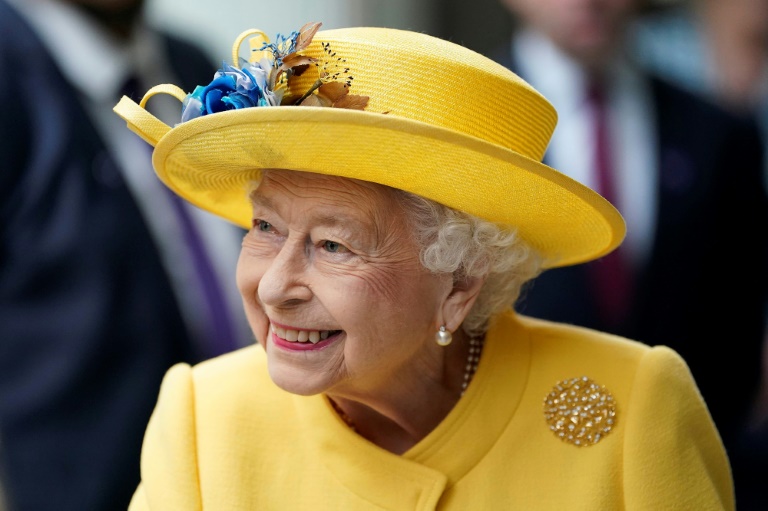
Britons prepared Wednesday to mark a record-breaking 70 years on the throne for Queen Elizabeth II, with four days of festivities offering temporary respite from an inflationary crisis and doubts over the monarchy’s future.

The Platinum Jubilee takes place as Britons contend with a surge in prices not seen since the 1970s, with many households struggling to put food on the table and pay rocketing bills.

But with two public holidays from Thursday and then the weekend, pubs, restaurants and retailers are hoping for a timely sales boost, after a difficult period including the Covid pandemic.

Supermarket chain Co-op predicted “a bigger sales period than Christmas”.

On The Mall, a red-paved avenue leading to Buckingham Palace, royal enthusiasts from far and wide have been camping out, despite heavy downpours.

– ‘Magical’ –

“The last 24 hours have been horrendous. We had rain, hail, thunder, lightning,” Mary-Jane Willows, 68, from Cornwall, southwest England, told AFP. 

“It’s the only way to make sure that you are at the front of the barrier when that royal coronation coach goes past, that golden coach…. It will be the most magical moment,” she said.

Angie Hart, 51, travelled from Canada to stake out a camping spot on The Mall with her husband and two daughters.

“It has always been something that I wanted to do,” she said. “I just have a real respect for the queen.”

But in Britain and the wider Commonwealth, support for the monarchy overall is an open question once the increasingly frail, 96-year-old monarch departs the scene.

With Prince Charles taking over more of his mother’s duties for occasions of state, there is a sense that the first — and possibly the last — Platinum Jubilee in British history marks a turning of the page.

A poll for The Sun newspaper this week gave the queen a 91.7-percent approval rating. Charles commanded only 67.5 percent, behind his son Prince William on 87.4 percent.

In Australia, where the queen is also head of state, new centre-left Prime Minister Anthony Albanese appointed an “assistant minister for the republic” in a move welcomed by the republicans.

Albanese has previously described Australia becoming a republic as “inevitable”. 

Historian Anthony Seldon, of the London School of Economics and Political Science (LSE), said “how traumatic it’s going to be when it unravels, as well as it might in the next two, three, four years when the change comes”.

– Post-pandemic –

Unlike the vocal Charles, the queen has rarely expressed an opinion in public, and her sheer longevity means that she has been a fixture of the life of nearly every Briton alive.

She has overcome numerous family traumas, including Charles’ very public split from Princess Diana and personal heartache when her consort Prince Philip died aged 99 last year.

The jubilee is being seen as a chance for the nation to give thanks to the queen publicly, after social distancing last year prevented crowds at Philip’s funeral. 

The celebrations kick off Thursday with Trooping the Colour, a military parade that has officially marked the British monarch’s birthday for centuries.

A fly-past will include Spitfires, the iconic fighter plane that helped win the Battle of Britain and fend off Nazi Germany in 1940.

The aerial display is expected to be watched by the queen and senior royals from the balcony of Buckingham Palace.

Balcony numbers have been limited to “working royals” only, leaving no place for self-exiled grandson Prince Harry and his American wife Meghan — returning on a rare visit to Britain — nor Elizabeth’s disgraced second son Prince Andrew.

– Tensions –

Patriotic nostalgia runs red, white and blue throughout the festivities, culminating in Ed Sheeran singing “God Save the Queen” in front of Buckingham Palace on Sunday.

Participants in a giant public parade through central London earlier Sunday will be familiar to anyone acquainted with British popular culture since 1952.

But Bollywood dancers and a Caribbean carnival will also reflect the changes in British society since then, from one that was predominantly white and Christian, to one that is multicultural and multi-faith.

Britain’s Empire has given way to a Commonwealth of nations — 14 of which still count the queen as their head of state, including Australia and Canada.

But recent royal tours of the Caribbean have laid bare growing tensions about the British monarchy’s status further afield. 

“This queen has been a significant glue within that Commonwealth,” said Michael Cox, emeritus professor of international relations at LSE. 

“Whether, how successfully, Charles is going to play the same role, I don’t know,” he said.

Sweden, Finland to meet Turkey at NATO in new bid for progress

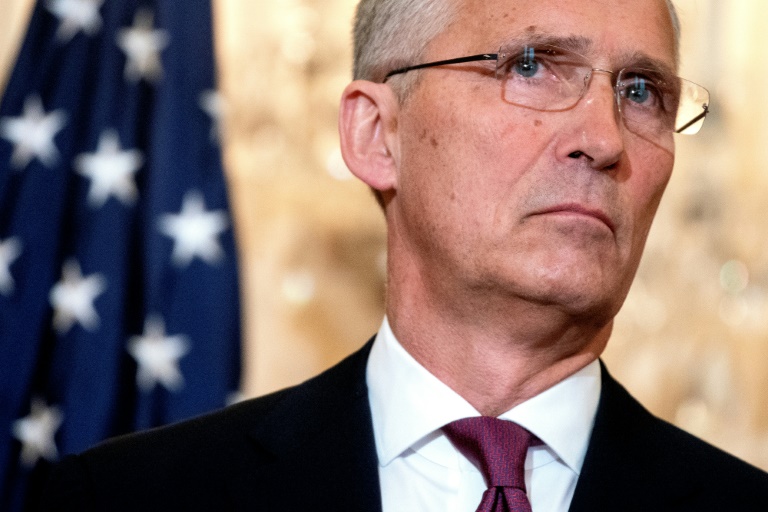
NATO said Wednesday it will hold talks involving Turkey, Finland and Sweden in hopes of ending Ankara’s opposition to the Nordic nations joining the alliance ahead of a summit this month.

Secretary-General Jens Stoltenberg said he would convene senior officials from the three nations in Brussels in the coming days “to ensure that we make progress on the applications of Finland and Sweden to join NATO.”

“My intention is to have this in place before the NATO summit” in Madrid starting on June 28, Stoltenberg said on a visit to Washington.

“Finland and Sweden have made it clear that they are ready to sit down and to address the concerns expressed by Turkey,” Stoltenberg told a joint news conference with US Secretary of State Antony Blinken.

Sweden and Finland have historically tried to steer clear of angering nearby Russia but shed their reluctance to join NATO after Moscow’s invasion of Ukraine — which had unsuccessfully sought to join the alliance.

Russian President Vladimir Putin “wanted less NATO. He is getting more NATO,” Stoltenberg said.

But all 30 NATO members need to agree to admit a new member and Turkey has voiced objections, citing the presence in the two Nordic nations of militants from the PKK, the Kurdish separatist group considered terrorists by Ankara.

Stoltenberg said that the two nations and NATO took the PKK issue “very seriously.”

“We know that no other NATO ally has had suffered more terrorist attacks than Turkey,” Stoltenberg said.

Blinken reiterated that he remained “very confident” that NATO will “move forward” with the membership of the two nations.

He appeared to play down linking the membership to Turkey’s desire to buy F-16 fighter jets, as some pundits believe Ankara is holding out for concessions.

“These are separate questions. We have a longstanding and ongoing defense relationship with Turkey as a NATO ally,” Blinken said.

“We’ll continue to work through cases as they as they arise with regard to systems that Turkey seeks to acquire,” Blinken said.

The United State expelled Turkey in 2019 from development of the state-of-the-art F-35 in retaliation for Ankara’s purchase of an advanced air defense system from Russia.

But Turkey’s image has risen in the United States through its drones that it has sold to Ukraine, even as Ankara avoids sanctions on Russia.

Close Bitnami banner
Bitnami