World

Queen Elizabeth II to salute jubilee from palace balcony

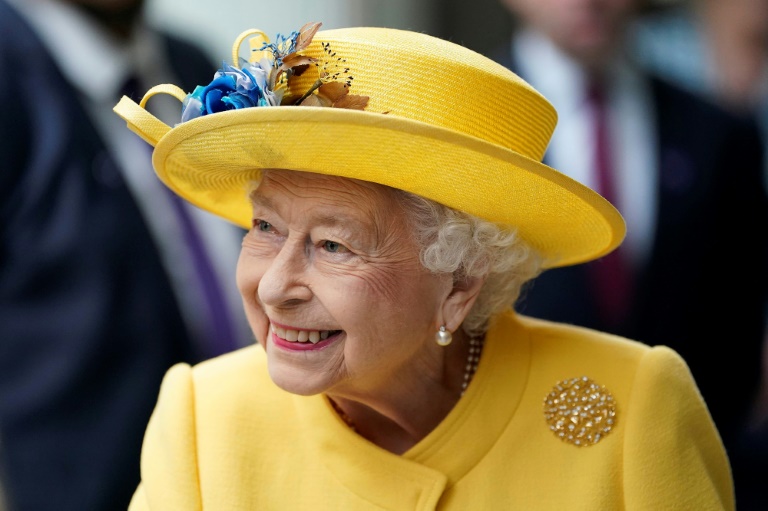
Queen Elizabeth II will make two appearances on the Buckingham Palace balcony on Thursday, kicking off four days of public events to mark her historic Platinum Jubilee.

The extent of the 96-year-old monarch’s involvement in the celebrations for her record-breaking 70 years on the throne has been a source of speculation for months.

She has had to cut back drastically her public appearances since last year because of difficulties standing and walking — and a bout of Covid.

But royal officials confirmed that she would take the salute of mounted troops from the balcony after a military parade called Trooping the Colour.

The centuries-old ceremony to officially mark the sovereign’s birthday has previously seen the queen take the salute on horseback herself.

Her 73-year-old son and heir Prince Charles will step in this year, supported by his sister Princess Anne, 71, and his eldest son, Prince William, 39.

Joining senior royals watching the display of military precision will be Charles’ younger son, Prince Harry, and his wife Meghan, on a rare visit from California, Buckingham Palace confirmed.

But the queen’s disgraced second son, Prince Andrew, 62, is not expected to join them.

She will return to the balcony later to watch a fly-past of military aircraft, including iconic models from World War II, the palace said.

At nightfall, the queen will be at Windsor Castle, west of London, to take part in a ceremony to light more than 3,000 beacons across the country and the Commonwealth of 54 nations that she heads.

– Thank you –

Elizabeth was a 25-year-old princess when she succeeded her father king George VI in 1952, bringing a rare touch of glamour to a battered nation still enduring food rations after World War II.

Seventy years on, she is now the only monarch most Britons have ever known, becoming an enduring figurehead through often troubled times.

Britain’s first and very likely only Platinum Jubilee will see street parties, pop concerts and parades until Sunday in potentially the last major public celebration of the queen’s long reign.

It has not yet been confirmed if she will attend a thanksgiving service at St Paul’s Cathedral on Friday, while her planned attendance at horseracing showcase The Derby on Saturday is off.

She could yet put in a final appearance — again from the palace balcony — on Sunday, at the climax of a huge public pageant involving 6,000 performers.

In a message, the queen thanked everyone involved in organising community events in Britain and around the world.

“I know that many happy memories will be created at these festive occasions,” she said.

“I continue to be inspired by the goodwill shown to me, and hope that the coming days will provide an opportunity to reflect on all that has been achieved during the last 70, as we look to the future with confidence and enthusiasm.”

– Respite –

The jubilee, held against a backdrop of rising inflation that has left many Britons struggling, is being seen not just as respite for the public after two years hit by Covid but also for the royals.

Harry, 37, and Meghan, 40, caused shockwaves in early 2020 by moving to North America, from where they have publicly criticised royal life.

In April last year, she lost her husband of 73 years, Prince Philip, and was forced to sit alone at his funeral due to coronavirus restrictions.

Since then, she has struggled with her health, and also the fallout from Andrew’s links to the convicted sex offenders Jeffrey Epstein and Ghislaine Maxwell.

Andrew, who in February settled a US civil claim for sexual assault, has effectively been fired from his royal duties.

Attention is increasingly turning to the succession, and the monarchy’s future at home and in the 14 other Commonwealth countries where the queen is also head of state.

Her approval rating among Britons remains high at 75 percent, according to a poll by YouGov published Wednesday, but Charles is only on 50 percent.

A total of 62 percent still want a monarchy, although younger people are split, with 33 percent in favour, and 31 percent wanting a republic.

Only 39 percent said they thought there would still be a monarch in 100 years’ time.
Russians advance on Severodonetsk as US boosts weapons to Ukraine

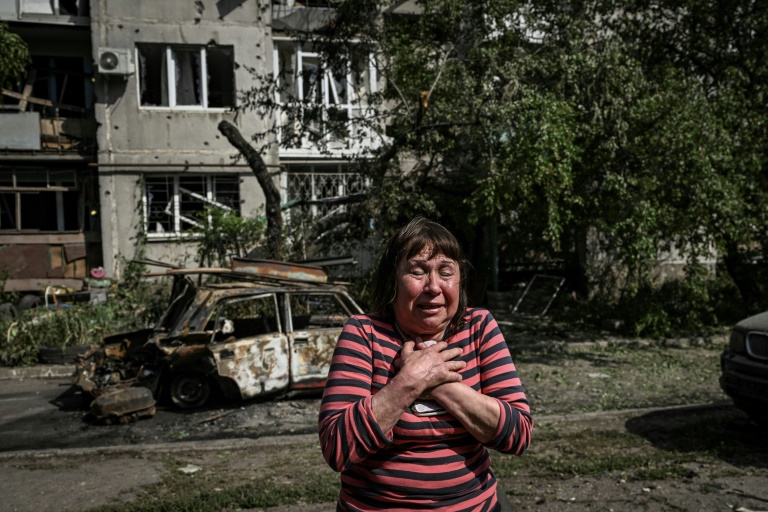
Russian forces edged closer Wednesday to taking the key eastern Ukraine city of Severodonetsk but Kyiv’s hopes of holding off their invaders were boosted by a US pledge of more advanced rocket systems to help their defence.

The Russians had taken control of 70 percent of the key industrial hub, with Ukrainian forces withdrawing to prepared positions, Lugansk region governor Sergiy Gaiday said.

“If in two or three days, the Russians take control of Severodonetsk, they will install artillery and mortars and will bombard more intensely Lysychansk,” the Ukrainian-held city across the river, he said on Telegram.

Ukraine successfully stopped Russia from seizing Kyiv after its February 24 invasion but the campaign in the east has had a high cost, with President Volodymyr Zelensky saying that 60 to 100 soldiers were dying each day.

“The situation in the east is very difficult,” Zelensky told US newsgroup Newsmax.

With only Lysychansk remaining a pocket of resistance in the eastern Lugansk region, Severodonetsk has become a target of massive Russian firepower.

Oleksander Motuzianyk, spokesman for Ukraine’s defence ministry, said there was fighting in the streets in Severodonetsk and the Russians had reached the city centre.

“The Ukrainian armed forces are actively resisting them,” he said.

In a boost for the outgunned Ukrainian military, President Joe Biden confirmed that longer-range weapons were on the way.

The new weapon is the Himars multiple launch rocket system, or MLRS, a mobile unit that can simultaneously launch multiple precision-guided missiles up to 80 kilometres (50 miles) away.

They are the centrepiece of a $700 million package unveiled Wednesday that also includes air-surveillance radar, more Javelin short-range anti-tank rockets, artillery ammunition, helicopters, vehicles and spare parts.

– ‘Fuel to the fire’ –

Kremlin spokesman Dmitry Peskov accused Washington of “adding fuel to the fire”, saying that the weapons would not encourage Kyiv to resume peace talks.

US Secretary of State Antony Blinken said that Ukraine had promised not to strike into Russia — and dismissed suggestions that Washington was to blame for escalating with Russian President Vladimir Putin.

“Simply put, the best way to avoid escalation is for Russia to stop the aggression and the war that it started,” Blinken told reporters.

He promised that the United States would keep assisting Ukraine, saying there were no signs of Russia pulling back.

“As best we can assess right now, we are still looking at many months of conflict,” he said.

While some analysts have suggested the Himars could be a “game-changer”, others caution they should not be expected to suddenly turn the tables, not least because Ukrainian troops need time to learn how to use them effectively.

But they may improve morale after 98 days of war.

“If you know you have a heavy weapon behind you, everyone’s spirits rise,” one Ukrainian fighter on the frontline told AFP before the announcement.

– ‘Negative consequences’ –

Elsewhere, a missile struck transportation infrastructure near the comparatively stable western city of Lviv, injuring two people, regional governor Maksym Kozytsky said.

West of Severodonetsk, in the city of Sloviansk, AFP journalists saw buildings destroyed by a rocket attack in which three people died and six others were hurt.

And on Wednesday, at least one person died and two others were injured in Soledar, between Sloviansk and Severodonetsk, AFP saw.

The European Union has also sent weapons and cash for Ukraine, while levelling unprecedented economic sanctions on Moscow.

Germany said Wednesday it would deliver an air defence system capable of shielding a major city from Russian air raids, although it will take months to get to the frontline.

EU leaders agreed this week to ban most Russian oil imports but played down the prospects of shutting off Russian gas on which many member states are hugely dependent.

Moscow said a “reorientation” was under way to find alternative destinations for its oil, as it moved to “minimise the negative consequences”.

The sanctions are biting — a panel of investors said Wednesday Russia has failed to pay $1.9 million of accrued interest on a sovereign bond.

And Russian energy giant Gazprom said its gas exports to countries outside the former Soviet Union dropped by more than a quarter year-on-year between January and May after losing several European clients.

– Denmark joins EU defence –

Russia’s invasion of Ukraine has sparked a rethinking of security for many Europeans, with Finland and Sweden shedding earlier reluctance to join NATO.

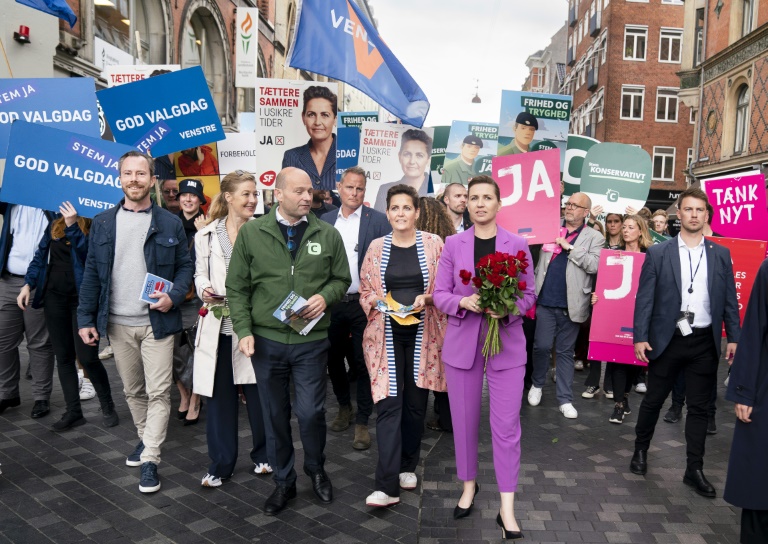
Denmark, a founding member of NATO, took a step further Wednesday by voting overwhelmingly to join the European Union’s common defense policy.

“Tonight Denmark has sent a very important signal. To our allies in Europe and NATO, and to Putin,” Danish Prime Minister Mette Frederiksen told cheering supporters.

“We’re showing that when Putin invades a free country and threatens the stability in Europe, we others pull together,” she said.

Russia’s invasion has killed thousands of people and sent millions of Ukrainians fleeing, but also risks triggering a global food crisis. 

Ukraine — one of the world’s main producers — will likely export only half the amount of grain that it did in the previous season, the Ukrainian Grain Association said.  

At the Vatican, Pope Francis pleaded against the use of grain as a “weapon of war”.

And in Glasgow, meanwhile, Ukraine’s national side played its first official match since Russia’s invasion, defeating Scotland 3-1, setting up a World Cup play-off decider against Wales.

Reflecting the views of many, army serviceman Andriy Veres, 44, said he had been hoping for victory.

“These days it is very important for the country, for all people, for all those who are fans and even for those who are not,” he told AFP in Kyiv.  

burs-ar/har-sct/bfm

Danes say 'yes' to joining EU common defence policy

An overwhelming majority of Danes, almost 67 percent, voted Wednesday in favour of joining the EU’s common defence policy 30 years after opting out, results showed with 100 percent of ballots counted. 

The vote comes on the heels of neighbouring Finland and Sweden’s historic applications for NATO membership, as the war in Ukraine forces countries in Europe to rethink their security policy.

“Tonight Denmark has sent a very important signal. To our allies in Europe and NATO, and to (Russian President Vladimir) Putin. We’re showing that when Putin invades a free country and threatens stability in Europe, we others pull together,” Danish Prime Minister Mette Frederiksen told cheering supporters.

“Denmark now can partake in the European cooperation on defence and security. And for that I’m very, very happy,” she said.

Denmark’s defence opt-out has meant that Copenhagen, a founding member of NATO, has since 1993 not participated in EU foreign policy where defence is concerned and does not contribute troops to EU military missions.

Earlier in the day, Frederiksen had said as she cast her ballot that Denmark, a country of 5.5 million people, was “too small to stand alone in a very, very insecure world”.

“There was a Europe before February 24, before the Russian invasion, and there is another Europe after,” she said after the results came in.

“When there is once again war on our continent, you can’t be neutral.” 

A total of 66.9 percent of Denmark’s 4.3 million eligible voters voted in favour of scrapping the opt-out, while 33.1 percent voted against. 

EU chiefs Ursula von der Leyen and Charles Michel welcomed the result.

Denmark’s decision was a “strong message of commitment to our common security”, von der Leyen tweeted, saying Denmark and the European Union would benefit.

“This decision will benefit Europe and make both the EU and the Danish people safer and stronger,” Michel meanwhile wrote on Twitter.

The traditionally eurosceptic country has often said “no” to greater EU integration, most recently in 2015 when it voted against strengthening cooperation on police and security matters for fear of losing sovereignty over immigration.

– Danish opt-outs –

Denmark has been an EU member since 1973, but it put the brakes on transferring more power to Brussels in 1992 when 50.7 percent of Danes rejected the Maastricht Treaty, the EU’s foundation treaty.

It needed to be ratified by all member states to enter into force. In order to persuade Danes to approve the treaty, Copenhagen negotiated a series of exemptions and Danes finally approved it the following year.

Since then, Denmark has remained outside the European single currency, the euro — which it rejected in a 2000 referendum — as well as the bloc’s common policies on justice, home affairs and defence.

Copenhagen has exercised its defence opt-out 235 times in 29 years, according to a tally by the Europa think tank.

Frederiksen announced the referendum just two weeks after Russia’s invasion of Ukraine, and after having reached an agreement with a majority of parties in Denmark’s parliament, the Folketing.

At the same time, she also announced plans to increase defence spending to two percent of gross domestic product, in line with NATO membership targets, by 2033.

– ‘Ukraine the major reason’-

“These kinds of votes are even more important than earlier. In times of war it’s obviously important to state if you feel that you want to join this type of community or not,” Molly Stensgaard, a 55-year-old scriptwriter, told AFP as she voted in Copenhagen’s city hall. 

Nikolaj Jonsson, a 28-year-old sociology student, was however unhappy with the timing of the referendum, saying it had been called “in times of unrest to emphasise a ‘yes'”.

“I don’t think it’s fair to put this ballot right here, right now, because it pushes lots of people toward a yes who would normally be more sceptical toward the EU,” he said.

The director of the Europa think tank, Lykke Friis, told AFP there was “no doubt that Ukraine was the major reason for calling the referendum”.

Eleven of Denmark’s 14 parties had urged voters to say “yes” to dropping the opt-out. 

Two far-right eurosceptic parties and a far-left party called for Danes to say “no”, arguing that joint European defence would come at the expense of NATO, which has been the cornerstone of Denmark’s defence since its creation in 1949.

po/imm

Unprecedented water curbs kick in for drought-hit Los Angeles

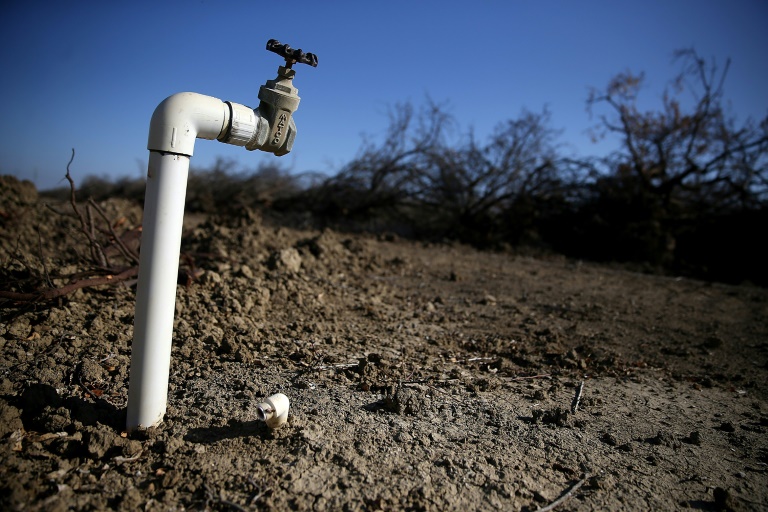
Unprecedented restrictions on water usage went into effect Wednesday in the Los Angeles area, which like most of California is in the grip of severe drought for the third consecutive year.

More than six million customers are affected by the new measures, which limit watering gardens to one day a week and only during the coolest hours, under penalty of a fine and reduced water flow.

The goal is to reduce consumption by 35 percent in the area served by the Metropolitan Water District (MWD) of southern California, which encompasses 19 million residents, or nearly half of the US state’s population.

“We have not had the supply to meet the normal demand that we have, and now we need to prioritize between watering our lawns and having water for our children and our grandchildren and livelihood and health,” the MWD said in an April statement announcing the restrictions.

The district, which acts on behalf of 26 local agencies, depends for its water supply on resources located hundreds of miles away. 

Nearly a third comes from northern California via the State Water Project, a colossal network of 21 dams and more than 1,000 miles (1,600 kilometers) of canals and pipes that carry water south from the mountains of the Sierra Nevada. 

Due to chronic drought exacerbated by climate change, the State Water Project announced it could meet only five percent of its usual deliveries this year to MWD, which had no choice but to take the drastic new measures.

– Climate change and the ‘American cliche’ –

Rather than limiting watering to once per week, district agencies also have the option of reducing water consumption to about 80 gallons (300 liters) per day per person.

That was the option chosen by the city of Los Angeles, where watering is now restricted to two days per week. 

According to experts, water used for irrigation accounts for 70-80 percent of urban consumption in southern California.

“If we shift toward plants and landscapes that are more appropriate toward California climate, we could dramatically reduce our water use,” said Heather Cooley, director of research at the Pacific Institute, a think tank on water issues. 

Many homeowners had already made this choice during a 2012-2016 drought, when the governor of California imposed a 25 percent reduction in urban water consumption.

With climate change, “the American cliche of the green lawn with a white fence should not exist in California anymore,” said Javier, a gardener AFP met on an LA street unloading succulents in front of a client’s house. 

“Now it needs to be succulent plants and heat resistant vegetation,” he said.

“More and more people are asking for that. They prefer to have a nice front lawn with healthy low water plants and native plants, like succulents and cacti, rather than dirty brown grass,” he added.

According to the US Drought Observatory’s weekly bulletin, more than 97 percent of California was in “severe, extreme or exceptional” drought conditions on Wednesday. 

And many dams and water reservoirs are at levels well below normal, even before the start of summer. 

The Colorado River, another major water source for southern California and used by tens of millions of people in the American West, is also badly affected. 

According to a 2020 study published by the US Geological Survey, the flow of the Colorado has dropped by an average of 20 percent over the past century, and at least half of that decline can be attributed to rising temperatures.

In California, average summer temperatures are 1.6 degrees Celsius above their level at the end of the 19th century.

Biden takes aim at inflation but short on weapons

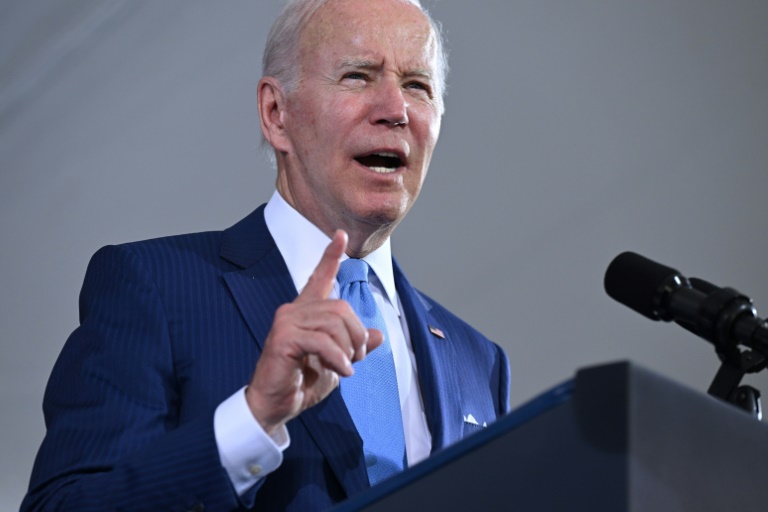
US President Joe Biden has launched a battle against soaring prices as he tries to claw back waning public support ahead of key congressional elections, but is finding he has few tools to defuse sky-high inflation.

Consumer prices have surged at the fastest pace in more than 40 years, overshadowing an otherwise strong US economy. Supply chain snarls brought on by the Covid-19 pandemic were exacerbated by Russia’s invasion of Ukraine, sending prices up as demand rapidly outstripped the supply of available goods, while a worker shortage pushes up wages.

Biden has been left scrambling for solutions as he tries to ease the pain faced by American families ahead of November midterm elections in which his Democrats are forecast to lose control of Congress to opposition Republicans.

But “there’s not much the administration can do directly to fight inflation,” Gregory Daco, chief economist at Ernst & Young Parthenon, told AFP.

Writing in the Wall Street Journal on Monday, Biden outlined his long-term plan to ease price pressures and help the world’s largest economy transition to “stable, steady growth,” by boosting economic productivity and reducing the federal budget deficit.

But the Federal Reserve, not the White House, has the primary role in tackling inflation, and has started aggressively raising interest rates to cool the economy.

Biden pledged to give the central bank the space to do its work free of political interference — unlike some of his predecessors, including Donald Trump who engaged in a relentless campaign against the Fed.

“It starts with a simple proposition: respect the Fed, respect the Fed’s independence,” he said Tuesday, following a rare meeting with Federal Reserve Chair Jerome Powell.

– ‘Limited and slow impact’ –

While employment is back near pre-pandemic levels and growth is strong, savage price increases for essentials including food and fuel have sparked growing public dissatisfaction.

Biden has pivoted to more aggressively trying to explain inflation as a byproduct of forces beyond his control, including blaming Russian leader Vladimir Putin for the invasion of Ukraine that has pushed energy and food prices higher.

Biden calls the effect “Putin’s price hike.”

But the US leader’s approval ratings are barely in the 40 percent range as people pay more at the gas pump and in the grocery store.

Gas prices on Wednesday jumped to a national average of $4.67 a gallon, from $4.19 a month ago and just $3.04 in June 2021, according to AAA.

The administration has released oil from the strategic petroleum reserve to try and bring down gas prices, but with little effect.

Other steps include clean energy tax credits and federal investments in production, as well as expanding Medicare to lower medical costs.

On Monday, Biden unveiled the Housing Supply Action Plan, which aims to improve housing supply and affordability.

But many of the contemplated steps “either require Congress to pass legislation (good luck with that) or they’re policies that won’t do a lot to bring down inflation in the near term,” said Stephanie Kelton, an economics professor at Stony Brook University, in a blog post.

Biden on Wednesday acknowledged that his power to have an immediate impact is limited. 

“The idea that we’re going to be able to click a switch” to lower prices is “unrealistic,” he said.

“We can’t take immediate action” on gas prices, he said, but instead can try to  “compensate” to lower costs of other goods.

– ‘I was wrong’ –

As the US economy roared back to life following the pandemic downturn, policymakers cheered but they were caught off-guard by the inflation surge.

Powell and Treasury Secretary Janet Yellen last year repeatedly assured Americans that rising prices would be “transitory,” but have since admitted they misjudged.

“I think I was wrong then about the path that inflation would take,” Yellen told CNN. “There have been unanticipated and large shocks that have boosted energy and food prices, and supply bottlenecks that have affected our economy badly.”

The Fed has begun acting aggressively to try to cool the US economy, raising the benchmark lending rate three quarters of a percentage point since March and signaling more big increases are coming in the effort to tamp down prices, hopefully without tipping the economy into recession.

Moving earlier would have helped slow the economy faster, Daco said, though at the cost of rapid growth.

But Kathy Bostjancic, a chief US economist at Oxford Economics, said the chances of a recession are low.

“We view a soft landing as the more likely outcome in 2023,” she said.

The US economy still has potential for an increase in both labor and goods, as workers return to the labor force  and supply chains are restored, she said.

US consumers also are shifting spending more to services like travel an entertainment, which will take the pressure off goods.

“An increase in the supply side of the economy would go a long way to quell inflationary pressures,” Bostjancic said. 

That would allow the Fed to slow rate hikes, which “could sharply improve the chances of achieving a soft-landing for the economy.”

Biden wants Mexican leader at LA summit amid boycott threat

US President Joe Biden is eager for Mexico’s leader to attend next week’s Summit of the Americas in Los Angeles, a top aide said Wednesday, amid a scramble following boycott threats.

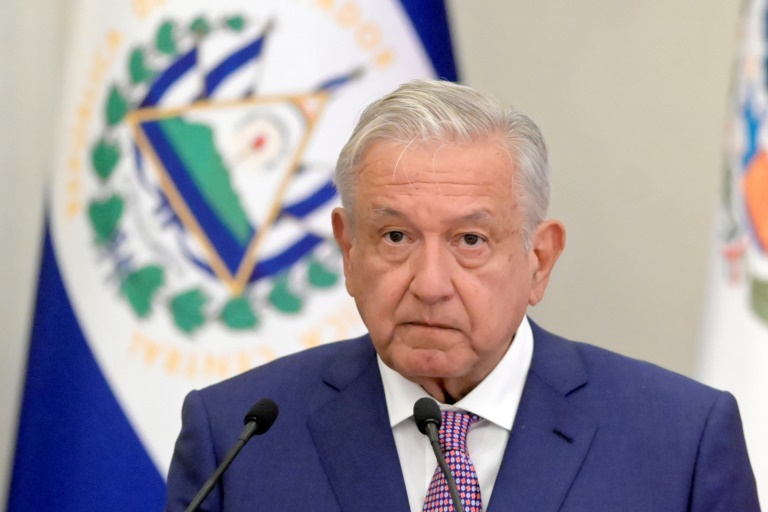
Mexican President Andres Manuel Lopez Obrador, a leftist populist, has warned that he will not go to the June 6-10 summit without the governments of Cuba, Venezuela and Nicaragua, shunned by Washington as autocratic.

Juan Gonzalez, the senior White House adviser on Latin America, said that the United States wanted the relationship to “remain positive” with its immediate neighbor to the south.

“We very much want President Lopez Obrador there. The president of the United States very personally wants the president of Mexico there,” Gonzalez told reporters by telephone.

Less than a week before the summit is set to begin, the United States has not yet released a list of guests.

“We still have some final considerations but we will, I think, inform people publicly soon about the final invitation list,” Gonzalez said.

He said the Biden administration was focused on the substance of the summit including building “a more inclusive and prosperous future for the hemisphere.”

The administration previously said it wants to showcase democracy in Latin America, and would still invite members of the Cuban, Venezuelan and Nicaraguan civil society.

In the case of Venezuela, a senior US official told Congress last week that the United States has said it will “absolutely not” invite representatives of President Nicolas Maduro, whom Washington considers illegitimate after a 2018 election marred by widespread accounts of irregularities.

Gonzalez reiterated that the United States still recognized opposition leader Juan Guaido as the interim president but said it recognized other views — a nod to Mexico, which unlike most of the Western Hemisphere still recognizes Maduro.

“Ultimately the host prerogative is important, but we also are wanting to facilitate a broad hemispheric discussion,” Gonzalez said.

US firms fret about high prices, wages but see signs of easing: Fed

Solid growth continued across the United States, even as firms faced an ongoing struggle with a worker shortage and rising prices, although there were some tentative signs the tide may be turning, the Federal Reserve said Wednesday.

The central bank’s latest “beige book” survey of business conditions noted red flags in some regions where there were rising concerns about an economic downturn.

All 12 Fed regions reported growth, although a third of those said the pace has slowed, and three “specifically expressed concerns about a recession,” the report said.

Prepared ahead of the Fed’s June 14-15 policy meeting, the report offers a gauge of how the central bank’s aggressive inflation-fighting posture is affecting the world’s largest economy.

The Fed has increased the benchmark interest rate twice since March by a total of three-quarters of a percentage point, and has signaled multiple half-point hikes are likely this month and in July as it tries to tamp down the highest inflation in more than four decades without derailing the economic expansion.

In the survey conducted through May 23, the Fed found most districts “reported strong or robust price increases — especially for input prices.”

And while many firms said they were still able to pass on price increases to consumers, “more than half of the Districts cited some customer pushback, such as smaller volume purchases or substitution of less expensive brands.”

Though manufacturing activity continued to expand nationwide, retailers “noted some softening as consumers faced higher prices” — good news for Fed policymakers who are trying to cool that demand.

Americans flush with cash have been on a shopping spree, causing demand to outstrip supply and fueling price pressures amid global shortages caused by the Covid-19 lockdowns, as well as the more recent hit from the war in Ukraine.

In the Boston region, “optimism was tainted by growing fears of recession,” while in the Kansas City district, growth expectations “softened somewhat,” the report said.

The scarcity of employees was cited as the “greatest challenge” firms face, followed by supply chain disruptions, rising interest rates, inflation, the war in Ukraine and Covid disruptions, the report said.

The worker shortages “continued to force many firms to operate below capacity,” and the majority of districts reported strong wage growth.

However, a few regions “noted that wage rate increases were leveling off or edging down.”

El Salvador's popular millennial president waging war on gangs

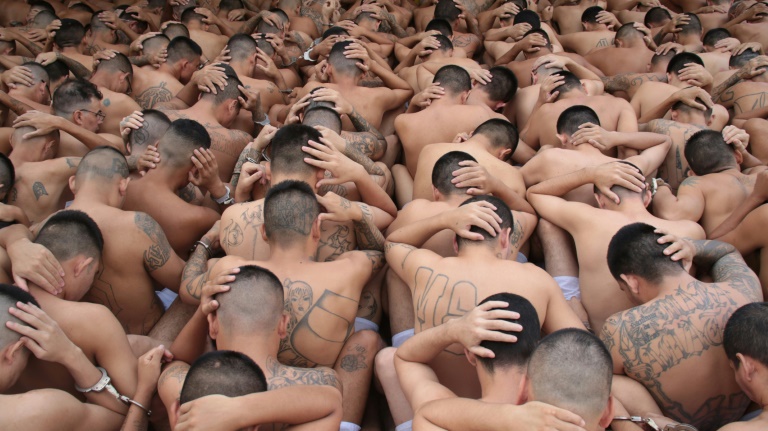
Salvadoran President Nayib Bukele’s controversial war on gangs has led to tens of thousands of arrests and sparked criticism from rights groups, but helped win him sky-high popularity three years into his term.

First seen as a young challenger to the status quo but later accused of authoritarian tendencies, the 40-year-old Bukele — a relentless presence on social media — has brushed off the criticism and boasts a 91 percent approval rating, according to a poll by Cid Gallup.

Bukele has made reducing the murder rate in the violence-plagued Central American country a key priority.

After a wave of murders left 87 people dead at the end of March, he declared a state of emergency, sending troops onto the streets and giving his security forces special powers to arrest people without a warrant.

Since then, 35,000 suspected gang members have been locked up, adding to the 16,000 already behind bars out of an estimated total of 70,000 in the country.

Political analyst Dagoberto Gutierrez described the move as an “audacious action, necessary in the face of a complicated phenomenon that is the gangs.”

It “can be seen as a bitter medicine, but it is necessary,” he added.

– Fall in murders –

Criminologist Ricardo Sosa said that while the war against gangs is “impacting their capacity to cause damage” and forcing them to “disband or go into hiding,” they will not disappear in the short term at least.

Even so, eight out of every 10 Salvadorans approve of the government action, the University of Central America says.

Bukele has pointed to falling crime figures as evidence of his policy’s effectiveness.

Murders dropped by more than 50 percent in two years — from 2,398 in 2019 to 1,147 in 2021. But critics attribute the decline to alleged secret government negotiations with gangs, which authorities deny.

Bukele has also come under fire for creeping authoritarianism, with the United States and numerous rights organizations demanding he respect human rights following allegations of mass arbitrary arrests and mistreatment of detainees.

In May 2021, aided by a Congress dominated by allies, Bukele sacked all five judges of the Constitutional Chamber of the Supreme Court, the highest judicial authority in the country.

He also fired the attorney general and a third of the country’s 690 judges — all those aged over 60 or with more than 30 years of service.

The United Nations, the Organization of American States and the United States all called on El Salvador to respect the rule of law and press freedoms.

Eduardo Escobar, director of the Citizens Action association, said: “This has been three years in which his government’s tone has been authoritarianism, attacking the separation of powers to have a government tailored to him, without opposition to his actions.”

– Bitcoin bet –

On the economic front, Bukele is trying to secure a $1.3 billion loan from the International Monetary Fund (IMF) to clean up the finances of a country where public debt is around 90 percent of gross domestic product.

Despite rampant volatility in the cryptocurrency markets, the millennial president also wants to issue Bitcoin bonds worth $1 billion to build a “Bitcoin City” close to the Conchagua volcano that would be able to provide it with an inexhaustible source of renewable energy.

Bitcoin has been legal tender in El Salvador since September 2021, alongside the US dollar, which was adopted more than two decades ago.

Economist Rafael Lemus said negotiations with the IMF are dragging on because the government is refusing to accept the global financial institutions’ conditions.

“What the government does not want is IMF standards, which demand transparency, accountability and a fight against corruption,” Lemus said.

The economist fears the country is at risk of “instability” and being unable to pay its debt.

Finance Minister Alejandro Zelaya, for his part, has dismissed predictions of default by “prophets of chaos,” and insists the country is merely fighting for “the best conditions.”

Danes seen voting to join EU defence policy

Denmark on Wednesday held a referendum on whether to join the EU’s common defence policy 30 years after opting out, with exit polls suggesting an overwhelming majority voted in favour.

The vote comes on the heels of neighbouring Finland and Sweden’s historic applications for NATO membership, as the war in Ukraine forces countries in Europe to rethink their security policy.

Two exit polls published after polling stations closed at 8:00 pm (1800 GMT) credited the “yes” side with between 66 and 69 percent of votes in the traditionally eurosceptic Scandinavian country.

Final results were expected around 11:00 pm (2100 GMT).

The defence opt-out means Copenhagen, a founding member of NATO, has not participated in EU foreign policy where defence is concerned and does not contribute troops to EU military missions.

“Everything suggests that after 30 years, Danes have today decided that we must abolish our defence opt-out and that we must work more closely with Europe”, the head of the opposition Conservative Party, Soren Pape Poulsen, told cheering supporters at a rally in parliament after the exit polls were published.

“Europe is burning right now… The world has become different to say the least, and therefore we need to be fully and completely in now,” he told Danish television DR.

The traditionally eurosceptic country has often said “no” to greater EU integration, most recently in 2015 when it voted against strengthening cooperation on police and security matters for fear of losing sovereignty over immigration.

Earlier in the day, Prime Minister Mette Frederiksen had urged Danes to vote in favour of joining, as she cast her ballot in her hometown of Vaerlose, on the outskirts of Copenhagen.

“Even if Denmark is a fantastic country — in my eyes the best country in the world — we are still a small country, and too small to stand alone in a very, very insecure world,” she said.

– Danish opt-outs –

Denmark has been an EU member since 1973, but it put the brakes on transferring more power to Brussels in 1992 when 50.7 percent of Danes rejected the Maastricht Treaty, the EU’s foundation treaty.

It needed to be ratified by all member states to enter into force. In order to persuade Danes to approve the treaty, Copenhagen negotiated a series of exemptions and Danes finally approved it the following year.

Since then, Denmark has remained outside the European single currency, the euro — which it rejected in a 2000 referendum — as well as the bloc’s common policies on justice, home affairs and defence.

Copenhagen has exercised its opt-out 235 times in 29 years, according to a tally by the Europa think tank.

Frederiksen announced the referendum just two weeks after Russia’s invasion of Ukraine, and after having reached an agreement with a majority of parties in Denmark’s parliament, the Folketing.

At the same time, she also announced plans to increase defence spending to two percent of gross domestic product, in line with NATO membership requirements, by 2033.

“These kinds of votes are even more important than earlier. In times of war it’s obviously important to state if you feel that you want to join this type of community or not,” Molly Stensgaard, a 55-year-old scriptwriter, told AFP as she voted in Copenhagen’s city hall. 

Nikolaj Jonsson, a 28-year-old sociology student, was however unhappy with the timing of the referendum, saying it had been called “in times of unrest to emphasise a ‘yes'”.

“I don’t think it’s fair to put this ballot right here, right now, because it pushes lots of people toward a yes who would normally be more sceptical toward the EU,” he said.

– ‘Ukraine the major reason’-

The director of the Europa think tank, Lykke Friis, told AFP Frederiksen’s decision to hold a referendum “was a big surprise”. 

“Nobody thought that the government would put the defence opt-out to a national referendum,” she said.

“There’s no doubt that Ukraine was the major reason for calling the referendum.”

Eleven of Denmark’s 14 parties had urged voters to say “yes” to dropping the opt-out, representing more than three-quarters of seats in parliament. 

Two far-right eurosceptic parties and a far-left party called for Danes to say “no”, arguing that joint European defence would come at the expense of NATO, which has been the cornerstone of Denmark’s defence since its creation in 1949.

po/imm

11 dead, 22 missing after Hurricane Agatha hits Mexico

The strongest hurricane on record to hit Mexico’s Pacific coast in May left at least 11 people dead and 22 missing after triggering landslides and destroying homes, officials said Wednesday.

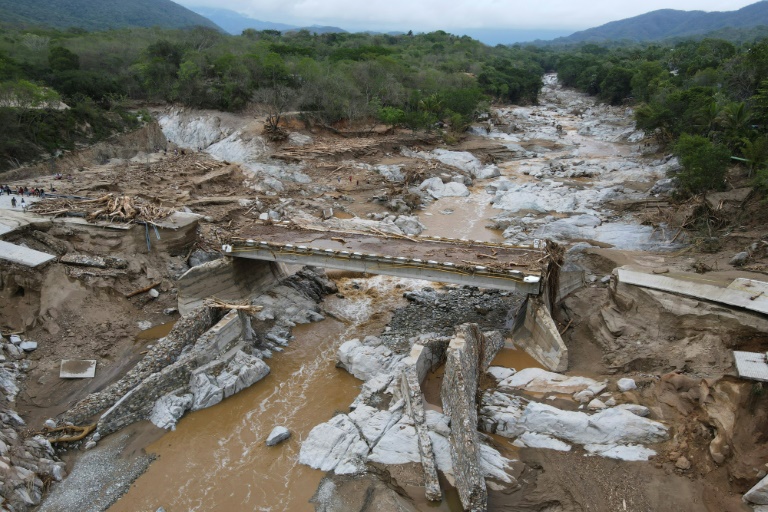
Authorities were struggling to reach remote mountain communities worst affected by Hurricane Agatha, after rockfalls and mudslides cut off roads.

“I embrace the relatives of those who have lost their lives,” President Andres Manuel Lopez Obrador said at his daily news conference.

“I hope that we find those who have disappeared when all the communities can be reached,” he added.

On Wednesday 22 people remained missing and the death toll stood at 11, the governor of the southern state of Oaxaca, Alejandro Murat, told reporters.

Earlier Murat had reported 33 people missing, but he later clarified that the number included those killed.

In the small community of Puente Copalita in the municipality of Huatulco, residents whose homes were badly damaged or destroyed recounted fleeing before they could gather their belongings.

“When we were told to leave, we wanted to take something but we couldn’t,” said Emilia Rios, whose wooden home with a metal roof was swept away by the storm.

“I didn’t take a single plate, a cup, a change of clothes. Not even sheets or towels. Nothing,” she said.

A helicopter was on stand-by to fly to isolated communities when weather conditions allow, officials said.

Troops were deployed to the region — one of the poorest in Mexico — to clear roads.

“Highways have been affected by landslides, fallen trees, increased river flows as well as the collapse of two bridges,” said civil protection coordinator Laura Velazquez.

– Deadly start to season –

Two children lost their lives in the municipality of San Pedro Pochutla, which felt the full force of the storm, Mayor Saymi Pineda told Milenio television.

The affected families “did not want to leave their homes for fear of losing everything” but after hours of strong wind and heavy rain “they lost almost everything,” she said.

Agatha was the first hurricane of the Pacific season and unusually powerful for the time of year.

The storm was the strongest to make landfall along Mexico’s Pacific coast in May since record keeping began in 1949, according to the US National Hurricane Center (NHC).

Scientists say that as oceans’ surface layers warm due to climate change, tropical storms are becoming more powerful and carry more water, posing an increasing threat to the world’s coastal communities.

Agatha barreled ashore near Puerto Angel in Oaxaca as a Category Two hurricane — the second lowest on a scale of five — with winds of 165 kilometers (105 miles) per hour.

The storm weakened as it moved inland after lashing coastal tourist towns, but its remnants continued to bring downpours to parts of southern Mexico.

The country’s meteorological service sees an 80 percent chance that in five days the remnants of Agatha will head out into the Atlantic with the potential for another storm formation.

Mexico is regularly lashed by tropical storms on both its Pacific and Atlantic coasts, generally between the months of May and November.

The deadliest storm to hit Mexico last year was a Category 3 hurricane called Grace that killed 11 people in the eastern states of Veracruz and Puebla in August.

In October 1997, Hurricane Pauline hit the country’s Pacific coast as a Category 4 storm, leaving more than 200 dead, with Oaxaca and neighboring Guerrero state the worst hit.

Close Bitnami banner
Bitnami