World

US taps affable veteran diplomat for Ethiopia peace bid

The United States on Wednesday named Mike Hammer, a veteran diplomat known for his frankness and amiability, as envoy for the Horn of Africa with the delicate task of building on Ethiopia’s fragile efforts toward peace.

Hammer was most recently the US ambassador to the Democratic Republic of Congo, where he drew respect and sometimes ire with his outspokenness about the country’s ills.

“I look forward to the energy and vision that Ambassador Hammer will now lend to our efforts in the Horn of Africa,” Secretary of State Antony Blinken said in a statement.

“His appointment underscores our abiding commitment to diplomatic efforts in the region, most urgently in support of an inclusive political process towards peace, common security and prosperity for all people in Ethiopia.”

Ethiopia in late 2020 launched an assault in the Tigray region after an attack on a military base blamed on the regional party, triggering a bloody conflict that has displaced more than two million people and raised US allegations of ethnic cleansing.

Ethiopia, historically a US partner, called an indefinite humanitarian truce in March, allowing deliveries of aid and easing fears of famine.

Hammer will replace David Satterfield, a senior diplomat and former ambassador to Turkey who is becoming director of Rice University’s Baker Institute for Public Policy.

Satterfield took over in early January after the previous envoy, Jeffrey Feltman, quit amid frustration over his efforts in Ethiopia and Sudan, where the military derailed a transition to democracy.

The multilingual Hammer, born to a Spanish mother, has also served as ambassador to Chile and in senior positions dealing with the media in Washington.

Turkey renews threat of military offensive in Syria

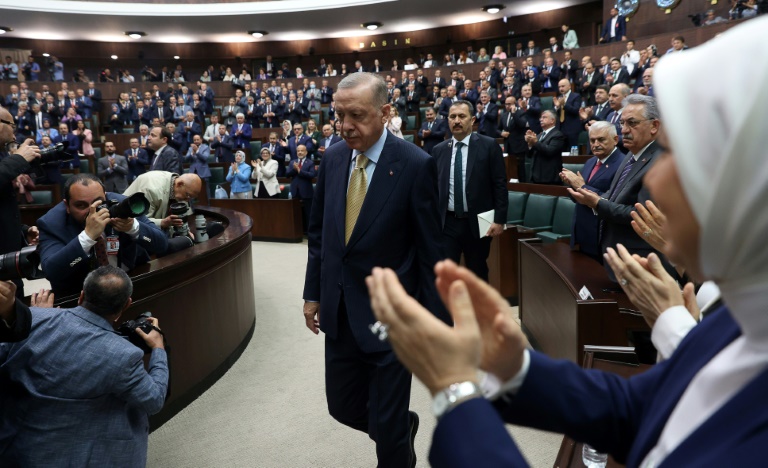
Turkey’s President Recep Tayyip Erdogan on Wednesday renewed threats of a military offensive in northern Syria, which he said would target Kurdish “terrorists”.

“We are taking another step in establishing a 30-kilometre security zone along our southern border. We will clean up Tal Rifaat and Manbij”, he said, referring to two northern Syrian cities.

Erdogan said they would then proceed, “step by step, into other regions”.

For a week now, Turkey’s leader has been threatening to launch an operation against fighters of the Kurdistan Workers’ Party (PKK).

He is also targeting the People’s Protection Units (YPG), a Syrian-Kurdish group it considers to be part of the PKK.

“We will see who supports the legitimate security operations carried out by Turkey and who tries to oppose them,” said Erdogan.

The YPG-linked Syrian Democratic Forces warned that an invasion by Ankara would undermine efforts to combat Islamic State group jihadists in Syria’s northeast.

“The SDF has been expecting a possible battle for a while now,” said Farhad Shami, a spokesperson for the Kurdish-led force.

“In the event of an attack, we will pause our war against the Islamic State group and start military measures against the Turkish invasion,” he told AFP.

Erdogan said over the weekend that Turkey would not wait for permission from the United States before launching such an operation.

Washington last week warned Turkey against launching a military operation into northern Syria, saying it would undermine regional stability and put US forces serving there at risk.

Erdogan on Tuesday told Russian President Vladimir Putin that a 2019 agreement signed between the two countries allowed for the creation of a security zone along the Turkish-Syrian border.

“Its creation is imperative,” Erdogan said.

He has also opposed the recent applications of Finland and Sweden for NATO membership, over what it considers their leniency toward Kurdish militant groups.

Both Manbij and Tal Rifaat host large Kurdish populations and lie near Turkey’s border with Syria.

Their capture would allow Erdogan to expand and deepen the so-called “safe zone” along the border where Ankara hopes to resettle Syrian refugees.

11 dead, over 30 missing after Hurricane Agatha hits Mexico: officials

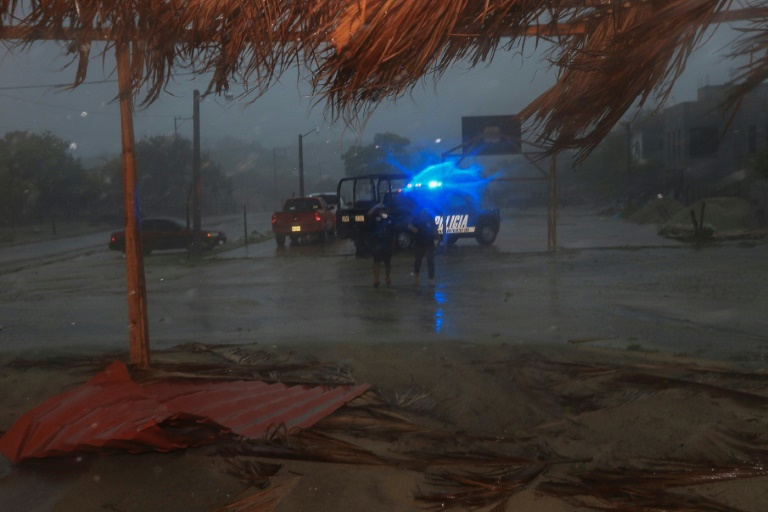
At least 33 people remained missing and 11 were confirmed dead Wednesday after Hurricane Agatha swept through Mexico, local officials said.

The storm made landfall along Mexico’s Pacific coast Monday, the strongest since record keeping began in 1949, according to the US National Hurricane Center (NHC).

It triggered heavy rains and deadly flooding.

“There are 33 (people) missing and 11 deaths basically in the upper area of the coast,” Oaxaca state governor Alejandro Murat said in a video call Wednesday.

Two people aged 18 and 21 years old died when part of a hill collapsed in the community of Santa Catarina Xanaguia, according to the Oaxaca civil protection office.

Another woman died and her son was injured in a landslide in Llano del Chillar, the office said.

Agatha made landfall near Puerto Angel in Oaxaca as a Category Two hurricane — the second lowest on a scale of five — with winds of 165 kilometers (105 miles) per hour.

Mexico is regularly lashed by tropical storms on both its Pacific and Atlantic coasts, generally between the months of May and November.

The deadliest storm to hit Mexico last year was a Category 3 hurricane called Grace that killed 11 people in the eastern states of Veracruz and Puebla in August.

11 dead, over 30 missing after Hurricane Agatha hits Mexico: officials

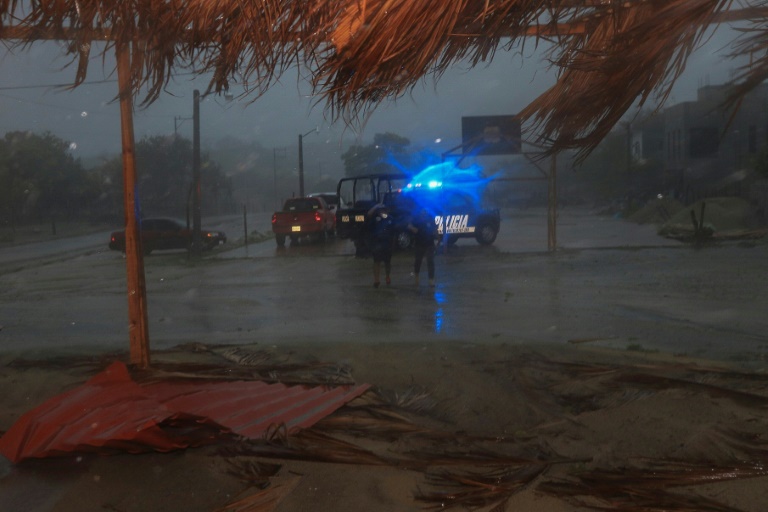
At least 33 people remained missing and 11 were confirmed dead Wednesday after Hurricane Agatha swept through Mexico, local officials said.

The storm made landfall along Mexico’s Pacific coast Monday, the strongest since record keeping began in 1949, according to the US National Hurricane Center (NHC).

It triggered heavy rains and deadly flooding.

“There are 33 (people) missing and 11 deaths basically in the upper area of the coast,” Oaxaca state governor Alejandro Murat said in a video call Wednesday.

Two people aged 18 and 21 years old died when part of a hill collapsed in the community of Santa Catarina Xanaguia, according to the Oaxaca civil protection office.

Another woman died and her son was injured in a landslide in Llano del Chillar, the office said.

Agatha made landfall near Puerto Angel in Oaxaca as a Category Two hurricane — the second lowest on a scale of five — with winds of 165 kilometers (105 miles) per hour.

Mexico is regularly lashed by tropical storms on both its Pacific and Atlantic coasts, generally between the months of May and November.

The deadliest storm to hit Mexico last year was a Category 3 hurricane called Grace that killed 11 people in the eastern states of Veracruz and Puebla in August.

Danes vote on joining EU's common defence policy

With the war in Ukraine forcing countries in Europe to rethink their security policy, Denmark voted Wednesday in a referendum on whether to join the EU’s common defence policy 30 years after opting out.

The vote in the traditionally Eurosceptic Scandinavian country of 5.5 million people comes on the heels of neighbouring Finland’s and Sweden’s historic applications for NATO membership.

“I’m voting yes with all my heart,” Danish Prime Minister Mette Frederiksen said as she cast her ballot in her hometown of Vaerlose, on the outskirts of Copenhagen.

“Even if Denmark is a fantastic country — in my eyes the best country in the world — we are still a small country, and too small to stand alone in a very, very insecure world”, she said.

The defence opt-out means that the Scandinavian country, a founding member of NATO, does not participate in EU foreign policy where defence is concerned and does not contribute troops to EU military missions.

More than 65 percent of Denmark’s 4.3 million eligible voters are expected to vote in favour of dropping the exemption, suggested an opinion poll published on Sunday.

Analysts’ predictions have been cautious, however, given low-voter turnout expected in a country that has often said “no” to greater EU integration, most recently in 2015.

Polls opened across the country at 8:00 am (0600 GMT) and were set to close at 8:00 pm. Final results were due around 11:00 pm (2100 GMT).

– ‘History changes’ –

At Copenhagen’s city hall, voting was busy in the early morning as Danes hurried to cast their ballots on their way to work.

“I think that these kinds of votes are even more important than earlier. In times of war it’s obviously important to state if you feel that you want to join this type of community or not,” Molly Stensgaard, a 55-year-old scriptwriter, told AFP. 

Mads Adam, a 24-year-old political science student, agreed.

“History changes and it affects us here in Denmark, and obviously we have to react to that.”

By midday, more than 25 percent of voters had cast their ballots, according to a survey of polling stations conducted by Danish news agency Ritzau.

Denmark has been an EU member since 1973, but it put the brakes on transferring more power to Brussels in 1992 when 50.7 percent of Danes rejected the Maastricht Treaty, the EU’s founding treaty.

It needed to be ratified by all member states to enter into force. In order to persuade Danes to approve the treaty, Copenhagen negotiated a series of exemptions and Danes finally approved it the following year.

Since then, Denmark has remained outside the European single currency, the euro — which it rejected in a 2000 referendum — as well as the bloc’s common policies on justice and home affairs, and defence.

Copenhagen has exercised its opt-out 235 times in 29 years, according to a tally by the Europa think tank.

Frederiksen announced the referendum just two weeks after Russia’s invasion of Ukraine, and after having reached an agreement with a majority of parties in Denmark’s parliament, the Folketing.

– ‘Ukraine the major reason’-

At the same time, she also announced plans to increase defence spending to two percent of gross domestic product, in line with NATO membership requirements, by 2033.

“It was a big surprise”, said the director of the Europa think tank, Lykke Friis. 

“Nobody thought that the government would put the defence opt-out to a national referendum”, she said.

“There’s no doubt that Ukraine was the major reason for calling the referendum.”

Eleven of Denmark’s 14 parties have urged voters to say “yes” to dropping the opt-out, representing more than three-quarters of seats in parliament. 

Two far-right eurosceptic parties and a far-left party have meanwhile called for Danes to say “no”.

They have argued that a joint European defence would come at the expense of NATO, which has been the cornerstone of Denmark’s defence since its creation in 1949.

Denmark has held eight previous referenda on EU issues, most recently in December 2015 when it voted “no” to strengthening its cooperation on police and security matters for fear of losing their sovereignty over immigration.

Iran building collapse feeds protest anger

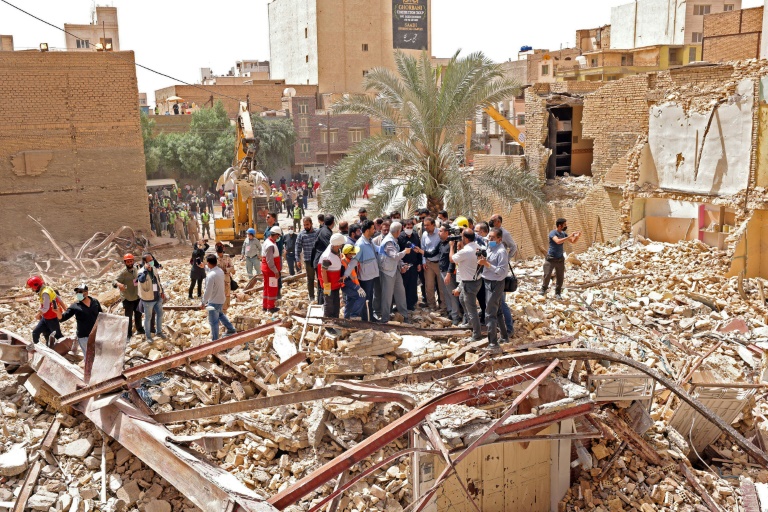
The deadly collapse of a building in southwestern Iran has accentuated anger over price rises and economic deprivation that sparked protests which have now lasted three weeks and show no sign of abating, observers say.

With video footage showing the use of bitter slogans against the government and even supreme leader Ayatollah Ali Khamenei, the protests present a hugely delicate moment for the Islamic republic’s leadership.

Protests have taken place in several Iranian cities since early May over the rise in costs of basic foodstuffs such as bread. But the Abadan building collapse added a new factor of uncertainty.

“The protests present a significant challenge to the Islamic Republic as people on the Iranian streets are no longer blaming the government for their ills, but are directly calling out Ayatollah Khamenei and the clerical regime in its entirety,” said Kasra Aarabi, senior Iran analyst at the Tony Blair Institute.

He said the protests are becoming “increasingly widespread” in both cities and more rural areas and are being led by the working class, usually the bedrock of support for the system.

Regular protests concentrated in western and northwestern Iran, home to the country’s Arab and Kurdish minorities, had already been taking place for over two weeks when the 10-storey building under construction in Abadan in Khuzestan province collapsed on May 23.

The tragedy, blamed on shoddy construction standards and corruption, left at least 36 dead, according to the official toll. But unconfirmed reports said the real number could be even higher and the developer had not died, as widely reported, but been allowed to flee.

– ‘Shaky situation’ –

The protests in Abadan, according to Iranian opposition activists, have now continued for seven consecutive nights. 

Slogans shouted targeting senior regime officials have included repeated chants of “death to Khamenei”, according to footage posted on social media accounts. Hecklers in Abadan drowned out an address by an ayatollah with calls of “shameless”.

Protests have spread to other cities including the Gulf hub of Bushehr, where protesters twisted the Islamic republic’s traditional mantra of “Death to America” by chanting “our enemy is right in front of us, they lie when they say it is America!”

Opposition group the People’s Mujahedin (MEK), said it had confirmed protests in several provinces outside Khuzestan including Hormozgan province, Tehran, Isfahan province, and Fars in the south. 

Activists said five deaths among protesters had been confirmed in mid-May even before the Abadan collapse, with extra security forces sent to the city using live fire to quell the protests.

“This shows the shaky and unstable situation Iranian regime is in –- any incident can lead to massive protests which can get out of control –- so a building collapse is looked upon as an existential threat to the system,” said Mahmood Amiry-Moghaddam, the director of Norway-based NGO Iran Human Rights.

– ‘Disruptions ongoing’ –

Abadan, close to the border with Iraq, is hugely symbolic for Iranians. It was there that in 1978 on the eve of the Islamic revolution some 400 people died in an arson attack on a cinema whose doors had been locked shut.

The inferno at the Cinema Rex, one of the deadliest terror attacks in history before September 11, 2001, stirred protests against the shah’s regime although responsibility has never been clear.

Arabi said the Abadan building collapse was acting as a “catalyst” for the protests increasing their size but also scope across class divisions.

Activists say that as in previous upsurges of unrest in Iran in recent years — such as the November 2019 protests over fuel price hike rises — authorities have deliberately slowed down or cut access to the Internet in the affected areas.

Mahsa Alimardani, senior researcher for the Middle East region at the Article 19 freedom of expression group, said Internet shutdowns during the current protests were highly localised.

“Anecdotal reports are indeed supporting the fact that in areas where protests are occurring there are mobile shutdowns and disruptions ongoing” with mobile and home Internet disconnected in Abadan at night while the protests take place, she told AFP.

– ‘Messy and complicated’ –

Alimardani said that in these circumstances it was crucial that global social media giants, especially Meta, do not censor video posts by protesters, especially ones with graphic anti-regime slogans.

Instagram and WhatsApp, both owned by Meta, are still not censored in Iran and are the most used applications. Twitter, YouTube, Facebook and Telegram are all blocked in the country.

“Protests are messy and complicated events, and censoring and policing speech is impossible,” she said, complaining of “countless cases of takedowns” which hit among others the protest documentation network 1500Tasvir. 

The protest anger has spilled over into football, with fans of top Tehran team Esteghlal chanting “Abadan” at a recent match at Tehran’s Azadi stadium. 

Team captain and national team star Voria Ghafouri is meanwhile reportedly being boycotted by Iranian state media after supporting the protests in a post-match interview.

A group of Iranian filmmakers led by prize-winning director Mohammad Rasoulof published an open letter calling on the security forces to “lay down their arms” in the face of outrage over “corruption, theft, inefficiency and repression” that followed the Abadan collapse.

The waves from the protest were felt at the Cannes film festival when Iranian Zar Amir Ebrahimi accepted her award for best actress. 

Tearfully breaking into Persian, the actress, forced to leave Iran after becoming the victim of a sex tape in 2006, said while happy to win “my heart is with the men and women of Abadan”.

US, Taiwan launch trade talks in challenge to China

The United States and Taiwan launched talks on Wednesday aimed at deepening their trade ties, in a clear challenge to Beijing.

The process, labeled the US-Taiwan Initiative on 21st-Century Trade, follows an agreement President Joe Biden announced last week with 12 Asian economies, which excluded Taiwan.

Like that effort, the discussions with Taiwan will not involve tariffs or market access — items that would require congressional approval, officials said.

“Both sides will work at pace… to develop an ambitious roadmap for negotiations for reaching agreements with high-standard commitments and economically meaningful outcomes,” the US Trade Representative said in a statement.

Despite the limited scope of the talks, which a senior administration official said was in keeping with the “unofficial” relationship with Taipei, they are likely to anger Beijing which bristles at any sign Washington is treating the self-governing democracy as an independent nation.

China claims sovereignty over Taiwan and opposes its participation in international fora including a Pacific trade pact.

Beijing has engaged in frequent saber rattling to show its displeasure: China on Monday made the second largest incursion into Taiwan’s air defense zone this year with Taipei reporting 30 jets entering the area, including more than 20 fighters.

US Secretary of State Antony Blinken accused China of “increasingly provocative rhetoric and activity.” 

Biden also is under pressure to deepen ties with the island after a bipartisan group of 52 senators urged him to include Taiwan in the Indo-Pacific Economic Framework (IPEF) launched last week, which includes about 40 percent of the global economy.

They argued in a letter to Biden that leaving an important trading partner out would “allow the Chinese government to claim that the international community does not in fact support meaningful engagement with Taiwan.”

– ‘Robust’ relationship –

A senior official said there is still time to add Taiwan to that effort.

“We didn’t include Taiwan in the initial launch. However, going forward, we intend to take a flexible and adaptable approach to IPEF participation,” the official told reporters.

The official reiterated Washington’s “long-standing one China policy,” but said the Biden administration also maintains a “robust unofficial relationship with Taiwan and… is committed to deepening it.”

Deputy USTR Sarah Bianchi and Taiwan’s lead trade negotiator John Deng met on Wednesday to launch the new initiative, which the trade agency said “is intended to develop concrete ways to deepen the economic and trade relationship, advance mutual trade priorities based on shared values, and promote innovation and inclusive economic growth for our workers and businesses.”

The first meeting under the initiative will be held in Washington later in June, and will cover customs procedures and regulations, including rules governing agriculture trade, worker rights and the fight against “harmful non-market policies” — a clear reference to China.

Another administration official said the goal is to produce a “high framework, binding agreement,” but gave no timeframe for reaching a deal.

Taiwan is the 10th largest export market for the United States as well as a vital source of semiconductors which are seeing a global shortage, hitting industries that rely on them from autos to smartphones and pushing inflation higher.

The US Commerce Department has launched a separate dialogue with Taipei on technology and investment — two other areas covered by IPEF.

US, Taiwan launch trade talks in challenge to China

The United States and Taiwan launched talks on Wednesday aimed at deepening their trade ties, in a clear challenge to Beijing.

The process, labeled the US-Taiwan Initiative on 21st-Century Trade, follows an agreement President Joe Biden announced last week with 12 Asian economies, which excluded Taiwan.

Like that effort, the discussions with Taiwan will not involve tariffs or market access — items that would require congressional approval, officials said.

“Both sides will work at pace… to develop an ambitious roadmap for negotiations for reaching agreements with high-standard commitments and economically meaningful outcomes,” the US Trade Representative said in a statement.

Despite the limited scope of the talks, which a senior administration official said was in keeping with the “unofficial” relationship with Taipei, they are likely to anger Beijing which bristles at any sign Washington is treating the self-governing democracy as an independent nation.

China claims sovereignty over Taiwan and opposes its participation in international fora including a Pacific trade pact.

Beijing has engaged in frequent saber rattling to show its displeasure: China on Monday made the second largest incursion into Taiwan’s air defense zone this year with Taipei reporting 30 jets entering the area, including more than 20 fighters.

US Secretary of State Antony Blinken accused China of “increasingly provocative rhetoric and activity.” 

Biden also is under pressure to deepen ties with the island after a bipartisan group of 52 senators urged him to include Taiwan in the Indo-Pacific Economic Framework (IPEF) launched last week, which includes about 40 percent of the global economy.

They argued in a letter to Biden that leaving an important trading partner out would “allow the Chinese government to claim that the international community does not in fact support meaningful engagement with Taiwan.”

– ‘Robust’ relationship –

A senior official said there is still time to add Taiwan to that effort.

“We didn’t include Taiwan in the initial launch. However, going forward, we intend to take a flexible and adaptable approach to IPEF participation,” the official told reporters.

The official reiterated Washington’s “long-standing one China policy,” but said the Biden administration also maintains a “robust unofficial relationship with Taiwan and… is committed to deepening it.”

Deputy USTR Sarah Bianchi and Taiwan’s lead trade negotiator John Deng met on Wednesday to launch the new initiative, which the trade agency said “is intended to develop concrete ways to deepen the economic and trade relationship, advance mutual trade priorities based on shared values, and promote innovation and inclusive economic growth for our workers and businesses.”

The first meeting under the initiative will be held in Washington later in June, and will cover customs procedures and regulations, including rules governing agriculture trade, worker rights and the fight against “harmful non-market policies” — a clear reference to China.

Another administration official said the goal is to produce a “high framework, binding agreement,” but gave no timeframe for reaching a deal.

Taiwan is the 10th largest export market for the United States as well as a vital source of semiconductors which are seeing a global shortage, hitting industries that rely on them from autos to smartphones and pushing inflation higher.

The US Commerce Department has launched a separate dialogue with Taipei on technology and investment — two other areas covered by IPEF.

Anti-femicide group goes on trial in Turkey

A prominent Turkish anti-femicide campaign group went on trial on Wednesday accused of activity against law and morals, with several hundred women rallying outside Istanbul’s main court in protest. 

Prosecutors had filed a lawsuit in April against We Will Stop Femicide Platform, one of the country’s leading feminist organisations. If convicted, the group could be shut down.

Protesters outside the court waved banners bearing slogans such as “You will never walk alone!” and “We will stop women’s murders”, alongside the families of women murdered by men. 

We Will Stop Femicide Platform has been campaigning against the murder and abuse of women since its foundation in 2010.

Group representative Nursen Inal slammed the trial, saying it was politically motivated.

“We believe this court case is an attack against women’s struggle for their rights,” she told AFP. 

The hearing adjourned on Wednesday and will resume on October 5. 

– ‘Under pressure’ –

The association was a vocal critic of President Recep Tayyip Erdogan’s decision last year to pull Turkey out of the Istanbul Convention, which requires countries to set up laws aimed at preventing and prosecuting violence against women. 

Social conservatives in Turkey claim the convention promotes homosexuality and threatens traditional family values.

We Will Stop Femicide Platform says 160 women have been killed in Turkey this year and 423 in 2021, with many murders committed by family members.

“We are under pressure from the government because we publicise, name by name, each and every woman’s murder,” Inal said. 

“This contradicts the government’s thesis which says women’s murder is on the decline.”

In April alone, 24 women were murdered, the group said — adding that 16 others had died in suspicious circumstances, even though some of these deaths were officially registered as suicide. 

We Will Stop Femicide Platform’s secretary-general Fidan Ataselim told the court on Wednesday that the group kept a record of femicides because official data is hard to access. 

“Nobody is talking about women’s suspicious deaths. There is an increase in femicide under the pretext of suicide. We will shed light on covered up murders,” she said. 

– ‘Unlawful, dangerous’ –

Ipek Bozkurt, lawyer for We Will Stop Femicide Platform, said femicides were “political” — and so was the lawsuit. 

“This is a move against the platform which strongly condemned the withdrawal from the Istanbul convention. Therefore in our defence, we will explain to the judges why this case lacks legal grounds,” she said. 

Almost 300 lawyers from across Turkey expressed an interest in defending the group. 

Aysun Kilic, from the bar association in the northwestern province of Kocaeli, said We Will Stop Femicide was conducting a careful, up-to-date study about murdered women. 

“This is actually the duty of the state,” she told AFP. 

“While this is the case, we find the lawsuit unlawful, dangerous for women’s rights and an attempt to undermine a study on women’s killings. This case is harming us and our fight for women’s rights,” she said. 

Melek Onder, another spokesperson of the group, remained defiant. “This legal action empowers us rather than weakens us,” she told AFP.

“It’s impossible to shut down this platform when women are still becoming victims of femicide,” she said.

“We are not desperate at all because we know that they cannot stop our struggle.”

Ukraine braces for Severodonetsk fall, awaits new US weapons

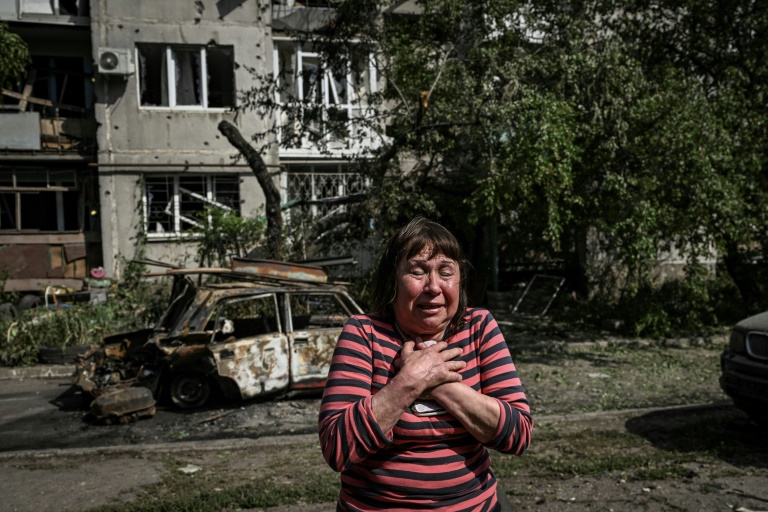
Ukraine looked close to losing the key eastern city of Severodonetsk to Russian forces but was boosted Wednesday by the US decision to send more advanced rocket systems to help with its defence.

“The Russians control 70 percent of Severodonetsk,” Lugansk region governor Sergiy Gaiday announced on Telegram, adding that Ukrainian forces were withdrawing to prepared positions.

“If in two or three days, the Russians take control of Severodonetsk, they will install artillery and mortars and will bombard more intensely Lysychansk,” the city across the river, which Gaiday said remained held by Kyiv.

One of the industrial hubs on Russia’s path to taking the eastern Lugansk region, Severodonetsk has become a target of massive Russian firepower since the failed attempt to capture Kyiv.

But in a boost for the outgunned Ukrainian military, President Joe Biden confirmed that more US weaponry was on the way to allow them to “more precisely strike key targets” in Ukraine.

The new weapon is the Himars multiple launch rocket system, or MLRS: a mobile unit that can simultaneously launch multiple precision-guided missiles.

They are the centrepiece of a $700 million package being unveiled Wednesday that includes air-surveillance radar, more Javelin short-range anti-tank rockets, artillery ammunition, helicopters, vehicles and spare parts, a US official said.

With a range of about 50 miles (80 kilometres), they will allow Ukrainian forces to strike further behind Russian lines.

– ‘Fuel to the fire’ –

Kremlin spokesman Dmitry Peskov accused Washington of “adding fuel to the fire”, saying “such supplies” did not encourage Kyiv to resume peace talks.

In an article in the New York Times, Biden insisted: “We are not encouraging or enabling Ukraine to strike beyond its borders.”

He wrote: “We do not seek a war between NATO and Russia. As much as I disagree with Mr. (President Vladimir) Putin, and find his actions an outrage, the United States will not try to bring about his ouster in Moscow. 

“So long as the United States or our allies are not attacked, we will not be directly engaged in this conflict, either by sending American troops to fight in Ukraine or by attacking Russian forces.”

While some analysts have suggested the Himars could be a “game-changer”, others caution they should not be expected to suddenly turn the tables, not least because Ukrainian troops need time to learn how to use them effectively.

What they may do is improve morale, according to one Ukrainian soldier getting pummelled on the front line.

“If you know you have a heavy weapon behind you, everyone’s spirits rise,” one fighter who uses the nom de guerre Luzhniy told AFP before the announcement.

– ‘Just crazy’ –

On Tuesday, Russian forces struck a tank containing nitric acid at a chemical plant in Severodonetsk, prompting the local governor to warn people to stay indoors. 

Ukrainian President Volodymyr Zelensky said Russia’s strikes in the area, “including blind air bombing, are just crazy”.

West of Severodonetsk, in the city of Sloviansk, AFP journalists saw buildings destroyed by a rocket attack in which three people died and six others were hurt.

And on Wednesday, at least one person died and two others were injured in Soledar, between Sloviansk and Severodonetsk, AFP saw.

The European Union has also sent weapons and cash for Ukraine, while levelling unprecedented economic sanctions on Moscow.

Leaders this week agreed a ban on most Russian oil imports but played down the prospects of shutting off Russian gas on which many member states are hugely dependent.

Russia has sought to get around sanctions by demanding payment for gas in rubles, cutting off countries that refuse. Denmark was set to become the latest target Wednesday, after the Netherlands, Finland, Poland and Bulgaria.

Russia’s Gazprom said Wednesday its gas exports to countries outside of the former Soviet Union had dropped by more than a quarter year-on-year between January and May.

Danes meanwhile were voting on whether to overturn the country’s opt-out on the EU’s common defence policy.

The referendum came just weeks after neighbouring Finland and Sweden abandoned decades of military non-alignment by applying to join NATO as a defence against Russian aggression.

Moscow said Wednesday it had no information on the death of a French journalist in Ukraine. 

Frederic Leclerc-Imhoff, of French broadcaster BMFTV, was killed on Monday while covering the evacuation of civilians in the east of the country.

– A ‘few thousand’ war crimes –

On the eastern frontline in Donbas, Ukrainian towns were being subjected to near-constant shelling from Russian forces.

Ukraine’s prosecutor general Iryna Venediktova said authorities had identified a “few thousand” cases of war crimes in the Donbas, including murder, torture and the forced displacement of children.

The key Zelensky aide, who met international counterparts in The Hague on Tuesday, said Kyiv was already set to prosecute 80 suspects for alleged war crimes on Ukrainian soil.

A Ukrainian court on Tuesday jailed two Russian soldiers for 11 and a half years for shelling two villages in the northeastern Kharkiv region.

Earlier this month, another was jailed for life for murdering a civilian, although he has appealed.

Russia’s invasion of its pro-Western neighbour is also threatening a global food crisis, with Ukraine’s huge grain harvest effectively taken off the world market. 

French President Emmanuel Macron, German Chancellor Olaf Scholz and Italian Prime Minister Mario Draghi have all urged Putin to end Russia’s blockade of the port of Odessa.

But Russian Foreign Minister Sergei Lavrov said it was up to the West and Kyiv to resolve the crisis, starting with the lifting of sanctions.

In Kyiv, meanwhile, Ukrainian football fans were set to watch their national side play its first official match since Russia’s invasion, facing Scotland in a World Cup qualifier later Wednesday in Glasgow.

“I am hoping for victory,” 44-year-old army serviceman, Andriy Veres, told AFP. 

“These days it is very important for the country, for all people, for all those who are fans and even for those who are not.”  

burs-ar/jj

Close Bitnami banner
Bitnami