World

Asian markets track Wall St higher, tech fuels Hong Kong rally

Asian markets climbed Friday following a strong performance on Wall Street, with Hong Kong leading the way as forecast-beating earnings reports by tech titans Alibaba and Baidu sent their shares soaring.

The positive mood put the region on course to end the week on a healthy note, and came after Federal Reserve minutes indicated the US central bank could take a breather in hiking interest rates if inflation shows signs of easing later in the year.

Still, confidence on trading floors remains at a premium owing to a range of crises including soaring prices, tighter monetary policy, China’s Covid-19 lockdowns and the war in Ukraine.

Investors were in a buying mood Friday as Hong Kong jumped more than two percent, with market heavyweight Alibaba piling on more than 11 percent and search engine Baidu advancing 15 percent.

The two firms posted better-than-expected sales growth in the January-March quarter, soothing fears about the impact of Covid and inflation on their bottom lines.

Hong Kong’s tech index jumped nearly three percent, with other giants also enjoying buying interest with JD.com and Meituan sharply up.

The reports were much-needed pieces of good news out of the world’s second-biggest economy, which is being battered by lockdowns in major cities as leaders refuse to budge from their zero-Covid strategy.

Ronald Keung, at Goldman Sachs, sounded an upbeat note.

“We do expect the second quarter to mark the bottom in growth for our companies,” he told Bloomberg TV.

“Depending on the Covid policies and the government’s policies in helping to drive back consumption confidence, we do expect easier comparables for China tech companies, particularly as you enter into September and December quarter.” 

Shanghai, Tokyo, Seoul, Sydney, Singapore, Taipei, Manila, Jakarta, Bangkok and Mumbai were also well up.

London was flat at the open, while Paris and Frankfurt rose.

– ‘Welcome tonic’ –

Asian investors took the lead from Wall Street, where all three main indexes enjoyed a second day of gains after strong earnings from retailers including discount firm Dollar Tree, department store Macy’s and the more upscale Williams-Sonoma.

The readings bolstered hopes consumers were more resilient to inflation and rising rates, and came as a Federal Reserve Bank of New York survey showed US shoppers largely expect upward price pressures to be temporary with gains easing in the long term.

“With all the doom and gloom surrounding US retail over the past couple of weeks the numbers were a welcome tonic,” said Michael Hewson of CMC Markets.

Earlier in the week, markets rose as minutes from the Fed’s May meeting suggested policymakers could temper their campaign of rate hikes later in the year if inflation looks to be plateauing.

“We may see a little bit more stability here because we have repriced the stocks so much already,” said iCapital’s Anastasia Amoroso.

“I don’t know how much this move higher is going to go because I don’t think the fundamentals really justify it near term. In the next three to six months it’s still going to be a constrained market environment.”

– Key figures at around 0720 GMT –

Tokyo – Nikkei 225: UP 0.7 percent at 26,7781.68 (close)

Hong Kong – Hang Seng Index: UP 2.2 percent at 20,556.05

Shanghai – Composite: UP 0.2 percent at 3,130.24 (close)

London – FTSE 100: FLAT at 7,565.05

Euro/dollar: UP at $1.0743 from $1.0732 on Thursday

Pound/dollar: UP at $1.2624 from $1.2607

Euro/pound: DOWN at 85.09 pence from 85.11 pence

Dollar/yen: DOWN at 126.97 yen from 127.05 yen 

Brent North Sea crude: DOWN 0.3 at $117.00 per barrel

West Texas Intermediate: DOWN 0.3 percent at $113.77 per barrel

New York – Dow: UP 1.6 percent at 32,637.19 (close)
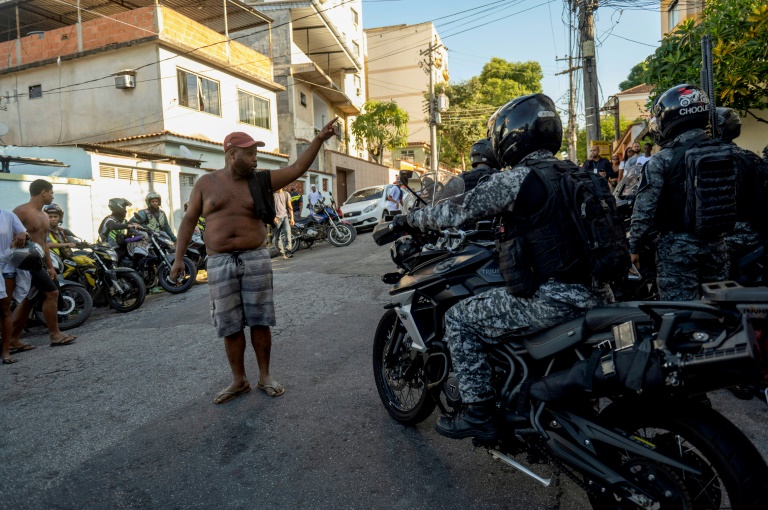
Shock over Brazil police 'torture, executions' in drug raid

Bodies from a Rio de Janeiro police raid that left more than 20 alleged drug traffickers dead show signs of torture and summary execution, a senior lawyer said on Thursday, the latest incident of suspected police brutality to shock the South American nation. 

Police say they encountered heavy gunfire when they carried out a raid in the slum of Vila Cruzeiro on Tuesday, an operation aimed at tracking down gang leaders who were allegedly hiding out there.

Evidence from the scene has raised concerns that some of the dead were tortured and killed in cold blood, according to Rodrigo Mondego, the head of the human rights commission at Rio’s Bar Association. 

“We saw one body with a white powder that looked like cocaine covering its face,” he told AFP. “Whoever killed this person smeared it all over his face and may have forced him to eat it. It’s an act of torture.” 

Mondego said there were suspicions of “a large number of summary executions.” 

“Witnesses have told us men who had surrendered to the police were then shot in the woods” above the hillside slum, he added.

– Prosecutors open investigation –

The operation left at least 26 people dead, including a hairdresser hit by a stray bullet, according to the latest toll from health authorities.

Police put the death toll at 23.

Mondego said the number raised concerns about possible summary executions.

“If you look at statistics from around the world, you’ll never see a firefight where more than 20 people are killed on one side and none on the other,” he said.

Brazilian prosecutors have opened an investigation into possible human rights violations during the operation.

It was the second-deadliest such raid in Rio history, after another in May 2021 that left 28 people dead — 27 alleged drug traffickers and one policeman — in the slum of Jacarezinho.

President Jair Bolsonaro said Tuesday the police involved in the latest operation were “warriors” who had “neutralized at least 20 delinquents.”

Human Rights Watch released a statement expressing concern at the violence and at Bolsonaro’s comments.

“His message to police was clear: You can continue killing with impunity,” said the US-based rights group in a statement on Thursday.

– ‘They will kill him!’ –

In the northeastern town of Umbauba, a man suffocated to death on Wednesday after being placed inside a police car trunk from which thick smoke was billowing.

The Federal Highway Police (PRF) said in a statement Thursday that its agents had “used immobilization techniques and instruments of low-offensive potential” in dealing with 38-year-old Genivaldo de Jesus Santos, who they said became aggressive during a routine stop.

A witness video shows two helmeted PRF officers trying to close the trunk lid on a man whose legs were still sticking out of it. 

Thick white smoke, which appears to be from a tear gas canister, billows out of the trunk as the man cries out in pain. 

A witness can be heard exclaiming: “They will kill him!” 

The man is seen moving his legs for about a minute, and then goes motionless. The officers bend his legs and close the trunk.

According to the PRF, de Jesus Santos was taken to the Umbauba police station, but “felt unwell” during the journey and was taken to hospital.

The statement did not specify whether he arrived dead at the hospital, but an autopsy confirmed his death was by “asphyxiation.”

Brazil’s police are among the world’s deadliest law enforcement forces, killing more than 6,100 people in operations in 2021, with 183 officers murdered, according to figures from a violence monitoring organization.

Dream fulfilled for Imelda Marcos as family reclaims presidency

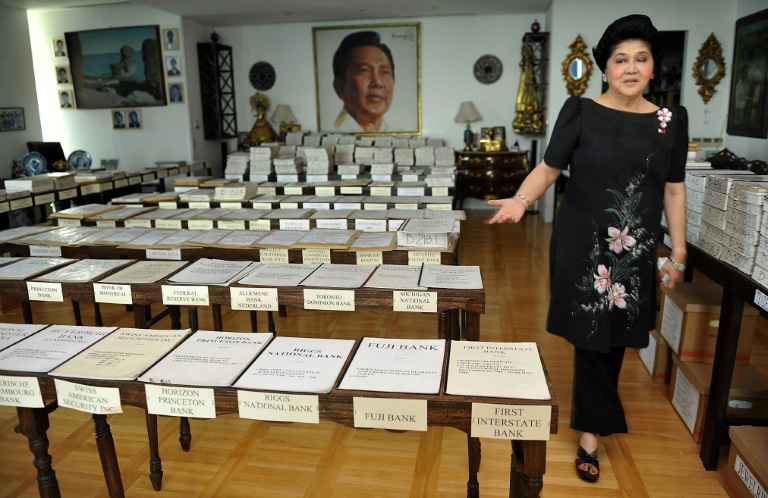
Decades after fleeing the Philippines with bags and boxes stuffed with jewels, gold and cash, former first lady Imelda Marcos has achieved her ultimate ambition: her son winning the presidency. 

The frail but flamboyant 92-year-old matriarch has been the driving force in the family’s comeback from exile to the peak of power in the May 9 polls.

President-elect Ferdinand “Bongbong” Marcos has described his mother as “the supreme politician in the family”, one who wields a “very big influence”.

Known for her lavish spending, Imelda symbolises the greed of her husband Ferdinand Marcos’s dictatorship, which ended in 1986 after a popular revolt ousted him.

An estimated $10 billion was stolen from state coffers over the course of his brutal and corrupt 20-year rule that left the country impoverished. 

During that time, Imelda collected diamonds, art masterpieces and thousands of shoes, insisting her taste for luxury was meant to inspire her desperately poor countrymen and women.

“My role as first lady was… to set the standard, because mass follows class,” she told AFP in a 2009 interview from her penthouse apartment in one of Manila’s most expensive high-rises.

Bongbong’s victory marks the completion of her mission to reclaim the presidency and revive the family brand, analysts and observers said. 

“I’m sure she’s feeling gratification,” said Andres Bautista, who once led a government agency tasked with tracking down the Marcoses’ ill-gotten wealth.

“What she wanted to happen was for Marcos Jr. to rehabilitate the Marcos name and reclaim the throne that Marcos Sr. occupied — and it’s happening.”

– ‘She’s beautiful’ –

Tall, fair and glamorous, Imelda gained celebrity status in the Philippines and abroad as first lady, partying with stars and meeting Chinese leader Mao Zedong and Libya’s Moamer Kadhafi on behalf of her husband.

She inspired the derisive adjective “Imeldific” with her excess, which included importing African wildlife for a safari park in the archipelago. 

Imelda has always denied wrongdoing, insisting her husband was rich before he became president.  

While her detractors think the great-grandmother should be in jail, her legion of fans — many of them poor — still see her as a paragon of beauty.

In a senior citizens’ centre in Baseco, a hardscrabble port-side neighbourhood in Manila, Gloria Guarda’s face lights up as she recalls the time she met “Mam Imelda”. 

“She’s so kind; I really think she’s beautiful,” said Guarda, 82, a life-long supporter of the Marcoses even though she says they owe her money.

A member of the Friends of Imelda Romualdez Marcos-24K loyalist group, Guarda said she and other volunteers were promised a million pesos ($19,000) each for taking part in a tree-planting programme more than a decade ago.

“I told myself, ‘I hope Bongbong will win so we can finally have money’,” she said.

Bongbong’s media team did not respond to AFP’s request for comment.

– ‘Flaunting wealth’ – 

After her husband’s death in 1989, Imelda returned to the Philippines to face graft charges and resuscitate the family’s patronage networks.

Loquacious and eccentric — she has been known to lecture guests for hours about her philosophy on beauty and love — Imelda also has sharp political instincts.

“Imelda knew where to start rebuilding… and if you have the money to back you up it’s easier,” said Patricio Abinales, professor of Asian Studies at the University of Hawaii at Manoa.

She ran for president in 1992 and lost, but in the same elections Bongbong won a congressional seat representing their northern bailiwick Ilocos Norte.

Imelda, who later served three straight terms in the lower House of Representatives, was open about her desire for Bongbong to become president.

“I am practically pushing him to run for a higher office,” she told AFP in 2009 when asked if she wanted him to lead the nation.

He made a successful tilt for the Senate the following year, and then ran for vice president in 2016, with Imelda making appearances at campaign rallies. But he was narrowly defeated by Leni Robredo.

Deals with rival political dynasties and an online whitewashing of the family’s past fuelled his support and ultimate victory in the 2022 presidential race against Robredo. 

Imelda, who gave up her seat in Congress in 2019, has long guided her children’s political careers.

Bongbong recently told CNN Philippines that “anything that happens in politics we always ask her ‘what do you think, is this a good idea, should we do it like this or should we wait?'” 

Reclaiming the presidency offers the clan legal cover.

Dozens of criminal and civil court cases have been launched against the Marcoses in the past 36 years, but they have beaten most of them.

In a rare legal setback, Imelda was sentenced to a lengthy prison term in 2018 for funnelling roughly $200 million in embezzled funds through Swiss foundations decades ago. She is on bail.

Photos showing Bongbong and his eldest son Sandro reportedly visiting Imelda after the May 9 election revealed a Picasso painting hanging on the wall.

It is not known if it is a copy or one of the 141 missing paintings government investigators are trying to track down.

But Abinales said Imelda’s message was clear: “Now I can flaunt my wealth again.”

New 'Star Wars' series with Jude Law in works as Disney targets streaming

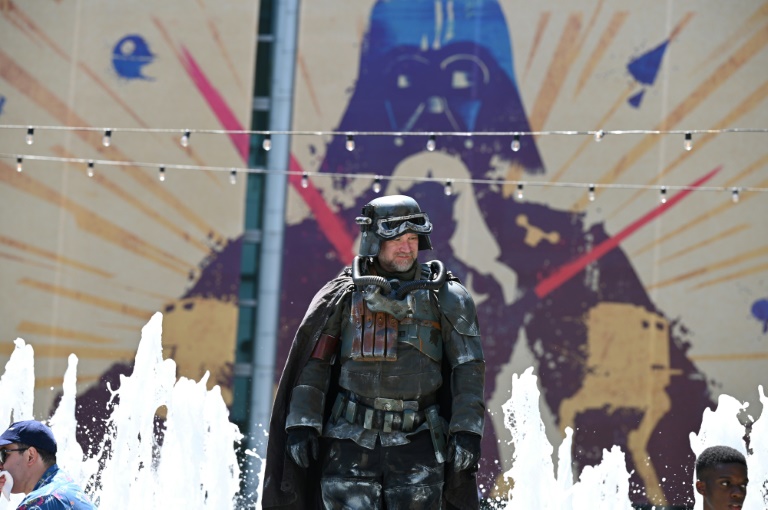
Disney announced a new live-action “Star Wars” series featuring Jude Law at a major fan convention Thursday — but any mention of upcoming films in the beloved sci-fi franchise was conspicuously absent, as the company focuses on its streaming service.

Harrison Ford and Ewan McGregor were among the stars who appeared on stage before a raucous and outlandishly dressed crowd in Anaheim, California for “Star Wars Celebration,” a four-day gathering held every few years, usually tied to new movies.

But television shows dominated the opening presentation, which featured unseen footage from “Andor” and the third season of “The Mandalorian” — plus the surprise announcement of a world premiere for McGregor’s “Obi-Wan Kenobi.”

Fans in attendance will be the first to watch two episodes from the series, the day before it launches on Disney+.

McGregor and Hayden Christensen, who both reprise their roles from the “Star Wars” prequel film trilogy for the series about the iconic Jedi master and his apprentice-turned-nemesis Darth Vader, both appeared at the event. 

As for Law, he will appear in the previously unconfirmed series “Skeleton Crew,” created by “Spider-Man: No Way Home” director Jon Watts, it was announced.

“It’s the story about a group of kids — about 10 years old — from a tiny little planet, who accidentally get lost in the ‘Star Wars’ galaxy,” said Watts.

– Fans ‘showed up’ –

Disney bought Lucasfilm for $4 billion in 2012 and immediately began pumping out films including a new trilogy, and spin-offs “Solo” and “Rogue One,” but has since slowed its big-screen “Star Wars” output.

The decision followed diminishing box office returns and mixed reviews — and the all-important launch of its Disney+ streaming service.

Disney+ has gained more than 130 million subscribers since its 2019 launch, defying most analyst expectations, and creator of smash hit launch show “The Mandalorian” Jon Favreau thanked “Star Wars” fans for their role in its rapid rise.

“One group, the ‘Star Wars’ fans, showed up when they launched Disney+… you all helped make Disney+ a success,” said Favreau.

Favreau presented footage from the third season of “The Mandalorian,” in which the disgraced bounty hunter — accompanied by Baby Yoda — vows to earn forgiveness “for my transgressions.”

Tony Gilroy, who wrote the Jason Bourne action films, said another new series “Andor” will be set five years before spin-off movie “Rogue One,” and will feature two 12-episode seasons.

Returning star Diego Luna said the series will portray a younger, more selfish version of his character Cassian Andor — a pilot who sacrifices himself at the end of the film to fight the Empire.

“The beauty of this show is, there’s no way they’ll kill me,” he joked.

Favreau confirmed shooting has just begun on yet another series, “Ahsoka,” starring Rosario Dawson.

But while Disney has three “Star Wars” movies on its schedule, and has previously announced films from directors Taika Waititi, Rian Johnson and Patty Jenkins, none were mentioned on stage Thursday.

Lucasfilm head Kathleen Kennedy told Variety there would be “plenty of time to showcase” upcoming movies in the future.

– Indiana Jones –

Instead, the presentation ended with a performance from veteran composer John Williams, who conducted a live orchestra through his latest music for “Obi-Wan Kenobi.”

Williams — who turned 90 this year — was lauded by Ford, who played Han Solo in the original “Star Wars” films, as well as “Indiana Jones.”

“That music follows me everywhere I go… that music was playing on the speakers in the operating room when I had my last colonoscopy,” joked Ford.

“I passed,” he added, to laughter and loud cheers.

Ford, himself 79, said the fifth “Indiana Jones” film was “almost completed” and confirmed it will premiere in June 2023.

Meanwhile outside the convention center, thousands of hardcore “Star Wars” fans waved multi-colored lightsabers, exchanged gossip on the upcoming shows, and posed for photos dressed as their favorite bounty hunters, droids and Jedi warriors.

“Star Wars Celebration” runs through Sunday.

Asian markets track Wall St higher, tech leads Hong Kong rally

Asian markets climbed Friday following a strong performance on Wall Street, with Hong Kong leading the way as forecast-beating earnings reports by tech titans Alibaba and Baidu sent their shares soaring.

The positive mood put the region on course to end the week on a healthy note, and came after Federal Reserve minutes indicated the US central bank could take a breather in hiking interest rates if inflation shows signs of easing later in the year.

Still, confidence on trading floors remains at a premium owing to a range of crises including soaring prices, tighter monetary policy, China’s Covid lockdowns and the war in Ukraine.

Investors were in a buying mood Friday as Hong Kong jumped more than three percent with market heavyweight Alibaba piling on more than 12 percent and search engine Baidu advancing more than 15 percent.

The two firms posted better-than-expected sales growth in the January-March quarter, soothing fears about the impact of Covid and inflation on their bottom lines.

Hong Kong’s tech index jumped four percent, with other giants also enjoying buying interest with JD.com and Meituan up more than five percent.

The reports were much-needed pieces of good news out of the world’s second-biggest economy, which is being battered by lockdowns in major cities as leaders refuse to budge from their zero-Covid strategy.

Ronald Keung, at Goldman Sachs, sounded an upbeat note.

“We do expect the second quarter to mark the bottom in growth for our companies,” he told Bloomberg TV.

“Depending on the Covid policies and the government’s policies in helping to drive back consumption confidence, we do expect easier comparables for China tech companies, particularly as you enter into September and December quarter.” 

Shanghai, Tokyo, Seoul, Sydney, Singapore, Taipei, Manila, Jakarta and Wellington were also sharply higher.

– Strong retailer earnings –

Asian investors took the lead from Wall Street, where all three main indexes enjoyed a second day of gains after strong earnings from retailers including  discount firm Dollar Tree, department store Macy’s and the more upscale Williams-Sonoma.

The readings bolstered hopes consumers were more resilient to inflation and rising rates, and came as a Federal Reserve Bank of New York survey showed US shoppers largely expect upward price pressures to be temporary with gains easing in the long term.

Earlier in the week, markets rose as minutes from the Fed’s May meeting suggested policymakers could temper their campaign of rate hikes later in the year if inflation looks to be plateauing.

“We may see a little bit more stability here because we have repriced the stocks so much already,” said iCapital’s Anastasia Amoroso.

“I don’t know how much this move higher is going to go because I don’t think the fundamentals really justify it near term. In the next three to six months it’s still going to be a constrained market environment.”

– Key figures at around 0230 GMT –

Tokyo – Nikkei 225: UP 0.6 percent at 26,772.84 (break)

Hong Kong – Hang Seng Index: UP 3.1 percent at 20,733.59

Shanghai – Composite: UP 0.5 percent at 3,139.18

Euro/dollar: UP at $1.0757 from $1.0732 on Thursday

Pound/dollar: UP at $1.2655 from $1.2607

Euro/pound: DOWN at 85.00 pence from 85.11 pence

Dollar/yen: DOWN at 126.70 yen from 127.05 yen 

Brent North Sea crude: FLAT at $117.38 per barrel

West Texas Intermediate: DOWN 0.1 percent at $114.02 per barrel

New York – Dow: UP 1.6 percent at 32,637.19 (close)
London – FTSE 100: UP 0.6 percent at 7,564.92 (close)

Ukraine's Zelensky accuses Russia of 'genocide' in Donbas onslaught

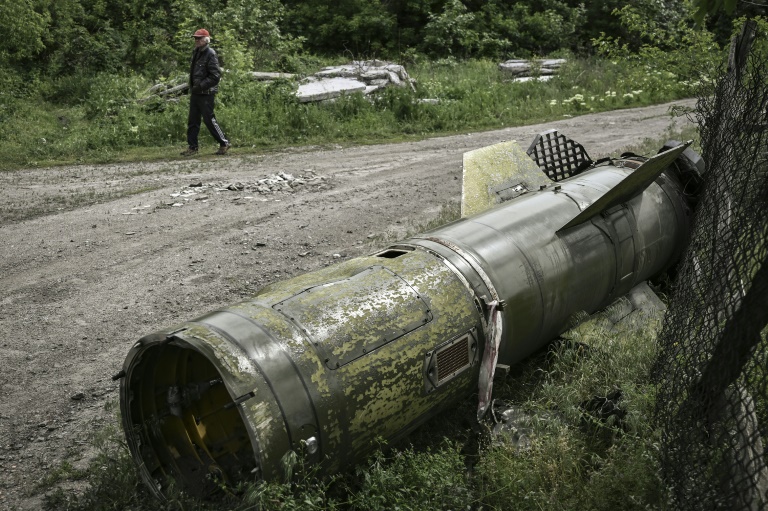
Ukraine’s President Volodymyr Zelensky accused Moscow of carrying out a “genocide” in the eastern region of Donbas, where the city of Severodonetsk is suffering an onslaught of Russian shelling.

In his daily televised address, Zelensky condemned Moscow’s brutal assault on the Donbas — where it has redirected its forces after having failed to capture Kyiv — adding that its bombardment could leave the entire region “uninhabited”.

“All this, including the deportation of our people and the mass killings of civilians, is an obvious policy of genocide pursued by Russia,” he said.

Pro-Moscow separatist groups have since 2014 controlled parts of Donbas, but Russia now appears set on taking the whole region.

Invading forces are closing in on several cities, including the strategically located Severodonetsk and Lysychansk, which stand on the crucial route to Ukraine’s eastern administrative centre in Kramatorsk.

Three people died in attacks on those two cities, Kyiv’s Deputy Defence Minister Ganna Malyar told journalists, saying that fighting in the east has reached “its maximum intensity” since Russia invaded on February 24.

“The situation remains difficult, because the Russian army has thrown all its forces at taking the Lugansk region,” regional governor Sergiy Gaiday said in a video on Telegram. 

“Extremely fierce fighting is taking place on the outskirts of Severodonetsk. They are simply destroying the city, they are shelling it every day, shelling without pause.”

– ‘Not scared’ –

In Kramatorsk, children roamed the rubble left by Russian attacks as the sound of artillery fire boomed.

“I am not scared,” said Yevgen, a sombre-looking 13-year-old who moved to Kramatorsk with his mother from the ruins of his village Galyna. 

“I got used to the shelling,” he declared as he sat alone on a slab of a destroyed apartment block. 

To the northwest, in Ukraine’s second city of Kharkiv, shelling killed another nine people and wounded 19, officials said.

“Today the enemy insidiously fired on Kharkiv,” regional governor Oleg Sinegubov said on social media, warning residents to evacuate to air raid shelters.

An AFP reporter in Kharkiv saw plumes of smoke rising from the stricken area, along with several people injured near a shuttered shopping centre. 

An elderly man with injuries to his arm and leg was carried away by medics.

And in the south, hints at what awaits those cities should they fall to Russian forces were emerging in Mariupol, which was taken over by invading forces this month after a devastating siege that left thousands dead and reduced the city to rubble.

Occupying authorities there cancelled school holidays to prepare students to switch to a Russian curriculum, said a Ukrainian official.

“Throughout the summer, children will have to study Russian language, literature and history as well as math classes in Russian,” city official Petro Andryushchenko wrote on social media.

The aim in the bombarded city, he said, was “to remove Ukraine from the curriculum and prepare them for going back to school with a Russian curriculum”.

The Kremlin is seeking to tighten its grip over the parts of Ukraine it occupies, including fast-tracking citizenship for residents of two southern regions that are mostly under Russian control.

The United States has branded the plan an “attempt to subjugate the people of Ukraine”.

– ‘Trust is lost’ –

The intensified fighting across the country prompted Foreign Minister Dmytro Kuleba to air Kyiv’s increasing frustration with the West, accusing allies of dragging their feet on arms deliveries and telling his German counterpart that Ukraine needs heavy weapons “as soon as possible.”

Finnish Prime Minister Sanna Marin became the latest Western official to visit Kyiv on Thursday, where she said it would take Russia decades to repair its standing in the world after invading Ukraine.

“Trust is lost for generations,” Marin told a press conference.

German Chancellor Olaf Scholz, who has faced criticism over Berlin’s slow response, also weighed in Thursday, saying Russian President Vladimir Putin will not negotiate seriously until he realises he might not win in Ukraine.

“Our goal is crystal-clear — Putin must not win this war. And I am convinced that he will not win it,” Scholz told the World Economic Forum in Davos.

The flow of grain exports from Ukraine, known as Europe’s breadbasket, has been disrupted since Russia’s invasion, threatening food security around the world and sending prices soaring.

The Kremlin on Thursday pointed the finger at Western countries for stopping grain-carrying vessels from leaving ports in Ukraine — rejecting accusations that Russia was to blame.

President Putin said in a telephone call with Italy’s Prime Minister Mario Draghi that Moscow was ready to make a “significant contribution” to averting a looming food crisis if the West lifts sanctions imposed on his country over Ukraine.

But the United States scoffed at the offer.

“Now they’re using economic tools as weapons. They’re weaponizing food. They’re weaponizing economic assistance,” Pentagon spokesman John Kirby said. 

I guess we shouldn’t be surprised by that, since they’ve weaponized everything else, including lies and information,” he said.

burs-oho/dhc

The Arctic's tricky quest for sustainable tourism

Home to polar bears, the midnight sun and the northern lights, a Norwegian archipelago perched high in the Arctic is trying to find a way to profit from its pristine wilderness without ruining it.

The Svalbard archipelago, located 1,300 kilometres (800 miles) from the North Pole and reachable by commercial airline flights, offers visitors vast expanses of untouched nature, with majestic mountains, glaciers and frozen fjords. 

Or, the fjords used to be frozen. Svalbard is now on the frontline of climate change, with the Arctic warming three times faster than the planet.

The local coal mines — the original reason for human settlements here — have closed one after the other over the years, and tourism has become one of the main pillars of the local economy, along with scientific research.

“It’s always hard to defend because we know that tourism worldwide creates challenges to all the places people visit, but also in the bigger climate change perspective,” acknowledged Ronny Brunvoll, the head of tourism board Visit Svalbard.

“But we can’t stop people from travelling. We can’t stop people from visiting each other, so we have to find solutions,” he said.

Around 140,000 people visit these latitudes each year, according to pre-pandemic data, where 65 percent of the land is protected. 

Like the 3,000 local residents, visitors must follow strict rules that bar them from disturbing the animals — tracking a polar bear can lead to a big fine — or picking flowers in an ecosystem almost devoid of vegetation.

“You are really confronted with nature. There are not a lot of places like this left,” said Frederique Barraja, a French photographer on one of her frequent trips to the region.

“It attracts people, like all rare places. But these places remain fragile, so you have to be respectful when you visit them.”

Ultra-polluting heavy fuel, commonly used by large cruise ships, has been banned in the archipelago since the start of the year, ahead of a ban to be progressively implemented across the Arctic as of 2024.

The ban may be another nail in the coffin for the controversial cruise ships that sail into the region.

The biggest of the behemoths can drop off up to 5,000 passengers in Longyearbyen, the archipelago’s modest main town whose infrastructure, such as roads and toilets, is not designed to accommodate such large crowds.

– Electric wave –

With tourism here already attracting a rather exclusive clientele, some operators are going further than regulations require, such as Norwegian cruise line Hurtigruten which aims to become “the most environmental tour operator in the world”.

Sustainability “shouldn’t be a competitive advantage”, said a senior executive with the group, Henrik Lund. “It should just give a right to play.” 

The company banned single-use plastics back in 2018, and now offers outings on electric snowmobiles.

It also recently launched excursions on board a small cutting-edge hybrid vessel, the Kvitbjorn (Polar Bear, in Norwegian), combining a diesel motor and electric batteries. 

“In the idyllic exploration areas, we go full electric. We go silent and we don’t have any combustion fumes,” said Johan Inden, head of marine engine maker Volvo Penta.

But electrification efforts in the archipelago are currently hobbled by the fact that electricity comes from a coal plant — a fossil energy source that contributes to global warming.

“Electrification makes sense, regardless of the energy source,” insisted Christian Eriksen of the Norwegian environmental group Bellona.

Regardless of whether it comes from “dirty” or “clean” sources, electricity “makes it possible either way to reduce emissions,” Eriksen said, citing a study on electric cars that came to the same conclusion.

Longyearbyen plans to close the plant by the autumn of 2023, invest in renewable energies and reduce its emissions by 80 percent by 2030.

But Brunvoll, the head of the tourism board, noted the main problem is travel.

“Even when addressing the things we can do locally, like the emissions from snowmobiles or cars, we must still acknowledge that the really big problem is the transport to and from Svalbard, both in tourism but also for us locals,” he said.

“We have a climate footprint per capita in Longyearbyen that is insane.”

Ex-mayors vie to become Colombia's next president

Two former mayors — a leftist and a right-wing conservative — are projected to emerge as the last men standing in a high-stakes race for the Colombian presidency after a first round of voting on Sunday.

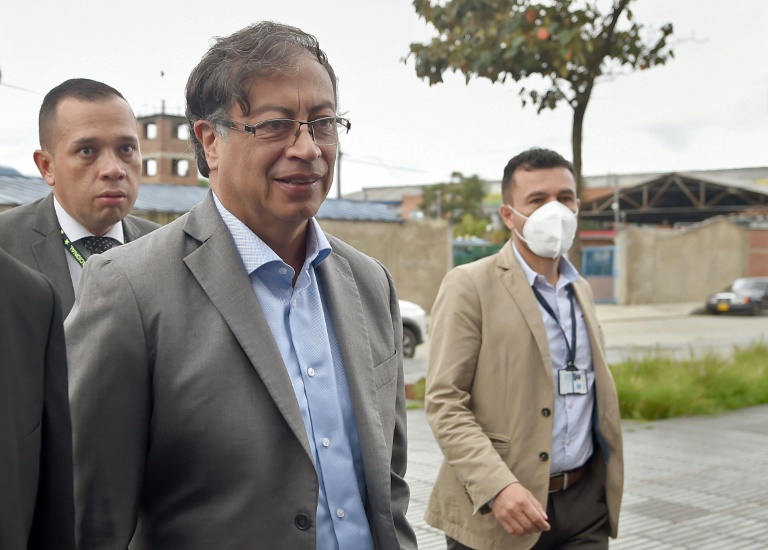
Gustavo Petro, a 62-year-old who is polling far ahead of his rivals, is hoping to become Colombia’s first-ever left-wing president and wrest control from the political and economic elites who traditionally hold power in the country.

He received 4.5 million votes in a primary election round in March, more than double the 2.2 million garnered by his closest rival.

These are the frontrunners at a glance.

– Left –

Petro was mayor of Bogota from 2012 to 2015 — a stint that was not without controversy and gave birth to unflattering accounts of his management style and alleged despotic tendencies.

He entered the 2022 presidential race, his third, as a self-styled warrior for the marginalized — Black and Indigenous people, the poor and the young — promising to address hunger and inequality.

The father of six is described as a good orator, though not necessarily charismatic. He is a map buff, and a keen social media user.

Born into a family of modest means on Colombia’s Caribbean coast, Petro embraced leftist politics as a teenager after the 1973 coup d’etat in Chile that unseated the world’s first elected Marxist leader Salvador Allende.

He joined the M-19 urban guerrilla group as a 17-year-old, but insisted afterward that his role in Colombia’s decades of bloody civil war was as an organizer, never a fighter.

Petro was captured by the military in 1985 and claimed to have been tortured before spending almost two years in jail on arms charges.

He was freed and the M-19 signed a peace deal with the government in 1990. He has since served as a senator and mayor.

Petro’s critics have sought to portray him as a radical populist who will bring about Venezuela-style economic collapse.

He has, however, railed against the “banana republic” rule of Colombia’s neighbor and vowed there would be no expropriation on his watch.

Petro is no stranger to death threats, though he recently told AFP he tries to avoid thinking about that possibility in a country with a tradition of political killings.

Petro travels in a convoy of a dozen armored vehicles accompanied by police on motorcycles, an ambulance and snipers.

He has said he would reopen negotiations with Colombia’s last guerrilla group, the ELN, and seek to peacefully dismantle the drug trade.

He has made it his mission to address climate change, somewhat controversially by phasing out crude oil exploration — a major income-earner for Colombia.

– Right –

Petro’s closest rival is Federico “Fico” Gutierrez, at 47 the youngest of six candidates. The ruling party and others on the right have thrown in with him.

He calls himself the “common sense” candidate on a mission to become “the people’s president.” 

Gutierrez’s focus has been on ever-present security concerns in Colombia, still struggling to emerge from nearly six decades of civil conflict between guerrilla and paramilitary groups, drug cartels and the government.

With his long-in-the-back, tousled hair, the civil engineer likes to roll up his sleeves and mix with his constituency, embracing people on the campaign trail.

He has made the fight against crime his signature issue.

In 2017, as mayor, he became personally involved in the ultimately successful search for three people on motorcyclists who had robbed a car driver.

He started a Twitter campaign that included a video of him going along on the police operation, and is now promising a similar “strong state” approach to guerrillas and drug gangs.

Gutierrez ended his term as mayor of Medellin in 2019 as the most popular in the country, with an approval rating of nearly 85 percent.

But he was denounced by a press freedom group for spending some $38 million in public money on anti-crime advertising to benefit his personal brand.

Gutierrez has spent much of his campaign criticizing his rival. Supporters at a recent rally waved placards that said “No communists” and “We are not terrorists.”

– Independent –

Independent candidate Rodolfo Hernandez, a 77-year-old businessman and former mayor who is running on an anti-corruption, has only an outside chance of victory.

His populist rhetoric has helped him gain followers with each new opinion poll, but he has never risen above third place.

Among other things, Hernandez has proposed closing embassies to pay student loans and making a visit to the sea a right for all Colombians.

Left hopes for historic win in Colombia's 'change election'

Colombians go to the polls Sunday in a deeply polarized election that could see a leftist — and ex-guerrilla — become president for the first time in the history of the violence- and inequality-plagued country.

A year after a brutal security crackdown on street protests fueled by deepening socio-economic woes, many voters are pinning their hopes on former Bogota mayor Gustavo Petro to bring about much-needed change.

With promises of correcting a litany of social ills, Petro, 62, leads in opinion polls, with 47-year-old Federico Gutierrez, representing an alliance of right-wing parties, lagging in second place.

“This is a change election in Colombia,” said Michael Shifter, a senior fellow at the Inter-American Dialogue think-tank.

“There is just a lot of frustration, a lot of anger and I think Petro has capitalized on that,” he told AFP.

But in a country marked by a deep-rooted fear of the political left — associated with guerrilla groups that sowed decades of misery — the push-back against Petro has been fierce, with rivals seeking to paint him as a radical, Hugo Chavez-style populist.

In some quarters, “there is a profound, profound fear of a Petro and what he would represent… Colombians are terrified of becoming another Venezuela,” said Shifter.

Even members of the military top brass have broken a constitutionally mandated political silence to lash out against a perceived leftist threat.

“The temperature is high in this election,” Shifter said.

– ‘Discontent and distrust’ –

The campaign has been marred by suspicions of fraud following counting irregularities reported in a primary voting round in March.

Petro and Gutierrez have both received death threats, as has the leftist’s running mate Francia Marquez, who could become Colombia’s first ever black woman vice president.

Five presidential candidates were assassinated by opponents, drug traffickers or paramilitary groups in Colombia in the 20th century.

Incumbent President Ivan Duque — who beat Petro in a runoff election in 2018 — is leaving with record disapproval numbers. Colombian presidents serve only one term.

“The main (concern for voters) is just sort of bread and butter economic issues, access to education, services… inequality,” said Elizabeth Dickinson, a senior analyst at the International Crisis Group.

There was also anger at a perceived “exclusionary elite class in Colombia that has wanted to maintain this system because it serves their interests but at the expense of the vast majority of the population,” she told AFP.

Around 40 percent of Colombia’s 50 million people live in poverty, and the country has one of the highest levels of income inequality in the world, according to the World Bank.

Indigenous and black Colombians are worst off.

The government’s image was not helped by its internationally denounced response to weeks of anti-poverty protests last year that saw dozens of civilians killed.

For Jorge Restrepo, a professor at Javeriana University, the main sentiments driving voters this time are “discontent and distrust.”

– Crime and violence –

Another key concern is violence that has flared up again despite a 2016 peace agreement that officially ended a near six-decade civil conflict.

Areas abandoned by the now-defunct FARC guerrilla group became battle grounds for control of drug and illegal mining resources between armed groups holding rural communities in a state of siege.

Petro, a former member of the M-19 urban rebel group which laid down arms in 1990, has vowed to pursue peace talks with the last remaining guerrilla group, the ELN, which were suspended under Duque.

Gutierrez, for his part, has vowed a “strong state” response to delinquency in the world’s biggest cocaine producer.

Crime is a problem in the cities too, where residents complain of a rise in robberies and other violent property crimes they blame in large part on an influx of nearly two million migrants from neighboring Venezuela.

Whoever wins the election will have a long inbox of challenges, not least rebooting Latin America’s fourth-largest economy in the wake of the coronavirus pandemic.

Petro has proposed a shift towards a greener economy by phasing out crude oil extraction, while Gutierrez wants to boost private investment. 

Young people, who tend to favor Petro according to opinion polls, will be crucial to Sunday’s outcome, analysts say.

But as a demographic, they tend to shirk the ballot box in a country where the overall abstention rate has hovered around 50 percent.

If no candidate receives half of the votes cast, a runoff between the top two candidates will take place June 19.

Texas police face scrutiny over 'late' massacre response

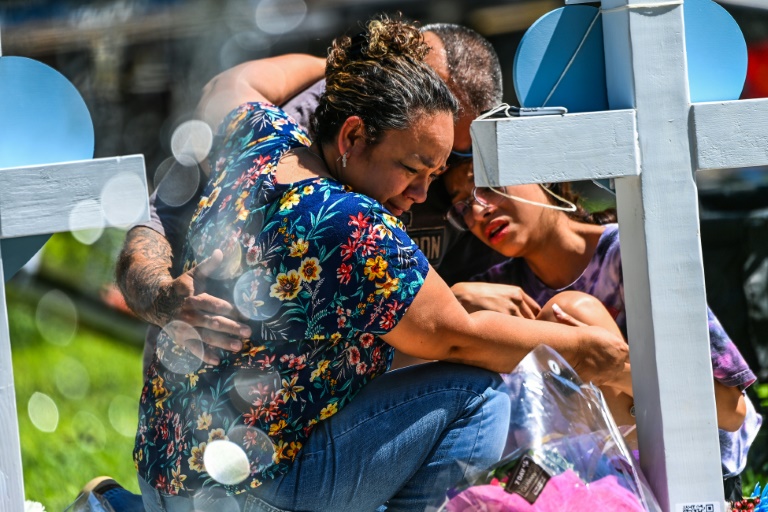
Texas police faced angry questions Thursday over why it took an hour to neutralize the gunman who murdered 19 small children and two teachers in Uvalde, as video emerged of desperate parents begging officers to storm the school.

In one jolty, nearly seven minute clip posted on YouTube, parents living a nightmare — a school shooting under way with their kids inside — are seen screaming expletives at police trying to keep them away from Robb Elementary School.

“It’s my daughter!” one woman bellows amid chaotic scenes of crying and shoving.

Angeli Rose Gomez, whose children were inside, told The Wall Street Journal she was handcuffed by federal marshals after she and others pushed police to intervene.

In another shorter video, parents at what is apparently the rear of the building complain angrily that police are doing nothing as the country’s worst school shooting in a decade is unfolding.

One woman, frantic about her son, yells to police: “If they’ve got a shot, shoot him or something. Go on.”

Jacinto Cazares, whose daughter Jacklyn died on Tuesday, said he raced to the school when he heard about the shooting.

“There was at least 40 lawmen armed to the teeth but didn’t do a darn thing (until) it was far too late,” Cazares told ABC News Wednesday.

“The situation could’ve been over quick if they had better tactical training.”

Daniel Myers and his wife Matilda — both local pastors — told AFP they saw parents at the scene growing frantic as police seemed to wait on reinforcements before entering the school.

“Parents were desperate,” said Daniel Myers, 72. “One family member, he says: ‘I was in the military, just give me a gun, I’ll go in. I’m not going to hesitate. I’ll go in.'”

– ‘Approximately an hour’ –

The tight-knit Latino community was changed forever when Salvador Ramos, an 18-year-old with a history of being bullied, entered the school and gunned down students and teachers with an assault rifle.

Relatives said the husband of one of the teachers killed in the attack died Thursday from a medical emergency — caused by grief over the loss of his wife. The couple had four children.

Facing rapid-fire questioning by journalists on the police response, Victor Escalon of the Texas Department of Public Safety (DPS) said investigators were still working to piece together exactly what happened.

After shooting his own grandmother, Ramos crashed her vehicle near the school, Escalon said, then fired on bystanders before entering through a door that was apparently unlocked.

Officers went in minutes later, but were held back by gunfire and called for backup. A tactical team including US Border Patrol agents entered and killed the gunman “approximately an hour later.”

In the interim, officers evacuated students and teachers and unsuccessfully tried to negotiate with the gunman, who held them back with rifle fire, Escalon said.

– ‘I have no words’ –

Speaking out for the first time, Ramos’s mother Adriana Reyes told ABC News her son could be aggressive when angry but was “not a monster” — and that she was not aware he had been buying weapons.

“I had an uneasy feeling sometimes, like ‘what are you up to?,'” she told ABC Wednesday evening. “We all have a rage, that some people have it more than others.”

“Those kids… I have no words,” Reyes said through tears. “I don’t know what to say about those poor kids.”

Students who went to high school with Ramos said he bullied others as well as being on the receiving end of abuse.

“I do vividly remember him being a bully in school. It wasn’t just that he was getting bullied, he was also the bully,” 18-year-old Jaime Cruz told AFP.

The Uvalde shooting was the deadliest since 20 elementary-age children and six staff were killed at the Sandy Hook school in Newtown, Connecticut in 2012.

– ‘Common sense’ –

Gun manufacturer Daniel Defense, which made the assault rifle used in Uvalde, told AFP it will not attend a convention of the powerful National Rifle Association gun lobby this weekend in Houston, in light of the “horrifying tragedy.”

“We believe this week is not the appropriate time to be promoting our products in Texas at the NRA meeting,” said the company, which stated its gun had been “criminally misused” in the attack. 

Pressed on how Ramos was able to obtain the murder weapon, Texas Governor Greg Abbott has brushed aside calls for tougher gun laws in his state — where attachment to the right to bear arms runs deep.

But in the shooting’s wake President Joe Biden — who will head to Uvalde on Sunday with First Lady Jill Biden — has called on lawmakers to take on the gun lobby and enact “common sense gun reforms.”

Gun control activists and lawmakers gathered outside the US Capitol Thursday, vowing no letup in their efforts in the run-up to November’s midterm elections.

“Gun violence prevention is going to be on the ballot,” said the Democratic senator from Connecticut, Richard Blumenthal.

The March for Our Lives advocacy group — founded by survivors of the 2018 Parkland school shooting in Florida — has meanwhile called for nationwide protests on June 11 to press for gun control.

Close Bitnami banner
Bitnami