World

China premier issues warning on Covid-hit economy

China’s premier called for more to be done to stabilise the world’s second-largest economy, issuing an unusually stark warning as the country’s zero-Covid strategy bites into growth.

 China is the last major economy welded to a policy of mass testing and hard lockdowns to eliminate virus clusters, but the strict curbs have battered businesses.

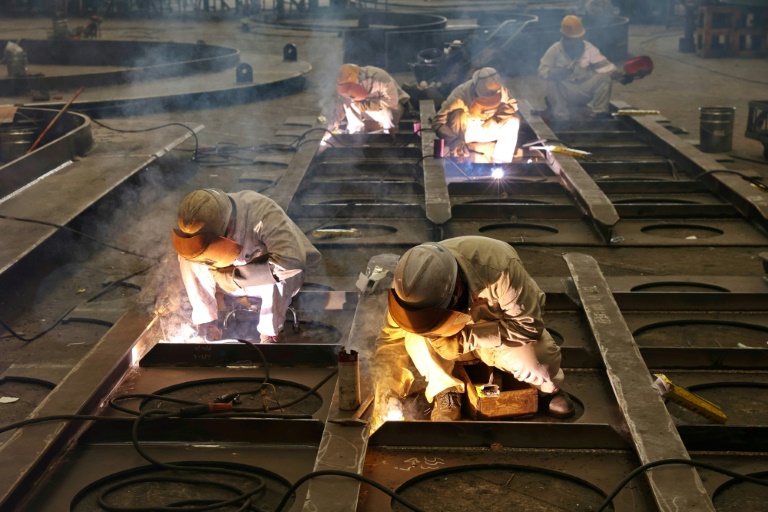
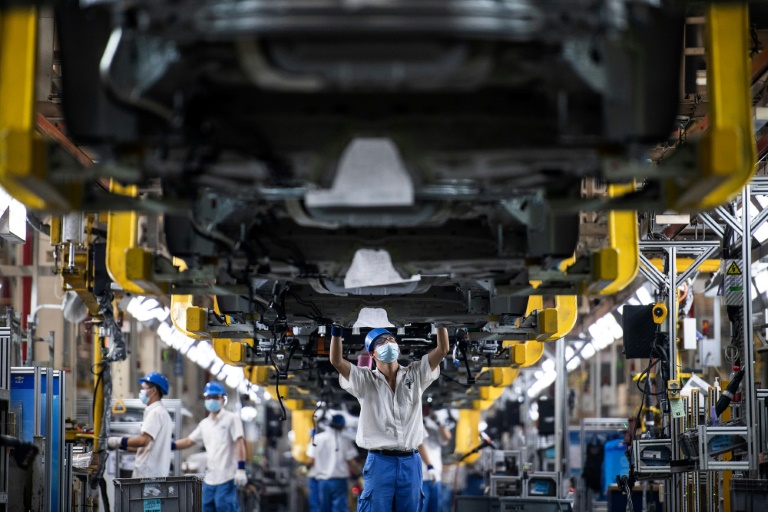
Restrictions around the nation in recent months — including on the manufacturing hubs of Shenzhen and Shanghai, as well as the breadbasket province of Jilin — have tangled supply chains and dragged economic indicators to their lowest levels in around two years.

In some ways, the challenges now are “greater than when the pandemic hit hard in 2020”, Premier Li Keqiang told a State Council meeting on Wednesday, according to a readout by the official Xinhua news agency.

“We are currently at a critical juncture in determining the economic trend of the whole year,” Xinhua quoted Li as saying.

“We must seize the time window and strive to bring the economy back onto a normal track.”

Li also said officials ought to make sure there is “reasonable” growth in the second quarter, fuelling fears that the country’s target for yearly expansion of around 5.5 percent may not be met.

Li’s remarks are the latest in a growing chorus of calls from officials and business leaders for more balance between stopping the virus and helping the ailing economy.

On Monday, the central bank and banking regulator urged financial institutions to boost lending, citing pressure on the economy, Chinese media reported.

This came as retail sales plunged 11.1 percent on year in April while factory output sank 2.9 percent — the worst showing since the early days of the Covid crisis.

And the urban unemployment rate edged back towards its February 2020 peak.

In March, and particularly in April, indicators including employment, industrial production and freight dropped “significantly”, Li said at the Wednesday meeting.

He stressed the importance of coordinating virus control and economic development, according to Xinhua.

On Thursday, the State Council will also send teams to 12 provinces to oversee local work in implementing state policies, the report said.

– Wilting growth –

The latest company to sound a warning on the impact of strict Covid measures in China was tech giant Baidu, which Thursday reported $140 million in net loss over the January-March period.

Baidu co-founder Robin Li said business had been “negatively impacted by the recent Covid-19 resurgence in China” and warned “challenges related to the virus continue to pressure” their operations.

The country’s current outbreak — fuelled by the Omicron variant — is the worst since early in the pandemic in 2020.

Financial hub Shanghai has been almost entirely sealed off since April, crushing businesses, while curbs are creeping in across the capital Beijing with no clear end in sight.

The government has offered tax relief and a bond drive to help industries, and President Xi Jinping earlier called for an “all-out” infrastructure push.

But analysts cautioned that growth will keep wilting until China eases its rigid virus controls.

S&P Global Ratings this month lowered its full-year growth forecast for China from 4.9 percent to 4.2 percent due to Covid curbs.

And Nomura analysts warned in a recent note that there is “increasing potential for negative GDP growth in the second quarter”.

Wednesday’s State Council teleconference involved an unusually large cohort of officials, Chinese outlet The Economic Observer reported.

The economic woes come in a pivotal political year for Xi, who is eyeing another term in power at the Communist Party Congress this autumn.

China’s economy is a key driver of global growth and is crucial domestically for the Communist Party, which has based its legitimacy on delivering steady expansion and improved standards of living.
Taliban 'making women invisible' in Afghanistan: UN expert

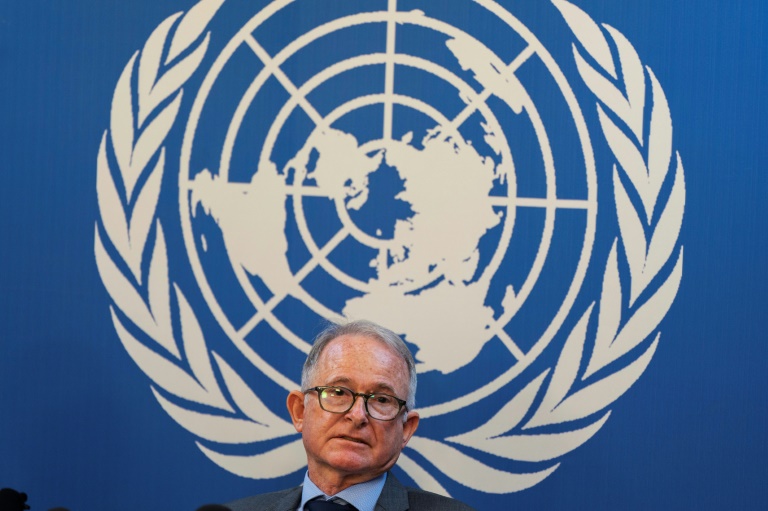
The Taliban government’s restrictions on women are aimed at making them “invisible” in Afghan society, a UN human rights observer said Thursday during a visit to the nation.

Since the Taliban stormed back to power last year, they have imposed harsh restrictions on women and girls to comply with their austere vision of Islam.

Teenage girls have been shut out from secondary schools, while women have been forced from some government jobs and barred from travelling alone.

This month Afghanistan’s supreme leader and Taliban chief Hibatullah Akhundzada ordered women to cover up fully in public, including their faces.

These policies show a “pattern of absolute gender segregation and are aimed at making women invisible in the society”, Richard Bennett, UN special rapporteur on human rights in Afghanistan, told reporters in Kabul.

“The de facto authorities have failed to acknowledge the magnitude and gravity of the abuses being committed, many of them in their name,” Bennett said.

His comments came as Taliban fighters on Thursday broke up a women’s protest calling for the reopening of secondary schools for girls.

“Angry Taliban forces came and dispersed us,” Munisa Mubariz, an organiser of the rally, told AFP.

In March the Taliban ordered all secondary schools for girls to shut, just hours after opening them for the first time since taking power in August.

The government has yet to offer a clear reason for the decision, but officials claim the institutions will reopen soon.

Foreign governments have insisted the Taliban’s record on human rights, especially women’s rights, will be key in determining whether the administration will be formally recognised.

During two decades of US-led military intervention in Afghanistan, women and girls made marginal gains in the deeply patriarchal nation.

Some Afghan women initially pushed back against the new Taliban curbs, holding small protests where they demanded the right to education and work.

But hardliners soon rounded up the ringleaders, holding them incommunicado while denying that they had been detained.

Since their release, most have gone silent.

Ukraine's children of war roam rubble of eastern front

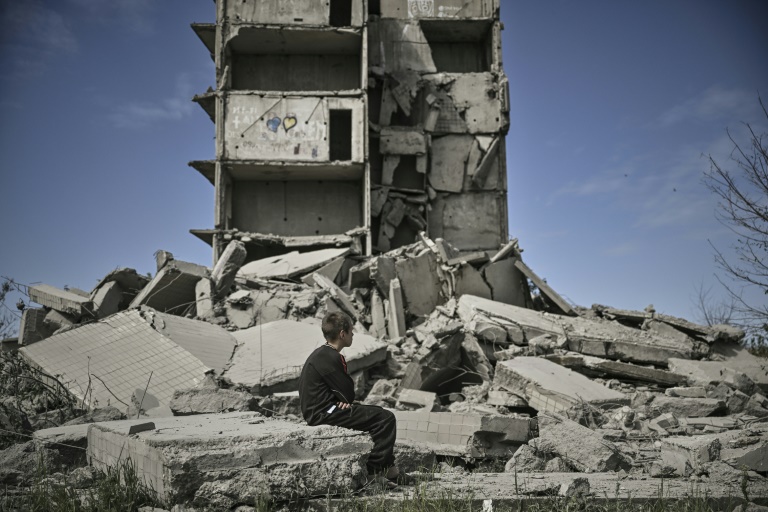
The darting eyes of the sullen boy sitting all alone on a slab of a destroyed Ukrainian apartment tower moved to the sound of shellfire.

An overnight attack had levelled an abandoned building facing the Russians approaching through the nearby woods.

Yevgen and his mother had already escaped the ruins of one village smoking on the horizon of Ukraine’s increasingly besieged war zone capital Kramatorsk.

The 13-year-old was now contemplating having to run again in the fourth month of Russia’s invasion of its pro-Western neighbour.

“That was a 22,” the serious-looking boy from the ruined hamlet of Galyna volunteered from the edge of his severed block of concrete.

The booms of what could have been 122-calibre shells rolled in from the environs of one of the biggest battles of the eastern front.

Yevgen kicked a few boulders and wandered through the rubble that layered a yard once filled with children from families operating the surrounding factories and farms.

“I am not scared,” he declared with a resolute shake of the head.

“I got used to the shelling in Galyna.”

– Battle of Galyna – 

That Yevgen appeared to distinguish the calibre of exploding shells — adopting the shorthand used by Russian and Ukrainian soldiers — worried his mother to no end.

Lyubov Zakharova had spent much of the war trying to keep Yevgen off the streets.

They ended up sheltering for a week in a Galyna school basement from a frightening battle between Russian tanks and Ukrainian forces dug in the surrounding hills.

Zakharova then risked it and made a mad 20-kilometre (12-mile) dash with Yevgen and his two little sisters for the relative safety of Kramatorsk.

“I stay up all night worrying about them,” the 33-year-old single mother said from the garden of an abandoned cottage she found near the now-destroyed Kramatorsk tower.

“My two-year-old has started losing her hair from the stress.” 

Yevgen stood with his hands folded behind his mother’s skirt and stared at his shoes.

But his head would jerk sharply at the rumbles coming from the front.

“You barely want to allow the children to go out and play,” the mother said.

“The kids keep asking to go out and I never want to let them. I will probably have to move us again.”

– War zone capital –

The battle at Galyna allowed the Russians to edge a little closer to Kramatorsk — a rival seat of power for the Donbas war zone to one Kremlin-backed fighters set up in Donetsk.

The largely deserted city is locally famous for the particularly bleak tone of the air raid sirens blaring at seemingly random hours of both day and night.

Its administration buildings and factories have mostly been either bombed or closed.

It has had no gas for nearly a week and is starting to lose power.

This made Galina Mukhina all the more incredulous when her recently married son — safely ensconced in Poland — decided to bring his young family back to Kramatorsk.

“I am scared for their little children,” Mukhina said while sweeping out shards of glass and plaster that went flying across her apartment in the overnight attack next door.

“I have been telling them it is not safe. Maybe they will listen now.”

– Refugee and returnees –

That Yevgen and his mother were thinking of fleeing — while Mukhina’s son was planning to return to — the same devastated city highlights one of the great contradictions of the war.

Some return because they have run out of savings and others because they feel the longing of home.

But retired police investigator Oleksandr Rytov said he does not expect his own adult children to ever come back from their newly found refuge in Germany.

“We are probably witnessing the start of a new emigration wave among the young,” the 55-year-old said while clearing out his own shelled-out apartment in the neighbouring city of Bakhmut.

“This is a war. No one knows what will happen in the next 10 minutes. It is impossible to predict a thing.”

Yet Yevgen’s young mind seemed firmly set.

The 13-year-old kept staring at the destroyed building and then shooting furtive glances at the battles raging across the horizon.

He brooded for a few minutes and then spoke in a sudden burst.

“(Russian President Vladimir) Putin did this to us. This is the Russian world he promised us,” he said with a nod toward the levelled tower.

“I will hate the Russians for the rest of my life,” the boy angrily whispered. “At least the Americans support us.”

Marcos Jr says Philippines to uphold South China Sea ruling

Philippine president-elect Ferdinand Marcos Jr said Thursday he would uphold an international ruling against Beijing over the disputed South China Sea, insisting he would not let China trample on Manila’s maritime rights.

China claims almost all of the resource-rich waterway, through which trillions of dollars in trade passes annually, with competing claims from the Philippines, Brunei, Malaysia, Taiwan and Vietnam.

Beijing has ignored a 2016 decision by The Hague-based Permanent Court of Arbitration that declared its historical claim to be without basis.

Outgoing President Rodrigo Duterte fostered warmer ties with his more powerful neighbour by setting aside the ruling in exchange for promises of trade and investment, which critics say have not materialised.

In his strongest comments yet on the longstanding source of tensions between the two nations, Marcos Jr said he would not “allow a single millimetre of our maritime coastal rights to be trampled upon”.

“We have a very important ruling in our favour and we will use it to continue to assert our territorial rights. It is not a claim. It is already our territorial right,” he told selected local media.

“We’re talking about China. We talk to China consistently with a firm voice.”

But he added: “We cannot go to war with them. That’s the last thing we need right now.”

Chinese foreign ministry spokesman Wang Wenbin said Beijing’s position on the international ruling had not changed.

“China is willing to continue communication and dialogue with the Philippines to appropriately handle differences, and together uphold the peace and stability of the South China Sea region,” Wang said.

– ‘Friends with everyone’ –

Marcos Jr, popularly known as Bongbong, secured more than half of the votes in the May 9 election to win the presidency by a wide margin and cap a remarkable comeback for his family.

His father and namesake ruled the Philippines for 20 years, presiding over widespread corruption and human rights abuses before he was ousted in 1986. 

Marcos Jr formally takes office on June 30. 

He and his running mate Sara Duterte, who also won the vice presidential race in a landslide, have embraced key policies of the elder Duterte.

But Marcos Jr signalled that on foreign policy he would not adopt the “slightly unorthodox approach” of Duterte, who rattled diplomats with his firebrand rhetoric and mercurial nature.

The president-elect indicated he would seek to strike a balance between China and the United States, which are vying to have the closest ties with his administration.

“We are a small player amongst very large giants in geopolitics. We have to ply our own way,” said Marcos Jr.

“I do not subscribe to the old thinking of the Cold War where we had this spheres of influence where you’re under the Soviet Union or you’re under the United States,” he said.

“I think that we have to find an independent foreign policy where we are friends with everyone. It’s the only way.”

The United States has a complex relationship with the Philippines — and the Marcos family.

After ruling the former US colony for two decades with the support of Washington, which saw him as a Cold War ally, Marcos senior went into exile in Hawaii in the face of mass protests and with the nudging of the United States in 1986.

As regional tensions remain high, Washington is keen to preserve its security alliance with Manila that includes a mutual defence treaty and permission for the US military to store defence equipment and supplies on several Philippine bases.

The South China Sea was a key obstacle in Manila’s ties with Beijing and needed to be resolved, said Chester Cabalza of the Manila-based think tank International Development and Security Cooperation.

If Marcos Jr and Chinese President Xi Jinping do not engage on the issue, “Beijing will have an upper hand in terms of our strategic relations with China”, he said.

Australia bidding to host UN climate summit, set new emissions target

Australia will present a more ambitious UN emissions target “very soon” and is bidding to co-host a COP summit with Pacific island neighbours, Foreign Minister Penny Wong said Thursday, signalling a ground shift in climate policy.

During a first solo overseas visit since her centre-left government was sworn in, Wong admitted that on the climate, “Australia has neglected its responsibility” under past administrations.

She told hosts in Fiji’s capital Suva that there would be no more “disrespecting” Pacific nations or “ignoring” their calls to act on climate change.

“We were elected on a platform of reducing emissions by 43 percent by 2030 and reaching net-zero by 2050,” Wong said. 

“And we’re not just going to say it, we will enshrine it in law and we will submit a new nationally determined contribution to the UNFCCC (United Nations Framework Convention on Climate Change) very soon.”

Under conservative leadership, Australia — already one of the world’s largest gas and coal exporters — has also become synonymous with playing the spoiler at international climate talks. 

Wong said the new Labor government wanted to upend that record by co-hosting a future climate summit. 

“We have proposed a bid to co-host a future UN Conference of the Parties with Pacific Island countries and I’m looking forward to further discussions in the region about this idea.”

Asked by a reporter whether Australia was simply paying lip service to climate action given its vast coal exports, Wong said: “It is true we export a lot of coal to China.”

But she added that Australia was seeking to manage its economic transition in “a way that enables continued economic prosperity and equity”.

Labor had proposed before its May 21 election victory that it would seek to co-host a UN climate summit in 2024.

To do so, it would need to win the support of two UN country blocs to skip the queue, as well as its proposed Pacific islands co-hosts, said a report this month by the independent research group, the Australia Institute.

But Australia could “reset” its reputation as a climate laggard and a poor regional neighbour if it did so, Richie Merzian, climate director at the institute, said.

Australia’s 2019-2020 “Black Summer” bushfires and subsequent east coast floods highlighted the deadly and catastrophic consequences of climate change.

But past Australian governments have resisted calls to cut carbon emissions from 2005 levels faster than its current commitment of up to 28 percent by 2030. 

Australia bidding to host UN climate summit, set new emissions target

Australia will present a more ambitious UN emissions target “very soon” and is bidding to co-host a COP summit with Pacific island neighbours, Foreign Minister Penny Wong said Thursday, signalling a ground shift in climate policy.

During a first solo overseas visit since her centre-left government was sworn in, Wong admitted that on the climate, “Australia has neglected its responsibility” under past administrations.

She told hosts in Fiji’s capital Suva that there would be no more “disrespecting” Pacific nations or “ignoring” their calls to act on climate change.

“We were elected on a platform of reducing emissions by 43 percent by 2030 and reaching net-zero by 2050,” Wong said. 

“And we’re not just going to say it, we will enshrine it in law and we will submit a new nationally determined contribution to the UNFCCC (United Nations Framework Convention on Climate Change) very soon.”

Under conservative leadership, Australia — already one of the world’s largest gas and coal exporters — has also become synonymous with playing the spoiler at international climate talks. 

Wong said the new Labor government wanted to upend that record by co-hosting a future climate summit. 

“We have proposed a bid to co-host a future UN Conference of the Parties with Pacific Island countries and I’m looking forward to further discussions in the region about this idea.”

Asked by a reporter whether Australia was simply paying lip service to climate action given its vast coal exports, Wong said: “It is true we export a lot of coal to China.”

But she added that Australia was seeking to manage its economic transition in “a way that enables continued economic prosperity and equity”.

Labor had proposed before its May 21 election victory that it would seek to co-host a UN climate summit in 2024.

To do so, it would need to win the support of two UN country blocs to skip the queue, as well as its proposed Pacific islands co-hosts, said a report this month by the independent research group, the Australia Institute.

But Australia could “reset” its reputation as a climate laggard and a poor regional neighbour if it did so, Richie Merzian, climate director at the institute, said.

Australia’s 2019-2020 “Black Summer” bushfires and subsequent east coast floods highlighted the deadly and catastrophic consequences of climate change.

But past Australian governments have resisted calls to cut carbon emissions from 2005 levels faster than its current commitment of up to 28 percent by 2030. 

Hundreds stranded after ransomware attack on Indian airline

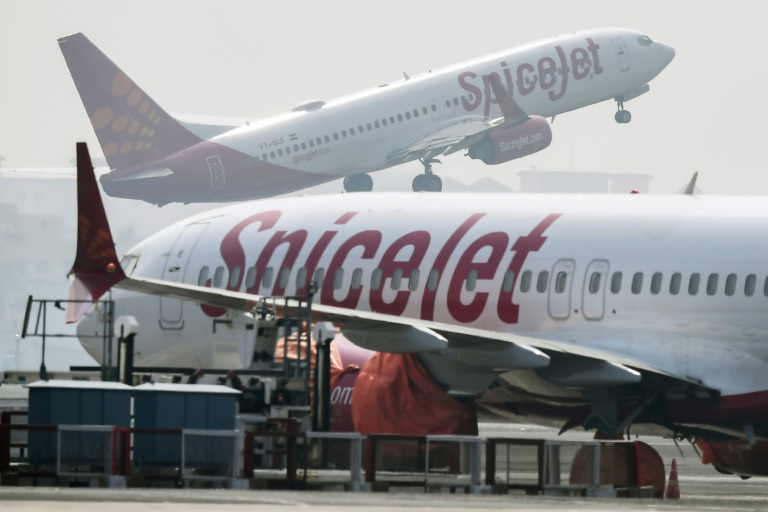
Hundreds of Indian air travellers were stranded inside their planes after the low-cost airline SpiceJet cancelled or delayed flights due to an “attempted ransomware attack”, the company has said.

Many angry passengers, some of whom were left waiting inside their planes for up to five hours earlier this week, complained about a lack of communication from the budget carrier.

“Certain SpiceJet systems faced an attempted ransomware attack last night that impacted our flight operations,” the airline said Wednesday on Twitter.

The company added that it had “to a large extent contained and rectified the situation”, but ongoing delays had forced some flights to airports with night curfews to be cancelled.

An airline official on Thursday told AFP that flight operations were back to normal, without sharing details of any investigation into the incident.

Mudit Shejwar, a SpiceJet passenger stuck waiting inside a plane Wednesday, said the only communication his flight had received was “of some server down and (an) issue with paperwork for fuel”.

“What about the losses we are going to suffer due to the delay?” he posted on Twitter, adding that his flight finally took off after a five-hour wait.

Ransomware attacks occur when hackers take control of a computer system by encrypting all its data until a ransom is paid.

They have become increasingly common as more official and commercial business is conducted online.

The United States last year offered a $10 million reward for help in tracking down leaders of the “DarkSide” gang, an outfit Washington blamed for a hack that shut down one of the country’s largest oil pipelines.

China premier issues warning on Covid-hit economy

China’s premier has sounded an unusually stark warning about the world’s second-largest economy, saying it must return to normal as the country’s zero-Covid strategy bites into growth.

China is the last major economy welded to a policy of mass testing and hard lockdowns to eliminate virus clusters, but the strict curbs have battered businesses.

Restrictions around the nation in recent months — including on the manufacturing hubs of Shenzhen and Shanghai as well as the breadbasket province of Jilin — have tangled supply chains and dragged economic indicators to their lowest levels in around two years.

In some ways, the challenges now are “greater than when the pandemic hit hard in 2020”, Premier Li Keqiang told a State Council meeting on Wednesday, according to a readout by the official Xinhua news agency.

“We are currently at a critical juncture in determining the economic trend of the whole year,” Xinhua quoted Li as saying.

“We must seize the time window and strive to bring the economy back onto a normal track.”

Li also said officials ought to make sure there is “reasonable” growth in the second quarter, fuelling fears that the country’s ambitious target for yearly expansion of around 5.5 percent may not be met.

His remarks are the latest in a growing chorus of calls from officials and business leaders for more balance between stopping the virus and helping the ailing economy.

On Monday, the central bank and banking regulator urged financial institutions to boost lending, citing pressure on the economy, Chinese media reported.

This came as retail sales plunged 11.1 percent on-year in April while factory output sank 2.9 percent — the worst showing since the early days of the Covid crisis.

And the urban unemployment rate edged back towards its February 2020 peak.

In March and particularly in April, indicators including employment, industrial production, electricity consumption and freight dropped “significantly”, Li said at the Wednesday State Council meeting.

He stressed the importance of coordinating virus control and economic development, according to Xinhua.

On Thursday, the State Council will also send teams to 12 provinces to oversee local work in implementing state policies, the report said.

– Wilting growth –

China’s current virus outbreak — fuelled by the highly transmissible Omicron variant — is the worst since the early days of the pandemic in 2020.

Its biggest city and business hub Shanghai has been almost entirely sealed off since April, crushing businesses, while curbs are creeping in across the capital Beijing with no clear end in sight.

The government has offered tax relief and a bond drive to help industries, and President Xi Jinping earlier called for an “all-out” infrastructure push.

But analysts have cautioned that growth will keep wilting until China eases its rigid virus controls.

S&P Global Ratings this month lowered its full-year growth forecast for China from 4.9 percent to 4.2 percent due to Covid curbs.

And Nomura analysts warned in a recent note that there is “increasing potential for negative GDP growth in the second quarter”.

Wednesday’s State Council teleconference involved an unusually large cohort of provincial, city and county officials, Chinese outlet The Economic Observer reported.

The economic woes come in a pivotal political year for Xi, who is eyeing another term in power at the Communist Party Congress this autumn.

China’s economy is a key driver of global growth and is crucial domestically for the ruling Communist Party, which has based its legitimacy on delivering steady expansion and improved standards of living.

Markets rose slightly on Thursday afternoon, with both Shanghai and Shenzhen indexes up about 0.4 percent.

China premier issues warning on Covid-hit economy

China’s premier has sounded an unusually stark warning about the world’s second-largest economy, saying it must return to normal as the country’s zero-Covid strategy bites into growth.

China is the last major economy welded to a policy of mass testing and hard lockdowns to eliminate virus clusters, but the strict curbs have battered businesses.

Restrictions around the nation in recent months — including on the manufacturing hubs of Shenzhen and Shanghai as well as the breadbasket province of Jilin — have tangled supply chains and dragged economic indicators to their lowest levels in around two years.

In some ways, the challenges now are “greater than when the pandemic hit hard in 2020”, Premier Li Keqiang told a State Council meeting on Wednesday, according to a readout by the official Xinhua news agency.

“We are currently at a critical juncture in determining the economic trend of the whole year,” Xinhua quoted Li as saying.

“We must seize the time window and strive to bring the economy back onto a normal track.”

Li also said officials ought to make sure there is “reasonable” growth in the second quarter, fuelling fears that the country’s ambitious target for yearly expansion of around 5.5 percent may not be met.

His remarks are the latest in a growing chorus of calls from officials and business leaders for more balance between stopping the virus and helping the ailing economy.

On Monday, the central bank and banking regulator urged financial institutions to boost lending, citing pressure on the economy, Chinese media reported.

This came as retail sales plunged 11.1 percent on-year in April while factory output sank 2.9 percent — the worst showing since the early days of the Covid crisis.

And the urban unemployment rate edged back towards its February 2020 peak.

In March and particularly in April, indicators including employment, industrial production, electricity consumption and freight dropped “significantly”, Li said at the Wednesday State Council meeting.

He stressed the importance of coordinating virus control and economic development, according to Xinhua.

On Thursday, the State Council will also send teams to 12 provinces to oversee local work in implementing state policies, the report said.

– Wilting growth –

China’s current virus outbreak — fuelled by the highly transmissible Omicron variant — is the worst since the early days of the pandemic in 2020.

Its biggest city and business hub Shanghai has been almost entirely sealed off since April, crushing businesses, while curbs are creeping in across the capital Beijing with no clear end in sight.

The government has offered tax relief and a bond drive to help industries, and President Xi Jinping earlier called for an “all-out” infrastructure push.

But analysts have cautioned that growth will keep wilting until China eases its rigid virus controls.

S&P Global Ratings this month lowered its full-year growth forecast for China from 4.9 percent to 4.2 percent due to Covid curbs.

And Nomura analysts warned in a recent note that there is “increasing potential for negative GDP growth in the second quarter”.

Wednesday’s State Council teleconference involved an unusually large cohort of provincial, city and county officials, Chinese outlet The Economic Observer reported.

The economic woes come in a pivotal political year for Xi, who is eyeing another term in power at the Communist Party Congress this autumn.

China’s economy is a key driver of global growth and is crucial domestically for the ruling Communist Party, which has based its legitimacy on delivering steady expansion and improved standards of living.

Markets rose slightly on Thursday afternoon, with both Shanghai and Shenzhen indexes up about 0.4 percent.

Asian markets mostly down as Li remarks overshadow Fed minutes

Asian markets mostly fell Thursday as Chinese Premier Li Keqiang warned the world’s number two economy was in some ways worse off now than during the early days of the pandemic.

Li’s comments dealt a blow to confidence from the start and overshadowed a positive lead from Wall Street fuelled by minutes indicating a less hawkish stand from the US Federal Reserve.

The wind was immediately taken out of traders’ sails as they digested the warning, which comes as China persists with a zero-Covid policy to eradicate the fast-spreading Omicron virus variant.

The economic agony caused by lockdowns and other strict containment measures hammered growth across China and sent shockwaves globally as key supply chains were brought to a halt.

Data in recent weeks have shown that a series of pledges by Beijing to kickstart growth has essentially fallen flat owing to a lack of concrete action, while analysts say the easing of the Covid policy was the only thing investors wanted to see.

“Economic indicators in China have fallen significantly, and difficulties in some aspects and to a certain extent are greater than when the epidemic hit us severely in 2020,” Li told an emergency meeting Wednesday with representatives from local governments, state-owned companies and financial firms.

He also urged officials to work to pull unemployment down.

There is a general feeling among commentators that China’s economic growth will fall well short of the government’s target of about 5.5 percent. Expansion came in at 2.2 percent in 2020.

– ‘Anaemic recovery’ –

Economists at Goldman Sachs said: “Chinese policy makers are in greater urgency to support the economy after the very weak activity growth in April, anaemic recovery month-to-date in May, and continued increases in unemployment rates.”

Hong Kong, Tokyo, Sydney, Seoul, Mumbai, Taipei and Wellington were all down, while Shanghai, Singapore and Manila edged up.

London, Paris and Frankfurt were positive in opening trade.

Traders had been given a positive lead from Wall Street as minutes from the Fed’s May policy meeting indicated that while officials would likely hike rates by 50 basis points at each of the next two gatherings, they were aware of the impact on the economy.

With inflation surging, the central bank — and others around the world — has been forced to tighten policy but that has hammered markets and fuelled fears of a recession.

The minutes also made no mention of a 75-basis-point lift, providing some relief to beleaguered investors.

“If inflation gets tame enough over summer, there may not be continued raising of rates,” said Carol Pepper of Pepper International on Bloomberg Television.

She added that the long-feared era of stagflation — when prices rise but growth remains flat — was unlikely.

“I think we are going to be in a situation where inflation will start tapering down and then we will start going into a more normalised market,” she added.

– Key figures at around 0720 GMT –

Tokyo – Nikkei 225: DOWN 0.3 percent at 26,604.84 (close)

Hong Kong – Hang Seng Index: DOWN 0.9 percent at 19,989.05

Shanghai – Composite: UP 0.5 percent at 3,123.11 (close)

London – FTSE 100: UP 0.1 percent at 7,527.70

Euro/dollar: DOWN at $1.0672 from $1.0685 on Wednesday

Pound/dollar: DOWN at $1.2558 from $1.2579

Euro/pound: UP at 84.97 pence from 84.89 pence

Dollar/yen: DOWN at 127.20 yen from 127.26 yen 

Brent North Sea crude: UP 0.2 percent at $114.21 per barrel

West Texas Intermediate: UP 0.2 percent at $110.59 per barrel

New York – Dow: UP 0.6 percent at 32,120.28 (close)

Close Bitnami banner
Bitnami