World

Pakistan's ex-PM Khan issues ultimatum on elections after mass rally

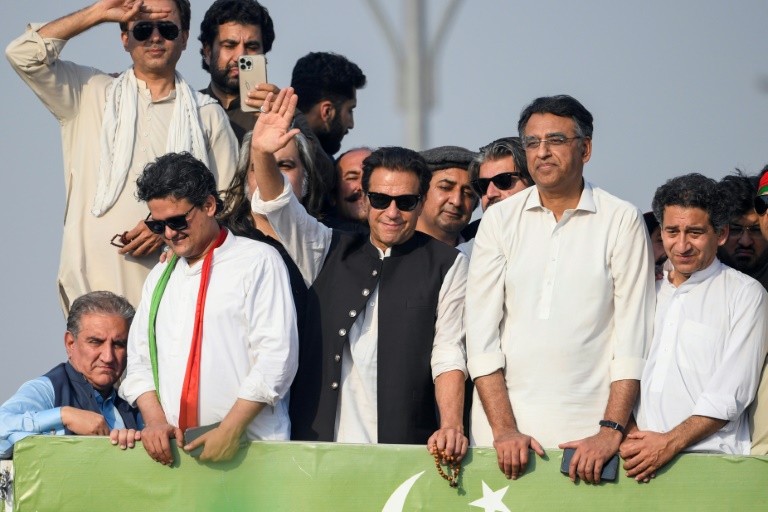
Pakistan’s ousted prime minister Imran Khan on Thursday warned the government to stage fresh elections or face more mass protests, after leading thousands of supporters to the capital Islamabad in a showdown with his political rivals.

His morning address was the culmination of a chaotic 24 hours which saw the capital blockaded and clashes break out between police and protesters across the country.

The government had attempted to prevent the convoy from reaching the capital by shutting down all entry and exit points around the city, but was forced to allow in the protesters by an emergency Supreme Court order.

Since being removed from power through a no-confidence vote last month, cricket star turned politician Khan has heaped pressure on the country’s fragile new coalition rulers by staging rallies, touting a claim he was ousted from office in a “foreign conspiracy”.

“I want to give a message to this imported government to announce elections within six days. Dissolve the assemblies and call an election in June,” he said, to a thinned out crowd of thousands who later dispersed. 

He warned that he would return to the capital with his supporters next week if elections were not scheduled.

Thousands of supporters of Khan’s Pakistan Tehreek-e-Insaf (PTI) party heeded his call to march to the capital from nearby cities on Wednesday.

But political analysts said Khan’s attempt to stage a historic sit-in was a failure, with smaller numbers than expected hobbling his bargaining power. 

“With around 30,000 people, it was not a good idea to stay in Islamabad and face the powerful police that broke his momentum,” said Qamar Cheema.

– Tear gas –

Confrontations erupted between police and protesters throughout, who attempted to remove roadblocks on key highways to join the convoy.

Police repeatedly deployed teargas to disperse crowds in the capital, as well as in the cities of Lahore, Rawalpindi and Karachi.  

The Human Rights Commission of Pakistan said it was “deeply concerned by the highhandedness of law enforcement agencies” in disrupting the march.

“The state’s overreaction has triggered, more than it has prevented, violence on the streets,” it tweeted.

The government headed by Prime Minister Shehbaz Sharif had pledged to stop the protesters from entering the capital, calling the rally an attempt to “divide the nation and promote chaos”.

But as unrest was breaking out around the country, the Supreme Court granted permission for PTI to stage its rally on the edge of the city. 

The court also ordered the government and PTI leaders to hold urgent negotiations over the political crisis and the release of supporters detained by police.

More than 1,700 people have been arrested since police began raiding the homes of PTI supporters on Monday night, said Interior Minister Rana Sanaullah, who previously accused protesters of planning to carry weapons.

– Forced negotiations –

The country’s two normally feuding dynastic parties that combined to push Khan out of power have repeatedly said they have no plans to hold an imminent election.

Khan joined the march in dramatic fashion, arriving in a helicopter that touched down on a motorway clogged with supporters in his power base of Khyber Pakhtunkhwa province.

While some supporters were left disappointed by the curtailed sit-in, many were prepared to follow their leader.

“Whatever decision he takes we just obey it,” said Muhammad Uzair, a 29-year-old clothes shop assistant. “We are ready to come back after six days.”

The international sporting hero came to power in 2018, voted in by an electorate weary of the dynastic politics of the country’s two major parties and enjoying the backing of the nation’s powerful military

Promising to sweep away decades of entrenched corruption and cronyism, he is believed to have fallen out with Pakistan’s generals.

He was brought down by opposition parties in part by his failure to rectify the country’s dire economic situation, including its crippling debt, shrinking foreign currency reserves and soaring inflation.
In a village near Kharkiv, life under constant shelling

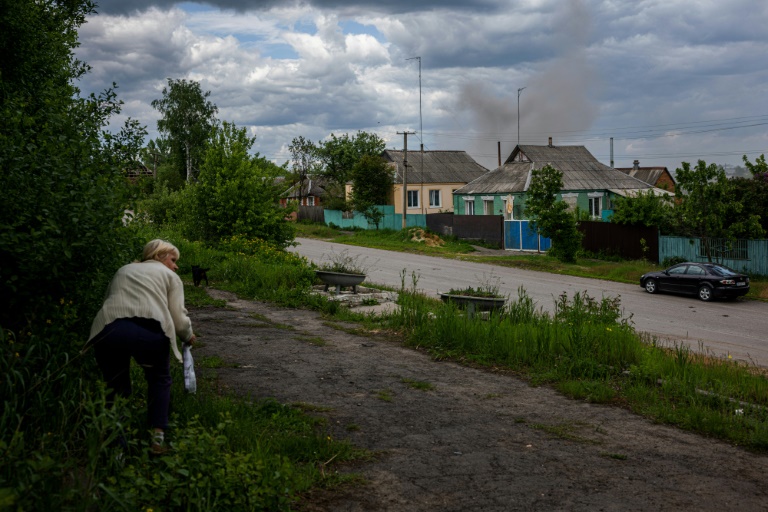
“This is how we live, running to our cellars. Maybe we should leave,” cries retired nurse Larysa Kosynets, heading for safety before Russian shells start slamming into her village near the eastern Ukraine city of Kharkiv. 

As the 57-year-old rushes off to hide, a Ukrainian commander orders visiting journalists to leave the area as quickly as possible. 

The reporters have been escorted by the Ukrainian army on condition they do not identify the village.

Before the Russian shelling started, the Ukrainians were firing on Russian positions in an artillery battle that has lasted days on the outskirts of Kharkiv, Ukraine’s second city. 

Although the Russians pulled back from Kharkiv to redirect troops to Ukraine’s eastern Donbas region and the south, they have kept their positions to the east, maintaining a constant barrage of fire towards the city and nearby villages to hold back the Ukrainian counteroffensive. 

In this rural village, evidence of the fighting is everywhere with many houses destroyed, others missing walls or with the roof caved in. The ground is pockmarked with craters.

The village, largely dedicated to livestock farming, had around 1,000 residents before the war. Today only around 100 remain. 

“The people who stayed have animals. They can’t leave them. They’ll die if nobody gives them food or water. Those who only had chickens left,” Kosynets explains. 

“The village is our land, our home. How can we just leave? We have our roots here,” she adds.

Kosynets and the other residents who have stayed spent two months under Russian occupation before Ukrainian troops took back control of the village about two weeks ago. 

– ‘We’re not Nazis’ –

When the Russians were there, life was very difficult, she says. 

“It was forbidden to go to Kharkiv. There was a shortage of everything, there were only potatoes and some tinned food. After a while, the Russians let us go to Volchansk,” a town northeast of Kharkiv. 

With no water or electricity and no working phone network, the villagers were only allowed to go up a nearby hill once a day to get a mobile signal so they could contact their relatives. 

Kosynets says it was troops from Donetsk, a city which since 2014 has been run by pro-Russian separatists, who allowed them that one liberty, saying they were more flexible with the villagers than the Russians.

But going up the hill quickly became dangerous because other soldiers would “shoot over their heads to scare them”. 

Russia’s rationale of a “special military operation” to demilitarise and de-Nazify Ukraine draws a snort of derision.

“Show me one Nazi in the village! We have our nation, we are nationalists but not Nazis nor fascists,” she says, demanding that Russian President Vladimir Putin “withdraw his troops”. 

Living alongside Ukrainian soldiers has really helped, she says.

“They share everything. Cigarettes, food… We have become a family.” 

Nearby her husband Vitaliy Kuzmenko, 42, is raking up freshly cut grass to feed to their cow and goats. 

“We’re surviving — what else can we do?” he shrugs, totally fed up with the ongoing artillery fire.

He says he has learned to distinguish between the sound of “an incoming shell from an outgoing one”. 

“When the strikes are nearby, we hide. I reinforced my basement with concrete and iron and I equipped it well, I built a stove,” Kuzmenko says. 

“We sleep in the house with our clothes on and if there is shelling we go to the basement.”

“It’s my land, I don’t want to leave,” he says, despite the doors and windows of his home having been blown out by shelling, and his fields damaged. 

“We were lucky, thank God.”

Marcos says Philippines to uphold South China Sea ruling

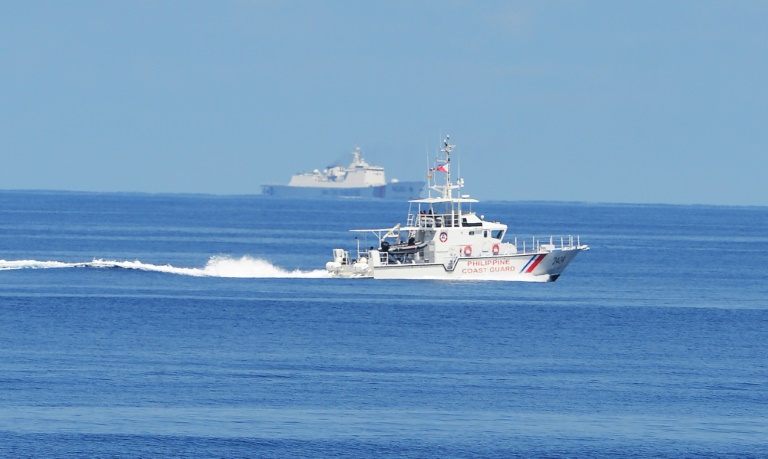
Philippine president-elect Ferdinand Marcos Jr said Thursday he would uphold an international ruling against Beijing over the disputed South China Sea, insisting he would not let China trample on Manila’s maritime rights.

China claims almost all of the resource-rich waterway, through which trillions of dollars in trade passes annually, with competing claims from the Philippines, Brunei, Malaysia, Taiwan and Vietnam.

Beijing has ignored a 2016 decision by The Hague-based Permanent Court of Arbitration that declared its historical claim to be without basis.

Outgoing President Rodrigo Duterte fostered warmer ties with his more powerful neighbour by setting aside the ruling in exchange for promises of trade and investment, which critics said have not materialised.

In his strongest comments yet on the longstanding source of tensions between the two nations, Marcos said he would not “allow a single millimetre of our maritime coastal rights to be trampled upon”.

“We have a very important ruling in our favour and we will use it to continue to assert our territorial rights. It is not a claim. It is already our territorial right,” Marcos told selected local media.

“We’re talking about China. We talk to China consistently with a firm voice,” he said.

But he added: “We cannot go to war with them. That’s the last thing we need right now.”

– ‘Friends with everyone’ –

Marcos, popularly known as Bongbong, secured more than half of the votes in the May 9 election to win the presidency by a wide margin and cap a remarkable comeback for his family.

His father and namesake ruled the Philippines for 20 years, presiding over widespread corruption and human rights abuses before he was ousted in 1986. 

Marcos Jr formally takes office on June 30. 

He and his running mate Sara Duterte, who also won the vice presidential race in a landslide, have embraced key policies of the elder Duterte.

But Marcos signalled on foreign policy he would not adopt the “slightly unorthodox approach” of Duterte, who rattled diplomats with his firebrand rhetoric and mercurial nature.

Marcos indicated he would seek to strike a balance between China and the United States, which are vying to have the closest ties with his administration.

“We are a small player amongst very large giants in geopolitics. We have to ply our own way,” said Marcos.

“I do not subscribe to the old thinking of the Cold War where we had this spheres of influence where you’re under the Soviet Union or you’re under the United States,” he said.

“I think that we have to find an independent foreign policy where we are friends with everyone. It’s the only way.”

The United States has a complex relationship with the Philippines — and the Marcos family.

After ruling the former US colony for two decades with the support of the United States, which saw him as a Cold War ally, Marcos senior went into exile in Hawaii in the face of mass protests and with the nudging of Washington in 1986.

As regional tensions remain high, Washington is keen to preserve its security alliance with Manila that includes a mutual defence treaty and permission for the US military to store defence equipment and supplies on several Philippine bases.

The South China Sea was a key obstacle in Manila’s ties with Beijing and needed to be resolved, said Chester Cabalza of the Manila-based think tank International Development and Security Cooperation.

“If there will be no move coming from Marcos Jr and (Chinese President) Xi Jinping, the more Beijing will have an upper hand in terms of our strategic relations with China,” he said.

Zelensky rebukes West as Russia closes in on key Ukraine city

Ukrainian President Volodymyr Zelensky has issued a bitter rebuke to the West for not doing enough to help Kyiv win the war, as fierce battles rage in the country’s east and Russian troops draw ever closer to encircling a key industrial city.

Calling for help “without limits”, specifically shipments of heavy weaponry, Zelensky also blasted recent suggestions a negotiated peace could include territorial concessions. 

Outside the city of Severodonetsk, now the focal point of Moscow’s renewed offensive in Ukraine’s Donbas region, fighting was “very difficult”, said Lugansk regional governor Sergiy Gaiday.

But the industrial centre has yet to be surrounded, he said in a video posted to Telegram Wednesday.

Predicting the “coming week will be decisive”, Gaiday added the city was being subjected to a “colossal amount of shelling” by Russian troops attempting to batter it into submission.

Earlier in the day, Ukrainian Foreign Minister Dmytro Kuleba told attendees at the World Economic Forum in Davos his country “badly” needs multiple-launch rocket systems to match Russian firepower in the battle for Donbas.

Zelensky echoed that plea from Kyiv.

“We need the help of our partners — above all, weapons for Ukraine. Full help, without exceptions, without limits, enough to win,” Zelensky said in his daily address to the nation.

– ‘Kissinger’s calendar’ –

Saying the world had been unprepared “for Ukrainian bravery”, Zelensky called out the international community Wednesday for paying too much attention to Russia’s interests and too little to Ukraine’s.

He took specific aim at former US Secretary of State Henry Kissinger and the New York Times for suggesting territorial sacrifices might be necessary to end the conflict.

Kissinger, the 98-year-old champion of realpolitik, this week told World Economic Forum attendees in Davos that a return to the “status quo” before Russia’s February 24 invasion would be ideal. 

Russia had formally annexed Crimea in 2014, while separatist groups aligned with Moscow have long controlled the easternmost regions of Donetsk and Lugansk.

Pushing Moscow to surrender that territory threatened to turn the conflict into a new, broader war, Kissinger warned, adding that negotiations needed to begin within two months.  

“It seems Mr Kissinger’s calendar is not 2022, but 1938,” Zelensky responded, comparing his suggestion to the agreement that ceded part of Czechoslovakia to Nazi Germany more than 80 years ago.

The New York Times editorial board also called hopes of reclaiming land seized before February unrealistic, saying eventual negotiations would present Ukrainian leadership with “painful territorial decisions that any compromise will demand”.

– ‘Clear blackmail’ –

Russia’s February 24 invasion of its pro-Western neighbour has caused global shockwaves, with the latest being fears of food shortages, particularly in Africa.

Moscow blamed the international sanctions imposed after the invasion, while the West says the shortage is mainly down to Russia’s blockade of Ukrainian ports.

“Solving the food problem requires a comprehensive approach, including the removal of sanctions that have been imposed on Russian exports and financial transactions,” said Russian deputy foreign minister Andrey Rudenko.

But Kuleba urged the West not to give in.

“This is clear blackmail. You could not find a better example of blackmail in international relations,” Kuleba said in Davos.

– ‘Extremely heavy shelling’ –

Since failing in its early objective of capturing Ukraine’s capital, Moscow’s army has plotted a slow but steady course deeper into the country’s eastern Donbas region.

In the eastern town of Soledar, Ukraine’s salt manufacturing hub, the ground shook moments after Natalia Timofeyenko climbed out of her bunker.

“I go outside just to see people. I know that there is shelling out there but I go,” the 47-year-old said after a thundering blast smashed apart a chunk of a salt mine where she worked with most of her friends and neighbours.

Ghostly frontline towns like Soledar are being hammered by Russian artillery as they sit along the crucial road that leads out of besieged Severodonetsk and its sister city Lysychansk.

Twelve people were killed by “extremely heavy shelling and attacks” in the neighbouring region of Donetsk, which also forms part of Donbas, the Ukrainian presidency said.

In a sign the rest of the country remains at risk, Russian cruise missiles struck the major southern rail hub of Zaporizhzhia, killing one person and damaging dozens of houses, the presidency added.

– ‘Here forever’ –

Russia is also seeking to tighten its grip over the parts of Ukraine it occupies, including fast-tracking citizenship for residents of two southern regions.

President Vladimir Putin on Wednesday signed a decree simplifying a procedure to obtain a Russian passport for residents of Kherson — which remains under full control of Russian troops — and partly occupied Zaporizhzhia.

Kyiv called plan a “flagrant violation” of Ukraine’s sovereignty.

Moscow-backed officials are also pushing for formal annexation by Russia. 

“The simplified system will allow all of us to clearly see that Russia is here not just for a long time but forever,” Kherson’s Moscow-appointed deputy leader Kirill Stremousov told Russian state media.

Underlining the human cost, about 200 bodies were found in the basement of a destroyed building in the port city of Mariupol, which fell to Moscow recently after a devastating siege, Ukrainian authorities said.

“It is impossible to be within the area due to the corpse smell,” Ukrainian ombudswoman Lyudmyla Denisova wrote on Telegram Wednesday. 

“The occupiers turned the entire Mariupol into a cemetery.”

burs-dk/spm/md/bgs/cwl/dhc

Western powers sound alarm on China plan for South Pacific

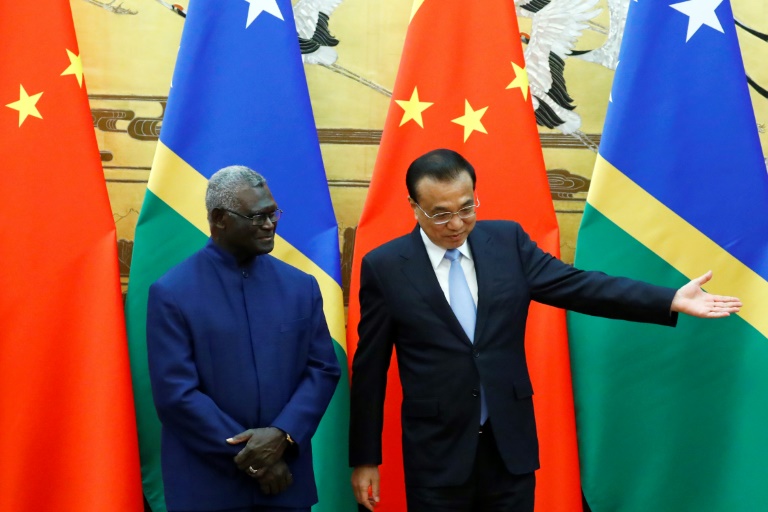
Western powers sounded the alarm Thursday over leaked plans to dramatically expand China’s security and economic reach in the South Pacific, in what one regional leader called a thinly veiled effort to lock island states into “Beijing’s orbit”.

If approved by Pacific island nations, the wide-ranging draft agreement and a five-year plan, both obtained by AFP, would give China a larger security footprint in a region seen as crucial to the interests of the United States and its allies.

In a sign of the region’s growing importance to Beijing, Chinese Foreign Minister Wang Yi landed in the Solomon Islands Thursday at the start of a high-level, eight-nation Pacific tour to present the potentially lucrative offer.

The package would offer 10 small island states millions of dollars in Chinese assistance, the prospect of a China-Pacific Islands free trade agreement and access to China’s vast market of 1.4 billion people.

It would also give China the chance to train local police, become involved in local cybersecurity, expand political ties, conduct sensitive marine mapping and gain greater access to natural resources.

The “comprehensive development vision” is believed to be up for approval when Wang meets regional foreign ministers on Monday in Fiji.

– No help needed –

“This is China seeking to increase its influence in the region of the world where Australia has been the security partner of choice since the Second World War,” Australian Prime Minister Anthony Albanese said Thursday.

Australia “needs to respond”, he said, outlining plans for a “step-up” in Pacific engagement, with about Aus$500 million (US$350 million) in additional aid for defence training, maritime security and infrastructure to combat the effects of climate change.

His Foreign Minister, Penny Wong, was flying in to Fiji to consult the government about the plans.

In New Zealand — which normally has close ties with China — Prime Minister Jacinda Ardern stated the region had no need for Beijing’s security arrangements.

“We are very strongly of the view that we have, within the Pacific, the means and ability to respond to any security challenges that exist, and New Zealand is willing to do that,” she said after a meeting with US senators in Washington.

US State Department spokesman Ned Price warned the countries in question to be wary of “shadowy” agreements with China.

“We are concerned that these reported agreements may be negotiated in a rushed, non-transparent process,” Price told reporters, adding that Pacific nations would make their own sovereign choices.

– ‘Encirclement move’ –

The Chinese plan, if approved, would represent a significant change, facilitating everything from the deployment of Chinese police to visits by Chinese “art troupes”.

Flights between China and the Pacific Islands would increase. Beijing would appoint a regional envoy, supply training for young Pacific diplomats and provide 2,500 government “scholarships”.

“It’s relatively rare paper evidence of China’s ambition to establish itself as a regional security power,” said Mihai Sora, Pacific foreign policy analyst at the Lowy Institute.

China wants to elbow out the United States, said politics professor Anne-Marie Brady of New Zealand’s University of Canterbury.

“It’s an encirclement move, aimed at pushing the US out of the region and isolating Australia, New Zealand,” she said.

The Chinese plan is also raising alarm bells in regional capitals.

In a stark letter to fellow Pacific leaders, Federated States of Micronesia President David Panuelo warned the agreement seems “attractive” at first glance, but would allow China to “acquire access and control of our region”.

Calling the proposals “disingenuous”, Panuelo said they would deliver Chinese influence over government and industries, and allow “mass surveillance” of calls and email.  

“The result”, he said, would be “the fracturing of regional peace, security and stability”. 

– Lucrative –

Micronesia has a compact of free association with the United States, making it one of the region’s closest US allies.

But other Pacific leaders may see the Chinese proposal as possibly lucrative or beneficial.

Policymakers in the United States, Australia, New Zealand and Japan are still reeling from revelations in April that the Solomon Islands secretly negotiated a security agreement with Beijing.

A leaked draft of the agreement contained a provision allowing Chinese naval deployments to the island nation, which lies less than 2,000 kilometres (1,200 miles) from Australia.

The Solomon Islands has said it will not host Chinese bases, but it is also prohibited from speaking publicly about the deal without China’s permission.

During his one-day visit to the Solomon Islands’ capital Honiara on Thursday, Wang is scheduled to sign draft agreements, details of which have not been made public, as well as meet with the country’s prime minister and foreign minister.

Travelling until June 4, Wang will also stop in Papua New Guinea, Fiji, Kiribati and Samoa, as well as hold video calls with Micronesia and the Cook Islands — a self-governing part of New Zealand. 

11 babies killed in Senegal hospital fire

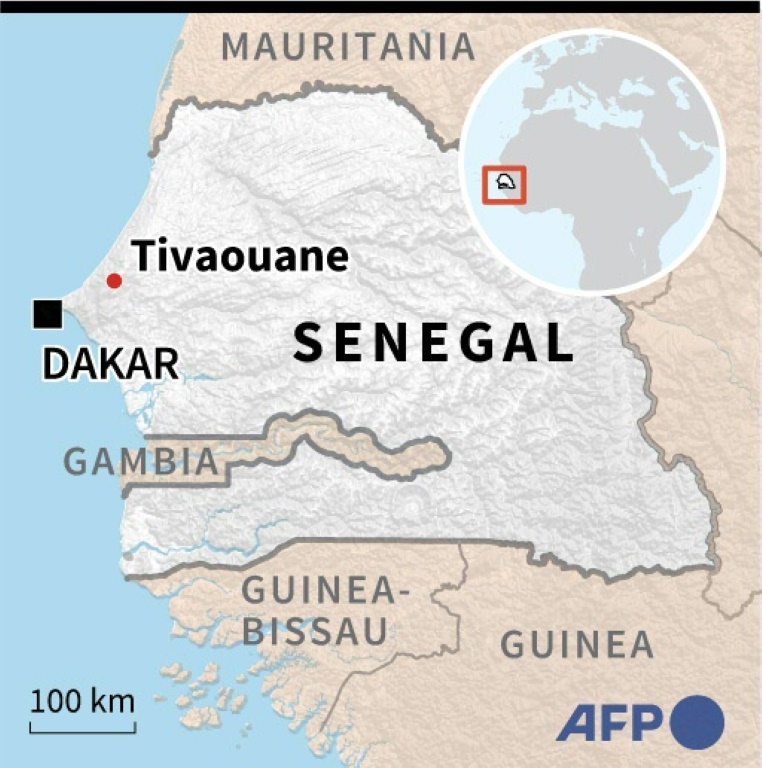
Eleven newborn babies died in a hospital fire in the western Senegalese city of Tivaouane, the president of the country said late Wednesday. 

Just before midnight in Senegal, Macky Sall announced on Twitter that 11 infants had died in the blaze.

“I have just learned with pain and dismay about the deaths of 11 newborn babies in the fire at the neonatal department of the public hospital,” he tweeted. 

“To their mothers and their families, I express my deepest sympathy,” Sall added.

The tragedy occurred at Mame Abdou Aziz Sy Dabakh Hospital in the transport hub of Tivaouane, and was caused by “a short circuit”, according to Senegalese politician Diop Sy.

“The fire spread very quickly,” he said. 

The city’s mayor Demba Diop said “three babies were saved”.

According to local media, the Mame Abdou Aziz Sy Dabakh Hospital was newly inaugurated.

Health minister Abdoulaye Diouf Sarr, who was in Geneva attending a meeting with the World Health Organization, said he would return to Senegal immediately. 

“This situation is very unfortunate and extremely painful,” he said on radio. “An investigation is under way to see what happened.”

The tragedy in Tivaouane comes after several other incidents at public health facilities in Senegal, where there is great disparity between urban and rural areas in healthcare services. 

In the northern town of Linguere in late April, a fire broke out at a hospital and four newborn babies were killed. The mayor of that town had cited an electrical malfunction in an air conditioning unit in the maternity ward.

– ‘Enough is enough’ –

Wednesday’s accident also comes over a month after the nation mourned the death of a pregnant woman who waited in vain for a Caesarean section.

The woman, named Astou Sokhna, had arrived at a hospital in the northern city of Louga in pain. The staff had refused to accommodate her request for a C-section, saying that it was not scheduled. 

She died April 1, 20 hours after she arrived.

Sokhna’s death caused a wave of outrage across the country on the dire state of Senegal’s public health system, and health minister Sarr acknowledged two weeks later that the death could have been avoided. 

Three midwives — on duty the night Sokhna died — were sentenced on May 11 by the High Court of Louga to six months of suspended imprisonment for “failure to assist a person in danger” in connection to her case. 

Amnesty International’s Senegal director Seydi Gassama said his organisation had called for an inspection and upgrade for neonatology services in hospitals across Senegal after the “atrocious” death of the four babies in Linguere.

With Wednesday’s fresh tragedy, Amnesty “urges the government to set up an independent commission of inquiry to determine responsibility and punish the culprits, no matter the level they are at in the state apparatus”, he tweeted. 

Opposition lawmaker Mamadou Lamine Diallo also responded with outrage to the Tivaouane blaze that killed the babies. 

“More babies burned in a public hospital… this is unacceptable @MackySall,” he said. 

“We suffer with the families to whom we offer our condolences. Enough is enough.”

Grief turns to anger after gunman murders 21 at Texas school

Grief at the massacre of 19 small children at an elementary school in Texas spilled into confrontation Wednesday, as angry questions mounted over gun control — and whether this latest tragedy could have been prevented.

The tight-knit Latino community of Uvalde on Tuesday became the site of America’s worst school shooting in a decade, committed by a disturbed 18-year-old armed with a legally bought assault rifle.

Wrenching details have been steadily emerging since the tragedy, which also claimed the lives of two teachers.

Briefing reporters, Governor Greg Abbott revealed that teen shooter Salvador Ramos — who was killed by police — shot his 66-year-old grandmother in the face before heading to Robb Elementary School.

Ramos went on social media to share his plan to attack his grandmother — who though gravely injured was able to alert the police.

He then messaged again to say his next target was a school, where he headed clad in body armor and wielding an AR-15 rifle.

– ‘Pure evil’ –

Pressed on how the teen was able to obtain the murder weapon, the Texas governor repeatedly brushed aside suggestions that tougher gun laws were needed in his state — where attachment to the right to bear arms runs deep.

“I consider this person to have been pure evil,” Abbott said, articulating a position commonly held among US Republicans — that unfettered access to weapons is not to blame for the country’s gun violence epidemic.

Abbott’s stance was echoed by the powerful National Rifle Association gun lobby, which issued a statement labeling the shooter as “a lone, deranged criminal.”

But the governor was called out by a rival Democrat, who loudly interrupted the briefing to accuse him of deadly inaction.

“This is on you,” heckled Beto O’Rourke, a fervent gun control advocate who is challenging Abbott for his job come November.

“You are doing nothing!” he charged. “This is totally predictable when you choose not to do anything.”

O’Rourke’s interruption came a day after President Joe Biden, in an emotional address, called on lawmakers to take on America’s powerful gun lobby and enact tougher laws. 

Biden announced Wednesday that he would soon visit Uvalde, as he renewed his plea for “common sense gun reforms.”

“I think we all must be there for them. Everyone. And we must ask when in God’s name will we do what needs to be done to, if not completely stop, fundamentally change the amount of the carnage that goes on in this country.”

“I am sick and tired of what’s going on and continues to go on,” Biden said.

– ‘Horror and pain’ –

In the shattered community of Uvalde, a small mainly Hispanic town about an hour from the Mexican border, there was outrage, too, at how such a tragedy could have occurred.

“I’m just heartbroken right now,” said Ryan Ramirez, who lost his 10-year-old daughter Alithia in the rampage, as he and his wife Jessica attended a vigil at a local bull-riding arena together with some 1,000 other mourners. 

“She was a real good artist” and aspired to greatness, Ramirez said, flipping through a portfolio of Alithia’s colorful paintings as well as birthday cards she drew for her mother.

Earlier in the day Rosie Buantel, a middle-aged local resident, told AFP: “I’m sad, and I’m angry at our government, for not doing more about gun control.”

“We’ve gone through this one too many times. And still there’s nothing done.”

As broken families shared their news on social media, the names of the murdered children, most of Latino heritage, began coming out: they included Ellie Garcia, Jayce Carmelo Luevanos and Uziyah Garcia. 

“My little love is now flying high with the angels above,” Angel Garza, whose daughter Amerie Jo Garza had just celebrated her 10th birthday, posted on Facebook.

“I love you Amerie Jo,” he wrote. “I will never be happy or complete again.”

More than a dozen children were also wounded at the school, attended by more than 500 students aged around seven to 10 years old, most of them economically disadvantaged.

– ‘Carnage’ –

Ramos’ grandfather, 73-year-old Rolando Reyes — whose wife still needed surgery after the attack — voiced his pain for the bereaved families.

“I feel very sorry, and a lot of pain because a lot of those kids are grandkids of friends of mine,” he told CBS News.

Details have emerged of Ramos as a deeply troubled teen — he was repeatedly bullied over a speech impediment that included a stutter and a lisp and once cut up his own face “just for fun,” a former friend, Santos Valdez, told The Washington Post. 

In the days after turning 18 this month, Ramos purchased two assault rifles and several hundred rounds of ammunition, and a week later he staged his attack.

After driving his grandmother’s vehicle to Robb Elementary, where he crashed it into a ditch, Ramos was confronted by a school resource officer — but was able to enter through a back door and made his way to two adjoining classrooms.

“That’s where the carnage began,” said Steve McCraw, director of the Texas Department of Public Safety.

The Uvalde shooting was the deadliest since 20 elementary-age children and six staff were killed at the Sandy Hook school in Newtown, Connecticut in 2012.

According to the non-profit Gun Violence Archive, there have been more mass shootings — in which four or more people were wounded or killed — in 2022 than days so far this year.

Despite that, multiple attempts at national reform have failed in Congress.

Asian markets mixed as traders weigh Li remarks, Fed minutes

Asian markets were mixed Thursday as minutes indicating a less hawkish Fed were offset by China’s premier warning that the world’s number two economy was in some ways worse off now than during the early days of the pandemic.

The wind was immediately taken out of traders’ sails as they digested Li Keqiang’s warning, which comes as China sticks fast to a zero-Covid policy to eradicate the fast-spreading Omicron virus variant.

The economic agony caused by lockdowns and other strict containment measures has hammered growth across China and sent shockwaves globally as key supply chains were brought to a halt.

Data in recent weeks have shown that a series of pledges by Beijing to kickstart growth has essentially fallen flat owing to a lack of concrete action, while analysts say the easing of the Covid policy was the only thing investors wanted to see.

“Economic indicators in China have fallen significantly, and difficulties in some aspects and to a certain extent are greater than when the epidemic hit us severely in 2020,” Li told an emergency meeting Wednesday with representatives from local governments, state-owned companies and financial firms.

He also urged officials to work to pull unemployment down.

There is a general feeling among commentators that China’s economic growth will fall well short of the government’s target of about 5.5 percent. Expansion came in at 2.2 percent in 2020.

Economists at Goldman Sachs said: “Chinese policy makers are in greater urgency to support the economy after the very weak activity growth in April, anaemic recovery month-to-date in May, and continued increases in unemployment rates.”

Hong Kong and Shanghai were both down in the morning, while Sydney was also lower. Seoul, Singapore, Manila and Wellington edged up while Tokyo and Taipei were flat.

– Fed relief –

Traders got a positive lead from Wall Street as minutes from the US Federal Reserve’s May policy meeting indicated that while officials would likely hike rates by 50 basis points at each of the next two gatherings, they were aware of the impact on the economy.

With inflation surging, the central bank — and others around the world — has been forced to tighten policy but that has hammered markets and fuelled fears of a recession.

The minutes also made no mention of a 75-basis-point lift, providing some relief to beleaguered investors.

“If inflation gets tame enough over summer, there may not be continued raising of rates,” said Carol Pepper of Pepper International on Bloomberg Television.

She added that the long-feared era of stagflation — when prices rise but growth remains flat — was unlikely.

“I think we are going to be in a situation where inflation will start tapering down and then we will start going into a more normalised market,” she added.

– Key figures at around 0300 GMT –

Tokyo – Nikkei 225: FLAT at 26,685.71 (break)

Hong Kong – Hang Seng Index: DOWN 0.9 percent at 19,986.10

Shanghai – Composite: DOWN 0.1 percent at 3,104.20

Euro/dollar: UP at $1.0695 from $1.0685 on Wednesday

Pound/dollar: UP at $1.2582 from $1.2579

Euro/pound: UP at 85.00 pence from 84.89 pence

Dollar/yen: UP at 127.43 yen from 127.26 yen 

Brent North Sea crude: UP 0.5 percent at $114.56 per barrel

West Texas Intermediate: UP 0.6 percent at $111.00 per barrel

New York – Dow: UP 0.6 percent at 32,120.28 (close)

London – FTSE 100: UP 0.5 percent at 7,522.75 (close)

China premier issues warning on Covid-hit economy

China’s premier has sounded an unusually stark warning about the world’s second-largest economy, saying it must return to normal as the country’s zero-Covid strategy bites into growth.

China is the last major economy welded to a policy of mass testing and rapid lockdowns to eliminate virus clusters, but the strict curbs have battered businesses.

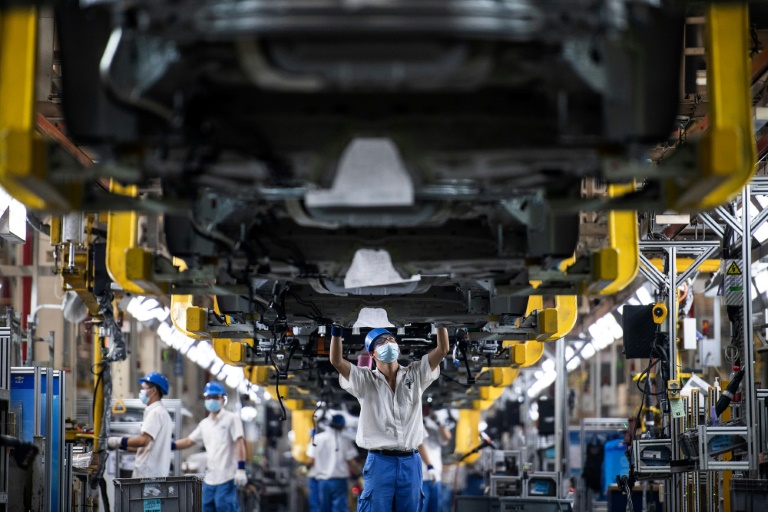
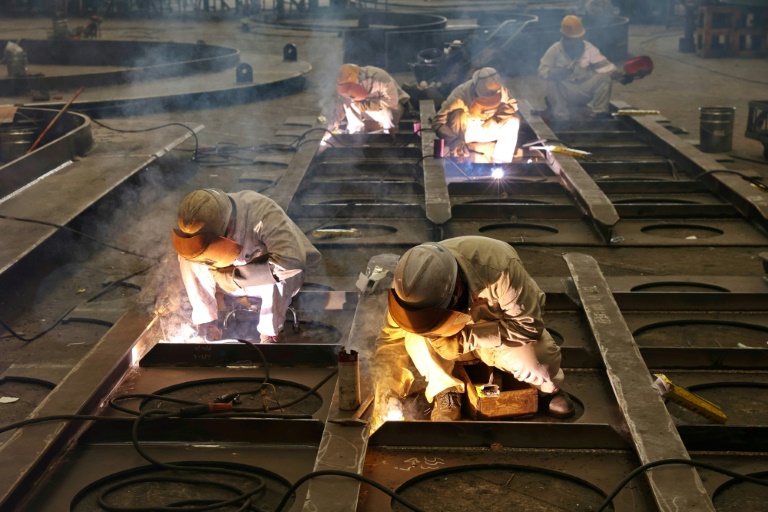
Restrictions on dozens of cities in recent months — including the manufacturing hubs of Shenzhen and Shanghai as well as the breadbasket of Jilin — have tangled supply chains and dragged economic indicators to their lowest levels in around two years.

In some ways, the challenges now are “greater than when the pandemic hit hard in 2020”, Premier Li Keqiang told a State Council meeting on Wednesday, according to a readout by the official Xinhua news agency.

“We are currently at a critical juncture in determining the economic trend of the whole year,” Xinhua quoted Li as saying.

“We must seize the time window and strive to bring the economy back onto a normal track.”

Li’s remarks are the latest in a growing chorus of calls from officials and business leaders for more balance between stopping the virus and helping the ailing economy.

China’s retail sales plunged 11.1 percent on-year in April while factory output sank 2.9 percent — the worst showing since the early days of the Covid crisis.

And the urban unemployment rate edged back towards its February 2020 peak, challenging policymakers’ full-year growth target of around 5.5 percent.

In March and particularly in April, indicators such as employment, industrial production, electricity consumption and freight dropped “significantly”, Li said at the State Council meeting.

He stressed the importance of coordinating virus control and economic development, according to Xinhua.

– Wilting growth –

China’s current outbreak — fuelled by the highly transmissible Omicron virus variant — is the worst since the early days of the pandemic in 2020.

Its biggest city and business hub Shanghai has been almost entirely sealed off since April, crushing businesses, while curbs are creeping in the capital Beijing.

The government has offered tax relief and a bond drive to help industries, and President Xi Jinping earlier called for an “all-out” infrastructure push.

But analysts have cautioned that growth will keep wilting until China eases its rigid virus controls.

S&P Global Ratings this month lowered its full-year growth forecast for China from 4.9 percent to 4.2 percent due to Covid curbs.

And Nomura analysts warned in a recent note that there is “increasing potential for negative GDP growth in the second quarter”.

Wednesday’s State Council teleconference involved an unusually large cohort of provincial, city and county officials, Chinese outlet The Economic Observer reported.

The economic woes come in a pivotal political year for Xi, who is eyeing another term in power at the Communist Party Congress this autumn.

China premier issues warning on Covid-hit economy

China’s premier has sounded an unusually stark warning about the world’s second-largest economy, saying it must return to normal as the country’s zero-Covid strategy bites into growth.

China is the last major economy welded to a policy of mass testing and rapid lockdowns to eliminate virus clusters, but the strict curbs have battered businesses.

Restrictions on dozens of cities in recent months — including the manufacturing hubs of Shenzhen and Shanghai as well as the breadbasket of Jilin — have tangled supply chains and dragged economic indicators to their lowest levels in around two years.

In some ways, the challenges now are “greater than when the pandemic hit hard in 2020”, Premier Li Keqiang told a State Council meeting on Wednesday, according to a readout by the official Xinhua news agency.

“We are currently at a critical juncture in determining the economic trend of the whole year,” Xinhua quoted Li as saying.

“We must seize the time window and strive to bring the economy back onto a normal track.”

Li’s remarks are the latest in a growing chorus of calls from officials and business leaders for more balance between stopping the virus and helping the ailing economy.

China’s retail sales plunged 11.1 percent on-year in April while factory output sank 2.9 percent — the worst showing since the early days of the Covid crisis.

And the urban unemployment rate edged back towards its February 2020 peak, challenging policymakers’ full-year growth target of around 5.5 percent.

In March and particularly in April, indicators such as employment, industrial production, electricity consumption and freight dropped “significantly”, Li said at the State Council meeting.

He stressed the importance of coordinating virus control and economic development, according to Xinhua.

– Wilting growth –

China’s current outbreak — fuelled by the highly transmissible Omicron virus variant — is the worst since the early days of the pandemic in 2020.

Its biggest city and business hub Shanghai has been almost entirely sealed off since April, crushing businesses, while curbs are creeping in the capital Beijing.

The government has offered tax relief and a bond drive to help industries, and President Xi Jinping earlier called for an “all-out” infrastructure push.

But analysts have cautioned that growth will keep wilting until China eases its rigid virus controls.

S&P Global Ratings this month lowered its full-year growth forecast for China from 4.9 percent to 4.2 percent due to Covid curbs.

And Nomura analysts warned in a recent note that there is “increasing potential for negative GDP growth in the second quarter”.

Wednesday’s State Council teleconference involved an unusually large cohort of provincial, city and county officials, Chinese outlet The Economic Observer reported.

The economic woes come in a pivotal political year for Xi, who is eyeing another term in power at the Communist Party Congress this autumn.

Close Bitnami banner
Bitnami