World

Pfizer offers to sell medicines at cost to poorest countries

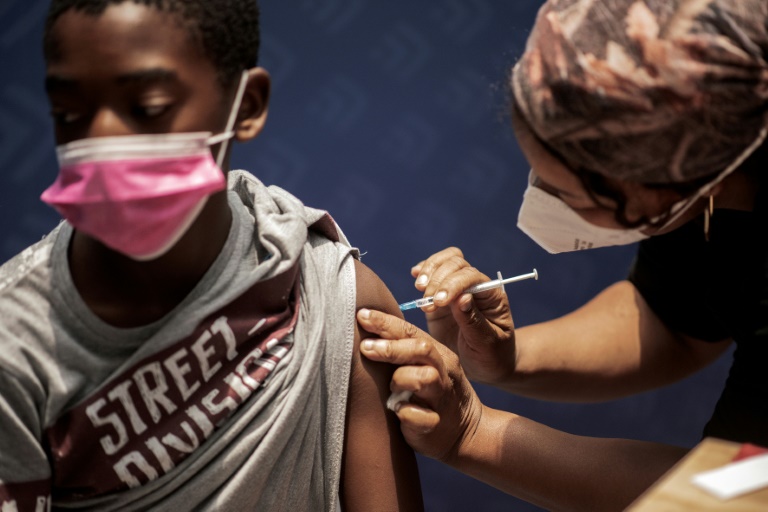
US pharmaceutical giant Pfizer on Wednesday said it would sell its patented drugs on a not-for-profit basis to the world’s poorest countries, as part of a new initiative announced at the World Economic Forum in Davos.

“The time is now to begin closing this gap” between people with access to the latest treatments and those going without, chief executive Albert Bourla told attendees at the exclusive Swiss mountain resort gathering.

“An Accord for a Healthier World” focuses on five areas: infectious diseases, cancer, inflammation, rare diseases and women’s health — where Pfizer currently holds 23 patents, including the likes of Comirnaty and Paxlovid, its Covid vaccine and oral treatment.

“This transformational commitment will increase access to Pfizer-patented medicines and vaccines available in the United States and the European Union to nearly 1.2 billion people,” Angela Hwang, group president of the Pfizer Biopharmaceuticals Group, told AFP.

Five countries: Rwanda, Ghana, Malawi, Senegal and Uganda have committed to joining, with a further 40 countries — 27 low-income and 18 lower-middle-income — eligible to sign bilateral agreements to participate.

“Pfizer’s commitment sets a new standard, which we hope to see emulated by others,” Rwanda’s President Paul Kagame said.

But he added that “additional investments and strengthening of Africa’s health systems and pharmaceutical regulators” would also be needed.

– Seven years behind –

Developing countries experience 70 percent of the world’s disease burden but receive only 15 percent of global health spending, leading to devastating outcomes.

Across sub-Saharan Africa, one child in 13 dies before their fifth birthday, compared to one in 199 in high-income countries.

Cancer-related mortality rates are also far higher in low and middle-income countries — causing more fatalities in Africa every year than malaria.

All this is set to a backdrop of limited access to the latest drugs. 

Essential medicines and vaccines typically take four to seven years longer to reach the poorest countries, and supply chain issues and poorly resourced health systems make it difficult for patients to receive them once approved. 

“The Covid-19 pandemic further highlighted the complexities of access to quality healthcare and the resulting inequities,” said Hwang.

“We know there are a number of hurdles that countries have to overcome to gain access to our medicines. That is why we have initially selected five pilot countries to identify and come up with operational solutions and then share those learnings with the remaining countries.”

– ‘Very good model’ –

Specifically, the focus will be on overcoming regulatory and procurement challenges in the countries, while ensuring adequate levels of supply from Pfizer’s side.

The “not-for-profit” price tag takes into account the cost to manufacture and transport of each product to an agreed upon port of entry, with Pfizer charging only manufacturing and minimum distribution costs.

If a country already has access to a product at a lower price tier, for example vaccines supplied by GAVI, a public-private global partnership, that lower price will be maintained.

Hwang acknowledged that even an at-cost approach could be challenging for the most cash-strapped countries, and “this is why we have reached out to financial institutions to brief them on the Accord and ask them to help support country level financing.”

Pfizer will also reach out to other stakeholders — including governments, multilateral organizations, NGOs and even other pharmaceuticals — to ask them to join the Accord.

It is also using funding from the Bill & Melinda Gates Foundation to advance work on a vaccine against Group B Streptococcus (GBS), the leading cause of stillbirth and newborn mortality in low-income countries.

“This type of accord is a very good model, it’s going to help get medicines out,” Gates told the Davos conference, adding that “partnerships with companies like Pfizer have been key to the progress we have made” on efforts like vaccines.
British retailer Marks and Spencer exits Russia

British clothing-to-food retailer Marks and Spencer on Wednesday announced a full exit from Russia following the country’s invasion of Ukraine.

After halting product shipments to Russia at the start of March, Marks and Spencer said it had decided “to fully exit” its Russian franchise run by Turkish conglomerate Fiba Group.

The exit, plus disruption to M&S operations in Ukraine run also by franchisee Fiba, is costing the British company £31 million ($39 million, 36 million euros).

“Unfortunately, our Ukrainian business has also been partially closed as a result of war impacts, and we are working with our partner to reopen as and when possible,” the company added in a statement.

An M&S spokeswoman confirmed to AFP that the group’s “brand will no longer be used in Russia”.

Its exit from Russia comes also after Marks and Spencer last year shut more than half its stores in France as Brexit affected supplies of fresh and chilled products.

M&S on Wednesday said it had taken a charge of £10.3 million following the French shakeup.

It had blamed the move on “supply chain complexities” following Britain’s formal exit from the European Union at the start of 2021.

M&S on Wednesday added that the group swung back into profit during its last financial year, or 12 months to the start of April.

It was heavily boosted by strong sales online in Britain and abroad.

Ahead, M&S pointed to “difficult and unpredictable headwinds” owing to ongoing fallout from the pandemic in addition to geopolitical and economic uncertainties.

The company said a cost-of-living crisis caused by soaring inflation would hit sales growth.

The update also marked the end of Steve Rowe’s time as chief executive.

The group had already announced that he would step down after six years, making way for a new joint CEO team of current M&S executives Stuart Machin and Katie Bickerstaffe.

China, Australia launch duelling South Pacific charm offensives

Chinese and Australian foreign ministers will launch duelling charm offensives in the South Pacific Thursday, as Beijing and the West jostle for influence in the strategically significant region.

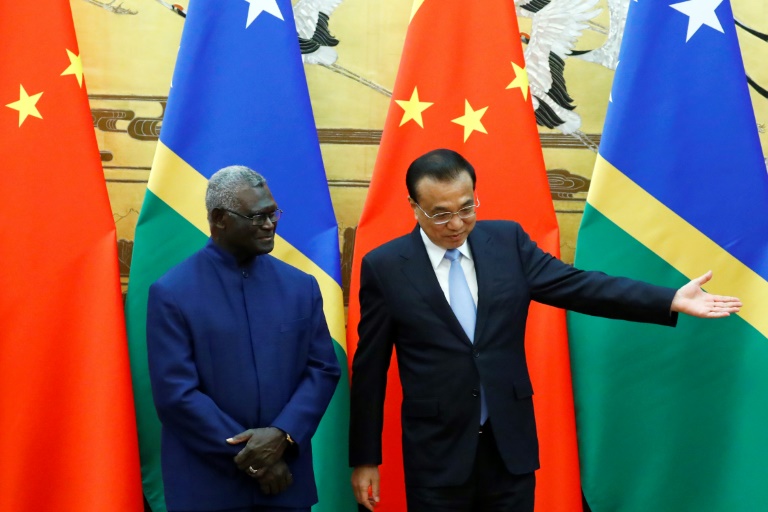
Top Chinese diplomat Wang Yi is expected to arrive in Solomon Island’s capital Honiara, kicking off a lengthy, eight-nation regional tour.

Australia’s recently sworn-in Foreign Minister Penny Wong will meanwhile touch down in Fiji on Thursday as she embarks on her first solo overseas mission.

The diplomatic tours come as China seeks to deepen its foothold in the South Pacific, which has traditionally looked to the United States, Australia and New Zealand for security.

Travelling from Thursday until June 4, Wang will also stop in Papua New Guinea, Fiji, Kiribati and Samoa, as well as hold video calls with Micronesia and the Cook Islands — a self-governing part of New Zealand. 

The trip will be “beneficial to the peace, stability and prosperity of the Asia-Pacific region”, Chinese officials said.

Wang is expected to push for deeper relations and formal agreements with several countries.

Solomon Islands Prime Minister Manasseh Sogavare said the Chinese foreign minister’s visit would be a “milestone”.

But the trip has already stirred local controversy. 

Solomon Islands’ journalists are threatening to boycott coverage of the trip after a “joint press conference” planned for Thursday evening was to feature only questions from state media.

– Game changer –

Wang’s regional visit comes after Beijing last month inked a secretive security agreement with Sogavare.

The deal deepened US and Australian fears that President Xi Jinping intends to establish a military foothold in the South Pacific.

A leaked draft of the agreement contained a provision allowing Chinese naval deployments to the island nation, which lies less than 2,000 kilometres (1,200 miles) from Australia.

It also prohibited the Solomon Islands from speaking publicly about the deal’s contents without China’s permission.

News of the agreement sparked a diplomatic firestorm, with high-level Australian and American delegations flying to Honiara to warn about the risks to regional security.

Sogavare has said the concerns are overblown.

New Zealand’s foreign minister Nanaia Mahuta said he had received assurances on Wednesday “that the agreement will not lead to a Chinese military base”. 

After speaking with her Honiara counterpart Jeremiah Manele, Mahuta also announced a one-year extension of a New Zealand military deployment to the Solomon Islands.

– New broom –

Australia’s new government has put deeper ties with the Pacific at the top of its agenda.

Foreign Minister Wong has admitted Australia is playing catch up, but said a trip in her first week on the job “demonstrates the importance we place on our relationship with Fiji and on our Pacific engagement.”

“I look forward to sharing our ideas on how we seek to bring together Australia’s defence, strategic, diplomatic and economic capabilities to support our region’s priorities,” she said.

For Washington and its allies, the presence of Chinese forces in the South Pacific would spell an end to decades of efforts to contain China inside the “first island chain”.

It could also require a dramatic repositioning of US forces, which are currently focused on threats emanating from North-East Asia.  

US Assistant Secretary of State for East Asian and Pacific Affairs Daniel Kritenbrink recently slammed the “complete lack of transparency” around the China-Solomon Islands agreement.

“We do know that (China) is seeking to establish a more robust overseas logistics and basing infrastructure that would allow the PLA [People’s Liberation Army] to project and sustain military power at greater distances.” 

For Beijing, a base or port access would challenge US hegemony in the region and ease what it sees as encirclement by the West.

burs-arb/al/lb

UK PM faces 'Partygate' report reckoning

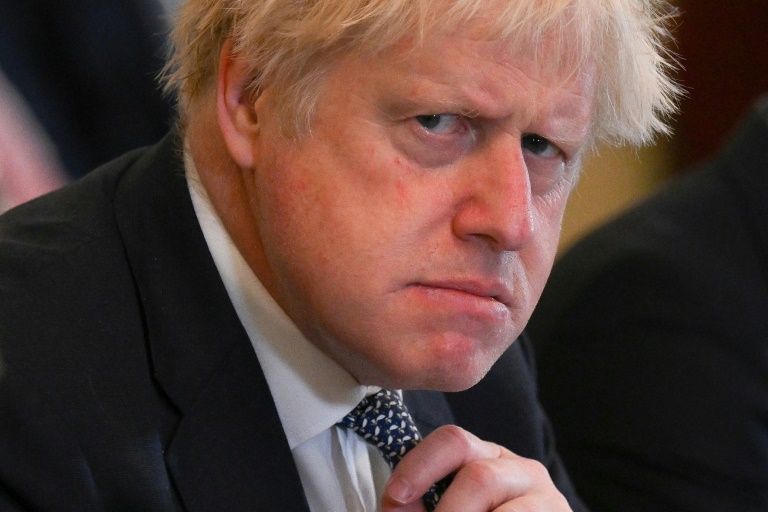
UK Prime Minister Boris Johnson braced Wednesday for the release of a potentially damaging inquiry into the “Partygate” scandal, as new allegations emerged about a culture of lockdown-breaking boozing in his offices.

A photograph published by the Daily Mirror newspaper showed a Downing Street table laden with wine bottles and doughnuts, and it said an accompanying WhatsApp message told staff: “Time to open the Covid secure bar.”

But the Mirror said that particular event in November 2020 was thought not to have been investigated by civil servant Sue Gray or London’s Metropolitan Police, which has issued multiple fines over other events, including one against Johnson himself.

The prime minister has defied calls to resign after he received the fine, but many MPs from his Conservative party are understood to be awaiting the details revealed in Gray’s full report before deciding whether to trigger a leadership ballot.

On Wednesday Gray’s report was handed to Johnson, who was set to deliver a statement in the House of Commons after his weekly session of Prime Minister’s Questions at 1100 GMT, officials confirmed.

He is expected later to hold a news conference to address Gray’s report, before a meeting of the 1922 Committee of backbench Tories.

Gray released a preliminary version of her report in January, but held off fuller publication as the Met announced its own investigation. 

That is now complete with the issuance of 126 fines to 83 people, although the police force is under pressure to reopen the investigation as new evidence emerges.

– ‘Blurred boundaries’ –

The BBC’s Panorama programme late Tuesday interviewed people who attended another leaving party in November 2020, as daily deaths from Covid climbed towards a peak of more than 1,000 a day the following January.

They described a rule-breaking culture with dozens of people crowded into the room.

The party came days after the government ordered a second Covid lockdown in England and banned households from mixing to try to halt the close-contact spread of the virus.

The event was on a Friday, when the Downing Street press office organised regular “WTF” (“Wine-Time Friday”) drinks starting at 4:00 pm, according to Panorama.

A security guard was mocked when he tried to stop a party in full flow, people who attended told the BBC.

In photos published late on Monday by ITV News, Johnson can be seen raising a glass and chatting with several people around a table with bottles of wine and food.

The prime minister faces allegations that he lied to parliament in denying any such party ever took place, which would normally be considered a resigning offence.

With opinion polls showing deep public disapproval of “Partygate”, Conservative MPs must calculate whether Johnson remains an electoral asset or is now a liability heading into two important by-elections next month.

Last month, the Conservatives lost hundreds of council seats in local elections, although anger at the eye-watering rise in the cost of living was seen as the main issue at the ballot box.

Environment Secretary George Eustice acknowledged that a “culture” of workplace drinking had developed at Downing Street during the lockdowns.

“That boundary between what was acceptable and what wasn’t got blurred, and that was a mistake,” he told Times Radio.

“The prime minister himself has accepted that and recognises there were of course failings, and therefore there’s got to be some changes to the way the place is run,” Eustice added.

Gunman kills 19 children, two teachers at Texas elementary school

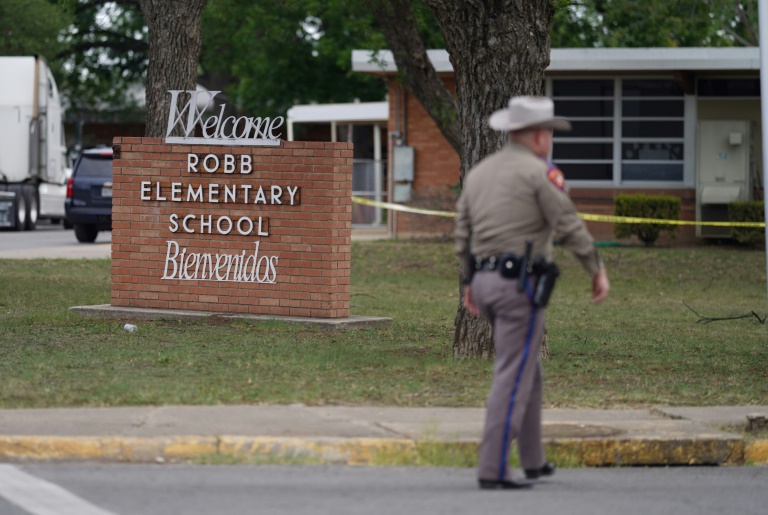
A teenage gunman killed at least 19 young children and two teachers at an elementary school in Texas on Tuesday, prompting a furious President Joe Biden to denounce the US gun lobby and vow to end the nation’s cycle of mass shootings.

The attack in Uvalde — a small community about an hour from the Mexican border — was the deadliest US school shooting in years, and the latest in a spree of bloody gun violence across America.

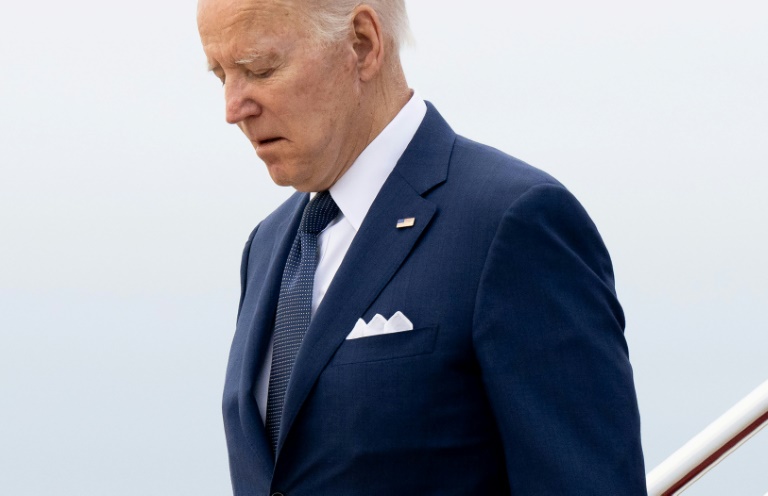
“It’s time to turn this pain into action for every parent, for every citizen of this country,” Biden said, his voice heavy with emotion.

“It’s time for those who obstruct or delay or block common-sense gun laws — we need to let you know that we will not forget,” he said.

“As a nation, we have to ask when in God’s name are we going to stand up to the gun lobby? When in God’s name will we do what we all know in our gut needs to be done?”

Texas Governor Greg Abbott named the suspect as Salvador Ramos, an 18-year-old local resident and a US citizen.

“He shot and killed, horrifically and incomprehensibly,” Abbott said.

Texas Department of Public Safety (DPS) officials told CNN the gunman was believed to have shot his grandmother before heading to Robb Elementary School around noon where he abandoned his vehicle and entered with a handgun and a rifle, wearing body armor.

– Over a dozen children wounded –

The gunman was killed by responding officers, the officials said, adding later two teachers also died in the attack.

“Right now there’s 19 children that were killed by this evil gunman, as well as two teachers from this school,” DPS spokesman Lieutenant Chris Olivarez told NBC News.

Fourth-grade teacher Eva Mireles was shot and killed while trying to protect her students, her aunt Lydia Martinez Delgado told the New York Times.

“I’m furious that these shootings continue, these children are innocent, rifles should not be easily available to all,” she said in a separate statement to US media.

More than a dozen children were also wounded in the attack at the school, which teaches more than 500 students aged around seven to 10 years old, mostly Hispanic and economically disadvantaged.

Uvalde Memorial Hospital said on Facebook it had received 13 children while University Health hospital in San Antonio said on Twitter it had received a 66-year-old woman and a 10-year-old girl, both in critical condition, and two other girls aged nine and 10.

At least one Border Patrol agent responding to the incident was wounded in an exchange of gunfire with the shooter, Department of Homeland Security spokeswoman Marsha Espinosa tweeted.

It was the deadliest such incident since the 2012 Sandy Hook shooting in Connecticut, in which 20 children and six staff were killed.

– ‘Happens nowhere else’ –

Ted Cruz, a pro-gun rights Republican senator from Texas, tweeted that he and his wife were “lifting up in prayer the children and families in the horrific shooting in Uvalde.”

But Senator Chris Murphy, a Democrat from Connecticut, where the Sandy Hook shooting took place, made an impassioned appeal for concrete action to prevent further violence.

“This isn’t inevitable, these kids weren’t unlucky. This only happens in this country and nowhere else. Nowhere else do little kids go to school thinking that they might be shot that day,” Murphy said on the Senate floor in Washington.

“I’m here on this floor to beg, to literally get down on my hands and knees and beg my colleagues: Find a path forward here. Work with us to find a way to pass laws that make this less likely.”

Among the international leaders reacting, Pope Francis was “heartbroken by the massacre” while Ukrainian President Volodymyr Zelensky said it was “terrible to have victims of shooters in peaceful times.”

President Emmanuel Macron said France shared “the shock and grief of the American people, and the rage of those who are fighting to end the violence.”

Spanish Prime Minister Pedro Sanchez tweeted: “We have to stop this daily horror in the US.”

And German Chancellor Olaf Scholz said his thoughts were with “the injured and the bereaved of the victims of this inconceivable massacre for which hardly any words can be found.”

The deadly assault in Texas follows a series of mass shootings in the United States this month.

On May 14, an 18-year-old self-declared white supremacist shot 10 people dead at a Buffalo, New York grocery store.

The following day, a man blocked the door of a church in Laguna Woods, California and opened fire on its Taiwanese-American congregation, killing one person and wounding five.

Despite recurring mass-casualty shootings, multiple initiatives to reform gun regulations have failed in the US Congress, leaving states and local councils to strengthen — or weaken — their own restrictions.

The National Rifle Association has been instrumental in fighting against stricter US gun laws.

The United States suffered 19,350 firearm homicides in 2020, up nearly 35 percent on 2019, the Centers for Disease Control and Prevention said in its latest data.

War in Ukraine: Latest developments

Here are the latest developments in the war in Ukraine:

– Russia trying to ‘destroy’ eastern city –

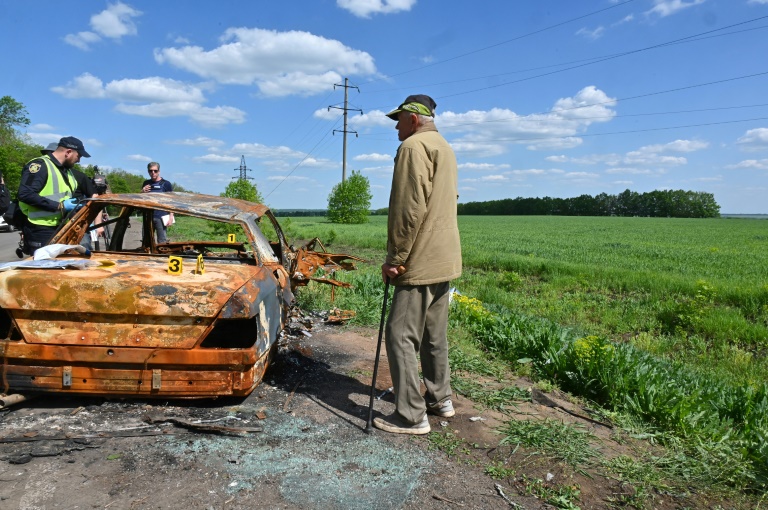
The governor of the eastern region of Lugansk accuses Russia of trying to “completely destroy” the city of Severodonetsk in its bid to conquer the Donbas region, near Russia’s border.

“They are simply erasing Severodonetsk from the face of the earth,” Sergei Gaidai says on Telegram, adding that heavy bombardments of the eastern city are preventing the evacuation of the remaining 15,000 civilians.

President Volodymyr Zelensky says the situation in Donbas is “extremely difficult” as the Russian army brings its full force to bear.

The head of Ukraine’s military intelligence, Kyrylo Budanov, said the issue is getting arms to the frontline, saying delays had left Kyiv “catastrophically short of heavy weapons”.

– Putin girding for long war –

Russian Defence Minister Sergei Shoigu makes clear that Russia is settling in for a long war.

“We will continue the special military operation until all the objectives have been achieved,” Shoigu tells the Collective Security Treaty Organization, a Russian-led military alliance of former Soviet states.

The secretary of Russia’s Security Council, Nikolai Patrushev, also says Moscow’s offensive will last as long as necessary.

“We are not rushing to meet deadlines,” he says.

– Sanctions causing food shortages: Moscow – 

Russia says the West needs to lift sanctions on the country to stave off a global food crisis.

The war in Ukraine, which together with Russia produces 30 percent of the world’s wheat, has pushed global food prices to an all-time high — sparking fears of worsening hunger, particularly in Africa.

“Solving the food problem requires a comprehensive approach, including the removal of sanctions that have been imposed on Russian exports and financial transactions,” says Andrey Rudenko, a Russian deputy foreign minister.

He also demanded that Ukraine de-mine its ports so that ships can leave with grain exports.

The West argues it is Russia’s offensive in Ukraine and blockade of Ukraine’s ports that is causing food scarcity.

– Chelsea FC takeover approved –

The UK government approves the proposed takeover of Chelsea football club from Roman Abramovich, saying it is satisfied the deal “will not benefit” the sanctioned Russian oligarch.

Abramovich put Chelsea on the market in early March.

A consortium led by Todd Boehly, a co-owner of baseball’s Los Angeles Dodgers, has agreed to buy the club for a record £4.25 billion ($5.3 billion). The Premier League agreed to the deal.

– Hungary maintains opposition to oil embargo –


Budapest is unlikely to drop its opposition to an EU embargo on Russian oil soon and leaders should not discuss the issue at an upcoming summit, Hungary’s leader Viktor Orban tells Brussels in a letter.

Landlocked Hungary relies on Russian oil from a single pipeline and Orban insists the proposed sixth package of EU sanctions against Moscow would have a devastating impact on his country’s economy. 

– Russia seeks older recruits –

Russia’s parliament is to consider scrapping the upper age limit for signing up to join the army, in a sign Moscow may be looking to recruit more troops for its military campaign in Ukraine.

Under current legislation, only Russians aged 18 to 40 and foreign nationals aged 18 to 30 have the right to sign their first military service contract.

A draft bill proposes to scrap the upper limit, saying that high-precision weapons require highly skilled specialists, who are often over 40.

– Kharkiv metro reopens –

The metro in Ukraine’s second city of Kharkiv reopens after months of use as a bomb shelter.

The reopening is a symbol of Ukraine’s success in driving back Russian forces from the city’s outskirts but some people continue to live underground, fearing that the bombardments could resume. 

burs-cb/lcm

North Korea fires likely ICBM hours after Biden leaves Asia

North Korea fired a volley of missiles Wednesday, including possibly its largest intercontinental ballistic missile, just hours after US President Joe Biden left Asia after a trip overshadowed by Pyongyang’s sabre-rattling.

North Korea has also been conducting “operational tests” of a nuclear detonation device, Kim Tae-hyo, Seoul’s first deputy director of the National Security Office, said, adding a test could come “imminently”.

His warning adds to the drumbeat of predictions from US and South Korean officials, who have been saying for weeks that Kim Jong Un’s regime is close to conducting its seventh nuclear test.

Three missiles, including one ICBM, were fired from the Sunan area in Pyongyang, Seoul said — one of nearly 20 weapons tests by North Korea so far this year — prompting joint US-South Korea live fire missile drills in response.

Pyongyang’s missile launches are “an illegal act in direct violation of UN Security Council resolutions,” Seoul’s government said after a National Security Council meeting chaired by President Yoon Suk-yeol. 

The United States called for Pyongyang to “engage in sustained and substantive dialogue,” a state department spokesman said.

The three early morning ballistic missile launches came within an hour of each other, South Korea’s Joint Chiefs of Staff said in a statement.

“The first ballistic missile (suspected ICBM) had a range of around 360 kilometres (225 miles) and an altitude of around 540km,” Seoul’s Joint Chiefs of Staff said in a statement.

This could have been North Korea’s largest ICBM, the Hwasong-17, Kim Tae-hyo said later.

The second ballistic missile “disappeared at an altitude of 20km” and the third — a suspected short-range ballistic missile — travelled around 760km at an altitude of around 60km.

– Response to Biden –

The Wednesday launches are the latest in a blitz of sanctions-busting weapons tests by Pyongyang this year, including test-firing intercontinental ballistic missiles at full range for the first time since 2017.

The latest apparent test come just days after Biden left South Korea Sunday.

The tests were “clearly timed for President Biden’s return after his visit to South Korea and Japan,” Park Won-gon, a professor at Ewha University said, adding that Biden hadn’t even touched down in the US.

During Biden’s visit, South Korea and the US announced they would look at ramping up joint military exercises, which had been scaled back for Covid and during a bout of failed diplomacy with the North.

They also discussed deploying more US tactical assets to the peninsula — measures that would likely enrage Pyongyang, which views the drills as rehearsals for invasion.

“North Korea’s objections against these announcements was expressed through the missile launches,” Park said.

On his last day in Seoul, Biden told reporters he had only a short message for Kim: “Hello. Period.”

– Covid and missiles –

“Pyongyang appears to have launched different types of missiles, probably in the process of improving related military capabilities,” said Leif-Eric Easley, a professor at Ewha University in Seoul. 

“But this also looks like a statement that the Kim regime has many different ways of striking an adversary.”

Kim has recently doubled down on his programme of military modernisation.

Despite struggling with a recent Covid-19 outbreak, new satellite imagery has indicated the North has resumed construction at a long-dormant nuclear reactor.

Earlier this month, North Korea confirmed its first-ever Omicron cases in Pyongyang, and the virus has since torn through its unvaccinated population of 25 million.

More than three million people have been sick with “fever” North Korean state media said Wednesday, with 68 deaths since the outbreak began in late April.

North Korea has continued to conduct missile tests since it declared a national emergency over the Covid outbreak.

“It shows Pyongyang’s intent to achieve two objectives simultaneously: overcoming the outbreak and enhancing its nuclear arsenal,” said Yang Moo-jin, a professor at the University of North Korean Studies. 

“Kim seems to be saying that the North is in charge of the security issues that are affecting the Korean peninsula, not Washington,” he added. 

Seoul’s Foreign Minister Park Jin and US Secretary of State Antony Blinken spoke on the phone after the Wednesday launches, the Foreign Ministry said. 

The pair said it was “deeply deplorable” that North Korea “is using its main financial resources for nuclear and missile developments rather than quarantine and improvement of people’s livelihood” in the outbreak.

French green activists block TotalEnergies' annual meeting

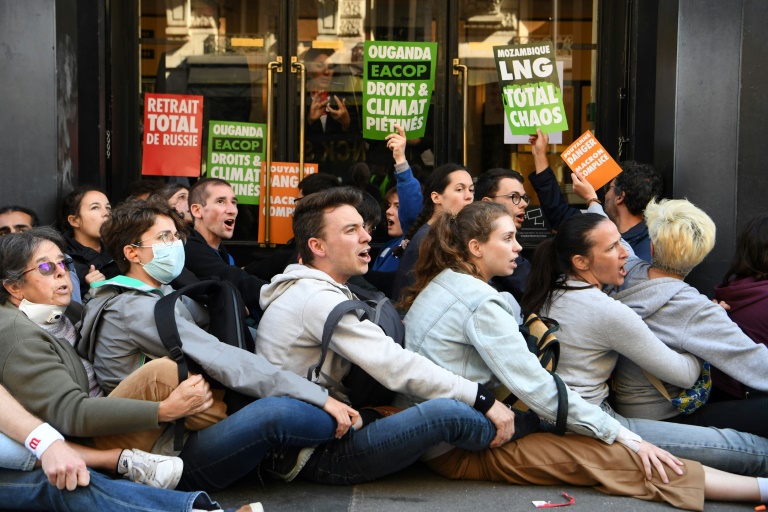
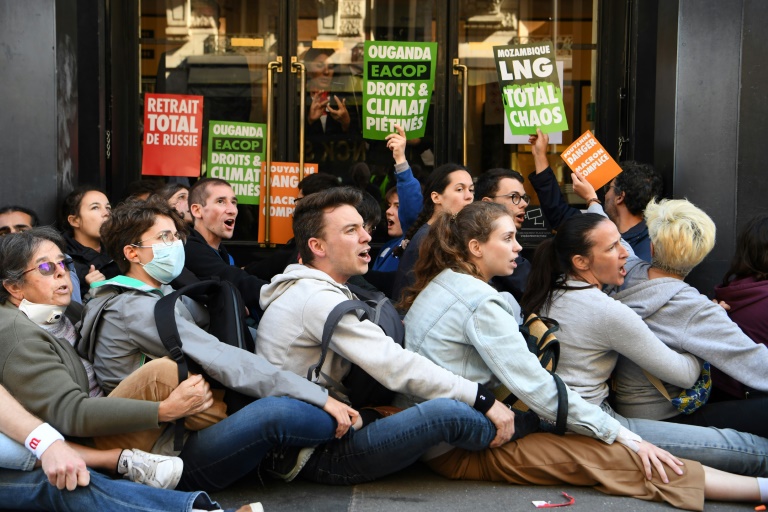
More than 100 activists sought to block oil giant TotalEnergies’ annual general meeting in central Paris on Wednesday to protest the energy firm’s climate policies and continued presence in Russia following the invasion of Ukraine. 

Greenpeace, Friends of the Earth and Alternatiba protesters handcuffed themselves to each other and impeded shareholders’ access to the building, claiming that TotalEnergies is not doing enough to fight climate change.

“It is no longer possible for the old world to serenely meet to validate projects that are destructive to the climate, human rights and peace,” the French branch of Friends of the Earth said on Twitter. 

Activists unfurled a five-metre (16-foot) long banner saying, “no retreat, no general assembly”, a reference to the energy firm’s presence in Russia, where it runs liquified gas extraction projects. 

The meeting at the Salle Pleyel concert hall in central Paris was eventually declared open by TotalEnergies chief executive Patrick Pouyanne, but with the venue almost empty as so few shareholders had been able to enter.

He said that the AGM could go ahead “as a certain number of shareholders are present”.

TotalEnergies is aiming for net-zero carbon emissions by mid-century and has pledged to reduce emissions of its petroleum products by 30 percent compared to 2015. 

Earlier on Wednesday, the group announced it had bought a 50-percent stake in the US renewables producer Clearway Energy Group, as it seeks to expand its portfolio in the sector in the United States.

Shareholders at TotalEnergies’ AGM are due to vote on the group’s climate plans, with some announcing in advance that they would vote against. 

A group of shareholders representing 0.78 percent of the giant’s capital deposited a resolution — that was rejected — asking for the group to respect the Paris climate deal, which seeks to limit global warming to 2 degrees Celsius and if possible 1.5 degrees.

“There are shareholders who recognise the climate emergency but on the whole they are still too passive,” Greenpeace France campaigner Edina Ifticene told AFP. 

On Tuesday, oil giant Shell’s general assembly in central London was suspended for two hours due to disruption from climate change activists.

els-mto-cdc-ech/sjw/kjm

French green activists block TotalEnergies' annual meeting

More than 100 activists sought to block oil giant TotalEnergies’ annual general meeting in central Paris on Wednesday to protest the energy firm’s climate policies and continued presence in Russia following the invasion of Ukraine. 

Greenpeace, Friends of the Earth and Alternatiba protesters handcuffed themselves to each other and impeded shareholders’ access to the building, claiming that TotalEnergies is not doing enough to fight climate change.

“It is no longer possible for the old world to serenely meet to validate projects that are destructive to the climate, human rights and peace,” the French branch of Friends of the Earth said on Twitter. 

Activists unfurled a five-metre (16-foot) long banner saying, “no retreat, no general assembly”, a reference to the energy firm’s presence in Russia, where it runs liquified gas extraction projects. 

The meeting at the Salle Pleyel concert hall in central Paris was eventually declared open by TotalEnergies chief executive Patrick Pouyanne, but with the venue almost empty as so few shareholders had been able to enter.

He said that the AGM could go ahead “as a certain number of shareholders are present”.

TotalEnergies is aiming for net-zero carbon emissions by mid-century and has pledged to reduce emissions of its petroleum products by 30 percent compared to 2015. 

Earlier on Wednesday, the group announced it had bought a 50-percent stake in the US renewables producer Clearway Energy Group, as it seeks to expand its portfolio in the sector in the United States.

Shareholders at TotalEnergies’ AGM are due to vote on the group’s climate plans, with some announcing in advance that they would vote against. 

A group of shareholders representing 0.78 percent of the giant’s capital deposited a resolution — that was rejected — asking for the group to respect the Paris climate deal, which seeks to limit global warming to 2 degrees Celsius and if possible 1.5 degrees.

“There are shareholders who recognise the climate emergency but on the whole they are still too passive,” Greenpeace France campaigner Edina Ifticene told AFP. 

On Tuesday, oil giant Shell’s general assembly in central London was suspended for two hours due to disruption from climate change activists.

els-mto-cdc-ech/sjw/kjm

'We are not alone': Wartime solitude on Ukraine's ghostly front

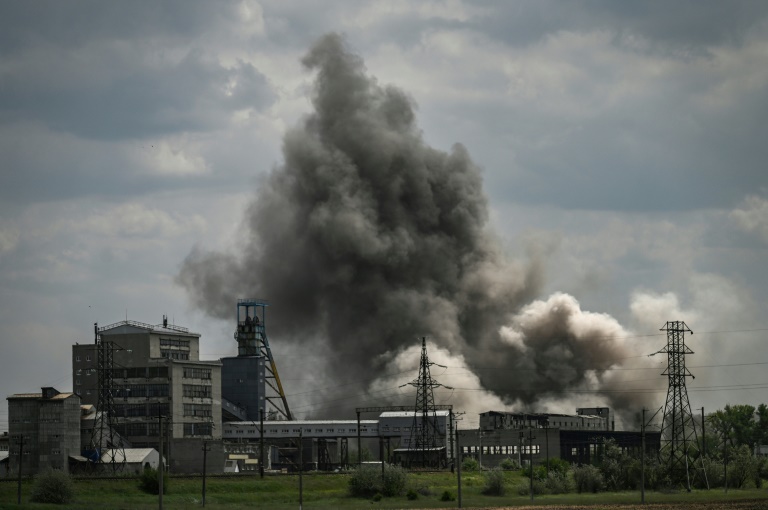
The ground shook and birds scattered moments after Natalia Timofeyenko climbed out of her bunker to reassure herself that she was not alone on the east Ukrainian front.

The thundering blast smashed apart a chunk of a mammoth salt mine where the 47-year-old worked with most of her friends and neighbours.

Another piece of Timofeyenko’s old life had shattered in the crosshairs of an artillery battle raging around her home town of Soledar in the fourth month of Russia’s invasion.

But the pale and visibly sleep-deprived woman seemed beyond the point of caring as more explosions rocked the salt capital of Ukraine.

She had found two of her neighbours outside the town’s last functioning grocer and stood chatting while soot-black smoke spun toward the sky.

“I go outside just to see people. I know that there is shelling out there but I go,” she said without even blinking at a close-range crack of outgoing fire.

“We all need confirmation that we are not alone and there is still life out there.”

– ‘Hardened by war’ –

Ukraine’s ghostly frontline towns are home to an untold number of traumatised people who spend most of their time either hiding in dark basements or walking the ceaselessly shelled streets.

The psychological toll of wartime solitude worries one of Ukrainian President Volodymyr Zelensky’s former costars on a comedy show that propelled their careers seven years ago.

The actor now wears military fatigues and body armour after joining Ukraine’s legion of volunteer soldiers and adopting the nom de guerre Franko.

But he still takes his guitar to entertain lonely survivors during visits aimed at delivering aid and taking out anyone still willing to start a new life somewhere else.

“People become hardened by war,” Franko said on condition that his real name not be used for family safety reasons.

“They lose their senses and need to be brought back to life. They need to be able to feel happiness again.”

A silent group of lost-looking people stood next to their bundled belongings on a town square where Franko was helping organise a new round of evacuations from the flaming front.

– ‘They keep coming’ –

The square in Bakhmut — a district capital absorbing the same wave of artillery strikes as Soledar five miles (eight kilometres) to the northeast — is bearing daily witness to the anguish that accompanies uprooted lives.

“I do not know where we are going,” store clerk Anastasia Lebedeva said while waiting for an evacuation bus with her schoolage daughter.

“We are just trying to get as far away from the war as possible,” said the 44-year-old.

The artillery shells and rockets smashing into Bakhmut and Soledar with growing frequency represent the new leg of Russia’s steady march across Ukraine’s industrial east.

The biggest battles surround a crucial road running up from Bakhmut to the besieged industrial cities of Lysychansk and Severodonetsk.

Soledar and similar towns along the highway are being methodically razed to the ground by the ferocity of the Kremlin’s resolve to conquer its pro-Western neighbour — and the force of Ukraine’s resistance.

“There are tank battles on that road now,” Bakhmut’s military administration chief Sergiy Kalyan said on the square.

“We keep beating them back and they keep coming.”

– ‘Abandoned and unwanted’ –

Ukrainian special forces commander Tornado climbed out of his foxhole after an afternoon nap and sounded resolutely unfazed by the brute force of Russia’s new assault.

Russia’s biggest guns are starting to sever junctions forming the last line of defence for the eastern administrative capital in Kramatorsk.

Tornado’s unit was fighting near a ring of forests the Russians have been blitzing to reach Kramatorsk and its sister city Slovyansk from the north.

“We have more volunteer soldiers than we know what to do with,” Tornado said with a laugh. “We have the will to fight and fight.”

The 33-year-old’s lone complaint — echoed daily by other soldiers — was the lag between pledges of Western military assistance and the time they took actually to reach the front.

But more weapons are the last thing farmer Ruslan Krasnov wants to see on the destroyed outskirts of Bakhmut.

The 48-year-old’s Russian-speaking neighbours had just convinced some Ukrainian soldiers not to set up a temporary base outside their home.

But their streets still ended up being shelled by heavy fire that levelled a hangar housing tractors and other machines.

“The people living here are a hardy bunch,” said Krasnov.

“But the war has left us with nothing. We feel abandoned and completely unwanted sitting here in the dark.”

Close Bitnami banner
Bitnami