World

Ukraine's Zelensky calls for Western unity as Russia advances

Ukrainian President Volodymyr Zelensky blasted the West for lacking unity on Wednesday, as the Russian invasion entered its fourth month and Moscow’s troops advanced in eastern Ukraine.

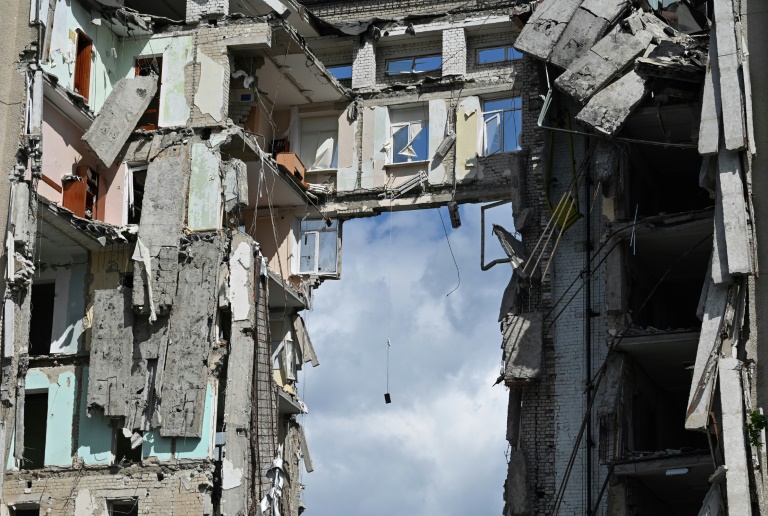
Fighting reached the edge of the industrial city of Severodonetsk, which is under fierce bombardment by Russian forces who are trying to encircle it in one of their key goals in Ukraine’s Donbas region.

An unrepentant Moscow told the West to lift sanctions to stave off a global food crisis sparked by the war between two countries that together produce nearly a third of the world’s wheat. 

Zelensky renewed calls for heavy weapons from foreign partners, saying the billions of dollars’ worth already put up were not enough to help Ukraine’s outgunned forces.

“Unity is about weapons. My question is, is there this unity in practice? I can’t see it. Our huge advantage over Russia would be when we are truly united,” Zelensky said via videolink to an event on the sidelines of the World Economic Forum in Davos.

Zelensky said Ukraine was grateful for US support, but urged Europe to step up, specifically naming neighbouring Hungary which is blocking an EU-wide embargo on Russian oil.

The Ukrainian president said hours earlier in his daily address to the nation that Russian forces “want to destroy everything” in eastern Ukraine.

Western funds and weapons have helped Ukraine hold off its neighbour’s advances in many areas, including the capital Kyiv.

Russia is now focused on expanding its gains in eastern Donbas, home to pro-Russian separatists, as well as the southern coast.

– ‘Completely destroy’ –

The governor of the eastern region of Lugansk, Sergiy Gaiday, said fighting had reached the “outskirts” of Severodonetsk, which was being hammered by air strikes, rockets, artillery and mortars.

“Russian troops have advanced far enough that they can already fire mortars,” Gaiday said in a statement on social media, adding that, “yesterday there was already fighting on the outskirts of the city.” 

“The Russian army has decided to completely destroy Severodonetsk. They are simply erasing Severodonetsk from the face of the earth,” the governor said in a separate video on Telegram. 

“I think that the next week will be decisive.”

In the town of Soledar, Ukraine’s salt manufacturing hub, the ground shook moments after Natalia Timofeyenko climbed out of her bunker to reassure herself that she was not alone.

“I go outside just to see people. I know that there is shelling out there but I go,” the 47-year-old said after a thundering blast smashed apart a chunk of a mammoth salt mine where she worked with most of her friends and neighbours.

Ghostly frontline towns like Soledar are being hammered by Russian artillery as they sit along the crucial road that leads out of besieged Severodonetsk and its sister city Lysychansk.

Twelve people were killed by “extremely heavy shelling and attacks” in the neighbouring region of Donetsk, which also forms part of Donbas, the Ukrainian presidency said.

In a sign that the rest of the country remains at risk, Russian cruise missiles struck the major southern rail hub of Zaporizhzhia, killing one person and damaging dozens of houses, the presidency added.

– ‘Solving the food problem’ –

In Moscow, authorities made it clear Russia was settling in for a long conflict, with parliament scrapping the upper age limit for soldiers.

“We will continue the special military operation until all the objectives have been achieved,” Defence Minister Sergei Shoigu said, using President Vladimir Putin’s name for the war.

Tough sanctions imposed after Russia’s February 24 invasion of its pro-Western neighbour are causing food shortages around the world, Moscow added.

“Solving the food problem requires a comprehensive approach, including the removal of sanctions that have been imposed on Russian exports and financial transactions,” said Russian deputy foreign minister, Andrey Rudenko.

He also demanded that Ukraine de-mine its ports.

The West argues it is Russia’s offensive in Ukraine and blockade of Ukraine’s ports that has pushed global food prices to an all-time high — sparking fears of worsening hunger, particularly in Africa.

With its unity questioned by Zelensky, EU chief Charles Michel said he was “confident” of an oil deal embargo before a Brussels summit on Monday despite Hungary’s resistance.

NATO’s unity has also been called into question with Turkey threatening to block Sweden and Finland from joining in the wake of the Ukraine invasion. 

Swedish Prime Minister Magdalena Andersson said her country was “not sending money to terrorist organisations”, rejecting Turkish claims over alleged support for Kurdish militant groups.

– ‘It is just war’ –

A swathe of southern Ukraine meanwhile is living under Russian occupation.

President Vladimir Putin on Wednesday signed a decree simplifying a procedure to obtain a Russian passport for residents of the southern Ukrainian regions of Kherson, under the full control of Russian troops, and partly-occupied Zaporizhzhia.

Residents expressed concerns about the future in Kherson. Moscow-backed officials are pushing for formal annexation by Russia.

“People are very apprehensive,” trolleybus driver Alexander Loginov, 47, told AFP from the cabin of his vehicle, during a press trip organised by the Russian defence ministry. 

Day-to-day life remains marked by uncertainty, especially over payment of salaries as “Ukrainian banks are closing”.

“To be honest, it is just war,” Loginov added.

And 200 bodies were found in the basement of a destroyed building of the port city of Mariupol, which fell to Moscow recently after a devastating siege, Ukrainian authorities said.

As the locals refused to collect and pack the heavily decomposed bodies, the Russian emergency workers just left the scene, Ukrainian ombudswoman Lyudmyla Denisova said on Telegram Wednesday.

“It is impossible to be within the area due to the corpse smell,” she wrote. “The occupiers turned the entire Mariupol into a cemetery.”

burs-dk/spm
Ferdinand Marcos Jr proclaimed next Philippine president

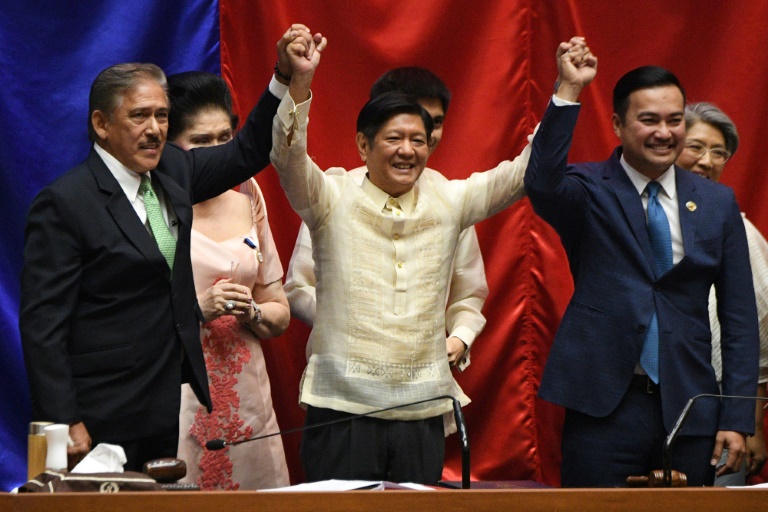
Ferdinand Marcos Jr was Wednesday proclaimed the next Philippine president after a landslide win that rights groups and religious leaders fear could weaken the corruption-prone country’s democracy.

Marcos, who formally takes office next month, secured more than 31.6 million votes, or 58.8 percent of the total, according to a final tally released by parliament.

He was the first presidential candidate to win an outright majority since his dictator father, who presided over widespread graft and human rights abuses, was ousted by a popular revolt in 1986.

A joint session of the House of Representatives and Senate formally ratified the results and proclaimed Marcos the Philippines’ 17th president. He will be inaugurated on June 30.

Speaking after the ceremony, Marcos said he was “humbled” by his success at the ballot box and vowed to “always strive to perfection”.

“I want to do well because when a president does well the country does well and I want to do well for this country,” the 64-year-old told reporters. 

Marcos’s victory followed relentless online whitewashing of his family’s past, and alliances with rival political dynasties that have the means to influence voters in their regions.

His liberal rival Leni Robredo finished well behind in second place with just over 15 million votes.

Marcos’s running mate Sara Duterte, the daughter of the outgoing President Rodrigo Duterte, was proclaimed winner of the vice presidential race.

Wearing a traditional formal shirt, Marcos greeted Sara Duterte with a hug as she arrived at a holding room inside the parliament building.

Former first lady Imelda Marcos, 92, who has been the driving force behind the family’s comeback from exile to the peak of power, was pushed in a wheelchair into the chamber where she held a seat as recently as 2019.

Joining her was the new first lady, Louise Araneta-Marcos, along with other relatives and supporters.

“We’re very, very grateful for a second chance,” Imee Marcos, an elected senator and sister of the president-elect, told reporters.

“My family went through difficult times after 1986.”  

– ‘Prelude of things to come?’ –

Hours earlier and several kilometres away, hundreds of riot police clashed with protesters opposing the proclamations, outside the Commission on Human Rights.

Water cannon was sprayed on the crowd of activists. Leftist groups reported at least 10 people wounded.

“Is the violent dispersal today a prelude of things to come under a Marcos-Duterte administration — where exercising our basic rights and freedoms are met with brazen State violence?” Cristina Palabay, secretary general of the Karapatan human rights group, asked in a statement.

After six years of President Duterte’s authoritarian rule, activists and many religious leaders wanted Robredo for the top job, fearing a Marcos administration would lead to a further erosion of human rights and democratic checks and balances.

Marcos has so far given few clues about how he will govern the poverty-plagued country of 110 million people.

On the campaign trail, Marcos embraced some of the elder Duterte’s key policies, though he avoided scrutiny of his positions by shunning televised debates with rivals and largely avoiding media interviews.

Marcos’s admiration for his father, whose time in office he has portrayed as a golden era for the Philippines, has raised concerns that he may seek a similar regime.

He looks set to have a commanding majority in the House of Representatives, where his cousin Martin Romualdez is the front runner for the powerful speaker’s job.

Most of the Senate’s 24 members are aligned with President Duterte or Marcos Jr.

Analysts say that could enable him to push through changes to the constitution that have eluded his predecessors.

Marcos Jr will face a range of challenges when he takes power, from reviving the pandemic-battered economy and creating jobs, to dealing with an increasingly assertive Beijing in the South China Sea and the impacts of climate change.

He has announced several cabinet appointments in recent days, including respected economist Arsenio Balisacan as head of the National Economic and Development Authority.

Sara Duterte will serve as education secretary.

French green activists block TotalEnergies' annual meeting

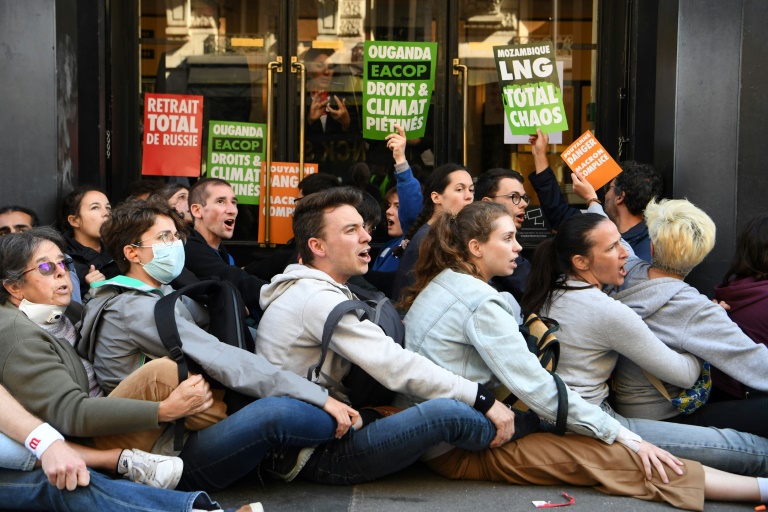
More than 100 activists sought to block oil giant TotalEnergies’ annual general meeting in central Paris on Wednesday to protest the energy firm’s climate policies and continued presence in Russia following the invasion of Ukraine. 

Greenpeace, Friends of the Earth and Alternatiba protesters handcuffed themselves to each other and impeded shareholders’ access to the building, claiming that TotalEnergies is not doing enough to fight climate change.

“It is no longer possible for the old world to serenely meet to validate projects that are destructive to the climate, human rights and peace,” the French branch of Friends of the Earth said on Twitter. 

Activists unfurled a five-metre (16-foot) long banner saying, “no retreat, no general assembly”, a reference to the energy firm’s presence in Russia, where it runs liquefied natural gas projects. 

The meeting at the Salle Pleyel concert hall in central Paris was eventually declared open by TotalEnergies chief executive Patrick Pouyanne, but with the venue almost empty as so few shareholders had been able to enter.

He said that the AGM could go ahead “as a certain number of shareholders are present”.

TotalEnergies is aiming for net-zero carbon emissions by mid-century and has pledged to reduce emissions of its petroleum products by 30 percent compared to 2015.

Pouyanne said, however, during the AGM that a goal outlined by the International Energy Agency (IEA) for a 30-percent drop in the consumption of petroleum products within a decade was not tenable.

“We deviate from the IEA scenario, the fall in demand for oil and gas will not be linear, it will not fall by 30 percent over the next 10 years,” he said in response to a question from a shareholder.

Shareholders at TotalEnergies’ AGM overwhelmingly approved a report outlining the company’s climate plans.

Detailing its goals through 2030, several shareholders had said in advance that they would vote against it as it was not ambitious enough.

A group of shareholders representing 0.78 percent of the giant’s capital had also deposited a resolution — that was rejected — asking for the group to respect the Paris climate deal, which seeks to limit global warming to 2 degrees Celsius and if possible 1.5 degrees.

“There are shareholders who recognise the climate emergency but on the whole they are still too passive,” Greenpeace France campaigner Edina Ifticene told AFP. 

On Tuesday, oil giant Shell’s general assembly in central London was suspended for two hours due to disruption from climate change activists.

Earlier on Wednesday, TotalEnergies announced it had bought a 50-percent stake in the US renewables producer Clearway Energy Group, as it seeks to expand its portfolio in the sector in the United States.

els-mto-cdc-ech/sjw-kjm/rl

French green activists block TotalEnergies' annual meeting

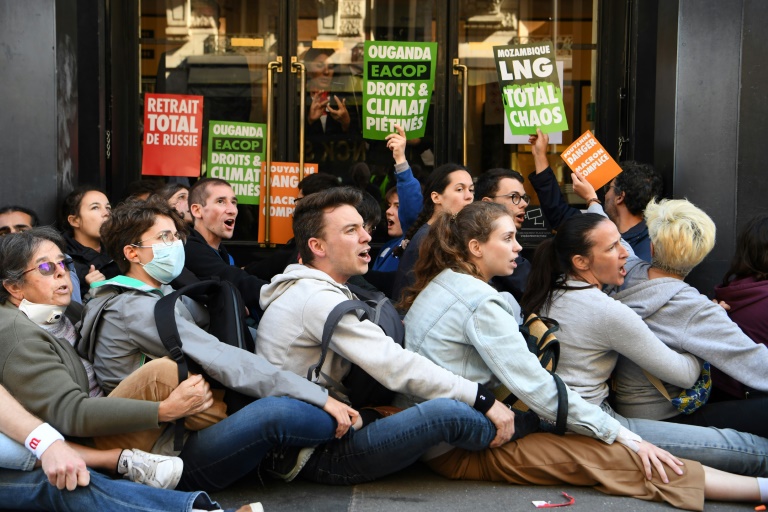
More than 100 activists sought to block oil giant TotalEnergies’ annual general meeting in central Paris on Wednesday to protest the energy firm’s climate policies and continued presence in Russia following the invasion of Ukraine. 

Greenpeace, Friends of the Earth and Alternatiba protesters handcuffed themselves to each other and impeded shareholders’ access to the building, claiming that TotalEnergies is not doing enough to fight climate change.

“It is no longer possible for the old world to serenely meet to validate projects that are destructive to the climate, human rights and peace,” the French branch of Friends of the Earth said on Twitter. 

Activists unfurled a five-metre (16-foot) long banner saying, “no retreat, no general assembly”, a reference to the energy firm’s presence in Russia, where it runs liquefied natural gas projects. 

The meeting at the Salle Pleyel concert hall in central Paris was eventually declared open by TotalEnergies chief executive Patrick Pouyanne, but with the venue almost empty as so few shareholders had been able to enter.

He said that the AGM could go ahead “as a certain number of shareholders are present”.

TotalEnergies is aiming for net-zero carbon emissions by mid-century and has pledged to reduce emissions of its petroleum products by 30 percent compared to 2015.

Pouyanne said, however, during the AGM that a goal outlined by the International Energy Agency (IEA) for a 30-percent drop in the consumption of petroleum products within a decade was not tenable.

“We deviate from the IEA scenario, the fall in demand for oil and gas will not be linear, it will not fall by 30 percent over the next 10 years,” he said in response to a question from a shareholder.

Shareholders at TotalEnergies’ AGM overwhelmingly approved a report outlining the company’s climate plans.

Detailing its goals through 2030, several shareholders had said in advance that they would vote against it as it was not ambitious enough.

A group of shareholders representing 0.78 percent of the giant’s capital had also deposited a resolution — that was rejected — asking for the group to respect the Paris climate deal, which seeks to limit global warming to 2 degrees Celsius and if possible 1.5 degrees.

“There are shareholders who recognise the climate emergency but on the whole they are still too passive,” Greenpeace France campaigner Edina Ifticene told AFP. 

On Tuesday, oil giant Shell’s general assembly in central London was suspended for two hours due to disruption from climate change activists.

Earlier on Wednesday, TotalEnergies announced it had bought a 50-percent stake in the US renewables producer Clearway Energy Group, as it seeks to expand its portfolio in the sector in the United States.

els-mto-cdc-ech/sjw-kjm/rl

Kerry tells Davos climate coalition swelling

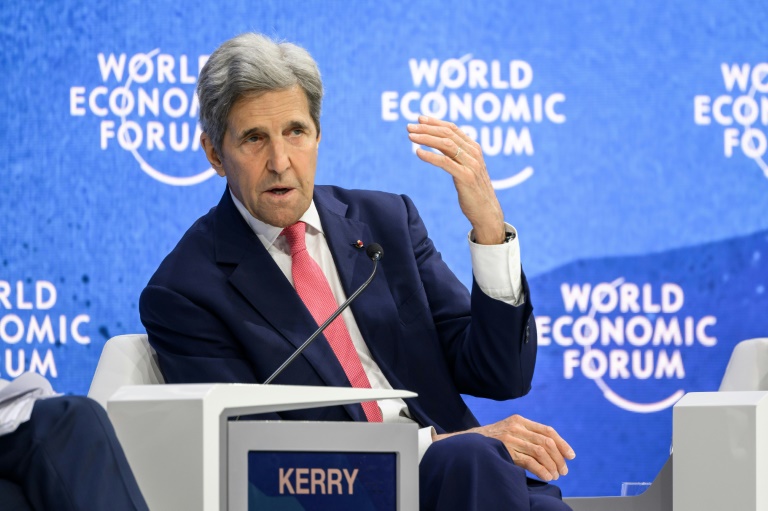
US climate envoy John Kerry said Wednesday more countries and companies are swinging behind a bid to combat climate change by jump-starting markets for technologies with massive investments.

They have joined a group known as the “First Movers Coalition”.

“Today the First Movers Coalition initiative leaps from the 35 initial companies that came to the table to 55 companies, with the additions of major corporations: FedEx, Ford Motor Company, and others,” Kerry told reporters at the World Economic Forum in Davos, Switzerland.

“The First Movers Coalition is mobilizing enormous purchasing power now to induce investment in brand-new technologies that could come to market,” he added.

Kerry likened the strategy to US government procurement schemes he said had boosted development of Covid-19 vaccines and private spaceflight.

He also listed a number of new countries to join the group, naming Britain, Denmark, Italy, India, Japan, Norway, Singapore and Sweden, and saying government policy could accelerate the transition in areas like green manufacturing and carbon capture and storage.

Billionaire philanthropist and Microsoft founder Bill Gates said that at present “so many of the green products carry a price premium, and the way you get rid of that is you scale up the production”, citing the examples of solar panels, wind power and lithium-ion batteries.

Other technologies could achieve large-scale adoption in the same way, Gates said, pointing especially to hydrogen power.

“A combination of policies, including tax credits, private sector demand, teaming up the small companies that have great ideas with these companies that are willing to buy… that is the path forward,” he added.

Google Chief Financial Officer Ruth Porat said that the firm had committed $200 million to carbon dioxide removal, forming the core of over $900 million in pledges from other firms for the coming decade.

“We have seen that having clarity and certainty about demand does catalyse growth in markets,” Porat added.

Meanwhile Sweden’s Finance Minister Mikael Damberg said the Nordic country “wants to be the first fossil-free welfare nation on the planet,” highlighting especially a pilot plant for fossil-free steel production using hydrogen.

Kerry tells Davos climate coalition swelling

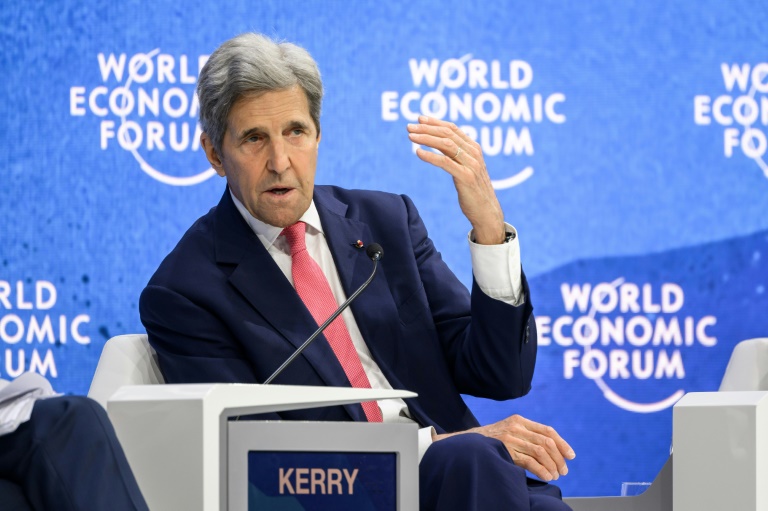
US climate envoy John Kerry said Wednesday more countries and companies are swinging behind a bid to combat climate change by jump-starting markets for technologies with massive investments.

They have joined a group known as the “First Movers Coalition”.

“Today the First Movers Coalition initiative leaps from the 35 initial companies that came to the table to 55 companies, with the additions of major corporations: FedEx, Ford Motor Company, and others,” Kerry told reporters at the World Economic Forum in Davos, Switzerland.

“The First Movers Coalition is mobilizing enormous purchasing power now to induce investment in brand-new technologies that could come to market,” he added.

Kerry likened the strategy to US government procurement schemes he said had boosted development of Covid-19 vaccines and private spaceflight.

He also listed a number of new countries to join the group, naming Britain, Denmark, Italy, India, Japan, Norway, Singapore and Sweden, and saying government policy could accelerate the transition in areas like green manufacturing and carbon capture and storage.

Billionaire philanthropist and Microsoft founder Bill Gates said that at present “so many of the green products carry a price premium, and the way you get rid of that is you scale up the production”, citing the examples of solar panels, wind power and lithium-ion batteries.

Other technologies could achieve large-scale adoption in the same way, Gates said, pointing especially to hydrogen power.

“A combination of policies, including tax credits, private sector demand, teaming up the small companies that have great ideas with these companies that are willing to buy… that is the path forward,” he added.

Google Chief Financial Officer Ruth Porat said that the firm had committed $200 million to carbon dioxide removal, forming the core of over $900 million in pledges from other firms for the coming decade.

“We have seen that having clarity and certainty about demand does catalyse growth in markets,” Porat added.

Meanwhile Sweden’s Finance Minister Mikael Damberg said the Nordic country “wants to be the first fossil-free welfare nation on the planet,” highlighting especially a pilot plant for fossil-free steel production using hydrogen.

Ousted PM Khan leads protest march on blockaded Pakistan capital

Pakistan’s ousted prime minister Imran Khan on Wednesday led a convoy of thousands of supporters towards the capital Islamabad in a show of force the new government has attempted to shut down, with clashes breaking out between police and protesters.

Since being removed from power through a no-confidence vote last month, the cricket star turned politician has heaped pressure on the country’s fragile new coalition rulers by staging mass rallies.

In a centrepiece showdown with his rivals, Khan had called for supporters to march towards the capital and stage a sit-in until fresh elections are called.

“No obstacle can stop us, we will cross all the barriers and will reach… Islamabad,” Khan declared from atop a truck.

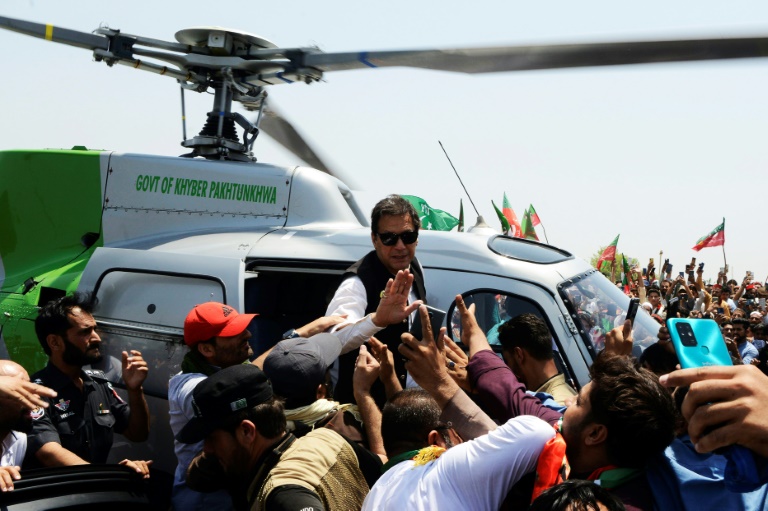
He made a dramatic arrival in a helicopter, touching down on a motorway clogged with hundreds of cars and walking supporters outside the city of Mardan, 100 kilometres (62 miles) northwest of Islamabad.

As the rotors wound down, the 69-year-old leant out of the door to wave at the crowd, before disappearing into a chaotic throng waving the red-and-green flags of his Pakistan Tehreek-e-Insaf (PTI) party.

All roads surrounding Islamabad were blocked, with a heavy security presence in place, while key entry and exit points outside nearby major cities including Lahore, Multan and Peshawar were also shut.

Police deployed tear gas against hundreds of Khan backers attempting to remove roadblocks in Lahore and Faizabad, where PTI supporters also seized an excavator to clear the route of containers.

Yasmin Rashid, a prominent PTI leader, told local media police smashed the windows of her car as she tried to drive from Lahore to Islamabad.

“We will reach Islamabad at all costs. We will deal with any obstructions… and follow the orders of our leader,” shopkeeper and protester Irfan Ahmad, 34, told AFP in Peshawar.

– Major disruption –

The coalition government headed by Prime Minister Shehbaz Sharif has pledged to stop Khan’s supporters from pouring into the city, calling the rally an attempt to “divide the nation and promote chaos”.

“Nobody should be allowed to besiege the capital and dictate his terms,” interior minister Rana Sanaullah said Tuesday.

The Supreme Court on Wednesday held an emergency hearing over whether the government had legal grounds to block the rally.

Schools in the capital and neighbouring Rawalpindi were closed and all exams cancelled, while a state of emergency was declared at all hospitals, with staff put on alert. 

“We have seen the capital blocked before but this is something unprecedented,” Islamabad private school worker Allah Ditta, 52, told AFP.

Salon worker Sawera Masih complained that the wide-scale disruption was falling hardest on daily wage workers like herself.

“Whoever is in power doesn’t make a difference to us, but not earning even for a single day affects me and my family,” the 23-year-old said.

– Police raids –

On Tuesday, PTI accused police of arresting and detaining hundreds of its supporters in overnight raids.

Police sources in Lahore who asked not to be named told AFP more than 200 supporters were detained on public order offences. 

The government and police said protesters had been planning to join the march with weapons.

One police officer was shot dead during the raids, Punjab Chief Minister Hamza Shahbaz Sharif said.

Khan, who claims he was removed by a US-led foreign conspiracy, was voted in by an electorate weary of the dynastic politics of the country’s two major parties.

The popular former sports star — who enjoyed the backing of the country’s powerful military — had promised to sweep away decades of entrenched corruption and cronyism but is believed to have fallen out with Pakistan’s generals.

He was brought down in part by his failure to rectify the country’s dire economic situation, including its crippling debt, shrinking foreign currency reserves and soaring inflation.

In Kharkiv's Gorky Park, a war crimes investigation

Ukrainian prosecutor Roman Petrenko inspects the remains of Russian rockets that fell on the popular Gorky Park in the country’s second city Kharkiv.

Petrenko, a prosecutor from the city’s Shevchenkivsky district, is wearing a gilet with “War Crimes. Kharkiv” written in large white letters. 

Kharkiv’s peaceful Gorky Park is full of winding alleys and has a small amusement park, with pavilions and a Ferris wheel. It is reputed to be one of the best parks in Ukraine.

Gorky Park was hit by around 50 shells in three months of war.

Prosecutors took up the case to ensure that the park could be open without the public being at risk and, above all, determine whether the attacks constitute a war crime. 

Even if there were no victims, “hitting civilian targets, civilian infrastructure, trying to kill civilians and destroy cultural heritage, are considered war crimes”, Petrenko said.

“An error can happen once or twice, but there are 56 hits recorded,” he said. 

“It’s not an accident. They were targeting the park.”

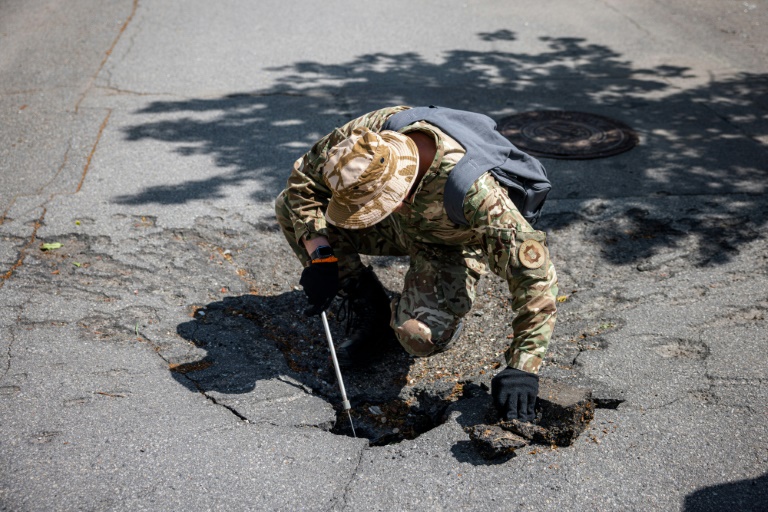
With a team of deminers, assistants, court officials and municipal workers, the prosecutor notes down each crater.

He has the ammunition dug up after an inspection by deminers, then photographs it, writes it down and determines the angle of fire and the origin of the weapon.  

The shells also hit a small theatre and a closed restaurant in the park.

The shrapnel even reached and damaged bronze sculptures of children scattered around the park. 

A duo of American deminers from the Bomb Techs Without Borders NGO advise their Ukrainian counterparts at the scene.

For John Culp, a retired US soldier, there was no doubt the Russians were targeting the park deliberately.

“We are in Gorky Park… With its paths, its stages etc… We are investigating the fact that many rockets and shells were fired in and near the park.”

“There is no military target here. It was done knowingly to cause terror and fear among the civilian population,” he said.

Xi speaks with UN rights chief as Xinjiang row rages

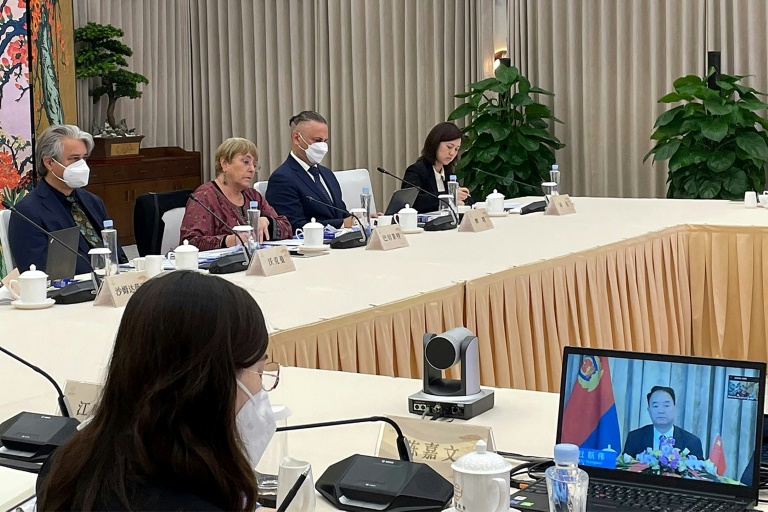
Chinese President Xi Jinping held a video call with UN rights chief Michelle Bachelet on Wednesday, as she visits Xinjiang during a mission overshadowed by fresh allegations of Uyghur abuses and fears she is being used as a public relations tool.

China’s Communist Party is accused of detaining over one million Uyghurs and other Muslim minorities in the far-western region as part of a years-long crackdown the United States and lawmakers in other Western countries have labelled a “genocide”.

Bachelet is expected to visit the cities Urumqi and Kashgar on a six-day tour that has been dogged by concerns from Western officials, diplomats and rights groups that the Communist Party will attempt to use it to whitewash abuses.

China vehemently denies the abuse allegations, calling them the “lie of the century”.

The United States has reiterated its view that Bachelet’s visit was a mistake after the release of thousands of leaked documents and photographs from inside the system of mass incarceration this week.

And activists have voiced concern that Beijing will prevent Bachelet from conducting a thorough probe into alleged rights abuses and instead give her a stage-managed tour.

But Xi defended his country’s human rights progress during the video call, according to a readout from state broadcaster CCTV, which did not say whether Xinjiang was mentioned by either side.

“Human rights issues should also not be politicised, instrumentalised, or treated with double standards,” Xi said according to CCTV, adding that China had “a human rights development path that… suits its national conditions”.

CCTV reported Xi as telling Bachelet there was no “ideal nation” on human rights and that there was “no need for a ‘teacher’ who is bossy towards other countries” — an apparent reference to recent criticisms of the trip by US and British officials.

According to the CCTV readout, Bachelet said the UN Human Rights Office was “willing to strengthen cooperation with the Chinese side”.

She was also reported to have said: “I admire China’s efforts and achievements in eradicating poverty, protecting human rights, and realising economic and social development.”

Bachelet’s spokesperson did not confirm the state media comments to AFP, but said the high commissioner told Xi she hoped her office could “accompany efforts to strengthen the promotion and protection of human rights, justice and the rule of law for all without exception”.

Bachelet later tweeted that the meetings with Xi and officials “have been valuable to discuss directly human rights issues & concerns in China & global”.

Raphael Viana David from the International Service for Human Rights said it was extremely important that Bachelet “reports publicly on her findings and discussions”.

“To avoid being further instrumentalized, Bachelet and her Office should own the narrative, not let Chinese state media do so,” said Viana David.

“This includes being more frank, outspoken about human rights across China, and her dialogue with the government.”

– Detention database –

In addition to mass detentions, Chinese authorities have waged a campaign of forced labour, coerced sterilisation and the destruction of Uyghur cultural heritage, according to researchers.

As Bachelet started the trip, a leak of thousands of photos and official documents from Xinjiang claimed to shed new light on the violent methods used to enforce mass internment in the region.

Reported by a consortium of media, including the BBC and Le Monde, the Xinjiang Police Files showed top leaders in Beijing including Xi calling for a forceful crackdown.

The files, leaked by an anonymous source to academic Adrian Zenz, also included a 2017 internal speech by Chen Quanguo, a former Communist Party secretary in Xinjiang, in which he allegedly orders guards to shoot to kill anyone who tries to escape.

Asked about the files Wednesday, a spokesperson for Bachelet said that although they could not verify the material it “corresponds with our concerns”. 

“The High Commissioner will be discussing serious human rights concerns in Xinjiang and at all levels during her visit, and has sought access to… prison facilities,” she said.

State Department spokesman Ned Price said Tuesday that the United States was “appalled” by the latest allegations, which were also condemned by Britain and Germany.

Overseas Uyghurs have staged rallies in recent weeks pressing Bachelet to visit relatives believed to be detained in Xinjiang.

Pfizer offers to sell medicines at cost to poorest countries

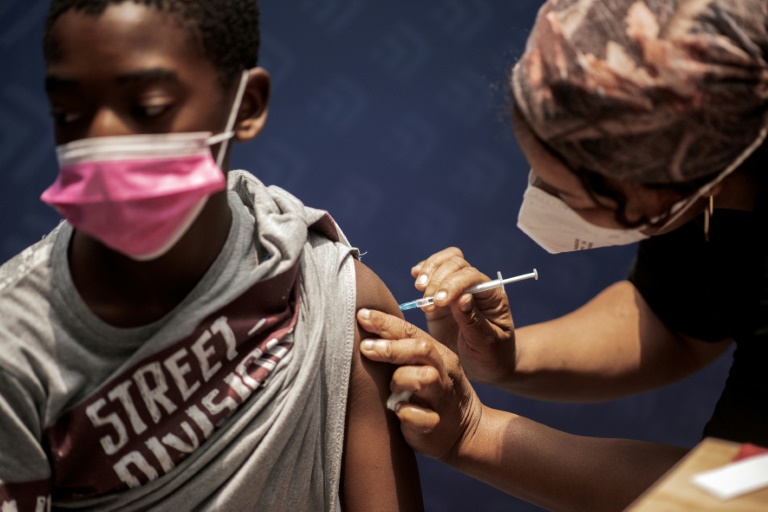
US pharmaceutical giant Pfizer on Wednesday said it would sell its patented drugs on a not-for-profit basis to the world’s poorest countries, as part of a new initiative announced at the World Economic Forum in Davos.

“The time is now to begin closing this gap” between people with access to the latest treatments and those going without, chief executive Albert Bourla told attendees at the exclusive Swiss mountain resort gathering.

“An Accord for a Healthier World” focuses on five areas: infectious diseases, cancer, inflammation, rare diseases and women’s health — where Pfizer currently holds 23 patents, including the likes of Comirnaty and Paxlovid, its Covid vaccine and oral treatment.

“This transformational commitment will increase access to Pfizer-patented medicines and vaccines available in the United States and the European Union to nearly 1.2 billion people,” Angela Hwang, group president of the Pfizer Biopharmaceuticals Group, told AFP.

Five countries: Rwanda, Ghana, Malawi, Senegal and Uganda have committed to joining, with a further 40 countries — 27 low-income and 18 lower-middle-income — eligible to sign bilateral agreements to participate.

“Pfizer’s commitment sets a new standard, which we hope to see emulated by others,” Rwanda’s President Paul Kagame said.

But he added that “additional investments and strengthening of Africa’s health systems and pharmaceutical regulators” would also be needed.

– Seven years behind –

Developing countries experience 70 percent of the world’s disease burden but receive only 15 percent of global health spending, leading to devastating outcomes.

Across sub-Saharan Africa, one child in 13 dies before their fifth birthday, compared to one in 199 in high-income countries.

Cancer-related mortality rates are also far higher in low and middle-income countries — causing more fatalities in Africa every year than malaria.

All this is set to a backdrop of limited access to the latest drugs. 

Essential medicines and vaccines typically take four to seven years longer to reach the poorest countries, and supply chain issues and poorly resourced health systems make it difficult for patients to receive them once approved. 

“The Covid-19 pandemic further highlighted the complexities of access to quality healthcare and the resulting inequities,” said Hwang.

“We know there are a number of hurdles that countries have to overcome to gain access to our medicines. That is why we have initially selected five pilot countries to identify and come up with operational solutions and then share those learnings with the remaining countries.”

– ‘Very good model’ –

Specifically, the focus will be on overcoming regulatory and procurement challenges in the countries, while ensuring adequate levels of supply from Pfizer’s side.

The “not-for-profit” price tag takes into account the cost to manufacture and transport of each product to an agreed upon port of entry, with Pfizer charging only manufacturing and minimum distribution costs.

If a country already has access to a product at a lower price tier, for example vaccines supplied by GAVI, a public-private global partnership, that lower price will be maintained.

Hwang acknowledged that even an at-cost approach could be challenging for the most cash-strapped countries, and “this is why we have reached out to financial institutions to brief them on the Accord and ask them to help support country level financing.”

Pfizer will also reach out to other stakeholders — including governments, multilateral organizations, NGOs and even other pharmaceuticals — to ask them to join the Accord.

It is also using funding from the Bill & Melinda Gates Foundation to advance work on a vaccine against Group B Streptococcus (GBS), the leading cause of stillbirth and newborn mortality in low-income countries.

“This type of accord is a very good model, it’s going to help get medicines out,” Gates told the Davos conference, adding that “partnerships with companies like Pfizer have been key to the progress we have made” on efforts like vaccines.

Close Bitnami banner
Bitnami