World

Notorious Vietnamese hacker turns government cyber agent

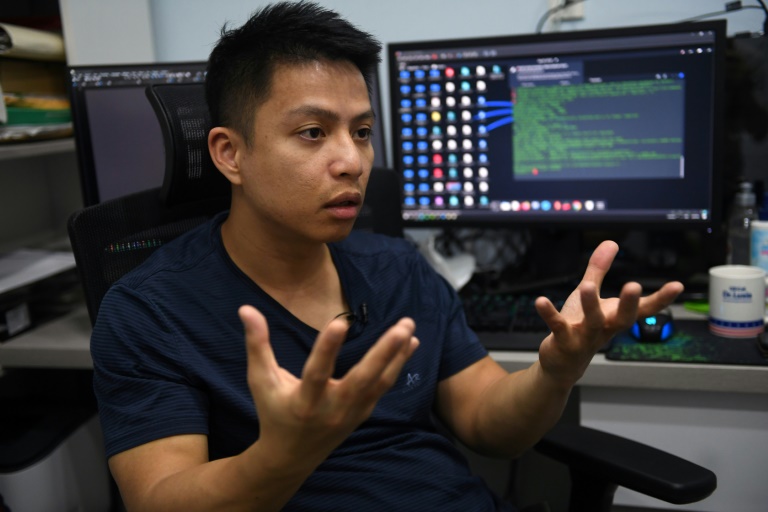
At the height of his career, Vietnamese hacker Ngo Minh Hieu made a fortune stealing the personal data of hundreds of millions of Americans.

Now he has been recruited by his own authoritarian government to hunt, he says, the kind of cyber criminal he once used to be.

After serving seven years in US prisons for stealing some 200 million Americans’ personal details, Hieu was sent back to Vietnam, which imposes some of the world’s strictest curbs on online freedom.

Hieu says he has since turned his back on his criminal past.

“I fell to the bottom, now I am trying to climb up again,” the 32-year-old told AFP. 

“Though I don’t earn much now, I have peace instead.”

His transformation, however, is complicated.

Hieu says his new job involves educating Vietnamese citizens about the dangers of the same sort of hacking he perpetrated.

But he is also working on cybersecurity for the government of a one-party state that cracks down ruthlessly on dissent, harassing and arresting people for posting critical opinions online.

– ‘More, more, more’ –

Nicknamed HieuPC when he was 12, Hieu was fascinated by computers as soon as he first laid hands on one.

But he was soon racking up $1,000 fines for stealing others’ internet connections for his own personal use.

He began hacking into foreign bank accounts, netting up to $600 a day in high school then using the money to study cybersecurity in New Zealand.

Hieu was forced to return home in 2010 after hacking his university and selling students’ personal information, and his illegal activities spiralled.

In his 20s, he made $100,000 a month hacking and selling some 200 million US social security numbers.

“I was on the top of success. I was over-proud of myself. I wanted more villas, more apartments, more luxurious cars,” Hieu said.

Then, in February 2013, he was lured to the United States in a sting operation and promptly arrested on landing.

– ‘Fallen to the bottom’ – 

“I don’t know of any other cybercriminal who has caused more material financial harm to more Americans than Ngo,” Secret Service agent Matt O’Neill, who executed the plan to catch Hieu, told KrebsOnSecurity.com, a blog dedicated to cybersecurity.

Hieu was initially given a sentence of 45 years, later reduced to 13.

“I had fallen to the bottom, losing everything in my life,” Hieu said. “I thought of hanging myself.”

But he struggled through and was released in 2019, returning to Vietnam in 2020.

The former millionaire now lives in an average apartment in commercial capital Ho Chi Minh City and works at the state-owned National Cyber Security Centre.

“We’re focused on hunting criminals and thwarting cyberattacks,” he said, declining to comment on Vietnam’s increasingly repressive approach to online censorship.

A new cybersecurity law came into effect in 2019 that Amnesty International has warned grants the government “sweeping powers to limit online freedom” and target those who post opinions it dislikes.

The UN Human Rights Council in 2019 criticised the law for imposing “severe restrictions on freedom of expression and opinion”.

Activists and bloggers have been arrested, with some even jailed on charges of spreading propaganda against the state, and Amnesty warned last year that government-linked hackers were targeting rights activists.

Hieu insists that his work as a “threat hunter” is not political but focused on criminal hackers, tracking those who are trying to steal Vietnamese people’s data.

– ‘Hacking is like a knife’ – 

Roughly 70 percent of Vietnam’s 98 million people use the internet, and cyber threats are rife.

A report by the International Institute for Strategic Studies quoted Microsoft data from 2020 showing Vietnam had the highest rate of ransomware attacks in the Asia-Pacific region.

Hieu travels the country speaking at schools and universities about the importance of cybersecurity, as well as the consequences of data being stolen.

While the government is pushing public awareness, Hieu said many Vietnamese had little understanding of cybercrime.

“Now I still hack, but I hack fraudulent webpages or try to understand data that blackhat hackers are trading online to trace them and find out who they are,” he said.

“Hacking is like a knife, which you may give to someone who wants to use it on something — bad or good.”
Amazon delivery pressure hurting workers, labor group says

A labor coalition on Tuesday said that Amazon delivery workers are getting hurt due to pressure by the e-commerce giant to quickly distribute heaps of packages to customers.

An analysis of US Occupational Safety and Health Administration data about injuries to Amazon delivery personnel and peers working at outside contractors showed that nearly one in five reported being hurt on the job in 2021, according to a Strategic Organizing Center formed by four labor unions.

“The task of delivering such a high number of parcels per shift is something many drivers are finding impossible to achieve at all, let alone safely,” the center said in a report.

Amazon has built a reputation for delivering purchases within a day or two to customers who subscribe to its Prime service, and has invested heavily in “fulfilment centers” and logistics staff.

About half of Amazon deliveries in the United States are handled by outside companies contracted by the retailer, which exerts tremendous performance pressure, the union coalition said.

Amazon hit back at the findings.

“This report cherry picks data from less than 10 percent of our delivery partners to tell an inaccurate and misleading story,” spokesperson Kelly Nantel told AFP.

“Safety is a priority across our network.”

Amazon has invested in technology such as camera systems to reduce accidents during deliveries, Nantel added.

Amazon hired more than 600,000 people to handle online shopping demand that surged during the Covid-19 pandemic, and like its peers in e-commerce, saw an increase in injuries for a period as new employees were trained, according to the company.

Asian markets swing as traders mull dark outlook

Asian markets fluctuated Wednesday, with little sign of any relief from recent dour performances as investors remain fearful about the economic outlook owing to the impact of inflation, higher interest rates, China’s slowdown and the Ukraine war.

A series of weak indicators around the world and downbeat forecasts from big firms have chilled trading floors in recent weeks as the surge in prices begins to drag on consumer confidence, with warnings now swirling of a possible global recession.

The tech sector was again in the firing line after Snap, the parent of social media app Snapchat, provided a gloomy economic outlook, sending its shares diving more than 40 percent.

Wall Street titans followed Snap down, with Facebook-parent Meta and Google-parent Alphabet tanking.

Tokyo, Hong Kong and Jakarta were down while Shanghai, Sydney, Seoul, Singapore, Taipei and Manila rose.

The mood was not helped by news that US new home sales tanked in April while the Richmond Fed manufacturing index also fell, with both at the lowest levels since the pandemic began in 2020.

“The market is moving its focus — and has been for the last month or so — from inflation concerns to growth concerns,” said Ellen Hazen, of FL Putnam.

Investors are now wearily looking to the Fed’s next move on interest rates, with expectations for more half-point hikes to come as officials struggle to bring inflation down from four-decade highs.

There was a little hope after one policymaker, Atlanta Fed chief Raphael Bostic, suggested a break in the increases in September could make sense as the bank tries to avert a recession.

National Australia Bank’s Tapas Strickland said while it was not clear that the Fed was close to being more supportive of markets, “it is clear that growth headwinds are becoming more evident in the data, particularly stemming from the profit reporting season”. 

“The Fed of course remains focused on inflation, but if inflation reads were to start to moderate, then Bostic has opened up the possibility of a Fed pause.”

Meanwhile, China continues to struggle with the fast-spreading Omicron variant, with leaders sticking to their zero-Covid strategy despite the dire impact on the economy of lockdowns.

And with no easing of that policy in sight, observers warned that a series of recent support measures would not be enough to lift optimism.

“Fiscal multipliers will be minimal in an economy where economic interaction and activity have slowed sharply,” said Stephen Innes of SPI Asset Management.

“Moving beyond mobility restrictions in short order is a pre-condition, but not a guarantee, for an Asia-led economic recovery.”

– Key figures at around 0230 GMT –

Tokyo – Nikkei 225: DOWN 0.1 percent at 26,713.08 (break)

Hong Kong – Hang Seng Index: DOWN 0.2 percent at 20,074.59

Shanghai – Composite: UP 0.2 percent at 3,076.11

Euro/dollar: DOWN at $1.0709 from $1.0739 on Tuesday

Pound/dollar: DOWN at $1.2524 from $1.2535

Euro/pound: DOWN at 85.50 pence from 85.64 pence

Dollar/yen: UP at 127.13 yen from 126.86 yen 

Brent North Sea crude: UP 1.2 percent at $114.93 per barrel

West Texas Intermediate: DOWN 1.2 percent at $111.08 per barrel

New York – Dow: UP 0.2 percent at 31,928.62 (close)

London – FTSE 100: DOWN 0.4 percent at 7,484.35 (close)

Gunman kills 19 children at Texas elementary school

A teenage gunman killed at least 19 young children and two adults at an elementary school in Texas on Tuesday, prompting a furious President Joe Biden to denounce the US gun lobby and vow to end the nation’s cycle of mass shootings.

The attack in Uvalde — a small community about an hour from the Mexican border — was the deadliest US school shooting in years, and the latest in a spree of bloody gun violence across America.

“It’s time to turn this pain into action for every parent, for every citizen of this country,” Biden said, his voice heavy with emotion.

“It’s time for those who obstruct or delay or block commonsense gun laws — we need to let you know that we will not forget,” he said.

“As a nation, we have to ask when in God’s name are we going to stand up to the gun lobby? When in God’s name will we do what we all know in our gut needs to be done?”

Texas Governor Greg Abbott, addressing an earlier news conference, named the suspect as Salvador Ramos, an 18-year-old local resident and a US citizen.

“He shot and killed, horrifically and incomprehensibly,” Abbott said.

Texas Department of Public Safety officials told CNN the gunman is believed to have shot his grandmother before heading to Robb Elementary School around noon where he abandoned his vehicle and entered with a handgun and a rifle, wearing body armor.

The gunman was killed by responding officers, the officials said, adding later two adults also died in the attack.

Footage showed small groups of children weaving through parked cars and yellow buses, some holding hands as they fled under police escort from the school, which teaches students aged around seven to 10 years old.

It was the deadliest such incident since the 2012 Sandy Hook shooting in Connecticut, in which 20 children and six staff were killed.

The White House ordered flags to be flown at half-staff in mourning for the victims — whose deaths sent a wave of shock through a country still scarred by the horror of Sandy Hook.

In the immediate aftermath of the attack, Robb Elementary — which teaches more than 500, mostly Hispanic and economically disadvantaged students — called on parents not to rush in to get their children.

“You will be notified to pick up students once all are accounted for,” the school said on its website soon after the attack.

– ‘Happens nowhere else’ –

Ted Cruz, a pro-gun rights Republican senator from Texas, tweeted that he and his wife were “lifting up in prayer the children and families in the horrific shooting in Uvalde.”

But Senator Chris Murphy, a Democrat from Connecticut, where the Sandy Hook shooting took place, made an impassioned appeal for concrete action to prevent further violence.

“This isn’t inevitable, these kids weren’t unlucky. This only happens in this country and nowhere else. Nowhere else do little kids go to school thinking that they might be shot that day,” Murphy said on the Senate floor in Washington.

“I’m here on this floor to beg, to literally get down on my hands and knees and beg my colleagues: Find a path forward here. Work with us to find a way to pass laws that make this less likely.”

The deadly assault in Texas follows a series of mass shootings in the United States this month.

On May 14, an 18-year-old man shot 10 people dead at a Buffalo, New York grocery store.

Wearing heavy body armor and wielding an AR-15 rifle, the self-declared white supremacist livestreamed his attack, having reportedly targeted the store because of the large surrounding African American population.

The following day, a man blocked the door of a church in Laguna Woods, California and opened fire on its Taiwanese-American congregation, killing one person and injuring five.

Despite recurring mass-casualty shootings, multiple initiatives to reform gun regulations have failed in the US Congress, leaving states and local councils to strengthen — or weaken — their own restrictions.

The National Rifle Association has been instrumental in fighting against stricter US gun laws. Abbott and Cruz are listed as speakers at a forum that is being held by the powerful lobby in Houston, Texas later this week.

The United States suffered 19,350 firearm homicides in 2020, up nearly 35 percent compared to 2019, the Centers for Disease Control and Prevention (CDC) said in its latest data.

Take a chance on me: ABBA pass the torch on to avatars

In one of the longest awaited musical reunions, Swedish pop legends ABBA return to the concert stage on Friday in London but only as avatars of their 1970 selves shimmering with shiny costumes, glitter and platform boots.

While fans will hear the quartet’s real voices, the band will not be on stage. Concert-goers will see “ABBAtars” projected as holograms, looking like they did at the peak of their fame.

“We put our hearts and souls into these avatars and they will take over now,” 77-year-old band member Bjorn Ulvaeus told AFP in an interview in Stockholm ahead of the premiere.

Fans will once again be able to see Agnetha Faltskog, Bjorn Ulvaeus, Benny Andersson and Anni-Frid Lyngstad — whose first initials form the name ABBA — perform hits from the 1970s and 1980s, as well as their recent comeback album, at the “ABBA Voyage” show in London.

The group announced the reunion in September last year, dropping the new singles “I still have faith in you” and “Don’t shut me down”.

They then released the 10-track album “Voyage” two months later and announced plans for the high-tech concert at a specially-built London arena.

– On tenterhooks –

Other attempts at concert holograms have received lukewarm reviews, but the group hopes fans will feel they’re seeing the real deal.

“This is one of the most daring projects that anyone has done in the music industry ever,” said Ulvaeus, who wrote most of the group’s biggest hits with Benny Andersson.

“How it will be received by the audience, I don’t have a clue,” he said. 

“But I think that they will feel an emotional pull from the avatars, they will see the avatars as real people.”

In addition to re-recording their songs for the show, the quartet also spent hours in a studio dressed in leotards, having their movements digitally recorded to reproduce them on stage.

The avatars will appear in the band’s kitsch 1970s outfits and are also expected to don futuristic get-ups, according to trailers.

The show will run seven days a week until early October in the purpose-built theatre ABBA Arena in east London.

“I don’t know about the others but, me, myself, I felt more nervous a month ago than I do now,” Ulvaeus said, adding: “I know that we have done our utmost.”

– ‘Almost like someone else’ –

The holograms are the product of a years-long project, designed in partnership with a special effects company founded by Star Wars creator George Lucas.

The concert was recorded using 160 cameras and five weeks of performances.

For Ulvaeus, who is also setting up a circus musical in Stockholm about Pippi Longstocking, the main character in an eponymous series of children’s books by Swedish author Astrid Lindgren, the overwhelming amount of archival ABBA footage means it is not strange to see his 40-year-younger self on stage.

“For most people it will be weird perhaps, but I have seen my younger self almost daily, all my life. Ever since we broke up, in some form or other, in some pictures somewhere.”

“So I am kind of used to ‘him.'”

“He is almost like someone else — he is me yes, but he is also someone else. 

“And when I see my avatar on stage, it really becomes a mixture: It’s as if I have kind of infused life into this guy that we see on the screen.”

ABBA broke onto the international scene in 1974 when they won the Eurovision Song Contest with “Waterloo”, powered by a flood of British votes.

They went on to record a string of hits, including “Gimme! Gimme! Gimme!”, “Dancing Queen” and “The Winner Takes it All”, before breaking up in 1982.

They long steered clear of a reunion despite their music’s enduring popularity, fuelled by a hit compilation album in 1992, the “Mamma Mia!” movies starring Meryl Streep, Colin Firth and Pierce Brosnan and a spin-off musical.

Notching up several hundred million album sales over 50 years, ABBA helped put Sweden’s pop music industry on the map. 

The country remains the third-biggest exporter of music after the United States and Britain.

In London, concert-goers will be treated to a 90-minute show, with a dozen live musicians on stage backing up the avatars.

Will the quartet ever perform together again for real? 

“ABBA has no plans. It is what it is,” Ulvaeus said. 

Ukraine war pushes Brazil toward natural fertilizers

Fearing Russia’s invasion of Ukraine will disrupt its crucial supply of fertilizer imports, agricultural powerhouse Brazil is increasingly turning to natural alternatives.

Brazil, a top producer of soy, corn, cotton, sugarcane and coffee, is the world’s fourth-biggest consumer of so-called “NPK” chemical fertilizers — nitrogen-, phosphorus- and potassium-based.

It imports around 80 percent of its total supply — and 25 percent of that from Russia, whose exports have now been targeted by Western sanctions over the Ukraine invasion.

That is causing farmers in the South American giant to turn to alternatives, including remineralizers, or “agrominerals” — pulverized, nutrient-rich rocks that are spread on fields before planting.

Brazil, which authorized remineralizers for agricultural use in 2013, is the world leader in the technique, which is also used in the United States, Canada, India and France, among others.

“Brazil is a tropical country, and the rains tend to wash away soil nutrients. Rock powder rebuilds the soil and renews it,” says Marcio Remedio, mineral resources director at the Brazilian Geological Service.

The technique also “allows plants’ roots to develop better and capture the nutrients they need to grow,” says Suzi Huff Theodoro, a geologist at the University of Brasilia.

“We have rocks with the right profile in various parts of the country, and the cost is significantly cheaper” than chemical fertilizers, she told AFP.

– Beyond chemicals –

A study last year found around five percent of farmland in Brazil used remineralizers.

That figure looks set to jump this year: the country’s 30 suppliers report they are seeing unprecedented demand, says Theodoro.

“Most of them have already sold their entire output for the year, to all kinds of farms — from industrial to mid-sized to small and mostly ecologically minded,” she says.

Farmer Rogerio Vian has almost stopped using chemical fertilizers altogether.

Vian, who runs a 1,000-hectare (nearly 2,500-acre) soy and corn farm in the central-western state of Goias, was an early adopter of alternative technologies.

He started out nine years ago making his own products from microorganisms found in native forests.

He pulverized them and applied them while planting to protect against parasites and help his crops absorb nutrients.

Now Vian, who founded the 700-member Association for Sustainable Agriculture (GAAS), is using remineralizers, too.

“I’ve cut my fertilizer and seed treatment costs by 50 percent, with no loss of productivity,” he says.

“Brazil is a mega-biodiverse country, and that holds enormous potential in terms of tools and techniques for our work, which we’re only just starting to discover.”

– ‘Unstoppable change’ –

Brazil will still be using NPK fertilizers for the foreseeable future, but it could dramatically reduce its dependence on foreign suppliers, says researcher Jose Carlos Polidoro of the state-owned Brazilian Agricultural Research Corporation (Embrapa).

“Organic and organomineral fertilizers — made with mining residue, organic agro-industrial residue and sewage sludge — account for five percent of the Brazilian fertilizer market today,” he says.

“But they have the potential to reduce our imports by 20 percent.”

Another fast-growing technique: treating crops with rhizobacteria, which draw nitrogen from the air and deliver it directly to plants, helping them grow — and reducing the consumption of industrial nitrogen-based fertilizers.

Not that the farmers rapidly adopting these products have an easy row to hoe.

“Farmers are running into difficulty finding financing to invest more, and there’s a shortage of technical assistance available,” says Carlos Pitol, an agricultural consultant in the central-western state of Mato Grosso do Sul and a member of GAAS.

“But the change in the production system is growing, and it’s unstoppable.”

N. Korea fired 'suspected intercontinental ballistic missile': Seoul

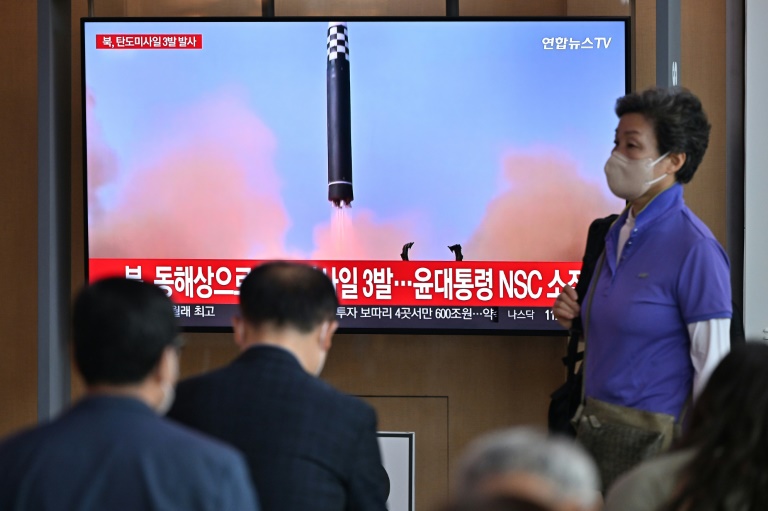
North Korea fired a suspected intercontinental ballistic missile early Wednesday, Seoul’s military said, just one day after President Joe Biden wrapped up his first Asia visit as US leader.

At least three missiles — including one suspected ICBM — were fired from the Sunan area in Pyongyang, Seoul said, where multiple recent weapons tests by the nuclear-armed regime have been conducted.

South Korea and the United States conducted a live fire “land to land missile drill” in response to North Korea’s “suspected ICBM and missile provocations”, Seoul’s military said.

“North Korea’s successive launch of a suspected intercontinental ballistic missile and short-range ballistic missile today is an illegal act in direct violation of UN Security Council resolutions,” Seoul’s government said after a National Security Council meeting.

South Korea’s new President Yoon Suk-yeol oversaw the meeting, which said the launches — one of nearly 20 tests so far this year by Pyongyang — were a “serious provocation that threatens peace on the Korean Peninsula and the international community”.

South Korea’s Joint Chiefs of Staff said in a statement that it had “detected at around 0600 (2100 GMT), 0637 and 0642 the firings of ballistic missiles launched from Sunan area towards the East Sea”, it said, referring to the Sea of Japan.

“The first ballistic missile (suspected ICBM) had a range of around 360 kilometres (225 miles) and an altitude of around 540km,” Seoul’s Joint Chiefs of Staff said in a statement.

The second ballistic missile “disappeared at an altitude of 20km” and the third — a suspected short range ballistic missile — travelled around 760km at an altitude of around 60km. 

“The details are under close analysis by South Korean and US intelligence,” the statement said.

– Get tough –

The Wednesday launches are the latest in a blitz of sanctions-busting weapons tests by Pyongyang this year, including test-firing intercontinental ballistic missiles at full range for the first time since 2017.

The latest apparent test come just days after Biden left South Korea Sunday after a trip overshadowed by US and South Korean officials warning that Kim could carry out a nuclear test while Biden was in the region.

While in South Korea, Biden joined Yoon for talks, including discussing expanded military exercises to counter Kim’s sabre rattling.

Joint exercises had been scaled back due to Covid and in order for Biden and Yoon’s predecessors, Donald Trump and Moon Jae-in, to embark on a round of high-profile but ultimately unsuccessful diplomacy with North Korea.

Any build-up of forces or expansion of joint military exercises would likely enrage Pyongyang, which views the drills as rehearsals for invasion.

On his last day in Seoul, Biden told reporters he had a only a short message for Kim: “Hello. Period.”

And he added that the United States was “prepared for anything North Korea does”.

– Covid and missiles –

Kim has recently doubled down on his programme of military modernisation.

Despite struggling with a recent Covid-19 outbreak, new satellite imagery has indicated the North has resumed construction at a long-dormant nuclear reactor.

Earlier this month, North Korea confirmed its first ever Omicron cases in Pyongyang, and the virus has since torn through its unvaccinated population of 25 million.

More than three million people have been sick with “fever” North Korean state media said Wednesday, with 68 deaths since the outbreak began in late April.

Seoul’s Foreign Minister Park Jin and US Secretary of State Antony Blinken spoke on the phone after the Wednesday launches, the Foreign Ministry said. 

The pair said it was “deeply deplorable” that North Korea “is using its main financial resources for nuclear and missile developments rather than quarantine and improvement of people’s livelihood” in the outbreak.

North Korea has continued to conduct missile tests since it declared a national emergency over the Covid outbreak, although state media has not reported on the launches, as it usually does.

Google urged to stop location tracking to protect privacy of abortion seekers

A group of US Democratic lawmakers urged Google on Tuesday to stop collecting smartphone location data that could be used to identify women who have had abortions.

The move came amid fears that the US Supreme Court was considering overturning Roe v. Wade, a landmark 1973 ruling that guaranteed nationwide access to abortion.

Senators Elizabeth Warren and Bernie Sanders along with Congresswoman Alexandria Ocasio-Cortez were among more than 40 lawmakers who signed a letter to Google chief executive Sundar Pichai.

“We are concerned that, in a world in which abortion could be made illegal, Google’s current practice of collecting and retaining extensive records of cell phone location data will allow it to become a tool for far-right extremists looking to crack down on people seeking reproductive health care,” said the letter, which was published online.

“That’s because Google stores historical location information about hundreds of millions of smartphone users, which it routinely shares with government agencies.”

Google did not respond to a request for comment.

Polls show that a majority of Americans support some form of access to abortion.

But in recent months, Republican-controlled states have taken steps to restrict abortion rights — with some seeking an outright ban of the procedure without any exceptions — and overturning Roe would grant them greater freedom to enact their policies.

“If this decision becomes final, the consequences will be dire,” the lawmakers said.

“Republicans in Congress are already discussing passing a law criminalizing abortion in all 50 states, putting the government in control of women’s bodies.”

In their letter, the lawmakers urged Google to stop gathering location data from smartphones that could be used by prosecutors keen to identify women who have visited health care facilities that provide abortions.

Google routinely receives court orders compelling it turn over user location information, including “geofence” orders, that demand data about everyone who was near a particular place at a certain time, the letter said.

“If abortion is made illegal by the far-right Supreme Court and Republican lawmakers, it is inevitable that right-wing prosecutors will obtain legal warrants to hunt down, prosecute and jail women for obtaining critical reproductive health care,” the letter said.

“The only way to protect your customers’ location data from such outrageous government surveillance is to not keep it in the first place.”

Nonprofit digital rights group Fight For The Future echoed the legislators’ plea in an online petition demanding that Google get rid of its location data stockpile the could be “weaponized against abortion patients and doctors.”

Google urged to stop location tracking to protect privacy of abortion seekers

A group of US Democratic lawmakers urged Google on Tuesday to stop collecting smartphone location data that could be used to identify women who have had abortions.

The move came amid fears that the US Supreme Court was considering overturning Roe v. Wade, a landmark 1973 ruling that guaranteed nationwide access to abortion.

Senators Elizabeth Warren and Bernie Sanders along with Congresswoman Alexandria Ocasio-Cortez were among more than 40 lawmakers who signed a letter to Google chief executive Sundar Pichai.

“We are concerned that, in a world in which abortion could be made illegal, Google’s current practice of collecting and retaining extensive records of cell phone location data will allow it to become a tool for far-right extremists looking to crack down on people seeking reproductive health care,” said the letter, which was published online.

“That’s because Google stores historical location information about hundreds of millions of smartphone users, which it routinely shares with government agencies.”

Google did not respond to a request for comment.

Polls show that a majority of Americans support some form of access to abortion.

But in recent months, Republican-controlled states have taken steps to restrict abortion rights — with some seeking an outright ban of the procedure without any exceptions — and overturning Roe would grant them greater freedom to enact their policies.

“If this decision becomes final, the consequences will be dire,” the lawmakers said.

“Republicans in Congress are already discussing passing a law criminalizing abortion in all 50 states, putting the government in control of women’s bodies.”

In their letter, the lawmakers urged Google to stop gathering location data from smartphones that could be used by prosecutors keen to identify women who have visited health care facilities that provide abortions.

Google routinely receives court orders compelling it turn over user location information, including “geofence” orders, that demand data about everyone who was near a particular place at a certain time, the letter said.

“If abortion is made illegal by the far-right Supreme Court and Republican lawmakers, it is inevitable that right-wing prosecutors will obtain legal warrants to hunt down, prosecute and jail women for obtaining critical reproductive health care,” the letter said.

“The only way to protect your customers’ location data from such outrageous government surveillance is to not keep it in the first place.”

Nonprofit digital rights group Fight For The Future echoed the legislators’ plea in an online petition demanding that Google get rid of its location data stockpile the could be “weaponized against abortion patients and doctors.”

Floating in a tin Cannes: Bowie doc blasts off at film fest

A high-octane documentary on David Bowie has delighted fans at the Cannes Film Festival which is having a vintage year for music lovers.

“Moonage Daydream” by American documentary maker Brett Morgen is a tour de force through the daring creativity of the pop icon who influenced rock music like few others.

It is not the only music doc at the festival, which also premiered “Jerry Lee Lewis: Trouble in Mind” about the legendary rock’n’roller. 

The film was made by Ethan Coen, one half of the beloved Coen brothers film-making duo. 

Both docs eschew expert talking heads in favour of a more immersive experience. 

“I don’t care what experts say,” Coen told AFP at the festival. 

“Jerry Lee is a performer so I want to see the performance — not what some expert thinks about it.”

– ‘Wildly creative’ –

By the time he died in 2016, Bowie had sold more than 100 million records, from his first hit single “Space Oddity” to his final album “Blackstar”, released just days before his death.

There was a massive wealth of clips, recordings, interviews, writings, movie performances and art by the artist — five million items in all — that Morgen went through to produce a mesmerising patchwork of sounds and images.

“It’s not a biography,” Morgen told AFP. “The film is meant to be sublime, and kaleidoscopic, and kind of wash over you.”

Having seen “nearly every image in existence of David Bowie, I am more in awe of him today than at any point”, Morgen said.

There was a temptation to simply call his film “Bowie”, but he resisted, because “there’s no definitive Bowie”.

Critics gushed, with The Telegraph calling Moonage Daydream “wildly creative” and The Guardian, in a five-star review, saying it was “a shapeshifting epiphany-slash-freakout… a glorious celebratory montage”.

– Elvis is coming –

That’s not all the music to come at Cannes, which is also bracing for the world premiere on Wednesday of “Elvis”, the new biopic from Australia’s technicolour maestro Baz Luhrmann. 

The film stars newcomer Austin Butler in the lead role, with Tom Hanks as his infamous manager, Colonel Tom Parker. 

Last year’s edition was also packed with music, opening with the eccentric musical “Annette” by LA pop duo Sparks, and featuring a lauded documentary about The Velvet Underground by cult director Todd Haynes, and a biopic about Celine Dion. 

Cannes was also the launchpad for “Amy” about the tragically short life of singer Amy Winehouse, which premiered in 2015 to enthusiastic reviews. 

More broadly, this is something of a golden age for music documentaries as the genre moves away from the sort of simplistic, hero-worshipping films of old towards more innovative pieces of work.

Coen said he had been blown away by some recent documentaries — especially “Get Back”, the painstaking reconstruction of footage from The Beatles’ last-ever gig by “Lord of the Rings” director Peter Jackson.

“The Beatles one was fantastic. I could not get enough of it even though it was seven hours long,” Coen said.

“But it’s like anything — books or movies — there’s some good ones and a lot of bad ones.”

Close Bitnami banner
Bitnami