World

Locals 'apprehensive' in Moscow-run Ukraine region

In Ukraine’s only region fully controlled by Russian troops, Moscow-backed officials are pushing for formal annexation while those still living there say they are apprehensive about the future.

AFP journalists joined a press trip to the southern Kherson region organised by the Russian defence ministry, accompanied by troops in armoured vehicles.

Russian forces swiftly moved in from neighbouring Crimea — annexed by Moscow in 2014 — taking control of the region of Kherson and the main city of the same name in early March. 

At the time, Ukrainian troops were focused on defending the capital Kyiv.

The area has been less ravaged by fighting than other parts of Ukraine.

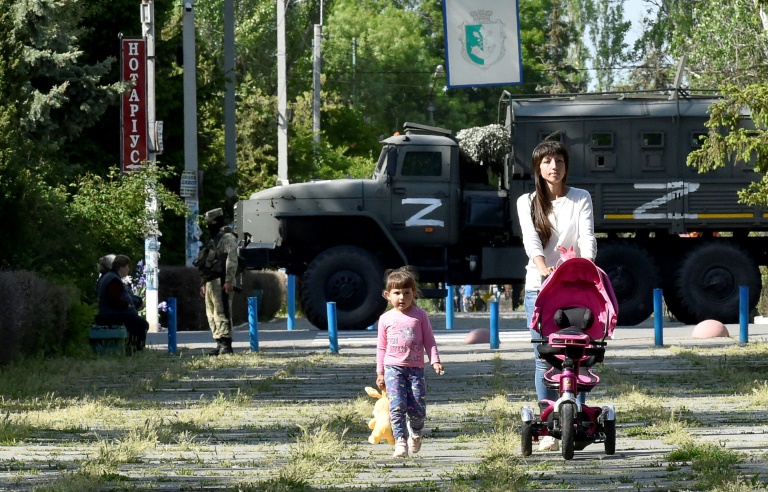
In the city of Kherson there are no signs of damage and only a few Russian flags are flying. On roads into the city, there are a few charred military and armoured vehicles.

Sporadic volleys of artillery and air defence systems can be heard in the far distance from the frontline between Kherson and the Ukraine-controlled city of Mykolaiv around 60 kilometres (40 miles) to the north.

Since Kherson came under Moscow’s control, information on what is happening there has largely come through the new authorities put in place by Russia.

While some posts on Telegram have reported that troops have dispersed protests against Moscow’s control, Russia and its allies have sought to downplay any discontent.

– ‘It is just war’ – 

During a visit to a trolleybus depot in Kherson, a driver, Alexander Loginov, 47, ventures to speak to AFP from the cabin of his vehicle.

“People are very apprehensive,” he says, listing their concerns as “instability” and payment of salaries as “Ukrainian banks are closing”.

“To be honest, it is just war,” Loginov adds, using a term Russia has outlawed on pain of a lengthy jail term, insisting its intervention be called a “special military operation”.

“Many people don’t yet understand what has happened.”

The official put in charge of the city of Kherson by Moscow, Alexander Kobets, says he is focused on two aims: ensuring the local population “does not feel abandoned” and gaining legal status as part of Russia — an ambition also trumpeted by many senior Russian officials.

By taking control of Kherson and partially occupying the neighbouring region of Zaporizhzhia, the Kremlin seeks to create a strategic land bridge, linking Russian-controlled territory to Crimea.

“Many (residents) support being part of Russia, not being some newly created (separatist) republics, but having real legal jurisdiction. Let’s say that’s Russia’s,” says Kobets.

He says pro-Ukrainian demonstrations in the region were “localised” and “to be expected”, insisting that everyone in the region “can express their opinion, no one bans this”.

While in the city itself the Russian army has a discreet presence, in the surrounding countryside numerous checkpoints and patrols can be seen close to densely forested areas. 

Kherson has seen an exodus of its residents. 

The Ukrainian authorities estimate that 45 percent of the city’s 300,000 inhabitants have fled, along with 20 percent of the population of the surrounding region, previously about one million people.

In the city’s streets, an AFP reporter saw that more than half of the shops and cafes were closed.

Economically, Russia is making advances, too. On Monday, the region’s pro-Russian authorities formally introduced the ruble as a currency alongside the Ukrainian hryvnia.

– ‘Stratospheric prices’ –

With two million hectares of arable land, the region is also important to Ukraine’s massive agricultural sector.

While the fields that AFP saw did not appear damaged by fighting, Kyiv has accused Russia of looting grain silos here, fuelling a potential global food crisis, since Ukraine is a major grain exporter.

“Export flows have changed trajectory,” says Kobets.

“Since our sea commercial port is blocked, the consignments of cargo planned for export have stopped. The consignments that our agricultural businesses planned are being carried out via the Crimea route.”

“The roads are still in one piece, there are no difficulties,” he adds.

In Skadovsk, a small seaside town 100 kilometres south of the regional capital, passers-by politely say “no” when asked by an AFP journalist to talk about life under Russian control.

Only Vera Mironenko, a single mother who has brought two of her children to see the dolphinarium, is willing to speak.

“We’re living on our savings, since there are no supplies and businesses are closed. I was working in a shop, but I had to quit,” she says.

She complained of “stratospheric prices” for food and medicines being impossible to find.

“We’re waiting for life to get back to normal,” she says.

“We’re waiting for at least some kind of authorities.”
At least 22 killed in latest police raid on Rio favela

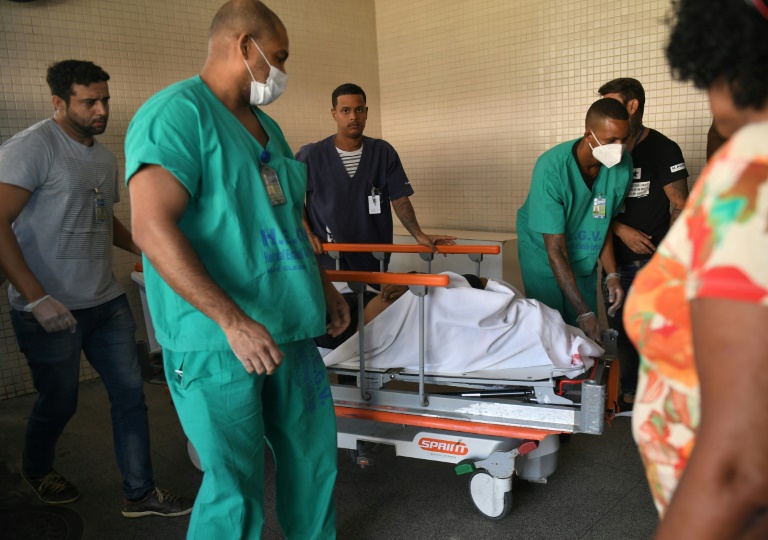
An anti-crime operation in a Rio de Janeiro slum left at least 22 people dead Tuesday, officials said, a year after the bloodiest-ever favela raid in the city’s history.

A further seven people were hospitalized, according to health officials, while police said one of the victims was a female bystander felled by a stray bullet.

Military police said they came under gunfire as they approached the northern Rio slum of Vila Cruzeiro in the early morning hours with the mission of locating and arresting “criminal leaders.”

The toll doubled from the initially reported 11 deaths as more bodies were uncovered in the aftermath. 

Police said at least 11 of the dead were “suspects.”

At least 19 schools in the area closed because of the gunfire, residents said. 

Police helicopters were also struck by bullets during the deadly exchange.

Police often carry out raids in Rio’s teeming slums in a bid to fight drug trafficking.

This time, they said they were looking for gang leaders from other parts of Brazil hiding out in Vila Cruzeiro.

“It was an operation planned for weeks, but we identified criminal movements during the night and decided to intervene,” said team member Colonel Luiz Henrique Marinho Pires.

He said the suspects were readying to move to another favela.

This was the deadliest police raid since 28 people died a year ago in a favela called Jacarezinho — the largest such toll in the city’s history.

Vila Cruzeiro, a favela crowded onto a hillside not far from Rio de Janeiro’s international airport, was also the scene of a violent confrontation in February, when police killed eight people.

Tuesday’s pre-dawn raid targeted the Comando Vermelho, or Red Command, one of Brazil’s most powerful crime gangs “responsible for more than 80 percent of the shootings in Rio,” a police spokesman told TV Globo.

– No body cams –

Officers seized 13 assault rifles, four pistols, 20 motorcycles and 10 cars in the raid.

No arrests were reported.

The operation was criticized in some quarters for its use of overwhelming force and the Federal Public Prosecutor’s Office announced the opening of an investigation into police conduct.

“Another massacre. Schools closed, thousands of people terrorized,” tweeted left-wing city councilman Tarcisio Motta.

“The policy of extermination runs its course in Rio.”

Residents and activists have often denounced official abuse during such anti-crime operations, including extrajudicial killings of suspects, which they say often goes unpunished.

“These operations in the favelas put the entire population at risk and prevent the functioning of public services. We know they would never be tolerated in upscale neighborhoods,” Guilherme Pimentel, a public defender, told AFP.

Rio police officers were meant to start wearing cameras on their uniforms this month to film all acts in the line of duty, but use of the equipment has been postponed.

Security experts believe cameras may help prevent abuse but will not solve all the problems, and their introduction should be accompanied by comprehensive police reform.

Experts advocate for abandoning confrontation in the endless fight against drug trafficking, with a focus instead on disrupting the gangs’ money flow.

“Rio needs a new public safety policy that is not the bullet,” Human Rights Watch said.

Brazilian police are among the world’s deadliest, responsible for more than 6,100 fatalities in 2021 — an average of 17 per day, according to a violence monitor count.

Argentina to ease exchange control for oil and gas companies

Argentina on Tuesday announced an easing of foreign exchange controls for the shale oil and gas industry in a bid to promote investment and boost production.

In an area known as Vaca Muerta in Patagonia, Argentina has what is considered the second-largest shale gas reserve in the world and the fourth largest of shale oil. 

Extraction has been hampered by a lack of much-needed but costly investment, especially for hydraulic fracking. 

On Tuesday, Economy Minister Martin Guzman said “a special regime for currency access” would be put in place for the hydrocarbon industry “to guarantee the special equipment they require,” especially for fracking.

About 20 oil companies have been operating in Vaca Muerta since 2013, including Chevron, Shell, Total and Statoil in partnership with the Argentine oil company YPF. 

Since September 2019, Argentina has had exchange controls in place with a limited official rate of about 120 pesos for one dollar. 

At the same time, currency can be exchanged at a rate of some 200 pesos to the dollar through debt bonds or on the informal market.

“We have a great opportunity in energy in Argentina. The next 15 years have great potential for development,” said President Alberto Fernandez, on a working trip with Guzman.

The government says oil production can increase by 70 percent and gas production by 30 percent over the next five years. 

In recent months, Argentina has increased its production of hydrocarbons to reach a record 578,000 barrels per day in April — an increase of 13 percent in 12 months, according to the government.

Gas production in the same month was 127 million cubic meters, an increase of 12 percent year-on-year.

That has allowed the country to reverse five years of decline in oil production, said Guzman.

Last month, the government launched a construction tender phase for a gas pipeline from Vaca Muerta to the north of the country, to increase domestic supply and exports at a time when worldwide energy costs have shot up due to the war in Ukraine.

UN envoy faces pressure on China trip over new Xinjiang leak

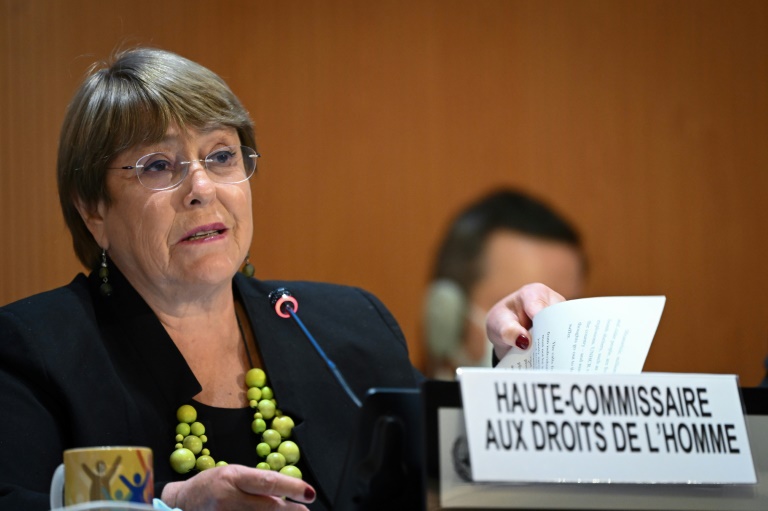
China faced new accusations Tuesday that it was sanctioning abuses of Uyghurs at the “highest levels”, as a vast document leak came out during a controversial visit by the UN rights chief.

The ruling Communist Party is accused of detaining over one million Uyghurs and other Muslim minorities in the far-western region of Xinjiang as part of a years-long crackdown the United States and lawmakers in other Western countries have labelled a “genocide”.

China vehemently denies the allegations, calling them the “lie of the century”.

Michelle Bachelet is expected to visit the Xinjiang cities of Urumqi and Kashgar on Tuesday and Wednesday as part of a six-day tour.

She met Foreign Minister Wang Yi who “expressed the hope that this trip would help enhance understanding”, according to a readout of the meeting released late Monday.

In its report of the meeting, state news agency Xinhua said Bachelet “congratulated China on its important achievements in economic and social development and in promoting the protection of human rights”.

Bachelet’s spokesperson did not confirm to AFP what was said outside the opening comments.

The United States reiterated its view that Bachelet’s visit was a mistake after the release of thousands of leaked documents and photographs from inside the system of mass incarceration.

Reported by a consortium of media, including the BBC and Le Monde, the Xinjiang Police Files showed top leaders in Beijing including President Xi Jinping calling for a forceful crackdown.

The files, leaked by an anonymous source to academic Adrian Zenz, also included a 2017 internal speech by Chen Quanguo, a former Communist Party secretary in Xinjiang, in which he allegedly orders guards to shoot to kill anyone who tries to escape.

State Department spokesman Ned Price said the United States was “appalled” by the latest allegations.

“It would be very difficult to imagine that a systemic effort to suppress, to detain, to conduct a campaign of genocide and crimes against humanity would not have the blessing — would not have the approval — of the highest levels of the PRC government,” Price told reporters, referring to the People’s Republic of China.

– Pressure on Bachelet –

The US ambassador to the United Nations, Linda Thomas-Greenfield, said the evidence showed that Bachelet “must take a hard look at these faces and press Chinese officials for full, unfettered access — and answers”.

Britain and Germany also voiced outrage. 

In a call to her counterpart, German Foreign Minister Annalena Baerbock called for a “transparent investigation” into the “shocking reports and new evidence of very serious human rights violations in Xinjiang”, said a German foreign ministry statement.

Foreign ministry spokesman Wang Wenbin called the report “the latest example of anti-China forces smearing Xinjiang”.

Earlier this month, a leaked police database obtained by AFP listed the names and details of thousands of detained Uyghurs.

Uyghurs have raised doubts about Bachelet’s presence if the trip is as highly controlled as expected.

Nursimangul Abdureshid, a Uyghur living in Turkey, said she was “not very hopeful that her trip can bring any change”.

“I request them to visit victims like my family members, not the pre-prepared scenes by the Chinese government,” she told AFP.

Another Uyghur, Jevlan Shirememet, called on Bachelet to help him contact his mother, whom he has not seen for four years.

The Turkey-based 31-year-old — from the province’s northern reaches near the border with Kazakhstan — also said he hoped Bachelet would venture further than her itinerary.

“I don’t know why she can’t visit these places,” he told AFP.

– Promises on access –

Regional capital Urumqi is home to many of the government agencies believed to be behind the campaign China has described as a crackdown on religious extremism.

The city of four million has a sizeable Uyghur community and was the site of deadly ethnic clashes in 2009 as well as two attacks in 2014.

Kashgar — home to 700,000 people — lies in the Uyghur heartland of southern Xinjiang.

An ancient Silk Road city, it has been a major target of Beijing’s crackdown, researchers and activists say, with authorities accused of smothering the cultural hub in a high-tech security blanket while bulldozing Uyghur homes and religious sites.

Bachelet on Monday gave assurances about her access to detention centres and rights defenders during a virtual meeting with the heads of dozens of diplomatic missions in China, according to diplomatic sources.

Caroline Wilson, the UK’s ambassador to China, was on the call and tweeted that she stressed “the importance of unfettered access to Xinjiang and private conversations with its people”. 

Petrobras shares fall after Bolsonaro fires its boss

The price of shares in Brazil’s state oil giant Petrobras fell Tuesday in reaction to President Jair Bolsonaro firing its boss after only 40 days on the job.

Bolsonaro dismissed Petrobras CEO Jose Mauro Coelho on Monday in a tug-of-war over rising fuel prices, which are set by Petrobras but tied to international market movement.

Petrobras shares lost more than four percent in afternoon trade on the Sao Paulo Stock Exchange, before recovering somewhat to 2.85 percent lower than Monday’s worth.

The movement reflects investor concerns of a possible intervention by the State, the main shareholder in Petrobras, in its autonomous pricing decisions.

Coelho took over last month for what should have been a one-year term. He became the company’s third CEO in just over a year after Bolsonaro also fired his predecessors. 

Fuel prices in Brazil have risen more than 33 percent in the past year, according to official figures, driving annual inflation of more than 12 percent and hurting Brazilians’ wallets in an election year.

The far-right Bolsonaro trails leftist ex-president Luiz Inacio Lula da Silva in opinion polls ahead of elections in October.

Brazil’s Ministry of Mines and Energy announced Coelho’s dismissal, saying the country was “experiencing a challenging moment, due to the effects of the extreme volatility of hydrocarbons in international markets.”

The government has proposed for Coelho to be replaced by Caio Mario Paes de Andrade, an official in the Economy Ministry.

He must be confirmed by the company’s board of directors.

Earlier this month, Bolsonaro also replaced his longtime energy minister, Bento Albuquerque, days after Petrobras reported record quarterly profits.

Bolsonaro said those profits amounted to “rape,” and called on Albuquerque and Coelho to stop Petrobras from raising prices.

Petrobras went on to hike diesel prices by an additional 8.9 percent.

Soros says 'civilization may not survive' Ukraine war

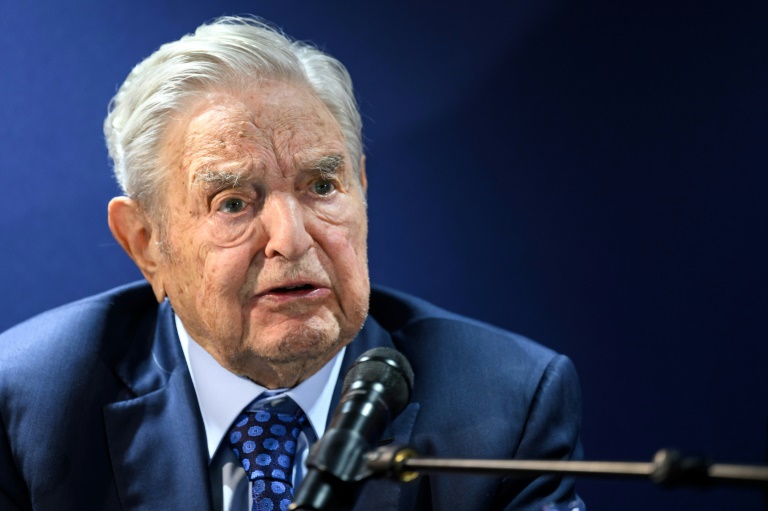
US billionaire George Soros warned Tuesday that “civilization may not survive” Russia’s invasion of Ukraine but said Europe could have a stronger position against President Vladimir Putin regarding gas than it realises.

In his traditional dinner speech on the sidelines of the World Economic Forum in the Swiss mountain town of Davos, the Hungarian-born investor and philanthropist said the war has “shaken Europe to its core.”

“The invasion may have been the beginning of the Third World War and our civilization may not survive it,” Soros said.

“We must mobilise all our resources to bring the war to an early end. The best and perhaps only way to preserve our civilization is to defeat Putin as soon as possible,” he said.

He praised US and European support for Ukraine but Europe’s dependence on Russian fossil fuels “remains excessive,” Soros said.

He said this dependence was “due largely to the mercantilist policies pursued by former (German) chancellor Angela Merkel” who made “special deals” with Moscow for gas supplies.

The European Union is now aiming to reduce its use of Russian gas by two-thirds this year, but it has fallen short of banning imports due to German reluctance.

The EU has also struggled to agree on an oil ban due to Hungary’s opposition.

“I think Putin has been very clever in sort of blackmailing Europe, threatening to cut off the gas, but actually his case is much less strong than he pretends,” Soros said.

“He’s actually in a crisis and he has managed somehow to terrify Europe,” he said. 

He said Putin put gas in storage last year instead of exporting it to Europe, creating a shortage that raised prices and made Russia “a lot of money.”

But storage facilities will be full in July and Russia has no other place to ship the gas than Europe as it is its only market, he said. 

Soros said he had explained this in a recent letter to Italian President Mario Draghi, but he has yet to receive a reply.

Putin is “in a tight situation. He has to do something with that gas,” Soros said. “Europe has a much stronger position than it recognises.”

– Xi and Putin: the ‘dictators’ –

Soros’s dinner is among the most eagerly awaited events of the gathering of global business and political elites in Davos, but it last took place in January 2020 as the Covid pandemic thwarted last year’s confab.

Soros, the founder of the Open Society Foundations, used this year’s speech to take aim again at another usual target, Chinese President Xi Jinping.

He called Xi and Putin “dictators” whose countries represent “the biggest threat to open society”.

“They are tied together in an alliance that has no limits. They also have a lot in common. They rule by intimidation, and as a consequence they make mind-boggling mistakes,” Soros said.

“Putin expected to be welcomed in Ukraine as a liberator. Xi Jinping is sticking to a zero-Covid policy that can’t possibly be sustained,” he said, referring to China’s strict lockdowns to contain coronavirus outbreaks.

11 dead in attack on bars, hotel in central Mexico

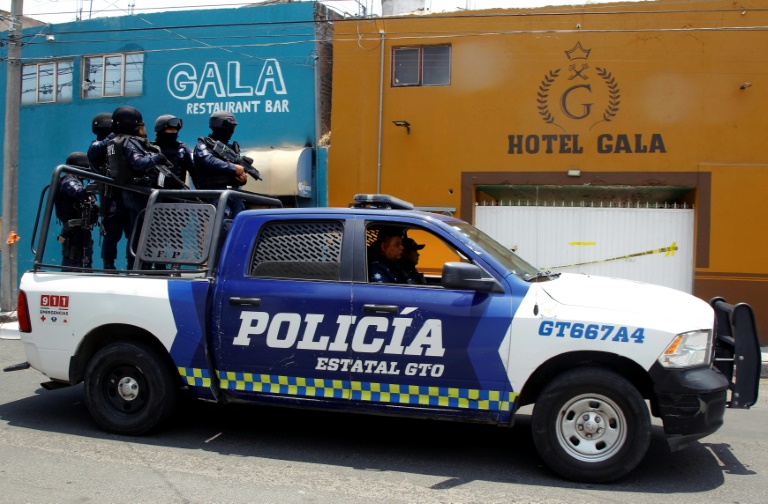
Gunmen killed 11 people in an apparent gangland revenge attack on a hotel and two bars in Mexico’s central city of Celaya, authorities said Tuesday.

The attack late Monday claimed the lives of eight women and three men, and left another person wounded, according to the prosecutor’s office in the central state of Guanajuato.

The attack was motivated by “criminal rivalry” to avenge the murder of a gang member, Guanajuato state security minister Sophia Huett said.

The shooting took place “in a neighborhood with a history of arrests of people linked to drug dealing and homicides,” she added.

Ten of the victims were found dead at the scene, while another died on the way to a hospital, the state prosecutor’s office said.

Witnesses said the victims were shot, after which the attackers poured gasoline to set the establishments on fire.

They said the bodies were scattered among plastic tables and chairs, and one was lying on the sidewalk.

Calling cards claiming the massacre were left behind by a criminal group, authorities said, without identifying the gang.

Guanajuato, a thriving industrial region that hosts a refinery and a major pipeline, has become one of Mexico’s most violent states due to a dispute between the Santa Rosa de Lima and Jalisco New Generation cartels.

The gangs fight for control of trafficking routes for drugs and stolen fuel.

In March, the charred bodies of seven people were found abandoned in a pick-up truck in Celaya.

And in January, six members of a family were murdered in a rural community in Guanajuato state — the fifth such attack in the municipality of Silao in four months.

Since December 2006, when the government launched a controversial military anti-drug operation, Mexico has recorded more than 340,000 murders, according to official figures.

Authorities have blamed most of the killings on organized crime.

President Andres Manuel Lopez Obrador has championed a “hugs not bullets” strategy to tackle violent crime at its roots by fighting poverty and inequality with social programs, rather than with the army.

Risk of blood clots in lung doubled for Covid survivors: US study

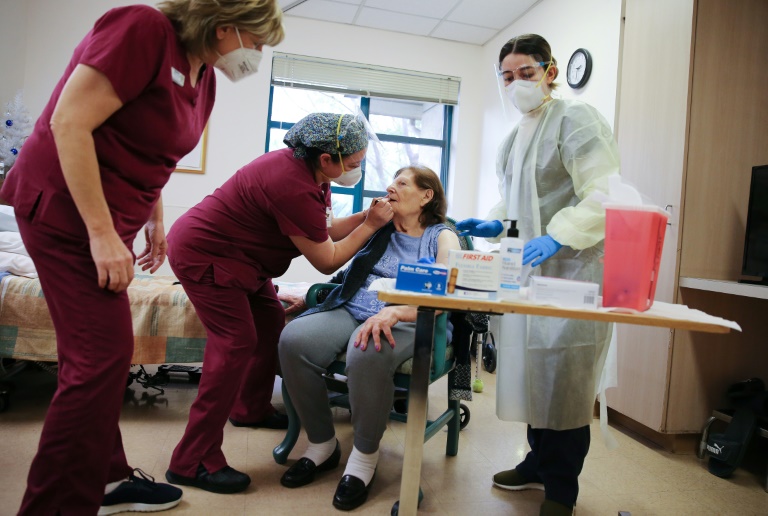
Coronavirus survivors have twice the risk of developing dangerous blood clots that travel to their lungs compared to people who weren’t infected, as well double the chance of respiratory symptoms, a large new study said Tuesday.

The research by the Centers for Disease Control and Prevention found that as many as one in five adults aged 18-64 years and one in four of those over 65 went on to experience health conditions that could be related to their bout of Covid — a finding consistent with other research.

Among all conditions, the risk of developing acute pulmonary embolism — a clot in an artery of the lung — increased the most, by a factor of two in both adults younger and older than 65, as did respiratory symptoms like a chronic cough or shortness of breath.

Pulmonary embolisms usually travel to the lungs from a deep vein in the legs, and can cause serious problems, including lung damage, low oxygen levels and death.

The study was based on more than 350,000 patient records of people who had Covid-19 from March 2020 – November 2021, paired with 1.6 million people in a “control” group who had sought medical attention in the same month as a corresponding “case” patient, but weren’t diagnosed with Covid.

The team assessed the records for the occurrence of 26 clinical conditions previously associated with long Covid. 

Patients were followed one month out from the time they were first seen until they developed a subsequent condition, or until a year had passed, whichever came first.

The most common conditions in both age groups were respiratory symptoms and musculoskeletal pain.

In patients under 65, risks after Covid elevated for most types of condition, but no significant differences were observed for cerebrovascular disease, mental health conditions, or substance-related disorders.

“Covid-19 severity and illness duration can affect patients’ health care needs and economic well-being,” the authors wrote. 

“The occurrence of incident conditions following infection might also affect a patient’s ability to contribute to the workforce and might have economic consequences for survivors and their dependents,” as well as placing added strain on health systems.

Limitations of the study included the fact that data on sex, race, and geographic region were not considered, nor was vaccination status. Because of the time period, the study also didn’t factor in newer variants.

21 killed in latest police raid on Rio favela

An anti-crime operation in a Rio de Janeiro slum left 21 people dead Tuesday, officials said, a year after the bloodiest-ever favela raid in the city’s history.

Health officials put the toll at 20, with seven hospitalized, while police counted another victim — a female bystander felled by a stray bullet.

Military police said they came under gunfire as they approached the northern Rio slum called Vila Cruzeiro in the early morning hours with the mission of locating and arresting “criminal leaders.”

The toll nearly doubled from the initially reported 11 deaths as more bodies were uncovered in the aftermath. 

Police said at least 11 of the dead were “suspects.”

At least 19 schools in the area closed because of the gunfire, residents said. 

Police helicopters were also struck by bullets during the deadly exchange.

Police often carry out raids in Rio’s teeming slums in a bid to fight drug trafficking.

This time, they said they were looking for gang leaders from other parts of Brazil hiding out in Vila Cruzeiro.

“It was an operation planned for weeks, but we identified criminal movements during the night and decided to intervene,” said team member Colonel Luiz Henrique Marinho Pires.

He said the suspects were readying to move to another favela.

This was the deadliest police raid since 28 people died a year ago in a favela called Jacarezinho — the largest such toll in the city’s history.

Vila Cruzeiro, a favela crowded onto a hillside not far from Rio de Janeiro’s international airport, was also the scene of a violent confrontation in February, when police killed eight people.

Tuesday’s pre-dawn raid targeted the Comando Vermelho, or Red Command, one of Brazil’s most powerful crime gangs “responsible for more than 80 percent of the shootings in Rio,” a police spokesman told TV Globo.

– No body cams –

Officers seized 13 assault rifles, four pistols, 20 motorcycles and 10 cars in the raid.

No arrests were reported.

The operation was criticized in some quarters for its use of overwhelming force.

“Another massacre. Schools closed, thousands of people terrorized,” tweeted left-wing city councilman Tarcisio Motta.

“The policy of extermination runs its course in Rio.”

Residents and activists have often denounced official abuse, including extrajudicial killings of suspects, which they say often goes unpunished.

“These operations in the favelas put the entire population at risk and prevent the functioning of public services. We know they would never be tolerated in upscale neighborhoods,” Guilherme Pimentel, a public defender, told AFP.

Rio police officers were meant to start wearing cameras on their uniforms this month to film all acts in the line of duty, but use of the equipment has been postponed.

Security experts believe cameras may help prevent abuse but will not solve all the problems, and their introduction should be accompanied by comprehensive police reform.

Experts advocate for abandoning confrontation in the endless fight against drug trafficking, with a focus instead on disrupting the gangs’ money flow.

“Rio needs a new public safety policy that is not the bullet,” Human Rights Watch said.

Brazilian police are among the world’s deadliest, responsible for more than 6,100 fatalities in 2021 — an average of 17 per day, according to a violence monitor count.

Tedros, from 'child of war' to two-term WHO chief

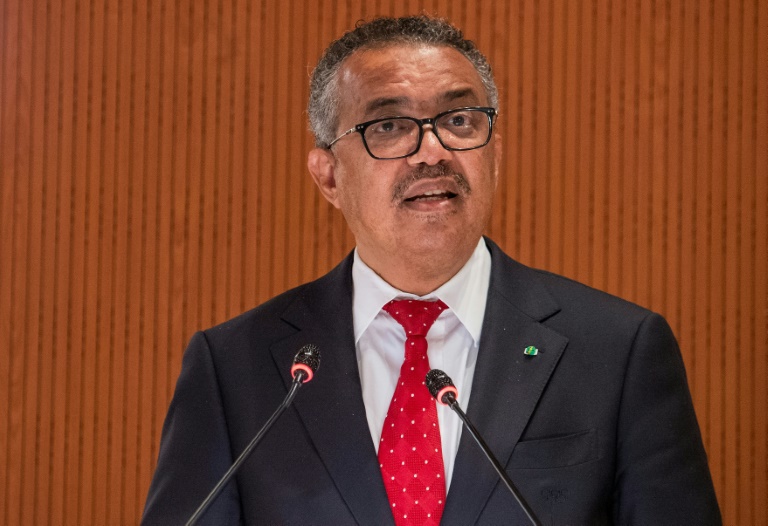
Tedros Adhanom Ghebreyesus, the first African to head the WHO, was re-elected on Tuesday, tearfully accepting a second term as he recalled his humble upbringing as “a child of war” and pleading for peace.

His re-election was announced to thundering applause during the World Health Organization’s main annual assembly, after receiving more than two-thirds of secret-ballot votes cast, as need to be appointed.

The UN health agency did not provide a breakdown, but sources in the room said he had received 155 of the 160 votes cast.

“I am really, really overwhelmed by the support,” Tedros told the assembly.

“I am really proud to be WHO.”

The Ethiopian former minister of health and of foreign affairs has become a familiar face worldwide as he spearheads the global response to the Covid-19 pandemic.

The 57-year-old malaria expert has also increasingly been sounding the alarm over the heavy toll that conflicts like the war in Ukraine are taking on global health.

– ‘Hope peace will come’ –

After accepting his re-election, Tedros made an impassioned and personal plea for peace.

With a trembling voice, he pointed out that he himself was “a child of war… from a poor family”.

He recalled experiencing conflict at a very young age, and also losing his younger brother to disease due to a lack of access to medicine.

“That I was spared was just pure luck. It could have been me, I could have died more than 50 years ago,” he said, describing how the strong emotions from that time rushed back during a recent visit to Ukraine.

“When I saw the kids, it was the image from more than 50 years ago that came to my mind, so visible, so haunting, the smell of war, the sound of war, the image of war,” he told the World Health Assembly. 

“That’s what I don’t want to happen to anyone. So I hope peace will come.”

Tedros, who has also voiced growing anguish at the conflict raging in his home region of Tigray since late 2020, has cautioned a divided world cannot properly address the mountain of health emergencies and challenges before it, including the pandemic.

Peace “is a prerequisite for health”, he said.

That is a message he is eager to push as he prepares to take on a second five-year term from mid-August.

– Turbulent –

His first term in office was turbulent, as he grappled with the global response to the pandemic and a long line of other crises, including a sexual abuse scandal involving WHO staff in the Democratic Republic of Congo.

While Tedros has faced his share of criticism, he has received broad backing.

African nations especially have been pleased at the attention paid to the continent and at his relentless campaign for poorer nations to receive a fair share of Covid vaccines.

Since US President Joe Biden’s arrival in the White House, Tedros has also enjoyed support in Washington. 

That marked a major about-face from the start of the pandemic, when Biden’s predecessor Donald Trump began pulling the United States out of the WHO, accusing it of being Beijing’s puppet and helping cover up the initial Covid outbreak.

Ironically, the main source of opposition has come from Tedros’s own country.

Angered by his comments about the dire humanitarian situation in Tigray, Ethiopia’s government accused him of having “abused his office” to advance propaganda.

– ‘Under pressure’ –

On Tuesday, the representatives of Ethiopia and Eritrea, whose troops have reportedly been fighting alongside Ethiopian government forces in Tigray, loudly voiced objections as Botswana tried to congratulate Tedros on behalf of African countries.

But they appeared to be on their own, with all regions and a long line of countries, including the United States and Russia, warmly congratulating him on his re-election.

There is no shortage of challenges ahead, with the Covid-19 pandemic still raging and demands for dramatic reforms of the entire global health system to help avert similar threats going forward.

In her congratulatory statement, US Assistant Health Secretary Loyce Pace hinted at the challenges ahead.

“The truth is, there is still much more work to do to modernise the WHO so that it is more effective and agile,” she said, vowing support at a time when “the entire global health ecosystem is under pressure.”

Close Bitnami banner
Bitnami