World

As Ukraine war rages, NATO in show of force in the Med

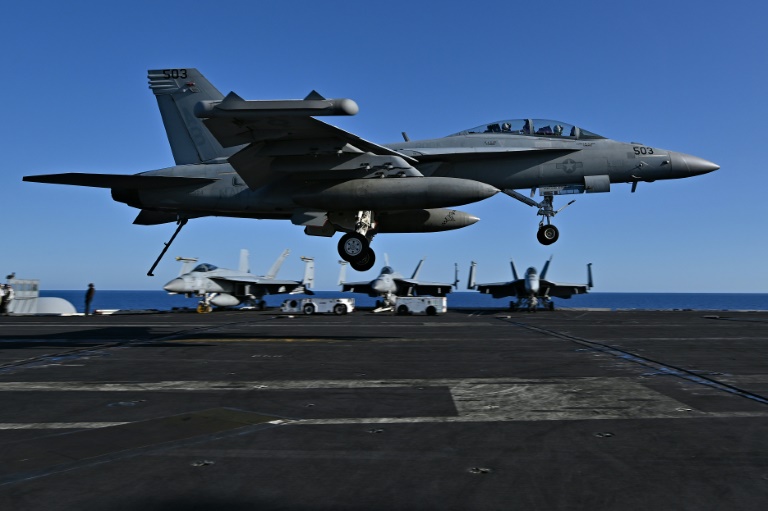
A deafening stream of fighter jets land and take off from a US aircraft carrier, part of a long-planned NATO exercise in the Mediterranean to show military might while Russia wages war in Ukraine.

“I want us to be as ready as we can possibly be,” US Rear Admiral Curt Renshaw, commander of the Carrier Strike Group Eight, told reporters this week on a visit on board USS Harry S. Truman. 

“We look at the Russian capability and we look at our own capabilities and then we train to counter what they might do and to defend ourselves and to defend partners and allies.”

The aircraft carrier is taking part in “Neptune Shield 2022”, a NATO training activity in the Mediterranean and the Baltic Sea this month involving nations from Italy, Poland and Turkey to Britain and the United States.

The goal is to overcome the difficulties of integrating command and control of air, sea and land assets from different countries in the NATO military alliance.

The operation has been in the pipeline for two years, but Russia’s invasion of Ukraine in late February has cast a new light on events.

Speaking in Mediterranean waters between Crete and Libya, Renshaw is well aware how this show of strength comes across on the other side of Europe.

“Look at the strike fighters, look around you! Of course this should be a deterrent effect,” he said, surrounded by F-18 Super Hornet jets lined up in a hangar.

“I think anyone would not be very wise to attack us or to have some sort of aggression against an ally if you think of the capabilities we have.”

Asked about more precise activities, he added: “I won’t talk about specific operations but we do keep close track of where Russia operates submarines.”

– ‘Weighs on our minds’ –

USS Harry S. Truman is akin to a small floating town, carrying around 4,800 individuals, with a disturbingly short runway from which jets fire off regularly or land abruptly, their tailhooks snagged in the ship’s arresting wires.

Among the pilots is British Royal Navy officer Rory Cheyne, who is on an exchange programme with the Americans and recalls recent training flights into France, Germany and Spain.

Asked about the impact of the Ukraine war, he told AFP: “Clearly the training nature of this activity, enhanced vigilance activity, has been put into a different context.

“But certainly what we’re doing… is no different given that context. We are here to work hand in hand with our allies and be ready for whatever eventuality should occur.”

Lieutenant Commander Jeannette Lazzaro, a 33-year-old American, works in the operations department, which sets out the air plan on which flight schedules are based.

The war “has not had a direct impact on what we’re doing… however it does certainly weigh on our minds”, she told AFP.

The exercise is a serious business, but there are moments of levity — not least an informal competition by some of the pilots to grow the best moustache, an adornment typical of World War II fighter pilots.

“It’s a proven fact that a man sporting a moustache is far better in tactical execution and esprit de corps within a combat unit than a man without a moustache,” joked Hayward Foard, second-in-command of the Strike Fighter Squadron.

“Typically we compete who can grow the most finely shaped moustache. I like to think I’m first in the running.”
UK PM Johnson under fire over 'Partygate' photos

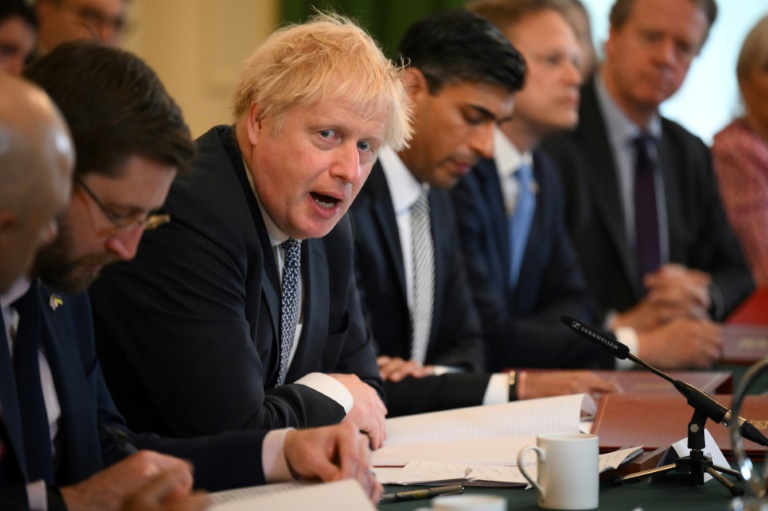
UK Prime Minister Boris Johnson on Tuesday faced renewed accusations of lying, after photos emerged of him drinking at a Downing Street gathering during lockdown in 2020.

The revelations came as a senior civil servant was expected to publish her long-awaited full report into the “Partygate” scandal, despite allegations that Johnson was trying to have it dropped.

A slew of revelations earlier this year about lockdown-breaking parties caused widespread political and public anger, and put Johnson’s position in jeopardy.

But the heat was taken out of a potential mutiny from his own MPs by the war in Ukraine and his hawkish support for President Volodymyr Zelensky.

The photos published late on Monday by ITV News were taken during a leaving event for Johnson’s communications director Lee Cain on November 13, 2020, days after the government ordered a second Covid lockdown and banned households from mixing.

Johnson can be seen raising a glass and chatting with several people around a table with bottles of wine and food.

Police have investigated the leaving event as part of their probe into “Partygate” and fined one person — but not Johnson.

When he was asked in parliament last December about the gathering, the prime minister insisted there had been no party on that date and that no rules had been broken.

The police did fine Johnson over a surprise birthday party he attended at Downing Street in June 2020 but he has not been fined for any other event.

In total, they issued more than 100 fines related to multiple gatherings in an around the prime minister’s residence and place of work.

The BBC’s Panorama programme on Tuesday quoted people who attended Cain’s leaving party as saying it developed into “about 30 people, if not more, in a room. Everyone was stood shoulder to shoulder, some people (sitting) on each other’s laps.”

The event was on a Friday, when the prime minister press office organised regular “WTF” (“Wine-Time Friday”) drinks starting at four o’clock in the afternoon, some of the people who attended told the BBC.

A Downing Street security guard was mocked when he tried to stop a party in full flow, they said.

“People made fun of him because he was so worked up that this party was happening and it shouldn’t be happening.”

The deputy leader of the main opposition Labour party, Angela Rayner, said it was “astonishing” that Johnson was not fined for the November gathering.

She told ITV News that it looked “pretty clear” the gathering had been a party, not a work event. She said it was “pretty shocking” Johnson had not been fined for it.

“He’s tried to lie to the British public and he’s tried to lie to parliament,” Rayner said.

– Publish –

Transport Secretary Grant Shapps sought to defend Johnson on Tuesday, saying the new pictures showed the prime minister was “clearly not” partying.

“It looks to me he was asked to go and thank a member of staff who was leaving, raises a glass to them and I imagine comes in and out pretty quick, which is presumably why the police have not issued a fixed-penalty notice (fine) to the prime minister,” Shapps told BBC radio.

In a separate development, the Times newspaper reported on Tuesday that Johnson had put pressure on civil servant Sue Gray to drop her much-anticipated report into “Partygate”.

Sky News quoted sources as saying Johnson had questioned what more would be left to say in Gray’s report after the police concluded their work.

Rayner joined a chorus of opposition voices calling for the Gray report to be published “as soon as possible”. 

“The full report — and all the evidence — must be published without delay,” she tweeted. 

The Metropolitan Police said on Thursday they had completed their “Partygate” probe, issuing a total of 126 fines.

Those fined include Johnson, his wife Carrie and finance minister Rishi Sunak. 

Johnson’s fine — the first for a sitting British prime minister — prompted calls for him to resign or be forced out. 

He has apologised for the breach of Covid regulations but has refused to quit.

He is also facing an investigation by a parliamentary committee into his denials of lockdown lawbreaking to the House of Commons.

Pakistan police arrest 'hundreds' of opposition supporters ahead of major rally

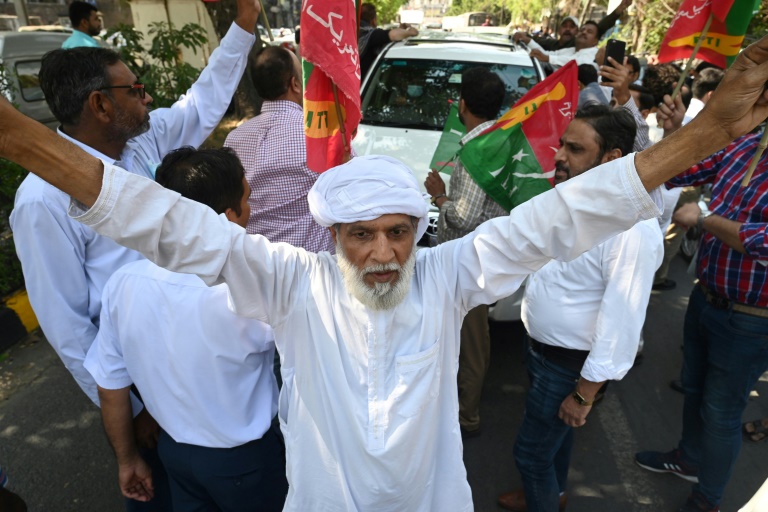
Pakistani police detained hundreds of supporters of ousted prime minister Imran Khan overnight ahead of a major sit-in planned by the former leader, senior party members and police sources said Tuesday, as the government pledged to block the protest.

Khan, a cricket star turned populist politician, was kicked out of power last month in a vote of no-confidence, but has since pressured the country’s fragile new coalition government by staging mass rallies across the country.

Alleging that he was removed through a “foreign conspiracy”, Khan plans on Wednesday to lead tens of thousands of supporters from his power base in the northwestern city of Peshawar to the capital Islamabad demanding fresh elections. 

“Tomorrow I will be leading the largest march of Pakistan’s history. I don’t consider it politics but jihad,” Khan said, referring to a term used by Muslims to describe a struggle. 

Security was being built up across the country, with shipping container roadblocks hauled into place in Islamabad and the government quarter put on lockdown, while many entry and exit points around the city of Lahore — around 380 kilometres (236 miles) away — were also blocked. 

“This (protest) is being done to divide the nation and promote chaos,” Interior Minister Rana Sanaullah told reporters. “Nobody should be allowed to besiege the capital and dictate his terms.”

“This march cannot be allowed to take place,” Information Minister Marriyum Aurangzeb added. 

– Opposition arrests –

Two police officials told AFP that more than 200 supporters of Khan’s Pakistan Tehreek-e-Insaf (PTI) party were arrested in overnight raids in the nation’s most populous province Punjab.

They were booked on public order offences and remain in detention, one of the sources said.

Fawad Chaudhry, the former information minister in Khan’s government, accused police of not having the necessary warrants and put the number of arrested at more than 400.

“More than 1,100 houses were raided overnight. Police entered the houses without any warrants and insulted women and children,” he tweeted.

One police officer was shot dead during a raid on a PTI supporter’s house in Lahore, Punjab Chief Minister Hamza Shahbaz Sharif said.

Police have not officially commented on the arrests or allegations.

Attaullah Tarar — a senior leader in new Prime Minister Shehbaz Sharif’s PML-N party — said at a press conference that protestors had been planning to join the march “with weapons”.

“We have information that they have started collecting ammunition at various places,” he told reporters.

Political analyst Hassan Askari Rizvi told AFP that Pakistan’s all-powerful military was currently remaining neutral in the standoff but “they may try to defuse the situation if it gets worse”.

On Saturday, senior PTI leader and former minister Shireen Mazari was arrested near her house in the capital over a decades-old land dispute. She was briefly detained before a court ordered her release. 

In 2018, Khan was voted in by an electorate weary of the dynastic politics of the country’s two major parties, with the popular former sports star promising to sweep away decades of entrenched corruption and cronyism.

He was brought down in part by his failure to rectify the country’s dire economic situation, including its crippling debt, shrinking foreign currency reserves and soaring inflation.

Sharif is now grappling with the same crisis, as well as rising militancy and soured relations with the West.

Japan says China, Russia jets flew nearby as Quad met

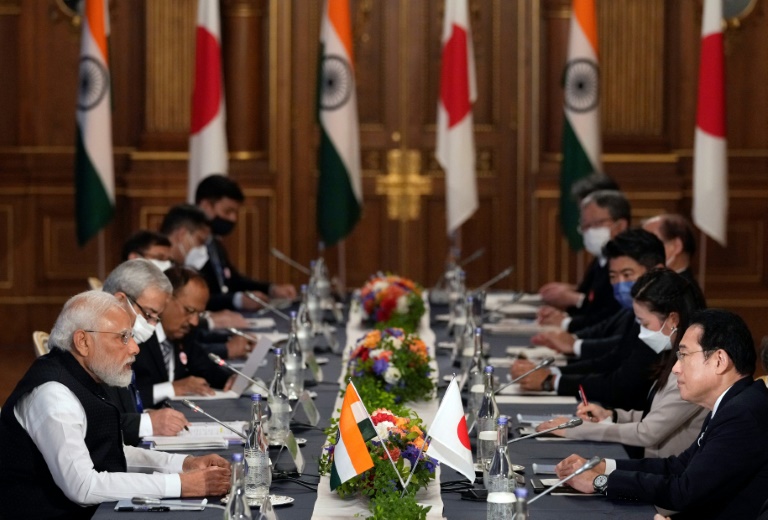
Chinese and Russian fighter jets carried out joint flights near Japan on Tuesday as leaders of the Quad bloc met in Tokyo, the Japanese defence minister said.

Nobuo Kishi said the government had expressed “grave concerns” to Russia and China over the flights, which took place while leaders from the United States, India, Australia and Japan held talks on regional security.

The planes did not breach territorial airspace, the defence ministry told AFP, and it was the fourth time since November that long-distance joint flights by Russia and China had been spotted near Japan.

“Two Chinese bombers joined two Russian bombers in the Sea of Japan and made a joint flight to the East China Sea,” Kishi told reporters.

“After that, a total of four aircraft, two presumed (new) Chinese bombers — which replaced the two Chinese bombers — and two Russian bombers, conducted a joint flight from the East China Sea to the Pacific Ocean.”

He said a Russian intelligence-gathering aircraft also flew off northern Hokkaido to the Noto Peninsula in central Japan on Tuesday, calling the moves especially “provocative” given the summit in Tokyo.

Beijing confirmed the flights in a short statement, and said it was in line with the Chinese and Russian “annual military cooperation plan”.

“On May 24, both countries’ air forces organised and carried out a routine joint strategic mid-air patrol in the airspace above the Sea of Japan, East China Sea and Western Pacific maritime areas,” a statement from the ministry of defence said.

The Quad leaders on Tuesday warned against attempts to “change the status quo by force”, although they avoided direct references to Russia or China in a joint statement.

Their statement referred to the war in Ukraine, however, and warned against a range of activities which Beijing has regularly been accused of in the region.

Kishi said Japan had “communicated through diplomatic routes our grave concerns from the perspective of our country’s and the region’s security”.

“As the international community responds to Russia’s aggression against Ukraine, the fact that China took such action in collaboration with Russia, which is the aggressor, is cause for concern. It cannot be overlooked.”

Japan, which has volatile ties and border disputes with its neighbours China, Russia and South Korea, routinely sends jets to defend its air borders.

The country scrambled military jets 1,004 times in the year to March, the second-highest count on record, according to the defence ministry.

Most were to counter approaching Chinese aircraft, although many of the rest involved Russian aircraft.

Environmental protesters force suspension of Shell AGM

Oil giant Shell was on Tuesday forced to temporarily suspend its annual general meeting because of disruption from climate change activists.

Proceedings at the venue in central London were halted about half an hour after they started at 10:00 a.m. (0900 GMT).

“Stop kidding yourself that you are doing no harm,” activists shouted at shareholders, according to a live feed of the meeting. 

“Think of your children and your family. They will not escape the effects of the climate emergency.”

Protesters sang “We will, we will stop you!” to the tune of Queen’s 1977 rock anthem “We Will Rock You” before police arrived and they were ejected.

Outside, another group of demonstrators sang and shouted slogans such as “shame on Shell”.

AGM chairman Andrew Mackenzie apologised to delegates after trying in vain to persuade the protesters to wait for discussion of a resolution about a climate transition plan.

The company said later in a statement: “We respect the right of everyone to express their point of view and welcome any engagement on our strategy and the energy transition which is constructive.

“However, this kind of disruption at our AGM is the opposite of constructive engagement.”

It added: “We agree that society needs to take urgent action on climate change.”

Money Rebellion said that more than 70 people took part in the protest, which was part of a wider call for action against Shell for its climate action plan.

It has previously disrupted AGMs of the banks HSBC, Barclays and Standard Chartered.

On Monday, a Shell consultant resigned and accused the oil giant in an email of “failing on a massive planetary scale” to limit climate risks.

Caroline Dennett, a UK-based safety consultant, said the company’s continued extraction of oil and gas was causing “extreme harm” to the planet.

In response, the company said it had short, medium and long-term objectives to reach net zero by 2050 and was committed to reducing its carbon footprint.

Billions of dollars have already been invested in low-carbon energy, although the transition from oil and gas would take decades, a spokeswoman told AFP.

HSBC has meanwhile suspended a top executive for playing down the impact of climate change in a recent presentation.

Environmental protesters force suspension of Shell AGM

Oil giant Shell was on Tuesday forced to temporarily suspend its annual general meeting because of disruption from climate change activists.

Proceedings at the venue in central London were halted about half an hour after they started at 10:00 a.m. (0900 GMT).

“Stop kidding yourself that you are doing no harm,” activists shouted at shareholders, according to a live feed of the meeting. 

“Think of your children and your family. They will not escape the effects of the climate emergency.”

Protesters sang “We will, we will stop you!” to the tune of Queen’s 1977 rock anthem “We Will Rock You” before police arrived and they were ejected.

Outside, another group of demonstrators sang and shouted slogans such as “shame on Shell”.

AGM chairman Andrew Mackenzie apologised to delegates after trying in vain to persuade the protesters to wait for discussion of a resolution about a climate transition plan.

The company said later in a statement: “We respect the right of everyone to express their point of view and welcome any engagement on our strategy and the energy transition which is constructive.

“However, this kind of disruption at our AGM is the opposite of constructive engagement.”

It added: “We agree that society needs to take urgent action on climate change.”

Money Rebellion said that more than 70 people took part in the protest, which was part of a wider call for action against Shell for its climate action plan.

It has previously disrupted AGMs of the banks HSBC, Barclays and Standard Chartered.

On Monday, a Shell consultant resigned and accused the oil giant in an email of “failing on a massive planetary scale” to limit climate risks.

Caroline Dennett, a UK-based safety consultant, said the company’s continued extraction of oil and gas was causing “extreme harm” to the planet.

In response, the company said it had short, medium and long-term objectives to reach net zero by 2050 and was committed to reducing its carbon footprint.

Billions of dollars have already been invested in low-carbon energy, although the transition from oil and gas would take decades, a spokeswoman told AFP.

HSBC has meanwhile suspended a top executive for playing down the impact of climate change in a recent presentation.

'Hulk' star Ruffalo joins call for global wealth tax

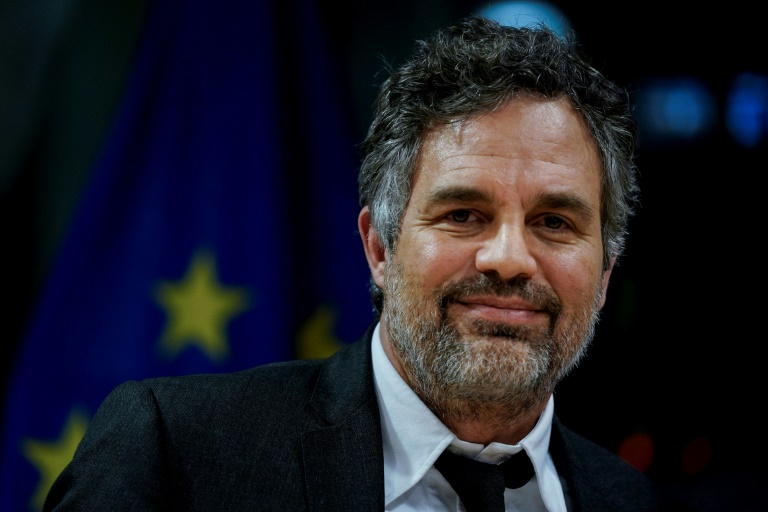
US actor Mark Ruffalo on Tuesday joined a call by over 150 wealthy people for governments to tax them more, as global elites and policymakers met at the World Economic Forum in Swiss resort Davos.

The face of Hulk in a decade of Marvel movies was one of dozens of new millionaires to put their names to an open letter titled “In Tax We Trust”, which was first delivered to attendees at a virtual WEF conference in January.

“While the world has gone through an immense amount of suffering in the last two years, we have actually seen our wealth rise during the pandemic — yet few if any of us can honestly say that we pay our fair share in taxes,” the letter read.

The Patriotic Millionaires group said it had boosted the number of signatories to over 150 by May, from 100 in January.

Its chairman Morris Pearl, a former managing director at mammoth asset manager BlackRock, vowed in a statement to “continue to pressure global leaders to heed our call: tax the rich before it’s too late”.

But Organisation for Economic Cooperation and Development (OECD) secretary-general Mathias Cormann said that wealth taxes could be less effective than other revenue-raising options.

“They don’t necessarily raise that much revenue,” he told a panel discussion at Davos. 

“In terms of the politics of it, it’s attractive, but in terms of the substance of what it achieves it’s not that attractive.”

Cormann did suggest that “property taxes are probably the most efficient, least distorting” form of wealth tax.

“There’s huge scope in wealth taxation… it’s been tried and in some countries it works,” Oxfam executive director Gabriela Bucher responded.

“These amounts that are being accumulated. You could not spend them in several lifetimes”.

Cormann and the OECD are betting on a deal struck by over 130 countries last year to tax multinational companies at a minimum of 15 percent to boost revenue for hard-up governments.

Asked if Washington might walk back its commitment should Republicans win control of Congress at November mid-term elections, Cormann said that “it’s in the rational self-interest of the United States to be part of this deal”.

For companies, it’s “much better for them to be operating in a globally consistent framework” rather than navigate conflicting tax regimes, he added.

“I can’t imagine that any country or any side of politics in any country would make a judgement that would put themselves at that sort of disadvantage.”

UAE firm inks airport deal as Afghanistan eyes international flights

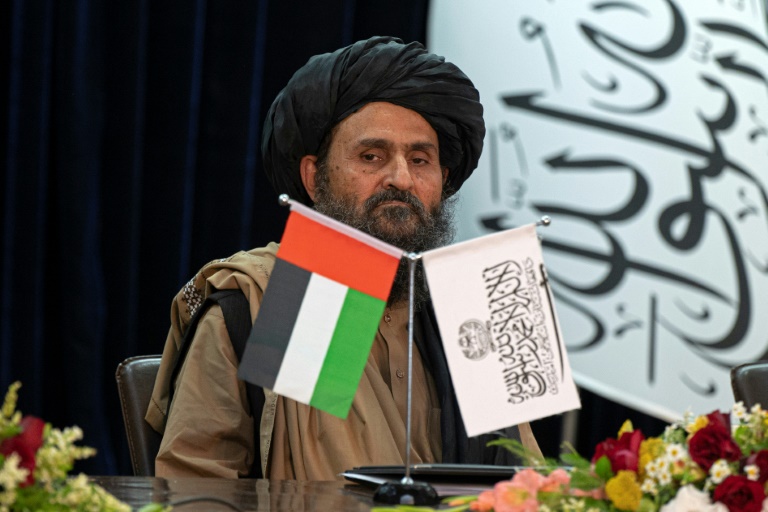
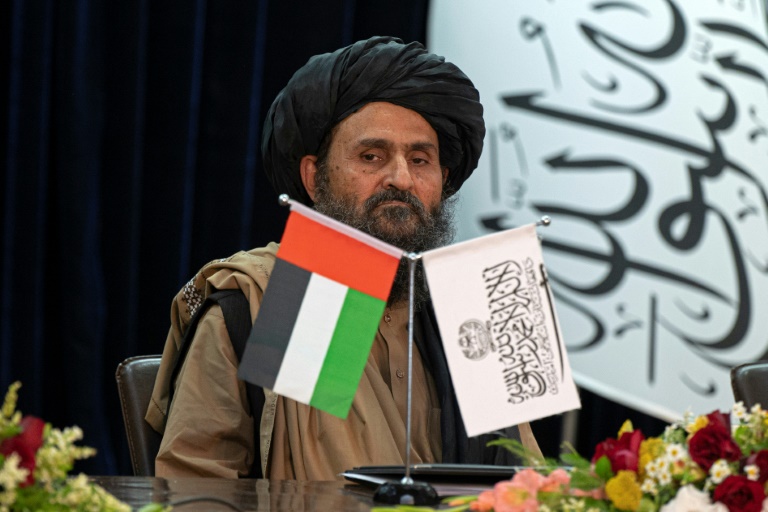
A United Arab Emirates company signed a contract with the Taliban authorities Tuesday to provide ground handling services at Afghanistan’s three airports, officials said, as the country seeks to resume international transit.

Capital Kabul’s only airport was trashed in August when tens of thousands of people rushed to evacuate as the US-led forces withdrew.

While some domestic and international flights are still operating out of the facility, it needs significant upgrades for major foreign airlines to restart full service.

The full operation of Kabul airport is crucial for reviving Afghanistan’s shattered economy.

But no country has yet formally recognised the Taliban government, with nations watching to see how the Islamists -– notorious for human rights abuses during their 1996-2001 stint in power -– will rule.

UAE firm GAAC, which was previously operating in Afghanistan, signed a new 18-month contract covering three airports: Kabul, Kandahar and Herat.

“The current contract is only for offering ground handling services,” Hameedullah Akhundzada, Minister of Transport and Civil Aviation said at a press conference.

GAAC has provided these services at Kabul airport since November 2020, and played a key role in rehabilitating the facility in August.

“We are not a new face here,” Ibrahim Morafi, regional director of GAAC, told AFP.

“But GAAC signing the new contract will give confidence to international airlines to resume flights to Afghanistan,” he said, without specifying when such flights — including from the UAE — were expected to resume.

A Qatar-Turkey consortium has been in talks with the aviation ministry for months over operating airports at Kabul, Kandahar, Herat, Mazar-i-Sharif and Khost.

But the talks snagged as the Taliban insisted its fighters will guard the facilities.

Qatar and Turkey want a say in managing security, at least at Kabul airport, experts tracking the negotiations say.

On Tuesday, Afghan officials refused to comment on whether the consortium was still open to operating the five airports.

GAAC officials also declined to comment on whether its new ground handling contract would be expanded into other services.

Currently, two Afghan airlines — Kam Air and Ariana Afghan — fly to Dubai, Doha, Islamabad, and Tehran from Kabul airport.

Iran’s Mahan Air also operates flights to Kabul. 

UAE firm inks airport deal as Afghanistan eyes international flights

A United Arab Emirates company signed a contract with the Taliban authorities Tuesday to provide ground handling services at Afghanistan’s three airports, officials said, as the country seeks to resume international transit.

Capital Kabul’s only airport was trashed in August when tens of thousands of people rushed to evacuate as the US-led forces withdrew.

While some domestic and international flights are still operating out of the facility, it needs significant upgrades for major foreign airlines to restart full service.

The full operation of Kabul airport is crucial for reviving Afghanistan’s shattered economy.

But no country has yet formally recognised the Taliban government, with nations watching to see how the Islamists -– notorious for human rights abuses during their 1996-2001 stint in power -– will rule.

UAE firm GAAC, which was previously operating in Afghanistan, signed a new 18-month contract covering three airports: Kabul, Kandahar and Herat.

“The current contract is only for offering ground handling services,” Hameedullah Akhundzada, Minister of Transport and Civil Aviation said at a press conference.

GAAC has provided these services at Kabul airport since November 2020, and played a key role in rehabilitating the facility in August.

“We are not a new face here,” Ibrahim Morafi, regional director of GAAC, told AFP.

“But GAAC signing the new contract will give confidence to international airlines to resume flights to Afghanistan,” he said, without specifying when such flights — including from the UAE — were expected to resume.

A Qatar-Turkey consortium has been in talks with the aviation ministry for months over operating airports at Kabul, Kandahar, Herat, Mazar-i-Sharif and Khost.

But the talks snagged as the Taliban insisted its fighters will guard the facilities.

Qatar and Turkey want a say in managing security, at least at Kabul airport, experts tracking the negotiations say.

On Tuesday, Afghan officials refused to comment on whether the consortium was still open to operating the five airports.

GAAC officials also declined to comment on whether its new ground handling contract would be expanded into other services.

Currently, two Afghan airlines — Kam Air and Ariana Afghan — fly to Dubai, Doha, Islamabad, and Tehran from Kabul airport.

Iran’s Mahan Air also operates flights to Kabul. 

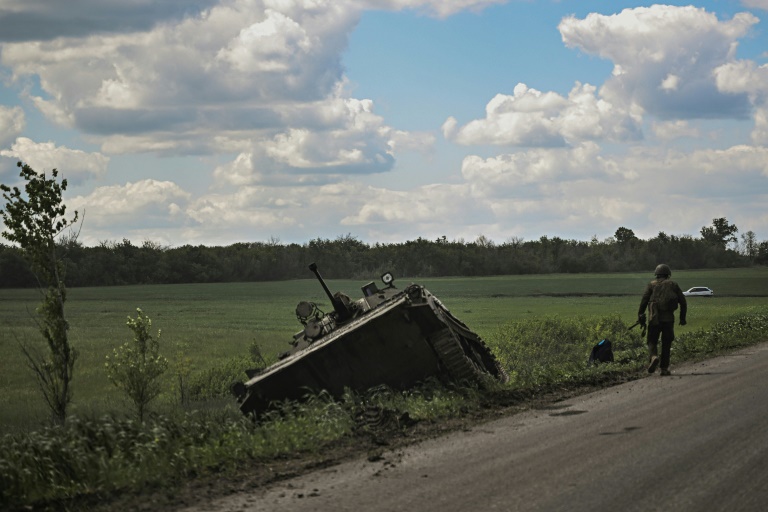
Russia intensifies Donbas offensive as war enters fourth month

Russian forces on Tuesday stepped up their offensive on the last pocket of resistance around Lugansk in Ukraine’s eastern Donbas region, as the conflict entered its fourth month.

Since Moscow’s invasion in late February, Western support has helped Ukraine hold off its neighbour’s advances in many areas, including the capital Kyiv. Russia is now focused on securing and expanding its gains in Donbas and the southern coast.

“The coming weeks of the war will be difficult, and we must be aware of that,” Ukraine’s President Volodymyr Zelensky said in his nightly address Monday after regional leaders and residents reported heavy bombardments.

“The most difficult fighting situation today is in Donbas,” Zelensky said, singling out the worst-hit towns of Bakhmut, Popasna and Severodonetsk.

Ukraine’s armed forces said Russian troops were conducting non-stop “offensive operations” in the region.

– Too late to leave –

The governor of Lugansk said Russia had sent thousands of troops to capture his entire region and that Severodonetsk was under massive attack.

He warned an estimated 15,000 civilians still in the city that it was too late to leave.

“At this point I will not say: get out, evacuate,” Sergiy Gaidai said on Telegram.

“Now I will say: stay in a shelter, because such a density of shelling will not allow us to calmly gather people and come for them.”

The Ukrainian presidency said Tuesday that four people in one house had been killed and four others wounded in the shelling of Severodonetsk, while another three people were killed and six hurt in Donetsk region.

Residents of Bakhmut, a crucial junction that serves as a command centre for much of the Ukrainian war effort, told AFP of the aerial onslaught they had suffered.

“I looked up from my prayers and heard a frightening sound,” 82-year-old Maria Mayashlapak said next to the splintered remains of her home.

– ‘Ruthless battle’ –

More than six million people have fled Ukraine and eight million have been internally displaced since the war broke out, according to the United Nations.

Zelensky said in his address that Russia had carried out nearly 1,500 missile strikes and more than 3,000 airstrikes against Ukraine in the first three months of the war.

He claimed most were aimed at civilian targets. Ukraine’s prosecutor general said 234 children had been killed since the war began, and 433 injured.

Western countries have sent huge amounts of weapons and cash to Ukraine to help it repel Russia’s assault, and punished Moscow with unprecedented economic sanctions.

But Ukraine is demanding swifter delivery of arms and tougher action against Russia.

Ukrainians were “paying dearly for freedom and independence”, Zelensky said in a video address Monday to world business and political leaders gathered at the World Economic Forum in Davos, Switzerland.

He called for an international oil embargo on Russia, as well as punitive measures against all its banks and the shunning of its IT sector.

Ukrainian Foreign Minister Dmytro Kuleba echoed his comments Tuesday, saying the “Russian offensive in the Donbas is a ruthless battle, the largest one on European soil since WWII.

“I urge partners to speed up deliveries of weapons and ammunition, especially MLRS (multiple launch rocket system), long-range artillery, APCs (armoured personnel carriers),” he said on Twitter.

– Mariupol mayor denounces conditions –

Russia’s army said it had begun an operation to de-mine Mariupol, the strategic southern port city that had finally fallen under its control after a devastating siege.

“To date, more than 50 kilometres of the coast along the Sea of Azov has been examined and more than 300 various munitions have been neutralised,” it said.

Mariupol Mayor Vadym Boychenko spoke Tuesday at Davos, where he said 90 percent of infrastructure including schools and hospitals in his city was in ruins.

He accused Russia of behaving like a “state terrorist” in his address via videolink. “They keep 100,000 people without water, without food, without electricity.”

And disease risked further loss of life, he warned.

Referring to Ukraine’s estimated death toll from the siege of Mariupol, he said: “We see that war already took lives of 20,000 people, and epidemics could take the lives of thousands more.”

The siege of Mariupol has become emblematic of the horror of the conflict, along with towns such as Bucha, where the discovery of civilian casualties after Russian troops withdrew has prompted claims of war crimes.

A Kyiv court on Monday found a 21-year-old Russian soldier guilty of war crimes for killing an unarmed civilian in northeast Ukraine, in the first verdict of its kind since the invasion began.

Vadim Shishimarin was handed a life sentence in a trial followed around the world, as international institutions and Ukrainian authorities investigate thousands of other alleged war crimes.

The sergeant from Siberia had admitted killing a 62-year-old civilian, Oleksandr Shelipov, as he was riding his bike in the village of Chupakhivka in northeast Ukraine.

In Geneva, a counsellor at Moscow’s mission to the United Nations on Monday announced he was leaving his job after 20 years of diplomatic service in protest at Russia’s invasion.

In the letter circulated to a number of diplomatic missions in Geneva and seen by AFP, Boris Bondarev condemned the war as “not only a crime against the Ukrainian people but also, perhaps, the most serious crime against the people of Russia”.

“Never have I been so ashamed of my country,” he said.

burs-ar/jj

Close Bitnami banner
Bitnami