World

Ten dead in attack on bars, hotel in central Mexico

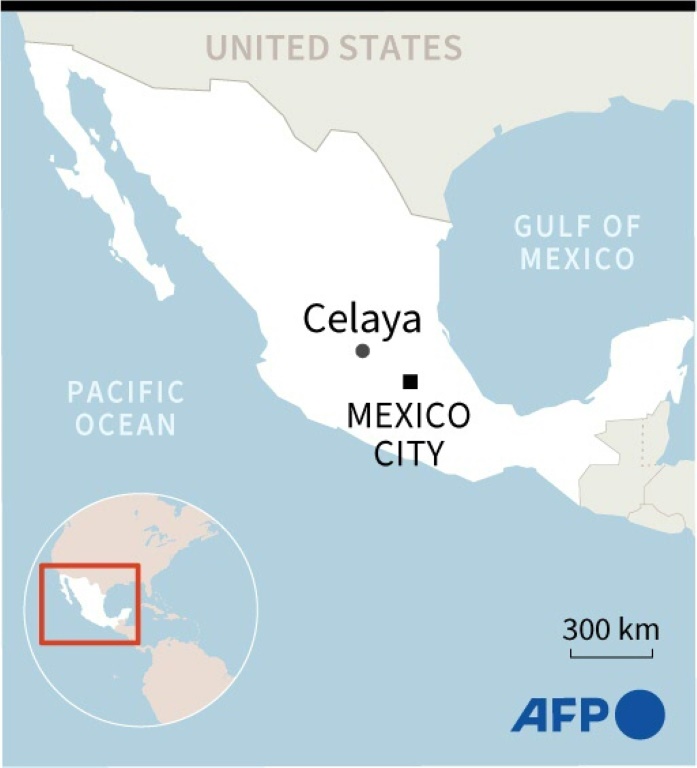
Gunmen killed 10 people in an attack on a hotel and two bars in Mexico’s central city of Celaya, with calling cards claiming the massacre left behind by a known criminal group, authorities said Tuesday.

The attack late Monday claimed the lives of seven women and three men and left two people injured, according to the security secretariat in Celaya, in the central Guanajuato state.

Officials found the dead bodies upon arrival in the neighborhood of Valle Hermoso after reports of gunfire, the unit said in a statement.

Witnesses said the victims were shot, after which the attackers poured gasoline to set the establishments on fire.

They said the bodies were scattered among plastic tables and chairs, and one was lying on the sidewalk.

Guanajuato, a thriving industrial region that hosts a refinery and a major pipeline, has become one of Mexico’s most violent states due to a dispute between the Santa Rosa de Lima and Jalisco New Generation cartels.

The gangs fight for control of trafficking routes for drugs and stolen fuel.

Authorities did not say which crime group was suspected in the latest attack.

In March, the charred bodies of seven people were found abandoned in a pick-up truck in Celaya.

And in January, six members of a family were murdered in a rural community in Guanajuato state — the fifth such attack in the municipality of Silao in four months.

Since December 2006, when the government launched a controversial military anti-drug operation, Mexico has recorded more than 340,000 murders, according to official figures.

Authorities have blamed most of the killings on organized crime.

President Andres Manuel Lopez Obrador has championed a “hugs not bullets” strategy to tackle violent crime at its roots by fighting poverty and inequality with social programs, rather than with the army.

Kerry warns against letting Ukraine war thwart climate efforts

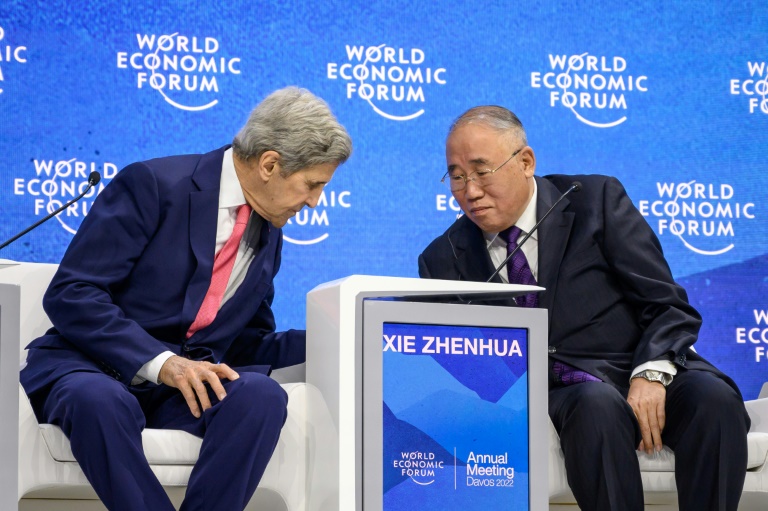
US climate envoy John Kerry warned Tuesday against using the energy crisis stemming from Russia’s invasion of Ukraine as an excuse to build up more fossil fuel infrastructure.

Kerry made the plea at the World Economic Forum of global business and political leaders in the Swiss ski village of Davos, where the climate crisis is among the top concerns.

“We should not allow a false narrative to be created that what has happened in Ukraine somehow obviates the need to continue forward and to accelerate even what we are trying to do to address the crisis of the climate,” Kerry said.

“No one should believe that the crisis of Ukraine is an excuse to suddenly build out the old kind of infrastructure that we had,” he told a news conference.

Moscow’s invasion of Ukraine has sent energy prices soaring over supply concerns as Russia is among the world’s top producers of oil, natural gas and coal.

The European Union is aiming to cut Russian gas imports by two-thirds this year, and the bloc is debating whether to impose an oil embargo on the country.

The EU fears that Russia could seize on the bloc’s dependence on its gas supplies to hold countries hostage over their opposition to the Ukraine war.

Kerry later told a panel discussion that the war had fuelled the argument that it “means you’re going to drill a lot more and pump a lot more” to meet Europe’s gas needs.

While Europe needs to find alternative gas supplies, it can be done in ways that do not require massive new infrastructure, including by investing in renewable technologies and tapping shale gas, Kerry said.

“We can meet… the crisis of Ukraine and the energy crisis of Europe and still deal, as we must, with the climate crisis,” he said.

Kerry appeared on the panel alongside China’s climate envoy, Xie Zhenhua, who warned that the world is “facing greater challenge than before.”

“Here we would like to urge all countries to work together to overcome the challenges in front of us,” Xie said. “We have to turn our pledges into concrete action.”

– ‘Wrong direction’ –

The United States and China — the world’s two top economies and biggest polluters — unveiled a joint pact on the sidelines of the Glasgow climate summit last year to accelerate action against greenhouse gas emissions.

The US has said it plans to be carbon neutral by 2050, while China has set a net-zero target for 2060 with coal consumption to peak at 2030. 

The Glasgow summit resulted in nearly 200 nations pledging to speed up the fight against rising temperatures, though the agreement was criticised by activists as falling short of what is needed to save the planet.

Scientists say capping global warming at 1.5 degrees Celsius requires a 45-percent drop in emissions by 2030 and carbon neutrality by mid-century.

Noting that emissions rose six percent last year and coal use jumped nine percent, Kerry said: “Wrong direction folks, (and) that’s before Ukraine.”

'Martyrdom is normal': Catholic cardinal holds mass after court appearance

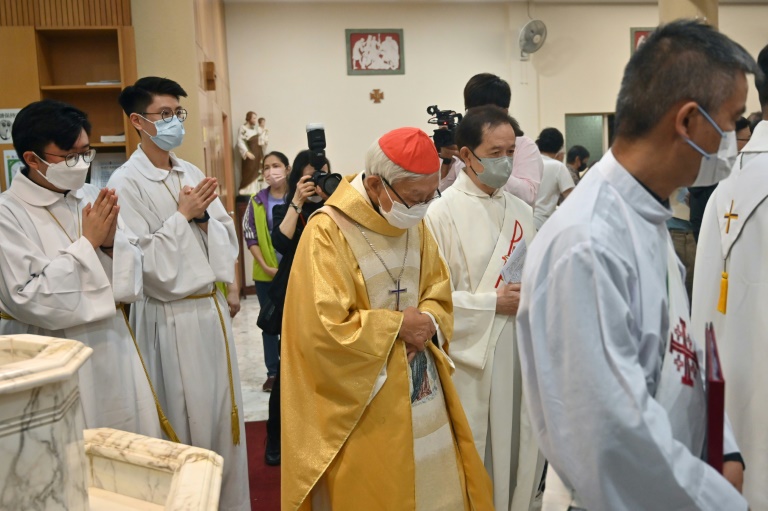
On a drizzly Tuesday night in Hong Kong, hundreds of Catholics packed into church for a mass turned into an act of resolve by its host — the retired cardinal Joseph Zen, fresh from a day in court.

The 90-year-old, who was arrested this month with other democracy advocates under the city’s national security law, pleaded not guilty earlier on Tuesday to failing to properly register a protest defence fund. 

The now-defunct fund had helped pay legal and medical costs for those arrested during huge and sometimes violent democracy demonstrations three years ago. 

Many who came to see Zen preach at the unobtrusive beige church on the east of Hong Kong Island were unimpressed by the authorities’ case against him. 

“We of course must respect rule of law but wielding law as a weapon to oppress is by no means the goal of rule of law,” Louise, an educator, told AFP. 

Philip, a health professional, disagreed with fellow churchgoers who believed Zen had brought the arrest on himself by being too outspoken.  

“I cannot agree with that,” he said. “When a man is prosecuted by unjust laws, isn’t it basic human decency to pay him some respect?” 

Western nations reacted with outrage to Zen’s arrest, accusing China of destroying the freedoms it had once promised Hong Kong — criticism dismissed by the city’s security minister as a “classic smearing campaign”. 

“If we did not act in accordance with the law because of one’s role in the Holy See, then I think it would actually breach the Vatican’s principle of justice,” Chris Tang said in an interview with the South China Morning Post.

But when Tang’s interpretation was put to some of the churchgoers, they rejected it.  

“Who is he to tell? He is not even a Catholic,” said Philip. 

– ‘Colluding with God’s Kingdom’ –

Dressed in gold robes and standing under a large effigy of Christ on the cross, Zen did not mention his case or the Hong Kong authorities directly. 

He dedicated the mass to churches in China, where believers are split between so-called underground parishes and those officially sanctioned by the atheist Communist Party, which only allows religious institutions to function under its strict controls.

In his sermon, Zen again criticised a deal between China and the Vatican which allows Beijing to nominate bishops for the pope’s approval, calling it “unwise” despite being made with “good intention”. 

“There is an urge to unify those above the ground and those underground but it seems that time is not ripe yet,” he said.

The attendees that AFP spoke to were stoic when asked if they were worried that their religion might make them targets as Beijing seeks to remould Hong Kong in its own authoritarian image. 

“The Bible has taught us that a true believer will find God as he is being suppressed for his belief,” said Louise. “I am totally fine if one day they charge me of colluding with God’s Kingdom.”

“We have no idea where the government draws its red line — it can be whatever they said,” said Molly, an office clerk. “There is nothing we can do about it except for guarding our peace of mind.”

Addressing the congregation of around 300, Zen asked the worshippers to pray for “our brothers and sisters who cannot attend the mass today because they are not free”.

Zen, whose trial is set to begin September 19, alluded to difficult times ahead. 

“Martyrdom is normal in our Church,” he said. “We may not have to do that but we may have to bear some pain and steel ourselves for our loyalty to our faith.”

Zimbabwe rallies allies to push for legal ivory trade

Zimbabwe will this week press a drive to legalise the ivory trade, inviting officials from 15 nations to meet in a national park that’s a beacon of success in protecting elephants.

Hwange National Park is overflowing with elephants, which now routinely wander outside the boundaries to feed, sometimes running into deadly conflicts with people living in the surrounds.

Zimbabwe and its neighbours in southern Africa have seen their elephant herds thrive in recent years and are now home to about 70 percent of the continent’s elephants.

That’s a markedly different story than in the rest of Africa, where poaching and habitat loss have seen numbers declining.

Zimbabwe, by contrast, is home to 100,000 elephants — nearly double the number that conservationists say the country’s parks can support.

Elephants require vast areas for feeding. Even Hwange, a park nearly half the size of Belgium, isn’t big enough to support its population.

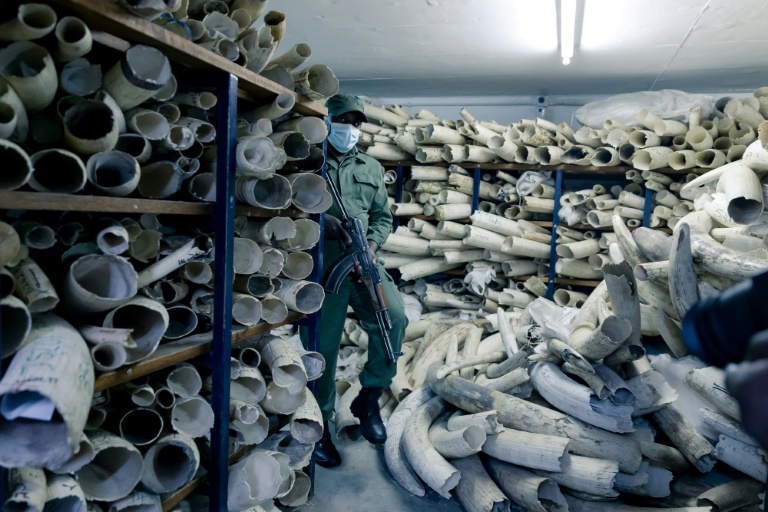
Zimbabwe and other countries with large herds say they’re left protecting vast stockpiles of ivory they can’t sell to raise funds for either conservation work or to support communities affected by the growing elephant numbers.

“These are pertinent issues that are difficult to address in a balanced manner,” Tourism and Environment Minister Mangaliso Ndhlovu said in a statement.

Zimbabwe last week urged European ambassadors to allow a one-off sale of $600 million worth of elephant ivory, kept in a warehouse outside central Harare.

International trade in ivory and elephants has been banned since 1989 under the Convention on International Trade in Endangered Species of Wild Fauna and Flora (CITES). One-off sales were allowed in 1999 and 2008, despite fierce opposition.

Countries in southern Africa say the ban prevents them even from supporting each other’s conservation efforts, for example, by moving elephants from Zimbabwe to countries that want to repopulate.

The conference brings together countries likely to support a legalisation move, including China and Japan, where ivory is highly prized.

Kenya and Tanzania, which fear legalisation will encourage more poaching, were not invited. But the island nations of Seychelles and Madagascar, which have no elephants, are attending.

– Dangerous signal –

A collection of 50 anti-ivory trade organisations issued a statement warning that opening the ivory market would decimate the African herd, which in some regions is near extinction.

“The conference is sending a dangerous signal to poachers and criminal syndicates that elephants are mere commodities, and that ivory trade could be resumed heightening the threat to the species,” they said.

But growing elephant herds pose real dangers to nearby communities.

Zimbabwe says 60 people have been killed by elephants so far this year, compared with 72 in all of last year.

“Governments of elephant range states are faced with social and political pressures on why elephants are prioritised over their own life and livelihoods,” Ndhlovu said.

Zimbabwe rallies allies to push for legal ivory trade

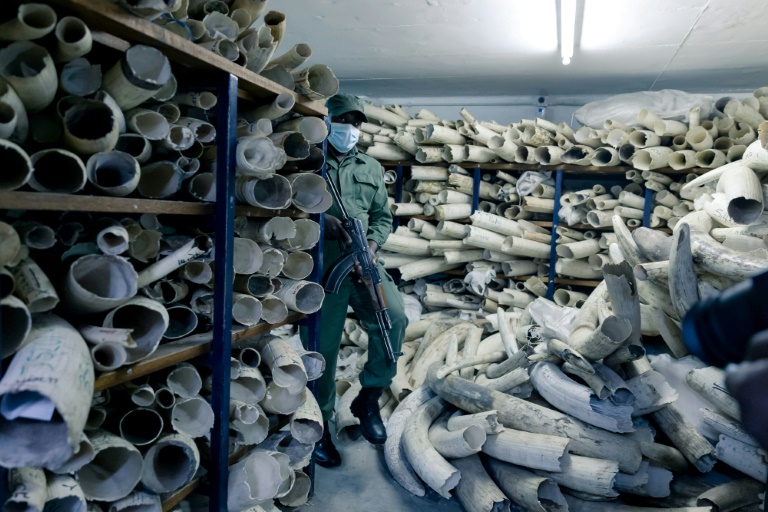
Zimbabwe will this week press a drive to legalise the ivory trade, inviting officials from 15 nations to meet in a national park that’s a beacon of success in protecting elephants.

Hwange National Park is overflowing with elephants, which now routinely wander outside the boundaries to feed, sometimes running into deadly conflicts with people living in the surrounds.

Zimbabwe and its neighbours in southern Africa have seen their elephant herds thrive in recent years and are now home to about 70 percent of the continent’s elephants.

That’s a markedly different story than in the rest of Africa, where poaching and habitat loss have seen numbers declining.

Zimbabwe, by contrast, is home to 100,000 elephants — nearly double the number that conservationists say the country’s parks can support.

Elephants require vast areas for feeding. Even Hwange, a park nearly half the size of Belgium, isn’t big enough to support its population.

Zimbabwe and other countries with large herds say they’re left protecting vast stockpiles of ivory they can’t sell to raise funds for either conservation work or to support communities affected by the growing elephant numbers.

“These are pertinent issues that are difficult to address in a balanced manner,” Tourism and Environment Minister Mangaliso Ndhlovu said in a statement.

Zimbabwe last week urged European ambassadors to allow a one-off sale of $600 million worth of elephant ivory, kept in a warehouse outside central Harare.

International trade in ivory and elephants has been banned since 1989 under the Convention on International Trade in Endangered Species of Wild Fauna and Flora (CITES). One-off sales were allowed in 1999 and 2008, despite fierce opposition.

Countries in southern Africa say the ban prevents them even from supporting each other’s conservation efforts, for example, by moving elephants from Zimbabwe to countries that want to repopulate.

The conference brings together countries likely to support a legalisation move, including China and Japan, where ivory is highly prized.

Kenya and Tanzania, which fear legalisation will encourage more poaching, were not invited. But the island nations of Seychelles and Madagascar, which have no elephants, are attending.

– Dangerous signal –

A collection of 50 anti-ivory trade organisations issued a statement warning that opening the ivory market would decimate the African herd, which in some regions is near extinction.

“The conference is sending a dangerous signal to poachers and criminal syndicates that elephants are mere commodities, and that ivory trade could be resumed heightening the threat to the species,” they said.

But growing elephant herds pose real dangers to nearby communities.

Zimbabwe says 60 people have been killed by elephants so far this year, compared with 72 in all of last year.

“Governments of elephant range states are faced with social and political pressures on why elephants are prioritised over their own life and livelihoods,” Ndhlovu said.

Tedros, from 'child of war' to two-term WHO chief

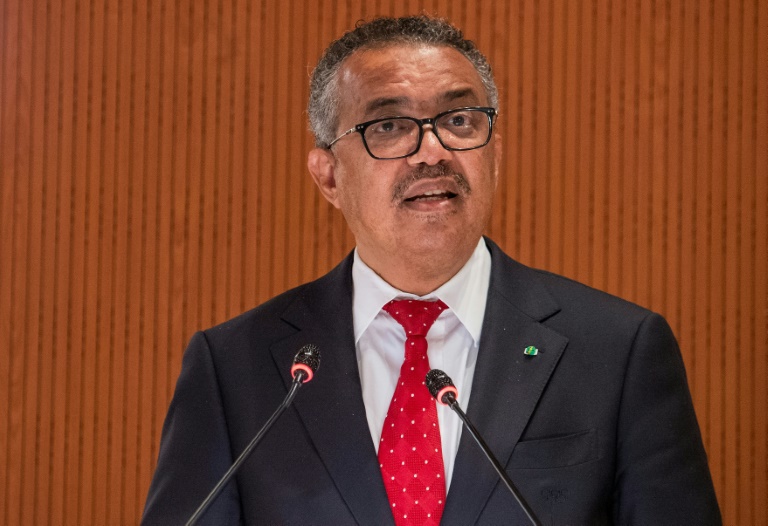
Tedros Adhanom Ghebreyesus, the first African to head the World Health Organization, was re-elected Tuesday with overwhelming support after running unopposed for a second term.

The director-general had received more than two-thirds of secret-ballot votes cast, as needed to be appointed, but the UN health agency did not provide a precise breakdown.

Sources in the room said he had received 155 of the 160 votes cast.

“I am really, really overwhelmed by the support,” Tedros told the assembly after his re-election was announced to thundering applause.

“This recognition is not only for me. I really believe this is recognition for the whole WHO family. I am really proud to be WHO.”

Tedros has become a familiar face as he spearheads the global response to the coronavirus pandemic — an issue that remains front and centre at the WHO’s annual assembly taking place in Geneva this week.

The Ethiopian former minister of health and of foreign affairs has also increasingly been sounding the alarm over the heavy toll that conflicts like the war in Ukraine are taking on global health.

“More even than pandemics, war shakes and shatters the foundations on which previously stable societies stood,” the 57-year-old malaria expert said on the first day of the World Health Assembly on Sunday.

“And it leaves psychological scars that can take years or decades to heal,” he said, stressing his first-hand experiences.

“I am a child of war,” he said, the emotion palpable in his voice.

– ‘Pain and loss’ –

In 1998, when war returned to Ethiopia, “I felt the same fear as a parent myself… and my children had to hide in a bunker to shelter from the bombardment.”

And, he said, “I feel the same pain and loss again now,” with the conflict that has been raging in his home region of Tigray since late 2020.

“Not only a child of war, but following me throughout,” said Tedros.

The global community cannot properly address the mountain of health emergencies and challenges we face, including the Covid-19 crisis and emerging pandemic threats, “in a divided world”.

Peace “is a prerequisite for health”, he added.

That is a message he is eager to push as he prepares to take on a second five-year term from August 16.

– Turbulent –

His first term in office was turbulent, as he grappled not only with the global response to the pandemic but also a long line of other crises, including a sexual abuse scandal involving WHO staff in the Democratic Republic of Congo.

While Tedros has faced his share of criticism, he has received broad backing.

African nations especially have been pleased at the attention paid to the continent and at his relentless campaign for poorer nations to receive a fair share of Covid vaccines.

Since US President Joe Biden’s arrival in the White House, Tedros has also enjoyed support in Washington. 

That marked a major about-face from the start of the pandemic, when Biden’s predecessor Donald Trump began pulling the United States out of the WHO, accusing it of being Beijing’s puppet and helping cover up the initial Covid outbreak.

Ironically, the main source of opposition has come from Tedros’s own country.

Angered by his comments about the dire humanitarian situation in Tigray, Ethiopia’s government accused him of having “abused his office” to advance propaganda.

But those arguments seem to have had little traction, and Tedros can now head into his second term with a strong mandate.

There is no shortage of challenges ahead, with the Covid-19 pandemic still raging and demands for dramatic reforms of the entire global health system to help avert similar threats going forward.

And new health menaces already loom, including hepatitis of mysterious origin that has made children in many countries ill, and swelling numbers of monkeypox cases far from Central and West Africa where the disease is normally concentrated.

Billionaires promote CO2-removing schemes to protect climate

The boss of NetZero still can’t believe his start-up has won a million-dollar prize from Elon Musk to improve ways of sucking climate-heating carbon dioxide (CO2) from the air.

“That’ll fund a year of R&D (research and development)… or two-thirds of a factory,” Axel Reinaud told AFP.

The XPrize Carbon Removal competition, set up by the billionaire Tesla boss, is a response to the scary conclusion reached by the world’s top climate scientists.

However quickly the world slashes man-made greenhouse gas emissions, it will still need to extract CO2 from the air and oceans to avoid climate catastrophe, the UN’s Intergovernmental Panel on Climate Change (IPCC) said in April. 

Today, CO2 removal is a necessary weapon in the battle to stop global heating accelerating beyond a point of no return. 

Technology to do so exists but remains prohibitively expensive. It also needs to be ramped up significantly to make a dent in the 40 billion tonnes of CO2 the world emits each year.

So private-sector giants are stepping in to kick-start research, as they did with vaccines and the first aeroplanes.

The $100-million (93-million-euro) XPrize initiative is a bid to foster low-cost solutions for sucking up huge quantities of CO2 every year and stocking it for ever.

The top prize will be announced in 2025.

NetZero has already scooped up one of the 15 early-stage awards for an astute economic model. 

It burns farm waste, which contains CO2, and turns it into “biochar”, a kind of “carbon dust” used to enrich the soil.

The heat generated by burning is captured to generate renewable electricity, which is sold to the grid.

In all, NetZero says it can remove a tonne of CO2 for just a few dozen dollars.

In North America, companies like Alphabet, Meta, McKinsey, Shopify and Stripe have agreed to invest $925 million in fostering carbon removal schemes between now and 2030.

The First Movers Coalition, an alliance of some 50 firms from sectors where emissions are hard to reduce such as aviation, shipping and cement, has also committed to financing carbon removal technology.

– Tried and tested method –

Today, research on removing carbon from the atmosphere is conspicuous by its near-absence. 

The process is “extremely difficult to manage”, French science historian Amy Dahan told AFP. “Musk’s idea is to give this field of research a higher profile,” she explained.

This is a tried and tested method.

In the 1920s the Orteig prize, which promised $25,000 to the first aviator to fly non-stop from New York to Paris, spurred developments that changed the history of aviation. 

More recently, Microsoft founder Bill Gates’s promise of finance has done much to accelerate vaccine research since 2010.

But the $100 million for R&D into carbon capture and storage “is in another league altogether”, Dahan said. 

The US-based Climate Foundation has also received a significant boost from the XPrize.

It uses seaweed to absorb carbon from surface ocean waters. When the algae decompose, they sink to the ocean depths, taking the trapped carbon with them.

The prize money will help it grow its first hectare of seaweed platform, founder Brian Von Herzen told AFP.

He is conscious, though, that such philanthropic incentives are a drop in the ocean.

“Such prizes, including carbon purchases made by Stripe and Microsoft, are important but insufficient first steps to building out a robust carbon removal ecosystem,” he said.

“We have to start scaling up these solutions right now. In fact, we’re already late,” NetZero’s Reinaud added.

“We should have started 20 years ago. We’re behind on all climate issues.”

– A drop in the ocean –

The vital goal is to remove billions of tonnes of CO2 every year — before 2050 — to prevent the average temperature of the planet rising more than 1.5 degrees Celsius.

This is critical to avoid large and irreversible changes to the climate.

At present, the world is only removing “microscopic” quantities of CO2, Reinaud said.

Instead, we need to build “something as huge as the oil industry in just 30 years”, which requires investments equivalent to “several percentage points of GDP” rather than the current “peanuts”.

Dahan agreed. Billionaires would do better to stop greenwashing and change their carbon-spewing business models, she said.

“Of course, we need them to take part in this effort,” she said, but what we really need are binding government policies and international agreements. 

Despite the $3.5 billion the US government has pledged to invest in carbon removal, “governments aren’t grabbing this problem by the horns”, she said.

Billionaires promote CO2-removing schemes to protect climate

The boss of NetZero still can’t believe his start-up has won a million-dollar prize from Elon Musk to improve ways of sucking climate-heating carbon dioxide (CO2) from the air.

“That’ll fund a year of R&D (research and development)… or two-thirds of a factory,” Axel Reinaud told AFP.

The XPrize Carbon Removal competition, set up by the billionaire Tesla boss, is a response to the scary conclusion reached by the world’s top climate scientists.

However quickly the world slashes man-made greenhouse gas emissions, it will still need to extract CO2 from the air and oceans to avoid climate catastrophe, the UN’s Intergovernmental Panel on Climate Change (IPCC) said in April. 

Today, CO2 removal is a necessary weapon in the battle to stop global heating accelerating beyond a point of no return. 

Technology to do so exists but remains prohibitively expensive. It also needs to be ramped up significantly to make a dent in the 40 billion tonnes of CO2 the world emits each year.

So private-sector giants are stepping in to kick-start research, as they did with vaccines and the first aeroplanes.

The $100-million (93-million-euro) XPrize initiative is a bid to foster low-cost solutions for sucking up huge quantities of CO2 every year and stocking it for ever.

The top prize will be announced in 2025.

NetZero has already scooped up one of the 15 early-stage awards for an astute economic model. 

It burns farm waste, which contains CO2, and turns it into “biochar”, a kind of “carbon dust” used to enrich the soil.

The heat generated by burning is captured to generate renewable electricity, which is sold to the grid.

In all, NetZero says it can remove a tonne of CO2 for just a few dozen dollars.

In North America, companies like Alphabet, Meta, McKinsey, Shopify and Stripe have agreed to invest $925 million in fostering carbon removal schemes between now and 2030.

The First Movers Coalition, an alliance of some 50 firms from sectors where emissions are hard to reduce such as aviation, shipping and cement, has also committed to financing carbon removal technology.

– Tried and tested method –

Today, research on removing carbon from the atmosphere is conspicuous by its near-absence. 

The process is “extremely difficult to manage”, French science historian Amy Dahan told AFP. “Musk’s idea is to give this field of research a higher profile,” she explained.

This is a tried and tested method.

In the 1920s the Orteig prize, which promised $25,000 to the first aviator to fly non-stop from New York to Paris, spurred developments that changed the history of aviation. 

More recently, Microsoft founder Bill Gates’s promise of finance has done much to accelerate vaccine research since 2010.

But the $100 million for R&D into carbon capture and storage “is in another league altogether”, Dahan said. 

The US-based Climate Foundation has also received a significant boost from the XPrize.

It uses seaweed to absorb carbon from surface ocean waters. When the algae decompose, they sink to the ocean depths, taking the trapped carbon with them.

The prize money will help it grow its first hectare of seaweed platform, founder Brian Von Herzen told AFP.

He is conscious, though, that such philanthropic incentives are a drop in the ocean.

“Such prizes, including carbon purchases made by Stripe and Microsoft, are important but insufficient first steps to building out a robust carbon removal ecosystem,” he said.

“We have to start scaling up these solutions right now. In fact, we’re already late,” NetZero’s Reinaud added.

“We should have started 20 years ago. We’re behind on all climate issues.”

– A drop in the ocean –

The vital goal is to remove billions of tonnes of CO2 every year — before 2050 — to prevent the average temperature of the planet rising more than 1.5 degrees Celsius.

This is critical to avoid large and irreversible changes to the climate.

At present, the world is only removing “microscopic” quantities of CO2, Reinaud said.

Instead, we need to build “something as huge as the oil industry in just 30 years”, which requires investments equivalent to “several percentage points of GDP” rather than the current “peanuts”.

Dahan agreed. Billionaires would do better to stop greenwashing and change their carbon-spewing business models, she said.

“Of course, we need them to take part in this effort,” she said, but what we really need are binding government policies and international agreements. 

Despite the $3.5 billion the US government has pledged to invest in carbon removal, “governments aren’t grabbing this problem by the horns”, she said.
UK government in talks with 'international partners' over Chelsea sale

Todd Boehly’s takeover of Chelsea received a boost on Tuesday as the British government confirmed talks have started with “international partners” to help complete the protracted sale.

Boehly’s consortium agreed a £4.25 billion ($5.3 billion) deal to buy the Premier League club from owner Roman Abramovich on May 7.

The Russian billionaire put Chelsea on the market in early March, just before he was sanctioned by the British government following his country’s invasion of Ukraine.

Completing the purchase has been a lengthy process due to government concerns over the potential for Abramovich to profit from the sale.

There had been fears the takeover would collapse because of the £1.5 billion debt owed by Chelsea’s parent company, Fordstam Ltd, to Camberley International Investments, a Jersey-based company with suspected links to Abramovich.

Abramovich, who has said he has not asked for his loan to be repaid, is understood to have provided confirmation to the government that his associate, Demetris Ioannides, has resigned from the trust owning Camberley International.

That is believed to be a key development in meeting the government requirements for the granting of a new sale licence.

As part of the sanctions, Chelsea are currently under a special operating licence that expires on May 31.

Abramovich, who became a Portuguese citizen in 2021 and is also sanctioned in the European Union, is described by the UK government as part of Russian President Vladimir Putin’s inner circle.

British ministers are now liaising with their Portuguese counterparts and the European Union to ensure the sale can be ratified.

Prime Minister Boris Johnson’s spokesman on Tuesday confirmed the government’s work on the process.

“We are working closely with Chelsea to progress the sale,” the spokesman said.

“We are holding intense discussions with the relevant international partners to get the necessary approvals and we will set out further details as soon as we can.

“We want to get this process done as soon as possible while also ensuring the sanctions regime is protected, but we will say more on this as soon as we possibly can.”

Los Angeles Dodgers co-owner Boehly is poised to end Abramovich’s 19-year reign and has already attended several Chelsea matches since the sale was agreed in principle.

California investment firm Clearlake Capital will assume the majority shareholding in Chelsea once the deal is completed.

Kharkiv metro, a bomb shelter for Ukrainians, resumes services

The metro in Ukraine’s second city Kharkiv, which has served as a bomb shelter since the Russian invasion at the end of February, resumed services on Tuesday despite sporadic shelling in the north eastern region.

“We have restarted the Kharkiv metro and almost all its stations today,” mayor Igor Terekhov told journalists.

“We decided to relaunch services because we have to relaunch the economy,” he said, adding that train rides would be free for the next two weeks.

The Kharkiv metro, with 30 stations, has sheltered thousands of residents seeking to escape indiscriminate shelling on the city, which is adjacent to the Russian border.

Three stations in northeast areas of Kharkiv that are occasionally shelled remain shuttered. 

The city with a pre-war population of around 1.4 million people hosted around 158 million passengers per year. Trains now run every 20-30 minutes.

Russian troops recently withdrew from around the city to focus resources on carving out control of the Donbas region south of Kharkiv where they are making painstaking gains.

Terekhov, who rode the metro on Tuesday, said residents still sheltering there could stay put.

“We have decided not to disturb the people who still live in the metro,” he said, adding that if the situation improved, they would be encouraged to relocate to alternative accommodation.

For 28-year-old Artyom Zelensky, who works in a car repair garage, the sight of people riding the metro was jarring.

“It’s weird. People lived here for three months and now it looks like a normal day, where you go to work as usual,” Zelensky, one of thousands to ride the metro hours after it opened, told AFP.

Tetyana Volkova, 64, said she was happy that life appeared to be returning to normal. 

“We were in our cellars and now we can go out again,” she said en route to visit a friend.

The situation around Kharkiv, she conceded, remains “scary”. 

“Everything is in God’s hands,” she said, describing the war as “evil”. 

“I prefer not to talk about it”.

Close Bitnami banner
Bitnami