World

London's long-delayed commuter rail link opens

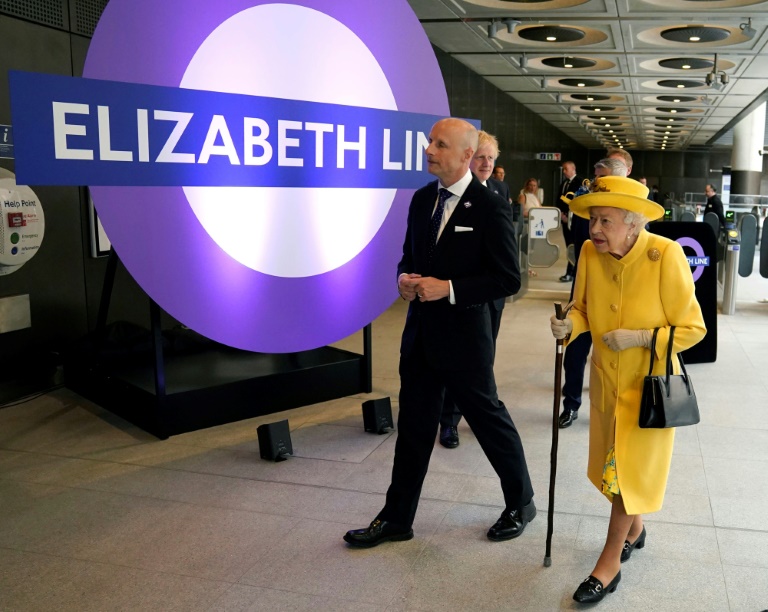
The long-delayed and over-budget Elizabeth line rail link finally opened in London on Tuesday, with hopes it will speed up journeys across the British capital and provide an economic boost.

Hundreds of people queued outside Paddington station in west London to be on the first train when it left at 6:33 am (0533 GMT).

London Mayor Sadiq Khan called the opening “historic” and “the most significant addition to our transport network in decades”.

“The Elizabeth line is much more than just a new railway –- it will provide a crucial economic boost to the whole country and help to turbo-charge our recovery from the pandemic,” he added.

Khan’s predecessor as mayor, Prime Minister Boris Johnson, said the project is forecast to boost the UK economy by £42 billion ($52 billion, 49 billion euros).

Only one of the line’s three branches has opened, from Paddington to Abbey Wood in southeast London.

Sections from Shenfield, east of London to Liverpool Street and Heathrow Airport and Reading, west of the capital, to Paddington will open by May next year.

Trains are currently scheduled to run from 6:30 am to 11:00 pm Monday to Saturday, with a Sunday service expected to start later this year.

The line, named after Queen Elizabeth II, is projected to carry up to 200 million passengers a year, adding 10 percent more capacity to London’s transport network.

Work started on the project back in 2009 and was initially called Crossrail. It was originally due to open in 2018.

But it was hit by problems with construction and complex signalling systems. Costs ballooned to £18.9 billion — some £3 billion over budget.

Pakistani opposition party says 'hundreds arrested' ahead of protest march

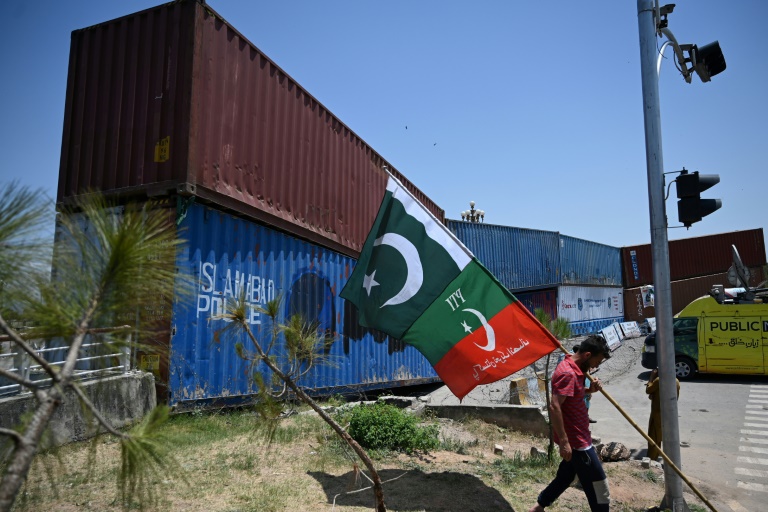
Pakistani police detained hundreds of supporters of ousted prime minister Imran Khan’s Pakistan Tehreek-e-Insaf party ahead of a major sit-in planned by the former leader, senior party members and police sources said Tuesday.

Khan, a cricket star turned populist politician, was kicked out of power last month through a vote of no-confidence, but has heaped pressure on the country’s fragile new coalition government by staging mass rallies across the country since then.

“More than 200 supporters of PTI (Pakistan Tehreek-e-Insaf) have been arrested in Punjab,” a police official in Lahore, the capital of Pakistan’s largest province, told AFP on condition of anonymity. “We have raided their houses and have arrested many of them.” 

A second official, asking not to be named, provided the same information, adding that those arrested had been booked on public order offences and remain in detention.

Khan has alleged that he was removed through a “foreign conspiracy”, and plans on Wednesday to lead an anti-government march from his power base in the northwestern city of Peshawar to the capital Islamabad, with tens of thousands expected to attend.

The former prime minister said he would stage a sit-in until the government dissolves parliament and sets a date for fresh elections. 

Fawad Chaudhry, the former information minister in Khan’s government, accused police of carrying out the overnight raids without warrants and put the number of arrested at more than 400.

“More than 1,100 houses were raided overnight. Police entered the houses without any warrants and insulted women and children,” he tweeted.

Police have not officially commented on the arrests or allegations. 

On Tuesday, Khan tweeted that his supporters had a right to peacefully protest. 

“The brutal crackdown on PTI (leaders) & workers in Punjab & Islamabad has once again shown us what we are familiar with — the fascist nature of PMLN when in power,” he said in a tweet, referring to the party of current Prime Minister Shehbaz Sharif.

On Saturday, senior PTI leader and former minister Shireen Mazari was arrested near her house in the capital over a decades-old land dispute. She was briefly detained before a court ordered her release. 

In 2018, Khan was voted in by an electorate weary of the dynastic politics of the country’s two major parties, with the popular former sports star promising to sweep away decades of entrenched corruption and cronyism.

He was brought down in part by his failure to rectify the country’s dire economic situation, including its crippling debt, shrinking foreign currency reserves and soaring inflation.

Sharif is now grappling with the same crisis, as well as rising militancy and soured relations with the West.

Quad nations warn against 'change by force' with eyes on China

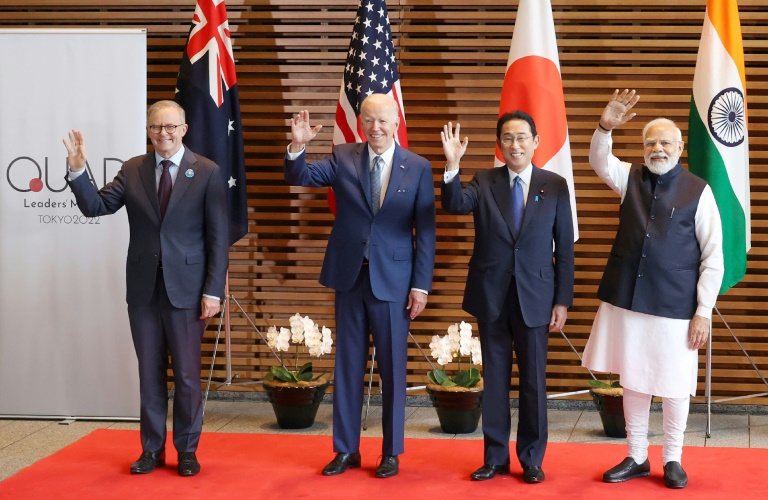
Leaders of Japan, India, Australia and the United States warned Tuesday against attempts to “change the status quo by force” as concerns grow about whether China could invade self-ruled Taiwan.

A joint statement by the so-called Quad bloc avoided any direct mention of China’s growing military power in the region, but left little doubt about where its concerns lie.

The carefully worded document also made reference to the conflict in Ukraine, but without offering any joint position on the Russian invasion that India has pointedly declined to condemn.

The Quad’s other members have been less coy about their view that a strong response to Russia’s war is needed, one that would a message that will deter other countries, including China.

“As Russia’s invasion of Ukraine is shaking the fundamental principles of the international order… (we) confirmed that unilateral attempts to change the status quo by force will never be tolerated anywhere, particularly in the Indo-Pacific region,” Japan’s Prime Minister Fumio Kishida said, using another term for the Asia-Pacific.

The group’s statement made no mention of Russia, or China, but listed a range of activities that Beijing has regularly been accused of in the region.

“We strongly oppose any coercive, provocative or unilateral actions that seek to change the status quo and increase tensions in the area, such as the militarisation of disputed features, the dangerous use of coast guard vessels and maritime militia and efforts to disrupt other countries’ offshore resource exploitation activities,” it said.

The four nations are attempting to build their loose grouping into a more substantive counterweight to China’s rising military and economic power, despite their differences.

They unveiled plans to invest at least $50 billion into regional infrastructure projects over the next five years and a maritime monitoring initiative seen as intended to bolster surveillance of Chinese activities.

The moves come with worries over recent efforts by China to build ties with Pacific nations including the Solomon Islands, which signed a security pact with Beijing last month.

China’s foreign minister will visit the Solomon Islands this week, with reports suggesting he could add stops in other Pacific nations including Vanuatu, Samoa, Tonga and Kiribati.

– ‘Democracies versus autocracies’ –

In a nod to those concerns, Kishida earlier urged Quad members to “listen carefully” to regional neighbours, including the Pacific islands.

“Without walking together with countries in the region, the Quad cannot be successful,” he said.

Australia’s newly elected Prime Minister Anthony Albanese also said the bloc needed to “push our shared values in the region at a time when China was clearly seeking to exert more influence”.

The Quad met a day after US President Joe Biden raised eyebrows and the regional temperature by saying Washington was ready to intervene militarily to defend Taiwan against any Chinese attack.

He insisted Tuesday that his comments did not mean a change to Washington’s longstanding “strategic ambiguity” on how it might respond to a Chinese invasion, prompting another fierce response from Beijing.

Foreign ministry spokesman Wang Wenbin accused Washington of playing “word games” on Taiwan.

“If (the United States) carries on down the wrong path, it will not only cause irredeemable consequences for the US-China relationship, but also eventually incur an unbearable cost to the United States,” he said.

There is growing regional discomfort with Chinese military activity including sorties, naval exercises and encroachments by fishing vessels that are viewed as probing regional defences and red lines.

The bloc said its new maritime monitoring programme would “promote stability and prosperity in our seas and oceans”, again avoiding pointing the finger at Beijing while referencing illegal fishing — an accusation frequently levelled at China.

And if Biden was keen to avoid being seen as changing policy on Tuesday, he left little doubt about where the Quad’s focus lies.

“This is about democracies versus autocracies, and we have to make sure we deliver,” he said as the summit began.

The leaders are set to meet again in person next year, in Australia.

Elderly Hong Kong cardinal in court over protest defence fund

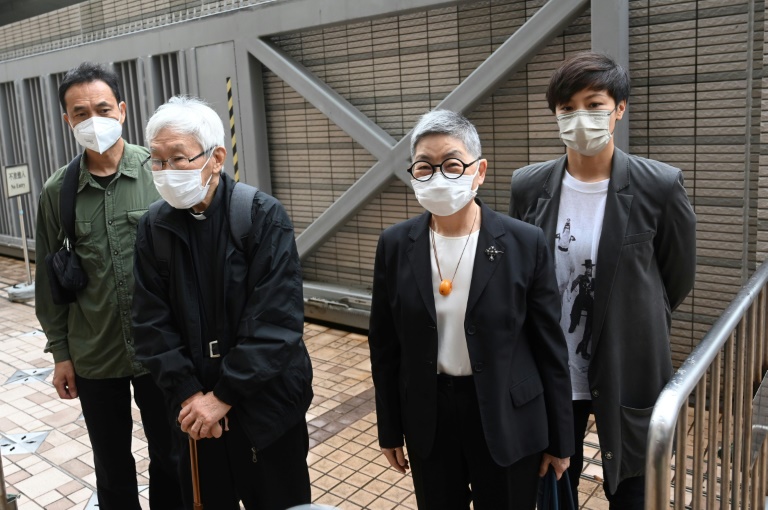
Ninety-year-old retired Catholic cardinal Joseph Zen appeared in a Hong Kong court Tuesday charged with failing to properly register a protest defence fund, after he was initially arrested under the city’s national security law. 

Zen, one of Asia’s highest-ranking Catholic clerics, was among five prominent democracy advocates — including activist and singer Denise Ho and veteran human rights barrister Margaret Ng — who were detained earlier this month. 

The group acted as trustees of a now-defunct fund that helped pay legal and medical costs for those arrested during huge and sometimes violent democracy protests three years ago.

They were arrested for “conspiracy to collude with foreign forces” but have not yet been charged with that offence, which can carry a life sentence under the sweeping security law imposed by Beijing in 2020. 

Instead, all five of the fund’s former trustees and its secretary were charged Tuesday with failing to register it as a “society” with police — a non-national security offence that can incur a fine of up to HK$10,000 (US$1,274) for a first conviction. 

Each of the defendants, apart from activist Cyd Ho, who is already serving a jail sentence for unauthorised assembly, were present in court on Tuesday. All entered a plea of not guilty. 

The trial will begin September 19, with the prosecution warning they have 10 boxes of exhibits and eight hours of video footage to support their case.  

The investigation into the “612 Humanitarian Relief Fund” was triggered when one of the group, cultural studies scholar Hui Po-keung, was intercepted at Hong Kong’s airport on May 10 as he tried to leave to take up an academic post in Europe.

The investigation of the fund has also led to the first complaint made by the city’s national security police about “professional misconduct” by the lawyers and barristers hired by the fund’s beneficiaries.  

– ‘Classic smearing campaign’ – 

Diplomats from multiple European countries including Germany, France, Sweden and Italy attended Tuesday’s hearing.

Zen’s arrest in particular has triggered outrage from Western nations, who have accused China of eviscerating the freedoms it once promised Hong Kong. 

But on Monday, the city’s security minister told local media the criticism was a “classic smearing campaign”. 

“To my understanding, the Vatican is a place to pursue justice and peace. If we did not act in accordance with the law because of one’s role in the Holy See, then I think it would actually breach the Vatican’s principle of justice,” said Chris Tang in an interview with the South China Morning Post.

The Catholic Diocese of Hong Kong issued a statement after the hearing saying they would “closely monitor the development of the incident”, adding that Zen was “always in our prayers”. 

Hong Kong’s vicar general, Joseph Chan, was present in court but said he was not there as a representative of the Diocese. 

“He (Zen) was my teacher, so I came,” he told AFP. 

Chan said he is mainly worried about Zen’s health but that the nonagenarian has so far appeared in good spirits.

The cardinal has arranged a nighttime mass to pray for China on Tuesday night. 

– Tai jailed for ads –

In a separate case on Tuesday, another high-profile democracy campaigner, Benny Tai, was jailed for 10 months over a 2016 media campaign around the city’s legislative elections. 

Tai, a legal scholar, had earlier pleaded guilty to breaching Hong Kong laws limiting who can place election advertisements. 

Despite not being a candidate himself, Tai had promoted a way of coordinating voters to win the most seats for the city’s democrats, District Judge Anthony Kwok said.

“(Tai’s) actions could have damaged the election’s fairness and disadvantaged pro-establishment and other candidates,” Kwok said.

The judge said a deterrent sentence was needed given the seriousness of Tai’s acts, though he conceded the academic did not act for personal gain and had not promoted specific candidates. 

Tai is already in custody as he is among a group of 47 democrats arrested for subversion under the national security law.

Powerful abroad, punished at home: Biden gets presidential whiplash

Most people would send an email. But Joe Biden had a document flown to him on one continent from a second, so he could order $40 billion to support an ally’s war on a third.

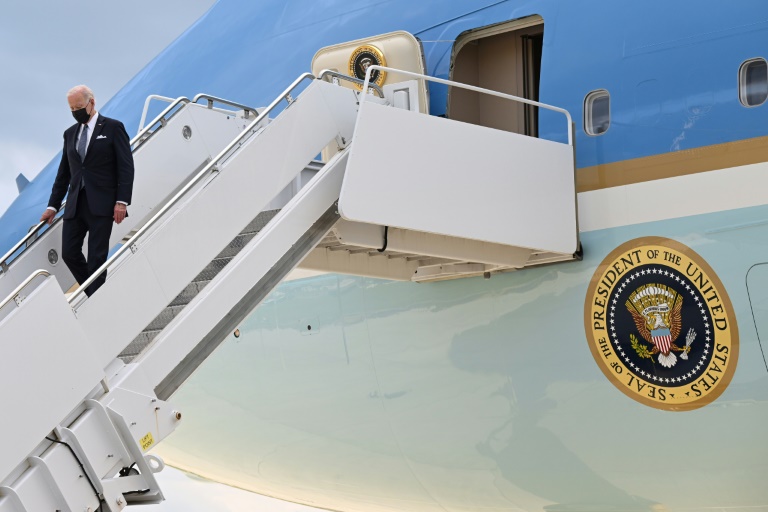
The latest giant US aid package for Ukraine was delivered from Washington to a Seoul hotel last week, allowing Biden to affix his signature while on his first trip to Asia since taking office.

It’s in moments like this one that US presidents abroad experience near superhero strength. Racking up miles on Air Force One, Biden may even be forgiven for feeling he can change the world.

Which is why returning to Washington, as Biden does Tuesday, can be a nasty shock.

Globetrotting is one thing.

Pour more money and weaponry than any other country into Ukraine’s fight against Russia? Biden did that at the stroke of a pen while in South Korea on Saturday.

Poke China with a vow to defend Taiwan against invasion, even if that’s not exactly US policy? A simple “yes” to a reporter’s question Monday about whether this could happen set the diplomatic world abuzz.

How about bringing 13 countries — accounting for 40 percent of global GDP — into a new trade framework that only hours earlier skeptics said would struggle to attract applicants? He did that in Tokyo on Monday too.

But back in the White House, Biden will come back to earth.

Air Force One will touch down at Joint Base Andrews outside Washington and, as if by magic, Biden the globe-striding giant will shrink into Biden, the deeply unpopular leader, blamed for everything and whose Democratic party looks likely to lose power in a few months.

It’s whiplash that many US presidents have suffered — and especially acute for Biden.

– Unparalleled American clout –

The 79-year-old took office in 2021 with big dreams.

At home, he wanted to heal the “soul” of America, unite the country and bring back old-fashioned centrist politics after four wrecking ball years of Donald Trump. Abroad, he wanted to take on what he calls an existential threat from autocratic regimes in places like Russia and China.

Sixteen months later, the first job’s not going too well.

Domestic policy depends heavily on congressional approval, and Democrats have only the slimmest of possible majorities in Congress, with just two centrist Democratic senators repeatedly blocking Biden’s goals.

Come the midterm elections in November, polls show even that fragile advantage will likely be annihilated by vengeful Republicans, ensuring a miserable next two years for the oldest person ever in the presidency.

Job number two, though, is going better — and that’s not necessarily a surprise.

Presidents get to call the shots on foreign policy, all while benefitting from extraordinary, almost imperial levels of logistical support.

In Seoul and Tokyo, Biden roared through the streets in motorcades comprising dozens of black, specialized vehicles flown in by advance teams. Or he simply skipped traffic in his Marine One helicopter.

And everywhere he flew in Air Force One, sprawling US military installations awaited.

Refueling in Alaska, then landing at Osan Air Force Base outside Seoul and Yokota Air Force Base in Tokyo, the plane’s itinerary alone told the story of unparalleled American clout.

– Cold reality –

Back home, cold reality awaits.

While Biden was traveling, a new poll came out showing 39 percent support, his lowest approval rating yet. The country is up in arms over the highest price increases in 40 years.

And Biden is being blamed for everything, including things like the disappearance of baby formula from supermarket shelves after a product recall he has little ability to influence.

The foreign trip wasn’t always smooth, either.

Biden’s comment about defending Taiwan was applauded in some quarters but criticised as muddled in others, while for some analysts, the 13-country trade initiative was just hot air.

Still, Sue Mi Terry, director of the Asia Program at The Wilson Center in Washington, says Biden deserves good marks for his performance on the world stage.

He’s “succeeding more than he is failing,” she said, listing a “solid” performance in building alliances against China and the “good job” of leading the diplomatic response against Russia in Ukraine.

The real problem is that separating those two spheres — domestic and foreign — might not always be possible.

“Foreign leaders definitely pay close attention to US politics and they are well aware of Biden’s sagging poll numbers,” Terry said, explaining the damage done to a president’s credibility.

And this will worsen “on the world stage if Republicans win the midterm elections,” she said.

So “Biden is making the best of the situation, and to some extent, US allies are all the more eager to work with him now while they still can.”

War in Ukraine: Latest developments

Here are the latest developments in the war in Ukraine:

– Offensive stepped up –

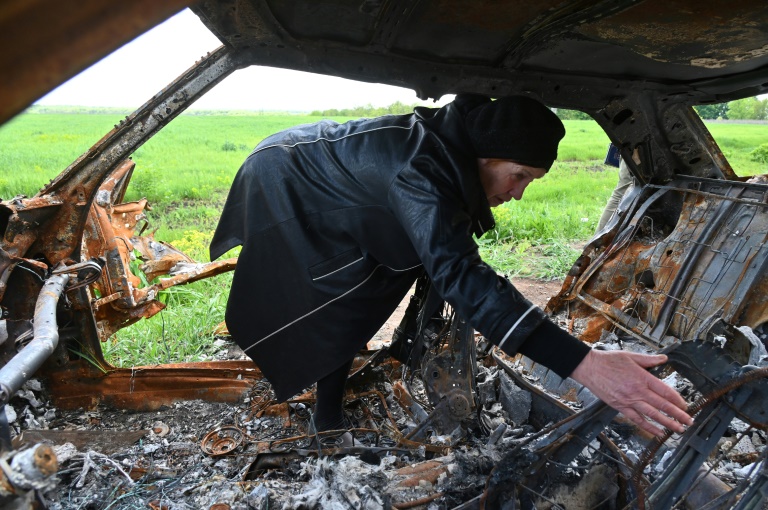
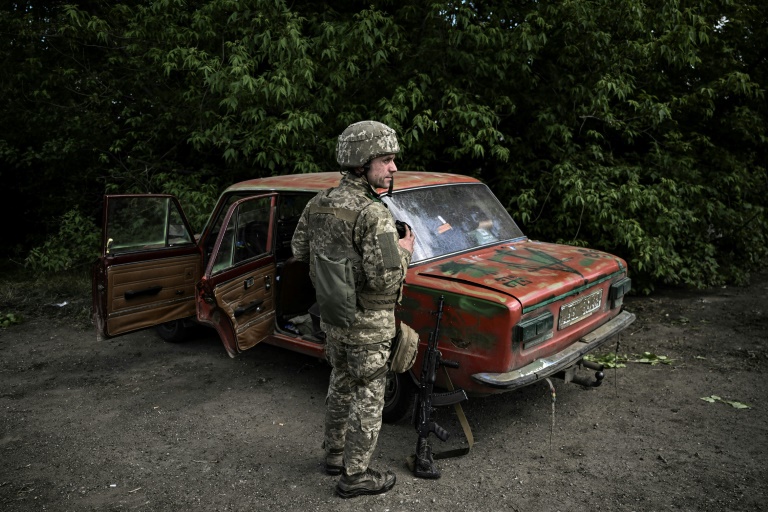
Russian forces are stepping up their offensive around Lugansk in Ukraine’s eastern Donbas region, as the conflict enters its fourth month.

Since Moscow’s invasion in late February, Western support has helped Ukraine hold off its neighbour’s advances in many areas — including the capital Kyiv — but Russia is now focused on securing and expanding its gains in Donbas and the southern coast.

“The coming weeks of the war will be difficult, and we must be aware of that,” Ukraine’s President Volodymyr Zelensky says in his latest nightly address, singling out fierce fighting in three Donbas towns.

– Russia says ‘liberating’ Lugansk –

Russian Defence Minister Sergei Shoigu says Moscow is nearing full control of the separatist region of Lugansk in eastern Ukraine.

“The liberation of the Lugansk People’s Republic is nearing completion,” Shoigu says, having earlier revealed Moscow will create new military bases in western Russia in response to the expansion of NATO.

– Europe closing on Russia oil embargo –

A European agreement on a Russian oil embargo is possible “within a few days”, the German economy minister says, as the bloc struggles to reach a consensus on a boycott.

“There are only a few states left who have issues, Hungary above all,” Robert Habeck tells public broadcaster ZDF.

“I think we will achieve a breakthrough within the next few days,” Habeck predicts, insisting an embargo in response to the invasion of Ukraine is “within reach” despite opposition notably from Hungary, which fears the effect on the security of its energy supply.

– Western artillery aids defence –

Ukrainian forces are battering Russian positions with newly-provided Western artillery systems, according to a Ukrainian military spokesman.

For much of the war Ukraine has relied on their own Soviet-era howitzers but in recent weeks state of the art artillery systems from friendly nations, including the United States’ M777, have made their way to the frontline.

Some 20 countries have meanwhile offered new security assistance packages for Ukraine to battle invading Russian forces following a meeting of allies on Monday, US Secretary of Defense Lloyd Austin says.

– Soldier’s lawyer urges acquittal –

The lawyer for the first Russian soldier to face trial in Kyiv says his client is “not guilty” of premeditated murder and war crimes and is urging his acquittal after the 21-year-old received a life sentence for killing a civilian days after the invasion.

Sergeant Vadim Shishimarin, at the centre of the first war crimes trial held over the conflict, has said he is “truly sorry” and asked the widow of the Ukrainian civilian he killed for forgiveness.

But the court has given him a life term for what it deemed the premeditated killing of 62-year-old civilian, Oleksandr Shelipov. 

– Turkey ‘determined’ to block NATO bids –

President Recep Tayyip Erdogan says he is talking to Western leaders about Turkey’s objections to NATO membership for Sweden and Finland, whom he accuses of sheltering Kurdish separatists. 

Russia’s war in Ukraine has shifted political opinion in both Nordic countries in favour of joining the Western military alliance. 

“We cannot say ‘yes’ to (Sweden and Finland)… joining NATO, a security organisation,” Erdogan said.

burs-qan-cdw/yad

Asian markets fall on China growth concerns

Asian stocks retreated Tuesday on concerns over the impact of China’s Covid-19 restrictions on the world’s second-largest economy as investment banks slashed their forecasts.

A strong rally on Wall Street, where the Dow closed 2.0 percent higher, did not carry over to Asia, and Beijing’s announcement of a fresh raft of measures to stimulate the economy did little to calm nerves.

The package announced on Monday includes more than 140 billion yuan ($21 billion) in additional tax rebates, bringing the total amount of tax relief this year to 2.64 trillion yuan, Xinhua news agency reported following a meeting of the State Council chaired by Premier Li Keqiang.

China’s economy has taken a hit from Beijing’s zero-Covid approach to the pandemic, which has resulted in lengthy lockdowns of major cities and mass testing of millions of people.

Prolonged virus lockdowns have constricted supply chains, dampened demand and stalled manufacturing.

Investment banks UBS Group and JPMorgan Chase cut their China economic growth forecasts due to the impact of the coronavirus strategy.

UBS on Tuesday cut its 2022 GDP growth forecast to 3.0 percent from 4.2 percent while JPMorgan on Monday trimmed its forecast to 3.7 percent from 4.3 percent, Bloomberg News reported.

“The lingering restrictions and lack of clarity on an exit strategy from the current Covid policy will likely dampen corporate and consumer confidence and hinder the release of pent-up demand,” UBS economists including Tao Wang wrote in a research note, according to Bloomberg.

China has targeted full-year growth of around 5.5 percent, but data published in April showed that first-quarter growth slowed to 4.8 percent after its economy lost steam in the latter half of last year.

Concerns over the economic fallout from China’s dogged pursuit of a zero-Covid approach and its knock-on impact on supply chains and the wider global economy spooked investors, with Asian markets well into the red on Tuesday.

Tokyo lost 0.9 percent and Shanghai closed 2.4 percent lower while Hong Kong slipped 2.0 percent after the city’s leader Carrie Lam said there would likely be no relaxation of quarantine travel restrictions for the remainder of her term, which ends on June 30.

Seoul was off 1.6 percent, while Taipei, Sydney, Singapore and Manila were all lower. Bangkok was flat while Jakarta was one of the few markets to post gains.

The sell-off continued in Europe, with London and Frankfurt falling 1.0 percent, and Paris sliding 1.2 percent at the start of trade.

Later in the week, investors will be eyeing the minutes from the latest Federal Reserve rate-setting meeting for clues about further hikes aimed at reining in inflation. A raft of economic figures will also provide insights into the state of the US economy.

“The contradictory signals pouring into markets from all directions mean we can expect to see plenty of volatility across asset classes in the weeks ahead, even if we don’t get a thematic directional move,” said OANDA senior market analyst Jeffrey Halley.

“I’m still not sure how that environment is going to be constructive for equities though.”

Concerns over the Chinese economy and its impact on oil demand sent both contracts sharply lower, with Brent falling 1.4 percent to below $112 and WTI also down 1.4 percent to below $109.

– Key figures at around 0710 GMT –

Tokyo – Nikkei 225: DOWN 0.9 percent at 26,748.14 (close)

Hong Kong – Hang Seng Index: DOWN 2.0 percent at 20,053.02

Shanghai – Composite: DOWN 2.4 percent at 3,070.93 (close)

London – FTSE 100: DOWN 1.0 percent at 7,442.20

Dollar/yen: DOWN at 127.39 yen from 127.90 yen at 2030 GMT Monday

Euro/dollar: UP at $1.0724 from $1.0692

Pound/dollar: UP at $1.2594 from $1.2587

Euro/pound: UP at 85.15 pence from 84.92 pence

Brent North Sea crude: DOWN 1.4 percent at $111.79 per barrel

West Texas Intermediate: DOWN 1.4 at $108.74 per barrel

New York – Dow: UP 2.0 percent at 31,880.24 (close)

Russia intensifies Donbas offensive as war enters fourth month

Russian forces on Tuesday stepped up their offensive on the last pocket of resistance around Lugansk in Ukraine’s eastern Donbas region, as the conflict entered its fourth month.

Since Moscow’s invasion in late February, Western support has helped Ukraine hold off its neighbour’s advances in many areas — including the capital Kyiv — but Russia is now focused on securing and expanding its gains in Donbas and the southern coast.

“The coming weeks of the war will be difficult, and we must be aware of that,” Ukraine’s President Volodymyr Zelensky said Monday in his nightly address after regional leaders and residents reported heavy bombardments.

“The most difficult fighting situation today is in Donbas,” Zelensky said, singling out the worst-hit towns of Bakhmut, Popasna and Severodonetsk.

The Ukrainian armed forces said in a Facebook update on Tuesday that Russian forces were conducting non-stop “offensive operations” in the region, adding “the enemy is exerting intense fire along the entire line of contact”.

The governor of Lugansk said Russia had sent thousands of troops to capture his entire region and that Severodonetsk was under massive attack, warning residents that it was too late to evacuate.

“At this point I will not say: get out, evacuate. Now I will say: stay in a shelter,” Sergiy Gaidai said on Telegram. “Because such a density of shelling will not allow us to calmly gather people and come for them.”

Residents of Bakhmut, a crucial junction that serves as a command centre for much of the Ukrainian war effort, told AFP of the aerial onslaught they had suffered.

“I looked up from my prayers and heard a frightening sound,” 82-year-old Maria Mayashlapak said next to the splintered remains of her home.

“Every day I pray to God asking to avoid injuries. God heard me. God is watching over me.”

– Davos appeal –

Zelensky said in his address that Russia had carried out nearly 1,500 missile strikes and more than 3,000 airstrikes against Ukraine in the first three months of the war.

The president earlier warned elites gathered at the World Economic Forum in Davos — from which Russians have been barred this year — that slow-walking military aid was causing unnecessary deaths as Ukrainians are “paying dearly for freedom and independence”.

He said that 87 people had been killed in a Russian attack earlier this month on a military base in the north, in what would be one of the largest single recorded strikes of the war.

Western countries have sent huge amounts of weapons and cash to Ukraine to help it repel Russia’s assault, and punished Moscow with unprecedented economic sanctions.

But Zelensky said via videolink that tens of thousands of lives would have been saved if Kyiv had received “100 percent of our needs at once back in February”, when Russia invaded.

He also ramped up his demands that Moscow be cut off from the global economy, calling for an international oil embargo on Russia, as well as punitive measures against all its banks and the shunning of its IT sector.

– Counsellor quits –

Meanwhile, a counsellor at Moscow’s mission to the United Nations in Geneva, Boris Bondarev, announced he was leaving his job after 20 years of diplomatic service in protest at Russia’s invasion.

In the letter circulated to a number of diplomatic missions in Geneva and seen by AFP, he condemned the war as “not only a crime against the Ukrainian people but also, perhaps, the most serious crime against the people of Russia”.

“Never have I been so ashamed of my country,” he said.

– Guilty verdict –

A 21-year-old Russian soldier was on Monday found guilty of war crimes for killing an unarmed civilian and handed a life sentence by a Kyiv court, in the first verdict of its kind since the invasion began.

Vadim Shishimarin looked on from a glass box as he was sentenced in a trial followed around the world — likely the first of many as Ukraine investigates thousands of alleged war crimes.

The sergeant from Siberia had admitted killing a 62-year-old civilian, Oleksandr Shelipov, as he was riding his bike in the village of Chupakhivka in northeast Ukraine.

He claimed he shot Shelipov under pressure from another soldier as they tried to retreat and escape back into Russia in a stolen car on February 28.

But prosecutors stated he shot between three and four bullets with the intention of killing the civilian, and Judge Sergiy Agafonov sentenced him to life.

International institutions are also probing abuses allegedly committed by Russian forces in places such as Bucha and Mariupol, which have become emblematic of the destruction and suffering of the war.

More than six million people have fled Ukraine and eight million have been internally displaced since the war broke out, according to the United Nations.

burs-je/ssy/leg

'Kind of complicated': Growing grapes in the world's driest desert

In the middle of Chile’s Atacama desert, the driest in the world, Hector Espindola has an unexpected job: he runs a vineyard.   

Nearly 2,500 meters (8,000 feet) above sea level, his small Bosque Viejo farm produces muscat grapes — and another of a unique “criollo,” or local, variety — in the shadow of quince, pear and fig trees irrigated by a stream fed by melting Andean snow.

Espindola, 71, farms in an oasis in the Toconao region in Chile’s extreme north — some 1,500 kilometers (932 miles) from the vineyards at the center of the world’s longest country that have made it one of the world’s top 10 wine exporters.  

But growing grapes in the desert is no easy task.  

Espindola contends with extreme day-night temperature fluctuations and extreme solar radiation on top of wind and frost.  

“You have to be dedicated. I water here at night… at three in the morning, eleven at night,” he told AFP while caressing his vines, dry and brown two months after the harvest.  

“You have to be careful because here the heat, the climate is no joke,” he said.

“Sometimes it is windy and production is lost, sometimes the frost comes early. It is kind of complicated.”  

– For her sons –

Espindola sends his crop to the Ayllu cooperative which since 2017 has received grapes from 18 small vineyards around Toconao.

In 2021, the cooperative received 16 tons of grapes for a yield of 12,000 bottles.   

The harvest was better in 2022 with more than 20 tons of grapes — enough for 15,000 bottles but still just a drop, at about one percent, of Chile’s annual production.  

Most contributors to the cooperative are members of indigenous communities who were previously individual, small-scale producers.

One of them, 67-year-old Cecilia Cruz, grows syrah and pinot noir grapes at an altitude of about 3,600 meters outside the village of Socaire — Chile’s highest vineyard.  

“I feel special… to have this vineyard here and to produce wine at this altitude,” she said amid the vines that still sport a few bunches of wrinkled, dried grapes.

But she has a bigger goal: “a future” for her three sons.  

– ‘Taste the Atacama’ –

For Ayllu oenologist Fabian Munoz, 24, the mission is to create a unique wine that captures the characteristics of the volcanic rock in which the grapes grow. 

“When the consumer tastes an Ayllu wine (they should) think: ‘Wow! I’m tasting the Atacama desert’,” he said. 

Carolina Vicencio, an expert in wine chemistry, said the altitude, low atmospheric pressure and extreme temperature fluctuations make for a thicker-skinned grape.

“This generates more tannin molecules in the skin of the grape which gives a certain bitterness in the wine,” she said.

“There is also higher salinity of the soil… which makes for a touch of mineralization in the mouth” that makes the Atacama desert wine one of a kind.

UN envoy's access to China's Xinjiang under scrutiny as trip begins

China has called a mission by the UN rights chief a chance to “clarify misinformation” ahead of her visit on Tuesday to Xinjiang as Uyghurs warned a public relations stunt may lie in wait.

The ruling Communist Party is accused of detaining over one million Uyghurs and other Muslim minorities in the far-western region as part of a years-long crackdown the United States and lawmakers in other Western countries have labelled a “genocide”.

China vehemently denies the allegations, calling them the “lie of the century”.

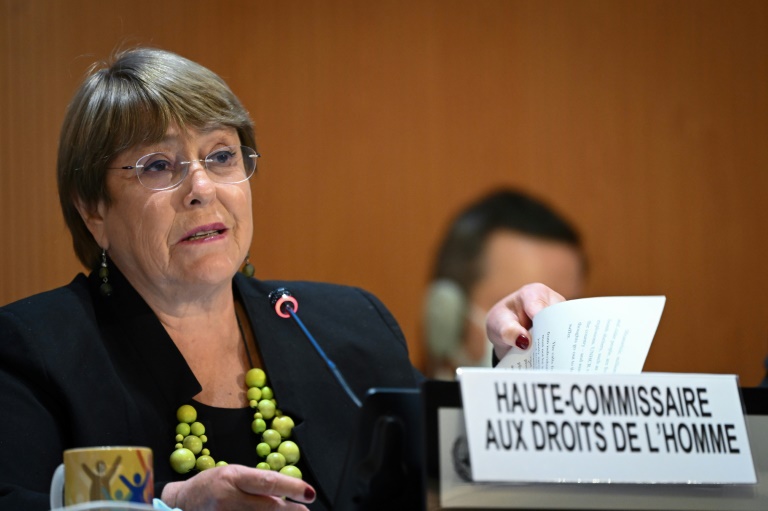
Bachelet is expected to visit the Xinjiang cities of Urumqi and Kashgar on Tuesday and Wednesday as part of a six-day tour.

She met Foreign Minister Wang Yi ahead of her journey to Xinjiang, who also “expressed the hope that this trip would help enhance understanding and cooperation”, according to a readout of the meeting released late Monday.

But Uyghurs, the main victims of an alleged campaign of repression, raised doubts about her presence if the trip is as highly-controlled as expected.

Nursimangul Abdureshid, a Uyghur living in Turkey, said she was “not very hopeful that her trip can bring any change”.

“I request them to visit victims like my family members, not the pre-prepared scenes by the Chinese government,” she told AFP.

“If the UN team cannot have unlimited access in Xinjiang, I will not accept their so-called reports.”

Another Uyghur, Jevlan Shirememet, called on Bachelet to help him contact his mother who he has not seen for four years.

The Turkey-based 31-year-old — from the province’s northern reaches near the border with Kazakhstan — also said he hoped Bachelet would venture further than her itinerary.

“I don’t know why she can’t visit these places,” he told AFP.

– ‘Unfettered access’ –

Regional capital Urumqi is home to many of the government agencies believed to be behind the province-wide campaign China has described as a crackdown on religious extremism.

The city of four million has a sizeable Uyghur community and was the site of deadly ethnic clashes in 2009 as well as two attacks in 2014.

Kashgar — home to 700,000 people — lies in the Uyghur heartland of southern Xinjiang.

An ancient Silk Road city, it has been a major target of Beijing’s crackdown, researchers and activists say, with authorities accused of smothering the cultural hub in a high-tech security blanket while bulldozing Uyghur homes and religious sites.

The outskirts of both cities are pockmarked with what are believed to be detention camps, part of a sprawling network of recently built facilities stretching across the remote province.

Campaigners have voiced concern that Chinese authorities will prevent Bachelet from conducting a thorough probe into alleged rights abuses and instead give her a stage-managed tour with limited access.

“We are very worried that this visit comes with few benefits for victims and activists, for a very high political cost,” said Raphael David from the International Service for Human Rights.

The US has said it is “deeply concerned” that she had not secured guarantees on what she will see, adding that she was unlikely to get an “unmanipulated” picture of China’s rights situation.

Bachelet on Monday gave assurances about her access to detention centres and rights defenders during a virtual meeting with the heads of dozens of diplomatic missions in China, according to diplomatic sources in Beijing.

“Bachelet needs to understand that what’s stake is the world’s confidence in the UN and her very own Office’s ability to respond to a human rights crisis in a major power,” added David. 

Caroline Wilson, the UK’s ambassador to China, was on the call and tweeted that she stressed “the importance of unfettered access to Xinjiang and private conversations with its people”. 

Bachelet’s office has also said she will meet with civil society organisations, business representatives and academics.

In addition to mass detentions, Chinese authorities have waged a campaign of forced labour, coerced sterilisation and the destruction of Uyghur cultural heritage in Xinjiang, researchers and campaigners say.

Uyghurs overseas have staged rallies in recent weeks pressing Bachelet to visit relatives believed to be detained in Xinjiang.

And as Bachelet started her visit, leaked documents called the Xinjiang Police Files were reported by a consortium of media Tuesday — appearing to show thousands of photographs from inside Xinjiang’s system of mass incarceration, including many faces of detained Uyghurs.

The youngest was only 15 at the time of her detention, according to the reports.

Earlier this month, a police database obtained by AFP listed the names and details of thousands of detained Uyghurs.

Close Bitnami banner
Bitnami