World

Samsung commits $356 bn in investments with 80,000 new jobs

Samsung Group on Tuesday unveiled a massive 450 trillion won ($356 billion) investment blueprint for the next five years aimed at making it a frontrunner in a wide range of sectors from semiconductors to biologics.

The new figure is an increase of more than a third over its investments spent over the past five years.

The tech giant is South Korea’s largest conglomerate and its overall turnover is equivalent to a fifth of the national gross domestic product.

Samsung Electronics, its flagship subsidiary, is the world’s biggest smartphone maker. 

The investment plan would bring “long-term growth in strategic businesses and help strengthen the global industrial ecosystem of crucial technology”, Samsung said in a statement.

The 80,000 new jobs would be created “primarily in core businesses including semiconductors and biopharmaceuticals” through 2026.

It also noted the investment would “bring forward the mass production of chips based on the 3-nanometer process,” the latest technology to further shrink down the size of semiconductors and boost computing power.

It will also invest heavily in biopharmaceuticals with its affiliates Samsung Biologics and Samsung Bioepis in the field.

The new plan represents a 36 percent increase in investment over its total investments over the past five years. 

Of the 450 trillion won Samsung plans to spend over the next five years, it will commit 360 trillion won to South Korea.

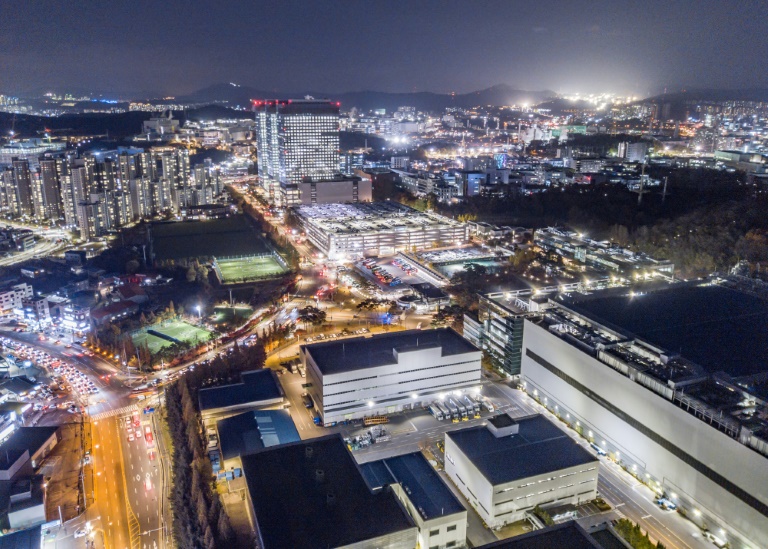
The announcement comes after US President Joe Biden toured Samsung Electronics’ massive Pyeongtaek semiconductor factory on Friday, underscoring the South Korean giant’s role in securing global supply chains of microchips, on his first Asia trip as US leader.

South Korea and the United States need to work to “keep our supply chains resilient, reliable and secure,” Biden said, calling semiconductors manufactured there as “a wonder of innovation” and crucial to the global economy.

Lee Jae-yong, the firm’s vice-chairman and the de facto leader of the wider Samsung conglomerate, escorted Biden and newly-sworn in South Korean President Yoon Suk-yeol inside the assembly line, and introduced the two to an audience in English in his highest-profile public appearance since his release on parole in August. 

Lee had spent over half of a two and a half year sentence for bribery, embezzlement and other offences in connection with a corruption scandal that brought down ex-South Korean president Park Geun-hye before his release.  

Samsung employs about 20,000 people within the United States and work is underway to build a new semiconductor plant in Texas, scheduled to open in 2024.
Mexico tourism projected to return to pre-pandemic level this year

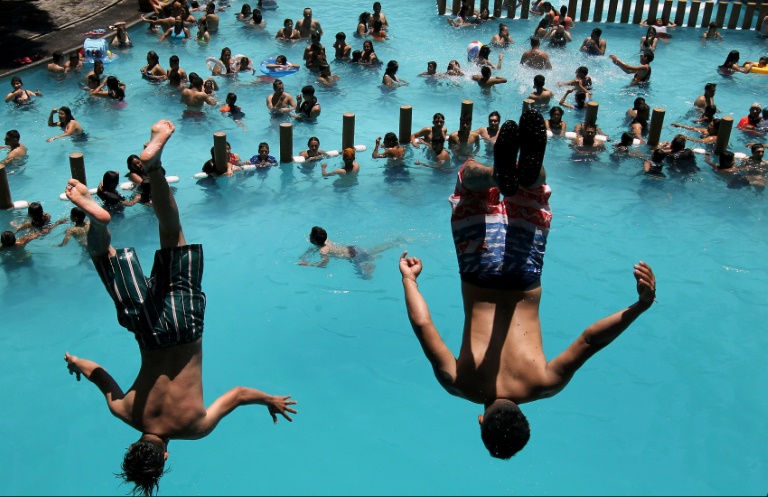
The number of tourists visiting Mexico is set to return to pre-pandemic levels by the end of this year, the country’s tourism minister said on Monday, with projected revenues of $24.25 billion.

With an estimated 40 million international visitors, Mexico’s tourism sector will have recovered to “almost 100 percent” of its performance in 2019, Miguel Torruco said at a tourism promotion fair in the southern resort town of Acapulco.

Torruco attributed the expected recovery to the government’s roll-out of Covid vaccines and the establishment of anti-virus protocols.

“These actions allowed the recovery of the sector to take place in a faster way, as shown by this year’s expectations… and speak to increasingly solid tourism activity,” he said. 

Tourism represents almost nine percent of Mexico’s GDP, with many holidaymakers flocking to the country’s beautiful beaches, vibrant cities and archeological sites. 

Mexico has had more than 300,000 deaths and 5.7 million cases of Covid-19. The government shut down all non-essential activities during the worst outbreaks in the epidemic.

Currently, most of the country’s 32 states have withdrawn almost all restrictive measures, including the mandatory use of masks in public places. 

China offers bonds, tax breaks as new medicine for ailing economy

Tax breaks and a bond drive for Chinese aviation and railway firms are among a blizzard of fresh measures agreed by China’s economic planners to gee up an economy stunted by a coronavirus surge.

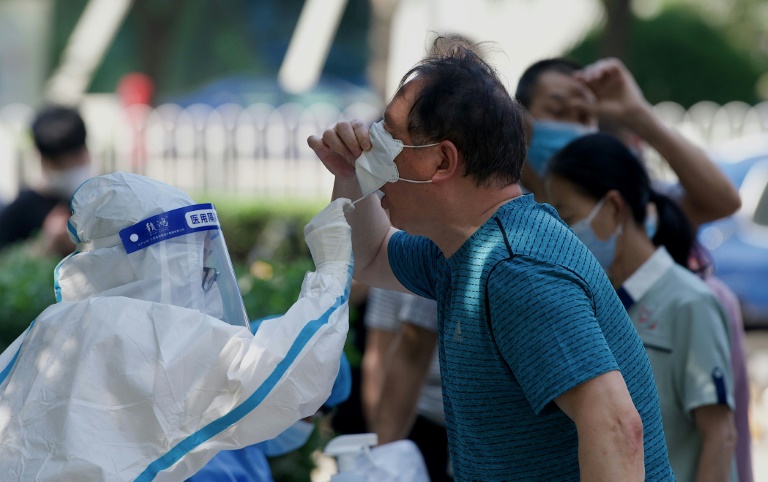
China is the last major economy bolted to a zero-Covid strategy of mass testing and tough lockdowns to stamp out infections.

Movement curbs have hit dozens of cities in recent months — from the manufacturing hubs of Shenzhen and Shanghai to the breadbasket of Jilin — seizing up supply chains and crushing retail sales and industrial output to their lowest levels in around two years.

The State Council on Monday announced measures to “stabilise the country’s economy and bring it back onto a normal track”, according to the official Xinhua news agency. 

Beijing will expand the quota of value-added tax refunds by 140 billion yuan ($21 billion), the agency said.

This takes the overall target of tax refunds, cuts and fee reductions to 2.64 trillion yuan this year, according to a readout of the State Council meeting on Xinhua.

Authorities will also double the lending quota for banks to help smaller enterprises, while allowing some borrowers to postpone their repayments, the report added.

The government will also issue 200 billion yuan in bonds to support the aviation industry, cut the purchase tax on some cars, and support the issuance of 300 billion yuan in railway construction bonds, Xinhua said.

“We believe these measures will provide some help and alleviate the severity of the growth slowdown… (but) remain cautious about growth prospects for this year,” Nomura analysts said in a note on Tuesday.

The moves come as Chinese cities roll out more regular Covid testing, crowding out other fiscal spending, Nomura said.

Meanwhile, the zero-Covid strategy is likely to bog down private demand, analysts added.

Markets remained gloomy despite the pledges, with the Shanghai Composite Index down 1.2 percent on Tuesday, while the Shenzhen Composite Index slid two percent in afternoon trade.

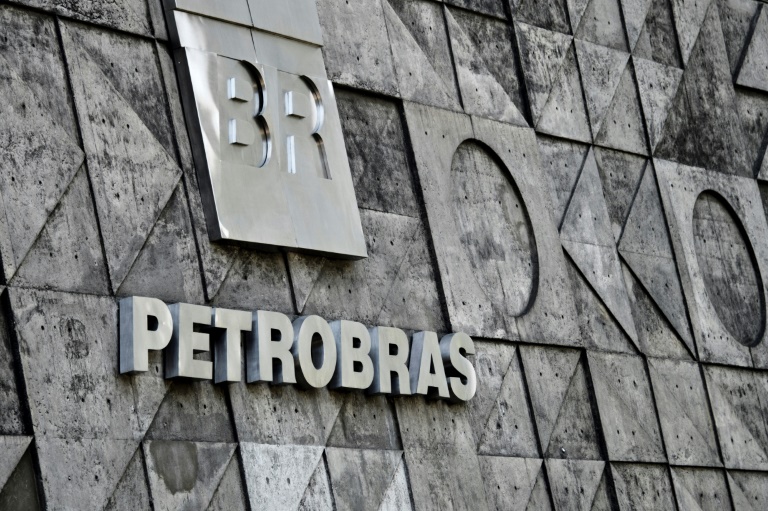
Brazil's Bolsonaro fires third Petrobras chief as fuel prices soar

Brazilian President Jair Bolsonaro on Monday dismissed the president of state oil giant Petrobras, who had been in the job for only 40 days.

Fuel prices in Brazil have increased more than 33 percent in the past year, according to official figures, driving annual inflation of more than 12 percent and hurting Brazilians’ wallets.

Inflation is a central issue as the far-right Bolsonaro seeks re-election in October and trails leftist ex-president Luiz Inacio Lula da Silva in the polls.

“The Federal Government, as controlling shareholder of Petroleo Brasileiro S.A., Petrobras, advises that it decided to make a change to the Company’s presidency,” said the Ministry of Mines and Energy in a statement.

Without giving specific reasons for the dismissal, it thanked Jose Mauro Coelho for his service but said: “Brazil is currently experiencing a challenging moment, due to the effects of the extreme volatility of hydrocarbons in international markets.”

Coelho was appointed in April to finish the term of his predecessor, Joaquim Silva e Luna, and became the third Petrobras president to be dumped by Bolsonaro with fuel prices soaring.

The government proposed for Coelho to be replaced by Caio Mario Paes de Andrade, the current secretary for de-bureaucratization at the Economy Ministry.

He must be confirmed by the company’s board of directors.

– Inflation worries –

Earlier this month, Bolsonaro also replaced his longtime energy minister, Bento Albuquerque, days after Petrobras reported record quarterly profits.

Bolsonaro said those profits amounted to “rape,” and called on Albuquerque and Coelho to stop Petrobras from raising prices.

However, Albuquerque and the energy ministry had no direct role in price decisions by Petrobras, whose pricing policy is based on the international oil market.

Disregarding the president’s fervent demands, Petrobras went on to hike diesel prices by an additional 8.9 percent in the following days.

According to a statement by the Ministry of Mines and Energy, the proposed new Petrobras president Andrade holds degrees from Harvard and Duke universities in the United States.

“The nominee has all the qualifications to lead the company to overcome the challenges imposed by the current situation,” the government statement said.

But according to economist Andre Perfeito of the consulting firm Necton, Brazilians should likely expect more of the same given Andrade’s background.

“It does not seem reasonable to assume that Petrobras’ pricing policy will change, quite the contrary,” Perfeito said in a statement.

“Andrade is a professional with liberal values and close to (Economy) Minister Paulo Guedes,” who launched a study of privatizing Petrobras, added Perfeito.

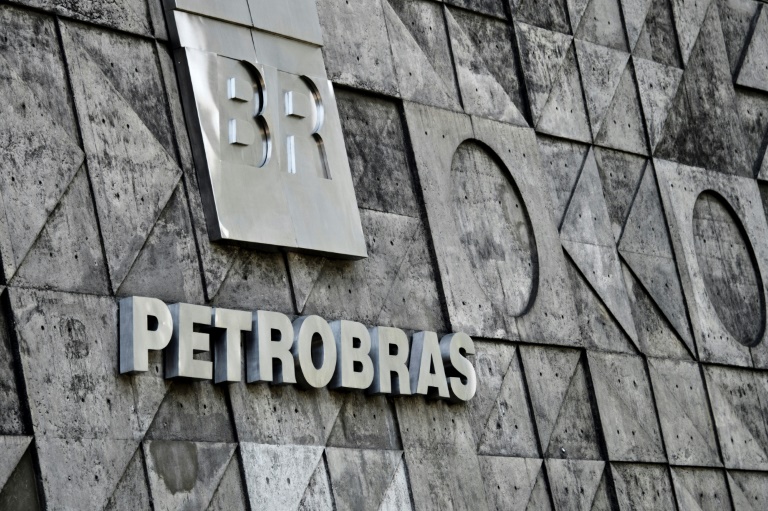
Brazil's Bolsonaro fires third Petrobras chief as fuel prices soar

Brazilian President Jair Bolsonaro on Monday dismissed the president of state oil giant Petrobras, who had been in the job for only 40 days.

Fuel prices in Brazil have increased more than 33 percent in the past year, according to official figures, driving annual inflation of more than 12 percent and hurting Brazilians’ wallets.

Inflation is a central issue as the far-right Bolsonaro seeks re-election in October and trails leftist ex-president Luiz Inacio Lula da Silva in the polls.

“The Federal Government, as controlling shareholder of Petroleo Brasileiro S.A., Petrobras, advises that it decided to make a change to the Company’s presidency,” said the Ministry of Mines and Energy in a statement.

Without giving specific reasons for the dismissal, it thanked Jose Mauro Coelho for his service but said: “Brazil is currently experiencing a challenging moment, due to the effects of the extreme volatility of hydrocarbons in international markets.”

Coelho was appointed in April to finish the term of his predecessor, Joaquim Silva e Luna, and became the third Petrobras president to be dumped by Bolsonaro with fuel prices soaring.

The government proposed for Coelho to be replaced by Caio Mario Paes de Andrade, the current secretary for de-bureaucratization at the Economy Ministry.

He must be confirmed by the company’s board of directors.

– Inflation worries –

Earlier this month, Bolsonaro also replaced his longtime energy minister, Bento Albuquerque, days after Petrobras reported record quarterly profits.

Bolsonaro said those profits amounted to “rape,” and called on Albuquerque and Coelho to stop Petrobras from raising prices.

However, Albuquerque and the energy ministry had no direct role in price decisions by Petrobras, whose pricing policy is based on the international oil market.

Disregarding the president’s fervent demands, Petrobras went on to hike diesel prices by an additional 8.9 percent in the following days.

According to a statement by the Ministry of Mines and Energy, the proposed new Petrobras president Andrade holds degrees from Harvard and Duke universities in the United States.

“The nominee has all the qualifications to lead the company to overcome the challenges imposed by the current situation,” the government statement said.

But according to economist Andre Perfeito of the consulting firm Necton, Brazilians should likely expect more of the same given Andrade’s background.

“It does not seem reasonable to assume that Petrobras’ pricing policy will change, quite the contrary,” Perfeito said in a statement.

“Andrade is a professional with liberal values and close to (Economy) Minister Paulo Guedes,” who launched a study of privatizing Petrobras, added Perfeito.

To use rather than collect, the second coming of NFTs

NFTs have been called everything from fads to outright scams, but early adopters see a future for them as uniquely useful tools for business, health and the arts that goes beyond mere digital collecting.

The non-fungible token (NFT) craze, just over a year old, has given the world works that have sold for millions and includes collections from the “Bored Ape Yacht Club” to an image of a naked Donald Trump following his 2020 election defeat.

This booming world of digital assets has opened up a new market into which tens of billions of dollars have been poured, while also provoking discussions about how they could be useful in the real world. 

“NFTs are very rudimentary right now,” said Sandy Khaund, founder of start-up Credenza, which helps companies adopt new technologies based on blockchain, which underlies cryptocurrencies and NFTs. 

Beyond the art world, “they don’t have a lot of functionality. They don’t have a lot of utility,” Khaund added.

“Most of them are just monkeys or apes or whatever that do nothing,” agreed Juan Otero, CEO of Travala, an online travel site, in reference to the famous “Bored Apes”. 

Yet there is a class of the digital assets bridging the real and virtual worlds.

Starbucks, which will soon launch its own NFTs, sees them as a “programmable, brandable digital asset, that also doubles as an access pass.” 

Owning one of the coffee giant’s NFTs, will open access to “unique experiences,” as well as to a “community,” a new vision of a loyalty program, based on the blockchain. 

This technology, on which cryptocurrencies and NFTs are based, allows the same token to be used for different applications. 

On the institutional side, the tiny republic of San Marino, nestled within Italy, launched a coronavirus vaccine passport in July that incorporates NFT technology. 

While the European digital Covid certificate was designed for the European Union, this passport was intended to be able to be verified anywhere, without requiring a dedicated mobile application. 

– ‘Guaranteed insanity’ –

Credenza, for its part, is in discussions with sports teams and leagues to set a multi-purpose vision for NFTs. 

NFTs and blockchain are “accessible by multiple worlds whether you are physically at the arena ready to go see a New York Knicks game, or you’re ready to go to the metaverse and you want to see a concert there,” said Khaund.

Jenn McMillen of marketing firm Incendio cited rock band Kings of Leon, which have integrated the technology into their work.

As part of the NFT release of their album “When You See Yourself,” the group issued eight “golden tickets,” each of which guaranteed four front-row seats on all of the band’s future tours.

“If you were a brand, think of the most desirable experiences, the most insider-y access, or something that was guaranteed to go viral and just start working backwards from there,” McMillen said.

“(It’s) guaranteed insanity because of the scarcity,” she added.

Among the most successful examples is the travel booking platform Travala, which claims more than 300,000 monthly active users.

The site, which was already accepting cryptocurrency payments, launched the Travel Tiger loyalty program in January.

On the surface, each of the NFTs distributed to existing customers of the platform is a digital drawing of a tiger, reminiscent of the “Bored Apes” designs.

But associated with it is a series of privileges, from entry to exclusive events, in the real world and the metaverse, discounts or loyalty points. 

“It’s about retaining these users, making sure that these users continue to use the platform,” said Juan Otero, CEO of Travala. 

“For these to really push to mainstream and more traditional corporate players and so on, we’ll probably have to wait another two to three years,” he added.

Regardless, NFTs, in conjunction with growing interest in the metaverse and a decentralized vision for the internet’s future, dubbed web3, are part of building wave of growth. 

“The next wave, when it comes, I think is going to be unprecedented,” Otero said. 

Russia intensifies Donbas offensive as war enters fourth month

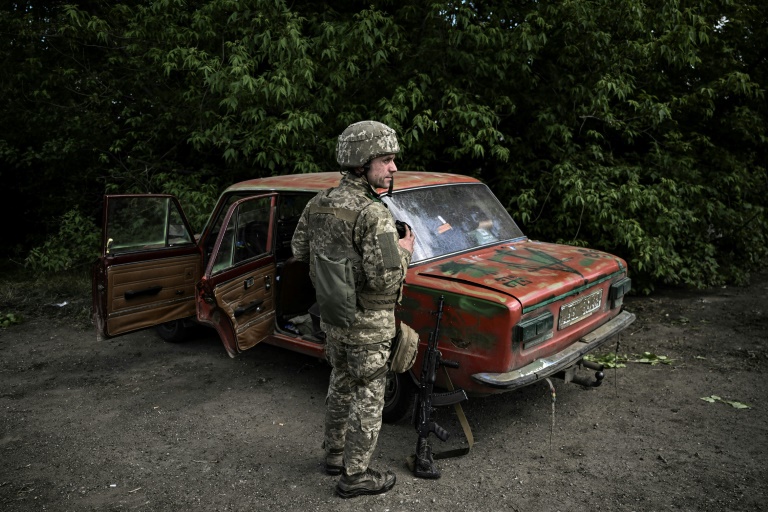
Russian forces on Tuesday stepped up their offensive on the last pocket of resistance around Lugansk in Ukraine’s eastern Donbas region, as the conflict entered its fourth month.

Since Moscow’s invasion in late February, Western support has helped Ukraine hold off its neighbour’s advances in many areas — including the capital Kyiv — but Russia is now focused on securing and expanding its gains in Donbas and the southern coast.

“The coming weeks of the war will be difficult, and we must be aware of that,” Ukraine’s President Volodymyr Zelensky said Monday in his nightly address after regional leaders and residents reported heavy bombardments.

“The most difficult fighting situation today is in Donbas,” Zelensky said, singling out the worst-hit towns of Bakhmut, Popasna and Severodonetsk.

The governor of Lugansk, in Donbas, said that Russia has sent thousands of troops to capture his entire region and that Severodonetsk was under massive attack, warning residents that it was too late to evacuate.

“At this point I will not say: get out, evacuate. Now I will say: stay in a shelter,” Sergiy Gaidai said on Telegram. “Because such a density of shelling will not allow us to calmly gather people and come for them.”

Residents of Bakhmut, a crucial junction that serves as a command centre for much of the Ukrainian war effort, told AFP of the aerial onslaught they had suffered.

“I looked up from my prayers and heard a frightening sound,” 82-year-old Maria Mayashlapak said next to the splintered remains of her home.

“Every day I pray to God asking to avoid injuries. God heard me. God is watching over me.”

– Davos appeal –

Zelensky said in his address that Russia has carried out nearly 1,500 missile strikes and over 3,000 airstrikes against Ukraine in the first three months of the war.

The president earlier warned elites gathered at the World Economic Forum in Davos — from which Russians have been barred this year — that slow-walking military aid was causing unnecessary deaths as Ukrainians are “paying dearly for freedom and independence”.

He said that 87 people had been killed in a Russian attack earlier this month on a military base in the north, in what would be one of the largest single recorded strikes of the war.

Western countries have sent huge amounts of weapons and cash to Ukraine to help it repel Russia’s assault, and punished Moscow with unprecedented economic sanctions.

But Zelensky said via videolink that tens of thousands of lives would have been saved if Kyiv had received “100 percent of our needs at once back in February”, when Russia invaded.

He also ramped up his demands that Moscow be cut off from the global economy, calling for an international oil embargo on Russia, as well as punitive measures against all its banks and the shunning of its IT sector.

– Guilty verdict –

A 21-year-old Russian soldier was on Monday found guilty of war crimes for killing an unarmed civilian and handed a life sentence by a Kyiv court, in the first verdict of its kind since the invasion began.

Vadim Shishimarin looked on from a glass defence box as he was sentenced in a trial followed around the world — likely the first of many as Ukraine investigates thousands of alleged war crimes.

The sergeant from Siberia had admitted to killing a 62-year-old civilian, Oleksandr Shelipov, as he was riding his bike in the village of Chupakhivka in northeast Ukraine.

He claimed he shot Shelipov under pressure from another soldier as they tried to retreat and escape back into Russia in a stolen car on February 28.

But prosecutors stated he shot between three and four bullets with the intention of killing the civilian, and Judge Sergiy Agafonov sentenced him to life.

International institutions are also probing abuses allegedly committed by Russian forces in places such as Bucha and Mariupol, which have become emblematic of the destruction and suffering of the war.

– Counsellor quits – 

Meanwhile, a counsellor at Moscow’s mission to the United Nations in Geneva, Boris Bondarev, announced he was leaving his job after 20 years of diplomatic service in protest at Russia’s invasion.

In the letter circulated to a number of diplomatic missions in Geneva and seen by AFP, he condemned the war as “not only a crime against the Ukrainian people but also, perhaps, the most serious crime against the people of Russia”.

“Never have I been so ashamed of my country,” he said.

More than six million people have fled Ukraine and eight million have been internally displaced since the war broke out, according to the United Nations.

burs-je/dhc

Asian markets fall on China growth concerns

Asian stocks retreated Tuesday on concerns over the impact of China’s Covid restrictions on the world’s second-largest economy as investment banks slashed their forecasts.

A strong rally on Wall Street, where the Dow closed 2.0 percent higher, did not carry over to Asia, and Beijing’s announcement of a fresh raft of measures to stimulate the economy did little to calm nerves.

The package announced on Monday includes more than 140 billion yuan ($21 billion) in additional tax rebates, bringing the total amount of tax relief this year to 2.64 trillion yuan, Xinhua news agency reported following a meeting of the State Council chaired by Premier Li Keqiang.

China’s economy has taken a hit from Beijing’s zero-Covid approach to the pandemic, which has resulted in lengthy lockdowns of major cities and mass testing of millions of people.

Prolonged virus lockdowns have constricted supply chains, dampened demand and stalled manufacturing.

Investment banks UBS Group and JPMorgan Chase cut their China economic growth forecasts due to the impact of the coronavirus strategy.

UBS on Tuesday cut its 2022 GDP growth forecast to 3.0 percent from 4.2 percent while JPMorgan on Monday trimmed its forecast to 3.7 percent from 4.3 percent, Bloomberg News reported.

“The lingering restrictions and lack of clarity on an exit strategy from the current Covid policy will likely dampen corporate and consumer confidence and hinder the release of pent-up demand,” UBS economists including Tao Wang wrote in a research note, according to Bloomberg.

China has targeted full-year growth of around 5.5 percent, but data published in April showed that first-quarter growth slowed to 4.8 percent after its economy lost steam in the latter half of last year.

Concerns over the economic fallout from China’s dogged pursuit of a zero-Covid approach and its knock-on impact on supply chains and the wider global economy spooked investors, with Asian markets well into the red on Tuesday.

Tokyo was off 0.5 percent while Hong Kong was down 1.5 percent after the city’s leader Carrie Lam said there would likely be no relaxation of quarantine travel restrictions for the remainder of her term, which ends on June 30.

Shanghai and Seoul were both down 0.8 percent, while Taiwan, Bangkok, Sydney and Manila also retreated. Singapore was one of the few markets to post gains.

Later in the week, investors will be eyeing the minutes from the latest Federal Reserve rate-setting meeting for clues about further rate hikes aimed at reining in inflation. A raft of economic figures will also provide insights into the state of the US economy.

“If inflation remains sticky and the Fed needs to be more aggressive, assets are not cheap enough yet -– in that world, more recession risk will need to be priced through lower earnings,” said Stephen Innes of SPI Asset Management. 

“However, if inflation does cool down, there are many compelling opportunities, significantly if ‘storm clouds’ over the economy dissolve.”

Oil was lower, with both contracts down 0.4 percent.

“Energy traders see choppy waters ahead for oil prices as uncertainty persists with the global economic outlook and over the EU’s progress with a ban on Russian oil,”  said Edward Moya of OANDA

– Key figures at around 0330 GMT –

Tokyo – Nikkei 225: DOWN 0.5 percent at 26,863.33 (break)

Hong Kong – Hang Seng Index: DOWN 1.5 percent at 20,172.28

Shanghai – Composite: DOWN 1.1 percent at 3,112.37

Dollar/yen: DOWN at 127.73 yen from 127.90 yen at 2030 GMT Monday

Euro/dollar: UP at $1.0670 from $1.0692

Pound/dollar: DOWN at $1.2564 from $1.2587

Euro/pound: UP at 84.93 pence from 84.92 pence

Brent North Sea crude: DOWN 0.4 percent at $112.94 per barrel

West Texas Intermediate: DOWN 0.4 at $109.81 per barrel

New York – Dow: UP 2.0 percent at 31,880.24 (close)

London – FTSE 100: UP 1.7 percent at 7,513.44 (close) 

Slight rise in US births in 2021 after pandemic plummet

The number of births in the United States rose slightly in 2021, the first increase in seven years, according to preliminary data published by authorities Tuesday.

There were 3,659,289 births recorded in 2021, up one percent from 2020, a report by the National Center for Health Statistics said.

With the exception of 2014, the number of US births has been declining every year since 2008 — and fell four percent in 2020 compared to 2019.

The drop in 2020 was accentuated by the Covid-19 pandemic, according to the US Census bureau, and it’s possible people who postponed having babies had them in 2021.

The general fertility rate in 2021 was 1.66 children per woman, again up one percent from the previous year, which had set an all-time low.

Despite this slight increase, the fertility rate remained well below the rate necessary for a generation to be replaced (2.1 births per woman), which the United States has been generally below since 1971 and consistently below since 2007.

The birth rate for teenagers ages 15 to 19 declined by six percent in 2021 to 14.4 births per 1,000 females.

The rate among this age group has declined by 65 percent since 2007, the most recent peak, the report said.

The cesarean delivery rate shot up 32.1 percent in 2021. 

Rates of C-sections have been rising as more patients request them and more doctors carry them out for reasons of convenience. 

The preterm birth rate rose four percent to 10.5 percent — the highest level since 2007.

Elderly Hong Kong cardinal in court over protest defence fund

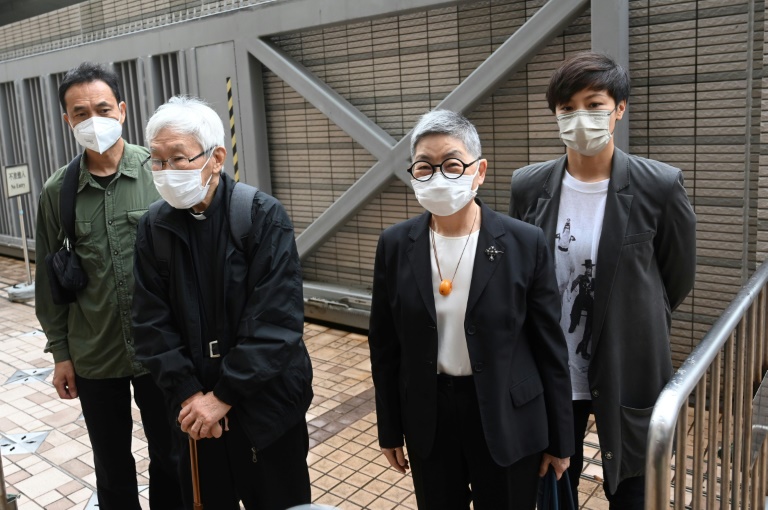
Ninety-year-old retired Catholic cardinal Joseph Zen appeared in a Hong Kong court Tuesday charged with failing to properly register a protest defence fund, after he was initially arrested under the city’s national security law. 

Zen, one of Asia’s highest-ranking Catholic clerics, was among five prominent democracy advocates — including activist and singer Denise Ho and veteran human rights barrister Margaret Ng — who were detained earlier this month. 

The group acted as trustees of a now-defunct fund that helped pay legal and medical costs for those arrested during huge and sometimes violent democracy protests three years ago.

They were arrested for “conspiracy to collude with foreign forces” but have not yet been charged with that offence, which can carry a life sentence under the sweeping security law imposed by Beijing in 2020. 

Instead, all five of the fund’s former trustees and its secretary were charged Tuesday with failing to register the fund as a “society” with police — a non-national security offence that can incur a fine of up to HK$10,000 (US$1,274) for a first conviction. 

Each of the defendants, apart from activist Cyd Ho, who is already serving a jail sentence for unauthorised assembly, was present in court on Tuesday. 

All entered a plea of not guilty. The trial will begin September 19. 

The investigation into the “612 Humanitarian Relief Fund” was triggered when one of the group, cultural studies scholar Hui Po-keung, was intercepted at Hong Kong’s airport on May 10 as he tried to leave to take up an academic post in Europe.

The investigation of the fund has also led to the first complaint made by the city’s national security police about “professional misconduct” by the lawyers and barristers hired by the fund’s beneficiaries.  

– ‘Classic smearing campaign’ – 

Diplomats from multiple European countries including Germany, France, Sweden and Italy attended Tuesday’s hearing.

Zen’s arrest in particular has triggered outrage from Western nations, who have accused China of eviscerating the freedoms it once promised Hong Kong. 

But on Monday, the city’s security minister told local media the criticism was a “classic smearing campaign”. 

“To my understanding, the Vatican is a place to pursue justice and peace. If we did not act in accordance with the law because of one’s role in the Holy See, then I think it would actually breach the Vatican’s principle of justice,” said Chris Tang in an interview with the South China Morning Post.

China’s foreign affairs commissioner in Hong Kong said the criticism proved Western nations were concerned about the “agents they deliberately cultivated”. 

Hong Kong’s vicar general, Joseph Chan, was present in court but said he was not there as a representative of the Diocese. 

“He (Zen) was my teacher, so I came,” he told AFP. 

Chan said he is mainly worried about Zen’s health but that he has so far appeared in good spirits.

The cardinal has arranged a nighttime mass to pray for China on Tuesday night. 

Close Bitnami banner
Bitnami