World

Finland brews up NATO-themed beer

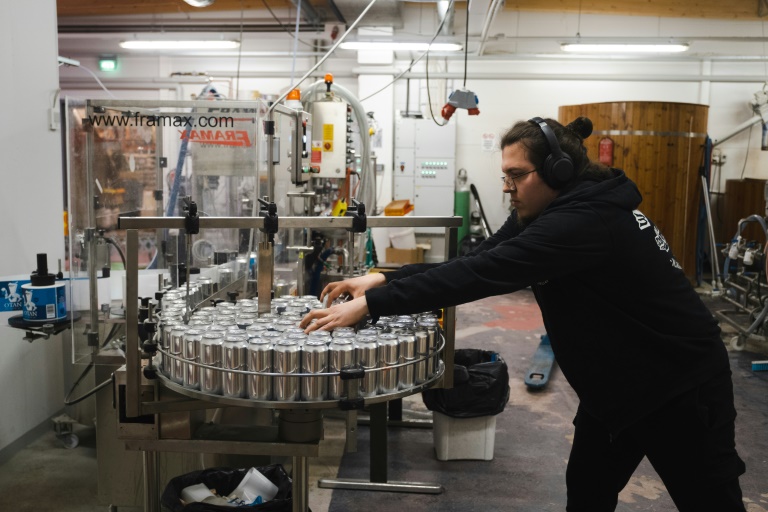
When Finland decided to seek NATO membership on Sunday, the owner of a small brewery in Savonlinna, Petteri Vanttinen, 42, decided to celebrate by launching a new beer in honour of the military alliance.

Savonlinna, which lies only 50 kilometres (31 miles) from the Russian border, has always been a battleground between East and West.

Vanttinen holds his beer and points out the surrounding areas which were bombed during World War II, when Finland fought two bloody wars with its powerful eastern neighbour.

The lager has a blue and white picture of a knight with a NATO star on his chest, and tastes of “security, with a hint of freedom”, Vanttinen says.

A steady stream of customers enter his shop, located in a red brick building built when Finland was still part of the Russian Empire in 1909.

“We came to buy the famous NATO beer. We wanted to see how it tastes,” Susanna Hakkinen, 24, and Emilia Mykkala, 28, both tell AFP.

When Vanttinen went to bed on Sunday evening, he still wondered whether the beer was a stupid idea.

But the next day, while Finnish parliament debated the bid to join the alliance, the “OTAN beer”, the French acronym for NATO, went viral on social media, with even some MPs sharing his Tweet.

The acronym is also a play on words in Finnish, meaning “I’ll have a beer”.

“It’s just exploded. I have been getting calls from all over the world, the US, Japan, Germany, too many to remember,” Vanttinen says.

Vanttinen’s phone has been ringing around the clock for four days, with no end in sight.

“Normally we sell around a hundred cans of beer a day. Now the number is over two thousand,” Vanttinen says.

His small brewery, which employs eight people, is now struggling to meet the demand, and the beer gets sold as soon as it leaves the conveyor belt.

“We’re a small brewery, we do our best, but right now can’t meet the demand, it’s too much,” Vanttinen says.

Less than three months after Russia invaded Ukraine, Finland submitted its application to join NATO on Wednesday, a stunning reversal of the Nordic country’s policy of military non-alignment, dating back more than 75 years.

Ukraine slams Russian campaign in Donbas 'hell', US readies $40 bn in aid

The renewed Russian offensive in Ukraine’s Donbas has turned the eastern region into “hell”, President Volodymyr Zelensky said, as the United States approved a gargantuan $40-billion aid package for the country.

After failing to take Kyiv following the launch of the invasion in February, Russia has focused its attacks on the south and east of Ukraine, devastating towns and villages with artillery fire.

Moscow’s forces have been trying to take complete control of Donbas, a Russian-speaking area that has been partially controlled since 2014 by pro-Kremlin separatists.

“In Donbas, the occupiers are trying to increase pressure,” Zelensky said in his nightly address on Thursday.

“There’s hell, and that’s not an exaggeration.”

The defence ministry in Kyiv said Thursday that Russian forces were preventing civilians in Donbas from fleeing to Ukrainian-controlled territory.

In Severodonetsk, 12 people were killed and another 40 wounded when Russian forces shelled the eastern city, the regional governor said.

Severodonetsk and its sister city Lysychansk make up the last pocket of Ukrainian resistance in the smaller of the two regions comprising the Donbas war zone.

Russian forces have surrounded the two — split by a river marking a central front of the war — and are bombarding them to try and wear down resistance and starve residents of supplies.

The residents still in the now ghostly city are afraid to take more than a few steps outside their front door.

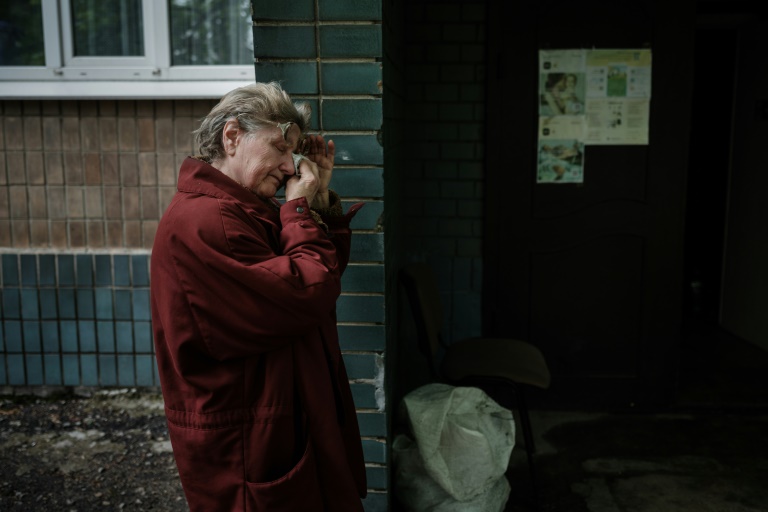
Nella Kashkina sat in her basement next to an oil lamp and prayed.

“I do not know how long we can last,” the 65-year-old said.

“We have no medicine left and a lot of sick people — sick women — need medicine. There is simply no medicine left at all.”

Zelensky on Thursday described the bombardment of Severodonetsk as “brutal and absolutely pointless”.

– Biden backs Finland, Sweden –

Ukraine’s allies, led by the United States and the European Union, have given billions of dollars in assistance — including military equipment — to Kyiv since the Russian invasion began on February 24.

The US Congress on Thursday approved a huge weapons and aid package worth $40 billion, and the White House said President Joe Biden would sign it during his trip to Asia.

The bundle includes $6 billion for Ukraine to enhance its armoured vehicle inventory and air defence system.

Biden has cast the Ukraine war as part of a great US-led struggle of democracy against authoritarianism.

At the White House on Thursday, he offered “full, total, complete backing” to Finland and Sweden in their bid to join NATO, giving the leaders of the Nordic neighbours a red-carpet welcome at the White House.

Finland and Sweden had historically kept a distance from the alliance to avoid angering Russia but changed course — despite warnings from the Kremlin — as the brutal invasion shocked Europe.

But all 30 existing NATO members need to agree on expanding the alliance, and Turkey has voiced misgivings about the new applicants, accusing them of what it describes as leniency towards armed Kurdish groups.

NATO Secretary General Jens Stoltenberg said the alliance was “addressing the concerns that Turkey has expressed”.

US Secretary of State Antony Blinken echoed that remark, saying: “I’m very confident that as this process moves forward, there will be a strong consensus for bringing both countries under the alliance.”

In Finland, a brewery produced a special NATO beer.

It tastes of “security, with a hint of freedom”, brewer Petteri Vanttinen said.

– ‘I ask you for forgiveness’ –

In southern Ukraine, 1,730 Ukrainian soldiers surrendered this week at the Azovstal steel plant in the port city of Mariupol, Russia said Thursday.

The Russian defence ministry released a video appearing to show exhausted Ukrainian soldiers trudging out of the sprawling steelworks, after a weeks-long siege forced the defenders and civilians to huddle in tunnels, enduring dire shortages of food, water and medicine.

Russian troops patted down those surrendering and inspected their bags as they left, signalling the effective end of what Ukraine’s government had called a “heroic” resistance.

The International Committee of the Red Cross said it had registered “hundreds of Ukrainian prisoners of war” from the plant in Mariupol, which has been obliterated by Russian shelling.

Ukraine is hoping to exchange the Azovstal soldiers for Russian prisoners.

But pro-Kremlin authorities in Ukraine’s eastern Donetsk region said some of them could be put on trial.

Kyiv has started trying captured Russian troops for alleged war crimes with prosecutors detailing 12,595 counts — including the horrific bombing of a maternity ward in Mariupol.

The first Russian soldier to go on trial in Ukraine begged for forgiveness Thursday.

Vadim Shishimarin has admitted shooting dead Oleksandr Shelipov, an unarmed 62-year-old man.

“I know that you will not be able to forgive me, but nevertheless I ask you for forgiveness,” the 21-year-old sergeant said to Shelipov’s widow.

– ‘We’re not idiots’ –

The conflict has sent shockwaves through the global economy, especially in energy and food markets.

Russia and Ukraine produce 30 percent of the world’s wheat supply and the war has sent prices surging. Russia is also a major exporter of fertiliser.

UN Secretary-General Antonio Guterres has warned that it could spark a food crisis that could last for years.

The United States and Russia blamed each other Thursday for the worsening food situation.

Washington called on Russia to allow exports of Ukrainian grain held up at Black Sea ports.

But separately, Dmitry Medvedev — Russia’s former president and now senior security official — said Thursday that the West should not expect Moscow to continue food supplies.

“On the one hand, insane sanctions are being imposed against us, on the other hand, they are demanding food supplies. Things don’t work like that, we’re not idiots,” he said on Telegram.

“Countries importing our wheat and other food products will have a very difficult time without supplies from Russia. And on European and other fields, without our fertilisers, only juicy weeds will grow.”

burs-qan/reb

Biden leaves for Asia under Ukraine, N.Korea nuclear shadows

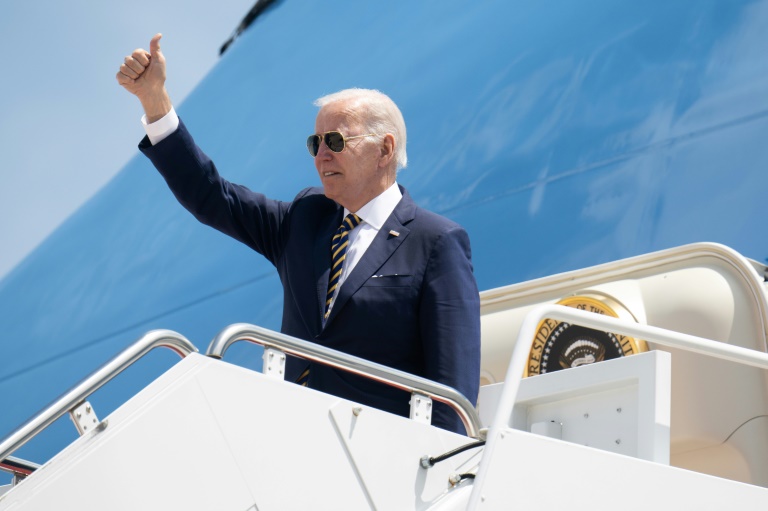
President Joe Biden left Thursday for South Korea and Japan to cement US leadership in Asia at a time when the White House’s attention has been pulled back to Russia and Europe — and amid fears of a North Korean nuclear test during his trip.

Biden wants the trip to build on recent moves accelerating a years-long US pivot to Asia, where rising Chinese commercial and military power is undercutting Washington’s dominance.

But highlighting competing demands from Europe, Biden met right before his departure with the leaders of Finland and Sweden to celebrate their applications for joining NATO — a seismic development sparked by Russia’s invasion of Ukraine.

In another sign of growing US involvement in the conflict, the White House said that while Biden was in Asia he would put his signature on a massive, $40 billion Ukraine weapons and aid package passed Thursday by Congress.

Signing the bill “expeditiously” will ensure no gap in the funding flow, National Security Advisor Jake Sullivan told reporters aboard Air Force One en route to Seoul.

A separate crisis awaits Biden on arrival, however — jitters that North Korea’s unpredictable leadership will choose his trip as the moment to test a nuclear capable missile or even conduct a test nuclear explosion.

Despite a spiraling Covid outbreak, Pyongyang’s “preparations for a nuclear test have been completed and they are only looking for the right time,” South Korean lawmaker Ha Tae-keung said after being briefed by Seoul’s spy agency.

Sullivan said there was “real risk of some kind of provocation while we’re in the region, whether in South Korea or Japan.”

“We know what we will do to respond to them. We have communicated with not just our allies, but also with China,” he said.

Biden heads to Japan from South Korea on Sunday. He will hold talks with the leaders of both countries, as well as joining a regional summit of the Quad — a grouping of Australia, India, Japan and the United States — while in Tokyo.

Hours ahead of Biden arriving, South Korea’s newly elected, strongly pro-US President Yoon Suk-yeol issued a warm welcome. 

“I am confident the ROK-US alliance that seeks to uphold the values of democracy and human rights shall only elevate in the future,” he wrote on Twitter.

Yoon has pledged to give South Korea a more “robust” foreign policy, and has repeatedly called for stronger ties with the US, including ramping up joint military exercises.

Early Friday, he told reporters in Seoul that Biden’s trip was an opportunity for the US-South Korea relationship to become “stronger and more inclusive”.

– Taiwan lessons? –

Sullivan said ahead of the trip that Biden is bound for Asia with “the wind at our back” after successful US leadership in the Western response to President Vladimir Putin’s now almost three-month-long invasion of Ukraine.

The high military, diplomatic and economic cost imposed on Russia is seen in Washington as a cautionary tale for China, given Beijing’s stated ambitions to gain control over democratic-ruled Taiwan, even if that means going to war.

Earlier this month, CIA Director William Burns said Beijing is watching “carefully.”

“I think they’ve been struck by the way in which particularly the transatlantic alliance has come together to impose economic costs on Russia as a result of that aggression,” he said.

Sullivan said the administration wants not so much to confront China on the trip as to use Biden’s diplomacy to show that the West and its Asian partners will not be divided and weakened.

He pointed to cooperation from South Korea and Japan, among others, in the sanctions regime against Russia led by European powers and the United States. He also referred to Britain’s role in the recently created security partnership AUKUS.

This “powerful message” will be “heard in Beijing,” Sullivan said, “but it’s not a negative message and it’s not targeted at any one country.”

– North Korean wild card –

Sullivan said the United States is braced for North Korea to again defy UN sanctions by conducting a nuclear test.

The US response — which will be coordinated with South Korea and Japan — could include “adjustments to the way that our military is postured in the region,” Sullivan said.

The US has nearly 30,000 troops in South Korea — some of whom Biden will visit on the trip — and about 55,000 US military personnel in Japan.

Sullivan denied that a North Korean nuclear test would be seen as a setback for Biden’s diplomacy.

“It would underscore one of the main messages that we are sending on this trip, which is that the United States is here for our allies and partners.”

Asian markets up after Wall Street battering over recession fears

Asian markets opened higher Friday, as bargain-hunters capitalised on the battering Wall Street took the day before after decades-high inflation sparked recession fears.

Downcast earning reports from retailers have heightened uncertainty in the world markets at a time of rising interest rates, surging energy prices, China’s Covid lockdowns and Russia’s ongoing war in Ukraine.

Leading indices have see-sawed at even the slightest anticipation of volatility — or relief — and the risk of a global recession is “top-of-mind” for investors, said Stephen Innes of SPI Asset Management.

“But as the procession to recession shortens, growth concerns are rising, leaving equities vulnerable to the negative feedback loop,” he added.

“What would typically be met with a shoulder shrug, incrementally weaker data can now amplify downside move. And with few positive developments of late, the market remains vulnerable to the prevailing narrative, with the negative feedback loop only growing louder in recent sessions.”

Wall Street had a tough run this week, thanks to back-to-back earnings misses from Walmart and Target which revealed difficulties managing rising costs, as well as weaker-than-expected Chinese economic data. 

– China cuts key interest rate –

On Friday morning, China announced it would lower its five-year loan prime rate — a key interest rate governing how lenders base their mortgage rates — from 4.6 percent to 4.45 percent.

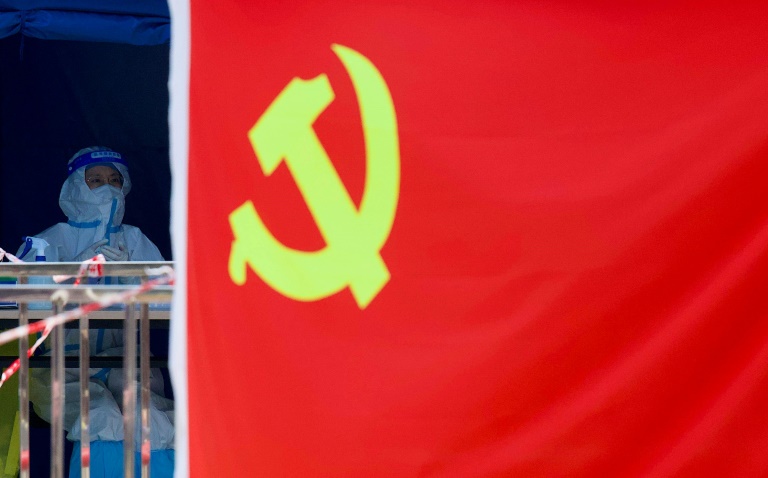
The move will help reduce mortgage costs, serving as a boost for demand as China undergoes a property slump and its economy bleeds from stopped ports and factories due to Covid lockdowns.

But Chaoping Zhu, a Shanghai-based global market strategist with JP Morgan Asset Management, said that strong fiscal stimulus “is also expected” given persistent headwinds to growth. 

“In addition to the conventional approaches including infrastructure investment and tax deduction, direct subsidies or cash payout to consumers may be adopted to stabilize domestic demand and employment,” he said. 

Data released this week from China showed the extent of economic pain inflicted by Beijing’s strict zero-Covid policy, with retail sales and factory production slumping to its lowest in over two years.

The unemployment rate also climbed in April to 6.1 percent — the highest in more than two years.

Asian markets opened up Friday, with Seoul, Hong Kong, Tokyo, and Singapore all seeing a one percent boost.

– Key figures at around 0230 GMT –

Hong Kong – Hang Seng Index: UP 2 percent at 20,523.61

Shanghai – Composite: UP 0.9 percent at 3,126.56 

Tokyo – Nikkei 225: UP 1.2 percent at 26,712.36 (break)

Brent North Sea crude: DOWN 1.1 percent at $110.86 per barrel

West Texas Intermediate: DOWN 1.1 percent at $110.98 per barrel

Euro/dollar: DOWN at $1.0562 from $1.0586 at 2030 GMT Thursday

Pound/dollar: DOWN at $1.2451 from $1.2473

Euro/pound: DOWN at 84.83 pence from 84.84 pence

Dollar/yen: UP at 128.10 yen from 127.80

New York – Dow: DOWN 0.8 percent at 31,253.13 (close)

London – FTSE 100: DOWN 1.8 percent at 7,302.74 (close)

Bolsonaro to meet Elon Musk in Brazil: government source

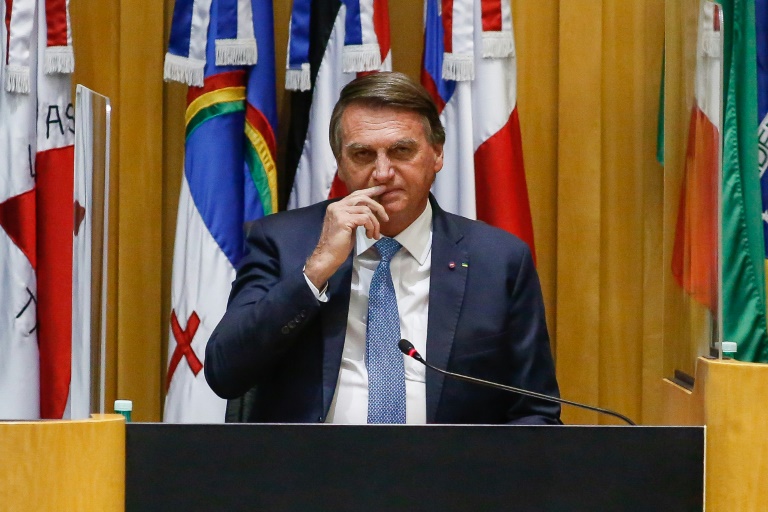
Brazilian President Jair Bolsonaro is set to meet with billionaire Elon Musk on Friday, according to a government source.

The meeting will be held in Sao Paulo, a source with the Brazilian president’s office told AFP, without giving any details on what will be on the agenda.

Earlier, Bolsonaro said that he had planned a private meeting in Sao Paulo “with a very important person who is recognized throughout the world.”

“He is coming to offer his help for our Amazon,” the president said in his weekly social media broadcast, without naming Musk.

Currently the CEO of both SpaceX and Tesla, Musk is the richest person in the world, with a fortune estimated at $220 billion, according to Forbes magazine.

The entrepreneur attracted worldwide attention when he announced last month that he planned to buy Twitter in a deal worth $44 billion dollars.

The Brazilian government said in November that they were negotiating with SpaceX to secure satellite internet in the Amazon rainforest and to get help in detecting illegal deforestation.

In a bid to provide high-speed internet around the world, especially to underserved areas, SpaceX has launched thousands of its own Starlink satellites orbit, with many more launches already planned.

Bolsonaro to meet Elon Musk in Brazil: government source

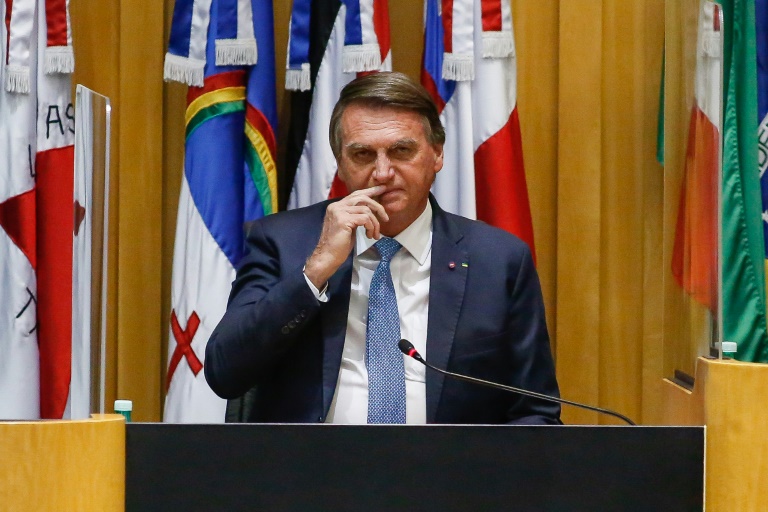
Brazilian President Jair Bolsonaro is set to meet with billionaire Elon Musk on Friday, according to a government source.

The meeting will be held in Sao Paulo, a source with the Brazilian president’s office told AFP, without giving any details on what will be on the agenda.

Earlier, Bolsonaro said that he had planned a private meeting in Sao Paulo “with a very important person who is recognized throughout the world.”

“He is coming to offer his help for our Amazon,” the president said in his weekly social media broadcast, without naming Musk.

Currently the CEO of both SpaceX and Tesla, Musk is the richest person in the world, with a fortune estimated at $220 billion, according to Forbes magazine.

The entrepreneur attracted worldwide attention when he announced last month that he planned to buy Twitter in a deal worth $44 billion dollars.

The Brazilian government said in November that they were negotiating with SpaceX to secure satellite internet in the Amazon rainforest and to get help in detecting illegal deforestation.

In a bid to provide high-speed internet around the world, especially to underserved areas, SpaceX has launched thousands of its own Starlink satellites orbit, with many more launches already planned.

Bolsonaro to meet Elon Musk in Brazil: government source

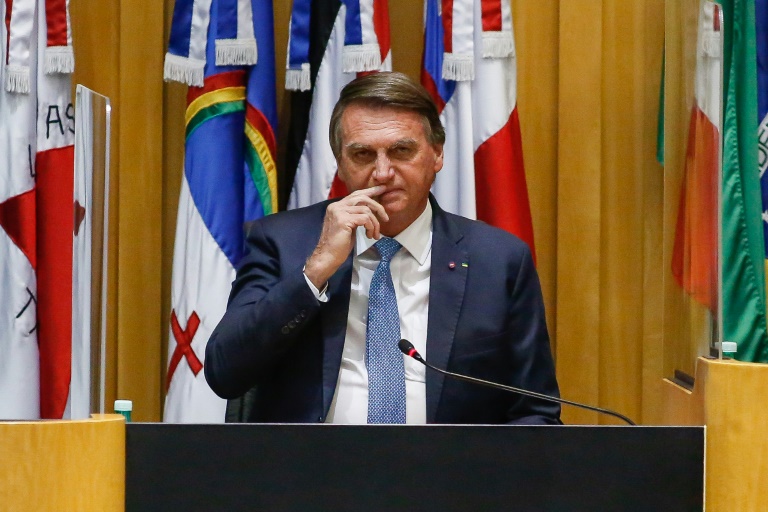
Brazilian President Jair Bolsonaro is set to meet with billionaire Elon Musk on Friday, according to a government source.

The meeting will be held in Sao Paulo, a source with the Brazilian president’s office told AFP, without giving any details on what will be on the agenda.

Earlier, Bolsonaro said that he had planned a private meeting in Sao Paulo “with a very important person who is recognized throughout the world.”

“He is coming to offer his help for our Amazon,” the president said in his weekly social media broadcast, without naming Musk.

Currently the CEO of both SpaceX and Tesla, Musk is the richest person in the world, with a fortune estimated at $220 billion, according to Forbes magazine.

The entrepreneur attracted worldwide attention when he announced last month that he planned to buy Twitter in a deal worth $44 billion dollars.

The Brazilian government said in November that they were negotiating with SpaceX to secure satellite internet in the Amazon rainforest and to get help in detecting illegal deforestation.

In a bid to provide high-speed internet around the world, especially to underserved areas, SpaceX has launched thousands of its own Starlink satellites orbit, with many more launches already planned.

Davos returns under Ukraine cloud after Covid break

The world’s political and business elite will hobnob in Davos next week after a two-year break caused by Covid, with the Ukraine war set to dominate the exclusive Swiss mountain summit.

The world has changed drastically since the last time the World Economic Forum took place in person at the ski resort in January 2020.

At the time, US President Donald Trump and climate campaigner Greta Thunberg headlined the show and the coronavirus had yet to spread widely outside China.

Since then, the outbreak in China turned into a pandemic that rocked the global economy, Trump lost the US election to Joe Biden, countries have endured climate change-driven weather disasters, inflation has surged and Russia invaded Ukraine.

After a virtual forum in 2021 and the postponement of this year’s in-person event due to the Omicron variant, the WEF returns to its Davos den on Monday under the theme “History at a Turning Point”.

But the hub of cheerleaders of capitalism and globalisation will lack its usual scenic snowy backdrop — and the usual Russian contingent.

President Vladimir Putin spoke at the online meeting last year, but organisers decided to exclude Russians this time as Western powers have imposed sanctions on Moscow over the Ukraine conflict.

Instead, Ukrainian President Volodymyr Zelensky will address the summit via video link while around a dozen officials from his country will attend in person.

WEF founder Klaus Schwab said it would be “the most timely and consequential” meeting since the creation of the forum more than 50 years ago.

“Russia’s aggression on the country will be seen in future history books as the breakdown of the post-World War II and post-Cold War order,” Schwab said in a pre-summit briefing, adding that Davos will do what it can to support Ukraine and its recovery.

WEF president Borge Brende said that excluding the Russians from the forum was “the right decision”.

“We do hope, though, that Russia will follow a different path … in the years to come to start to stick to the UN charter and to their international obligations,” Brende said.

– Few stars –

More than 50 heads of state or government will be among the 2,500 delegates ranging from business leaders to academics and civil society figures attending the four-day gathering.

Some of the biggest names include Germany’s new chancellor, Olaf Scholz, European Union chief Ursula von der Leyen, NATO head Jens Stoltenberg and US climate envoy John Kerry.

While war will overshadow the meeting, the forum will also have panels on everything from climate change to rising energy prices, global supply chain problems, gender inequality, poverty, football and the metaverse.

This year’s meeting, though, lacks some of the star power of the past. Some, such as Chinese President Xi Jinping, spoke in a virtual version in January.

“I am sure that this is kind of a disappointment,” said Adrienne Sorbom, co-author of “Discreet Power”, a book on the World Economic Forum.

“I think that the discreet diplomacy that the… forum arranges for is one of the things that is truly to the heart of the forum and what Klaus Schwab sees as his greatest achievement,” said Sorbom, a sociology professor at Stockholm University.

While the forum’s relevance is questioned every year, it keeps attracting titans of industry and government leaders — as well as some of its biggest critics.

When Sorbom attended Davos in 2014, “business leaders were saying, ‘if you’re not here you do not exist”.

“Everyone that wants to be someone needs to go there,” she said.

– ‘Festival of wealth’ –

The forum has produced some consequential moments.

It hosted the first ministerial meetings between North and South Korea in 1989 as well as talks between South Africa’s apartheid-era president F. W. de Klerk and then dissident Nelson Mandela in 1992.

The forum, however, regularly faces criticism as evidence of the cozy relationship between the political and corporate elite.

“At this Davos, at this festival of wealth, I think we’re going to see just how profoundly unequal our world has become,” said Nabil Ahmed, head of strategy at global charity Oxfam.

But Oxfam, which is pushing for taxes on the rich, is also among Davos regulars.

“I think it’s important to go to Davos to challenge power, to put forward hard facts, to talk directly to these governments and corporations and amplify the voices they’re not listening to,” Ahmed said.

“That’s why we go.”

Davos returns under Ukraine cloud after Covid break

The world’s political and business elite will hobnob in Davos next week after a two-year break caused by Covid, with the Ukraine war set to dominate the exclusive Swiss mountain summit.

The world has changed drastically since the last time the World Economic Forum took place in person at the ski resort in January 2020.

At the time, US President Donald Trump and climate campaigner Greta Thunberg headlined the show and the coronavirus had yet to spread widely outside China.

Since then, the outbreak in China turned into a pandemic that rocked the global economy, Trump lost the US election to Joe Biden, countries have endured climate change-driven weather disasters, inflation has surged and Russia invaded Ukraine.

After a virtual forum in 2021 and the postponement of this year’s in-person event due to the Omicron variant, the WEF returns to its Davos den on Monday under the theme “History at a Turning Point”.

But the hub of cheerleaders of capitalism and globalisation will lack its usual scenic snowy backdrop — and the usual Russian contingent.

President Vladimir Putin spoke at the online meeting last year, but organisers decided to exclude Russians this time as Western powers have imposed sanctions on Moscow over the Ukraine conflict.

Instead, Ukrainian President Volodymyr Zelensky will address the summit via video link while around a dozen officials from his country will attend in person.

WEF founder Klaus Schwab said it would be “the most timely and consequential” meeting since the creation of the forum more than 50 years ago.

“Russia’s aggression on the country will be seen in future history books as the breakdown of the post-World War II and post-Cold War order,” Schwab said in a pre-summit briefing, adding that Davos will do what it can to support Ukraine and its recovery.

WEF president Borge Brende said that excluding the Russians from the forum was “the right decision”.

“We do hope, though, that Russia will follow a different path … in the years to come to start to stick to the UN charter and to their international obligations,” Brende said.

– Few stars –

More than 50 heads of state or government will be among the 2,500 delegates ranging from business leaders to academics and civil society figures attending the four-day gathering.

Some of the biggest names include Germany’s new chancellor, Olaf Scholz, European Union chief Ursula von der Leyen, NATO head Jens Stoltenberg and US climate envoy John Kerry.

While war will overshadow the meeting, the forum will also have panels on everything from climate change to rising energy prices, global supply chain problems, gender inequality, poverty, football and the metaverse.

This year’s meeting, though, lacks some of the star power of the past. Some, such as Chinese President Xi Jinping, spoke in a virtual version in January.

“I am sure that this is kind of a disappointment,” said Adrienne Sorbom, co-author of “Discreet Power”, a book on the World Economic Forum.

“I think that the discreet diplomacy that the… forum arranges for is one of the things that is truly to the heart of the forum and what Klaus Schwab sees as his greatest achievement,” said Sorbom, a sociology professor at Stockholm University.

While the forum’s relevance is questioned every year, it keeps attracting titans of industry and government leaders — as well as some of its biggest critics.

When Sorbom attended Davos in 2014, “business leaders were saying, ‘if you’re not here you do not exist”.

“Everyone that wants to be someone needs to go there,” she said.

– ‘Festival of wealth’ –

The forum has produced some consequential moments.

It hosted the first ministerial meetings between North and South Korea in 1989 as well as talks between South Africa’s apartheid-era president F. W. de Klerk and then dissident Nelson Mandela in 1992.

The forum, however, regularly faces criticism as evidence of the cozy relationship between the political and corporate elite.

“At this Davos, at this festival of wealth, I think we’re going to see just how profoundly unequal our world has become,” said Nabil Ahmed, head of strategy at global charity Oxfam.

But Oxfam, which is pushing for taxes on the rich, is also among Davos regulars.

“I think it’s important to go to Davos to challenge power, to put forward hard facts, to talk directly to these governments and corporations and amplify the voices they’re not listening to,” Ahmed said.

“That’s why we go.”

Boeing's Starliner encounters propulsion problems on way to ISS

American aerospace giant Boeing’s Starliner capsule was heading for the International Space Station Thursday, in a critical uncrewed test flight that followed years of failures and false starts.

The spacecraft encountered some propulsion troubles early in its journey, with two thrusters responsible for orbital maneuvering failing for unclear reasons — but NASA officials said the mission remained on track.

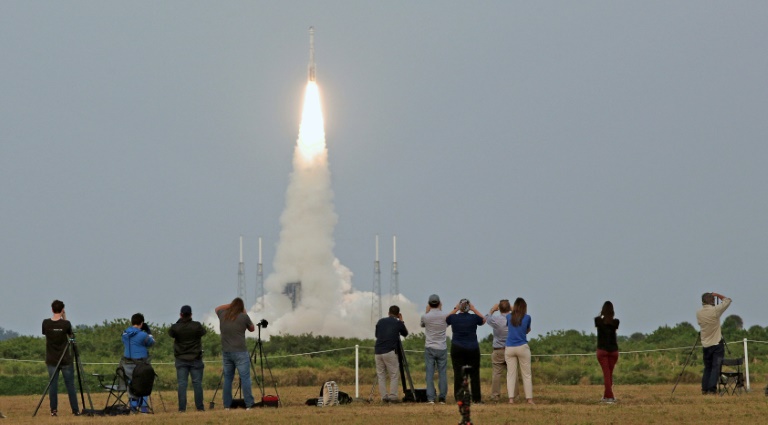
The Orbital Test Flight 2 (OFT-2) mission blasted off at 6:54 pm Eastern Time (2254 GMT) from the Kennedy Space Center in Florida, with the spaceship fixed atop a United Launch Alliance Atlas V rocket.

Its success is key to repairing Boeing’s frayed reputation after the first bid, back in 2019, failed to dock with the ISS due to software bugs — one that led to it burning too much fuel to reach its destination, and another that could have destroyed the vehicle during re-entry. 

A second try was scheduled in August of last year, but Starliner was rolled back from the launchpad to address sticky valves that weren’t opening as they should, and the capsule was eventually sent back to the factory for fixes.

At a post-launch press conference, senior NASA official Steve Sitch said: “Overall, the spacecraft is doing really well,” but he also flagged two anomalies that engineers were now working to understand.

The first was that two out of 12 orbital maneuvering and attitude control (OMAC) thrusters located on Starliner’s aft side had initially fired but then shut down, forcing a third to take up their slack.

The second issue was that a device known as a sublimator responsible for cooling the spacecraft was initially slow to get started.

NASA is looking to certify Starliner as a second “taxi” service for its astronauts to the space station — a role that Elon Musk’s SpaceX has provided since succeeding in a test mission for its Dragon capsule in 2020.

– Seeking redemption –

Both companies were awarded fixed-price contracts — $4.2 billion to Boeing, and $2.6 billion to SpaceX — in 2014, shortly after the end of the Space Shuttle program, during a time when the United States was left reliant on Russian Soyuz rockets for rides to the orbital outpost. 

Boeing, with its hundred-year history, was considered by many as the sure shot, while then-upstart SpaceX was less proven. 

In reality, it was SpaceX that rocketed ahead, and recently sent its fourth routine crew to the research platform — while Boeing’s development delays have cost the company hundreds of millions of dollars.

Starliner should dock with the ISS about 24 hours after launch, and deliver more than 500 pounds (226 kilograms) of cargo, including food and provisions such as clothes and sleeping bags for the current crew on the station.

Its sole passenger is a mannequin named Rosie the Rocketeer — a play on the World War II campaign icon Rosie the Riveter — whose job is to collect flight data with her sensors in order to learn what human astronauts would experience.

“We are a little jealous of Rosie,” said NASA astronaut Mike Fincke, who is expected to be among the first crew selected for a manned demonstration mission should OFT-2 succeed.

The gumdrop-shaped capsule will spend about five to ten days in space, then undock and return to Earth, using giant parachutes to land in the desert of the western United States. 

NASA sees a second provider to low Earth orbit as a vital backup, should SpaceX encounter problems. 

“It’s a really critical step for us and moving towards having two routinely flying crewed vehicles who can bring our crew to and from ISS,” Dana Weigel, deputy program manager for the ISS, told reporters this week. 

Close Bitnami banner
Bitnami