World

China condemns Canada's Huawei 5G ban over 'groundless' security risks

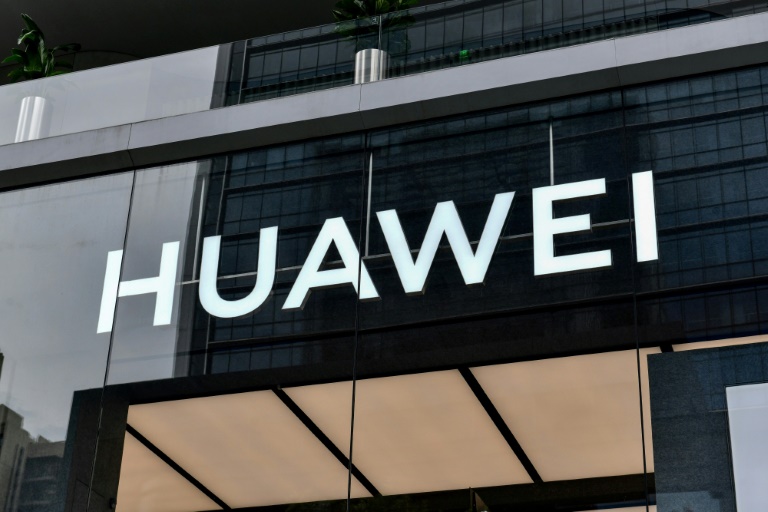
Beijing hit out at Canada for banning telecoms giants Huawei and ZTE from Canadian 5G networks on Friday, calling Ottawa’s concerns for security risks “groundless” and warning of retribution.  

Canada’s long-awaited measure on Thursday follows the United States and other key allies, and comes on the heels of a diplomatic row between Ottawa and Beijing over the detention of a senior Huawei executive on a US warrant, which has now been resolved.

The United States has warned of the security implications of giving Chinese tech companies access to telecommunications infrastructure that could be used for state espionage.

Both Huawei and Beijing have rejected the allegations.

“China is firmly opposed to this and will conduct a comprehensive and serious assessment,” foreign ministry spokesman Wang Wenbin told reporters in response to the 5G block. 

“The Canadian side has excluded these Chinese companies from the Canadian market under the pretext of groundless security risks and without any solid evidence.” 

He added that Beijing would “take all necessary measures” to protect Chinese companies.

“This move runs counter to market economy principles and free trade rules,” he said, accusing the Canadian government of “seriously damaging the legitimate rights and interests of Chinese companies.”

Canada had been reviewing the 5G technology and network access for several years, repeatedly delaying a decision that was first expected in 2019.

It remained silent on the telecoms issue after China jailed two Canadians — diplomat Michael Kovrig and businessman Michael Spavor — in what observers believed was in retaliation for the arrest of Huawei chief financial officer Meng Wangzhou in Vancouver in December 2018 at the request of the United States.

All three were released in September 2021 after Meng reached a deal with US prosecutors on the fraud charges, ending her extradition fight.

But Canadian Industry Minister Francois-Philippe Champagne made the 5G announcement on Thursday, citing the “intention to prohibit the inclusion of Huawei and ZTE products and services in Canada’s telecommunication systems.”

Champagne said Canadian telecommunications companies “will not be permitted to include in their networks products or services that put our national security at risk.”

“Providers who already have this equipment installed will be required to cease its use and remove it,” he said.

– ‘Hostile actors’ –

Huawei already supplies some Canadian telecommunications firms with 4G equipment.

Most, if not all, had held off using Huawei in their fifth-generation (5G) wirelesss networks that deliver speedier online connections with greater data capacity. Others have looked to other suppliers while Ottawa hemmed and hawed.

Canadian Public Safety Minister Marco Mendicino warned Thursday of “many hostile actors who are ready to exploit vulnerabilities” in telecom networks.

The United States, Australia, Britain, New Zealand, Japan and Sweden have already blocked or restricted the use of Huawei technology in their 5G networks.

The US government considers Huawei a potential security threat due to the background of its founder and CEO Ren Zhengfei, a former Chinese army engineer who is Meng’s father.

The concern escalated as Huawei rose to become the world leader in telecoms networking equipment and one of the top smartphone manufacturers. 

Beijing also passed a law in 2017 obliging Chinese companies to assist the government in matters of national security.

The decision could prove to be “a major expense for Canada,” Kendra Schaefer, tech policy researcher at consultancy Trivium China, told AFP.

“Not only have local telecom providers already invested… in Huawei equipment, but additionally they are going to go back and have to rip out everything they’ve already installed,” she added.
China condemns Canada's Huawei 5G ban over 'groundless' security risks

Beijing hit out at Canada for banning telecoms giants Huawei and ZTE from Canadian 5G networks on Friday, calling Ottawa’s concerns for security risks “groundless” and warning of retribution.  

Canada’s long-awaited measure on Thursday follows the United States and other key allies, and comes on the heels of a diplomatic row between Ottawa and Beijing over the detention of a senior Huawei executive on a US warrant, which has now been resolved.

The United States has warned of the security implications of giving Chinese tech companies access to telecommunications infrastructure that could be used for state espionage.

Both Huawei and Beijing have rejected the allegations.

“China is firmly opposed to this and will conduct a comprehensive and serious assessment,” foreign ministry spokesman Wang Wenbin told reporters in response to the 5G block. 

“The Canadian side has excluded these Chinese companies from the Canadian market under the pretext of groundless security risks and without any solid evidence.” 

He added that Beijing would “take all necessary measures” to protect Chinese companies.

“This move runs counter to market economy principles and free trade rules,” he said, accusing the Canadian government of “seriously damaging the legitimate rights and interests of Chinese companies.”

Canada had been reviewing the 5G technology and network access for several years, repeatedly delaying a decision that was first expected in 2019.

It remained silent on the telecoms issue after China jailed two Canadians — diplomat Michael Kovrig and businessman Michael Spavor — in what observers believed was in retaliation for the arrest of Huawei chief financial officer Meng Wangzhou in Vancouver in December 2018 at the request of the United States.

All three were released in September 2021 after Meng reached a deal with US prosecutors on the fraud charges, ending her extradition fight.

But Canadian Industry Minister Francois-Philippe Champagne made the 5G announcement on Thursday, citing the “intention to prohibit the inclusion of Huawei and ZTE products and services in Canada’s telecommunication systems.”

Champagne said Canadian telecommunications companies “will not be permitted to include in their networks products or services that put our national security at risk.”

“Providers who already have this equipment installed will be required to cease its use and remove it,” he said.

– ‘Hostile actors’ –

Huawei already supplies some Canadian telecommunications firms with 4G equipment.

Most, if not all, had held off using Huawei in their fifth-generation (5G) wirelesss networks that deliver speedier online connections with greater data capacity. Others have looked to other suppliers while Ottawa hemmed and hawed.

Canadian Public Safety Minister Marco Mendicino warned Thursday of “many hostile actors who are ready to exploit vulnerabilities” in telecom networks.

The United States, Australia, Britain, New Zealand, Japan and Sweden have already blocked or restricted the use of Huawei technology in their 5G networks.

The US government considers Huawei a potential security threat due to the background of its founder and CEO Ren Zhengfei, a former Chinese army engineer who is Meng’s father.

The concern escalated as Huawei rose to become the world leader in telecoms networking equipment and one of the top smartphone manufacturers. 

Beijing also passed a law in 2017 obliging Chinese companies to assist the government in matters of national security.

The decision could prove to be “a major expense for Canada,” Kendra Schaefer, tech policy researcher at consultancy Trivium China, told AFP.

“Not only have local telecom providers already invested… in Huawei equipment, but additionally they are going to go back and have to rip out everything they’ve already installed,” she added.

Asian markets up after China cuts key interest rate

Asian markets saw a sustained bump Friday following China’s decision to lower a key benchmark rate, injecting optimism among traders that it could boost the world’s second-largest economy from its Covid-battered knees.

Downcast earning reports from retailers this week have heightened uncertainty in the world markets at a time of rising interest rates, surging energy prices, China’s Covid lockdowns and Russia’s ongoing war in Ukraine.

Wall Street took a beating Thursday, adding to its very bad week as the markets reacted to back-to-back earnings misses from Walmart and Target which revealed difficulties managing rising costs, as well as weaker-than-expected Chinese economic data.

On Friday morning, China’s central bank announced it would lower its five-year loan prime rate — a key interest rate governing how lenders base their mortgage rates — from 4.6 percent to 4.45 percent.

The move will help reduce mortgage costs, serving as a boost for demand as China undergoes a property slump and its economy bleeds from stopped ports and factories due to Covid lockdowns.

It is “without doubt a positive in terms of raising the market’s sentiment,” Niu Chunbao, fund manager at Shanghai Wanji Asset Management, told Bloomberg.

Tokyo, Seoul, Singapore and Sydney all saw a sustained one percent boost, while Hong Kong’s Hang Seng led the rally — up by more than 3 percent in the afternoon. 

The gains filtered through to Europe, where London, Frankfurt and Paris opened higher.

A strong fiscal stimulus “is also expected” from the central government given persistent headwinds to growth, said Chaoping Zhu, a Shanghai-based global market strategist with JP Morgan Asset Management.

“In addition to the conventional approaches including infrastructure investment and tax deduction, direct subsidies or cash payout to consumers may be adopted to stabilize domestic demand and employment,” he said. 

Data released this week from China showed the extent of economic pain inflicted by Beijing’s strict zero-Covid policy, with retail sales and factory production slumping to their lowest in over two years.

The unemployment rate also climbed in April to 6.1 percent — the highest in more than two years.

– Recession fears –

Leading indices in recent weeks have see-sawed at even the slightest anticipation of volatility — or relief — and the risk of a global recession is “top-of-mind” for investors, said Stephen Innes of SPI Asset Management.

“But as the procession to recession shortens, growth concerns are rising, leaving equities vulnerable to the negative feedback loop,” he added.

“What would typically be met with a shoulder shrug, incrementally weaker data can now amplify downside move. And with few positive developments of late, the market remains vulnerable to the prevailing narrative, with the negative feedback loop only growing louder in recent sessions.”

Fuelling worries are sky-high inflation across the world. This week, Japan posted consumer price figures for April that were at a seven-year high, while Britain’s inflation rocketed to a 40-year peak.

The US Federal Reserve — where inflation figures are also at a four-decade high — has tightened monetary policy, and Fed head Jerome Powell has said they would raise interest rates until there is “clear and convincing” evidence that inflation is in retreat. 

“There was no single trigger for the negative sentiment prevailing in markets this week, but rather a build-up of concerning information,” said Silvia Dall’Angelo, a senior economist at Federated Hermes Limited.

– Key figures at around 0830 GMT –

Hong Kong – Hang Seng Index: UP 3.0 percent at 20,717.24 (close)

Shanghai – Composite: UP 1.6 percent at 3,146.57 (close)

London – FTSE 100: UP 1.5 percent at 7,409.15 

Tokyo – Nikkei 225: UP 1.3 percent at 26,739.03 (close)

Brent North Sea crude: DOWN 0.4 percent at $111.58 per barrel

West Texas Intermediate: DOWN 0.5 percent at $111.65 per barrel

Euro/dollar: DOWN at $1.0568 from $1.0586 at 2030 GMT Thursday

Pound/dollar: FLAT at $1.2473 from $1.2473

Euro/pound: DOWN at 84.73 pence from 84.84 pence

Dollar/yen: UP at 127.95 yen from 127.80

New York – Dow: DOWN 0.8 percent at 31,253.13 (close)

— Bloomberg News contributed to this story —

Biden begins Asia trip in S. Korea, under North nuclear shadow

US President Joe Biden arrived in South Korea Friday, his first Asia trip as US leader, aiming to cement ties with regional security allies as concern over a North Korean nuclear test grows.

Biden wants the trip to build on recent moves accelerating a years-long US pivot to Asia, where rising Chinese commercial and military power is undercutting Washington’s dominance.

He will receive a warm welcome from South Korea’s new staunchly pro-US President Yoon Suk-yeol, who took office last week, but there is growing concern North Korea’s unpredictable leadership could conduct a nuclear test during Biden’s visit to the region.

Despite a spiralling Covid outbreak, Pyongyang’s “preparations for a nuclear test have been completed and they are only looking for the right time,” South Korean lawmaker Ha Tae-keung said after being briefed by Seoul’s spy agency.

US National Security Advisor Jake Sullivan said there was “real risk of some kind of provocation while we’re in the region”.

“We know what we will do to respond to them. We have communicated with not just our allies, but also with China,” he said.

Hawkish Yoon has pledged to take a firm line with the North after years of failed diplomacy, and also wants stronger ties with the US, including ramping up joint military exercises.

Early Friday, he told reporters in Seoul that Biden’s trip was an opportunity for the US-South Korea relationship to become “stronger and more inclusive”.

Biden heads to Japan from South Korea on Sunday. He will hold talks with the leaders of both countries, as well as joining a regional summit of the Quad — a grouping of Australia, India, Japan and the United States — while in Tokyo.

“I’m on my way to the Republic of Korea and Japan for my first trip to Asia as president,” Biden tweeted from Air Force One. 

“I look forward to strengthening vital security alliances, deepening our economic partnerships, and working with fellow democracies to help shape the rules of the road for the 21st century.”

– Kim’s nukes –

The fact that Biden is visiting Seoul first indicates that Washington is looking to re-focus on the Korean Peninsula, Soo Kim, a former CIA analyst now with the RAND Corporation, told AFP.

Both Seoul and Washington may be looking to “bridge the policy gap” and plan how the security allies could better coordinate “in the face of current and emerging challenges in the region and beyond,” Soo Kim said.

If Kim does test a nuclear weapon during the visit, the US said its response would be coordinated with South Korea and Japan — and could include “adjustments to the way that our military is postured in the region,” Sullivan said.

The US has nearly 30,000 troops in South Korea — some of whom Biden will visit on the trip — and about 55,000 US military personnel in Japan.

The unintended effect of a nuclear test during the visit could be to draw Washington and Seoul ever closer, Soo Kim said.

“Should Kim proceed with a test during Biden’s visit, he will effectively be helping the two countries find greater justification to work together on the North Korea issue,” she added.

Sullivan also said that a North Korean nuclear test would not be seen as a setback for Biden’s diplomacy.

“It would underscore one of the main messages that we are sending on this trip, which is that the United States is here for our allies and partners.”

– China warning –

Sullivan said ahead of the trip that Biden is bound for Asia with “the wind at our back” after successful US leadership in the Western response to President Vladimir Putin’s now almost three-month-long invasion of Ukraine.

The high military, diplomatic and economic cost imposed on Russia is seen in Washington as a cautionary tale for China, given Beijing’s stated ambitions to gain control over democratic-ruled Taiwan, even if that means going to war.

Sullivan said the administration wants not so much to confront China on the trip as to use Biden’s diplomacy to show that the West and its Asian partners will not be divided and weakened.

He pointed to cooperation from South Korea and Japan, among others, in the sanctions regime against Russia led by European powers and the United States. He also referred to Britain’s role in the recently created security partnership AUKUS.

This “powerful message” will be “heard in Beijing,” Sullivan said, “but it’s not a negative message and it’s not targeted at any one country.”

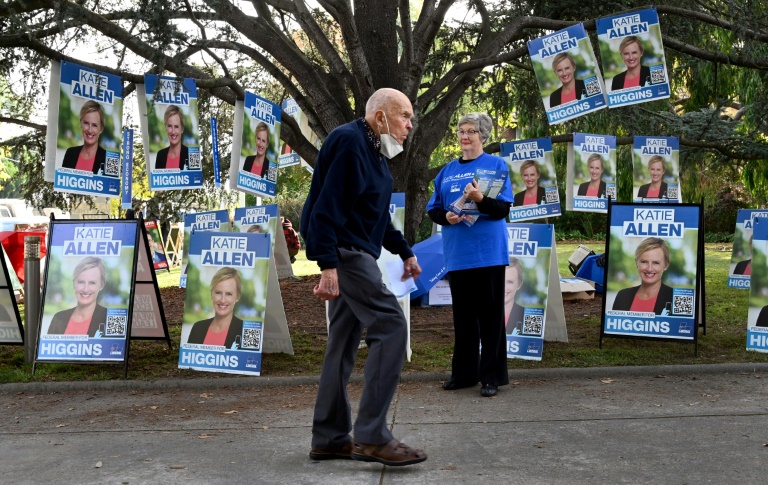
Candidates criss-cross Australia on eve of 'close' election

The man narrowly tipped to become Australia’s next prime minister predicted a “close” outcome in Saturday’s vote, as he barnstormed the country in an eleventh-hour bid to defend a shrinking lead. 

“We knew that this election was going to be close,” said Anthony Albanese, admitting his Labor Party still had a “mountain to climb” to end nine years of unbroken conservative government.

More than 17 million Australians are registered to vote in an election that could bring an end to decades of footdragging on climate change and a less pugilistic style of leadership.

“I have given absolutely everything. I have got nothing left in the tank,” Albanese said, embarking on a last-minute four-state blitz.

Delivering his closing argument to voters in Adelaide, Albanese welled up as he reflected on his personal journey — from the son of a single mum living in Sydney public housing to the threshold of the highest office in the land.

“It says a lot about this country,” he said, voice cracking with emotion. “That someone from those beginnings… can stand before you today, hoping to be elected prime minister of this country tomorrow.”

If elected, Albanese notes he would be the first Australian with a non-Anglo or Celtic surname to be prime minister.

But he’s up against a tough campaigner in incumbent Prime Minister Scott Morrison, who defied the polls three years ago in what he termed a “miracle” election.

Speaking in Western Australia, Morrison admitted his compatriots go into election day “fatigued and tired” having endured three years of bushfires, droughts, floods and the pandemic.

“I understand that frustration,” he said, while pounding out the same message that defied the odds last time: Labor cannot be trusted on the economy.

– ‘Not up to the job’ –

Morrison has characterised Albanese as a “loose unit” because of his high-profile gaffes, notably forgetting the national jobless rate when quizzed by reporters

“This is the sort of stuff that prime ministers need to know,” Morrison said in an interview Friday as he campaigned in Western Australia.

“We have seen that he is not up to the job and it’s bigger than him.”

Morrison boasted of new data showing Australia’s unemployment rate fell to a 48-year low of 3.9 percent in April as an “extraordinary achievement” that showed his plan was working.

Both sides are trying to woo voters fretting about the rising cost of living, with annual inflation shooting up to 5.1 percent and wages failing to keep up in real terms.

In a country scarred by ever-fiercer natural disasters, Labor is promising to do more to help the environment.

Morrison has resisted calls to cut carbon emissions faster by 2030 and supports mining and burning coal into the distant future to support the economy.

In wealthy suburban areas, many voters are being wooed by a band of more than 20 independent candidates, mostly women, offering conservative policies coupled with strong action on climate change.

Albanese has also promised strong action on corruption — after Morrison failed to deliver a promised federal anti-corruption watchdog. 

He has branded Morrison’s administration the “least open, least fair dinkum government in Australian political history.”

– Covid-19 voting fix –

In the final days before the vote, Morrison’s economic warnings appear to have whittled down the polling lead enjoyed by Labor. 

But all surveys still show Morrison’s coalition lagging.

An Ipsos poll released late Thursday gave Labor a 53-47 percent lead over the coalition on a two-party preferred basis.

Registered voters are required by law to cast a ballot to avoid an Aus$20 (US$14) fine.

But in the first Australian federal vote since Covid-19 spread across the world, election officials rushed through a last-minute change in the rules to allow more infected people to cast a vote by telephone.

Besides the economy, the six-week election campaign has focused heavily on trust.

Morrison’s honesty has been questioned by his own allies and even French President Emmanuel Macron, who felt deceived by Australia’s decision to abandon a lucrative French submarine contract.

– ‘Bulldozer’ –

Morrison has admitted he can be a “bulldozer”, saying: “I know there are things that are going to have to change with the way I do things.”

Albanese, in turn, has been criticised for a stumbling performance when questioned on the details of policy by reporters.

The election campaign has also delivered lighter moments.

Three days before the vote, Morrison barrelled into a young boy, sending both crashing to the ground during a friendly children’s football game in Tasmania.

The following day, Australia’s employment minister, Stuart Robert, appeared to deflect blame for the incident from the prime minister: “There was a high five afterwards, so it was just an error from both of them,” he said.

Hindu extremists target Muslim sites in India, even Taj Mahal

Thirty years after mobs demolished a historic mosque in Ayodhya, triggering a wave of sectarian bloodshed that saw thousands killed, fundamentalist Indian Hindu groups are eyeing other Muslim sites — even the world-famous Taj Mahal.

Emboldened under Hindu nationalist Prime Minister Narendra Modi, aided by courts and fuelled by social media, the fringe groups believe the sites were built on top of Hindu temples, which they consider representations of India’s “true” religion.

Currently most in danger is the centuries-old Gyanvapi mosque in Varanasi, one of the world’s oldest continually inhabited cities, where Hindus are cremated by the Ganges.

Last week reports claimed a leaked court-mandated survey of the mosque had discovered a shivalinga, a phallic representation of the Hindu god Shiva, at the site.

“This means that is the site of a temple,” government minister Kaushal Kishore, a member of Modi’s BJP party, told local media, saying that Hindus should now pray there.

Muslims have already been banned from performing ablutions in the water tank where the alleged relic — mosque authorities say it is a fountain — was found.

– Religious riots –

The fear now is that the Islamic place of worship will go the way of the Ayodhya mosque, which Hindu groups believe was built on the birthplace of Ram, another deity.

The frenzied destruction of the 450-year-old building in 1992 sparked religious riots in which more than 2,000 people died, most of them Muslims, who number 200 million in India.

The demolition was also a seminal moment for Hindutva — Hindu supremacy — paving the way for Modi’s rise to power in 2014.

The movement’s core tenet has long been that Hinduism is India’s original religion, and that everything else — from the Mughals, originally from Central Asia, to the British — is alien.

Some groups have even set their sights on UNESCO world heritage site the Taj Mahal, India’s best-known monument attracting millions of visitors every year.

Despite no credible evidence, they believe that the 17th-century mausoleum was built by Mughal emperor Shah Jahan on the site of a Shiva shrine.

“It was destroyed by Mughal invaders so that a mosque could be built there,” Sanjay Jat, spokesman for the hardline organisation Hindu Mahasabha, told AFP.

This month a court petition was filed by a member of Modi’s party trying to force India’s archaeological body, the ASI, to open up 20 rooms inside, believing they contained Hindu idols.

The ASI said there were no such idols and the court summarily dismissed the petition.

But it was not the first such case — and it is unlikely to be the last. 

“I will continue to fight for this till my death,” Jat said.

“We respect the courts but if needed we will demolish the Taj and prove the existence of a temple there.”

– ‘Gospel truth’ –

Audrey Truschke, an associate professor of South Asian history with Rutgers University, said the claims about the Taj Mahal are “about as reasonable as the proposals that the Earth is flat”.

“So far as I can discern, there is not a coherent theory about the Taj Mahal at play here so much as a frenzied and fragile nationalist pride that does not allow anything non-Hindu to be Indian and demands to erase Muslim parts of Indian heritage,” she told AFP.

But while the demolition of the Taj Mahal remains — for now, at least — a pipe-dream of the fundamentalists, other sites are also in the crosshairs.

They include the Shahi Idgah mosque in Mathura, built by the Mughal emperor Aurangzeb after he attacked the city and destroyed its temples in 1670.

The mosque is next to a later temple built on what is believed to be the birthplace of the Hindu god Krishna.

On Thursday a court agreed to hear a lawsuit demanding the removal of the mosque, one of a slew of similar petitions.

Police in the northern city have been put on alert.

Another is Delhi’s Qutub Minar, a 13th-century minaret and victory tower built by the Mamluk dynasty, also from Central Asia.

Some Hindu groups believe it was constructed by a Hindu king and that the complex housed more than 25 temples.

Such claims were born of a “very sparse” knowledge of the past, historian Rana Safvi told AFP.

Instead, a “sense of victimhood” was being fuelled by social media misinformation, she said, “making them believe it’s the gospel truth”.

Cars swapping vroom for volts in London garage

Tucked away in a workshop under a London Underground line, cars are undergoing a green metamorphosis as they shed their cylinders, spark plugs and pistons for electric engines. 

“We don’t create the associated CO2 that comes from creating a new car and we’re not scrapping a perfectly valid old car. It’s win-win,” said Matthew Quitter, founder of London Electric Cars.

London Electric Cars is one of the companies capitalising on the UK’s flexible regulatory environment and special affection for cars to help grow the fledgling sector. 

In the workshop, all kinds of cars have come to be reborn: Minis, Bentleys, old ones — such as a 20-year-old Volvo station wagon — and some not so old, including a platypus-like Fiat Multipla. 

Some families are turning to Quitter to save their beloved vehicles from the crusher, with places such as London expanding road charges for older and more polluting vehicles.

“They’re just keen that they don’t scrap this car because they have an emotional attachment,” he said. 

“The kids grew up in it and instead want to see it reborn as an electric vehicle.”

The cost of a conversion starts at £30,000 ($37,500, 35,000 euros) — the equivalent of a new entry-level electric car.

The renovated vehicles have a range of between 80 and 300 kilometres (50 to 186 miles), depending on the batteries. 

This is more than enough when “90 percent to 95 percent of journeys inside London are under six miles”, said Quitter.

The old engines can be kept, resold or destroyed. 

– Stinking disaster –

Most of the vehicles are fitted with Nissan Leaf or Tesla engines, with the aim to stick as close as possible to the car’s original performance and helping to avoid having to adapt the brakes or transmission. 

The garage has converted seven cars since it opened its doors in 2017, and hopes to convert 10 by 2022.

“People realise that combustion engines are a disaster, they stink, they’re full of fumes, they make a lot noise and they’re responsible partly for climate breakdown,” said Quitting.

“I think… we will look back on classic car ownership with petrol engines as a sort of anachronism,” he predicted.

But the umbrella body for historic automobile clubs, the Federation Internationale des Vehicules Anciens (FIVA), argued in 2019 that such conversions take away from the character of older cars and called for reversible modifications instead. 

For purists, the noise, vibrations and smell of petrol are all part of the pleasure of an old car. 

But Quitter’s clients “aren’t interested in that at all”, he said, adding they want the “reliability” of electric cars without the smell and exhaust fumes of a petrol vehicle.

He also dismissed objections of those who say such modifications of classic cars are a desecration, saying no one complains about old houses being fitted with modern comforts. 

– National heritage –

“At the end of the day, it’s a very personal question in terms of what cars, for you, would be sacrilegious to convert,” he said, adding it would be unlikely he’d ever convert an Aston Martin. 

He is joined on this point by Garry Wilson, head of the Historic & Classic Vehicles Alliance (HCVA), which works to preserve vintage vehicles, who cited the Aston DB5, James Bond’s famous car. 

Changing engines is something that has been done almost since the beginning of automotive history, but classic cars must be treated with respect, said Wilson.

“There’s an awful lot of vehicles out there where we should class them as part of our national heritage, and therefore should in theory treated like a grade I listed building, and shouldn’t be modified,” he added.

“We’d be horrified if someone fitted new PVC windows in Blenheim Palace.

“Frankly, the Houses of Parliament would be better off being knocked down and rebuilt in modern materials. But it’s got Big Ben attached to it, it’s one of our national treasures.”

Wilson is also sceptical about the environmental benefits of such conversions for collector cars that travel only a few hundred miles a year on average, compared with 7,200 miles a year for contemporary cars. 

This is especially true if parts for the batteries and engines come from the other side of the world, he said. 

Instead, he thinks the solution rests with synthetic fuels, which emit CO2 but are manufactured by absorbing it, and which he believes would enable the sector to achieve carbon neutrality in 2050. 

Ukraine war casts a chill in Norwegian Arctic town

War may be far away but tensions from the Ukraine conflict are causing an unprecedented chill in a remote Arctic town where Russian and Ukrainian coalminers have worked side by side for decades.

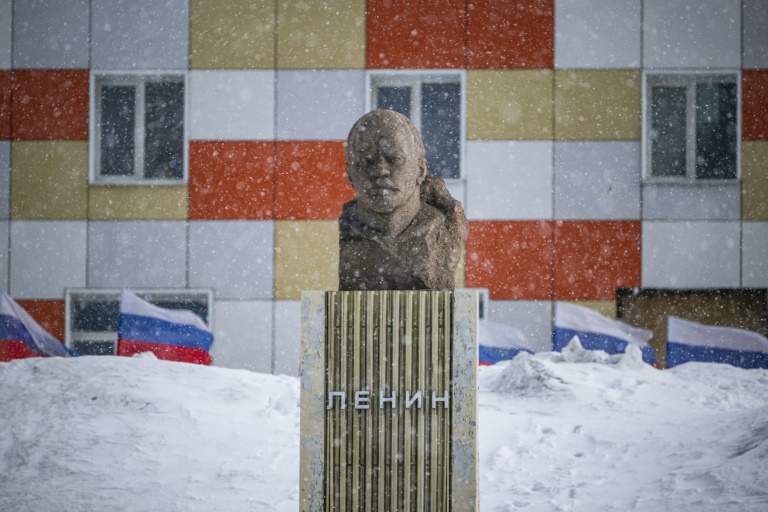
In Barentsburg, in Norway’s Svalbard archipelago, relics of a bygone era — a bust of Lenin, a sculpture with Cyrillic script declaring “Our goal – Communism” — bear witness to Russia’s longstanding presence.

The town’s population peaked at around 1,500 in the 1980s, but shrank after the Soviet Union collapsed.

Now, some 370 people live here, two-thirds of them Ukrainians — most from the Russian-speaking eastern Donbas region — and the remainder Russians.

The atmosphere on the archipelago changed after Russia’s invasion of Ukraine began in February, officials and residents told AFP.

“Opinions are absolutely polarised,” admits Russian tour guide and historian Natalia Maksimishina.

But, she says, “what our long and difficult history of the Soviet Union has taught us is that people here know when to stop talking politics”.

Some Ukrainians accuse the Russian state-owned company Arktikugol Trust operating the coal mine in Barentsburg of muzzling dissent.

But Russia’s consul Sergey Guschin says there were “no visible signs of conflict on the surface”, although he admits “there are of course some tensions and discussions on social networks” like Facebook and Telegram.

The consulate is protected by high iron bars and security cameras, and lavishly decorated with a marble entrance, winter garden and custom-made tapestries. 

Its splendour stands out in the otherwise drab town.

– Departures –

In what could be another sign that anger is simmering under the surface, around 45 people have left Barentsburg “since the start of the operation”, acknowledges Guschin, using Moscow’s terminology for the Ukraine invasion.

There were no further details about the individuals.

The departures speak volumes, as leaving Barentsburg is no easy feat.

Western sanctions imposed on Russian banks have not only prevented the miners from sending money home to their families, they’ve also made it difficult for them to buy plane tickets.

The only airport is in Longyearbyen, Svalbard’s main town 35 kilometres (22 miles) away, where it is difficult to get by without a Visa or Mastercard, which Russians cannot use because of sanctions.

At the entrance to Barentsburg, the coal plant spews out black smoke, adding to the town’s dreary atmosphere.

A 1920 treaty which gave Norway sovereignty over Svalbard guarantees citizens from signatory nations equal access to its natural resources.

Russia’s Arktikugol Trust has operated the mine in Barentsburg, on the shores of the Isfjorden fjord, since 1932.

A few locals huddle between the town’s pastel-coloured buildings, seeking shelter from the bitter cold that reigns even in May.

Locals are more discreet today, especially since they work for the state-controlled company that runs the whole town, from the mine to the shops and restaurants.

Russia imposes heavy fines or even prison terms on anyone found guilty of “discrediting” its military or publishing “false information” about it.

– ‘People just shut up’ –

Longyearbyen is inhabited mainly by Norwegians but has a large Russian and Ukrainian community.

It can only be reached by helicopter or snowmobile in winter and boat in summer due to lack of roads from Barentsburg.

Julia Lytvynova, a 32-year-old Ukrainian seamstress who used to live in Barentsburg, accuses Arktikugol Trust of suppressing dissent.

As a result, “people just shut up, work and live their lives like nothing has happened”.

She hasn’t been back to Barentsburg since the war started, but she asked a friend to put up an anti-war poster for her on the gates of the Russian consulate. 

Her sign, written on a blue-and-yellow background, had a now-famous expletive-laden line used by Ukrainian border guards after rejecting a Russian warship’s surrender demand.

Her poster was taken down in less than five minutes, she says.

The mayor of Longyearbyen, who has lived in Svalbard for 22 years, says he has “never experienced the kind of discord” now seen among the 2,500 residents of 50 nationalities, including around 100 Russians and Ukrainians.

“There are some tensions in the air,” Arild Olsen admits.

In response to the invasion, most tour operators in Longyearbyen stopped taking tourists to Barentsburg, depriving the state-owned company of a lucrative cash cow.

Lytvynova supports the move “because this money supports the Russian aggression”.

By ending this source of income, “they don’t help to kill my Ukrainian people”.

Jordan's 'Fierce Savage' kicks down martial arts gender constraints

It’s no mystery why Jordanian Lina Fayyad has been nicknamed “Fierce Savage” — watching as she lands successive blows in the cage, it’s clear she is poised to take mixed martial arts by storm.

With her long maroon hair and small frame, she cuts an unusual figure in the world of MMA, and perhaps even more so within the country and region from which she hails, where women are virtual strangers to the sport.

“At the beginning, I heard a lot of criticism that continues until today,” the 33-year-old told AFP from the Mediterranean island of Cyprus, where she is undergoing and overseeing training boot camps.

“When someone sets their sights on a goal, nothing will stop them from achieving it.”

In a region where social and cultural restrictions often bar women from pursuing sports professionally, Fayyad’s journey has not been straightforward.

“There were a lot of obstacles that stood in my way: injuries, criticism — I would get kicked out of sports clubs because I’m a girl and men refused to participate in training with me,” she said.

“It used to bother me at first but now I don’t care.”

– Jordan’s only female fighter –

Encouraged by her father, a boxer, Fayyad entered the world of martial arts at the tender age of 10, then practised taekwondo starting at 12, before moving on to a roster of other sports.

“I earned three gold medals in kickboxing in the Arab championships and a gold medal in Muay Thai world championships,” she said.

She shifted to MMA in 2017, and has since won two of the three fights she has taken part in.

But aside from her drive for competition — which is high — Fayyad is compelled by the need to send a message to her fellow countrywomen.

“I am the only woman who practises MMA in Jordan,” she said. “I get a lot of nice comments from women and they are really encouraged when they see me.

“I feel like I am somehow responsible because I want to prove that Arab women can reach their goals,” she continued.

“If I had listened to criticism and become a housewife, I would not be happy. I want to make use of the advantages God gave me to achieve more.”

In a training hall in the Cypriot capital Nicosia, Fayyad prepares for her next fight in June — provided she recovers from recent fractures in both her feet.

But as with other obstacles, she doesn’t let her injuries get in the way.

“I will stop when I get old,” she said — but by “stop”, she means she will simply shift to a more age-appropriate sport, like jiujitsu.

“I often hear that I’m a ‘fierce savage’ in the cage, and it’s true, I’m not afraid. The nickname represents me.”

China cuts key mortgage reference rate as Covid bites

China on Friday announced it would cut a key interest rate in a boost to home buyers and debt-mired developers as the country’s economy is slowed by Covid-19 restrictions ripping across major cities.

Prolonged virus lockdowns have constricted supply chains, quelled demand and stalled manufacturing in the last major economy welded to a zero-Covid approach to the pandemic.

The five-year loan prime rate (LPR) — which many lenders base their mortgage rates — was trimmed to 4.45 percent from 4.6 percent, China’s central bank said on Friday.

Since the rate is “the benchmark for pricing most mortgages, we think the move is aimed at supporting housing demand,” Julian Evans-Pritchard, an analyst at Capital Economics, said. 

The cut “should help drive a revival in housing sales.”

The one-year loan prime rate, which guides how much interest commercial banks charge to corporate borrowers, remained unchanged at 3.7 percent.

The reduction in the mortgage reference rate comes as a wave of defaults ripples through the country’s real estate sector, with developers sagging under massive debts and struggling with a slump in demand.

Sunac, one of China’s largest developers to default on payments in recent months, said last week that sales in major cities had fallen dramatically in March and April due to the coronavirus wave.

Economic data this week highlighted the stark impact of Covid-19 restrictions and lockdowns in many major Chinese cities.

Figures on Monday showed retail sales and factory output last month slumped the most since the start of the pandemic, while unemployment edged back toward its February 2020 peak.

The haircut to the LPR was greater than the market expected, analysts said, as China’s planners try to inject life into a slowing economy.

“Monthly economic indicators published recently suggest severe growth pressure,” according to Chaoping Zhu, global market strategist at JP Morgan Asset Management.

“Aside from weakness in consumption, industrial production and investment activities, the sharp decline in bank loans reveals a more fundamental challenge –- a lack of confidence among both corporate and household sectors.”

Beijing’s unrelenting approach to Covid-19 outbreaks has snarled supply chains and locked down tens of millions of people, hitting major financial, industrial and tourist hubs.

Borders remain closed to most foreigners and a slew of international sports events have been scrapped over pandemic concerns.

China’s premier Li Keqiang on Wednesday called for government departments to “step up their sense of urgency” and said “new measures that can be used should be used” to prop up the world’s second-largest economy.

China has targeted full-year growth of around 5.5 percent, but data published in April showed that first-quarter growth slowed to 4.8 percent after its economy lost steam in the latter half of last year.

Close Bitnami banner
Bitnami